Tag: Study abroad

  • a view from the inside

    a view from the inside

    Last week, news emerged of State Department plans to cut FY25 funding for 22 study abroad programs, rendering the programs cancelled in an unprecedented slashing of funding already approved by Congress.  

    “We were completely blindsided by the whole thing,” said a federal employee of the Bureau of Educational and Cultural Affairs (ECA), speaking anonymously to The PIE News

    Rather than informing ECA staff, news of the cancelled funds was sent to state department regional bureau officials, they explained, eventually spreading throughout the study abroad community over social media and by word of mouth.   

    “We put our heart and soul into implementing these programs… for lots of people to find out about the cuts through a list shared on LinkedIn was deeply troubling,” said the employee.  

    While the decision to cancel the grants came from higher up, the emails were sent by a “non-political” ECA leader. Over a week has passed and ECA staff are yet to receive any official announcement from the administration. 

    Upon receiving the news, the study abroad community quickly galvanised, with a campaign by the Alliance for International Exchange which has seen at least 13,500 letters sent to Congress as of August 21.  

    “I do think the campaigns are going to be helpful… from where I sit within the ECA, we need these campaigns, our livelihoods depend on these campaigns,” said the source. 

    “My fear is that there’s nothing at this point that would stop the current administration from doing this again in FY26… I would say they’re laying the groundwork for that to be possible for that to have happen again,” they added. 

    Currently, the cancelled funds relate to fiscal year 2025, which ends on September 30, though many of the programs are forward funded, meaning that they were waiting on the FY25 funds to support the 2026 calendar year.  

    “For FY25, I’m not sure how we come back from this,” said the ECA staff member. “Even if everything came back online today, we would still have a paperwork issue of trying to get everything done before the September 30 deadline.” 

    As such, the campaigns are fighting for the long-term survival of study abroad, amid “real fears” of programs unable to reopen in the following year.  

    “If we allow the Office for Management and Budget (OMB) to cut these congressionally appropriated FY25 awards, it will give them license to do it again and again, effectively eliminating exchange programs,” stated the Alliance.  

    Though ECA staff were not privy to high level conversations between ECA official Darren Beattie and State Department leadership, a notable difference this year was the presence of OMB, “who have never ever been involved in this process previously”, said the employee.  

    What’s more, experts have questioned the legality of the cuts, with stakeholders highlighting that the cancellation of funding already approved by Congress is “unconstitutional”. 

    This is one of the primary messages of the campaign, which the ECA source said they hoped would “set the stage” for FY26 to ensure that Congress decides.  

    We put our heart and soul into implementing these programs… for lots of people to find out about the cuts through a list shared on LinkedIn was deeply troubling

    ECA employee

    “We are letting the administration and Congress know that these programs have a valuable impact and that they could meet administrative priorities if they decided to use them the way they’re meant to be used,” they added.  

    After a slate of State Department layoffs last month, ECA staff are thought to be safe from job losses caused by the cuts, though staff furloughs are widely expected among program implementers, with whole organisations at risk of going under.  

    More broadly, employees are concerned about the “dire” consequences for US diplomacy and soft power.  

    “All the people that work on exchange programs that I have ever encountered had an international experience that changed our lives,” said the employee. “From a policy perspective, that’s the definition of soft power, and the consequence of not having those connections for even a year are dire.” 

    “I have every reason to believe that this administration is doing this with other aspects of the federal government, and we just don’t know that it’s going on.” 

    “ECA has this large alumni network that is passionate, and we can make our voices heard by Congress,” they said. “But my biggest fear is that if ECA doesn’t come out on top then it’s going to have a greater impact on other grants in other industries that don’t have a voice as loud as ours.” 

    Other than being deemed as a “lower funding priority in the current fiscal environment”, no rationale has been provided for which programs got the axe, with the ECA employee particularly surprised by the cancellation of the Young African Leaders Initiative (YALI).  

    Established in 2010, YALI had the support of the Trump administration, with the employee deeming it “one of the best US programs for the African continent”. 

    As for the remaining initiatives, including the state department’s flagship Fulbright Scholarship, nothing is off the table.  

    “Fulbright carries the weight of more protections than most,” said the ECA employee: “That being said, I think alumni need to pay attention. I don’t think anything is out of the realm.”  

    The State Department did not immediately reply to The PIE’s request for comment.

    Source link

  • US scraps $100m in study abroad programs

    US scraps $100m in study abroad programs

    • Stakeholders warn that the funding cuts will probably result in furloughs, redundancies or – in the worst cases – organisations being forced to close.
    • The move comes after months of policy turmoil in the US, as the Trump administration wages war on international education.
    • Experts question the legality of the move as a campaign is launched to save State Department international exchange programs.

    State Department regional bureaus were informed of the cuts on August 13, via internal communications stating that government officials would work with them to “pull down” the affected programs “with the least possible disruption”.  

    The directive explained that the programs “were lower funding priorities in the current fiscal environment, so they are being removed from FY25 Funding”, according to communications from the Bureau of Educational and Cultural Affair (ECA).  

    “It’s an existential crisis for these programs and possibly for ECA,” said Mark Overmann, executive director of the Alliance for International Exchange – whose members make up 13 of the impacted programs, facing cuts of $85m.  

    According to Overmann, the 22 programs were all due to be renewed and were expecting to receive FY25 funds before September. Now, they will no longer be allowed to go through their awards process or renewal, and thus will be terminated.  

    “These organisations will now suddenly lose funding they’ve long anticipated and been promised, and this will likely result in furloughs, layoffs, and even organisational closures,” warned Overmann.  

    “Cancelling $100 million in programs which impact 10,000 students is devastating on many levels,” Bill Gertz, chairman of American Institute for Foreign Study (AIFS) told The PIE News.  

    “It means students’ plans and dreams are impacted… it means layoffs and financial disruption at the many fine cultural exchange organisations,” added Gertz, who sponsors the YES Abroad program which has been cancelled.

    “These folks have worked tirelessly to make the world a better place,” he said.  

    Typically, the State Department’s funding process would be in full swing in the spring and summer, though this year has been plagued by delays and uncertainty for program organisers and students alike.  

    Following the lifting of the State Department’s funding freeze this March, stakeholders have been concerned about the lack of movement on the ECA’s FY25 funding process, which has caused delays in the opening of applications and interfered with students’ plans.  

    According to a former staff member of the Republican Senate Foreign Relations Committee: “The variety of programs impacted are too broad to point to a single issue or justification – everything from community colleges to disability and education exchanges.” 

    They warned that the cuts would isolate the US in the long term, raising particular concerns about the discontinuation of the Kennedy-Lugar Youth Exchange and Study (YES) Program. 

    This initiative “was created after 9/11 specifically to bring young people from predominantly Muslim countries to the US to build long-standing relationships with communities and individuals who might not otherwise every get to see our nation in anything other than filtered news and anti-US social media,” they explained. 

    The value of study abroad for US soft power and public diplomacy was echoed by Gertz, who said the cuts came “at a time in our history when cultural understanding is needed the most”.  

    If OMB is allowed to cut these Congressionally appropriated FY25 awards, it will give them license to do it again and again, opening the door to effectively eliminate international exchange programs

    Mark Overmann, Alliance for International Exchange

    Beyond the programs, their participants, alumni and staff, the move raises alarm bells about the White House’s ability to cut congressionally appropriated grants. 

    Historically, Congress has approved ECA awards, but this year the Office of Management and Budget (OMB) inserted itself “irregularly” into the process to stop congressionally approved funds from being spent, said stakeholders.  

    According to Overmann, the move could be illegal, with Gertz also stating it was unconstitutional for OMB to override Congress in such a way.  

    “OMB found a way to use a small, previously arcane piece of administration process to stop ECA program awards from moving forward,” Overmann explained, leading to the defunding and termination of 22 cultural exchange programs. 

    “If OMB is allowed to cut these Congressionally appropriated FY25 awards, it will give them license to do it again and again, opening the door to effectively eliminate international exchange programs,” Overmann warned.  

    The cancellations have shocked the US study abroad community, which recently received a vote of confidence in Congress, which drastically reduced the planned cuts for study abroad in the FY2026 budget.  

    “We believe we have the support of the majority of Americans who have supported our efforts for decades,” said Gertz. ” We are actively engaged with Congress on the future of ECA programs. 

    Sector leaders have already kicked into action, warning that the elimination of funding would “greatly damage 75+ years of exchange activity and the legacy of Senator Fulbright. It would destroy many of our programs and much of our work,” said Overmann. 

    The Alliance today launched a campaign to save State Department international exchange programs, urging stakeholders to write to members of Congress.  

    The State Department has not issued a formal announcement or replied to The PIE’s requests for comment.  

    It appears that the following programs are impacted, though the list may not be exhaustive:  

    • Community College Administrator Program (CCAP) 
    • Community College Initiative Program (CCI) 
    • Community Engagement Exchange (CEE, Leahy Initiative on Civil Society) 
    • Council of American Overseas Research Centers 
    • English Access Scholarship Program 
    • English Language Fellow Program 
    • Global Undergraduate Exchange Program 
    • IDEAS Program 
    • International Center for Middle Eastern-Western Dialogue (Hollings Center) 
    • Kennedy-Lugar Youth Exchange and Study (YES) and YES Abroad Program 
    • Leaders Lead On-Demand 
    • Mandela Washington Fellowship for Young African Leaders 
    • Mike Mansfield Fellowship Program 
    • National Clearinghouse for Disability and Exchange (NCDE) 
    • Professional Fellows Program 
    • Survey of International Educational Exchange Activity (IEEA) in the United States 
    • TechWomen 
    • The J. Christopher Stevens Virtual Exchange Initiative 
    • U.S. Congress-Korea National Assembly Exchange Program 
    • U.S.-South Pacific Scholarship Program (USSP) 
    • Young Southeast Asian Leaders Initiative (YSEALI) Academic Fellowship 
    • Young Southeast Asian Leaders Initiative (YSEALI) Professional Fellowship Program (PFP) 

    Source link

  • US study abroad takes major step to protect federal funding

    US study abroad takes major step to protect federal funding

    Following a record-breaking advocacy campaign that saw 20,636 letters sent to Congress, the House of Representatives has set out drastically modified cuts to US cultural exchanges, which had been at risk of “decimation” under Trump’s previous proposed budget.  

    The new plans will shrink the funding cuts to the Bureau of Educational and Cultural Affairs (ECA) to 5.5% next year, as compared to the 93% initially announced in the proposed FY2026 budget.  

    Though the proposals still amount to a $41 million cut to current funding, “it’s nowhere close to the doomsday scenario of the [President’s budget request]” executive director of the Alliance for International Exchange Mark Overmann told The PIE News. 

    “This means that the conversation about FY26 is completely new. The President’s budget can be thrown out the window,” he said, welcoming the “significant show of support for exchanges from the House and a big win for us”. 

    The plans – laid out in the House Appropriations Bill on July 14 – propose a 22% cut to overall State Department funding and are the latest step in the FY26 budget process, expected to be finalised late this year.  

    The new legislation earmarks over $700m for ECA, a “surprising” figure and a vote of confidence in the value of educational and cultural exchanges. This includes $287 million for Fulbright.  

    “And this mark from the House means that our community’s advocacy has been heard,” said Overmann.  

    This means that the conversation about FY26 is completely new. The President’s budget can be thrown out the window.

    Mark Overmann

    Though there are still many steps to go, including a review by the Senate, the unexpected move is an encouraging development and a rare piece of good news for stakeholders who expected the worst after Trump’s “draconian” proposals this May. 

    While important, the President’s budget request has no sway over the final allocations, with stakeholders emphasising at the time of its release that it amounted to nothing more than a “wish list” and was not binding.  

    The true figures will be drawn from the House and Senate Appropriations, with the latter expected imminently.  

    Traditionally, the Senate has come in higher than the house for ECA funding, with stakeholders hopeful that the trend will continue this year.  

    The news has provided a glimmer of hope during an uncertain time for US study abroad, with 40 ECA employees caught up in the Trump administration’s mass layoffs of State Department staff last week.  

    Source link

  • Spirit of adventure – meet the Nepalese study abroad guides

    Spirit of adventure – meet the Nepalese study abroad guides

    Nepal has long been synonymous with the legendary ‘Sherpa’ mountain guides, skilled in helping international travellers explore the Himalayas.

    There is also however, a more recent tradition of local education guides helping their compatriots to seek out adventure and opportunity through study abroad.

    In the past, this demand favoured Australia as a study destination, but since the Albanese government introduced increased visa restrictions, that demand has increasingly turned to alternative destinations like the US, France, Japan and the UK.

    According to ONS data, more than 9,000 study visas were issued to Nepalese students studying in the UK as of March 2024 but the true number is undoubtedly higher in the year since.

    The PIE News visited Franklin International, a leading local agent, to better understand the factors supporting growth.

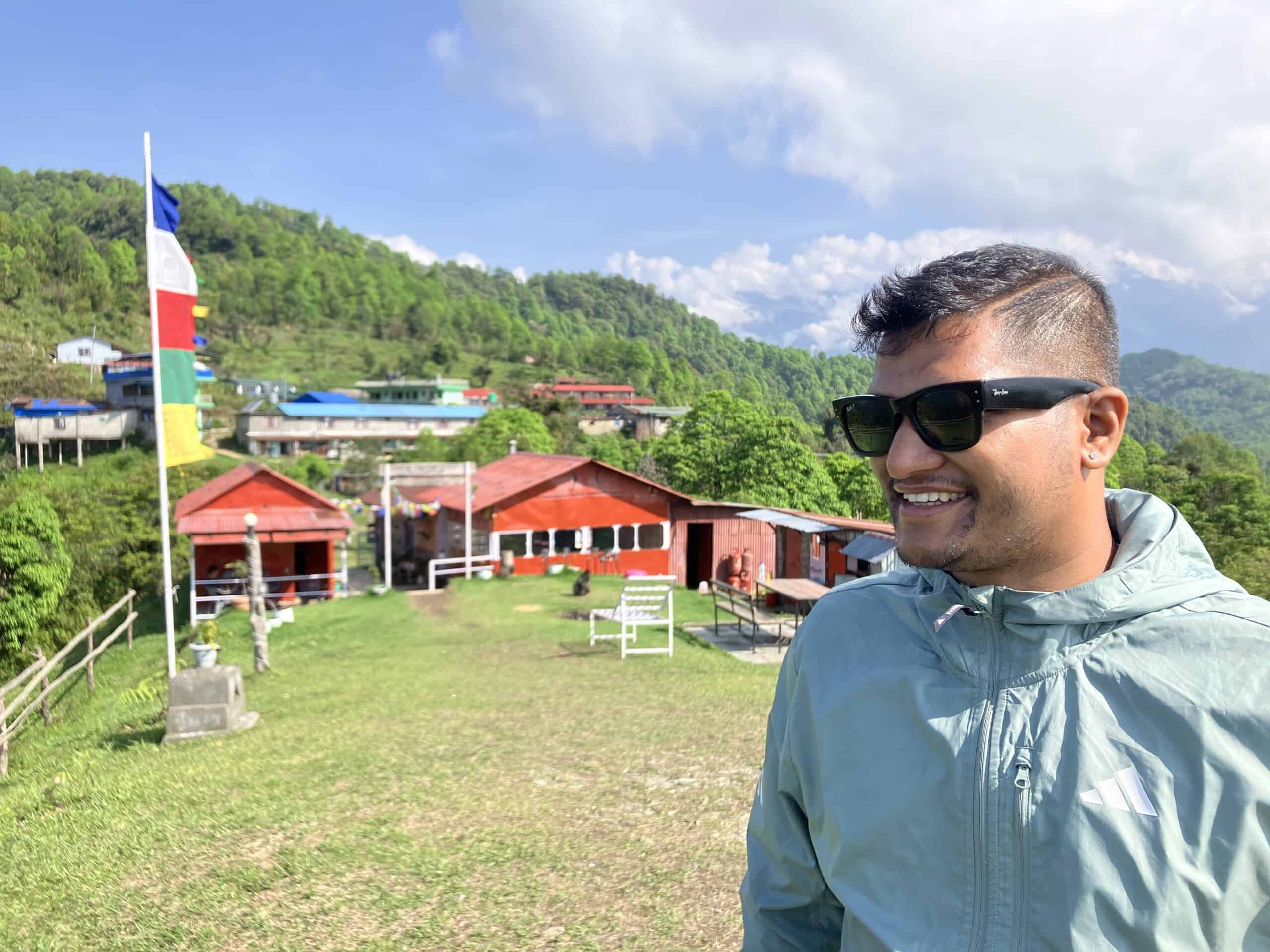
    Away from the chaotic streets of Kathmandu, where thousands of agent offices operate within a square mile in a district known as ‘Putalisadak’, Franklin International has chosen instead to base its national headquarters in the foothills of peaceful Pokhara.

    Here we find an operation that feels more like a family than an agency. There aren’t any cut-outs of Big Ben; instead, they favour a comfortable working atmosphere for staff and students.

    There is an office full of people diligently running document checks, taking calls, and running webinars with their prospective students across Nepal.

    I meet a team packing for a 17-day tour of the country to meet applicants face-to-face – giving them a chance to outline important next steps and reassure family members.

    There are entire rooms of people dedicated to supporting universities like the University of Roehampton and the University of East London, for whom they facilitate close operational relationships that deliver hundreds of compliant student enrolments.

    “The UK demand is still in its infancy,” company CMO and co-founder, Deepak Khadka tells me.

    “The number of students applying has grown rapidly, but the knowledge about the UK process is limited among most people,” he continues.”There are too many agents looking for short-cut commission – so we have had to build a system in partnership with British universities to focus on the compliance checks they need.”

    This is a price-sensitive market, with only 15-20 universities offering financially viable course options. This has created a unique bubble where large numbers of students are following each other to the same university in each intake. Word of mouth is a key driver of demand.

    This volume has, in turn, triggered an explosion in Nepalese agent activity as the potential for high commission levels is clear.

    At a higher education event in Kathmandu, The PIE met teams of young friends, often still in their 20s or early 30s, keen to get involved and cash-in on prospective students from their neighbourhoods.

    “We have a choice to make in Nepal,” explains Khadka. “We either compete as agents, or we try and work together to best support the students.”

    Having completed his doctorate in agent supply chains from UWS, his understanding of the Nepalese market is crucial.

    “We try to act as supportive guides for these other guys. They have so much energy and ambition – but we must make sure the professional compliance is water-tight when processing applications,” he tells The PIE. “We have the expertise to do this correctly. We call this the Official University Representative network to convey that message.”

    Khadka is keen to stress that he and his fellow agents care far more about the students they work with than pitting themselves against one another.

    “I care about Nepal’s future. We don’t want to make the same mistakes as other countries or regions,” he says.

    “We want our young people to succeed in their study abroad adventures – and I would rather work together for a better system, than get drawn into a territorial battle. We are proud that this model is being recognised by our UK partners and local officials here.”

    Overseas education agencies must have government approval to operate in Nepal, leading to conflict over online aggregator models trying to undercut this licensing.

    I care about Nepal’s future. We don’t want to make the same mistakes as other countries or regions
    Deepak Khadka, Franklin International

    Local protocol can be complicated as students need to obtain a ‘No Obligation Certificate’ from the government to study abroad, and many turn to government-backed student finance options to prepare their budgets.

    Vidhi Mistry, head of international operations for the University of Roehampton, explains her approach to the market: “In Nepal, when there are thousands of agents, it’s not about being everywhere. A university doesn’t need to work with every agent.

    “A right partnership is about aligning values, intent and quality that prioritises reputation and longevity. Agents can elevate the sector or dilute it. Exclusivity when earned and aligned isn’t a restriction, it is a strategy for sustainable growth [in a chaotic market].”

    The PIE spoke to Sajan, a Nepalese student who has an offer to study at the University of West Scotland London campus. He explained his reasoning for working with an agency.

    “I have friends already at UWS London and they love it. I didn’t need help with choosing which university or course I wanted, but I had to make sure my finances and visa are processed correctly,” he says. “My father and I have been guided to understand my required budget and each step of the process. I am very grateful.”

    With the UK government announcing future plans to tighten visa issuance for countries linked to asylum claims, and to clamp down on universities linked to poor compliance metrics – it is important the Nepal market doesn’t grow too fast, too soon.

    Strong demand will undoubtedly bring greater competition, so only time will tell if universities and agents can get regulate themselves to realise the opportunity.

    Source link

  • Staff furloughs sweep EducationUSA

    Staff furloughs sweep EducationUSA

    Effective March 14, the Institute of International Education (IIE) announced that it had been forced to furlough the majority of EducationUSA staff and employees of other ECA-funded programs, as it struggles to maintain operations under the Trump administration.

    “Over the past several weeks, IIE has been impacted by a myriad of external changes, requiring us to quickly adapt and to respond to the evolving needs of multiple stakeholders.

    “Numerous factors, including Executive Orders, program suspensions, and changes in the payments and processes of the US Department of State have impacted our operations,” IIE’s EducationUSA team wrote in a staff update.

    The US State Department’s flagship study abroad network added that it had taken the “difficult but necessary” step of dismissing all but two domestic staff members to maintain operations. Regional managers outside the US will also have limited scope, said EducationUSA.  

    The organisation emphasised that the program had not been cancelled or cut, but that funding remained frozen, limiting the institute’s ability to retain full staffing levels.

    It is unclear how many employees have been affected in total, let alone when or even whether their jobs will resume.  

    Further programs implicated in the furloughs include the Fulbright, Humphrey and Gilman scholarships, which rely on funding from the State Department’s Bureau of Educational and Cultural Affairs (ECA) that was frozen by the State Department on February 12 and has not yet resumed.

    Intended as a temporary 15-day pause on federal funding, the Trump administration provided no rationale for the freeze, with stakeholders warning the measure threatened the survival of US study abroad.

    For decades, EducationUSA has been a cornerstone of global engagement

    Fanta Aw, NAFSA

    In a public statement, IIE said it regretted the workforce reduction but that it remained “hopeful that this is temporary and that we will be able to resume full staffing levels soon”.  

    “Our priority is to ensure that students and scholars continue to be able to have life-changing international educational opportunities,” it added.  

    There has been an outpouring of support from colleagues, facing unprecedented challenges under the Trump administration, which recently cut 50% of Education Department staff and proposed a ban on all Chinese study visas, alongside the financial freeze crippling study abroad.  

    “This is another pivotal moment for international education in the US,” said NAFSA CEO Fanta Aw: “For decades, EducationUSA has been a cornerstone of global engagement, providing students, families, and institutions worldwide with trusted, reliable guidance on US higher education.” 

    “We must do all we can to preserve and strengthen this critical program,” wrote Aw on LinkedIn.  

    With a network of over 430 international student advising centres across more than 175 countries and territories, the impact of staff furloughs at EducationUSA will be widespread, with operations largely ceasing across the globe.

    Source link