For Chianti Grantham, her vocation in life crystallized the moment she started teaching.
“The first time I stepped foot in a classroom, I knew that that’s what I was supposed to do. I knew that was my happy place.”
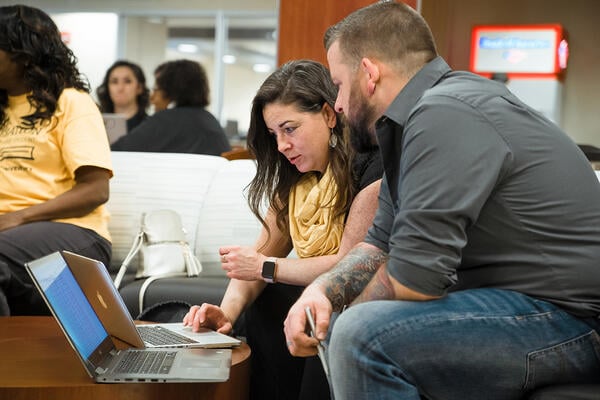
Grantham works as an academic success coach at Houston’s University of St. Thomas, in the Kolbe School of Innovation and Professional Studies, an associate degree–granting arm of the university that supports nontraditional learners. In her role, Grantham assists students who are facing challenges that are impeding their academic progress, including those who have fallen below a 2.0 GPA.
In an interview with Inside Higher Ed, Grantham discusses how she does the work and effective strategies she’s used to support her students.
Q: What experiences or training have helped you establish your student success philosophy?
A: All of the experience that I’ve had over the years has taught me how to do what I do. I have a varied amount of experience from teaching, from being a tutor, and I think that it grew as I matured and grew as an educator. So did my skill level and paying attention to the needs of the students, and establishing those relationships with the students.
One of my very first classes that I taught, I had a student disclose in a paper that he had HIV. I learned quickly, like, “OK, this is about more than just teaching these students how to write. I have to be a mother. I have to be a support system. I have to be that person that they can go to.” Because if he felt comfortable enough in disclosing something like that with me, then I have a lot of power, and I can use that power for good, or I can use that power for bad. I decided that I wanted to use that power for good, and I specifically wanted to serve the nontraditional, underserved population.
I’ve been an academic success coach for going on four years at St. Thomas and then two years prior with Lone Star College. I have found that, once I reach out to a student and I’m like, “Hey, your instructor indicated that you have fallen behind. You haven’t turned in your assignments. Your assignments have been subpar. You’ve been unresponsive,” whatever the situation is—I always ask for very detailed information about what’s going on with the student—it’s like the floodgates open. Students are like, “Oh my gosh, somebody called me, somebody cares.” And that’s what I normally hear, like, “Yes, I’m sorry. I lost my job,” or “I’m overwhelmed with work,” or “I’m overwhelmed with life,” or “I’m depressed,” or “My husband and I have separated.” It’s generally an external factor that is impeding them from being successful in the classroom.
What I tell our instructors is: We have to get to the root of the issue, but we have to get to the root of the issue early. Early intervention is the best and most viable way to help a student to be successful. If I don’t know until a week before classes end, I can’t help that student, right? But if I know week one, they haven’t submitted any assignments within that first week, I tell the instructors to contact me, give me their information, tell me what’s going on and I’m reaching out. In that instance, I can help a student to turn it around.
Q: You recently started a program to support students on academic probation. Can you talk about where that idea came from and where you saw a need to improve processes for these students?
A: What we’re trying to do is find as many ways to support the students in their success. So, specifically, when they’re on academic probation—meaning that they’ve fallen below a 2.0 grade point average—at that time, they go under my wing.
They’re required to be in contact with me, either through phone call or meeting face-to-face or virtually, just to help them get back on track. We’re sitting down, we are creating a routine and a study schedule that also includes their personal lives.
What I tell a student is “Let’s look at your personal as well as your professional life. Let’s put all of those responsibilities in a calendar.” So whether it be a paper calendar or on a cellphone—I’m an old-school person, so I actually do paper and I do my cellphone—I help them in that way.
I also refer them to other resources. If they’re telling me they’re having some type of housing issue, I will contact our residence life department. I’ve also sought out shelters, other community resources. I have advocated for students to get scholarships so that they can pay their rent. It’s a gamut of things.
I’m in the process now with one of my colleagues to write an academic probation course that the students must take for an entire semester, and it focuses on time management, organizational skills and some mental wellness tips. All of these things that I have either seen myself in interacting with students or in my conversations with faculty and adjuncts, things that they’ve seen. We’ll be launching that this semester.
Q: How do you balance the complexity of student support work? Each student is going to need a different thing, so how do you keep yourself educated as to what those resources are and who’s going to help you and be a partner in this work?
A: What I found early on in this role is that it’s super important, actually, that I build relationships with other departments around the campus.
I have also learned that it’s super important that I build relationships within the community. So there have to be people within the community that I can have a conversation with about, like, “Hey, I have a student that is unhoused. Can you help me? They need food; they need somewhere to live. They need clothing.” Those relationships are key. If I didn’t have those relationships, I wouldn’t be able to support my students.
Q: How have you built up relationships with instructors as well, letting them know that you’re here to help with students’ success?
A: At the beginning of every semester and then midway through the semester, I always send an email to all of the instructors reminding them, “I’m here. These are the services that I offer. These are the hours that I’m available if the students are performing at a lower level, if they’ve inquired about additional resources, if they’re unresponsive, if they said, ‘Hey, I just need help.’” If faculty feel they can’t offer that, those are the kind of things that I tell the instructors that I am able to help the students with.
Also, I advocate for the students. Because I know these students very well, I’m copied on all emails that are sent to students when there is an external factor that’s going on that’s impeding them from being successful. I’m able to just keep a pulse on what’s going on. But yeah, my relationships with the faculty are great. It has to be, because otherwise I wouldn’t be able to support my students.
Q: Do you have any advice for other academic success coaches you’d like to share?
A: The one thing that I would say is the relationships that you build are so key. If you have relationships, if you reach across the aisle, so to speak, and you keep an open mind, just because someone doesn’t look like you, just because someone doesn’t share the same interests and beliefs as you, doesn’t mean that you can’t have a relationship with them.
Some of the most beneficial relationships that I’ve had with students have been with people that are not like me and don’t share similar interests as me, but we’ve been able to come together.
A perfect example is I had a student come to campus. He is local, but he didn’t ever come on campus because our programs are fully online. He’s really shy, so when he came to campus, I made a point to introduce him to one of my colleagues over at the peer-mentor program so that he could become a peer mentor. I took him over to career services because he was interested in an internship program, so I put him in touch directly with the person that handles that. Then he was like, “Oh, well, I also want to get involved in this particular club.” Well, it just so happened that the person in career services is also over [at] that particular club.
I didn’t just pass him off like he was a baton or a number. I took him to these specific people. We had a conversation. We determined what the need was. I already knew what the need was, but I also have to help students advocate for themselves, right? That is the biggest thing—those relationships have been key, because I’ve been able to go into spaces that I wouldn’t otherwise be able to, or maybe not effectively go into.
If your student success program has a unique feature or twist, we’d like to know about it. Click here to submit.
In 2021 AdvanceHE published our literature review which set out to demonstrate significant impact in access, retention, attainment and progression from 2016–21.
Our aim was to help institutional decision making and improve student success outcomes. This literature has helped to develop intervention strategies in Access and Participation Plans. But the HE world has changed since review and publication.
Recent sector data for England showed that 43 per cent of higher education providers sampled by the Office for Students (OfS) were forecasting a deficit for 2024–25 and concluded that:
Many institutions have ongoing cost reduction programmes to help underpin their financial sustainability. Some are reducing the number of courses they offer, while others are selling assets that are no longer needed.
All the while, institutions are, quite rightly, under pressure to maintain and enhance student success.
The findings of our 2021 review represent a time, not so long ago, when interventions could be designed and tested without the theorising and evaluation now prescribed by OfS. We presented a suite of options to encourage innovation and experimentation. Decision making now feels somewhat different. Many institutions will be asking “what works now, as we find ourselves in a period of financial challenge and uncertainty?”
Mattering still matters
The overarching theme of “mattering” (France and Finney 2009, among others) was apparent in the interventions we analysed in the 2021 review. At its simplest, this is interventions or approaches which demonstrate to students that their university cares about them; that they matter. This can be manifest in the interactions they have with staff, with systems and processes, with each other; with the approaches to teaching that are adopted; with the messages (implicit and explicit) that the institution communicates.
Arguably, a core aspect of mattering is “free” in terms of hard cash – us showing students that we care about them, their experience, and their progress, for staff to have a friendly approach, a regular check in, and meaningful and genuine dialogue with students. Such interactions may well carry an emotional cost however, and how staff are feeling – whether they feel that they matter to the institution – could impact on morale and potentially make this more difficult. We should also be mindful of the gendered labour that can be evident when teaching academics are encouraged to pick up more “pastoral” care of students; in research-intensive institutions, this may be more apparent when a greater proportion of female staff are employed on teaching focused contracts.
In our original review we found that there were clear relationships between each student outcome area – access, retention, attainment and progression – and some interventions had impact on more than one outcome. Here are five of our examples, within the overarching theme of mattering, which remind the sector of this impact evidence whilst illustrating developments in thinking and implementation.
Five impactful practices
Interventions which provide financial aid or assistance to students pre and post entry were evidenced as impactful in the 2016-2021 literature. We remember the necessity of providing financial aid for students during Covid, with the government even providing additional funding for students in need. In the current financial climate, the provision of extra funding may feel like a dream for many institutions. Cost reduction pressures may mean that reducing sizable student support budgets are an easy short-term win to balance the books.
In fact late last year, Jim Dickinson predicted just this as the first wave APPs referenced a likely decline in financial support. As evaluative data has shown, hardship funding is used by students to fund the cost of living. When money is tight, an alternative approach is to apply targeted aid where there is evidence of known disadvantage. Historically the sector has not been great at targeting, but it has become a necessity. Preventing student withdrawal has never been more important.
We also noted that early interventions delivered pre-entry and during transition and induction were particularly effective. The sector has positioned early and foundational experiences of students as crucial for many years. When discussions about cost effectiveness look to models of student support, targeting investment in the early years of study, rather than universally applied, could have the highest impact. Continuation metrics (year one to year two retention) again drive this thinking, with discrete interventions being the simplest to evaluate but perhaps the most costly to resource. Billy Wong’s new evidence exploring an online transition module and associated continuation impact is a pertinent example of upfront design costs (creation), low delivery costs (online), and good impact (continuation).
Another potentially low cost intervention is the design of early “low stakes” assessment opportunities that give students the chance to have early successes and early helpful feedback which, if well designed, can support students feeling that they matter. These types of assessments can support student resilience and increase the likelihood of them continuing their studies, as well as providing the institution with timely learner analytics regarding who may be in need of extra support (a key flag for potential at-risk students being non-completion of assessments). This itself is a cost saving measure as it enables the prioritisation of intervention and resource where the need is likely to be greatest.
Pedagogically driven interventions were shown in our review to have an impact across student outcome areas. This included the purposeful design of the student’s curriculum to impact on student learning, attainment, and future progression. Many institutions are embarking on large scale curriculum change with an efficiency (and student experience/outcomes) lens. Thinking long term enough to avoid future change, yet attending to short term needs is a constant battle, as is retaining conversations of values and pedagogy.
How we teach is perhaps one of the most powerful and “cost-free” mechanisms available, given many students may prioritise what time they can spend on campus towards attending taught sessions. An extremely common concern expressed by new (and not so new) lecturers and GTAs when encouraged to interact with students in their teaching is “But what if I get asked a question that I don’t know the answer to?” Without development and support, this fear (along with an understandable assumption that their role is to “transmit” knowledge) often results in a retreat to didactic, content heavy approaches, a safe space for the expert in the room.
But participative sessions that embed inclusive teaching, relational and compassionate pedagogies, that create a sense of community in the classroom where contributions are valued and encouraged, where students get to know each other and us – all such approaches can show students that they matter and support their experience and their success.
We also found that interventions which provided personal support and guidance for students impacted positively on student outcomes. One to one support can be impactful but costly. Adaptations in delivery or approach, for example, small group rather than individual sessions and models of peer support are worth exploring in a resource sensitive environment. Embedding personal and academic support within course delivery and operating an effective referral system for students when needed, is another way to get the most out of existing resources.
Finally, the effective use of learner analytics was a common theme in our review of impact. Certainly, the proactive use of data to support the identification of student need/risk makes good moral and financial sense. However, large scale investment might be necessary to realise longer term financial gains. This might be an extension of existing infrastructure or as Peck, McCarthy and Shaw recently suggested, HE institutions might turn to AI to play a major role in recognising students who are vulnerable or in distress.
Confronting the hidden costs
These financial dilemmas may feel uncomfortable; someone ultimately gains less (loses out?) in a targeted approach to enhancing student success. Equality of opportunity and outcome gaps alongside financial transparency should be at the forefront of difficult decisions (use equality legislation on positive action to underpin targeting decisions as needed). Evaluation, and learning from the findings, become even more important in the context of scarce resources. While quick decisions to realise financial savings may seem attractive, a critical eye on the what works evidence base is essential to have long term impact.
Beyond our AHE review, TASO has a useful evidence toolkit which notes cost alongside assumed impact and the strength of the evidence. As an example, the provision of information, advice and guidance and work experience are cited as low cost (one star), with high-ish impact (two stars). This evidence base only references specific evidence types (namely causal/type three evidence). The series of evidence-based frameworks (such as Student Success, Employability, Inclusive Practice) from AdvanceHE are alternative reference points.
The caveat to all of the above is that new approaches carry a staff development cost. In fact, all of the “low cost” interventions and approaches cited need investment in the development and support of academic staff. We are often supported by brilliant teams of learning designers and educational developers, but they cannot do all this heavy lifting on their own given the scale of the task ahead. As significant challenges like AI ask us to fundamentally rethink our purpose as educators in higher education, perhaps staff development is what we should be investing in now more than ever?
From declining enrollments to equity gaps and growing concerns about student belonging, the pressures on colleges and universities—especially those serving first-generation and regional student populations—are intense and unrelenting. We have all read about the enrollment cliffs and seen firsthand how small, regional institutions are being asked to do more with less while still delivering transformational experiences to diverse and increasingly nontraditional learners.
While there is no single solution to these complex and multifaceted challenges, I believe we can and must do better to organize and focus our collective efforts. In my two decades of experience as a mathematics education professor, interim dean, student success leader and first-generation college graduate, I have repeatedly seen the power of synthesizing widely known but often disconnected strategies into coherent, institutionwide models for student success.
That experience led me to develop the ACCESS framework, a holistic and memorable approach that integrates six core pillars essential to supporting students from recruitment through graduation and beyond. These pillars—affinity, community, career, early alert, support and storytelling—are not novel in isolation. However, woven together, they offer a powerful and practical road map for institutions striving to create environments where students not only persist but thrive. Importantly, ACCESS also addresses what I see as a common and costly issue in higher education: fragmentation. Too often, well-intentioned programs exist in silos, failing to produce the sustained, cross-campus impact we seek. ACCESS offers a way to unify these efforts into a clear, student-centered strategy.
Affinity: Fostering Belonging From Day One
Students are more likely to succeed when they feel they belong. This is especially true for first-generation students, underrepresented populations and those navigating higher education in rural or regional settings where campus may feel unfamiliar or disconnected from prior experiences.
Affinity strategies focus on helping students quickly form meaningful connections with peers, faculty and the institution itself. Examples include first-year experience programs, peer mentorship initiatives, themed housing and proactive advising. Institutions that intentionally create these touch points early and often can increase students’ sense of belonging and purpose, which researchhasshown to be critical predictors of retention and achievement.
Affinity is about more than social engagement—it is about students seeing themselves as valued and capable members of the campus community.
Community: Building Meaningful and Reciprocal Connections
Beyond personal belonging, students benefit from opportunities to engage in shared purpose.
Community-focused strategies emphasize service learning, civic engagement, student organizations and collaborative learning experiences that help students feel connected not only to campus but to broader societal goals. Partnerships with local community and nonprofit organizations create reciprocal value: Students gain real-world experience and social capital while institutions strengthen ties with the communities they serve.
Moreover, community-building activities enhance peer support networks. Students engaged in study groups, cohort models or co-curricular leadership roles oftendemonstrate higher retention and graduation rates. Creating purposeful, inclusive spaces for students to connect with one another should be viewed as essential, not optional.
Career: Connecting Learning to Life After College
Students increasingly expect—and deserve—a clear connection between their academic experience and future opportunities. Career-connected learning, designed to deepen students’ classroom experiences by connecting skills to real-world occupations, has been shown to increase engagement, motivation, broader sense of purpose and sense of preparedness for employment. But career integration must go far beyond the traditional career center model. It should be infused throughout the student journey.
ACCESS emphasizes career as a core pillar, with a focus on early and ongoing exposure to career pathways, industry partnerships and hands-on learning. Microcredentials, internships, alumni mentoring and project-based courses all help students articulate the value of their degree and build the confidence to pursue their aspirations. When students can see the relevance of their studies to their goals, their motivation, persistence and sense of belonging increase substantially.
Early Alert: Leveraging Data to Intervene and Support
While many institutions have adopted early-alert systems, ACCESS emphasizes the importance of using data in intentional, coordinated ways across campus. A study of more than 16,000 students at a regional university found an early-alert system was effective at identifying students at significantly higher risk of dropping out, even when controlling for academic performance and demographic characteristics. Early-alert systems are not simply about identifying struggling students—they are about creating a culture where faculty, advisers and staff collaborate to proactively support students before issues become crises. Effective systems involve mobilizing cross-campus teams to conduct outreach—through emails, phone calls or in-person check-ins—to improve retention rates and remove barriers ranging from financial hardship to emotional stress.
Early alert requires more than technology. It requires buy-in, training and shared ownership. When done well, it sends a powerful message to students: “You matter, and we are here to help you succeed.”
Students’ lives are complex, and so are the challenges they face. ACCESS recognizes that academic success cannot be separated from wellness, financial stability and mental health. Institutions must offer robust, coordinated support systems that meet students where they are and that encompass everything from advising, tutoring and accessibility services to counseling, financial aid navigation and basic needs support. Centralized student success centers, coordinated case management models and wraparound services are all effective ways to ensure that no student falls through the cracks.
Wraparound student support services, especially when delivered through relational, trauma-informed and personalized case management, foster deeper connection and institutional engagement. This in turn supports retention and persistence outcomes. Importantly, support must be framed as a strength, not a deficiency. Normalizing help-seeking behavior and reducing stigma are essential to creating an environment where students feel safe accessing the resources they need.
Storytelling: Creating a Culture of Pride and Narrative
Finally, ACCESS includes a pillar that is often overlooked but profoundly impactful: storytelling. Students are more likely to persist and complete their degrees when they can see themselves as protagonists in their own educational journeys.
Institutions should prioritize sharing student and alumni stories—through social media, newsletters, admissions materials and campus events—to reinforce the value and relevance of the college experience. Equally important is empowering students to reflect on and tell their own stories, helping them make meaning of their experiences and building a sense of pride and ownership. Research suggests that as students reshape their narrative identities, seeing themselves not as outsiders but as capable contributors, they become more engaged and persistent in their academic work.
In my leadership roles, I have seen how storytelling humanizes data and drives institutional momentum. Donors connect emotionally to stories of transformation. Prospective students see possibilities reflected in the experiences of peers. Faculty and staff are reminded of their purpose. Storytelling, when done authentically, becomes a unifying force.
Putting ACCESS Into Action
The ACCESS framework is not prescriptive or rigid. Rather, it is an adaptable model that provides institutions with a common language and conceptual map for aligning efforts across recruitment, retention, student support and advancement.
I am mindful that the individual strategies embedded in ACCESS are not new. What is new—and, I believe, urgently needed—is a simple, memorable framework that helps institutions avoid fragmented initiatives and instead build integrated, student-centered ecosystems.
Importantly, ACCESS should not exist outside of the academic mission. Its greatest potential lies in integration with the curriculum. Faculty play a vital role in fostering belonging, connecting coursework to careers, identifying students in need of support and empowering students to reflect on their learning. When academic and co-curricular strategies align, student success becomes not a separate initiative but a seamless and transformative part of the college experience.
ACCESS can serve as a guide for cabinet-level planning, cross-departmental working groups, strategic enrollment management and assessment. It offers a way to bring together academic affairs, student affairs, advancement and community partners around a shared vision for student success.
As higher education faces unprecedented challenges, we must embrace models that are not only evidence-based but also intuitive and human-centered. I invite my colleagues across higher education to consider how ACCESS—or similar integrative models—might provide clarity, cohesion and inspiration as we work collectively to support the students we serve.
Laura J. Jacobsen is the chair of the Department of Mathematics and Statistics and a professor of mathematics education at Radford University.
Colleges and universities are increasingly devoting resources to improving graduate student well-being.
Ivant Weng Wai/E+/Getty Images
Graduate student success has been a growing priority for institutions of higher education; national data points to a lower return on investment for some programs, leaving students saddled with debt. Nationally, only 58 percent of students who enter graduate programs complete their degree within six years.
The elimination of Grad PLUS loans, included in the recently passed One Big Beautiful Bill Act, may further impede students’ ability to pay for graduate degrees, threatening enrollment and persistence in some programs.
Graduate students can also struggle with basic needs insecurity; 12.2 percent of students pursuing a graduate degree experience food insecurity and 4.6 experience homelessness, according to the U.S. Department of Education’s National Center for Education Statistics.
Inside Higher Ed compiled four examples of institutions that are devoting resources toward boosting graduate students’ financial and personal well-being.
Texas Christian University: Suits for M.B.A. Students
Through a partnership with suit maker Reveal Suits, eligible students receive a custom suit with a TCU-branded lining that includes their name. Thanks to donations, they can also receive shoes and a shirt and tie if needed.
To receive a suit, students submit an application detailing their career goals and a brief statement of financial need, which university leaders use to select recipients.
By the Numbers
Master’s of business administration degrees are among the most popular graduate programs in the U.S.; over 205,000 students earned an M.B.A. in 2021–22, according to data from the National Center for Education Statistics. However, affordability remains a top barrier to students looking to advance their careers.
Nearly half of students say the cost of an M.B.A. program is one of the top barriers to their pursuit of additional education, according to the 2025 GMAC Prospective Students survey.
The survey also found that the average candidate plans to fund their degree using more financial aid and less support from their parents, compared to pre-pandemic.
Wichita State University: Mental Health Course
To emphasize the importance of well-being to executive M.B.A. students, Wichita State University faculty designed a mandatory course that teaches wellness as a leadership skill.
The course, Mental Wellness as a Business Strategy, launched in fall 2024 and focuses on integrating mental health initiatives into company culture as a way to gain a competitive advantage. Students learn to build psychologically safe teams, incorporate mental health policies into leadership practices and drive business success using well-being.
California State University, Fullerton: Mentorship and Education
Project upGRADS, short for Utilizing and Promoting Graduate Resources and Access for Disadvantaged Students, provides advising, mentorship and scholarships to students enrolled at CSUF. The program has supported nearly 7,000 students from all levels of higher education since 2019; Excelencia in Education recently recognized it as a model of innovative support for Latino students, according to a university press release.
The program provides information about the benefits of graduate school, how to navigate the admissions and financial aid processes, and the advantages of participating in faculty mentorship and professional networking.
Through Project upGRADS, graduate students can ask to be matched with a faculty member who provides support for research, career development and overcoming impostor syndrome. Students can also opt into GRAD 700, a Canvas community that offers deadlines and guidelines for thesis writing in addition to a workshop calendar and upcoming events database.
Ohio State University: Mental Health Resources
In 2024, Ohio State University bolstered on-campus and online mental health resources for graduate students.
The university invested in training peer mental health ambassadors, providing teletherapy services and developing online mental health modules for self-paced learning and preventative care.
Ohio State also extended on-campus services to ensure students who need after-hours care on the weekends or evenings can continue to receive support.
If your student success program has a unique feature or twist, we’d like to know about it. Click here to submit.
The anticipation of a new school year brings a complex mix of emotions for both students and teachers in K-12 education. As the 2025-2026 academic year approaches, experiencing anxiety about returning to the classroom is a natural response to change that affects everyone differently.
From elementary students facing new classroom environments to high school teachers preparing for curriculum changes, these feelings manifest uniquely across age groups. Young children often worry about making new friends or adjusting to new teachers, while older students grapple with academic performance pressures and social dynamics. Teachers face their own challenges, including meeting diverse student needs, implementing new edtech tools and digital resources, and maintaining high academic standards while supporting student well-being.
Early identification of anxiety symptoms is crucial for both educator and student success. Young children might express anxiety through behavioral changes, such as becoming more clingy or irritable, while older students might demonstrate procrastination or avoidance of school-related topics. Parents and educators should remain vigilant for signs like changes in sleeping patterns and/or eating habits, unusual irritability, or physical complaints. Schools must establish clear protocols for identifying and addressing anxiety-related concerns, including regular check-ins with students and staff and creating established pathways for accessing additional support when needed.
Building strong support networks within the school community significantly reduces anxiety levels. Schools should foster an environment where students feel comfortable expressing concerns to teachers, counselors, or school psychologists. Regular check-ins, mentor programs, and peer support groups help create a supportive school environment where everyone feels valued and understood. Parent-teacher partnerships are essential for providing consistent support and understanding students’ needs, facilitated through regular communication channels, family engagement events, and resources that help parents support their children’s emotional well-being at home.
Practical preparation serves as a crucial anxiety-reduction strategy. Teachers can minimize stress by organizing classrooms early, preparing initial lesson plans, and establishing routines before students arrive. Students can ease their transition by visiting the school beforehand, meeting teachers when possible, and organizing supplies. Parents contribute by establishing consistent routines at home, including regular sleep schedules and homework times, several weeks before school starts. Schools support this preparation through orientation events, virtual tours, welcome videos, and sharing detailed information about schedules and procedures well in advance.
The importance of physical and emotional well-being cannot be overstated in managing school-related anxiety. Schools should prioritize regular physical activity through structured PE classes, recess, or movement breaks during lessons. Teaching age-appropriate stress-management techniques, such as deep breathing exercises for younger students or mindfulness practices for older ones, provides valuable tools for managing anxiety. Schools should implement comprehensive wellness programs addressing nutrition, sleep hygiene, and emotional regulation, while ensuring ready access to counselors and mental health professionals.
Creating a positive classroom environment proves essential for reducing anxiety levels. Teachers can establish predictable routines, clear expectations, and open communication channels with students and parents. Regular class meetings or discussion times allow students to express concerns and help build community within the classroom. The physical space should consider lighting, noise levels, and seating arrangements that promote comfort and focus. Implementing classroom management strategies that emphasize positive reinforcement and restorative practices rather than punitive measures helps create a safe space where mistakes are viewed as learning opportunities.
Technology integration requires careful consideration to prevent additional anxiety. Schools should provide adequate training and support for new educational technologies, introducing digital tools gradually while ensuring equitable access and understanding. Regular assessment of technology needs and challenges helps schools address barriers to effective use. Training should encompass basic operational skills, digital citizenship, online safety, and responsible social media use. Clear protocols for technology use and troubleshooting ensure that both students and teachers know where to turn for support when technical issues arise.
Professional development for teachers should focus on managing both personal and student anxiety through trauma-informed teaching practices and social-emotional learning techniques. Schools must provide regular opportunities for skill enhancement throughout the year, incorporating both formal training sessions and informal peer learning opportunities. Creating professional learning communities allows teachers to share experiences, strategies, and support, while regular supervision and mentoring provide additional support layers.
Long-term success requires commitment from all stakeholders–including administrators, teachers, support staff, students, and families–working together to create a supportive educational environment where everyone can thrive in the upcoming 2025-2026 school year.
Dr. Jason Richardson, Garden City Elementary School & the International University of the Caribbean
Dr. Jason Richardson is a Teacher Leader at the Garden City Elementary School in Savannah, Georgia and a Professor of Graduate Studies at the International University of the Caribbean (Jamaica). He holds a Diploma in Principalship from the National Leadership College of Jamaica, Bachelor of Education from the International University of the Caribbean, Master of Science in Counseling and Consulting Psychology from the International University of the Caribbean, Educational Specialist Degree and a Doctor of Education Degree in Leadership and Management from the William Howard Taft University.
Latest posts by eSchool Media Contributors (see all)
An estimated one in five college students has dependents, and research shows that parenting students are more likely to experience basic needs insecurity in their pursuit of a degree. A 2024 survey by Trellis Strategies found that 6 percent of student parents self-identified as unhoused and 17 percent indicated some level of housing insecurity since they started college or during the 12 months leading up to the survey.
A recent brief from New America and Princeton Eviction Lab tied the threat of eviction to negative student outcomes; student parents who face eviction are 23 percent less likely to complete a bachelor’s degree compared to their housing secure peers, and more likely to have lower quality of life, including higher mortality rates and lower earnings years later.
In the most recent episode of Voices of Student Success, host Ashley Mowreader speaks with Edward Conroy, senior policy manager on higher education policy at New America, and Nick Graetz, assistant professor at the University of Minnesota in the department of sociology and the Institute for Social Research and Data Innovation, about how threats of eviction uniquely impact parents and the implications for generational education goals.
An edited version of the podcast appears below.
Inside Higher Ed: Just to get us started, can we get the 30,000-foot view? What is this brief? What were some of your findings? What did you all learn?
Eddy Conroy, New America’s senior policy manager in the education policy program.
Conroy: The overall goal here was to be able to look at parenting students—of which we know there are about 3 million in the country; it’s one in five undergrad students and another million grad students—if they’re threatened with an eviction, we thought it was pretty likely that’s going to have harmful effects on their chances of completing college. So wanted to see, what does that look like? How does that impact whether they graduate, whether they stay in college? What does it do to their income afterwards? What does it do to a bunch of different things that are pretty important when it comes to success in higher education? We’ll get more into detail, but we learned it was worse than perhaps either Nick or I thought the findings were going to be—and we didn’t think they were going to be great: The threat of eviction has just devastating consequences for parenting students’ chance of success in higher ed.
Nick Graetz, assistant professor at the University of Minnesota in the department of sociology and the Institute for Social Research and Data Innovation.
Graetz: Just a little background on how we got here from the data perspective. This is part of a larger collaboration that began with the U.S. Census Bureau maybe four years ago, with the goal of linking eviction records to other census administrative data to really understand who’s affected by eviction, because the records themselves only include names and addresses, not even things like age, race, sex, in terms of the actual data collected in court.
One of our first big findings from that linkage was just the extent to which households with kids are at higher risk of eviction. Across the board, we find [eviction] filing rates are twice as high for groups that have kids. This work with Eddy and New America was a partnership to try to dig into different groups that have children—so, specifically, parenting students—and see what’s going on there.
Inside Higher Ed: Something that I thought was interesting about this research—and I know this has to do with how evictions are filed, and the actual application of the eviction as well—but even the threat of an eviction had such a detrimental effect on completion rates.
We talk a lot in higher ed about housing insecurity and students’ basic needs, and how, if they don’t have $500, they might not be able to persist, or they are at higher risk of stopping out. I wonder if we can talk about that dynamic of, maybe the student isn’t experiencing literal homelessness, but even the threat of eviction can totally jeopardize or derail their educational pursuit.
Graetz: Part of it is a data consideration; we’re able to assess with a really high degree of accuracy the point at which we see someone in housing court across the country. It really varies how well we think we can capture the actual judgment rendered in housing court, but we use the threat of eviction, because that itself, based on prior work, has all these huge impacts, even if you’re ultimately able to stay in your home.
Starting at the highest level, the constant stress of making rent or facing eviction is traumatic, especially for parents. There’s this expression, “the rent eats first,” and we know that tenants tend to sacrifice on issues like food and health care when they see budgets tighten. We know that rent-burdened households with children spend 57 percent less on health care, 17 percent less on food, and that’s driven by the threat of eviction; if you fall behind on rent, you need to prioritize that above everything else. It’s really easy to snowball into an eviction filing.
The threat of eviction also compounds all sorts of other problems, especially material financial problems in lots of ways. Landlords file against the same tenants over and over again as a means of coercive rent collection, and we know that those fines and fees associated with just the filings can increase monthly housing costs up to 20 percent, and then also just having the mark of an eviction filing on your record, landlords use all sorts of tools to screen for those. It makes it harder to access new stable housing if you move—which can all have downstream impacts on things like finding a new job, finding new childcare, and so these things all kind of compound and accumulate over time.
Inside Higher Ed: I think navigating that system must also be especially challenging for college students because of that time constraint, and again, student parents, even more so, because we know that there’s such a time poverty when it comes to raising children and having dependents.
But we talk a lot about the hidden curriculum in higher education, and how it’s so hard to navigate even your institution and find everything you need. I can only imagine when you’re dealing with your landlord or housing court or all these other bureaucratic systems that are not always designed to be easy and user-friendly, that definitely compounds the stress and puts added pressure on this population.
Conroy: About 90 percent of people who get taken to eviction court end up losing their case. Regardless of whether you can navigate [the system], your chances of winning are pretty low and there’s all kinds of stuff underlying that. Very few people in eviction court end up with representation. You’re generally talking about folks who are lower income, have less social and cultural capital … if you’re in that situation in the first place, the chances that you have a friend or family member you can call up and say, “Hey, who knows a good lawyer?” or even have the money to pay that person, are really low.
Exactly to your point about time poverty, these things are a challenge for all students. But we know from lots of different pieces of research that parenting students’ pressures on their time are enormous. A vast majority are working full-time. They then have childcare and parenting responsibilities on top of that.
That is a lot—as somebody who is a stepparent—that’s a lot to do, to have a full-time job and take care of your kids and occasionally have a little bit of a life yourself. Then, add in going to college at the same time. Everything that we see from other pieces of research on parenting students’ time constraints, they don’t have enough hours in the day when everything’s going reasonably well. You add in the stress of eviction or housing insecurity, and it is really easy to see how that is incredibly destabilizing immediately and very difficult to fight that kind of thing, because it takes a lot of time to deal with all those things. And you have to show up in court; there are all of these knock-on effects too. You’re showing up for court, that means that you have to take the day off work. You’re in a job that you don’t get days off, so you’ve lost a day of income. Like Nick was saying, these things snowball really quickly.
Graetz: On the point about legal counsel and how tenants aren’t guaranteed representation in housing court. I think that’s one really important intervention at the university level: There are a lot of folks doing really incredible work offering free legal services to students. Those programs were one reason I was thinking, when I was trying to think of how big are these disparities we’re going to find, I was thinking of those programs as a place where tenants with kids in the general rental market don’t have access to that kind of thing, and virtually all of them are unrepresented. That’s another interesting intervention point that we could dig into more. It seems like it’s not a protective enough effect to really stop us from seeing such huge disparities here. But if universities could think about funding and investing in those programs more as a parenting student policy, as a retention policy, I think it could possibly have some really big impacts.
Inside Higher Ed: Absolutely. As we’ve been talking about time poverty, one thing that came to mind is just the things that a student has to do during the 9 a.m. to 5 p.m. time period. Housing court isn’t open until 10 p.m., very rarely are institutions providing legal services after hours. And so, I think one intervention that would be interesting to see is just how expanded resources could also benefit student parents who don’t always have that 9-to-5 hour available when they have to take class and get the kids to child care and deal with their eviction notice, and go to the grocery store, whatever else it might be.
I wonder if we can talk about some of the ways that institutions can have a role in supporting them with housing insecurity.
Conroy: This was the first piece that New America had really done, at this intersection of housing issues and higher education. So, we were deliberately a little careful about what the policy solutions discussion looked like, because there are enough people in the world who will wade into new issue areas that they don’t know and make a bunch of suggestions without really understanding whether they’ve been tried before. So, we wanted to be deliberately careful.
But I think one of the things that is really clear is these are not problems that institutions can solve on their own. So there was a big study that just came out, led by Rashida Crutchfield and a few other people in California, about work on California’s rapid rehousing investments.
California at the state level, had invested, I think, over $30 million in that effort, and it showed really good outcomes. But it helped students at a small handful of universities in California. And when you’re talking about over 2 million students just in the California Community College system alone, $31 million seems like a lot of money. But when you start dividing that by, you know, tens of thousands or potentially hundreds of thousands of students, it’s not very much, very quickly.
One of the really good quotes that came out of that was some senior administrator saying, “We simply can’t solve this at an institutional level by ourselves.” And I think it’s very clear from this data that parenting students have some unique vulnerabilities around housing insecurity and eviction—they’re having to pay more for housing, they need more housing than the average single student without kids, all of these things. Our financial aid system wasn’t designed to really support people with children. And so a big piece of this—and we’re starting to think about that now—is going to be institutions partnering and thinking through, how do we come to the table with our local housing authority? How do we come to the table with our city planning department and advocates for housing?
Because everybody in America, unless you’re pretty well off, is experiencing challenges with housing. This is not an issue that’s unique to students. But in this case, parenting students are uniquely vulnerable to some of the challenges created there, so a lot of the solutions are going to be partnerships. There’s a role to play for emergency aid, for using it strategically to avoid students getting to the point of eviction. There’s a role for improved financial aid and doing a better job of communicating with students that they have these resources. I think, like Nick said, legal services, particularly if you’re an institution with a law school, is a great way to help, if you have a Student Legal Clinic. I think that’s actually a really great piece, but it’s going to be, almost certainly, a lot of partnership work with institutions. You run a food pantry, you can connect students to SNAP, you can do those kinds of things. Housing is a much bigger challenge, and it’s going to require working across different areas, for colleges and universities.
Graetz: Ultimately, the universities investing in some of the emergency assistance stuff and legal services is, I think you can get a really big bang for your buck there, but it’s ultimately a band-aid solution to the broader housing crisis we’re all dealing with. And I think universities can be really powerful, important political actors in those conversations that have to be happening with state government and federal government to ease some of the major housing strain that families are facing.
Conroy: One thing that actually just came to mind is the current administration has said it wants to explore the idea of limiting access to public housing, and especially housing choice vouchers —what’s previously been known as Section Eight housing vouchers—to two years. This isn’t official policy yet, but it’s been floated as an idea.
One of the things we know is that, and as we see in this data, for a parenting student who was threatened with eviction five years post-enrollment, their family income was more than cut in half. If they were not threatened with eviction five years post-enrollment, [they had a] family income of $126,000 a year. That’s really good. That’s solidly middle class, like you’re doing pretty well.
If you were threatened with eviction five years later, your family income was $59,000. That is an enormous difference. But it shows that if we help protect students at this really crucial point where they’re trying to get to a place that they no longer need to rely on any kind of public support, they’re probably going to do pretty well.
Those kinds of policy proposals would make this so much worse, when we know that if you help that student get to the finish line, the chances that they ever have to rely on public housing or other public benefits again, become so much lower.
There are these really sort of backward policies that are penny-pinching to save a few cents now, but in the long run harm people and cost more money, or are just really ill-thought out approaches to public policy and housing policy.
Citing Sources
One study by the Lumina Foundation using 2012 data found that college graduates are 3.5 times less likely to be impoverished and five times less likely to be imprisoned or be in jail compared to non–college graduates. Lifetime government expenditures are 39 percent lower—$82,000 less—for college graduates than for Americans with only a high school degree.
The study also found that the average bachelor’s degree recipient contributes $381,000 more in taxes than they use in government services and programs over their lifetime.
Inside Higher Ed: We could definitely spend some time talking about the administration’s push for more children and encouraging family growth and things like that
We see that student parents are so motivated to complete a degree, and we know adult learners are intrinsically motivated. They are much more likely to have strong goals [and] positive academic outcomes compared to their younger peers, but there are all these external factors that continue to hinder their degree progress. We’ve talked about time poverty, housing insecurity, lack of finances, the need to work, caregiving responsibilities for those who are caught in the [Sandwich] Generation between older parents and younger children or siblings as well. It’s such a complex issue , I wonder if we can just talk a little bit about why it’s so essential to do more than just provide academic support and to surround student parents with basic needs, with legal aid, with some of these other essential elements of being a student parent.
Conroy: Like you said, academic outcomes for parenting students are actually pretty good. They, on average, have similar or even slightly better GPAs than their non-parent peers. But even under the best case scenario, taking eviction and everything else out of it, their chances of completing a bachelor’s degree in six years or an associate’s degree in three years are far lower than their non-parent peers.
It is because of all of these other things that we’re talking about. Everything else being equal, if you take a parenting student and a non-parenting student and drop them in the same environment, the chances that the parenting student is going to get to the finish line are already diminished, unless you figure out other ways to support them.
Priority registration is an enormous thing. I actually was just this week having dinner with a friend whose spouse just finished law school, but was at the same time working full-time. They have a young child, and he said the only way we were able to make this work is because Texas passed requirements that parenting students got priority registration, and his wife had first pick of classes, and that’s a family that has good financial resources.
There are simple things like that; even priority registration for parenting students means they can figure out their work schedule. They can figure out childcare. That can be a big deal by itself, but if colleges figure out how to properly support the groups with the largest challenges, then that all trickles down.
Universal design tells you that that will have good impacts for everybody else, but if colleges don’t do that, given demographic change … I’m not like somebody who thinks the world is going to collapse due to changes in the number of high school graduates, but it is going to have an impact. And we have this enormous pool of people in America who have some college but no degree or want to go back to college. New America just released our Varying Degrees report that we’ve done for years, and it shows, and it has shown again and again, Americans really value higher education. Folks who don’t have higher education are thinking about wanting to come back into it. The way that colleges will be able to smooth out some of those demographic change challenges is really thinking through carefully, how do we support groups like parenting students, where there’s also huge potential upside; if you move the needle 10 percent on your graduation rates for parenting students—because there the rates are so low right now—it has a really massive positive impact on your outcomes as an institution. And that’s important for funding, it’s important for recruitment, all of these things.
Graetz: One point you brought up, Ashley, that I just wanted to build on a little bit, is the potential for really multi-generational impacts of investing in student parents.
One thing we did in this work is think about how that goes both up and down the family tree. With the data linkage we’ve done, we’ve also connected the incomes of the parents of parenting students, so we could think of those as the grandparents of the children these folks are having while they’re enrolled.
And we find that lower grandparent income at the time of parenting students enrolling is associated with much higher risk of eviction. I think the threat of eviction in college while you’re caring for your grandchild, you know that grandparent is going to be affected by that too. Because of some of the statistics you mentioned earlier, about how many parenting students can afford a $500 bill, a big part of that depends on familial wealth and where can you go to draw on that kind of emergency assistance?
We know, of course, there are massive racial disparities in family wealth. So at the point of something like an eviction, that’s going to affect both up and down the family tree. It’s going to affect everybody who might be providing emergency support to that family member, potentially their child or who’s caring for their grandchild. But then it’s also going to affect the child; evictions, especially experienced early in life, have really traumatic long-term effects for children.
Inside Higher Ed: That’s something that I wanted to talk about as well—the value of supporting student parents for the dependents’ sake. In higher education, we want all students to succeed and thrive, but we also know that being a continuing generation student, or having a parent who has a college degree or certificate, boosts your chances of completing a degree. And there’s, like you mentioned Nick, wellbeing and personal life experiences too, that are really tied to having basic needs and being supported as a young child. I wonder if we can talk a little bit about why this is important, not only for the student, but also for future generations and their education.
Graetz: It’s hard to overstate the impacts that something like an eviction can have. In our previous work, looking at who’s affected by eviction the most, the rates are extremely high when you’re zero to five. So that’s because evictions target households with kids. Some of the most likely time of your life to be affected by an eviction is when you’re an infant, basically. And there’s a lot of literature on how this affects school outcomes, how this affects sort of regular developmental milestones. And I think it’s for tons of reasons; there’s the acute, traumatic effect of that eviction and this instability it causes, but then there’s just the downstream material consequences of that experience by the family for years and years later that are going to affect that child.
Conroy: One thing to add on there is, we know that wealth and poverty in America are very sticky. Your chances of moving up in terms of income quintiles and things like that are not great, but higher education is one of the things that really makes it more likely that, if you came from a relatively low-income family, that you’re able to move into a higher income bracket and be more economically secure, all of those things and all of that for lots of reasons.
We don’t have to get into every detail of it, but it has really good consequences for kids. It means that they’re more likely to go to a better-resourced school, they’re more likely to have good food on the table every day, all of these things.
Also, Georgetown Center on Education and the Workforce estimates that 70 percent of jobs being created will require some kind of post–high school education moving forward. [It] doesn’t have to be a four-year degree, but there is an ever-decreasing number of jobs that don’t require training of some kind beyond high school. We help parenting students complete college, we know that once you get into a second-generation, third-generation college-going group, you’re not first-gen anymore, your chances of going to and succeeding in college go up because you have a parent to turn to to say, “Hey, you navigated this. How do I do that?”
I see this with people in my family who are one of the only people in their community who went to college and they’re the community resource. It’s mom, dad, uncle, aunt, cousin. “Hey, talk to that person. They went to college; they succeeded. They’ll tell you what to do.” Those are very hard to measure, but the community network effects that happen over time and happen for kids in those families can be enormous.
Inside Higher Ed: We talked a little bit about the lack of policy or practice implications directly named in the research brief that you both wrote. But I wonder if we can talk about the future of this work, or where you hope that the conversation continues to go as we think about supporting student parents in higher education who may be facing eviction or dealing with housing insecurity?
Conroy: A couple of things that we’re working on that I can talk about. Nick and I have also, just in the past two weeks, been sort of figuring out, what can we do now to expand on this?
One is we’re in the middle of trying to develop some work in conjunction with Nick and Eviction Lab, and then New America’s future of Land and Housing Program, to work in a small number of cities, to do some of the things I was talking about earlier in terms of partnerships and what could we do to think really carefully of bringing higher ed experts, institutions, housing advocates, the local public housing authority all together to the table to say, “Housing affordability is a general problem. It’s also a very specific problem for these groups of students. How could we work in collaboration to change some of those things?”
That requires funding and all of those things. But we’re hoping to be able to do that as the “on the ground” piece at the same time as we build greater research evidence. We had seven states in this study, and, I can, Nick can talk better about, what were some of the ideas that we’re now starting to think about for what next stages, in terms of the evidence base, could look like?
Graetz: We’re hoping to expand the coverage across the country of this linkage between all the census administrative records, this and the student records. I think that could give us more scope and general ability to generalize across student parents living in very different housing contexts.
Then there’s just a bunch of other questions opened up by this initial work. Something I’m personally really interested in is the shifting ownership structure of student housing. A lot of times, we focus on trying to learn things by studying tenants, but it’s a lot harder to study landlords and owners and how those shifts can affect those risks being passed on to tenants in terms of things like eviction risk. I think that’s really interesting, especially in the student housing space and just the parts of a city’s housing stock that are primarily serving student populations. And then, we’re also really interested in doing more linkage to understand the relationship between various federal assistance programs and eviction risk among students and parenting students. That’s all, hopefully, stuff we can look forward to over the next year or two.
Conroy: So, if anybody’s listening and have spare million dollars or two …
Inside Higher Ed: I’ll write you a check later this afternoon.
Conroy: I need to look at Inside Higher Ed jobs. I didn’t realize they paid that well.
Inside Higher Ed: Well, you know …
Get more content like this directly to your inbox. Subscribe here.
Academic advisers play a key role in helping students navigate higher education.
Martine Doucet/E+/Getty Images
Academic advising is key to helping students navigate their institution and critical for student engagement and retention. However, not every student receives high-quality advising.
A 2023 Student Voice survey by Inside Higher Ed and College Pulse found that just over half (55 percent) of college students said they were advised on their required coursework for graduation. And a 2023 survey by Tyton Partners found that only 65 percent of students were aware of academic advising supports on campus, compared to 98 percent of college employees who said the service was available.
In a 2024 Student Voice survey, 75 percent of students said they had at least some trust in academic advisers on their campus, while 20 percent said they had not much trust in them.
High caseloads, a lack of coordination among departments and low student engagement with resources are some of the top challenges advisers face in their work, according to a 2024 report by Tyton Partners.
Inside Higher Ed compiled five resources to support academic and faculty advisers in their goal of promoting student success.
Advising Journey Map
NASPA’s Advising Success Network hired a group of student fellows to create advising support resources for colleges and universities that reflect students’ identities and educational goals. One resource, a journey map, was developed by three students and highlights the ideal and lived experiences students had navigating the institution, as well as any gaps in awareness or support. For example, while students expect to feel empowered and supported during their class registration period, in reality, according to the map, they feel confused but ready. In fact, the word “confused” is used four times in the 13 steps along the map, and “scared” appears three times.
The resource is designed to help college advisers recognize the discrepancies between expectations and reality, as well as the ways nontraditional learners may feel differently about their college experience compared to their traditional-aged peers.
Understanding Generative AI Tools
While many advisers want to better engage and support students, burnout and high caseloads can reduce the time and ability staff have to work with them.
Reports from Tyton Partners and EAB find opportunities to implement generative AI tools to help reduce redundancies and increase human-to-human interactions between advisers and advisees.
Course registration, in particular, is one area ripe for generative AI support, according to Tyton’s report, because the technology can enhance student autonomy, facilitate more informed decisions and allow advisers to focus on issues like safety or financial aid that can’t be addressed by technology. A student survey included in Tyton’s report also shows that students prefer using generative AI for academic advising and course registration, making it a more natural fit.
The University of Central Florida employed CampusEvolve.AI to aid with course registration and the University of Michigan developed its own tool, U-M Maizey, to provide 24-7 advising resources to students.
Trauma-Informed Support
College students today are increasingly diverse in their lived experiences, socioeconomic backgrounds, disabilities and racial and ethnic identities. A greater number of students also report trauma and significant mental health challenges, which makes providing student-centered care essential in all settings across the university. Inside Higher Ed’s 2023 Student Voice survey found that 38 percent of respondents believe advisers have a responsibility to help students who are struggling with mental health concerns.
Campus-specific training supports can also enhance services and ensure staff are confident enough to engage with students.
The University of Pittsburgh helps upskill its academic advisers and others across the institution with support and awareness for historically marginalized student groups at the Mentoring and Advising Summit.
The annual conference is a free, one-day experience open to anyone interested to share ideas and explore tools used by departments. In addition to the event, early career staff can join a Pitt Mentoring and Advising Community Circle to receive support and encouragement as they navigate their roles and seek to improve their work.
Digital Courses
In addition to providing reports and white papers that focus on boosting advising support for a variety of learners, including incarcerated students, HBCU students and student parents, the Advising Success Network offers online course opportunities.
The six courses are asynchronous and free, providing attendees with evidence-based advising practices focused on equity and closing opportunity gaps for student from racial minorities or low-income backgrounds.
Course topics include facilitating cross-campus collaboration, holistic advising efforts and leveraging technology, among others.
Research shows that adults often enter college with a goal in mind, such as a career pivot, additional education in their current industry or completion of a degree they previously started. But returning to the classroom can be challenging, particularly for first-generation students or those who haven’t been in school for a while.
In 2024, Wichita State University launched a college bridge program, the Adult Learner Community and Connections Program, to ease the transition for adult and online learners. The program, part of the university’s Shocker Preseason series, offers eight modules of self-paced online content designed to assist them in their first term at the university.
In the most recent episode of Voices of Student Success, host Ashley Mowreader speaks with Brett Bruner, assistant vice president for student success and persistence at Wichita State, about adult learner pedagogy and lessons learned in the first year.
An edited version of the podcast appears below.
Q: Can you introduce us to your adult learner population? Whom do you serve and how does their makeup change how you serve them?
Brett Bruner, assistant vice president for student success and persistence
A: At Wichita State University, our adult learners come from various backgrounds. We know that two-thirds of our adult learners are first-generation college students. And when we think about being the first age friendly [University Global Network]–designated university in the state of Kansas, I think we’re really focused on how do we support learners of all ages, including adult learners of all ages?
When we think about the more than 2,200 adult learners and more than 1,600 online learners at Wichita State, our adult learners are enrolled in on-campus programs and fully online programs. We always approach our adult learners with that mindset of, how do we center this through our first-generation lens, recognizing that two-thirds of them will be first in their families to graduate from college?
Q: I’m also thinking about your orientation program focused on adult learners. I wonder if you can give us some background on, what does a Shocker Preseason look like across the board? And how does this look different for your adult learner populations, given all the backgrounds that you mentioned—first generation, online learners, et cetera.
A: Our Shocker Preseason programs were created from a university standpoint to really focus on building academic resource awareness, providing all our students with the academic skills they need to be successful and helping students make connections with each other. Our Shocker Preseason programs were also created as part of our strategic enrollment management plan, as well as one of our student success priorities.
We’ve grown [the program]; this fall, we’ll now have 20 different Shocker Preseason programs.
Q: Wow.
A: I know, it’s amazing to see growth from even just when I started here two years ago, from six programs now to 20. I think the beauty of our Shocker Preseason programs is this differentiated care. We talk about differentiated care at WSU from a student success standpoint, but it means the program modality—on campus versus online—program length, content, is really driven by each of the individual units that are designing their programs.
In spring of 2024, as the Office of Online and Adult Learning that I get the privilege of working with sat down to really look at career congruence of our adult learners’ transitions, health and well-being emerged as a topic, but really that overall support of, how do we form connections? Because so many times adult learners in the research cite that they aren’t finding peers, they aren’t finding friends, because they feel that they are the one and only older student, returning student or student who didn’t come fresh out of high school to college.
I’m so proud of our team, who said, “Let’s design a Shocker Preseason program, but let’s make it look different to meet the needs of our students.” And so as they rolled out this online format for our Adult Learner Community and Connections program, they really rooted it in health and well-being, because they were able to do that in meaningful ways that may look different from how we talk about health and well-being for an 18- to 22-year-old, but then also building in community and connection opportunities in different ways. Maybe they’re more likely to lean into conversations about how the Ulrich Museum of Art on campus can provide a means for social connection, and maybe that will resonate with our adult learners.
Q: I love that you’re focusing on community and that sense of belonging and engagement on campus. Because I think when we consider online learners’ needs, or adult learners’ needs, oftentimes we think it’s providing services expeditiously. We want them to get through their degree program, we want to get them into a job, which are great priorities to have. But students also want a college experience, and they do want to engage with their peers. And so I wonder if you can speak to that dimension of this, that it’s not just getting them to timely degree completion, but everything else as well.
A: It’s all about finding their people, helping them realize that with 2,200 adult learners across campus, you’re not the only one. So how can we connect you with others who are experiencing similar transitional pieces?
We think about the 83 students who engaged in our optional program last year, but then also the eight peer ambassadors that we hired who had lived these experiences and can bring some insight when we talk about social wellness and why it’s an important part of thriving in college as an adult learner, or financial wellness, or whatever dimension of wellness.
I think that’s the important part, because we’re seeing then these connections continue beyond just this orientation and transition experience. We’re seeing friendships bloom. We’re seeing opportunities to make connections in the classroom. After year one of the program, specifically related to the social wellness connection, students were saying, “I appreciated what you shared about how to make connections, but I want more. I want more about how to build my network. How do I invite people to my network and grow my network?”
And I don’t think that was something that we were intentionally designing. So as we think about the 2.0 version of this program, we’re really deepening the content about networking. Because I think we’re all always striving to build and grow our networks as we move throughout life. That desire for connections, that community, that sense of belonging, was clearly, clearly articulated in our postprogram surveys from the first year of the program.
Q: Can we talk about how the program works logistically for people who might not be familiar and how it’s scaffolded?
A: Our program is designed around the eight dimensions of wellness, and it is an online program. We built it in our learning management system so that it mirrors a lot of the other classes that an adult student is taking, whether they’re taking an online class or an in-person class that has the learning management system component to it. So they’re also getting access to the technology upskilling that we so often see in research about what adult learners want as they transition into college.
They move through the eight modules, which are all rooted in the eight dimensions of wellness. The beauty of the program is it’s self-directed and self-paced, so it doesn’t necessarily build upon one another. We’ve had some adult learners who are like, “I really want to jump in and dive into module five and start talking about physical wellness, or module eight and talking about occupational wellness.” So they can do that, or they can sequentially go module by module.
As a student completes each module, there is an incentive that was provided through the Urban Adult Learner Institute, [Wichita State] being the inaugural winners of an Accelerate Pitch Competition that funded a lot of these incentives. But one of the things that we learned in year one is that incentives are not a motivating factor for our adult learners. We know that adult learners are intrinsically motivated, and so a lot of times we had the extra incentives that they didn’t strive to pick up, but they were completing the modules.
We’ve got campus partners who provide content for the modules. Our Shocker Career Accelerator office is providing content for the module about occupational wellness. And Shocker Financial Wellness staff are providing content for the module about financial wellness. So each module connects individuals to campus resources. It’s providing some actual content and then some reflective experience. The modules open Aug. 1 and they close in December.
So students can move throughout that time however quickly they want, or maybe they just want to complete one module, whatever it may be. And then if they complete all eight modules, we’re able to provide an overall incentive with some merchandise from our Shocker store.
Q: You mentioned it’s self-motivated, and students can really opt in to which sections speak to them. I think it’s interesting that you’ve all chosen to make this optional. It’s an orientation program, but it’s something that they can do throughout their first term. Can you talk a little bit about that decision? Because I think some people might say, “No, you have to make it mandatory and make this something that they must complete before they start classes, because we know that this will be good for them.” What’s that balance of ensuring students are getting this information but letting them do it at their own pace and timing?
A: This program doesn’t replace our in-person or online adult learner orientation, but I think, as someone who spent 10 years as a new student orientation director before moving up, sometimes people say, “We can solve all the world’s problems just by adding five minutes in orientation.” And I like to say, “Sometimes orientation is like drinking from a fire hose,” there’s so much information. And it also doesn’t relate to three words: time, place and manner.
When we think about orientation, we have to know, what do we share with individuals? When do we share it, and especially with our adult learners, as we dive into andragogy [adult learner pedagogy]? And what we know from Malcolm Knowles in 1985, when he developed the six tenets of andragogy, is adult learners need to know what they need to know when they need to know it.
If we’re sharing resources about knowing your values and what’s your why, and we’re sharing that on June 13, when they’re on campus for adult learning orientation, is it really going to sink in and resonate with them versus in August or September, when they’re knee-deep in the semester? Or when we’re talking about intellectual wellness and we’re sharing all of the resources from our 13 different tutoring centers across campus—that may go in one ear and out the other ear in July when they’re here, but maybe they’re going to need it in week five or six, when they’re struggling with a certain class and trying to figure out “where do I go to get connected?”
Our team wanted to keep it optional, much like that kind of aligns with all of our Shocker Preseason programs, because the Shocker Preseason programs never take the place of orientation. They’re an additional element in a student’s transition. But as we lean into some of those core elements of andragogy, we lean into the need to know, and we lean into the readiness to learn that students—adult learners, specifically—when they see a need, that’s when they’re going to be ready to learn. We wanted to provide that in an asynchronous format, but they can still come back to and access those resources throughout the duration of that critical first semester at WSU.
Q: You’ve obviously rooted this program in pedagogy and the best understanding we have of adult learners, but I wonder how you’ve incorporated the student voice from this first season of the Shocker Preseason program and how you’re incorporating it into version two?
A: As we dug into assessment feedback from version one, not only looking at completion rates by each module, we definitely know 86 percent of all students who registered [for the program] and did something completed social wellness. That’s great. Is that because of the concept, is that because it was the first module? We don’t necessarily know.
As we look at the qualitative feedback, I think that’s been the most interesting thing. From the social wellness piece and students saying they appreciate it, but they want to know more about how to network. We think about the intellectual wellness model, and some of the feedback that we receive from that is … “Give us more information, we want all the additional apps, all the additional resources beyond basic technology. What are those apps or things that I need to do to succeed academically?” So we’re diving deep into that.
One of the most interesting things that caught us off guard, in a good way, was that the most popular session by students [who provided qualitative feedback] was the spiritual wellness module, because it was really rooted in helping students articulate, “What is your why?” Whether you’re coming back to school because you’re a career changer, you’re switching career paths in life or you want to finish a degree because you want to climb higher into the occupation that you’re in, but then also, then connecting that why to their values and continuing to drive that forward as a motivation factor.
Then I think we’re also taking some of the other elements of the areas and growth of opportunity. For example, when we think about occupational wellness and adult learners, we learned that we’re serving two very different groups within the adult learner piece: the career changers and the career climbers. And so we need to know, how do we go about approaching occupational wellness from both an individual who’s saying, “I’m going from industry to being a teacher at the age of 50” or “I need a degree to move up in this career path that I’ve been doing for quite some time”? So we have to almost take the differentiated care approach, if that makes sense, especially in that.
Or financial wellness, that was probably one of the most, I wouldn’t say, polarizing, but one we need to think a little bit more about. We got great opportunity for growth feedback that said, “I’ve been doing finances for quite some time” and recognizing the experiences, but the piece of finances that many adult learners said is, “Can you help me figure out where can I find additional scholarships? Where can I find additional ways to pay for all of my educational expenses?” So we need to focus a little bit more on scholarship resources rather than just maybe the general how to budget, how to manage finances that we may think about … our 18- to 22-year-old population.
Q: I think it’s interesting that the feedback you received, it seems to fall into a few categories, like, one, help me navigate the institution better, but two, help me navigate myself as a student better.
It seems like they know how to be an adult, and they know how to manage their own budgets or engage with one another on a social level. But when it comes to that professional networking, or when it comes to understanding what tools they might need to be a learner, again, that’s the piece where they’re really asking for feedback. And I think that’s so unique to our adult learner population at large. It might be our 18-year-olds who need more help figuring themselves out as people, but our adult learners need help figuring themselves out as students.
A: In version 2.0 we’re also trying to be much more intentional about providing some extended podcasts with campus partners. So someone who really wants to embrace the concept of social wellness and wants to engage in a podcast with our Student Engagement and Belonging Team or our Ulrich Museum of Art and really dive deep into those, we’re connecting this to various podcast episodes from our Shockers Learning Out Loud podcast series. It’s been around for quite some time. So how are we just connecting the pieces of the puzzle for students who want to deep dive a little bit more, recognizing that, once again, what we know about adult learners is they’re very problem-focused. And how can we provide those additional asynchronous resources for them to dive much deeper into the concept?
Q: I mean, I think podcasts are the best format ever.
When you talk to your peers in this space, because I know you’ve presented on this topic at conferences and really shared this with others who are working in similar roles, what are you hearing from them? What other ideas are you getting? Or what are some opportunities that you see for others to engage in this work as well?
A: I think the biggest piece that I’ve heard from others is this whole notion of differentiated care, and how can campuses lean in and not just replicate a transition experience that they may have for an 18- to 22-year-old, but they’re recognizing the needs of our adult learners, and we’re centering some of those elements. Adult learners bring a lot of experiences, so how do we harness that? How do we name that? How do we give them the opportunity to own that space and bring that into whatever content we design, whether it’s from a well-being [or] from a career standpoint, bring that into that space and recognize that that looks different? You can’t just copy and paste. You can’t just lift what we’re doing from a first-year, first-time-in-college student and apply that, because that’s doing a major disservice.
I think the other piece that I’m hearing from colleagues as we’re doing this is leveraging and leaning into making this a virtual space, because the lives of an adult learner look very different. You may be an adult learner that’s also a caregiver, and you may only have evenings to hop on and learn, or dive deep because you’re working full-time, trying to go to school full-time, maybe giving care to parents, to children, to partners, to spouses, etc. Or we’ve had some students who are adult learners who are working third shift. You may be available during the workday, but you may have just got off work at 8 a.m., so how are we leveraging technology in new ways? Because going back to that research, one of the biggest pieces that adult learners want in their transition and want from colleges universities is to help them upskill with the technology that they’re going to need to be successful.
I think those two pieces of really leaning into the adult learner needs, leveraging technology and leaning into this notion of differentiated care is needed and is the easy way to start thinking about, how do I take something like this and apply it to the adult learners on my own campus?
Q: As we think about the new age of college students or today’s learners, and how we’re seeing a larger population of adult learners, or more high school students are considering taking a break before going to college, I think this is going to be even more applicable, maybe for a 20-year-old who took a break and was working for a few years, and not just our traditional 25-, 35-year-old who’s coming back to school.
A: Absolutely. I think there are elements of this that can be applied to many facets of today’s learner.
Q: So what’s next for you all as you’re considering launching for the fall?
A: We have been taking all the feedback in from version 1.0 [and] we’re redesigning some of our modules. We’re bringing in new campus partners, which I think has been super exciting.
We’re leaning into this well-being concept, and we know health and well-being is important for all of today’s college learners. You can’t read any article, have a conversation at a conference or go to a meeting on your own campus where the concept of health and well-being of today’s college students is not at the forefront. I think as I’ve continued to share this data, we’ve gained lots of support from various entities across campus, especially those who really are approaching it from a health and well-being lens.
But we’re just really excited as we launch version 2.0 and engage some of those completers of version 1.0 in various peer ambassador roles to support the next generation of ALCC participants.
Q: Can you talk about how this program transitions into larger support on campus and making sure that students aren’t just getting these modules online, but that they’re translating it to in-person experiences or online experiences as it’s relevant?
A: Our peer ambassadors, I think, are great representatives of the Office of Online and Adult Learning, and so they have been a great resource to connect individuals in their small groups to our associate director of student engagement in the Office of Online and Adult Learning or online and adult learning retention specialist who’s providing some additional follow-up pieces. So I think the peer ambassadors have been great representatives to connect the students who are going through this experience with the amazing support staff and the network of individuals through our Office of Online and Adult Learning and across campus who are here to help them be successful, because we want all of our adult learners to successfully complete their first year, that first milestone, and then ultimately graduate with their degree from WSU.
Get more content like this directly to your inbox. Subscribe here.
Since the dawn of student feedback there’s been a debate about the link between module feedback and the National Student Survey (NSS).
Some institutions have historically doubled down on the idea that there is a read-across from the module learning experience to the student experience as captured by NSS and treated one as a kind of “dress rehearsal” for the other by asking the NSS questions in module feedback surveys.
This approach arguably has some merits in that it sears the NSS questions into students’ minds to the point that when they show up in the actual NSS it doesn’t make their brains explode. It also has the benefit of simplicity – there’s no institutional debate about what module feedback should include or who should have control of it. If there isn’t a deep bench of skills in survey design in an institution there could be a case for adopting NSS questions on the grounds they have been carefully developed and exhaustively tested with students. Some NSS questions have sufficient relevance in the module context to do the job, even if there isn’t much nuance there – a generic question about teaching quality or assessment might resonate at both levels, but it can’t tell you much about specific pedagogic innovations or challenges in a particular module.
However, there are good reasons not to take this “dress rehearsal” approach. NSS endeavours to capture the breadth of the student experience at a very high level, not the specific module experience. It’s debatable whether module feedback should even be trying to measure “experience” – there are other possible approaches, such as focusing on learning gains, or skills development, especially if the goal is to generate actionable feedback data about specific module elements. For both students and academics seeing the same set of questions repeated ad nauseam is really rather boring, and is as likely to create disengagement and alienation from the “experience” construct NSS proposes than a comforting sense of familiarity and predictability.
But separating out the two feedback mechanisms entirely doesn’t make total sense either. Though the totemic status of NSS has been tempered in recent years it remains strategically important as an annual temperature check, as a nationally comparable dataset, as an indicator of quality for the Teaching Excellence Framework and, unfortunately, as a driver of league table position. Securing consistently good NSS scores, alongside student continuation and employability, will feature in most institutions’ key performance indicators and, while vice chancellors and boards will frequently exercise their critical judgement about what the data is actually telling them, when it comes to the crunch no head of institution or board wants to see their institution slip.
Module feedback, therefore, offers an important “lead indicator” that can help institutions maximise the likelihood that students have the kind of experience that will prompt them to give positive NSS feedback – indeed, the ability to continually respond and adapt in light of feedback can often be a condition of simply sustaining existing performance. But if simply replicating the NSS questions at module level is not the answer, how can these links best be drawn? Wonkhe and evasys recently convened an exploratory Chatham House discussion with senior managers and leaders from across the sector to gather a range of perspectives on this complex issue. While success in NSS remains part of the picture for assigning value and meaning to module feedback in particular institutional contexts there is a lot else going on as well.
A question of purpose
Module feedback can serve multiple purposes, and it’s an open question whether some of those purposes are considered to be legitimate for different institutions. To give some examples, module feedback can:
Offer institutional leaders an institution-wide “snapshot” of comparable data that can indicate where there is a need for external intervention to tackle emerging problems in a course, module or department.
Test and evaluate the impact of education enhancement initiatives at module, subject or even institution level, or capture progress with implementing systems, policies or strategies
Give professional service teams feedback on patterns of student engagement with and opinions on specific provision such as estates, IT, careers or library services
Give insight to module leaders about specific pedagogic and curriculum choices and how these were received by students to inform future module design
Give students the opportunity to reflect on their own learning journey and engagement
Generate evidence of teaching quality that academic staff can use to support promotion or inform fellowship applications
Depending on the timing, capture student sentiment and engagement and indicate where students may need additional support or whether something needs to be changed mid-module
Needless to say, all of these purposes can be legitimate and worthwhile but not all of them can comfortably coexist. Leaders may prioritise comparability of data ie asking the same question across all modules to generate comparable data and generate priorities. Similarly, those operating across an institution may be keen to map patterns and capture differences across subjects – one example offered at the round table was whether students had met with their personal tutor. Such questions may be experienced at department or module level as intrusive and irrelevant to more immediately purposeful questions around students’ learning experience on the module. Module leaders may want to design their own student evaluation questions tailored to inform their pedagogic practice and future iterations of the module.
There are also a lot of pragmatic and cultural considerations to navigate. Everyone is mindful that students get asked to feed back on their experiences A LOT – sometimes even before they have had much of a chance to actually have an experience. As students’ lives become more complicated, institutions are increasingly wary of the potential for cognitive overload that comes with being constantly asked for feedback. Additionally, institutions need to make their processes of gathering and acting on feedback visible to students so that students can see there is an impact to sharing their views – and will confirm this when asked in the NSS. Some institutions are even building questions that test whether students can see the feedback loop being closed into their student surveys.
Similarly, there is also a strong appreciation of the need to adopt survey approaches that support and enable staff to take action and adapt their practice in response to feedback, affecting the design of the questions, the timing of the survey, how quickly staff can see the results and the degree to which data is presented in a way that is accessible and digestible. For some, trusting staff to evaluate their modules in the way they see fit is a key tenet of recognising their professionalism and competence – but there is a trade-off in terms of visibility of data institution-wide or even at department or subject level.
Frameworks and ecosystems
There are some examples in the sector of mature approaches to linking module evaluation data to NSS – it is possible to take a data-led approach that tests the correlation between particular module evaluation question responses and corresponding NSS question outcomes within particular thematic areas or categories, and builds a data model that proposes informed hypotheses about areas of priority for development or approaches that are most likely to drive NSS improvement. This approach does require strong data analysis capability, which not every institution has access to, but it certainly warrants further exploration where the skills are there. The use of a survey platform like evasys allows for the creation of large module evaluation datasets that could be mapped on to NSS results through business intelligence tools to look for trends and correlations that could indicate areas for further investigation.
Others take the view that maximising NSS performance is something of a red herring as a goal in and of itself – if the wider student feedback system is working well, then the result should be solid NSS performance, assuming that NSS is basically measuring the right things at a high level. Some go even further and express concern that over-focus on NSS as an indicator of quality can be to the detriment of designing more authentic student voice ecosystems.
But while thinking in terms of the whole system is clearly going to be more effective than a fragmented approach, given the various considerations and trade-offs discussed it is genuinely challenging for institutions to design such effective ecosystems. There is no “right way” to do it but there is an appetite to move module feedback beyond the simple assessment of what students like or don’t like, or the checking of straightforward hygiene factors, to become a meaningful tool for quality enhancement and pedagogic innovation. There is a sense that rather than drawing direct links between module feedback and NSS outcomes, institutions would value a framework-style approach that is able to accommodate the multiple actors and forms of value that are realised through student voice and feedback systems.
In the coming academic year Wonkhe and evasys are planning to work with institutional partners on co-developing a framework or toolkit to integrate module feedback systems into wider student success and academic quality strategies – contact us to express interest in being involved.
This article is published in association with evasys.
By Sidharth Oberoi, VP of Global Strategy at Instructure.
Imagine a world where anyone who wants to work in a different city or country can simply share all their skills and learning achievements – including those obtained through formal and informal settings – in a unified, digital format with a prospective employer. Imagine employers having an easy way to verify a candidate’s diverse skills and clearly being able to identify the applicable competencies across international boundaries.
For anyone who has ever tried to work abroad and navigated all the paperwork and certification processes, this could sound like a very futuristic idea. However, this is precisely what digital learning portfolios are making possible – fostering student mobility and facilitating cross-institutional collaboration among universities worldwide to dynamise the global workforce.
A digital learning portfolio is an online collection of a student’s verified skills, qualifications and learning experiences, often captured across various formal and informal settings. By functioning as a form of digital credentialling, this portfolio allows students to document and present their learning achievements in a unified, digital format. Students can seamlessly showcase a combination of academic degrees, microcredentials, short courses and experiential learning, giving domestic or international prospective employers a more comprehensive view of their capabilities.
As more educational institutions look to expand their international reach, digital credentials present a transformational opportunity to track learning experiences and position students more competitively in the global job markets. With a structured, verifiable digital portfolio, students can demonstrate their formal and informal learning experiences in real time and highlight an array of microcredentials, skills and qualifications.
Enabling cross-institution collaboration
Global collaboration in higher education is growing steadily, marking a crucial step for universities – even as countries like the UK, Canada, and Australia impose tighter restrictions on international students. This trend highlights the increasing importance of cross-border partnerships in advancing research, innovation, and academic excellence.
Students continue to seek study-abroad opportunities and universities are increasingly partnering across borders to offer joint programmes and exchange initiatives. This has been highlighted in Europe with programmes like the European Universities Initiative. However, differing approaches to credentialling can often pose challenges. These challenges are further compounded by the fact that some institutions still rely on traditional methods—such as print and paper—to manage and distribute official transcripts and certificates. This not only slows down the process but also hinders the seamless exchange of academic records across borders.
Digital credentials and badges can help address these issues by offering a consistent and verifiable way for students to record their achievements. This consistency simplifies joint programmes, exchange students and curriculum alignment across countries. With a universal standard, students can more easily navigate international educational pathways and access opportunities that may have been limited by varying credentialing systems.
For institutions, investing in technology to leverage digital credentials and badges will streamline the process of building and strengthening global partnerships. They can provide a reliable way to attract international students, create robust pathways to global learning opportunities and ensure smooth credit transfers between institutions in different countries. This can significantly prevent credential fraud and enhance an institution’s global appeal, as students can trust that their academic achievements and skills will be recognised no matter where they go.
Transforming the global workforce
Today’s employers are gradually favouring skills over traditional degrees and looking for agility and flexibility in their hiring processes. Digital credentialling supports a skills-driven hiring process that’s more responsive to the needs of a global, fast-evolving workforce.
Digital credentials and badges will become essential for documenting and validating shorter, targeted learning experiences such as microcredentials, apprenticeships and other skill-focused learning experiences that may not necessarily fit within traditional degree frameworks. This transparency helps employers better assess candidates based on relevant, demonstrated competencies.
Supporting global workforce readiness
One of the key benefits of digital credentials is their ability to support lifelong career mobility. As people change roles, industries, and even countries throughout their careers, having the opportunity to access 24/7 digital credentials will provide them with an adaptable, portable record of qualifications. This flexibility empowers students to carry their skills and experiences with them, regardless of where their careers take them.
For these students, a digital portfolio that evolves with them throughout their lives opens doors to greater global mobility and ensures that achievements from one part of the world are recognised and respected in another, strengthening graduates’ ability to apply to job opportunities abroad, or pursue additional international degrees, short courses or microcredentials and thrive in diverse job markets.
While AI is reshaping industries by automating routine tasks, leading to the evolution of existing roles and the creation of new ones, higher education institutions must focus on the importance of lifelong learning, as continuous skill development becomes essential in an AI-driven economy.
More than ever, universities need to invest in modern cloud-based virtual learning environments that can support and scale a lifelong learning strategy, including microcredentials and digital credentials. By offering students the tools to maintain dynamic portfolios throughout their careers, institutions can better prepare graduates to succeed in an interconnected and global workforce and stay relevant.
Lifelong recognition
Education is no longer confined to traditional phases of life; it’s a continual journey of growth and adaptation. By enabling seamless transitions between learning opportunities and career stages, universities can empower individuals to thrive in a world where constant upskilling is essential, and skill recognition should go beyond the boundaries of traditional learning.
In today’s interconnected world, digital credentials and learning portfolios provide a structured way to document and share skills, supporting both students’ career ambitions and employers’ workforce needs across the globe. Institutions and employers must collaborate to integrate digital credentials into the skills journey, ensuring a seamless link between education and workforce readiness to dynamically prepare students for a global economy, paving the way for a more adaptable, skilled and mobile workforce.