Tag: sues

  • Texas State Prof Sues, Claiming Free Speech, Contract Violations

    Texas State Prof Sues, Claiming Free Speech, Contract Violations

    Mikala Compton/Austin American-Statesman/Getty Images

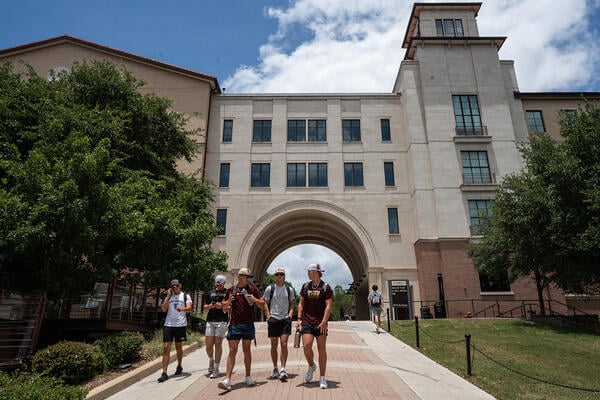
    A tenured Texas State University professor who was terminated earlier this month after allegedly inciting violence during a speech has sued the university, CBS Austin reported. In the lawsuit filed in district court, Thomas Alter, the former associate professor of history, claims that university leadership violated his free speech and due process rights and breached his employment contract. 

    At a Sept. 7 conference organized by Socialist Horizon, Alter said in part that “without organization, how can anyone expect to overthrow the most bloodthirsty, profit-driven mad organization in the history of the world—that of the U.S. government.” His speech was recorded and circulated by a right-wing YouTuber who had infiltrated the event. Alter was terminated three days later.

    In a statement announcing his termination, Texas State president Kelly Damphousse said Alter’s “actions are incompatible with their responsibilities as a faculty member at Texas State University.” Alter told CBS Austin that he did not associate himself with Texas State during the conference. 

    “The reasons Provost Aswrath provided for Dr. Alter’s termination are false and give every appearance of politically-motivated discrimination,” the lawsuit states. “In truth, Dr. Alter was terminated because he espoused views that are politically unpopular in today’s politically-charged climate, in violation of his First Amendment right to free speech.”

    Alter told CBS Austin that his dismissal “turned my world upside down and my family’s world upside down.”

    “Anyone should be able to express their views no matter how unpopular they are without facing the repercussions that many people are seeing,” he added. (Alter had earned tenure just 10 days before he was removed, The Chronicle of Higher Education reported.)

    Texas State did not respond to Inside Higher Ed’s request for comment, but a spokesperson told CBS Austin the university declined to comment on pending litigation.

    Source link

  • DOJ Sues Illinois Over In-State Tuition for Noncitizens

    DOJ Sues Illinois Over In-State Tuition for Noncitizens

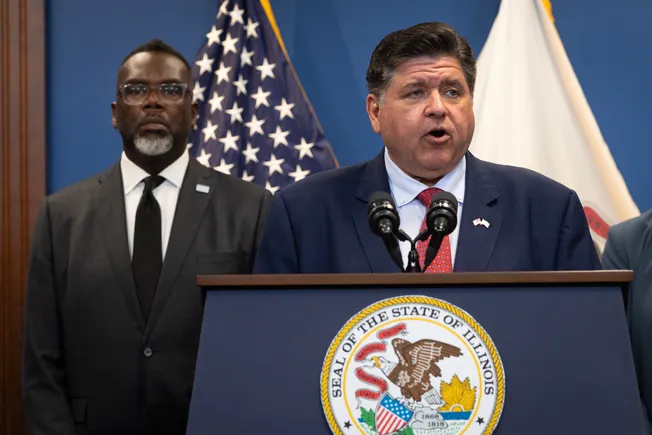
    The U.S. Department of Justice sued Illinois on Tuesday over its policy to allow in-state tuition rates for undocumented students. Illinois is the fifth state targeted by such a lawsuit.

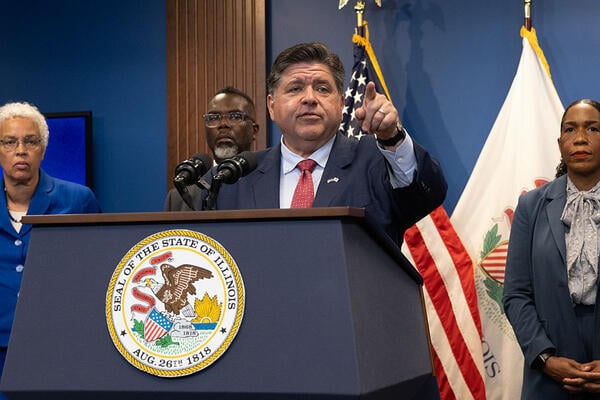
    The DOJ filed a complaint in the Southern District of Illinois against the state, Gov. JB Pritzker, the state attorney general and boards of trustees of state universities. The complaint argues that it’s illegal to offer lower tuition rates to undocumented students if out-of-state citizens can’t also benefit.

    Illinois passed a law in 2003 that grants in-state tuition to undocumented students who meet certain criteria. To qualify, students need to reside and attend high school in the state for three years, graduate from an Illinois high school, and sign an affidavit promising to apply to become a permanent resident as soon as possible. Pritzker then signed a bill into law last year that would loosen these criteria, starting in July 2026. Students will be able to pay in-state tuition rates if they meet one of two sets of requirements, including attending an Illinois high school for at least two years or a combination of high school and community college in the state for at least three years.

    “Under federal law, schools cannot provide benefits to illegal aliens that they do not provide to U.S. citizens,” Attorney General Pamela Bondi said in a news release. “This Department of Justice has already filed multiple lawsuits to prevent U.S. students from being treated like second-class citizens—Illinois now joins the list of states where we are relentlessly fighting to vindicate federal law.”

    In Texas and Oklahoma, the DOJ successfully ended in-state tuition for undocumented students; attorneys general in the two red states swiftly sided with the federal government’s legal challenges. Lawsuits against Kentucky and Minnesota are still ongoing.

    This latest lawsuit will likely escalate the Trump administration’s battle with the state of Illinois. President Donald Trump has said he wants to send the National Guard to Chicago, a move that Pritzker forcefully pushed back on. Since Trump took office, Pritzker has been an outspoken critic.

    April McLaren, deputy press secretary for the Illinois attorney general’s office, said officials are reviewing the case and have “no further comment.” Representatives at Eastern Illinois University, Northeastern Illinois University and Southern Illinois University, whose boards were among those named in the lawsuit, similarly told Inside Higher Ed that they can’t comment on pending litigation.

    A spokesperson for the governor’s office defended the state’s policy and called the lawsuit “yet another blatant attempt to strip Illinoisans of resources and opportunities.” 

    “While the Trump Administration strips away federal resources from all Americans, Illinois provides consistent and inclusive educational pathways for all students—including immigrants and first-generation students—to access support and contribute to our state,” the spokesperson wrote in an email to Inside Higher Ed. “All Illinoisans deserve a fair shot to obtain an education, and our programs and policies are consistent with federal laws.” 

    Source link

  • DOJ sues Illinois over in-state tuition for undocumented students

    DOJ sues Illinois over in-state tuition for undocumented students

    This audio is auto-generated. Please let us know if you have feedback.

    Dive Brief:

    • The U.S. Department of Justice is suing Illinois over state laws allowing certain undocumented college students to pay in-state tuition rates at public colleges and receive state-administered scholarships.
    • Under Illinois law, an undocumented student is eligible for in-state tuition if they attended a high school in the state for at least three years, graduated from high school or earned a GED in Illinois, and sign an affidavit saying they will apply to become a permanent U.S. resident as soon as possible.
    • U.S. Attorney General Pamela Bondi on Tuesday argued that in-state tuition rates for undocumented students illegally provide benefits not offered to all U.S. citizens. A spokesperson for Illinois Gov. JB Pritzker’s office defended the policy on Wednesday, saying it is consistent with federal law.

    Dive Insight:

    As of May, Illinois was one of at least 25 states that, along with Washington, D.C., had policies making undocumented students eligible to pay in-state rates at some or all public colleges.

    Over 27,600 undocumented students attended Illinois colleges in 2023, according to the Higher Ed Immigration Portal.

    Illinois has had its in-state tuition policy for eligible undocumented students in place since 2003. And in 2011, the state General Assembly established the Illinois DREAM Fund Commission, which raises private donations to fund scholarships for those students.

    Since June, the DOJ has sued at least five states, including Illinois, over the practice.

    The same day the DOJ filed a lawsuit against Texas, the state attorney general’s office partnered with the department to ask the court to strike down the policy. A federal judge declared it unconstitutional shortly afterward, though civil rights groups are seeking to intervene and challenge the ruling.

    In Oklahoma, the state attorney general similarly worked with the DOJ to end its policy, a request approved by a federal judge on Friday. Florida repealed its policy through legislation this year independent of federal intervention.

    “This Department of Justice has already filed multiple lawsuits to prevent U.S. students from being treated like second-class citizens — Illinois now joins the list of states where we are relentlessly fighting to vindicate federal law,” Bondi said in a Tuesday statement.

    Steven Weinhoeft, U.S. attorney for the Southern District of Illinois, similarly alleged that Illinois’ law unlawfully disadvantages the state’s citizens and uses tax funding to incentivize illegal immigration.

    “Illinois has an apparent desire to win a ‘race to the bottom’ as the country’s leading sanctuary state,” he said in a statement. “Illinois citizens deserve better.”

    Sanctuary jurisdictions, such as cities and states, are generally considered areas with policies limiting local authorities’ cooperation with federal immigration enforcement efforts. Bondi has promised to “eradicate” such policies across the country.

    Weinhoeft in February took over as the district’s attorney for Rachelle Aud Crowe, following Trump’s promise to fire all U.S. attorneys appointed by former President Joe Biden.

    Unlike Texas and Oklahoma, Illinois is a solidly blue state, with Democratic control over the governor’s mansion and both chambers of the Legislature. And Pritzker has been one of the most outspoken opponents of President Donald Trump.

    A spokesperson for the governor’s office called the lawsuit “yet another blatant attempt to strip Illinoisans of resources and opportunities.” 

    “While the Trump Administration strips away federal resources from all Americans, Illinois provides consistent and inclusive educational pathways for all students — including immigrants and first-generation students — to access support and contribute to our state,” the spokesperson said in an email Wednesday. “All Illinoisans deserve a fair shot to obtain an education, and our programs and policies are consistent with federal laws.”

    The DOJ’s lawsuit names as defendants: 

    • The state of Illinois.
    • Pritzker.
    • Illinois Attorney General Kwame Raoul.
    • Southern Illinois University’s board of trustees.
    • Rend Lake College’s board of trustees.
    • The University of Illinois’ board of trustees.
    • Chicago State University’s board of trustees.
    • Eastern Illinois University’s board of trustees.
    • Illinois State University’s board of trustees.
    • Northeastern Illinois University’s board of trustees.
    • Illinois Student Assistance Commission.
    • Illinois DREAM Fund Commission.

    The University of Illinois system said Wednesday it is reviewing the complaint and had no comment. Chicago State said it does not comment on pending litigation. And Rend Lake declined to comment on the lawsuit, citing ongoing talks with its legal counsel.

    The remaining colleges did not immediately respond to requests for comment Wednesday.

    The difference between in-state and out-of-state tuition can be substantial.

    In-state students who enrolled full time at Illinois State in fall 2025 paid $12,066 for a year of tuition. For out-of-state students, the cost was $24,132.

    At Chicago State, new in-state students paid $352 per credit hour, while incoming out-of-state students paid $697.

    Source link

  • Baylor Sues Boston U for Copyright Infringement

    Baylor Sues Boston U for Copyright Infringement

    Baylor University has lodged a legal complaint to lock down its use of interlocking letters. 

    In its complaint filed in the U.S. District Court for the Western District of Texas Waco Division on Friday, Baylor accused Boston University of unauthorized use of an interlocking “BU” mark in its school merchandise, club sports and branding guidelines. 

    Baylor owns the right to use the interlocking BU on a variety of items including clothing, tumblers, umbrellas and stationery. It alleges federal trademark infringement, false designation and unfair competition. 

    Despite contrasting school colors—red and white for Boston University and green and gold for Baylor—Baylor says in the complaint that Boston University’s use of the interlocking BU allows it “to trade on and receive the benefit of goodwill built up at great labor and expense by Baylor,” and to “gain acceptance for its goods and services not solely on his own merits, but on the reputation and goodwill of Baylor, its Interlocking BU, and Baylor’s products and services.”

    This is not the first time the institutions have locked horns over the logo. In 1987, Baylor applied to register the use of the interlocking letters, but Boston opposed the effort and the colleges agreed to co-exist under the “BU” mark.

    Boston later removed its opposition, and for 30 years Baylor held the key to the interlocking BU until 2018, when it discovered three hats in Boston’s campus spirit store displaying the mark in “identical and/or confusingly similar” ways. Baylor said it communicated its objection in 2021, but Boston did not stop branding with the logo. Instead it has expanded its use, according to Baylor, which included images of a serving tray, blanket and sails for club sports, all bearing the locked-up letters, in the complaint. 

    Baylor wants Boston to destroy all merchandise, packaging and signage bearing the interlocking BU. It’s seeking to recover its legal costs and any other relief the court deems appropriate.

    Source link

  • Stanford’s student newspaper sues President Trump

    Stanford’s student newspaper sues President Trump

    The Stanford Daily has filed a federal lawsuit against former President Donald Trump, marking a bold legal move from one of the country’s most prominent student newspapers. Editors at the Daily argue that Trump-era immigration policies targeting international students for political speech violated constitutional protections and created a climate of fear on campus.

    This legal action arrives during a moment of institutional turmoil at Stanford. Just days before the lawsuit was filed, university officials announced layoffs of more than 360 staff members, following $140 million in budget cuts. Administrators cited federal funding reductions and a steep endowment tax—legacies of Trump’s policies—as major factors behind the financial strain.

    Student journalists now find themselves confronting the same administration that reshaped higher education financing, gutted transparency, and targeted dissent. Their lawsuit challenges the chilling effect of visa threats against noncitizen students, particularly those who criticize U.S. or Israeli policy. Two international students joined the case anonymously, citing fear of deportation for expressing political views.

    Stanford holds one of the largest university endowments in the world, valued between $37 and $40 billion. Despite this immense wealth, hundreds of staff—including research support, technical workers, and student service roles—face termination. The disconnect between administrative austerity and executive influence speaks to a larger crisis in higher education governance.

    The Daily’s lawsuit cuts to the core of that crisis. Student reporters are asking not only for legal accountability, but also for transparency around how universities respond to political pressure—and who gets silenced in the process.

    HEI’s Commitment to Student-Led Accountability

    The Higher Education Inquirer is elevating this story as part of an ongoing effort to highlight courageous journalism from student-run newsrooms. Editorial boards like The Stanford Daily’s are producing investigative work that professional media often overlook. These journalists aren’t waiting for permission. They’re filing FOIA requests, confronting billion-dollar institutions, and—when necessary—taking their cases to court.

    HEI will continue amplifying these efforts. Student reporters are already reshaping the media conversation around academic freedom, labor justice, and the political economy of higher education. Their work deserves broader attention and support.

    Sources:

    Source link

  • ‘You could be next’: Stanford student newspaper sues over federal attacks on foreign students

    ‘You could be next’: Stanford student newspaper sues over federal attacks on foreign students

    This audio is auto-generated. Please let us know if you have feedback.

    Dive Brief:

    • The Foundation for Individual Rights and Expression on Wednesday sued top Trump administration officials, alleging their attempts to deport student visa holders over speech have violated the constitutional right to free expression and due process.
    • The free speech advocacy organization filed the lawsuit on behalf of Stanford University’s independent student newspaper and two unnamed plaintiffs who entered the U.S. on student visas. It accuses the Trump administration of illegally deporting those it deems to have “anti-American or anti-Israel” views, creating a “pall of fear” that is “incompatible with American liberty.” 
    • The lawsuit is asking a federal judge to bar U.S. Secretary of State Marco Rubio from making the plaintiffs eligible for deportation and U.S. Homeland Security Secretary Kristi Noem from initiating deportation proceedings based on their speech.

    Dive Insight:

    Beginning in March, the Trump administration began targeting international students studying at U.S. colleges, including but not limited those who had participated in pro-Palestinian campus protests or published commentary criticizing Israel. The wide-ranging campaign resulted in the federal government revoking at least 800 student visas by April 11.

    Later that month, the Trump administration walked back hundreds of the visa revocations amid intense legal scrutiny. But it then published a policy expanding the authority of U.S. Immigration and Customs Enforcement to terminate educational visas. 

    Evidence of an international student’s failure to comply with the terms of their legal status — not proof or “clear and convincing evidence” — would be enough for ICE to revoke it, according to guidance from law firm Hunton. The new policy did not address the federal government’s practice of terminating students’ visas without notifying them — meaning they may still have their legal status pulled without them or their colleges being informed, the firm added.

    Under the administration’s current policies, the plaintiffs face “an ongoing and credible threat” of student visa terminations and deportation proceedings, the lawsuit said.

    The Trump administration has cited two provisions of the Immigration and Nationality Act to justify these moves one that allows Rubio to revoke student visas and another that allows him to determine a noncitizen is eligible for deportation if their statements or associations “compromise a compelling United States foreign policy interest.”

    FIRE’s lawsuit alleges these provisions are unconstitutional when used to target free speech rights — which apply to all in the U.S., not just American citizens.

    “Secretary Rubio and the Trump administration’s war against noncitizens’ freedom of speech is intended to send an unmistakable message: Watch what you say, or you could be next,” the lawsuit said.

    The plaintiffs intend to seek permanent injunctive relief from the U.S. Supreme Court, the only court with the authority to “enjoin or restrain” aspects of the Immigration and Nationality Act.

    At The Stanford Daily, student writers who are attending the university on a visa are turning down assignments related to the conflict in the Middle East over concerns their reporting would endanger their immigration status, the lawsuit alleges. 

    Other such reporters are requesting to have their published articles taken down or are quitting the newspaper altogether out of fear of deportation.

    Beyond the newsroom, international students have also largely stopped talking to the Daily’s staff since March, the lawsuit said. When they do, they often refuse to speak on the record, “particularly when it comes to discussing topics like Israel and Palestine,” it said.

    “There’s real fear on campus and it reaches into the newsroom,” Greta Reich, editor-in-chief of the student newspaper, said in a statement. “The Daily is losing the voices of a significant portion of our student population.”

    Both of the unnamed plaintiffs entered the U.S. on F-1 student visas, hold no criminal record, and have publicly voiced pro-Palestinian views. But both began self-censoring over “their rational concern about the ongoing danger of deportation for expression Secretary Rubio deems anti-American or anti-Israel,” the lawsuit alleges

    One of the plaintiffs had been a member of her university’s chapter of Students for Justice in Palestine and criticized America’s relationship with Israel online. Her work led to her inclusion on Canary Mission, an anonymous website that “publishes the personal information of students, professors and organizations it deems ‘anti-Israel,’” according to the lawsuit. 

    The website has repeatedly been accused of the doxxing of students and protesters, which free speech experts say can chill protected political speech and incite violence.

    The lawsuit cited testimony from Peter Hatch, assistant director of ICE’s Homeland Security Investigations department, in which he told lawmakers that “most” of the student protesters DHS asked ICE to investigate came from Canary Mission’s website.

    Among its posts, the website had published information on Mahmoud Khalil, Rümeysa Öztürk, and Mohsen Mahdawi prior to the Trump administration detaining and attempting to deport them. All three current and former students have since been released on the orders of federal judges.

    Aware of this environment, the plaintiff has “refrained from publishing and voicing her true opinions regarding Palestine and Israel” since March and deleted a social media account “to guard against retaliation for past expression.”

    Likewise, the other unnamed plaintiff previously attended pro-Palestinian protests and published both pro-Palestinian and anti-Israel commentary. But he began self-censoring his work over fears of deportation, according to the lawsuit.

    He also served as a teaching assistant at his college, and the course’s professor advised him to reconsider his advocacy related to Israel and Palestinians, as it might endanger his immigration status, the complaint said.

    “No one should fear a midnight knock on the door for voicing the wrong opinion,” the lawsuit said. But the Trump administration, and Rubio in particular, are working to make free speech “a privilege contingent upon the whims of a federal bureaucrat,” it said.

    Source link

  • After DOJ Sues, Okla. Ends In-State Tuition for Noncitizens

    After DOJ Sues, Okla. Ends In-State Tuition for Noncitizens

    The U.S. Department of Justice sued the state of Oklahoma Tuesday over a state law that allows undocumented students to pay in-state tuition rates. Oklahoma is now the fourth state the DOJ has sued for having such a policy.

    The state’s Republican attorney general, Gentner Drummond, swiftly sided with the federal government and filed a joint motion in support of quashing the law. He said in a statement that it’s “discriminatory and unlawful” to offer noncitizens lower in-state tuition rates “that are not made available to out-of-state Americans.”

    “Today marks the end of a longstanding exploitation of Oklahoma taxpayers, who for many years have subsidized colleges and universities as they provide unlawful benefits to illegal immigrants in the form of in-state tuition,” Drummond said.

    Now the state and the DOJ await a ruling from the U.S. District Court for the Eastern District of Oklahoma.

    Oklahoma’s quick support for the legal challenge is reminiscent of what happened in Texas when the DOJ sued the state in June: Within hours of the lawsuit, Texas sided with the Justice Department and a judge ruled in favor of a permanent injunction, ending in-state tuition for noncitizens. The DOJ then filed similar lawsuits against Kentucky and Minnesota, though those legal fights are still ongoing.

    The lawsuits follow an executive order issued by President Donald Trump in April calling for a crackdown on so-called sanctuary cities and state laws unlawfully “favoring aliens over any groups of American citizens,” citing in-state tuition benefits for noncitizens as an example.

    Source link

  • A sportswear brand vs. an Ivy League school: Columbia sues Columbia

    A sportswear brand vs. an Ivy League school: Columbia sues Columbia

    This audio is auto-generated. Please let us know if you have feedback.

    Dive Brief:

    • Columbia Sportswear is suing Columbia University for trademark infringement, unfair competition and breach of contract, according to court documents filed last week.
    • Attorneys for Columbia Sportswear say the university is in breach of a written agreement between the parties over the sale of apparel merchandise. The two groups entered a written agreement in 2023 that the university would not use the “Columbia” name alone.
    • Last year, Columbia University’s webstore offered for sale shirts, sweatshirts and hats that bare the word “Columbia” on its own, which attorneys for Columbia Sportswear say violate the contract and its trademark rights.

    Dive Insight:

    Columbia Sportswear is seeking a jury trial in the complaint against Columbia University. It also asks that the university be prevented from using the trademark name alone on apparel and accessories, along with recalling any such products currently in the university’s possession. The brand also is seeking monetary damages.

    In 2023, the sportswear company said the two groups entered a written agreement whereby the university could use the “Columbia” name, for which the sportswear company has a trademark, if the name was used with one other distinguishing mark associated with the university, such as its shield, crown or lion mascot logo, or words, such as “university,” “Columbia Law,” or its year of founding.

    The lawsuit was filed last week in the U.S. District Court for the District of Oregon. Columbia Sportswear is headquartered in Portland, Oregon. 

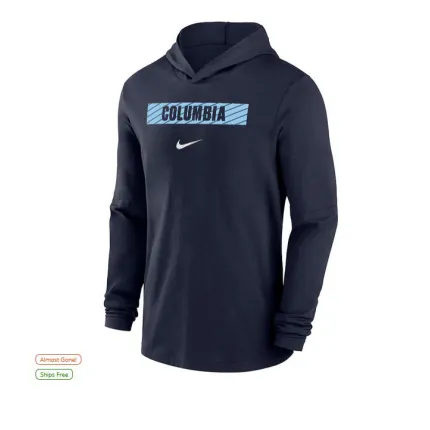
    Some of the Columbia University apparel mentioned in the lawsuit include the Nike and Champion logos, which attorneys for Columbia Sportswear say can create customer confusion and a false association between Columbia Sportswear and its competitors.

    A Columbia University sweatshirt with the Nike emblem.

    An example of Columbia University’s allegedly infringing products.

    Retrieved from Court Filing.


    “Though Columbia Sportswear and Nike are headquartered in the same State and are both highly reputable sporting apparel designers and have a generally friendly relationship, the two companies have never collaborated to jointly design, manufacture, market, or sell any product,” the complaint says. “A consumer looking at the Infringing Merchandise would never know that, and, in fact, would reasonably be induced into believing the companies had.”

    A Columbia University spokesperson declined to comment on the pending litigation.

    It’s likely that this case will be settled out of court, and fairly quickly, said Josh Gerben, trademark attorney and founder of Gerben IP law firm.

    However, “if Columbia Sportswear’s version of the story in the complaint is not entirely accurate, and Columbia University decides to defend the case, things could get interesting,” Gerben said in an email. “This is because Columbia University has been around much longer than Columbia Sportswear. It gives the university some very interesting defenses to the overall claims regarding trademark infringement.”

    Columbia Sportswear is set to announce its second quarter earnings Thursday. In Q1, the company reported a net sales increase of 1% to $778.5 million. At the time of the announcement, the company withdrew its full-year financial outlook due to economic uncertainty related to tariffs.

    Source link

  • DOJ Sues Minnesota Over In-State Tuition for Noncitizens

    DOJ Sues Minnesota Over In-State Tuition for Noncitizens

    The U.S. Department of Justice sued Minnesota lawmakers Wednesday over the state’s policy allowing in-state tuition benefits for undocumented students.

    The lawsuit names Gov. Tim Walz, Attorney General Keith Ellison and the state’s Office of Higher Education as defendants. It claims Minnesota is violating federal law and discriminating against U.S. citizens by permitting noncitizens who grew up in the state to pay in-state tuition rates. Under the Minnesota Dream Act, signed into law in 2013, undocumented students have to meet various criteria to qualify, including spending three years at and graduating from a Minnesota high school.

    The suit also takes issue with the state’s North Star Promise Program, a free college program launched last year for Minnesotans who meet certain requirements, including undocumented students who live in the state.

    The lawsuit comes after the Justice Department successfully sued Texas over the same issue earlier in June. Texas swiftly sided with the federal government, and within hours, its two-decade-old law allowing in-state tuition for undocumented students became moot. The DOJ also sued Kentucky politicians over its in-state tuition policy last week. The lawsuits cite President Donald Trump’s May executive order that called for a crackdown on cities and states with laws that benefit undocumented immigrants, including those that offer in-state tuition benefits.

    “No state can be allowed to treat Americans like second-class citizens in their own country by offering financial benefits to illegal aliens,” Attorney General Pamela Bondi said in a news release. “The Department of Justice just won on this exact issue in Texas, and we look forward to taking this fight to Minnesota in order to protect the rights of American citizens first.”

    Source link

  • Tennessee Sues to End HSI Requirements

    Tennessee Sues to End HSI Requirements

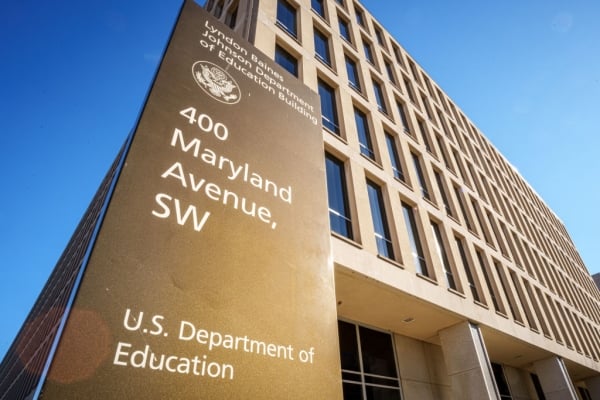
    The state of Tennessee filed a lawsuit against the U.S. Department of Education on Wednesday seeking to nix traditional requirements for Hispanic-serving institutions’ federal designation and grant funding. The state is joined by Students for Fair Admissions, the advocacy group whose lawsuits against Harvard and the University of North Carolina at Chapel Hill resulted in the U.S. Supreme Court ruling against affirmative action in college admissions.

    The plaintiffs argue it’s unconstitutional and discriminatory for the Education Department to designate grants for Hispanic-serving institutions, defined as colleges and universities where at least a quarter of students are Hispanic. Today, about 600 colleges and universities meet the criteria for the federal designation, established by Congress in the 1990s.

    The lawsuit laments that Tennessee higher ed institutions serve Hispanic and low-income students but don’t receive grants intended for HSIs because they don’t meet the enrollment threshold. As a result, the plaintiffs argue, Tennessee institutions find themselves in an “unconstitutional dilemma”—they want to enroll more Hispanic students to earn HSI status, but using race as a factor in admissions would be illegal.

    “Funds should help needy students regardless of their immutable traits, and the denial of those funds harms students of all races,” the lawsuit reads.

    The plaintiffs seek “a declaratory judgment that the HSI program’s ethnicity-based requirements are unconstitutional” and “a permanent injunction prohibiting the [Education] Secretary from enforcing or applying the HSI program’s ethnicity-based requirements when making decisions whether to award or maintain grants to Tennessee’s institutions of higher education.”

    Source link