Tag: sues

  • DOJ Sues Minnesota Over In-State Tuition for Noncitizens

    DOJ Sues Minnesota Over In-State Tuition for Noncitizens

    The U.S. Department of Justice sued Minnesota lawmakers Wednesday over the state’s policy allowing in-state tuition benefits for undocumented students.

    The lawsuit names Gov. Tim Walz, Attorney General Keith Ellison and the state’s Office of Higher Education as defendants. It claims Minnesota is violating federal law and discriminating against U.S. citizens by permitting noncitizens who grew up in the state to pay in-state tuition rates. Under the Minnesota Dream Act, signed into law in 2013, undocumented students have to meet various criteria to qualify, including spending three years at and graduating from a Minnesota high school.

    The suit also takes issue with the state’s North Star Promise Program, a free college program launched last year for Minnesotans who meet certain requirements, including undocumented students who live in the state.

    The lawsuit comes after the Justice Department successfully sued Texas over the same issue earlier in June. Texas swiftly sided with the federal government, and within hours, its two-decade-old law allowing in-state tuition for undocumented students became moot. The DOJ also sued Kentucky politicians over its in-state tuition policy last week. The lawsuits cite President Donald Trump’s May executive order that called for a crackdown on cities and states with laws that benefit undocumented immigrants, including those that offer in-state tuition benefits.

    “No state can be allowed to treat Americans like second-class citizens in their own country by offering financial benefits to illegal aliens,” Attorney General Pamela Bondi said in a news release. “The Department of Justice just won on this exact issue in Texas, and we look forward to taking this fight to Minnesota in order to protect the rights of American citizens first.”

    Source link

  • Tennessee Sues to End HSI Requirements

    Tennessee Sues to End HSI Requirements

    The state of Tennessee filed a lawsuit against the U.S. Department of Education on Wednesday seeking to nix traditional requirements for Hispanic-serving institutions’ federal designation and grant funding. The state is joined by Students for Fair Admissions, the advocacy group whose lawsuits against Harvard and the University of North Carolina at Chapel Hill resulted in the U.S. Supreme Court ruling against affirmative action in college admissions.

    The plaintiffs argue it’s unconstitutional and discriminatory for the Education Department to designate grants for Hispanic-serving institutions, defined as colleges and universities where at least a quarter of students are Hispanic. Today, about 600 colleges and universities meet the criteria for the federal designation, established by Congress in the 1990s.

    The lawsuit laments that Tennessee higher ed institutions serve Hispanic and low-income students but don’t receive grants intended for HSIs because they don’t meet the enrollment threshold. As a result, the plaintiffs argue, Tennessee institutions find themselves in an “unconstitutional dilemma”—they want to enroll more Hispanic students to earn HSI status, but using race as a factor in admissions would be illegal.

    “Funds should help needy students regardless of their immutable traits, and the denial of those funds harms students of all races,” the lawsuit reads.

    The plaintiffs seek “a declaratory judgment that the HSI program’s ethnicity-based requirements are unconstitutional” and “a permanent injunction prohibiting the [Education] Secretary from enforcing or applying the HSI program’s ethnicity-based requirements when making decisions whether to award or maintain grants to Tennessee’s institutions of higher education.”

    Source link

  • Harvard Sues to Protect International Enrollment

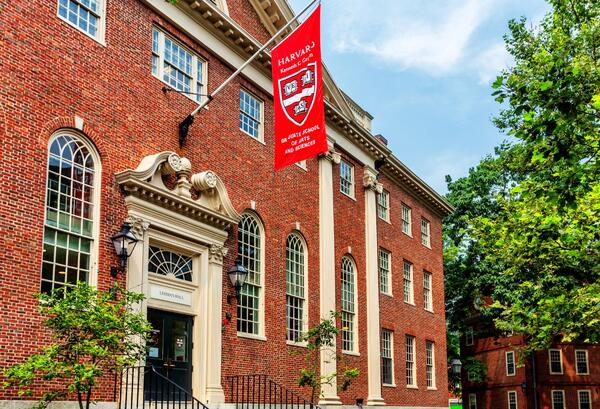
    Harvard Sues to Protect International Enrollment

    APCortizasJr/iStock Unreleased/Getty Images

    Less than a day after having its ability to host international students revoked by the federal government, Harvard University successfully sued the Trump administration to block the move. A judge granted a temporary restraining order late Friday morning.

    Department of Homeland Security Secretary Kristi Noem announced Thursday afternoon that the Trump administration had stripped Harvard’s Student and Exchange Visitor Program certification in a letter that vaguely accused Harvard of a “failure to adhere to the law.” 

    However, the letter did not name any specific violations of the law by Harvard.

    On Friday morning, Harvard threw a legal counterpunch, filing a lawsuit challenging the revocation of SEVP certification and seeking a temporary restraining order to halt the action, which could cost Harvard to suddenly lose more than 6,000 students if they are unable to enroll. (International enrollment typically makes up about a quarter of Harvard’s head count.) Beyond blocking new enrollments, the revocation would require current international students to transfer. 

    Harvard president Alan Garber blasted the SEVP revocation as “unlawful and unwarranted” and said it was a punitive effort by the Trump administration in response to Harvard’s rejection of demands to reform governance, admissions, hiring processes and more following allegations of antisemitism and harassment that stemmed from pro-Palestinian protests last year. (Harvard filed a separate lawsuit pushing back on those demands last month, prompting the Trump administration to retaliate by freezing $2.7 billion in grants and contracts, or about a third of its federal research funding.)

    “It imperils the futures of thousands of students and scholars across Harvard and serves as a warning to countless others at colleges and universities throughout the country who have come to America to pursue their education and fulfill their dreams,” Garber wrote in a message to campus.

    He added, “We will do everything in our power to support our students and scholars.”

    Harvard’s lawsuit echoed Garber’s points in an even sharper tone, accusing the federal government of blatantly violating the First Amendment and Harvard’s due process rights.

    “With the stroke of a pen, the government has sought to erase a quarter of Harvard’s student body, international students who contribute significantly to the University and its mission,” lawyers representing Harvard argued in Friday’s early-morning legal filing.

    Harvard’s lawsuit named DHS, Noem and other officials within the department as defendants, as well as the U.S. Departments of Justice and State and agency leaders.

    Assistant DHS secretary Tricia McLaughlin fired back at Harvard in a response to Inside Higher Ed.

    “This lawsuit seeks to kneecap the President’s constitutionally vested powers under Article II. It is a privilege, not a right, for universities to enroll foreign students and benefit from their higher tuition payments to help pad their multibillion-dollar endowments. The Trump administration is committed to restoring common sense to our student visa system; no lawsuit, this or any other, is going to change that. We have the law, the facts, and common sense on our side,” she wrote.

    Another Legal Setback

    A judge swiftly agreed with Harvard’s argument, signing off on the temporary restraining order to prevent revocation of the university’s SEVP certification within hours of the lawsuit being filed.

    In a brief opinion, a district court judge in Massachusetts wrote in response to Harvard’s legal filing that the temporary restraining order was “justified to preserve the status quo.” The judge blocked DHS from stripping SEVP certification, at least temporarily, and granted a hearing. 

    A date for the hearing was not specified in court documents.

    The temporary restraining order is one of multiple legal setbacks the Trump administration has faced recently as it has sought to pull student visas over minor infractions (and for constitutionally protected speech), cap federal research funding reimbursement rates, and slash staff at the Department of Education and other agencies. Many of those efforts face ongoing challenges.

    On Thursday, for example, a federal judge barred the Trump administration from firing thousands of Department of Education employees as part of a sweeping reduction of force.

    The federal government has already appealed that decision.

    ‘Do This Everywhere’

    The Trump administration’s latest action against Harvard prompted broad condemnation from academics and free speech groups, who argued that the federal government did not follow legal processes for stripping SEVP certification and had ignored the university’s due process rights.

    “The administration has clearly targeted Harvard in recent months. In doing so, it has violated not only Harvard’s First Amendment rights, but also the rights of the university’s students and faculty,” the free speech group Foundation for Individual Rights and Expression wrote in a Friday social media post. “We commend Harvard for standing up for itself. Free speech and academic freedom are essential to higher education. They are values worth fighting for.”

    Despite widespread concerns from academics and lawyers that stripping Harvard’s SEVP certification is not legal, multiple Republican officials have endorsed Noem’s actions.

    Rep. Randy Fine, a Republican who represents Florida and a member of the House Education and the Workforce Committee, cheered on the move in a Friday appearance on FOX Business. Fine, a two-time Harvard graduate, said the Trump administration should “do this everywhere” amid concerns about antisemitic behavior and harassment on college campuses.

    Fine also took a dim view of international students exercising their First Amendment rights.

    “We should not be bringing people into America to get an education who hate us. They should be coming here to get an education, and frankly they should keep their mouths shut beyond that. I don’t go into someone else’s house and complain about it when I’m there,” Fine said.


    Source link

  • Harvard Sues the Trump Administration

    Harvard Sues the Trump Administration

    After a weeks-long standoff with the federal government over alleged antisemitism on campus, Harvard University sued the Trump administration on Monday over the $2.2 billion federal funding freeze enacted after the private institution rejected a far-reaching slate of reforms last week.

    The Trump administration had demanded Harvard overhaul university governance, hiring, admissions and more, despite the fact that an investigation has yet to reach any conclusions.

    President Alan Garber announced the move in a statement to the university community Monday, noting that while some officials in the Trump administration have claimed the demand letter was sent by accident, the federal government has acted in ways that suggest it was purposeful.

    “Doubling down on the letter’s sweeping and intrusive demands—which would impose unprecedented and improper control over the University—the government has, in addition to the initial freeze of $2.2 billion in funding, considered taking steps to freeze an additional $1 billion in grants, initiated numerous investigations of Harvard’s operations, threatened the education of international students, and announced that it is considering a revocation of Harvard’s 501(c)(3) tax-exempt status. These actions have stark real-life consequences for patients, students, faculty, staff, researchers, and the standing of American higher education in the world,” Garber wrote.

    The lawsuit comes as the Trump administration has threatened to cut off Harvard’s ability to host international students and reportedly sought to freeze another $1 billion in research funding.

    “It has been clear for weeks that the administration’s actions violated due process and the rule of law,” said Ted Mitchell, president of the American Council on Education. “We applaud Harvard for taking this step and look forward to a clear and unambiguous statement by the court rebuking efforts to undermine scholarship and science.”

    Harvard’s lawsuit names the Departments of Health and Human Services, Justice, Education, Energy and Defense, the General Services Administration, the National Science Foundation, the National Aeronautics and Space Administration, and associated agency heads. The lawsuit was filed in U.S. District Court in Massachusetts.

    Source link

  • AFT sues Dept. of Education for denying borrowers’ rights (Student Borrower Protection Center)

    AFT sues Dept. of Education for denying borrowers’ rights (Student Borrower Protection Center)

    Yesterday, President Trump signed an executive order ordering the shutdown of the U.S. Department of Education (ED). The order claims to ensure the “uninterrupted delivery of services, programs, and benefits on which Americans rely,” yet Trump and Secretary Linda McMahon have gutted the arms of ED that make those functions possible. Read our statement on yesterday’s executive order here. Last week, Trump announced a 50 percent reduction in the workforce at the Department. Now he plans to move student loans to the Small Business Administration?!?!

    The Trump Administration is intentionally breaking the student loan system and attacking borrowers and working families with student debt. But we’ve been fighting back.

    On Tuesday night, the 1.8 million-member AFT sued ED for denying borrowers’ access to affordable loan payments and blocking progress towards Public Service Loan Forgiveness (PSLF)—in violation of federal law.

    Three weeks ago, federal education officials eliminated access to Income-Driven Repayment (IDR) plans by removing the application from ED’s website and secretly ordering student loan servicers to halt processing all applications. These IDR plans provide millions of borrowers the right to tie their monthly payment to their income and family size, giving them the option to make loan payments they can afford.

    IDR plans are also the only way for public service workers to benefit from PSLF—a critical lifeline for teachers, nurses, first responders, and millions of other public service workers across the country.

    SBPC Executive Director Mike Pierce’s statement:

    Source link

  • Education association sues Trump admin over DEI guidance

    Education association sues Trump admin over DEI guidance

    Legal challenges to the Education Department’s guidance ordering colleges to rescind all race-based programming are piling up. 

    A week after the American Federation of Teachers sued the Trump administration over the guidance, the National Education Association and the American Civil Liberties Union filed a lawsuit that seeks to restrain the department from enforcing the Feb. 14 letter.

    Similar to the AFT lawsuit, the NEA argues that the letter and its threat to cut federal funding would hamper public schools’ function as “the nation’s ‘nurseries of democracy.’” The NEA lawsuit was filed in the New Hampshire federal district court, while the AFT’s challenge is in Maryland district court.

    “The Trump administration is threatening to punish students, parents and educators in public schools for … fostering inclusive classrooms where diversity is valued, history is taught honestly, and every child can grow into their full brilliance,” Becky Pringle, president of the NEA, said in a news release. “We’re urging the court to block the Department of Education from enforcing this harmful and vague directive and protect students from politically motivated attacks that stifle speech and erase critical lessons.”

    NEA alleges that the Dear Colleague letter “imposes vague and viewpoint discriminatory prohibitions,” “invites arbitrary and discriminatory enforcement,” and causes “substantial, irreparable harm.” 
    The NEA wants the court to declare the letter contrary to constitutional rights and place a permanent restraint on the department, preventing it from enforcing the letter’s orders.

    Source link

  • LAWSUIT: LGBTQ student group sues to overturn Texas A&M’s unconstitutional drag ban

    LAWSUIT: LGBTQ student group sues to overturn Texas A&M’s unconstitutional drag ban

    HOUSTON, Texas, March 5, 2025 — The Foundation for Individual Rights and Expression filed a federal lawsuit on behalf of an LGBTQ+ student organization to block a new policy from the Texas A&M University System that bans drag performances on its 11 public campuses — a clear violation of the First Amendment.

    FIRE is asking a court in the Southern District of Texas to halt Texas A&M officials from enforcing the drag ban, abruptly adopted on Friday afternoon. The lawsuit is on behalf of the Queer Empowerment Council, a coalition of student organizations at Texas A&M University-College Station and the organizers of the fifth annual “Draggieland” event that was scheduled to be held on campus on March 27. 

    “We refuse to let Texas A&M dictate which voices belong on campus,” said the Queer Empowerment Council. “Drag is self-expression, drag is discovery, drag is empowerment, and no amount of censorship will silence us.”

    Texas A&M students first held “Draggieland” (a portmanteau of “Drag” and “Aggieland,” a nickname for Texas A&M) at the campus theatre complex in 2020, and the event has been held on campus annually ever since. But last Friday, the Board of Regents suddenly voted to ban drag events entirely across all 11 Texas A&M campuses. 

    “The board finds that it is inconsistent with the system’s mission and core values of its universities, including the value of respect for others, to allow special event venues of the universities to be used for drag shows,” the board’s resolution reads. The regents also claimed that drag performances are “offensive” and “likely to create or contribute to a hostile environment for women.”

    “Public universities can’t shut down student expression simply because the administration doesn’t like the ‘ideology’ or finds the expression ‘demeaning,’” said FIRE attorney Adam Steinbaugh. “That’s true not only of drag performances, but also religion, COVID, race, politics, and countless other topics where campus officials are too often eager to silence dissent.”

    The regents’ attempts to justify the drag ban as anything other than illegal viewpoint discrimination are feeble. The board admits they want to ban drag on campus because they find it “demeans women,” “promotes gender ideology,” or runs contrary to their “values”—- but the First Amendment squarely protects speech that offends and even angers others. And in all cases, it prevents campus officials from silencing speech because they disagree with the “ideology.” As a taxpayer-funded university system, Texas A&M campuses cannot treat some student events differently simply because they dislike the view being expressed. 

    “Even putting on an on-campus production of Shakespeare or Mrs. Doubtfire, or taking part in powderpuff, could be banned at A&M if some hostile administrator thinks they ‘promote gender ideology,’” said FIRE senior attorney JT Morris. “But if the First Amendment means anything, it’s that the government can’t silence ideologies they don’t like — real or perceived.”

    Title IX’s prohibition on creating a “hostile environment” also does not give public universities the ability to run around the First Amendment. FIRE has long seen efforts to suppress speech on the basis that it might contribute to a “hostile environment” because someone finds it offensive, but if speech can be suppressed because someone believes it is offensive, no speech is safe. The First Amendment does not permit public universities to suppress speech because someone thinks it is inappropriate.

    In order to fit the definition of harassment the Supreme Court has established, speech must be “objectively offensive” AND “severe” AND “pervasive.” A once-a-year drag show in an enclosed theatre that requires a ticket to enter doesn’t even come close to satisfying those strict conditions.

    “If other students dislike or disagree with Draggieland, the solution is simple: don’t go,” said FIRE attorney Jeff Zeman. “Or they could organize a protest, as students opposing drag have in the past. The First Amendment protects drag and the ability to criticize drag — and it forbids the government silencing the side it disagrees with.”

    Finally, the regents’ motion notes that “there are alternative locations for such events off-campus.” But that violates the First Amendment, too. The government cannot censor speech in places the First Amendment protects it, just because a speaker might express themselves elsewhere. “Draggieland” highlights why that principle is so vital: if a student group can’t reach their campus community with their message, then their message can’t fulfill its purpose.

    In the face of unconstitutional censorship, Draggieland organizers have remained unbowed. They have announced to supporters that they will hold an on-campus “Day of Drag” protest on Thursday and that they are committed to holding the event even if forced off-campus.

    “We are committed to ensuring that our voices are heard, and that Draggieland will go on, no matter the obstacles we face,” the Queer Empowerment Council announced.


    The Foundation for Individual Rights and Expression (FIRE) is a nonpartisan, nonprofit organization dedicated to defending and sustaining the individual rights of all Americans to free speech and free thought—the most essential qualities of liberty. FIRE recognizes that colleges and universities play a vital role in preserving free thought within a free society. To this end, we place a special emphasis on defending the individual rights of students and faculty members on our nation’s campuses, including freedom of speech, freedom of association, due process, legal equality, religious liberty, and sanctity of conscience.

    CONTACT:

    Alex Griswold, Communications Campaign Manager, FIRE: 215-717-3473; [email protected]

    Source link

  • Teachers’ union sues to block Trump admin’s DEI guidance

    Teachers’ union sues to block Trump admin’s DEI guidance

    Pete Kiehart/The Washington Post/Getty Images

    A coalition of educators and sociologists is challenging the Department of Education and its unprecedented Dear Colleague letter—which declared all race-conscious student programming illegal—in a lawsuit filed late Tuesday evening.

    The American Federation of Teachers and the American Sociological Association argue in the complaint, which was submitted to a Maryland federal court, that following the letter’s dictates “will do a disservice to students and ultimately the nation by weakening schools as portals to opportunity.”

    “This vague and clearly unconstitutional memo is a grave attack on students, our profession and knowledge itself … It would hamper efforts to extend access to education, and dash the promise of equal opportunity for all, a central tenet of the United States since its founding,” AFT president Randi Weingarten said in a statement. “It would upend campus life.”

    The expected legal challenge came just three days before a Feb. 28 compliance deadline. The four-page guidance document says that colleges and universities must rescind any race-based policies, activities and resources by the end of the day or risk investigation and the loss of federal funding.

    The department justifies its demands through a new interpretation of the Supreme Court’s 2023 ruling in Students for Fair Admissions v. Harvard, which banned the consideration of race in college admissions. Although the Supreme Court’s decision applied specifically to admissions, the Trump administration believes it extends to all race-conscious activities.

    On Friday, a judge from the same federal court in Maryland issued a temporary injunction in a separate lawsuit that blocked parts of President Trump’s antidiversity executive orders.

    But higher education legal experts say that the Dear Colleague letter and the executive orders, though similar, are independent levers, so the injunction doesn’t affect the department’s guidance. The Education Department has also said it is still moving forward with its interpretation of the law and the deadline stands.

    So now all eyes are on this most recent court case, as higher education leaders wait to see if the judge will issue a second injunction and block the guidance.

    “The Department of Education’s new policy, reflected in the February ‘Dear Colleague’ letter, seeks to undermine our nation’s educational institutions and is an unlawful attempt to impose this administration’s particular views,” said Skye Perryman, president of Democracy Forward, the legal group representing the plaintiffs. “We will continue to pursue every legal opportunity to oppose and stop harmful attacks on freedom of expression and on the values like inclusion, diversity and belonging that make us all and our nation stronger.”

    In the meantime, higher education advocacy groups are urging colleges and universities to stay calm and not overreact to the Dear Colleague letter.

    On Tuesday the American Council on Education sent a letter to Craig Trainor, the acting assistant secretary of civil rights, requesting that he “rescind the DCL” and work with higher education institutions to ensure a clearer understanding of the letter before setting a new compliance deadline.

    “Over the last two years, our colleges and universities have worked hard to assess and modify, as appropriate, policies and practices in light of the decision in the SFFA case and applicable civil rights laws,” ACE president Ted Mitchell wrote. “It is unreasonable for the department to require institutions to appropriately respond to this extremely broad reinterpretation of federal law in a mere two weeks and in the absence of necessary guidance.”

    Source link

  • University of Hawai‘i dean sues law professor who criticized diversity event

    University of Hawai‘i dean sues law professor who criticized diversity event

    When the University of Hawai‘i at Manoa planned a Black History Month event in February 2023 that lacked any black facilitators, law professor Kenneth Lawson publicly challenged a dean about it at a faculty meeting. Nearly two years later, and shortly after clashing with administrators over their decision to doctor one of his class presentations,  Lawson suddenly must defend himself against a defamation lawsuit over his remarks — one filed by that same dean. 

    On Feb. 20, Lawson’s legal team filed an anti-SLAPP motion to dismiss the dean’s lawsuit, in which she alleged that Lawson’s heated arguments with her concerning the Black History Month event, as well as Lawson’s call to boycott the event, were defamatory. Lawson’s legal team argues that the defamation suit is “an attempt to chill and silence Professor Lawson’s constitutionally protected speech.” And the fact that it came fast on the heels of a curriculum dispute raises further questions of retaliation.

    2023: Lawson files First Amendment lawsuit against university following imbroglio over Black History Month event 

    The threats to Lawson’s expressive freedoms date to a faculty meeting back in February 2023, where he voiced vehement objections to a scheduled Black History Month event that was to feature a panel with no black facilitators. (Lawson is black.) 

    At the meeting, UH Dean Camille Nelson clashed with Lawson over the issue. Lawson claimed Nelson (who is also black) didn’t have sufficient experience in or understanding of the Civil Rights Movement. Nelson retorted that her experience as a black woman gave her perspective to understand racism, but that she did not want to litigate that issue during the meeting. In a follow-up email, Lawson accused Nelson of being “highly dismissive” of his objections, and a few days later, he called for a boycott of the panel via a university listserv. 

    Law professor challenges university after campus ‘shooting’ hypothetical changed in lesson plan

    News

    The University of Hawai’i violated academic freedom and set a dangerous precedent with unilateral revisions to a law professor’s presentation on a legal concept.


    Read More

    UH banned Lawson from campus and launched an investigation to determine whether he had created a “hostile work environment” for his colleagues. The university also issued no-contact orders barring Lawson from contacting certain administrators and restricting his use of university listservs. 

    Lawson, in turn, sued UH for violating his First Amendment rights to speak on a matter of public concern: racism and inclusion at the university. 

    The university eventually sanctioned Lawson for the February 2023 incident, requiring him to complete mandatory training and serve a one-month suspension without pay. Lawson returned to teaching in August of 2024, after completing the university’s sanctions under protest as his legal case proceeded.

    2025: Lawson becomes locked in conflict over academic freedom violations

    Last month, we told readers about Lawson’s clash with the university over an in-class PowerPoint presentation. Last September, Lawson used a hypothetical involving himself and two deans — one of whom shoots at the other, misses, and hits Lawson accidentally — to teach his law students the legal concept of transferred intent. The accompanying slide included website portraits of himself and the two deans to illustrate the example. 

    When an anonymous student filed a complaint about the example, the university’s response to the complaint presented a master class in how to violate academic freedom. The university ordered Lawson to change the hypothetical because it could be “disturbing and harmful,” despite the fact that he had not violated any policy. When Lawson rightfully demurred, the university unilaterally changed Lawson’s slides, removing images of the two deans—but leaving Lawson as the victim of the shooting. (Why students would be less disturbed by a hypothetical that still depicted their professor as a shooting victim was not explained.)

    Slide with an image of law professor Ken Lawson alongside generic man/woman icons

    FIRE sent two letters to the university urging it to restore the hypothetical to its original state. We argued that unilaterally changing a faculty member’s teaching materials raised serious concerns about the university’s fealty to the basic tenets of academic freedom. Those tenets protect the right of faculty members to determine how best to teach their subjects. This freedom is even more important when those topics are complicated, difficult, or potentially upsetting to students. Going over Lawson’s head to change the hypothetical without his consent also raises serious concerns for future academic freedom issues. Would UH consistently bypass faculty rights to change instruction until the teaching satisfied administrators?

    UH dean files defamation lawsuit

    Shortly after Lawson filed his censorship grievance, and nearly two years after the case’s original filing, Nelson hit Lawson with a lawsuit of her own: She alleged that Lawson’s behavior at the meeting nearly two years earlier, and his subsequent email to the university listserv, had defamed her. 

    She suffered significant emotional distress and reputational harm, she says, because of Lawson’s alleged accusations of her of being a silent “Intellectual Negro.” 

    Yet defamation claims require proof that the targeted person made false statements of fact, not just heated statements of opinion. There is no way to read Lawson’s remarks as anything but opinion. Furthermore, the First Amendment offers a “wide latitude” for faculty members to express themselves “on political issues in vigorous, argumentative, unmeasured, and even distinctly unpleasant terms.” 

    Baseless SLAPP suits threaten the speech rights of all Americans

    News

    FIRE President Greg Lukianoff explains why we are defending Iowa pollster J. Ann Selzer against Donald Trump.


    Read More

    SLAPP lawsuits — strategic lawsuits against public participation — are often used to silence expression by bringing legal claims about others’ speech. Lawson’s legal team filed his anti-SLAPP motion seeking the dean’s suit’s dismissal on Feb. 20. 

    We hope this motion will give UH the sharp reminder it needs that faculty members have a right to speak on matters of public concern. Faculty members also have the right to determine how to approach their courses. And faculty members shouldn’t have to fear retaliation — in the university setting or in the court of law — for exercising their First Amendment rights.

    We’ll continue to keep readers apprised of Lawson’s battle against his university.

    Source link

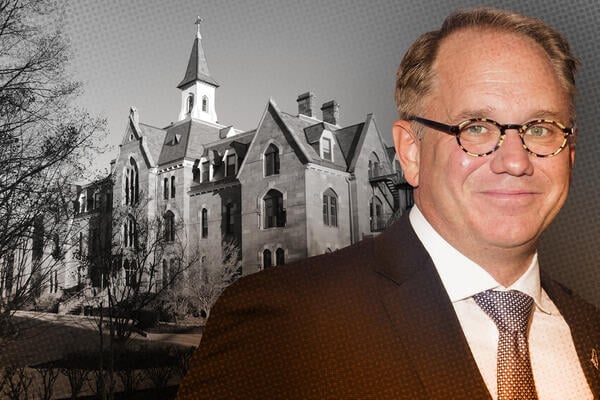
  • Seton Hall sues its former president

    Seton Hall sues its former president

    A year after being sued by ex-president Joseph Nyre for alleged breach of contract and retaliation, among other claims, Seton Hall University has hit back with its own legal action against the former leader.

    In a lawsuit filed Wednesday in the Superior Court of New Jersey, the university accused Nyre of “illicitly accessing, downloading, maintaining, and later disseminating confidential and proprietary documents, as well as documents protected by the attorney-client and work product privileges, and information after his departure as President of the University.” Those documents led to critical reports about the university’s current president, Monsignor Joseph Reilly.

    Alongside Nyre, the lawsuit also names John Does 1–10, referring to them as “persons who are in possession of documents unlawfully maintained, retrieved, accessed, and/or downloaded.”

    In a statement to Inside Higher Ed, a Seton Hall spokesperson wrote that Wednesday’s filing “makes clear that confidential documents were utilized with sections selectively released, causing damage to the University and its leadership and painting a false narrative about Monsignor Reilly.” Reilly has been accused of failing to report allegations of sexual misconduct and thus violating the university’s Title IX policies.

    An attorney for Nyre blasted the lawsuit as a “cover-up” by Seton Hall.

    A Legal Clash

    Nyre led Seton Hall from 2019 to 2023, when he stepped down unexpectedly.

    The former president later sued Seton Hall, alleging he was pushed out by the Board of Regents amid conflict with then-chair Kevin Marino, whom Nyre accused of micromanagement, improperly involving himself in an embezzlement investigation at the law school and sexually harassing the president’s wife, Kelli Nyre, among other claims. Marino, who is no longer a board member, was not named as a defendant in Nyre’s lawsuit, and an investigation found no evidence of sexual harassment.

    While Seton Hall is defending itself against Nyre’s lawsuit, it also threw a legal counterpunch in suing the ex-president. The university alleges that its information technology team confirmed that Nyre had improperly accessed materials after his departure, and in doing so, he violated confidentiality provisions in his employment and separation agreement.

    Specifically, Nyre is accused of improperly downloading confidential documents that were later provided to Politico. Those files—some of which were also obtained by Inside Higher Ed—seemed to indicate Reilly, the current president, overlooked instances of sexual harassment while rector and dean of the university’s graduate seminary from 2012 to 2022.

    However, one of the leaked documents in question—a letter from a Board of Regents member to Reilly in February 2020 that said he had violated university Title IX policies through his inaction—was an unsent draft, university officials previously told Inside Higher Ed.

    Seton Hall officials said in the lawsuit that though the Politico reporter never disclosed who provided him with the documents, “it was clear that [Nyre], directly or indirectly, was responsible” for the leak of confidential information to the news outlet between December and February. Seton Hall accused Nyre of trying to “create a false impression about” Reilly, arguing he acted in “bad faith and malicious intent” by not disclosing that the February 2020 letter was never sent.

    The allegations against Reilly have prompted calls for transparency from state lawmakers and Democratic governor Phil Murphy, who called on the university to release an investigative report that allegedly cleared Reilly. Seton Hall has thus far declined to do so, citing the need to protect the confidentiality of participants who voluntarily cooperated with the investigation.

    The allegations against Reilly come as the university is only a few years removed from the sprawling sexual abuse scandal involving former cardinal Theodore McCarrick, who sat on both of Seton Hall’s governing boards. Investigators determined in a 2019 university report that McCarrick “created a culture of fear and intimidation” and “used his position of power as then–Archbishop of Newark”—which sponsors Seton Hall—“to sexually harass seminarians” for decades. (McCarrick was defrocked but avoided criminal charges due to a dementia diagnosis.)

    As part of the lawsuit, Seton Hall is seeking a temporary restraining order to stop Nyre from allegedly sharing more documents. University officials argued in court filings that Seton Hall stands to “suffer irreparable harm” from further leaks, which “cannot be adequately compensated” monetarily.

    “The nature of the harm is such that it affects the university’s ability to maintain the confidentiality of sensitive information, which is crucial for its operations and reputation,” filings read. “Moreover, to the extent that documents to which defendant has access are protected under [the Family Educational Rights and Privacy Act] or Title IX, the disclosure of such documents would directly implicate the right of students and their parents to control the disclose [sic] of such confidential educational records as well as the confidentiality rights of university employees.”

    Pushback

    In a statement to Inside Higher Ed, Nyre attorney Matthew Luber called the lawsuit “a desperate, retaliatory ploy designed to silence a whistleblower and distract from the university’s own corruption and misconduct.”

    Luber did not specifically address the allegations that Nyre had inappropriately leaked confidential documents but accused Seton Hall of ignoring red flags in hiring Reilly and overlooking Title IX infractions.

    “Let’s be clear: Dr. Nyre was not at Seton Hall when Monsignor Reilly engaged in misconduct, nor when the board knowingly violated its own policies and Title IX to install him as President,” Luber wrote. “But he was the one who warned university officials about Reilly’s disqualifying history during his presidential search—warnings that were deliberately ignored by board leadership. Instead of addressing their own failures, Seton Hall is now attempting to smear and intimidate Dr. Nyre.”

    As of publication, a judge has not set to a hearing to consider the request for a restraining order.

    Source link