UK universities are under financial strain. As institutions look to restructure, reduce costs and rethink delivery, there’s a clear need to make better use of the talent that already exists within them.
Technical professionals – highly skilled, deeply embedded and often misunderstood – are key to this. While often grouped under ‘professional services’, technicians occupy a distinct space in the university workforce. Their work spans research, teaching and operations, often in highly specialised or safety-critical environments. Recognising this distinction isn’t about drawing divisions, it’s about making sure roles are properly understood, supported and used to their full potential.
At a time when universities must become more agile, efficient and sustainable, the contribution of technical professionals has never been more important.
Technicians as problem-solvers in a time of reform
Too often, technical teams are brought into conversations late, after decisions have been made, spaces reallocated, or budgets set. But these are the people who manage the infrastructure, operate the systems, and know what’s really happening on the ground.
At the University of Nottingham, we’ve taken a different approach, bringing technical leaders into strategic planning early. This is already helping us avoid duplication and develop smarter, more joined-up technical support across the institution. By involving technical leaders from the outset, we’re able to align services more effectively and make better-informed decisions about how we support research and teaching activity.
These aren’t just operational wins. They’re strategic enablers, unlocking resource savings, reducing risk and supporting more sustainable delivery of core activity.
Smarter sharing, greater efficiency
One of the clearest opportunities lies in how we share and manage resources, whether research labs, creative studios or teaching equipment. Technical professionals are central to this.
We understand how facilities work, how to optimise them, and how to adapt usage models across disciplines. In some institutions, this has led to the creation of “research hotel” models – shared lab spaces managed by technical teams, improving access and utilisation while reducing the need for new investment.
Nationally, the UK Institute for Technical Skills & Strategy is supporting this through initiatives like the ITSS Capability Showcase, which maps institutional technical facilities and strengths and promotes collaboration across the sector. It’s a model that supports smarter decisions – both within and between institutions.
A distinct role in shaping what comes next
Technical professionals sit at the intersection of research, teaching, innovation and operations. They lead facilities, deliver teaching, train students, and increasingly contribute directly to research outputs – from papers and software to exhibitions and datasets.
In the face of restructuring, universities have a chance to rethink how these roles are supported. Fragmented structures and inconsistent career pathways don’t just affect individuals – they weaken our ability to plan for the future.
A more strategic approach brings clarity, fairness and future-readiness. It supports succession planning, skills development, and the protection of specialist knowledge. It also helps retain exceptional people – many of whom could thrive in industry, but choose to stay in universities because of their commitment to education and discovery.
The opportunity now
Technical professionals aren’t simply support staff. They’re a distinct group within the wider university workforce – working at the intersection of research, education, innovation and operations. Their roles are different from those in professional services but not separate. Both are essential, and both must be recognised for their unique contributions.
At a recent Technician Commitment event held at Queen’s University Belfast, representatives from institutions across the UK shared practical and strategic actions they believe could help universities weather the current financial crisis. Ideas ranged from income generation through technician-led consultancy and external training, to resource efficiency via equipment sharing and pooled maintenance contracts. Delegates highlighted the importance of breaking down institutional silos, promoting cross-disciplinary technical training and enabling technicians to access internal funding schemes.
There was also a strong call for structural advocacy – recognising technicians as research enablers and challenging default organisational models that position technical teams within professional services by default. The message was clear: technicians are not a cost centre. They are a strategic asset in how universities respond to financial and operational challenges.
In a sector facing difficult choices, the opportunity is to harness the full breadth of talent available. Technical professionals are ready – not just to support change, but to help lead it.
Devastating cuts to U.S. science under Donald Trump’s presidency have been made possible by a pervasive complacency that scientific achievements will always be celebrated, a leading American Nobel Prize winner has said.
Frances Arnold, who won the Nobel Prize in Chemistry in 2018 for her work on engineering enzymes, told an audience of young scientists in Germany that the “utter chaos” in U.S. politics of recent months, which has seen billions of dollars removed from scientific research, might be viewed in terms of a wider failure to communicate the value of scientific discovery.
“Never take for granted that scientific achievement is celebrated—we took it for granted, and for far too long, and we are paying the price,” Arnold told the June 29 opening ceremony of the Lindau Nobel Laureate Meeting, an annual conference that brings together Nobel laureates and early-career researchers.
“Instead of viewing science as the foundation of prosperity, as an investment in the future, it is being portrayed as a burden on taxpayers,” said Arnold, professor of chemical engineering at the California Institute of Technology.
The Trump administration has so far canceled at least $10 billion in federal grants on the grounds that they contravene its anti-DEI agenda, but further unprecedented cuts are in the pipeline; under Trump’s so-called Big Beautiful Bill, the National Science Foundation’s budget will be cut by 57 percent, by $5 billion, while the National Institutes of Health will see its support slashed by 40 percent, or $18 billion.
In an address given on behalf of 35 Nobelists attending the conference on the Swiss–Austrian border, Arnold said that this “concerted attack on the universities will drive many brilliant young scientists to Europe and other places,” adding, “I hope you will make the best use of this opportunity and give them a home.”
On the need for more effective communication of science’s benefits, Arnold, who chaired former U.S. president Joe Biden’s presidential council on science and technology for four years, said she hoped other nations would “learn the lesson that we are learning the hard way—that it is so important to convey the joy of science, the joy of discovery and the benefits to our friends and neighbors outside the academic laboratory.”
“They pay the bills but do not necessarily understand the benefits [of science]—it is up to us to explain that better.”
Arnold’s comments about the likely U.S. brain drain were also picked up by Germany’s science minister, Dorothee Bar, who told the conference that her government would make funds available in its high-tech strategy, due to be launched shortly, to attract international researchers.
“We are launching the One Thousand Minds Plus scheme to attract minds from across the world, including from the U.S.,” she said on the plans to divert some of the $589 billion technology and infrastructure stimulus plan toward recruiting global talent.
Appealing directly to disaffected U.S. researchers, Bar said, “You are always welcome here in Germany.”
Higher education institutions are increasingly acknowledging the importance of wellbeing in shaping meaningful and sustainable learning experiences. However, the wellbeing of students and staff is often treated as a separate or secondary issue, addressed through isolated initiatives rather than embedded into the fabric of university life.
I propose adopting a lifelong approach to wellbeing in education grounded in appreciating that schools and universities are not distinct spheres. Rather, they are stages on a continuous educational journey. The way we foster wellbeing in schools must inform, and align with, our practices in higher education.
Foundations for wellbeing
The foundations laid in schools play a crucial role in shaping how learners experience their transition into university. When educational environments nurture emotional resilience, social connection, and inclusive responses to academic pressures, learners arrive in higher education with a stronger base of support. In contrast, when wellbeing is not prioritised earlier in the educational journey, the structural and emotional demands of university life can amplify existing challenges. This underscores the need for continuity and care across the educational continuum, rather than placing responsibility on individuals to adapt alone.
In many school systems, wellbeing is increasingly recognised as integral to education. A holistic, strengths-based approach helps ensure that wellbeing is supported through curriculum design, teaching practices, and whole-school approaches and policies. Programmes focused on social and emotional learning are embedded, and collaboration across sectors – education, health, and community – creates a network of support that extends beyond the classroom.
In higher education, this picture is evolving. The work on wellbeing spearheaded by Universities UK in recent years has helped universities to become more attuned to the importance of wellbeing, yet academic culture often remains shaped by competitiveness, performance metrics, and output-driven models. This dynamic also influences schools in some contexts, particularly where high stakes testing and narrow accountability frameworks dominate. However, there tends to be greater acceptance within schools that wellbeing and learning are deeply interconnected.
In the university context, structural pressures, including institutional expectations and the demands of competitive academic cultures, continue to affect both students and staff, contributing to stress, burnout, and mental health difficulties. Although there is growing attention to student wellbeing in policy and strategy, support for staff wellbeing remains less visible, despite its clear influence on teaching quality and the wider learning environment. There is a need for a joined-up, systemic approach recognising the interdependence of student and staff wellbeing.
Whole institution approaches
A whole-university approach, as promoted by Universities UK, is a strategic, institution-wide commitment to embedding wellbeing into every dimension of university life, echoing the well-established whole-school model in many primary and secondary education systems. Just as whole-school approaches integrate wellbeing into teaching, leadership, curriculum, and engagement with families and communities, a whole-university approach ensures that wellbeing is not confined to support services or stand-alone initiatives. It becomes a shared responsibility, woven into the ethos, governance, and daily practices of the institution.
Rather than relying on reactive services, this model positions wellbeing as a core value that shapes leadership, curriculum, pedagogy, and institutional relationships. It calls for cultural transformation, redefining success to focus not solely on outcomes, but on flourishing. This includes embedding wellbeing in teaching and assessment, professional development, work-life balance, and inclusive, compassionate organisational values. It requires systems that promote flexibility, equity, and psychological safety as the norm.
Universities must be understood as ecosystems. When this ecosystem is well, everyone within it is more likely to thrive. This involves designing curricula that support engagement and wellbeing, adopting inclusive policies, and nurturing cultures of trust, care, and belonging in both academic and administrative contexts.
Higher education can also learn from the progress made in schools. Many school systems have already developed comprehensive frameworks for promoting wellbeing – such as the Health Promoting Schools model – which successfully embed wellbeing into governance, pedagogy, and wider school life. Higher education has much to gain from adapting these models to its own settings, helping to ensure continuity of support as learners move between sectors.
Embedding wellbeing through national frameworks
Aligning approaches across schools and universities creates a more cohesive experience for learners and reduces the sense of disorientation that often accompanies educational transitions. It also enables valuable exchange between sectors, where shared learning can lead to better outcomes for all.
Within this context, and especially given the significance of the transition from school to university, national leadership is essential in embedding wellbeing consistently across education systems. The move into higher education is more than a change of setting; it is a profound developmental shift, often marked by increased autonomy, identity exploration, and academic complexity. While this transition can be exciting, it also brings vulnerability and emotional strain. Maintaining wellbeing support across this bridge is therefore not optional; it is essential. Yet it is precisely at this stage that inconsistencies and gaps often emerge. National policies that intentionally bridge sectors can ensure wellbeing remains a continuous thread throughout a learner’s journey.
One crucial aspect of national leadership is the development of robust policy and strategy relating to wellbeing, both within institutions and at a broader, systemic level. Country-wide initiatives create coherence, consistency, and a shared vision – particularly important when seeking to strengthen the links between schools and universities. Ireland, for instance, has implemented a national policy and strategy around mental health that spans multiple sectors, not just education. This kind of joined-up approach exemplifies how public policy can help to sustain cultural change across the education system and beyond.
The wellbeing of our educational communities is not a peripheral concern. It is central to the very purpose of education. By embedding wellbeing across every level – through policy, pedagogy, leadership, and institutional culture – we not only support individuals to succeed, but also help to build resilient, compassionate institutions where everyone can flourish.
In 2023, New Jersey’s Office of the Secretary of Higher Education signed a first-of-its-kind agreement with a digital mental health provider, Uwill, to provide free access to virtual mental health services to college students across the state.
Over the past two years, 18,000-plus students across 45 participating colleges and universities have registered with the service, representing about 6 percent of the eligible postsecondary population. The state considers the partnership a success and hopes to codify the offering to ensure its sustainability beyond the current governor’s term.
The details: New Jersey’s partnership with Uwill was spurred by a 2021 survey of 15,500 undergraduate and graduate students from 60 institutions in the state, which found that 70 percent of respondents rated their stress and anxiety as higher in fall 2021 than in fall 2020. Forty percent indicated they were concerned about their mental health in light of the pandemic.
Under the agreement, students can use Uwill’s teletherapy, crisis connection and wellness programming at any time. Like others in the teletherapy space, Uwill offers an array of diverse licensed mental health providers, giving students access to therapists who share their backgrounds or language, or who reside in their state. Over half (55 percent) of the counselors Uwill hires in New Jersey are Black, Indigenous or people of color; among them, they speak 11 languages.
What makes Uwill distinct from its competitors is that therapy services are on-demand, meaning students are matched with a counselor within minutes of logging on to the platform. Students can request to see the same counselor in the future, but the nearly immediate access ensures they are not caught in long wait or intake times, especially compared to in-person counseling services.
Under New Jersey’s agreement, colleges and students do not pay for Uwill services, but colleges must receive state aid to be eligible.
The research: The need for additional counseling capacity on college campuses has grown over the past decade, as an increasing number of students enter higher education with pre-existing mental health conditions. The most recent survey of counseling center staff by the Association for University and College Counseling Center Directors (AUCCCD) found that while demand for services is on the decline compared to recent years, a larger number of students have more serious conditions.
Over half of four-year institutions and about one-third of community colleges nationwide provide teletherapy to students via third-party vendors, according to AUCCCD data. The average number of students who engaged with services in 2024 was 453, across institution size.
Online therapy providers tout the benefits of having a service that supplements on-campus, in-person therapists’ services to provide more comprehensive care, including racially and ethnically diverse staff, after-hours support and on-demand resources for students.
Eric Wood, director of counseling and mental health at Texas Christian University, told Inside Higher Ed that an ideal teletherapy vendor is one that increases capacity for on-campus services, expanding availability for on-campus staff and ensuring that students do not fall through the cracks.
A 2024 analysis of digital mental health tools from the Hope Center at Temple University—which did not include Uwill—found they can improve student mental health, but there is little direct evidence regarding marginalized student populations’ use of or benefits from them. Instead, the greatest benefit appears to be for students who would not otherwise engage in traditional counseling or who simply seek preventative resources.
One study featured in the Hope Center’s report noted the average student only used their campus’s wellness app or teletherapy service once; the report calls for more transparency around usage data prior to institutional investment.
The data: Uwill reported that from April 2023 to May 2025, 18,207 New Jersey students engaged in their services at the 45 participating institutions, which include Princeton, Rutgers, Montclair State and Seton Hall Universities, as well as the New Jersey Institute of Technology and Stevens Institute of Technology. Engaged students were defined as any students who logged in to the app and created an account.
New Jersey’s total college enrollment in 2022 was 378,819, according to state data. An Inside Higher Ed analysis of publicly available data found total enrollment (including undergraduate and graduate students) among the 45 participating colleges to be 327,353. Uwill participants in New Jersey, therefore, totaled around 4 percent of the state’s postsecondary students or 6 percent of eligible students.
The state paid $4 million for the first year of the Uwill contract, as reported by Higher Ed Dive, pulling dollars from a $10 million federal grant to support pandemic relief and a $16 million budget allocation for higher education partnerships. That totals about $89,000 per institution for the first year alone, or $12 per eligible student, according to an Inside Higher Ed estimate.
In a 2020 interview with Inside Higher Ed, Uwill CEO Michael London said the minimum cost to a college for one year of services is about $25,000, or $10 to $20 per student per year.
New Jersey students met with counselors in more than 78,000 therapy sessions, or about six sessions per student between 2023 and 2025, according to Uwill data. Students also engaged in 548 chat sessions with therapists, sent 6,593 messages and requested 1,216 crisis connections during the first two years of service.
User engagement has slowly ticked up since the partnership launched. In January 2024, the state said more than 7,600 students registered on the platform, scheduling nearly 20,000 sessions. By September 2024, Uwill reported more than 13,000 registered students on the platform, scheduling more than 49,000 sessions. The most recent data, published June 6, identified 18,000 students engaging in 78,000 sessions.
Over 1,200 of Montclair State’s 22,000 students have registered with Uwill since June 2023, Jaclyn Friedman-Lombardo, Montclair State’s director of counseling and psychological services, said at a press conference, or approximately 6 percent of the total campus population.
The state does not require institutions to track student usage data to compare usage to campus counseling center services, but some institutions choose to, according to a spokesperson for both the office of the secretary and Uwill. The secretary’s office can view de-identified campus-level data and institutions can engage with more detailed data, as well.
Creating access: One of the goals of implementing digital mental health interventions is to expand access beyond traditional counseling centers, such as after hours, on weekends or over academic breaks.
Roughly 30 percent of participants in the Uwill partnership completed a session between 5 p.m. and 9 a.m. on a weeknight or on the weekends. Over the 2024–25 winter break, students engaged in 3,073 therapy sessions. More than 90 of those took place outside New Jersey. Students also used Uwill services over summer vacation this past year (9,235 sessions from May 20 to Aug. 26, of which 10 percent took place outside New Jersey).
A majority of users were traditional-aged college students (17 to 24 years old), and 32 percent were white, 25 percent Hispanic and 17 percent Black. The report did not compare participating students’ race to those using on-campus services or general campus populations.
About 85 percent of New Jersey users were looking for a BIPOC therapist, and 9 percent requested therapists who speak languages other than English, including Hindi and Mandarin.
Postsession assessment completed by students who do schedule an appointment has returned positive responses, with a feedback score of 9.5 out of 10 in New Jersey, compared to Uwill’s 9.2 rating nationally.
Unanswered questions: Wood indicated the data leaves some questions left unanswered, such as whether students were also clients at the on-campus counseling center, or if the service had improved students’ mental health over time from a clinical perspective.
“Just because a student had four sessions with a telehealth provider, if they came right back to the counseling center, did it really make an impact on the center’s capacity to see students?” Wood said.
The high cost of the service should also give counseling center directors pause, Wood said, because those dollars could be used for a variety of other interventions to create capacity.
The data indicated some benefits to counseling center capacity, including diverse staff and after-hours support. But to create a true return on investment, counseling centers should calculate how much capacity the tele–mental health service created and its direct impact on student wellness, not just participation in services.
“It would be ideal to compare the number of students receiving services (not just creating an account) through the platform to the number of students who would likely benefit from receiving treatment, as identified by clinically validated mental health screens on population surveys,” said Sara Abelson, assistant professor at the Hope Center and the report’s lead author.
What’s next: New Jersey renewed its contract with Uwill first in January 2024 and then again in May, extending through spring 2026. State leaders said the ongoing services are still supported by pandemic relief funds.
On May 2, New Jersey assemblywoman Andrea Katz from the Eighth District introduced a bill, the Mental Health Early Access on Campus Act, which would require colleges to implement mental health first aid training among campus stakeholders, peer support programs, mental health orientation education and teletherapy services to ensure counseling ratios are one to every 1,250 students per campus. The International Accreditation of Counseling Services recommends universities maintain a ratio of at least one full-time equivalency for every 1,000 to 1,500 students.
“We know that mental health services that our kids need are not going to end when we change governors,” Katz said at a press conference. “We need to make sure that all of this is codified into law.”
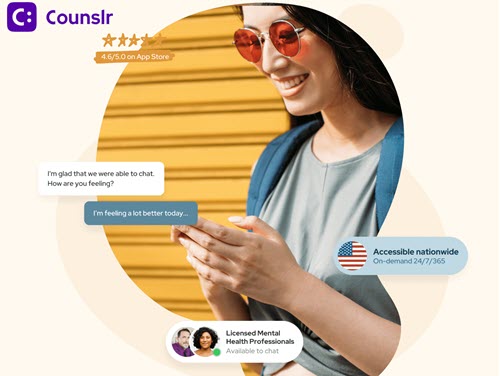
New York, NY –Counslr, a leading B2B mental health and wellness platform, announced today that it has expanded its footprint into the State of Texas starting with a partnership with Colorado Independent School District (ISD) in Colorado City, TX. This partnership will empower students and staff to prioritize their mental health by enabling them to access unlimited live texting sessions with Counslr’s licensed and vetted mental health support professionals, who are available on-demand, 24/7/365 and also utilize the app’s robust and curated wellness resources. By increasing accessibility to Counslr’s round-the-clock support, Colorado ISD aims to empower those silent sufferers who previously did not or could not access care, whether due to cost, inconvenience, or stigma.
Texas is facing a critical mental health care crisis, with over 95% of its counties officially designated as Mental Health Professional Shortage Areas. This alarming statistic underscores the severe lack of access to mental health services across the state, particularly in rural, border, and frontier communities. This resource scarcity underscores the urgent need for additional resources and innovative solutions to bridge this critical care gap for school communities.
“We’re excited to partner with Counslr to bring innovative, accessible mental health resources to our school community,” said Alison Alvarez, Family and Community Engagement Coordinator, of Colorado ISD. “This partnership empowers our 6-12 grade students and staff with the support they need to thrive—both in and out of the classroom.”
As factors such as academic pressures, social media influence, burnout and world events contribute to an increase in mental health challenges for young people, schools throughout the country are recognizing the growing need to offer more accessible, prevention-focused resources. A recent study found that digital mental health apps like Counslr can play an important role in expanding access to mental health support, especially for school communities. Most users turned to Counslr through on-demand sessions, showing just how valuable it is to have someone available in the moment when support is needed most. Interestingly, more than 80% of sessions happened between 7 PM and 5 AM, a time when traditional counseling services are usually unavailable. This suggests that Counslr helps fill a critical gap, offering students and school community members a reliable way to talk to licensed counselors around the clock. The app was also used for a wide range of concerns, highlighting its potential to meet diverse mental health needs through both immediate and scheduled support.
“As we expand across the country, we’re proud to partner with new school communities to ensure that every student, regardless of location or background, has access to the mental health support they deserve,” said Josh Liss, Counslr CEO. Adding that, “With most of Counslr’s users being first-time care seekers, we’re excited to help reach those traditionally unreachable, who need help but do not or cannot access it, no matter where they are located.”
ABOUT COUNSLR
Counslr is a text-based mental health support application that provides unlimited access to robust wellness resources and live texting sessions with licensed professionals, 24/7/365. Users can access support on-demand within two minutes of opening the app, or by scheduled appointment. Through real-time texting, users enjoy one-on-one, private communication with a licensed counselor that can be conducted anytime, anywhere. Counslr was designed to help individuals deal with life’s day-to-day issues, empowering individuals to address concerns while they are “small” to help ensure that they stay “small”. Counslr partners with organizations of all shapes and sizes (companies, unions, nonprofits, universities/colleges, high schools, etc) so that these entities can provide Counslr’s services to their employees/members/students at no direct cost. For more information, please visit www.counslr.com.
eSchool Media staff cover education technology in all its aspects–from legislation and litigation, to best practices, to lessons learned and new products. First published in March of 1998 as a monthly print and digital newspaper, eSchool Media provides the news and information necessary to help K-20 decision-makers successfully use technology and innovation to transform schools and colleges and achieve their educational goals.
Students often consider the return on investment of their degree when deciding whether and where to enroll in college, but not every student receives financial education from their institution on how to turn a college education into a life-sustaining career. A 2022 survey by Inside Higher Ed found that 67 percent of students are not sure if their college or university offers personal financial education; an additional 9 percent said no programs or classes are offered regarding financial literacy.
To rectify that, colleges and universities are implementing programs that promote students’ money management skills, increase their awareness of financial planning and help them understand the debts they may acquire while in school.
What’s the need: Student debt has skyrocketed over the past 20 years, with 42.7 million student borrowers holding nearly $1.7 trillion in federal loans. The average student who takes out loans to attend a public university borrows $31,960 to attain a bachelor’s degree, and over half of graduates use federal loans at some point. Loan debt can limit students’ earnings after college and hinder their socioeconomic advancement.
Even while students are in college, financial challenges can impact their persistence and outcomes. A 2024 survey by Trellis Research found that 71 percent of students experienced financial trouble while enrolled, and nearly half said their current financial situation made it difficult to concentrate on schoolwork.
A lack of financial education can also exacerbate equity concerns. An April 2025 report from Education Northwest found that only 25 percent of students were able to answer three financial questions correctly, with students from low-income families and those younger than 21 even less likely to answer correctly. Similarly, Black, American Indian or Alaska Native, Hispanic or Latino, and Native Hawaiian or Pacific Islander students were less likely to answer financial literacy questions correctly.
Inside Higher Ed highlights six institutions that have introduced innovative programs to combat financial illiteracy.
Florida State University: Unconquered by Debt
Housed within the university’s Gus. A Stavros Center for Advancement of Free Enterprise and Economic Education, FSU’s Unconquered by Debt program enhances student financial literacy to ensure graduates leave with the ability to advance their socioeconomic standing.
The program walks students through crucial areas of financial planning including selecting a career, establishing healthy spending habits, investing, managing credit, ensuring assets and planning for retirement.
Students can attend workshops on campus and enjoy free food and drinks while they learn more about money management and how to plan for their futures beyond college.
The center recently hired an assistant director as part of a program expansion funded by the Office of the Provost.
University of Miami: Money Management
In 2019, the University of Miami created the Money Management Program to help build students’ short- and long-term financial well-being. The program has proven so successful in increasing student persistence that it has also received external grant funding, a university spokesperson said.
Through workshops called Money Talks, the program addresses budgeting, credit and credit cards, loans, and debt repayment, as well as saving and investing. Students can also participate in half-day personal finance workshops on Saturdays throughout the academic year. The university hires peer coaches to provide confidential one-on-one coaching, to help prepare students for future careers in the finance world as well as bridge knowledge gaps for those who may need support.
During the 2022–23 academic year, the university hosted over 240 Money Management events for more than 2,500 attendees, according to the spokesperson.
East Carolina University: Financial Wellness Hub
The Financial Wellness Hub at East Carolina University offers regular workshops on how to mitigate financial challenges while enrolled and helps students understand credit reports, debt management and student loan repayment strategies. The Hub caters services to various seasonal holidays, hosting a “Falling in Love With Credit” workshop for Valentine’s Day and “Spooky Credit Scores” for Halloween, as well as a budgeting workshop for gift giving during the winter holiday season.
The Hub relies on relationship building and partnerships across the university to generate an audience for programs, director Kevin Sutton told Inside Higher Ed. Services are also available to alumni and staff, who in turn can better advise students or elect to contribute financially to the program’s budget.
Penn State: Sokolov-Miller Family Financial and Life Skills Center
Penn State established a center dedicated to managing financial wellness in college and beyond, which offers one-on-one coaching and workshops. In addition, the center provides students with access to a course on Canvas called MoneyCounts, which gives them a self-paced opportunity to engage in 28 modules on financial wellness.
Other resources include live webinars, offered on the first and third Tuesday of each month at noon, which are recorded for those who can’t make it synchronously, and a free bookshelf stocked with financial wellness books— topics range from simple money skills to insurance—that is supported by Barnes & Noble.
Babson College: The Babson Financial Literacy Project
In addition to supporting current students, the BFLP is a nonprofit organization the ensures all community members can receive quality financial education. The program was developed by faculty at Babson and coaches lead online and in-person workshops, as well as train staff to deliver content on their own.
Between its launch in fall 2018 and March of this year, the program has supported 418 workshops with 17,189 participants, according to the program webpage.
In addition, participants can engage with various student organizations on campus to learn more about the world of finance, including the Babson Finance Association, Babson Scholars of Finance and Women in Finance.
Western Washington University: Financial Wellness Badges
Students can earn badges in such areas as financial mindfulness, investment, savings and credit, as well as budgeting and spending.
To earn the financial mindfulness starter badge, for example, students must complete a financial wellness checkup and a money meditation on iGrad, then write a financial wellness journal entry. Each badge has three levels, from foundations to expert, building on students’ knowledge and signaling deep understanding of the topic.
If your student success program has a unique feature or twist, we’d like to know about it. Click here to submit.
47% say protecting free speech in politics is the most important priority, even if that lets some deceptive content slip through
28% say government regulation of AI-generated or AI-altered content would make them less likely to share content on social media
81% showed concern about government regulation of election-related AI content being abused to suppress criticism of elected officials
PHILADELPHIA, June 5, 2025 — Americans strongly believe that lawmakers should prioritize protecting freedom of speech online rather than stopping deceptive content when it comes to potential regulation of artificial intelligence in political messaging, a new national poll of voters finds.
The survey, conducted by Morning Consult for the Foundation for Individual Rights and Expression, reflects a complicated, or even conflicted, public view of AI: People are wary about artificial intelligence but are uncomfortable with the prospect of allowing government regulators to chill speech, censor criticism and prohibit controversial ideas.
“This poll reveals that free speech advocates have their work cut out for them when it comes to making our case about the important principles underpinning our First Amendment, and how they apply to AI,” said FIRE Director of Research Ryne Weiss. “Technologies may change, but strong protections for free expression are as critical as ever.”
Sixty percent of those surveyed believe sharing AI-generated content is more harmful to the electoral process than government regulation of it. But when asked to choose, more voters (47%) prioritize protecting free speech in politics over stopping deceptive content (37%), regardless of political ideology. Sixty-three percent agree that the right to freedom of speech should be the government’s main priority when making laws that govern the use of AI.
And 81% are concerned about official rules around election-related AI content being abused to suppress criticism of elected officials. A little more than half are concerned that strict laws making it a crime to publish an AI-generated/AI-altered political video, image, or audio recording would chill or limit criticism about political candidates.
Voters are evenly split over whether AI is fundamentally different from other forms of speech and thus should be regulated differently. Photoshop and video editing, for example, have been used by political campaigns for many years, and 43% believe the use of AI by political campaigns should be treated the same as the use of older video, audio, and image editing technologies.
“Handing more authority to government officials will be ripe for abuse and immediately step on critical First Amendment protections,” FIRE Legislative Counsel John Coleman said. “If anything, free expression is the proper antidote to concerns like misinformation, because truth dependably rises above.”
The poll also found:
Two-thirds of those surveyed said it would be unacceptable for someone to use AI to create a realistic political ad that shows a candidate at an event they never actually attended by digitally adding the candidate’s likeness to another person.
It would be unacceptable for a political campaign to use any digital software, including AI, to reduce the visibility of wrinkles or blemishes on a candidate’s face in a political ad in order to improve the appearance of the candidate, 39% say, compared to 29% who say that it would be acceptable.
42% agree that AI is a tool that facilitates an individual’s ability to practice their right to freedom of speech.
The poll was conducted May 13-15, 2025, among a sample of registered voters in the US. A total of 2,005 interviews were conducted online across the US for a margin of error of plus or minus 2 percentage points. Frequency counts may not sum to 2,005 due to weighting and rounding.
The Foundation for Individual Rights and Expression (FIRE) is a nonpartisan, nonprofit organization dedicated to defending and sustaining the individual rights of all Americans to free speech and free thought — the most essential qualities of liberty. FIRE educates Americans about the importance of these inalienable rights, promotes a culture of respect for these rights, and provides the means to preserve them.
CONTACT Karl de Vries, Director of Media Relations, FIRE: 215-717-3473; [email protected]
The recent NAEP scores have confirmed a sobering truth: Our schools remain in the grips of a literacy crisis. Across the country, too many children are struggling to read, and too many teachers are struggling to help them. But why? And how do we fix it?
There are decades of research involving thousands of students and educators to support a structured literacy approach to teaching literacy. Teacher preparation programs and school districts across the nation have been slow to fully embrace this research base, known as the science of reading. Since 2017, consistent media attention focused on the literacy crisis has created a groundswell of support for learning about the science of reading. Despite this groundswell, too many educators are still entering classrooms without the skills and knowledge they need to teach reading.
While there is steady progress in teacher preparation programs to move toward the science of reading-aligned practices, the National Council on Teacher Quality’s latest report on the status of teacher preparation programs for teaching reading (2023) still shows that only 28 percent of programs adequately address all five components of reading instruction. Furthermore, according to the report, up to 40 percent of programs still teach multiple practices that run counter to reading research and ultimately impede student learning, such as running records, guided reading, leveled texts, the three cueing systems, etc. This data shows that there is still much work to be done to support the education of the teacher educators responsible for training pre-service teachers.
The disconnect between theory and practice
When it comes to literacy instruction, this problem is especially glaring. Teachers spend years learning about teaching methods, reading theories, and child development. They’re often trained in methods that emphasize comprehension and context-based guessing. However, these methods aren’t enough to help students develop the core skills they need to become proficient readers. Phonics–teaching students how to decode words–is a critical part of reading instruction, but it’s often left out of traditional teacher prep programs.
One primary reason this disconnect happens is that many teacher prep programs still rely on outdated methods. These approaches prioritize reading comprehension strategies that focus on meaning and context, but they don’t teach the foundational skills, like phonics, essential for developing fluent readers.
Another reason is that teacher prep programs often lag when it comes to incorporating new research on reading. While the science of reading–a body of evidence built from decades of research and studies involving thousands of students and educators about how humans learn to read and the instructional practices that support learning to read–has been gaining deserved traction, it’s not always reflected in the teacher preparation programs many educators go through. As a result, teachers enter classrooms without the knowledge, skills, and up-to-date methods they need to teach reading effectively.
A way forward: Structured literacy and continuous professional development
For real progress, education systems must prioritize structured literacy, a research-backed approach to teaching reading that includes explicit, systematic instruction in phonics, decoding, fluency, and comprehension. This method is effective because it provides a clear, step-by-step process that teachers can follow consistently, ensuring that every single student gets the support they need to succeed.
But simply teaching teachers about structured literacy is not enough. They also need the tools to implement these methods in their classrooms. The goal should be to create training programs that offer both the theoretical knowledge and the hands-on experience teachers need to make a lasting difference. Teachers should graduate from their prep programs not just with a degree but with a practical, actionable plan for teaching reading.
And just as important, we can’t forget that teacher development doesn’t end once a teacher leaves their prep program. Just like doctors, teachers need to continue learning and growing throughout their careers. Ongoing professional development is critical to helping teachers stay current with the latest research and best practices in literacy instruction. Whether through in-person workshops, online courses, or coaching, teachers should have consistent, high-quality opportunities to grow and sharpen their skills.
What do teacher educators need?
In 2020, the American Federation of Teachers published an update to its seminal publication, Teaching Reading is Rocket Science. First published in 2000, this updated edition is a collaboration between the AFT and the Center on Development and Learning. Although some progress has been made over the past 20 years in teaching reading effectively, there are still too many students who have not become proficient readers.
This report outlines in very specific ways what pre-service and in-service teachers need to know to teach reading effectively across four broad categories:
Knowing the basics of reading psychology and development
Understanding language structure for word recognition and language comprehension
Applying best practices (based on validated research) in all components of reading
Using validated, reliable, efficient assessments to inform classroom teaching
There should be a fifth category that is directly related to each of the four areas listed above: the knowledge of how to address the specific oral language needs of multilingual learners and speakers of language varieties. Structured, spoken language practice is at the heart of addressing these needs.
Moving forward: Reimagining teacher training
Ultimately, fixing the literacy crisis means changing the way we think about teacher preparation and ongoing professional development. We need to create programs that not only teach the theory of reading instruction but also provide teachers with the practical skills they need to apply that knowledge effectively in the classroom. It’s not enough to just teach teachers about phonics and reading theory; they need to know how to teach it, too.
Literacy instruction must be at the heart of every teacher’s training–whether they teach kindergarten or high school–and ongoing professional development should ensure that teachers have the support they need to continuously improve.
It’s a big task, but with the right tools, knowledge, and support, we can bridge the gap between theory and practice and finally begin to solve a literacy crisis that has stubbornly endured for far too long.
Lacey Robinson, UnboundEd & CORE Learning
Lacey Robinson, CEO of UnboundEd and board chair of CORE Learning, has devoted her career to empowering educators to break the predictability of student achievement outcomes. She oversees UnboundEd’s vision for how grade-level, engaging, affirming, and meaningful–GLEAM®–instruction can ensure every single student succeeds and thrives. A former teacher, principal, professional development specialist, and author of Justice Seekers, Robinson was named to Forbes 50 Over 50 list in 2023.
Latest posts by eSchool Media Contributors (see all)
Headline: How State Policies Can Support Dual Enrollment Students
Title: Sharing the Cost: Insights From States Funding Dual Enrollment to Expand Access
Authors: Krista Kaput, Sharmila Mann, and Carrie Hahnel
Source: Bellwether
Research demonstrates that participation in dual enrollment programs improves student outcomes, with the potential to increase graduation rates and college enrollment and further students’ postsecondary attainment. While these benefits reach all participating students, students face unequal access to dual enrollment programs, which serve white and high-income students at a higher rate than Black, Hispanic, Indigenous, and low-income students.
To better understand the policies in place to support dual enrollment programs, a new report published by Bellwether examines dual enrollment programs and policies among four states, finding common themes related to both cost-sharing and access that states can replicate to further promote equity in dual enrollment participation.
In analyzing the states and programs, the report notes seven themes related to increasing access to dual enrollment programs to serve as models for other states.
Three of these themes involve funding policies:
States allocate the full, per-pupil cost for dual enrollment students directly to participating school districts, ensuring that districts are not put at a financial disadvantage if students attend dual enrollment courses.
Dual enrollment students are accounted for in community college full-time equivalent calculations, ensuring that community colleges are sufficiently funded for all students during the budget allocation process.
States either fully or partially reimburse community colleges for the tuition costs associated with dual enrollment students, ensuring that costs are kept low for students while supporting the additional costs for community colleges.
Four more themes concern policies unrelated to funding:
There are specific, state-set goals for dual enrollment programs, which can involve a method for data collection, setting program performance expectations, and alignment with other state attainment initiatives, to ensure that students are receiving high-level programming.
Community colleges and K-12 school districts are responsible for reporting dual enrollment program data to the state, allowing for policy adjustments supporting both strengths and opportunities for growth.
States require the establishment of formal agreements between school districts and community colleges, ensuring that responsibilities for dual enrollment students are acknowledged and upheld among both parties.
Dual enrollment coursework provides experience toward a credential of value or a need among the workforce, increasing the likelihood that credits earned through dual enrollment will support future postgraduation plans.
Beyond the seven themes that support dual enrollment students found among the four states, the authors of the report go on to note further potential policy changes that states may make to better serve underrepresented populations in dual enrollment programs. To increase access and participation, states ought to establish sustainable funding that provides frequent investment in support of dual enrollment students. Students’ participation can also be supported by increasing the number of instructors among educational areas of high demand, establishing strong advising systems among school districts and community colleges, and allocating funding toward non-tuition costs that may hinder enrollment.
To read more about specific dual enrollment programs, state policies, and how states can further increase access and participation among dual enrollment students, click here.
—Julia Napier
If you have any questions or comments about this blog post, please contact us.
By mirroring gender pay gap reporting, which was made mandatory in 2018, the Equality (Race and Disability) Bill would introduce mandatory ethnicity and disability pay gap reporting for large employers with 250 or more employers.
Diving into the data, we were concerned to find that no progress has been made in reducing the median gross hourly pay gap for Black, African, Caribbean or Black British employees compared to white employees, remaining “consistent since 2012”. The disability pay gap is even more pronounced, at 12.7 per cent, having remained “relatively stable since 2014.” The lack of progress in closing these pay gaps is as concerning as the lack of awareness of the problem.
Conversely, the practice of gender pay gap reporting will have contributed to the gender pay gap declining by approximately a quarter among full-time employees over the past decade. Greater transparency helped build the foundations for positive transformation, creating a strategic imperative to root out systemic inequalities and leading to many employers developing, and proactively publishing, action plans to close the gap within their organisations.
In pursuing the noble aim of creating a more equal – and socially cohesive – society, the same focus must now be placed on tackling racial and disability inequalities. Economic inequalities between ethnic groups are an important contributor to social unrest.
The government should be supported in its proposed introduction of the Equality (Race and Disability) Bill and, speaking as vice chancellor of Birmingham City University (BCU), David would encourage fellow higher education leaders to join him in lending our public support to the government for this proposal.
There are two key reasons for higher education institutions publicising their ethnicity pay gaps in particular: to build trust with their internal community, and to strengthen authentically social cohesiveness in their local communities.
Building trust
BCU’s new strategy articulates a clear commitment to improve the diversity of our organisation at all levels and eradicate pay gaps. The first step in this will be to publish all our pay gaps with a clear plan to close them by 2030.
There are persistent racial inequalities in higher education. This is demonstrated most evidently in awarding gaps for ethnic minority students and Black students achieving a good honours degrees compared to white students, at 14.1 per cent and 21.6 per cent respectively in 2024. A lack of representation of ethnic minority staff in senior positions also conveys persistent inequities. Ethnic minorities now comprise one in three undergraduate students, but only one in four (20.2 per cent) of academic staff. Their representation is even lower among professors (15.1 per cent), senior managers (9.1 per cent) and executives (7 per cent).
The picture is more concerning in terms of Black representation in higher education. One in ten undergraduate students is Black (9.6 per cent), but only one in every roughly 27 academics share their ethnic identity. Only 1.6 per cent of all professors are black and 0.7 per cent of executives.
In contrast to the gender pay gap, information on the ethnicity pay gap in higher education is not routinely published. Combined with the lack of proportional representation of ethnic minority staff in senior positions, the lack of published data and strategy to tackle pay gaps has caused many staff to lose trust in institutional leadership and its commitment to tackle racial inequalities. The Equality (Race and Disability) Bill would bring parity with mandatory gender pay gap reporting and offer greater transparency to our communities.
Working effectively with our diverse local communities necessitates trust and the transparent reporting of systemic racial inequalities is paramount. For BCU, this means better reflecting and working in partnership with a community in which no ethnic group has a majority; the 2021 census identified that Birmingham’s population is more than twice as likely to come from an ethnic minority than the overall population in England. 51.4 per cent of people living in Birmingham are from an ethnic minority group, compared to a national average in England of 19 per cent. The data is much more profound for Ladywood, the constituency in which BCU’s city centre campus is based. Here, more than three in four (76.6 per cent) come from an ethnic minority, with the greater proportions of Asian (38.6 per cent) and Black (25.9 per cent) than White (23.4 per cent) citizens.
Birmingham’s “super-diversity” is seen as one of its biggest strengths, the city council opining that it stems from the city’s long-standing history for welcoming people from around the world. However, we must recognise that challenges persist, most notably in terms of engendering social harmony and tackling inequality. Those two challenges are interlinked: social harmony rests on our different racial and ethnic groups feeling valued and having trust in their local institutions providing equal opportunities and equitable outcomes, regardless of background.
Our 2030 strategy sets out a clear vision to be an exemplar anchor institution by 2030. This vision was co-created with representatives from our communities, who recognise and value the crucial role that universities like ours play in their locality. Our strategy explicitly recognises the responsibility we have in strengthening social cohesion in our home city of Birmingham.
From speaking with many vice chancellors, I know that we at BCU are not alone in championing our civic mission. Notwithstanding this, until we collective publish data on ethnicity pay gaps – alongside action plans to overcome these – our sector may find it difficult to build and sustain trust with our diverse internal and external communities. The Equality (Race and Disability) Bill offers a timely opportunity for our sector to demonstrate its commitment to racial justice.
My fellow vice-chancellors would do well in voicing their support through this government consultation.