The report based its findings on voluntary online surveys of at least 1,200 students across a variety of countries and more than 1,000 employers in the U.S., U.K., Brazil, France, India, Indonesia, Mexico, Saudi Arabia, Thailand and Turkey. The surveys were fielded between December 2024 and January 2025. Coursera offers a variety of microcredentials on its course-sharing platform.
The survey found that most employers, 96 percent, felt microcredentials help a candidate’s application, and 85 percent were more likely to hire a job candidate with a microcredential compared to one without. Meanwhile, 90 percent of employers were willing to offer higher starting salaries to candidates with recognized, credit-bearing microcredentials. Most employers believed microcredentials have various advantages, including employers saving on first-year training costs and hires coming in with higher proficiency in vital industry skills. Eighty-seven percent of employers hired at least one employee with a microcredential in the past year.
Learners surveyed had overwhelmingly positive feelings toward microcredentials, as well. Ninety-four percent of students felt microcredentials build essential career skills. The same percentage wanted to see microcredentials embedded in degree programs, up from 55 percent in 2023. The report says students are twice as likely to enroll in a program that includes a microcredential and 2.4 times more likely to enroll if it’s a microcredential for credit.
The report also found that entry-level employees with microcredentials felt the programs benefited their careers. Among surveyed entry-level workers with microcredentials, 28 percent reported receiving a pay raise and 21 percent received a promotion after earning a microcredential. Seventy percent felt like their productivity increased after earning a microcredential and 83 percent said microcredentials gave them confidence to adapt to new job responsibilities.
“Employer demand for skills-based hiring requires educators to prioritize skills-based learning,” Francesca Lockhart, professor and cybersecurity clinic program lead at the University of Texas at Austin, said in a blog post about the report from Coursera. “We must adapt our curricula to prepare students for a job market where desired qualifications are shifting too quickly for traditional education to keep pace.”
The U.S. is expected to experience a shortage of nurses by 2030, which will only grow as older generations age and health-care needs increase, according to the American Association of Colleges of Nursing.
One of the contributing factors to this shortfall is a disconnect between the number of students enrolling in nursing school and the projected demand for nursing services. Another is high levels of work-related stress, leading to burnout.
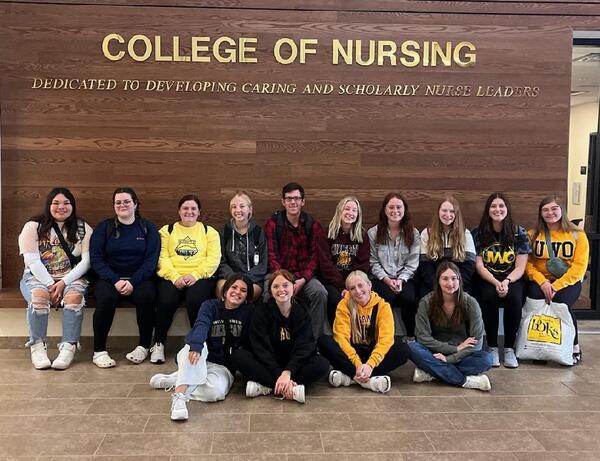
In August 2023, the University of Wisconsin–Oshkosh launched the Pre-Nursing Pathway, a weeklong intensive precollege program that helps students prepare for the academic rigor of the nursing program and connects them with resources. In the pathway, students engage in peer interactions, mentorship and additional time with faculty and staff, allowing them to build emotional resiliency and a network of support.
What’s the need: Staff at UW-Oshkosh noticed a decrease in qualified applicants to the nursing program and an overall decline in the matriculation of pre-nursing students, said Jessica Spanbauer, director of the center for academic resources.
Students had large gaps in their foundational science and math concepts as well as a lack of time management and organizational skills, which could be tied in part to remote instruction due to the COVID-19 pandemic, Spanbauer said.
The university decided to implement a pre-nursing program, in part to boost enrollment of students, but also to ensure students who do attend are successful on their career journey.
How it works: The program is organized by the Center for Academic Resources and the College of Nursing, but is supported by admissions, the Undergraduate Advising Resource Center, the counseling center, the biology and chemistry departments, residence life, and recreation and wellness.
Both admitted and deposited students are eligible to apply to the program, with special priority given to first-generation students.
Selected program participants move onto campus a week before classes start for an intensive orientation experience. All students live in one wing of a residence hall together, mentored by two current nursing students, building a sense of community and peer support.
During their week on campus, students participate in biology and chemistry labs led by professors; attend workshop presentations by advisers, counselors and academic support staff; and explore campus, familiarizing themselves with support resources. The goal is to proactively address knowledge gaps among students early on, enhancing their success and preparing them for the future demands of their profession.
“By focusing on crucial and relevant concepts, we could ensure that students are well-equipped to excel in their nursing education,” Spanbauer said. “We could help build students’ confidence and encourage students to actively engage in shaping their academic trajectory.”
Program participants are also offered tours of local hospitals, a Q&A session with nursing students and recent alumni, professional development workshops, and support from financial aid, dining, residence life and the Office of Accessibility.
“We were fortunate that we had colleagues ready to enhance collaboration across units to further promote a student-focused supportive learning environment where students can thrive,” said Seon Yoon Chung, dean of the college of nursing.
The impact: The program launched in August 2023 with 15 participants. Ninety percent of those students retained to fall 2024, and they earned an average GPA of 3.1. Eighty percent of the fall 2023 cohort are still in the pre-nursing major or accepted into the nursing program.
An additional 12 students participated in August 2024 (100 percent of whom retained to spring 2025), and the staff hope to double participation rates this upcoming fall, Spanbauer said.
Staff collect qualitative data about participants by using surveys and focus groups, as well as insights from faculty and other staff. In the future, longitudinal career-progression data and alumni surveys will help assess the program’s long-term impact, Spanbauer said.
Campus leaders are also considering ways to enhance recruitment efforts and increase capacity for students through various resources, online modules and flexible scheduling to accommodate more interested students.
Do you have an academic intervention that might help others improve student success? Tell us about it.
This article has been updated to correct attribution of a quote to Seon Yoon Chung.
This audio is auto-generated. Please let us know if you have feedback.
Almost immediately after taking office, President Donald Trump launched a flurry of executive orders and policy directives that threaten to roll back the civil rights of transgender and nonbinary students and erase their identities. The administration has also targeted colleges that support transgender inclusion.
Despite these moves, legal experts and transgender rights experts say college leaders can protect transgender and nonbinary students and make their campuses welcoming spaces. That type of support can be crucial to recruit those students, as well as improve their mental health and well-being on campus.
But implementing affirming policies for those students can be challenging, as institutions risk losing federal funding or facing Title IX investigations under the policies now in place.
Another executive order, which was blocked by a federal court, withheld federal funding to medical providers that provide gender-affirming care, such as puberty blockers and hormone therapies, to transgender people under the age of 19. An additional order directed federal agencies to end “equity-related” grants “to the maximum extent allowed by law.”
The U.S. Department of Education also issued guidance in late January advising education leaders to follow the previous Trump administration’s Title IX regulations after the Biden-era version of the rules were struck down. The Trump administration’s letter stated the department will enforce Title IX in a way that is consistent with Trump’s executive order mandating the federal government only recognize two sexes that cannot be changed.
This interpretation stands in contrast with the Biden-era version of the Title IX rules, which had prohibited discrimination based on gender identity.The Biden administration also withdrew proposed Title IX rules in December that would have barred blanket bans on transgender students participating on sports teams aligning with their gender identity.
Yet another executive order targeted an extremely small sliver of student athletes nationwide by threatening to withhold federal funding from colleges or K-12 schools that allow transgender girls and women from competing in sports aligning with their gender identity. The NCAA revised its policies to comply with the order.
The new administration has already opened Title IX investigations into San José State University, the University of Pennsylvania, the Massachusetts Interscholastic Athletic Association, and othersthat allow or have allowed transgender women or girls to participate on teams corresponding with their gender identity.
However, the enforceability of the Trump administration’s recent executive orders, which are essentially “ideological policy statements,” has not yet been determined, said Elana Redfield, federal policy director at the University of California, Los Angeles’ Williams Institute.
At the very least, colleges shouldn’t be rushing to implement “harmful and discriminatory policies” before they are legally required to do so, said Jose Abrigo, an attorney and HIV project director for Lambda Legal Defense and Education Fund. The policies could be blocked or modified by the courts and preemptive compliance could “needlessly harm students,” he said.
The executive orders try to suppress speech, erase identities and punish those who affirm the existence of transgender and nonbinary people on college campuses — institutions that are meant to be “bastions of free thought and open discourse,” Abrigo said.
“Academic institutions should be places where truth is explored, not dictated,” Abrigo said, “where students are empowered to live authentically, not forced into silence by discriminatory and unconstitutional edicts from the president.”
How colleges can protect trans students
College leaders have several ways to affirm and protect their transgender and nonbinary students, experts say.
Higher ed institutions are in the business of education, so they should be informing students about what gender-affirming care is available and how they can access it, said Genny Beemyn, director of the Stonewall Center at the University of Massachusetts, Amherst.
They should also educate students about their options for changing their name and gender markers on legal documents and their rights concerning use of locker rooms or restrooms corresponding to their gender identities both nationally and in their own states, they added.
Policies allowing students to easily change their names across campus can be effective, said Sarah Lipson, a public health professor at Boston University. These allow a transgender student to enter a new classroom and avoid a faculty member referring to them by their deadname — a name given to them that they no longer use, she said.
But those policies should be flexible, such as including a transgender student’s deadname in communications to their family if they are not out at home, she said.
Colleges also need to provide support to transgender and nonbinary students through campus counseling centers, Beemyn said. Smaller colleges without counseling centers can refer students to outside therapists that work with transgender or nonbinary people, they said.
Gender-inclusive housing is also critical for transgender students, Lipson said. Placing transgender students in single occupancy dorms to avoid pairing them with another student who shares their gender assigned at birth is “not inclusive,” she said.
“That’s really changing the college environment for the trans student by saying you have to live by yourself in order to be part of this community,” Lipson said.
Public colleges in red states with transgender-affirming restrictions have other options to support or recruit transgender and nonbinary students, Lipson said. For instance, they could limit pronoun use on admission documents, referring instead to students by their names. Colleges could also use plural or gender-neutral pronouns instead of “he or she” or “your son or daughter,” she said.
“It requires combing through a lot of materials, but most importantly the front-facing admissions materials to ensure that those are not unnecessarily reinforcing a gender binary,” Lipson said.
The biggest thing colleges could do now is not erase their transgender and nonbinary students, Abrigo said. Instead, campus officials should recognize their existence, affirm their identities, and ensure they have access to the resources and support they need, he said.
College leaders can simply send messages to students, reminding them that transgender and nonbinary students matter, that they’re part of the campus community and that they’re aware of the threats against them, Lipson said.
“Some of these students that we’ve talked to in red states were really reflecting that,” Lipson said. “‘We feel that people are really looking out for us to the extent that they can.’”
Non-affirming campuses could impact mental health
The mental health impact of the executive orders on students can vary — depending in part on where they are in the process of coming out as transgender or nonbinary, Beemyn said.
Beemyn is working on a study that asks transgender students if the national climate is affecting whether they are willing to be out about their gender identity.
Some students in liberal states or at progressive colleges — especially those with a strong support network — don’t feel the effects of national politics as much, Beemyn said. However, the national discourse has prompted some students to say they are less likely to come out to new people and want to be less visible, they said.
“It would make logical sense that if someone can’t be themselves and has to hide who they are, that’s going to have negative effects on someone’s sense of well-being and sense of belonging, community and self-worth,” Beemyn said.
The prevalence of mental health issues is disproportionately high among higher ed students who are transgender and nonbinary — but those rates can differ from campus to campus, Lipson said.
“It would make logical sense that if someone can’t be themselves and has to hide who they are, that’s going to have negative effects on someone’s sense of well-being and sense of belonging, community and self-worth.”
Genny Beemyn
Director, Stonewall Center at the University of Massachusetts, Amherst
Boston Universityresearchers analyzed national data from more than 11,000 transgender and nonbinary students at about 250 U.S. colleges and universities collected between 2022 and 2024.
Overall, the research showed just 16% of transgender and nonbinary students are “flourishing” on campus. But that rate is much higher at some campuses, reaching 50% at some institutions, said Lipson.
The rate of students experiencing symptoms of depression also fluctuated widely across colleges, from about 33% to upwards of 90% of transgender and nonbinary students, Lipson said. The rate of anxiety varied dramatically as well, ranging between 28% and 82%, she said.
The researchers haven’t yet examined which institutional policies might account for differences in mental health outcomes across campuses, but they plan to explore that next, said Lipson.
Even so, researchers already know access to mental health care varies greatly. At some campuses, as few as 30% of transgender students said they had access to competent mental health care, compared with over 80% at other institutions,Lipson said.
“There is a lot of variation in all of these outcomes — mental health, treatment use, and discrimination as well,” said Lipson. “That suggests that college campuses are playing a role in explaining this variation.”
Complying with the anti-trans laws
Many conservative states have enacted anti-transgender laws, including statutes barring transgender students from participating in athletics or using locker rooms or bathrooms that align with their gender identities. Finding a balance between complying with anti-trans policies while minimizing harm to transgender and nonbinary students can be challenging.
In February, new restroom signs at the University of Cincinnati reading “biological men” and “biological women” sparked student outcry.
The university stated it was following a Ohio law that took effect Feb. 25 requiring schools to designate multi-person student restrooms, locker rooms, changing rooms and showers to be used exclusively by students of the male or female “biological sex only.”The law requires “clear signage” to make those designations.
But on Feb. 26, university administrators apologized in a letter to students and said they would replace the signs,adding that use of the term “biological” on the signs was “an error on our part.”Republican state Rep. Adam Bird, who cosponsored the bill, reportedly said the term “biological” wasn’t needed on the signs to comply with the law.
“Academic institutions should be places where truth is explored, not dictated.”
Jose Abrigo
HIV project director, Lambda Legal Defense and Education Fund
As with state laws, colleges should take Trump’s executive orders as serious threats that merit a response to protect the organization, UCLA’s Redfield said. A loss of federal funding could be consequential, considering higher ed institutions provide a wealth of research and data collection about the experiences of transgender people, she said.
College leaders should likewise understand the threats are motivated not by science, but by ideology and bias against transgender and nonbinary people, Redfield said.
Beemyn echoed those comments. The laws make it “impossible for [transgender and nonbinary students] to live their lives in a way that’s right for them. That’s a real denial of their humanity,” Beemyn said.
The University of Washington said it’s not taking any “preemptive actions” until it receives further guidance on how to comply with the Education Department’s Dear Colleague letter regarding Title IX enforcement.
“We are committed to providing access to excellence and a welcoming environment for all and believe that a breadth of perspectives and experiences make for a richer educational experience for everyone,” the University of Washington said in a Feb. 25 statement to Higher Ed Dive.
If higher education institutions like the University of Washington and others want transgender and nonbinary students at their schools, they need to figure out ways to recognize their existence, said Redfield.
“They have to make it clear that their intention is to create an environment where trans and nonbinary students can thrive,” she said.
By Dr Paul Vincent Smith, Lecturer in Education; Dr Alex Baratta, Reader in Language & Education; Dr Heather Cockayne, Lecturer in International Education; and Dr Rui He, Lecturer in Education, who are all at the Manchester Institute of Education, University of Manchester.
The HEPI and Uoffer Global reportHow can UK universities improve their strategies for tackling integration challenges among Chinese students?, by Pippa Ebel, provides a series of ideas for supporting Chinese students. This clear and succinct report left us wanting more detail on some of its conclusions. However, we also noted that the report’s focus on integration is one that has been problematised in recent publications. In this response, we suggest some contrasting perspectives on the support of Chinese students for the purposes of further discussion.
Generalising along national lines
The framing of the report along the lines of national identity unavoidably makes for a broad-brush approach. We suspect Ebel would agree with us when we suggest that we cannot assume Chinese students will have uniform ambitions and desires. Although the structural conditions under which students are recruited must be taken into account (see ‘Admissions’ below), there is an increasing recognition of students as independent agents, capable of making their own choices, rather than being passive vessels of their national culture.
Further, there are other student characteristics to bear in mind. For example, we suggest that the distinction between undergraduate and postgraduate student experiences should be reflected in how students are offered support. At the University of Manchester, international students comprise around one-third of the student body; at the taught postgraduate level, it is more than half. Many of these are students from China. When considering educational level alone, then, there are likely to be differences between students who will spend three years in a setting of student diversity, and those who will spend a calendar year in the UK, predominantly among compatriots.
What do students really need universities to do?
The report suggests that ‘Most Chinese students would like more digital support from their institutions’ (p. 41), with the report tending to focus on social media. Yet (p. 27) 60% of Chinese learners are nonetheless described as using Whatsapp and Instagram; they simply have a preference for the continued use of equivalent Chinese platforms.
We infer from the report the idea that Chinese students are missing out by not using ‘our’ platforms. It is suggested (p. 41) that Chinese students could be involved in marketing decisions on whether to use Western or Chinese platforms for social media messaging. This would have the advantage of directly involving Chinese students. It begs the question, though, of whether time is better spent on choosing the best platform for a given purpose, or on establishing a broad social media presence to maximise coverage.
Our experience suggests that students find their domestic digital ecosystem enabling in a UK context. It also suggests that there might be some question of validity when it comes to the report findings. Is this a case of higher education researchers asking: ‘Would you like more support?’, and the students understandably answering ‘yes’?
The use of AI-supported interviews to further test applicants’ spoken English is again thought-provoking, but requires more discussion. This practice seems to be an invitation for universities to spend money on additional admissions arrangements, in order to reduce income by rejecting students who, while they may have otherwise met the formal language criteria for admission, fall foul of new spoken English tests, the requirements of which are in their formative stages.
Institutional responses to proficiency in English
The report takes a particular position on the English proficiency of Chinese students. We agree that universities and their staff must be able to invoke standards of language for purposes including admissions and assessment. As teaching staff, though, we find that there are many steps to traverse before we conclude that any particular student behaviour can be attributed to linguistic proficiency. Have we met the students on their own terms, and found out about them as learners? Before we insist on invoking linguistic standards, are we satisfied that there are no better explanations for (e.g.) classroom silence? The issue of classroom passivity is not one specific to international students, although it seems that the wider issue is being put to one side in favour of a focus on some international students.
Not least among these matters is that of how China English is manifested in student academic writing. In many cases, the language used in student texts is highly systematic and obeys the rules of a fully-fledged language. There is a need to raise awareness of these features. With regard to spoken language, perceived proficiency is not always about the grasp of the language itself, but can also be associated with the spaces students are working in. Lack of confidence (as noted on p. 16 of the report), mental health, sense of belonging, and divisive university-level language policies may all have an impact.
The discussion of IELTS in the report is notable for what it omits. Is it the case that universities are putting IELTS to a purpose it is not fit for; or that universities think of IELTS as a guarantee of proficiency rather than a time-and-space-constrained test result for which universities themselves, along with UKVI, have set the standards for success? We welcome the contribution of the report on this point, and we would be interested to read more on the author’s broader perspective and recommendations on IELTS.
Integrating or including?
Chinese students remain the largest international group on UK campuses, attracting ongoing attention from higher education policy-makers and practitioners. Nonetheless, where we see a focus on a single group, we need to ask how universities can manage their support without falling into the trap of re-hashing existing deficit narratives. Work on internationalisation in universities has suggested that ‘practice[s] with the most demonstrable impact on students’ include embedding internationalisation holistically across the institution, and encouraging inclusion – as opposed to integration, which is not always well-conceptualised. There is a balance to be struck between the economy of generalising according to background, and providing local, co-constructed spaces for students as independent agents to meet their own needs.
I have been pleasantly surprised by the degree and depth of feedback received in response to my report published at the end of last year. It is always better to have engagement of any kind than none at all. Two threads of response have been most striking: the first by management teams of universities and education organisations wanting to better understand the report and how to apply it to their own strategies. Secondly, by Chinese students themselves on platforms like Little Red Book, with whom the report has thankfully resonated and prompted further discussion and exchange. Both are incredibly heartening. Yet as expected, responses have not all been glowing, and I am particularly grateful for the response issued by academics at the University of Manchester which critically addresses several points. It reflects in a nuanced way on my arguments and contributes valuable questions.
I hope to add the following reflections in order to continue the dialogue on the report, as well as acknowledge the time and effort they put into forming a response.
The value of identifying patterns & trends within a single ethnic group
As suggested, I recognise that Chinese students do not have ‘uniform ambitions or desires’. My extensive conversations with Chinese students from a range of backgrounds have shown me how personal and individual every university experience is. However, in a report focusing exclusively on one group – partly chosen for the fact it represents the second largest international student group in the UK – a principle aim is to extract trends and patterns which can be useful in promoting better understanding and empathy. My report does not make statements such as ‘the Chinese student experience is X’ or ‘all Chinese students think…’, instead it focuses on which challenges were most consistent among a diverse group of Chinese respondents. It is important, for instance, for universities to understand that probably their entire Chinese student body uses WeChat, and how this cultural phenomenon might shape their digital behaviour on campus.
A more detailed explanation of divergent social media usage
My report is in fact entirely in agreement with the respondents in finding that China’s own social media platforms – such as Little Red Book – are enabling when transposed to a UK context, providing key information about the locality (for instance, hospital services and banks).
The report does not ask whether Chinese students should continue to use their own software, or switch to a local one. Rather, it investigates the habits and preferences of Chinese students in the UK, in order to raise awareness of differences with other local and international students. How universities choose to engage with this information is an open question, but it raises the point that if universities wish to improve communication channels with Chinese students they must first understand which platforms are being used, and how.
Promoting undersubscribed courses, not institutions
The respondents rightly observed that the preference of UK institutions among Chinese students is the result of an emphasis on rankings, leading to a preference for the top 100 institutions. However, the respondents misunderstood my assertion that agents should promote ‘less well-known courses’ to mean they should promote a broader range of universities. Since agents often work on behalf of universities, this would clearly not be a realistic suggestion, as they would not be incentivised to promote an institution that was not their client.
My suggestion was to help agents promote different courses which are less well-known and undersubscribed among international students. Furthermore, it was to encourage universities to maintain closer dialogue with their agents to better communicate their needs (and gaps), as well as to receive useful information from agents who are in daily conversation with prospective students. During a conversation with a senior faculty member from a UK institution with a meaningful agent network in China, the complaint was raised that the more niche or newer courses in science have surprisingly few Chinese students. Whilst this is a single anecdote, it was consistent with prior findings. Chinese students veer towards courses which are actively promoted, or undertaken by fellow students in their network: Business, Engineering, Marketing… This means that more niche, but perhaps highly suitable courses are overlooked. Do prospective students, for instance, know that Bristol has 16 courses related to Economics, or might they presume quite reasonably that there is just one?
Language challenges, explained
The respondents thoughtfully add to my point on language challenges of Chinese students by highlighting the differences in the education systems of China and the UK. These are indeed pertinent and have been written about at length (one reason why I chose not to focus on this area). My interviews with students indeed reflected surprise with the academic environment at UK institutions, which promoted a form of debate and discussion they were unused to. This aspect, however, doesn’t contradict the argument of Chinese students being underconfident in expressing themselves in English, but adds another dimension in explaining their underconfidence within a classroom setting.
The response asks for further clarity on my assessment of IELTS as a suitable language evaluation tool. As stated, I believe that IELTS is too heavily relied on as a tool for understanding a student’s overall language ability and their suitability to enrol in a course. Whilst IELTS provides an indication of level, it is incomplete and as Manchester points out ‘a time-and-space constrained test’. The report suggests that universities consider additional methods of evaluation, for instance online or pre-recorded interviews, in order to gain a more holistic and accurate perspective. In a world where AI is proving increasingly central to our lives, universities might benefit from investment into AI tools which could elevate and enhance their recruitment processes.
(Hopefully not) a final word
My report does not assume that students should or must integrate. Rather it questions assumptions around the degree to which Chinese students wish to engage with their institution (particularly socially), and highlights distinct facets of the Chinese experience which may be less well known by institutions and non-Chinese students.
I do not personally see the term ‘integration’ as problematic. I interpret it to mean engaging with and understanding a local context, not compromising one’s own unique identity and background to fit in. I commend the respondents’ use of the term ‘inclusion’ and agree we should all be aspiring towards a more inclusive environment on campuses. However, I assert that in order to make an environment more inclusive, it is first necessary to raise awareness and understanding of the individuals we are attempting to include. Without this understanding, how do we know what inclusive looks like?
Awareness of the unique and precise challenges international students face – Chinese or otherwise – is the first step to actually making them feel included. It is not showcasing a range of faces on the front page of a brochure, or hosting Chinese calligraphy workshops on campus. It is creating structural opportunities in which students can give feedback and embedding representative voices of these different groups within the institution at diverse levels, be it the students’ union, alumni office or governing board.
I welcome any additional points, and again reiterate my thanks for a thoughtful response to my original report.
We know that the use of generative AI in research is now ubiquitous. But universities have limited understanding of who is using large language models in their research, how they are doing so, and what opportunities and risks this throws up.
The University of Edinburgh hosts the UK’s first, and largest, group of AI expertise – so naturally, we wanted to find out how AI is being used. We asked our three colleges to check in on how their researchers were using generative AI, to inform what support we provide, and how.
Using AI in research
The most widespread use, as we would expect, was to support communication: editing, summarising and translating texts or multimedia. AI is helping many of our researchers to correct language, improve clarity and succinctness, and transpose text to new mediums including visualisations.
Our researchers are increasingly using generative AI for retrieval: identifying, sourcing and classifying data of different kinds. This may involve using large language models to identify and compile datasets, bibliographies, or to carry out preliminary evidence syntheses or literature reviews.
Many are also using AI to conduct data analysis for research. Often this involves developing protocols to analyse large data sets. It can also involve more open searches, with large language models detecting new correlations between variables, and using machine learning to refine their own protocols. AI can also test complex models or simulations (digital twins), or produce synthetic data. And it can produce new models or hypotheses for testing.
AI is of course evolving fast, and we are seeing the emergence of more niche and discipline-specific tools. For example, self taught reasoning models (STaRs) can generate rationales that can be fine-tuned to answer a range of research questions. Or retrieval augmented generation (RAG) can enable large language models to access external data that enhances the breadth and accuracy of their outputs.
Across these types of use, AI can improve communication and significantly save time. But it also poses significant risks, which our researchers were generally alert to. These involve well-known problems with accuracy, bias and confabulation – especially where researchers use AI to identify new (rather than test existing) patterns, to extrapolate, or to underpin decision-making. There are also clear risks around sharing of intellectual property with large language models. And not least, researchers need to clearly attribute the use of AI in their research outputs.
The regulatory environment is also complex. While the UK does not as yet have formal AI legislation, many UK and international funders have adopted guidelines and rules. For example, the European Union has a new AI Act, and EU funded projects need to comply with European Commission guidelines on AI.
Supporting responsible AI
Our survey has given us a steer on how best to support and manage the use of AI in research – leading us to double down on four areas that require particular support:
Training. Not surprisingly the use of generative AI is far more prevalent among early career researchers. This raises issues around training, supervision and oversight. Our early career researchers need mentoring and peer support. But more senior researchers don’t necessarily have the capacity to keep pace with the rapid evolution of AI applications.
This suggests the need for flexible training opportunities. We have rolled out a range of courses, including three new basic AI courses to get researchers started in the responsible use of AI in research, and online courses on ethics of AI.
We are also ensuring our researchers can share peer support. We have set up an AI Adoption Hub, and are developing communities of practice in key areas of AI research – notably research in AI and Health which is one of the most active areas of AI research. A similar initiative is being developed for AI and Sustainability.
Data safety. Our researchers are rightly concerned about feeding their data into large language models, given complex challenges around copyright and attribution. For this reason, the university has established its own interface with the main open source large language models including ChatGPT – the Edinburgh Language Model (ELM). ELM provides safer access to large language model, operating under a “zero data retention” agreement so that data is not retained by Open AI. We are encouraging our researchers to develop their own application programming interfaces (APIs), which allow them to provide more specific instructions to enhance their results.
Ethics. AI in research throws up a range of challenges around ethics and integrity. Our major project on responsible AI, BRAID, and ethics training by the Institute for Academic Development, provide expertise on how we adapt and apply our ethics processes to address the challenges. We also provide an AI Impact Assessment tool to help researchers work through the potential ethical and safety risks in using AI.
Research culture. The use of AI is ushering in a major shift in how we conduct research, raising fundamental questions about research integrity. When used well, generative AI can make researchers more productive and effective, freeing time to focus on those aspects of research that require critical thinking and creativity. But they also create incentives to take short cuts that can compromise the rigour, accuracy and quality of research. For this reason, we need a laser focus on quality over quantity.
Groundbreaking research is not done quickly, and the most successful researchers do not churn out large volumes of papers – the key is to take time to produce robust, rigorous and innovative research. This is a message that will be strongly built into our renewed 2026 Research Cultures Action Plan.
AI is helping our researchers drive important advances that will benefit society and the environment. It is imperative that we tap the opportunities of AI, while avoiding some of the often imperceptible risks in its mis-use. To this end, we have decided to make AI a core part of our Research and Innovation Strategy – ensuring we have the right training, safety and ethical standards, and research culture to harness the opportunities of this exciting technology in an enabling and responsible way.
The structure and delivery of online programs can have significant impacts on a student’s ability to succeed. After examining success coaching practices at three State University of New York institutions, the authors of new analysis from MDRC offer several policy recommendations to support online learners.
Within each university, there were a variety of approaches to providing help for online students. Analyzing and comparing the programs indicated there are three primary types of support for online learners: coaching communication strategies and technology applications, student engagement, and academic outcomes.
Some of the most effective practices in each category are:
Coaching Strategies
Personalized support from coaches is one of the most effective ways to help students. By minimizing the coach-to-student ratio, institutions can ensure coaches have a manageable workload, enabling them to cater their coaching to fit individual students’ needs.
Tracking student data can help coaches identify needs and tailor support. Performance and outcome metrics, such as grades, course attendance, and credit accumulation, can be used to identify struggling students and guide intervention strategies. Additionally, learning management systems that track student engagement can facilitate personalized communication to fit students’ needs and preferences.
Opportunities for professional development help coaches provide the best support for their students. Institutions should continually provide training opportunities to help inform online pedagogy.
Student Engagement
Centralizing support services improves student access and awareness.A unified, easily accessible platform can ensure that students know about and use available resources.
Building community is especially important—and especially challenging—for asynchronous learners. Faculty can foster connections through synchronous or asynchronous study groups and should be mindful of online students’ varied schedules.
Responsive, innovative communication helps keep students engaged. Timely feedback and meeting students where they are—through tools and communication styles they prefer—can promote sustained engagement.
Academic Outcomes
Faculty need targeted training to effectively adapt courses for online delivery. Professional development can help instructors redesign courses for virtual environments and maintain instructional quality.
Quality standards for course design can improve consistency and effectiveness. Standardized templates and interaction guidelines help ensure that all online courses meet a baseline of student support and instructional quality.
Coaches and faculty can collaborate to provide holistic academic support. Integration of coaching within academic programs strengthens both in- and out-of-classroom support, creating a more cohesive experience for online students.
With an increasing proportion of students participating in online courses, building capacity to support online learners promotes success for all students, especially those who are entirely online. Institutions committed to improving their online programs can dedicate resources to developing and evaluating courses and support systems.
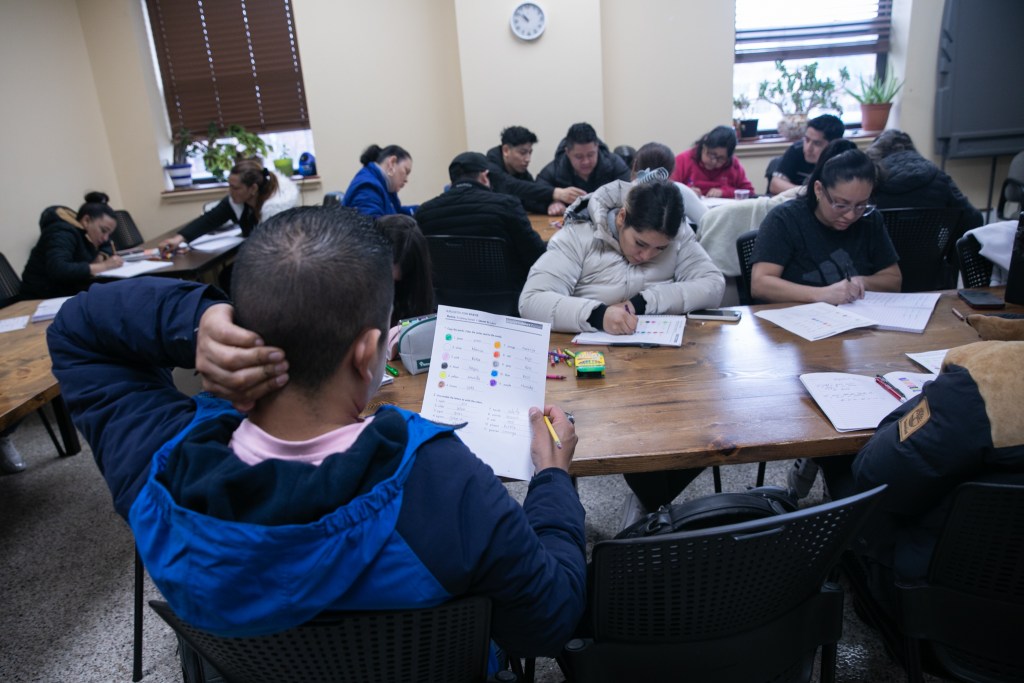
Inside a classroom at the Center for Family Life in Sunset Park on a recent Monday morning, teacher Julian Colón was busy setting out notebooks, folders, pens and crayons on a table. Outside in the hallway, a sign taped to a wall reads “CLASES DE INGLÉS POR ESTE CAMINO” — English classes this way.
It was the first day of the spring semester in this predominantly Latino corner of the Brooklyn neighborhood, where Colón was expecting about 30 students in class.
Julian Colón teaches an English as a Second Language class at the Center for Family Life in Sunset Park, Brooklyn, April 7, 2025. (Ben Fractenberg/THE CITY)
But not everyone who wanted a seat at the table was there. More than 400 students are now on the center’s waitlist, according to Maria Ferreira, its adult employment program director.
“I sit right by the reception, and every single day we get inquiries about ESOL,” Ferreira told THE CITY, using the acronym for English for Speakers of Other Languages. “Every day we’re adding people to the waiting list.”
Demand for English classes has increased with the influx of migrants that began in 2022, according to a new report by United Neighborhood Houses, which represents 46 settlement houses that help serve immigrant populations, even as City Hall has slashed funding.
At Flatbush-based social services giant CAMBA, program manager Jude Pierre said more than 700 prospective students are now waiting to get into one of its 10 city-funded ESL classes, which collectively accommodate about 200 students.
“With the migrant crisis…we ended up getting a lot of individuals coming here to register for classes to the point where we basically had to stop taking registrations,” Pierre told THE CITY. “We got to the point where it didn’t make any more sense to have thousands of people on a waiting list, knowing we would never get to most of them. We started saying, ‘Sorry, we can’t do this, because it’s not fair to you,’ and trying to refer them to other places.”
Last year, the Department of Youth and Community Development reduced funding for literacy classes by nearly 30% to $11.9 million from $16.8 million, the report noted. Many long-time providers in areas where migrant shelters were clustered also lost out on DYCD dollars after the agency adjusted its funding eligibility formula,” as THE CITY previously reported.
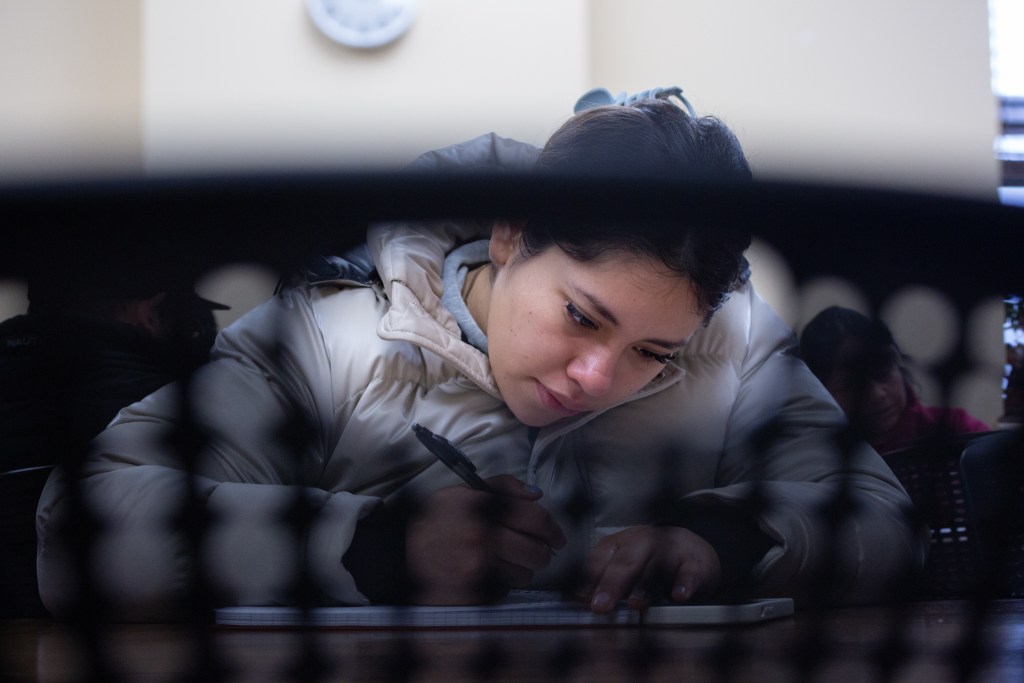
An immigrant student takes an English as a Second Language class at the Center for Family Life in Sunset Park, Brooklyn, April 7, 2025. (Ben Fractenberg/THE CITY)
According to the report, many classes now depend entirely on discretionary dollars from the City Council, which increased its funding to $16.5 million in fiscal year 2025 from roughly $6.5 million in recent years to back organizations DYCD left behind.
Several providers, however, told THE CITY that compared to DYCD’s multi-year contracts, Council funding, which requires annual reconsideration, makes it difficult to plan ahead and maximize offerings.
And for some, like CAMBA, Council funding was not enough to cover the losses from DYCD with the group reducing the number of students it serves by 174 and closing its waitlist, Pierre said.
So far, providers say, demand among new arrivals has remained steady even as the Trump administration’s mass deportation efforts have led many new arrivals fearful of working or sending kids to school or even walking the streets.
“Ideally, these programs would be supported by a robust, baselined program managed by DYCD that offered students and providers stability with year-over-year funding,” the report says. “However, until DYCD revisits its unnecessarily restrictive stance…it is crucial that the City Council continue this support to make sure that adult learners continue to have access to quality classes.”
‘I Understand People Now’
While fewer than 3% of the 1.7 million immigrants in need of English classes are able to access it through city-funded programs, according to the report, students who were able to find their way into a class told THE CITY improved English has helped with their daily lives — and their job prospects.
Currently, two-thirds of New Yorkers with limited English proficiency earn less than $25,000 a year, according to American Community Survey data cited in the report.
Rosanie Andre, 42, came to New York City from Haiti in 2023, and said she started taking English classes at CAMBA last year after three months on a waitlist. Since then, she’s been able to get a job serving food at Speedway while also delivering packages for Amazon per diem.
“When I did my interviews, you have to speak in English with the manager. And it helped me a lot because I understand people now,” Andre, a native Haitian Creole and French speaker, said in English.
Learning English has also helped Andre communicate with her 6-year-old — who only started speaking after their move to New York City.
“And she started to speak English — English only. She knows nothing in Creole,” Andre said. “I try to listen to my daughter and speak to her English-only.”
With her English improving, Andre said she is better able to help her daughter with her homework.
“I try to explain her how to do it in English,” Andre said. “If no CAMBA, I have difficulty to understand. Cuz when I come here, I don’t understand nothing. When people speak, I smile because I understand nothing.”
Roodleir Victor, 29, saw English classes as an essential stepping stone in furthering his education. He had completed his college coursework for an economics degree in his native Haiti, he said, though he ultimately fell just short of obtaining a degree because it would have required him to stay in the country’s capital, which has been embroiled in political turmoil and gang violence.
He started taking English classes when he moved to the city in 2023, he said, in hopes of continuing his studies here. For four days a week, he attended English classes in Flatbush from 1 to 4 p.m. before heading to Long Island to work at a pasta factory on a 5 p.m. to 5 a.m. overnight shift.
Victor is now enrolled in a GED class, he said, and hopes to study computer programming after that.
“I would like to study at a university which I can learn technology. But it’s difficult for me, because I don’t have the support I need to go there,” Victor said in English. “But for me personally, I believe in my capacity to adapt.”
‘It’s Not Impossible’
Back in Sunset Park, a 55 year-old asylum seeker was patiently waiting to enter the room half an hour before class started at 9 a.m.
“I’m just eager to learn,” the native of Ecuador said in Spanish. “It’s important because I want to communicate with others for a job.”
The mother of five arrived in New York City three months ago, she said, after seeking asylum at the Mexico-California border then being detained there for three months. She’s cleaning homes to help make ends meet, but hopes to land a job with steadier income soon.
“Whatever I can get I pick up, but those jobs come and go,” she said. “I was in a workforce development program but the curriculum was in English so I started looking for classes.”
Oscar Lima rolled into English class with his e-scooter just after class started at 9:30 a.m. The 34-year-old is now in his second semester of classes, he said, which he makes time for in between catering gigs, food deliveries and a third job as a barback.
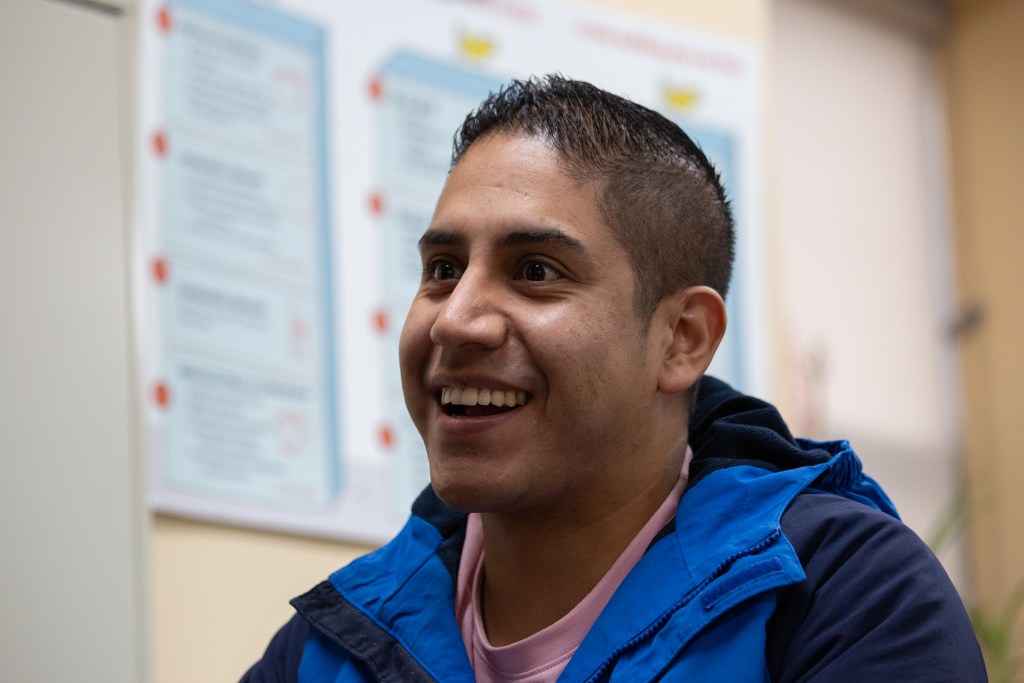
Columbian immigrant Oscar Lima says learning English will help him work in the food service industry, April 7, 2025. (Ben Fractenberg/THE CITY)
“My bosses told me, ‘You’re a good worker, but you need to learn English,’” Lima said. “And I decided that I didn’t want to learn English myself.”
Lima and other students now settled into their seats, turning their attention to Colón.
“Everybody, are we ready? Listos?” Colón asked.
“Yes,” the class responded timidly.
Students practice learning the names of colors at an English as a Second Language class in Sunset Park, Brooklyn, April 7, 2025. (Ben Fractenberg/THE CITY)
Colón then began presenting ground rules on a digital whiteboard: Try to arrive within the five-minute grace period after the class start time, and come prepared with books, papers and pencils.
“The most important rule,” Colón continued, before repeating himself in Spanish. “Please don’t be afraid to participate and make mistakes.”
At break time, Lima shared how he, his wife and his two sons had arrived in the city from Colombia about three years ago. While the family had started off at a shelter, Lima said, they’re now able to afford an apartment of their own. His two kids — seven and ten years old — quiz him about names of objects around the house, he said, and often encourages him to learn English alongside with them.
“New York, it poses many challenges. It’s difficult at the beginning, but it’s not impossible,” Lima said in Spanish. “My American Dream is my sons…I want my children to perhaps have what I didn’t have, but at the same time I want to show them how to earn it, and how to work like good people.”
This story was originally published by Chalkbeat. Sign up for their newsletters at ckbe.at/newsletters.
HVAC projects to improve indoor air quality. Tutoring programs for struggling students. Tuition support for young people who want to become teachers in their home communities.
More News from eSchool News
Almost 3 in 5 K-12 educators (55 percent) have positive perceptions about GenAI, despite concerns and perceived risks in its adoption, according to updated data from Cengage Group’s “AI in Education” research series.
Our school has built up its course offerings without having to add headcount. Along the way, we’ve also gained a reputation for having a wide selection of general and advanced courses for our growing student body.
When it comes to visual creativity, AI tools let students design posters, presentations, and digital artwork effortlessly. Students can turn their ideas into professional-quality visuals, sparking creativity and innovation.
Ensuring that girls feel supported and empowered in STEM from an early age can lead to more balanced workplaces, economic growth, and groundbreaking discoveries.
In my work with middle school students, I’ve seen how critical that period of development is to students’ future success. One area of focus in a middle schooler’s development is vocabulary acquisition.
For students, the mid-year stretch is a chance to assess their learning, refine their decision-making skills, and build momentum for the opportunities ahead.
Middle school marks the transition from late childhood to early adolescence. Developmental psychologist Erik Erikson describes the transition as a shift from the Industry vs. Inferiority stage into the Identity vs. Role Confusion stage.
Art has a unique power in the ESL classroom–a magic that bridges cultures, ignites imagination, and breathes life into language. For English Language Learners (ELLs), it’s more than an expressive outlet.
In the year 2025, no one should have to be convinced that protecting data privacy matters. For education institutions, it’s really that simple of a priority–and that complicated.
Teachers are superheroes. Every day, they rise to the challenge, pouring their hearts into shaping the future. They stay late to grade papers and show up early to tutor struggling students.
PHILADELPHIA, April 17, 2025 — Many Americans are opposed to President Donald Trump’s speech-restrictive policies, a new national survey of free speech attitudes finds, with only a quarter supporting the deportation of legal non-citizens for expressing pro-Palestinian views.
The National Speech Index, a quarterly survey designed by the Foundation for Individual Rights and Expression, also found substantial opposition to pulling federal funding from colleges and universities that failed to arrest pro-Palestinian protesters, or are “not doing enough” to combat anti-Semitism on campus and those that fail to disband DEI programs.
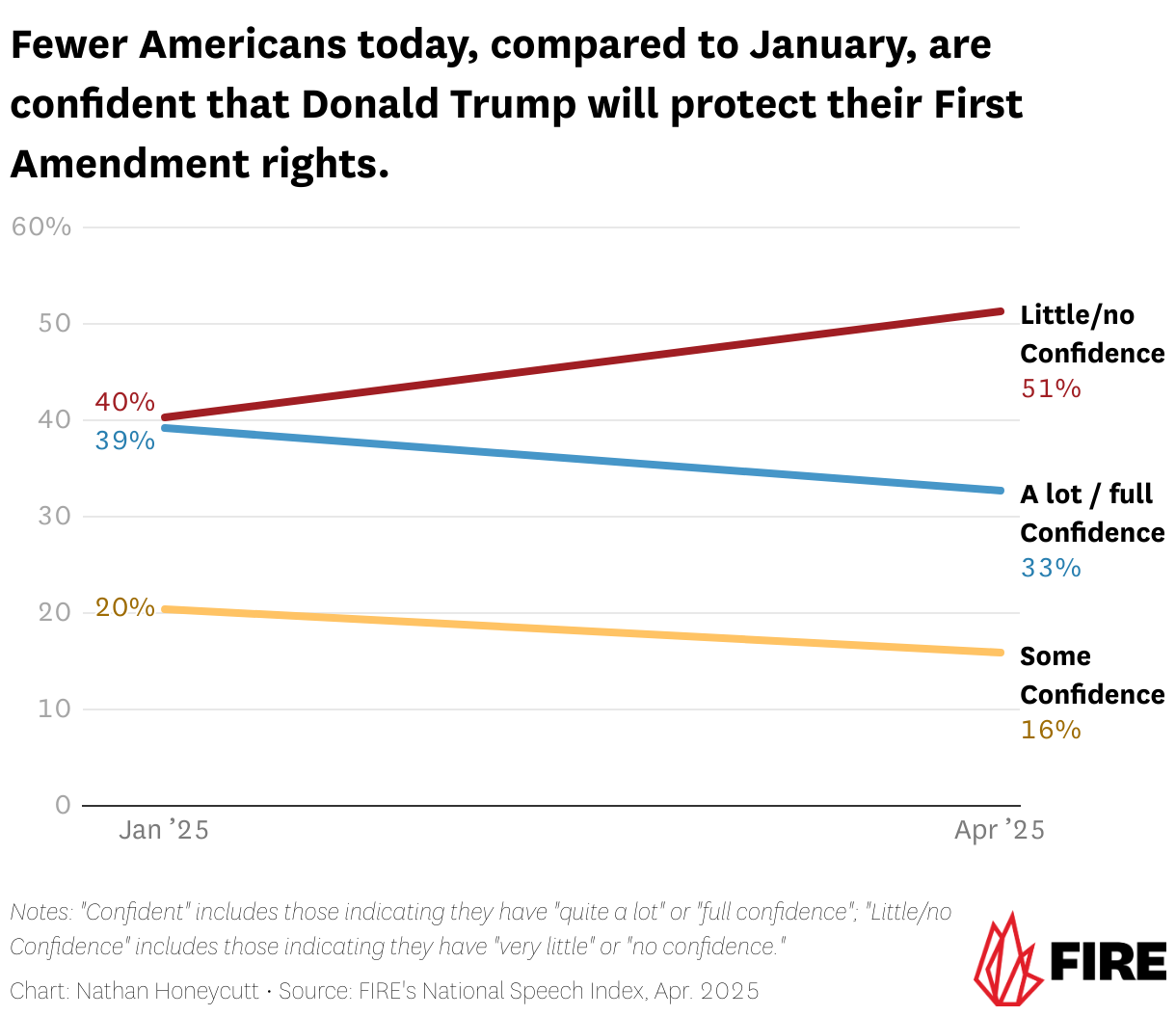
The survey provides the first detailed national snapshot of Americans’ views towards Trump’s policies through the prism of free speech rights in his second term. It also found that those saying they have “very little” or “no” confidence that Trump will protect First Amendment rights has risen ten points since the survey was last conducted in January.
Only 26% of Americans said they support or strongly support deporting foreigners legally in the United States on a student visa for expressing pro-Palestinian views, while 52% are opposed or strongly opposed and 22% neither support nor oppose it. As for green card holders being deported for pro-Palestinian views, only 23% are in support, 54% are opposed, and 23% are neither in favor nor against.
“Deporting someone simply for disagreeing with the government’s foreign policy preferences strikes at the very freedoms the First Amendment was designed to protect,” said FIRE Chief Research Advisor Sean Stevens. “Americans are right to reject this kind of viewpoint-based punishment.”
The National Speech Index also polled Americans about whether they would support the federal government rescinding federal funding from colleges and universities for a host of reasons. (FIRE’s poll was conducted before the Trump administration announced on Monday that it would freeze $2.2 billion in federal grants to Harvard University as part of a dispute over the administration’s proposed reforms to the institution.)
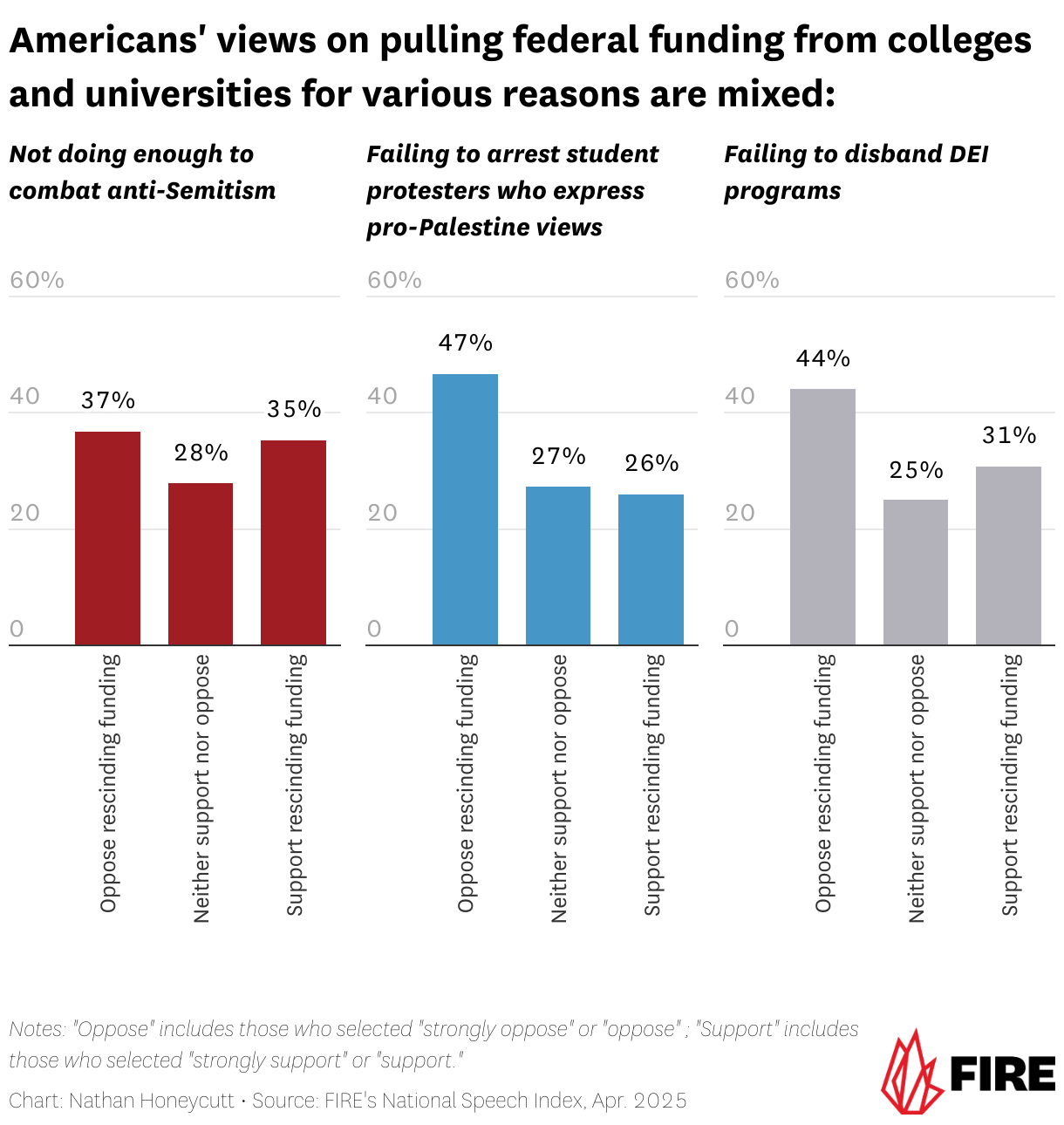
Just shy of half of Americans oppose pulling funding from colleges and universities for failing to arrest student protesters who express pro-Palestinian views (47%) or for failing to disband DEI programs (44%), while only 26% and 31% of Americans respectively support pulling funding in those cases.
When asked about pulling funding from colleges over insufficient efforts to combat antisemitism: 35% of Americans said they would support that measure and 37% would oppose it.
The latest edition of the NSI also found a notable decline in Americans’ confidence that Trump would protect their First Amendment rights. 51% of Americans now say they have “very little” or “no confidence at all,” compared to 41% who said the same in January.
“Confidence in Donald Trump’s First Amendment bona fides has returned to pre-inauguration levels,” said Nathan Honeycutt, FIRE manager of polling and analytics. “The partisan differences never really went away, but the honeymoon phase for independents appears to be wearing off.”
The National Speech Index is a quarterly poll designed by FIRE and conducted by the Dartmouth Polarization Research Lab to capture Americans’ views on freedom of speech and the First Amendment, and to track how Americans’ views change over time. The April 2025 National Speech Index sampled 1,000 Americans and was conducted between April 4 and April 11, 2025. The survey’s margin of error is +/- 3%.
The Foundation for Individual Rights and Expression (FIRE) is a nonpartisan, nonprofit organization dedicated to defending and sustaining the individual rights of all Americans to free speech and free thought — the most essential qualities of liberty. FIRE educates Americans about the importance of these inalienable rights, promotes a culture of respect for these rights, and provides the means to preserve them.
The Polarization Research Lab (PRL) is a nonpartisan collaboration between faculty at Dartmouth College, Stanford University and the University of Pennsylvania. Its mission is to monitor and understand the causes and consequences of partisan animosity, support for democratic norm violations, and support for partisan violence in the American Public. With open and transparent data, it provides an objective assessment of the health of American democracy.
CONTACT:
Alex Griswold, Communications Campaign Manager, FIRE: 215-717-3473; [email protected]
Being a president is hard. Seriously hard. We are watching the rapidly increasing presidential turnover rate collide with the lack of formal succession planning at a time when higher education is under significant political pressure. This is a serious problem for higher education.
But contrary to the popular perception, the president is not the sole difference-maker to an institution’s success. Once we look outside the spotlight of the presidency, we remember the institution’s core mission: academics. Skilled, effective academic leadership is vital to the ongoing success of an institution.
Standing at the forefront of the academic mission is the provost. In case you are wondering what a provost does, they are, on paper, the chief academic officer, responsible for the vision and oversight of all academic affairs. As important as that sounds, Larry A. Nielsen, in his book Provost: Experiences, Reflections and Advice From a Former “Number Two” on Campus, describes the provost as the university’s “stay-at-home parent.” Not so glamorous.
It is those leaders at the next level below the provost, the deans, who have responsibility for the vision and oversight of their respective colleges or schools. It is in these units where the bulk of the work happens for the academy to accomplish its mission, in research, teaching and service.
In the current climate for higher education, where its value is being challenged and the fight for student enrollment is running high, the provost and deans hold the key to academic transformation, as they strive to make their institution a strong destination that changes students’ lives and opens doors to new careers. Additionally, the deans and their faculty are closer to the ground in terms of understanding what students and their communities need and want. They primarily shape which courses, programs, majors and minors are offered. They do this work. Not the president.
This raises a question: What can be done to better support the deans?
Deans operate at a critical transition point. They serve at the discretion of the provost and president, and, as such, take direction (or sometimes lack of direction) that comes down to them. At the same time, deans are serving and representing their faculty and staff, working to support their success in doing the actual work of educating, advancing knowledge and serving the institution as good citizens and stewards. This crunch between above and below brings a lot of pressure for deans, even in the best of circumstances.
Thus, having coached and/or consulted with close to 100 deans over the years, I offer the following strategies.
Give Them Resources and Get Out of the Way
Being a dean is more closely aligned in its responsibilities to a presidential role than that of a provost. The dean oversees their school, with responsibility to set vision, create strategy, raise money, build and oversee administrative teams, manage politics, and drive results.
What a dean is not is a “stay-at-home parent.”
For deans to be most successful, the provost needs (to the best of their abilities) to provide deans with resources, professional development, time and clear direction. The provost (and at times the president) then needs to clear roadblocks, make introductions to key donors and stakeholders, and be available to the deans, as needed. You might say that the provost could consider the deans their most important constituents. If the deans are successful, it will greatly enhance the provost’s success.
Allow Deans to Meet Alone Regularly
Being a dean can be lonely. There is no one in their school to whom they can express insecurities or speak candidly, especially about sensitive issues. Providing space for the deans to meet and talk openly, candidly and even vulnerably with one another builds a group of trusted peers and advisers and creates a safe space to discuss challenges and give and get feedback from colleagues who may be experiencing the same.
This process yields tremendous benefits for a campus, where challenges and opportunities across the schools can become aligned, resulting in better institutional decision-making, accountability and communication. The provost may think they should be in the room for these conversations (to hear what’s happening for the deans, to be helpful, etc.), but their presence limits the quality and openness of the conversations. If provosts want to be helpful, sponsor a monthly breakfast or dinner for the deans to meet alone. At a large R-1 where I have co-facilitated a new department chairs program for many years, the program has become affectionately known as “chairapy.” The same support could be provided for deans (deanhabilitation? I’m still working on a name for this one).
Build a Team of Deans
The deanship is an isolating role. The default setting for deans is to engage in turf wars with other deans, each jockeying for the attention and resources from the president, provost and CFO. As a result, many institutions fail to recognize how to leverage the deans as a true governing body on campus. Instead, both the provost and the president would benefit from investing their time and energy in supporting a deans’ council that has (as the Center for Creative Leadership proposes) shared direction, alignment and commitment. A unified team of deans allows for better decision-making, mutual support and resource sharing, as well as more consistent communication throughout the institution. Instead of fueling the common narrative of individual fiefdoms, invest in the deans as a team and reap the rewards of a better-functioning organization.
Provide Deans With Information
Deans like independence, running their shops with minimal interference. However, deans also need information and from all directions: above, below, across and outside. When information is lacking, rumors fill the void. Faculty will speculate, staff will complain or withdraw, stakeholders will wonder, “What is that dean doing, anyway?”
To mitigate these issues, stakeholders need to share information and in particular, give the why, the context and rationale behind an issue. So if anyone wants to be helpful to their deans, overinform them and always include reasons why the information is important. If too much information is being provided, let the dean set the limits. And when a dean asks about an issue, please answer them (barring legal reasons not to). Don’t withhold. A dean left in the dark is only as good as the flashlight they have.
Be a Thought Partner
Deans attend a relentless number of meetings. As a client of mine once shared with me, “I have more requests for standing monthly meetings than there are hours in a month.” To avoid crushing deans with ineffective usage of their time, any meeting with them should be generative, one in which problems are being solved, decisions are being made, strategies are being forged and deals are being closed. Come to deans with solutions, with innovations and with energy. As the famous line from the film Jerry Maguire goes, “Help me help you!” Offer to be the dean’s thought partner, to stand (metaphorically) shoulder to shoulder and think through an issue together.
Get Them a Coach
As an executive coach, I recognize this one comes with my own inherent biases. And yet, I have seen firsthand the payoffs of providing executive coaching to deans. The return on investment easily justifies the financial cost. I do not wish to oversell this service. Just know it is super helpful—some might even say vitally.
Ask Deans What They Need
Finally, if you are not sure how to be helpful to a dean(s), ask them. They will know. A savvy dean, given the right mix of resources, support and collaboration, can accomplish great things, ultimately guiding their school to make the lasting impacts higher education so desperately needs these days: good news stories, student successes and positive contributions to their communities and country. A dean’s success can be a great counterbalance to the political side show that distracts from what truly makes the academy invaluable.
Rob Kramer is a special adviser to the provost at Southern Oregon University, the former senior leadership adviser at the University of North Carolina’s Institute for the Arts and Humanities, and an executive coach and consultant in higher education and academic medicine.