Tag: Supreme

  • Trump Takes Education Department Lawsuit to Supreme Court

    Trump Takes Education Department Lawsuit to Supreme Court

    The Trump administration asked the Supreme Court on Friday to allow it to move forward with its plan to lay off nearly half of the Education Department’s employees and dismantle the agency, USA Today reported

    In late May, a federal district court ruled that the reduction in force made it impossible for the executive branch to carry out congressionally mandated programs and services. An appeals court affirmed that ruling June 4.

    President Trump and his Department of Justice, however, disagree with both rulings, and they hope the 6-to-3 conservative majority on the Supreme Court will, too.

    “The Constitution vests the Executive Branch, not district courts, with the authority to make judgments about how many employees are needed to carry out an agency’s statutory functions, and whom they should be,” Solicitor General John Sauer wrote in the emergency appeal to the Supreme Court. 

    States, school districts and teachers’ unions involved in the case have until June 13 to respond to Trump’s appeal, the Supreme Court stated. 

    Source link

  • Supreme Court Rejects Heightened Burden for Majority-Group Plaintiffs in Title VII Cases – CUPA-HR

    Supreme Court Rejects Heightened Burden for Majority-Group Plaintiffs in Title VII Cases – CUPA-HR

    by CUPA-HR | June 5, 2025

    On June 5, the U.S. Supreme Court ruled unanimously that plaintiffs bringing employment discrimination claims under Title VII cannot be held to a higher evidentiary standard simply because they belong to a majority group. The decision in Ames v. Ohio Department of Youth Services resolves a long-standing split among federal appeals courts over how such “reverse discrimination” claims should be evaluated.

    Background

    Marlean Ames, a heterosexual woman, has worked at the Ohio Department of Youth Services since 2004. In 2019, after being passed over for a promotion in favor of a lesbian woman and later demoted from her existing role, Ames filed suit alleging that both decisions were based on her sex and sexual orientation — protected characteristics under Title VII of the Civil Rights Act of 1964.

    Lower courts dismissed her claims. Applying a test used in the 6th U.S. Circuit Court of Appeals and several others, they held that Ames, as a member of a majority group, was required to present additional “background circumstances” — such as evidence that the employer had a pattern of discriminating against majority-group employees — in order to move forward with her case.

    The Court’s Reasoning

    Writing for the Supreme Court, Justice Ketanji Brown Jackson rejected that reasoning, emphasizing that Title VII’s protections apply equally to all individuals. She wrote that the law “draws no distinctions between majority-group plaintiffs and minority-group plaintiffs,” and instead “focuses on individuals rather than groups, barring discrimination against ‘any individual’ because of protected characteristics.”

    The court found that the so-called “background circumstances” rule used by the lower courts added an impermissible hurdle for plaintiffs like Ames. In the ruling, the Supreme Court found that such an approach “cannot be squared with the text of Title VII or the Court’s precedents,” citing the court’s 1971 opinion in Griggs v. Duke Power Co., which held that “discriminatory preference for any group, minority or majority, is precisely and only what Congress has proscribed.”

    The justices also noted that the rule adopted by the 6th Circuit conflicted with the court’s guidance to avoid rigid applications of Title VII’s burden-shifting framework, known as the McDonnell Douglas test. That framework is intended to provide a flexible method for proving discrimination based on circumstantial evidence — not to impose categorical rules based on a plaintiff’s demographic status.

    Justice Clarence Thomas, joined by Justice Neil Gorsuch, wrote separately to question the broader use of the McDonnell Douglas framework altogether. He criticized the reliance on “judge-made rules and standards in the discrimination context” and suggested that the framework “lacks basis in the statutory text” of Title VII. While the court did not revisit that framework in the Ames decision, Justice Thomas’s opinion invites further litigation on its continued use.

    What’s Next

    The decision eliminates the requirement previously used in the 6th, 7th, 8th, 10th and D.C. Circuits that majority-group plaintiffs must meet an elevated evidentiary threshold to proceed with their claims. Instead, all Title VII plaintiffs must satisfy the same standard, regardless of their group status.

    By aligning with the plain text of Title VII and affirming that its protections apply equally to all individuals, the decision in Ames may affect how courts approach other claims involving workplace diversity and inclusion efforts. CUPA-HR is continuing to review the decision and will provide additional updates as the implications for campus employers and HR professionals become clearer.


    Source link

  • Supreme Court rejects case over ‘Two genders’ shirt ban, threatening student speech across New England

    Supreme Court rejects case over ‘Two genders’ shirt ban, threatening student speech across New England

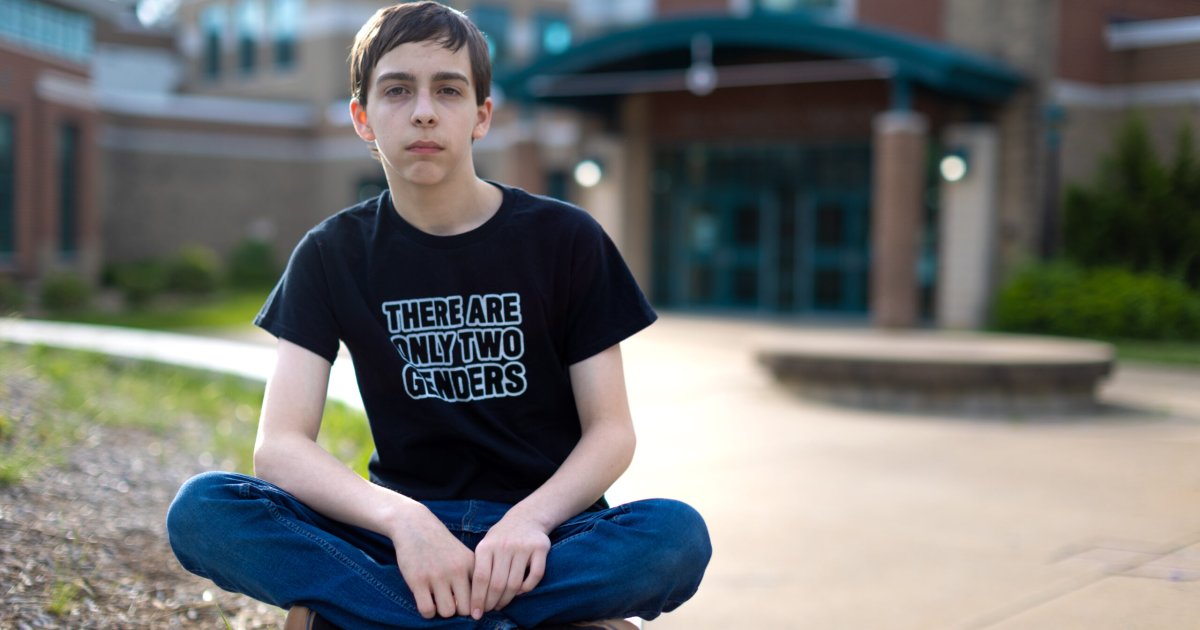
    The Supreme Court just declined to review a case that threatens freedom of speech for over a million students across New England. In thousands of public schools, administrators now have power to silence student speech they dislike.

    Last year, the First Circuit Court of Appeals significantly weakened student speech rights in L.M. v. Town of Middleborough. The case involved a Massachusetts middle schooler named Liam Morrison who was banned from class for wearing a shirt that read, “There are only two genders.” When he taped “CENSORED” over the original message, the school banned that, too.

    Morrison’s school encourages students to express the view that there are many genders, but when he offered a contrary view — the school silenced him. However, if schools want to teach gender identity to seventh graders, the law says they must tolerate dissenting views on the issue. As the Supreme Court famously held in Police Dept. of Chicago v. Mosley, “above all else, the First Amendment means that government has no power to restrict expression because of its message, its ideas, its subject matter, or its content.”

    The prohibition on viewpoint-based censorship is a cornerstone of our First Amendment. Without it, the concept of free speech loses much of its meaning. Yet when Morrison and his parents, represented by the Alliance Defending Freedom, brought suit against the school and the town of Middleborough for violating his freedom of speech, the First Circuit disregarded settled First Amendment law to uphold the school’s censorship. Specifically, the First Circuit misapplied the Supreme Court’s landmark 1969 student speech case Tinker v. Des Moines Independent Community School Dist., which established the baseline rule that students do not “shed their constitutional rights to freedom of speech or expression at the schoolhouse gate.”

    According to Tinker, schools cannot censor student speech absent evidence that doing so is “necessary” to avoid “material and substantial interference with schoolwork or discipline” or “invasion of the rights of others.” A few years ago, the Court reaffirmed the Tinker standard and emphasized that it’s a “demanding” one.

    But the First Circuit’s recent decision lowers that bar, replacing Tinker’s “substantial interference” test with a far more permissive one. Now, in thousands of public schools across Rhode Island, Massachusetts, New Hampshire, Maine, and Puerto Rico, student speech that is “reasonably interpreted” to “demean personal characteristics” and thus “reasonably forecasted to poison the educational atmosphere” can be censored even if it doesn’t target any particular student. 

    That isn’t just a bad ruling. It’s a dangerous one.

    It distorts Tinker’s long-established standard and gives school administrators enormous power to silence unpopular student opinions. In doing so, it elevates disagreement to the level of “disruption” — and permits those experiencing the “discomfort and unpleasantness that always accompany an unpopular viewpoint” to silence dissenters in ways that directly contradict Tinker.

    The Supreme Court could have reviewed the First Circuit’s problematic decision and put it to rest. Instead, it looked the other way, leaving the lower court’s decision to remain on the books.

    That is quite a blow to student speech rights. As the Supreme Court recently said in Mahanoy Area School District v. B.L., “America’s public schools are the nurseries of democracy.” 

    Unfortunately, the First Circuit’s decision sends a very different message — and the Supreme Court has failed to set the record straight. 

    Source link

  • The Supreme Court made your rights harder to defend — Congress must now step up

    The Supreme Court made your rights harder to defend — Congress must now step up

    This essay was originally published in The Hill on May 8, 2025.


    From free speech rights and desegregation to gun rights and religious freedoms, civil rights litigation has long been a cornerstone of personal liberty in America. But in February, the Supreme Court issued an opinion that will make it harder for us as Americans to vindicate our constitutional rights when the government violates them.

    In Lackey v. Stinnie, a group of Virginia drivers challenged a state law that punished people for failing to pay court fees by automatically suspending their driver’s licenses. The plaintiffs secured a preliminary injunction — a court order issued early in a case to prevent potential harm while it is litigated in full — allowing them to keep their licenses. Virginia did not appeal that ruling, and before the case went to trial, the legislature changed the law and reinstated any licenses that had been suspended under it.

    In cases alleging violations of constitutional rights, a federal statute preempts the general rule that litigants pay their own fees and costs by allowing “prevailing” parties to recover attorney’s fees from the government actor who violated their rights. But in this case, the federal district court held the drivers had not in fact “prevailed” given that the case did not progress to a final conclusion, making them ineligible to recover attorney’s fees. This flew in the face of what courts and litigators had understood the law to be for decades.

    The case eventually made its way to the Supreme Court to determine what “prevailing” meant in federal law and whether the drivers were entitled to reimbursement. The court, to the disappointment of advocates for civil rights and liberties, held that plaintiffs who do not obtain a final judgment on the merits do not qualify as “prevailing” even if, as with the Virginia drivers, they prevail in getting the government to change the law. 

    Unlike corporate litigation, civil rights cases rarely involve large financial recoveries. In any event, plaintiffs often seek changes to laws or policies rather than monetary gain. Yet these are vital cases, not just for the individuals involved but for the communities they represent, even if they rarely provide enough financial incentive to make private representation feasible — unless attorneys receive compensation after winning the case.

    Congress intended to encourage civil rights litigation by tying fee awards to success, whether through final judgments or preliminary relief. The House Judiciary Committee report on the legislation enacting the attorney’s fees provision noted, “a defendant might voluntarily cease the unlawful practice. A court should still award fees even though it might conclude … that no formal relief, such as an injunction, is needed.” Despite this clear evidence of congressional intent, the court held otherwise.

    Importantly, as the court pointed out, Congress has the power to clarify in the statute that attorney’s fees can be awarded before a final judgement on the merits. Congress must do so. 

    The breadth of amicus briefs submitted in this case — from the ACLU to the Alliance Defending Freedom to the Firearms Policy Coalition — demonstrates that across the ideological spectrum, organizations recognize the critical role awarding attorney’s fees plays in civil rights litigation. 

    As FIRE noted in its amicus brief to the Supreme Court, “Withholding attorney’s fees from victims of these First Amendment violations would be devastating — not just for them individually, but for access to justice more broadly.”

    Congress must enact a simple, clarifying change that will have broad support and ensure all Americans can vindicate their constitutional rights. Justice isn’t free, but we can ensure it remains accessible to all.

    Source link

  • Supreme Court Must Not Undermine Public Education in Religious Charter Case – The 74

    Supreme Court Must Not Undermine Public Education in Religious Charter Case – The 74


    Get stories like this delivered straight to your inbox. Sign up for The 74 Newsletter

    Last week, the Supreme Court held oral arguments in a case that could undermine public education across America. The question the court is looking to answer is whether a religious institution may run a publicly funded charter school — a move that would threaten not only the separation of church and state, but the right of every student to access free, high-quality learning.

    In 2023, Oklahoma’s Statewide Virtual Charter School Board approved St. Isidore of Seville Catholic Virtual School, an action that would make it the nation’s first-ever religious charter school. It would be governed by Catholic religious doctrine in its syllabus, operations and employment practices. It would use taxpayer dollars to pay for religious instruction. And it could turn away students and staff if their faith or identity conflict with Catholic beliefs. 

    Here’s the issue: Charter schools were created to be public schools. They are open to all students, from every background, tradition and faith community. They are publicly funded and tuition-free. And they are secular. 

    That’s not an arbitrary distinction – it’s a constitutional one, grounded in the law and embedded in charter schools’ very design. The First Amendment’s Establishment Clause bars the government from promoting or endorsing any religion through public spaces or institutions. This foundational rule has ensured that students of all backgrounds can access public schools. It does not stifle religious expression — the Constitution fully protects this freedom, and religious education is available in other venues. Personally, I was, in fact, educated at Jesuit Catholic schools for my entire academic career. 

    Parochial education has long been an accepted and important part of the education ecosystem, serving a variety of students and often filling an important need. Religiously affiliated schools have a long history of educating and caring for children who are new to this country and underserved, and supporting families who are overlooked. But promoting the exclusive teachings of a specific religion with public funds in a public school violates a clear constitutional principle. 

    The issue isn’t only a legal matter; it’s about the character of public education itself. Muddying the boundary between public and religious institutions would undercut a fundamental commitment made by the nation’s public charter schools: that they are accessible to every student. It would undermine legal protections that keep public services available to the public. 

    Rather than creating more opportunities for America’s students, it would constrict opportunities for a high-quality education, especially in states that are hostile toward charters or alternative public school models. Legislative bodies could seek to eliminate funding for all unique school types if the court decision forced them to fund religious schools operating with public dollars. This would curtail or dismantle strong independent schools, 30-year-old public charter schools and schools with unique programs designed for special populations.

    As executive director of the DC Charter School Alliance, and a long-time public charter school advocate, I’ve seen the importance of public charter schools firsthand. Here in the District of Columbia, charter schools serve nearly half of the public school students in the city. Outstanding educators from all walks of life teach a wide range of subjects with enthusiasm and expertise to prepare young people for success. Our students bring to the classroom an incredible range of experiences, including faith traditions. And every student, family and faculty member is welcome. D.C.’s charter schools reflect a core American value: the promise of a high-quality public education for all. 

    The justices of the Supreme Court face a clear and critical choice: They can bolster that promise, or they can tear it down. If the court allows a religious school to operate with public funds, there is no doubt that it will open the floodgates to other proposals across the country. Taxpayers could be forced to foot the bill for countless new and converted schools, draining resources from an already financially strapped education system. True public charter schools — the ones committed to high standards, positive results and opportunity for all — could bear the cost. And the students who rely on them could suffer. 

    Public education is one of America’s most vital institutions. It offers all children, no matter their background or beliefs, access to free, high-quality learning. Charter schools play an essential role in making that promise real. But allowing a religious school to operate with public funds turns public education into something much more restrictive, dismantling its very foundation.

    The court must reaffirm this indisputable truth: Public schools should remain public — and open to all. 


    Get stories like these delivered straight to your inbox. Sign up for The 74 Newsletter

    Source link

  • Supreme Court takes education cases that could challenge the separation of church and state

    Supreme Court takes education cases that could challenge the separation of church and state

    The Supreme Court over the next two weeks will hear two cases that have the potential to erode the separation of church and state and create a seismic shift in public education.

    Mahmoud v. Taylor, which goes before the court on April 22, pits Muslim, Roman Catholic and Ukrainian Orthodox families, as well as those of other faiths, against the Montgomery County school system in Maryland. The parents argue that the school system violated their First Amendment right of free exercise of religion by refusing to let them opt their children out of lessons using LGBTQ+ books. The content of the books, the parents say, goes against their religious beliefs.

    Oklahoma Statewide Charter School Board v. Drummond, which will be argued on April 30, addresses whether the St. Isidore of Seville Virtual Charter School should be allowed to exist as a public charter school in Oklahoma. The Archdiocese of Oklahoma City and the Diocese of Tulsa had won approval for the charter school from the state charter board despite acknowledging that St. Isidore would participate “in the evangelizing mission of the Church.”

    The state’s attorney general, Gentner Drummond, later overruled the approval, saying the school could not be a charter because charter schools must be public and nonsectarian. The petitioners sued and ultimately appealed to the Supreme Court, claiming Drummond violated the First Amendment’s free exercise clause by prohibiting a religious entity from participating in a public program.

    Teachers unions, parents groups and organizations advocating for the separation of church and state have said that rulings in favor of the plaintiffs could open the door for all types of religious programs to become part of public schooling and give parents veto rights on what is taught. In the most extreme scenario, they say, the rulings could lead to the dismantling of public education and essentially allow public schools to be Sunday schools.

    Related: A lot goes on in classrooms from kindergarten to high school. Keep up with our free weekly newsletter on K-12 education.

    At issue in both cases is the question of whether the First Amendment rights of parents and religious institutions to the free exercise of religion can supersede the other part of the amendment, the establishment clause, which calls for the separation of church and state.

    “I think a chill wind is blowing, and public education as we know it is in extreme jeopardy of becoming religious education and ceasing to exist,” said Rachel Laser, president of Americans United for Separation of Church and State, an advocacy organization that has filed an amicus brief in the St. Isidore case. “The whole idea is to have churches take control of education for American children. It’s about money and power.”

    For some conservative lawmakers, evangelical Christian groups and law firms lobbying for more religiosity in the public square, decisions in the petitioners’ favor would mean religious parents get what they have long been owed — the option of sending their children to publicly funded religious schools and the right to opt out of instruction that clashes with their religious beliefs.

    “If we win this case, it opens up school choice across the country,” said Mathew Staver, founder of Liberty Counsel, an Orlando, Florida-based conservative Christian legal firm that has filed a brief supporting the petitioners in both cases. “I see school choice as a reaction to the failed system in the public schools, which is failing both in academia but also failing in the sense they are pushing ideology that undermines the parents and their relationship with their children.”

    By taking the cases, the Supreme Court once again inserts itself in ongoing culture wars in the nation, which have been elevated by presidential orders threatening to take away funding if schools push diversity, equity and inclusion initiatives and state laws banning teaching on various controversial subjects. Legal scholars predict that the Supreme Court will lean toward allowing St. Isidore and the opt-outs for parents because of how the justices ruled in three cases between 2017 and 2022. In each case, the justices decided that states could not discriminate against giving funds or resources to a program because it was religious.

    Related: How Oklahoma’s superintendent set off a holy war in classrooms

    Of the two cases, St. Isidore likely could have the greatest impact because it is attempting to change the very definition of a public school, say opponents of the school’s bid for charter status. Since charter schools first started in the 1990s, they have been defined as public and nonsectarian in each of the 46 state statutes allowing them, according to officials at the National Alliance for Public Charter Schools. Today, charter schools operate in 44 states, Guam, Puerto Rico and Washington, D.C., and serve roughly 7.6 percent of all public school students.

    “It would be a huge sea change if the court were to hold they were private entities and not public schools bound by the U.S. Constitution’s establishment clause,” said Rob Reed, the alliance’s vice president of legal affairs.

    A victory for St. Isidore could lead to religious-based programs seeping into several aspects of public schooling, said Steven Green, a professor of both law and history and religious studies at Willamette University in Salem, Oregon.

    “The ramification is that every single time a school district does some kind of contracting for any kind of service or curricular issues, you’re going to find religious providers who will make the claim, ‘You have to give me an opportunity, too,’” Green said.

    St. Isidore’s appeal to the Supreme Court is part of an increasing push by the religious right to use public funds for religious education, said Josh Cowen, a professor of education policy at Michigan State University and author of a 2024 book on school vouchers. Because of previous court decisions, several voucher programs across the country already allow parents to use public money to send their children to religious schools, he said.

    “What’s going to happen if the court says a public school can be run by a religious provider?” Cowen asked. “It almost turns 180 degrees the rule that voucher systems play by right now. Right now, they’re just taking a check. They’re not public entities.”

    The effect of a St. Isidore victory could be devastating, he added. “It would be one more slippery slope to really kicking down the wall between church and state,” Cowen said.

    Related: Inside the Christian legal campaign to return prayer to public schools

    Jim Campbell, chief legal counsel for Alliance Defending Freedom, which is representing St. Isidore’s bid to become a charter, discounted the idea that a St. Isidore win would fundamentally change public schools. Like Staver, he views St. Isidore as simply providing another parental option. “We’re not asking the state to run a religious school,” Campbell said. “These are private entities that run the schools. This is a private organization participating in a publicly funded program.”

    Opponents of religious charter schools question whether St. Isidore would have to play by the same rules as public schools.

    “How are they going to handle it when there’s a teacher who has a lifestyle that doesn’t align with Catholic school teaching? They’re talking out of both sides of the mouth,” said Erika Wright, an Oklahoma parent and plaintiff in a lawsuit protesting a Bible in the classroom mandate by Oklahoma’s state superintendent of instruction. She also joined an amicus brief against St. Isidore’s formation.

    “As a taxpayer, I should not be forced to fund religious instruction, whether it’s through a religious charter school or a Bible mandate,” Wright said. “I shouldn’t be forced to fund religious indoctrination that doesn’t align with my family’s personal beliefs.”

    Notably, in the Montgomery County parents’ case going before the court, parents use similar reasoning to support their right to opt out of instruction. “A school ‘burdens’ parents’ religious beliefs when it forces their children to undergo classroom instruction about gender and sexuality at odds with their religious convictions,” the parents’ brief said.

    The school district in 2022 adopted several books with LGBTQ+ themes and characters as part of the elementary language arts curriculum. Initially, families were allowed to opt out. But then the school system reversed its policy, saying too many students were absent during the lessons and keeping track of the opt-outs was too cumbersome. The reversal led to the lawsuit.

    Historically, school districts have given limited opt-outs to parents who, for example, do not want their child to read a particular book, but the Montgomery County parents’ request is broader, said Charles C. Haynes, a First Amendment expert and senior fellow for religious liberty at the Freedom Forum in Washington, D.C. The parents are asking to exclude their children from significant parts of the curriculum for religious reasons.

    “If the court sides with the parents, I think the next day, you’re going to have parents across the country saying, ‘I want my kids to opt out of all the references to fill-in-the-blank.’ … It would change the dynamic between public schools and parents overnight,” Haynes said.

    Related: Tracking Trump: His actions to abolish the Education Department, and more

    Sarah Brannen, author of “Uncle Bobby’s Wedding,” one of the LGBTQ+ books Montgomery County schools adopted, sees major logistical issues if the school system loses. “Allowing parents to interfere in the minutia of the curriculum would make their already difficult jobs impossible,” she said.

    Colten Stanberry, a lawyer with the Becket Fund for Religious Liberty representing the Montgomery County parents, disagreed. School systems manage to balance different student needs all the time, he said.

    A triumph for the Montgomery County families and St. Isidore would cause much more than logistical issues, said Becky Pringle, president of the National Education Association. It could lead to a public education system where parents can pick a school based on religious beliefs or try to change a traditional public school’s curriculum by opting out of lessons in droves.

    “For us to be a strong democracy, then we necessarily need to learn about all of us. To separate us flies in the face of why we were founded,” Pringle said.

    This story about church and state was produced by The Hechinger Report, a nonprofit, independent news organization focused on inequality and innovation in education. Sign up for the Hechinger newsletter.

    The Hechinger Report provides in-depth, fact-based, unbiased reporting on education that is free to all readers. But that doesn’t mean it’s free to produce. Our work keeps educators and the public informed about pressing issues at schools and on campuses throughout the country. We tell the whole story, even when the details are inconvenient. Help us keep doing that.

    Join us today.

    Source link

  • Supreme Court maintains freeze on teacher training grants

    Supreme Court maintains freeze on teacher training grants

    In a 5-4 split, the U.S. Supreme Court on Friday granted the Trump administration’s emergency request to maintain a freeze on millions of dollars in federal teacher training grants.

    The administration’s emergency application, filed on March 26, asked the justices to vacate a district court judge’s order requiring the U.S. Department of Education to reinstate some of Trump’s $600 million in slashed funding. The justices granted Acting Solicitor General Sarah Harris’ call for an immediate administrative stay, which pauses the March 10 order by Judge Myong Joun of the U.S. District Court for the District of Massachusetts while the case continues.

    In an unsigned opinion, the Supreme Court majority wrote that the recipient programs wouldn’t suffer permanent damages if the funds were withheld while the case moves through the lower courts. The “respondents have not refuted the Government’s representation that it is unlikely to recover the grant funds once they are disbursed,” the opinion said.

    The opinion also suggested the lower court may not have had the authority to issue its order. 

    In a dissenting opinion, Justice Ketanji Brown Jackson, joined by Justice Sonia Sotomayor, wrote that the notion that some grant recipients may seek to draw down funds that the Trump administration seeks to terminate was the “only hint of urgency that the Government offers to justify its unusual request for our intervention.”

    “If true, that would be unfortunate, but worse things have happened,” Jackson wrote.

    In a separate dissent, Justice Elena Kagan characterized the majority’s decision as a “mistake” that followed a “barebones briefing,” no argument and little time for reflection. Chief Justice John Roberts did not join either dissent but disagreed with the majority.

    The move is the first time the Supreme Court has considered any challenges to President Donald Trump’s efforts to significantly scale back federal education programs — and ultimately dismantle the Education Department

    In the administration’s March 26 emergency request, Harris said the case is an example of a broader question the Supreme Court needs to answer: “‘Does a single district-court judge who likely lacks jurisdiction have the unchecked power to compel the Government of the United States to pay out (and probably lose forever)’ millions in taxpayer dollars?”

    “Unless and until this Court addresses that question, federal district courts will continue exceeding their jurisdiction by ordering the Executive Branch to restore lawfully terminated grants across the government, keep paying for programs that the Executive Branch views as inconsistent with the interests of the United States, and send out the door taxpayer money that may never be clawed back,” Harris wrote. 

    The case in question concerns the Education Department’s February cancellation of over $600 million in what it called “divisive” federal teacher training grants funds. The canceled grants had been made under the Teacher Quality Partnership Program and the Supporting Effective Educator Development program. 

    In March, eight Democratic attorneys general sued the Trump administration to restore the awarded funds. In response, Joun granted a temporary restraining order for the department to reinstate those funds to the eight plaintiff states: California, Colorado, Illinois, Maryland, Massachusetts, New Jersey, New York and Wisconsin.

    If the Supreme Court were to order the Trump administration to reinstate the grants to those eight states, the acting solicitor general said, the department would have to disburse up to $65 million in remaining funds.

    On March 28, the eight states urged in a 44-page filing that the Supreme Court leave Joun’s order in place. The states said the Trump administration’s “real concern” appears to involve other cases “where courts are grappling with a raft of legal disputes arising out of recent actions by the Executive Branch.”

    Source link

  • Supreme Court maintains freeze on teacher training grants

    Supreme Court maintains freeze on teacher training grants

    This audio is auto-generated. Please let us know if you have feedback.

    In a 5-4 split, the U.S. Supreme Court on Friday granted the Trump administration’s emergency request to maintain a freeze on millions of dollars in federal teacher training grants.

    The administration’s emergency application, filed on March 26, asked the justices to vacate a district court judge’s order requiring the U.S. Department of Education to reinstate some of Trump’s $600 million in slashed funding. The justices granted Acting Solicitor General Sarah Harris’ call for an immediate administrative stay, which pauses the March 10 order by Judge Myong Joun of the U.S. District Court for the District of Massachusetts while the case continues.

    In an unsigned opinion, the Supreme Court majority wrote that the recipient programs wouldn’t suffer permanent damages if the funds were withheld while the case moves through the lower courts. The “respondents have not refuted the Government’s representation that it is unlikely to recover the grant funds once they are disbursed,” the opinion said.

    The opinion also suggested the lower court may not have had the authority to issue its order. 

    In a dissenting opinion, Justice Ketanji Brown Jackson, joined by Justice Sonia Sotomayor, wrote that the notion that some grant recipients may seek to draw down funds that the Trump administration seeks to terminate was the “only hint of urgency that the Government offers to justify its unusual request for our intervention.”

    “If true, that would be unfortunate, but worse things have happened,” Jackson wrote.

    In a separate dissent, Justice Elena Kagan characterized the majority’s decision as a “mistake” that followed a “barebones briefing,” no argument and little time for reflection. Chief Justice John Roberts did not join either dissent but disagreed with the majority.

    The move is the first time the Supreme Court has considered any challenges to President Donald Trump’s efforts to significantly scale back federal education programs — and ultimately dismantle the Education Department

    In the administration’s March 26 emergency request, Harris said the case is an example of a broader question the Supreme Court needs to answer: “‘Does a single district-court judge who likely lacks jurisdiction have the unchecked power to compel the Government of the United States to pay out (and probably lose forever)’ millions in taxpayer dollars?”

    “Unless and until this Court addresses that question, federal district courts will continue exceeding their jurisdiction by ordering the Executive Branch to restore lawfully terminated grants across the government, keep paying for programs that the Executive Branch views as inconsistent with the interests of the United States, and send out the door taxpayer money that may never be clawed back,” Harris wrote. 

    The case in question concerns the Education Department’s February cancellation of over $600 million in what it called “divisive” federal teacher training grants funds. The canceled grants had been made under the Teacher Quality Partnership Program and the Supporting Effective Educator Development program. 

    In March, eight Democratic attorneys general sued the Trump administration to restore the awarded funds. In response, Joun granted a temporary restraining order for the department to reinstate those funds to the eight plaintiff states: California, Colorado, Illinois, Maryland, Massachusetts, New Jersey, New York and Wisconsin.

    If the Supreme Court were to order the Trump administration to reinstate the grants to those eight states, the acting solicitor general said, the department would have to disburse up to $65 million in remaining funds.

    On March 28, the eight states urged in a 44-page filing that the Supreme Court leave Joun’s order in place. The states said the Trump administration’s “real concern” appears to involve other cases “where courts are grappling with a raft of legal disputes arising out of recent actions by the Executive Branch.”

    Source link

  • Cancel culture, legal education, and the Supreme Court with Ilya Shapiro

    Cancel culture, legal education, and the Supreme Court with Ilya Shapiro

    Over the years, elite institutions shifted from
    fostering open debate to enforcing ideological conformity. But as
    guest Ilya Shapiro puts it, “the pendulum is swinging back.” He
    shares his firsthand experience with cancel culture and how the
    American Bar Association’s policies influence legal education.
    Shapiro also opines on major free speech cases before the Supreme
    Court, including the TikTok ownership battle and Texas’ age
    verification law for adult content.

    Shapiro is a senior fellow and director of
    constitutional studies at the Manhattan Institute. He previously
    (and briefly) served as executive director and senior lecturer at
    the Georgetown Center for the Constitution and as a vice president
    at the Cato Institute. His latest book, “Lawless:
    The Miseducation of America’s Elites
    ,” is out now.

    Enjoy listening to our podcast? Donate to FIRE today and
    get exclusive content like member webinars, special episodes, and
    more. If you became a FIRE Member
    through a donation to FIRE at thefire.org and would like access to
    Substack’s paid subscriber podcast feed, please email
    [email protected].


    Read the transcript.

    Timestamps:

    00:00 Intro

    02:58 Shapiro’s Georgetown controversy

    15:07 Free speech on campus

    26:51 Law schools’ decline

    40:47 Legal profession challenges

    42:33 The “vibe shift” away from cancel culture

    56:02 TikTok and age verification at the Supreme
    Court

    01:03:37 Anti-Semitism on campus

    01:09:36 Outro

    Show notes:

    – “The
    illiberal takeover of law schools
    ” City Journal (2022)

    – “Poll
    finds sharp partisan divisions on the impact of a Black woman
    justice.
    ” ABC News (2022)

    – “Why
    I quit Georgetown.
    ” Ilya Shapiro, The Wall Street Journal
    (2022)

    – “Georgetown’s
    investigation of a single tweet taking longer than 12 round-trips
    to the moon.
    ” FIRE (2022)


    Students for Fair Admissions v. Harvard
    (2023)


    Lamont v. Postmaster General
    (1965)

    TikTok Inc
    v. Garland
    (2025)


    Free Speech Coalition v. Paxton
    (2024)

    Ginsberg
    v. New York
    (1968)


    International Holocaust Remembrance Alliance (IHRA) working
    definition of antisemitism
    (last updated 2025)

    Source link

  • FIRE statement on Supreme Court’s ruling in TikTok v. Garland

    FIRE statement on Supreme Court’s ruling in TikTok v. Garland

    The Supreme Court today ruled that a federal law compelling TikTok’s parent company, ByteDance, to sell the social media platform or cease operations in the United States does not violate the First Amendment. The law functionally requires TikTok to shut down its operations by Jan. 19 absent some other accommodation.

    FIRE issued the following statement:

    Our unique national commitment to freedom of expression requires more caution than today’s ruling delivers. The unprecedented ban of a communication platform used by 170 million Americans demands strict judicial scrutiny, not the rushed and highly deferential review the Supreme Court instead conducted. 

    The Court explicitly notes the “inherent narrowness” of today’s decision. FIRE will hold it to that promise, and fight to contain the threat the ruling poses to our First Amendment rights. 

    Source link