

Tag: surfacelevel

  • WEEKEND READING: On legal education: is AI churning out super or surface-level lawyers?

    WEEKEND READING: On legal education: is AI churning out super or surface-level lawyers?

    Join HEPI for a webinar on Thursday 11 December 2025 from 10am to 11am to discuss how universities can strengthen the student voice in governance to mark the launch of our upcoming report, Rethinking the Student Voice. Sign up now to hear our speakers explore the key questions.

    This blog was kindly authored by Utkarsh Leo, Lecturer in Law, University of Lancashire (@UtkarshLeo)

    UK law students are increasingly relying on AI for learning and completing assessments. Is this reliance enhancing legal competence or eroding it? If it is the latter, what can be done to ensure graduates remain competent?

    Studying law equips students with key transferable skills – such as evidence-based research, problem solving, critical thinking and effective communication. Traditionally, students cultivate doctrinal (and procedural) knowledge by attending lectures, workshops and going through assigned academic readings. Thereafter, they learn how to apply legal principles to varying facts through assessments and extracurriculars like moot courts and client advocacy. In this process, they learn how to construct persuasive arguments and articulate ideas, both orally and in writing. However, with widely available and accessible Gen AI, students are taking shortcuts in this learning process.

    The HEPI/Kortext Student Generative AI Survey 2025 looked into AI use by students from a range of subjects. It paints a grim picture: 58% of students are using AI to explain concepts and 48% are using it to summarise articles. More importantly, 88% are using it for assessment related purposes – a 66% increase compared to 2024.

    Student Generative AI Survey 2025, Higher Education Policy Institute

    Rooted in inequality

    Students are relying on shortcuts largely due to rising economic inequality. Survey data published by the National Union of Students shows 62% of full-time students work part-time to survive. This translates into reduced studying time, limited participation in class discussions and extracurriculars. Understandably, such students may find academic readings (which are often complex and voluminous) as a chore, further reducing motivation and engagement. In this context, AI offers a quick fix!
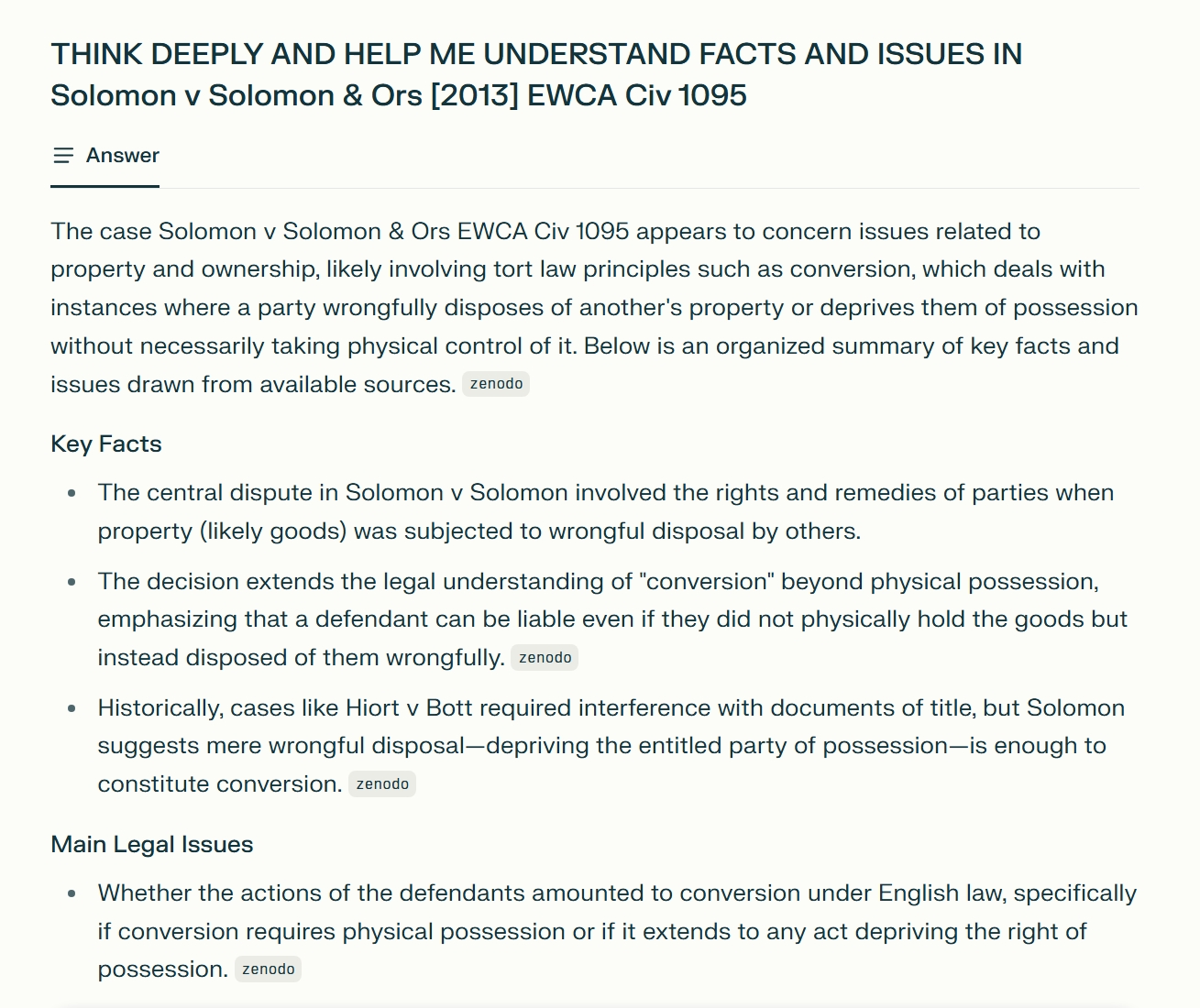
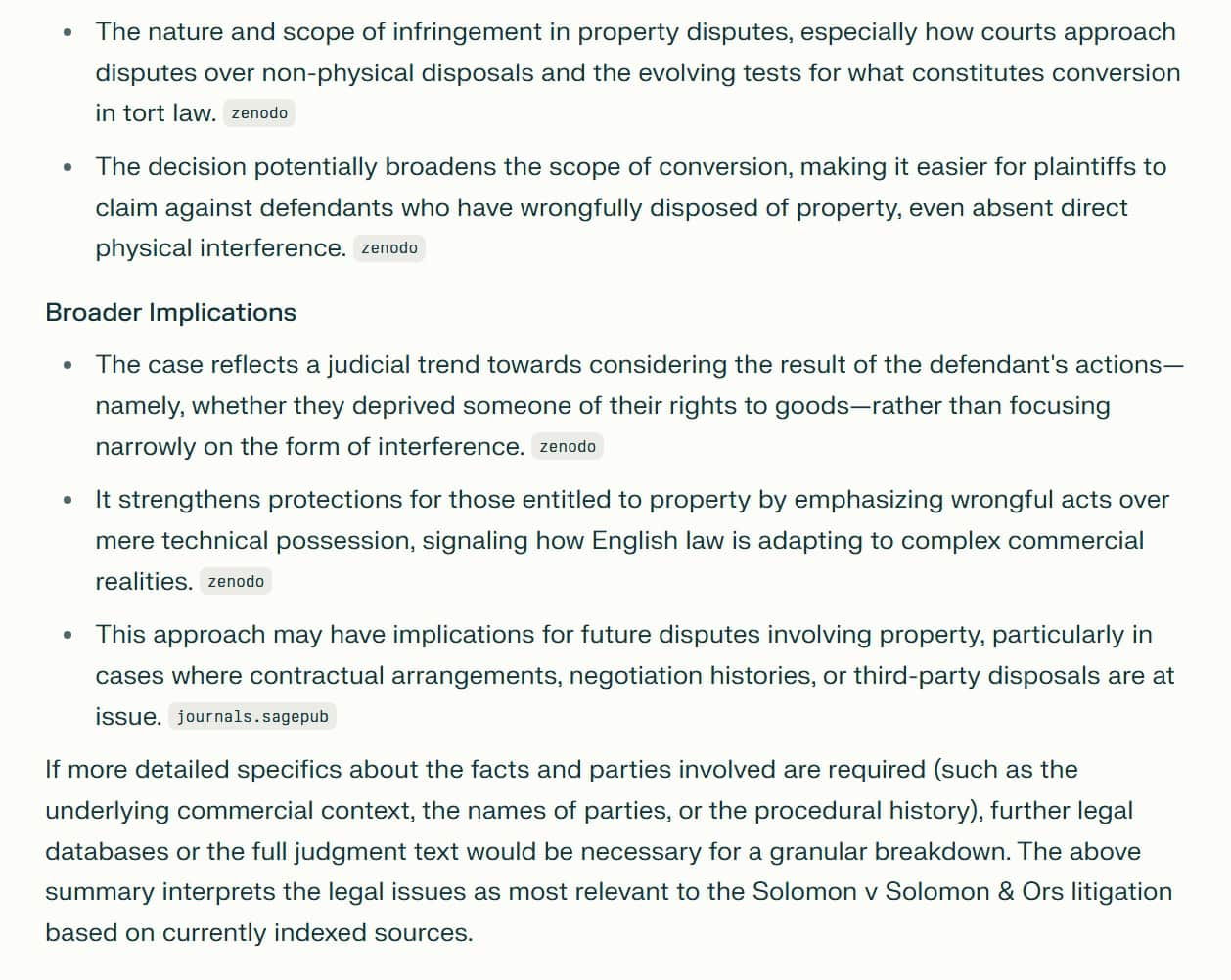
    Prompt and output generated by perplexity.ai on 7 November 2025 showing AI-produced case summaries.

    The problem with shortcuts

    Quick fixes, as shown above, promote overreliance: resulting in cognitive replacement. Most LLB first-year programmes aim to cultivate critical legal thinking: from the ability to apply the law and solve problems in a legal context to interpreting legislative intent to reading/finding case law and developing the skills to spot issues, weigh precedents and constructing legal arguments. Research from neuroscience shows that such essential skills are acquired through repeated effort and practice. Permitting AI usage for learning purposes at this formative stage (when students learn basic law modules) inhibits their ability to think through legal problems independently – especially in the background of the student cost-of-living crisis. 

    More importantly, only 9 out of more than 100 universities require law degree applicants to sit the national admission test for law (LNAT) – which assesses reasoning and analytical abilities. This variability means we cannot assume that all non-LNAT takers possess the cognitive tools necessary for legal thinking. This uncertainty reinforces the need to disallow AI use in first-year law programmes to ensure students either gain or hone the necessary skills to do well in law school.

    Technical discussion

    Furthermore, from a technical perspective, the shortcomings of AI summaries are well known. AI models often merge various viewpoints to create a seemingly coherent answer. Therefore, a student relying on AI to generate case summaries enhances the likelihood of detaching them from judicial reasoning (for example, the various structural/substantive principles of interpretation employed by judges). It risks producing ill-equipped lawyers who may erode the integrity of legal processes (a similar argument applies to statutes).

    Alongside this, AI systems are unreliable: from generating fake case-law citations to suggesting ‘users to add glue to make cheese stick to pizza.’ Large language models (LLMs) use statistical calculation to predict the next word in a sequence – therefore, they end up hallucinating. Despite retrieval-augmented generation – a technique for enhancing accuracy by enabling LLMs to check web sources – the output generated can be incorrect if there is conflicting information. Furthermore, without thoughtful use, there is an additional concern that AI sycophancy will further validate existing biases. Hence, despite the AI frenzy, first year students will be better off if they prioritise learning through traditional primary and secondary sources.   

    How to ensure this?

    Certainly, we cannot prohibit student’s from using AI in a private setting; but we can mitigate the problem of overreliance by designing authentic assessments evaluated exclusively through in-person exams/presentations. This is more likely to encourage deeper engagement with the module. Now more than ever, this is critical. Despite rising concerns of AI misuse and the inaccuracy of AI text detection primarily due to text perplexity (high false positives; especially for students for whom English is not their first language), core law modules (like contract law and criminal law) continue to be assessed through coursework (for either 50% or more of the total module mark).
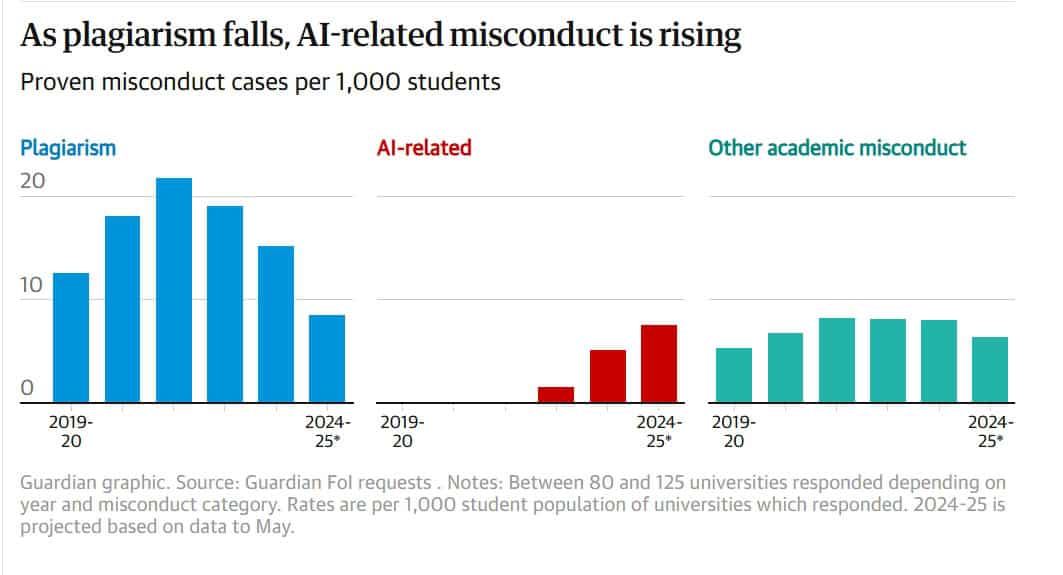
    However, sole reliance on in-person exams will not suffice! To promote deeper module engagement (and decent course pass rates), the volume of assessments will need to be reduced. As students are likely to continue working to support themselves, universities could benefit from the support and cooperation of professional bodies and the Office for Students. In fact, in 2023, the Quality Assurance Agency highlighted that universities must explore innovative ways of reducing the volume of assessments, by ‘developing a range of authentic assessments in which students are asked to use and apply their knowledge and competencies in real-life’.   

    To promote experiential learning, one potential solution could be to offer assessment exemption based on moot-court participation. Variables such as moot profile (whether national/international), quality of memorial submitted, ex-post brief presentation on core arguments, and student preparation could be factored to offer grades. Admittedly, not all students will pursue this option; however, those who choose to participate will be incentivised.

    Similarly, summer internships or law clinic experiences can be evaluated through patchwork assessment where students can complete formative patches of work on client interviews, case summaries and letters before action, followed by a reflective stitching piece highlighting real world learning and growth.

    Delayed use of gen AI – year II and onwards

    It is crucial to emphasise that despite the critique of Gen AI, its vast potential to enhance productivity cannot be overlooked. Nevertheless, what merits attention is that such productivity is contingent on thoughtful engagement and basic domain specific knowledge – which is less likely to be found in first year law students.

    Thus, a better approach is to delay approved use of AI until the second year of law. To ensure graduates are job ready, modules such as Alternative Dispute Resolution and Professional Skills could go beyond prompting techniques to include meaningful engagement with technology: through domain specific AI tools, contract review platforms and data-driven legal analytics ‘to support legal strategy, case assessment, and outcomes’.

    Communication skills remain key

    Above all, despite advances in tech, law will remain a people-centred profession requiring effective communication skills. Therefore, in the current climate, law school education should emphasise oral communication skills. Prima facie, this approach may seem disadvantageous to students with special needs, but it can still work with targeted adjustments.

    In sum, universities have a moral responsibility to churn out competent law graduates. Therefore, they must realistically review the abilities of AI to ensure the credibility of degrees and avoid mass-producing surface-level lawyers.

    Acknowledgement: I am grateful to Rachel Nir, Director of EDI at the School of Law and Policing, University of Lancashire, for her insightful comments and for kindly granting the time allowance that made this research possible.

    Source link

  • Action on researcher career development must go beyond surface-level fixes

    Action on researcher career development must go beyond surface-level fixes

    The Concordat to Support the Career Development of Researchers was designed to drive culture change, not compliance. However, many institutional action plans suggest institutions are meeting the letter rather than the spirit of its commitments.

    Financial constraints and the evolving REF 2029 people, culture and environment (PCE) guidance are shaping how institutions support research staff, and universities face a choice: stick with the easy, surface-level interventions that look good on paper, or commit to the tougher, long-term changes that could truly improve research careers.

    The latter is difficult, resource-intensive, and politically fraught – but it is the only route to a research culture that is genuinely sustainable.

    Progress and pressures

    There has been real progress in embedding researcher development in UK higher education. The 2019 review of the concordat highlighted expanded training opportunities, strengthened mentoring schemes, and, crucially, the integration of researcher development into institutional strategies and governance. Many institutions have since used its principles to shape research culture action plans and strategies.

    This progress has been uneven, however. Access to high-quality training and development opportunities varies across the sector, particularly for researchers in smaller, less well-resourced institutions. In addition, new initiatives frequently lack long-term sustainability beyond initial funding.

    Institutional action plans tend to emphasise soft politics – awards, charters and resource hubs – which, while useful, may function as reputational signals more than mechanisms for change. Meanwhile, the concordat’s more challenging commitments, like improving job security, workload management, and the visibility of career pathways across sectors, receive less attention.

    Financial constraints and shifting priorities

    Universities are operating in an era of financial constraint forcing difficult decisions about what can be sustained and what must be scaled back. These financial pressures are already reshaping researcher development and career pathways, with potentially lasting consequences:

    Shift toward low-cost interventions: Institutions may prioritise training, mentoring, and “off the shelf” development workshops as the most financially viable options, while more complex reforms – such as improving career pathways, addressing workload pressures, and ensuring meaningful career learning – are pushed aside.

    Growing precarity and inequity in research careers: With the risk of non-renewal of fixed-term contracts and rising redundancies, instability may increase. The effects will likely be unequal – early-career researchers, those with caring responsibilities, and underrepresented groups are usually most affected in such situations, with workload pressures further widening existing inequities in career progression and retention.

    Shifts in career trajectories: Financial pressures will push more researchers to seek opportunities beyond academia, not always by choice but due to diminishing prospects within universities. This is not in itself a bad thing, but the absence of robust career tracking data, limited engagement with non-academic sectors, and a lack of structured support for diverse pathways mean that institutions risk making decisions in a vacuum.

    Without a clear understanding of where researchers go and what they need to thrive, researcher development may become misaligned with market realities – undermining both retention and outcomes. Initiatives like CRAC-Vitae’s new UK research career tracking initiative aim to close this critical evidence gap.

    What makes researcher development sustainable?

    What will actually make researcher development sustainable? The answer isn’t simply more initiatives, or cheaper ones – it’s about embedding development in institutional culture and building on evidence of what works. That means making time for development activities, creating space for strategic reflection, and encouraging researchers to learn from one another – not just offering mentoring or reciprocal schemes in isolation. Vitae’s refreshed Researcher Development Framework sets out the full breadth of what this encompasses.

    Researcher development doesn’t necessarily require large budgets. Much of it comes down to embedding development in the culture: time to pursue meaningful opportunities, support from line managers and supervisors to do so, and the ability to learn in community with others. Yet in times of crisis, workloads tend to rise – and it’s often this development time that’s seen as non-essential and cut. Around half of research staff do not have time to invest in professional development – demonstrating just how limited that space already is.

    These overlapping pressures are pushing institutions to make trade-offs – but it’s clear that the most effective and sustainable approaches to researcher development will depend not just on resource levels, but on institutional priorities and strategic leadership.

    Unmet expectations

    At the same time, the ongoing review of sector-wide concordats and agreements, meant to clarify priorities and improve alignment, seems to have stalled – raising concerns about whether it will lead to meaningful action. The Researcher Development Concordat Strategy Group, tasked with overseeing implementation and strategic coordination, has also been quiet over the last year, though the new chair has recently signalled renewed commitment to its activities.

    This stagnation raises questions about the long-term value of the concordat, particularly in a landscape where institutions are grappling with resource constraints. Without strong leadership and coordinated sector-wide action, there is a real risk that institutions will continue to take a fragmented, compliance-driven approach rather than pursuing deeper reform.

    If the concordat is to remain relevant, it must address the structural issues it currently skirts around – particularly those related to researcher employment conditions, workload sustainability, and career progression. Without this, it risks becoming another well-intentioned initiative that falls short of delivering real sector-wide change.

    PCE and the concordat

    The introduction of people, culture and environment (PCE) in REF 2029 was intended to shift the sector’s focus from research outputs to the broader conditions that enable research excellence. However, the way institutions interpret these requirements is critical.

    REF PCE has the potential to drive meaningful change – but only if institutions use it as a platform for genuine reflection rather than a showcase of best practices.

    PCE and the concordat share several ambitions: both emphasise inclusive research environments, professional development, and supporting leadership at all career stages. The concordat’s focus on employment conditions, researcher voice, and long-term career development also aligns with PCE’s emphasis on institutional responsibility for research culture.

    This coherence is no accident – PCE was co-developed with the sector, and the concordats and agreements review recognised the overlaps between existing frameworks.

    If institutions take a strategic, integrated approach, REF PCE could reinforce and enhance existing concordat commitments rather than becoming another compliance exercise. However, this requires institutions to go beyond superficial reporting and demonstrate tangible improvements in the working conditions and career pathways of researchers.

    A call to action

    If institutions want to move beyond just ticking boxes, they need to take bold, practical steps.

    Job security must be redefined in the current climate. Researcher development should not just focus on career skills and knowledge but on career sustainability, accountability, and agility. While reducing reliance on fixed-term contracts remains a long-term goal, immediate priorities must also include clearer career progression routes (within and beyond higher education), cross-sector mobility, and support for career transitions.

    Workload and pay transparency need urgent attention. As researchers face increasing uncertainty about their career trajectories, solutions must go beyond surface-level fixes. This requires coordinated policy reform at both institutional and sector levels, including meaningful workload management strategies, transparent pay equity audits, and governance processes that embed researcher voices. While wellbeing initiatives have value, they are not a substitute for structural reform.

    Finally, the role of the concordat strategy group must evolve in response to the current climate. With institutions facing severe financial constraints and a shrinking research workforce, the group must take a more proactive role in advocating for sustainable researcher careers. This includes setting clearer expectations for institutions, addressing gaps in employment stability, and ensuring that commitments to researcher development are not lost amid cost-cutting measures. Without stronger leadership at the sector level, there is a risk that the concordat will become little more than a bureaucratic exercise, rather than a meaningful driver of change.

    Source link