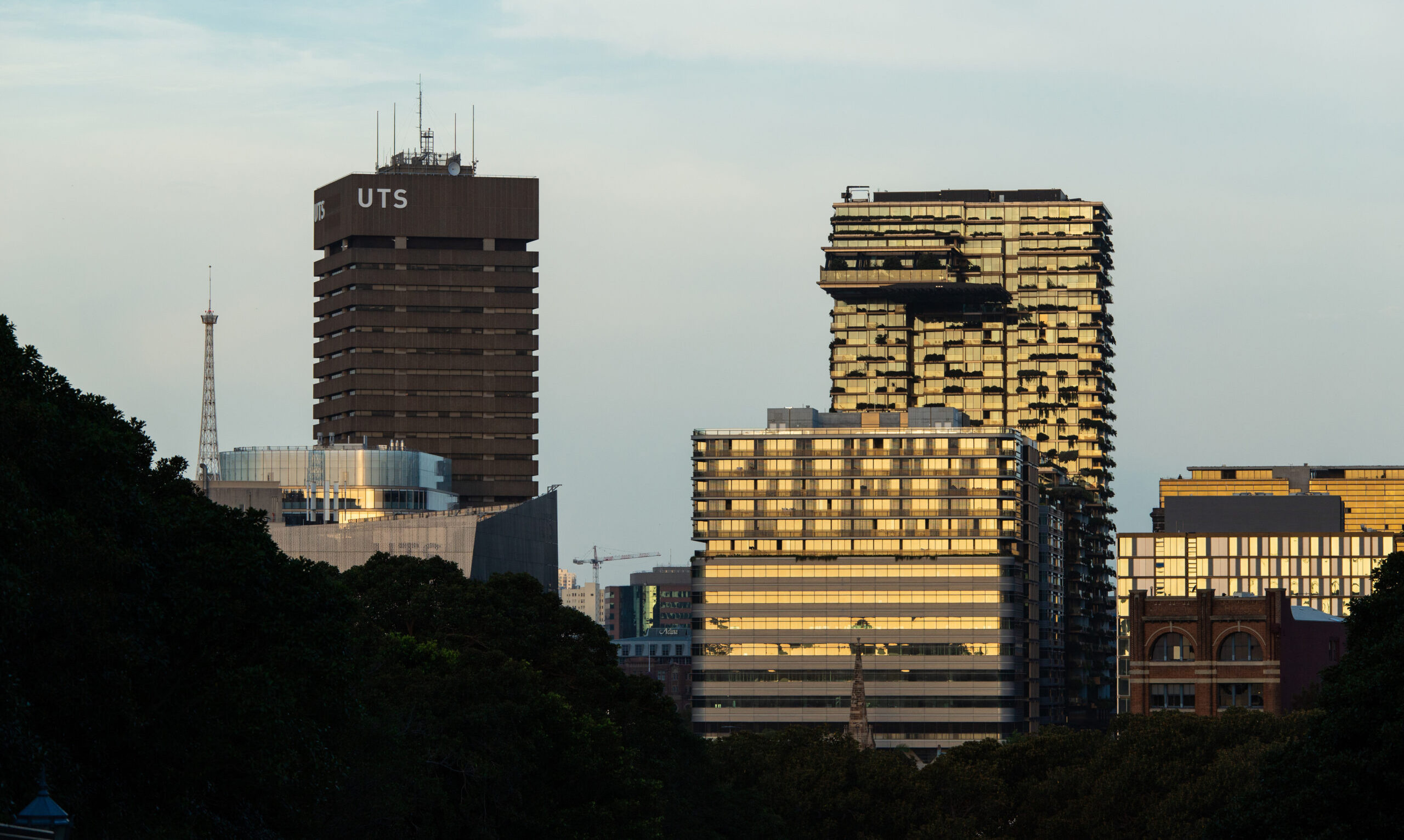
The University of Technology Sydney (UTS) has “temporarily suspended” new enrolments to more than 100 bachelor and postgraduate programs, with 400 staff jobs under threat.
Please login below to view content or subscribe now.
Membership Login

The University of Technology Sydney (UTS) has “temporarily suspended” new enrolments to more than 100 bachelor and postgraduate programs, with 400 staff jobs under threat.
Please login below to view content or subscribe now.

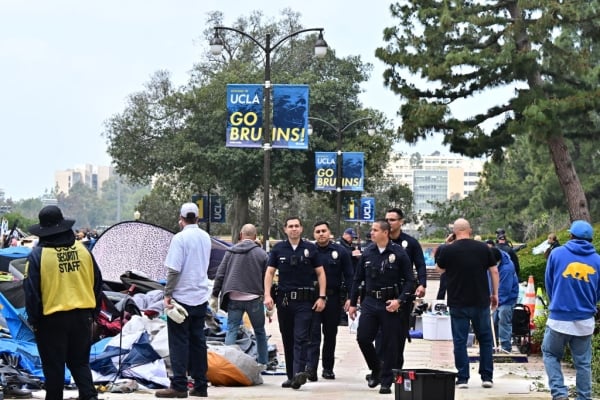
The Justice Department this week accused UCLA of failing to protect its Jewish students.
Frederic J. Brown/AFP via Getty Images
(This article has been updated with comment from UCLA.)
The National Science Foundation said Thursday that it’s suspending grant awards at the University of California, Los Angeles.
An NSF spokesperson said that the university’s awards “are not in alignment with current NSF priorities and/or programmatic goals,” though they didn’t offer more specifics. NSF changed its priorities in April and, as a result, cut off funding to programs related to diversity, equity and inclusion and those aimed at combating misinformation
Freelance journalist Dan Garisto wrote on BlueSky that nearly 300 grants at UCLA are now suspended. That includes a $25 million grant that supports the university’s Institute for Pure and Applied Mathematics. (In 2022, UCLA had about 450 grants from the NSF, totaling more than $350 million.)
UCLA chancellor Julio Frenk wrote in a letter to the campus community that the freeze extended beyond NSF to include grants from the National Institutes of Health and other federal agencies.
“This is not only a loss to the researchers who rely on critical grants,” Frenk wrote. “It is a loss for Americans across the nation whose work, health, and future depend on the groundbreaking work we do.”
Frenk noted that UCLA was prepared for a grant freeze and has developed contingency plans. “We will do everything we can to protect the interests of faculty, students and staff—and to defend our values and principles,” he pledged.
The Associated Press reported that the freeze affected $339 million in federal grants.
The grant suspension comes as UCLA finds itself the Trump administration’s latest target in its growing war with higher education. Earlier this week, the university settled a lawsuit in which a group of Jewish students alleged that UCLA enabled pro-Palestinian activists to cut off Jewish students’ access to parts of campus. On the same day the settlement was announced, the Justice Department accused UCLA of violating the federal civil rights law that bars antisemitism and race-based discrimination.
Frenk said the government claimed “antisemitism and bias as the reasons” for the freeze. But he argued that Trump’s “far-reaching penalty of defunding life-saving research does nothing to address any alleged discrimination.”
He added that UCLA shares the goal of eradicating antisemitism, detailing the steps the university has taken in the last year to address the issue, including establishing new policies for campus protests.
UCLA has until Aug. 5 to respond to the DOJ’s notice of violation; DOJ officials threatened that the university would “pay a heavy price for putting Jewish Americans at risk.” The Justice Department is also investigating the admissions practices at UCLA, but that inquiry hasn’t wrapped up yet.

Columbia University expelled and suspended multiple students for participating in allegedly disruptive protest activity in spring 2024 and earlier this year it announced on Tuesday.
Officials made the decision on Monday, according to the university statement, saying the action is the “final set of findings” by the University Judicial Board (UJB) related to protests “from that period.”
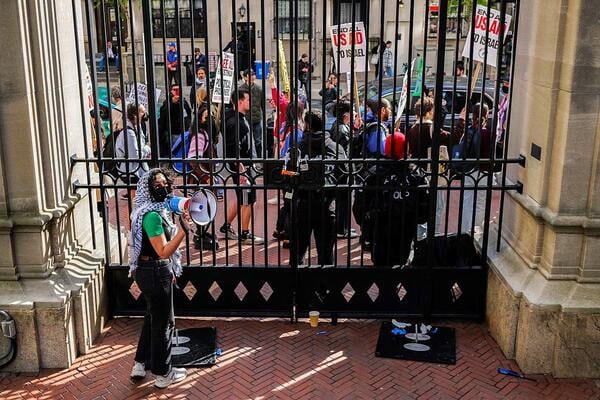
Sanctions passed down from Columbia relate to a pro-Palestinian protest encampment last spring and a May takeover of a room in the Butler Library, according to the university statement. Columbia responded to that incident by placing 71 students on interim suspension in May.
“The sanctions issued on July 21 by the University Judicial Board were determined by a UJB panel of professors and administrators who worked diligently over the summer to offer an outcome for each individual based on the findings of their case and prior disciplinary outcomes,” Columbia officials wrote in an unsigned statement. “While the University does not release individual disciplinary results of any student, the sanctions from Butler Library include probation, suspensions (ranging from one year to three years), degree revocations, and expulsions.”
Officials added that “disruptions to academic activities” are a violation of university policies.
Though Columbia did not specify how many students were disciplined, the pro-Palestinian student group CU Apartheid Divest alleged that as many as 80 were expelled or suspended. According to CU Apartheid Divest, disciplinary letters sent to suspended students require them to submit apologies in order to return to campus in one to three years.
Student protesters accused officials of punishing students as a concession to the Trump administration, which froze hundreds of millions of dollars in federal research funding due to alleged antisemitism at Columbia tied to pro-Palestinian protests.
“The sanctions are believed to be part of a federal deal Columbia is about to announce,” the group wrote in a social media post.
Earlier this year Columbia agreed to broad demands by the federal government, including overhauling disciplinary processes. However the $400 million in frozen federal funds have not yet been restored despite those concessions.
Multiple media outlets have reported that Columbia is nearing a deal with the Trump administration to resolve complaints of antisemitism on campus. The Wall Street Journal reported that while a potential deal would likely restore federal research funds, it would also cost the university $200 million in a settlement fee.
Columbia did not respond to a request for comment from Inside Higher Ed.
University disciplinary efforts drew a tepid response from the House Education and Workforce Committee which issued a statement from Chairman Tim Walberg, a Michigan Republican.
“Columbia has more progress to make before Jewish students can truly feel safe on its campus,” he said. “The Committee’s work has underscored the depth and breadth of antisemitism at Columbia that can’t be ignored. We will continue to investigate antisemitism at Columbia and other universities and develop legislative solutions to address this persistent problem.”
While Columbia reportedly considers a deal with the Trump administration, Ivy League peer Harvard University has started a court battle to regain billions in federal research funding.
It also sued the government for attempting to block it from enrolling international students. A federal court temporarily blocked the Trump administration from choking off Harvard’s international enrollment, and the same federal judge has not yet ruled on the legality of the government’s freezing of Harvard’s grants and contracts.
However, the judge appeared skeptical of the government’s position at Monday’s hearing.

by CUPA-HR | June 5, 2025
On June 4, 2025, President Trump issued a presidential proclamation suspending the entry of foreign nationals who seek to enter the United States to begin a course of study, conduct research or participate in an exchange visitor program at Harvard University. The proclamation invokes sections 212(f) and 215(a) of the Immigration and Nationality Act and is set to expire six months from the date of issuance unless extended.
This action follows the Department of Homeland Security’s May 22, 2025, announcement terminating Harvard’s Student and Exchange Visitor Program (SEVP) certification. That earlier DHS action is currently under a temporary restraining order issued by the U.S. District Court for the District of Massachusetts.
Key Provisions
The proclamation also directs federal agencies to consider additional operational steps, including potential limitations on Harvard’s continued participation in SEVP and the Student and Exchange Visitor Program (SEVIS). It references recordkeeping and reporting obligations under existing regulations and states that these obligations are necessary to support national security and immigration enforcement.
CUPA-HR will monitor for additional updates on this and related developments.

Federal agencies have suspended “several dozen” federal research grants to Princeton University, the Ivy League institution announced Tuesday. The move comes as the Trump administration attacks high-profile colleges over campus antisemitism allegations.
Multiple agencies, including the U.S. Department of Energy, the U.S. Department of Defense and NASA, notified the university of the freezes on Monday and Tuesday, Princeton President Chris Eisgruber said in a community message.
He noted that “the full rationale” for the agencies’ cancellation wasn’t clear yet but stated the university will comply with the law and is “committed to fighting antisemitism and all forms of discrimination, and we will cooperate with the government in combating antisemitism.”
He added that Princeton would at the same time “vigorously defend academic freedom and the due process rights.”
A reporter for The Daily Caller, a conservative outlet, reported late Monday that the Trump administration was pausing $210 million in funding to Princeton amid an ongoing campus antisemitism investigation.
The Education Department on Tuesday did not immediately respond to a request for confirmation of the pause.
Like many college campuses, Princeton saw significant protest activity last spring, including a hunger strike, an encampment lasting three weeks and over a dozen arrests. During that time, the Biden administration opened an investigation into the university after a complaint was filed by a conservative activist, who filed more than 30 similar complaints at U.S. educational institutions.
In March, the U.S. Department of Education under President Donald Trump named Princeton as one of 60 institutions that could face enforcement action over unaddressed antisemitism, though the agency didn’t specify any specific civil rights law violations.
The suspension of Princeton’s research grants is just the most recent of the Trump administration’s escalating financial attacks on colleges and the higher education sector.
On Monday, the administration announced it was reviewing billions of dollars in federal grants and contracts at Harvard University, another well-known institution mentioned on the Education Department’s March list.
Those moves come less than a month after the Trump administration canceled $400 million in research funding to Columbia University.
The Ivy League institution ceded to many of the government’s demands — including by adding three dozen security officers and appointing a senior vice provost to review its regional studies program. Late last month, the Trump administration called it “a positive first step in the university maintaining a financial relationship with the United States government.”
Following the weeks of turmoil at the university, Columbia Interim President Katrina Armstrong stepped down late last week after less than eight months.

The American Bar Association is suspending diversity, equity, and inclusion standards for the law schools it accredits amid President Donald Trump’s crackdown on DEI efforts, Reuters reported.
An ABA council reportedly voted on the change Friday, suspending DEI standards through August as the organization—which accredits nearly 200 law schools—considers permanent changes.
ABA officials did not respond to a request for comment from Inside Higher Ed.
The change comes as the ABA has clashed with the Trump administration in recent weeks, accusing the president of “wide-scale affronts to the rule of law itself” in issuing rapid-fire executive orders that have targeted DEI and birthright citizenship, and sought to shrink the federal government through mass firings and other actions that some legal scholars have deemed unlawful.
In the aftermath, the Trump administration barred political appointees to the Federal Trade Commission from holding ABA leadership posts, participating in ABA events, or renewing their memberships. FTC Chairman Andrew Ferguson accused the ABA of a “long history of leftist advocacy” and said “recent attacks” on the administration made the relationship “untenable.”
State officials have also pressured ABA to drop its DEI standards. In January a group of 21 attorneys general, all from red states, sent a letter to the ABA urging it to drop DEI standards.
The ABA has reportedly been reviewing its standards on DEI since 2023, when the U.S. Supreme Court upended affirmative action with its ruling in favor of Students for Fair Admissions against Harvard and the University of North Carolina at Chapel Hill.
Some Republican officials have celebrated the ABA’s move. “This is a victory for common sense! We are bringing meritocracy back to the legal system,” U.S. Attorney General Pam Bondi wrote on X.
ABA’s suspension of DEI standards comes after the Accreditation Board for Engineering and Technology dropped diversity, equity, inclusion and accessibility from its accreditation criteria.