Tag: suspension

  • Law professor sues University of Kentucky after suspension over criticizing Israel

    Law professor sues University of Kentucky after suspension over criticizing Israel

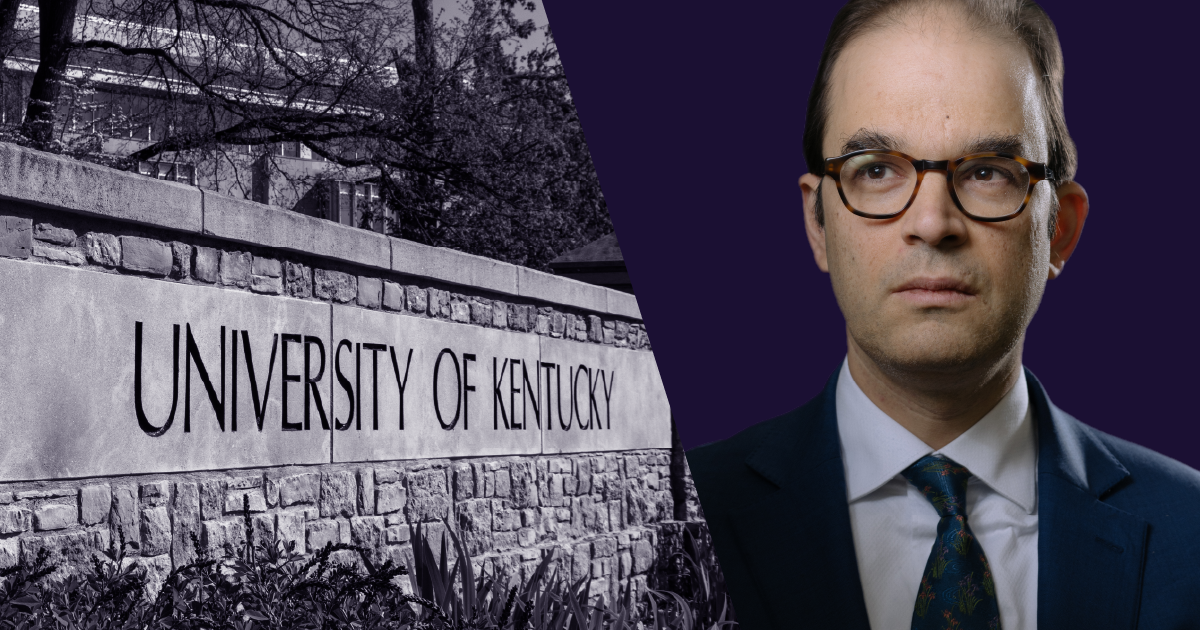
    The University of Kentucky suspended tenured professor Ramsi Woodcock in July for his comments about Israel. Now, Woodcock is suing his university for violating his First Amendment rights.

    Woodcock’s lawsuit, filed last week in federal district court in Kentucky, asks the judge for two things: let him go back to teaching and stop the university from enforcing the International Holocaust Remembrance Alliance’s definition of antisemitism

    TAKE ACTION: Stop University of Kentucky’s Free Speech Crackdown

    The lawsuit lays out a damning timeline of UK’s abuse of his First Amendment rights. Woodcock, long an outspoken critic of Israel, remained steadily employed at UK for seven years, gaining tenure in 2022 and a promotion to full professorship this year. But less than two weeks after his promotion, UK removed him from teaching and banned him from campus. This was purportedly because of unspecified complaints about his  petition to a faculty listserv in March 2024, more than a year earlier, calling for global war against Israel and its annihilation. On his website, antizionist.net, he claims Israel is waging a genocide and that the world has a “moral duty” to step in. 

    After UK suspended Woodcock, describing his online petition as “calling for the destruction of a people based on national origin,” FIRE’s Faculty Legal Defense Fund, which provides legal resources for faculty free of charge, intervened with UK to explain that Woodcock’s speech was protected by the First Amendment. While members of the public or UK’s community may have taken offense to Woodcock’s strong views about Israel, faculty members have the First Amendment right to present arguments on matters of public concern outside the classroom. Using Woodcock’s speech as a cudgel to remove him from the classroom was a clear violation of his expressive rights as a faculty member at UK.

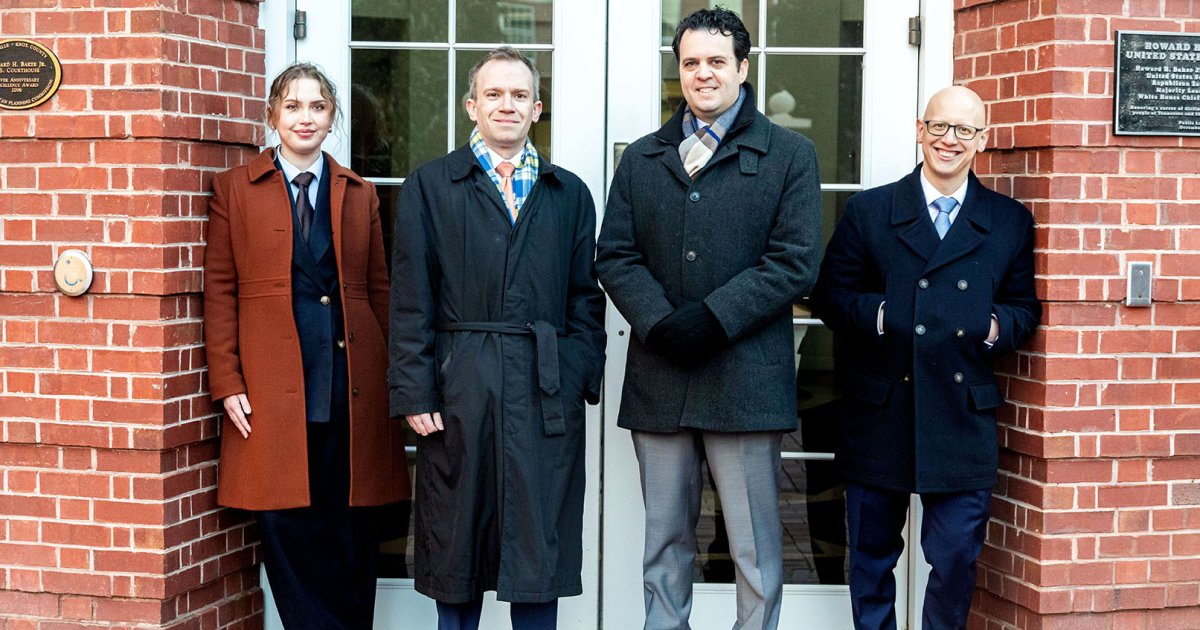
    The FLDF also announced that Joe Childers, a Kentucky-based attorney, would defend Woodcock through the university’s investigative process. Now Woodcock is taking his fight to court. The Council on American-Islamic Relations (CAIR) is representing Woodcock in the lawsuit, with help from the Chicago-based law firm Kapitan Gomaa Law. Childers is serving as local counsel. 

    “The University’s suspension of Professor Woodcock violates his First Amendment right of freedom of expression and his right to procedural due process, discriminates against him in violation of the Civil Rights Act of 1866, threatens the democratic principles which sustain this Country’s form of government, and degrades the quality of education at the University of Kentucky,” the lawsuit states.

    A university cannot censor the ideas it dislikes out of existence. And it certainly cannot punish its own faculty for making provocative arguments both at the university and in the court of public opinion. FIRE will keep readers apprised about the status of Woodcock’s lawsuit. 

    If you are a public university or college professor facing investigations or punishment for your speech, contact the Faculty Legal Defense Fund: Submit a case or call the 24-hour hotline at 254-500-FLDF (3533).

    Source link

  • Two judges halt Trump administration’s suspension of SNAP benefits

    Two judges halt Trump administration’s suspension of SNAP benefits

    This audio is auto-generated. Please let us know if you have feedback.

    Dive Brief:

    • A federal judge in Massachusetts ruled Friday that the Trump administration must continue to fund the Supplemental Nutrition Assistance Program during the ongoing government shutdown. A federal judge in Rhode Island issued a temporary restraining order on Friday that blocks the federal government from suspending SNAP funding, the National Council of Nonprofits, a party in the lawsuit against the federal government, said in an emailed press release.
    • In her ruling, Judge Indira Talwani of the U.S. District Court for the District of Massachusetts said that the decision to suspend SNAP payments was “based on the erroneous conclusion” that the USDA could not use contingency funds for SNAP. “This court has now clarified that Defendants are required to use those Contingency Funds as necessary for the SNAP program,” Talwani wrote. 
    • The Trump administration has until Monday to tell the Massachusetts court if it will move forward with funding SNAP benefits, even partially, for November and the timeline for doing so. 

    Dive Insight:

    The rulings come as the grocery industry braces for an unprecedented lapse in SNAP benefit distribution, given it’s unclear how the federal government will respond to the decisions and the logistics of loading funds onto EBT cards.

    In a notice on its website, the USDA claimed that funding for SNAP benefits is set to run out due to the ongoing government shutdown and, as a result, the agency will not issue benefits on Nov. 1. 

    It’s unclear if the Trump administration plans to appeal to the rulings or how quickly federal funding for SNAP could get loaded onto program participants’ EBT cards.

    The Massachusetts judge’s decision is tied to the lawsuit 25 states and Washington, D.C., filed against the Trump administration earlier this week, arguing that the USDA had planned to unlawfully halt the food nutrition program’s benefits for November. In the lawsuit, the states argued that the USDA is required to continue providing benefits as long as it has funding. The complaint claimed that the USDA has access to at least $6 billion in contingency funds appropriated by Congress, noting that the federal agency has appropriated funds to temporarily fund WIC, but has not done so for SNAP.

    “USDA’s claim that the SNAP contingency funds cannot be used to fund SNAP benefits during an appropriation lapse is contrary to the plain text of the congressional appropriations law,” the lawsuit stated.

    On Thursday, a coalition of nonprofits, advocacy groups and eight cities filed a lawsuit in a Rhode Island district court, seeking to prevent the suspension of SNAP funding.

    Nearly 42 million people participated in SNAP and received an average of $188 each in May, according to the most recently available USDA data. Some states, such as Virginia and Vermont, had prepared for temporary funding from their state funds for SNAP participants’ EBT cards to help curtail food insecurity. 

    In addition to putting people at higher risk of food insecurity, delayed November SNAP benefits would have created logistical challenges for retailers. Last week, Pennsylvania Food Merchants Association President and CEO Alex Baloga said in an emailed statement that delayed SNAP benefits could create “an operational nightmare” for food retailers and distributors across the state, possibly impairing accurate demand forecasting and leading to bare shelves of fresh foods like produce, dairy and meat.

    The potential loss of SNAP funding added to a growing list of disruptions that grocers are facing with the federal nutrition assistance program. A number of grocers are currently preparing for restrictions that go into effect next year across a dozen states that will make certain items, like soda or candy, ineligible for SNAP. Upfront costs to implement purchasing restrictions are expected to total just over $305 million for grocers, according to a report from the National Grocers Association, the National Association of Convenience Stores and FMI – The Food Industry Association, which noted that grocers are projected to shell out more than $281 million annually for compliance. 

    The One Big Beautiful Bill Act that President Donald Trump signed this summer includes $186 billion in SNAP cuts over 10 years and tightens eligibility requirements for the program. Grocers are bracing for a potential decrease in SNAP sales as states implement the changes to participant eligibility, Stephanie Johnson, group vice president of government relations and political affairs at the NGA, told Grocery Dive in July.

    Source link