Tag: system

  • A Unified System for Student Athlete Supports

    A Unified System for Student Athlete Supports

    A growing number of programs in higher education focus on student athletes’ mental health, recognizing that the pressures of competing in collegiate athletics, combined with academic challenges, financial concerns and team relationships, can negatively impact student well-being.

    At the University of Richmond, the athletics department created a new program to emphasize holistic student well-being, taking into account the different dimensions of a student athlete’s identity and development.

    Spider Performance, named after the university mascot, unites various stakeholders on campus to provide a seamless experience for student athletes, ensuring they’re properly equipped to tackle challenges on the field, in the classroom and out in the world beyond college.

    “The athlete identity is a really special part of [students’ identities], but it’s not the only part, so making sure they are [considered] human beings first—even before they’re students, they’re humans first. Let’s examine and explore that identity,” said Lauren Wicklund, senior associate athletics director for leadership and student-athlete development.

    How it works: The university hosts 17 varsity sports in NCAA Division I, which include approximately 400 student athletes. Richmond has established four pillars of the student athlete experience: athletic, academic, personal and professional achievement.

    “The whole concept is to build champions for life,” said Wicklund, who oversees the program. “It’s not just about winning in sport; it’s about winning in the classroom, winning personally and then getting the skills and tools to win for the rest of your life.”

    These pillars have driven programming in the athletics department for years, but their messaging and implementation created confusion.

    Now, under Spider Performance, the contributions and collaborations of stakeholders who support student athletes are more visible and defined, clarifying the assistance given to the athletes and demonstrating the program’s value to recruits. The offices in Spider Performance include academic support, sports medicine, leadership, strength and conditioning, mental health, and well-being.

    “It’s building a team around them,” Wicklund explained. “Rather than our student athlete thinking, ‘I have to go eat here, I have to do my homework here, I have to do my workout here,’ it’s, ‘No, we want you to win at everything you do, and how you do one thing is how you do everything.’”

    Outside of the specific athletic teams, Wicklund and her staff collaborate with other campus entities including faculty members, career services and co-curricular supports.

    Preparing for launch: Richmond facilitates a four-year development model for student athletes, starting with an orientation experience for first-year students that helps them understand their strengths and temperament, up to more career-focused programming for seniors.

    Recognizing how busy students’ schedules get during their athletic season, the university has also created other high-impact learning experiences that are more flexible and adaptive. Students can engage in a career trek to meet alumni across the country, study abroad for a short period, participate in a service project or take a wellness course, all designed to fit into their already-packed schedules.

    Part of the goal is to help each student feel confident discussing their experience as an athlete and how it contributes to their long-term goals. For instance, students might feel ill-equipped for a full-time job because they never had a 12-week internship, but university staff help them translate their experiences on the field or the court into skills applicable to a workplace environment, Wicklund said.

    The university is also adapting financial literacy programming to include information on name, image and likeness rights for student athletes, covering not just budgeting, investing and financial literacy topics but also more specific information related to their teams.

    Encouraging athletes to attend extra sessions can be a challenge, but the Spider Performance team aims to help students understand the value of the program and how it applies to their daily lives. The program also requires buy-in from other role models in students’ lives, including trainers, coaches and professors.

    “We work really hard to customize fits to different programs so we’re speaking the same language as our coaches,” which helps create a unified message to students, Wicklund said.

    If your student success program has a unique feature or twist, we’d like to know about it. Click here to submit.

    Source link

  • DOD Fails to Update Postsecondary Education Complaint System

    DOD Fails to Update Postsecondary Education Complaint System

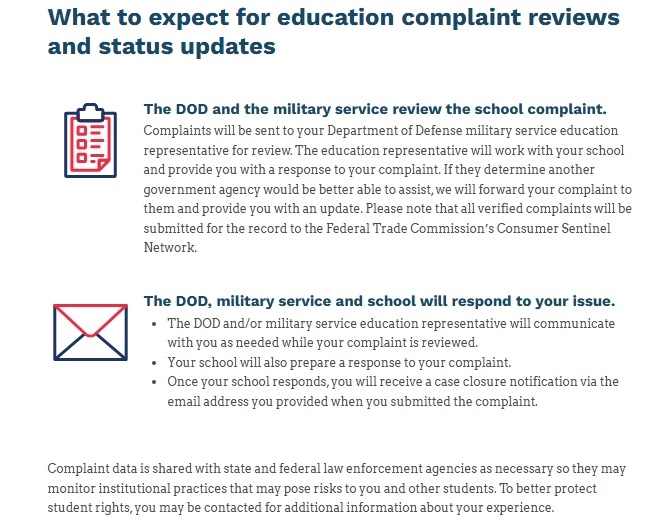
    Is the US Department of Defense (DOD) actually handling complaints from service members and their spouses who are using DOD Tuition Assistance and MyTAA (the education program for spouses)? It’s difficult to tell, and it’s unlikely that they’ll tell us. 

    DD Form 2961 is used for servicemembers and their spouses to make complaints about schools. And it appears up to date.  And on their website, DOD still claims to help consumers work with schools about their complaints. 

    But information about the US Department of Defense Postsecondary Education Complaint System (PECS), the system that handles the complaints, has not been updated in about a decade. Here’s a screenshot from May 25, 2025.  

    What we do know is that DOD VOL ED and the DOD FOIA team have stonewalled us for eight years to get important information about their oversight. We also know that DOD VOL ED has allowed bad actor schools to violate DOD policies as they prey upon those who serve.  Over the years we have notified a number of media outlets about these issues but few if any have shown interest. 

    Source link

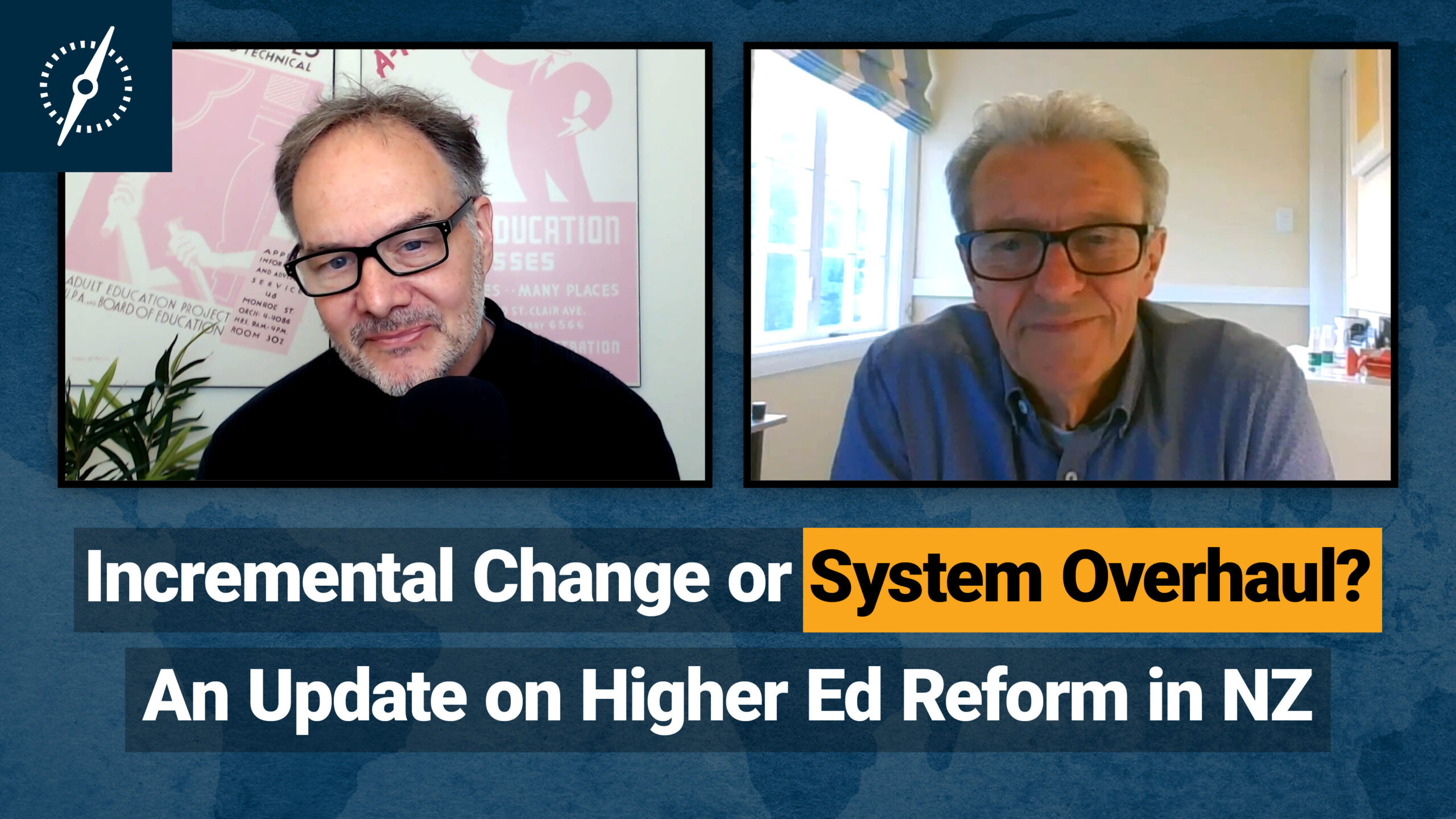
  • Incremental Change or System Overhaul? An Update on Higher Ed Reform in NZ with Roger Smyth

    Incremental Change or System Overhaul? An Update on Higher Ed Reform in NZ with Roger Smyth

    In some countries, higher education policy just seems to sit still for decades. In others, hyperactivity is a more normal state. Today we’re looking at the 2020s poster child for higher education hyperactivity. It’s not the usual suspects, the UK or Australia, it’s little New Zealand where we’re making our fourth stop on this podcast in just over two and a half years.

    When last we were in Wellington, we talked to Chris Whelan from Universities New Zealand about university underfunding the consequences of losing international students, and something called the University Advisory Group, which was supposed to set the national system on a new course along with a research advisory group who weirdly was made up of exactly the same people only following a different mandate.

    Since then, while these groups were noodling on how best to steer the system, the government made two big table flipping moves. One musing about creating a new type of institution, which was neither a university nor a college, and nobody knew what they were talking about, and the other simply deciding it wasn’t going to fund any more research in the social sciences and humanities through its research granting system. Fun times.

    Anyways, with all this excitement, we figured it was worth going back to the Tasman Sea to check in with one of our regular correspondents, Roger Smyth. He’s a former senior New Zealand public servant and now a consultant based in Canterbury. He’s got all the skinny for us. And so, over to Roger.


    The World of Higher Education Podcast
    Episode 3.32 | Incremental Change or System Overhaul? An Update on Higher Ed Reform in NZ with Roger Smyth

    Transcript

    Alex Usher (AU): Roger, the last time we did a show about New Zealand, we had Chris Whelan from Universities New Zealand on, and we talked a lot about the University Advisory Group process. How far along is that work, and what are people in the sector saying about it? What’s the view at this stage? Is there still interest and momentum behind the process, or has it stalled out a little?

    Roger Smyth (RS): Okay, so the advisory group submitted an interim report late last year, and it’s scheduled to submit its final report this month. I understand that the report has now been submitted, but nothing has been published yet. Neither the interim report nor the final report, nor any of the dozens of submissions made in response to the UAG’s questions, have been released publicly.

    In these sorts of cases, the report usually isn’t published until the government has had a chance to make its initial decisions on some of the high-level questions—and that could still be a little way off.

    Of course, as you implied, Alex, there are rumors. And in some of the face-to-face consultations, the UAG has given a bit of a steer as to where it was heading. For instance, it’s pretty clear that in their interim report, they were proposing a machinery of government change—a reorganization of some of the government agencies in higher education, such as the Tertiary Education Commission, the Ministry of Education, and the policy unit responsible for research and innovation. But we won’t know that for sure until the report comes out.

    One of the big challenges the advisory group would have faced is that the government is committed to returning to a financial surplus in the 2027–28 fiscal year. That’s a significant challenge, with major demands on the budget. So the advisory group would have been instructed to make their proposals fiscally neutral, and that’s a big constraint on what they could recommend.

    My main view on this whole process is that it was never really clear what problem the University Advisory Group was set up to solve—apart from a general instruction to look for improvement and to make the system work better. One of the most distinctive features of the New Zealand system is its homogeneity. That has a lot of positives—it means that wherever you go, you’re guaranteed a reasonable level of quality. But it also has the downside that there isn’t really any outstanding, world-leading university.

    AU: Let me stop you there, because alongside the University Advisory Group, there’s also been a commission on research—on research and science—a review going on at the same time. Why did that happen in parallel rather than together?

    RS: Yeah, I think that’s an important point. The first thing is that the two advisory groups were actually chaired by the same person—Peter Gluckman, a distinguished medical scientist and academic—and they began operating at roughly the same time.

    You can see there was a desire to think about knowledge transfer opportunities within universities and how they contribute to the broader economy and the wider science system.

    The Science Advisory Group has now completed its report. It’s been submitted, and the government has published its initial decisions. This is an area where the review proposed a very substantial overhaul of the machinery of government. They proposed creating a super ministry for higher education, science, technology, and innovation.

    The government, however, did not accept that proposal. Most governments are a bit wary of major machinery-of-government reshuffles unless there’s a very strong rationale. These kinds of changes often involve a settling-in period where the system can lose its way, as people jockey for position and the focus shifts away from the core goals the system is meant to achieve.

    Instead, the review also proposed merging the seven non-university research institutes into a single public research organization. The government opted for a partial reorganization, establishing three public research organizations—focused on the bioeconomy, earth sciences, and health and forensic science. They’re also creating a new organization to cover advanced technology fields like AI, synthetic biology, aerospace, and quantum tech. So that’s probably a reasonable foundation for advancing the science system.

    AU: But of course, before they even got to that point—before the advisory group had reported—the government unilaterally made a change to what’s called the Marsden Fund. That’s sort of like our combination of the social sciences, humanities, and natural science councils. And it effectively nuked the humanities and social sciences, as I understand it. They basically said, “We’re not going to fund those anymore.” Why did the government do that? Why undercut your own report before it even comes out?

    RS: Yeah, this was definitely a decision that caused a lot of pushback and consternation—real ill feeling in universities and across the broader community.

    Most of the government’s research funding is directed toward major national strategic priorities, so it tends to go to areas like health, the hard sciences, engineering, agriculture—things like that. The Marsden Fund was one of the few avenues where humanities researchers could secure external funding, outside of what universities provide internally.

    I think part of this decision reflects the government’s desire to place greater focus on the hard sciences. If you look at the Marsden Fund trends, the social sciences and humanities panel had been gaining a slightly larger share of the funding in recent years, which naturally came at the expense of the hard sciences. So in some sense, this was a declaration that the government wants to reorient support toward areas seen as having greater economic impact.

    That said, the main driver was probably to send a message. But in doing so, it sent a very negative signal to the humanities community. Even researchers in the now-favored areas were concerned about the loss of this funding stream—particularly given that social science research can produce huge social value.

    AU: This tension between favored STEM subjects and less-favored fields like the social sciences, humanities, and business is also playing out in discussions around the government’s funding model. My understanding is that in New Zealand, the funding model essentially funds places. So, the government allocates a certain number of places to each institution. Now we’re projecting that there will be more enrollments than there are funded places, and the government would like to provide a bit of additional funding for STEM subjects, but not for others. We’re very familiar with this in Canada—it’s exactly what’s happening in Ontario right now. I’m curious how you think that will play out in New Zealand?

    RS: Okay, well, just to give a bit of context on the financial situation of the universities: like most Anglophone countries with a heavy reliance on the international student market, COVID hit New Zealand universities hard. In 2021, the impact was cushioned by a surge in domestic enrollments. The labor market was weak due to the pandemic, so more people turned to study, and universities did okay financially.

    But in 2022, following government stimulus measures, the labor market recovered and became more robust. Domestic enrollments fell sharply, and the international student market still hadn’t bounced back. That made 2022 the worst financial year ever for the universities. Six of the eight were in deficit, and one was just breaking even.

    In 2023, when finances were still tight, there was a lot of concern about university viability. The government stepped in with a short-term funding rate boost—not an increase in the number of places, but an increase in the dollars per place.

    Then there was a small increase in funding again last year. But the broader funding review never happened. The government changed, and that process was superseded by the UAG process we discussed earlier.

    And that process, as we said, is likely to avoid anything that would seriously impact the government’s bottom line. So, the universities have been in a tough situation.

    But now, the international market is starting to recover. It’s been slower than in the other countries we compete with, but in EFTS terms—equivalent full-time students—2024 saw an 11% increase in international enrollments. It’s still below pre-pandemic levels, but the trend is positive. And that matters because each international student generates about 60% more revenue than a domestic student.

    Right now, we’re in the middle of the financial reporting season. Five of the universities have reported for 2024. One reported a small deficit on its core business, but it was much lower than expected and offset by a surplus on its wider trading operations.

    So, it’s still tough—marginal—but not as gloomy as it was a couple of years ago.

    Even though there’s still pressure, and enrollments may be shifting toward more expensive fields, financially speaking, the worst appears to be over. The system is beginning to grow again.

    And on the point about STEM versus other fields—it’s worth remembering this is a system driven by student choice. The government doesn’t have much influence over where students choose to go. So, no matter how the government might want to steer things, it can’t really control those choices under the current policy environment. So, I’d say that the universities are managing through this.

    AU: Roger, I want to get into something I read recently—there was a fascinating article where the government, or at least the minister, was musing about the idea of creating a new type of tertiary institution. Something that’s not quite a university and not quite a polytechnic.But before I ask you about that, I think we need to give our listeners a bit of background on polytechnics in New Zealand.

    Your system merged all the polytechnics into one big national institution just before COVID, right? That was Te Pūkenga. Why do that? What was the point of one national institution? It’s a big country—two islands, 15 campuses. That’s a lot to bring together. What was the thinking behind that?

    RS: These reforms had two separate sources.

    First, we talked earlier about the financial challenges in the university sector, but the polytechnics were facing a real financial crisis. They’d been growing for years and carried high fixed costs, with relatively small student numbers spread across multiple campuses.

    Between 2012 and 2019, domestic enrollments dropped by about 25%. By 2019, nearly all the polytechnics were running deficits, and the sector’s collective deficit was quite substantial. So something clearly had to be done.

    Second, the government looked at what had been done in Australia. In New South Wales, for example, they merged all the TAFE institutions into a single statewide TAFE. It worked reasonably well there, and in Queensland as well.

    So they decided to follow a similar path and merge all 16 institutions—along with all work-based training—into a single national organization. That was the rationale behind the creation of Te Pūkenga.

    AU: What about the un-merger? So, a few years later you get a new government—the National government—and they’re going to undo the whole thing. Was that because it was, as you said, a machinery-of-government issue? Or was it more about a shift in how the government views vocational education?

    RS: I think it was both.

    Let’s look at both sides. First, the merger didn’t go well. There were some good aspects to the reforms. For instance, they set up six Workforce Development Councils to set standards for training and take a forward-looking view of labor market needs in specific fields. That was a positive.

    The idea of reintegrating polytechnic and work-based training into one coherent trades training system was also a good one. But the merger was very poorly executed.

    Costs blew out, and after three years they still hadn’t settled on a functioning operating model. There was almost no progress on the actual integration of work-based and polytechnic-based training. The initial chief executive didn’t work out and had to go.

    So that was one rationale for reconsidering—or unpicking—the merger.

    But the second reason was political. The incoming minister in 2023 had previously been a very successful chief executive of one of the polytechnics that was merged into the national institution.

    She was deeply committed to undoing the merger and restoring control to regions and local communities. So, the government came in with a clear policy to do this, and she got the ministry, and things got moving quickly.

    But, of course, life’s not that simple. No one wanted to go back to a system everyone agreed had serious problems. So how do you reconcile those two positions?

    After two years of back and forth, we’re now getting close to the new model. Those six Workforce Development Councils—the best part of the previous reform—are being disbanded and replaced with smaller organizations focused mainly on setting standards.

    The polytechnics, which remained as divisions within the larger organization, have all gone through what are called ruthless efficiency reviews to determine what could be dropped or changed to make them financially viable.

    We haven’t seen the full results of those yet, but some institutions will likely be deemed viable and split off as standalone, autonomous polytechnics. These will focus partly on trade training, but also on foundation education and some degree-level programs. Those will become autonomous institutions.

    But for those polytechnics that aren’t viable in the long term, they’ll be required to join a federation anchored by the Open Polytechnic, which delivers programs online. The idea is that those institutions can draw on the federation’s expertise and infrastructure to complement their face-to-face delivery with online components.

    AU: So I don’t want to ask you what’s going to happen, but I do want to ask when it’s going to happen—because there are a whole bunch of moving parts here, and you’ve got an election coming up. Is there enough time for the government to unwind all of this before the next election? Because I know, for example, with the Universities Accord process in Australia, the report came out well before the election, and even then, they couldn’t get everything done before voting day. So, what’s the pace of decision-making here?

    RS: The first thing is that if we look at the University Advisory Group, we should see the results of that fairly soon. I’d expect it within a couple of months—possibly even sooner. It might come out all at once, or it could follow the science review model, where there were high-level interim decisions released first.

    My sense of the brief given to the UAG is that we’re not going to see truly transformational change—nothing on the scale of the three big reviews we’ve had in the past: 1961, 1989–90, and 2002–03.

    So I’d expect incremental change rather than sweeping reform. And because of that, I think the university review will largely settle before the election.

    In contrast, the un-merging of Te Pūkenga and the broader vocational education reforms will take longer.

    Under the new arrangements, there will be greater integration between workplace and institutional training. Polytechnics and private providers will be allowed to act as arrangers and supervisors of work-based training.

    But implementing that integration will take time. There’s a two-year transition period, starting in 2026—which is the election year. So the un-merging process will only be partly complete when voters go to the polls.

    That said, I think this process will continue to play out slowly over time. Hopefully, it results in something positive.

    Despite everything—despite what will have been six years of turbulence and ongoing uncertainty—I do believe the sector will move forward with reasonable operating models.

    AU: May you live in interesting times. Roger, thanks so much for joining us today.

    RS: Thank you very much, Alex.

    AU: And that just leaves me to thank our excellent producers, Tiffany MacLennan and Sam Pufek—and you, our listeners, viewers, and readers—for joining us. If you have any questions or comments about today’s episode, or suggestions for future ones, don’t hesitate to get in touch with us at [email protected]. Run—don’t walk—to our YouTube page and subscribe. That way, you’ll never miss an episode of The World of Higher Education.

    Join us next week when our guest will be David Lloyd. He’s the remarkable individual who serves as both the Vice Chancellor of the University of South Australia and the co–Vice Chancellor of the University of Adelaide. How does he manage it? Those two institutions are on the brink of what’s likely the biggest institutional shakeup in Australian higher education since the Dawkins reforms of 1988. He’ll be here to talk about the merger, how it came about, and what the future looks like. Until then—bye for now.

    *This podcast transcript was generated using an AI transcription service with limited editing. Please forgive any errors made through this service. Please note, the views and opinions expressed in each episode are those of the individual contributors, and do not necessarily reflect those of the podcast host and team, or our sponsors.

    This episode is sponsored by KnowMeQ. ArchieCPL is the first AI-enabled tool that massively streamlines credit for prior learning evaluation. Toronto based KnowMeQ makes ethical AI tools that boost and bottom line, achieving new efficiencies in higher ed and workforce upskilling. 

    Source link

  • AAERI seeks visa overhaul for Australia’s student system

    AAERI seeks visa overhaul for Australia’s student system

    The Association of Australian Education Representatives in India (AAERI), in a submission to the Minister for Home Affairs and the Minister for Education, has urged the Labor government to link student visas to the institution of initial enrolment.

    The association, established in October 1996 to uphold the credibility of education agents recruiting students for Australian institutions, proposed that any change in course or institution should require a new visa application, with the existing visa automatically cancelled upon such a change.

    “This proposed reform means that a student’s visa would be directly linked to the education provider (institution) listed in their initial Confirmation of Enrolment (CoE) at the time of visa approval. The student would be required to remain enrolled at that institution,” read a statement by AAERI.  

    The association expalined that if a student wishes to change their course or education provider, they must obtain a new CoE from the new institution, apply for a fresh student visa, and once again demonstrate that they meet all Genuine Student requirements.

    “Such a measure will strengthen the integrity of Australia’s student visa program, reduce exploitation in the education sector, improve compliance with Genuine Student (GS) criteria, and safeguard Australia’s reputation as a provider of high-quality international education,” it added. 

    “Additionally, this reform will support ethical education agents and reputable institutions by discouraging course-hopping and misuse of the student visa system, thereby enhancing student retention and sector stability.”

    Such a measure will strengthen the integrity of Australia’s student visa program, reduce exploitation in the education sector, improve compliance with Genuine Student (GS) criteria, and safeguard Australia’s reputation as a provider of high-quality international education.
    AAERI

    Based on AAERI’s submission, such a policy would align with Condition 8516, which requires students to remain enrolled in a registered course at the same level or higher than the one for which their visa was originally granted.

    As per reports, education loan applications from India, one of Australia’s biggest student markets, have quadrupled since the Covid pandemic, with the number of loan-seeking students expected to rise further.

    With many students relying on Indian public and private banks for education loans, changes in their courses in Australia have often led to their original loans being considered void, placing many at significant financial risk.

    “Based on our communication with several Indian banks, if a student changes their course or education provider after arriving in Australia, their loan arrangements may need to be reassessed, taking into account new course fees, institution credibility, and repayment ability,” stated AAERI. 

    “The original loan is void and stands suspended. This poses significant financial risks for students and impacts their compliance with visa conditions.”

    According to AAERI, the problem is also prevalent among Nepali students, with nearly 60,000 currently studying in Australia. 

    The association also highlighted examples from other study destinations that Australia can learn from in implementing the proposed framework. 

    While New Zealand allows course or provider changes but may require a variation of conditions or a new visa, especially for pathway visa holders or when moving to lower-level courses, in the UK, the student visa system is closely tied to licensed sponsors through the Confirmation of Acceptance for Studies, so changing institutions generally requires a new CAS and immigration permission.

    In Canada, stricter rules have been implemented requiring international students to be enrolled at the Designated Learning Institution named on their study permit, and to change institutions, students must apply for and obtain a new study permit, emphasising the importance of linking visas to specific institutions.

    “Australia’s recent reforms, such as closing the concurrent CoE loophole and requiring CoEs for onshore visa applications, are steps in a similar direction but do not go far enough to address the core issue of unethical student poaching, misuse of student visa and provider switching,” stated AAERI. 

    AAERI’s call for action comes at a time when the return of the Labour government is viewed as “offering little comfort to an international education sector already under-siege”, as highlighted in a recent article by Ian Pratt, managing director of Lexis English, for The PIE News.

    In Anthony Albanese’s second term, the Prime Minister established a new role – assistant minister for international education – and appointed Victorian MP Julian Hill.

    “It’s important that students who come here get a quality education… This sector is complex and Julian Hill is someone who’s been involved as a local member as well, and I think he’ll be a very good appointment,” Albanese stated at a press conference this week. 

    Source link

  • Having trouble keeping up with the chaos of the student loan system? (Student Borrower Protection Center)

    Having trouble keeping up with the chaos of the student loan system? (Student Borrower Protection Center)

    Are you having trouble keeping up with the chaos of the student loan system? Don’t worry; we got you. There’s a lot going on right now and we’re here to break it all down. Here are some of the most pressing things that happened this week.

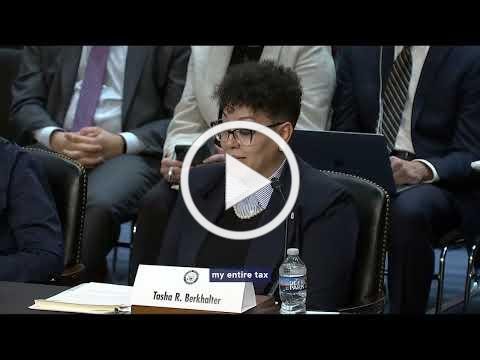
    On Tuesday, Senator Patty Murray (D-WA), the Ranking Member of the U.S. Senate Appropriations Committee and senior member of the Senate Health, Education, Labor and Pensions (HELP) Committee chaired an education forum to spotlight the Trump Administration’s radical effort to dismantle the U.S. Department of Education (ED). Tasha Berkhalter, a U.S. Army veteran and student loan borrower who had her debt discharged by the Biden Administration after being defrauded by a predatory for-profit college, gave powerful testimony at the hearing.

    Source link

  • Carnegie Classifications debuts redesign of system to group colleges

    Carnegie Classifications debuts redesign of system to group colleges

    This audio is auto-generated. Please let us know if you have feedback.

    The American Council on Education and the Carnegie Foundation for the Advancement of Teaching on Thursday released updates to the Carnegie Classifications, including a redesigned system to describe institutions and a new category to identify colleges that boost student access and earnings. 

    For the system’s basic classifications, colleges were previously grouped together based on the highest degree they awarded — a method that “fell short of adequately describing the full scope of activity on campuses across the country,” according to the announcement. 

    The basic classifications — renamed the institutional classifications — now group colleges together based on multiple characteristics, such as their size, the types of degrees they confer, and the fields of study they offer. For instance, the classifications will distinguish between institutions mostly focused on graduate education and those that offer a mix of bachelor’s, master’s and doctoral degrees. 

    Colleges will also be grouped together by size: Those with under 4,000 students will be classified as small, those with over 20,000 students will be considered large, and those in between will be considered medium. Additionally, colleges will be grouped together by their academic program mix, such as whether they primarily award pre-professional degrees. 

    The updated list has been highly anticipated ever since ACE and the Carnegie Foundation announced they were overhauling the Carnegie Classifications in 2023 to better reflect the diversity of college missions. 

    “With this redesign of the Carnegie Classifications, we set out to measure what matters,” Mushtaq Gunja, executive director of the Carnegie Classification systems and senior vice

    president at ACE, said in a statement. “Nowadays, institutions can’t be reduced down to the highest degree they award because they exist to serve a wide range of students in a wide variety of ways.”

    The system also debuted its new Student Access and Earnings Classification. This designation seeks to measure whether colleges are enrolling students reflective of the regions they serve and how well they are preparing them for the job market. 

    To calculate this, it examines the share of undergraduates receiving Pell Grants and those from underrepresented racial and ethnic backgrounds, along with alumni earnings eight years after enrollment. Researchers then compare these metrics to the demographics of the regions colleges serve.

    This classification groups colleges based on their access and whether their former students have relatively higher or lower earnings compared to their regional peers. 

    Colleges with higher access and earnings are designated Opportunity Colleges and Universities. 

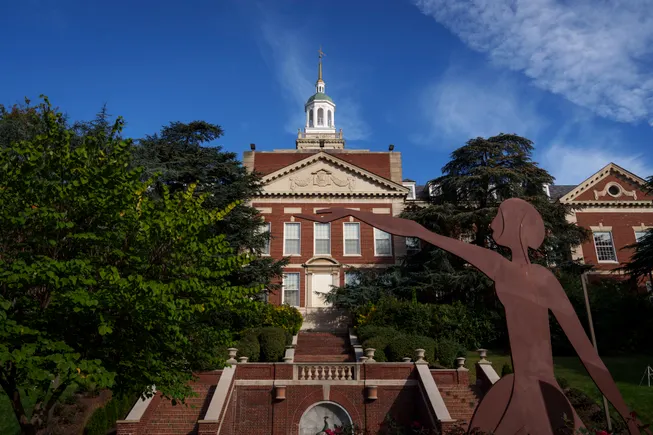
    Nearly 500 colleges earned this designation. The group includes a wide variety of institutions, including historically Black colleges like Howard University, in Washington, D.C., and large public universities such as Stony Brook University, in New York. 

    Meanwhile, colleges that provide lower access but higher earnings contain all eight universities that make up the Ivy League, as well as other prestigious colleges, such as Stanford University. This group also included state flagships such as the University of Wisconsin-Madison and the University of Florida. 

    ACE and the Carnegie Foundation also updated their research designations, releasing their new list of research institutions under the revised metrics in February. The changes resulted in a sharp uptick in the number of institutions that earned the coveted R1 status, denoting the highest levels of research activity.

    Source link

  • Innovation Without Borders: Galileo’s Networked Approach to Better Higher Education System

    Innovation Without Borders: Galileo’s Networked Approach to Better Higher Education System

    One of the biggest, but least remarked upon trends in European higher education in recent years is the growth of private for-profit, higher education. Even in countries where tuition is free, there are hundreds of thousands of students who now prefer to take courses at private for-profit institutions.

    To me, the question is, why? What sort of institutions are these anyway? Interestingly, the answer to that second question is one which might confuse my mostly North American audience. Turns out a lot of these private institutions are relatively small, bespoke institutions with very narrow academic specializations. And yet they’re owned by a few very large international conglomerate universities. That’s very different from North America, where institutions tend to be either small and bespoke, or part of a large corporation, but not both.

    Today my guest is Nicolas Badré. He’s the Chief Operating Officer of the Galileo Group, which operates a number of universities across Europe. I met him a few months ago at an OECD event in Jakarta. When I heard about some of Galileo’s initiatives, I knew I’d have to have him on the show. 

    There are three things which I think are most important about this interview. First is the discussion about Galileo’s business model and how it achieves economies of scale across such different types of institutions. Second, there’s how the network goes about collectively learning across all its various institutions. And third, specifically how it’s choosing to experiment with AI across a number of institutions and apply the lessons more globally. 

    Overall, it’s a fascinating chat. I hope you enjoy it too. But now, let’s turn things over to Nicolas.


    The World of Higher Education Podcast
    Episode 3.27 | Innovation Without Borders: Galileo’s Networked Approach to Better Higher Education System

    Transcript

    Alex Usher (AU): Nicolas, Galileo Global Education has grown significantly over the years. I think the group is, if I’m not mistaken, 13 or 14 years old now. Some of the universities it owns might be a bit older, but can you walk us through the origins of the group? How did you grow to be as big as you are? I think you’ve got dozens of institutions in dozens of countries—how did that growth happen so quickly?

    Nicolas Badré (NB): Thank you, Alex, for the question. It’s an interesting story. And yes, to your point, the group was created 13 and a half years ago, with an investment by Providence Equity Partners into Istituto Marangoni, a fashion school in Italy. That dates back to 2011. Since then, we’ve made 30 acquisitions.

    The growth started primarily in Europe, especially in France and Germany. Then, in 2014, we took our first steps outside of Europe with the acquisition of IEU in Mexico. Significant moves followed in 2018 and 2019, particularly into the online learning space with Studi in France and AKAD in Germany.

    There’s been a very rapid acceleration over the past five years. For context, I joined the group at the end of 2019. At that time, Galileo had 67,000 students across nine countries. Today, we have 300,000 students in 20 countries.

    Back then, the group was primarily focused on arts and creative schools, as well as business and management schools. Now, we’ve expanded into tech and health, and even into some professional training areas—like truck driving, for instance.

    What does this reflect? Two things. First, very strong organic growth from our existing schools and brands. Take ESG in France as an example. It’s been around for 40 years and is a well-known entry-level business school. Over the past five years, it’s diversified considerably creating ESG Luxury, ESG Tourism, you name it. It’s also expanded its physical presence from just a few cities to now being in 15 or 16 cities across France.

    So it’s really been a combination of strong organic growth and selective acquisitions that have helped us more than quadruple our student numbers in just five years.

    AU: It’s interesting— I think a lot of our listeners and viewers might be surprised to hear about such a strong for-profit institution coming out of France. When you think of French higher education, you think of the Grandes Écoles, you think of free education. So why would so many people choose to pay for education when they don’t have to? It’s a pretty strong trend in France now. I think over 26% of all students in France are in some form of private higher education. What do you offer that makes people willing to give up “free”?

    NB: It’s a good question, and you’re right—it’s not just about France. In many places across Europe, including Germany, the Nordics, and others, you see similar dynamics.

    That said, yes, in France in particular, there’s been a growing share of private players in higher education over the past few years. That probably reflects the private sector’s greater ability to adapt to new environments.

    I’d highlight three main factors that help explain why we’ve been successful in this space.

    First, we’re obsessed with employability and skills-based education. And that’s true across all levels and backgrounds. When we worked on our group mission statement, everyone agreed that our mission is to “unleash the potential of everyone for better employability.” 

    Because of that focus, we maintain very strong ties with industry. That gives us the ability to adapt, create, and update our programs very quickly in response to emerging demands. We know competencies become obsolete faster now, so staying aligned with job market needs is critical. That’s probably the strongest unifying driver across all of Galileo.

    Beyond that, we also offer very unique programs. Take Noroff, for example—a tech school in Norway, which is even more tuition-free than France. It’s one of the very few fee-paying institutions in the country. But the program is so strong that students are willing to pay around 15,000 euros a year because they know they’ll get a top-tier, hands-on experience—something that might be slower to evolve in the public system.

    So that’s the first point: employability and unique, high-impact programs.

    Second, we put a strong emphasis on the student experience. How do we transform their education beyond just delivering content? That’s an area we continue to invest in—never enough, but always pushing. We’re focused on hybridizing disciplines, geographies, and pedagogical approaches.

    And we’ve systematized student feedback—not just asking for opinions, but making sure we translate that feedback into tangible improvements in the student experience.

    And third, I’d say there’s a values-based dimension to all of this. We focus heavily on innovation, entrepreneurship, and high standards. Those are the core values that we’re driven by. You could say they’re our obsessions—and I think that kind of vision and energy resonates with our students. Those are the three main things I’d point to.

    AU: I have a question about how you make things work across such a diverse set of institutions. I mean, you’ve got design schools, drama schools, law schools, medical schools. When people think about private education, there’s often an assumption that there’s some kind of economies of scale in terms of curriculum. The idea that you can reuse curriculum across different places. But my impression is that you can’t do that very much. It seems like you’re managing all these different institutions, each of them like their own boutique operation, with their own specific costs. How do you make it work across a system as large and diverse as yours? Where are the economies of scale?

    NB: Well, that’s also a very good point—and you’re absolutely right. We have a very diverse network of schools. We have a culinary arts school in Bordeaux, France, with maybe 400 students, and we have universities with more than 10,000 students, whether in medical or business education.

    So yes, you might wonder: why put these institutions together?

    The answer is that we really built the group’s development around the entrepreneurial DNA of our school directors. They’re responsible for their own development—for their growth, diversification, and how they respond to the job market.

    We’re not obsessed with economies of scale. What we really value is the network itself. What we focus on is shared methodology—in areas like sales and marketing, finance, HR, and student experience.

    There are also some opportunities for synergies in systems. In some cases, for instance, yes—we use a similar CRM across several countries. But I think the real value of the network lies in its ability to share experiences and experiment with innovation throughout, and then scale up those innovations appropriately across the other schools.

    So I’d say it’s more about shared practices than about forcing economies of scale across borders—because that doesn’t always make sense.

    AU: Am I correct in thinking that you don’t necessarily present yourself as a chain of institutions to students? That each institution actually has a pretty strong identity in and of itself—is that right? Is there a fair bit of autonomy and ability to adapt things locally at each of your schools?

    NB: Yes, I think that’s true. In terms of branding, we believe that each of our schools generally has a stronger brand than Galileo itself. And that’s how it should be, because each school has its own experience, its own DNA, its own momentum and development.

    So, we see ourselves more as a platform that supports the development of all these schools, rather than a chain imposing the same standards and practices across the board.

    Of course, we do have certain methodologies—for example, how to run a commercial campaign. We provide guidance, but it’s ultimately up to each school to manage that process and use the methodology in a way that works best for their own development.

    That doesn’t mean there’s no value in having the Galileo name—there is. But the value is in being a platform that supports the schools, rather than overshadowing them.

    AU: Nicolas, I know Galileo is testing a lot of AI-driven approaches across its various institutions. What I found interesting in a discussion we had offline a few weeks ago is that you’re experimenting with AI in different parts of the institution—some of it around curriculum, some around administration, and some around student services. Can you give us an overview? What exactly are you testing, and what are the goals of these experiments?

    NB: I think we first need to frame how we’re using AI, and it’s important to look at our strategy globally. We believe there are three major trends shaping higher education.

    First, student expectations are evolving quickly—they’re demanding more flexibility and personalization. Second, there’s a rapid emergence of new competencies, which challenges our ability to adapt and update programs quickly. And third, we need to go beyond boundaries and be agile in how we approach topics, address new skills, and serve diverse learners. These are the three starting points we see as opportunities for Galileo to differentiate itself. Now, we’re not trying to become a leading AI company. Our goal remains to be a recognized leader in education—improving employability and lives. That’s our benchmark.

    With that in mind, our AI vision is focused on four areas:

    1. How do we deliver a unique experience to our students?
    2. How do we connect educators globally who are trained in and comfortable with AI?
    3. How do we develop content that can be adapted, localized, translated, and personalized?
    4. And how do we improve operational productivity?

    AI is clearly a powerful tool in all four areas. Let me walk through some of the things we’re doing. 

    The first area we call AI for Content. We’re using AI to more quickly identify the competencies required by the job market. We use tools that give us a more immediate connection to the market to understand what skills are in demand. Based on that, we design programs that better align with those needs.

    Then the next step is about course and content creation. Once we’ve defined the competencies, how do we design the courses, the pedagogical materials? How do we make it easier to localize and adapt that content?

    Take Studi, an online university in France with 67,000 students and around 150 different programs. A year ago, it would take them about four months to design a bachelor’s or master’s program. Now, it takes one to two months, depending on the specifics. The cost has been cut in half, and development speed has increased by a factor of two, three, even four in some cases. This also opens up opportunities to make programs more personalized because we can update them much faster. 

    The second area is AI for Experience. How do we use AI to enhance the student experience?

    We’ve embedded AI features in our LMS to personalize quizzes, generate mind maps, and create interactive sessions during classes. We’ve also adapted assessments. For example, in Germany, for the past two years, our online university AKAD has let students choose their own exam dates. That’s based on an AI approach that generates personalized assessments while staying within the requirements of German accreditation bodies. This wouldn’t be possible without AI. The result is higher engagement, faster feedback, and a more personalized learning experience.

    Lastly, beyond content and experience, we’re seeing real gains in AI for Operations. In sales and marketing, for example, we now use bots in Italy and Latin America to re-engage “dead” leads—contacting them again, setting up meetings, and redirecting them through the admissions funnel. It’s proven quite efficient, and we’re looking to expand that approach to other schools.

    We’re also seeing strong results in tutoring. Take Corndel, a large UK-based school focused on apprenticeships. They’re using AI tools extensively to improve student tracking, tutoring, and weekly progress monitoring.

    So, we’re seeing a lot of momentum across all these dimensions—and it’s really picked up speed over the last 18 months.

    AU: So, you’ve got a network of institutions, which gives you a lot of little laboratories to experiment with—to try different things. How do you identify best practices? And then how do you scale them across your network?

    NB: Well, first of all, we have lots of different pilots. As you’ve understood, we’re quite decentralized, so we don’t have a central innovation team of 50 people imposing innovations across all our schools.

    It’s more about scouting and sharing experiences from one school to another. It’s a combination of networks where people share what they’re learning.

    Just to name a few, we have a Digital Learning Community—that’s made up of all the people involved in LMS design across our schools. They exchange a lot of insights and experiences.

    We also hold regular touchpoints to present what’s happening in AI for content, AI for experience, and AI for operations. We’ve created some shared training paths for schools as well. So there are a lot of initiatives aimed at maximizing sharing, rather than imposing anything top-down. Again, as you pointed out, the schools are extremely diverse—in terms of regulations, size, content, and disciplines. So there’s no universal recipe.

    That said, in some cases it’s more about developing a methodology. For example, how do you design and implement a pedagogical chatbot? The experiments we’re running now are very promising for future scale-up, because we’re learning a lot from these developments.

    AU: I know that, in a sense, you’ve institutionalized the notion of innovation within the system. I think you’ve recently launched a new master’s program specifically focused on this question—on how to innovate in education systems. Can you tell us a little bit about that?

    NB: Yeah, I’m super excited to talk about this, because it’s where I’m focusing most of my energy these days.

    We’ve been working on this project for a year with four Galileo institutions. It’s called Copernia, and the name, like Galileo, is intentional—these are people who changed perspectives. That’s exactly what we want to do: change the perspective on education and truly put the student at the center.

    Copernia started the initiative, Galileo confirmed it, and it’s no coincidence we’re focusing on this.

    The first program we’re launching under Copernia is a Master of Innovation and Technology for Education. The idea is to bring together and leverage expertise from several fields: neurocognitive science, tech, AI and data, educational sciences, innovation, design, and management. The goal is to offer students a unique experience where they not only learn about innovation—but also learn to develop and apply it.

    One of the major assets we want to leverage is the Galileo network. With over 120 campuses, we can offer students real, hands-on opportunities to experiment and innovate. So the value proposition is: if you want to design and test educational innovation, we’ll give you the tools, the foundational knowledge, and, most importantly, the chance to apply that in practice—within our network, with our partners, and with other institutions.

    The goal is to help the whole ecosystem benefit—not just from Galileo’s environment, but also from the contributions of tech partners, academic collaborators, and business partners around the world. I’m convinced this will be a major tool to develop, share, and scale practical, applied innovation.

    And importantly, this isn’t meant to be just an internal initiative for Galileo. It’s designed to be open. We want to train people who can help transform education—not only in higher education, but also in K–12 and lifelong learning. Because we believe this kind of cross-disciplinary expertise and hands-on innovation experience is valuable across the entire education sector.

    AU: I’m really impressed with the scale and speed at which you’re able to experiment. But it did make me wonder—why can’t public higher education systems do the same? I mean, if I think about French universities, there are 70 or 80 in the public system—though it’s hard to keep track because they keep merging. But theoretically, they could do this too, couldn’t they? It’s a moderately centralized system, and there’s no reason institutions couldn’t collaborate in ways that let them identify useful innovations—rolling them out at different speeds in different areas, depending on what works. Why can’t the public sector innovate like that?

    NB: First of all, I wouldn’t make a sweeping judgment on this. I think there is innovation happening everywhere—including within public institutions. So I wouldn’t describe it in black-and-white terms.

    That said, it’s true that as a private organization, we face a certain kind of pressure. We need to prove that we operate a sustainable model—and we need to prove that every month. In other words, we rely on ourselves to develop, to test, and to optimize how we grow. 

    The second is that we have an asset in being able to test and learn in very different environments. Take the example I mentioned earlier, about Germany and the anytime online assessments. We were able to implement that model there because it was online and because the regulatory environment allowed it.

    Now, when we approach accreditation bodies in other countries, we can say: “Look, it works. It’s already accepted elsewhere. Why not consider it here?” That ability to move between different contexts—academic and professional, vocational and executive—is really valuable. It allows us to promote solutions that cross traditional boundaries.

    That’s not something all public universities can do—and frankly, not something all universities can do, period. But it’s an advantage we’ve built over the past several years by creating this large field for experimentation.

    AU: Nicolas, thank you so much for being with us today.

    NB: Alex, thank you very much. It’s been a pleasure.

    AU: It just remains for me to thank our excellent producers, Tiffany MacLennan and Sam Pufek, and to thank you—our viewers, listeners, and readers—for joining us. If you have any questions about today’s podcast, please don’t hesitate to get in touch at [email protected]. And don’t forget—never miss an episode of The World of Higher Education Podcast. Head over to YouTube and subscribe to our channel. Join us next week when our guest will be Noel Baldwin, CEO of the Future Skills Centre here in Canada. He’ll be joining us to talk about the Programme for the International Assessment of Adult Competencies. See you then.

    *This podcast transcript was generated using an AI transcription service with limited editing. Please forgive any errors made through this service. Please note, the views and opinions expressed in each episode are those of the individual contributors, and do not necessarily reflect those of the podcast host and team, or our sponsors.

    This episode is sponsored by Studiosity. Student success, at scale – with an evidence-based ROI of 4.4x return for universities and colleges. Because Studiosity is AI for Learning — not corrections – to develop critical thinking, agency, and retention — empowering educators with learning insight. For future-ready graduates — and for future-ready institutions. Learn more at studiosity.com.

    Source link

  • Georgia Southern and East Georgia State merger gets green light from system board

    Georgia Southern and East Georgia State merger gets green light from system board

    Dive Brief:

    • Georgia Southern University is poised to absorb East Georgia State College after the University System of Georgia governing board approved a merger plan Tuesday. 
    • The board’s vote follows USG Chancellor Sonny Perdue’s recommendation for the consolidation last week. Tuesday’s action marks “the first step in a careful process that will take more than a year,” the system said. 
    • The new institution will retain the “identity” of East Georgia State, which has struggled with enrollment declines in recent years. At the same time, it will become part of Georgia Southern and will be led by the latter’s president, Kyle Marrero, according to the announcement. The consolidation requires the approval of the institutions’ accreditor. 

    Dive Insight:

    Perdue trumpeted the consolidation of Georgia Southern and East Georgia State as a way to invest in key higher education functions — especially student success and degree accessby saving on administrative costs and reducing academic program overlap.

    “By using public resources as efficiently as possible, we’re making sure every dollar saved is reinvested into those programs that truly empower our students, support our faculty and strengthen our communities for a brighter future,” Perdue said in Tuesday’s announcement.  

    Georgia state Rep. Butch Parrish — who represents Swainsboro, which is home to East Georgia State and 40 miles from Georgia Southern praised the plan. 

    “It’s essential that as the system streamlines and operates more efficiently, we safeguard access to higher education in the local area and keep the EGSC spirit going,” Parrish said in a statement. 

    Now that the board has greenlit the merger, the institutions plan on quickly forming an implementation team with representatives from both colleges to work out details, the system said. That team will also prepare and submit the required paperwork for approval by their accreditor,  the Southern Association of Colleges and Schools Commission on Colleges.

    USG and the institutions plan on holding campus and community listening sessions to seek input on the new institution’s design, with the first one slated for Wednesday on East Georgia State’s campus.  

    Of the two, Georgia Southern is by far the larger institution. As of fall 2023, the university enrolled 26,041 students to East Georgia State’s 1,756, according to federal data. Georgia Southern’s enrollment has been relatively stable, declining 1.4% between 2018 and 2023, while East Georgia State’s fell by 40.3%. 

    The larger university also has a much deeper catalog of programs compared to East Georgia State, which according to its website offers six associate and three bachelor’s degree programs. 

    The planned consolidation is the latest move in an effort going back nearly 15 years to pare down Georgia’s state university system. So far, USG has undertaken 13 consolidations. From these, it has saved $30 million in administrative expenses that it said it has reinvested into student services and faculty and staff hires

    Once the Georgia Southern and East Georgia State combination completes, USG will have 25 institutions, the system said.

    Source link

  • How an early alert system raised one college’s FAFSA completion

    How an early alert system raised one college’s FAFSA completion

    This audio is auto-generated. Please let us know if you have feedback.

    NASHVILLE College leaders understand the value of a completed financial aid application, but they often face hurdles helping students navigate the slog of paperwork.

    Holyoke Community College, in Massachusetts, encountered this problem in spring 2023. That semester, 47% of attendees at the college’s new-student orientation had not completed their Free Application for Federal Student Aid, institutional leaders said Monday at the American Association of Community Colleges′ annual conference.

    Along with low levels of FAFSA completion, they also noted that dozens of students who had otherwise completed their financial aid applications were missing one crucial piece of paperwork — which became the deciding factor between the state completely covering their tuition or not.

    Holyoke implemented an early alert system to address challenges among both groups. By proactively reaching out to new students and inviting them to one-on-one advising sessions, officials raised FAFSA completion rates among that cohort by 14% for fall 2023 and got the appropriate state aid to those who were eligible.

    Missing paperwork

    Enrolling some 3,700 credit-bearing students, Holyoke is located in a college-dense area with about 20 other higher education institutions, according to Lauren LeClair, the community college’s associate director of admissions technology and operations.

    “We fight for our students. We wanted to make sure that we were doing right by our students and getting them aid,” she told conference attendees. “New students probably had no idea that they didn’t have paperwork that was needed.”

    Many also didn’t know where to go to learn more about financial aid, said Kim Straceski, Holyoke’s associate director of financial aid compliance and customer service.

    “They’re getting different information from different offices, and not always coming to meet one of the experts in financial aid,” she said.

    In spring 2023, the college lacked a way to alert students or financial aid staff about missing financial aid documents, according to education consultancy EAB. Holyoke employed the group to establish a new customer relationship management system to address these issues. 

    The new system pinged students to alert them about the missing paperwork and prompted them to schedule an advising appointment to fix the error. An adviser also followed up with a more detailed email, highlighting that they could help students hunt down the needed documents.

    “Students do open emails — if it’s important enough,” LeClair said.

    On the back end, the system allowed both financial aid staff and academic advisers to see notifications to students and any progress they made completing their forms. Before, the two offices were disconnected from one another in this process.

    By fall 2023, 67% of students who received early alerts had completed their outstanding aid requirements.

    The early alert system also helped new students learn where to seek help for any potential financial aid issues that arise in the future.

    MassReconnect 

    At Holyoke, almost 600 students are enrolled in MassReconnect, a state-run free community college program for nontraditional students. Since 2023, state residents ages 25 and older who do not have a degree have been eligible to attend community college for free, so long as they complete the FAFSA.

    Early results indicate the program has boosted the number of adult learners enrolled at Massachusetts community colleges, especially those from households earning below the state’s median income.

    But Holyoke identified a problem for about 40 of its MassReconnect students — they were missing one key document.

    “All of these students need to sign an affidavit attesting to the fact that they have not earned a prior degree,” said Straceski

    But for many, that requirement was not made clear in the MassReconnect program’s promotional materials.

    “When students are reading about it on the state’s website and they’re hearing about it in the news — nothing about this affidavit was ever mentioned,” Straceski said.

    Holyoke couldn’t distribute state funding to cover the students’ costs without this documentation. But thanks to the early alert system, Straceski said the college received all 40 affidavits by deadline.

    Source link

  • Free speech in an age of fear: The new system loyalty oaths – First Amendment News 464

    Free speech in an age of fear: The new system loyalty oaths – First Amendment News 464

    “Whoever would overthrow the liberty of a nation must begin by subduing the freeness of speech.” — Benjamin Franklin

    If you look beneath the veneer of it all, what surfaces from the chaos of the last eight weeks is a demand for unyielding loyalty to a man and his personal and political whims. 

    His demands, followed in fear, are cravenly honored by political figures, media corporations, university presidents, law firms, Justice Department lawyers, and all others who surrender on bended knee to an authoritarian figure who holds the title of the 47th president of the United States. 

    Few stand up to him; many kowtow to him. Silence and sycophancy surround him. Meanwhile, his agency hitman exercises power with unconstitutional zeal. 

    When persuasion fails, when logic departs, when toleration ceases to be tolerated, and when the very pillars of freedom of expression are battered with ruinous consistency, then the promise of the First Amendment is breached with abandon — this while so many fiddle. 

    Given what has gone on in the first quarter of 2025 alone, this much is true: We are witnessing frontal attacks on freedom, especially our First Amendment freedoms (e.g., FANs 463462461, and 460). 

    Government by executive order is his calling card — his “trump” card. Shakedowns are his tactic. “Administrative error” is the justification given by his confederates for egregious due process violations. 

    No matter how personal, punitive, or partisan, this power (often unconstitutional in principle and authoritarian in practice) has become this administration’s default position. His will is effected by his lieutenants, implemented by his attorney general, executed by his DOGE goons, fulfilled by his FBI director and other cabinet officials, orchestrated by his deputy of policy, and defended by his press secretary. 

    In such ways, as professor Timothy Zick’s “Executive Watch” posts have revealed and will continue to reveal, the First Amendment is also under siege.

    Fear is the engine that drives so much of this aggrandizement of power, and the submission to it. As in the McCarthy era, robotic loyalty fuels that engine. What we are seeing in Washington is a new era in compelled allegiance. Executive order “negotiations” are premised on mandatory loyalty.

    To get a sense of the nature of this problem, simply consider some of what Thomas I. Emerson (a revered civil liberties and free speech scholar) wrote 55 years ago in his seminal “The System of Freedom of Expression.” When liberty is contingent on one’s “beliefs, opinions, or associations,” there is a “grossly inhibiting effect upon the free exercise of expression.” 

    The inevitable result, Emerson added, is to silence “the more conscientious and invite the less scrupulous to pass. ‘Self-executing’ by its nature, it places the burden upon the person…to interpret [the loyalty oaths’] purpose, recall all past events in his life, and decide what current or future [orders might affect him] at his peril.” The net effect is to leave citizens “at the continuing mercy” of the government. 

    Put bluntly: “It is inherently demeaning to a free people.” (emphasis added) 

    It is that fear, born of direct or veiled demands for loyalty, that has seized power in the control rooms of our government. Time and again, day in and day out, yet another executive order, followed by servile enforcement, abridges our First Amendment freedoms. When will it end? When will enough men and women of courage join together and say “enough”? One answer was tendered in 1776 in a work titled “The American Crisis.” To quote its author, Thomas Paine:

    These are the times that try men’s souls. The summer soldier and the sunshine patriot will, in this crisis, shrink from the service of their country; but he that stands by it now, deserves the love and thanks of man and woman.

    Related 

    To preserve America’s tradition as a home for fearless writing, the Foundation for Individual Rights and Expression and Substack are partnering to support writers residing lawfully in this country targeted by the government for the content of their writing — those who, as Hitchens once put it, “committed no crime except that of thought in writing.”

    If you fit this category, whether or not you publish on Substack, we urge you to get in touch immediately at thefire.org/alarm or pages.substack.com/defender.


    Coming Soon

    A Question and Answer interview with Janie Nitze, co-author with Justice Neil Gorsuch of “Over Ruled: The Human Toll of Too Much Law.”

    See “An open invitation to Justice Neil Gorsuch and Janie Nitze to reply to their new book’s critics,” FAN 444 (Oct. 23)


    Voice of America court victory in journalists’ firing case

    The Voice of America can’t be silenced just yet. A federal judge on March 28 halted the Trump administration’s efforts to dismantle the eight-decade-old U.S. government-funded international news service, calling the move a “classic case of arbitrary and capricious decision making.”

    Judge James Paul Oetken blocked the U.S. Agency for Global Media, which runs Voice of America, from firing more than 1,200 journalists, engineers and other staff that it sidelined two weeks ago in the wake of President Donald Trump’s ordering its funding slashed.

    Seth Stern on DOGE and related free speech issues

    First Amendment Watch spoke with director of advocacy at Freedom of the Press Foundation, Seth Stern, about the First Amendment issues baked into the online exchange. Stern described Martin’s letter as intentionally ambiguous, argued that confusion over DOGE as a quasi-government agency brings its transparency responsibilities into question, and described the free speech issues that may arise from Musk’s roles as a social media platform owner and advisor to the president.

    Yale Law School ‘Free Speech in Crisis’ conference

    Agenda

    Friday, March 28

    9:15 a.m. | Welcome/Opening Remarks 

    • Organizers: Jack Balkin, Genevieve Lakier, Mikey McGovern

    9:30 a.m. | Panel 1: Media Environment 

    • Chair: Paul Starr, Princeton University
    • Yochai Benkler, Harvard Law School
    • Mary Anne Franks, George Washington University School of Law
    • Eugene Volokh, Hoover Institution

    11:15 a.m. | Panel 2: Polarization 

    • Chair: Robert Post, Yale Law School
    • Nicole Hemmer, Vanderbilt University
    • Liliana Mason, SNF Agora Institute, Johns Hopkins University
    • Ganesh Sitaraman, Vanderbilt Law School

    2:15 p.m. | Panel 3: Political Marketplace 

    • Chair: Rick Hasen, University of California, Los Angeles School of Law
    • Rick Pildes, NYU Law School
    • Bradley A. Smith, Capital University Law School
    • Ann Southworth, University of California, Irvine School of Law

    4:00 p.m. | Panel 4: Workplace 

    • Chair: Amanda Shanor, University of Pennsylvania
    • Helen Norton, University of Colorado School of Law
    • Benjamin Sachs, Harvard Law School
    • Liz Sepper, University of Texas Law School

    Saturday, March 29

    9:30 a.m. | Panel 5: Knowledge Production 

    • Chair: Amy Kapczynski, Yale Law School
    • E.J. Fagan, University of Illinois Chicago
    • Vicki Jackson, Harvard Law School
    • Naomi Oreskes, Harvard

    11:15 a.m. | Panel 6: Campus Politics 

    Chair: Genevieve Lakier, University of Chicago Law School

    • Judith Butler, University of California, Berkeley
    • Athena Mutua, University at Buffalo School of Law
    • Keith Whittington, Yale Law School

    1:00 p.m. | Wrap-Up Conversation 

    • Organizers: Jack Balkin, Genevieve Lakier, Mikey McGover

    Forthcoming book on free speech and incitement 

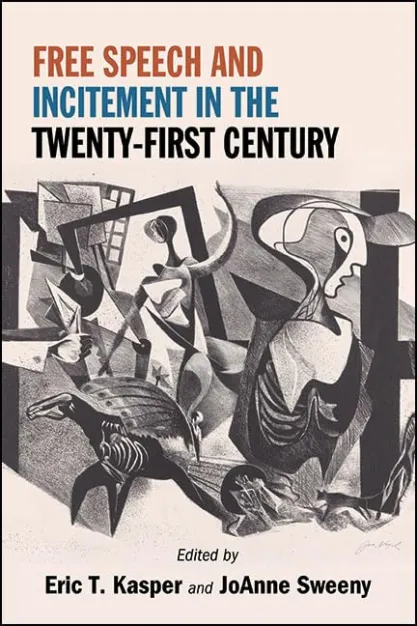
    Cover of the book "Free Speech and Incitement in the Twenty-First Century" by Eric Kasper and JoAnne Sweeny

    Free Speech and Incitement in the Twenty-First Century explores the line between free speech and incitement, which is a form of expression not protected by the First Amendment. Incitement occurs when a person intentionally provokes their audience to engage in illegal or violent action that is likely to, or will, occur imminently. 

    This doctrine evolved from World War I through the Cold War and the civil rights movement era, culminating in a test announced by the U.S. Supreme Court in Brandenburg v. Ohio (1969). Since the 1970s, this doctrine has remained largely unchanged by the Supreme Court and, as such, has received relatively little academic or media attention. 

    Since the late 2010s, however, violence at political rallies, armed protests around Confederate statues, social unrest associated with demonstrations against police, and an attack on the U.S. Capitol have led to new incitement cases in the lower courts and an opportunity to examine how incitement is defined and applied. Authors from different perspectives in Free Speech and Incitement in the Twenty-First Century help the reader understand the difference between free speech and incitement.

    ‘So to Speak’ podcast on Columbia University, DEI, and law firms

    We explore how censorship is impacting institutions — from universities to law firms to the Maine House of Representatives.


    More in the news

    2024-2025 SCOTUS term: Free expression and related cases

    Cases decided 

    • Villarreal v. Alaniz (Petition granted. Judgment vacated and case remanded for further consideration in light of Gonzalez v. Trevino, 602 U. S. ___ (2024) (per curiam))
    • Murphy v. Schmitt (“The petition for a writ of certiorari is granted. The judgment is vacated, and the case is remanded to the United States Court of Appeals for the Eighth Circuit for further consideration in light of Gonzalez v. Trevino, 602 U. S. ___ (2024) (per curiam).”)
    • TikTok Inc. and ByteDance Ltd v. Garland (The challenged provisions of the Protecting Americans from Foreign Adversary Controlled Applications Act do not violate petitioners’ First Amendment rights.)

    Review granted

    Pending petitions 

    Petitions denied

    Free speech related

    Thompson v. United States (Decided: 3-21-25/ 9-0 with special concurrences by Alito and Jackson) (Interpretation of 18 U. S. C. §1014 re “false statements”)

    Last scheduled FAN

    FAN 463: ‘We simply could not practice law . . . if we were still subject to the executive order’

    This article is part of First Amendment News, an editorially independent publication edited by Ronald K. L. Collins and hosted by FIRE as part of our mission to educate the public about First Amendment issues. The opinions expressed are those of the article’s author(s) and may not reflect the opinions of FIRE or Mr. Collins.

    Source link