Tag: system

  • Any possible tertiary future for England’s post-18 system must lean into college-based HE

    Any possible tertiary future for England’s post-18 system must lean into college-based HE

    The Lifelong Education Institute’s latest report – “Taking Higher Education Further” – shines a spotlight on the contribution of FE colleges to England’s higher education sector.

    In partnership with the Mixed Economy Group of colleges – a group representing the 43 colleges with a strategic interest in HE – we have explored the rationale for college-based higher education, analysed some of the barriers holding it back from expansion, and suggested ways in which policymakers could support its growth.

    The report could hardly come out at a more interesting time for FE/HE relationships. After a decade or more of relative stasis following the introduction of the £9,000 undergraduate student fee cap in England, the tectonic plates of post-18 education are shifting rapidly towards an as-yet-unknown end state. There are three key drivers behind this potential re-setting of the status quo between the college and university sectors.

    First is the dramatic shift in the financial situation of universities and colleges, with many higher education institutions now facing the sort of cost-cutting that further education colleges have endured for years and needing to come up with new, more efficient business models to sustain themselves financially. Following the consolidation of many smaller colleges into large groups, there are now several colleges with larger annual turnovers than smaller universities, and the balance of power between FE and HE is moving steadily away from the traditional template of senior/junior partnership.

    Second is the move towards universities having place-based strategies, with civic university agreements proliferating in all parts of the country. This has partly been driven by the rise in influential devolved authorities across England, and partly by the increase in take up of degree pathways in a range of public sector professions, such as nursing, policing, and social work, which are vital to local communities and tend to recruit from local populations.

    Rising cost of living pressures have also played their part, with commuting students becoming an increasingly important segment of the HE student market. The introduction of degree apprenticeships has also pulled many universities into much more active engagement with local employers and much more of a focus on local skills development. Colleges, which have always had fairly tight catchment areas, now find themselves working their patches alongside local universities, and in some cases, through the network of 21 Institutes of Technology, offering higher technical qualifications and high level short courses directly in partnership with HE institutions.

    Third, and most importantly, the arrival of a new government is rapidly moving the political paradigm away from competition towards collaboration. Education ministers have taken every opportunity since the general election to drive home the message that partnership, cooperation and coordination have now replaced markets, competition and institutional individualism as “the default way of working across all providers,” in the recent words of skills minister Jacqui Smith. We are promised a white paper this summer setting out a comprehensive strategy for post-16 education and skills, and at the same time a “radical” package of HE reforms which will also emphasise the role of HE in collaborating around local and national skills priorities.

    Is the future for England tertiary?

    HE/FE collaboration has tended to be relatively transactional and fluid in England, and there is no standard blueprint for forging partnerships. A small number of colleges can now claim to be tertiary institutions, having been granted degree awarding powers, although with the Office for Students having currently suspended the application process until August, it’s now far from certain how quickly this number will grow in future. There are four universities which by virtue of having absorbed a failing FE college have become tertiary – Derby, London South Bank, Greater Manchester (formerly Bolton University) and the University of West London. But this is the result of specific local circumstances, not national policy.

    Arguably, these institutions are a microcosm of exactly what the government is trying to achieve at a national level. Tertiary institutions are able to develop coherent progression pathways from basic to undergraduate level for students of all aptitudes, embracing both academic and technical education routes without competition between them. David Phoenix, vice chancellor of London South Bank University, has been an articulate advocate for this model, and his vision, as set out in his November 2023 report “Connecting the dots: the need for an effective skills system in England” has been highly influential in Labour-leaning circles.

    It’s possible the government will introduce much greater incentives for universities and colleges to consider merger, and even be prepared to act as “matchmaker” for reluctant or hesitant brides and grooms. It would certainly make it much easier to develop integrated apprenticeships, higher technical qualifications and Lifelong Learning Entitlement offers if there were more tertiary providers.

    The Taking Higher Education Further report is generally supportive of greater tertiary integration, but with several important reservations. To begin with, although most FE colleges are appreciative of the relationships they have with universities – mostly still based on validation agreements – there are many who are critical of the cost and in some cases one-sided nature of the partnership, with some having experienced the disruption caused by an HE institution deciding unilaterally to withdraw from the agreement. Another concern has been the proliferation of foundation years at many universities, which was seen as unwelcome competition for Level 3 students and met with dismay by many in the FE sector. This has abated considerably since the introduction of a much reduced fee cap for foundation years.

    While some institutes of technology have strengthened FE/HE relationships, others have struggled to bridge the gap between the two sectors. One aspect of that gap – the difference in pay and conditions between FE and HE lecturers – has proved particularly troublesome. But those institutes of technology which have been successful have demonstrated that joint working between FE and HE can be highly effective. Overall, despite the caveats, the FE leaders consulted as part of the research for the report were generally positive about the idea of working more closely with HE.

    In a political climate where economically relevant skills and wider access to job-related skills are now central to the government agenda, college-based higher education has both issues at its heart. The HE students who study in FE colleges are overwhelmingly, adult, very local and from disadvantaged backgrounds. The courses they take are typically directly related to opportunities in the local labour market and focused on career progression. Whereas the student loan system has tended to incentivise HE institutions to prioritise three year degree courses, FE colleges offer a much more incremental approach, with multiple entry and exit points and a high proportion of part-time and modular options. This could be a significant advantage as colleges prepare for the implementation of the Lifelong Learning Entitlement in 2026–27.

    In summary, the report is a plea for government to give more support to the expansion of HE in FE, but is not in any way antagonistic towards the HE sector. The aim is to strengthen the relationship between colleges and universities, not to weaken it. As the foreword says, “Working together, colleges and universities can open up accessible opportunities and make a real difference to people’s lives.” In this, FE and HE share a common purpose.

    Source link

  • UC System Freezes Hiring, Bans Diversity Statement Mandates

    UC System Freezes Hiring, Bans Diversity Statement Mandates

    The University of California System’s president announced a systemwide hiring freeze and other “cost-saving measures, such as delaying maintenance and reducing business travel where possible.”

    “Because every UC location is different, these plans will vary,” president Michael V. Drake said in a Wednesday letter to the campuses of one of the country’s largest higher education systems. He said “every action that impacts our University and our workforce will only be taken after serious and deliberative consideration.”

    Drake pointed to a “substantial cut” to the system in the California state budget atop the Trump administration’s disruptive national reduction in support for postsecondary education. He said the administration’s executive orders and proposed policies “threaten funding for lifesaving research, patient care and education support.”

    “The Chancellors and I are preparing for significant financial challenges ahead,” Drake wrote.

    Whenever hiring does resume, UC universities and their components will no longer be able to require that applicants submit diversity statements. Janet Reilly, chair of the UC Board of Regents, said in a separate statement Wednesday that the board directed the system to eliminate such mandates.

    “While the University has no systemwide policies requiring the submission of diversity statements as part of employment applications, some programs and departments have used this practice,” Reilly said.

    Paulette Granberry Russell, president and chief executive officer of the National Association of Diversity Officers in Higher Education, told Inside Higher Ed that, “while I think diversity statements added value on the front end of a search,” it’s far more important to have a structured approach to faculty hiring. She said this approach should eliminate biases and consideration of “non–job-related criteria,” such as accents or lack of eye contact, from the process.

    Diversity statements, she said, are “not the defining factor in whether or not somebody’s going to be successful” if they earn the position.

    Source link

  • Trump’s attack on law firms threatens the foundations of our justice system

    Trump’s attack on law firms threatens the foundations of our justice system

    Atticus Finch is remembered as one of literature’s greatest heroes for his willingness to defend an unpopular client despite great professional and personal cost. I was reminded of Atticus when the Trump administration recently retaliated against attorneys explicitly because they represented clients and causes the president dislikes.

    On March 6, President Trump issued an executive order targeting a law firm, Perkins Coie, for activities that are protected by the First Amendment. The order cites the firm for “representing failed Presidential candidate Hillary Clinton” and commissioning opposition research into the Trump campaign. Trump also critiqued Perkins Coie for bringing a lawsuit to challenge election laws Trump supports, “including those requiring voter identification.”

    This order came after the president revoked the security clearances of attorneys at another firm for representing a client the president dislikes: former Department of Justice Special Counsel Jack Smith, who had led the government’s investigations into Trump’s role on January 6 and his handling of classified documents.

    In yet another order, Trump also singled out attorneys at a third firm, Paul Weiss, for bringing a lawsuit against individuals who protested at the Capitol on January 6, and for hiring an attorney who had investigated Trump while in government service. Trump’s orders against Perkins Coie and Paul Weiss not only barred federal agencies from engaging the firms’ services but also suspended the security clearances of its attorneys and restricted their access to federal buildings. These sanctions cripple the attorneys’ ability to represent clients in disputes with the federal government. The administration points to no evidence that these firms are a genuine security risk, and expressly targets these firms for their client selection and speech. 

    This is deeply troubling regardless of where one stands on the activities or firms affected. The process of defending constitutional rights relies heavily on the ability of private attorneys to bring lawsuits against the government. This requires lawyers to be free from official government pressure when choosing which clients and causes to represent. If lawyers are put in fear of federal government retaliation for representing clients who challenge the government or stand for unpopular causes, many injustices will never be challenged. 

    The administration’s actions represent a direct assault on this freedom. Punishing firms for their choice of clients or the nature of their legal work cannot help but intimidate the legal community, discouraging attorneys from taking on cases that may be politically unpopular or present a challenge to those in power. 

    History is repeating itself with Trump’s latest efforts. What is at stake here is nothing less than the legal profession’s capacity to fulfill its role in a democratic society.

    It also sets an ominous precedent for future presidents to exploit. If the Trump administration can target specific firms on this basis, what prevents future administrations from blacklisting firms that represent, say, gun-rights groups? This concern is hardly theoretical: just last year, the Supreme Court had to slap down a New York state official for trying to punish a third party for doing business with the NRA. Could religious organizations be next? Or animal-rights activists? Could the next Democratic president ban from federal buildings any attorneys that represented Republican candidates? What is the limiting principle?

    Furthermore, how can a lawyer who is considering representing a politically controversial client know that she will not be targeted the next time control of the White House changes hands? The safest course of action will be to avoid representing clients of any political salience, right or left, even if their cause is just. 

    Even before Trump’s latest actions on this front, a number of law firms have already shown their willingness to run from controversial causes, such as when Kirkland & Ellis withdrew from its representation of the NRA because the NRA advocates for gun rights. Supreme Court litigator Paul Clement, one of the firm’s most famous attorneys, had to leave the firm entirely simply so he could continue to represent his gun-related clients. Clement could afford to do this precisely because he was so well-known. But if the government can punish an entire law firm over the nature of the work of one of its attorneys, less influential attorneys will face enormous pressure from colleagues to avoid taking controversial cases and clients.

    These actions also directly violate the First Amendment. They explicitly target these firms for the clients they have represented and the legal positions they have taken on election law matters. The Supreme Court has recognized the First Amendment right of lawyers “to associate for the purpose of assisting persons who seek legal redress for infringements of their constitutionally guaranteed and other rights.” By officially punishing lawyers on the basis of these associations, the executive order therefore is unconstitutional viewpoint-based retaliation and violates the right of freedom of association. For this reason, a federal judge this week issued a temporary restraining order blocking the order against Perkins Coie.

    There is a long, troubling history of trying to silence advocacy through fear and intimidation of the advocates. Attorneys who fought for abolition and civil rights were frequently harassed, or even subjected to threats and violence such as when Thurgood Marshall barely escaped a lynch mob while arguing civil rights cases in the South before Brown v. Board of Education (1954). Many other civil rights attorneys, including those working for the NAACP, were investigated by the FBI, accused of communist sympathies, and faced professional blacklisting. More recently, government officials pressured the firms that represented Guantanamo Bay detainees in the 2000s to drop the cases.

    History is repeating itself with Trump’s latest efforts. What is at stake here is nothing less than the legal profession’s capacity to fulfill its role in a democratic society. As the judge in Perkins Coie’s lawsuit warned, the administration’s decision “threatens to significantly undermine our entire legal system and the ability of all people to access justice.”

    Public interest organizations like FIRE understand this principle well. Because we are committed to the nonpartisan defense of free speech, we are routinely accused of being “right-wing hacks” or “left-wing radicals,” often during the same week. But defending the rights of the unpopular is not about political allegiance — it’s about ensuring that fundamental freedoms apply to everyone. Civil rights groups must be able to defend speech and causes that challenge those in power, regardless of who holds office.

    Atticus Finch understood how crucial vigorous representation is. In his impassioned speech to the jury, he explained, “In this country our courts are great levelers, and in our courts all men are created equal.” If lawyers fear retaliation for simply doing their jobs, then the courts can no longer serve as the “great levelers” as unpopular or politically powerless individuals and causes are unable to get their day in court. We’re all better off when even “bad people” can get a good lawyer — whoever those in power have deemed “bad people” today.

    Source link

  • Funding Freeze on University of Maine System Lifted

    Funding Freeze on University of Maine System Lifted

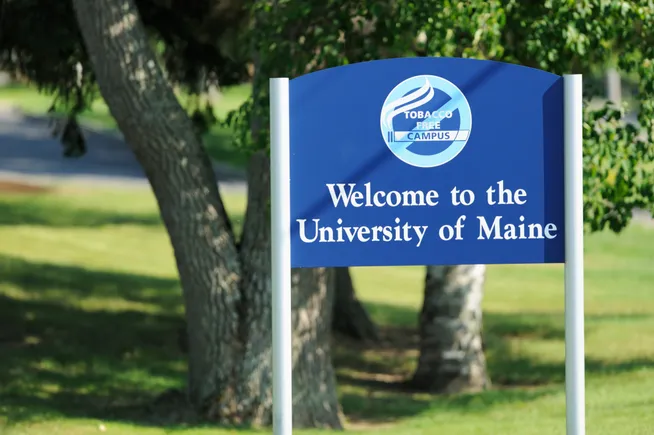
    Senator Susan Collins of Maine said the pause on federal agriculture funding for her state’s public colleges and universities has been lifted, WMTW reported Wednesday.

    The Department of Agriculture froze all spending Tuesday as part of an investigation into the institutions’ compliance with Title IX, the federal law that prohibits sex-based discrimination in schools. USDA launched the investigation shortly after a heated exchange between Maine’s Democratic governor and President Trump in late February.

    The state’s flagship institution, the University of Maine, requested clarification Wednesday on the status of USDA’s Title IX compliance review and the extent of the pause. Collins also consulted the Trump administration about the freeze. Relief followed quickly after.

    “This USDA funding is critically important not only to the University of Maine but to our farmers and loggers,” Collins said in a statement. “Now that funding has been restored, the work that the university does in partnership with the many people and communities who depend on these programs can continue.”

    The system has nearly $63 million in active grants from the Agriculture Department and is expecting $35 million to be paid out for ongoing statewide education, research and extension activities, a system spokesperson told Inside Higher Ed.

    “Since our flagship’s founding as Maine’s land grant 160 years ago, funding from USDA has enabled us to strengthen and grow the state’s natural resource economy, sustain rural jobs and communities, and support hands-on 4-H youth development opportunities,” system chancellor Dannel Malloy and University of Maine president Joan Ferrini-Mundy said in a joint statement. “The University of Maine System was thrilled to learn from Senator Collins that the USDA has agreed to lift its plan to temporarily pause our federal funding, which has been an unnecessary distraction from our essential education, research and extension activities that benefit Maine and well beyond.”

    Source link

  • USDA restores funding to University of Maine System

    USDA restores funding to University of Maine System

    In a quick reversal, the U.S. Department of Agriculture has restored funding to the University of Maine System after pausing it on Monday

    On Wednesday evening, U.S. Sen. Susan Collins, a Maine Republican, announced that USDA funding for UMS programs had resumed after she had consulted with the Trump administration. 

    “This USDA funding is critically important not only to the University of Maine, but to our farmers and loggers, as well as to the many people who work in Maine’s agriculture, aquaculture, and forestry industries,” Collins said in a statement.  

    UMS leaders learned of the funding restoration from Collins. System Chancellor Dannel Malloy and University of Maine President Joan Ferrini-Mundy said in a joint statement late Wednesday that the shutoff was an “unnecessary distraction from our essential education, research and extension activities.”

    Altogether, UMS has $63 million in active USDA grants — most of which goes to the flagship University of Maine campus in Orono, the system said. Of that, about $35 million is left to be paid out. The funding helps finance a wide array of programs, including agricultural research, the youth agricultural engagement program 4-H, and plant and tick disease testing. 

    The funding freeze came weeks after a tense public exchange between President Donald Trump and Maine Gov. Janet Mills, a Democrat. Trump threatened Mills on Feb. 21 with pulling all federal funding to the state if it did not comply with his executive order barring transgender women from K-12 and college sports teams aligning with their gender identity. 

    The day after the exchange, USDA announced a compliance review of the University of Maine under Title IX, which bars sex-based discrimination at federally funded education institutions. Meanwhile, the U.S. Department of Health and Human Services also announced a civil rights investigation into the state on Feb. 21, finding just four days later that its education department had violated Title IX. 

    UMS said it heard nothing from USDA between Feb. 26 and March 10, when the system learned via a forwarded email that USDA had temporarily cut off all funding. 

    UMS maintains that it is “fully compliant” with all state and federal laws as well as with updated NCAA rules. The college sports association changed its rules to adhere to Trump’s executive order the day after it was signed. 

    “At no point since USDA announced its Title IX compliance review on Feb. 22 has that Department, or any other party, alleged any violation by Maine’s public universities of Title IX or any other federal or state law,” UMS said in a release Wednesday.

    Source link

  • Will the use of generative AI shift higher education from a knowledge-first system to a skills-first system?

    Will the use of generative AI shift higher education from a knowledge-first system to a skills-first system?

    On the eve of the release of HEPI’s Student Generative AI Survey 2025, HEPI hosted a roundtable dinner with the report’s sponsor, Kortext, and invited guests to discuss the following essay question:

    How will AI change the university experience for the next generation?

    This was the third roundtable discussion we have hosted with Kortext on AI, over three years. Observing the debate mature from a cautious, risk-averse response to this forward-looking, employability-focused discussion has been fascinating. We spent much of the evening discussing a potential pivot for teaching and learning in the sector.

    The higher education sector places the highest importance on creating, collecting, and applying knowledge. ‘Traditional’ assessments have focused on the recollection of knowledge (exams) or the organisation and communication of knowledge (in essays). The advent of search engines has made acquiring knowledge more accessible, while generative AI has automated the communication of knowledge.

    If knowledge is easily accessible, explainable, and digestible, which skills should our graduates possess that cannot be replaced by ChatGPT, now or in the future? It was suggested that these are distinctly ‘human’ skills: relationship building, in-person communication, and leadership. Are we explicitly teaching these skills within the curriculum? Are we assessing them? Are we rebalancing our taught programmes from knowledge to irreplaceable skills to stay ahead of the AI curve?

    And to get a bit meta about it all, what AI skills are we teaching? Not just the practical skills of application of AI use in one’s field, but deep AI literacy. Recognising bias, verifying accuracy, understanding intellectual property rights and embracing digital ambition. (Professor Sarah Jones of Southampton Solent University has written about this here.)

    Given recent geopolitical events, critical thinking was also emphasized. When and why can something be considered the ‘truth’? What is ‘truth’, and why is it important?

    Colleagues were clear that developing students’ knowledge and understanding should still be a key part of the higher education process (after all, you can’t apply knowledge if you don’t have a basic level of it). In addition, they suggested that we need to be clearer with students about the experiential benefits of learning. As one colleague stated,

    ‘The value of the essay is not the words you have put on the page, it is the processes you go through in getting the words to the page. How do you select your information? How do you structure your argument more clearly? How do you choose the right words to convince your reader of your point?’

    There was further discussion about the importance of experiential learning, even within traditional frameworks. Do we clearly explain to students the benefits of learning experiences – such as essay writing – and how this will develop their personal and employability skills? One of the participants mentioned that they were bribing their son not to complete his Maths homework by using ChatGPT. As students increasingly find their time constrained due to paid work and caring responsibilities, how can we convince students of the value of fully engaging with their learning experiences and assessments when ChatGPT is such an attractive option? How explicitly are we talking to students about their skills development?

    There was a sense of urgency to the discussion. One colleague described this as a critical juncture, a ‘one-time opportunity’ to make bold choices about developing our programmes to be future-focused. This will ensure graduates leave higher education with the skills expected and needed by their employers, which will outlast the rapidly evolving world of generative AI and ensure the sector remains relevant in a world of bite-sized, video-based learning and increasing automation.

    Kortext is a HEPI partner.

    Founded in 2013, Kortext is the UK’s leading student experience and engagement expert, pioneering digitally enhanced teaching and learning in the higher education community. Kortext supports institutions in boosting student engagement and driving outcomes with our AI-powered, cutting-edge content discovery and study products, market-leading learner analytics, and streamlined workflows for higher education. For more information, please visit: kortext.com

    Source link

  • This week in 5 numbers: Why the UT System offers microcredentials for free

    This week in 5 numbers: Why the UT System offers microcredentials for free

    How many higher education institutions are overseen by Florida’s university and college systems. This week, Florida Gov. Ron DeSantis launched the state’s own version of the Elon Musk-led Department of Government Efficiency and directed it to work with education officials to cut “unnecessary spending, programs, courses, staff, and any other inefficiencies.”

    Source link

  • 10 Benefits of an Online Admissions and Enrollment System

    10 Benefits of an Online Admissions and Enrollment System

    Reading Time: 8 minutes

    As a school administrator or marketer, you’re likely already familiar with the challenges of traditional admissions processes: manual paperwork, miscommunication, long timelines, and a lack of transparency. 

    Implementing an online enrollment system can revolutionize your institution’s operations. It can help you create a seamless experience for prospective students while significantly easing administrative burdens.

    At Higher Education Marketing, we’ve spent years partnering with institutions to understand their unique needs. Our Student Portal is designed specifically for education providers like you, offering an all-in-one solution to streamline admissions and enhance the student journey. 

    Let’s explore ten benefits of adopting an online admissions and enrollment system and how HEM’s Student Portal can help you transform your processes. You’ll see how much value you can add to your student experience and how a sophisticated CRM can boost enrollment.

    Simplify student management and boost recruitment efficiency!

    Transform your student portal experience. Get a FREE HEM-SP demo today.

    Understanding Online Enrollment Systems

    What does an enrollment system do? An online admissions and enrollment system is a digital platform that streamlines student recruitment, application management, and enrollment. By moving these processes online, institutions can eliminate manual paperwork, reduce processing times, and improve the overall experience for students and staff. 

    These systems typically include customizable application forms, real-time tracking, automated communication tools, and integration with other institutional systems like CRMs and financial platforms. Now, let’s get to the good part–the many benefits of enrollment system tools. 

    Want to know what our Student Portal System can do for your school? Let’s connect

    A Brief Overview of the Enrollment Process

    To maximize the benefits of an online admissions and enrollment system, it’s important to understand the enrollment funnel. What is the process for enrollment? It’s a framework that outlines the four key stages prospective students go through when deciding to enroll at your institution. These include awareness, interest, decision, and action. 

    Awareness is the first stage, where students become familiar with your school through marketing efforts, social media, or word-of-mouth. During this phase, you aim to make a positive impression and highlight what sets your institution apart.

    Interest follows as students actively seek more information about your programs and offerings. At this stage, providing detailed program descriptions, virtual tours, and engaging content becomes crucial to capturing their attention.

    Decision is the third stage, where students weigh their options and determine if your institution aligns with their goals. Clear application processes, transparent cost estimates, and personalized communication can help sway their decision.

    Action is the final stage, where students commit by completing their application and enrollment. An intuitive and efficient online system, like HEM’s Student Portal, ensures this final step is seamless and stress-free, setting the tone for a positive student experience.

    HEM 1HEM 1

    Source: HEM

    1. Simplifying the Application Process

    An online admissions system allows you to simplify and accelerate the application process, providing a smoother experience for prospective students. Instead of requiring students to navigate complex paper forms or disjointed systems, you can offer them a centralized, user-friendly portal where they can complete their applications step-by-step.

    HEM’s Student Portal includes a customizable WYSIWYG (what you see is what you get) form builder, allowing you to tailor applications to your institution’s specific requirements. With options for e-signatures, document uploads, and guided prompts, your students can complete their applications quickly and confidently.

    For administrators, this streamlined process means less time spent tracking incomplete applications and more time focusing on strategic initiatives. You can view, manage, and update application statuses in real time, ensuring nothing slips through the cracks.

    Example: The key benefit of online enrollment systems regarding the student journey is convenience. Here, American Public University is the perfect example.

    HEM 2HEM 2

    At the click of a button, students can begin their applications.

    HEM 3HEM 3

    They are immediately led to a simple, free application form where they’ll provide vital information needed for the American Public University to determine whether admission into their program will be granted and allow them to track their journey. 

    Source: American Public University 

    2. Enhancing Recruitment Efforts

    With an online system, you can improve how you engage with prospective students from the beginning of their journey. HEM’s Student Portal integrates powerful marketing automation tools, allowing you to nurture leads with personalized communications at every stage of the admissions funnel. You can keep prospective students engaged and informed by sending timely emails, reminders, and updates, increasing their likelihood of completing enrollment.

    Furthermore, the system’s data insights enable you to identify trends in student inquiries, monitor which marketing campaigns are most effective, and adjust your strategies accordingly. This data-driven approach ensures your recruitment efforts are consistently targeted and impactful.

    Example: Once a prospect has filled out a contact form or inquired about a program, they should receive a personalized follow-up message that provides program details and prompts them to follow the next steps.

    Here, the Academy of Learning sends an automated email about its Accelerated PSW Program to a prospect who recently expressed interest. Our Student Portal integrates email and messaging services to facilitate and automate communication with prospects, a key part of the recruitment process.

    HEM 4HEM 4

    Source: Academy of Learning | Gmail

    3. Reducing Administrative Burden

    One of the most immediate benefits of implementing an online admissions and enrollment system is the reduction in administrative workload. Manual processes can be time-consuming and prone to errors, but with an online platform like HEM’s Student Portal, you can centralize all tasks in one intuitive interface. From managing inquiries to processing payments, every step is organized and automated.

    Staff members across departments can collaborate more effectively, ensuring seamless communication and reducing duplication of efforts. The result? A more efficient admissions team with more time to focus on higher-value tasks, such as building relationships with students and refining institutional strategies.

    4. Offering Real-Time Insights

    Making informed decisions is essential in a competitive education landscape, and real-time insights from your admissions system can give you a critical advantage. HEM’s Student Portal provides robust reporting and tracking tools, giving visibility into key metrics such as completed applications, outstanding payments, and enrollment trends.

    Imagine identifying bottlenecks in your process as they happen, enabling you to resolve issues before they escalate. With this level of visibility, you can forecast enrollment numbers more accurately, allocate resources efficiently, and continuously optimize your processes.

    Example: The Student Portal allows you to create comprehensive, updated CRM reports to track enrollment data. Find out what kind of requests are being made, what desired action has been taken, and what’s next.

    HEM 5HEM 5

    Source: HEM

    5. Improving Communication and Transparency

    A common frustration for both students and staff in traditional admissions processes is a lack of clarity. With an online system, communication becomes seamless and transparent. Students can log into their portal anytime to check their application status, access important updates, and even chat with a virtual admissions assistant for guidance.

    HEM’s Student Portal goes a step further with its integrated communication tools. From automated notifications to direct messaging capabilities, the platform ensures that every student feels supported and informed throughout their journey. This transparency fosters trust and builds a stronger connection between students and your institution.

    6. Enhancing the Student Experience

    Your admissions process is often the first interaction prospective students have with your institution, making it crucial to leave a positive impression. An online admissions and enrollment system demonstrates that your school values convenience, efficiency, and modern technology, which resonate with today’s tech-savvy students.

    HEM’s Student Portal includes features like virtual admissions assistance and a quote builder, which allows students to estimate program costs upfront. These tools empower students with the information they need to make confident decisions, enhancing their overall experience and reinforcing their trust in your institution.

    Example: The Student Portal prioritizes a seamless experience for students, guiding them from step to step, making it easy to share important files, and providing a full picture of their enrollment journey.

    HEM 6HEM 6

    Source: HEM

    7. Facilitating Financial Planning

    Financial concerns are one of the most significant barriers prospective students face when considering enrollment. You can address these concerns head-on by incorporating tools like HEM’s quote builder and seamless payment gateway integration. The quote builder provides students and their families with transparent cost estimates for tuition and fees, enabling them to plan their finances effectively.

    The payment gateway integration simplifies the payment process, allowing students to make secure transactions directly through the portal. You can also track real-time payment statuses, ensuring that financial records are always current.

    Example: Accademia Italiana Salerno utilizes our Student Portal’s Quote Builder feature, which provides students with a close estimate of their school expenses. Your students will appreciate being able to plan when making a significant investment in their education.

    HEM 7HEM 7

    Source: HEM

    8. Supporting Institutional Flexibility

    Every institution is unique, with its own set of requirements and processes. That’s why customization is essential in any online admissions system. HEM’s Student Portal offers a flexible framework that adapts to your needs, whether you’re managing applications for a university, language school, or K-12 provider.

    You can customize application forms, workflows, and communications to align with your institutional goals. This flexibility ensures that the system serves as a seamless extension of your team rather than a one-size-fits-all solution.

    9. Boosting Efficiency with Integrated Tools

    Efficiency is at the heart of any successful admissions process; integrated tools can make a significant difference. HEM’s Student Portal combines essential functionalities like CRM systems, marketing automation, and data analytics into one centralized platform. This integration eliminates the need for multiple disconnected systems, streamlining your operations and improving collaboration across departments.

    For example, marketing teams can use the portal to track campaign effectiveness, admissions staff can manage inquiries and applications, and financial teams can monitor payments—all within the same system. This level of integration enhances productivity and ensures that every team member has access to the information they need.

    10. Preparing for the Future

    As the education sector evolves, embracing technology is no longer optional but essential! Implementing an online admissions and enrollment system positions your institution as a forward-thinking leader ready to adapt to changing student expectations and market demands.

    HEM’s Student Portal is built with the future in mind, incorporating scalable features that grow with your institution. Whether you want to expand your programs, attract international students, or enhance your digital presence, the portal provides the tools you need to succeed.

    Why Choose HEM’s Student Portal?

    At Higher Education Marketing, we consider ourselves your partners in success. Benefit from the advantages of enrollment system technology, from simplifying application management to enhancing communication and providing real-time insights. Our platform empowers you to transform your admissions process. Request a demo today and discover how HEM’s Student Portal can help you achieve your institutional goals while creating a superior experience for students and staff.

    Simplify student management and boost recruitment efficiency!

    Transform your student portal experience. Get a FREE HEM-SP demo today.

    Frequently Asked Questions

    What does an enrollment system do?

    An online admissions and enrollment system is a digital platform that streamlines student recruitment, application management, and enrollment.

    What is the process for enrollment?

    It’s a framework that outlines the four key stages prospective students go through when deciding to enroll at your institution. These include awareness, interest, decision, and action.

    Source link

  • A virtual reality, AI-boosted system helps students with autism improve social skills

    A virtual reality, AI-boosted system helps students with autism improve social skills

    Key points:

    This article and the accompanying image originally appeared on the KU News site and are reposted here with permission.

    For more than a decade, University of Kansas researchers have been developing a virtual reality system to help students with disabilities, especially those with autism spectrum disorder, to learn, practice and improve social skills they need in a typical school day. Now, the KU research team has secured funding to add artificial intelligence components to the system to give those students an extended reality, or XR, experience to sharpen social interactions in a more natural setting.

    The U.S. Office of Special Education Programs has awarded a five-year, $2.5 million grant to researchers within KU’s School of Education & Human Sciences to develop Increasing Knowledge and Natural Opportunities With Social Emotional Competence, or iKNOW. The system will build on previous work and provide students and teachers with an immersive, authentic experience blending extended reality and real-world elements of artificial intelligence.

    iKNOW will expand the capabilities of VOISS, Virtual reality Opportunity to Integrate Social Skills, a KU-developed VR system that has proven successful and statistically valid in helping students with disabilities improve social skills. That system contains 140 unique learning scenarios meant to teach knowledge and understanding of 183 social skills in virtual school environments such as a classroom, hallway, cafeteria or bus that students and teachers can use via multiple platforms such as iPad, Chromebooks or Oculus VR headsets. The system also helps students use social skills such as receptive or expressive communication across multiple environments, not simply in the isolation of a classroom.

    IKNOW will combine the VR aspects of VOISS with AI features such as large language models to enhance the systems’ capabilities and allow more natural interactions than listening to prerecorded narratives and responding by pushing buttons. The new system will allow user-initiated speaking responses that can accurately transcribe spoken language in real-time. AI technology of iKNOW will also be able to generate appropriate video responses to avatars students interact with, audio analysis of user responses, integration of in-time images and graphics with instruction to boost students’ contextual understanding.

    “Avatars in iKNOW can have certain reactions and behaviors based on what we want them to do. They can model the practices we want students to see,” said Amber Rowland, assistant research professor in the Center for Research on Learning, part of KU’s Life Span Institute and one of the grant’s co principal investigators. “The system will harness AI to make sure students have more natural interactions and put them in the role of the ‘human in the loop’ by allowing them to speak, and it will respond like a normal conversation.”

    The spoken responses will not only be more natural and relatable to everyday situations, but the contextual understanding cues will help students better know why a certain response is preferred. Rowland said when students were presented with multiple choices in previous versions, they often would know which answer was correct but indicated that’s not how they would have responded in real life.

    IKNOW will also provide a real-time student progress monitoring system, telling them, educators and families how long students spoke, how frequently they spoke, number of keywords used, where students may have struggled in the system and other data to help enhance understanding.

    All avatar voices that iKNOW users encounter are provided by real middle school students, educators and administrators. This helps enhance the natural environment of the system without the shortcomings of students practicing social skills with classmates in supervised sessions. For example, users do not have to worry what the people they are practicing with are thinking about them while they are learning. They can practice the social skills that they need until they are comfortable moving from the XR environment to real life.

    “It will leverage our ability to take something off of teachers’ plates and provide tools for students to learn these skills in multiple environments. Right now, the closest we can come to that is training peers. But that puts students with disabilities in a different box by saying, ‘You don’t know how to do this,’” said Maggie Mosher, assistant research professor in KU’s Achievement & Assessment Institute, a co-principal investigator for the grant.

    Mosher, a KU graduate who completed her doctoral dissertation comparing VOISS to other social skills interventions, found the system was statistically significant and valid in improving social skills and knowledge across multiple domains. Her study, which also found the system to be acceptable, appropriate and feasible, was published in high-impact journals Computers & Education and Issues and Trends in Learning Technologies.

    The grant supporting iKNOW is one of four OSEP Innovation and Development grants intended to spur innovation in educational technology. The research team, including principal investigator Sean Smith, professor of special education; Amber Rowland, associate research professor in the Center for Research on Learning and the Achievement & Assessment Institute; Maggie Mosher, assistant research professor in AAI; and Bruce Frey, professor in educational psychology, will present their work on the project at the annual I/ITSEC conference, the world’s largest modeling, simulation and training event. It is sponsored by the National Training & Simulation Association, which promotes international and interdisciplinary cooperation within the fields of modeling and simulation, training, education and analysis and is affiliated with the National Defense Industrial Association.

    The research team has implemented VOISS, available on the Apple Store and Google Play, at schools across the country. Anyone interested in learning more can find information, demonstrations and videos at the iKNOW site and can contact developers to use the system at the site’s “work with us” page.

    IKNOW will add resources for teachers and families who want to implement the system at a website called iKNOW TOOLS (Teaching Occasions and Opportunities for Learning Supports) to support generalization of social skills across real-world settings.

    “By combining our research-based social emotional virtual reality work (VOISS) with the increasing power and flexibility of AI, iKNOW will further personalize the learning experience for individuals with disabilities along with the struggling classmates,” Smith said. “Our hope and expectation is that iKNOW will further engage students to develop the essential social emotional skills to then apply in the real world to improve their overall learning outcomes.”

    Latest posts by eSchool Media Contributors (see all)

    Source link

  • WEEKEND READING: Why Scotland’s student funding system is “unfair, unsustainable, unaffordable” and needs to be replaced with a graduate contribution model

    WEEKEND READING: Why Scotland’s student funding system is “unfair, unsustainable, unaffordable” and needs to be replaced with a graduate contribution model

    • These are the remarks by Alison Payne, Research Director at Reform Scotland, at the HEPI / CDBU event on funding higher education, held at Birkbeck, University of London, on Thursday of this week.
    • We are also making available Johnny Rich’s slides on ‘Making graduate employer contributions work’ from the same event, which are available to download here.

    Thanks to the CDBU and to HEPI for the invitation to attend and take part in today’s discussion. 

    My speech today has been titled ‘A graduate contribution model’. Of course, for UK graduates not from Scotland, I’m sure they would make the point that they very much do contribute through their fees, but the situation is very different in Scotland and I’m really grateful that I have the opportunity to feed the Scottish situation into today’s discussion.

    I thought it may be helpful if I gave a quick overview of the Scottish situation, as it differs somewhat to the overview Nick gave this morning covering the rest of the UK. 

    Although tuition fees were introduced throughout the UK in 1998, the advent of devolution in 1999 and the passing of responsibility for higher education to Holyrood began the period of diverging funding policies.

    The then Labour / Lib Dem Scottish Executive, as it was then known, scrapped tuition fees and replaced them with a graduate endowment from 2001-02, with the first students becoming liable to pay the fee from April 2005. The scheme called for students to pay back £2,000 once they started earning over £10,000. 

    The graduate endowment was then scrapped by the SNP in February 2008. A quirk of EU law meant that students from EU countries could not be charged tuition fees if Scottish students were not paying them but students from England, Wales and Northern Ireland could be charged. This meant that from 2008 to 2021/22 EU students did not need to pay fees to attend Scottish universities, though students from the rest of the UK did. 

    We’re used to politics in Scotland being highly polarised and often toxic with few areas of commonality, but for the most part the policy of ‘free’ higher education has been supported by all of the political parties. Indeed at the last Scottish election in 2021 all parties committed to maintaining the policy in their manifestos. It is only recently that the Scottish Tories have suggested a move away from this following the election of their new leader, Russell Finlay.

    But behind this unusual political consensus, the ‘free’ policy is becoming increasingly unsustainable and unaffordable. Politicians will privately admit this, but politics, and a rock with an ill-advised slogan, have made it harder to have the much needed debate.

    The Cap

    While we don’t have tuition fees, we do have a cap on student numbers. And while more Scots are going to university, places are unable to keep up with demand. Since 2006 there has been a 56% increase in applicants, but an 84% increase in the number refused entry. 

    It is increasingly the case that students from the rest of the UK or overseas are accepted on to courses in Scotland while their Scottish counterparts are denied. For example, when clearing options are posted, often those places at Scotland’s top universities are only available to students from the rest of the UK and not to Scottish students, even if the latter have better grades. As a result, Scots can feel that they are denied access to education on their doorstep that those from elsewhere can obtain. Indeed, there are growing anecdotes about those who can afford it buying or renting property elsewhere in the UK so that they can attend a Scottish university, pay the higher fee and get around the cap.

    Basically, more people want to go to university, but the fiscal arrangements are holding ambition them back. This problem was highlighted by the Scottish Affairs Select Committee’s report on Universities from 2021.

    Some commentators in Scotland have blamed the lack of places on widening access programmes, but I would challenge this. It is undoubtedly a good thing that more people from non-traditional backgrounds are getting into university, it is the cap that is limiting Scottish places, not access programmes. This is a point that has been backed by individuals such as the Principal of St Andrews, Professor Dame Sally Mapstone [who also serves as HEPI’s Chair].

    Financial Woes

    The higher education sector in Scotland, as with elsewhere in the UK, is not in great financial health. Audit Scotland warned back in 2019 that half of our institutions were facing growing deficits. Pressures including pensions contributions, Brexit and estate maintenance have all played a role and in the face of this decline, but nothing has changed and we’re now seeing crisis like those at Dundee emerge. Against this backdrop, income from those students who pay higher fees is an important revenue stream.

    There is obviously a huge variation in what the fees are to attend a Scottish university, considerably more so than in the rest of the UK.

    For example, to study Accounting and Business as an undergraduate at Edinburgh University, the cost for a full-time new student for 2024/25 is £1,820 per year for a Scottish-domiciled student (met by the Scottish Government), £9,250 per year for someone from the rest of the UK and £26,500 for an international student. 

    It is clear why international students and UK students from outside Scotland are therefore so much more attractive than Scottish students.

    However, there is by no means an equal distribution of higher fee paying students among our institutions.

    For example, at St Andrews about one-third of undergraduate full-time students were Scots, with one-third from the rest of the UK and one-third international. The numbers for Edinburgh are similar.  

    At the other end of the scale, at the University of the Highlands and Islands and Glasgow Caledonian, around 90% of students are Scottish, with only around only 1% being international.  

    So it is clear that institutions’ ability to raise money from fee-paying students varies very dramatically, increasing the financial pressures on those with low fee income.

    However, when looking at the issue, it is important to recognise that it is not just our universities who are struggling, Scotland’s colleges are facing huge financial pressures as well. 

    The current proposed Scottish budget would leave colleges struggling with a persistent, real-terms funding cut of 17 per cent since 2021/22. Our college sector is hugely important in terms of the delivery of skills, working with local economies and as a route to university for so many, but for too long colleges have been treated like the Cinderella service in Scotland. The prioritising of ‘free’ university tuition over the college sector is adding to this problem.

    Regardless of who wins the Holyrood election next year, money is, and will remain, tight for some time. It would be lovely to be able to have lots of taxpayer funded ‘free’ services, but that is simply unsustainable and difficult choices need to be made. 

    This is why we believe that the current situation is unfair, unsustainable, unaffordable and needs to change.

    Reform Scotland would offer another alternative solution. We believe that there needs to be a better balance between the individual graduate and Scottish taxpayers in the contribution towards higher education. 

    One way this could be achieved is through a fee after graduation, to be repaid once they earn more than the Scottish average salary. This would not be a fee incurred on starting university and deferred until after graduation, rather the fee would be incurred on graduation.

    In terms of what that fee could be, the Cubie report over 25 years ago suggested a graduate fee of £3,000, which would be about £5,500 today.  This could perhaps be the starting point for consideration.  

    Any figure should take account of different variations in terms of the true cost of the course and potential skill shortages. 

    However, introducing a graduate fee would not necessarily mean an end to ‘free’ tuition. 

    Rather it provides an opportunity to look at the skills gaps that exist in Scotland and the possibility of developing schemes which cut off or scrap repayments for graduates who work in specific geographic areas or sectors of Scotland for set periods of time. 

    Such schemes could also look to incorporate students from elsewhere for Scotland is facing a demographic crisis. Our population is set to become older and smaller, and we are the only part of the UK projected to have a smaller population by 2045. 

    We desperately need to retain and attract more working-age people. Perhaps such graduate repayment waiver schemes could also be offered to students from the rest of the UK who choose to study in Scotland – stay here and work after graduation and we will pay a proportion of your fee. A wide range of different schemes could be considered and linked into the wider policy issues facing Scotland. 

    According to the Higher Education Statistics Authority (HESA) there were 3,370 graduates from the rest of the UK who attended a Scottish institution in 2020/21. Of those, only 990 chose to remain in Scotland for work after graduation. Could we encourage more people to stay after studying?

    Conclusion

    A graduate fee is only one possible solution, but I would argue that it is also one with a short shelf life. As graduates would not incur the fee until they graduated, there would be a four-year delay between the change in policy and revenue beginning to be received. Our institutions are facing very real fiscal problems and there is a danger of a university going to the wall. 

    If we get to the 2026 election and political parties refuse to shift the dial and at least recognise that the current system is unsustainable, then there is a danger that nothing will change for another Parliamentary term. I don’t think we can afford to wait until 2031.

    There is another interesting dynamic now as well. Labour in Scotland currently, publicly at least, oppose tuition fees. However, there are now 37 Scottish Labour MPs at Westminster who are backing the increase of fees on students from outside Scotland, or Scottish students studying down south. Given the unpopularity of the Labour government as well as the tight contest between the SNP and Labour for Holyrood, it seems unlikely that position can be maintained.

    All across the UK there are increasing signs of the stark financial situation we are facing. Against that backdrop, along with the restrictions placed on the number being able to attend, free university tuition is unsustainable and unaffordable. People outside Scottish politics seem to be able to see this reality, privately so do many of our politicians. We need to shift this debate in to the public domain in Scotland and develop a workable solution.

    Source link