Tag: Systemic

  • Political Violence, Systemic Oppression, and the Role of Higher Education

    Political Violence, Systemic Oppression, and the Role of Higher Education

    The ambush shooting of two National Guardsmen near the White House on November 27, 2025, by Rahmanullah Lakanwal, a 29-year-old Afghan national, is the latest in a growing wave of politically motivated violence that has engulfed the United States since 2024. Lakanwal opened fire on uniformed service members stationed for heightened security, wounding both. Federal authorities are investigating whether ideological motives drove the attack, which comes against a backdrop of escalating domestic and international tensions. This ambush cannot be understood in isolation. It is part of a larger pattern of domestic political violence that has claimed lives across ideological lines. 

    Conservative activist Charlie Kirk was assassinated at Utah Valley University during a campus event in September 2025. Minnesota state representative Mary Carlson and her husband were murdered in their home by a man impersonating law enforcement, while a state senator and spouse were injured in the same spree. Governor Josh Shapiro survived an arson attack on his residence earlier this year. Even Donald Trump was the target of an assassination attempt in July 2024. Added to this grim tally are incidents such as the 2025 Manhattan mass shooting, in which young professionals, including two Jewish women, Julia Hyman and Wesley LePatner, were killed, and the Luigi Mangione case, in which a former student allegedly killed a corporate executive in New York. Together, these incidents reveal a nation in which lethal violence increasingly intersects with politics, identity, and ideology.

    The domestic escalation of violence cannot be separated from broader structures of oppression. Migrants and asylum seekers face detention, family separation, and deportation under the authority of ICE, often in conditions described as inhumane, creating fear and vulnerability among refugee communities. Routine encounters with law enforcement disproportionately harm Black, Indigenous, Latinx, and other marginalized communities. Excessive force and lethal policing add to communal distrust, reinforcing perceptions that violence is a sanctioned tool of the state. Political rhetoric compounds the problem. President Trump and other political leaders have repeatedly framed immigrants, political opponents, and even students as threats to national security, implicitly legitimizing aggressive responses and providing fodder for extremist actors.

    The domestic situation is further complicated by U.S. foreign policy, which has often contributed to global instability while modeling the use of violence as an instrument of governance. In Palestine, military aid to Israel coincides with attacks on civilians and infrastructure that human-rights organizations describe as ethnic cleansing or genocide. In Venezuela, U.S. sanctions, threats, and proxy operations have intensified humanitarian crises and political instability. Complicity with the governments of the UAE, Saudi Arabia, and Russia enables human-rights abuses abroad while emboldening domestic actors who mimic state-sanctioned violence. These global policies reverberate at home, influencing public discourse, shaping extremist narratives, and creating a climate in which political and ideological violence is increasingly normalized.

    Higher education sits at the nexus of these domestic and global pressures. Universities and colleges are not merely observers; they are active participants and, in some cases, victims. The assassination of Charlie Kirk on a campus underscores that institutions of learning are no longer insulated from lethal political conflict. Alumni, recent graduates, and professionals—such as the victims of the Manhattan shooting—are affected even after leaving school, revealing how closely academic networks intersect with broader societal risks. International and refugee students, particularly from Afghan and Middle Eastern communities, face heightened anxiety due to restrictive immigration policies, anti-immigrant rhetoric, and the real threat of violence. Faculty teaching topics related to immigration, race, U.S. foreign policy, or genocide are increasingly targeted by harassment, threats, and institutional pressures that suppress academic freedom. The cumulative stress of political violence, systemic oppression, and global conflicts creates trauma that universities must address comprehensively, both for students and faculty.

    Higher education cannot prevent every act of violence, nor can it resolve the nation’s deep political fractures. But it can model ethical and civic engagement, defending inquiry and speech without succumbing to fear or political pressure. It can extend support to vulnerable communities, promote critical thinking about the domestic roots of political violence and the consequences of U.S. foreign policy, and foster ethical reflection that counters the normalization of aggression. Silence or passivity risks complicity. Universities must recognize that the threats affecting campuses, alumni, and students are interconnected with broader systems of power and oppression, both domestic and global.

    From the White House ambush to Charlie Kirk’s assassination, from the Minnesota legislators’ murders to the Manhattan mass shooting, from Luigi Mangione’s high-profile killing to systemic violence enforced through ICE and police overreach, and amid the influence of incendiary political rhetoric and U.S. complicity in violence abroad, the United States is experiencing an unprecedented convergence of domestic and international pressures. Higher education sits at the center of these converging forces, and how it responds will shape not only campus safety and academic freedom but also the broader civic health of the nation. The challenge is immense: to uphold democratic values, protect communities, and educate students in a society increasingly defined by fear, extremism, and violence.


    Sources

    Reuters. “FBI probes gunman’s motives in ambush shooting of Guardsmen near White House.” The Guardian. Coverage on suspect identification and political reaction. AP News. Statements by national leaders following attacks. Washington Post. Analysis of domestic violent extremism and political violence trends. People Magazine. Reporting on Minnesota legislator assassination. NBC/AP. Statements by Gov. Josh Shapiro after Charlie Kirk’s killing. Utah Valley University and local ABC/Fox affiliates on the Kirk shooting. Jewish Journal, ABC7NY. Coverage of Manhattan mass shooting and Jewish victims. Reuters. Luigi Mangione case and court proceedings. Human Rights Watch / Amnesty International reports on Palestine, Venezuela, UAE, Saudi Arabia, and Russia. Brookings Institute. Analysis of political violence and domestic extremism. CSIS. “Domestic Extremism and Political Violence in the United States.”


    Source link

  • How the manufactured narrative of ‘failure’ is distracting us from resolving the systemic problems holding back the study of Modern Languages – Part 2. 

    How the manufactured narrative of ‘failure’ is distracting us from resolving the systemic problems holding back the study of Modern Languages – Part 2. 

    This post was kindly written by Vincent Everett, who is head of languages in a comprehensive school and sixth form in Norfolk. He blogs as The Nice Man Who Teaches Languages

    In Part 1, I looked at how the low grades given at GCSE languages – up to a grade lower than in pupils’ other subjects – is a manufactured situation, easily solved at the stroke of a pen. The narrative around languages being harder is nothing to do with the content of the course or the difficulty of the exam. It is simply a historical anomaly of how the grades are allocated. There is also a false narrative that this unfair grading is due to pupils’ individual ability, the nation’s ability, or the quality of teaching. And I made a subtle plea for commentators to avoid reinforcing this narrative to push their own diagnosis or solutions. 

    In Part 2, I will consider what happens in post-16 language learning. This has also been the subject of reporting in the wake of A-Level results and the recent HEPI report. I am not going to deny that A-Level languages are in crisis. But the crisis in A-Level and the crisis of language learning post-16 are not one and the same. 

    There are specific problems with the current A-Level specification for languages. The amount of content to be studied, comprising recondite details of every aspect of the Spanish / French / German speaking world, is unmanageable. Worse, as this post explains, the content is out of kilter with the exam. All the encyclopaedic knowledge of politics, history, popular culture and high culture which takes up the bulk of the course, is ultimately only required for one question in just one part of the Speaking Exam. The difficulty of the course is compounded by the extremely high standards required, especially for students who have learned their language in the school context. I personally know of language teachers and college leaders who have discouraged their own children from taking A-Level languages in order not to jeopardise their grades for university application. It is getting to the point where I can no longer, in good conscience, let ambitious students embark on the course without warning them of the overwhelming workload and doubtful outcomes. 

    So A-Level could be improved. But as an academic course, it will always remain the domain of a tiny few. Similarly, specialist Philology degrees at university – the academic study of the language through the intersection of literary and textual criticism, linguistics and the history of the language – only attract a very small minority. Neither university language degrees, nor A-Level, are a mainstream language learning pathway. 

    It is a particularly British mentality to only value language learning if its intellectual heft is boosted by the inclusion of essays, abstruse grammar, linguistics, literature, politics, history, and a study of culture. In other words, philology. Philology is not the same as language learning.  

    Universities do offer language learning opportunities for students of other disciplines. However, in sixth form, because of the funding requirement to offer Level 3 courses, there are no mainstream language learning options available to the vast majority of students who do not study A-Level languages. We have a gap in 16-19 provision where colleges do not offer a mainstream language learning pathway. 

    This gap is fatal to language study. It means GCSE is seen as a dead-end. It means that universities have a tiny pool of students ready and able to take up language degrees or degrees with languages as a component. 

    The crisis is not one of how to channel more people into studying A-Level languages. It is a question of finding radical new ways of offering mainstream language learning post-16, and how to make this the norm. We know from the HEPI report that young people in the UK are among the most avid users of the online language learning app Duolingo. Young people are choosing to engage with language learning, but in terms of formal education, we are leaving a two-year gap between GCSE and the opportunities offered by universities. 

    If this hiatus in language learning is the problem, is there a solution? I have two suggestions. One of which is relatively easy, if we agree that action is needed. If universities genuinely believe that a language is an asset, then they could send a powerful message to potential applicants. 

    Going to university means joining an international organisation, including the possibility of studying abroad, using languages for research, engaging with other students from across the globe, and quite possibly taking a language course while at university. The British Academy reports that universities are calling for language skills across research disciplines, so I hope that they would be able to send a strong message to students in schools and colleges. 

    The message around applications and admissions could be that evidence of studying a language or languages post-16 is something that universities look for. At the very least, they could signal that an interest in self-directed language learning is something they would value. 

    I understand that most universities would stop short of making a qualification in a language a formal entry requirement, because they fear it could exclude many applicants, especially those from disadvantaged groups. But a strong message could help reverse the situation where language learning opportunities are currently denied to many under-privileged school pupils, who aren’t getting the message around the value of pursuing a language. 

    And my second, more difficult suggestion? Would it be possible to plug the two-year gap with a provision at sixth form or college? An app such as Duolingo has attractions. There is the flexibility and independence of study, as well as the focus on motivation by level of learning, hours of study or points scored. It is very difficult to imagine how a sixth form or college could provide language classes for their varied intake from schools, with different language learning experiences in different languages. 

    Is there scope here for a new Oak Academy to step in and create resources? Or for the government to commission resources from an educational technology provider? Is there a role for universities here? The inspiring Languages for All project shows what can happen when a university engages with local schools to identify and tackle obstacles to language learning. The pilot saw Royal Holloway University working with schools across Hounslow, to increase participation at A-Level in a mutually beneficial partnership. Many of the strategies could equally apply to more mainstream (non A-Level) language learning partnerships. These included strong messaging, co-ordinated collaboration between colleges, face-to-face sessions and events at the university, and deployment of university students as mentors. 

    The aim would be to transform the landscape. Currently we have a dead-end GCSE where unfair grading serves as a deterrent, and where there is no mainstream option to make continuing with language learning the norm. A strong message from universities, along with an end to unfair grading, could make a big difference to uptake at GCSE. A realisation that A-Level and specialist philology degrees are not sufficient for the language learning needs of the country could lead to alternative, imaginative and joined-up options post-16. It could also boost the provision or recognition of self-study of a language and may even lead to the reinvigoration of adult education or university outreach language classes. And it could even see a larger pool of candidates for philology degrees at university. 

    Source link

  • Supporting neurodiverse learners requires more than accommodation: It demands systemic change

    Supporting neurodiverse learners requires more than accommodation: It demands systemic change

    Key points:

    Approximately 1 in 5 children in the United States are estimated to be neurodivergent, representing a spectrum of learning and thinking differences such as autism, ADHD, dyslexia, and more. These children experience the world in unique and valuable ways, but too often, our education systems fail to recognize or nurture their potential. In an already challenging educational landscape, where studies show a growing lack of school readiness nationwide, it is more important than ever to ensure that neurodivergent young learners receive the resources and support they need to succeed.

    Early support and intervention

    As President and CEO of Collaborative for Children, I have personally seen the impact that high-quality early childhood education can have on a child’s trajectory. Birth to age five is the most critical window for brain development, laying the foundation for lifelong learning, behavior, and health. However, many children are entering their academic years without the basic skills needed to flourish. For neurodivergent children, who often need tailored approaches to learning, the gap is even wider.

    Research indicates that early intervention, initiated within the first three years of life, can significantly enhance outcomes for neurodivergent children. Children who receive individualized support are more likely to develop stronger language, problem-solving, and social skills. These gains not only help in the classroom but can also lead to higher self-confidence, better relationships and improved well-being into adulthood.

    The Collaborative for Children difference

    Collaborative for Children in Houston focuses on early childhood education and is committed to creating inclusive environments where all children can thrive. In Houston, we have established 125 Centers of Excellence within our early childhood learning network. The Centers of Excellence program helps child care providers deliver high-quality early education that prepares children for kindergarten and beyond. Unlike drop-in daycare, our certified early childhood education model focuses on long-term development, combining research-backed curriculum, business support and family engagement.

    This year, we are expanding our efforts by providing enhanced training to center staff and classroom teachers, equipping them with effective strategies to support neurodivergent learners. These efforts will focus on implementing practical, evidence-based approaches that make a real difference.

    Actionable strategies

    As educators and leaders, we need to reimagine how learning environments are designed and delivered. Among the most effective actionable strategies are:

    • Creating sensory-friendly classrooms that reduce environmental stressors like noise, lighting, and clutter to help children stay calm and focused.
    • Offering flexible learning formats to meet a range of communication, motor, and cognitive styles, including visual aids, movement-based activities, and assistive technology.
    • Training teachers to recognize and respond to diverse behaviors with empathy and without stigma, so that what is often misinterpreted as “disruption” is instead seen as a signal of unmet needs.
    • Partnering with families to create support plans tailored to each child’s strengths and challenges to ensure continuity between home and classroom.
    • Incorporating play-based learning that promotes executive functioning, creativity, and social-emotional development, especially for children who struggle in more traditional formats.

    Benefits of inclusive early education

    Investing in inclusive, high-quality early education has meaningful benefits not only for neurodivergent children, but for other students, educators, families and the broader community. Research indicates that neurotypical students who learn alongside neurodivergent peers develop critical social-emotional skills such as patience, compassion and acceptance. Training in inclusive practices can help educators gain the confidence and tools needed to effectively support a wide range of learning styles and behaviors as well as foster a more responsive learning environment.

    Prioritizing inclusive early education can also create strong bonds between families and schools. These partnerships empower caregivers to play an active role in their child’s development, helping them navigate challenges and access critical resources early on. Having this type of support can be transformative for families by reducing feelings of isolation and reinforcing that their child is seen, valued, and supported.

    The benefits of inclusive early education extend far beyond the classroom. When neurodivergent children receive the support they need early in life, it lays the groundwork for increased workforce readiness. Long-term economic gains can include higher employment rates and greater earning potential for individuals. 

    Early childhood education must evolve to meet the needs of neurodivergent learners. We cannot afford to overlook the importance of early intervention and tailored learning environments. If we are serious about improving outcomes for all children, we must act now and commit to inclusivity as a core pillar of our approach. When we support all children early, everyone benefits.

    Latest posts by eSchool Media Contributors (see all)

    Source link

  • How the manufactured narrative of “failure” is distracting us from resolving the systemic problems holding back the study of Modern Languages – Part One.

    How the manufactured narrative of “failure” is distracting us from resolving the systemic problems holding back the study of Modern Languages – Part One.

    Author:
    Vincent Everett

    Published:

    This post was kindly written by Vincent Everett, who is head of languages in a comprehensive school and sixth form in Norfolk. He blogs as The Nice Man Who Teaches Languages at https://whoteacheslanguages.blogspot.com.

    We have to bring an end to the Culture Wars in “Modern Foreign Languages” in England. Since 2019 we have been convulsed in an internecine political fight over whether our subject is about Communication or Intellectual Conceptualisation. Of course, it’s both. The same goes for Literature, Linguistics, Content Integrated Language Learning (CLIL), and Culture. Likewise, we can encompass transactional travel language, personal expression, professional proficiency, creative or academic language. Teachers have all of these on their radar, and make decisions on how to select and integrate them on a daily basis.

    Our subject benefits from the richness of all these ingredients, and to privilege one or to exclude others, is to make us all the poorer. Teachers work in the rich and messy overlap between Grammar and Communication, engaging with pupils at every stage through their encounters with and progression through another language.

    Meanwhile, we have allowed the culture wars to allow us to be distracted from the very real problems facing our subject. The first is unfair grading at GCSE. The allocation of grades in languages is harsher than in their other subjects. Above a grade 3, this widens to a whole grade’s difference compared to a subject like History.

    The narrative that it is harder to succeed in languages is accurate. Not because of the difficulty of the course content or the exams, but because of the determination of the allocation of grades. It’s not accurate to say that this is a reflection of pupils’ progress or the quality of teaching compared to other subjects. That calibration has not been made. In fact, grades are not calibrated one subject to another. The only calibration that is made, is to perpetuate grading within the subject year on year.

    This was most famously set up in advance when we moved to a new GCSE in 2018. The unfair grading of the old GCSE was carefully and deliberately transferred across to the new GCSE. So pupils taking the new course and the new exam, even though it was proposed to be a better course and a better exam, had no chance of showing they could get better grades. Furthermore, where under the old A-G grading system, the difference between languages and other subjects had been around half a grade, the new 9-1 grading meant that the difference in the key area of grades 4 and above, was now stretched to a whole grade, because of the way the old grades were mapped onto the new ones.

    The lower grades given out in languages are a strong disincentive for take up at GCSE. There is the accurate narrative that pupils will score a lower grade if they pick languages, which acts as a deterrent not only for pupils, but also for schools. One way to score higher in league tables is to have fewer pupils taking MFL. There is also the inaccurate narrative that this is a reflection of the pupils’ own ability, the nation’s ability, or the quality of teaching. The allocation of grades is a historical anomaly perpetuated year-on-year, not a reflection of actual achievement.

    This is the biggest issue facing modern languages. It would also be the easiest to fix. Grade boundaries in other subjects are used in order to bring standards in to line. If an exam is too easy  or too hard, and many pupils score a high mark or a low mark, the grade boundaries are used to make sure the correct number of pupils get the grade. Except, that is, in modern languages, where the thresholds are used to make sure that grades are out of line with other subjects. Imagine if languages grades were allocated in line with other subjects, would there be a clamour of voices insisting they should be made more difficult?

    There is a very real danger of misinterpreting this manufactured narrative of “failure” in languages. It features in every report or proposal, but often instead of identifying it as an artificial anomaly, it is used to diagnose a deficit and prescribe a solution. Often this is a solution taken from the culture wars, ignoring the fact that schools and teachers are already expertly blending and balancing the elements of our subject.

    Unfair grading at GCSE is the greatest of our problems, and the easiest to sort out. In Part 2, I shall look at the trickier question of what happens post-16.

    Source link

  • L.A. County’s Failure to Educate Incarcerated Youth is ‘Systemic – The 74

    L.A. County’s Failure to Educate Incarcerated Youth is ‘Systemic – The 74


    Get stories like this delivered straight to your inbox. Sign up for The 74 Newsletter

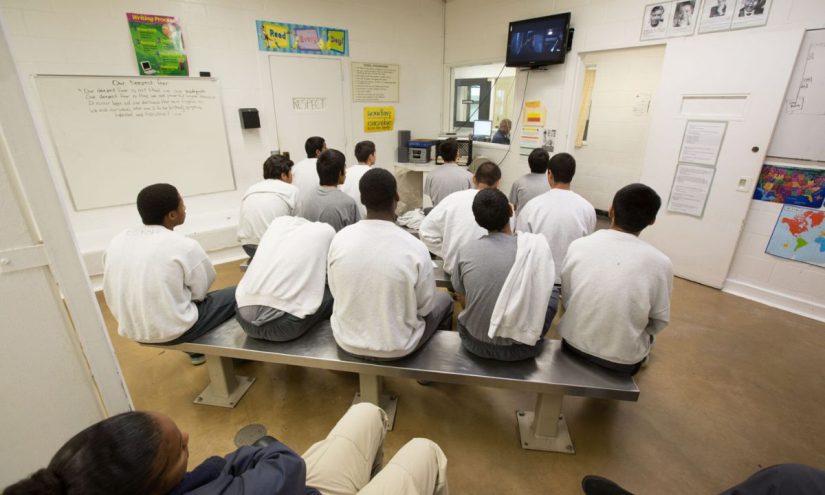
    Local government agencies in charge of youth violated the educational and civil rights of students in Los Angeles County’s juvenile justice facilities for decades by punting responsibility and inaction, according to a report released Wednesday.

    Who has the power? Chronicling Los Angeles County’s systemic failures to educate incarcerated youth” blames the disconnected, vast network of local and state agencies — from the board of supervisors to the local probation department to the county office of education and more — that play one role or another in managing the county’s juvenile legal system, for the disruption in the care and education of youth in one of the nation’s largest systems.

    “This broken system perpetuates a harmful cycle of ‘finger-pointing,’ often between Probation and Los Angeles County Office of Education, which hinders the resolution of issues that significantly affect the education of incarcerated youth,” wrote the Education Justice Coalition, authors of the report.

    The coalition includes representatives from Children’s Defense Fund-California, ACLU of Southern California, Arts for Healing and Justice Network, Disability Rights California, Youth Justice Education Clinic at Loyola Law School, and Public Counsel.

    The authors listed three demands for the board of supervisors, including reducing youth incarceration by way of implementing the previously approved Youth Justice Reimagined plan, providing access to high-quality education, and adopting transparency and accountability measures.

    Decades of documented rights violations

    A timeline outlines repeated student rights violations, some of which have resulted in class-action lawsuits and settlements requiring the county to be monitored by the federal and state departments of justice for years at a time.

    Since 2000, the timeline notes that Los Angeles County has faced:

    • A civil grand jury report calling on the board of supervisors to “improve collaboration” between the probation and education departments in order to address unmet educational needs
    • An investigation by the federal Department of Justice — and subsequent settlements — found significant teacher shortages, lack of consistency in daily instruction, and issues with support for students with special needs
    • A class action lawsuit against the county office of education and the probation department
    • An investigation by the state Department of Justice, followed by settlements, found excessive use of force and inadequate services
    • Multiple findings by a state agency of L.A. County juvenile facilities being “unsuitable for the confinement of minors”

    Most recently, the state attorney general has requested receivership, which would mean full state ownership of the county’s juvenile halls.

    The Los Angeles Board of Supervisors, the probation department, and the Office of Education did not immediately respond to a request for comment.

    The lasting impact of academic disruptions

    Dovontray Farmer experienced the mismanaged system when he entered Los Padrinos Juvenile Hall a second time as a 10th grader. Now 24 and serving as a youth mentor with the Youth Justice Coalition, Farmer said that his time in L.A. County facilities “played a major role in not being able to get properly educated — I felt betrayed, honestly.”

    Returning to school after being released was difficult, he said, because he quickly realized he was several grade levels below his classmates at his local high school.

    He’d also been part of his school’s football team before his detention at Los Padrinos when he was 17, and said he tried returning to the team once released but wasn’t allowed back.

    He said the disruption to his education and participation on the football team, which he saw as a positive influence, affected how he viewed his life.

    “There was nothing I really could do, so I was really giving up,” he said. “Like, everything that I really cared for was already gone.”

    The environment at the juvenile facilities didn’t help matters. 

    Los Padrinos recently came under fire after a video published by the Los Angeles Times showed probation officers standing idle as detained youths fought. Thirty officers have been indicted on criminal charges for encouraging or organizing gladiator-style fights among youths.

    Farmer said he was put through those same types of fights when he was at Los Padrinos as a teenager.

    “A lot of the coverage recently has been about the recent gladiator fights in 2023, but clearly this is a very systemic issue that even when a problem is resolved in the short term, we’re uncovering that it’s really indicative of a larger systemic problem,” said Vivian Wong, an education attorney and director of the Youth Justice Education Clinic at Loyola Law School, whose recent clients have included Los Padrinos students.

    Education data across several years backs Farmer’s experiences while detained.

    The most recent state data available when Farmer was detained at Los Padrinos is from 2018, when 39% of students were chronically absent, less than 43% graduated, and 12% were suspended at least once.

    That same year, the state’s average was 9% for chronic absenteeism, 83.5% for graduation, and 3.5% for suspension.

    Ongoing education concerns

    The report’s authors note that students across several facilities have lost thousands of instructional minutes, with a “lack of transparency and concrete planning to ensure that the missed services are adequately made up for, leaving students at risk of falling further behind educationally.”

    While compensatory education has typically been used to resolve instructional minutes owed, “I am not sure that’s the most realistic way to remedy the injustice that young people face, because they have endured so much abuse in these facilities,” said Wong. “It’s much more than just a loss of instruction.”

    A more appropriate response to the loss of instructional time would be a consistent investment in avoiding detention and keeping young people in their communities to maintain school stability, she added.

    Past attempts at reform have often been “done without community input or leadership, both in the design and in the implementation of those reforms,” Wong said.

    The new report, she added, is meant to be a tool toward implementing Youth Justice Reimagined, or YJR, a model against punitive measures that was largely developed with input from community organizations to restructure the local juvenile legal system.

    Three demands

    Youth Justice Reimagined, approved by the Los Angeles County Board of Supervisors in November 2020 to reform the local juvenile legal system, would move the county away from punitive approaches, such as detention, and toward rehabilitative support through counseling, family and vocational programming, small residential home placements, and more.

    Youth detention results in “severe disconnection from and disruption to their education trajectory,” wrote the report’s authors, as they urged the board to address abysmal educational access and achievement by fully funding and implementing YJR.

    The disconnect, they added, is exacerbated by delayed school enrollment when detained and upon release, the constant presence of probation officers, and turnover of educators and classmates.

    These common experiences are particularly difficult for students with learning disabilities or a history of trauma, they wrote.

    “After more than a decade of incremental reform, it is time for the County to truly reimagine youth justice,” wrote Supervisors Sheila Kuehl and Mark Ridley-Thomas in their November 2020 motion to approve YJR. “In the same way that the Board has embraced a care first, jail last approach to the criminal justice system, it is incumbent upon the Board to embrace a care first youth development approach to youth justice.”

    Despite the approval, a report published in August 2024 by the state auditor found that less than half of the YJR recommendations had been implemented by mid-2024.

    To address the high rates of chronic absenteeism, poor testing results and instructional minutes owed, the Education Justice Coalition’s second demand is to adapt educational opportunities “to address the unique and significant needs of the court school population.”

    They listed 18 actions the county probation and education departments should work together on, including:

    • Appropriate education support for students with disabilities 
    • Access to A-G approved courses for every student in a juvenile facility
    • Classrooms led by educators, rather than probation officers
    • Appropriately credentialed and culturally competent educators
    • Education access that is not disrupted due to probation staffing issues

    The coalition’s third demand centered on transparency and accountability measures by providing families with access to education planning for their children and establishing work groups that include community members.

    This story was originally published on EdSource.


    Get stories like these delivered straight to your inbox. Sign up for The 74 Newsletter

    Source link