Tag: Takeaways

  • 3 takeaways from Linda McMahon’s confirmation hearing

    3 takeaways from Linda McMahon’s confirmation hearing

    This audio is auto-generated. Please let us know if you have feedback.

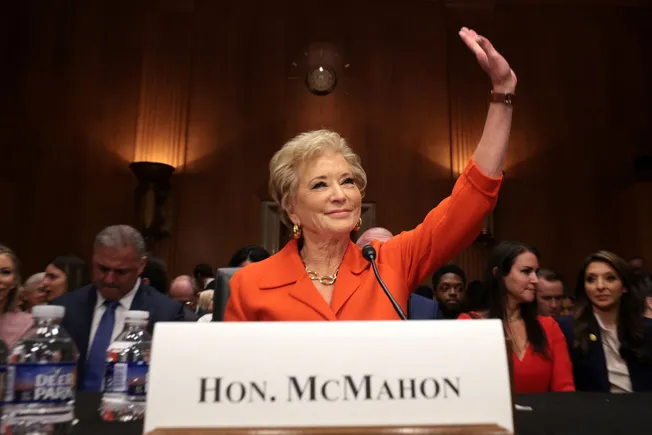
    WASHINGTON — U.S. education secretary nominee Linda McMahon told a Senate panel Thursday that, if confirmed, she would not defund public schools but would seek to reform the U.S. Department of Education by reducing federal bureaucracy and bringing schools back to the basics of reading and math. 

    McMahon also said her priorities as education secretary would be to expand school choice and skills-based learning, give local schools and parents more decision-making power, and to protect students from discrimination and harassment. 

    “I’m very hopeful that we will get back to the basics of education so that our children can read when they leave 3rd grade, and that 8th grade students can do math and reading proficiently,” McMahon said. “We are failing our students, our Department of Education, and what we are doing today is not working, and we need to change it.” 

    However, when asked about some specific changes she would make to Education Department programming, McMahon said, if confirmed, she would evaluate department functions before making recommendations. She said she would “reorient the department toward helping educators, not controlling them.”

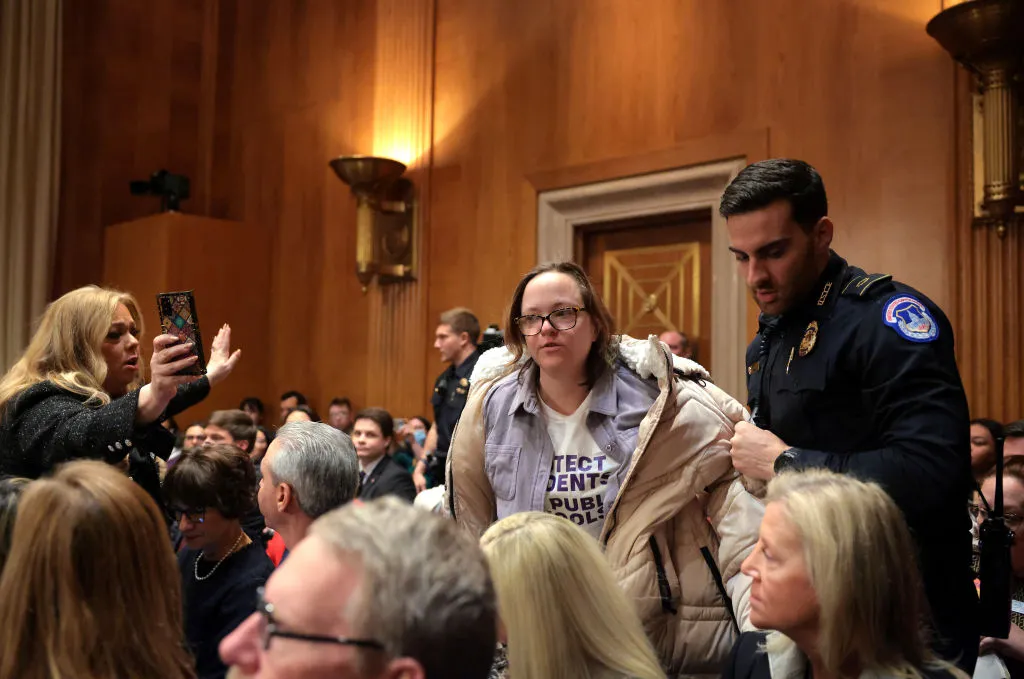
    The 2 ½-hour confirmation hearing, held by the Committee on Health, Education, Labor and Pensions, was briefly interrupted five times by people protesting McMahon’s nomination. The Republican-controlled Senate is expected to approve McMahon’s nomination in the coming days.

    McMahon’s confirmation hearing comes amid drastic changes at the Education Department. President Donald Trump has already issued various executive orders that severely limit federal funding, call for expansion of private school choice, prohibit activities related to diversity, equity and inclusion, and call for an end to “indoctrination” in K-12 schools, which he said includes “gender ideology and discriminatory equity ideology.” 

    Trump is also expected to issue an executive order that would significantly reduce the Education Department’s authority and responsibility in the federal government. 

    Federal education funding represents just about 14% of total K-12 spending in 2024, with the rest provided by local and state governments and other sources. Still, education experts say federal investments are important for supporting funding equity and accountability.

    In fiscal year 2024, the Education Department received $79.1 billion from Congress. Lawmakers have yet to approve FY 2025 funding. 

    Among the Education Department’s responsibilities is managing $1.6 trillion in higher education student loans.
    District and state K-12 programs also received $189.5 billion over the past five years in federal COVID-19 emergency funds to support pandemic recovery efforts. 

    A person is standing near another person in a uniform. The room is full with other people sitting. Another person is standing and holding a cell phone

    A protester disrupts Linda McMahon, President Donald Trump’s nominee to be U.S. education secretary, as she testifies during her Senate Health, Education, Labor and Pensions Committee confirmation hearing on Capitol Hill on Feb. 13, 2025, in Washington, D.C.

    Kayla Bartkowski via Getty Images


    Trump nominated McMahon just weeks after winning the November election. McMahon served as administrator of the Small Business Administration for two years in Trump’s first administration. She is also a former president and CEO of World Wrestling Entertainment.

    McMahon is also board chair at America First Policy Institute, a nonprofit think tank that supports free enterprise and nationalism. At the state level, McMahon served on the Connecticut State Board of Education. She also served as a trustee at Sacred Heart University, a private Catholic school in Fairfield, Connecticut. She is currently the treasurer on the university’s Board of Trustees, according to the school’s website.

    In 2012, she won the Connecticut Republican primary for U.S. Senate but lost to current Democratic Sen. Chris Murphy, who is a member of the HELP committee.

    If the Senate approves McMahon’s nomination, she would succeed Miguel Cardona as the 13th U.S. education secretary since the department’s founding in 1979.

    Here are three takeaway exchanges from the confirmation hearing.

    Closing the Education Department

    Several Democratic lawmakers probed McMahon about Trump’s push to eliminate the Education Department. On Wednesday, Trump referred to the department as a “big con job” and said he wanted the agency closed immediately. 

    “The president has given a very clear directive that he would like to look in totality at the Department of Education, and believes that the bureaucracy of it should be closed, that we should return education to our states, that the best education is that closest to the kids,” McMahon said.

    She acknowledged that only Congress has the power to shut down the agency. And McMahon noted that programs established by federal statute, such as Title I for low-income schools and services to students with disabilities under the Individuals with Disabilities Education Act, would need to continue with or without an Education Department. 

    Source link

  • Three Key Takeaways from P3 EDU 2024

    Three Key Takeaways from P3 EDU 2024

    Three Key Takeaways from P3 EDU 2024

    I love the Fall for a number of reasons, one of which is the vast number of conferences and events within the higher ed and education technology space. I’m continually impressed and inspired by the intelligence and expertise of the leaders and tacticians within our industry. When you bring together smart people to share insights and learns, discuss ways to navigate challenges and evolving market paradigms, and work together to uncover new growth opportunities, great things start to happen. You can see pathways to transformation and how you can make a positive impact. It’s both refreshing and inspiring.

    I recently had the opportunity to attend and speak at the P3 EDU conference. All the panels were insightful and topical, and the panelists paired their expertise with strong points of view about where higher education is headed. It was a powerful reminder that we must adapt to a rapidly changing landscape, embrace innovation, and prioritize student success.

    As we all know, the higher education space is facing significant challenges. We’re navigating demographic shifts and cliffs, a relentless focus on affordability and outcomes, and the ever-present need to adapt — and adapt quickly. While the pressures can feel overwhelming, the P3 conference reminded us that we don’t have to go it alone. It also reinforced that Collegis Education is not only focusing our time and effort on the right things but leading the way in many areas.

    Here are the key themes that resonated with me and what I walked away with.

    1. Data-Driven Decisions: The New Normal

    There was an undeniable consensus around the power of data and its role in helping schools evolve. Institutions have become acutely aware of where they have or lack data proficiency and how data is used or misused across the organization. Schools now understand the role that strategic partnerships can play in eliminating data deficiency and unlocking data potential.

    This is what we at Collegis call being data enabled. Being data-driven has become table stakes –– but being data-enabled is a step above. Enabled data is achieved by eliminating tech and data siloes and elevating your data integrity and thoroughness. Once that is done, it open up new data enabled capabilities to drive impact across the entire student lifecycle.

    But to maximize your ability to drive meaningful growth, retention, and outcomes, you must first unlock the potential within your systems and the underlying data.

    2. AI: A Double-Edged Sword

    If your inbox or LinkedIn feed looks like mine, it’s hard not to come across some AI-related article, product, or debate. It’s no surprise AI in higher ed was a hot topic at the conference. While some view it as a threat, I believe AI offers higher ed immense opportunities and can be transformational.

    But to take advantage of AI, you must get your data house in order. If you start to power your AI tools with spotty data, you’ll get lackluster outcomes, poor ROI, and a lot of frustration along the way.

    At Collegis, we’re using AI to drive effectiveness across the student lifecycle. We’re helping schools leverage automation to make administrative tasks less cumbersome, creating capacity and allowing limited human capital to focus on where they can make the most impact. But AI’s impact goes beyond automation. We’re also helping our schools harness its power to enable predictive analytics, using AI to analyze large data sets. Now, our partners can begin to deploy proactive strategies rather than reactionary ones, helping them to anticipate student needs, identify points of failure before they occur, and refine their programmatic offerings to keep pace with workforce demands. We must continue to innovate, leveraging new AI advancements, for the sake of our partner institutions.

    3. The Power of Partnership: The Expanding Landscape of P3s

    At the conference, there was a clear sense that P3s (public-private partnerships) are expanding beyond their traditional scope. More schools are welcoming partnerships to address complex challenges like the enrollment cliff and seizing emerging opportunities in technology, campus development, research collaboration, student housing, and infrastructure. Our industry needs to become less risk-averse, and we need to push ourselves to lead the way rather than chase the trends or replicate the innovators in our space who have found success by challenging the status quo.

    The disruptions we face indicate a wider shift in the educational landscape. By embracing partnerships, leveraging data and technology, and preparing our students for the future, we can emerge stronger and more innovative than ever before.

    You have to ask yourself, “How well am I, my institution, and the companies I partner with positioned to succeed in this disruptive market?”

    — Kim Fahey, CEO Collegis Education

    Source link

  • Three Questions to Help You Build a Better Workplace Culture — Annual Conference Takeaways – CUPA-HR

    Three Questions to Help You Build a Better Workplace Culture — Annual Conference Takeaways – CUPA-HR

    by CUPA-HR | October 18, 2023

    Culture was at the heart of the three keynote events at CUPA-HR’s 2023 national conference, which took place recently in New Orleans. Our keynote speakers asked thought-provoking questions that resonate with higher ed HR’s mission. Engaging with these questions can help you boost employee engagement, promote a culture of inclusivity and strengthen collaboration with your campus colleagues.

    1. Are You Creating an Ecosystem of Opportunity?

    Organizations with strong learning cultures tend to have significantly higher retention rates.

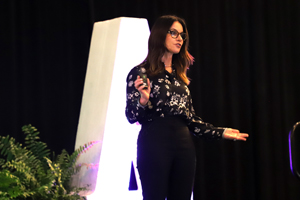
    In her keynote presentation on employee retention, business strategist and author Erica Keswin pointed out that the days of climbing the same corporate ladder for 50 years are long gone. Organizations are flatter, which means you need to get creative to give people opportunities to move not only up, but sideways, helping them gain new skills and find new pathways for their careers. Instead of thinking “ladders,” Keswin said, think “lilypads.”

    She also encouraged attendees to talk about employee learning opportunities early and often, beginning with their onboarding programs! Managers should be talking regularly with employees about what skills they want to learn and giving them the opportunity to learn with no strings attached.

    The mission, values and priorities of higher education have learning at their core, and that culture of learning is a value proposition higher ed is uniquely positioned to provide as an employer. Make it work to your advantage by prioritizing learning and opportunity for all employees.

    Another key takeaway from Keswin’s presentation was the importance of being a “human professional” and checking in with your team on a regular basis. She shared the story of a company that starts team meetings with a quick check-in called “Pick Your Nic.” Referring to a popular meme of Nicolas Cage images representing different feelings (happy, relaxed, excited, focused, stressed, meh, etc.), each person picks the Nic that represents how they’re feeling that day. The goal isn’t to address the responses in the meeting, but rather to give the team leader the opportunity to take a pulse and to give team members the opportunity to be seen and heard.

    You’ll find more retention strategies in Keswin’s new book, The Retention Revolution: 7 Surprising (and Very Human!) Ways to Keep Employees Connected to Your Company. And be sure to check out the article “The Higher Ed Employee Retention Crisis — and What to Do About It” in the fall issue of Higher Ed HR Magazine.

    2. Are You Treating Diversity as a Problem to Be Managed or a Value to Be Cherished?

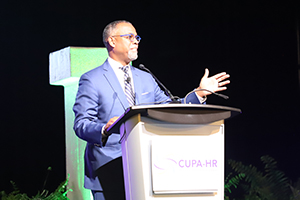
    When it comes to creating and sustaining a more inclusive culture, Princeton professor and religion scholar Dr. Eddie S. Glaude Jr. prompted attendees to consider a question: Do you view diversity as a problem to be managed or a value to be cherished?

    Through a problem-solving lens, we might see diversity as a series of goals to be met and obstacles to be overcome. Through the lens of a cherished value, on the other hand, we are more likely to see every situation as an opportunity to expand and celebrate diversity of people and ideas. A problem-solving lens divides “us” from “others,” while a value-based lens sees diversity as constitutive of who we are, as a people, a country and an institution. Instead of envisioning inclusion as something undertaken in response to a mandate or in compliance with a law, what if diversity was seen as key metric of an institution’s success?

    The data support the positive impact of diversity on metrics like productivity and creativity in the workplace, and Glaude urged higher education to also view diversity as an integral part of its core identity and a reflection of its regional or national reach.

    To see how your institution compares to others when it comes to composition of your workforce and pay equity for employees, see the results of CUPA-HR’s signature surveys.

    3. Are You Ramping Up Retention Efforts in Your Most Vulnerable Departments?

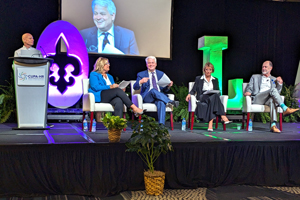
    Retention and recruitment were on everyone’s mind at CUPA-HR’s annual conference. The closing panel discussion brought together leaders in student affairs, campus facilities and IT and provided insights on how HR can partner with these campus constituencies to support a culture of belonging. Here are a few of their recommendations:

    Provide training opportunities.

    John O’Brien, president of EDUCAUSE, which represents IT professionals in higher ed, stressed the importance of career pathways to support employees’ desire to grow in their careers.

    Noting that “supervisors will make or break us,” Lander Medlin, president and CEO of APPA, which serves the needs of facilities professionals, stressed the critical role that supervisor training has on retention and workplace culture in facilities, where the aging of the skilled craft workforce has posed unique recruitment and retention challenges, and all areas.

    Ensure employees feel they belong and are valued.

    No matter their role on campus, employees want their opinions to be heard and valued.

    Kevin Kruger, president of NASPA, the association for student affairs administrators in higher education, noted that millennial and Generation Z employees especially want to feel cared about at work and to believe their opinions matter. Today, as all student affairs professionals find themselves on the front lines of the mental health crisis, they need supervisors who have the skills to meet them where they are and to create a culture of belonging.

    Medlin seconded the importance of feeling heard when it comes to job satisfaction. She would ask supervisors this question: Are you a coach and mentor, or are you a boss?

    Offer job flexibility.

    Some campus jobs don’t easily lend themselves to remote work, but that doesn’t mean institutions can’t build in flexibility, which CUPA-HR found is a key retention factor.

    For example, facilities employees might take advantage of a compressed workweek, with employees having the option to work four 10-hour shifts.

    Since student affairs professionals often work outside of a typical nine-to-five day, there’s room for remote work. In fact, students might prefer to meet with student affairs professionals remotely.

    If year-round remote work isn’t a possibility, seasonal flexibility might be. When students are off campus during holiday and summer break, your staff might be able to work from home.

    See employees as a strategic asset (and pay them accordingly).

    The three areas represented by the panel — IT, facilities and student affairs — are among the most vulnerable to turnover and recruitment challenges on most campuses. How can HR lead the way in creating a culture that positions these employees as strategic assets? The panel offered these suggestions, based on their unique perspectives:

    • O’Brien encouraged satisfaction surveys. Find what’s working well and replicate it.
    • Kruger recommended streamlining job searches, posting salary ranges, and focusing on internal pay equity and livable wages.
    • Medlin asked conference attendees to help us help you. How we treat people matters, and HR leads the way in building that culture of belonging.


    Source link

  • 3 Takeaways From the CUPA-HR Annual Conference – CUPA-HR

    3 Takeaways From the CUPA-HR Annual Conference – CUPA-HR

    by CUPA-HR | October 7, 2021

    Thank you to all who attended the CUPA-HR Annual Conference and Expo in person and virtually this week! It was wonderful to welcome new and familiar faces, celebrate CUPA-HR’s 75th anniversary, and explore outstanding sessions with so many of you.

    For those who weren’t able to attend, here are three conference takeaways you can put to use wherever you are.

    • The Power of Kindness — Opening keynote and host of the Netflix series, “Kindness Diaries,” Leon Logothetis shared some of his experiences travelling the world fueled only by the kindness of strangers. “Kindness,” said Logothetis, “is simply a portal into human connection.” Overwhelmed by all the work to be done to support your institution’s workforce? Logothetis offered this advice: “To change the world, start by changing one life.” Who can you connect with and invest in at your institution? How can you use the power of kindness to make a difference in their life?
    • Birds and Frogs — Tuesday’s keynote speaker, David Epstein, spoke about the data supporting the value of generalists in a world increasingly focused on specialization. During his presentation, he offered an insightful message on how organizations can adapt successfully to change. Epstein used the example of birds and frogs; frogs are down on the ground, seeing all the granular details while the birds soaring above have a broader view of the big picture. Epstein asserted that we need both of these types of people to enhance our campus “ecosystems,” and should actively seek them out.
    • Ubuntu: I am because we are — Shola Richards topped off the conference with his energetic and inspiring message about the African concept of Ubuntu, which means “I am because we are.” Richards encouraged HR pros to use the spirit of Ubuntu in our various units and teams back on campus and to recognize that we will go a lot farther together than we will if we go alone no matter how small we feel (“be the mosquito, tiny but impossible to ignore”) or how difficult the situation (“be the buffalo, and run toward the storm”).

    We can’t wait to hear about the projects, initiatives, conversations and connections sparked by this year’s conference. Be sure to save the dates for our Virtual Spring Conference, April 19-21, and our 2022 Annual Conference, taking place October 22-24 in San Diego! Registration details coming soon.


    Source link