Following a record-breaking advocacy campaign that saw 20,636 letters sent to Congress, the House of Representatives has set out drastically modified cuts to US cultural exchanges, which had been at risk of “decimation” under Trump’s previous proposed budget.
The new plans will shrink the funding cuts to the Bureau of Educational and Cultural Affairs (ECA) to 5.5% next year, as compared to the 93% initially announced in the proposed FY2026 budget.
Though the proposals still amount to a $41 million cut to current funding, “it’s nowhere close to the doomsday scenario of the [President’s budget request]” executive director of the Alliance for International Exchange Mark Overmann told The PIE News.
“This means that the conversation about FY26 is completely new. The President’s budget can be thrown out the window,” he said, welcoming the “significant show of support for exchanges from the House and a big win for us”.
The plans – laid out in the House Appropriations Bill on July 14 – propose a 22% cut to overall State Department funding and are the latest step in the FY26 budget process, expected to be finalised late this year.
The new legislation earmarks over $700m for ECA, a “surprising” figure and a vote of confidence in the value of educational and cultural exchanges.This includes $287 million for Fulbright.
“And this mark from the House means that our community’s advocacy has been heard,” said Overmann.
This means that the conversation about FY26 is completely new. The President’s budget can be thrown out the window.
Mark Overmann
Though there are still many steps to go, including a review by the Senate, the unexpected move is an encouraging development and a rare piece of good news for stakeholders who expected the worst after Trump’s “draconian” proposals this May.
While important, the President’s budget request has no sway over the final allocations, with stakeholders emphasising at the time of its release that it amounted to nothing more than a “wish list” and was not binding.
The true figures will be drawn from the House and Senate Appropriations, with the latter expected imminently.
Traditionally, the Senate has come in higher than the house for ECA funding, with stakeholders hopeful that the trend will continue this year.
The news has provided a glimmer of hope during an uncertain time for US study abroad, with 40 ECA employees caught up in the Trump administration’s mass layoffs of State Department staff last week.
The report by the Universities of Dundee and Cambridge highlights concerns about “the preparedness of students admitted through less traditional tests” as well as worries about the “security, validity and perceived inadequacy” of tests run by Duolingo and Oxford Education Group (OIEG).
The study draws on evidence from 50 UK universities, though its critics point out that many of the statements seem to be based on qualitative perspectives and anecdotal evidence from a small sample – comments that the report’s authors have hit out against.
It is causing disturbance in the ELT world, with Duolingo highlighting that four out of the five authors are affiliated with a “single competitor test” – the IELTS test. For their part, the report’s authors have maintained that the study was carried out objectively.
The study found the IELTS test to be widely regarded as the “common currency” of SELT, “largely due to the high level of trust in IELTS as a reliable and valid measure of language proficiency”, said the authors.
The most widely accepted English language test by UK universities, IELTS, is co-owned by IDP, Cambridge University Press and the British Council.
Other tests including TOEFL, C1 Advanced, and the Pearson Test of English (PTE), were found to be accepted by a high number of the institutions surveyed, while Duolingo was only accepted by six universities.
“Unfortunately, this study is based on the perceptions of a small group and relies on outdated views rather than robust empirical evidence,” a spokesperson for Duolingo told The PIE News in response to the findings.
They commented: “Every Ivy League university accepts the Duolingo English Test (DET), as do a third of Russell Group institutions and over 5,900 institutions worldwide,” adding that the DET “combines academic rigour and integrity with accessibility and affordability”.
Meanwhile, English testing expert Michael Goodine advised test takers “to keep in mind that the criticisms mentioned in the study are anecdotal and not presently supported by comparative data”.
What’s more, at the time of the survey, Duolingo was only accepted at six universities, compared to IELTS. which was accepted at all 50.
Given the experiences of surveyed staff sharing their worries about declining standards of English: “Clearly, then, Duolingo isn’t the problem,” suggested Goodine. “Maybe the traditional tests are also problematic,” he posed.
For its part, Cambridge University Press & Assessment maintained the study was independently peer-reviewed, objecting to comments about the research being conducted on a “small” group or to their views being “outdated”.
“The researchers did not seek views on any specific test,” said the spokesperson, adding that interviewees were asked about their personal experiences with the tests, changes since the pandemic, internal decision-making processes around test selection and their experience of the English levels of students admitted with such tests.
“We hope this evidence will help universities to consider the relative merits of different modes of language assessment. Now is the time to put quality first,” they added.
Maybe the traditional tests are also problematic
Michael Goodine, Test Resources
The report’s authors note that the shift to online learning and testing during the pandemic “has led to a perceived decline in language standards, with many staff members worried that students are not meeting the necessary threshold for successful academic engagement”.
“The lack of transparency and external validation, especially for newer tests, exacerbates these concerns, as many of these tests provide little evidence of comparability beyond marketing information,” they say, calling for universities to use evidence-based approaches when selecting which English language tests to use.
In addition to the choice of test, much of the report is dedicated to findings highlighting the growing concerns among university personnel about the declining English language proficiency of international students.
When asked to evaluate the academic literacy of the international students they teach, 44% of respondents said it was ‘poor’, 47% deemed it to be ‘mixed’ or ‘varied’, with less than 10% judging it to be ‘good’.
“Admitting students without sufficient English jeopardises their educational experience and places strains on institutions and faculty,” said Pamela Baxter, managing director for IELTS at Cambridge University Press & Assessment.
“These are some of the highest stakes exams around – that enable people to migrate and study”, said Baxter, adding that international students comprise 23% of the UK’s total student population, and “greatly enrich” universities, but must be admitted with the right standards.
The study finds a “great divide” between EAP and academic staff placing a greater emphasis on test validity and language proficiency, as compared to recruitment and admissions personnel who tend to priorities accessibility and cost.
Such a disparity highlights the “need for a more integrated approach to decision-making”, the authors argue.
The report comes as the UK SELT sector is bracing for a dramatic overhaul, caused by the government’s ongoing development of a dedicated Home Office English Language Test (HOELT), for which a tender process is currently underway.
Most recently, the Home Office launched a fourth round of market engagement about digital testing, exploring the viability of incorporating remote testing into the HOELT service.
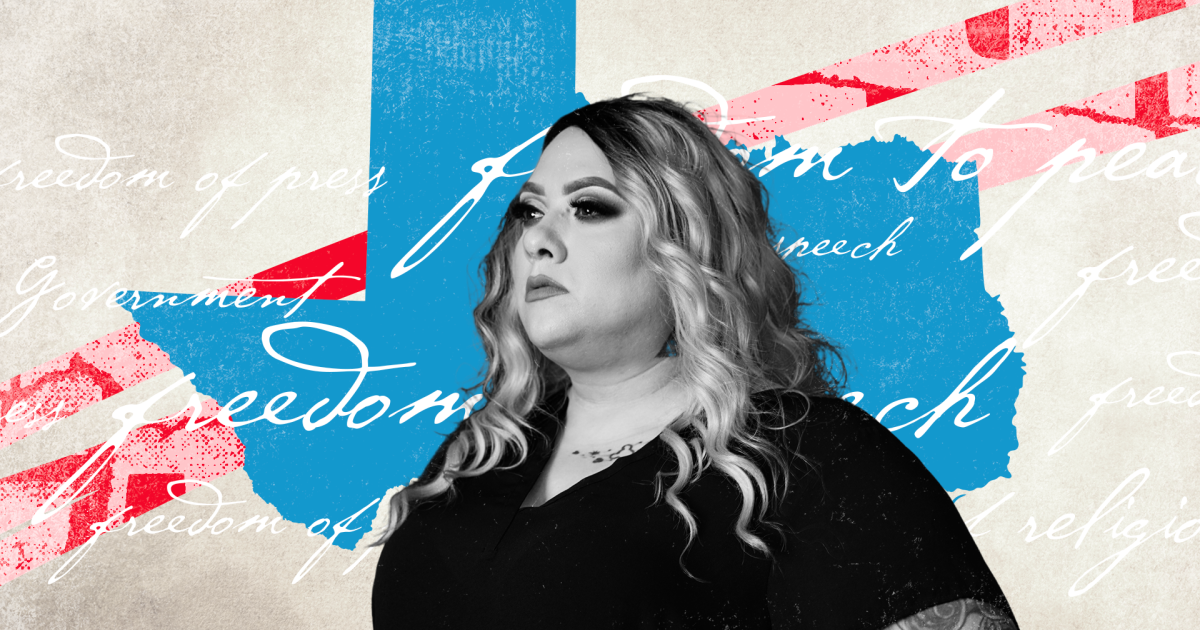
For years, Priscilla Villarreal has fought to hold officials accountable when they violate Americans’ First Amendment rights, including the Laredo officials who threw her in jail just for asking police to verify facts as part of her everyday news reporting.
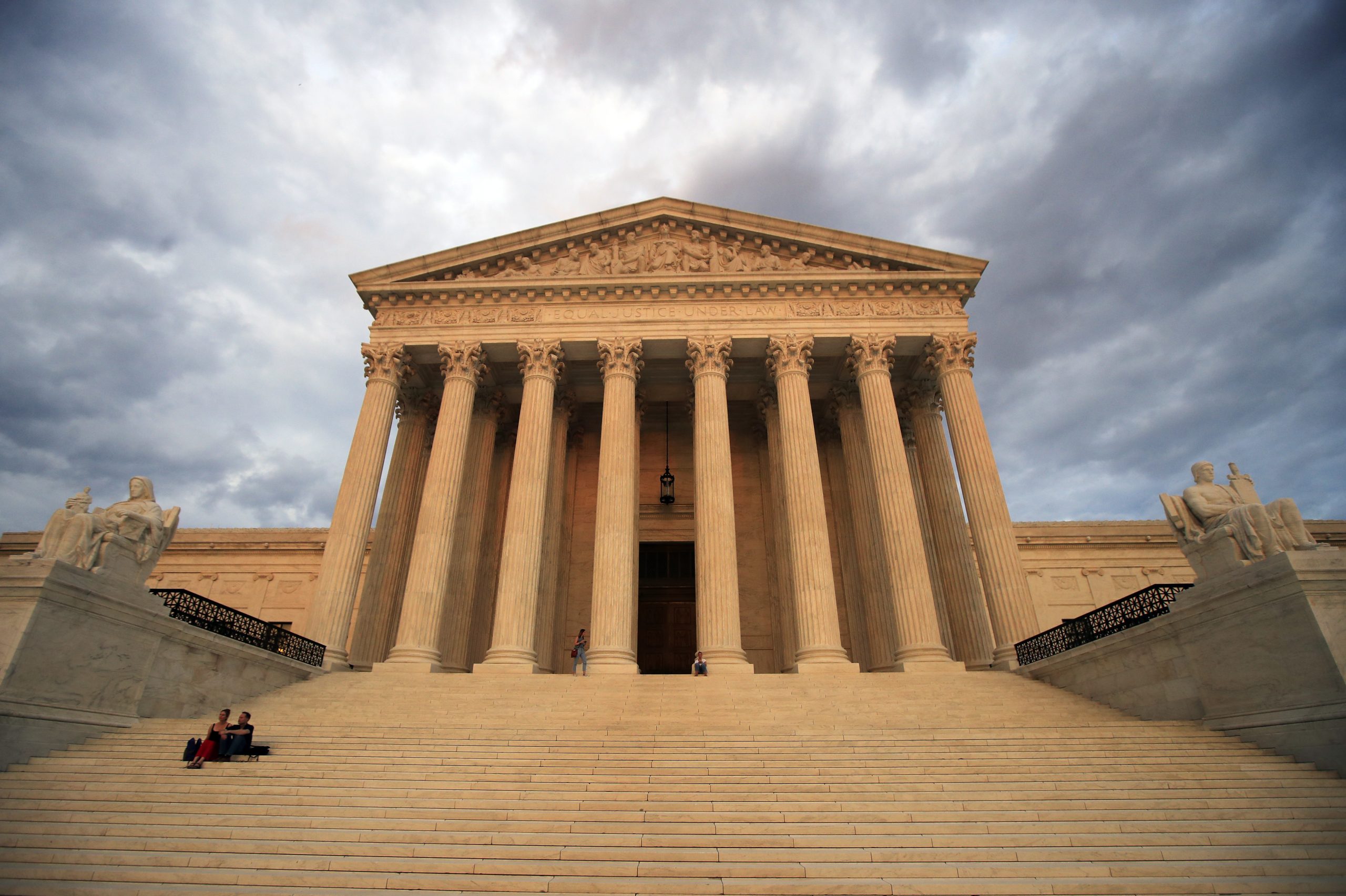
Priscilla sued, and last fall, the Supreme Court gave her a shot at justice, granting her petition and ordering the U.S. Court of Appeals for the Fifth Circuit to reconsider Priscilla’s case against the officials who tried to turn routine journalism into a felony.
But in April, a divided Fifth Circuit doubled down, holding the Laredo officials had qualified immunity, a doctrine that often shields government officials from lawsuits even when they violate the Constitution. In his dissent, one judge lamented that the court had simply reinstated what it “mistakenly said before, just in different packaging.”
So Priscilla and FIRE are doubling down, too. We’re heading back to the Supreme Court, asking it to make crystal clear that Americans have every ability to hold officials accountable for violating core First Amendment rights — like the right to ask government officials questions, and publish what they share.
That’s exactly what Priscilla has been doing for years, reporting on local crime, traffic, and other news for her 200,000 Facebook followers. She’s made a name for herself too. The New York Timesdescribes her as “arguably the most influential journalist in Laredo.” But despite her experience, her journey from Laredo, a city on the Mexican border, to the Supreme Court has been a long one.
In 2017, she reported on a high-profile suicide and a fatal car accident. For both stories, Priscilla received tips from private citizens and verified those facts by asking a Laredo police officer. The First Amendment squarely protects this routine journalistic practice. After all, at the heart of the First Amendment is the freedom to ask government officials and institutions questions, even tough ones.
Angered by Priscilla’s reporting on these incidents, Laredo officials tried to bully her into silence by arresting her. But with no legitimate basis on which to charge her with a crime, police and prosecutors turned to a decades-old statute that no local official had ever enforced.
That law makes it a felony to ask for or receive non-public information from a government official with the intent to benefit from that information. Laredo police and prosecutors pursued two warrants for Priscilla’s arrest under the statute. In short, Priscilla went to jail for basic journalism.
So in 2019, she sued the officials for violating her First and Fourth Amendment rights. As Judge James Ho later remarked in his dissent at the Fifth Circuit, it “should’ve been an easy case for denying qualified immunity.”
But it hasn’t been. A Texas federal district court dismissed her claims on the basis of qualified immunity. A three-judge panel of the Fifth Circuit reversed that decision, denying qualified immunity. But when the whole Fifth Circuit reheard the case at the government’s request, it reversed the panel ruling in a splintered 9-7 decision.
In 2024, Priscilla and FIRE took her fight to the Supreme Court for the first time. The Court granted Priscilla’s petition to review the Fifth Circuit’s decision and ordered it to reconsider her case in light of the Supreme Court’s 2024 decision, Gonzalez v. Trevino. That decision affirmed the ability to sue government officials when they retaliate against protected speech by selectively enforcing statutes.
But last April, a splintered Fifth Circuit decided against Priscilla again, granting qualified immunity to the officials who defied longstanding Supreme Court precedent and core principles of American liberty by orchestrating her arrest.
The Fifth Circuit’s ruling not only denies Priscilla justice, but gives police and prosecutors a free pass to turn core First Amendment rights into a crime. That result cannot stand. And that’s why Priscilla and FIRE are going back to the Supreme Court.
Priscilla’s fearless reporting has made her a local “folk hero.” Now, she’s channeling the same grit into defending not just her own rights, but the First Amendment rights of all Americans.
The Trump administration asked the Supreme Court on Friday to allow it to move forward with its plan to lay off nearly half of the Education Department’s employees and dismantle the agency, USA Today reported.
In late May,a federal district court ruled that the reduction in force made it impossible for the executive branch to carry out congressionally mandated programs and services. An appeals court affirmed that ruling June 4.
President Trump and his Department of Justice, however, disagree with both rulings, and they hope the 6-to-3 conservative majority on the Supreme Court will, too.
“The Constitution vests the Executive Branch, not district courts, with the authority to make judgments about how many employees are needed to carry out an agency’s statutory functions, and whom they should be,” Solicitor General John Sauer wrote in the emergency appeal to the Supreme Court.
States, school districts and teachers’ unions involved in the case have until June 13 to respond to Trump’s appeal, the Supreme Court stated.
The kindergartners of South Dakota’s Hamlin County are, in fact, in space. To be specific, they are on planet Earth, near the geographic center of North America, sitting crisscross applesauce inside an 11-foot-high inflatable planetarium set up in their school gym.
The darkness is velvety. Childish whispers skitter around the dome like mice. The kids are returning from a short mission to Jupiter, piloted by Kristine Heinen, a young museum educator with a ponytail who knows how to make her voice BIG AND EXCITED and then inviting and quiet to hold little ones’ attention.
“Now we’re over China!” Heinen says.
“My friend went to China!” a girl calls out.
“The other side is nighttime and this side’s bright,” expounds a boy with a crew cut. “The sun shines here so it can’t shine over there.“
The school is in eastern South Dakota, 34 miles northeast of the settlement where Laura Ingalls Wilder grew up and attended a one-room schoolhouse. The sprawling Hamlin Education Center is a modern-day analogue, serving an entire district in one building, with just under 900 students, pre-K through 12. Notable graduates include U.S. Homeland Security Secretary Kristi Noem, the former governor of South Dakota.
The center is roughly equidistant from four tiny towns, surrounded by open fields where cornstalks shine in the sun; 95 percent of students arrive by bus, from up to 20 miles away. Over a third of them qualify for free or reduced-price lunch, said Dustin Blaha, the elementary school’s principal.
Hamlin Elementary students line up for their turn visiting a traveling planetarium sponsored by the South Dakota Discovery Center. Credit: Anya Kamenetz for The Hechinger Report
During the planetarium’s daylong visit to the small community of Hayti, S.D., an educator from the South Dakota Discovery Center wowed 500 elementary school students with a presentation about the planets and stars. Credit: Anya Kamenetz for The Hechinger Report
Many Hamlin Elementary haven’t had a chance to visit the South Dakota Discovery Center in Pierre three hours away, so the museum brings traveling exhibits like a portable planetarium to them. Credit: Anya Kamenetz for The Hechinger Report
Blaha said that most of these children have never been to the South Dakota Discovery Center, a hands-on science museum three hours west in the state capital. But thanks to a federal agency called the Institute of Museum and Library Services, a part of the museum can come to them.
The IMLS was established in 1996, combining previously separate programs. The small agency became the largest source of federal funding for museums and libraries, last year awarding $266.7 million in program grants, research and policy development across all 50 states. IMLS awarded the South Dakota Discovery Center about $45,000 in 2023 to upgrade this traveling planetarium.
But students around the state may be waiting a long time for the next upgrade.
Related: Young children have unique needs and providing the right care can be a challenge. Our free early childhood education newsletter tracks the issues.
President Donald Trump signed an executive order in mid-March calling for the agency to be “eliminated to the maximum extent consistent with applicable law.” Mass firings followed.
On May 1, the U.S. District Court in Washington, D.C., issued a temporary restraining order to block the agency’s dismantling, followed on May 6 by a second federal judge finding the dismantling of this and two other agencies unconstitutional. On May 20, the American Library Association reported that employees are returning to work and some grants have been restored.
But the administration is continuing its legal battle to all but shutter the IMLS. The latest post on the agency’s Instagram account is captioned, “The era of using your taxpayer dollars to fund DEI grants is OVER,” holding up for criticism grants that were aimed at addressing systemic racism in museums, equitable library practices, and diverse staff development. The IMLS and the Department of Government Efficiency did not respond to requests for comment.
A veteran of the agency who asked to remain anonymous because of fear of reprisal said they first saw DOGE staffers meeting with leadership on March 28. “On the 31st, we were put on administrative leave. We had about two hours to turn in your key cards, your ID, get everything off your laptop you’re ever going to need. We were locked out of our computer systems by 3:30 and told to get out of the building.” A skeleton crew was hastily rehired the next day.
The ex-staffer points out that the Institute of Museum and Library Services spends, or spent, just 7 percent of its budget on its 70 staff, passing the rest along as grants. “We are not a bloated agency.” They have two kids at home, one with special needs and are married to another federal employee whose job is also at risk; but they are almost as worried about their grantees as themselves.
“After 20 years, I didn’t even get to put an out-of-office response up. Is someone emailing me right now and getting nothing, because all of a sudden their grant just ended? I hate that,” the former IMLS employee said.
Almost all grants awarded required a one-to-one cost share out of the local institution’s budget, the staffer said. Plus, typically the grantees pay for activities first and then apply to get reimbursed. “We’re leaving these often small rural museums and libraries on the hook.”
Anne Lewis, executive director of the South Dakota Discovery Center, said that organizations like hers would be “wobbly” without federal funding and would have to scale back on ambitious programs like the planetarium upgrade.
“The new system has much better interaction and control,” said Heinen, the museum educator. An earlier version had a static point of view, but upgraded visual effects means that “now we have spaceship mode,” she said. “We can travel to destinations including planets, and go in a full 360-degree mode around galaxies.”
With a flick of the touchscreen menu, she can also display the constellations of a dozen different cultures including Lakota, a significant benefit especially when she visits tribal schools.
The South Dakota Discovery Center, based in Pierre, has used federal support from the Institute for Museum and Library Services to pay for a traveling planetarium exhibit. Credit: Anya Kamenetz for The Hechinger Report
It’s a lean operation: Heinen drove solo nearly 200 miles from Pierre to Watertown the evening before and spent the night at an Econo Lodge. From there, it was another 20-some miles to Hayti, where she arrived at 7:30 in the morning, set up the dome herself, and ran 30-minute programs all day.
The whole elementary school, about 500 kids in total, saw the planetarium, with each show customized to the children’s interest and grade level; and she also conducted a parent engagement program in the afternoon. Heinen said she never tires of being a “Santa Claus” for science. ”As soon as they see me, they know something fun is going to happen.”
During this visit, the fan favorites were Jupiter, Mars and the sun. “It was cool when we went to Mars,” said Nash Christensen, 6. “And the volcano on that one moon, and the big hurricane on Jupiter. I think Jupiter is a dangerous place to live.”
Grant recipients of the Institute of Museum and Library Services say the support from the federal government has been critical to running their programs. For example, the Boston Children’s Museum, the second-oldest children’s museum in the country, has used federal grant money to improve school readiness. One of the outcomes was a new exhibit in the museum, “Countdown to Kindergarten,” that mimics a kindergarten classroom, complete with a school bus you can sit in out front.
“It’s helpful not only for the kids, but some of our caregivers who came from other countries and may not have gone to a school like this,” said Melissa Higgins, the museum’s vice president of programs and exhibits.
At the Madison Children’s Museum in Wisconsin, federal funds paid for a multistate partnership that provides climate education for young children and their families. In Fort Lauderdale, Florida, a grant covered five “STEMobiles,” which offer hands-on science activities for children ages 3-5 in low-income parts of Broward County. The Philadelphia School District won a two-year planning grant to try to improve its pipeline of school librarians; they were down to only a handful for a district of 200,000 students.
But the greatest impact may come in rural, often deep-red areas.
“Rural communities have particularly unique challenges,” said Lewis at the South Dakota Discovery Center. “There’s 800,000 people in the state, and they’re dispersed. We don’t have a concentration of funders and donors who can help support these enrichment activities.”
She said the teachers she serves are “passionate, committed and, like every other place in the world, underfunded.” If not for institutions like hers, students would probably go without this kind of hands-on science experience, she said.
Blaha, the elementary school principal, concurred. “The planetarium brings excitement and expertise that we don’t typically have in a community like this,” he said.
For now, the excitement is coming to an end. The class has “landed” on a green lawn, under a deep blue sky. Heinen announces “It’s time to leave.” She’s met with a chorus of, “Noo!”
“You guys, we were in here for a full 30 minutes.”
“It felt like 10!”
“It felt like a second!”
Tonight, many of them will be able to look up at the dark sky over the prairie and show their parents Jupiter, Ursa Major and Mars.
Contact the editor of this story, Christina Samuels, at 212-678-3635 via Signal at cas.37 or [email protected].
The Hechinger Report provides in-depth, fact-based, unbiased reporting on education that is free to all readers. But that doesn’t mean it’s free to produce. Our work keeps educators and the public informed about pressing issues at schools and on campuses throughout the country. We tell the whole story, even when the details are inconvenient. Help us keep doing that.
By Tamsin Thomas, Senior Strategic Engagement Manager, Duolingo English Test.
The English language proficiency of international students is once again under the microscope. Heightened scrutiny is being driven by media coverage of international admissions, including The Times and BBC Radio 4’s File on 4, as well as the new immigration white paper. The Home Office is currently tendering for an English test for immigration purposes and has also undertaken a review of university English testing arrangements.
There are growing questions about how UK universities assess English proficiency, which tests are accepted, and what governance arrangements are in place to ensure that students have the level of English they need to succeed. These are valid and necessary discussions.
But it’s also true that much of the debate is happening without lived experience. Most contributors to this conversation — from media commentators to admissions professionals and policymakers — have never sat a high-stakes English language test themselves, certainly not as an entry requirement for studying in another country. That gap matters.
How Do International Students Currently Meet English Language Requirements?
UK universities have built robust and nuanced systems for assessing English proficiency, shaped by decades of global engagement. These typically fall into three broad categories:
Secondary school qualifications: Many countries offer high school-level English that meets UK university entry standards. For example, iGCSEs, the IB, Hong Kong’s HKDSE, or Germany’s Abitur are often accepted without additional testing.
Standardised English proficiency tests: Many international students – especially those from countries where English is not the primary language of instruction – take tests like IELTS, TOEFL, or the Duolingo English Test (DET) in addition to their school diplomas.
Evidence of prior study in English: If a student has completed at least three years of education in English at the tertiary level, this can meet requirements under a “Medium of Instruction” policy.
In countries like India and Nigeria, the situation is more complex. Both operate parallel education systems – some in English, others in regional languages. Students with strong English scores in the Indian Standard XII (CBSE, ISC) or the West African WAEC are often accepted without further testing. Graduates of other boards may need to take a test.
These frameworks are diverse by design – reflecting the deep, often country-specific, relationships and expertise UK universities have developed over time.
While the media sometimes focuses on the small minority of international students whose English may fall short, it’s worth remembering that perfection is not the benchmark. Most international students meet entry requirements – and universities have systems in place to support language development throughout the degree. After all, only a small percentage of UK students get a Grade 9 in GCSE English, and developing academic English skills is part of what universities train students to do. Language proficiency exists on a spectrum – the question isn’t whether students are fluent on entry, but whether they have the foundation to succeed.
What Happens When a New Test Enters the Market?
As a relatively new entrant to this space, the Duolingo English Test – now accepted by over 40 UK universities – has seen firsthand how institutions evaluate and onboard new tests.
Typically, the process reflects a practical need to expand the range of tests, paired with a careful scrutiny process – usually via committee:
Recruitment teams identify a test that meets student demand or addresses market access barriers.
Admissions teams assess delivery method, validity, and the external evidence base.
English-language colleagues evaluate whether the test provides evidence that students can succeed academically on campus.
Compliance teams consider immigration implications and policy compatibility – is the test secure?
Tests are often accepted provisionally, with performance tracked for one to two years, however long it takes to build up enough data to make an informed decision. Institutions benchmark outcomes against long-accepted credentials: Do the score thresholds align, and are there heightened compliance risks?
The process is rarely quick, but it is thorough.
What Does Good Governance Look Like?
While most UK universities use similar criteria for test evaluation, governance structures vary. In some institutions, decisions sit with dedicated English policy working groups; in others, with international admissions committees. Sometimes responsibility is split between professional services and academics. In others, it’s entirely devolved to professional services.
This variation isn’t necessarily a problem but it does mean there’s no single ‘sector-wide’ process for evaluating or monitoring English tests.
As an online test provider, one gap that has always seemed under-discussed is the practical reality of actually taking a test. If you’re a student in Afghanistan, where crossing borders is difficult and test centres don’t operate, how are you supposed to prove your English proficiency? If you’re a mobility-impaired test taker in a country without inclusive building regulations, how do you sit a test at all? The global distribution of test centres is far from comprehensive.
Join the Conversation — Enter the DET University Challenge
Here’s the challenge: put yourself in an international student’s shoes. Could you meet your own university’s English language entry requirements?
The DET University Challenge 2025 invites UK university staff – whether English is their first language or not – to sit an English proficiency test similar to those taken by millions of international students each year.
The Challenge offers a practical, engaging way for staff to experience a process usually reserved for students. It’s a prompt for reflection – and yes, maybe a little fun along the way.
At a time when English requirements are under increasing public, political, and policy scrutiny, there’s real value in taking a closer look at the systems we rely on – and at how they feel from the other side.
So: do you have what it takes to meet your university’s English language entry requirements?
The DET University Challenge is open until 31 May 2025 with participants able to win up to £5,000 in prize money for their university or a designated Higher Education access charity. Terms and conditions apply.
New Jersey City Universityis set to become part of nearbyKean Universityafter the two public institutions signed a letter of intent Thursday to combine by June 2026. The merger would be subject to accreditor and regulatory approvals.
Under the plan, Kean would assume NJCU’s assets and liabilities and operate the institution as “Kean Jersey City,” the universities said.Executive oversight would fall to Kean’s president, who would appoint a chancellor to lead Kean Jersey City.NJCU will have some representation on Kean’s board of trustees, per the letter.
NJCU signaled in March that it planned to pursue a merger with Kean after past years of budgetary struggles and a directive from a state-appointed monitor to find a financial partner.
Dive Insight:
In Thursday’s release, Kean and NJCU said that their combination would “preserve NJCU’s mission of serving first-generation, adult and historically underserved students while advancing Kean’s role as the state’s urban research university and a newly designated R2 research university.”
Luke Visconti, chair of the NJCU’s trustee board, said Thursday’s letter of intent “provides an important framework for the detailed discussions that will follow.”
Still to come are full due diligence, a definitive agreementand a detailed outline for combining the two public universities. That process will be collaborative and “rooted in student and community engagement” so that the merger with Kean celebrates the two “distinct cultures” of the universities, NJCU Interim President Andrés Acebo said in a statement.
According to the institutions, an integration planning team with representatives from both universities will begin work immediately,coordinating with New Jersey’s state higher education office. The two universities will develop shared services agreements to streamline operations and boost student success, officials said.
Kean is the larger institution of the two, with 13,352 students in fall 2023,which was down by 5% from five years prior, according to federal data.NJCU, meanwhile, had 5,833 students in 2023,down 10.8% from the year beforeand 27% lower than 2018 levels.
NJCU’s enrollment declines have contributed to its recent financial turmoil. A little over three years ago, the university declared a full-blown financial crisis after heavy spending on real estate expansions, student services and scholarshipsfailed to reverse its enrollment slowdown and enlarged the university’s expenses.
In 2023, the state comptroller’s office issued a scathing report that accused administratorsof failing to fully inform NJCU’s board of the dire financial state, and which also suggested the university “likely” broke federal law by using emergency pandemic funding for an existing scholarship program.
Since then, Acebo has taken the reins, and the state has appointed a monitor to help ensure NJCU rights its finances and operations. State lawmakers also provided $17 million in critical stabilization funding to the institution.
In November, Fitch Ratings lifted the university’s outlook from negative to stable, citing “significant progress toward achieving fiscal balance despite continued pressure on student enrollment.”
Of the more than 1,000 National Science Foundation grants killed last month by Elon Musk’s Department of Government Efficiency, some 40 percent were inside its education division. These grants to further STEM education research accounted for a little more than half of the $616 million NSF committed for projects canceled by DOGE, according to Dan Garisto, a freelance journalist reporting for Nature, a peer-reviewed scientific journal that also covers science news.
The STEM education division gives grants to researchers at universities and other organizations who study how to improve the teaching of math and science, with the goal of expanding the number of future scientists who will fuel the U.S. economy. Many of the studies are focused on boosting the participation of women or Black and Hispanic students. The division had a roughly $1.2 billion budget out of NSF’s total annual budget of $9 billion.
Related: Our free weekly newsletter alerts you to what research says about schools and classrooms.
Neither the NSF nor the Trump administration has provided a list of the canceled grants. Garisto told me that he obtained a list from an informal group of NSF employees who cobbled it together themselves. That list was subsequently posted on Grant Watch, a new project to track the Trump administration’s termination of grants at scientific research agencies. Garisto has been working with outside researchers at Grant Watch and elsewhere to document the research dollars that are affected and analyze the list for patterns.
“For NSF, we see that the STEM education directorate has been absolutely pummeled,” Noam Ross, a computational disease ecologist and one of the Grant Watch researchers, posted on Bluesky.
Terminated grants fall heavily upon STEM Education
Graphic by Dan Garisto, a freelance journalist working for Nature
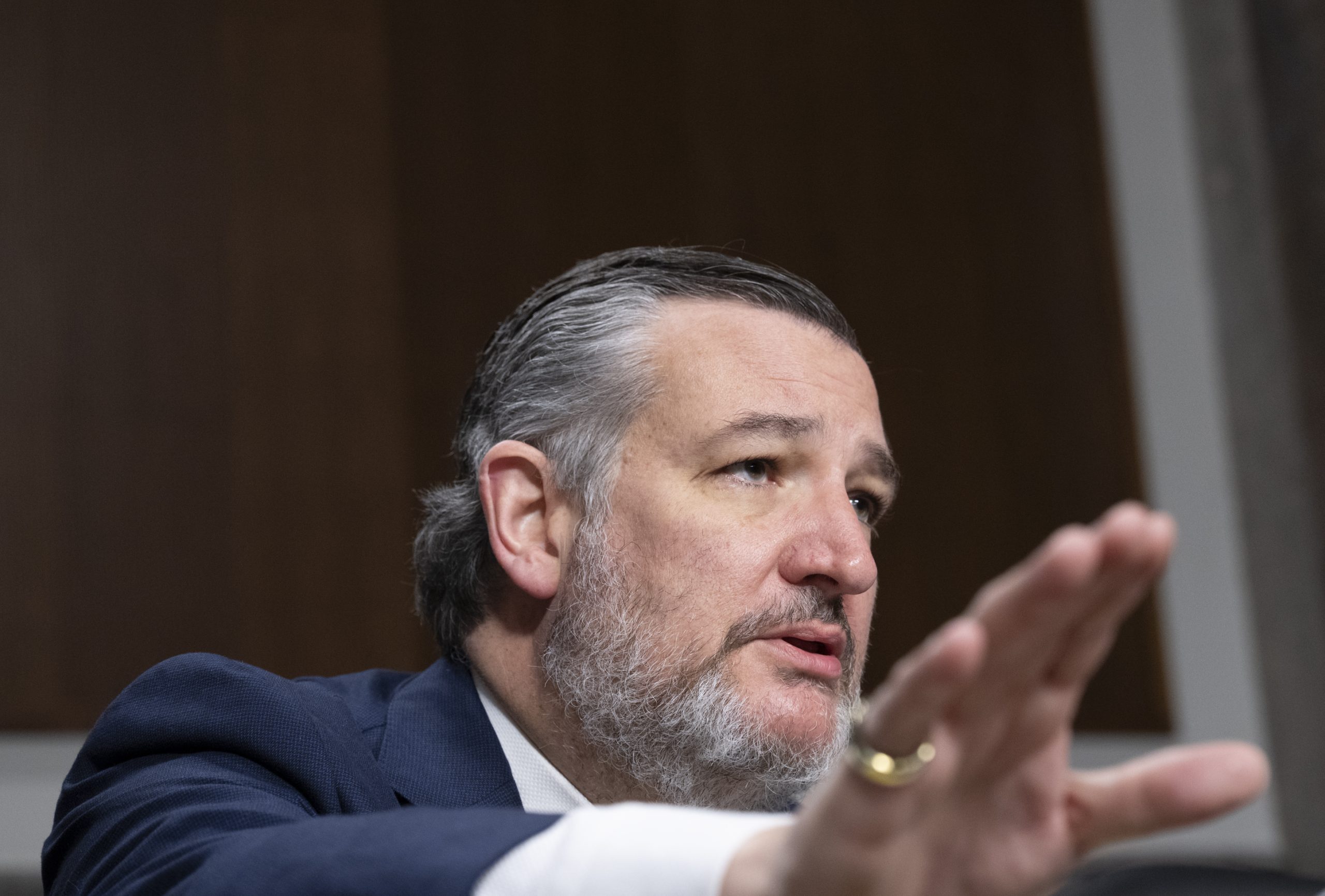
Many, but not all, of the canceled research projects at NSF were also in a database of 3,400 research grants compiled by Sen. Ted Cruz, a Texas Republican. Cruz characterized them as “questionable projects that promoted Diversity, Equity, and Inclusion (DEI) or advanced neo-Marxist class warfare propaganda.”
Ross at Grant Watch analyzed the titles and abstracts or summaries of the terminated projects and discovered that “Black” was the most frequent word among them. Other common words were “climate,” “student,” “network,” “justice,” “identity,” “teacher,” and “undergraduate.”
Frequent words in the titles and summaries of terminated NSF research projects
Word cloud of the most frequent terms from the titles and abstracts of terminated grants, with word size proportional to frequency. Purple is the most frequent, followed by orange and green. Source: Noam Ross, Grant Watch
At least two of the terminated research studies focused on improving artificial intelligence education, which President Donald Trump promised to promote in an April 23 executive order,“Advancing Artificial Intelligence Education for American Youth.”
“There is something especially offensive about this EO from April 23 about the need for AI education… Given the termination of my grant on exactly this topic on April 26,” said Danaé Metaxa in a post on Bluesky that has since been deleted. Metaxa, an assistant professor of computer and information science at the University of Pennsylvania, was developing a curriculum on how to teach AI digital literacy skills by having students build and audit generative AI models.
Another canceled grant involved college students creating educational content about AI for social media to see if that content would improve AI literacy and the ability to detect misinformation. The lead researcher, Casey Fiesler, an associate professor of information science at the University of Colorado Boulder, was almost midway through her two-year grant of less than $270,000. “There is not a DEI aspect of this work,” said Fiesler. “My best guess is that the reason it was flagged was the word ‘misinformation.’”
Confusion surrounded the cuts. Bob Russell, a former NSF project officer who retired in 2024, said some NSF project officers were initially unaware that the grants they oversee had been canceled. Instead, university officials who oversee research were told, and those officials notified researchers at their institutions. Researchers then contacted their project officers. One researcher told me that the termination notice states that researchers may not appeal the decision, an administrative process that is ordinarily available to researchers who feel that NSF has made an unfair or incorrect decision.
Some of the affected researchers were attending the annual meeting of the American Educational Research Association in Denver on April 26 when more than 600 grants were cut. Some scholars found out by text that their studies had been terminated. Normally festive evening receptions were grim. “It was like a wake,” said one researcher.
The Trump administration wants to slash NSF’s budget and headcount in half, according to Russell. Many researchers expect more cuts ahead.
The Hechinger Report provides in-depth, fact-based, unbiased reporting on education that is free to all readers. But that doesn’t mean it’s free to produce. Our work keeps educators and the public informed about pressing issues at schools and on campuses throughout the country. We tell the whole story, even when the details are inconvenient. Help us keep doing that.
The Supreme Court over the next two weeks will hear two cases that have the potential to erode the separation of church and state and create a seismic shift in public education.
Mahmoud v. Taylor, which goes before the court on April 22, pits Muslim, Roman Catholic and Ukrainian Orthodox families, as well as those of other faiths, against the Montgomery County school system in Maryland. The parents argue that the school system violated their First Amendment right of free exercise of religion by refusing to let them opt their children out of lessons using LGBTQ+ books. The content of the books, the parents say, goes against their religious beliefs.
Oklahoma Statewide Charter School Board v. Drummond, which will be argued on April 30, addresses whether the St. Isidore of Seville Virtual Charter School should be allowed to exist as a public charter school in Oklahoma. The Archdiocese of Oklahoma City and the Diocese of Tulsa had won approval for the charter school from the state charter board despite acknowledging that St. Isidore would participate “in the evangelizing mission of the Church.”
The state’s attorney general, Gentner Drummond, later overruled the approval, saying the school could not be a charter because charter schools must be public and nonsectarian. The petitioners sued and ultimately appealed to the Supreme Court, claiming Drummond violated the First Amendment’s free exercise clause by prohibiting a religious entity from participating in a public program.
Teachers unions, parents groups and organizations advocating for the separation of church and state have said that rulings in favor of the plaintiffs could open the door for all types of religious programs to become part of public schooling and give parents veto rights on what is taught. In the most extreme scenario, they say, the rulings could lead to the dismantling of public education and essentially allow public schools to be Sunday schools.
At issue in both cases is the question of whether the First Amendment rights of parents and religious institutions to the free exercise of religion can supersede the other part of the amendment, the establishment clause, which calls for the separation of church and state.
“I think a chill wind is blowing, and public education as we know it is in extreme jeopardy of becoming religious education and ceasing to exist,” said Rachel Laser, president of Americans United for Separation of Church and State, an advocacy organization that has filed an amicus brief in the St. Isidore case. “The whole idea is to have churches take control of education for American children. It’s about money and power.”
For some conservative lawmakers, evangelical Christian groups and law firms lobbying for more religiosity in the public square, decisions in the petitioners’ favor would mean religious parents get what they have long been owed — the option of sending their children to publicly funded religious schools and the right to opt out of instruction that clashes with their religious beliefs.
“If we win this case, it opens up school choice across the country,” said Mathew Staver, founder of Liberty Counsel, an Orlando, Florida-based conservative Christian legal firm that has filed a brief supporting the petitioners in both cases. “I see school choice as a reaction to the failed system in the public schools, which is failing both in academia but also failing in the sense they are pushing ideology that undermines the parents and their relationship with their children.”
By taking the cases, the Supreme Court once again inserts itself in ongoing culture wars in the nation, which have been elevated by presidential orders threatening to take away funding if schools push diversity, equity and inclusion initiatives and state laws banning teaching on various controversial subjects. Legal scholars predict that the Supreme Court will lean toward allowing St. Isidore and the opt-outs for parents because of how the justices ruled inthreecases between 2017 and 2022. In each case, the justices decided that states could not discriminate against giving funds or resources to a program because it was religious.
Of the two cases, St. Isidore likely could have the greatest impact because it is attempting to change the very definition of a public school, say opponents of the school’s bid for charter status. Since charter schools first started in the 1990s, they have been defined as public and nonsectarian in each of the 46 state statutes allowing them, according to officials at the National Alliance for Public Charter Schools. Today,charter schools operate in 44 states, Guam, Puerto Rico and Washington, D.C., andserve roughly 7.6 percent of all public school students.
“It would be a huge sea change if the court were to hold they were private entities and not public schools bound by the U.S. Constitution’s establishment clause,” said Rob Reed, the alliance’s vice president of legal affairs.
A victory for St. Isidore could lead to religious-based programs seeping into several aspects of public schooling, said Steven Green, a professor of both law and history and religious studies at Willamette University in Salem, Oregon.
“The ramification is that every single time a school district does some kind of contracting for any kind of service or curricular issues, you’re going to find religious providers who will make the claim, ‘You have to give me an opportunity, too,’” Green said.
St. Isidore’s appeal to the Supreme Court is part of an increasing push by the religious right to use public funds for religious education, said Josh Cowen, a professor of education policy at Michigan State University and author of a 2024 book on school vouchers. Because of previous court decisions, several voucher programs across the country already allow parents to use public money to send their children to religious schools, he said.
“What’s going to happen if the court says a public school can be run by a religious provider?” Cowen asked. “It almost turns 180 degrees the rule that voucher systems play by right now. Right now, they’re just taking a check. They’re not public entities.”
The effect of a St. Isidore victory could be devastating, he added. “It would be one more slippery slope to really kicking down the wall between church and state,” Cowen said.
Jim Campbell, chief legal counsel for Alliance Defending Freedom, which is representing St. Isidore’s bid to become a charter, discounted the idea that a St. Isidore win would fundamentally change public schools. Like Staver, he views St. Isidore as simply providing another parental option. “We’re not asking the state to run a religious school,” Campbell said. “These are private entities that run the schools. This is a private organization participating in a publicly funded program.”
Opponents of religious charter schools question whether St. Isidore would have to play by the same rules as public schools.
“How are they going to handle it when there’s a teacher who has a lifestyle that doesn’t align with Catholic school teaching? They’re talking out of both sides of the mouth,” said Erika Wright, an Oklahoma parent and plaintiff in a lawsuit protesting a Bible in the classroom mandate by Oklahoma’s state superintendent of instruction. She also joined an amicus brief against St. Isidore’s formation.
“As a taxpayer, I should not be forced to fund religious instruction, whether it’s through a religious charter school or a Bible mandate,” Wright said. “I shouldn’t be forced to fund religious indoctrination that doesn’t align with my family’s personal beliefs.”
Notably, in the Montgomery County parents’ case going before the court, parents use similar reasoning to support their right to opt out of instruction. “A school ‘burdens’ parents’ religious beliefs when it forces their children to undergo classroom instruction about gender and sexuality at odds with their religious convictions,” the parents’ brief said.
The school district in 2022 adopted several books with LGBTQ+ themes and characters as part of the elementary language arts curriculum. Initially, families were allowed to opt out. But then the school system reversed its policy, saying too many students were absent during the lessons and keeping track of the opt-outs was too cumbersome. The reversal led to the lawsuit.
Historically, school districts have given limited opt-outs to parents who, for example, do not want their child to read a particular book, but the Montgomery County parents’ request is broader, said Charles C. Haynes, a First Amendment expert and senior fellow for religious liberty at the Freedom Forum in Washington, D.C. The parents are asking to exclude their children from significant parts of the curriculum for religious reasons.
“If the court sides with the parents, I think the next day, you’re going to have parents across the country saying, ‘I want my kids to opt out of all the references to fill-in-the-blank.’ … It would change the dynamic between public schools and parents overnight,” Haynes said.
Sarah Brannen, author of “Uncle Bobby’s Wedding,” one of the LGBTQ+ books Montgomery County schools adopted, sees major logistical issues if the school system loses. “Allowing parents to interfere in the minutia of the curriculum would make their already difficult jobs impossible,” she said.
Colten Stanberry, a lawyer with the Becket Fund for Religious Liberty representing the Montgomery County parents, disagreed. School systems manage to balance different student needs all the time, he said.
A triumph for the Montgomery County families and St. Isidore would cause much more than logistical issues, said Becky Pringle, president of the National Education Association. It could lead to a public education system where parents can pick a school based on religious beliefs or try to change a traditional public school’s curriculum by opting out of lessons in droves.
“For us to be a strong democracy, then we necessarily need to learn about all of us. To separate us flies in the face of why we were founded,” Pringle said.
The Hechinger Report provides in-depth, fact-based, unbiased reporting on education that is free to all readers. But that doesn’t mean it’s free to produce. Our work keeps educators and the public informed about pressing issues at schools and on campuses throughout the country. We tell the whole story, even when the details are inconvenient. Help us keep doing that.
The Trump administration has frozen $510 million in federal research funding to Brown over alleged antisemitism on campus related to pro-Palestinian protests.
“Given the volatility in the capital markets and the uncertainty regarding future federal policy related to research and other important priorities of Brown, the University is fortunate to have a number of sources of liquidity, including commercial paper programs, bank lines and the private and public debt markets that are available to help us manage our finances and priorities during this period,” Brown spokesperson Amanda McGregor wrote to Inside Higher Ed by email.
She added that Brown “chose to negotiate directly with a lender in order to tailor the loan to our particular objectives,” rather than leverage bonds, as some other institutions have done recently. Beyond threats to its federal funding, the university also announced last year that it had a $46 million budget deficit.
Both Harvard University and Princeton University announced in recent weeks that they were issuing bonds. Harvard, which is issuing $750 million in bonds, told Inside Higher Ed the move was about “contingency planning for a range of financial circumstances.” Harvard recently had $2.2 billion frozen by the Trump administration after it rejected a series of demands. President Alan Garber argued that the government was asking Harvard to surrender its autonomy, calling such a demand “unconstitutional.”