The Department of Education has had a successful few months when it comes to advancing policies that could dramatically reshape federal student aid. But officials’ tactics for doing so have raised concern among many of higher ed’s top leaders and policy analysts.
Over the course of the last four months, Under Secretary Nicholas Kent and his staff secured unanimous support from a variety of college leaders, state officials and student advocates on plans that cap graduate student loans, expand the Pell Grant to short-term job training programs and establish a new accountability measure for all colleges and universities—an outcome that defied initial expectations and one Kent touted.
“Here’s the reality: When you come to the table prepared with smart and dedicated people that are focused on a clear goal, you can move quickly and intentionally without sacrificing the thoroughness and the careful deliberation that this process deserves,” he said in December. “We have proven that speed and quality are not mutually exclusive.”
Kent went on to tell Inside Higher Ed this month that in order to implement the policies under a tight July 1 deadline set by Congress, he needed to finalize his proposals and do it fast. The key to doing so, he said, was using open dialogue and compromise to reach consensus—even as the department held fast to its core principles. He also believed that unanimous agreement could put an end to years of back-and-forth over higher ed policy and provide clarity for the institutions and students it would affect.
Nicholas Kent
But some involved in the negotiations as well as outside policy analysts say the department “strong-armed” committee members into agreement by threatening them with what could happen if they voted no—if the committee didn’t reach consensus, department officials could scrap any compromises made and rewrite the proposal as they saw fit.
Antoinette Flores, a higher ed policy expert who led similar negotiation sessions under the Biden administration and now works at a left-leaning think tank, said the committee members were repeatedly called into private meetings with Kent and department staff in which there was “heavy political pressure” to agree to the department’s proposal.
“They were leveraging the power of consensus with a little bit of fear,” she said.
Other observers, however, viewed the department’s tactics as nothing more than part of good dealmaking—a typical aspect of the rule-making process.
Either way, the talks shed light on how determined department negotiators can control the direction and outcome of the discussion, in part by coming to the table with explicit priorities and refusing to give much ground, according to more than half a dozen committee members and outside experts.
We were very honest throughout the process that this was a give-and-take. And we reminded people what was at stake and what the regulatory community could gain and lose.”
—Under Secretary Nicholas Kent.
Those interviewed cautioned that these talks aren’t necessarily a blueprint for future negotiations because they were largely driven by the One Big Beautiful Bill Act, which gave the department little wiggle room. Still, the rounds of negotiations revealed more about Kent’s playbook and how this Trump administration is more prepared to leverage the complicated policymaking process and advance the president’s priorities.
And the department’s policy agenda for 2026 suggests that there are still many negotiations to come as officials plan to rework the rules for accreditation, civil rights investigations and foreign gifts.
“Everybody should buckle up,” Kent said. “We’ve got a lot of work to do here.”
Setting the Tone
Before department staff reached the negotiating table, they knew what a tight timeline they’d be operating under. So with their eyes set on consensus, they worked to be “more prepared than [they] ever had been,” said Kent, who was hands-on during the talks and at one point made the unprecedented move to join the negotiating table.
The department conducted listening sessions with multiple constituency groups to get a sense of the challenges and opportunities they may face, and officials then released drafts of their proposals ahead of the meetings, coming armed with data presentations to back up their policy changes.
In two of the three rule-making sessions, Kent opted to condense negotiations that usually took place over the course of months down to one week. Public comment for all three was limited to one session held before any of the discussions began.
The threats were not thinly veiled. They were very bold.”
—Former Biden official
Noting that the department dealt with some of the topics for many years, Kent said, “There’s no reason that we needed to come and ask people very philosophical questions at the beginning.”
But coming in with detailed plans to kick off the talks also gave the department an upper hand. It narrowed the scope of debate and placed the burden on committee members to argue why and how any changes should be made, policy experts explained.
“Twenty years ago when you did neg reg, the department would [merely] have ideas about what it wanted to workshop with the negotiators,” said Aaron Lacey, a higher education lawyer who negotiated the policies for Workforce Pell and new accountability measures. But that’s not the case anymore. “It also puts a much greater burden on the negotiators. You’re just working around the clock, drafting, reviewing and justifying proposals. Whereas in years past, it was four o’clock and you were done until the next day started. It’s just a totally different exercise.”
To Lacey, the department was essentially working to “orchestrat[e] a consensus vote” on their plans.
“I don’t know how I feel about that,” he said. “But I have to acknowledge that that’s what they’re doing, and they seem to be doing it very well.”
Drawing Hard Lines
Another, more direct way, that the department pushed for unanimous agreement, policy analysts said, was by limiting the changes it would consider and making clear that there would be consequences if consensus wasn’t reached.
During the first negotiation over student loan caps in early fall, the department publicly dug its heels in over what programs could qualify for higher borrowing limits. And while ED made a few small concessions, multiple sources told Inside Higher Ed that those changes were used as bait to compel them to vote yes, even as they didn’t agree with other key issues in the department’s final proposal.
They could have just treated neg reg as a formality, failed [to reach consensus] and then written the rule that they wanted to in the first place.”
—Preston Cooper, senior fellow at the American Enterprise Institute
In a series of private caucuses with negotiators, department officials conveyed that if committee members didn’t vote in favor, they would not only drop their small concession on loan caps but void other changes in the loan-repayment regulations, which were also part of the negotiations.
“The threats were not thinly veiled,” one former Biden appointee said on the condition of anonymity due to conflict with their current job. “They were very bold.”
Then, in January, as the committee negotiated accountability measures, department officials made a similar move, telling some committee members that they would scrap a rule aimed at holding nondegree programs and for-profit colleges accountable. At the time, the department was seeking to water down the rule known as gainful employment in order to match it with a new one for all other college programs.
Although the department’s threats once again worked, one negotiator spoke up about the tactics at the meeting.
In her closing remarks, Tamar Hoffman, a consumer rights attorney who had represented the higher ed legal aid groups on both committees, said she wanted to vote no but was choosing to abstain from the vote—a move that didn’t block consensus.
The students covered by gainful employment were “just too important for me to take that risk,” she said.
Lacey, the committee member representing nonprofit institutions, later told Inside Higher Ed that the department suggested to him they could leave gainful employment and its higher standards if the institutional representatives didn’t vote yes.
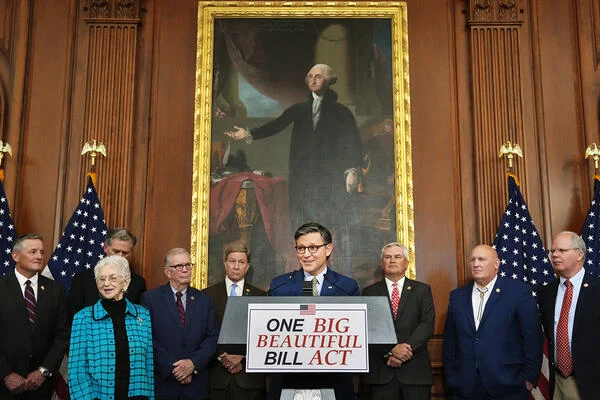
Congress passed a slew of higher education policy changes in the One Big Beautiful Bill Act.
Kevin Dietsch/Getty Images
To Kent and some negotiators, reminding committee members what was at stake was just the art of the deal.
“We were very honest throughout the process that this was a give-and-take. And we reminded people what was at stake and what the regulatory community could gain and lose,” Kent said. “The department was very clear in the caucuses that we were not threatening, that we were not strong-arming, but that we were simply reminding people what’s at stake.”
Preston Cooper, a senior fellow at a right-leaning think tank who represented taxpayers in the negotiation, said the department’s actions were a reasonable use of its upper hand in the rule-making process. Like Hoffman, he wanted to keep gainful employment, but he knew that ED didn’t have to try for consensus at all. In fact, he noted, that’s what previous administrations have done, so, in his eyes, Kent wasn’t twisting negotiators’ arms. Instead, he was invested in creating long-lasting solutions.
“They could have just treated neg reg as a formality, failed [to reach consensus] and then written the rule that they wanted to in the first place,” he said.
Will Consensus Last?
At most, consensus on the policies will last until the department receives public comment. At that point, the department has to review and respond to those comments and can make changes to the regulations.
“Consensus doesn’t get you that much. The department could, and has in the past, completely backtracked,” a former Biden official said. “So it will be very telling whether the administration is simply trying to stick with its consensus agreements, or whether the administration is trying to be responsive to the comments they get and set in place rules that are legally defensible, politically sustainable and that will let them implement these rules quickly.”
Beyond the immediate rule-making process, not everyone is as convinced as Kent that these consensus votes are enough to end the game of higher ed policy ping-pong that’s played out over the last 10 years.
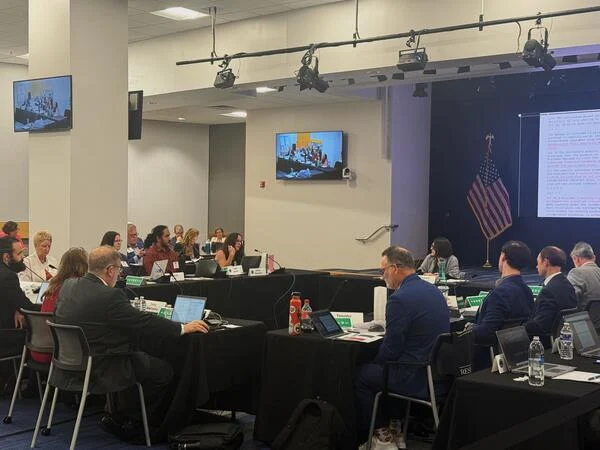
The Education Department held three rounds of rule-making sessions over the last four months.
Jessica Blake/Inside Higher Ed
Flores, another former Biden appointee who is now at New America, isn’t so sure that the department would have achieved consensus if they hadn’t used such a “fear-based approach.” As a result, she said, it makes the legitimacy of the agreement “somewhat surface level.”
If these regulations do last, she believes it will be because they are rooted in legislation.
“It won’t be a consensus, per se, that leads to ending the whiplash. It is that we have big legislative changes and those things are hard to change overnight,” Flores explained.
But even then, she noted, the legislation was passed on a rushed schedule through an atypical budget bill without bipartisan support. If Democrats win back power on the Hill, there could be future legislation to tweak the reforms. In the meantime, she said, the department’s approach, which included little opportunity or consideration for public feedback, could lead to legal challenges.
A group of bipartisan lawmakers has already introduced legislation that would adjust the programs eligible for loan caps, following significant pushback from nurses and other health-care professionals who were not deemed professional and placed in the lower bracket.
“I’d expect a legal challenge on the professional definition as soon as the rule is finalized, which will lead these questions to kind of linger and might delay implementation down the line,” Flores said.