Tag: Targets

  • Week in review: Trump administration targets Chinese student visas

    Week in review: Trump administration targets Chinese student visas

    Most clicked-on story from last week: 

    House Republicans passed — by one vote — a massive spending bill backed by President Donald Trump with heavy implications for higher education. Among other proposals, it would raise and expand the endowment tax, introduce a risk-sharing program that would put colleges on the hook for unpaid student debt, nix subsidized loans and narrow eligibility for Pell Grants. Many expect the Senate to make changes to the bill.

    Number of the week


    7

    That’s how many regional branch campuses Pennsylvania State University is set to close after a 25-8 vote by its trustee board. The plan will pare down the university’s commonwealth campuses to 13 to cope with demographic declines and budget pressure. Detractors said the decision was made too hastily, ignored some campuses’ recent progress and could hurt the state’s rural areas.

    Trump administration updates:

    • The Trump administration aims to “aggressively revoke visas for Chinese students” while ramping up scrutiny and changing criteria for student visa applications from China and Hong Kong, U.S. Secretary of State Marco Rubio said Wednesday. With nearly 278,000 students from China studying in the U.S. during the 2023-24 academic year, the move could have a steep impact on U.S. colleges.
    • Sixteen states sued the National Science Foundation over the agency’s 15% cap on indirect research costs and its mass termination of grants related to diversity, equity and other topics. The states’ colleges “will not be able to maintain essential research infrastructure and will be forced to significantly scale back or halt research, abandon numerous projects, and lay off staff,” plaintiffs said in their complaint. 
    • The Trump administration plans to cut Harvard University’s remaining federal contracts, amounting to about $100 million. An official with the U.S. General Services Administration cited what he alleged was “Harvard’s lack of commitment to nondiscrimination and our national values and priorities.” The salvo is the latest in the federal government’s escalating battle with the Ivy League institution. 

    Texas legislators look to tighten control of colleges:

    • The Texas House approved a bill that would give the state’s regents — who are appointed by the governor — the power to recommend required courses at public colleges and to reject courses deemed too biased or ideological. Regents would also gain approval authority over the hiring of administrators. 
    • Another bill approved by the House would limit where and how students can protest on campuses. The Texas House and Senate are working to resolve their differences over the bill, according to The Texas Tribune. 

    Quote of the week:

    There’s a bit of anxiousness among accreditors and institutions and state legislators because of the uncertainty. Is it that they are intentionally being vague or general until they can work out all of the nuances of the policies that they want to implement? I can tell you, less is not more in this situation.”

    That’s Cynthia Jackson Hammond, president of the Council for Higher Education Accreditation, on the effects of Trump’s executive order on college accreditation.

    Source link

  • Trump Targets Chinese Students, a Harsh Blow to Higher Ed

    Trump Targets Chinese Students, a Harsh Blow to Higher Ed

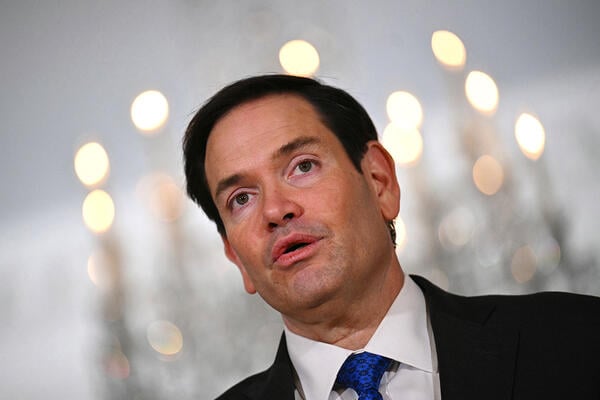
    Secretary of State Marco Rubio announced on Wednesday night that the Trump administration will “aggressively revoke” Chinese college students’ visas and heighten scrutiny of visa applicants from China. The new policy specifically targets “those with connections to the Chinese Communist Party or studying in critical fields.”

    It’s the administration’s latest move in what has been a sudden resurgence in its attacks on international students, which it seemed to suspend in April after legal efforts led to the restoration of the legal status of thousands of students.

    The news sent shock waves through higher education and could lead to a major reduction in foreign students at American universities, especially public research institutions. China contributes the largest number of international students to the U.S., with nearly 280,000 enrolled in 2023–24, according to data from the Institute of International Education—about a quarter of the total international student population in the country. 

    That share, however, has been shrinking since the COVID-19 pandemic; last year, India overtook China as the No. 1 source country of international students. But Chinese students are far more likely to enroll in undergraduate programs and pay more in tuition. They also make up a significant slice of STEM researchers: 16 percent of all U.S. graduate students in STEM fields and 2 percent of undergraduates are Chinese nationals, according to a 2020 report from the Center for Security and Emerging Technology at Georgetown University.

    It’s not clear whether the visa revocations would be accompanied by legal status terminations in the Student Exchange and Visitor Information System or prompt deportation proceedings, as they did for thousands of international students in March and April. Those steps would be the purview of the Department of Homeland Security.

    The targeting of students in “critical fields” in particular could devastate STEM programs and research labs at smaller universities across the country, where Chinese international students are heavily represented. Rubio did not clarify what fields could be considered critical, potentially setting the stage for a sweeping focus on areas where GOP lawmakers have raised concerns about sensitive national security research being shared with the Chinese government.

    A spokesperson for the State Department did not respond to a list of questions, including requests to clarify the scope of the new policy’s target and the timeline for visa revocations, in time for publication. At a press conference yesterday, department spokesperson Tammy Bruce declined to “get into the details” of how the new visa scrutiny would be applied or what “critical fields” the department was referring to, because it “might give up our hand and make certain things less effective.”

    “When we think of critical fields, we think of national security, the nature of how we keep America safe and secure and more prosperous,” she said. “It is important to keep a broad base, because that could mean many things.”

    The new policy’s focus on students with ties to the Chinese Communist Party has also raised concerns about academic freedom and free speech violations. Jonathan Friedman, managing director of U.S. free expression at PEN America, said the new policy targeting Chinese students would “hold student visas hostage to an ideological litmus test and disrupt the open exchange of ideas across cultures and borders.”

    “‘Aggressively revoking’ visas based on political ideology is a gross violation of basic free expression principles that anchor the academy,” he wrote to Inside Higher Ed.

    William Brustein, a retired longtime international student administrator, said the vague nature of Rubio’s directive could enable a sweeping dragnet that catches the majority of Chinese students—especially since association with the ruling Communist Party is difficult to avoid in China.

    “How will they know who’s a member? Maybe they’ll say if you were in a Chinese-sponsored youth group as a child, that could prevent you,” Brustein said. “Right now that policy is so vague that it could cover all Chinese students who want to study in the U.S.”

    Revocation Resurgence

    The administration briefly retreated from its persecution of international students late last month, after targeting pro-Palestine student protesters and expanding its scope to terminate the legal residency of thousands of students at institutions across the country. But a spate of successful court challenges halted the campaign in April, spurring the Trump administration restore more than 5,000 students’ SEVIS statuses.

    A lull followed the restoration as students, advisers and lawyers waited for the administration’s next move. It came two weeks ago, when the Department of Homeland Security released a new Immigration and Customs Enforcement policy granting the agency more leeway to revoke students’ SEVIS status with little justification.

    The Trump administration’s new strategy seems to target specific international student populations. So far, those have been recent graduates on Optional Practical Training visa extensions, students at Harvard University and potentially other institutions in their crosshairs, and now students from China, who Rubio claims are more likely to be national security threats.

    The State Department has also begun to tighten visa restrictions for applicants and incoming students. On Tuesday, Rubio announced a pause on all new student and exchange visa interviews while the administration implements an intensive new social media screening policy. The latest announcement on China also said the State Department would review application criteria to “enhance scrutiny of all future visa applications” from China and Hong Kong.

    Marjorie Hass, president of the Council of Independent Colleges, said there’s already a process for vetting international students, and that the administration’s new policy seems more aimed at scoring political points and justifying deportations than enhancing national security.

    “Institutions have their own admissions standards and the embassies do vet students who come into the country,” she said. “It’s not currently the Wild West.”

    Brustein said that if international students from China weren’t already moving away from American colleges en masse due to this spring’s targeting of foreign students, the latest move is sure to discourage future applicants.

    “We’re shooting ourselves in the foot,” he said. “Even if some of these decisions are reversed, we’re undoing the progress we’ve made over so many years in being this welcoming environment for the best and brightest in the world.”

    “That harm I don’t think can be undone.”

    A Blow for Research Universities

    Brustein has led international student offices at West Virginia University, the University of Illinois at Urbana-Champaign and Ohio State University, where he said there were “thousands” of Chinese students who often paid three times as much as their domestic peers.

    He said the colleges likely to be hit hardest by a major reduction in current and future Chinese students are public ones, especially regional institutions in areas with shifting demographics and declining college-going rates.

    “There are regional public universities and flagships across the Midwest, in the South, that have a large contingent of Chinese students who are coming particularly for STEM education,” Brustein said. “It’s those ones that survive on a thin revenue stream who are going to suffer the most.”

    He added that a sizable reduction in Chinese international students would likely hit scientific research hardest.

    “Many Chinese students get degrees in computer science, engineering, and go on to go to grad school or do an OPT,” he said. “They stay in the country, work in our labs, contribute significantly to innovation in this country, not China. To lose that is going to be a very big blow to our capacity for innovation.”

    Hass said that Chinese students have been both a financial lifeline and a source of cross-cultural exchange between the two countries for more than a decade. She said the benefits for higher education and for American diplomacy have been overwhelmingly positive, and a large-scale rollback of that relationship would be destructive for both.

    “This is a place where the balance of trade is very much in favor of the U.S.,” she said. “It’s mystifying why we would be undermining that.”

    She added that for many colleges, international students—and the volume of full-paying Chinese students in particular—help institutions improve access for local students.

    “Colleges will miss out on a lot of revenue,” she said. “That means the burden has to be borne by domestic students.”

    Source link

  • Trump Order Targets Undocumented Students’ In-State Tuition

    Trump Order Targets Undocumented Students’ In-State Tuition

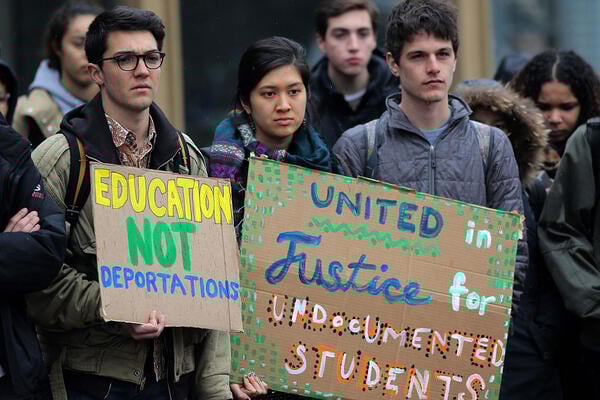
    Immigrant rights advocates are urging state and higher ed leaders not to make any hasty changes to their in-state tuition policies after President Trump issued an executive order on Monday threatening to crack down on sanctuary cities and localities with laws that benefit undocumented immigrants.

    The blow to undocumented students, who in nearly half the country pay in-state tuition, is tucked into an executive order focused mostly on pressuring state and local officials to abandon their cities’ sanctuary status and cooperate with federal immigration authorities. The order demands federal officials make lists of “sanctuary jurisdictions” and the federal funds that could be suspended or cut if they don’t change course. The order also commands them to take “appropriate action” to stop the enforcement of state and local laws and practices “favoring aliens over any groups of American citizens,” including in-state tuition benefits to undocumented students “but not to out-of-state Americans.”

    The move has the potential to affect 24 states and Washington, D.C., which allow in-state tuition for local students with or without citizenship. (Florida previously allowed undocumented students to pay in-state tuition rates but ended its decade-old, historically bipartisan policy in February.) Undocumented students and supporters have long touted these policies as a way to make college more affordable for those who can’t access federal financial aid but who grew up in the states and plan to work in their local communities after they graduate.

    “What immigrant, international and refugee students bring is needed talent, skills and contributions,” said Miriam Feldblum, executive director of the Presidents’ Alliance on Higher Education and Immigration. “In-state tuition increases the number of a state’s residents who are college educated, who are able to contribute far more to the state’s economy and to their communities than if they did not have a college education.”

    Gaby Pacheco, president and CEO of TheDream.US, a scholarship provider for undocumented students, said many of these students come from low-income backgrounds and couldn’t afford college otherwise.

    Her organization is currently scrambling to help undocumented students in Florida pay for the remainder of their credits and graduate before they have to pay much higher out-of-state tuition rates. In some cases, that means helping them transfer to more affordable institutions.

    For many, “it’s just impossible for them to be able to come up with that money,” she said.

    She’s encouraging state and institutional leaders to avoid “panicking” or “making abrupt policy changes” in response to the executive order.

    Other executive orders have “created so much panic and unnecessary movement from colleges, universities, states, that it was more hurtful than anything,” she said. The administration is putting forward a “belief” that charging undocumented students in-state tuition rates is unlawful, but “that belief is legally dubious.”

    Deciphering the Executive Order

    Immigrants’ advocates and legal scholars say the meaning of the executive order is somewhat hazy. For example, it’s unclear what it means for federal officials to “take appropriate action” to prevent in-state tuition policies from being enforced.

    The order also doesn’t directly say states or institutions with such laws will lose any federal funding, noted Ahilan Arulanantham, professor from practice at the UCLA School of Law and co-director of the law school’s Center for Immigration Law and Policy.

    Still, the order’s threatening tone toward sanctuary cities’ federal funds could be “a window into where this fight could go if the federal government wants to expend significant political capital on this issue,” Arulanantham said. Congress, for example, could decide to pass a law to cut federal funds from universities that offer undocumented students in-state tuition—a proposal outlined in Project 2025. But the executive order itself doesn’t explicitly take away federal dollars from anyone or have the power to do so, he said.

    “If I were a local government or state government official, I probably wouldn’t sue tomorrow over this,” Arulanantham said. “I would wait to see if this is actually going to have any teeth, or if it’s just like a press release.”

    Pacheco similarly described the order as “warning” states of the administration’s posture toward these policies. At the same time, she believes it’s important to plan ahead in case Trump takes the issue further.

    “They’re trying to tell states, ‘We believe that you providing certain benefits for undocumented students is against the law,’” she said. “We’ve known this forever—these states are not violating the law.”

    The order suggests that in-state tuition for undocumented students “may violate” a federal statutory provision that says undocumented people can’t receive higher ed benefits unless citizens are also eligible. But in-state tuition policies are designed to serve citizens living in these states, as well. For example, under California’s Assembly Bill 540, any nonresident who spent three years in California high schools is eligible for in-state tuition. That policy also benefits citizens who grew up in the state who may have left for any reason and returned.

    These types of in-state tuition policies, including California’s, have faced legal challenges in the past, “but all the challenges have failed, said Kevin Johnson, dean of the UC Davis School of Law. He described the executive order as “vaguely worded,” while the state laws, by contrast, are “very clear.”

    The legal argument is that undocumented students are “just being treated equally as all other residents of the state,” he said. “The idea is that they’re residents, which means they’re taxpayers—maybe it’s sales tax, maybe state income tax, federal income tax—whatever it is, they should be treated like other residents and not discriminated against because of their immigration status.”

    What Happens Next

    Arulanantham worries that despite their strong legal foundation, states and higher ed institutions may rush to end in-state tuition benefits for undocumented students out of fear.

    “That’s actually almost certainly the primary purpose of this order”: to spur “pre-emptive discrimination because [institutions] think they have to or they think it’s safer to,” he said.

    Feldblum noted that, prior to the executive order, some state lawmakers were already starting to shift on the issue, perhaps “to align themselves with the federal government.”

    While some states have recently doubled down on such policies, proposing new legislation to expand in-state tuition eligibility, others have also moved to curtail them. Following in Florida’s footsteps, lawmakers in other states, including Kansas, Kentucky and Texas, are considering legislation to prohibit in-state tuition for undocumented students. Texas was the first to allow undocumented students to pay in-state tuition rates in 2001, joined by California that same year.

    “This is not coming in a vacuum … We have to take this seriously and substantively, consider the kinds of actions we need to take to defend in-state tuition—including, if needed, legal action,” Feldblum said. “And then also make sure we’re placing equal emphasis on supporting and communicating with potentially impacted students so that they know their education is important and that they’re important.”

    Source link

  • Brown University targets student journalist for sending DOGE-like emails

    Brown University targets student journalist for sending DOGE-like emails

    “Describe what tasks you performed in the past week.” 

    That’s what student journalist Alex Shieh asked 3,805 administrators at Brown University in a March 18 email. The backlash was swift. 

    Just two days later, Brown told Shieh it was reviewing his DOGE-inspired email — based on allegations that he had “emotionally harmed” several employees and “misrepresented” himself by saying he was a reporter for the conservative student newspaper The Brown Spectator, which he was. 

    Elon Musk, de facto head of the Department of Government Efficiency (DOGE), wields a chainsaw at the 2025 Conservative Political Action Conference.

    In Brown’s letter, officials also claimed he violated operational procedures and demanded he “return any confidential information,” warning that his access to university data systems could be restricted.

    Days later, Associate Dean and Associate Director of Student Conduct & Community Standards Kirsten Wolfe threatened to charge Shieh with “failure to comply” unless he provided evidence that he had deleted unspecified confidential information that Brown alleged he may have accessed. Wolfe also demanded Shieh keep even the existence of this investigation private. Nor has Brown revealed what confidential information they believe he published, and Shieh denies having taken any confidential information.

    He pointed out that even if he did have any confidential information — an allegation the university has not begun to substantiate — providing evidence that he deleted it would also provide Brown incriminating evidence that he had the information in the first place — violating Brown’s promise that students have a right against self-incrimination

    Brown’s response here flies in the face of its due process and free expression guarantees, and threatens to chill student reporting on campus. Due process is essential not just to guarantee defendants a fair shake, but to uphold the legitimacy of campus disciplinary proceedings. It also acts as a bulwark protecting students’ individual liberties. As FIRE has said before, universities that guarantee their students free expression cannot base investigations on the very speech they promise to protect — and for good reason. 

    Telling someone they are the target of an investigation can have a chilling effect on speech, especially in cases like this one, where universities also can’t use chilling investigations as fishing expeditions. Brown’s effort to get Shieh himself to substantiate its assertions against him by providing evidence he thinks could relate to the allegations against him flips the disciplinary process on its head. ​​

    Fundamental fairness requires that the university bear the burden of proving the allegations, not the student to prove his innocence.

    Moreover, Brown’s threats also burden newsgathering practices protected by the university’s guarantee of press freedom. Certainly, administrators are within their rights to investigate actual breaches of confidentiality policies. But investigating journalism, offbeat though it may be, is a far cry from that.

    University President Christina Paxson declared in a recent letter that Brown will defend free expression against encroachments from the federal government. Shieh’s case suggests that her promise does not extend to Brown’s own encroachments on free expression.


    FIRE defends the rights of students and faculty members — no matter their views — at public and private universities and colleges in the United States. If you are a student or a faculty member facing investigation or punishment for your speech, submit your case to FIRE today. If you’re a faculty member at a public college or university, call the Faculty Legal Defense Fund 24-hour hotline at 254-500-FLDF (3533). If you’re a college journalist facing censorship or a media law question, call the Student Press Freedom Initiative 24-hour hotline at 717-734-SPFI (7734).

    Source link

  • Heat networks could help institutions meet net zero targets

    Heat networks could help institutions meet net zero targets

    Heat networks enable heat and hot water to be distributed from a central ‘energy centre’, via mainly underground pipes, to multiple buildings.

    Boiler systems in connected buildings would be replaced with new infrastructure, to enable circulation of heat from the network. The energy centre becomes the source of the heat supply.

    Heat networks have a long history — with the first networks being tested nearly 150 years ago. Distribution of heat from a centralised heat source was taken forward in New York city in the late nineteenth century. In the UK, heat networks were used in blocks of flats in the 1960s and 70s. Denmark was one of the first countries to start using heat networks on a wide scale, in response to the oil crisis in 1973. Currently, heat networks are commonly used in Scandinavia and Eastern Europe and in cities across the USA and Canada. There are around 14,000 heat networks in the UK with many being campus-style, providing heat to groups of social housing or hospital/NHS campuses.

    Modern heat networks can utilise sources of low carbon heat. These include energy from waste facilities, geothermal sources, solar thermal arrays, air and ground source heat pumps and data centres.

    Participating in a heat network is likely to be more environmentally friendly and, in some cases, more cost-effective than maintaining older, inefficient gas-fired heating systems.

    Funding available

    It’s estimated that fifty per cent of buildings in the UK are located in areas suitable for the construction of a heat network, which currently supply around 2 to 3 per cent of the UK’s heat. The Committee on Climate Change predicts that in order to meet net zero targets (with around 20 per cent of heat supply being from heat networks), it is estimated that investment will need to be around £60 to £80 billion by 2050.

    The government has confirmed its support for the sector, as re-iterated at November’s Association for Decentralised Energy Conference by Miatta Fahnbulleh, Minister for Energy Consumers. The government has set a target for at least 18 per cent of the UK’s heat demand to be met from heat networks by 2050. Over £600 million of government funding has been allocated to develop and improve heat networks.

    The government’s recently published “Clean Power 2030” action plan sets out that the national wealth fund will make available an expanded suite of financial instruments, as part of investment in heat networks and other clean energy sectors.

    The Department for Energy Security and Net Zero already significantly supports the sector via capital grant funding from the Green Heat Network Fund. Education institutions have a range of grant options available to them. One example is the Public Sector Decarbonisation Scheme (via its delivery body, Salix Finance), being a fund dedicated to supporting energy efficiency and decarbonisation initiatives.

    Financial support for heat networks is supplemented by the work of other bodies such as the Heat Networks Industry Council, which is a joint industry and Government forum that aims to grow the heat network sector.

    Taken together, it is clear that there is genuine ambition to ensure that heat networks play a key role in helping the UK meet its net zero ambitions.

    Notable heat network developments

    A number of major heat network projects are underway, including the hugely ambitious South Westminster Area Network (referred to as “SWAN”), which will supply low carbon heating to the Houses of Parliament, the National Gallery and large areas of Whitehall, and the Leeds PIPES heat network, which connects to over 3000 dwellings.

    The existence of these projects, and numerous others, is evidence of a growing trend in the emergence of heat networks as a major contributor to the UK’s net zero ambitions.

    Campus based networks

    Heat networks can work well on campus-style facilities. Given the location of the projects mentioned above, city-based higher education institutions should also consider whether it is feasible for their buildings to connect to a heat network, and whether a heat network is planned in their area.

    There are a number of recent adopters of heat networks in the education sector, including the University of Liverpool, the University of Bradford and the University of Warwick, with many more universities considering becoming heat off-takers.

    Heat networks present academic institutions with an exciting opportunity to forge the way in supporting both new sources of heat, and decarbonising heat in urban areas.

    Regulation matters

    Aside from regulations that govern billing and metering, the heat network sector is not regulated. This, however, will change – the heat networks market framework regulations 2025 (currently in draft) is to come into force in stages over the next 12 months.

    Future regulation is subject to ongoing consultation, which includes consideration of how different groups of consumers are to be protected, and specific arrangements on standards of conduct and billing transparency.

    In particular, the proposed regulations do not specifically refer to a ‘supplier of last resort’ regime, which would enable a state-nominated entity to continue the operation of a heat network where the relevant operator had become insolvent. We understand that Ofgem and the government are considering how this would work, given the complexity of arranging for the ownership transfer of infrastructure and capital assets. We await further developments on this.

    The scheme rules of the Heat Trust, which operates to protect the interests of domestic and micro-business customers of heat networks, partly informed the content of forthcoming regulations. The Heat Trust’s voluntary scheme is intended to establish common standards of heat supply and associated customer service (with standards of service comparable to those required by Ofgem of electricity and gas suppliers). We therefore anticipate robust standards to be introduced within the regulations, for a wider group of consumers.

    Connecting to a heat network involves technical aspects relating to design, maintenance, service standards, and availability of a ‘green’ heat supply. Legal support is essential in navigating new networks as well as specialised technical support. For example, procurement risks, design and delivery risks, real estate and contamination issues, constructions issues, particularly around connection work and secondary side works, exclusivity arrangements and “change in law” provisions given forthcoming regulatory requirements.

    Mills & Reeve advises a number of Universities and other bodies on their participation in heat networks.

    If you are considering participating in a heat network and would like to speak to us about how we can help, please do contact any member of the M&R team.

    Source link

  • Top lawyer targets tenure after being sued for ignoring it

    Top lawyer targets tenure after being sued for ignoring it

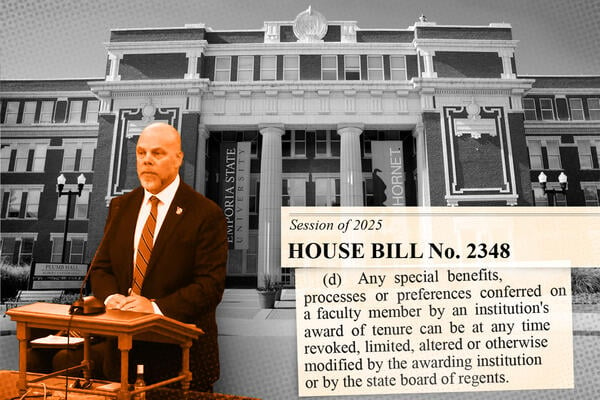
    Kansas lawmakers are considering a bill that would sap tenure of its meaning for faculty at the state’s public colleges and universities.

    House Bill 2348, introduced this month in the Kansas Legislature, doesn’t specifically say it would ban tenure. But according to the proposed law, “any special benefits, processes or preferences conferred on a faculty member” by tenure “can be at any time revoked” by a higher education institution or the Kansas Board of Regents, which governs the state’s public universities. It also says tenure wouldn’t “create any entitlement, right or property interest in a faculty member’s current, ongoing or future employment.”

    The bill would end such rights not just for future “tenure” earners but for already tenured professors, too. Mallory Bishop, a nontenured instructor at Emporia State University who serves as faculty president, said HB 2348 would “remove the core premise of tenure,” which is “you cannot be fired without cause.”

    “The bill itself seems to remove everything except the name of tenure,” Bishop said.

    It’s part of a growing trend among Republican lawmakers in multiple states seeking to weaken or eliminate tenure in public institutions. Ohio’s Senate passed a bill this year that would weaken tenure, though the House hasn’t yet followed suit. So far, no state has fully banned tenure at public institutions.

    But the Kansas bill is noteworthy for its origins. The Board of Regents and the state’s two top research universities publicly oppose it. So where did it come from?

    Steven Lovett, general counsel for Emporia State University, says he wrote it. And the top of the bill includes one sentence saying a lawmaker requested it on Lovett’s behalf.

    The bill materialized after Emporia State suffered a setback in its continued defense against a federal lawsuit filed by 11 tenured professors whom the university decided to lay off in 2022. A judge—rebuffing the university defendants’ request to toss out the suit—allowed the faculty to move forward with their allegations that they weren’t provided sufficient due process. Emporia State officials, including Lovett himself, are among the defendants in the continuing suit.

    Those faculty were among 23 tenured professors whom Emporia State laid off, citing financial pressures and other possible reasons. The university’s handling of the situation led the American Association of University Professors to censure the institution. The controversy presaged layoffs over the past two years by other U.S. universities, which also cited financial concerns and didn’t spare tenured faculty. West Virginia University made headlines in 2023 for axing a swath of tenured faculty, followed by the University of Wisconsin at Milwaukee and Western Illinois University.

    A university spokesperson wrote in a statement to Inside Higher Ed that Emporia State supports tenure and that Lovett’s “submission of this bill comes as a surprise to the university.” But the statement also defended Lovett’s “constitutional right” as “a private citizen” to submit the legislation.

    The statement doesn’t say whether the university supports or opposes the bill. Emporia State didn’t provide an interview or respond to written questions about its position on the legislation.

    Bishop said she’s asked top university officials for their stance but hasn’t received an answer; she said university president Ken Hush told her in a private conversation that even if the bill were to pass, “tenure still exists.” Lovett—saying he was commenting as a private citizen—has told lawmakers that universities that speak out against the bill are violating state law.

    And while the university says it was surprised by Lovett’s submission of the bill, an online video of an earlier legislative hearing shows Hush appearing to urge lawmakers to support similar legislation not long before his top lawyer introduced it.

    Reversing a Court Loss?

    The university attempted to dismiss the laid-off professors’ lawsuit by arguing that tenure didn’t give them a “property right” to continued employment. “Property right,” or “property interest,” is a legal term, and if tenured professors possess this right, it could mean they should have received due process before being ousted, in accordance with the 14th Amendment.

    In December, a U.S. district court judge in Kansas allowed the case to progress, ruling that the professors’ legal complaint sufficiently alleged that the faculty did have so-called property rights to keep their jobs. The case continues.

    As the Kansas Reflector previously reported, a Kansas House Higher Education Budget Committee member asked Hush about the suit during a Jan. 31 hearing. According to a video of the proceedings, Hush said the property right ruling “means an entitlement and job forever, until this is settled in some form. Obviously, as a state agency, we’re working with the attorney general on this. And the other option to correct that is via legislation.”

    About a week later, House Bill 2348 appeared at the request of Representative Steven K. Howe—who chairs the committee Hush spoke to—on behalf of Lovett. Howe declined to comment for this article.

    The bill, however, is currently before the House Judiciary Committee—not Howe’s committee. Lovett advocated for the legislation during a Feb. 11 Judiciary hearing, in which he was introduced as “Mr. Steven Lovett, private citizen.” Lovett told the lawmakers the university didn’t encourage him to write the bill “and had no knowledge of it before I submitted it.”

    He said the bill “eliminates the property right of tenure but not tenure itself.” The idea that tenure is a property right “obligates Kansans to a long-term, unfunded fiscal liability,” he said, adding that the due process required to oust tenured faculty “costs even more.” He argued the First Amendment makes tenure and due process unnecessary to protect academic freedom.

    “A nontenured faculty member enjoys as much legal protection to pursue academic freedom as a tenured faculty member,” he said. Tenure “primarily results in nothing more than personal gain.”

    Lovett said Board of Regents members echoed part of his arguments amid the lawsuit filed by the laid-off professors, arguing that any universities that opposed the bill would be violating state law that says the board manages public universities. As of now, though, a judge has dismissed all board members as defendants, leaving only Lovett, Hush and one retired Emporia State official facing the lawsuit.

    At the end of his speech, Lovett, who’s also an associate professor of business law and ethics at Emporia State, publicly renounced the tenure the university gave him.

    Doug Girod, chancellor of the University of Kansas, followed Lovett at the lectern.

    “I don’t believe I’m breaking the law, because I am here with the full knowledge of my board,” Girod said. Eradicating “meaningful tenure” would mean losing “our best faculty, and we will not be able to replace them,” he said.

    After Kansas State University’s president spoke against the bill, Blake Flanders, the top administrator at the Board of Regents, told lawmakers the board is also against it, citing similar recruitment and retention concerns. Further, his written testimony suggested he doesn’t buy Lovett’s argument that he’s acting as a private citizen.

    He pointed out that Board of Regents policy requires legislative proposals from institutions it governs first be presented to the board for approval “before being submitted to the Legislature.” He wrote, “That policy was not adhered to in the case of this bill.” A board spokesperson didn’t provide Inside Higher Ed an interview or answer written questions about whether the board is pushing for Lovett to be disciplined.

    Even if the bill passes, it’s unclear whether it would actually help Emporia State in its current suit or erase the meaning of tenure for other Kansas faculty who have already earned it. J. Phillip Gragson, attorney for the laid-off professors, said in an email that that would be unconstitutional.

    “While the state can certainly commit higher education academic and economic suicide by passing a bill that eliminates tenure prospectively only if it wants, the state cannot take away tenure rights from those professors who have already obtained tenure without due process,” he wrote.

    Source link

  • Trump Previews Elon Musk’s Next DOGE Targets (Forbes Breaking News)

    Trump Previews Elon Musk’s Next DOGE Targets (Forbes Breaking News)

    The Higher Education Inquirer continues to document the DOGE takeover of the US Department of Education

    While some Democratic officials in Congress have protested this action by DOGE, there has been little resistance otherwise. 

    DOGE consists of Elon Musk and several young men who have been tasked to reduce the federal budget by at least $1 Trillion. The US Senate has oversight of the Department of Education through the HELP (Health, Education, Labor, and Pensions) Committee, but Republicans, who are led by President Trump, control the Senate, and appear to be supporting these aggressive measures. 

    While Mr. Musk has claimed that the Department of Education no longer exists, its website is still operating. 

    DOGE also promotes the buying and selling of cryptocurrency.  

    Source link

  • The barriers that must be removed for degree apprenticeships to meet NHS workforce targets

    The barriers that must be removed for degree apprenticeships to meet NHS workforce targets

    The recent notion that level 7 apprenticeships will be ineligible for support from the apprenticeship levy has caused consternation amongst training providers, especially in healthcare.

    Training providers and employers are urgently seeking clarity on the government’s position – the current “announcement without action” leaves stakeholders unclear about next steps and further risks the reputation and role of apprenticeships in skills development.

    The development of advanced roles in health or shortened routes to registerable qualifications significantly relies on level 7 apprenticeships. The NHS Long Term Workforce Plan is full of examples of how advanced and new roles are needed now and in the future.

    Once again, decisions are being made by the Department for Education without consulting or collaborating with the Department of Health and Social Care, which means that questions are left unanswered. It is not the first time that training providers and University Alliance have called for joined up thinking and, unfortunately, it certainly won’t be the last.

    Expansion of opportunity

    Health apprenticeships at the University of Derby started small with level 5 provision about ten years ago (subsequently expanding to levels 6 and 7) – we could not have foreseen the enormous expansion of opportunity both in health and other industries that would follow.

    I am proud to say that “I was there” when the nurse degree apprenticeship standard was approved in 2017 – the culmination of two years’ collaboration between the Nursing and Midwifery Council, government, Skills for Health, employers and training providers.

    There were challenges, but we made it, and it opened the door to transformation in how healthcare professionals are educated.

    A bumpy road

    But the journey remains bumpy, and apprenticeships seem to be experiencing a particular period of turbulence. New research conducted by the University of Derby on behalf of University Alliance demonstrates the need for change in how the levy is utilised, the importance of partnership working, and the support that those involved with apprenticeship delivery need in order to secure successful outcomes.

    While the NHS Long Term Workforce Plan of 2023 is itself being refreshed, we can be confident that apprenticeships will continue to have a significant part to play in workforce development. However, our new research has shown how and where employers and training providers need support to make this happen.

    Employers told us how expensive they find it to support apprenticeships, with apprentice salaries, backfill and organisational infrastructure contributing to the financial burden. We know that apprentices need significant support through their learning journey, taking time and investment from employers.

    To make apprenticeships truly successful, the support required is over and above that normally expected in healthcare programmes, yet apprenticeships are specifically excluded from the NHS Healthcare Education and Training tariff. This feels like a double whammy – no support from the tariff and no flexibility in how the levy could be utilised differently, meaning that the responsibility remains with the employer to resource.

    Equally, training providers reported the additional activities and responsibilities associated with the delivery of apprenticeships. The University of Derby has recently successfully completed its inspection by Ofsted. The week of the inspection required input from teams across the University, but the enduring responsibilities of compliance and record keeping make this a continuous activity for a skilled and specialist team.

    The Education and Skills Funding Agency then came hot on the tails of Ofsted – while this is not unexpected, it has again required teams from across the University working long hours to be audit ready. These inspections have served as a reminder of the regulatory burden placed on training providers, especially in healthcare.

    A matter of commitment

    Today marks the start of National Apprenticeship Week. At the University of Derby, we are hosting a week of activities and events, encouraging aspirant apprentices and a range of employers to come and find out more about what apprenticeships can do for them. It is heartening to hear that the number of young people coming to the campus this year has more than doubled since last year’s event.

    Finally, the word is beginning to spread about apprenticeships, and we find school leavers are increasingly well informed about their post-16 and post-18 options.

    The week’s events will be ably supported by our employer partners and apprentices, truly reflecting the partnerships that have developed over the years. These partnerships take a significant amount of investment on all sides – anyone in the vocational education and training world will know that strong partnerships take time and effort to build and maintain. But even the briefest of conversations with apprentices will tell you that it is all worth it. Their confidence, passion and knowledge (their skills and behaviours too) shine through. In a city like Derby, the awareness of the positive difference you are making not only to the apprentice, but also to their family and friends, is never far from your thoughts.

    It is difficult to know how the advent of Skills England will impact the pace and scale of reform, but the present inertia may set the country back – and it certainly will if a blanket approach to level 7 apprenticeship funding is adopted, and lack of join-up between DfE and DHSC remains the status quo.

    National Apprenticeship Week 2025 has the potential to be a force for good – and should be the week that all stakeholders commit to making a difference.

    Source link

  • Canadian study permit approvals fall far below cap targets

    Canadian study permit approvals fall far below cap targets

    Canadian study permit approvals are on track to fall by 45% in 2024, rather than the 35% planned reduction of last year’s controversial international student caps, new IRCC data analysed by ApplyBoard has revealed.  

    “The caps’ impact was significantly underestimated,” ApplyBoard founder Meti Basiri told The PIE News. “Rapidly introduced policy changes created confusion and had an immense impact on student sentiment and institutional operations.  

    “While aiming to manage student numbers, these changes failed to account for the perspectives of students, and their importance to Canada’s future economy and communities,” he continued.  

    The report reveals the far-reaching impact of Canada’s study permit caps, which were announced in January 2024 and followed by a tumultuous year of policy changes that expanded restrictions and set new rules for post-graduate work permit eligibility, among other changes.  

    For the first 10 months of 2024, Canada’s study permit approval rate hovered just above 50%, resulting in an estimated maximum of 280,000 approvals from K-12 to postgraduate levels. This represents the lowest number of approvals in a non-pandemic year since 2019. 

    Source: IRCC. Disclaimer: Data for 2021-Oct 2024 is sourced from IRCC. Full-year 2024 figures are estimates extrapolated from Jan-Oct 2024 and full-year 2021-2023 IRCC data. Projections may be subject to change based on changing conditions and source data.

    “Even from the early days of the caps, decreased student interest outpaced government estimates,” noted the report, with stakeholders highlighting the reputational damage to Canada as a study destination.  

    “Approvals for capped programs fell by 60%, but even cap-exempt programs declined by 27%. Major source countries like India, Nigeria, and Nepal saw over 50% declines, showing how policies have disrupted demand across all study levels,” said Basiri.  

    Following major PGWP and study permit changes announced by the IRCC in September 2024, four out of five international student counsellors surveyed by ApplyBoard agreed that Canada’s caps had made it a less desirable study destination. 

    Though stakeholders across Canada recognised the need to address fraud and student housing issues, many had urged the federal government to wait until the impact of the initial caps was clear before going ahead with seemingly endless policy changes.  

    At the CBIE conference in November 2024, immigration minister Marc Miller said he “profoundly disagreed” with the prevailing sector view that the caps and subsequent PGWP and permanent residency restrictions had been an “overcorrection”.

    Post-secondary programs, which were the primary focus of the 2024 caps, were hit hardest by the restrictions, with new international enrolments at colleges estimated to have dropped by 60% as a result of the policies.  

    While Canada’s largest source destinations saw major declines, the caps were not felt evenly across sending countries. Senegal, Guinea and Vietnam maintained year-over-year growth, signalling potential sources of diversity for Canada’s cap era.   

    The report also highlighted Ghana’s potential as a source destination, where approval ratings – though declining from last year – remain 175% higher than figures from 2022. 

    Rapidly introduced policy changes created confusion and had an immense impact on student sentiment

    Meti Basiri, ApplyBoard

    The significant drop in study permit approvals was felt across all provinces, but Ontario – which accounted for over half of all study permit approvals in 2023 – and Nova Scotia have seen the largest impact, falling by 55% and 54.5% respectively.

    Notably, the number of study permits processed by the IRCC dropped by a projected 35% in 2024, in line with the government’s targets, but approval rates have not kept pace.

    When setting last year’s targets, minister Miller only had the power to limit the number of applications processed by the IRCC, not the number of study permits that are approved.  

    The initial target of 360,000 approved study permits was based on an estimated approval rate of 60%, resulting in a 605,000 cap on the number of applications processed. 

    Following new policies such as the inclusion of postgraduate programs in the 2025 cap, Basiri said he anticipated that study permit approvals would remain below pre-cap levels.  

    “While overall student numbers may align with IRCC’s targets, the broader impact on institutional readiness and Canada’s reputation will be key areas to watch in 2025,” he added.  

    Source link

  • This week in 5 numbers: Trump directive targets college DEI

    This week in 5 numbers: Trump directive targets college DEI

    The maximum number of organizations, including colleges with endowments over $1 billion, that President Donald Trump asked each federal agency to identify as potential targets for “civil compliance investigations.” The directive — which targets diversity, equity and inclusion programs — came in an executive order on Tuesday, the first full day of the new Trump administration.

    Source link