Tag: teach

  • 2 Professors Teach About AI Using Print Book

    2 Professors Teach About AI Using Print Book

    University of Southern California professor Helen Choi had a pretty basic assignment for her students this fall: Read a book.

    To be sure, Choi’s pedagogical choice isn’t novel for many faculty; 71 percent of professors use print materials in some capacity in their classroom, a Bay View Analytics survey found.

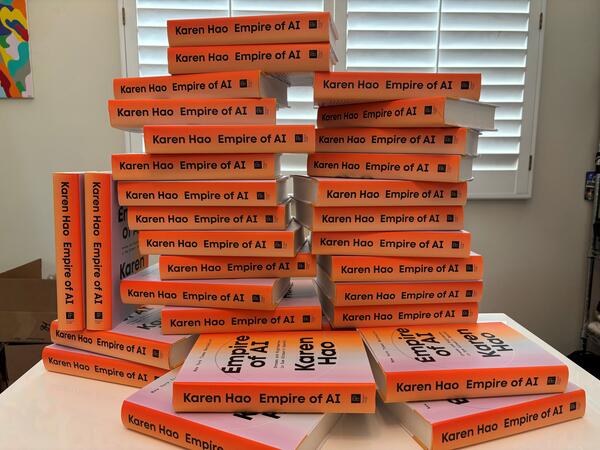
    But Choi teaches Advanced Writing for Engineers, a course focused on teaching STEM students how to write across disciplines. Many of them “think nothing of shoveling a writer’s work into a chatbot for a summary,” Choi said. So this fall, Choi is encouraging students to close their laptops and spend time with Karen Hao’s book Empire of AI, about the evolution and tech behind AI.  

    Choi chronicled her decision in a Substack article titled, “I’m Making My Students Read a Book!” The post caught the attention of some faculty on Bluesky, including Vance Ricks, a Northeastern computer science and philosophy professor. Ricks had similarly selected Empire of AI for his master’s-level students to read this term.

    Both Choi and Ricks hope to encourage their students to relearn how to read critically and engage in robust conversations with their peers. And after finishing the books, Choi and Ricks’s students will get the chance to reflect together on the book during a virtual meeting, where they will discuss the role of AI in their lives.

    What’s the need: In the past, Choi would assign short online articles for students to inform their writing responses. “The questions I was getting from students indicated to me that the engagement with the underlying materials wasn’t as deep as I wanted,” Choi said. “Sometimes it was just straight up reading comprehension.”

    According to the National Assessment of Educational Progress, the average high school senior’s reading scores declined 10 points between 1992 and 2024.

    In 2024, only 34 percent of students were considered proficient, which NAEP classifies as connecting key details within and across texts and drawing complex inferences about the author’s purpose, tone or word choice. Thirty-two percent of 12th graders ranked below “basic,” unable to locate and identify relevant details in the text to support literal comprehension.

    In addition to helping students apply deeper learning and thinking skills, Choi hopes having print material will allow them to step away from their laptops and connect with peers in a more meaningful way.

    In the classroom: Choi and Ricks have assigned the 482-page book to be read over four to five weeks, with students responsible for annotating and reflecting on the assigned sections on a weekly basis. Neither assigns content-based quizzes or reviews, relying on student discussions to reveal participation with the text.

    At the start of the term, both Choi and Ricks said they spent time in class discussing why they were requiring a physical book, and specifically Hao’s book.

    “You have to justify why you’re doing this abnormal thing,” Choi said.

    Students seemed to get it and were excited about the opportunity, both professors said.

    “They’re genuinely eager to have those conversations and engage in that sort of reflection,” Ricks said.

    The assignment has, however, required some additional attention and time on their part to help students grasp reading.

    “I’ve spent more time than I had anticipated literally walking around the book and saying, like, ‘This is an epigraph; why are the quotes here? What’s a prologue? What’s the index?’ Things like that,” Choi said.

    Both professors said they’ve had to adjust their expectations for how quickly students would be able to complete the text. The book itself also proved more difficult than anticipated for students who speak English as a second language, so Choi and Ricks are considering ways to better support these students in the future.

    The impact: “So far, students have shared that they are enjoying Hao’s book because it is relevant to their fields and lives outside of school,” Choi said. Their written responses to the reflection prompts also show improvement in clarity and organized reasoning.

    In Ricks’s class, the print format has proven a fruitful learning experience in and of itself. “Just hearing from students about how they are engaging physically with the book, tactilely, in terms of the smell of the pages or the sound of turning the pages—all of those things, let alone the material that the book is about,” Ricks said.

    The two classes will meet over Zoom on Sept. 26 for a student-led discussion on the book’s materials and themes.

    While the overall goal is to promote better reading and writing for her students, Choi said the exercise has also been a bright spot in her courses.

    “It’s really fun for me to teaching reading as part of writing,” she said. “It’s about the students, but I think having a joyful teaching experience is important for the classroom experience. Every day I’m pretty excited about having this book, and seeing the students with books makes me super happy.”

    Source link

  • How We Think, How We Teach: Five Ways to Think About AI in Faculty Work – Faculty Focus

    How We Think, How We Teach: Five Ways to Think About AI in Faculty Work – Faculty Focus

    Source link

  • How To Teach With AI Transparency Statements – Faculty Focus

    How To Teach With AI Transparency Statements – Faculty Focus

    Source link

  • Design Smarter, Teach Better: How Thoughtful Course Webpages Can Improve Online Learning – Faculty Focus

    Design Smarter, Teach Better: How Thoughtful Course Webpages Can Improve Online Learning – Faculty Focus

    Source link

  • What Multiple Intelligences Can Teach Us About Enrollment Marketing

    What Multiple Intelligences Can Teach Us About Enrollment Marketing

    Each student has a different way of perceiving, processing, and connecting with information.

    If you have ever wondered why one student peppers you with questions during a campus tour while another spends the visit sketching buildings, possibly giving your founder’s statue a comically large nose, you may have met what psychologist Howard Gardner calls multiple intelligences (Gardner, 1983, 1999).

    Gardner proposed that intelligence is not a single metric but a collection of capabilities: linguistic, logical-mathematical, spatial, musical, bodily-kinesthetic, interpersonal, intrapersonal, and naturalistic. Each shapes how a student processes the world and how they connect during the college search. If you have ever tried to woo a future engineer with poetic descriptions of ivy-covered halls, you know: some want facts, others want a vibe, and a few want to hear about your beekeeping club.

    From theory to practice

    In K–12 education, Gardner’s theory inspired teachers to differentiate instruction to meet students where they are. Teachers understand that linguistic learners thrive in storytelling and debate. Kinesthetic learners act out history. Visual-spatial thinkers create models and posters.

    Preferences also carry into decision-making. A student with strong interpersonal intelligence may thrive in group discussion, while an intrapersonal learner prefers reflection (Shearer, 2018).

    A colleague once hosted two prospective students on the same tour. One chatted nonstop with ambassadors about clubs. The other hung back, took notes, and later emailed questions about academics. Both left a positive impression, but they connected in entirely different ways. There is no one-size-fits-all approach.

    From classroom to campus tour

    This theory has clear enrollment applications (statistics are from the 2025 E-Expectations Report from RNL, Halda, and Modern Campus).

    • Bodily-kinesthetic learners may need to walk your campus to “get” it physically. Eighty percent of students visit in person, and 88% find visits helpful.
    • Visual-spatial learners may prefer your virtual tour; 77% use it, and 84% find it helpful.
    • Musical learners might connect emotionally through audio, pacing, or sound design in videos.
    • Interpersonal learners thrive in authentic conversations, one-on-one chats, and social media DMs. Twenty-seven percent follow colleges on social as an early outreach step; 37% do so for student life content.
    • Intrapersonal learners might prefer ROI tools, microsites, or downloadable guides.
    • Logical-mathematical learners value dashboards, calculators, and evidence-based outcomes. Financial aid calculators are used by 81% and rated helpful by 85%.

    When the fit feels off

    Each intelligence has a “no-thanks” zone:

    • Kinesthetic learners disengage from dense PDFs.
    • Visual-spatial thinkers lose interest in text-heavy pages.
    • Musical learners notice when tone and pacing are off.
    • Interpersonal learners tire of one-way communication.
    • Intrapersonal learners feel drained by busy group events.
    • Logical-mathematical thinkers want facts, not fluff.
    • Linguistic learners need narrative and nuance.
    • Naturalistic learners respond to sustainability stories, not generic city skylines.

    E-Expectations data confirm this. Sixty-three percent of students use Instagram, but only 53% see college content there, missing visual, musical, and interpersonal opportunities. Nearly half (45%) use AI chatbots, and 27% fill out inquiry forms afterward, showing these tools’ value for personalization (RNL et al., 2025).

    AI as a multiple intelligences tool

    AI chatbots can adapt content type, video, infographic, or ROI data, to match a student’s preference. After engaging with an AI assistant, 24% of students said they were more likely to apply, and 29% emailed admissions (RNL et al., 2025).

    This is not about tech for tech’s sake. It is about designing digital interactions that honor different learning and connecting methods.

    Matching intelligences to enrollment touchpoints

    Each intelligence represents a unique way of perceiving, processing, and connecting with information. Your emails, tours, and inquiry forms can spark curiosity or shut it down, depending on how well they align.

    Ask yourself:

    • Are you offering an “entry point” for every kind of learner?
    • Where are your blind spots?
    • What simple tweaks could widen the invitation?

    This is not about building eight separate funnels. It is about creating a flexible ecosystem where every student can find something that feels made for them.

    Multiple intelligences and enrollment touchpoints

    Intelligence Type How They Process and Connect Enrollment Strategies That Click Common Turnoffs
    Linguistic Love stories, strong narratives, nuanced language Student blogs, alum success stories, narrative-driven videos, compelling email subject lines Dry fact sheets with no story
    Logical-Mathematical Seek patterns, data, and ROI Cost calculators, outcome dashboards, program comparison tools Emotion-heavy marketing without evidence
    Visual-Spatial Think in images, layouts Virtual tours, interactive maps, infographics, campus photo galleries Text-heavy pages without visuals
    Musical Respond to rhythm, tone, sound Videos with thoughtful sound design, podcasts, and student performances Flat, monotone content
    Bodily-Kinesthetic Learn by doing, moving Campus tours, hands-on events, and fairs Long static presentations or PDFs
    Interpersonal Thrive in connection with others One-on-one ambassador chats, live Q&A, small group sessions, social DMs One-way mass communication with no response path
    Intrapersonal Reflective, self-directed Self-paced microsites, outcome quizzes, downloadable guides Crowded events, high-pressure group calls
    Naturalistic Connect through nature and real-world context. Sustainability initiatives, green campus tours, and community-based learning stories Generic marketing is disconnected from the environment.

    (Table adapted from Gardner 1983, 1999; RNL et al, 2025.)

    Final thought

    You do not need a degree in educational psychology to use multiple intelligences in enrollment strategy. You need to remember that students are cognitively and emotionally diverse (Gardner, 1983, 1999).

    The smartest move? Offer multiple ways to connect and then let students choose.

    Talk with our marketing and recruitment experts

    RNL works with colleges and universities across the country to ensure their marketing and recruitment efforts are optimized and aligned with how student search for colleges.  Reach out today for a complimentary consultation to discuss:

    • Student search strategies
    • Omnichannel communication campaigns
    • Personalization and engagement at scale

    Request now

    References

    Source link

  • Educators Can Teach Students to Write Well—and to Hope

    Educators Can Teach Students to Write Well—and to Hope

    To the editor:

    I was absolutely appalled at the anonymous AP Literature and Composition reader’s summary of his time in Salt Lake City. I was even more appalled by his tone, which was condescending, arrogant and unapologetic, and by his sense of superiority. Far be it from me to evaluate how he might be as a teacher (especially if he had a bad night’s sleep, poor lamb), but his emphatic victimhood at the circumstances that accompanied the reading, which he signed up for, was more than off-putting; it was flat out reprehensible.

    His attitude, that this whole event is beneath him, is hard to understand. Again, he chose to be there. He blatantly ignored his table leaders, skimmed rather than read essays and, behind the shield of anonymity, celebrated only giving a handful of 5s. He took it as a personal affront when he was asked to follow the rules. I feel especially bad for any AP student who suffered because of the negligence of this dismissive and self-pitying reader. 

    Worse, he used his entire experience as a microcosm for What’s Wrong With Education Today. The other readers are a part of this excoriation: While he gets up to give himself additional breaks, his colleagues “seem well adapted to the AP regimen, and to regimentation.” He, though, has escaped from Plato’s cave and has come back to tell us all … that the free coffee wasn’t very good. 

    This, while there are actual problems plaguing the state of college writing, from students uncritically using AI to assignments and essays that aren’t accurately evaluating student learning. With these legitimate concerns, it seems myopic to worry only that he encountered too few essays that contained “something insightful or fluent.” From that small sample, he concludes, “Is this how we’re educating the best and brightest, these college students of the near future? Are the vaunted humanities—assailed for years from without—rotting from within?”

    A sharp reader might resist stooping to make such generalizations. A sharp reader might conclude that work written hastily on an unseen topic while myriad other concerns are influencing its writer will rarely be sufficiently fluent. But the author’s preoccupation with these flawed essays reveals something worse: an attitude more concerned with signifying his august tastes than celebrating some of the essays’ successes—which AP readers are explicitly tasked with doing. As many happiness scholars have noted, expressing gratitude is an often-effective way to combat negativity. 

    If I were the sort of writer who uses few examples to draw overconfident conclusions, I might argue that the anonymous author represents the worst sort of virtue signaler: one who simultaneously laments that the “army of food service workers, mostly Hispanic or Asian,” must serve all the readers, but who also overindulges on the free food (“my waistline expands”). He likewise points out the inequality women professors face (“That fits with the service-heavy load female professors typically shoulder at most universities”) while demeaning his own female table assistant-leader (ignoring her when she asked him to put away his phone). Dare one conclude that he is staring at the mere shadows of true virtue down in his cave of concrete convention center floors and thick black curtains? 

    Maybe I am overreacting. I have a visceral dislike for the sort of persona he displays here, and it was part of the reason I left higher education after finishing my Ph.D. At most academic conferences, especially in the humanities, where our findings aren’t as obviously helpful to the field as, say, the sciences, postering and self-aggrandizement were pervasive. Seven years ago, I became a high school teacher and now an AP Literature reader, and I’m happy to report that I find myself surrounded more by the optimism of youth than the performative jadedness of some of those in higher education. 

    I’m sorry the author wears his ennui and disillusionment as a signifier of his superiority. I’m sorry he celebrates his misanthropy alongside his impractically high standards. And it’s a shame that he was so disheartened by this experience, he felt the need to trash it publicly. To what end? 

    I was not at the author’s table this year. I’m sure my sunny disposition would have made me fodder for his future displeasure. (When he got to his table and saw so many people excited to start reading, he responded, “The enthusiastic vibe can’t help, either.”) But perhaps instead of focusing our energies complaining about the task of wading through essays or the state of writing today, we can embrace the role we have as educators. Few other positions offer that sort of direct influence on such a large number of people. 

    Hopefully, as we teach our students to write well and insightfully analyze texts, we can also teach them to see the hope that comes with possibility—to see that they can always find something to celebrate, as long as they try to have the right attitude. 

    Andrew J. Calis is an English teacher at Archbishop Spalding High School in Maryland.

    Source link

  • Smarter Support: How to Use AI in Online Courses and Teach Your Students to Use It Too – Faculty Focus

    Smarter Support: How to Use AI in Online Courses and Teach Your Students to Use It Too – Faculty Focus

    Source link

  • Smarter Support: How to Use AI in Online Courses and Teach Your Students to Use It Too – Faculty Focus

    Smarter Support: How to Use AI in Online Courses and Teach Your Students to Use It Too – Faculty Focus

    Source link

  • Want a better society? Teach kids how to be exemplary citizens

    Want a better society? Teach kids how to be exemplary citizens

    This audio is auto-generated. Please let us know if you have feedback.

    Autumn Adkins Graves is head of school of St. Anne’s-Belfield School, an age 2 through grade 12 independent school in Charlottesville, Va.

    We adults have lost our way.

    We need to figure out how to right the ship for our children — the sooner, the better.

    As an educator and independent school leader, I can speculate about how we got here, but that doesn’t matter as much as how we collectively fix the broken infrastructure.

    One place to start is by teaching students how to be exemplary citizens — the kind of people who focus on making the world a better place, not just on their own self-interests.

    This is a headshot of Autumn Adkins Graves, head of school of St. Anne’s-Belfield School in Charlottesville, Va.

    Autumn Adkins Graves

    Permission granted by Autumn Adkins Graves


    Of course, this raises a chicken-egg conundrum. To raise outstanding citizens, do we begin by rethinking how we teach important subjects and lessons? Or is it more important to challenge students to think holistically, apply their lessons in a broader context, and envision a world — one they can help shape — beyond the year 2025?

    The answer is both.

    The task is enormous. After all, we have to teach students how to thrive in an ever-changing world, a society that we may not completely understand ourselves.

    On another level, basic civics lessons can — and should be — woven more explicitly into curricula.

    On a fundamental level, that means teaching students how to work together in teams — whether academic, athletic or performing arts.

    Selflessness should be in, while selfishness should be on the way out. We’ve become a society of “me,” not “we.” We are now a country of people who value the highlight dunk reel over passing up a shot for a teammate, and we are indirectly teaching that “me first” mindset to our students.

    True leadership isn’t always about being in charge or being credited as No. 1. Sometimes, it’s about supporting a team, pushing a shared vision forward, and finding contentment in playing a small but vital role in a team effort.

    There’s real value in contributing to something bigger than oneself, even without the title or limelight. If we can shift that mindset and rethink that paradigm, we’ll be making positive strides.

    At a larger level, it also means educating students about how decisions and laws are established, not just in the three branches of the federal government but also at the state and local levels.

    A student needs to realize why it matters to stay abreast of current events and the importance of participating in democracy.

    Nearly 64% of people voted in the last presidential election, but far fewer voted in off-year or local elections. Yet those are the elections that impact people and communities the most.

    Moreover, because so many people avoid voting, too many young people don’t know how the government works in America or feel apathetic to the incremental changes that occur at the local level.

    Rather than seeing elected officials as public servants, they identify officeholders as political figures or, even worse, career politicians or celebrities — people who are only interested in making decisions to ensure victory in their reelection campaign rather than determining what is best for their constituents in the short or long run.

    Also, it is time to tweak the way we teach media literacy: Too many students accept TikTok and Instagram posts at face value without considering the source or weighing the credibility of the content creator.

    Moreover, schools can empower students to solve issues instead of getting stuck on identifying problems.

    Too frequently, we fixate on what’s broken instead of creating a better way. Rather than pointing fingers, shifting the focus can make a difference. When students learn to be solution-makers, not just problem-identifiers, they lower their toxic anxiety levels and instead set themselves up to succeed in tomorrow’s world.

    As educators, shaping students to think like exemplary citizens means adjusting our approaches so we enable students to build confidence in their abilities to apply their understanding in a “real-world” context.

    Things won’t change today, this month, this year or even this decade. But by beginning with the end in mind — with a resolve that society can be full of exemplary citizens — we can start on the right path.

    Source link

  • Degree apprenticeships are quietly redesigning how we teach at university

    Degree apprenticeships are quietly redesigning how we teach at university

    The apprentice-student is changing higher education – from curriculum to culture. It’s time we stopped treating them like traditional undergraduates.

    Degree apprenticeships (DAs) are not just reshaping the student experience – they’re redesigning the university itself. As the Office for Students (OfS) emphasises outcomes, progression, and employer engagement, and as Skills England continues to define standards for higher-level technical education, DAs are becoming a proving ground for some of higher education’s most urgent policy challenges.

    Yet they are often marginalised in strategic thinking, treated as vocational bolt-ons or niche offerings rather than core to institutional purpose. That’s a mistake. DAs demand that we think differently about curriculum, assessment, and academic infrastructure. Quietly but decisively, they are exposing the limitations of legacy systems, and pointing the way to a more integrated, future-facing university model.

    Different learners, different accountability

    Degree apprentices are full-time employees and students, legally entitled to spend 20 per cent of their working time on off-the-job learning. This is not simply “study leave” – it encompasses formal teaching, applied projects, reflective practice, and continuous professional development.

    This dual status creates a distinctive learner profile, and a distinctive teaching challenge. In designing a level 6 accounting and finance manager degree apprenticeship, we couldn’t simply repackage existing content. We had to co-develop new modules that satisfied two sets of demands: the academic rigour expected by the university and the occupational standards defined by the Institute for Apprenticeships and Technical Education (IfATE). These must also align with professional accounting syllabi from bodies such as CIMA, ACCA and ICAEW.

    This triple mapping – to university, regulatory, and professional standards – creates what might be called multi-stakeholder accountability. It requires curriculum teams to work in ways that are more agile, responsive, and externally engaged than many traditional degree programmes.

    Rethinking assessment

    If OfS regulation is pushing universities toward more transparent, outcomes-focused assessment practices, DAs offer a blueprint for how that can work in practice. Assessment in degree apprenticeships is not an end-of-module activity; it’s a longitudinal, triangulated process involving the learner, the employer, and the academic team. Learners are required to build portfolios of evidence, reflect on their practice, and complete an end-point assessment, which is externally quality-assured.

    In our programme, this means apprentices must show how they’ve applied ESG frameworks to real reporting challenges or used digital tools to improve efficiency. These are not hypothetical case studies, they’re deliverables with real organisational impact.

    This demands a fundamental shift in how we understand assessment. It moves from a one-directional judgement to a co-produced, real-world demonstration of competence and critical thinking. It also raises practical challenges: how do we ensure equity, consistency, and academic standards in these shared spaces?

    Practice must evolve too. Assessment boards and quality teams need confidence in workplace-verified evidence and dialogic tools like professional discussions. Regulations may need adjusting to formally recognise these approaches as valid and rigorous. Co-created assessment models will only work if they’re institutionally supported, not just permitted.

    Institutional systems still speak undergraduate

    Despite their growth – and repeated nods in policy papers from DfE, OfS, and IfATE (now Skills England) – DAs still struggle to integrate fully into institutional structures designed around traditional undergraduates.

    Timetabling, academic calendars, support services, and digital access systems are still largely predicated on a three-year, 18- to 21-year-old, campus-based model. Degree apprentices, who may study in blocks, access learning from workplaces, and require hybrid delivery modes, often fall through the gaps.

    This institutional lag risks positioning apprenticeships as peripheral rather than core to university provision, and undermines the very work-based, flexible, lifelong learning that national policy increasingly promotes.

    To move beyond legacy assumptions, institutional systems must adapt. Timetabling and delivery planning should treat block teaching as core, not marginal. Learner support must accommodate hybrid work-study lives with flexible pastoral care and digital access. Even workload models and quality assurance processes may need tailoring to reflect co-delivery demands

    If we are serious about the Lifelong Learning Entitlement, future modularity, and widening participation, DAs are not just a test case, they are the early evidence base.

    Who owns the curriculum?

    DAs also reconfigure academic authority. In designing the our degree apprenticeship programme, we co-developed curriculum with employers, professional bodies, and regulators. At its best, this is collaborative innovation. At its most complex, it’s curriculum by committee.

    Some employers overestimate their control over content or underestimate their responsibilities around mentoring and assessment. Professional bodies may be supportive in principle, but slow to recognise apprenticeship pathways in formal qualifications. The university becomes a mediator, balancing academic integrity, regulatory compliance, and employer priorities.

    This is delicate, sometimes frustrating work. But it also shifts the purpose of curriculum design, from academic transmission to negotiated, contextualised learning and demands that academic teams are supported to work across professional and regulatory boundaries without compromising standards

    What universities can learn

    DAs are more than a niche. They’re a stress test, revealing how well universities are equipped to deliver flexible, employer-engaged, outcome-driven learning.

    They challenge traditional pedagogies, reward authentic assessment, and open up new relationships between knowledge and practice. They also model the kinds of teaching and learning the sector is being increasingly nudged toward by policy: modular, flexible, accountable, and co-created with employers.

    This is not an argument for turning every degree into an apprenticeship. But it is a call to stop treating DAs as bolt-ons or exceptions. If we take seriously the structural and pedagogical shifts they demand, we may find in them a pathway to broader institutional transformation.

    In a higher education landscape increasingly shaped by regulation, scrutiny, digital disruption and workforce change, the apprentice-student may not just be part of the future – they may be leading it.

    Source link