Tag: teach

  • Why I Teach in Prison (opinion)

    Why I Teach in Prison (opinion)

    When people hear that I teach sociology in a maximum-security prison, they often ask if I’m afraid. Then they assume I enter the prison, share knowledge and transform incarcerated students. That’s not the story I’m telling. The real transformation isn’t theirs. It’s mine.

    For more than a decade, I have facilitated prison programs and worked with individuals who have been impacted by the justice system. For the past three years, I have made the hour-long drive, passed barbed-wire fences, walked through metal detectors and taken the escorted journey to the education wing of a Connecticut state prison to teach college-level sociology.

    My desire to work with people in prison honors those who protected me, allowing me to survive, thrive and give something back. I grew up in Harlem during the height of the crack cocaine epidemic. Public housing was my home. The stench of urine in the elevators, the hunger-inducing aroma of fried food wafting through the hallways, the ever-present sound of sirens and the fear of dying young all shaped my early years. Yet, amid these challenges, I also experienced love and protection.

    Many of the older guys on my block were deeply involved in street life. However, they saw something in me. They never attempted to pull me into their activities. Instead, they ensured I stayed away. They often said, “Nah, you’re smart. You’re gonna do something with your life.” That kind of protection and love doesn’t appear in statistics or stories about the hood, but it saved me.

    I didn’t make it out because I was exceptional. I made it because people believed in me. They helped me imagine a different life. I carry their love with me when I step into that prison classroom. I teach because I owe a debt—not in a way that burdens me, but in a way that allows me to walk in my purpose and see people through the same lens of possibility that allowed me to live my dreams.

    Entering the prison each week requires mental preparation. Before the lesson begins, I go through multiple security checks. Doors buzz open and lock behind me. I never get comfortable with the experience, even though I know I will leave at the end of class. I often describe teaching in prison as a beautiful-sad experience. It’s beautiful because of the energy and connection in the classroom. It’s sad because many of my students may never see life beyond the gates.

    These men, some of whom have already served decades, come ready to engage. We break down theories of race, class, power, socialization, patriarchy and other related concepts. We analyze films, question systems and interrogate assumptions. But what stays with me most are the unscripted moments, like when someone connects a sociological theory to their own story and says, “This sounds like what happened to me.”

    One of the most unforgettable moments came during a group debate assignment. I divided the class into small groups and asked them to analyze a text using different sociological theories. I stepped back and simply observed. I saw a group of 15 men serving long sentences, passionately debating whether structural strain theory, social learning theory or a Marxist conflict perspective was the best lens for analysis. These weren’t surface-level conversations. They were sharp, layered and theoretically rigorous. At that moment, I told them, “This is what the world doesn’t get to see.”

    People carry assumptions about incarcerated individuals and what they are capable of. But they don’t see these men breaking down theories, challenging one another and demonstrating intellectual brilliance. We cannot record inside the prison, so moments like this remain confined to the room. But they are real. And they matter.

    Another day, I asked students to reflect on the last time they cried or heard someone say, “I love you.” One student responded, “I don’t cry. Crying doesn’t change anything.” A week later, after completing an assignment to write a letter to his younger self, that same student began reading aloud to his 8-year-old self and broke down in tears. No one laughed. No one turned away. The other men gave him their attention, encouragement and support. In that room, we created a space where his vulnerability was met with care, even inside the walls of a prison.

    These experiences forced me to confront my purpose. I stopped seeing myself solely as a professor or administrator. I reflected on what it means to serve and show up for people who’ve been pushed to the edges of society. I began to question the boundaries we draw between campus and community. Universities, especially those with the most resources, need to be more than institutions of learning for those lucky enough to be admitted. We are called to be and do more.

    Throughout my career, I’ve worked to ensure my spheres of influence extend beyond the edge of campus. I’ve leveraged my position to build bridges by connecting faculty and students to re-entry programs, supporting formerly incarcerated scholars and creating opportunities for others to teach inside. Teaching in prison has made me more grounded. As a sociologist, I am keenly aware of how little separates my students’ lives from mine and how my path could have easily been theirs.

    The United States leads the world in incarceration, holding more than 20 percent of the world’s prisoners despite representing less than 5 percent of the world’s population. According to the Prison Policy Initiative and the American Civil Liberties Union, many incarcerated people come from overpoliced, underresourced communities like the one I grew up in.

    Yet even with this reality, some argue that people in prison don’t deserve education—that offering college courses to incarcerated individuals is a misuse of resources. I’ve heard those arguments, and I reject them. Education in prison isn’t special treatment. It’s human dignity. It’s recognizing that people can and do change when given the tools to reflect, grow and imagine a life beyond a perpetual existence in survival mode.

    If higher education is serious about equity and access, we cannot limit our classrooms to students with perfect transcripts and traditional résumés. The men I teach do not need saving. They need space to grow, question and contribute. And our institutions need them, because any university that claims to care about justice, resilience or humanity cannot ignore the people our country has locked away.

    Every day, I am reminded that none of my accomplishments happened in isolation. I think about what it means to repay a debt on which you cannot put a dollar amount. I think about honoring those who believed in me before I believed in myself. I’ve stood on the shoulders of people who never had the opportunities I did. I carry their investment into every space I enter, especially those where others have been forgotten.

    One of the lessons I’ve held onto is this: The gifts we have are not for us to keep. They’re meant to be shared. Teaching in prison is my way of honoring that truth.

    Don C. Sawyer III is an associate professor of sociology and vice president of diversity, inclusion and belonging at Fairfield University.

    Source link

  • What Gen Z and Gen Alpha Can Teach Us About Enrollment Marketing

    What Gen Z and Gen Alpha Can Teach Us About Enrollment Marketing

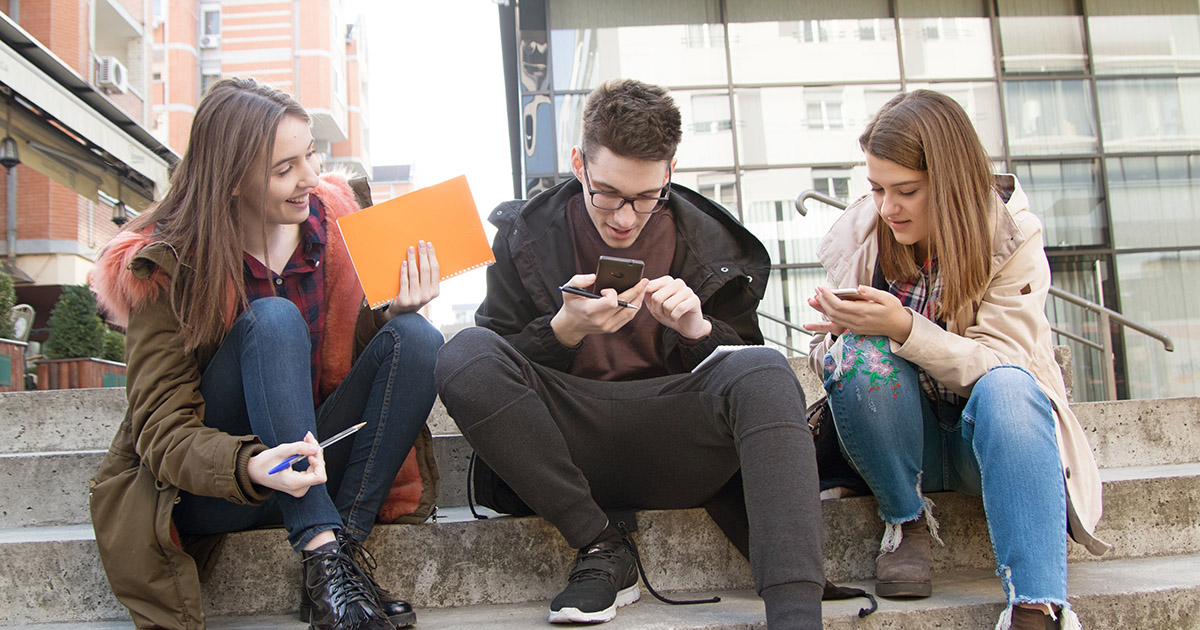
    Three smiling teenagers sit on a step outside as they talk and tap their phones
    How can you capture the attention of teenagers who are skeptical of marketing?

    Let’s stop pretending all teens are some mysterious, moody monolith. That old stereotype doesn’t hold up anymore, especially with what we know about how they think and behave today.

    Recent research from TeenVoice shines a light on how different 13-year-olds and 18-year-olds are—not just in age, but in how they use social media, how skeptical they are of marketing, and what grabs their attention. The gap is massive, and it’s a huge wake-up call for anyone trying to reach them.

    Here’s what science tells us about why teens aren’t just older versions of kids but are actually leveling up in how they think and engage:

    1. Scrollers vs. Searchers

    Younger teens mostly scroll social media for entertainment and fun; it’s their playground. Older teens, on the other hand, use platforms as tools for research and decision-making. They’re looking for real info, not just distractions. If your content isn’t easy to find or useful, it’s like you don’t exist to them. This fits with what Pew Research has found: nearly half of teens say they’re online almost constantly, but the way they use social media evolves with age toward more purposeful searching and information gathering (Pew Research Center, 2024).

    2. Teen Skepticism Is Real and Growing

    Adolescents don’t just blindly accept marketing messages. Their brains are developing the ability to question, analyze, and outright reject advertising that feels fake or manipulative. This skepticism comes from both cognitive development, when teens begin to think more critically and realistically, as well as social factors like peer influence and natural resistance to being sold to (Buijzen, 2009; Lumen Learning, n.d.).

    3. Peer Stories Carry Weight

    When teens hear stories from other students, real people with authentic experiences, it resonates more deeply than any slick ad campaign. Peer influence shapes decision-making significantly during adolescence, sometimes even more than adult advice. This isn’t just about risky behavior; positive peer stories can guide teens toward safer, smarter choices, too (Chein et al., 2011; Gardner & Steinberg, 2005).

    4. Authenticity Isn’t Just a Buzzword

    Gen Z, especially, are human BS detectors. They crave brands and messages that are honest, transparent, and aligned with their values. Authenticity builds trust, engagement, and loyalty, straight up. If your marketing feels forced or fake, they’ll scroll right past. This is backed by research showing authentic content generates way more engagement and lasting connections with young people (QuirkBank Media, 2025; History Factory, 2024).

    5. The Brain Changes a Lot Between 13 and 18

    The teen brain isn’t static. At 13, many teens are still developing concrete thinking and emotional regulation. By 18, their prefrontal cortex, the part responsible for reasoning, impulse control, and decision-making, is much more mature. This means the way you communicate with a 13-year-old will be very different from how you reach an 18-year-old who can think abstractly and critically. Treating them like the same audience is a recipe for missing the mark (National Institute of Mental Health, 2022; American Academy of Child and Adolescent Psychiatry, 2023).

    What does all this mean to you if you work in enrollment marketing, admissions, or financial aid? Here are five takeaways.

    • Younger teens hang out on social media mostly to chill and have fun. So, if you want to catch their attention, keep things light, entertaining, and visual. Older teens want to dig in and figure stuff out. Make sure your info is easy to find and answers real questions, they’re not here to waste time.
    • Don’t try to sell with flashy slogans or over-the-top hype. Teens are sharp and skeptical. If your message feels fake or manipulative, they’ll tune out fast. Instead, be straightforward and honest, show them you respect their smarts.
    • Peer stories aren’t just noise, they’re gold. Real testimonials or student voices will hit way harder than any polished ad. Let your current students share their genuine experiences. That kind of authenticity influences teens more than anything else.
    • Authenticity isn’t a trend, it’s a must. If you want teens to trust and stick around, your marketing must feel real. That means ditching corporate jargon, being transparent about what you offer, and aligning with values that matter to them.
    • Remember, a 13-year-old isn’t just a smaller 18-year-old. Their brains and decision-making skills are still growing. Tailor your messaging for different age groups, simple and engaging for younger teens, more detailed and logical for older ones. One-size-fits-all won’t cut it.

    Dive into more insights into teen behavior in the 2025 E-Expectations Report

    If you want to see how these attitudes play out in college planning, what platforms students are actually using to explore colleges, how they interact with school websites, what makes them click (or ghost) your outreach, and how AI and privacy concerns are shifting the game, you need the latest data from the 2025 E-Expectations Trend Report.

    In the full report, you’ll find answers to questions like:

    • Which digital resource do students trust the most for their college search?
    • Is email still alive (spoiler: yes), and what role does it play?
    • What are the make-or-break features for a college website?
    • Who’s using AI tools, and what do they really want from personalization?
    • Which social platforms drive engagement, and why?

    If you want real, actionable insights, not just another “state of Gen Z” report, this report is your roadmap!

    And if you are curious about the TeenVoice data and want to dive into, read the TeenVoice research here.

    Source link

  • When ZIP Codes Teach: How Geographic Inequity Shows Up in Our Classrooms – Faculty Focus

    When ZIP Codes Teach: How Geographic Inequity Shows Up in Our Classrooms – Faculty Focus

    Source link

  • When ZIP Codes Teach: How Geographic Inequity Shows Up in Our Classrooms – Faculty Focus

    When ZIP Codes Teach: How Geographic Inequity Shows Up in Our Classrooms – Faculty Focus

    Source link

  • What Betty Crocker can teach us about using AI – Campus Review

    What Betty Crocker can teach us about using AI – Campus Review

    HP education ambassador Brett Salakas piqued the interest of a crowd of educators on Thursday when he walked onto a stage with a carton of eggs, a litre of milk, butter, a bowl, a wooden spoon and a packet of Betty Crocker cake mix.

    Please login below to view content or subscribe now.

    Membership Login

    Source link

  • We have to work together to improve school culture and make our public schools great places to teach, work and learn

    We have to work together to improve school culture and make our public schools great places to teach, work and learn

    A torrent of controversy has erupted over the Trump administration’s decision to shutter the federal Department of Education. Critics howl that it will destroy public education in America. Supporters insist it will somehow make things better.

    The only thing that’s clear is that our public education system is broken. It’s time for politicians to stop using education as a political football, with blue and red teams competing for control rather than sharing the responsibility to prepare our children for their futures.

    The resulting chaos and confusion and rigid policies choke the joy out of learning and of working in our schools. Insufficient attention by leaders to education culture can result in fear and distrust, turf wars and a tendency to blame and make excuses for a lack of progress.

    Such behaviors produce a toxicity that disables learning and disempowers leadership. Instead of increasing our nation’s economic prosperity, we’re deepening inequality, limiting opportunity and sadly wasting the potential of many children, on whose ability to thrive our country depends.

    Poor work conditions, insufficient support, inadequate pay and limited career opportunities are among some of the reasons teachers are leaving and schools are struggling to attract top talent. Reductions in funding from the Great Recession through the present render our facilities dangerous in some instances and unwelcoming in others. Would you buy a house with barbed wire fencing and unkempt grounds that make you wonder whether the aim is to keep something out or in?

    Related: A lot goes on in classrooms from kindergarten to high school. Keep up with our free weekly newsletter on K-12 education.

    What should we do to change what is going on inside our schools?

    We must first of all start working together to make our public schools great places to teach and learn.

    Great places to work and learn are places that are well led, fueled by purpose and guided by shared, positive behaviors that advance learning goals and serve as “rules of the road” for how employees and students are expected to behave.

    In great schools, employees, students and families are respected and valued. Leaders in great schools inspire their employees — all of them — to do more than they think they can. Employees align behind the purpose of enabling learning, which creates momentum and camaraderie for what they are working to attain together.

    In great schools, leaders inspire their communities to join them in cheering for and supporting kids’ future successes. Families, no matter their socioeconomic status, feel a sense of belonging.

    Problems are perceived as opportunities to get better, not sources of indiscriminate blame. Solutions are found by looking in the mirror first. External threats to learning, such as poverty or parents’ underemployment, are acknowledged and addressed. Schools don’t dodge their responsibility to educate all kids.

    In great schools, kids are known by caring employees; they feel seen and heard and are deeply engaged and invested in their learning.

    Every employee working in a great school district feels responsible for achieving the district’s mission, no matter whether they work inside or outside of the classroom.

    When kids return after being absent, employees welcome them back, tell them they were missed and focus on catching them up. They do not judge the constraints of their families’ lives or mete out punishment as though missing school is a crime.

    Related: Horticulture, horses and ‘Chill Rooms’: One district goes all-in on mental health support

    Great places to learn must also be great places to work. We must reframe our concept of schools as not just places where kids learn. Great places to work care about the needs of all the human beings in their care, including and especially their employees.

    “To win in the marketplace, you must first win in the workplace,” Douglas R. Conant, former Campbell Soup Company CEO famously said. He knew what is becoming clearer within our public school systems — that unhappy, unfulfilled employees lead to high turnover, disengagement by students and staff and disaffected families turning to alternative educational offerings.

    It is no secret that attracting and retaining top talent to work in our schools is increasingly difficult as employees seek more stability. Attracting younger workers is even more difficult.

    Many of those who currently work in schools, especially teachers, are stressed, burned out and dissatisfied. Being stressed and burned out is not a normative experience; it’s a symptom of a weak culture, and an organizational problem to be solved. And employee turnover is no longer limited to teachers. There are increasing vacancies among principals, bus drivers and food service and facilities staff.

    The quality of the experiences of employees working in our schools must be higher. Every point along the employee experience continuum, from applying for a job to choosing to leave, is an opportunity to deepen employee engagement and commitment to being a high performer.

    We can fix what we have broken. Thinking differently about making our public schools great places to work and learn is a good place to start. No policy changes are required to demonstrate concern for the human beings the system employs and seeks to educate.

    Etienne R. LeGrand is a thought leader, writer and culture-shaping strategist and adviser at Vivify Performance.

    Contact the opinion editor at [email protected].

    This story about school culture was produced by The Hechinger Report, a nonprofit, independent news organization focused on inequality and innovation in education. Sign up for Hechinger’s weekly newsletter.

    The Hechinger Report provides in-depth, fact-based, unbiased reporting on education that is free to all readers. But that doesn’t mean it’s free to produce. Our work keeps educators and the public informed about pressing issues at schools and on campuses throughout the country. We tell the whole story, even when the details are inconvenient. Help us keep doing that.

    Join us today.

    Source link

  • New Way to Teach Writing by Incorporating AI – Sovorel

    New Way to Teach Writing by Incorporating AI – Sovorel

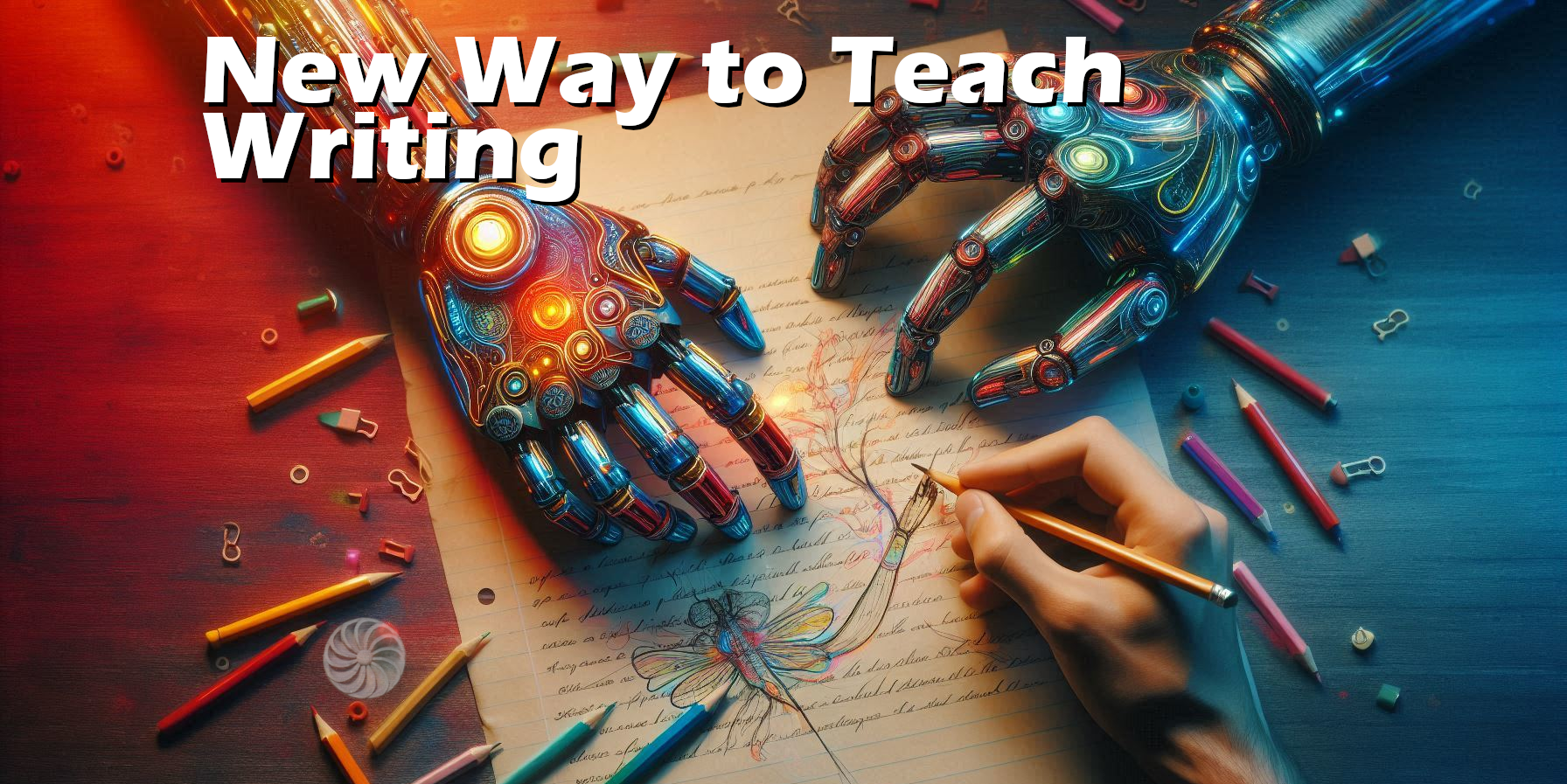
    AI is here, and it is here to stay, which means that academia needs to incorporate it so that students learn about AI’s capability and are ready to use it properly. The most complained about issue in writing classes today is that students simply use AI to write their essays for them and, in the process, do not learn anything and use AI improperly. “The Anders 4 Phase AI Method of Writing Instruction,” is able to overcome these issues. This instructional method develops students’ writing skills while teaching AI literacy, which includes critical thinking. Different aspects of this method can also be applied to other courses/assignments. The Anders 4 Phase AI Method of Writing Instruction is a much-needed new way to develop writing in a way that better aligns with the new realities of how many people are already writing with AI.

    Key Components (the four phases):

    1. Foundational Writing Skills Development: instruction and assessment on key aspects of writing such as sentence structure, paragraph structure, transitional sentences, use of personal voice, researching, outlining, thesis statements, and any other needed writing components. Done through: multiple-choice, fill-in-the-blank, and short in-class writing.
    2. Understanding of Different Essay Types: instruction and assessment on key aspects of different essay types done through multiple-choice, fill-in-the-blank, and short in-class writing
    3. Prompt Engineering Development: instruction and assessment on prompt engineering using an advanced prompt formula, the ability to create effective prompts for AI to generate good essays that have proper formatting, student voice, and accurate information. Evaluated via multiple-choice, fill-in-the-blank tests, and in-class writing of prompts and additional drafting.
    4. Use of AI for Writing with Full Personal Accountability: assessment on specific essay creation done via student submission of essays developed through the use and assistance of AI. Additional in-class exams on key contents and periodic student presentations on created essays (to help ensure student accountability of knowledge integration).

    Key Benefits:

    • Develops students’ foundational knowledge of writing and ability to create multiple essay types
    • Eliminates issues with students inappropriately using AI to write essays without fully understanding writing components
    • Reduces instructors’ stress/anxiety in feeling the need to run AI detection tools (no longer needed)
    • Helps to directly develop students’ understanding of effective writing while simultaneously developing their critical thinking, AI literacy, and ethical AI use skills

    A much more detailed description of this method is available through the Sovorel Center for Teaching & Learning YouTube educational Channel:

    For an even more detailed informational article on The Anders 4 Phase AI Method of Writing Instruction, you can go here: https://brentaanders.medium.com/the-new-way-to-teach-writing-1e3b9a14ef64

    Source link

  • Can We Teach Talent? How Mindsets Can Foster Entrepreneurial Success – Faculty Focus

    Can We Teach Talent? How Mindsets Can Foster Entrepreneurial Success – Faculty Focus

    Source link

  • Can We Teach Talent? How Mindsets Can Foster Entrepreneurial Success – Faculty Focus

    Can We Teach Talent? How Mindsets Can Foster Entrepreneurial Success – Faculty Focus

    Source link

  • Florida Virtual School Partners with University of Florida and Concord Consortium to Launch ‘Artificial Intelligence in Math’ Online Certification for Middle, High School Students 

    Florida Virtual School Partners with University of Florida and Concord Consortium to Launch ‘Artificial Intelligence in Math’ Online Certification for Middle, High School Students 

    ORLANDO, Fla. — Florida Virtual School (FLVS) is partnering with the University of Florida (UF) and the Concord Consortium to introduce a groundbreaking year-long “Artificial Intelligence (AI) in Math” supplemental certification for FLVS middle and high school students enrolled in the school’s Flex option. FLVS instructors who teach Algebra 1 will lead this innovative program, teaching the online courses while also supplementing students’ learning with activities that build students’ understanding of math and AI concepts. FLVS students enrolled in Algebra 1 who elect to earn the certification will begin April 7. 

    The certification will introduce students to the foundational principles of AI that intersect with core math topics while offering insights into real-world applications, ethical considerations, and career opportunities in AI-related fields. By merging 21st-century technology with education, the program aims to boost students’ math skills, cultivate positive attitudes toward mathematics, and expose them to the rapidly evolving AI landscape.

    “As a leader in online education for more than 27 years, Florida Virtual School is committed to being at the forefront of educational innovation,” said Dr. Louis Algaze, president and CEO of Florida Virtual School. “By partnering with the University of Florida and the Concord Consortium, we are equipping our students with essential math skills and the knowledge to navigate and succeed in an AI-enhanced world.”

    The certification also includes a collaborative feedback loop between FLVS teachers and UF and Concord Consortium researchers. Teachers will provide critical insights into the online course structure and student outcomes, helping to refine and improve the certification’s effectiveness for future online learners.

    “AI is revolutionizing industries worldwide, creating new opportunities,” said Jie Chao, project director at the Concord Consortium. “Our partnership with FLVS allows us to offer robust AI learning opportunities to students with limited access to such resources, bridging the educational gaps and preparing young people for an AI-powered future.”

    FLVS teachers will also complete 40 hours of online professional development as part of the program. The training will include learning about specialized learning technologies designed to help visualize abstract math concepts and create interactive AI model explorations to ensure students engage with the AI development process in meaningful and dynamic ways.

    FLVS Flex students who are either currently enrolled or are interested in taking Algebra 1 can now sign up for the “AI in Math” certification by filling out this survey. Students who complete the program as part of their FLVS math class will receive enrichment credit and the AI Literacy certificate issued by UF and the Concord Consortium.  

    About Florida Virtual School (FLVS) 

    At Florida Virtual School (FLVS), the student is at the center of every decision we make. For 27 years, our certified online teachers have worked one-on-one with students to understand their needs and ensure their success – with FLVS students completing 8.1 million semester courses since the school’s inception. As a fully accredited statewide public school district, Florida students in grades Kindergarten through 12 can enroll tuition-free in full-time and part-time online education options. With more than 200 effective and comprehensive courses, and over 80 fun and exciting clubs, FLVS provides families with a safe, reliable, and flexible education in a supportive environment. As a leading online education provider, FLVS also offers comprehensive digital learning solutions to school districts, from online courses that result in high student performance outcomes, to easy-to-use online platforms, staff training, and support. To learn more, visit  our website.

    eSchool News Staff
    Latest posts by eSchool News Staff (see all)

    Source link