by Nirvi Shah, The Hechinger Report January 7, 2026
About six years ago, an apprentice training to be a machinist in Washington state told her supervisor she would probably have to drop out of the training program after having her baby: She couldn’t find child care that accommodated her shift.
It was one of the first challenges Shana Peschek was tasked with solving when she became executive director of the Machinists Institute, which trains workers for jobs in the aerospace, manufacturing and automotive industries all over the state.
Peschek knew it was essential to do something for workers with young children.
“That worst shift, the new hires are going to get it. The new hires are generally younger people. They have little kids or they are going to want a little kid,” Peschek said.
“It’s beyond the cost of child care,” she said. “If they can’t find anywhere, we’re going to lose them.”
As Peschek worked on a way to address the situation, she also wondered how she could include apprenticeship in the solution. The answer: incorporating early educator apprenticeships into a custom-built child care center tailored to the trade union’s needs. Last month, The Hechinger Report wrote about San Francisco’s child care apprenticeship program.
“Apprenticeship is my jam,” said Peschek, who emphasized that apprenticeship is a mode of education, not limited to any specific profession. While the word apprentice is often associated with roles like machinists, it is just the term for an educational path that includes paid, on-the-job training. Early educator apprenticeships do just that, providing classes and training alongside paid work experience to help hopeful teachers earn required credentials and get full-time jobs. “I want that pathway available for our teachers and assistant teachers,” she said.
With a combination of institute money, grants and donations, the Machinists Institute bought land and is constructing Little Wings Early Learning Academy in Everett, Washington. Its name is inspired by the local economy, which is powered in part by a nearby Boeing factory. The center will serve workers in the trade union, who will be able to send their young children for care starting as early as 4 a.m. through as late as midnight. Care will also be available on weekends, to accommodate a range of shifts. It is scheduled to open this spring.
Machinists, maritime industry workers and other local tradespeople and apprentices will pay a discounted rate for child care, which will also be available to area residents to enroll their kids.
Peschek’s hopes are high, for all of the apprentices the center will involve.
That’s in part because of the experience some early educator apprentices have had. Apprenticeships have been a part of the trades for centuries, but they are relatively novel in education.
The option changed the course of Carlota Hernández de Cruz’s life. For years, with only an elementary school education from when she grew up in Mexico, she was the primary caregiver for her three children while her husband was the breadwinner. When her youngest child was still in child care, at a California Head Start program run by an area YMCA, she began working a few hours a day as a parent intern at the center.
She eventually encountered Pamm Shaw, who created one of the first early educator apprenticeship programs in the country for the YMCA of the East Bay, in California’s Alameda County. Shaw encouraged Hernández de Cruz to take classes and work toward becoming an early childhood teacher.
“I’m originally from Mexico,” Hernández de Cruz said, remembering her apprehension. “I came with zero English.” But Shaw was convincing.
Hernández de Cruz took classes, one or two at a time, balancing them with motherhood and homekeeping duties. Then her husband got sick and could no longer work. It took years, but she completed the courses for her associate degree. Just a few months before graduation, her husband died.
Hernández de Cruz, now 53, knew that although what she had accomplished was monumental, it wasn’t enough. Thanks to her apprenticeship, however, her bachelor’s degree coursework was paid for, even though it was sometimes a struggle to keep up with the requirements of online courses and lectures in English, while solo parenting and working.
In 2019, Hernández de Cruz earned that bachelor’s degree but turned down a job running a child care center. She wasn’t ready. When she was approached again in 2021 about a director role, at the center where she was working, she agreed. There have been ups and downs: That center closed and she was back to teaching for a while. But now she runs the Vera Casey Center, a Head Start site for infants and toddlers in Berkeley that is part of the YMCA of the East Bay.
“I feel I can say financially I’m stable,” Hernández de Cruz said, and she said she is proud of herself and her children. Her kids grew up watching their mother work and study hard and have had opportunities she didn’t when she was younger, even though she said they all faltered, and flunked a few classes, when their father died. Her younger daughter just graduated from a nursing program and her older daughter completed a bachelor’s degree in child development and is now pursuing a master’s degree. Both daughters live at home with her, as do her parents. (Her son, she said, is still taking classes and finding his way.) “I’m stable but he’s not here with us,” Hernández de Cruz said of her husband, but “being in the classroom with kids, it helped me to heal. That’s what I feel at work. I still feel happy every day.”
This <a target=”_blank” href=”https://hechingerreport.org/early-childhood-educator-apprenticeships-offer-an-answer-to-child-care-shortages/”>article</a> first appeared on <a target=”_blank” href=”https://hechingerreport.org”>The Hechinger Report</a> and is republished here under a <a target=”_blank” href=”https://creativecommons.org/licenses/by-nc-nd/4.0/”>Creative Commons Attribution-NonCommercial-NoDerivatives 4.0 International License</a>.<img src=”https://i0.wp.com/hechingerreport.org/wp-content/uploads/2018/06/cropped-favicon.jpg?fit=150%2C150&ssl=1″ style=”width:1em;height:1em;margin-left:10px;”>
by Kathryn Joyce, The Hechinger Report January 6, 2026
The West Shore school board policy committee meeting came to a halt almost as soon as it began. As a board member started going over the agenda on July 17, local parent Danielle Gross rose to object to a last-minute addition she said hadn’t been on the district’s website the day before.
By posting notice of the proposal so close to the meeting, charged Gross, who is also a partner at a communications and advocacy firm that works on state education policy, the board had violated Pennsylvania’s open meetings law, failing to provide the public at least 24 hours’ notice about a topic “this board knows is of great concern for many community members interested in the rights of our LGBTQ students.”
The committee chair, relentlessly banging her gavel, adjourned the meeting to a nonpublic “executive session.” When the committee reconvened, the policy was not mentioned again until the meeting’s end, when a lone public commenter, Heather Keller, invoked “Hamlet” to warn that something was rotten in the Harrisburg suburbs.
The proposed policy, which would bar trans students from using bathrooms and locker rooms aligned with their gender identity, was a nearly verbatim copy of one crafted by a group called the Independence Law Center — a Harrisburg-based Christian right legal advocacy group whose model policies have led to costly lawsuits in districts around the state.
“Being concerned about that, I remembered that we don’t partner with the Independence Law Center,” Keller said. “We haven’t hired them as consultants. And they’re not our district solicitor.”
To those who’d followed education politics in the state, Keller’s comment would register as wry understatement. Over the past several years, ILC’s growing entanglement with dozens of Pennsylvania school boards has become a high-profile controversy. Through interviews, an extensive review of local reporting and public documents, In These Times and The Hechinger Report found that, of the state’s 500 school districts, at least 20 are known to have consulted with or signed formal contracts accepting ILC’s pro bono legal services — to advise on, draft and defend district policies, free of charge.*
But over the last year, it’s become clear ILC’s influence stretches beyond such formal partnerships, as school districts from Bucks County (outside Philadelphia) to Beaver County (west of Pittsburgh) have proposed or adopted virtually identical anti-LGBTQ and book ban policies that originated with ILC — sometimes without acknowledging any connection to the group or where the policies came from.
In districts without formal partnerships with ILC, such as West Shore, figuring out what, exactly, their board’s relationship is to the group has been a painfully assembled puzzle, thanks to school board obstruction, blocked open records requests and reports of backdoor dealing.
Although ILC has existed for nearly 20 years, its recent prominence began around 2021 with a surge of “parents’ rights” complaints about pandemic-era masking, teaching about racism, LGBTQ representation and how library books and curricula are selected. In many districts where such debates raged, calls to hire ILC soon followed.
In 2024 alone, ILC made inroads of one kind or another with roughly a dozen districts in central Pennsylvania, including West Shore, which proposed contracting ILC that March and invited the group to speak to the board in a closed-door meeting the public couldn’t attend. (ILC did not respond to multiple interview requests or emailed questions.)
On the night of that March meeting, Gross organized a rally outside the school board building, drawing roughly 100 residents to protest, even as it snowed. The board backed down from hiring ILC, but that didn’t stop it from introducing ILC policies. In addition to the proposed bathroom policy, that May the board passed a ban on trans students joining girls’ athletics teams after they’ve started puberty and allowed district officials to request doctors’ notes and birth certificates to enforce it.
To Gross, it’s an example of how West Shore and other school boards without formal relationships with ILC have still found ways to advance the group’s agenda. “They’re waiting for other school boards to do all the controversial stuff with the ILC,” Gross said, then “taking the policies other districts have, running them through their solicitors, and implementing them that way.” (A spokesperson for West Shore stated that the district had not contracted with ILC and declined further comment.)
“It’s like a hydra effect,” said Kait Linton of the grassroots community group Public Education Advocates of Lancaster. “They’ve planted seeds for a vine, and now the vine’s taking off in all the directions it wants to go.”
Related: Become a lifelong learner. Subscribe to our free weekly newsletter featuring the most important stories in education.
ILC was founded in the wake of a Pennsylvania lawsuit that drew nationwide attention and prompted significant local embarrassment.
In October 2004, the Dover Area School District — situated, like West Shore, in York County, south of Harrisburg — changed its biology curriculum to introduce the quasi-creationist theory of “intelligent design” as an alternative to evolution. Eleven families sued, arguing that intelligent design was “fundamentally a religious proposition rather than a scientific one.” In December 2005, a federal court agreed, ruling that public schools teaching the theory violated the U.S. Constitution’s establishment clause.
During the case, an attorney named Randall Wenger unsuccessfully tried to add the creationist Christian think tank he worked for — which published the book Dover sought to teach — to the suit as a defendant, and, failing that, filed an amicus brief instead. When the district lost and was ultimately left with $1 million in legal fees, Wenger found a lesson in it for conservatives moving forward.
Speaking at a 2005 conference hosted by the Pennsylvania Family Institute — part of a national network of state-level “family councils” tied to the heavyweight Christian right organizations Family Research Council and Focus on the Family — Wenger suggested Dover could have avoided or won legal challenges if officials hadn’t mentioned their religious motivations during public school board meetings.
“Give us a call before you do something controversial like that,” Wenger said, according to LancasterOnline. Then, in a line that’s become infamous among ILC’s critics, Wenger invoked a biblical reference to add, “I think we need to do a better job at being clever as serpents.” (Wenger did not respond to multiple requests for comment.)
The following year, in 2006, the Pennsylvania Family Institute launched ILC with Wenger as its chief counsel, a role he remains in today, in addition to serving as chief operating officer. ILC now has three other staff attorneys and has worked directly as plaintiff’s attorneys on two Supreme Court cases: one was part of the larger Hobby Lobby decision, which allows employers to opt out of employee health insurance plans that include contraception coverage; the other expanded religious exemptions for workers.
ILC has financial ties and a history of collaborating with Christian right legal advocacy behemoth Alliance Defending Freedom, including on a 2017 lawsuit against a school district outside Philadelphia that allowed a trans student to use the locker room aligned with their gender. ILC has filed amicus briefs in support of numerous other Christian right causes, including two that led to major Supreme Court victories for the right in 2025: Mahmoud v. Taylor, which limited public schools’ ability to assign books with LGBTQ themes; and United States v. Skrmetti, which affirmed a Tennessee ban on gender-affirming care for minors. In recent months, the group filed two separate amicus briefs on behalf of Pennsylvania school board members in anti-trans cases in other states. In both cases, which were brought by Alliance Defending Freedom and concern school sports and pronoun usage, ILC urged the Supreme Court to “resolve the issue nationwide.”
In lower courts, ILC has worked on or contributed briefs to lawsuits seeking to start public school board meetings with prayer and to allow religious groups to proselytize public school students, among other issues. More quietly, as the local blog Lancaster Examiner reported — and as one ILC attorney recounted at a conference in 2022 — ILC has defended “conversion therapy,” the broadly discredited theory that homosexuality is a disorder that can be cured.
To critics, all of these efforts have helped systematically chip away at civil rights protections for LGBTQ students at the local level, seeding the policies that President Donald Trump’s administration is now trying to make ubiquitous through executive orders. And while local backlash is building in some areas, activists are hindered by the threat that the ILC’s efforts are ultimately aimed at laying the groundwork for a Supreme Court case that could formalize discrimination against transgender students into law nationwide.
But ILC’s greatest influence is arguably much closer to its Harrisburg home, in neighboring Lancaster and York counties, where nine districts have contracted ILC and at least three more have adopted its model policies.
The rural hillside and farmland in Lancaster County, Pennsylvania, are seen on Aug. 15, 2025. The local school district, Penn Manor, adopted anti-trans and anti-LGBTQ policies presented by the Independence Law Center, a Harrisburg-based Christian-right legal advocacy group.
A sign is seen in a residential neighborhood in Holtwood, Pennsylvania.
In Lancaster’s Hempfield district, it started with a 2021 controversy over a trans student joining the girls’ track team. School board meetings that had already grown tense over pandemic masking requirements erupted in new fights about LGBTQ rights and visibility. In the middle of one meeting, recalled Hempfield parent and substitute teacher Erin Small, a board member abruptly suggested hiring ILC to write a new district policy. The suddenness of the proposal caused such public outcry, said Small, that the vote to hire ILC had to be postponed.
But within a few months, the district signed a contract with ILC to write what became Pennsylvania’s first school district ban on trans students participating in sports teams aligned with their gender identity. Other ILC policy proposals followed, including a successful 2023 effort to bar the district from using books or materials that include sexual content, which immediately prompted an intensive review of books written by LGBTQ and non-white authors. (The Hempfield district did not respond to requests for comment.)
In nearby Elizabethtown, the path to hiring ILC began with a fraudulent 2021 complaint, when a man claimed, during a school board meeting, that his middle schooler had checked out an inappropriate book from the school library. Although it later emerged that the man had reportedly used a fake name and officials found no evidence he had children attending the school, his claim nonetheless sparked a long debate over book policies, which eventually led to the district contracting ILC as special legal counsel in 2024. Two anti-trans policies were subsequently passed in January 2025, and a ban on “sexually explicit” books, also based on ILC’s models, was discussed this past spring but has not moved forward to date. (The Elizabethtown district did not respond to requests for comment.)
Across the Susquehanna River in York County — where five districts have contracted ILC and two more have considered or passed its policies — the group’s influence has been broad and sometimes confounding. In one instance, as the York Dispatch discovered, ILC not only authored four policy proposals for the Red Lion Area School District, but ILC senior counsel Jeremy Samek, a registered Pennsylvania lobbyist, also drafted a speech for the board president to deliver in support of three anti-trans policies, all of which passed in 2024. (The Red Lion district did not respond to requests for comment.)
The same year, South Western School District, reportedly acting on ILC advice, ordered a high school to cut large windows into the walls of two bathrooms that had been designated as “gender identity restrooms,” allowing passersby in the hallway to see inside, consequently discouraging students from using them. (The district did not respond to requests for comment, but in a statement to local paper the Evening Sun, school board President Matt Gelazela cited student safety and said the windows helped staff monitor for vaping, bullying and other prohibited activities.)
In many districts, said Lancaster parent Eric Fisher, ILC’s growing relationships with school boards has been eased by the ubiquitous presence around the state of its sister organizations within the Pennsylvania Family Institute, including the institute’s lobbying arm, voucher group, youth leadership conference and Church Ambassador Network, which brings pastors from across Pennsylvania to lobby lawmakers in the state Capitol.
As a result, said Fisher, when ILC shows up in a district, board members often are already familiar with them or other institute affiliates, “having met them at church and having their churches put their stamp of endorsement on them. I think it makes it really easy for [board members] to say yes.”
But in nearly every district that has considered working with ILC, wide-scale pushback has also followed — though often to no avail. In June 2024, in Elizabethtown — where school board fights have been so fractious that they inspired a full-length documentary — members of the public spoke in opposition to hiring ILC at a ratio of roughly 5 to 1 before the board voted unanimously to hire the group anyway.
In the Upper Adams district in Biglerville, southwest of Harrisburg, the school board voted to contract ILC despite a cacophony of public comments and a 500-signature petition in opposition.
In Lancaster’s Warwick district, the school board’s vote to hire ILC prompted the resignation of a superintendent who had served in her role for 15 years and who reported that the district’s insurance carrier had warned the district might not be covered in future lawsuits if it adopted ILC’s anti-trans policies.
Since then, Warwick resident Kayla Cook noted during a public presentation about ILC this past summer, the mood in the district has grown grim. “We do not have any students at the moment trying to participate [in sports] who are trans. However, we have students who simply have a short haircut being profiled as being trans,” Cook said. “It’s tipped far into fear-based behaviors, where we are dipping our toes into checking the student’s body to make sure that they’re identifying as the appropriate gender.” (A district spokesperson directed interview requests to the school board, which did not respond to requests for comment.)
But perhaps nowhere was the fight as fraught as in Lancaster’s Penn Manor School District, which hired ILC to draft new policies about trans students just months after the suicide of a trans youth from Penn Manor — the fifth such suicide in the Lancaster community in less than two years.
Before the Penn Manor school board publicly proposed retaining ILC, in June 2024 — scheduling a presentation by and a vote on hiring ILC for the same meeting — district Superintendent Phil Gale wrote to the board about his misgivings. In an email obtained by LancasterOnline, Gale warned the board against policies “that will distinguish one group of students from another” and passed along a warning from the district’s insurance carrier that adopting potentially discriminatory policies might affect the district’s coverage if it were sued by students or staff.
In a narrow 5-4 vote, the all-Republican board declined to hire ILC that June. But after one board member reconsidered, the matter was placed back on the agenda for two meetings that August.
Members of the community publicly presented an open letter, signed by roughly 80 Penn Manor residents, requesting that, if policies about trans students were truly needed, the district establish a task force of local experts to draft them rather than outsource policymaking to ILC. One of the letter’s organizers, Mark Clatterbuck, a religious studies professor at New Jersey’s Montclair State University, said the district never acknowledged it or responded. (Maddie Long, a spokesperson for Penn Manor, said the district could not comment because of the litigation.)
That February, Clatterbuck’s son, Ash — a college junior and transgender man who’d grown up in Penn Manor — had died by suicide, shortly after the nationally publicized death of Nex Benedict, a nonbinary 16-year-old in Oklahoma who died by suicide the day after being beaten unconscious in a high school girls’ bathroom.
In the first August meeting to reconsider hiring ILC, Clatterbuck told the Penn Manor board, through tears, how “living in a hostile political environment that dehumanizes them at school, at home, at church and in the halls of Congress” was making “life unlivable for far too many of our trans children.”
Two weeks later, at the second meeting, Ash’s mother, Malinda Harnish Clatterbuck, pleaded for board members talking about student safety to consider the children these policies actively harm.
“ILC does not even recognize trans and gender-nonconforming children as existing,” said Harnish Clatterbuck, a pastor whose family has lived in Lancaster for 10 generations. “That fact alone should preclude them from even being considered by the board.”
A painted portrait of Ash Clatterbuck in his parents’ home in Holtwood, Pennsylvania.
Malinda Harnish-Clatterbuck walks a labyrinth made in 2023 by her late son, Ash, on their property in Holtwood.
Hand-painted signs that once hung on the walls of Ash’s dorm room
Her husband spoke again as well, telling the board how Ash had frequently warned about the spread of policies that stoke “irrational hysteria around” trans youth — “the kind of policies,” Mark Clatterbuck noted, “that the Pennsylvania-based Independence Law Center loves to draft.”
Reminding the board that five trans youth in the area had died by suicide within just 18 months, he continued, “Do not try to tell me that there is no connection between the kind of dehumanizing policies that the ILC drafts and the deaths of our trans children.”
But the board voted to hire ILC anyway, 5-4, and in the following months adopted two of ILC’s anti-trans policies.
In anticipation of such public outcry, some school boards around Pennsylvania have taken steps to obscure their interest in ILC’s agenda.
Kristina Moon, a senior attorney at the Education Law Center of Pennsylvania, a legal services nonprofit that advocates for public school students’ rights, has watched a progression in how school boards interact with ILC.
When her group first began receiving calls related to ILC, around 2021, alarmed parents told similar stories of boards proposing book bans targeting queer or trans students’ perspectives, or identical packages of policies that included restrictions about bathrooms, sports and pronouns.
“At first, we would see boards openly talking about their interest in contracting with ILC,” said Moon. But as local opposition began to grow, “board members stopped sharing so publicly.”
Instead, Moon said, reports began to emerge of school boards discussing or meeting with ILC in secret.
In Hempfield, in 2022, the board moved some policy discussions into committee sessions less likely to be attended by the public, and held a vote on an anti-trans sports policy without announcing it publicly, possibly in violation of Pennsylvania’s Sunshine Act, as Mother Jones reported.
Across the state, in Bucks County, one Central Bucks school board member recounted in an op-ed for the Bucks County Beacon how her conservative colleagues had stonewalled her when she asked about the origins of a new book ban policy in 2022, only to have the board later admit ILC had performed a legal review of it “pro bono,” as PhillyBurbs reported.
Subsequent reporting by the York Daily Record and Reuters revealed the board’s relationship with ILC was more involved and included discussions about other policies related to trans student athletes and pronoun policy. (Both Central Bucks’ books and anti-LGBTQ policies were later cited in an ACLU federal complaint that cost the district $1.75 million in legal fees, as well as in a related Education Department investigation into whether the district had created a hostile learning environment for LGBTQ students.)
But the sense of backroom dealing reached an almost cartoonish level in York County, where, in March 2024, conservative board members from 12 county school districts were invited to a secret meeting hosted by a right-wing political action committee, along with specific instructions about how to keep their participation off the public radar. According to the York Dispatch, the invitation came from former Central York school board member Veronica Gemma, who (after losing her seat) was hired as education director for PA Economic Growth, a PAC that had helped elect 48 conservatives to York school boards the previous fall. (Gemma did not respond to interview requests.)
Gemma’s invitation was accompanied by an agenda sent by the PAC, which included a discussion about ILC and how board members could “build a network of support” and “advance our shared goals more effectively countywide.” The invitation also included the admonition that “confidentiality is paramount” and that each district should only send four board members or fewer — to avoid the legal threshold for a quorum that would make the meeting a matter of public record.
“Remember, no more than 4 — sunshine laws,” Gemma wrote.
In the wake of stories like these, Wenger’s 2005 suggestion that conservatives “become as clever as serpents” in concealing their intentions became ubiquitous in coverage of and advocacy against ILC — showing up in newspaper articles, in editorials and even on a T-shirt for sale online.
“I think it’s very obvious,” reflected Moon, “but if something has to be taking place in secrecy, I’m not sure it can be good for our students.”
But the lack of transparency shows up in subtler ways too, in the spreading phenomenon of districts adopting ILC policies without admitting where the policies come from. That was the case in Eastern York in 2025, where board members who had previously lobbied for an ILC pronoun policy later directed their in-house attorney to write an original policy instead, following the same principles but avoiding the baggage an ILC connection would bring.
In Elizabethtown (which did contract ILC), one policy was even introduced erroneously referencing clauses from another district’s code, in an indication of how directly districts are copy-pasting from one another.
In 2025, ILC attorney Jeremy Samek even seemed to acknowledge the trend, predicting that fewer districts might contract ILC going forward, since the combination of Trump’s executive orders on trans students and the general spread of policies similar to ILC’s meant “it’s going to be a lot easier for other schools to do that without even talking to us.”
In the face of what appears like a deliberate strategy of concealment, members of the public have increasingly turned to official channels to compel boards to disclose their dealings with ILC. Mark Clatterbuck did so in 2024 and 2025, filing 10 Right-to-Know requests with Penn Manor for all school board and administration communications with or about ILC and policies ILC consulted on and any records related to a set of specific keywords.
Thirty miles north, three Elizabethtown parents sued their school board in the spring of 2025, alleging it deliberately met and conferred with ILC in nonpublic meetings and private communications to “circumvent the requirements of the Sunshine Act.”
In both cases, and more broadly in the region, ILC critics are keenly aware that, by bringing complaints or lawsuits against the group or the school boards it works with, they might be doing exactly what ILC wants: furthering its chances to land another case before the Supreme Court, where a favorable ruling could set a dangerous national precedent, such as ruling that Title IX protections don’t cover trans students.
“They’re itching for a case,” said Clatterbuck. To that end, he added, his pro bono attorneys — at the law firm Gibbel Kraybill & Hess LLC, which also represents the Elizabethtown plaintiffs pro bono — have been careful not to do ILC’s work for it.
Largely, that has meant keeping the cases narrowly focused on Sunshine Act violations.
But in both cases, there are also hints of the larger issue at hand — of whether, in a repeat of the old Dover “intelligent design” case, ILC’s policies represent school boards imposing inherently religious viewpoints on public schools. After all, ILC’s parent group, the Pennsylvania Family Institute, clearly states its mission is to make Pennsylvania “a place where God is honored” and to “strengthen families by restoring to public life the traditional, foundational principles and values essential for the well-being of society.” And in 2024, the institute’s president, Michael Geer, told a Christian TV audience that much of ILC’s work involves working with school boards “on the transgender issue, fighting that ideology that is pervasive in our society.”
In the Elizabethtown complaint, the plaintiffs argue that district residents must “have the opportunity to observe Board deliberations regarding policies that will affect their children in order to understand the Board members’ true motivation and rationale for adopting policies — particularly when policies are prepared by an outside organization seeking to advance a particular religious viewpoint and agenda.”
The public has ample cause to suspect as much. Five current and former members of Elizabethtown’s school board are connected to a far-right church in town, where the pastor joined 150 other locals in traveling to Washington, D.C., on Jan. 6, 2021. Among them were current board members Stephen Lindemuth — who once preached a sermon at the church arguing that “gender identity confusion” doesn’t “line up with what God desires” — and his wife, Danielle Lindemuth, who helped organize the caravan of buses that went to Washington. (Stephen Lindemuth replied by email, “I have no recollection of making any judgmental comments concerning LGBTQ in my most recent preaching the past few years.” Neither he nor his wife were accused of any unlawful acts on Jan. 6.)
Another board member until this past December, James Emery, went through the church’s pastoral training program and in 2022 served as a member of the security detail of far-right Christian nationalist gubernatorial candidate Doug Mastriano.
School board meetings in Elizabethtown have also frequently devolved into religious battles, with one local mother, Amy Karr, board chair of Elizabethtown’s Church of the Brethren, recalling how local right-wing activists accused ILC’s opponents of being possessed by demonic spirits or a “vehicle of Satan.”
In Penn Manor, Clatterbuck similarly hoped to lay bare the “overtly religious nature” of the board’s motivation by including in his Right-to-Know requests a demand for all school board communications about ILC policies containing keywords like “God,” “Christian,” “Jesus,” “faith” and “biblical.”
For nearly a year, the district sought to avoid fulfilling the requests, with questionable invocations of attorney-client privilege (including one board member’s claim that she had “personally” retained ILC as counsel), sending back obviously incomplete records and protestations that Clatterbuck’s keyword request turned up so many results that it was too burdensome to fulfill. Ultimately, Clatterbuck appealed to the Pennsylvania Office of Open Records to compel the board to honor the request.
This fall, Clatterbuck received a 457-page document from the board containing dozens of messages that suggest his suspicions were correct.
In response to local constituents writing in support of ILC — decrying pronoun policies as a violation of religious liberty, claiming “the whole LGBTQ spectrum is rooted in the brokenness of sin” and calling for board members to rebuke teachers unions in “the precious blood of Jesus” — at least three board members wrote back with encouragement and thanks. In one example, board member Anthony Lombardo told a constituent who had written a 12-page message arguing that queer theory is “inherently atheistic” that “I completely agree with your analysis and conclusions.”
When another community member sent the board an article from an evangelical website arguing that using “transgendered pronouns … falsifies the gospel” and “tramples on the blood of Christ,” board member Donna Wert responded, “Please know that I firmly agree with the beliefs held in [this article]. And please know that heightened movement is finally being made concerning this, as you will see.”
To Clatterbuck, such messages demonstrate the school board’s religious sympathies, as well as how Christian nationalism plays out at the local level. While national examples of Christian right dominance, like Defense Secretary Pete Hegseth’s Crusader tattoos or Supreme Court Justice Samuel Alito’s “Appeal to Heaven” flag, get the most attention, Clatterbuck said, “this is what it looks like when you’re controlling local school boards and passing policies that affect people directly in their local community.”
But the local level might also be the place where advocates have the best chance of fighting back, said Kait Linton of Public Education Advocates of Lancaster.
Speaking ahead of a panel discussion on ILC at Elizabethtown’s Church of the Brethren last June — one of several panels PEAL hosted around Lancaster in the run-up to November’s school board elections — Linton emphasized the importance of focusing on the “hyperlocal.”
“With everything that’s happening at the national level,” Linton said, “we find a lot of folks get caught up in that, when really we have far less opportunity to make a difference up there than we do right here.”
PEAL’s efforts have been matched by other groups at the district level, like Elizabethtown’s Etown Common Sense 2.0, which local parent and former president Alisha Runkle said advocates against the sort of policies ILC drafts and also seeks to support teachers “being beaten down and needing support” in an environment of relentless hostility and demands to police their lesson plans, libraries and language.
They’re also reflected in the work of statewide coalitions like Pennsylvanians for Welcoming and Inclusive Schools, which helps districts share information about ILC policies — including a searchable map of ILC’s presence around the state — and resources like the Education Law Center, which has sent detailed demand or advocacy letters to numerous school districts considering adopting ILC-inspired policies.
This past November, that local-level work resulted in some signs for cautious hope. In Lancaster County’s Hempfield School District — one of the first districts in the state to hire ILC — the school board flipped to Democratic control. Among the new board members are Kait Linton and fellow PEAL activist Erin Small.
Across the river, in West Shore, the departure of three right-wing board members — one who resigned and two who lost their elections — left the board with a new 5-4 majority of Democratic and centrist Republican members. After the election, the board promptly moved to table three contentious policy proposals, including the anti-trans bathroom policy the board had copied from ILC and a book ban policy that drew heavily on ILC’s work.
While in other Lancaster districts — including Elizabethtown, Warwick and Penn Manor — school boards remained firmly in conservative control, there are also signs of growing pushback, as in Elizabethtown, where Runkle noted the teachers union has recently begun challenging the board during public meetings and local students have gotten active protesting book bans.
Similar trends have happened statewide, said the Education Law Center’s Kristina Moon, who noted that voters “were so concerned about the extremist action they saw on the boards that it was kind of a wake-up call: that we can’t sleep on school board elections, and we need to have boards that reflect a commitment to all of the students in our schools.”
While reports of ILC’s direct involvement with school boards seem to have waned in recent months, said Moon, that “does not mean the threat to our public schools is over. We see continued use of those discriminatory policies by school boards just copying the policy exactly as it was adopted elsewhere. And it causes the same harm in a district, whether the district is publicly meeting with ILC or not.”
Plus there are now Trump’s anti-trans executive orders, which have spread confusion statewide. And just this December, a legal challenge brought by another Christian right law firm, the Thomas More Society, is challenging the authority of Pennsylvania’s civil rights commission to apply anti-discrimination protections to trans students in public schools.
As a consequence, the Education Law Center has spent much of the past year trying to educate school and community leaders that executive orders are not the law itself, and they cannot supersede case law supporting the rights of LGBTQ students.
“We’re trying to cut through the noise,” Moon said, “to ensure that schools remain clear about their legal obligations to provide safe environments for all students … so they can focus on learning and not worrying about identity-based attacks.”
*Correction: At least 20 of Pennsylvania’s 500 school districts are known to have consulted with or signed formal contracts accepting the ILC’s pro bono legal services. This story previously reported 21.
Contact editor Caroline Preston at 212-870-8965, via Signal at CarolineP.83 or on email at [email protected].
This <a target=”_blank” href=”https://hechingerreport.org/clever-as-serpents-how-a-legal-groups-anti-lgbtq-policies-took-root-in-school-districts-across-a-state/”>article</a> first appeared on <a target=”_blank” href=”https://hechingerreport.org”>The Hechinger Report</a> and is republished here under a <a target=”_blank” href=”https://creativecommons.org/licenses/by-nc-nd/4.0/”>Creative Commons Attribution-NonCommercial-NoDerivatives 4.0 International License</a>.<img src=”https://i0.wp.com/hechingerreport.org/wp-content/uploads/2018/06/cropped-favicon.jpg?fit=150%2C150&ssl=1″ style=”width:1em;height:1em;margin-left:10px;”>
by Jill Barshay, The Hechinger Report January 5, 2026
Students, parents and school principals all instinctively know that some teachers are better than others. Education researchers have spent decades trying — with mixed success — to calculate exactly how much better.
What remains far more elusive is why.
A new study suggests that one surprisingly simple difference between stronger and weaker math teachers may be how often they use mathematical vocabulary, words such as “factors,” “denominators” and “multiples,” in class.
Related: Our free weekly newsletter alerts you to what research says about schools and classrooms.
Teachers who used more math vocabulary had students who scored higher on math tests, according to a team of data scientists and education researchers from Harvard University, Stanford University and the University of Maryland. The size of the test score boost was substantial. It amounted to about half of the benefit researchers typically attribute to having a highly effective teacher, which is among the most important school-based factors that help children learn. Students with highly effective teachers can end up months ahead of their peers.
“If you’re looking for a good math teacher, you’re probably looking for somebody who’s exposing their students to more mathematical vocabulary,” said Harvard data scientist Zachary Himmelsbach, lead author of the study, which was published online in November 2025.
The finding aligns with a growing body of research suggesting that language plays a critical role in math learning. A 2021 meta-analysis of 40 studies found that students with stronger math vocabularies tend to perform better in math, particularly on multi-step, complex problems. Understanding what a “radius” is, for example, can make it more efficient to talk about perimeter and area and understand geometric concepts. Some math curricula explicitly teach vocabulary and include glossaries to reinforce these terms.
But vocabulary alone is unlikely to be a magic ingredient.
“If a teacher just stood in front of the classroom and recited lists of mathematical vocabulary terms, nobody’s learning anything,” said Himmelsbach.
Instead, Himmelsbach suspects that vocabulary is part of a broader constellation of effective teaching practices. Teachers who use more math terms may also be providing clearer explanations, walking students through lots of examples step-by-step, and offering engaging puzzles. These teachers might also have a stronger conceptual understanding of math themselves.
It’s hard to isolate what exactly is driving the students’ math learning and what role vocabulary, in and of itself, is playing, Himmelsbach said.
Himmelsbach and his research team analyzed transcripts from more than 1,600 fourth- and fifth-grade math lessons in four school districts recorded for research purposes about 15 years ago. They counted how often teachers used more than 200 common math terms drawn from elementary math curriculum glossaries.
The average teacher used 140 math-related words per lesson. But there was wide variation. The top quarter of the teachers used at least 28 more math terms per lesson than the quarter of the teachers who spoke the fewest math words. Over the course of a school year, that difference amounted to roughly 4,480 additional math terms, meaning that some students were exposed to far richer mathematical language than others, depending on which teacher they happened to have that year.
The study linked these differences to student achievement. One hundred teachers were recorded over three years, and in the third year, students were randomly assigned to classrooms. That random assignment allowed the researchers to rule out the possibility that higher performing students were simply being clustered with stronger teachers.
The lessons came from districts serving mostly low-income students. About two-thirds of students qualified for free or reduced-price lunch, more than 40 percent were Black, and nearly a quarter were Hispanic — the very populations that tend to struggle the most in math and stand to gain the most from effective instruction.
Interestingly, student use of math vocabulary did not appear to matter as much as teacher use. Although the researchers also tracked how often students used math terms in class, they found no clear link between teachers who used more vocabulary and students who spoke more math words themselves. Exposure and comprehension, rather than verbal facility, may be enough to support stronger math performance.
The researchers also looked for clues as to why some teachers used more math vocabulary than others. Years of teaching experience made no difference. Nor did the number of math or math pedagogy courses teachers had taken in college. Teachers with stronger mathematical knowledge did tend to use more math terms, but the relationship was modest.
Himmelsbach suspects that personal beliefs play an important role. Some teachers, he said, worry that formal math language will confuse students and instead favor more familiar phrasing, such as “put together” instead of addition, or “take away” instead of subtraction. While those colloquial expressions can be helpful, students ultimately need to understand how they correspond to formal mathematical concepts, Himmelsbach said.
This study is part of a new wave of education research that uses machine learning and natural language processing — computer techniques that analyze large volumes of text — to peer inside the classroom, which has long remained a black box. With enough recorded lessons, researchers hope not only to identify which teaching practices matter most, but also provide teachers with concrete, data-driven feedback.
The researchers did not examine whether teachers used math terms correctly, but they noted that future models could be trained to do just that, offering feedback on accuracy and context, not just frequency.
For now, the takeaway is more modest but still meaningful: Students appear to learn more math when their teachers speak the language of math more often.
This <a target=”_blank” href=”https://hechingerreport.org/proof-points-math-vocabulary/”>article</a> first appeared on <a target=”_blank” href=”https://hechingerreport.org”>The Hechinger Report</a> and is republished here under a <a target=”_blank” href=”https://creativecommons.org/licenses/by-nc-nd/4.0/”>Creative Commons Attribution-NonCommercial-NoDerivatives 4.0 International License</a>.<img src=”https://i0.wp.com/hechingerreport.org/wp-content/uploads/2018/06/cropped-favicon.jpg?fit=150%2C150&ssl=1″ style=”width:1em;height:1em;margin-left:10px;”>
by Nosakhere Griffin-EL, The Hechinger Report January 5, 2026
Across the U.S., public school districts are panicking over test scores.
The National Assessment of Educational Progress, or the Nation’s Report Card, as it is known, revealed that students are underperforming in reading, with the most recent scores being the lowest overall since the test was first given in 1992.
The latest scores for Black children have been especially low. In Pittsburgh, for example, only 26 percent of Black third- through fifth-grade public school students are reading at advanced or proficient levels compared to 67 percent of white children.
This opportunity gap should challenge us to think differently about how we educate Black children. Too often, Black children are labeled as needing “skills development.” The problem is that such labels lead to educational practices that dim their curiosity and enthusiasm for school — and overlook their capacity to actually enjoy learning.
As a result, without that enjoyment and the encouragement that often accompanies it, too many Black students grow up never feeling supported in the pursuit of their dreams.
Narrowly defining children based on their test scores is a big mistake. We, as educators, must see children as advanced dreamers who have the potential to overcome any academic barrier with our support and encouragement.
As a co-founder of a bookstore, I believe there are many ways we can do better. I often use books and personal experiences to illustrate some of the pressing problems impacting Black children and families.
One of my favorites is “Abdul’s Story” by Jamilah Thompkins-Bigelow.
It tells the tale of a gifted young Black boy who is embarrassed by his messy handwriting and frequent misspellings, so much so that, in erasing his mistakes, he gouges a hole in his paper.
He tries to hide it under his desk. Instead of chastening him, his teacher, Mr. Muhammad, does something powerful: He sits beside Abdul under the desk.
Mr. Muhammad shows his own messy notebook to Abdul, who realizes “He’s messy just like me.”
In that moment, Abdul learns that his dream of becoming a writer is possible; he just has to work in a way that suits his learning style. But he also needs an educator who supports him along the way.
It is something I understand: In my own life, I have been both Abdul and Mr. Muhammad, and it was a teacher named Mrs. Lee who changed my life.
One day after I got into a fight, she pulled me out of the classroom and said, “I am not going to let you fail.” At that point, I was consistently performing at or below basic in reading and writing, but she didn’t define me by my test scores.
Instead, she asked, “What do you want to be when you grow up?”
“Because he’s smart and he always interviews famous people and presidents,” I said.
Mrs. Lee explained that Mr. Gumbel was a journalist and encouraged me to start a school newspaper.
So I did. I interviewed people and wrote articles, revising them until they were ready for publication. I did it because Mrs. Lee believed in me and saw me for who I wanted to be — not just my test scores.
If more teachers across the country were like Mrs. Lee and Mr. Muhammad, more Black children would develop the confidence to pursue their dreams. Black children would realize that even if they have to work harder to acquire certain skills, doing so can help them accomplish their dreams.
Years ago, I organized a reading tour in four libraries across the city of Pittsburgh. At that time, I was a volunteer at the Carnegie Library, connecting book reading to children’s dreams.
I remember working with a young Black boy who was playing video games on the computer with his friends. I asked him if he wanted to read, and he shook his head no.
So I asked, “Who wants to build the city of the future?” and he raised his hand.
He and I walked over to a table and began building with magnetic tiles. As we began building, I asked the same question Mrs. Lee had asked me: “What do you want to be when you grow up?”
“An architect,” he replied.
I jumped up and grabbed a picture book about Frank Lloyd Wright. We began reading the book, and I noticed that he struggled to pronounce many of the words. I supported him, and we got through it. I later wrote about it.
Each week after that experience, this young man would come up to me ready to read about his dream. He did so because I saw him just as Mr. Muhammad saw Abdul, and just like Mrs. Lee saw me — as an advanced dreamer.
Consider that when inventor Lonnie Johnson was a kid, he took a test and the results declared that he could not be an engineer. Imagine if he’d accepted that fate. Kids around the world would not have the joy of playing with the Super Soaker water gun.
When illustrator Jerry Pinkney was a kid, he struggled with reading just like Freelon. If he had defined himself as “basic” and “below average,” children across America would not have been inspired by his powerful picture book illustrations.
Narrowly defining children based on their test scores is a big mistake.
Each child is a solution to a problem in the world, whether it is big or small. So let us create conditions that inspire Black children to walk boldly in the pursuit of their dreams.
Nosakhere Griffin-EL is the co-founder of The Young Dreamers’ Bookstore. He is a Public Voices Fellow of The OpEd Project in partnership with the National Black Child Development Institute.
This <a target=”_blank” href=”https://hechingerreport.org/opinion-instead-of-defining-black-children-by-their-test-scores-we-should-help-them-overcome-academic-barriers-and-pursue-their-dreams/”>article</a> first appeared on <a target=”_blank” href=”https://hechingerreport.org”>The Hechinger Report</a> and is republished here under a <a target=”_blank” href=”https://creativecommons.org/licenses/by-nc-nd/4.0/”>Creative Commons Attribution-NonCommercial-NoDerivatives 4.0 International License</a>.<img src=”https://i0.wp.com/hechingerreport.org/wp-content/uploads/2018/06/cropped-favicon.jpg?fit=150%2C150&ssl=1″ style=”width:1em;height:1em;margin-left:10px;”>
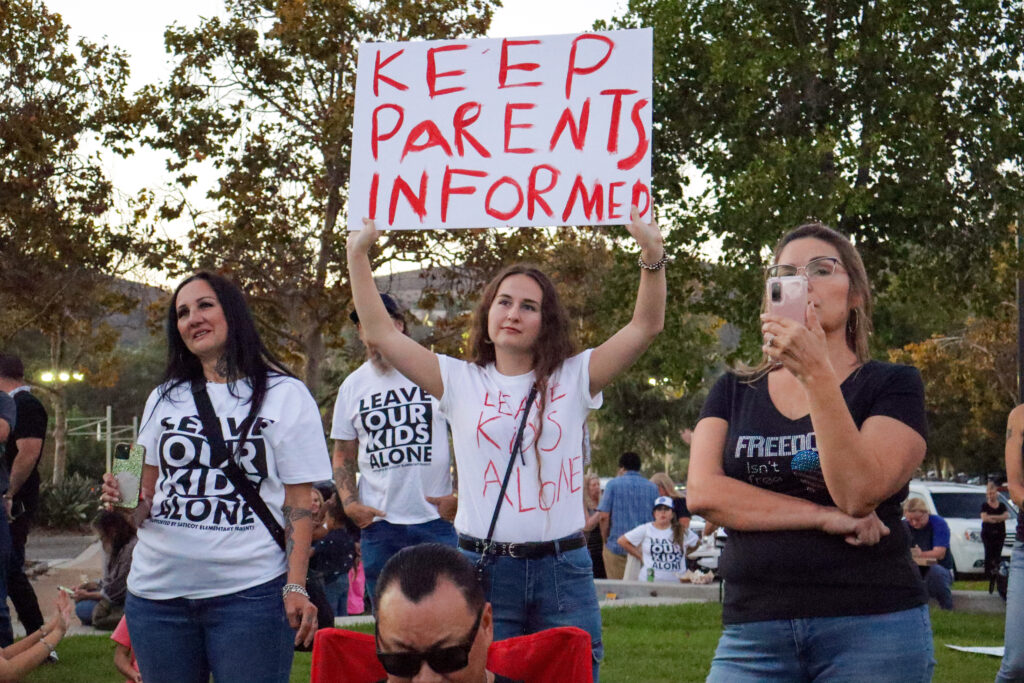
Parents rights supporters attend a rally in Simi Valley on Sept. 26, 2023.,the night before a Republican presidential primary debate.
Credit: Courtesy of Rebecca Holz / California Policy Center
Top Takeaways
A judge ruled parents have the right to know if a student expresses gender incongruence.
California Attorney General Rob Bonta’s office applied to stay the court’s injunction.
The ruling may ultimately be appealed to the U.S. Supreme Court.
A federal judge issued a ruling Monday that strikes down California school policies aimed at preventing schools from revealing a student’s gender identity to their parents.
The class action suit, filed by California teachers and parents, hinges on whether TK-12 educators can breach a student’s confidentiality and tell parents that students are using a name or pronoun other than what they have been assigned at birth.
U.S. District Judge Roger Benitez, of San Diego, ruled in favor of two Escondido Union School District teachers, Elizabeth Mirabelli and Lori Ann West, who claimed that district policies “flatly prohibit teachers from respecting parents’ wishes.” The middle school teachers named district officials in the suit and said district policies violated the teachers’ constitutional free speech and religious rights.
Benitez, a George W. Bush appointee, wrote in his order granting summary judgment that California’s public schools “place a communication barrier between parents and teachers.” The judgment applies to all California public schools, not just the original North San Diego County district.
“Parents and guardians have a federal constitutional right to be informed if their public school student child expresses gender incongruence,” Benitez wrote. “Teachers and school staff have a federal constitutional right to accurately inform the parent or guardian of their student when the student expresses gender incongruence.”
The suit, filed in April 2023, named California state officials, including State Superintendent Tony Thurmond, the State Board of Education and Attorney General Rob Bonta.
Benitez’s ruling references guidance that the California Department of Education shared with school districts, including an FAQ that has since been deleted, as well as cultural competency training. But he stated that this case is not about California Assembly Bill 1955, which prohibits forcing teachers to disclose the gender identity of their students.
The Support Academic Futures and Educators for Today’s Youth, or SAFETY Act, was signed by Gov. Gavin Newsom in July 2024, in response to more than a dozen California school boards proposing or passing parental notification policies that required school staff to inform parents if a child asks to use a name or pronoun different from the one assigned at birth.
A statement from the California Legislative LGBTQ Caucus says that Benitez’s ruling “deliberately injects confusion into the public understanding” of the SAFETY Act and “signals an alarming willingness to undermine long-standing constitutional rights to privacy and nondiscrimination protections across California law.”
Bonta’s office on Monday filed a brief seeking to stay the court’s injunction. A spokesperson for Bonta said the district court misapplied the law and that the decision will ultimately be reversed on appeal.
“We are committed to securing school environments that allow transgender students to safely participate as their authentic selves while recognizing the important role that parents play in students’ lives,” said a statement from Bonta’s office.
A statement from the Thomas More Society, the Chicago-based conservative Catholic law firm that took on the case, called the judge’s decision a “landmark class-action ruling.”
“Today’s incredible victory finally, and permanently, ends California’s dangerous and unconstitutional regime of gender secrecy policies in schools,” said Paul M. Jonna, special counsel at Thomas More Society and a partner at LiMandri & Jonna.
The American Civil Liberties Union said in a statement that this ruling puts transgender and gender-nonforming students at risk of being outed.
“A culture of outing harms everyone — students, families, and school staff alike — by removing opportunities to build trust. LGBTQ+ students deserve to decide on their own terms if, when, and how to come out, and to be able to be themselves at school,” said Christine Parker, senior staff attorney with the ACLU Foundation of Southern California.
An attorney for the Escondido Union School District argued in court documents that both the California Constitution and the state education code protect the privacy rights of students in many contexts. For instance, the California Supreme Court has held that children have the right to an abortion without state notification of their parents. And school counselors are barred from disclosing confidential information if the counselor believes that it would result in a danger to the health or safety of the student.
Legal experts said the case is likely to reach the U.S. Supreme Court.
When the case came up during a panel at the California School Boards Association conference in Sacramento earlier this month, Anthony De Marco, a partner at the firm Atkinson, Andelson, Loya, Ruud & Romo, which represents school districts, called it a “direct attack” on California education.
“It crosses a line,” De Marco said, while speaking to board members about important legal issues they may be facing. “Certified employees should not be able to opt out.”
Jeff Freitas, president of the California Federation of Teachers, called the court decision “an attack on the safety of our students and educators.” He said that as a math teacher, he witnessed students who were struggling with issues that they wanted to keep private from their parents.
“Students more often go to their parents than their teachers,” Freitas said. “If they’re not going to their parents, there’s probably a reason why.”
EdSource reporter Thomas Peele contributed to this report.
eSchool News is counting down the 10 most-read stories of 2025. Story #8 focuses on the debate around teachers vs. AI.
Key points:
A colleague of ours recently attended an AI training where the opening slide featured a list of all the ways AI can revolutionize our classrooms. Grading was listed at the top. Sure, AI can grade papers in mere seconds, but should it?
As one of our students, Jane, stated: “It has a rubric and can quantify it. It has benchmarks. But that is not what actually goes into writing.” Our students recognize that AI cannot replace the empathy and deep understanding that recognizes the growth, effort, and development of their voice. What concerns us most about grading our students’ written work with AI is the transformation of their audience from human to robot.
If we teach our students throughout their writing lives that what the grading robot says matters most, then we are teaching them that their audience doesn’t matter. As Wyatt, another student, put it: “If you can use AI to grade me, I can use AI to write.” NCTE, in its position statements for Generative AI, reminds us that writing is a human act, not a mechanical one. Reducing it to automated scores undermines its value and teaches students, like Wyatt and Jane, that the only time we write is for a grade. That is a future of teaching writing we hope to never see.
We need to pause when tech companies tout AI as the grader of student writing. This isn’t a question of capability. AI can score essays. It can be calibrated to rubrics. It can, as Jane said, provide students with encouragement and feedback specific to their developing skills. And we have no doubt it has the potential to make a teacher’s grading life easier. But just because we can outsource some educational functions to technology doesn’t mean we should.
It is bad enough how many students already see their teacher as their only audience. Or worse, when students are writing for teachers who see their written work strictly through the lens of a rubric, their audience is limited to the rubric. Even those options are better than writing for a bot. Instead, let’s question how often our students write to a broader audience of their peers, parents, community, or a panel of judges for a writing contest. We need to reengage with writing as a process and implement AI as a guide or aide rather than a judge with the last word on an essay score.
Our best foot forward is to put AI in its place. The use of AI in the writing process is better served in the developing stages of writing. AI is excellent as a guide for brainstorming. It can help in a variety of ways when a student is struggling and looking for five alternatives to their current ending or an idea for a metaphor. And if you or your students like AI’s grading feature, they can paste their work into a bot for feedback prior to handing it in as a final draft.
We need to recognize that there are grave consequences if we let a bot do all the grading. As teachers, we should recognize bot grading for what it is: automated education. We can and should leave the promises of hundreds of essays graded in an hour for the standardized test providers. Our classrooms are alive with people who have stories to tell, arguments to make, and research to conduct. We see our students beyond the raw data of their work. We recognize that the poem our student has written for their sick grandparent might be a little flawed, but it matters a whole lot to the person writing it and to the person they are writing it for. We see the excitement or determination in our students’ eyes when they’ve chosen a research topic that is important to them. They want their cause to be known and understood by others, not processed and graded by a bot.
The adoption of AI into education should be conducted with caution. Many educators are experimenting with using AI tools in thoughtful and student-centered ways. In a recent article, David Cutler describes his experience using an AI-assisted platform to provide feedback on his students’ essays. While Cutler found the tool surprisingly accurate and helpful, the true value lies in the feedback being used as part of the revision process. As this article reinforces, the role of a teacher is not just to grade, but to support and guide learning. When used intentionally (and we emphasize, as in-process feedback) AI can enhance that learning, but the final word, and the relationship behind it, must still come from a human being.
When we hand over grading to AI, we risk handing over something much bigger–our students’ belief that their words matter and deserve an audience. Our students don’t write to impress a rubric, they write to be heard. And when we replace the reader with a robot, we risk teaching our students that their voices only matter to the machine. We need to let AI support the writing process, not define the product. Let it offer ideas, not deliver grades. When we use it at the right moments and for the right reasons, it can make us better teachers and help our students grow. But let’s never confuse efficiency with empathy. Or algorithms with understanding.
Dennis Magliozzi & Kristina Peterson, University of New Hampshire’s Writers Academy
Kristina Peterson and Dennis Magliozzi have been teaching English since 2008. Kristina has a master’s degree in teaching and over a decade of experience mentoring teachers. Dennis holds an MFA in poetry and a PhD from the University of New Hampshire. Together, they co-teach in the University of New Hampshire’s Writers Academy and Learning Through Teaching program. Their work on generative AI’s impact in the classroom is highlighted on Heinemann’s blog, and in their forthcoming book, AI in the Writing Workshop: Finding the Write Balance.
Latest posts by eSchool Media Contributors (see all)
by Jeni Hebert-Beirne, The Hechinger Report December 22, 2025
It started with Harvard University. Then Notre Dame, Cornell, Ohio State University and the University of Michigan.
Colleges are racing to close or rename their diversity, equity and inclusion (DEI) offices, which serve as the institutional infrastructure to ensure fair opportunity and conditions for all. The pace is disorienting and getting worse: since last January, 181 colleges in all.
Often this comes with a formal announcement via mass email, whispering a watered-down name change that implies: “There is nothing to see here. The work will remain the same.” But renaming the offices is something to see, and it changes the work that can be done.
Colleges say the changes are needed to comply with last January’s White House executive orders to end “wasteful government DEI programs” and “illegal discrimination” and restore “merit-based opportunity,” prompting them to replace DEI with words like engagement, culture, community, opportunity and belonging.
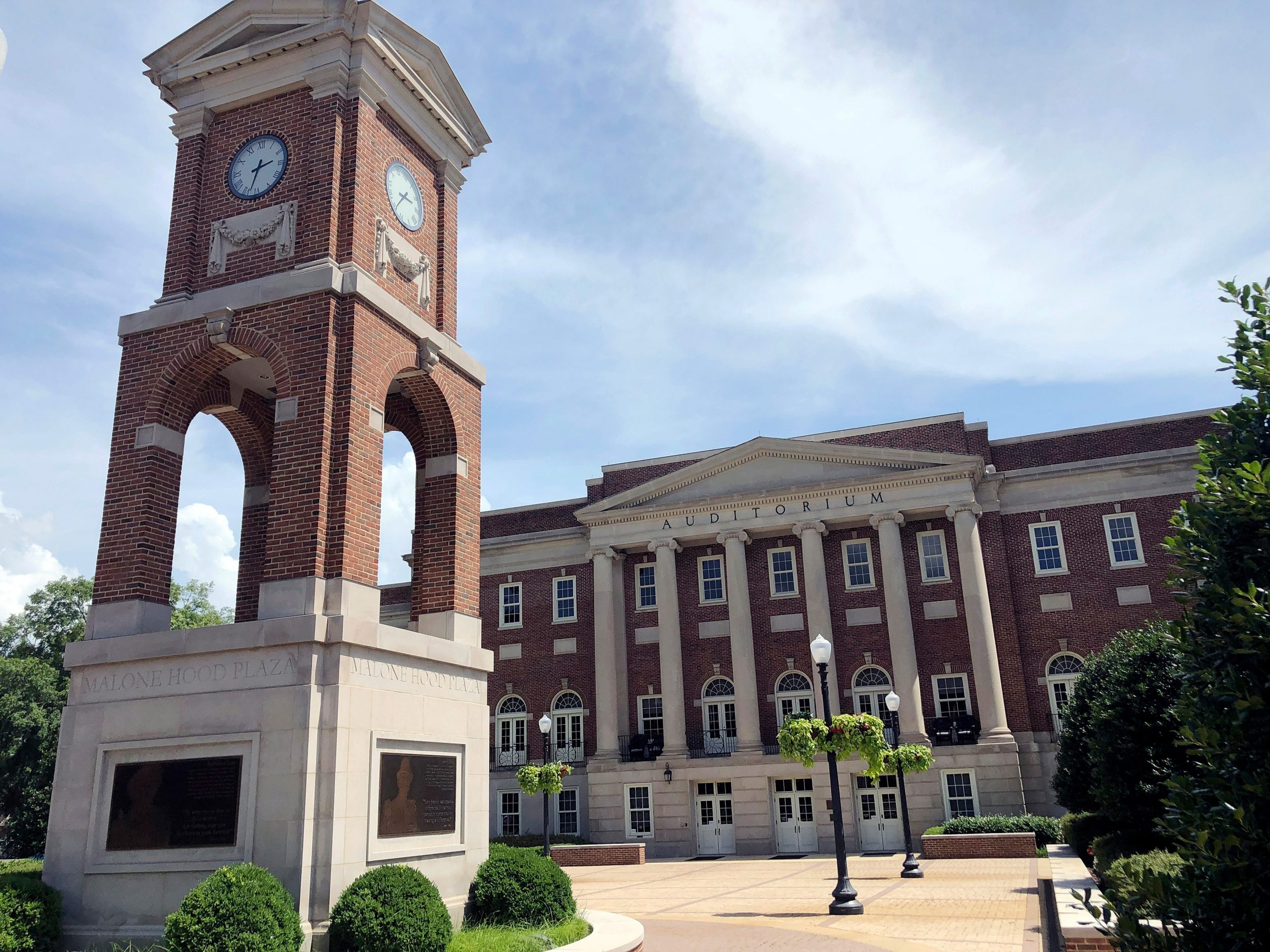
One college went even further this month: The University of Alabama ended two student-run magazines because administrators perceived them to be targeting specific demographics and thus to be out of compliance with Attorney General Pamela Bondi’s anti-discrimination guidance. Students are fighting back while some experts say the move is a blatant violation of the First Amendment.
Related: Interested in innovations in higher education? Subscribe to our free biweekly higher education newsletter.
With the one-year mark of the original disruptive executive orders approaching, the pattern of response is nearly always the same. Announcements of name changes are followed quickly by impassioned pronouncements that schools should “remain committed to our long-standing social justice mission.”
University administrators, faculty, students, supporters and alumni need to stand up and call attention to the risks of this widespread renaming.
True, there are risks to not complying. The U.S. State Department recently proposed to cut research funding to 38 elite universities in a public-private partnership for what the Trump administration perceived as DEI hiring practices. Universities removed from the partnership will be replaced by schools that the administration perceives to be more merit-based, such as Liberty University and Brigham Young University.
In addition to the freezing of critical research dollars, universities are being fined millions of dollars for hiring practices that use an equity lens — even though those practices are merit-based and ensure that all candidates are fairly evaluated.
Northwestern University recently paid $75 million to have research funding that had already been approved restored, while Columbia University paid $200 million. Make no mistake: This is extortion.
Some top university administrators have resigned under this pressure. Others seem to be deciding that changing the name of their equity office is cheaper than being extorted.
Many are clinging to the misguided notion that the name changes do not mean they are any less committed to their equity and justice-oriented missions.
As a long-standing faculty member of a major public university, I find this alarming. In what way does backing away from critical, specific language advance social justice missions?
In ceding ground on critical infrastructure that centers justice, the universities that are caving are violating a number of historian and author Timothy Snyder’s 20 lessons from the 20th century for fighting tyranny.
The first lesson is: “Do not obey in advance.” Many of these changes are not required. Rather, universities are making decisions to comply in advance in order to avoid potential future conflicts.
The second is: “Defend institutions.” The name changes and reorganizations convey that this infrastructure is not foundational to university work.
What Snyder doesn’t warn about is the loss of critical words that frame justice work.
The swift dismantling of the infrastructures that had been advancing social justice goals, especially those secured during the recent responses to racial injustice in the United States and the global pandemic, has been breathtaking.
This is personal to me. Over the 15 years since I was hired as a professor and community health equity researcher at Chicago’s only public research institution, the university deepened its commitment to social justice by investing resources to address systemic inequities.
Directors were named, staff members hired. Missions were carefully curated. Funding mechanisms were announced to encourage work at the intersections of the roots of injustices. Award mechanisms were carefully worded to describe what excellence looks like in social justice work.
Now, one by one, this infrastructure is being deconstructed.
The University of Illinois Chicago leadership recently announced that the Office of the Vice Chancellor for Equity and Diversity will be renamed and reoriented as the Office of the Vice Chancellor for Engagement. The explanation noted that this change reflects a narrowed dual focus: engaging internally within the university community and externally with the City of Chicago.
This concept of university engagement efforts as two sides of one coin oversimplifies the complexity of the authentic, reciprocal relationship development required by the university to achieve equity goals.
As a community engagement scientist, I feel a major loss and unsettling alarm from the renaming of “Equity and Diversity” as “Engagement.” I’ve spent two decades doing justice-centered, community-based participatory research in Chicago neighborhoods with community members. It is doubtful that the work can remain authentic if administrators can’t stand up enough to keep the name.
As a professor of public health, I train graduate students on the importance of language and naming. For example, people in low-income neighborhoods are not inherently “at risk” for poor health but rather are exposed to conditions that impact their risk level and defy health equity. Health is “a state of complete physical, mental and social well-being,” while health equity is “the state in which everyone has the chance to attain full health potential.” Changing the emphasis from health equity to health focuses the system’s lens on the individual and mutes population impact.
Similarly, changing the language around DEI offices is a huge deal. It is the beginning of the end. Pretending it is not is complicity.
Jeni Hebert-Beirne is a professor of Community Health Sciences at the University of Illinois Chicago School of Public Health and a public voices fellow of The OpEd Project.
This <a target=”_blank” href=”https://hechingerreport.org/opinion-colleges-are-not-just-saying-goodbye-to-dei-offices-they-are-dismantling-programs-that-assure-institutional-commitment-to-justice/”>article</a> first appeared on <a target=”_blank” href=”https://hechingerreport.org”>The Hechinger Report</a> and is republished here under a <a target=”_blank” href=”https://creativecommons.org/licenses/by-nc-nd/4.0/”>Creative Commons Attribution-NonCommercial-NoDerivatives 4.0 International License</a>.<img src=”https://i0.wp.com/hechingerreport.org/wp-content/uploads/2018/06/cropped-favicon.jpg?fit=150%2C150&ssl=1″ style=”width:1em;height:1em;margin-left:10px;”>
by Caroline Preston, The Hechinger Report December 18, 2025
Child care workers, students and teachers shared dismay over Immigration and Customs Enforcement raids that are disrupting learning. School superintendents and college presidents described how uncertainty around federal funding is making their jobs far trickier.
Others — including a charter school leader and a for-profit college president — told The Hechinger Report they were grateful for recent changes to education policy, including a new emphasis on school choice and on the importance of workforce education.
Those were just a few of the many reactions we heard from 17 parents, students, educators and others around the country when we asked about the impact of President Donald Trump’s actions this year on their schools and communities. Several people told us that with the federal government stepping back from many of its long-standing responsibilities in education, they and their communities were taking on new roles.
Below are excerpts from the interviews, which have been lightly edited for clarity and length.
Sylvelia Pittman, math interventionist, Henry H. Nash Elementary School, Chicago Public Schools
Under this administration we have witnessed ICE being in our neighborhoods. ICE detained two parents of our students. The husband of one of my colleagues was detained and deported to Mexico. The husband of another colleague was questioned at work because he’s half Latino, half white. So it’s hit hard. And then with the cuts that have been made to the Education Department, those have hit my school. We have a large population of special education students. We are about 35 percent Latino and the rest of our students are Black. Many of our families receive SNAP benefits and they were affected. Trump withheld $8 million from our schools because of the mayor’s Black Student Success Plan, for students to continue to learn their history and bring more Black teachers into schools. It’s almost like we’ve taken hit after hit. It’s just as stressful as when we had Covid. We have had to come to grips with the idea that we must take care of our own. It’s going to be up to us, to city officials. Homelessness, health care, mental health — all of these things have to be addressed at the state and local level, because we can’t wait for the federal government to get it right.
— Caroline Preston
TJ Katz, sophomore at Columbia University in New York, which reached a deal with the Trump administration restoring $400 million in federal funding frozen due to allegations of discriminatory conduct, including a failure to protect Jewish students during protests over the Israel-Hamas war
Campus feels completely different than two years ago. All of the protests have stopped. The Trump administration effectively eliminated them. Whether you want to say Columbia cares about antisemitism, they definitely fear what it would mean to have $400 million stripped away from their budget. As a Jewish student on campus, I would absolutely say I’m glad that the change happened. As someone who’s a massive proponent of democracy and free speech, I have qualms about it. What if there was an administration that didn’t align with what I think is just? We now have a precedent set where the administration could snap their fingers and say this is what has to happen on campuses now. It is slightly scary the precedent that’s been set and the power a president now has over higher education in America.
— Meredith Kolodner
Ian Rowe, founder of Vertex Partnership Academies, a charter school in New York City, which Linda McMahon toured earlier this year in her first public school visit as education secretary
In the Trump administration, there’s a greater affinity for the concept of school choice. That alone is a huge breath of fresh air. There are other things, too — for example, the federal tax credit scholarship. On the surface, it may not seem like that would benefit charter schools, but it does. The money could pay for tuition for a student to attend a private religious school or it could cover SAT prep, tutoring — and that goes to any kind of parent. You could have parents in a public charter school who now have the additional resources to be able to pay for the kinds of things that a lot of middle- and upper-class families are doing to supplement education for their kids.
With the Department of Education already heavily gutted, it’s had zero impact on us — literally zero impact. But even if there’s not a formal federal Department of Education, there are a couple of different functions that are important. One is as the scorekeeper: There absolutely needs to be an assessment, annual or biannual, where you can consistently compare 2026 to 2024 to 2022 to 2020. That’s crucial because we do need, every couple years, a sense of what percent of our kids are reading against a common standard. I also think there is value in having kind of a best practices reservoir so that the federal government can be the place to show, ‘Here’s some innovative work going on in Indiana vs. New York.’But in general, there’s a very limited number of things that I think could really add value in education at the federal level.
— Nirvi Shah
Meka Mo, millennial comedian and nonprofit worker in New York City who took out student loans for undergraduate and graduate school
I’m one of the people who should be receiving public service loan forgiveness, but that’s in limbo and tied up in court right now. We don’t know what’s going to happen. So honestly, it’s kind of a mess, and no one’s paying attention to it, because everyone has, like, one thousand other things going on. Basically all our financial futures are being fought out in the courts right now. It’s like they’re not trying to have social upward mobility in the country.
— Marina Villeneuve
Leticia Wiggins, librarian at the Center for Ethnic Studies at Ohio State University, which closed its Office of Diversity and Inclusion and Center for Belonging and Social Change in response to the Trump administration’s threats to withhold funding from schools that use race-conscious practices in programs, scholarships and other areas of campus life
Those were places where people could go and feel a sense of community and that they belonged somewhere, and now those spaces no longer exist. Some of the student communities have been sort of dissolved — students feel at a loss for where to go. We’re still trying to conduct business as usual and make up for what’s lacking, but everything is just getting more threatened in terms of what we’re even able to talk about.
— Meredith Kolodner
Todd Dugan, superintendent of Bunker Hill Community Unit School District 8 in Illinois, which saw roughly $22,000 in Title II federal funds frozen for services to recruit, retain and train teachers
I’ve been a superintendent for 14 years. It’s definitely getting harder. It’s taking a job that’s already hard and getting harder, and making it harder still. And it appears that it’s being done needlessly. The freezing and clawing back of Title II was announced on June 30, when usually we apply for it on July 1. And then they finally released it the second week of August. It was a lot of extra work making things difficult for a job that is already difficult. I don’t know what the game was, because Title II funding didn’t get clawed back. It just made everybody anxious.
— Ariel Gilreath
Michael A. Elliott, president of Amherst College, in Massachusetts
I see an impact in the growing anxiety of our international students, faculty and staff members. Many are questioning whether there is a safe and stable place for them on our campus or in this country. These uncertainties touch every part of their lives — academic, personal and professional. They influence decisions about research, travel and connections with family, and they undermine the sense of belonging and security that is essential to a place like Amherst. When members of our community carry this kind of persistent fear, the effects are felt by all of us who care about them and want to support them as extraordinary classmates and colleagues.
— Lawrie Mifflin
Kyshanna Patman, a North Carolina mother of four children who works from home
It’s been a crazy year, especially since he’s been in office, with the food stamp benefits being delayed, Medicaid — it’s crazy. And then the things they’re saying about autism. My 4-year-old is autistic and it’s really, really crazy how they’re making the assumption about women taking Tylenol and causing autism. It has not been a good experience since he’s been in office.
When SNAP benefits were delayed, I was struggling trying to come up with the money to keep food in the house. I have four kids in the house and they need to eat. I mainly made sure they had enough before I tried to eat anything myself.
And with the Medicaid work requirements, I just don’t understand. It shouldn’t have to be a requirement for people to have Medicaid. People have preexisting conditions. You’re talking about a work requirement just for people to be seen. It doesn’t make any sense.
There’s too many changes he’s trying to do. They’re not trying to listen to what people have to say. People put you in [office]. He’s supposed to be listening to us and working for us instead of being stricter. You’re supposed to be helping and he’s not doing that. He’s doing the complete opposite.
— Jackie Mader
Leslie Cornick, provost and vice president of academic affairs at California State University, Chico, which lost funding for teacher training after the Trump administration canceled two grant programs of roughly $600 million, citing diversity, equity and inclusion initiatives
One of the challenges we are still continuing to follow up on is the loss of the Teacher Quality Partnership and SEED grants that support stipends for students who are going into teacher education programs and becoming teachers in rural counties and communities. Many of those students are Latinx and are coming to Chico State to become teachers so they can go back into their rural communities that desperately need teachers.
We lost $700,000 or so. We couldn’t run the entire fall cohort of that program this year because access to those grants is still being litigated. We’re making the case for why these grants are so important and why they should not be discontinued. But in the meantime, we don’t have the money and so we can’t support the students. That means we are losing students that we will never get back. And there’s an impact not only on that individual student, but on that student’s family, generationally, and on our economy in the state of California because we’re not getting those teachers out into those rural communities that need them.
From my perspective, it’s critically important that we continue to engage the administration in dialogue and help them understand especially the value of the regional public institutions.
— Olivia Sanchez
Nicole Greene, a special education teacher at Scarsdale Middle School, in New York
The landscape of special education has changed dramatically in the 13 years that I’ve been teaching, and that’s thanks to the ample research and the amount of effort that can go into advancing the field, advancing the profession. Without that, how do teachers get better? How do we learn more about how students learn best? Maybe we can agree that grants are good for furthering the field.
A child should be able to go to any state in the country and their needs should be supported based on federal law in equal measure. At the end of the day, the argument that we are going to leave it up to the states just means that they can interpret IDEA however they see fit, without anyone ensuring that that’s in compliance with what was written. That’s a dangerous place to leave kids.
— Christina A. Samuels
Daniel Cordova, junior at Edmonds-Woodway High School in the Edmonds School District in Washington state, which enrolls many children of migrant parents who work on nearby farms
It’s scary times right now. You leave school, and you don’t know if you’re going to see your friends the next day because they might have some orders from the government to go back to their country. One of my friends is an immigrant. He’s worried like crazy about being deported. My friend’s mother has a deportation order. They’re struggling a lot right now. We feel it across the whole school.
It kind of changes the atmosphere. There’s less trust. It doesn’t feel safe, I would say.
— Neal Morton
Brad Kuykendall, CEO of the for-profit Western Technical College, in El Paso, Texas
I point back to the executive order issued in April that dealt with preparing Americans for high-paying skilled trade jobs for the future. For far too long, there’s been a lack of acknowledgement of the importance of career, technical and trade schools. We were looked at as a lesser option for students, and to a degree, that’s still the case. But I think we’re starting to see that change a bit. The refocus and reemphasis — not as the only option, but as one of the many options — is very healthy for our economy as a whole and for our nation to continue to grow.
Under the Biden administration, we did feel like there was definitely not as friendly of an environment [for for-profit colleges] to operate in. I did feel that we were underrepresented in many of the negotiated rulemaking sessions in the previous administration on regulations that impacted us far more than any other institution. We were one or two out of 15 seats at the table, so trying to come to consensus about a regulation in that environment was just very difficult. Going into negotiated rulemaking [to develop regulations under the ’big, beautiful bill’], I think there’s more fair representation at the table, and it’s a more balanced approach.
— Meredith Kolodner
Mike Shaver, president and CEO at Brightpoint, an Illinois nonprofit that operates child-focused programs, including free, federally funded Head Start centers and home-based Early Head Start services
It’s impossible to escape that this administration has not exactly done a great job at supporting poor families when you look at what happened with the struggle over SNAP benefits. And in our state, the increased ICE enforcement activities have had a profound impact. We have seen attendance levels drop.
In November, an early learning employee — not someone in our program — got out of her vehicle, was walking into the facility where she was an instructor, and ICE agents followed her in, removed her from the building and detained her. It’s really hard to overstate what that kind of image does, not only for the staff who show up every day to meet the needs of these families, but also the families themselves. This is just a lot of added stressors for families, in addition to the challenges that already brought them to our Head Start programs.
— Jackie Mader
Tiffany Tangel, a disability advocate and parent of three — including two children with dyslexia and other learning differences — in western New York
I’m closely watching what’s happening with IDEA. Trump said he was going to move it to Health and Human Services. A lot of people are worried about that. There’s a lot of disabilities that have nothing to do with health in that way. My kids have dyslexia. When it was newly diagnosed for my oldest, I went to our pediatrician and asked for resources on dyslexia, for places I could go for help, and they said we don’t know and the school should be helping you.
I’m also working to restart our school’s special education PTA. Our school had one, but it closed in 2020. With so much unknown in terms of what’s next for our kids, a group of us just felt like now it was needed more than ever. Our hope is to be a place for the parents, because when you have kids in special education, it can be very lonely, and you feel very isolated. And then we really do want to focus on the teachers, because we know as soon as resources are cut, the teachers are feeling it.
You’ve got to keep advocating at a federal level, at a state level, but it’s going to come down to your individual level, too.
— Christina A. Samuels
Aiden Sirk, high school senior, Lawrenceburg, Indiana
Conservatives, they’re not about, ‘We don’t want kids to have an education,’ — it’s that we want to make sure that we’re doing it in the most efficient way possible. And with the Department of Education cut, what they’re making sure they’re doing is that we are still going to have Pell Grants, we’re still going to have FAFSA, I can see that’s OK. There is a lot of bureaucracy at the Department of Education.
A lot of these workers, they’re getting paid and they’re not even coming into the office like they were pre-pandemic. So we didn’t really need all that workforce. But then again, there is a proper way to do things. You can’t just dictate: ‘We’re shutting it down.’ You have to go through Congress. You have to go through the courts. And you have to do it the right way. So yes, I see it’s reasonable, but the way they’re doing it is not reasonable.
— Christina A. Samuels
Heather Shotton, new president of Fort Lewis College, in rural Durango, Colorado, where nearly 40 percent of students are Native American. The college is a Native American-Serving, Nontribal Institution. Shotton is an enrolled citizen of the Wichita and Affiliated Tribes
Fort Lewis lost $2.27 million in Title III money for Native American-serving institutions. The money paid for academic success initiatives: summer bridge programs, peer educators, various academic supports. That impacts our entire campus. Yes, it helped Indigenous students, but it also helped all of our students. It’s part of the federal government trust responsibility to support Native students. The majority of our Native students are not at tribal colleges and universities. And the majority of tribal colleges are two-year colleges. The shifting of money from Native-serving institutions to tribal colleges — itʼs one-time money, spread across 36 institutions.
— Nirvi Shah
Sevan Minassian-Godner, third-year student at the University of California, Irvineand president of Jewish fraternity Alpha Epsilon Pi and Jewish campus organization Hillel
Oct. 7 was a really big event on our campuses, and there was a lot of antisemitism floating around. But that kind of petered off after the first year, and we’re now at a point where it’s much less than it was my first year. But I wouldn’t necessarily attribute that to the Trump administration. I just think we’re further from the incident and from the encampments. I will say that we have experienced an uptick in right-leaning antisemitism recently; there are more groups on campus now that are participating in right-leaning antisemitism. I think that’s become more OK with the Trump administration in office. And I actually do attribute it a lot to Charlie Kirk’s death, too. I think that that ignited a lot of people early on in the year. People are more openly antisemitic, and especially on the right, and this kind of far-right white supremacist ideology, I think, has found its way into a lot more people’s hearts recently.
— Meredith Kolodner
Contact editor Caroline Preston at 212-870-8965, via Signal at CarolineP.83 or on email at [email protected].
This <a target=”_blank” href=”https://hechingerreport.org/fear-fatigue-gratitude-students-parents-and-educators-on-the-new-trump-administrations-first-year/”>article</a> first appeared on <a target=”_blank” href=”https://hechingerreport.org”>The Hechinger Report</a> and is republished here under a <a target=”_blank” href=”https://creativecommons.org/licenses/by-nc-nd/4.0/”>Creative Commons Attribution-NonCommercial-NoDerivatives 4.0 International License</a>.<img src=”https://i0.wp.com/hechingerreport.org/wp-content/uploads/2018/06/cropped-favicon.jpg?fit=150%2C150&ssl=1″ style=”width:1em;height:1em;margin-left:10px;”>
by Christina A. Samuels, The Hechinger Report December 18, 2025
Last year, Project 2025 was a conservative wish list: a grab bag of proposals large and small that would transform the federal government, including in education.
Months later, many of those wishes have become reality. That includes, at least in part, Project 2025’s ultimate goal of doing away with the Education Department.
The department still exists — getting rid of it completely would require congressional action— but it is greatly diminished: Much of the department’s work is being farmed out to other federal agencies. Half of its workforce of about 4,100 people have left or been fired. And Education Secretary Linda McMahon wrote after her confirmation that she was leading the department’s “final mission.”
Eliminating the Education Department was just one of many goals, however. While the administration did not meet all the other tasks in this “to-do” list below, compiled by The Hechinger Report and taken directly from Project 2025, there’s still three more years to go.
Early childhood
Eliminate Head Start: NO. Head Start, which provides free preschool for low-income children, still exists, though some individual centers had problems accessing their money because of temporary freezes from the Department of Government Efficiency and the prolonged government shutdown. The federal government also closed five of 10 Head Start regional offices, which collectively served 22 states.
Pay for in-home child care instead of universal (center-based) daycare: NO. Project 2025 states that “funding should go to parents either to offset the cost of staying home with a child or to pay for familial, in-home childcare.” There have been no moves to fulfill this goal, but the budget reconciliation bill the president signed in July increased the child tax credit and introduced “Trump Accounts” for children under age 18.
Expand child care for military families:YES. The National Defense Authorization Act, passed on Dec. 17 and sent to the president for his signature, authorizes over $491 million to design and build new child care centers for these families, among other provisions. The Department of Defense provides child care to military families on a sliding scale based on income. However, about 20 percent of military families who need child care can’t get it because there is not enough space.
Give businesses an incentive to provide “on-site” child care: NO. Project 2025 states that “across the spectrum of professionalized child care options, on-site care puts the least stress on the parent-child bond.”
K-12 education
Move the National Center for Education Statistics to the Census Bureau; transfer higher education statistics to the Labor Department: NO. Education data collection remains at the Education Department. However, the agency’s capacity has been sharply reduced following mass firings and the termination of key contracts — a development not envisioned in Project 2025. At the same time, Donald Trump directed the center to launch a major new data collection on college admissions to verify that colleges are no longer giving preferences based on race, ethnicity or gender.
Expand choice for families by making federal funding portable to many school options: PARTIAL. In January, the president signed an executive order encouraging “educational freedom.” One of the order’s provisions requires the departments of Defense and Interior — which run K-12 schools for military families and tribal communities, respectively — to allow parents to use some federal funding meant for their children’s education at private, religious and charter schools. However, that initiative for Indian schools ended up being scaled back after tribes protested. The “big, beautiful” spending bill signed in July created a national voucher program, but states have to opt in to participate.
Send money now controlled by the federal government, such as Title I and special education funding, to the states as block grants: NO. In the current fiscal year, about $18.5 billion in Title I money flowed to districts to support low-income students. States received about $14 billion to support educating children with disabilities. Project 2025 envisions giving states that money with no strings attached, which it says would allow more flexibility. While the administration has not lifted requirements for all states, it is considering requests from Indiana, Iowa and Oklahoma that would allow those states to spend their federal money with less government oversight. Also, in his fiscal 2026 budget proposal, Trump floated the idea of consolidating several smaller education programs, such as those supporting rural students, homeless students and after-school activities, into one $2 billion block grant. That would be far less than the combined $6.5 billion set aside for these programs in the current budget.
Reject “radical gender ideology” and “critical race theory,” and eliminate requirements to accept such ideology as a condition of receiving federal funds:YES. Immediately after Trump was sworn into office, he reversed a Biden administration rule that included protection of LGBTQ+ students under Title IX, which bans sex-based discrimination in education programs and activities that receive federal money. Trump also signed an executive order threatening to withhold federal dollars from schools over what the order called “gender ideology extremism” and “critical race theory.” In the months since, the administration launched Title IX investigations in school districts where transgender students are allowed to participate on sports teams and use bathrooms that align with their gender identity. It sent letters to schools across the country threatening to pull funding unless they agree to its interpretation of civil rights laws, to include banning diversity, equity and inclusion (DEI) policies and initiatives. The Education Department also pulled federal research grants and investigated schools and colleges over DEI policies it calls discriminatory.
Pass a federal “parents’ bill of rights,” modeled after similar bills passed at the state level: NO. House Republicans passed a Parents’ Bill of Rights Act two years ago, which would have required districts to post all curricula and reading materials, require schools receiving Title I money to notify parents of any speakers visiting a school, and mandate at least two teacher-parent conferences each year, among other provisions. The Senate did not take it up, and lawmakers have not reintroduced the bill in this session of Congress. About half of the states have their own version of a parentsʼ bill of rights.
Shrink the pool of students eligible for free school meals by ending the “community eligibility provision” and reject universal school meal efforts: NO. Under current rules, schools are allowed to provide free lunch to all students, regardless of their family’s income, if the school or district is in a low-income area. That provision remains in place. The Trump administration has not changed income eligibility requirements for free and reduced-price lunch at schools: Families that earn within 185 percent of the federal poverty line still qualify for reduced lunch and those within 130 percent of the poverty line qualify for free lunch.
Higher education
Roll back student loan forgiveness and income-driven repayment plans: PARTIAL.Three income-driven repayment plans will be phased out next year and a new one — the Repayment Assistance Plan — will be added. RAP requires borrowers to make payments for 30 years before they qualify for loan forgiveness. The administration also reached a proposed agreement to end even earlier the most controversial repayment plan known as SAVE (Saving on a Valuable Education). Trump officials have referred to the SAVE plan as illegal loan forgiveness. Under the plan, some borrowers were eligible to have their loans cleared after only 10 years, while making minimal payments.
End Parent PLUS loans: PARTIAL. These loans, which parents take out to help their children, had no limit. They still exist, but as of July 2026, there will be an annual cap of $20,000 and a lifetime limit of $65,000 per child. Grad PLUS loans, which allow graduate students to borrow directly on behalf of themselves, are being phased out. Under the Repayment Assistance Plan, graduates in certain fields, such as medicine, can borrow no more than $50,000 a year, or $200,000 over four years.
Privatize the federal student loan portfolio: NO. The Trump administration reportedly has been shopping a portion of the federal student loan portfolio to private buyers, but no bids have been made public. Project 2025 also called for eliminating the Federal Student Aid office, which is now housed in the Education Department and oversees student loan programs. Education Secretary Linda McMahon said the Treasury Department would be a better home for the office, but no plans for a move have been announced.
End public service loan forgiveness: NO. PSLF allows borrowers to have part of their debt erased if they work for the government or in nonprofit public service jobs and make at least 120 monthly payments. The structure remains, but a new rule could narrow the definition of the kinds of jobs that qualify for loan forgiveness. The proposed rule raises concerns that borrowers working for groups that assist immigrants, transgender youth or provide humanitarian aid to Palestinians, for example, could be disqualified from loan forgiveness. The new rule would go into effect in July.
Rescind Biden-era rules around sexual assault and discrimination: YES. The Department of Education almost immediately jettisoned changes that the Biden administration had made in 2024 to Title IX, which governs how universities and colleges handle cases of sexual assault and discrimination. Under the Biden rules, blocked by a federal judge days before Trump’s inauguration, accused students were no longer guaranteed the right to in-person hearings or to cross-examine their accusers. The Trump Education Department then returned to a policy from the president’s first term, under which students accused of sexual assault will be entitled to confront their accusers, through a designee, which the administration says restores due process but advocates say will discourage alleged victims from coming forward.
Reform higher education accreditation: YES. In an executive order, Trump made it easier for accreditors to be stripped of their authority and new ones to be approved, saying the existing bodies — which, under federal law, oversee the quality of colleges and universities — have ignored poor student outcomes while pushing diversity, equity and inclusion. Florida and Texas have started setting up their own accreditors and said the administration has agreed to expedite the typically yearslong approval process. The Department of Education has earmarked $7 million to support this work and help colleges and universities switch accreditors.
Dismantle DEI programs and efforts: PARTIAL. Though the administration called for eliminating college DEI programs and efforts, most of the colleges that have shut down their DEI offices have done so in response to state-level legislation. Around 400 books removed from the Naval Academy library because of concerns that they contained messages of diversity or inclusion, but most of the books were ultimately returned. The National Science Foundation canceled more than 400 grants related to several topics, including DEI.
Jill Barshay, Ariel Gilreath, Meredith Kolodner, Jon Marcus, Neal Morton and Olivia Sanchez contributed to this report.
This <a target=”_blank” href=”https://hechingerreport.org/trump-administration-makes-good-on-many-project-2025-education-goals/”>article</a> first appeared on <a target=”_blank” href=”https://hechingerreport.org”>The Hechinger Report</a> and is republished here under a <a target=”_blank” href=”https://creativecommons.org/licenses/by-nc-nd/4.0/”>Creative Commons Attribution-NonCommercial-NoDerivatives 4.0 International License</a>.<img src=”https://i0.wp.com/hechingerreport.org/wp-content/uploads/2018/06/cropped-favicon.jpg?fit=150%2C150&ssl=1″ style=”width:1em;height:1em;margin-left:10px;”>