Tag: Teachers

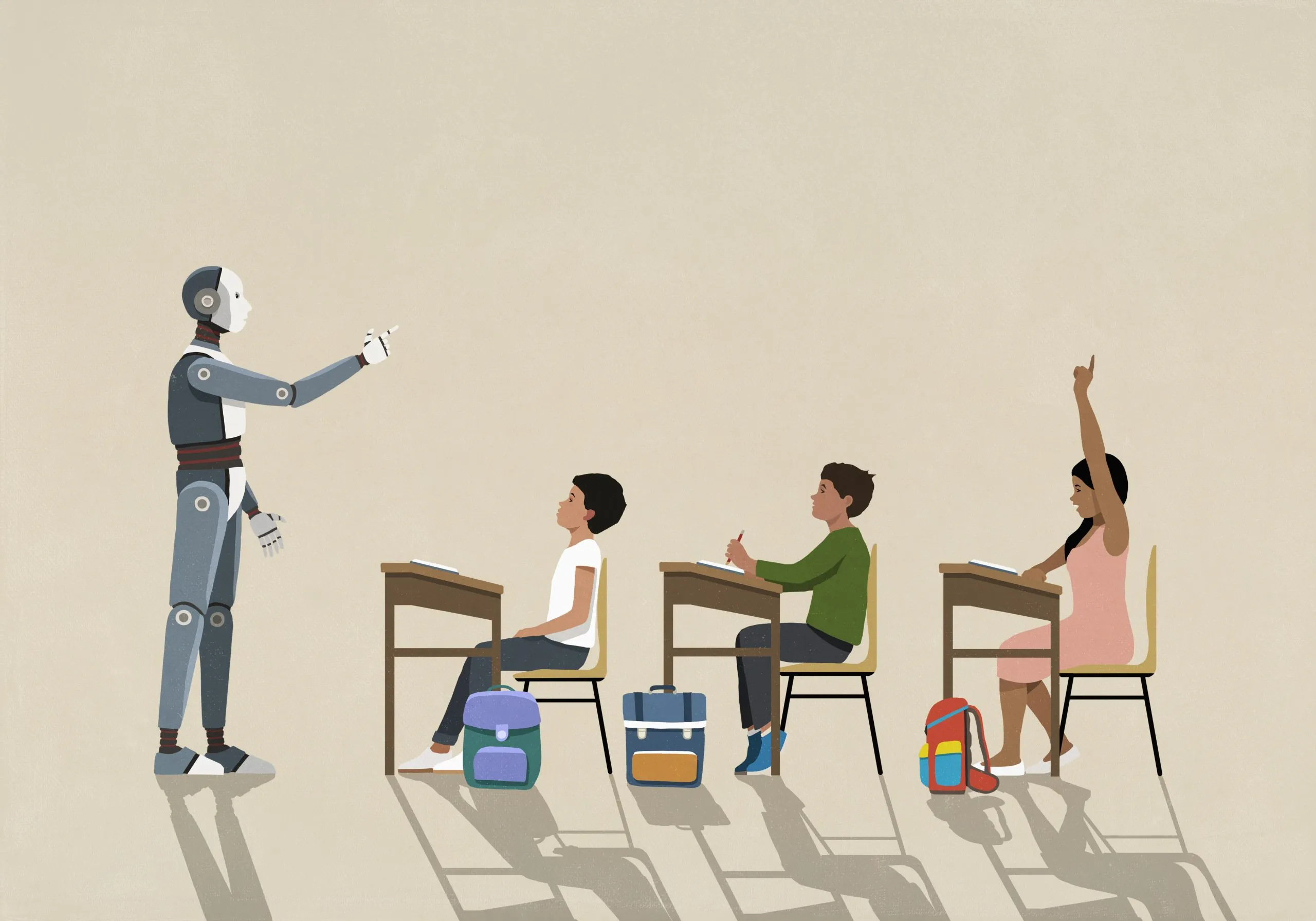
  • 4 ways AI is empowering the next generation of great teachers

    4 ways AI is empowering the next generation of great teachers

    Key points:

    In education, we often talk about “meeting the moment.” Our current moment presents us with both a challenge and an opportunity: How can we best prepare and support our teachers as they navigate increasingly complex classrooms while also dealing with unprecedented burnout and shortages within the profession?

    One answer could lie in the thoughtful integration of artificial intelligence to help share feedback with educators during training. Timely, actionable feedback can support teacher development and self-efficacy, which is an educator’s belief that they will make a positive impact on student learning. Research shows that self-efficacy, in turn, reduces burnout, increases job satisfaction, and supports student achievement. 

    As someone who has spent nearly two decades supporting new teachers, I’ve witnessed firsthand how practical feedback delivered quickly and efficiently can transform teaching practice, improve self-efficacy, and support teacher retention and student learning.

    AI gives us the chance to deliver this feedback faster and at scale.

    A crisis demanding new solutions

    Teacher shortages continue to reach critical levels across the country, with burnout cited as a primary factor. A recent University of Missouri study found that 78 percent of public school teachers have considered quitting their profession since the pandemic. 

    Many educators feel overwhelmed and under-supported, particularly in their formative years. This crisis demands innovative solutions that address both the quality and sustainability of teaching careers.

    What’s often missing in teacher development and training programs is the same element that drives improvement in other high-performance fields: immediate, data-driven feedback. While surgeons review recordings of procedures and athletes get to analyze game footage, teachers often receive subjective observations weeks after teaching a lesson, if they receive feedback at all. Giving teachers the ability to efficiently reflect on AI-generated feedback–instead of examining hours of footage–will save time and potentially help reduce burnout.

    The transformative potential of AI-enhanced feedback

    Recently, Relay Graduate School of Education completed a pilot program with TeachFX using AI-powered feedback tools that showed remarkable promise for our teacher prep work. Our cohort of first- and second-year teachers more than doubled student response opportunities, improved their use of wait time, and asked more open-ended questions. Relay also gained access to objective data on student and teacher talk time, which enhanced our faculty’s coaching sessions.

    Program participants described the experience as “transformative,” and most importantly, they found the tools both accessible and effective.

    Here are four ways AI can support teacher preparation through effective feedback:

    1. Improving student engagement through real-time feedback

    Research reveals that teachers typically dominate classroom discourse, speaking for 70-80 percent of class time. This imbalance leaves little room for student voices and engagement. AI tools can track metrics such as student-versus-teacher talk time in real time, helping educators identify patterns and adjust their instruction to create more interactive, student-centered classrooms.

    One participant in the TeachFX pilot said, “I was surprised to learn that I engage my students more than I thought. The data helped me build on what was working and identify opportunities for deeper student discourse.”

    2. Freeing up faculty to focus on high-impact coaching

    AI can generate detailed transcripts and visualize classroom interactions, allowing teachers to reflect independently on their practice. This continuous feedback loop accelerates growth without adding to workloads.

    For faculty, the impact is equally powerful. In our recent pilot with TeachFX, grading time on formative observation assignments dropped by 60 percent, saving up to 30 hours per term. This reclaimed time was redirected to what matters most: meaningful mentoring and modeling of best practices with aspiring teachers.

    With AI handling routine analysis, faculty could consider full class sessions rather than brief segments, identifying strategic moments throughout lessons for targeted coaching. 

    The human touch remains essential, but AI amplifies its reach and impact.

    3. Scaling high-quality feedback across programs

    What began as a small experiment has grown to include nearly 800 aspiring teachers. This scalability can more quickly reduce equity issues in teacher preparation.

    Whether a teaching candidate is placed in a rural school or urban district, AI can ensure consistent access to meaningful, personalized feedback. This scalable approach helps reduce the geographic disparities that often plague teacher development programs.

    Although AI output must be checked so that any potential biases that come through from the underlying datasets can be removed, AI tools also show promise for reducing bias when used thoughtfully. For example, AI can provide concrete analysis of classroom dynamics based on observable actions such as talk time, wait time, and types of questions asked. While human review and interpretation remains essential–to spot check for AI hallucinations or other inaccuracies and interpret patterns in context–purpose-built tools with appropriate guardrails can help deliver more equitable support.

    4. Helping teachers recognize and build on their strengths

    Harvard researchers found that while AI tools excel at using supportive language to appreciate classroom projects–and recognize the work that goes into each project–students who self-reported high levels of stress or low levels of enjoyment said the feedback was often unhelpful or insensitive. We must be thoughtful and intentional about the AI-powered feedback we share with students.

    AI can also help teachers see what they themselves are doing well, which is something many educators struggle with. This strength-based approach builds confidence and resilience. As one TeachFX pilot participant noted, “I was surprised at the focus on my strengths as well and how to improve on them. I think it did a good job of getting good details on my conversation and the intent behind it. ”

    I often tell new teachers: “You’ll never see me teach a perfect lesson because perfect lessons don’t exist. I strive to improve each time I teach, and those incremental gains add up for students.” AI helps teachers embrace this growth mindset by making improvement tangible and achievable.

    The moment is now

    The current teacher shortage is a crisis, but it’s also an opportunity to reimagine how we support teachers.

    Every student deserves a teacher who knows how to meaningfully engage them. And every teacher deserves timely, actionable feedback.  The moment to shape AI’s role in teacher preparation is now. Let’s leverage these tools to help develop confident, effective teachers who will inspire the next generation of learners.

    Latest posts by eSchool Media Contributors (see all)

    Source link

  • Tutoring provides a much-needed on-ramp into the teaching profession. School districts should pay attention.

    Tutoring provides a much-needed on-ramp into the teaching profession. School districts should pay attention.

    After graduating from Knox College in Illinois with a bachelor’s degree, Stephanie Martinez-Calderon’s plans were upended by the pandemic. She hadn’t planned on becoming a teacher but found an opportunity to tutor remotely for the year after college. 

    Tutoring helped her build confidence and develop instructional skills, and today she’s a middle school teacher in the Washoe County School District in Nevada. 

    Tutoring can be a powerful training ground for future educators, providing hands-on experience, confidence and a bridge into the classroom. And what might begin as a temporary opportunity can become a career path at a time when teachers are needed more than ever: A recent report noted that nearly one in five K-12 teachers plan to leave teaching or are unsure if they’ll stay. 

    Turnover remains a crisis in many districts, one that can be solved by a ready-made pipeline of young future educators with instructional experience and relationship-building skills they’ve gained from tutoring.  

    Related: A lot goes on in classrooms from kindergarten to high school. Keep up with our free weekly newsletter on K-12 education. 

    How school districts think about tutoring should evolve. Rather than seeing it as a short-term response to pandemic-interrupted learning, they should view it as part of the fabric of school design and future educator development. This requires including tutoring in strategic plans, forming community partnerships and creating a structure to sustain programs that cultivate tutors for careers in education. To fund these programs and pay tutors, districts can redirect Title I funds, use federal work-study and create apprenticeship programs.  

    Starting as a tutor allows aspiring educators to build core teaching skills in a supportive, lower-stakes environment. Tutors learn to navigate student relationships and adapt lessons to individual needs. Without having to manage an entire classroom, they can practice asking questions that get students thinking and selecting problems to help students learn. This early practice eases the transition into teaching. 

    Tutors from Generation Z, born between 1996 and 2012, often bring fresh energy to the profession. As digital natives, they are reimagining how to engage and inspire students, leverage technology and foster creativity and new approaches to learning. 

    They are also the most ethnically and racially diverse generation yet: Many come from backgrounds historically underrepresented in the teaching force; over half of undergraduates identify as first-generation college students. Their engagement broadens the prospects for a more diverse teacher pipeline. 

    Tutor recruiters have noticed that Gen Z workers don’t just want a job — they want roles committed to social impact, professional growth and sustainable work-life balance

    Gen Z’s emphasis on flexibility and remote opportunities is one of the most significant workforce changes since the pandemic. They value mental health, stability and mission-driven work. Part-time, hybrid and wellness benefits help recruit young talent. 

    At our nonprofit, recruiters hear from education candidates that Gen Z appreciates the chance to try out industries, and that tutoring provides them with a window into the world of teaching. 

    Public schools could better meet the evolving needs of young professionals entering education by reimagining tutor roles to include hybrid options, mental health supports and collaborative teaching pathways for professional growth. For instance, a tutor might start off working in a part-time online tutoring role, but after interacting with students virtually and gaining more experience, they may be more excited to take on a full-time teaching role on-site.  

    For school districts, tutoring programs can serve as effective recruitment pipelines. By offering recent graduates a low-barrier entry point into education — one that doesn’t require immediate certification — districts can spark interest in teaching among candidates who may not have previously considered it. 

    Amid ongoing hiring challenges, particularly mid-year vacancies, tutors can offer timely solutions.  

    When tutors step into teaching roles, they bring valuable continuity — familiarity with the students and insight into progress and school culture. This seamless transition supports both student learning and district staffing needs. 

    Related: PROOF POINTS: Taking stock of tutoring 

    The idea that tutoring should be built into future educator pipelines is spreading. For example, since the launch of its Ignite Fellowship in 2020, Teach for America says that 550 of its former tutors have become full-time teachers. The program has proven to be especially effective at drawing in nontraditional candidates — those who may not have initially envisioned themselves in the classroom. In Washington, D.C., the school district launched a tutor-to-teacher apprenticeship program after success with high-impact tutoring. In Texas, teacher residents are required to work as tutors and in other support roles while co-teaching with a mentor. 

    By offering flexible, purpose-driven opportunities, districts can attract Gen Z professionals and give them a meaningful entry point into teaching. And tutoring programs can become more than academic support — they can serve as strategic talent pipelines that strengthen the future of the teaching workforce. 

    Alan Safran is co-founder, CEO and chair of the board of Saga Education; Halley Bowman is senior director of academics. 

    Contact the opinion editor at [email protected]. 

    This story about tutoring was produced by The Hechinger Report, a nonprofit, independent news organization focused on inequality and innovation in education. Sign up for Hechinger’s weekly newsletter.  

    The Hechinger Report provides in-depth, fact-based, unbiased reporting on education that is free to all readers. But that doesn’t mean it’s free to produce. Our work keeps educators and the public informed about pressing issues at schools and on campuses throughout the country. We tell the whole story, even when the details are inconvenient. Help us keep doing that.

    Join us today.

    Source link

  • Antiracist Reading Survey for College Writing Teachers

    Antiracist Reading Survey for College Writing Teachers

    Paul T. Corrigan teaches at The University of Tampa. He is currently writing a book on teaching literature. He has published on teaching and learning in TheAtlantic.com, The Chronicle of Higher Education, Inside Higher Ed, College Teaching, Pedagogy, Reader, The Teaching Professor, International Journal for the Scholarship of Teaching and Learning, and other venues. He has a PhD from the University of South Florida and a MA from North Carolina State University. More at paultcorrigan.com. Follow on Twitter at @teachingcollege.


    Source link

  • What we lose when AI replaces teachers

    What we lose when AI replaces teachers

    Key points:

    A colleague of ours recently attended an AI training where the opening slide featured a list of all the ways AI can revolutionize our classrooms. Grading was listed at the top. Sure, AI can grade papers in mere seconds, but should it?

    As one of our students, Jane, stated: “It has a rubric and can quantify it. It has benchmarks. But that is not what actually goes into writing.” Our students recognize that AI cannot replace the empathy and deep understanding that recognizes the growth, effort, and development of their voice. What concerns us most about grading our students’ written work with AI is the transformation of their audience from human to robot.

    If we teach our students throughout their writing lives that what the grading robot says matters most, then we are teaching them that their audience doesn’t matter. As Wyatt, another student, put it: “If you can use AI to grade me, I can use AI to write.” NCTE, in its position statements for Generative AI, reminds us that writing is a human act, not a mechanical one. Reducing it to automated scores undermines its value and teaches students, like Wyatt and Jane, that the only time we write is for a grade. That is a future of teaching writing we hope to never see.

    We need to pause when tech companies tout AI as the grader of student writing. This isn’t a question of capability. AI can score essays. It can be calibrated to rubrics. It can, as Jane

    said, provide students with encouragement and feedback specific to their developing skills. And we have no doubt it has the potential to make a teacher’s grading life easier. But just because we can outsource some educational functions to technology doesn’t mean we should.

    It is bad enough how many students already see their teacher as their only audience. Or worse, when students are writing for teachers who see their written work strictly through the lens of a rubric, their audience is limited to the rubric. Even those options are better than writing for a bot. Instead, let’s question how often our students write to a broader audience of their peers, parents, community, or a panel of judges for a writing contest. We need to reengage with writing as a process and implement AI as a guide or aide rather than a judge with the last word on an essay score.

    Our best foot forward is to put AI in its place. The use of AI in the writing process is better served in the developing stages of writing. AI is excellent as a guide for brainstorming. It can help in a variety of ways when a student is struggling and looking for five alternatives to their current ending or an idea for a metaphor. And if you or your students like AI’s grading feature, they can paste their work into a bot for feedback prior to handing it in as a final draft.

    We need to recognize that there are grave consequences if we let a bot do all the grading. As teachers, we should recognize bot grading for what it is: automated education. We can and should leave the promises of hundreds of essays graded in an hour for the standardized test providers. Our classrooms are alive with people who have stories to tell, arguments to make, and research to conduct. We see our students beyond the raw data of their work. We recognize that the poem our student has written for their sick grandparent might be a little flawed, but it matters a whole lot to the person writing it and to the person they are writing it for. We see the excitement or determination in our students’ eyes when they’ve chosen a research topic that is important to them. They want their cause to be known and understood by others, not processed and graded by a bot.

    The adoption of AI into education should be conducted with caution. Many educators are experimenting with using AI tools in thoughtful and student-centered ways. In a recent article, David Cutler describes his experience using an AI-assisted platform to provide feedback on his students’ essays. While Cutler found the tool surprisingly accurate and helpful, the true value lies in the feedback being used as part of the revision process. As this article reinforces, the role of a teacher is not just to grade, but to support and guide learning. When used intentionally (and we emphasize, as in-process feedback) AI can enhance that learning, but the final word, and the relationship behind it, must still come from a human being.

    When we hand over grading to AI, we risk handing over something much bigger–our students’ belief that their words matter and deserve an audience. Our students don’t write to impress a rubric, they write to be heard. And when we replace the reader with a robot, we risk teaching our students that their voices only matter to the machine. We need to let AI support the writing process, not define the product. Let it offer ideas, not deliver grades. When we use it at the right moments and for the right reasons, it can make us better teachers and help our students grow. But let’s never confuse efficiency with empathy. Or algorithms with understanding.

    Latest posts by eSchool Media Contributors (see all)

    Source link

  • What can be learned from Texas’ surge in uncertified teachers?

    What can be learned from Texas’ surge in uncertified teachers?

    This audio is auto-generated. Please let us know if you have feedback.

    Though it’s expected that teacher turnover will decrease over the next few years, it’s estimated that there were at least 49,000 vacant teaching positions and 400,000 underqualified educators instructing in classrooms nationwide during the 2024-25 school year, according to a project led by researchers from the University of Missouri and the University of Pittsburgh.

    Texas has one of the highest teacher underqualification rates in the country, according to the University of Missouri-University of Pittsburgh research project. 

    Between the 2019-20 and 2024-25 school years, the total number of uncertified teachers in Texas jumped from 12,900 to 42,100, the Texas Education Agency found. That means 12% of the state’s total teachers were uncertified by 2024-25 compared to 3.8% before the pandemic.

    On top of that, 34% of the nearly 49,200 newly hired teachers in the 2023-24 school year had no Texas teaching certifications, according to TEA data.

    Texas makes a change

    Texas’ growing reliance on uncertified teachers stems from the District of Innovation policy enacted by the state legislature in 2015. 

    Some 986 Texas school districts participate in the program, which essentially automatically allows them to waive teacher certifications even though it was initially intended just for career and technical education teachers, said Jacob Kirksey, an assistant professor of education policy at Texas Tech University. Kirksey is also the associate director of the university’s Center for Innovative Research in Change, Leadership and Education.   

    Since the pandemic, however, there has been a “dramatic spike” in districts using the District of Innovation program to help with hiring uncertified teachers for foundational subject areas, Kirksey said.

    According to Kirksey’s research, Texas’ use of uncertified teachers with no classroom experience led to major learning losses for students. Those taught by new uncertified educators lost 4 months in reading and 3 months in math compared to their peers taught by certified instructors.

    But a major shift is underway: HB2, a new state law enacted in June, will phase out all uncertified teachers in foundational content areas by the 2029-30 school year.  

    Now in Texas, Kirksey said, “we’ve seen the extent of the damage. I think our legislature realized, ‘OK, we created this hole, and now we need to put in the work to fix it.’”

    HB2 also incentivizes districts to hire high-quality teachers, he said. Under the new law, districts can receive $1,000 bonuses for every teacher they certify who previously lacked necessary credentials. Other larger bonuses can be earned from the state for mentoring and training teachers. 

    South Carolina embraces uncertified teachers

    On the flip side, some states are implementing laws that would allow more uncertified teachers to enter classrooms.

    In South Carolina, for instance, a law enacted in May launched a five-year pilot program that will allow public school districts to hire uncertified teachers — capped at 10% of a district’s instructional staff. 

    These teachers must have a bachelor’s or master’s degree with at least five years of relevant work experience in the subject area they are hired to instruct. Uncertified teachers must also enroll in an educator preparation program within their first three years of instruction. 

    The new law comes as South Carolina’s school districts reported over 1,000 teacher vacancies at the beginning of the 2024-25 school year — 600 fewer vacancies, or a 35% decrease, from the previous year, according to a November 2024 analysis by the Center for Educator Recruitment, Retention, and Advancement. 

    Dena Crews, president of the South Carolina Education Association, said she’s concerned that the law doesn’t require uncertified teachers to take any foundational training before they can instruct students. “The business world and the education world are not the same,” she said.

    Uncertified teachers also don’t have any incentive to stay in schools and won’t face any consequences if they quit in the middle of their contract, Crews said. For instance, if one of these teachers doesn’t know anything about classroom management and they can’t get students’ attention for days on end, they may not want to come back and teach.

    Source link

  • If we are serious about improving student outcomes, we can’t treat teacher retention as an afterthought

    If we are serious about improving student outcomes, we can’t treat teacher retention as an afterthought

    In the race to help students recover from pandemic-related learning loss, education leaders have overlooked one of the most powerful tools already at their disposal: experienced teachers.

    For decades, a myth has persisted in education policy circles that after their first few years on the job, teachers stop improving. This belief has undercut efforts to retain seasoned educators, with many policymakers and administrators treating veteran teachers as replaceable cogs rather than irreplaceable assets.

    But that myth doesn’t hold up. The evidence tells a different story: Teachers don’t hit a plateau after year five. While their growth may slow, it doesn’t stop. In the right environments — with collaborative colleagues, supportive administrators and stable classroom assignments — teachers can keep getting better well into their second decade in the classroom.

    This insight couldn’t come at a more critical time. As schools work to accelerate post-pandemic learning recovery, especially for the most vulnerable students, they need all the instructional expertise they can muster.

    That means not just recruiting new teachers but keeping their best educators in the classroom and giving them the support they need to thrive.

    Related: A lot goes on in classrooms from kindergarten to high school. Keep up with our free weekly newsletter on K-12 education.

    In a new review of 23 longitudinal studies conducted by the Learning Policy Institute and published by the Thomas B. Fordham Institute, all but one of the studies showed that teachers generally improve significantly during their first five years. The research review also found continued, albeit slower, improvement well into years 6 through 15; several of the studies found improvement into later years of teaching, though at a diminished pace.

    These gains translate into measurable benefits for students: higher test scores, fewer disciplinary issues, reduced absenteeism and increased postsecondary attainment. In North Carolina, for example, students with highly experienced English teachers learned more and were substantially less likely to skip school and more likely to enjoy reading. These effects were strongest for students who were most at risk of falling behind.

    While experience helps all teachers improve, we’re currently failing to build that experience where it’s needed most. Schools serving large populations of low-income Black and Hispanic students are far more likely to be staffed primarily by early career teachers.

    And unfortunately, they’re also more likely to see those teachers leave after just a few years. This churn makes it nearly impossible to build a stable, experienced workforce in high-need schools.

    It also robs novice teachers of the veteran mentors who could help them get better faster and robs students of the opportunity to learn from seasoned educators who have refined their craft over time.

    To fix this, we need to address both sides of the equation: helping teachers improve and keeping them in the classrooms that need them most.

    Research points to several conditions that support continued teacher growth. Beginning teachers are more likely to stay and improve if they have had high-quality preparation and mentoring. Teaching is not a solo sport. Educators who work alongside more experienced peers improve faster, especially in the early years.

    Teachers also improve more when they’re able to teach the same grade level or subject year after year. Unfortunately, those in under-resourced schools are more likely to be shuffled around, undermining their ability to build expertise.

    Perhaps most importantly, schools that have strong leadership and which foster time for collaboration and a culture of professional trust see greater gains in teacher retention over time.

    Teachers who feel supported by their administrators, who collaborate with a team that shares their mission and who aren’t constantly switching subjects or grade levels are far more likely to stay in the profession.

    Pay matters too, especially in high-need schools where working conditions are toughest. But incentives alone aren’t enough. Short-term bonuses can attract teachers, but they won’t keep them if the work environment drives them away.

    Related: One state radically boosted new teacher pay – and upset a lot of teachers

    If we’re serious about improving student outcomes, especially in the wake of the pandemic, we have to stop treating teacher retention as an afterthought. That means retooling our policies to reflect what the research now clearly shows: experience matters, and it can be cultivated.

    Policymakers should invest in high-quality teacher preparation and mentoring programs, particularly in high-need schools. They should create conditions that promote teacher stability and collaboration, such as protected planning time and consistent teaching assignments.

    Principals must be trained not just as managers, but as instructional leaders capable of building strong school cultures. And state and district leaders must consider meaningful financial incentives and other supports to retain experienced teachers in the classrooms that need them most.

    With the right support, teachers can keep getting better. In this moment of learning recovery, a key to success is keeping teachers in schools and consciously supporting their growing effectiveness.

    Linda Darling-Hammond is founding president and chief knowledge officer at the Learning Policy Institute. Michael J. Petrilli is president of the Thomas B. Fordham Institute, a visiting fellow at the Hoover Institution and an executive editor of Education Next.

    Contact the opinion editor at [email protected].

    This story about teacher retention was produced by The Hechinger Report, a nonprofit, independent news organization focused on inequality and innovation in education. Sign up for Hechinger’s weekly newsletter.

    The Hechinger Report provides in-depth, fact-based, unbiased reporting on education that is free to all readers. But that doesn’t mean it’s free to produce. Our work keeps educators and the public informed about pressing issues at schools and on campuses throughout the country. We tell the whole story, even when the details are inconvenient. Help us keep doing that.

    Join us today.

    Source link

  • Sanders Introduces Bill Requiring $60,000 Minimum Salary for All Public School Teachers

    Sanders Introduces Bill Requiring $60,000 Minimum Salary for All Public School Teachers

    Senator Bernie SandersSenator Bernie Sanders introduced legislation last Thursday requiring all public school teachers to earn at least $60,000 annually, calling America’s teacher pay crisis a “national emergency” during a Capitol Hill town hall with more than 200 educators.

    The Pay Teachers Act, co-sponsored by eight Democratic senators including Elizabeth Warren and Ed Markey, would establish the first federal mandate for teacher salaries and represents the most ambitious federal intervention in educator compensation in decades.

    “Just four hedge fund managers on Wall Street make more money in a single year than every kindergarten teacher in America combined—over 120,000 teachers,” Sanders said. “No public school teacher in America should make less than $60,000 a year.”

    The legislation comes as schools nationwide face unprecedented staffing shortages, with nearly 200,000 teaching positions either vacant or filled by underqualified educators. According to the bill’s findings, 38% of teachers nationwide earn less than $60,000 annually, with starting teachers averaging $44,530.

    Maria Gonzalez, a third-grade teacher from Arizona who testified at the town hall, said she drives for Uber on weekends and tutors after school to pay rent. 

    “My students ask why I look tired. How do I tell them their teacher can’t afford to live in the community where she teaches?”

    The crisis extends beyond low pay. Twenty-one percent of elementary and middle school teachers’ families rely on public assistance programs including Medicaid, food stamps, and the Earned Income Tax Credit, according to a University of California, Berkeley study cited in the legislation. Additionally, 44% of public school teachers quit within five years, and 17% worked multiple jobs during the 2020-2021 school year.

    The comprehensive bill would cost approximately $400 billion over five years, funded through mandatory appropriations. Beyond the $60,000 minimum salary requirement, the legislation would triple Title I funding, provide teachers with at least $1,000 annually for classroom supplies, and mandate that paraprofessionals and education support staff earn at least $45,000 annually or $30 per hour.

    States would have four years to implement the salary requirements, with extended timelines available for states demonstrating substantial financial need. The bill also includes $50 billion annually for career ladder programs allowing teachers to advance without leaving the classroom.

    The teacher shortage disproportionately affects schools serving students of color and low-income communities, which are four times more likely to employ uncertified teachers than schools with low minority enrollment, according to federal civil rights data cited in the legislation.

    James Williams, a high school mathematics teacher from North Carolina, told the town hall that his salary purchased “a decent life” 15 years ago but now forces him to choose between car repairs and classroom supplies.

    The legislation faces significant political obstacles with Republicans controlling the House. GOP lawmakers have criticized the massive federal spending, while some education policy experts question federal involvement in traditionally state and local compensation decisions.

    Major education unions endorsed the proposal. American Federation of Teachers President Randi Weingarten called it “a crucial federal investment to help sustain the teaching profession,” while National Education Association Vice President Princess Moss praised it as legislation that “invests in our students, educators, and public schools.”

    Sanders criticized recent Republican legislation that he said provides “$900 billion in tax cuts to large, profitable corporations and a $1 trillion tax cut to the top 1%” while cutting over $300 billion in education funding. The Trump administration is also withholding nearly $5.5 billion in congressionally appropriated education funding, according to Sanders and his colleagues.

    “If we can provide over a trillion dollars in tax breaks to the top 1% and large corporations, please don’t tell me that we cannot afford to make sure that every teacher in America is paid at least $60,000 a year,” Sanders said.


    Source link

  • PRINCIPAL VOICE: Inviting families into our classrooms slashed absenteeism and raised reading levels

    PRINCIPAL VOICE: Inviting families into our classrooms slashed absenteeism and raised reading levels

    Two years ago, I bought each of the teachers at Hamilton Elementary in San Diego’s City Heights neighborhood a blue chair. I told them to put it in the back of their classrooms, and that if a parent or caregiver wanted to visit to see how their children are learning — no matter what the reason — that this would be a dedicated space for them.

    I may have earned some exaggerated eye-rolls from educators that day. After all, I can appreciate the disruption to learning that classroom visitors can sometimes cause, especially among excitable elementary schoolers.

    But school is our home, and it is our responsibility to invite families into our home and welcome them. And this was a necessary olive branch, my way of saying to families: “From here on out, things are going to be different.”

    And they were. They also can be different at other schools, because the benefits of family engagement go well beyond student achievement.

    Related: A lot goes on in classrooms from kindergarten to high school. Keep up with our free weekly newsletter on K-12 education.

    Research has long shown that when parents and caregivers are involved and engaged with their children’s education — whether that’s by attending parent-teacher conferences or participating in school events — student achievement, motivation and social-emotional well-being increase.

    Parent involvement with reading activities has a positive impact on reading achievement, language comprehension, expressive language skills and level of attention in the classroom, according to the National Literacy Trust.

    Research also shows that educators enjoy increased job satisfaction and are more likely to keep teaching at the school, families enjoy stronger relationships with their children and feel less isolated, and even school districts themselves become better places to live and raise children.

    None of this was the case when we returned to normalcy following Covid. Just 13 percent of students were reading on grade level, and 37 percent were chronically absent. I knew right away that before we even attempted to tackle academics, we needed to engage families and make them feel deeply connected and committed to the community I envisioned building here.

    Today, 45 percent of students are reading at grade-level, and chronic absenteeism, at 12 percent on the most recent official numbers, is down to 10 percent in our own tracking, with a goal of pushing it down to 8 percent in 2025-26.

    But it wasn’t easy given the distrust that had boiled over during the pandemic, with families skeptical of our ability to effectively support their children and school staff feeling defensive and exhausted.

    It was clear to me that families weren’t excited to send their kids to school, didn’t feel informed about what was happening on our campus and, moreover, didn’t feel comfortable — let alone capable — of communicating their needs to us.

    Complicating matters further was the need to share information across many languages other than English, which can make relationship-building and communicating expectations difficult.

    Roughly half of our students are English learners, and while the majority of their families are Spanish-speakers, there are growing populations of students whose first languages are Haitian-Creole, Pashto and Vietnamese.

    Related: What the research says about the best way to engage parents

    The first thing I did was establish open communication with parents using ClassDojo, a mobile app that gives families an easy, intuitive central access point to our teachers and staff, automatically translates all messages into parents’ native languages and allows us to share stories about what is happening in school.

    It became an easy way to build trust and collaboration between families and staff.

    Creating that type of visibility was key to breaking down walls between us. And in those early days, we didn’t post about literacy, math or anything related to academics. Instead, we focused solely on attendance and getting families to come inside the school as much as possible.

    We focused on relationship-building activities and joyful learning. We hosted after-school art classes and monthly family Fridays, when families could come to school to engage in a fun activity.

    We organized a Halloween costume drive with candy and fun games for kids; we hosted a Read Across America event where we passed out Play-Doh; and we organized other low-stakes events at school, rooted in building a partnership between home and school.

    Again, our goal wasn’t learning during these meet-ups. It was all in service of building trust and creating meaningful relationships with students and their families.

    Once we had the foundation in place, we added a focus on academics — though we rooted that learning in family engagement, too. For example, our schoolwide focus last year was phonics, so we sent activities home for families to complete with their children that were tied specifically to concepts the students needed reinforced, based on their individual assessments, like long vowel patterns and sight words.

    These activities were taught by the students and their teachers to family members during conferences.

    Beyond helping students, the exercise challenged a false narrative so many families had assumed — that they either didn’t know enough about what was happening in school to help, weren’t confident enough to help or didn’t have enough time.

    Today, the atmosphere at Hamilton feels radically different than when I first walked through the doors. When we first started hosting Family Fridays, about 10 family members and their children showed up.

    Now, we have roughly 200 caregivers at every meet-up. Families run most of the community-based initiatives at the school — from a boutique where families can shop among donated clothes twice a month, to a food distribution center, to a book club, English classes and a monthly meet-up where families can socialize.

    When district leaders visit, they’re always impressed by the participation. I tell them, if you care about family engagement, it has to be so deeply embedded into the system that people don’t have a choice but to do it.

    That’s why I’m constantly thinking about how to center family engagement in staff meetings, in attendance meetings, in literacy and math plans, in behavioral and counseling plans and in meetings about school procedures and budgets.

    It’s a strategy that not only involves families but also supports academic achievement and student well-being. For me, family engagement is the ultimate strategy for academics.

    Sometimes in the K-12 world we keep outreach and academics separate, but in reality, engagement is the key that unlocks our ability to hit academic goals and create a joyful school community.

    Dr. Brittany Daley is the principal of Hamilton Elementary School in San Diego, California.

    Contact the opinion editor at [email protected].

    This story about family engagement was produced by The Hechinger Report, a nonprofit, independent news organization focused on inequality and innovation in education. Sign up for Hechinger’s weekly newsletter.

    The Hechinger Report provides in-depth, fact-based, unbiased reporting on education that is free to all readers. But that doesn’t mean it’s free to produce. Our work keeps educators and the public informed about pressing issues at schools and on campuses throughout the country. We tell the whole story, even when the details are inconvenient. Help us keep doing that.

    Join us today.

    Source link

  • New teachers’ impact on equitable science learning

    New teachers’ impact on equitable science learning

    Key points:

    New elementary teachers who promote equity in science are proving highly effective at engaging students, no matter their background, a new University of Michigan study shows.

    U-M researchers found that new educators are pioneering paths in science education by offering opportunities for scientific conversations, innovative learning strategies and encouraging children to become active participants in scientific exploration. 

    “When teachers are equipped to foster a more equitable and just learning environment in science, it not only enhances children’s understanding of scientific concepts but also empowers them to see themselves as scientists and to use science to address real-world issues that matter in their communities,” said Elizabeth Davis, a professor at U-M’s Marsal Family School of Education.

    “Beginning teachers use a range of effective strategies to work toward more equitable science teaching. They vary in their emphasis on opportunity and access, representation and identification, expanding what counts as science and engaging children as change-makers using science to support a better world. This variation highlights the multiplicity of entry points into this challenging work and shows these teachers’ many strengths.”

    The study, published in the General Proceedings of the 5th Annual Meeting of the International Society for the Learning Sciences 2025, also identified areas for growth: These teachers were less consistently likely to work to broaden what counts as science and to link science to social justice. 

    Davis and co-authors Jessica Bautista and Victoria Pérez Nifoussi said the study helps understand how different approaches to equity in science education can work together, potentially influencing future teacher training for improved K-12 science learning. 

    They emphasized the clear need for teacher educators and curriculum developers to provide more concrete examples and resources to help future teachers navigate complex, justice-oriented approaches to science.

    “All children deserve to experience the joy and wonder of the natural world, yet science is taught far less often than language arts or math in elementary schools,” Davis said. “Furthermore, many students are marginalized in science, including girls, students of color, children with learning differences and queer or gender nonconforming children.”

    Funding challenges impact long-term research

    The study is part of the U-M ASSETS research, a four-year longitudinal project that began in September 2023. Although it was intended to run for four years, the project, funded by the National Science Foundation, was terminated in its 20th month, just shy of two years from its start.

    “The termination of these NSF projects–focused on STEM education, and in particular equity in STEM education–is going to adversely affect science education and science for generations to come,” Davis said. 

    “We are seeking additional funds for this work. Regardless, we will continue to support the teachers who participate in this project and we’ll continue to collect and analyze data to the extent we’re able to do so.”

    The team is now working on characterizing the participants’ first year of teaching to assess how their approaches to equitable and just elementary science teaching align with and differ from their approaches during teacher education.

    This news release originally appeared on U-M’s news site.

    Latest posts by eSchool Media Contributors (see all)

    Source link

  • A government climate website teachers rely on is in peril

    A government climate website teachers rely on is in peril

    For the last 15 years, science teacher Jeff Grant has used information on climate change from the federal website Climate.gov to create lesson plans, prepare students for Advanced Placement tests and educate fellow teachers. Now, Grant says, he is “grabbing what [he] can” from the site run by the National Oceanic and Atmospheric Administration’s Climate Program Office, amid concerns that the Trump administration is mothballing it as part of a broader effort to undermine climate science and education.

    “It’s just one more thing stifling science education,” said Grant, who teaches at Downers Grove North High School in the Chicago suburbs. 

    Since early May, all 10 editorial contributors to Climate.gov have lost their jobs, and the organization that produces its education resources will soon run out of money. On June 24, the site’s homepage was redirected to NOAA.gov, a change NOAA said was made to comply with an earlier executive order on “restoring gold standard science.” Those steps follow many others the president has made to dismantle federal efforts to fight climate change, which his administration refers to as the “new green scam.”

    Former employees of Climate.gov and other educators say they fear that the site, which will no longer produce new content, could be transformed into a platform for disinformation. 

    “It will make it harder for teachers to do a good job in educating their students about climate change,” said Glenn Branch, deputy director of the nonprofit National Center for Science Education. “Previously, they could rely on the federal government to provide free, up-to-date, accurate resources on climate change that were aimed at helping educators in particular, and they won’t be able to do so if some of these more dire predictions come to pass.”

    Such concerns have some foundation. For example, Covid.gov, which during the Biden administration offered health information and access to Covid-19 tests, has been revamped to promote the controversial theory that the coronavirus was created in a lab. The administration has also moved aggressively to delete from government sites other terms that are currently out of favor, such as references to transgender people that were once on the National Park Service website of the Stonewall National Memorial, honoring a major milestone in the fight for LGBTQ+ rights.

    Kim Doster, director of NOAA’s office of communications, declined to answer specific questions but shared a version of the statement posted on the NOAA website when Climate.gov was transferred. “In compliance with Executive Order 14303, Restoring Gold Standard Science, NOAA is relocating all research products from Climate.gov to NOAA.gov in an effort to centralize and consolidate resources,” it says.  

    Related: Want to read more about how climate change is shaping education? Subscribe to our free newsletter.

    Climate.gov, founded in 2010 to support earth science instruction in schools, had become a go-to site for educators and the general public for news and information about temperature, sea level rise and other indicators of global warming.

    For many educators, it has served a particularly key role. Because its resources are free, they are vital in schools that lack resources and funding, teachers and experts say. 

    Rebecca Lindsey, Climate.gov’s lead editor and writer, was one of several hundred NOAA probationary employees fired in February, then rehired and put on administrative leave, before being terminated again in March. The rest of the content production team — which included a meteorologist, a graphic artist and data visualizers — lost their jobs in mid-May. Only the site’s two web developers still have their jobs. 

    A screenshot of the Sea Level Rise Viewer, an interactive NOAA that’s listed as a resource on Climate.gov, a government climate website. Credit: NOAA Office for Coastal Management

    Lindsey said she worries that the government “intended to keep the site up and use it to spread climate misinformation, because they were keeping the web developers and getting rid of the content team.”

    In addition, the Climate Literacy and Energy Awareness Network, the official content provider for the education section of the site, has not received the latest installment of its three-year grant and expects its funds to run out in August. 

    “We won’t have funding to provide updates, fix hyperlinks and make sure that new resources are being added, or help teachers manage or address or use the resources,” said Anne Gold, CLEAN’s principal investigator. “It’s going to start deteriorating in quality.” 

    CLEAN, whose website is hosted by Carleton College, is now searching for other sources of money to continue its work, Gold said. 

    With the June 24 change redirecting visitors from Climate.gov to NOAA.gov/climate, the website  for the first time falls under the purview of a political appointee: Doster. Its previous leader, David Herring, is a science writer and educator.

    Melissa Lau, an AP environmental science teacher in Piedmont, Oklahoma, said the relocated site was “really difficult to navigate.”

    As someone who lives in Tornado Alley, Lau said, she frequented CLEAN and NOAA sites to show her students localized, real-time data on storm seasons. She said she is concerned that teachers won’t have time to track down information that was shifted in the website’s move and, as a result, may opt not to teach climate change. 

    The executive order on “restoring gold standard science” that appears to have triggered the shift gives political appointees the authority to decide what science information needs to be modified to align with its tenets. 

    While the disclaimer posted to NOAA.gov seems to imply that Climate.gov did not meet this requirement, educators and researchers said that the site and its CLEAN education resources were the epitome of a gold standard.

    “I want to stress that the reason why CLEAN is considered the gold standard is because we have such high standards for scientific accuracy, classroom readiness and maintenance,” Gold said. “We all know that knowledge is power, and power gives hope. … [Losing funding] is going to be a huge loss to classrooms and to students and the next generation.”

    Related: One state mandates teaching climate change in almost all subjects — even PE

    This is only the latest attack by the Trump administration on education around climate change. This month, the U.S. Global Change Research Program’s website, GlobalChange.gov, was shut down by the administration, after the program was defunded in April. The website once hosted an extensive climate literacy guide, along with all five iterations of the National Climate Assessment — a congressionally required report that informed the public about the effects and risks of climate change, along with local, actionable responses. 

    The Department of Commerce, which oversees NOAA, has cut other federal funding for climate research, including at Princeton University, arguing that these climate grant awards promoted “exaggerated and implausible climate threats, contributing to a phenomenon known as ‘climate anxiety,’ which has increased significantly among America’s youth.” 

    Studies, though, suggest that if young people have a greater understanding of why weather is changing and how to take action, they are less likely to feel anxious. 

    “The more you know [about climate change], the more it’s not a scary monster in the closet,” said Lauren Madden, professor of elementary science education at the College of New Jersey. “It’s a thing you can react to.” She added, “We’re going to have more storms, we’re going to have more fires, we’re going to have more droughts. There are things we can do to help slow this. … I think that quells anxiety, that doesn’t spark it.”

    And climate education has broad public support — about 3 in 4 registered voters say schools should teach children about global warming, according to a 2024 report from the Yale Program on Climate Change Communication. Similarly, 77 percent of Americans regard it as very or somewhat important for elementary and secondary school students to learn about climate change, according to a 2019 study. And all but five states have adopted science standards that incorporate at least some instruction on climate change.

    Yet few teachers have received training on climate change. There is also not much professional development for climate educators, and textbooks tend to downplay the effects of climate change

    As a result, many science teachers rely on federal tools and embed them in their curriculum. They are worried that the information will no longer be relevant, or disappear entirely, according to Lori Henrickson, former climate integration specialist for Washington state’s education department. Henrickson, who lost her job this June as the result of state budget cuts, was in charge of integrating climate education across content areas in the state, from language arts to physical education.

    The .gov top-level domain connotes credibility and accessibility, according to Branch: “It is also easier for teachers facing or fearing climate change denial backlash to cite a reliable, free source from the federal government.”

    Related: How Trump is disrupting efforts by schools and colleges to combat climate change

    With Climate.gov’s future uncertain, educators are looking to other resources, like university websites and tools from other countries. 

    “I’m sure there will continue to be tools, and there will be enough people who will be willing to pay to access them,” Madden said. But, she added, “they probably won’t be as comprehensive, and it won’t feel like it’s a democratic process. It’ll feel like: If you or your employer are willing to chip in for it, then you’ll have access.”

    Madden, along with many other educators, frequently used the Environmental Protection Agency’s environmental justice toolkit, but the site was taken down earlier this year. 

    “I feel like with all the federal websites, I’m constantly checking to see what’s still up and what’s not,” Madden said. 

    Bertha Vazquez, education director for the Center of Inquiry, an organization that works to preserve science and critical thinking, said she worried that the disappearance of climate information could leave U.S. students behind. 

    “The future of the American economy is not in oil, the future of the American economy is in solar and wind and geothermal. And if we’re going to keep up with the international economy, we need to go in that direction,” she said. But while the U.S. should be leading the way in scientific discovery, Vazquez said, such work will now be left to other countries.

    Lau said she felt helpless and frustrated about Climate.gov’s shutdown and about the “attack on American science in general.” 

    “I don’t know what to do. I can contact my legislators, but my legislators from my state are not going to be really open to my concerns,” she said. “If students next year are asking me questions about [science research and funding], I have to tell them, ‘I do not know,’ and just have to leave it at that.”

    Contact editor Caroline Preston at 212-870-8965, via Signal at CarolineP.83 or on email at [email protected].

    This story about the government climate website was produced by The Hechinger Report, a nonprofit, independent news organization focused on inequality and innovation in education. Sign up for the Hechinger climate and education newsletter.

    The Hechinger Report provides in-depth, fact-based, unbiased reporting on education that is free to all readers. But that doesn’t mean it’s free to produce. Our work keeps educators and the public informed about pressing issues at schools and on campuses throughout the country. We tell the whole story, even when the details are inconvenient. Help us keep doing that.

    Join us today.

    Source link