K-12 GenAI adoption rates have grown–but so have concerns
A new era for teachers as AI disrupts instruction
With AI coaching, a math platform helps students tackle tough concepts
For more news on GenAI, visit eSN’s AI in Education hub
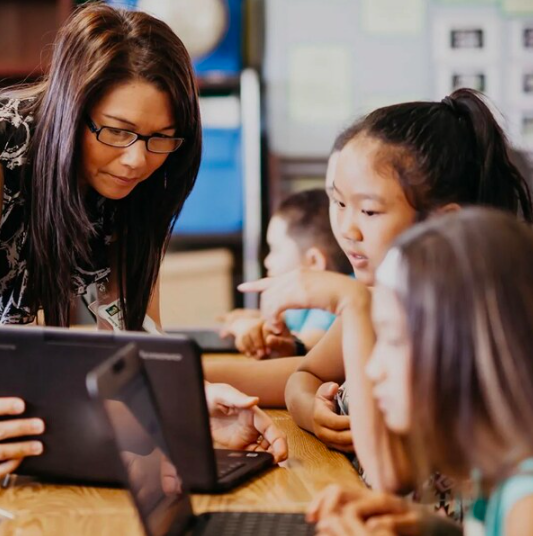
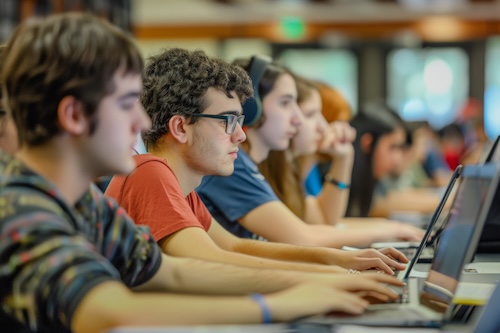
Almost 3 in 5 K-12 educators (55 percent) have positive perceptions about GenAI, despite concerns and perceived risks in its adoption, according to updated data from Cengage Group’s “AI in Education” research series, which regularly evaluates AI’s impact on education.
More News from eSchool News
HVAC projects to improve indoor air quality. Tutoring programs for struggling students. Tuition support for young people who want to become teachers in their home communities.
Our school has built up its course offerings without having to add headcount. Along the way, we’ve also gained a reputation for having a wide selection of general and advanced courses for our growing student body.
When it comes to visual creativity, AI tools let students design posters, presentations, and digital artwork effortlessly. Students can turn their ideas into professional-quality visuals, sparking creativity and innovation.
Ensuring that girls feel supported and empowered in STEM from an early age can lead to more balanced workplaces, economic growth, and groundbreaking discoveries.
In my work with middle school students, I’ve seen how critical that period of development is to students’ future success. One area of focus in a middle schooler’s development is vocabulary acquisition.
For students, the mid-year stretch is a chance to assess their learning, refine their decision-making skills, and build momentum for the opportunities ahead.
Middle school marks the transition from late childhood to early adolescence. Developmental psychologist Erik Erikson describes the transition as a shift from the Industry vs. Inferiority stage into the Identity vs. Role Confusion stage.
Art has a unique power in the ESL classroom–a magic that bridges cultures, ignites imagination, and breathes life into language. For English Language Learners (ELLs), it’s more than an expressive outlet.
In the year 2025, no one should have to be convinced that protecting data privacy matters. For education institutions, it’s really that simple of a priority–and that complicated.
Teachers are superheroes. Every day, they rise to the challenge, pouring their hearts into shaping the future. They stay late to grade papers and show up early to tutor struggling students.
Lumio by SMART Technologies, a cloud-based learning platform that enhances engagement on student devices, recently announced a new feature for its Spark plan. This new offering integrates AI Assist, an advanced tool designed to save teachers time and elevate student engagement through AI-generated quiz-based activities and assessments.
Designing effective quizzes takes time—especially when crafting well-balanced multiple-choice questions with plausible wrong answers to encourage critical thinking. AI Assist streamlines this process, generating high-quality quiz questions at defined levels in seconds so teachers can focus on engaging their students rather than spending time on quiz creation.
More News from eSchool News
HVAC projects to improve indoor air quality. Tutoring programs for struggling students. Tuition support for young people who want to become teachers in their home communities.
Almost 3 in 5 K-12 educators (55 percent) have positive perceptions about GenAI, despite concerns and perceived risks in its adoption, according to updated data from Cengage Group’s “AI in Education” research series.
Our school has built up its course offerings without having to add headcount. Along the way, we’ve also gained a reputation for having a wide selection of general and advanced courses for our growing student body.
When it comes to visual creativity, AI tools let students design posters, presentations, and digital artwork effortlessly. Students can turn their ideas into professional-quality visuals, sparking creativity and innovation.
Ensuring that girls feel supported and empowered in STEM from an early age can lead to more balanced workplaces, economic growth, and groundbreaking discoveries.
In my work with middle school students, I’ve seen how critical that period of development is to students’ future success. One area of focus in a middle schooler’s development is vocabulary acquisition.
For students, the mid-year stretch is a chance to assess their learning, refine their decision-making skills, and build momentum for the opportunities ahead.
Middle school marks the transition from late childhood to early adolescence. Developmental psychologist Erik Erikson describes the transition as a shift from the Industry vs. Inferiority stage into the Identity vs. Role Confusion stage.
Art has a unique power in the ESL classroom–a magic that bridges cultures, ignites imagination, and breathes life into language. For English Language Learners (ELLs), it’s more than an expressive outlet.
In the year 2025, no one should have to be convinced that protecting data privacy matters. For education institutions, it’s really that simple of a priority–and that complicated.
Ethical PD is a call to action for all involved in teacher professional development
Key questions that unleash powerful PLCs
GenAI and cultural competency: New priorities in teacher preparation
For more news on teacher PD, visit eSN’s Educational Leadership hub
Teachers are superheroes. Every day, they rise to the challenge, pouring their hearts into shaping the future. They stay late to grade papers, show up early to tutor struggling students, and spend their weekends planning lessons that inspire young minds. They do this because they believe in their mission–a mission to change lives, ignite passions, and build a better world.
More News from eSchool News
We are again in uncertain times. We again find ourselves dealing with sudden changes and uncertainty. We seem to be in a state of constant change and ambiguity.
In today’s evolving educational landscape, effective student assessment goes beyond multiple-choice tests and letter grades. According to a recent study, over 60 percent of educators believe traditional assessments fail to fully measure student understanding.
Holden, my 21-month-old, has fallen in love. His early morning snack and “couch time” includes a dose of “Tiger!” This is toddler for, “Mom, turn on Daniel Tiger’s Neighborhood.”
The COVID-19 pandemic left an indelible mark on K-12 education, placing immense pressure on teachers as they adapted, literally overnight, to new methods of instruction.
Spring brings not only showers and flowers, but it also brings the opportunity to interview for new education positions. Preparing for an interview involves several key steps that can significantly impact the outcome.
STEM careers are on the rise. According to the U.S. Bureau of Labor Statistics, employment in STEM occupations is expected to grow by 10.4 percent from 2023 to 2033, compared to just 3.6 percent for non-STEM occupations.
The U.S. Department of Education is giving state education agencies 10 days to certify that their schools do not engage in any practices that the administration believes illegally promote diversity, equity, and inclusion.
COVID had already killed thousands of people in other countries and was spreading in the United States when a top federal health official said schools should prepare to offer “internet-based teleschooling” in case they had to close for a period of time.
More than half of educators (62 percent) are already making use of AI at school, with more than one-quarter using it daily for work purposes, according to a Twinkl survey of more than 3,500 U.S. teachers.
Many math tasks involve reading, writing, speaking, and listening. These language demands can be particularly challenging for students whose primary language is not English.
Mark Roberts is an English teacher and Director of Research at Carrickfergus Grammar School. He is the author of several books, including Boys Don’t Try? and The Boy Question, both published by Routledge.
Spurred on by the huge response to the TV series ‘Adolescence’, Bridget Phillipson MP, Secretary of State for Education, has this week called for more male teachers to act as role models for disaffected boys.
As a teacher who has been writing about issues with boys and education for many years, I’m delighted to see an increased focus on the debate about how best to support boys in school.
Yet, while the idea of male teachers as role models is an alluring one, the plan is deeply flawed. Even if we can persuade lots of men to take up the call to arms to rescue our boys, there’s little evidence to suggest that the plan will work.
The case for more male teachers
Just as we have pushed more girls into STEM professions, we should be pushing more boys into HEAL (Health, Education, Admin and Literacy) professions. As I wrote in my book The Boy Question (2021):
Seeing more men in teaching roles, and especially in primary settings, would help change attitudes towards both education and society at large. It would probably encourage more boys to consider teaching as a possible future career option for themselves.
But, in the rush to save boys from Tate and his ilk, we need to ask a key question: Will more men in teaching actually make a difference? In the age of the manosphere, would more male teachers help shift boys’ attitudes? And, from the perspective of participation in higher education, would these new recruits help improve their academic outcomes?
The problem with male teachers as role models
Unfortunately, there are numerous problems with the role model plan:
1. Men are reluctant to go into teaching
Given the relatively low pay, workload expectations and lack of status, attracting men into teaching is a challenging prospect. Efforts to recruit 6500 new teachers already look dubious, with only 200 more trainee teachers signing up in 2024/25. Without a plan to tackle negative perceptions of teaching as a career prospect, the idea is doomed from the start.
2. Nobody can agree on what a male teacher role model looks like
Cushman (2008) surveyed 250 New Zealand primary school principals to discover what qualities they were seeking in male teachers[i]. The principals had a long list of often contradictory desirable qualities, including outstanding sporting prowess. Research by Brownhill (2014) listed 65 different role model requirements[ii]. Meeting this idealised checklist is a big ask for any individual. Pupils, parents and politicians would also have their own role model requirements. Is any one man capable of being all those things, all the time, to all stakeholders? And even if these Supermen are capable of all this, are they also equally confident talking about misogyny as talking about algebra or Shakespeare?
3. Children very rarely view teachers as role models
Even if teachers were willing to try and adopt the position of idealised male teacher, there’s little evidence to suggest that boys would see them as father figures. Bricheno & Thornton (2007) found that between the age of 10-16, boys named relatives as their ‘most important role models’. Compared to 32% of young people who said they looked up to a parent, a mere 2.4% of students identified a teacher as a role model. [iii]
4. There’s little evidence to suggest boys learn better with male teachers
One key reason given for more male role model teachers is the suggestion that disaffected boys will respond better to teachers of their own gender. But the evidence doesn’t stack up. A 2010 study by Lam et al. of nearly 5,000 Grade 4 students in Hong Kong found no evidence that boys improved their reading when taught by men[iv]. In 2008, Carrington et al. found no teacher gender effect on attainment data and pupil attitudes in British primary schools[v]. In the same year, Marsh et al. found ‘little or no evidence’ to support the idea that boys will be more motivated by male than female teachers in secondary maths, science and English classes’[vi]. I could go on. While I welcome any efforts to recruit more male teachers, we shouldn’t expect this to lead to better results for boys.
5. It judges female teachers unfairly
Many of the calls for more male teachers come from voices bemoaning the ‘feminisation’ of schools. Such voices believe that female teachers are incapable of providing guidance for boys and helping them become productive members of society. This deficit model is frankly insulting to the many thousands of female teachers doing a wonderful job of educating boys in often challenging circumstances.
Rather than getting distracted by the male role model debate, we should focus on fully supporting teachers to help boys succeed academically and get the grades required to, should they wish, enter higher education. Because that, above all, will make the biggest difference to boys’ lives.
[i] Cushman, P. (2008) ‘So what exactly do you want? What principals mean when they say ‘male role model’’, Gender and Education, 20:2, pp. 123–136.
[ii] Brownhill, S. (2014) ‘‘Build me a male role model!’ A critical exploration of the perceived qualities/characteristics of men in the early years (0–8) in England’, Gender and Education, 26:3, pp. 246–261.
[iii] Bricheno, P., & Thornton, M. (2007) ‘Role model, hero or champion? Children’s views concerning role models’, Educational Research, 49:4, pp. 383–396.
[iv] Lam, Y.H., Tse, S.K., Lam, J.W.I., & Loh, K.Y.E. (2010) ‘Does the gender of the teacher matter in the teaching of reading literacy? Teacher gender and pupil attainment in reading literacy in Hong Kong’, Teaching and Teacher Education, 26, pp. 754–759.
[v] Carrington, B., Tymms, P., & Merrell, C. (2008) ‘Role models, school improvement and the ‘gender gap’ – Do men bring out the best in boys and women the best in girls?’ British Educational Research Journal, 34, pp. 315–327.
[vi] Marsh, H., Martin, A., & Cheng, J. (2008) ‘A multilevel perspective on gender in classroom motivation and climate: potential benefits of male teachers for boys?’ Journal of Educational Psychology, 100, pp. 78–95.
Educators should build a classroom culture that values learning over compliance
5 practical ways to integrate AI into high school science
A new era for teachers as AI disrupts instruction
For more news on AI and assessments, visit eSN’s Digital Learning hub
In recent years, the rise of AI technologies and the increasing pressures placed on students have made academic dishonesty a growing concern. Students, especially in the middle and high school years, have more opportunities than ever to cheat using AI tools, such as writing assistants or even text generators. While AI itself isn’t inherently problematic, its use in cheating can hinder students’ learning and development.
More News from eSchool News
Many math tasks involve reading, writing, speaking, and listening. These language demands can be particularly challenging for students whose primary language is not English.
As a career and technical education (CTE) instructor, I see firsthand how career-focused education provides students with the tools to transition smoothly from high school to college and careers.
As technology trainers, we support teachers’ and administrators’ technology platform needs, training, and support in our district. We do in-class demos and share as much as we can with them, and we also send out a weekly newsletter.
Math is a fundamental part of K-12 education, but students often face significant challenges in mastering increasingly challenging math concepts.
Throughout my education, I have always been frustrated by busy work–the kind of homework that felt like an obligatory exercise rather than a meaningful learning experience.
During the pandemic, thousands of school systems used emergency relief aid to buy laptops, Chromebooks, and other digital devices for students to use in remote learning.
Education today looks dramatically different from classrooms of just a decade ago. Interactive technologies and multimedia tools now replace traditional textbooks and lectures, creating more dynamic and engaging learning environments.
There is significant evidence of the connection between physical movement and learning. Some colleges and universities encourage using standing or treadmill desks while studying, as well as taking breaks to exercise.
This story was originally published by Chalkbeat. Sign up for their newsletters at ckbe.at/newsletters. In recent weeks, we’ve seen federal and state governments issue stop-work orders, withdraw contracts, and terminate…
English/language arts and science teachers were almost twice as likely to say they use AI tools compared to math teachers or elementary teachers of all subjects, according to a February 2025 survey from the RAND Corporation.
Maraida Caraballo Martínez es educadora en Puerto Rico desde hace 28 años y directora de la Escuela de la Comunidad Jaime C. Rodríguez desde hace siete. Nunca sabe cuánto dinero recibirá del gobierno cada año porque no se basa en el número de niños matriculados. Un año recibió 36.000 dólares; otro año, 12.000 dólares.
Pero por primera vez como educador, Caraballo notó una gran diferencia durante la administración Biden. Gracias a una inyección de fondos federales en el sistema educativo de la isla, Caraballo recibió una subvención de 250.000 dólares, una cantidad de dinero sin precedentes. La utilizó para comprar libros y ordenadores para la biblioteca, pizarras e impresoras para las aulas, reforzar el programa de robótica y construir una pista polideportiva para sus alumnos. “Esto significó una gran diferencia para la escuela”, dijo Caraballo.
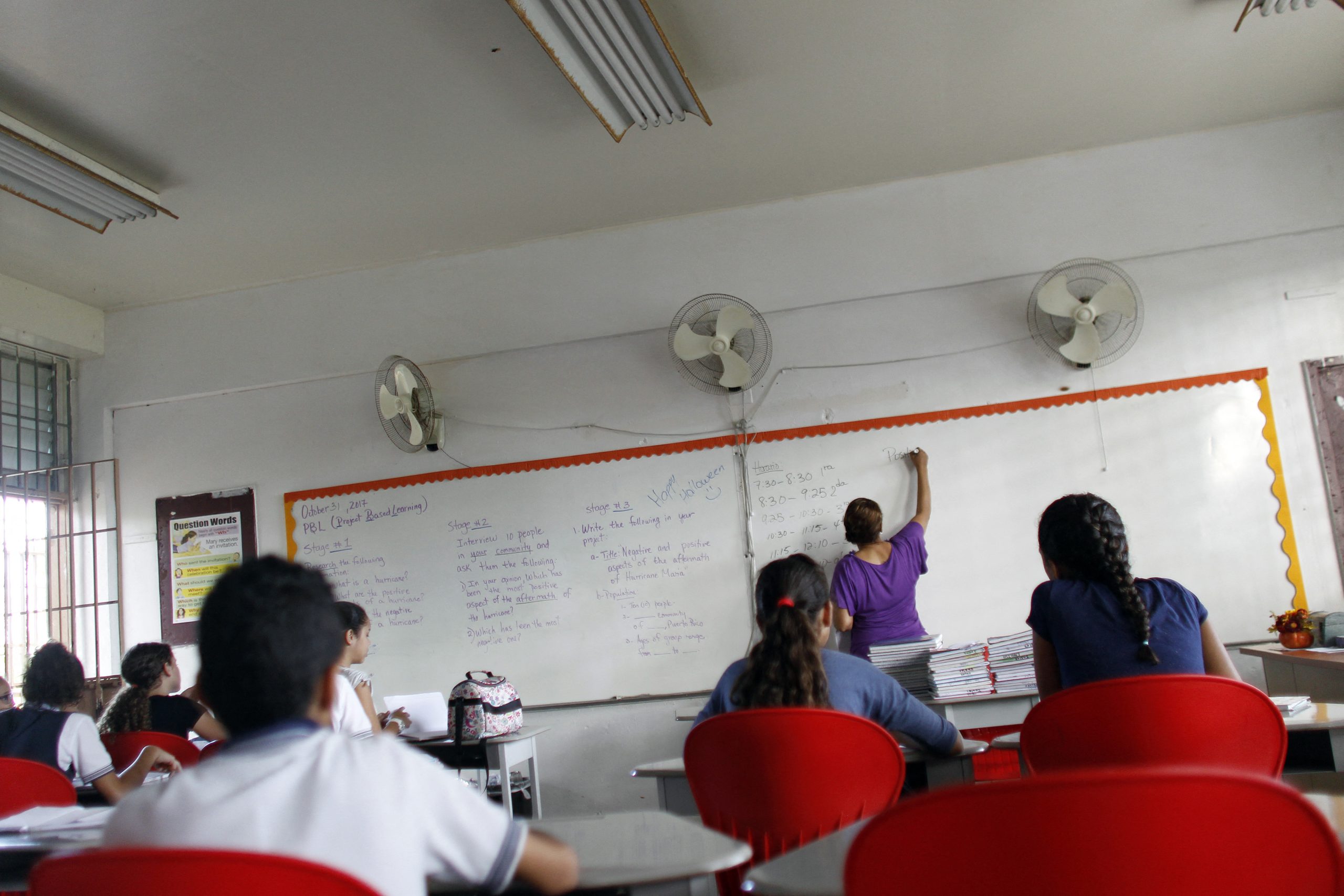
Yabucoa, un pequeño pueblo del sureste de Puerto Rico, fue una de las regiones más afectadas por el huracán María en 2017. Y esta comunidad escolar, como cientos de otras en la isla, ha experimentado trastornos casi constantes desde entonces. Una serie de desastres naturales, como huracanes, terremotos, inundaciones y deslizamientos de tierra, seguidos de la pandemia de coronavirus en 2020, han golpeado la isla e interrumpido el aprendizaje. También ha habido una rotación constante de secretarios de educación locales: siete en los últimos ocho años. El sistema educativo puertorriqueño -el séptimo distrito escolar más grande de Estados Unidos- se ha vuelto más vulnerable debido a la abrumadora deuda de la isla, la emigración masiva y una red eléctrica paralizada.
Relacionado: En las aulas de preescolar a secundaria pasan muchas cosas. Mantente al día con nuestro boletínsemanal gratuito sobre educación.
Bajo la presidencia de Joe Biden, se produjeron tímidos avances, respaldados por miles de millones de dólares y una atención personal sostenida por parte de altos funcionarios federales de educación, dijeron muchos expertos y educadores de la isla. Ahora les preocupa que todo se desmantele con el cambio en la Casa Blanca. El presidente Donald Trump no ha ocultado su desdén por el territorio estadounidense, habiendo dicho supuestamente que estaba “sucio y que la gente era pobre.” Durante su primer mandato, retuvo miles de millones de dólares en ayuda federal tras el huracán María y ha sugerido vender la isla o cambiarla por Groenlandia.
Una reciente orden ejecutiva para hacer del inglés el idioma oficial ha preocupado a los habitantes de la isla, donde solo 1 de cada 5 personas habla inglés con fluidez, y el español es el idioma de instrucción en las escuelas. Trump está tratando de eliminar el Departamento de Educación de EE.UU. y ya ha hecho recortes radicales a la agencia, lo que tendrá implicaciones en toda la isla. Incluso si los fondos federales -que el año pasado representaron más de dos tercios del financiamiento del Departamento de Educación de Puerto Rico, o DEPR- se transfirieran directamente al gobierno local, probablemente traerían peores resultados para los niños más vulnerables, dicen los educadores y expertos en políticas públicas. Históricamente, el DEPR ha estado plagado de interferencias políticas, burocracia generalizada y falta de transparencia.
Maraida Caraballo Martínez ha sido educadora en Puerto Rico durante 28 años y ahora es directora de una escuela primaria. Su escuela ha estado a punto de cerrar tres veces debido a la emigración masiva de la isla. Credit: Kavitha Cardoza for The Hechinger Report
Y el departamento de educación local no está tan avanzado tecnológicamente como otros departamentos de educación estatales, ni es tan capaz de difundir las mejores prácticas. Por ejemplo, Puerto Rico no dispone de una “fórmula por alumno”, un cálculo utilizado habitualmente en el continente para determinar la cantidad de dinero que recibe cada estudiante para su educación. Roberto Mujica es el director ejecutivo de la Junta de Supervisión y Gestión Financiera de Puerto Rico, convocada por primera vez bajo la presidencia de Barack Obama en 2016 para hacer frente al marasmo financiero de la isla. Mujica dijo que la actual asignación de fondos educativos de Puerto Rico es opaca. “Cómo se distribuyen los fondos se percibe como un proceso político”, dijo. “No hay transparencia ni claridad”.
En 2021, Miguel Cardona, Secretario de Educación de Biden, prometió “un nuevo día” para Puerto Rico. “Durante demasiado tiempo, los estudiantes y educadores de Puerto Rico fueron abandonados”, dijo. Durante su mandato, Cardona aignó casi 6.000 millones de dólares federales para el sistema educativo de la isla, lo que se tradujo en un aumento salarial histórico para los profesores, financiamiento para programas de tutoría extraescolar, la contratación de cientos de profesionales de salud mental escolar y la creación de un programa piloto para descentralizar el DEPR.
Cardona designó a un asesor principal, Chris Soto, para que fuera su persona de contacto con el sistema educativo de la isla, subrayando el compromiso del gobierno federal con la isla. Durante casi cuatro años en el cargo, Soto realizó más de 50 viajes a la isla. Carlos Rodríguez Silvestre, director ejecutivo de la Fundación Flamboyán, una organización sin fines de lucro de Puerto Rico que ha dirigido los esfuerzos de alfabetización infantil en la isla, dijo que el nivel de respeto e interés sostenido hicieron sentir que se trataba de una asociación, no un mandato de arriba hacia abajo. “Nunca había visto ese tipo de atención a la educación en Puerto Rico”, afirmó. “Soto prácticamente vivía en la isla”.
Soto también trabajó estrechamente con Víctor Manuel Bonilla Sánchez, presidente del sindicato de maestros, la Asociación de Maestros de Puerto Rico, o AMPR, lo que dio lugar a un acuerdo por el que los educadores recibieron 1.000 dólares más al mes en su salario base, un aumento de casi el 30% para el maestro promedio. “Fue el mayor aumento salarial en la historia de los maestros de Puerto Rico”, dijo Bonilla, aunque incluso con el aumento, los maestros de aquí siguen ganando mucho menos dinero que sus colegas en el continente.
Una de las mayores quejas que Soto dijo haber escuchado fue lo rígido y burocrático que era el Departamento de Educación de Puerto Rico, a pesar de una ley de reforma educativa de 2018 que permite un mayor control local. La agencia de educación -la unidad de gobierno más grande de la isla, con la mayor cantidad de empleados y el mayor presupuesto- estaba configurada de manera que la oficina central tenía que aprobar todo. Así que Soto creó y supervisó un programa piloto en Ponce, una región en la costa sur de la isla, enfocado en la descentralización.
Por primera vez, la comunidad local eligió un consejo asesor de educación, y los candidatos a superintendente tuvieron que postularse en lugar de ser nombrados, dijo Soto. El superintendente recibió autoridad para aprobar directamente las solicitudes presupuestarias en lugar de enviarlas a través de funcionarios de San Juan, así como flexibilidad para gastar el dinero en su región en función de las necesidades de cada escuela.
En el pasado, eso no se tenía en cuenta: Por ejemplo, Yadira Sánchez, psicóloga que lleva más de 20 años trabajando en la educación puertorriqueña, recuerda cuando una escuela recibió docenas de aires acondicionados nuevos aunque no los necesitaba. “Ya tenían aires acondicionados que funcionaban”, dice, “así que ese dinero se perdió”.
El proyecto piloto también se centró en aumentar la eficiencia. Por ejemplo, ahora se evalúa a los niños discapacitados en sus colegios, en lugar de tener que acudir a un centro especial. Y Soto dice que también intentó eliminar el uso de influencias y aumentar la transparencia en torno al gasto en el PRDE. “Puedes mejorar las facturas, pero si tus amigos políticos son los que se quedancon los trabajos, entonces no tienes un buen sistema escolar”, dijo.
Bajo el mandato de Biden, Puerto Rico también recibió una subvención competitiva o grant del Departamento de Educación de EE.UU. por valor de 10,5 millones de dólares para escuelas comunitarias, otro hito. Y el departamento federal empezó a incluir datos sobre el territorio en algunas estadísticas educativas recopiladas. “Puerto Rico ni siquiera figuraba en estos indicadores, así que empezamos a preguntarnos cómo mejorar los sistemas de datos. Desentrañar el problema de los datos significó que Puerto Rico puede ser debidamente reconocido”, dijo Soto.
Pero ya hay planes para deshacer el esfuerzo de Cardona en Ponce. La recién elegida gobernadora de la isla, Jenniffer González Colón, es republicana y partidaria de Trump. El popular secretario de Educación, Eliezer Ramos Parés, regresó a principios de este año al frente del departamento tras dirigirlo desde abril de 2021 hasta julio de 2023, cuando la gobernadora le pidió inesperadamente que dimitiera, algo nada inusual en el gobierno de la isla, donde los nombramientos políticos pueden terminar de repente y con poco debate público. Ramos dijo a The Hechinger Report que el programa no continuará en su forma actual, calificándolo de “ineficiente”.
“El programa piloto no es realmente eficaz”, dijo, señalando que la política puede influir en las decisiones de gasto no sólo a nivel central, sino también a nivel regional. “Queremos tener algunos controles”. También dijo que ampliar la iniciativa a toda la isla costaría decenas de millones de dólares. En su lugar, Ramos dijo que estaba estudiando enfoques más limitados de la descentralización, en torno a algunas funciones de recursos humanos y adquisiciones. Dijo que también estaba explorando una fórmula de financiación por alumno para Puerto Rico y estudiando las lecciones de otros grandes distritos escolares como la ciudad de Nueva York y Hawai.
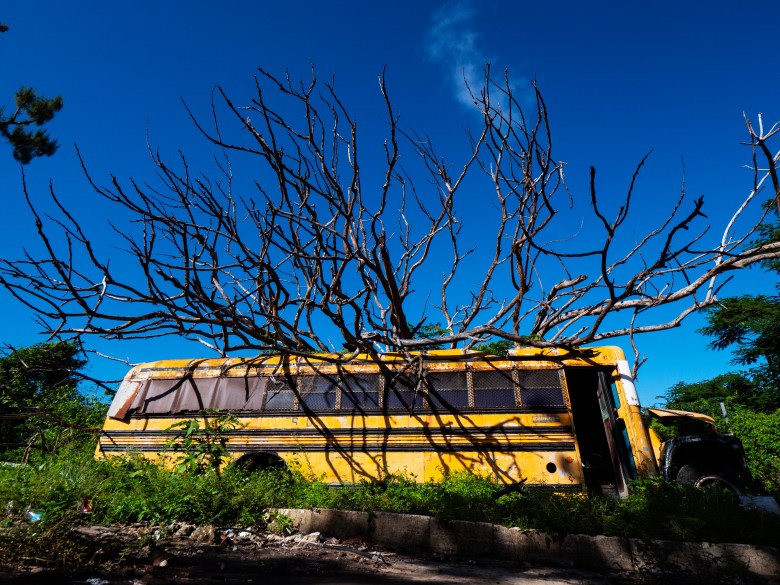
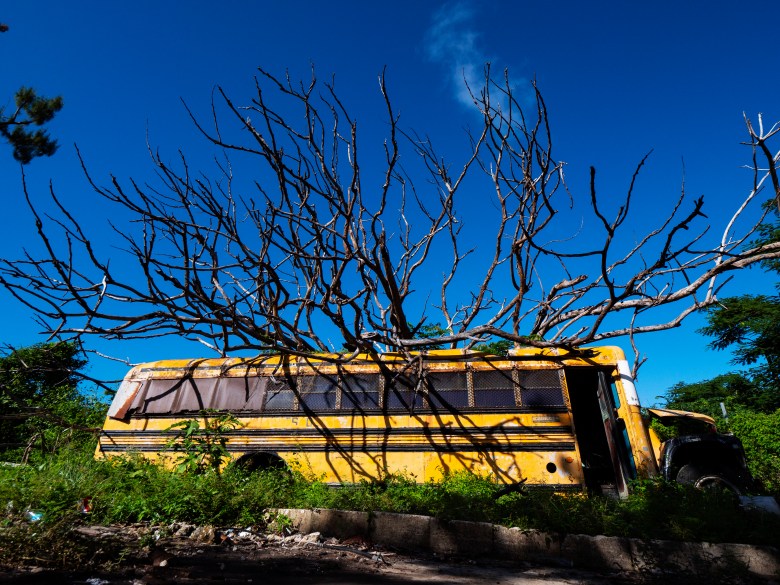
Un autobús escolar bajo un árbol que cayó durante el huracán María, que azotó la isla de Puerto Rico en septiembre de 2017. Más de un año después, no había sido retirado. Credit: Al Bello/Getty Images for Lumix
El Departamento de Educación de EE.UU., que complementa la financiación local y estatal para los estudiantes en situación de pobreza y con discapacidades, tiene un papel desproporcionado en las escuelas de Puerto Rico. En la isla, el 55% de los niños viven por debajo del umbral de la pobreza, frente al 17% en los 50 estados; en el caso de los estudiantes de educación especial, las cifras son del 35% y el 15%, respectivamente. En total, durante el año fiscal 2024, más del 68 por ciento del presupuesto de educación en la isla procede de fondos federales, frente al 11 por ciento en los estados de EE UU. El departamento también administra las becas Pell para estudiantes de bajos ingresos -alrededor del 72 por ciento de los estudiantes puertorriqueños las solicitan- y apoya los esfuerzos de desarrollo profesional y las iniciativas para los niños puertorriqueños que van y vienen entre el continente y el territorio.
Linda McMahon, la nueva secretaria de Educación de Trump, ha dicho supuestamente que el Gobierno seguirá cumpliendo sus “obligaciones legales” con los estudiantes aunque el departamento cierre o transfiera algunas operaciones y despida personal. El Departamento de Educación de Estados Unidos no respondió a las solicitudes de comentarios para esta historia.
Algunos dicen que el hecho de que la administración Biden haya vertido miles de millones de dólares en un sistema educativo en problemas con escasa rendición de cuentas ha creado expectativas poco realistas y no hay un plan para lo que ocurre después de que se gasta el dinero. Mujica, director ejecutivo de la junta de supervisión, dijo que la infusión de fondos pospuso la toma de decisiones difíciles por parte del gobierno puertorriqueño. “Cuando se tiene tanto dinero, se tapan muchos problemas. No tienes que enfrentarte a algunos de los retos que son fundamentales para el sistema”. Y afirmó que apenas se habla de lo que ocurrirá cuando se acabe ese dinero. “¿Cómo se va a llenar ese vacío? O desaparecen esos programas o tendremos que encontrar la financiación para ellos”, dijo Mujica.
Dijo que esfuerzos como el de Ponce para acercar la toma de decisiones a donde están las necesidades de los estudiantes es “de vital importancia”. Aún así, dijo que no está seguro de que el dinero haya mejorado los resultados de los estudiantes. “Esta era una gran oportunidad para hacer cambios fundamentales e inversiones que produzcan resultados a largo plazo. No estoy seguro de que hayamos visto las métricas que lo respalden”.
Puerto Rico es una de las regiones más empobrecidas desde el punto de vista educativo, con unos resultados académicos muy inferiores a los del continente. En la parte de matemáticas de la Evaluación Nacional de Progreso Educativo, o NAEP, una prueba que realizan los estudiantes de todo EE.UU., sólo el 2% de los alumnos de cuarto curso de Puerto Rico calificaron como competentes, la puntuación más alta jamás registrada en la isla, y el 0% de los alumnos de octavo curso lo fueron. Los estudiantes puertorriqueños no hacen la prueba NAEP de lectura porque aprenden en español, no en inglés, aunque los resultados compartidos por Ramos en una conferencia de prensa en 2022 mostraron que sólo el 1% de los estudiantes de tercer grado leían a nivel de grado.
Hay algunos esfuerzos alentadores. La Fundación Flamboyán ha liderado una coalición de 70 socios en toda la isla para mejorar la alfabetización de los niños de preescolar a tercer grado, entre otras cosas mediante el desarrollo profesional. La formación del profesorado a través del departamento de educación del territorio ha sido a menudo irregular u opcional.
La organización trabaja ahora en estrecha colaboración con la Universidad de Puerto Rico y, como parte de ese esfuerzo, supervisa el gasto de 3 millones de dólares en formación para la alfabetización. Aproximadamente 1.500 profesores de Puerto Rico (un tercio de los maestros de Kinder a 5º grado) han recibido esta rigurosa formación. Los educadores recibieron 500 dólares como incentivo por participar, además de libros para sus aulas y tres horas de formación continua. “Fueron muchas horas de calidad. No ha sido el método de ‘rociar (con un poco de agua) y rezar’”, dijo Silvestre. Ese esfuerzo continuará, según Ramos, que lo calificó de “muy eficaz”.
Una nueva prueba de lectura para alumnos de primero a tercer grado que la organización sin fines de lucro ayudó a diseñar mostró que entre los años escolares 2023 y 2024, la mayoría de los niños estaban por debajo del nivel del grado, pero hubo avances en los resultados en todos los grados. “Pero aún nos queda un largo camino por recorrer para que estos datos lleguen a los profesores a tiempo y de forma que puedan actuar en consecuencia”, dijo Silvestre.
Kristin Ehrgood, Directora General de la Fundación Flamboyán, afirma que es demasiado pronto para ver resultados espectaculares. “Es realmente difícil ver una tonelada de resultados positivos en un período tan corto de tiempo con la desconfianza significativa que se ha construido durante años”, dijo. Dijo que no estaban seguros de cómo la administración Trump podría trabajar o financiar el sistema educativo de Puerto Rico, pero que la administración Biden había construido una gran cantidad de buena voluntad. “Hay muchas oportunidades que podrían aprovecharse, si una nueva administración decide hacerlo”.
Otra señal esperanzadora es que la junta de supervisión, que fue muy protestada cuando se formó, ha reducido la deuda de la isla de 73.000 a 31.000 millones de dólares. Y el año pasado los miembros de la junta aumentaron el gasto en educación en un 3%. Mujica dijo que la junta se centra en asegurarse de que cualquier inversión se traduzca en mejores resultados para los estudiantes: “Nuestra opinión es que los recursos tienen que ir a las aulas”.
Betty A. Rosa, comisionada de educación y presidente de la Universidad del Estado de Nueva York y miembro de la Junta de Supervisión, afirmó que la inestabilidad educativa en Puerto Rico se debe a los cambios en el liderazgo. Cada nuevo líder se dedica a “reconstruir, reestructurar, reimaginar, elija la palabra que elija”, dijo. “No hay coherencia”. A diferencia de su cargo en el estado de Nueva York, el Secretario de Educación de Puerto Rico y otros cargos son nombramientos políticos. “Si tienes un gobierno permanente, aunque cambie el liderazgo, el trabajo continúa”.
Ramos, que vivió esta inestabilidad cuando el anterior gobernador pidió inesperadamente su dimisión en 2023, dijo que se reunió con McMahon, la nueva secretaria de Educación de EE.UU., en Washington, D.C., y que mantuvieron una “agradable conversación”. “Ella sabe de Puerto Rico, se preocupa por Puerto Rico y demostró total apoyo en la misión de Puerto Rico”, dijo. Dijo que McMahon quería que el DEPR ofreciera más clases bilingües, para exponer a más estudiantes al inglés. Queda por ver si habrá cambios en la otorgación de fondos o cualquier otra cosa. “Tenemos que ver lo que ocurre en las próximas semanas y meses y cómo esa visión y esa política podrían afectar a Puerto Rico”, dijo Ramos.
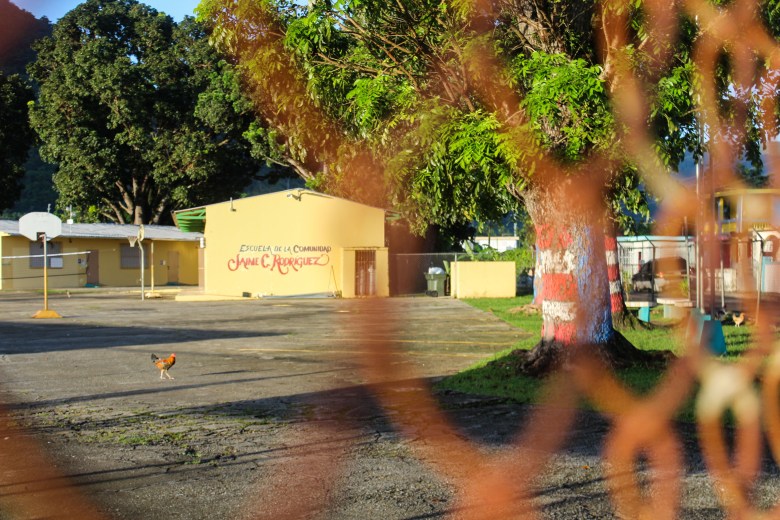
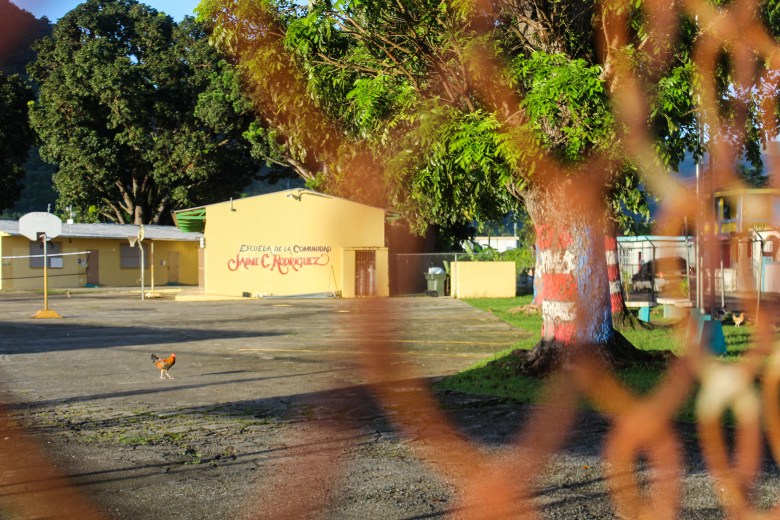
La Escuela de la Comunidad Jaime C. Rodríguez es una escuela Montessori de Yabucoa, Puerto Rico, que carecía de instalaciones deportivas para sus alumnos. Recientemente comenzó las obras de un centro deportivo polivalente gracias a los fondos federales otorgados por la administración del presidente Biden. Credit: Kavitha Cardoza for The Hechinger Report
Ramos fue muy apreciado por los educadores durante su primera etapa como Secretario de Educación. También tendrá que tomar muchas decisiones, como ampliar las escuelas charter y cerrar las escuelas públicas tradicionales, ya que la matriculación en las escuelas públicas de la isla sigue disminuyendo vertiginosamente. En el pasado, ambas cuestiones provocaron protestas feroces y generalizadas.
Soto es realista y cree que la nueva administración tendrá “puntos de vista diferentes, tanto ideológica como políticamente”, pero confía en que el pueblo de Puerto Rico no quiera volver a la antigua forma de hacer las cosas. “Alguien dijo: ‘Ustedes sacaron al genio de la botella y va a ser difícil volver a ponerlo’ en lo que se refiere a un sistema escolar centrado en el estudiante”, dijo Soto.
Cardona, cuyos abuelos son oriundos de la isla, dijo que Puerto Rico había experimentado un “estancamiento académico” durante años. “No podemos aceptar que los estudiantes rindan menos de lo que sabemos que son capaces”, dijo a The Hechinger Report, justo antes de despedirse como máximo responsable de educación del país. “Empezamos el cambio; tiene que continuar.
La pequeña escuela de la directora Carabello, con 150 alumnos y 14 profesores, ha estado a punto de cerrarse ya tres veces, aunque en todas ellas se ha salvado en parte gracias al apoyo de la comunidad. Carabello confía en que Ramos, con quien ya ha trabajado anteriormente, cambie las cosas. “Conoce el sistema educativo”, afirma. “Es una persona brillante, abierta a escuchar”.
Pero las largas jornadas de los últimos años le han pasado factura. Suele estar en la escuela de 6:30 a.m. a 6:30 p.m. “Entras cuando anochece y te vas cuando anochece”, dice. Ha habido muchas plataformas nuevas que aprender y nuevos proyectos que poner en marcha. Quiere jubilarse, pero no puede permitírselo. Tras décadas en las que el gobierno local no financió suficientemente el sistema de pensiones, se recortaron los subsidios que compensaban el alto precio de los bienes y servicios en la isla y se congelaron los planes de pensiones.
Ahora, en lugar de jubilarse con el 75% de su salario, Carabello recibirá sólo el 50%, 2.195 dólares al mes. Tiene derecho a prestaciones de la Seguridad Social, pero no son suficientes para compensar la pensión perdida. “¿Quién puede vivir con 2.000 dólares en un mes? Nadie. Es demasiado duro. Y mi casa aún necesita 12 años más para pagarse”.
A Carabello, siempre tan fuerte y optimista con sus alumnos, se le saltaron las lágrimas. Pero es raro que se permita tiempo para pensar en sí misma. “Tengo una gran comunidad. Tengo grandes profesores y me siento feliz con lo que hago”, afirma.
Está muy, muy cansada.
Comunícate con editora Caroline Preston al 212-870-8965 o [email protected].
The Hechinger Report provides in-depth, fact-based, unbiased reporting on education that is free to all readers. But that doesn’t mean it’s free to produce. Our work keeps educators and the public informed about pressing issues at schools and on campuses throughout the country. We tell the whole story, even when the details are inconvenient. Help us keep doing that.
Our recent paper found substantial misalignment between state-school teachers and university admissions staff on what makes a high-quality UCAS personal statement.
In our study, 409 state school teachers were presented with ten paragraphs from UCAS personal statements and asked to select between two pieces of feedback. One ‘correct’ feedback was provided by an admissions tutor, and the one ‘incorrect’ feedback was supplied by another teacher. These paragraphs and feedback were all real-world examples derived from Steven Jones’ (2016) study, used as part of Causeway Education’s pre-training programme for state school teachers.
We found:
There was significant misalignment between teachers and admissions staff. In only 56.5% of cases did teachers select the ‘correct’ feedback response.
There are a number of pervasive myths regarding the UCAS personal statement. Teachers had a dual tendency to:
Advise for the incorporation of personal content that aimed to demonstrate a holistic view of the student rather than course-related competencies; and
Suggest reducing content that demonstrated course-related knowledge and skills.
To give one example, teachers were presented with the paragraph below and asked to choose between two pieces of feedback: (1) Strong reasons backed up by detailed examples; and (2) Too much detail; doesn’t give a sense of the student as an individual. The first of these is from an admissions tutor and the second from a teacher in Jones’ (2016) work.
My main reason for wanting to study Japanese is because I enjoy studying complex grammar rules to see how languages come together. This is why I chose to undertake Latin at A-Level as I enjoy translating pieces of complex texts. Analysing writers techniques in presenting ideas and characters is also interesting, in particular how Tacitus in Annals I, presents Tiberius as an unsuitable emperor by often comparing him to his father Augustus, an emperor who was deemed ‘an upholder of moral justice’.
In 58.4% of cases teachers selected the first ‘correct’ answer, and 41.6% selected the ‘incorrect’ second answer.
These findings should not be interpreted as a criticism of teachers. In the context of studies finding a considerable lack of transparency on how universities use the UCAS personal statement (Fryer et al., 2024), the burden of responsibility for misalignment falls primarily on universities. Without clear and transparent guidance, this misalignment between teachers and admissions staff is inevitable.
There is an important opportunity to address this situation, as many universities will currently be in the process of updating their public-facing guidance in response to the upcoming UCAS personal statement reform. The shift to three short questions for the 2025-26 application cycle and the corresponding need to update guidance present universities with an opportunity to address and counter the misalignments noted in our paper.
To support this goal, our paper contains a table of key implications (Table 5, pp.14-15), which can be downloaded directly from this link.
We hope this is of practical use to admissions staff in updating and developing guidance on the UCAS personal statement. We contend that this new guidance, alongside transparent explanations of how the personal statement is used in selection decisions, is crucial to enable UCAS’s reform to widen participation and address inequalities.
English/language arts and science teachers were almost twice as likely to say they use AI tools compared to math teachers or elementary teachers of all subjects, according to a February 2025 survey from the RAND Corporation that delves into uneven AI adoption in schools.
“As AI tools and products for educational purposes become more prevalent, studies should track their use among educators. Researchers could identify the particular needs AI is addressing in schools and–potentially–guide the development of AI products that better meet those needs. In addition, data on educator use of AI could help policymakers and practitioners consider disparities in that use and implications for equitable, high-quality instruction across the United States,” note authors Julia H. Kaufman, Ashley Woo, Joshua Eagan, Sabrina Lee, and Emma B. Kassan.
One-quarter of ELA, math, and science teachers used AI tools for instructional planning or teaching in the 2023–2024 school year. Nearly 60 percent of surveyed principals also reported using AI tools for their work in 2023-2024.
Among the one-quarter of teachers nationally who reported using AI tools, 64 percent said that they used them for instructional planning only, whether for their ELA, math, or science instruction; only 11 percent said that they introduced them to students but did not do instructional planning with them; and 25 percent said that they did both.
Although one-quarter of teachers overall reported using AI tools, the report’s authors observed differences in AI use by subject taught and some school characteristics. For instance, close to 40 percent of ELA or science teachers said they use AI, compared to 20 percent of general elementary education or math teachers. Teachers and principals in higher-poverty schools were less likely to report using AI tools relative to those in lower-poverty schools.
Eighteen percent of principals reported that their schools or districts provided guidance on the use of AI by staff, teachers, or students. Yet, principals in the highest-poverty schools were about half as likely as principals in the lowest-poverty schools to report that guidance was provided (13 percent and 25 percent, respectively).
Principals cited a lack of professional development for using AI tools or products (72 percent), concerns about data privacy (70 percent) and uncertainty about how AI can be used for their jobs (70 percent) as factors having a major or minor influence on their AI use.
The report also offers recommendations for education stakeholders:
1. All districts and schools should craft intentional strategies to support teachers’ AI use in ways that will most improve the quality of instruction and student learning.
2. AI developers and decision-makers should consider what useful AI applications have the greatest potential to improve teaching and learning and how to make those applications available in high-poverty contexts.
3. Researchers should work hand-in-hand with AI developers to study use cases and develop a body of evidence on effective AI applications for school leadership, teaching, and learning.
Laura Ascione is the Editorial Director at eSchool Media. She is a graduate of the University of Maryland’s prestigious Philip Merrill College of Journalism.
Maraida Caraballo Martinez has been an educator in Puerto Rico for 28 years and the principal of the elementary school Escuela de la Communidad Jaime C. Rodriguez for the past seven. She never knows how much money her school in Yabucoa will receive from the government each year because it isn’t based on the number of children enrolled. One year she got $36,000; another year, it was $12,000.
But for the first time as an educator, Caraballo noticed a big difference during the Biden administration. Because of an infusion of federal dollars into the island’s education system, Caraballo received a $250,000 grant, an unprecedented amount of money. She used it to buy books and computers for the library, white boards and printers for classrooms, to beef up a robotics program and build a multipurpose sports court for her students. “It meant a huge difference for the school,” Caraballo said.
Yabucoa, a small town in southeast Puerto Rico, was one of the regions hardest hit by Hurricane Maria in 2017. And this school community, like hundreds of others in Puerto Rico, has experienced near constant disruption since then. A series of natural disasters, including hurricanes, earthquakes, floods and landslides, followed by the coronavirus pandemic in 2020, has pounded the island and interrupted learning. There has also been constant churn of local education secretaries — seven in the past eight years. The Puerto Rican education system — the seventh-largest school district in the United States — has been made more vulnerable by the island’s overwhelming debt, mass emigration and a crippled power grid.
Maraida Caraballo Martinez has been an educator in Puerto Rico for 28 years and is now the principal of an elementary school. Her school has been slated for closure three times because of mass emigration from the island. Credit: Kavitha Cardoza for The Hechinger Report
Under President Joe Biden, there were tentative gains, buttressed by billions of dollars and sustained personal attention from top federal education officials, many experts and educators on the island said. Now they worry that it will all be dismantled with the change in the White House. President Donald Trump has made no secret of his disdain for the U.S. territory, having reportedly said that it was “dirty and the people were poor.” During his first term, he withheld billions of dollars in federal aid after Hurricane Maria and has suggested selling the island or swapping it for Greenland.
A recent executive order to make English the official language has worried people on the island, where only 1 in 5 people speak fluent English, and Spanish is the medium of instruction in schools. Trump is seeking to eliminate the U.S. Department of Education and has already madesweeping cuts to the agency, which will have widespread implications across the island. Even if federal funds — which last year made up more than two thirds of funding for the Puerto Rican Department of Education, or PRDE — were transferred directly to the local government, it would likely lead to worse outcomes for the most vulnerable children, say educators and policymakers. The PRDE has historically been plagued by political interference, widespread bureaucracy and a lack of transparency.
And the local education department is not as technologically advanced as other state education departments, nor as able to disseminate best practices. For example, Puerto Rico does not have a “per pupil formula,” a calculation commonly used on the mainland to determine the amount of money each student receives for their education. Robert Mujica is the executive director of the Puerto Rico Financial Oversight and Management Board, first convened under President Barack Obama in 2016 to deal with the island’s financial morass. Mujica said Puerto Rico’s current allocation of education funds is opaque. “How the funds are distributed is perceived as a political process,” he said. “There’s no transparency and there’s no clarity.”
Related: Become a lifelong learner. Subscribe to our free weekly newsletter featuring the most important stories in education.
In 2021, Miguel Cardona, Biden’s secretary of education, promised “a new day” for Puerto Rico. “For too long, Puerto Rico’s students and educators were abandoned,” he said. During his tenure, Cardona signed off on almost $6 billion in federal dollars for the island’s educational system, leading to a historic pay increase for teachers, funding for after-school tutoring programs, hiring of hundreds of school mental health professionals and the creation of a pilot program to decentralize the PRDE.
Cardona designated a senior adviser, Chris Soto, to be his point person for the island’s education system to underscore the federal commitment. During nearly four years in office, he made more than 50 trips to the island. Carlos Rodriguez Silvestre, the executive director of the Flamboyan Foundation, a nonprofit in Puerto Rico that has led children’s literacy efforts on the island, said the level of respect and sustained interest felt like a partnership, not a top-down mandate. “I’ve never seen that kind of attention to education in Puerto Rico,” he said. “Soto practically lived on the island.”
Soto also worked closely with Victor Manuel Bonilla Sánchez, the president of the teachers union, Asociación de Maestros de Puerto Rico, or AMPR, which resulted in a deal in which educators received $1,000 more a month to their base salary, a nearly 30 percent increase for the average teacher.“It was the largest salary increase in the history of teachers in Puerto Rico,” Bonilla said, though even with the increase, teachers here still make far less money than teachers on the mainland.
One of the biggest complaints Soto said he heard was how rigid and bureaucratic the Puerto Rico Department of Education was, despite a 2018 education reform law that allows for more local control. The education agency — the largest unit of government on the island, with the most employees and the biggest budget — was set up so that the central office had to sign off on everything. So Soto created and oversaw a pilot program in Ponce, a region on the island’s southern coast, focusing on decentralization.
For the first time, the local community elected an advisory board of education, and superintendent candidates had to apply rather than be appointed, Soto said. The superintendent was given the authority to sign off on budget requests directly rather than sending them through officials in San Juan, as well as the flexibility to spend money in his region based on individual schools’ needs.
In the past, that wasn’t a consideration: For example, Yadira Sanchez, a psychologist who has worked in Puerto Rican education for more than 20 years, remembers when a school got dozens of new air conditioners even though it didn’t need it. “They already had functioning air conditioners,” she said, “so that money was lost.”
The pilot project also focused on increasing efficiency. For example, children with disabilities are now evaluated at their schools rather than having to visit a special center. And Soto says he tried to remove politics and increase transparency around spending in the PRDE as well. “You can improve invoices, but if your political friends are getting the work, then you don’t have a good school system,” he said.
A school bus under a tree that fell during Hurricane Maria, which hit the island of Puerto Rico in September 2017. More than a year later, it had not been removed. Credit: Al Bello/Getty Images for Lumix
Under Biden, Puerto Rico also received a competitive U.S. Department of Education grant for $10.5 million for community schools, another milestone. And the federal department started including data on the territory in some education statistics collected. “Puerto Rico wasn’t even on these trackers, so we started to dig into how do we improve the data systems? Unraveling the data issue meant that Puerto Rico can properly get recognized,” Soto said.
But already there are plans to undo Cardona’s signature effort in Ponce. The island’s newly elected governor, Jenniffer González Colón, is a Republican and a Trump supporter. The popular secretary of education, Eliezer Ramos Parés, returned earlier this year to head the department after leading it from April 2021 to July 2023 when the governor unexpectedly asked him to resign — not an unusual occurrence within the island’s government, where political appointments can end suddenly and with little public debate. He told The Hechinger Report that the program won’t continue in its current form, calling it “inefficient.”
“The pilot isn’t really effective,” he said, noting that politics can influence spending decisions not only at the central level but at the regional level as well. “We want to have some controls.” He also said expanding the effort across the island would cost tens of millions of dollars. Instead, Ramos said he was looking at more limited approaches to decentralization, around some human resource and procurement functions. He said he was also exploring a per pupil funding formula for Puerto Rico and looking at lessons from other large school districts such as New York City and Hawaii.
While education has been the largest budget item on the island for years, it’s still far less than any of the 50 states spend on each student. Puerto Rico spends $9,500 per student, compared with an average of $18,600 in the states.
The U.S. Department of Education, which supplements local and state funding for students in poverty and with disabilities, has an outsized role in Puerto Rico schools. On the island, 55 percent of children live below the poverty line, compared with 17 percent in the 50 states; for students in special education, the figures are 35 percent and 15 percent, respectively. In total, during fiscal year 2024, more than 68 percent of the education budget on the island comes from federal funding, compared to 11 percent in U.S. states. The department also administers Pell Grants for low-income students — some 72 percent of Puerto Rican students apply — and supports professional development efforts and initiatives for Puerto Rican children who move back and forth between the mainland and territory.
Linda McMahon, Trump’s new education secretary, has reportedly said that the government will continue to meet its “statutory obligations” to students even as the department shuts down or transfers some operations and lays off staff. The U.S. Department of Education did not respond to requests for comment.
Some say the Biden administration’s pouring billions of dollars into a troubled education system with little accountability has created unrealistic expectations and there’s no plan for what happens after money is spent. Mujica, the executive director of the oversight board, said the infusion of funds postponed tough decisions by the Puerto Rican government. “When you have so much money, it papers over a lot of problems. You didn’t have to deal with some of the challenges that are fundamental to the system.” And he said there is little discussion of what happens when that money runs out. “How are you going to bridge that gap? Either those programs go away or we’re going to have to find the funding for them,” Mujica said.
He said efforts like the one in Ponce to bring decision making closer to where the students’ needs are is “vitally important.” Still, he said he’s not sure the money improved student outcomes. “This was a huge opportunity to make fundamental changes and investments that will yield long-term results. I’m not sure that we’ve seen the metrics to support that.”
Puerto Rico is one of the most educationally impoverished regions, with academic outcomes well below the mainland. On the math portion of the National Assessment of Educational Progress, or NAEP, a test that students across the U.S. take, just 2 percent of fourth graders in Puerto Rico were proficient, the highest score ever recorded for the island, and zero percent of eighth graders were. Puerto Rican students don’t take the NAEP for reading because they learn in Spanish, not English, though results shared by Ramos at a press conference in 2022 showed only 1 percent of third graders were reading at grade level.
There are some encouraging efforts. Flamboyan Foundation, the nonprofit in Puerto Rico, has been leading an island-wide coalition of 70 partners to improve K-3 literacy, including through professional development. Teacher training through the territory’s education department has often been spotty or optional.
The organization now works closely with the University of Puerto Rico and, as part of that effort, oversees spending of $3 million in literacy training. Approximately 1,500 or a third of Puerto Rico’s K-5 teachers have undergone the rigorous training. Educators were given $500 as an incentive for participating, along with books for their classrooms and three credit hours in continuing education. “It was a lot of quality hours. This was not the ‘spray and pray’ approach,” said Silvestre. That effort will continue, according to Ramos, who called it “very effective.”
A new reading test for first through third graders the nonprofit helped design showed that between the 2023 and 2024 school years, most children were below grade level but made growth in every grade. “But we still have a long way to go so that this data can get to teachers in a timely manner and in a way that they can actually act on it,” Silvestre said.
Kristin Ehrgood, Flamboyan Foundation’s CEO, said it’s too soon to see dramatic gains. “It’s really hard to see a ton of positive outcomes in such a short period of time with significant distrust that has been built over years,” she said. She said they weren’t sure how the Trump administration may work with or fund Puerto Rico’s education system but that the Biden administration had built a lot of goodwill. “There is a lot of opportunity that could be built on, if a new administration chooses to do that.”
Another hopeful sign is that the oversight board, which was widely protested when it was formed, has cut the island’s debt from $73 billion to $31 billion. And last year board members increased education spending by 3 percent. Mujica said the board is focused on making sure that any investment translates into improved outcomes for students: “Our view is resources have to go into the classroom.”
Betty A. Rosa, education commissioner and president of the University of the State of New York and a member of the oversight board, said leadership churn in Puerto Rico drives its educational instability. Every new leader is invested in “rebuilding, restructuring, reimagining, pick your word,” she said. “There is no consistency.” Unlike her New York state position, the Puerto Rican education secretary and other positions are political appointments. “If you have permanent governance, then even when the leadership changes, the work continues.”
Ramos, who experienced this instability when the previous governor unexpectedly asked to resign in 2023, said he met McMahon, the new U.S. secretary of education, in Washington, D.C., and that they had a “pleasant conversation.” “She knows about Puerto Rico, she’s concerned about Puerto Rico, and she demonstrated full support in the Puerto Rico mission,” he said. He said McMahon wanted PRDE to offer more bilingual classes, to expose more students to English. Whether there will be changes in funding or anything else remains to be seen. “We have to look at what happens in the next few weeks and months and how that vision and policy could affect Puerto Rico,” Ramos said.
Ramos was well-liked by educators during his first stint as education secretary. He will also have a lot of decisions to make, including whether to expand public charter schools and close down traditional public schools as the island’s public school enrollment continues to decline precipitously. In the past, both those issues led to fierce and widespread protests.
Soto says he’s realistic about the incoming administration having “different views, both ideologically and policywise,” but he’s hopeful the people of Puerto Rico won’t want to go back to the old way of doing things. “Somebody said, ‘You guys took the genie out of the bottle and it’s going to be hard to put that back’ as it relates to a student-centered school system,” Soto said.
Cardona, whose grandparents are from the island, said Puerto Rico had seen “academic flatlining” for years. “We cannot accept that the students are performing less than we know they are capable of,” he told The Hechinger Report, just before he signed off as the nation’s top education official. “We started change; it needs to continue.”
Principal Carabello’s small school of 150 students and 14 teachers has been slated for closure three times already, though each time it has been spared in part because of community support. She’s hopeful that Ramos, with whom she’s worked previously, will turn things around. “He knows the education system,” she said. “He’s a brilliant person, open to listen.”
Escuela de la Communidad Jaime C. Rodriguez is a Montessori school in Yabucoa, Puerto Rico, that did not have any sports facilities for its students. It recently began work on a multipurpose sports center, made possible by federal funds under former President Joe Biden. Credit: Kavitha Cardoza for The Hechinger Report
But the long hours of the past several years have taken a toll on her. She is routinely in school from 6:30 a.m. to 6:30 p.m. “You come in when it’s dark and you leave when it’s dark,” she said. There have been many new platforms to learn and new projects to implement. She wants to retire but can’t afford to. After decades of the local government underfunding the pension system, allowances that offset the high price of goods and services on the island were cut and pension plans were frozen.
Now instead of retiring with 75 percent of her salary, Carabello will receive only 50 percent, $2,195 a month. She is entitled to Social Security benefits, but it isn’t enough to make up for the lost pension. “Who can live with $2,000 in one month? Nobody. It’s too hard. And my house still needs 12 years more to pay.”
Carabello, who is always so strong and so optimistic around her students, teared up. But it’s rare that she allows herself time to think about herself. “I have a great community. I have great teachers and I feel happy with what I do,” she said.
The Hechinger Report provides in-depth, fact-based, unbiased reporting on education that is free to all readers. But that doesn’t mean it’s free to produce. Our work keeps educators and the public informed about pressing issues at schools and on campuses throughout the country. We tell the whole story, even when the details are inconvenient. Help us keep doing that.
Lawmakers want to turn the tide on the growing number of unprepared and uncertified teachers by restricting who can lead Texas classrooms. But school leaders worry those limits will leave them with fewer options to refill their teacher ranks.
Tucked inside the Texas House’s $7.6 billion school finance package is a provision that would ban uncertified teachers from instructing core classes in public schools. House Bill 2 gives districts until fall 2026 to certify their K-5 math and reading teachers and until fall 2027 to certify teachers in other academic classes.
Texas would help uncertified teachers pay for the cost of getting credentialed. Under HB 2, those who participate in an in-school training and mentoring program would receive a one-time $10,000 payment and those who go through a traditional university or alternative certification program would get $3,000. Special education and emergent bilingual teachers would get their certification fees waived. Educator training experts say itcould be the biggest financial investment Texas made in teacher preparation. Rep. Brad Buckley, the Salado Republican who authored the bill, has signaled the House Public Education Committee will vote on HB 2 on Tuesday.
District leaders, once reluctant to hire uncertified teachers, now rely on them often to respond to the state’s growing teacher shortage. And while they agree with the spirit of the legislation, some worry the bill would ask too much too soon of districts and doesn’t offer a meaningful solution to replace uncertified teachers who leave the profession.
“What’s going to happen when we’re no longer able to hire uncertified teachers? Class sizes have to go up, programs have to disappear…. We won’t have a choice,” said David Vroonland, the former superintendent of the Mesquite school district near Dallas and the Frenship school district near Lubbock. “There will be negative consequences if we don’t put in place serious recruitment efforts.”
A floodgate of uncertified teachers
Nowadays, superintendents often go to job fairs to recruit teachers and come out empty-handed. There are not as many Texans who want to be teachers as there used to be.
The salary in Texas is about $9,000 less than the national average, so people choose better-paying careers. Teachers say they are overworked, sometimes navigating unwieldy class sizes and using weekends to catch up on grading.
Heath Morrison started to see the pool of teacher applicants shrink years ago when he was at the helm of Montgomery ISD. Many teachers left the job during the COVID-19 pandemic, which accelerated the problem.
“This teacher shortage is getting more and more pronounced,” said Morrison, who is now the CEO of Teachers of Tomorrow, a popular alternative teacher certification program. “The reality of most school districts across the country is you’re not making a whole lot more money 10 years into your job than you were when you first entered … And so that becomes a deterrent.”
As the pool of certified teachers shrunk, districts found a stopgap solution: bringing on uncertified teachers. Uncertified teachers accounted for roughly 38% of newly hired instructors last year, with many concentrated in rural districts.
The Texas Legislature facilitated the flood of uncertified teachers. A 2015 law lets public schools get exemptions from requirements like teacher certification, school start dates and class sizes — the same exemptions allowed for open enrollment charter schools.
Usually, to teach in Texas classrooms, candidates must obtain a certification by earning a bachelor’s degree from an accredited college or university, completing an educator preparation program and passing teacher certification exams.
Teacher preparation experts say certifications give teachers the tools to lead a high quality classroom. To pass certification tests, teaching candidates learn how to plan for lessons and manage discipline in a classroom.
But the 2015 law allowed districts to hire uncertified teachers by presenting a so-called “district of innovation plan” to show they were struggling to meet credential requirements because of a teacher shortage. By 2018, more than 600 rural and urban districts had gotten teacher certification exemptions.
“Now, what we’ve seen is everyone can demonstrate a shortage,” said Jacob Kirksey, a researcher at Texas Tech University. “Almost every district in Texas is a district of innovation. That is what has allowed for the influx of uncertified teachers. Everybody is getting that waiver for certification requirements.”
This session, House lawmakers are steadfast on undoing the loophole they created after new research from Kirksey sounded the alarm on the impacts of unprepared teachers on student learning. Students with new uncertified teachers lost about four months of learning in reading and three months in math, his analysis found. They missed class more than students with certified teachers, a signal of disengagement.
Uncertified teachers are also less likely to stick with the job long-term, disrupting school stability.
“The state should act urgently on how to address the number of uncertified teachers in classrooms,” said Kate Greer, a policy director at Commit Partnership. The bill “rights a wrong that we’ve had in the state for a long time.”
The price of getting certified
Rep. Jeff Leach, a Plano Republican who sits on the House Public Education Committee, said his wife has worked as an uncertified art teacher at Allen ISD. She started a program to get certified this winter and had to pay $5,000 out of pocket.
That cost may be “not only a hurdle but an impediment for someone who wants to teach and is called and equipped to teach,” Leach said earlier this month during a committee hearing on HB 2.
House lawmakers are proposing to lower the financial barriers that keep Texans who want to become teachers from getting certified.
“Quality preparation takes longer, is harder and it’s more expensive. In the past, we’ve given [uncertified candidates] an opportunity just to walk into the classroom,” said Jean Streepey, the chair of the State Board for Educator Certification. “How do we help teachers at the beginning of their journey to choose something that’s longer, harder and more expensive?”
Streepey sat on the teacher vacancy task force that Gov. Greg Abbott established in 2022 to recommend fixes to retention and recruitment challenges at Texas schools. The task force’s recommendations, such as prioritizing raises and improving training, have fingerprints all over the Texas House’s school finance package.
Under HB 2, districts would see money flow in when they put uncertified teachers on the path to certification. And those financial rewards would be higher depending on the quality of the certification program.
Schools with instructors who complete yearlong teacher residencies — which include classroom training and are widely seen as the gold standard for preparing teacher candidates — would receive bigger financial rewards than those with teachers who finish traditional university or alternative certification programs.
Even with the financial help, lawmakers are making a tall order. In two years, the more than 35,000 uncertified teachers in the state would have to get their credential or be replaced with new, certified teachers.
“The shortages have grown to be so great that I think none of us have a really firm handle on the measures that it’s going to take to turn things around.” said Michael Marder, the executive director of UTeach, a UT-Austin teacher preparatory program. “There is financial support in HB 2 to try to move us back towards the previous situation. However, I just don’t know whether the amounts that are laid out there are sufficient.”
Restrictions like “handcuffs”
Only one in five uncertified teachers from 2017 to 2020 went on to get a credential within their first three years of teaching. Texas can expect a jump in uncertified teachers going through teacher preparatory programs because of the financial resources and pressure on schools through HB 2, Marder said.
But for every teacher who does not get credentialed, school leaders will have to go out and find new teachers. And they will have to look from a smaller pool.
The restrictions on uncertified teachers “handcuffs us,”said Gilbert Trevino, the superintendent at Floydada Collegiate ISD, which sits in a rural farming town in West Texas. In recent years, recruiters with his district have gone out to job fairs and hired uncertified teachers with a college degree and field experience in the subjects they want to teach in.
Rural schools across the state have acutely experienced the challenges of the teacher shortage — and have leaned on uncertified teachers more heavily than their urban peers.
“We have to recruit locally and grow our own or hire people who have connections or roots in the community,” Trevino said. “If we hire a teacher straight out of Texas Tech University, we may have them for a year. … And then they may get on at Lubbock ISD or Plainview ISD, where there’s more of a social life.”
Floydada Collegiate ISD recruits local high school students who are working toward their associate’s degree through what is known as a Grown Your Own Teacher program. But Trevino says HB 2 does not give him the time to use this program to replace uncertified teachers. From recruitment to graduation, it takes at least three years before students can lead a classroom on their own, he said.
School leaders fear if they can’t fill all their vacancies, they’ll be pushed to increase class sizes or ask their teachers to prepare lessons for multiple subjects.
“Our smaller districts are already doing that, where teachers have multiple preps,” Trevino said. “Things are already hard on our teachers. So if you add more to their plate, how likely are they to remain in the profession or remain in this district?”
At Wylie ISD in Taylor County, it’s been difficult to find teachers to keep up with student growth. Uncertified teachers in recent years have made up a large number of teacher applicants, according to Cameron Wiley, a school board trustee.
Wiley said restrictions on uncertified teachers is a “good end goal” but would compound the district’s struggles.
“It limits the pot of people that’s already small to a smaller pot. That’s just going to make it more difficult to recruit,” Wiley said. “And if we have a hard time finding people to come in, or we’re not allowed to hire certain people to take some of that pressure off, those class sizes are just going to get bigger.”
Learning suffers when class sizes get too big because students are not able to get the attention they need.
“This bill, it’s just another obstacle that we as districts are having to maneuver around and hurl over,” Wiley said. “We’re not addressing the root cause [recruitment]. We’re just putting a Band-Aid on it right now.”
The Texas Tribune is a member-supported, nonpartisan newsroom informing and engaging Texans on state politics and policy. Learn more at texastribune.org.