Students can complete faculty-made case study prompts with a generative AI model called STRATPATH.
Nicole Coomber has taught consulting and experiential learning courses at the University of Maryland’s Smith School of Business for years, assigning graduate students take-home case studies that mimic consulting interviews.
But, like many professors in the ChatGPT era, Coomber has found that the assignments no longer challenge her classes, because students simply enter questions into large language models and submit whatever the generative AI model spits out.
“I was discovering that students could pretty much take my assignment, plug it into AI and get a perfect answer without having to go through some of the struggle that we know is part of learning,” she said.
Case studies are a critical part of the interview process for many business students, so ensuring they engage with the exercises and don’t circumvent critical thinking is important to Coomber. But rather than create a new low-tech assignment, Coomber partnered with a group of master’s-level students to make an AI tool to act as a case interviewer.
The result is STRATPATH, a generative AI tool that delivers faculty-created case studies to assess and provide real-time feedback to business students. The tool both connects students’ learning to real-world scenarios and provides career-readiness skills, prepping students for interviews after graduation.
How it works: STRATPATH was developed by six recent UMD business school graduates: Deep Dalsaniya, Anna Huertazuela, Aditya Kamath, Aromal Nair, Krishang Parakh and Venkatesh Shirbhate. The team first assembled to participate in a case competition for M.B.A. students in 2024 and then returned to the university after graduation to launch STRATPATH, using funds allocated by the dean.
“It was a bit of, ‘Hey, these are really talented students, the job market is really hard, they could use a soft landing to keep up with their job search,’” Coomber said. “It’s turned into something much more; we’ve built something that’s really incredible.”
Students can chat with STRATPATH or respond with audio to the faculty-developed case study.
To set up the tool, professors provide the case-study story they want the student to answer, a rubric or feedback form, and some examples of ideal answers, Dalsaniya said. Based on the input, STRATPATH facilitates prompts via audio or text, engaging the student in a conversation.
“Students are getting prepared for thinking spontaneously and building their critical thinking abilities over all,” Dalsaniya said.
STRATPATH relies on a large language model with additional boundaries set by developers to reduce the odds that the AI hallucinates, accepts incorrect information or provides overly complimentary feedback. It also investigates student responses to ensure that they aren’t cheating using outside sources.
“It doesn’t say, ‘Deep, you’re so smart, that’s right!’” Coomber explained. “It’s like, ‘How did you get there?’ So even if the students are typing into ChatGPT, then putting that answer into our platform, our platform will go, ‘How did you get there?’”
The platform also doesn’t allow for copying and pasting responses, so if a student is sidebarring with ChatGPT while responding to STRATPATH, they have to at least transcribe responses (and at a reasonably human words-per-minute rate), which will hopefully produce learning in some capacity, Dalsaniya said.
“Our main focus is whether their critical thinking abilities are increasing or not, and it does even if they are cheating,” he said.
The impact: STRATPATH provides instant grading and real-time personalized feedback, saving faculty time and helping students adjust faster.
It used to take Coomber hours to go over student assignments, which could hinder learning due to the long lag time between assignment and feedback. Now she can spend more time conducting face-to-face learning or holding office hours.
Anecdotal feedback from students so far indicates they feel better prepared to tackle interviews, and they’ve appreciated the assessments from the tool, which identifies both where they’re excelling and areas where they could improve.
What’s next: Coomber and her team are looking to identify other campus stakeholders who might have a use case for STRATPATH. One option is to work alongside the career center to deliver behavioral interview prompts. Many interviewers require applicants to use the STAR method—situation, task, action and result—to respond to questions and use it to assess talent, and STRATPATH could be one forum for students to practice these questions.
Dalsaniya and the development team are also investigating ways to feed STRATPATH additional resources from faculty to provide a richer evaluation of student responses to case studies.
“Case-based learning has no right answer—all answers can be right,” Dalsaniya said. “What we are trying to focus on is how we can integrate all the class materials of the professor, including their slides, their video lectures, within the feedback so that the student can see the feedback and reference those slide numbers or chapters or video transcripts.”
The team is also looking for additional funding sources to scale and possibly license the tool for outside groups.
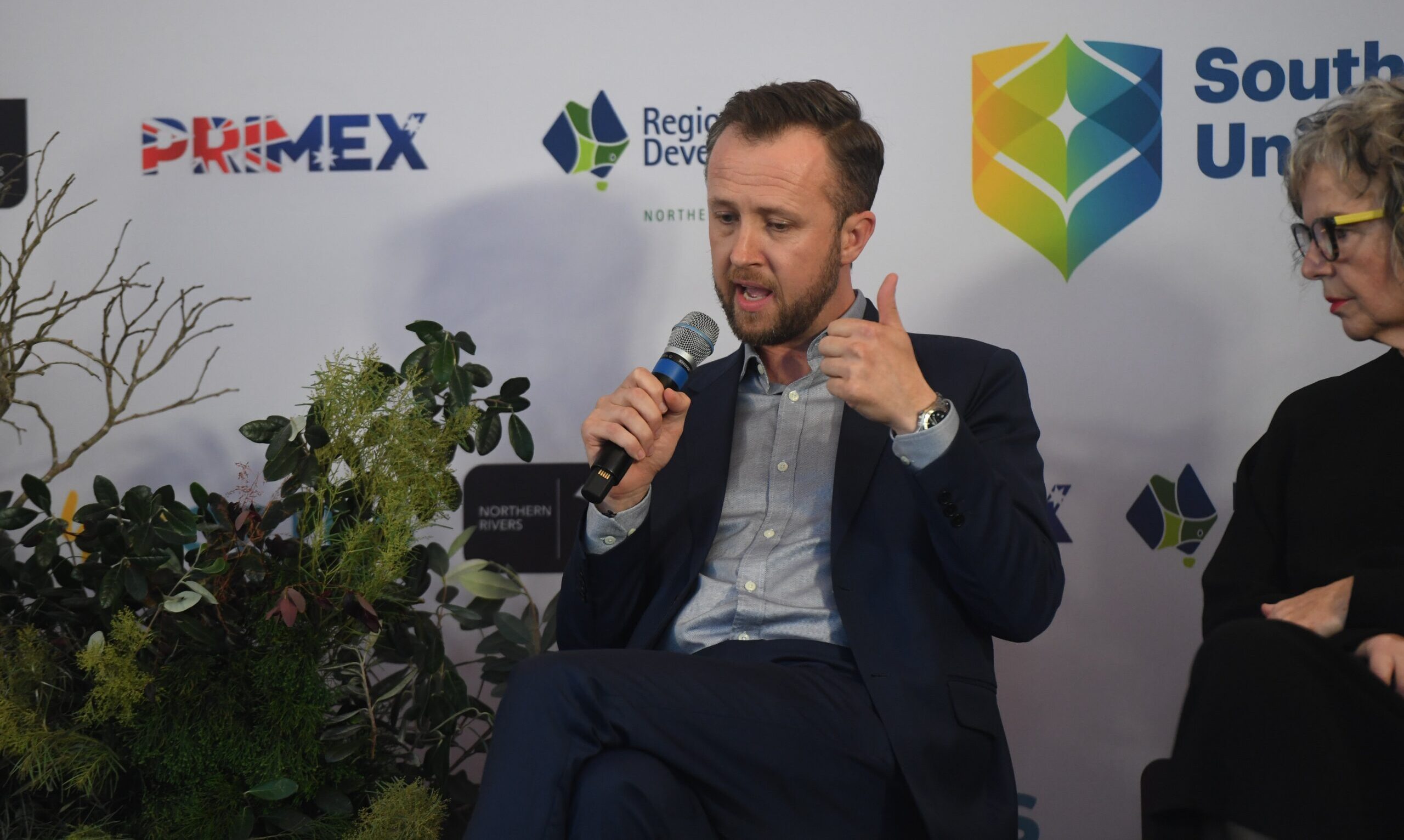
Ben Roche said the new courses align with industry needs. Picture: Marc Stapelberg
Southern Cross University has launched the first specialised university programs in neurodiversity and the circular economy in Australia to attract new students.
Please login below to view content or subscribe now.
Where hands-on learning meets visionary research in healthcare
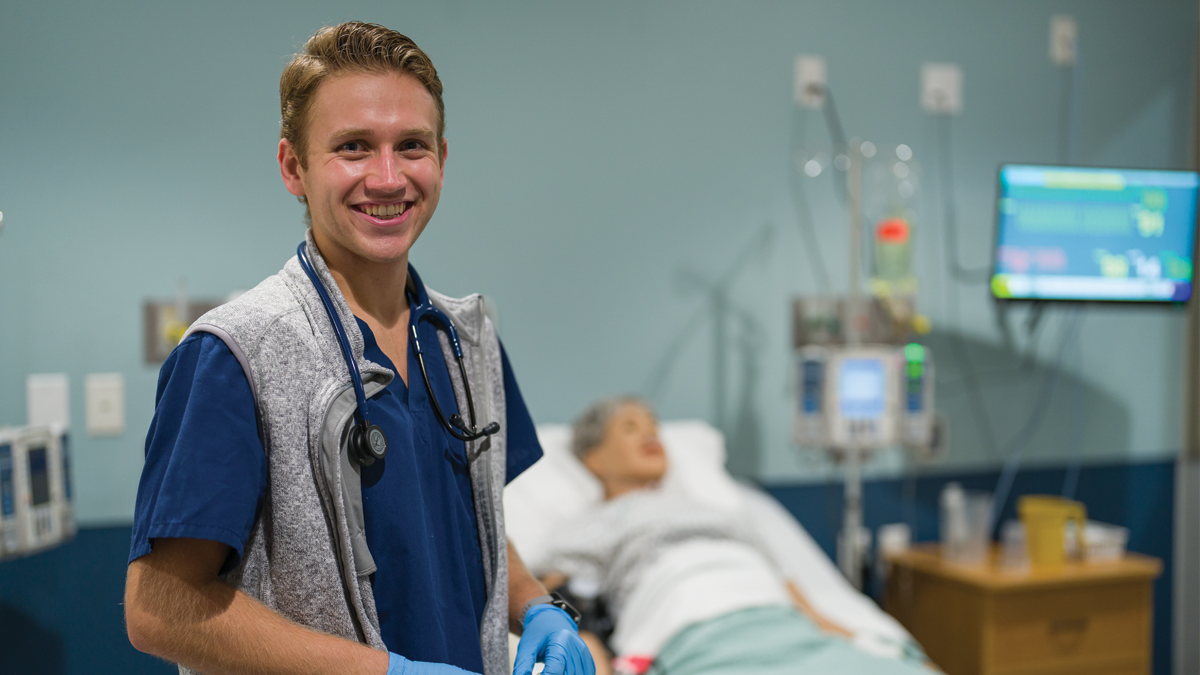
The University of New Hampshire is home to the School of Nursing, where students can help shape the future of healthcare through real-world clinical experience and innovative research opportunities.
UNH’s status as an R1 research institution and its proximity to some of the nation’s premier medical centers provide you with unmatched clinical learning and nursing research opportunities—empowering you to make an impact in healthcare from day one.
Building on 60 years of nursing education excellence at UNH, the newly launched School of Nursing offers programs from pre-licensure through clinical doctorate, both in-person on the Durham campus and online, creating flexible pathways that meet you where you are in your journey toward meaningful impact in healthcare.
Explore different paths in nursing
At UNH’s School of Nursing, you’ll find your perfect fit among bachelor’s, master’s, and doctoral degree options designed to match your goals and aspirations.
Charles Adler discovered his passion through UNH’s hands-on approach. After earning his bachelor’s in nursing and a master’s as a clinical nurse leader, he’s now enrolled in the Family Nurse Practitioner (FNP) program, which offers the flexibility he needs.
“I love the clinical environment, whether it’s a pediatrician’s office or a primary care or hospital setting—that’s where things started to click for me,” Adler said.
The real-world experience that defines UNH’s approach has shaped his entire career trajectory. His senior practicum led directly to a job in an ICU, which opened doors to experience as a travel nurse, clinical nurse leader, and finally to his current role as an FNP.
“I wouldn’t have been able to have the experiences I’ve had if it weren’t for UNH nursing,” Adler reflects.
Where knowledge meets practice
At UNH, you don’t have to choose between rigorous academic learning and real-world practical skills; you get both. Our commitment to hands-on learning means you’ll graduate not just with depth of knowledge and a degree, but with the practical skills and forward-thinking approach that healthcare needs.
Ready to pursue meaningful impact in healthcare? If you’re drawn to a field where you can make a real difference, UNH’s one-of-a-kind School of Nursing offers clinical learning to propel you to exceptional career opportunities that make an impact.
Recently, some colleagues and I released a paper about the experiences of neurodivergent PhD students. It’s a systematic review of the literature to date, which is currently under review, but available via pre-print here.
But reading each and every paper published about neurodivergent PhD students provoked strong feelings of rage and frustration. (These feelings only increased, with a tinge of fear added in, when I read of plans for the US health department to make a ‘list’ of autistic people?! Reading what is going on there is frankly terrifying – solidarity to all.) We all know what needs to be done to make research degrees more accessible. Make expectations explicit. Create flexible policies. Value diverse thinking styles. Implement Universal Design Principles… These suggestions appear in report after report, I’ve ranted on the blog here and here, yet real change remains frustratingly elusive. So why don’t these great ideas become reality? Here’s some thoughts on barriers that keep neurodivergent-friendly changes from taking hold.
The myth of meritocracy
Academia clings to the fiction that the current system rewards pure intellectual merit. Acknowledging the need for accessibility requires admitting that the playing field isn’t level. Many senior academics succeeded in the current system and genuinely believe “if I could do it, anyone can… if they work hard enough”. They are either 1) failing to recognise their neurotypical privilege, or 2) not acknowledging the cost of masking their own neurodivergence (I’ll get to this in a moment).
I’ve talked to many academics about things we could do – like getting rid of the dissertation – but too many of us are secretly proud of our own trauma. The harshness of the PhD has been compared to a badge of honour that we wear proudly – and expect others to earn.
Resource scarcity (real and perceived)
Universities often respond to suggestions about increased accessibility measures with budget concerns. The vibe is often: “We’d love to offer more support, but who will pay for it?”. However, many accommodations (like flexible deadlines or allowing students to work remotely) cost little, or even nothing. Frequently, the real issue isn’t resources but priorities of the powerful. There’s no denying universities (in Australia, and elsewhere) are often cash strapped. The academic hunger games are real. However, in the fight for resources, power dynamics dictate who gets fed and who goes without.
I wish we would just be honest about our choices – some people in universities still have huge travel budgets. The catering at some events is still pretty good. Some people seem to avoid every hiring freeze. There are consistent patterns in how resources are distributed. It’s the gaslighting that makes me angry. If we really want to, we can do most things. We have to want to do something about this.
Administrative inertia
Changing established processes in a university is like turning a battleship with a canoe paddle. Approval pathways are long and winding. For example, altering a single line in the research award rules at ANU requires approval from parliament (yes – the politicians actually have to get together and vote. Luckily we are not as dysfunctional in Australia as other places… yet). By the time a solution is implemented, the student who needed it has likely graduated – or dropped out. This creates a vicious cycle where the support staff, who see multiple generations of students suffer the same way, can get burned out and stop pushing for change.
The individualisation of disability
Universities tend to treat neurodivergence as an individual problem requiring individual accommodations rather than recognising systemic barriers. This puts the burden on students to disclose, request support, and advocate for themselves – precisely the executive function and communication challenges many neurodivergent students struggle with.
It’s akin to building a university with only stairs, then offering individual students a piggyback ride instead of installing ramps. I’ve met plenty of people who simply get so exhausted they don’t bother applying for the accommodations they desperately need, and then end up dropping out anyway.
Fear of lowering ‘standards’
Perhaps the most insidious barrier is the mistaken belief that accommodations somehow “lower standards.” I’ve heard academics worrying that flexible deadlines will “give some students an unfair advantage” or that making expectations explicit somehow “spoon-feeds” students.
The fear of “lowering standards” becomes even more puzzling when you look at how PhD requirements have inflated over time. Anyone who’s spent time in university archives knows that doctoral standards aren’t fixed – they’re constantly evolving. Pull a dissertation from the 1950s or 60s off the shelf and you’ll likely find something remarkably slim compared to today’s tomes. Many were essentially extended literature reviews with modest empirical components. Today, we expect multiple studies, theoretical innovations, methodological sophistication, and immediate publishability – all while completing within strict time limits on ever-shrinking funding.
The standards haven’t just increased; they’ve multiplied. So when universities resist accommodations that might “compromise standards,” we should ask: which era’s standards are we protecting? Certainly not the ones under which most people supervising today had to meet. The irony is that by making the PhD more accessible to neurodivergent thinkers, we might actually be raising standards – allowing truly innovative minds to contribute rather than filtering them out through irrelevant barriers like arbitrary deadlines or neurotypical communication expectations. The real threat to academic standards isn’t accommodation – it’s the loss of brilliant, unconventional thinkers who could push knowledge boundaries in ways we haven’t yet imagined.
Unexamined neurodiversity among supervisors
Perhaps one of the most overlooked barriers is that many supervisors are themselves neurodivergent but don’t recognise it or acknowledge what’s going on with them! In fact, since starting this research, I’ve formed a private view that you almost can’t succeed in this profession without at least a little neurospicey.
Academia tends to attract deep thinkers with intense focus on specific topics – traits often associated with autism (‘special interests’ anyone?). The contemporary university is constantly in crisis, which some people with ADHD can find provides the stimulation they need to get things done! Yet many supervisors have succeeded through decades of masking and compensating, often at great personal cost.
The problem is not the neurodivergence or the supervisor – it’s how the unexamined neurodivergence becomes embedded in practice, underpinned by an expectation that their students should function exactly as they do, complete with the same struggles they’ve internalised as “normal.”
I want to hold on to this idea for a moment, because maybe you recognise some of these supervisors:
The Hyperfocuser: Expects students to match their pattern of intense, extended work sessions. This supervisor regularly works through weekends on research “when inspiration strikes,” sending emails at 2am and expecting quick responses. They struggle to understand when students need breaks or maintain strict work boundaries, viewing it as “lack of passion.” Conveniently, they have ignored those couple of episodes of burn out, never considering their own work pattern might reflect ADHD or autistic hyper-focus, rather than superior work ethic.
The Process Pedant: Requires students to submit written work in highly specific formats with rigid attachment to particular reference styles, document formatting, and organisational structures. Gets disproportionately distressed by minor variations from their preferred system, focusing on these details over content, such that their feedback primarily addresses structural issues rather than ideas. I get more complaints about this than almost any other kind of supervision style – it’s so demoralising to be constantly corrected and not have someone genuinely engage with your work.
The Talker: Excels in spontaneous verbal feedback but rarely provides written comments. Expects students to take notes during rapid-fire conversational feedback, remembering all key points. They tend to tell you to do the same thing over and over, or forget what they have said and recommend something completely different next time. Can get mad when questioned over inconsistencies – suggesting you have a problem with listening. This supervisor never considers that their preference for verbal communication might reflect their own neurodivergent processing style, which isn’t universal. Couple this with a poor memory and the frustration of students reaches critical. (I confess, being a Talker is definitely my weakness as a supervisor – I warn my students in advance and make an effort to be open to criticism about it!).
The Context-Switching Avoider: Schedules all student meetings on a single day of the week, keeping other days “sacred” for uninterrupted research. Becomes noticeably agitated when asked to accommodate a meeting outside this structure, even for urgent matters. Instead of recognising their own need for predictable routines and difficulty with transitions (common in many forms of neurodivergence), they frame this as “proper time management” that students should always emulate. Students who have caring responsibilities suffer the most with this kind of inflexible relationship.
The Novelty-Chaser: Constantly introduces new theories, methodologies, or research directions in supervision meetings. Gets visibly excited about fresh perspectives and encourages students to incorporate them into already-developed projects. May send students a stream of articles or ideas completely tangential to their core research, expecting them to pivot accordingly. Never recognises that their difficulty maintaining focus on a single pathway to completion might reflect ADHD-related novelty-seeking. Students learn either 1) to chase butterflies and make little progress or 2) to nod politely at new suggestions while quietly continuing on their original track. The first kind of reaction can lead to a dangerous lack of progress, the second reaction can lead to real friction because, from the supervisor’s point of view, the student ‘never listens’. NO one is happy in these set ups, believe me.
The Theoretical Purist: Has devoted their career to a particular theoretical framework or methodology and expects all their students to work strictly within these boundaries. Dismisses alternative approaches as “methodologically unsound” or “lacking theoretical rigour” without substantive engagement. Becomes noticeably uncomfortable when students bring in cross-disciplinary perspectives, responding with increasingly rigid defences of their preferred approach. Fails to recognise their intense attachment to specific knowledge systems and resistance to integrating new perspectives may reflect autistic patterns of specialised interests, or even difficulty with cognitive flexibility. Students learn to frame all their ideas within the supervisor’s preferred language, even when doing so limits their research potential.
Now that I know what I am looking for, I see these supervisory dynamics ALL THE TIME. Add in whatever dash of neuro-spiciness is going on with you and all kinds of misunderstandings and hurt feelings result … Again – the problem is not the neurodivergence of any one person – it’s the lack of self reflection, coupled with the power dynamics that can make things toxic.
These barriers aren’t insurmountable, but honestly, after decades in this profession, I’m not holding my breath for institutional enlightenment. Universities move at the pace of bureaucracy after all.
So what do we do? If you’re neurodivergent, find your people – that informal network who “get it” will save your sanity more than any official university policy. If you’re a supervisor, maybe take a good hard look at your own quirky work habits before deciding your student is “difficult.” And if you’re in university management, please, for the love of research, let’s work on not making neurodivergent students jump through flaming bureaucratic hoops to get basic support.
The PhD doesn’t need to be a traumatic hazing ritual we inflict because “that’s how it was in my day.” It’s 2025. Time to admit that diverse brains make for better research. And for goodness sake, don’t put anyone on a damn list, ok?
AI disclaimer: This post was developed with Claude from Anthropic because I’m so busy with the burning trash fire that is 2025 it would not have happened otherwise. I provided the concept, core ideas, detailed content, and personal viewpoint while Claude helped organise and refine the text. We iteratively revised the content together to ensure it maintained my voice and perspective. The final post represents my authentic thoughts and experiences, with Claude serving as an editorial assistant and sounding board.
This blog was first published on Inger Mewburn’s legendary website The Thesis Whisperer on 1 May 2025. It is reproduced with permission here.
Professor Inger Mewburn is the Director of Researcher Development at The Australian National University where she oversees professional development workshops and programs for all ANU researchers. Aside from creating new posts on the Thesis Whisperer blog (www.thesiswhisperer.com), she writes scholarly papers and books about research education, with a special interest in post PhD employability, research communications and neurodivergence.
Nearly three in four college students say they have somewhat high or very high media literacy skills (72 percent), according to a 2025 Student Voice survey by Inside Higher Ed and Generation Lab. Students are less likely to consider their peers media literate; three in five respondents said they have at least somewhat high levels of concern about the spread of misinformation among their classmates.
When asked how colleges and universities could help improve students’ media literacy skills, a majority of Student Voice respondents indicated they want digital resources on increasing media literacy or media literacy–related content and training embedded into the curriculum.
A recently developed course at the University of Southern California’s Viterbi School of Engineering teaches students information literacy principles to help them develop tools to mitigate the harms of online misinformation.
The background: USC offers an interdisciplinary teaching grant that incentivizes cross-campus collaboration and innovative teaching practices. To be eligible for the grant, applications must include at least one full-time faculty member and faculty from more than one school or division. Each grantee receives up to $20,000 to compensate for applicants’ time and work.
In 2023, Helen Choi, a faculty member at USC Viterbi, won the interdisciplinary teaching grant in collaboration with Cari Kaurloto, head of the science and engineering library at USC Libraries, to create a media literacy course specifically for engineering students.
“By focusing on engineering students, we were able to integrate a component of the course that addresses a social issue from an engineering perspective in terms of technical know-how and the professional ethics,” Choi said, which helps students see the relevance of course content to their personal and professional lives.
What’s the need: Students tend to receive most of their news and information on online platforms; Student Voice data found a majority of learners rely on social media for news content (72 percent), and about one in four engage with news apps or news aggregator websites (27 percent).
Choi and Kaurloto’s course, titled Information Literacy: Navigating Digital Misinformation, builds academic research skills, teaches information literacy principles and breaks down the social issue of online misinformation.
“Students examine ways they can navigate online information using their research skills, and then extend that knowledge by considering how they, as prospective engineers, can build technologies that mitigate the harms of online misinformation while enhancing the information literacy of users,” Choi explained.
USC faculty aren’t the only ones noticing a need for more education around engagement with digital information; a growing number of colleges and universities are making students complete a digital literacy course as a graduation requirement.
In the classroom: Choi and Kaurloto co-teach the course, which was first offered in this spring to a class of 25 students.
The students learned to develop effective search strategies and critically examine sources, as well as ethical engineering principles and how to apply them in designing social media platforms, Kaurloto said. Choi and Kaurloto employed active learning pedagogies to give students hands-on and real-life applications including writing, speaking and collaborative coursework.
One assignment the students completed was conducting library research to develop a thesis paragraph on an information literacy topic with a short, annotated bibliography. Students also presented their research to their peers, Kaurloto said.
Learners also engaged in a group digital literacy project, designing a public service campaign that included helpful, research-backed ways to identify misinformation, Choi said. “They then had to launch that campaign on a social media platform, measure its impact, and present on their findings.” Projects ranged from infographics on Reddit to short-form videos on spotting AI-generated misinformation and images on TikTok and Instagram.
The impact: Student feedback said they found the course helpful, with many upper-level learners saying they wished they had taken it sooner in their academic career because of the library research skills they gained. They also indicated the course content was applicable in daily life, such as when supporting family members “who students say have fallen down a few internet rabbit holes or who tend to believe everything they see online,” Choi said.
Other librarians have taken note of the course as a model of how to teach information literacy, Choi said.
“We’ve found that linking information literacy with specific disciplines like engineering can be helpful both in terms of building curricula that resonate with students but also for building professional partnerships among faculty,” Choi said. “Many faculty don’t know that university librarians are also experts in information literacy—but they should!”
This fall, Choi and Kaurloto plan to offer two sections of the course with a cap of 24 students per section. Choi hopes to see more first- and second-year engineering students in the course so they can apply these principles to their program.
If your student success program has a unique feature or twist, we’d like to know about it. Click here to submit.