Tag: tech

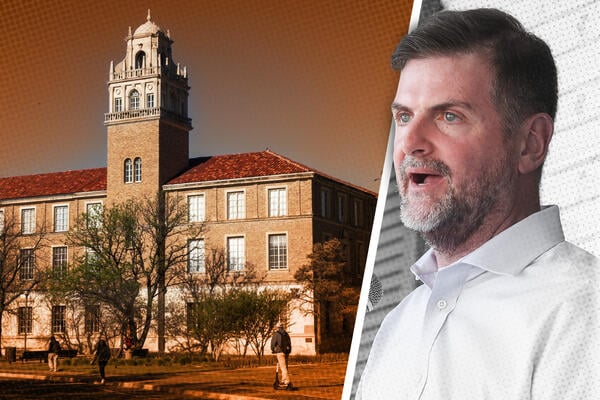
  • Senator Who Banned DEI Set to Be Texas Tech Chancellor

    Senator Who Banned DEI Set to Be Texas Tech Chancellor

    In 2023, Texas became one of the first red states to institute a sweeping ban on diversity, equity and inclusion in public colleges and universities.

    Following pro-Palestinian protests and a police crackdown on an encampment at the University of Texas at Austin in 2024, the Texas Legislature this year passed another law restricting free speech on public campuses, including banning all expressive activities from 10 p.m. to 8 a.m.

    The Legislature also this year passed a wide-ranging bill that allows public college and university presidents to take over faculty senates and councils, prohibits faculty elected to those bodies from serving more than two years in a row, and creates an “ombudsman” position that can threaten universities’ funding if they don’t follow that law or the DEI ban.

    The lead author listed on all three laws is Sen. Brandon Creighton, chair of the Texas Senate education committee. Having overhauled higher ed statewide, he’s about to get the chance to further his vision at one large university system: On Thursday, the Texas Tech University System plans to name Creighton the “sole finalist” for the system chancellor and chief executive officer job.

    His hiring by the system’s Board of Regents—whose members are appointed by the governor with confirmation from the Senate—marks another example of a Republican politician in a large red state, namely Texas and Florida, being installed as a higher ed leader. The trend reflects an evolution in how Republicans are influencing public universities, from passing laws to directly leading institutions and systems. For universities, having a former member of the Legislature in the presidency can help with lobbying lawmakers, but it could also threaten academic freedom and risk alienating faculty.

    Creighton wasn’t the only, or even the highest-ranking, politician considered for the position, which historically pays more than $1 million a year. As The Texas Tribune earlier reported, Rep. Jodey Arrington, chair of the U.S. House Budget Committee and shepherd of the One Big Beautiful Bill Act, which affected higher ed nationwide, was also in the running. Unlike Creighton, Arrington has worked in higher ed—specifically as a vice chancellor and chancellor’s chief of staff in the Texas Tech system. Arrington, who didn’t provide Inside Higher Ed an interview, issued a statement Sunday congratulating Creighton.

    Faculty leaders offered a muted response to Creighton’s impending appointment. Neither the president of the Faculty Senate at the main Texas Tech campus, the president of the university’s chapter of the American Association of University Professors nor the state AAUP conference publicly denounced Creighton. In an emailed statement, the state conference said, “We have concerns about the future of academic freedom and shared governance in the Texas Tech University System given the positions Sen. Creighton has taken in the legislature.”

    “We hope that Texas Tech’s strong tradition of shared governance and academic freedom continues so that Texas Tech can thrive,” the statement said.

    Cody Campbell, the system board chair, said Creighton is “a fantastic fit with our culture and is clearly the best person for the job.” He added that he likes the higher ed legislation Creighton has passed. (Creighton was also lead author of a new law that lets universities pay athletes directly.)

    “He shares the values of the Texas Tech University System,” Campbell said. Both the system and the wider community of Lubbock, where the main Texas Tech campus is located, are “conservative,” he said.

    “We do not subscribe to the ideas around DEI and are supportive of a merit-based culture,” Campbell said, adding that Creighton is well positioned to continue the system’s growth in research, enrollment and academic standing.

    For Creighton, the job could come with a big payout. Retiring Texas Tech system chancellor Tedd L. Mitchell made $1.3 million in 2023, ranking him the 12th-highest-paid public university leader in the country, according to The Chronicle of Higher Education’s database. The system didn’t respond to Inside Higher Ed’s open records request for Mitchell’s current contract in time for this article’s publication, and Campbell told Inside Higher Ed Creighton’s pay is “yet to be determined.”

    “The contract or the compensation were never part of the discussion with any of the candidates,” Campbell said.

    Creighton didn’t provide Inside Higher Ed an interview or answer written questions. But he appeared to accept the position in a post on X.

    “Over the past six years, no university system in Texas has taken more bold steps forward,” he wrote. “Serving as Chairman of the Senate Education Committee and the Budget Subcommittee has been the honor of a lifetime—especially to help deliver that success for Texas Tech and its regional universities. I feel very blessed to have been considered for the role of Chancellor. There is no greater purpose I would consider than working to make generational changes that transform the lives of young Texans for decades to come.”

    Cowing Faculty Senates

    Campbell said he doesn’t recall whether Creighton and Arrington initially expressed interest in the position to the board or whether the board reached out to them. Dustin Womble, the board’s vice chair, declined to comment. Campbell said the board “actively recruited” some candidates.

    “There wasn’t really a formal application process, necessarily,” he said. But dozens of candidates across the country expressed interest in the “high-paying position” leading a large system, he said.

    The system says it has more than 60,000 students across five institutions and 20 locations, including one in San José, Costa Rica. The five institutions are Texas Tech (which has multiple campuses), Texas Tech Health Sciences Center (which also has multiple campuses), the separate Texas Tech Health Sciences Center El Paso, Angelo State University and Midwestern State University.

    Asked about Creighton’s lack of higher ed work experience, Campbell said that wasn’t unusual for system chancellors, contrasting the position with those of the presidents who lead individual institutions on a day-to-day basis.

    “Our past chancellor was a medical doctor, the chancellor before him was a state senator, the chancellor before him was a former U.S. congressman and a state politician; we’ve had businessmen in that position, we’ve had all different types of people,” Campbell said.

    Aside from serving in the Senate for a decade and the state House for seven years before that, Creighton is an attorney.

    Andrew Martin, the tenured art professor who leads the Texas Tech University main campus’s AAUP chapter, noted that “our chapter has actively opposed some of the legislation that Sen. Creighton has authored.”

    “Our hope now is that Sen. Creighton, in apparently assuming the role of chancellor, will spend time learning more about the campuses in the TTU System and will meet as many students, faculty [and] administrators on our campuses as possible to see how these institutions actually operate day in and day out,” Martin said. “I’m not sure how clear that’s been from his perspective as a lawyer and legislator.”

    Martin—who stressed that he was speaking for himself and colleagues he’s spoken to, but not on behalf of his university—said the AAUP is concerned with maintaining academic freedom for faculty and students, upholding tenure protections, and preserving the faculty’s role in determining curriculum, conducting research and exercising shared governance.

    When the Legislature passed Senate Bill 37—the Creighton legislation that, among other things, upended faculty senates—Creighton issued a news release saying, “Faculty Senates will no longer control our campuses.” He said his legislation “takes on politically charged academic programs and ensures students graduate with degrees of value, not degrees rooted in activism and political indoctrination.”

    Among other things, SB 37 requires university presidents to choose who leads faculty senates. Ryan Cassidy, a tenured associate librarian, was elected to lead the Texas Tech University main campus’s Faculty Senate before SB 37 took effect, and the institution’s president has allowed him to stay in that role.

    Asked about Creighton being named chancellor, Cassidy said, “I haven’t really had time to reflect on it.”

    Creighton’s bio on the Legislature’s website touts his conservative values outside of higher ed, too. “He has relentlessly hammered excessive taxation, pursued ‘loser pays’ tort reform, passed drug testing for unemployment benefits, stood up for Texas’ 10th Amendment rights and effectively blocked Obamacare’s Medicaid expansion,” the bio says.

    Martin said Texas Tech aspires to become a member of the Association of American Universities, a prestigious group of top research universities, of which UT Austin and Texas A&M University are already members. That would be hard if faculty are “marginalized,” he said.

    “You can’t get there without the huge investment of faculty,” he said.

    Source link

  • Tech Titans, Ideologues, and the Future of American Higher Education

    Tech Titans, Ideologues, and the Future of American Higher Education

    American higher education is under pressure from within and without—squeezed by financial strain, declining enrollment, political hostility, and technological disruption. But the greatest challenge may be coming from a group of powerful outsiders—figures with deep influence in politics, technology, and media—who are actively reshaping how education is perceived, delivered, and valued. Among them: Donald Trump, Elon Musk, Peter Thiel, Sam Altman, Alex Karp, and Charlie Kirk. Each brings a different ideology and strategy, but their combined influence represents an existential threat to traditional colleges and universities.

    Donald Trump’s second rise to power has included a full-spectrum attack on elite and public institutions of higher learning. From threats to strip funding from schools that promote diversity, equity, and inclusion, to freezing billions in research grants at elite institutions like Harvard, Trump has positioned universities as enemies in a broader cultural and political war. His proposed education policy emphasizes trade schools and short-term credentials over liberal arts and research, while his administration has floated revoking accreditation from institutions that resist his agenda. Rather than investing in public education, the Trump agenda calls for punishment, privatization, and obedience. And for institutions that don’t comply, there are growing threats of taxation, defunding, and public humiliation.

    Elon Musk is undermining higher education in a different way. Musk has openly mocked the need for college degrees, suggesting that “you can learn anything online for free.” While that’s partly rhetoric, it’s also a blueprint for disruption. His experimental school Astra Nova already offers a glimpse into a post-institutional future—one that favors creative, independent thinking over traditional credentialing. Now, with plans to launch the Texas Institute of Technology & Science, Musk is betting that elite training can happen outside the bounds of accreditation and federal oversight. Musk’s future is technocratic and libertarian, with universities seen as bloated, slow-moving, and culturally out of touch.

    Peter Thiel’s vision is even more radical. Thiel has compared American higher education to the Catholic Church before the Reformation—rich, corrupt, and intellectually bankrupt. His Thiel Fellowship pays young people to skip college entirely, offering $100,000 to start companies instead of accumulating debt. He argues that universities reward conformity and delay adulthood. For Thiel, colleges don’t just fail to prepare students—they actively mislead them. His endgame is a decentralized, market-driven system in which talent rises through initiative and capital, not credentials.

    Sam Altman, CEO of OpenAI, presents yet another threat—this time from artificial intelligence. Altman doesn’t reject learning, but he does question the institutions that monopolize it. With tools like ChatGPT and future AI tutors, Altman envisions personalized, real-time learning for everyone, everywhere. In this model, universities risk becoming obsolete—not because they are wrong, but because they are too slow and too expensive. Altman has also pushed universities to take a more active role in shaping AI policy; if they don’t, the tech industry will do it for them. The message is clear: adapt or be replaced.

    Alex Karp, CEO of Palantir, is building a new kind of corporate university. Through programs like the Palantir Meritocracy Fellowship and “Semester at Palantir,” Karp is recruiting students directly out of elite schools—particularly those disillusioned by what he sees as anti-Israel sentiment or campus censorship. These programs offer practical, high-paid experience that bypasses traditional academic pathways. Karp’s vision doesn’t require the elimination of universities—it just renders them unnecessary for the most competitive jobs in tech and intelligence. His model suggests a future in which corporations, not universities, decide who is qualified.

    Charlie Kirk, founder of Turning Point USA, has weaponized the culture war to delegitimize higher education entirely. Kirk’s brand of activism portrays universities as corrupt, anti-American indoctrination centers. Through social media campaigns, donor networks, and student chapters, he has built an infrastructure of resistance against academic institutions. His goal isn’t reform—it’s replacement. Through efforts like the Freedom College Alliance, Kirk is helping to build a parallel educational system rooted in conservative Christian values, classical curricula, and ideological purity. In Kirk’s world, higher education isn’t broken—it’s the enemy.

    Together, these six men are shaping a new, fragmented future for American education. Some want to burn it down. Some want to replace it. Some want to privatize it or profit from its collapse. What they share is a conviction that traditional universities no longer serve their intended purpose—and that a new model, rooted in tech, politics, or religion, must take its place.

    This isn’t a theoretical debate. Universities are already responding—cutting liberal arts programs, racing to implement AI tools, rebranding themselves as career accelerators, and seeking favor with donors who increasingly resemble these disruptive outsiders. For those who resist, the future may include not just funding cuts, but political investigations, lawsuits, and public smear campaigns.

    Higher education faces a stark choice. It can double down on its public mission—defending critical thinking, civic engagement, and social mobility—or it can retreat into elite credentialing and survival mode. What it cannot do is ignore the forces gathering at its gates. These forces are rich, powerful, ideologically driven—and they are not waiting for permission to remake the system.

    Source link

  • Wearable tech helps students overcome central vision challenges

    Wearable tech helps students overcome central vision challenges

    Central vision loss–a condition that impairs the ability to see objects directly in front of the eyes–can have profound academic and social impacts on K-12 students. Because this type of vision loss affects tasks that require detailed focus, such as reading, writing, and recognizing faces, students with central vision impairment often face unique challenges that can affect their overall school experience.

    In the classroom, students with central vision loss may struggle with reading printed text on paper or on the board, despite having otherwise healthy peripheral vision. Standard classroom materials are often inaccessible without accommodations such as large print, magnification devices, or digital tools with text-to-speech capabilities. These students might take longer to complete assignments or may miss visual cues from teachers, making it difficult to follow along with lessons. Without appropriate support, such as assistive technology, students may fall behind academically, which can affect their confidence and motivation to participate.

    As a result, they may be perceived as aloof or unfriendly, leading to social isolation or misunderstanding. Group activities, games, and unstructured time like lunch or recess can become sources of anxiety if students feel excluded or unsafe. Moreover, children with vision loss may become overly dependent on peers or adults, which can further affect their social development and sense of independence.

    While this may seem daunting, there are assistive technologies to help students navigate central vision loss and have fulfilling academic and social experiences.

    One such technology, eSight Go from Gentex Corporation’s eSight, uses an advanced high-speed, high-definition camera to capture continuous video footage of what a user is looking at. Algorithms optimize and enhance the footage and share it on two HD OLED screens, providing sharp, crystal-clear viewing. The user’s brain then synthesizes the images to fill any gaps in their vision, helping them to see more clearly, in real time.

    “The ability to have central perception brought back into your set of tools for education is critically important,” said Roland Mattern, eSight’s director of sales and marketing. “Ease of reading, ease of seeing the board, using tablets or computers–all of these things [lead to] the ability to complete an academic task with greater ease.”

    One key feature, Freeze Frame, lets the user capture a temporary photograph with the device’s camera, such as an image on an interactive whiteboard, a textbook page, or a graphic. The student can magnify the image, scan and study it, and take what they need from it.

    “This eases the ability to absorb information and move on, at a regular pace, with the rest of the class,” Mattern noted.

    Socially, central vision loss can create additional barriers. A major part of social interaction at school involves recognizing faces, interpreting facial expressions, and making eye contact–all tasks that rely heavily on central vision. Students with this impairment might have difficulty identifying peers or teachers unless they are spoken to directly. The glasses can help with these social challenges.

    “There’s a huge social aspect to education, as well–seeing expressions on teachers’ and fellow students’ faces is a major part of communication,” Mattern said.

    What’s more, the glasses also help students maintain social connections inside and outside of the classroom.

    “Think of how much peer-to-peer communication is digital now, and if you have central vision loss, you can’t see your phone or screen,” Mattern said. “The educational part is not just academic–it’s about the student experience that you want to enhance and optimize.”

    Educators, parents, and school staff play a crucial role in fostering inclusive environments–by educating classmates about visual impairments, encouraging empathy, and ensuring that students with central vision loss are supported both academically and socially. With the right accommodations and social-emotional support, these students can thrive in school and build strong connections with their peers.

    “If we can make daily living, hobbies, and education easier and facilitate participation, that’s a win for everybody,” Mattern said.

    For more spotlights on innovative edtech, visit eSN’s Profiles in Innovation hub.

    Laura Ascione
    Latest posts by Laura Ascione (see all)

    Source link

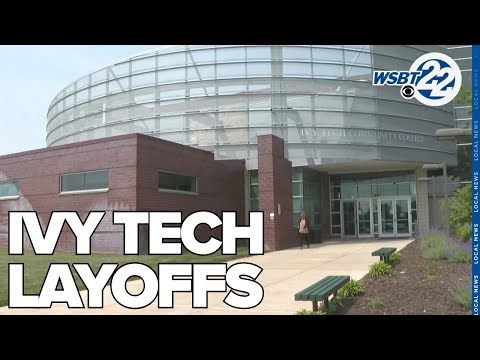
  • Ivy Tech in Indiana to lay off 200 employees (WSBT-TV)

    Ivy Tech in Indiana to lay off 200 employees (WSBT-TV)

    More than 200 jobs at Ivy Tech are being eliminated due to a cut in state funding, and some of that loss is impacting people in South Bend. The student in this story discusses questions about the value of a community college education and finding gainful employment after graduation.   

    Source link

  • Illinois Tech Establishes First U.S. Campus in India

    Illinois Tech Establishes First U.S. Campus in India

    On Wednesday, the Illinois Institute of Technology announced it had reached an agreement with India’s University Grants Commission to establish a branch campus in Mumbai, opening to students in fall 2026. It will be the first degree-granting U.S. institution on Indian soil and Illinois Tech’s first international branch campus.

    For decades, a complicated legal and tax system prevented U.S. institutions from opening campuses in India. Then, in 2020, the Indian government issued a new National Education Policy paving the way, officials promised, for a much easier pathway to fruitful academic partnerships.

    India is a major growth market for U.S. higher education; this year the country surpassed China for the first time as the top origin country for international students in the U.S. Establishing a beachhead in India could help institutions carve out a dominant space for themselves in the lucrative international recruitment market, especially since the vast majority of Indian international students come to the U.S. for postgraduate study.

    When the Indian government announced the NEP 2020 plan, officials envisioned the “top 100 universities in the world” setting up shop in the country. So far, that hasn’t happened.

    Illinois Tech is not a globally renowned university; it’s not even one of the better-known institutions in Chicago. Its undergraduate population numbers only around 3,000 students, and the postgraduate population isn’t much larger. So how did it get ahead of name-brand research universities that have been dipping their toes in the Indian market, like Johns Hopkins and Rice?

    Philip Altbach, professor emeritus at the Center for International Higher Education at Boston College and a longtime expert on academic internationalization, said American institutions have been hesitant even in recent years to invest in Indian branch campuses due to a mix of bureaucratic complications and uncertain financial returns.

    “There hasn’t exactly been a rush to the gates in India from American institutions, and I don’t think there’s going to be anytime soon,” Altbach said. “The challenges of doing business there are still pretty high, and that puts a lot of foreign universities off.”

    Illinois Tech president Raj Echambadi said his university is taking the long view. As the spending power of India’s burgeoning middle class grows along with demand for highly trained workers—especially in engineering and technology—he sees the Mumbai campus as an early investment in a partnership that will become central to American institutions’ global strategies in the years to come. His institution has already begun to see the importance of Indian students to their bottom line: The share of Indian master’s students has risen by nearly 75 percent over the past five years.

    “The potential upside is huge, which means if you get in early the ride is going to be phenomenal,” he said. “In the next 25 years, we’re going to be catching that elephant’s tail.”

    Illinois Tech had a head start on the competition: The institution has been active in the Indian education market since 1996, during a period of rapid technological innovation.

    When demand for skilled workers in exploding fields like communications technology skyrocketed in the mid-1990s, Illinois Tech offered an early version of distance learning, shipping VHS-tape lessons to engineers in Bangalore who wanted to earn credentials that the Indian higher education system had yet to develop.

    Now, Echambadi says, Illinois Tech is meeting new demands in a changing Indian economy; its Mumbai campus will offer 10 degree programs in growth fields like semiconductor engineering. It even has some built-in brand recognition: It’s known as IIT in Chicago, the same acronym as India’s main university system, the Indian Institutes of Technology.

    “India can’t build universities fast enough to meet the growing demand,” Echambadi said. “That’s where we come in.”

    Colleges Hang Back

    Many colleges that wanted to explore opening a campus in India simply may have struggled to navigate the complex application system, even after the NEP was issued. Rajika Bhandari, a longtime international education strategist and the founder of the South Asia International Education Network, said the 2020 NEP took years to translate into practice.

    “U.S. institutions have been trying to enter the Indian market for years, well before the NEP. But the Indian bureaucracy and strict regulations have always been a challenge,” she wrote in an email. “Even with the NEP, it has likely taken a while to implement aspects of the policy and actually get things going.”

    Having a 30-year presence in India, Echambadi said, helped ease the process. He added that it helped that both he and Mallik Sundharam—Illinois Tech’s vice president for enrollment management and student affairs, who led the Mumbai project—are of Indian origin; both attended college there before moving to the U.S. for their graduate degrees. They said their understanding of their home country’s byzantine bureaucracy helped them navigate the system quicker than their competition.

    Sundharam said there’s also a much more receptive attitude in India toward foreign universities and a simpler system. They applied to establish the Mumbai campus earlier this year, and the entire process, from submission to acceptance, took two months. More than 50 foreign institutions have applied to set up a campus in India this year.

    “The Indian government has come a long way,” he said.

    Altbach said U.S. colleges are more likely to establish joint degree programs with Indian universities than full branch campuses. Virginia Tech established the first of these in 2023, also in Mumbai. Other institutions, including Johns Hopkins and Purdue University, have stuck to research partnerships and exchanges. Rice, which was an early proponent of Indian-American higher ed collaboration, established a research center in Kanpur in early 2020, months before the new NEP was introduced. Altbach said he thinks branch campuses will remain the territory of “low- to midlevel research institutions” seeking to boost enrollment.

    But Bhandari, an Indian immigrant and a close observer of the country’s booming education market, said Illinois Tech may be on the vanguard of a new push in academic internationalization.

    As international enrollment in the U.S. staggers from President Trump’s policies to deport student visa holders and crack down on global academic partnerships, Bhandari said physical programs in growth countries like India will become increasingly important. There’s already evidence that Indian student mobility to the U.S. is on the decline: F-1 visa applications from India are down 34 percent from this time last year, according to a recent analysis by Chris Glass, a professor at Boston College’s Center for International Higher Education.

    “Other universities are operating under the assumption that international markets will stay the same, but they won’t,” Sundharam said. “Students may not want to be mobile in five to 10 years. They will want quality higher education at their doorstep.”

    Source link

  • College Tech Officers on the Rise of AI

    College Tech Officers on the Rise of AI

    Inside Higher Ed’s fourth annual Survey of Campus Chief Technology/Information Officers, conducted with Hanover Research, is out now. The survey gathered insights from 108 college and university chief technology and information officers at two- and four-year institutions across the U.S. about the following issues: 

    • CTOs as strategic partners 
    • IT infrastructure and investments
    • Artificial intelligence adoption and governance
    • Cybersecurity readiness and challenges
    • Sustainability and environmental impact of technology
    • Staff recruitment and retention challenges
    • Digital transformation priorities and barriers
    • Emerging technologies beyond AI
    • Digital learning 
    • Data and student success 

    On Wednesday, June 18, at 2 p.m. Eastern, Inside Higher Ed will present a webcast with campus technology leaders who will share their perspectives on the findings. Register for that discussion here.

    Read our initial reporting on the survey—on uneven student access to generative AI tools and how institutions are struggling to respond to the rise of AI amid other fundamental challenges—here and here. Download the full survey here. And check out these key findings: 

    1. While many CTOs (59 percent) do have a seat at the executive leadership table at their institution, only about half (53 percent) feel their knowledge is fully leveraged to inform strategic decisions involving technology.
    2. Legacy infrastructure is hampering innovation, say 60 percent of CTOs, with implications for student success: Most rate their learning management systems highly (91 percent), but just a third (33 percent) believe their investments in student success technology have been highly effective.
    3. Despite the buzz about AI, only a third of CTOs (34 percent) report that investing in generative AI is a high or essential priority for their institution, with even fewer prioritizing investment in AI agents (28 percent) or predictive AI (24 percent).
    4. While most CTOs report effective collaboration channels between IT and academic affairs on AI policy (66 percent), only one in three (35 percent) believe their institution is handling the rise of AI adeptly. Just 11 percent indicate their institution has a comprehensive AI strategy.
    1. Cybersecurity remains a concern, with only 31 percent of CTOs feeling very or extremely confident in their institution’s ability to prevent cyberattacks. The most common security measures taken include multifactor authentication (90 percent) and required cybersecurity training for staff (86 percent). But just a fraction (26 percent) report required cybersecurity training for students, who are important players in this space.
    2. Technology staffing remains a significant challenge, with 70 percent of CTOs struggling to hire new technology employees and 37 percent facing retention issues. The primary factor is a usual suspect for higher education: competition from better-paying opportunities outside the sector.
    3. Student success is driving digital transformation priorities, with 68 percent of CTOs saying leveraging data for student success is a high or essential priority, followed by teaching and learning (59 percent). The top barriers to digital transformation in 2025 are insufficient IT personnel, inadequate financial investment and data-quality issues.
    4. Environmental sustainability is largely overlooked in technology planning, with 60 percent of CTOs reporting that their institution has no sustainability goals related to technology use, and 69 percent saying senior leaders don’t consider environmental impact in technology decisions.
    5. A majority of institutions represented (61 percent) have not partnered with online program managers and aren’t considering it. At the same time, 59 percent of CTOs express confidence in the quality of their institution’s online and hybrid offerings in general, and half (49 percent) somewhat or strongly agree that student demand for online and/or hybrid course options has increased substantially in the last year.
    6. While most CTOs believe their institution effectively uses data to support student success (60 percent), and nearly as many report a data function structure that supports analytics needs (52 percent), just 11 percent report having unified data models, which can reduce data siloes and improve data governance

    This independent editorial project was made possible with support from Softdocs, Grammarly, Jenzabar and T-Mobile for Education.

    Source link

  • Agency at Stake: The Tech Leadership Imperative

    Agency at Stake: The Tech Leadership Imperative

    One in three chief technology and information officers says their institution is significantly more reliant on artificial intelligence than it was even last year, according to the Inside Higher Ed/Hanover Research 2025 Survey of Campus Chief Technology/Information Officers, published today. Yet those same campus tech leaders also indicate their institutions are struggling with AI governance at a time of upheaval for higher education.

    The fragmentation in campus technology policies and approaches is only adding “another layer of uncertainty” to the general chaos, said Chris van der Kaay, a one-time college CIO and current higher education consultant specializing in AI policy.

    Some additional disconnects: Only a third of campus tech leaders say investing in generative artificial intelligence is a high or essential priority for their institution, and just 19 percent say higher education is adeptly handling the rise of AI.

    This, combined with technology companies’ growing influence in society and the sector, raises big questions about college and university agency in defining how AI will shape their futures.

    Maintaining Control

    “Colleges and universities have to be in control of how AI is being used unless they want the private sector dictating how it will be used at their institutions,” van der Kaay said. “If they want to maintain control and be at the forefront of change, helping institutions adapt and supporting staff and faculty needs—they have to make it a top priority.”

    More on the Survey

    On Wednesday, June 18, at 2 p.m. Eastern, Inside Higher Ed will present a webcast to discuss the results of the survey. Please register here.

    This independent Inside Higher Ed Survey of Campus Chief Technology/Information Officers was supported in part by Softdocs, Grammarly, Jenzabar and T-Mobile for Education.

    Inside Higher Ed’s 2025 Survey of Campus Chief Technology/Information Officers was conducted by Hanover Research. The survey included 108 CTOs from public and private institutions, two-year and four-year, for a margin of error of 9 percent. A copy of the free report can be downloaded here.

    Between February and March of this year, Inside Higher Ed and Hanover Research sent surveys to 2,197 college and university CTOs. Of the 108 who submitted responses, providing a valuable snapshot of this terrain, 59 percent serve on an executive cabinet or council at their institution. But close to half believe their college isn’t fully leveraging their knowledge and insights to inform strategic decisions and planning involving technology.

    And it’s in that environment that the majority of CTOs reported both a rise in demand for online education and a lack of formal AI governance: 31 percent say their institution hasn’t created any AI use policies, including those that address teaching, research, student services and administrative tasks.

    Similar to last year’s survey results, just 11 percent of CTOs indicate their institution has a comprehensive AI strategy, while about half (53 percent) believe their institution puts more emphasis on thinking about AI for individual use cases than thinking about it at an enterprise scale.

    “AI has implications for every single area of an organization. It’s not just another technology we have to learn. It’s much broader than that,” van der Kaay said. “AI has us not only thinking about how we’re doing things but why we’re doing them, which is why it’s important to have that enterprise-level thinking in using these tools. If we’re just trying to use AI to accomplish things based on decades-old policies, processes, procedures—that’s not the most effective use.”

    Ultimately, van der Kaay said he’s “optimistic that it’s giving us an opportunity here to make a lot of meaningful change.”

    Digital Divides and Risks Persist

    But the rise of AI has also heightened long-standing problems for colleges and universities, including access divides and cybersecurity concerns.

    As the technology allows hackers to carry out larger-scale, more sophisticated breaches, only three in 10 CTOs are highly confident their college’s practices can prevent cyberattackers from compromising data and intellectual property, or launching a ransomware event. Van der Kaay said that while this likely reflects the cautious mindset of many CTOs, creating sound cybersecurity policy underscores the need for a cohesive, campuswide technology strategy.

    “You don’t want an IT department just locking down stuff without working collaboratively with the faculty and staff to make sure there’s no impact on the learning process,” he said, noting that cybersecurity systems are also expensive. “If CTOs are not engaged with senior leadership and education planning at the highest level, that’s a problem.”

    Beyond internal discussions and challenges, external influences are forcing rapid changes to the resources, focus and delivery of higher education.

    Since President Donald Trump began his second term in January, his administration has cut billions in federal research funding to higher education institutions, leaving even wealthy institutions with craters in their budgets. At the same time, large technology companies are marketing AI-driven products to colleges and students as tools capable of moving the needle on student success—though many in the academic community are still skeptical of those claims.

    Student success is also top of mind for CTOs surveyed, including 68 percent who say leveraging data for student success insights is a high or essential priority in digital transformation efforts and 59 percent who say the same of teaching and learning. While 39 percent of CTOs say their institution has set specific goals for digital transformation, none has yet achieved a complete transformation.

    Commonly cited barriers to meeting those digital transformation goals are insufficient number of IT personnel, insufficient financial investment and data-quality and/or integration issues.

    More on Tech and Student Success

    “Data by itself is fine, but it just tells you what’s wrong,” said Glenda Morgan, an education technology market analyst for Phil Hill and Associates. “But you need to take action after, which is harder.” She added that taking effective action to improve student outcomes is even more urgent as of this week, after House Republicans on the Education and the Workforce Committee advanced a bill known as the Student Success and Taxpayer Savings Plan, which would create a risk-sharing program making colleges partially responsible for unpaid student loans.

    “Emerging technologies do have a role to play, but probably not as much as many vendors and CTOs might think,” Morgan said. “You need the data to make the moves, but it also needs to be linked to student journeys.”

    Days before the House advanced that bill, Trump issued an executive order calling for AI literacy in K-12 schools through public-private partnerships with AI industry groups, nonprofits and academic institutions that will develop those resources.

    The results of that AI literacy directive will have implications for higher education, too. While school districts may start requiring their teachers to start using specific education-technology products, university instructors have more autonomy in how they choose to incorporate technology—if at all.

    “We’re going to have to respond to that by going to state legislative bodies to get funding to make sure our faculty are prepared to teach AI-literate students and that our students are prepared to go into the workforce,” said Marc Watkins, a lecturer in creative writing and assistant director of academic innovation at the University of Mississippi. “AI isn’t going away; it’s only becoming more advanced. If you don’t actually have a plan to start thinking about what it’s going to look like over the next five years, it’s going to be incredibly hard to catch up.”

    But getting the resources to make that happen won’t be like “waving a magic wand,” Watkins emphasized. “It’s going to take time, and a lot of thoughtful purchases and initiatives that involve human beings. It’s not just flipping a switch.”

    While some institutions, such as the California State University system, have already made big investments in giving every student access to generative AI tools, the CTO survey suggests that half of colleges don’t grant students access to such tools. And those disparities will only deepen at universities that don’t invest in AI or create comprehensive policies that translate into action.

    “You can have a vision statement about AI, but if every school, department and teacher has their own say about how to incorporate AI, it creates a difficult situation to navigate,” Watkins said. “For students, it’s nagging to think about what they should be expected to know about generative AI. How can they be AI-literate and workforce-ready when many faculty still think it’s cheating? We need to have open conversations about how AI is changing knowledge.”

    Source link

  • Southwest Wisconsin Tech Wins Aspen Prize

    Southwest Wisconsin Tech Wins Aspen Prize

    The Aspen Institute announced Thursday that Southwest Wisconsin Technical College has won this year’s Aspen Prize for Community College Excellence, an honor bestowed on high-achieving community colleges that have made strides in their academic outcomes.

    The Aspen Institute commended the college for its high completion rates and wage outcomes. Southwest Wisconsin Tech’s 54 percent graduation rate exceeds the national average for community colleges by nearly 20 percentage points. The college also set a goal to reach 70 percent through various strategies, including creating career-aligned success plans for every student. Additionally, five years after graduation, alumni of Southwest Wisconsin Tech earn almost $14,000 more than new hires in the region on average.

    “Southwest Wisconsin Technical College inspires the field with how they connect every program to a good-paying job that regional employers need to fill,” Aspen Prize co-chair Tim O’Shaughnessy, CEO of Graham Holdings Company, said in a news release. “Their emphasis on work-based learning and hands-on training in every program shows how an engaging, high-quality education can change lives while strengthening a regional economy.”

    The college won $700,000 as a part of the prize. Two other institutions were recognized as finalists with distinction—San Jacinto College in Texas and South Puget Sound Community College in Washington State—for their transfer and workforce practices. Wallace State Community College–Hanceville in Alabama also earned Aspen’s Rising Star award for meaningful improvements in its student outcomes. These institutions will each receive $100,000.

    Source link

  • Will end to federal Office of Ed Tech mean an end to equity?

    Will end to federal Office of Ed Tech mean an end to equity?

    This audio is auto-generated. Please let us know if you have feedback.

    From internet access to 1:1 devices, ed tech use in schools has grown at a rapid pace since Congress formed the Office of Educational Technology three decades ago within the U.S. Department of Education.

    But now that OET is gone, former employees fear the office’s progress to push for equitable access to technology for students and teachers nationwide will be lost — particularly as the implementation of artificial intelligence tools accelerates. 

    The Trump administration informed all seven OET employees in a March 12 email that their positions and office were being “abolished” as the Education Department announced massive layoffs across the agency. 

    Just a couple weeks later, President Donald Trump signed an executive order directing U.S. Secretary of Education Linda McMahon to “take all necessary steps to facilitate the closure” of the Education Department. The move comes as the Trump administration aims both to reduce the overall size of the federal government and to give states more authority over their education systems. 

    The Education Department did not respond to a request for comment on OET’s closure.

    When Kristina Ishmael, OET’s deputy director from October 2021 to December 2023, found out about the office’s closure, she said she felt “shock and surprise, as well as disappointment and anger.” Ishmael added that those feelings extended to the decimation of other Education Department offices as well. 

    OET’s role in guiding schools

    OET’s responsibilities over the years, among many other things, included the development of six National Educational Technology Plans between 2000 and 2024. 

    The latest plan identified three persistent barriers to equity in ed tech to be addressed by education leaders at state, district and school levels. Those barriers included inequitable implementation of ed tech in classrooms, uneven availability of ed tech professional development opportunities for teachers, and gaps in students’ access to broadband connections, devices and digital content.

    There is still a lot of work to do to address those inequities, Ishmael said. 

    Just months after ChatGPT debuted, OET began to release guidance on AI use in schools, focusing first on its impact on educators, and then on responsibilities for ed tech industry leaders and logistical concerns for school district leaders

    Beyond offering nonregulatory federal guidance, OET worked with multiple offices in the Education Department and other federal agencies. Additionally, OET acted as a point of contact for Congress to keep lawmakers informed about the state of ed tech in classrooms, according to former staff. 

    For instance, OET collaborated with the Office for Civil Rights when the Education Department released guidance last year on students’ civil rights protections regarding the use of AI tools in schools, said Anil Hurkadli, who held a one-year appointment as OET’s acting deputy director through Jan. 20. 

    “If we don’t have a really clear interpretation or articulation of how civil rights laws do indeed apply in the use of educational technology and educational settings, you create a lot of risk that districts and states are not procuring products and services in ways that are in alignment with those laws,” Hurkadli said. 

    The same issue applies to ed tech developers, Hurkadli said. If the industry creates tools without a clear understanding of civil rights laws, they also run the risk of violating students’ privacy and potentially compromising their sensitive data, he added. 

    OET served as a key convener for districts and states in the ed tech space, which also included student and teacher perspectives, Hurkadli said. For decades, the office leveraged its federal role to advocate both within the government and with external stakeholders for equitable access to ed tech in classrooms. 

    Without OET, there will be “a gaping hole in those efforts at a time when technology is accelerating at a pace where we can’t afford to lose ground,” Hurkadli said.

    Source link

  • In a world of tech, human-led efforts may be the best school safety tool

    In a world of tech, human-led efforts may be the best school safety tool

    The Education Reporting Collaborative, a coalition of eight newsrooms, is investigating the unintended consequences of AI-powered surveillance at schools. Members of the Collaborative are AL.com, The Associated Press, The Christian Science Monitor, The Dallas Morning News, The Hechinger Report, Idaho Education News, The Post and Courier in South Carolina, and The Seattle Times.

    RIGBY, Idaho — Four years ago, a sixth grader in Rigby, Idaho, shot and injured two peers and a custodian at a middle school. The tragedy prompted school officials to reimagine what threat prevention looks like in the approximately 6,500-student district.

    Now, student-run Hope Squads in Rigby schools uplift peers with homemade cards and assemblies. Volunteer fathers patrol hallways as part of Dads on Duty. A team of district staff, counselors, social workers and probation officers gathers to discuss and support struggling students. Thanks to a new cellphone ban, students are off screens and talking to each other. The positive results of these combined efforts have been measurable.

    “We’ve helped change … lives,”said Brianna Vasquez, a senior at Rigby Highand member of her school’s Hope Squad. “I’ve had friends who have been pulled out of the hole of depression and suicidal thoughts because of [the Hope Squad].”

    School shootings like Rigby’s have driven America’s educatorstotry to prevent similar harm. Many districts in the U.S. have turned to technology — especially digital surveillance — as the antidote. Not everyone is sold on that approach, as there can be issues, including with privacy and security.Without broad agreement on which strategies do work best, some districts are trying a braided approach — using a combination of technology, on-the-ground threat assessment teams, and other mental health supports.

    “If you’re sitting in the shoes of a district leader, taking a multi-pronged approach is probably very sensible,” said Jennifer DePaoli, a senior researcher at the Learning Policy Institute, who has studied school safety.

    Related: Schools are surveilling students to prevent gun violence or suicide. The lack of privacy comes at a cost

    In Rigby, educators lean toward human interaction. Artificial intelligence and digital surveillance systems are perhapsless likely to identify who is eating alone at lunch or withdrawing from friends.

    “It’s all about culture,” said Chad Martin, the superintendent of Jefferson County School District in Rigby. “It starts with that — just having a friend, having a group of friends, having a connection somewhere.”

    Rigby school leaders use technology to detect threats, including an app, STOPit, which allows students to anonymously report safety concerns, and surveillance software that monitors students’ keystrokes and looks out for troubling terms. Martin said those are helpful, but must be used in concert with human-led initiatives.

    The district’s version of a threat assessment team, which meets monthly, has been one of the most useful tools, Martin said. In those group conversations, school staff may realize that a student who’s been missing class has a parent who was recently arrested, for example.

    “Everybody has a little piece of information,” Martin said. “So the goal is to put those people in the same room and be able to paint a picture that can help us support kids.”

    Chad Martin, superintendent of Jefferson County School District, said student relationships remain the most powerful tool in keeping school safe. Credit: John Roark

    Although Idaho does not mandate the use of in-school threat assessment teams, 11 states in the U.S. do. In 2024, the National Center for Education Statistics reported that 71 percent of U.S. public schools have a threat assessment team in place.

    A leading model,used by thousands of school districts, is the Comprehensive School Threat Assessment Guidelines (CSTAG). These were developed by forensic clinical psychologist Dewey Cornell after he spent years studying homicides committed by children or teens, including school shootings. He said digital surveillance technology can offer school districts “an illusion of safety and security.”

    With CSTAG, school-based teams use a five-step process when threats emerge. The team includes a school administrator, a counselor or psychologist, a social worker, a staff member focused on special education, and a school resource officer. In serious situations, the group might suspend or move a student elsewhere while conducting mental health screenings,a law enforcement investigation, and development of a safety plan. Ultimately, that plan would be put into effect.

    If implemented correctly, Cornell says, this type of approach is less punitive and more rooted in intervention. Instead of relying only on technology, Cornell and his threat assessment guidelines recommend adding humans who can make decisions with schools as situations emerge. He points to a recent study in Florida, one of the states where threat assessment teams are mandatory. Threats investigated by those teams “resulted in low rates of school removal and very low rates of law enforcement actions,” according to the report authored by Cornell and fellow University of Virginia researchers.

    “If you’re a school counselor and you can work with a troubled kid and help get them on the right track, you’re not just preventing a school shooting, but you’re more likely to be preventing a shooting that would occur somewhere else and maybe years in the future,” he said.

    Threat assessment teams — whether using the CSTAG model or another form — haven’t been immune from scrutiny. Complaints have emerged about them operating without student or parent knowledge, or without staff members to represent children with special needs. Criticism has also included concern about discrimination against Black and Hispanic students.

    DePaoli, from the Learning Policy Institute, says more research is needed to determine whether they successfully identify threats and provide students with appropriate support. She suspects it boils down to implementation.

     “If you are being required to do these, you need to be doing them with so much training and so much support,” she said.

    Related: Do protocols for school safety infringe on disability rights?

    The Jordan School District in Utah uses the CSTAG model. Travis Hamblin, director of student services, credits the “human connection” with strengthening the district’s approach to handling threats and, as a result, boosting student safety and well-being.

    Earlier this school year, the district received an alert through Bark, a digital monitoring tool that scans students’ school-issued Google suite accounts. It flagged a middle schooler’s account, which contained a hand drawn picture of a gun that had been uploaded.

    The notification mobilized the school’s threat assessment team. By using the CSTAG decision-making process, the team determined the student did not intend any harm, Hamblin says.

    Rigby High’s Hope Squad — and those like it nationwide — aim to foster connection and reduce the risk of suicide. Credit: John Roark

    The school leaders didn’t unnecessarily escalate the situation, he says. After their assessment, they chalked it up to middle school immaturity and asked the student to avoid such drawings in the future.

    “When you say, ‘Why did you do that?’ And they say, ‘I don’t know.’ That’s the truth, right? That’s the gospel truth,” Hamblin said.

    He shares this example to illustrate how the district marries technology-related monitoring with human-led threat assessment. The district employs someone — a former school administrator and counselor — to field the Bark alerts and communicate with school staff. And administrators from every school in the district have undergone threat assessment training, along with select members of their staff.

    “A digital tool for us is a tool. It’s not the solution,”  Hamblin said. “We believe that people are the solution.”

    Related: Schools are sending more kids to psychiatrists out of fears of campus violence, prompting concern from clinicians

    In Rigby, one of those solution people is Ernie Chavez, whose height makes him stick out in a hallway streaming with middle schoolers. He’s part of Dads on Duty, a program that brings in parents to help monitor and interact with students during passing periods and lunch.

    Throughout the school, students reach out to Chavez for high-fives. On one February afternoon, he was greeted with applause and cheers. “I don’t know what that was about,” he said with a smile.

    Similarly, the district’s Hope Squads, in place since 2021, have become an active presence inside the school.

    The student-led coalitions aim to foster connection and reduce the risk of suicide. Thousands of schools across the United States and in Canada have implemented Hope Squads, but in Rigby, the mission of violence prevention has become personal.

    Ernie Chavez monitors the hallways at Rigby Middle School on Feb. 5 for the Dads on Duty program. Credit: John Roark

    “We refer … students every year to counselors, and those students go from some of the worst moments in their life (to getting help),” Vasquez said. “We build the connection between adults and faculty to the student.”

    Members of the Hope Squad notice peers who seem down or isolated and reach out with a greeting, or sometimes a handmade card.

    “We just reach out and let them know that people in the community are there for them, just to show them that we care and they’re not alone,” said Dallas Waldron, a Rigby High senior and Hope Squad member.

    The groups also plan assemblies and special events, including, for example, a week of activities themed around mental health awareness.

    Emilie Raymond, a sophomore at Rigby High, said the shooting made it clear “that people need to feel included and they need to find that hope.”

    Another change at Rigby schools is a cell phone ban that was put in place this school year.

    Before the ban,students were “sitting in the corners, isolated, staring at a screen,” said Ryan Erikson, Principal at Rigby Middle School. Now, “they’re playing games, they’re goofing off … they’re actually conversing.”

    While Jefferson County School District’s approach to stemming violence is robust, “it’s not perfect,” Martin, the superintendent, said. “It’s still life. That’s just the reality of it, we’re still going to have things come up that we haven’t prepared for or weren’t on our radar. But we address them and just try to do whatever we can to support kids.”

    Carly Flandro is a reporter with Idaho Education News. Jackie Valley is a reporter with The Christian Science Monitor.

    Contact Hechinger managing editor Caroline Preston at 212-870-8965, on Signal at CarolineP.83 or via email at [email protected].

    This story about school threat assessments was produced by the Education Reporting Collaborative, a coalition of eight newsrooms that includes AL.com, The Associated Press, The Christian Science Monitor, The Dallas Morning News, The Hechinger Report, Idaho Education News, The Post and Courier in South Carolina, and The Seattle Times.

    The Hechinger Report provides in-depth, fact-based, unbiased reporting on education that is free to all readers. But that doesn’t mean it’s free to produce. Our work keeps educators and the public informed about pressing issues at schools and on campuses throughout the country. We tell the whole story, even when the details are inconvenient. Help us keep doing that.

    Join us today.

    Source link