Tag: Technology

  • 3 reasons to switch to virtual set design

    3 reasons to switch to virtual set design

    Key points:

    If you’ve attended a professional show or musical recently, chances are you’ve seen virtual set design in action. This approach to stage production has gained so much traction it’s now a staple in the industry. After gaining momentum in professional theater, it has made its way into collegiate performing arts programs and is now emerging in K-12 productions as well.

    Virtual set design offers a modern alternative to traditional physical stage sets, using technology and software to create immersive backdrops and environments. This approach unlocks endless creative possibilities for schools while also providing practical advantages.

    Here, I’ll delve into three key benefits: increasing student engagement and participation, improving efficiency and flexibility in productions, and expanding educational opportunities.

    Increasing student engagement and participation

    Incorporating virtual set design into productions gets students excited about learning new skills while enhancing the storytelling of a show. When I first joined Churchill High School in Livonia, Michigan as the performing arts manager, the first show we did was Shrek the Musical, and I knew it would require an elaborate set. While students usually work together to paint the various backdrops that bring the show to life, I wanted to introduce them to collaborating on virtual set design.

    We set up Epson projectors on the fly rail and used them to project images as the show’s backdrops. Positioned at a short angle, the projectors avoided any shadowing on stage. To create a seamless image with both projectors, we utilized edge-blending and projection mapping techniques using just a Mac® laptop and QLab software. Throughout the performance, the projectors transformed the stage with a dozen dynamic backdrops, shifting from a swamp to a castle to a dungeon.

    Students were amazed by the technology and very excited to learn how to integrate it into the set design process. Their enthusiasm created a real buzz around the production, and the community’s feedback on the final results were overwhelmingly positive.

    Improving efficiency and flexibility

    During Shrek the Musical, there were immediate benefits that made it so much easier to put together a show. To start, we saved money by eliminating the need to build multiple physical sets. While we were cutting costs on lumber and materials, we were also solving design challenges and expanding what was possible on stage.

    This approach also saved us valuable time. Preparing the sets in the weeks leading up to the show was faster, and transitions during performances became seamless. Instead of moving bulky scenery between scenes or acts, the stage crew simply switched out projected images making it much more efficient.

    We saw even more advantages in our spring production of She Kills Monsters. Some battle scenes called for 20 or 30 actors to be on stage at once, which would have been difficult to manage with a traditional set. By using virtual production, we broke the stage up with different panels spaced apart and projected designs, creating more space for performers. We were able to save physical space, as well as create a design that helped with stage blocking and made it easier for students to find their spots.

    Since using virtual sets, our productions have become smoother, more efficient, and more creative.

    Expanding educational opportunities

    Beyond the practical benefits, virtual set design also creates valuable learning opportunities for students. Students involved in productions gain exposure to industry-level technology and learn about careers in the arts, audio, and video technology fields. Introducing students to these opportunities before graduating high school can really help prepare them for future success.

    Additionally, in our school’s technical theater courses, students are learning lessons on virtual design and gaining hands-on experiences. As they are learning about potential career paths, they are developing collaboration skills and building transferable skills that directly connect to college and career readiness.

    Looking ahead with virtual set design

    Whether students are interested in graphic design, sound engineering, or visual technology, virtual production brings countless opportunities to them to explore. It allows them to experiment with tools and concepts that connect directly to potential college majors or future careers.

    For schools, incorporating virtual production into high school theater offers more than just impressive shows. It provides a cost-effective, flexible, and innovative approach to storytelling. It is a powerful tool that benefits productions, enriches student learning, and prepares the next generation of artists and innovators.

    Latest posts by eSchool Media Contributors (see all)

    Source link

  • Resilient learning begins with Zero Trust and cyber preparedness

    Resilient learning begins with Zero Trust and cyber preparedness

    Key points:

    The U.K.’s Information Commissioner’s Office (ICO) recently warned of a surge in cyberattacks from “insider threats”–student hackers motivated by dares and challenges–leading to breaches across schools. While this trend is unfolding overseas, it underscores a risk that is just as real for the U.S. education sector. Every day, teachers and students here in the U.S. access enormous volumes of sensitive information, creating opportunities for both mistakes and deliberate misuse. These vulnerabilities are further amplified by resource constraints and the growing sophistication of cyberattacks.

    When schools fall victim to a cyberattack, the disruption extends far beyond academics. Students may also lose access to meals, safe spaces, and support services that families depend on every day. Cyberattacks are no longer isolated IT problems–they are operational risks that threaten entire communities.

    In today’s post-breach world, the challenge is not whether an attack will occur, but when. The risks are real. According to a recent study, desktops and laptops remain the most compromised devices (50 percent), with phishing and Remote Desktop Protocol (RDP) cited as top entry points for ransomware. Once inside, most attacks spread laterally across networks to infect other devices. In over half of these cases (52 percent), attackers exploited unpatched systems to move laterally and escalate system privileges.

    That reality demands moving beyond traditional perimeter defenses to strategies that contain and minimize damage once a breach occurs. With the school year underway, districts must adopt strategies that proactively manage risk and minimize disruption. This starts with an “assume breach” mindset–accepting that prevention alone is not enough. From there, applying Zero Trust principles, clearly defining the ‘protect surface’ (i.e. identifying what needs protection), and reinforcing strong cyber hygiene become essential next steps. Together, these strategies create layered resilience, ensuring that even if attackers gain entry, their ability to move laterally and cause widespread harm is significantly reduced.

    Assume breach: Shifting from prevention to resilience

    Even in districts with limited staff and funding, schools can take important steps toward stronger security. The first step is adopting an assume breach mindset, which shifts the focus from preventing every attack to ensuring resilience when one occurs. This approach acknowledges that attackers may already have access to parts of the network and reframes the question from “How do we keep them out?” to “How do we contain them once they are in?” or “How do we minimize the damage once they are in?”

    An assume breach mindset emphasizes strengthening internal defenses so that breaches don’t become cyber disasters. It prioritizes safeguarding sensitive data, detecting anomalies quickly, and enabling rapid responses that keep classrooms open even during an active incident.

    Zero Trust and seatbelts: Both bracing for the worst

    Zero Trust builds directly on the assume breach mindset with its guiding principle of “never trust, always verify.” Unlike traditional security models that rely on perimeter defenses, Zero Trust continuously verifies every user, device, and connection, whether internal or external.

    Schools often function as open transit hubs, offering broad internet access to students and staff. In these environments, once malware finds its way in, it can spread quickly if unchecked. Perimeter-only defenses leave too many blind spots and do little to stop insider threats. Zero Trust closes those gaps by treating every request as potentially hostile and requiring ongoing verification at every step.

    A fundamental truth of Zero Trust is that cyberattacks will happen. That means building controls that don’t just alert us but act–before and during a network intrusion. The critical step is containment: limiting damage the moment a breach is successful.  

    Assume breach accepts that a breach will happen, and Zero Trust ensures it doesn’t become a disaster that shuts down operations. Like seatbelts in a car–prevention matters. Strong brakes are essential, but seatbelts and airbags minimize the harm when prevention fails. Zero Trust works the same way, containing threats and limiting damage so that even if an attacker gets in, they can’t turn an incident into a full-scale disaster.

    Zero Trust does not require an overnight overhaul. Schools can start by defining their protect surface – the vital data, systems, and operations that matter most. This typically includes Social Security numbers, financial data, and administrative services that keep classrooms functioning. By securing this protect surface first, districts reduce the complexity of Zero Trust implementation, allowing them to focus their limited resources on where they are needed most.

    With this approach, Zero Trust policies can be layered gradually across systems, making adoption realistic for districts of any size. Instead of treating it as a massive, one-time overhaul, IT leaders can approach Zero Trust as an ongoing journey–a process of steadily improving security and resilience over time. By tightening access controls, verifying every connection, and isolating threats early, schools can contain incidents before they escalate, all without rebuilding their entire network in one sweep.  

    Cyber awareness starts in the classroom

    Technology alone isn’t enough. Because some insider threats stem from student curiosity or misuse, cyber awareness must start in classrooms. Integrating security education into the learning environment ensures students and staff understand their role in protecting sensitive information. Training should cover phishing awareness, strong password practices, the use of multifactor authentication (MFA), and the importance of keeping systems patched.

    Building cyber awareness does not require costly programs. Short, recurring training sessions for students and staff keep security top of mind and help build a culture of vigilance that reduces both accidental and intentional insider threats.

    Breaches are inevitable, but disasters are optional

    Breaches are inevitable. Disasters are not. The difference lies in preparation. For resource-strapped districts, stronger cybersecurity doesn’t require sweeping overhauls. It requires a shift in mindset:

    • Assume breach
    • Define the protect surface
    • Implement Zero Trust in phases
    • Instill cyber hygiene

    When schools take this approach, cyberattacks become manageable incidents. Classrooms remain open, students continue learning, and communities continue receiving the vital support schools provide – even in the face of disruption. Like seatbelts in a car, these measures won’t prevent every crash – but they ensure schools can continue to function even when prevention fails.

    Latest posts by eSchool Media Contributors (see all)

    Source link

  • Preserving critical thinking amid AI adoption

    Preserving critical thinking amid AI adoption

    Key points:

    AI is now at the center of almost every conversation in education technology. It is reshaping how we create content, build assessments, and support learners. The opportunities are enormous. But one quiet risk keeps growing in the background: losing our habit of critical thinking.

    I see this risk not as a theory but as something I have felt myself.

    The moment I almost outsourced my judgment

    A few months ago, I was working on a complex proposal for a client. Pressed for time, I asked an AI tool to draft an analysis of their competitive landscape. The output looked polished and convincing. It was tempting to accept it and move on.

    Then I forced myself to pause. I began questioning the sources behind the statements and found a key market shift the model had missed entirely. If I had skipped that short pause, the proposal would have gone out with a blind spot that mattered to the client.

    That moment reminded me that AI is fast and useful, but the responsibility for real thinking is still mine. It also showed me how easily convenience can chip away at judgment.

    AI as a thinking partner

    The most powerful way to use AI is to treat it as a partner that widens the field of ideas while leaving the final call to us. AI can collect data in seconds, sketch multiple paths forward, and expose us to perspectives we might never consider on our own.

    In my own work at Magic EdTech, for example, our teams have used AI to quickly analyze thousands of pages of curriculum to flag accessibility issues. The model surfaces patterns and anomalies that would take a human team weeks to find. Yet the real insight comes when we bring educators and designers together to ask why those patterns matter and how they affect real classrooms. AI sets the table, but we still cook the meal.

    There is a subtle but critical difference between using AI to replace thinking and using it to stretch thinking. Replacement narrows our skills over time. Stretching builds new mental flexibility. The partner model forces us to ask better questions, weigh trade-offs, and make calls that only human judgment can resolve.

    Habits to keep your edge

    Protecting critical thinking is not about avoiding AI. It is about building habits that keep our minds active when AI is everywhere.

    Here are three I find valuable:

    1. Name the fragile assumption
    Each time you receive AI output, ask: What is one assumption here that could be wrong? Spend a few minutes digging into that. It forces you to reenter the problem space instead of just editing machine text.

    2. Run the reverse test
    Before you adopt an AI-generated idea, imagine the opposite. If the model suggests that adaptive learning is the key to engagement, ask: What if it is not? Exploring the counter-argument often reveals gaps and deeper insights.

    3. Slow the first draft
    It is tempting to let AI draft emails, reports, or code and just sign off. Instead, start with a rough human outline first. Even if it is just bullet points, you anchor the work in your own reasoning and use the model to enrich–not originate–your thinking.

    These small practices keep the human at the center of the process and turn AI into a gym for the mind rather than a crutch.

    Why this matters for education

    For those of us in education technology, the stakes are unusually high. The tools we build help shape how students learn and how teachers teach. If we let critical thinking atrophy inside our companies, we risk passing that weakness to the very people we serve.

    Students will increasingly use AI for research, writing, and even tutoring. If the adults designing their digital classrooms accept machine answers without question, we send the message that surface-level synthesis is enough. We would be teaching efficiency at the cost of depth.

    By contrast, if we model careful reasoning and thoughtful use of AI, we can help the next generation see these tools for what they are: accelerators of understanding, not replacements for it. AI can help us scale accessibility, personalize instruction, and analyze learning data in ways that were impossible before. But its highest value appears only when it meets human curiosity and judgment.

    Building a culture of shared judgment

    This is not just an individual challenge. Teams need to build rituals that honor slow thinking in a fast AI environment. Another practice is rotating the role of “critical friend” in meetings. One person’s task is to challenge the group’s AI-assisted conclusions and ask what could go wrong. This simple habit trains everyone to keep their reasoning sharp.

    Next time you lean on AI for a key piece of work, pause before you accept the answer. Write down two decisions in that task that only a human can make. It might be about context, ethics, or simple gut judgment. Then share those reflections with your team. Over time this will create a culture where AI supports wisdom rather than diluting it.

    The real promise of AI is not that it will think for us, but that it will free us to think at a higher level.

    The danger is that we may forget to climb.

    The future of education and the integrity of our own work depend on remaining climbers. Let the machines speed the climb, but never let them choose the summit.

    Laura Ascione
    Latest posts by Laura Ascione (see all)

    Source link

  • Can AI Keep Students Motivated, Or Does it Do the Opposite? – The 74

    Can AI Keep Students Motivated, Or Does it Do the Opposite? – The 74

    Imagine a student using a writing assistant powered by a generative AI chatbot. As the bot serves up practical suggestions and encouragement, insights come more easily, drafts polish up quickly and feedback loops feel immediate. It can be energizing. But when that AI support is removed, some students report feeling less confident or less willing to engage.

    These outcomes raise the question: Can AI tools genuinely boost student motivation? And what conditions can make or break that boost?

    As AI tools become more common in classroom settings, the answers to these questions matter a lot. While tools for general use such as ChatPGT or Claude remain popular, more and more students are encountering AI tools that are purpose-built to support learning, such as Khan Academy’s Khanmigo, which personalizes lessons. Others, such as ALEKS, provide adaptive feedback. Both tools adjust to a learner’s level and highlight progress over time, which helps students feel capable and see improvement. But there are still many unknowns about the long-term effects of these tools on learners’ progress, an issue I continue to study as an educational psychologist.

    What the evidence shows so far

    Recent studies indicate that AI can boost motivation, at least for certain groups, when deployed under the right conditions. A 2025 experiment with university students showed that when AI tools delivered a high-quality performance and allowed meaningful interaction, students’ motivation and their confidence in being able to complete a task – known as self-efficacy – increased.

    For foreign language learners, a 2025 study found that university students using AI-driven personalized systems took more pleasure in learning and had less anxiety and more self-efficacy compared with those using traditional methods. A recent cross-cultural analysis with participants from Egypt, Saudi Arabia, Spain and Poland who were studying diverse majors suggested that positive motivational effects are strongest when tools prioritize autonomy, self-direction and critical thinking. These individual findings align with a broader, systematic review of generative AI tools that found positive effects on student motivation and engagement across cognitive, emotional and behavioral dimensions.

    A forthcoming meta-analysis from my team at the University of Alabama, which synthesized 71 studies, echoed these patterns. We found that generative AI tools on average produce moderate positive effects on motivation and engagement. The impact is larger when tools are used consistently over time rather than in one-off trials. Positive effects were also seen when teachers provide scaffolding, when students maintain agency in how they use the tool, and when the output quality is reliable.

    But there are caveats. More than 50 of the studies we reviewed did not draw on a clear theoretical framework of motivation, and some used methods that we found were weak or inappropriate. This raises concerns about the quality of the evidence and underscores how much more careful research is needed before one can say with confidence that AI nurtures students’ intrinsic motivation rather than just making tasks easier in the moment.

    When AI backfires

    There is also research that paints a more sobering picture. A large study of more than 3,500 participants found that while human–AI collaboration improved task performance, it reduced intrinsic motivation once the AI was removed. Students reported more boredom and less satisfaction, suggesting that overreliance on AI can erode confidence in their own abilities.

    Another study suggested that while learning achievement often rises with the use of AI tools, increases in motivation are smaller, inconsistent or short-lived. Quality matters as much as quantity. When AI delivers inaccurate results, or when students feel they have little control over how it is used, motivation quickly erodes. Confidence drops, engagement fades and students can begin to see the tool as a crutch rather than a support. And because there are not many long-term studies in this field, we still do not know whether AI can truly sustain motivation over time, or whether its benefits fade once the novelty wears off.

    Not all AI tools work the same way

    The impact of AI on student motivation is not one-size-fits-all. Our team’s meta-analysis shows that, on average, AI tools do have a positive effect, but the size of that effect depends on how and where they are used. When students work with AI regularly over time, when teachers guide them in using it thoughtfully, and when students feel in control of the process, the motivational benefits are much stronger.

    We also saw differences across settings. College students seemed to gain more than younger learners, STEM and writing courses tended to benefit more than other subjects, and tools designed to give feedback or tutoring support outperformed those that simply generated content.

    There is also evidence that general-use tools like ChatGPT or Claude do not reliably promote intrinsic motivation or deeper engagement with content, compared to learning-specific platforms such as ALEKS and Khanmigo, which are more effective at supporting persistence and self-efficacy. However, these tools often come with subscription or licensing costs. This raises questions of equity, since the students who could benefit most from motivational support may also be the least likely to afford it.

    These and other recent findings should be seen as only a starting point. Because AI is so new and is changing so quickly, what we know today may not hold true tomorrow. In a paper titled The Death and Rebirth of Research in Education in the Age of AI, the authors argue that the speed of technological change makes traditional studies outdated before they are even published. At the same time, AI opens the door to new ways of studying learning that are more participatory, flexible and imaginative. Taken together, the data and the critiques point to the same lesson: Context, quality and agency matter just as much as the technology itself.

    Why it matters for all of us

    The lessons from this growing body of research are straightforward. The presence of AI does not guarantee higher motivation, but it can make a difference if tools are designed and used with care and understanding of students’ needs. When it is used thoughtfully, in ways that strengthen students’ sense of competence, autonomy and connection to others, it can be a powerful ally in learning.

    But without those safeguards, the short-term boost in performance could come at a steep cost. Over time, there is the risk of weakening the very qualities that matter most – motivation, persistence, critical thinking and the uniquely human capacities that no machine can replace.

    For teachers, this means that while AI may prove a useful partner in learning, it should never serve as a stand-in for genuine instruction. For parents, it means paying attention to how children use AI at home, noticing whether they are exploring, practicing and building skills or simply leaning on it to finish tasks. For policymakers and technology developers, it means creating systems that support student agency, provide reliable feedback and avoid encouraging overreliance. And for students themselves, it is a reminder that AI can be a tool for growth, but only when paired with their own effort and curiosity.

    Regardless of technology, students need to feel capable, autonomous and connected. Without these basic psychological needs in place, their sense of motivation will falter – with or without AI.

    This article is republished from The Conversation under a Creative Commons license. Read the original article.

    Source link

  • Funding technology initiatives in uncertain times

    Funding technology initiatives in uncertain times

    Key points:

    Recent policy shifts have caused significant uncertainty in K-12 education funding, especially for technology initiatives. It’s no longer business as usual. Schools can’t rely on the same federal operating funds they’ve traditionally used to purchase technology or support innovation. This unpredictability has pushed school districts to explore creative, nontraditional ways to fund technology initiatives. To succeed, it’s important to understand how to approach these funding opportunities strategically.

    How to find funding

    Despite the challenges, there are still many grants available to support education initiatives and technology projects. Start with an online search using key terms related to your project–for example, “virtual reality,” “virtual field trips,” or “career and technical education.”

    Explore national organizations like the Bill & Melinda Gates Foundation or Project Tomorrow and consider potential local funding sources. Local organizations such as Rotary or Kiwanis clubs can be powerful allies in helping to fund projects. The local library and city or county government may also offer grants or partnership opportunities. Schools should also reach out to locally-headquartered businesses, many of which have community outreach or corporate social responsibility goals that align with supporting local education.

    Colleges and universities are another valuable resource. They may be conducting research that aligns with your school’s technology project. Building relationships with these institutions and organizations can put your school “in the right place at the right time” when new funding opportunities arise.

    Strategies to win the grant

    Once potential funding sources are identified, the next step is crafting a compelling proposal. Consider the following strategies to strengthen your application.

    1. Focus on the “how and why,” not just the “what.” If your school is seeking funds to buy hardware, don’t simply say, “Here’s what we want to buy.” Instead, frame it as, “Here’s how this project will improve student learning and why it matters.” Funders want to see the impact their support will have on outcomes. The more clearly a proposal connects technology to learning gains, the stronger it will be.

    2. Highlight the research. Use evidence to validate your project’s value. For example, if a school plans to purchase virtual reality headsets, cite studies showing that VR improves knowledge retention, engagement, and comprehension compared to traditional instruction. Demonstrating that the technology is research-backed helps funders feel confident in their investment.

    3. Paint a picture. Bring the project to life. Describe what students will experience and how they’ll benefit. For example: “When students put on the headset, they aren’t just reading about ancient civilizations, they’re walking through them.” Vivid descriptions help reviewers visualize the impact and believe in your vision.

    Eight questions to consider when applying for a grant

    Use these guiding questions to sharpen your proposal and ensure a strong foundation for implementation and long-term success.

    1. What is the goal? Clearly define what students will be able to do as a result of the project. Use action-orientated language: “Students will be able to…”
    2. Is the technology effective? Support your proposal with evidence such as whitepapers, case studies, or research that can demonstrate proven impact.
    3. How will the technology impact these specific students? Emphasize what makes your school or district unique, whether it’s serving a rural, urban, or high-poverty community and how this technology addresses those specific needs.
    4. What is the scope of the application? Specify whether the project involves elementary school, secondary school, or a specific subject or program like a STEM lab.
    5. How will success be measured? Too often schools reach the end of a project without a plan to track results. Plan your evaluation from the start. Track key metrics such as attendance, disciplinary data, academic performance, or engagement surveys, both before and after implementation to demonstrate results.
    6. What are your budgetary needs? Include all associated costs, including professional development and substitute coverage for teacher training.
    7. What happens after the grant is over? If you plan to use the technology for multiple years, apply for a multi-year grant rather than assuming future funding will appear. Sustainability is key.
    8. How will success be celebrated and communicated to stakeholders? Share results with the community and stakeholders. Host events recognizing teachers, students, and partners. Invite local media and highlight your funding partners–they’re not just donors, but partners in student success.

    Moving forward with confidence

    Education funding will likely remain uncertain in the years ahead. However, by being intentional about where to look for funds, how to frame proposals, and how to measure and share impact, schools can continue to implement innovative technology initiatives that elevate teaching and learning.

    Latest posts by eSchool Media Contributors (see all)

    Source link

  • Cellphone bans can help kids learn — but Black students are suspended more as schools make the shift

    Cellphone bans can help kids learn — but Black students are suspended more as schools make the shift

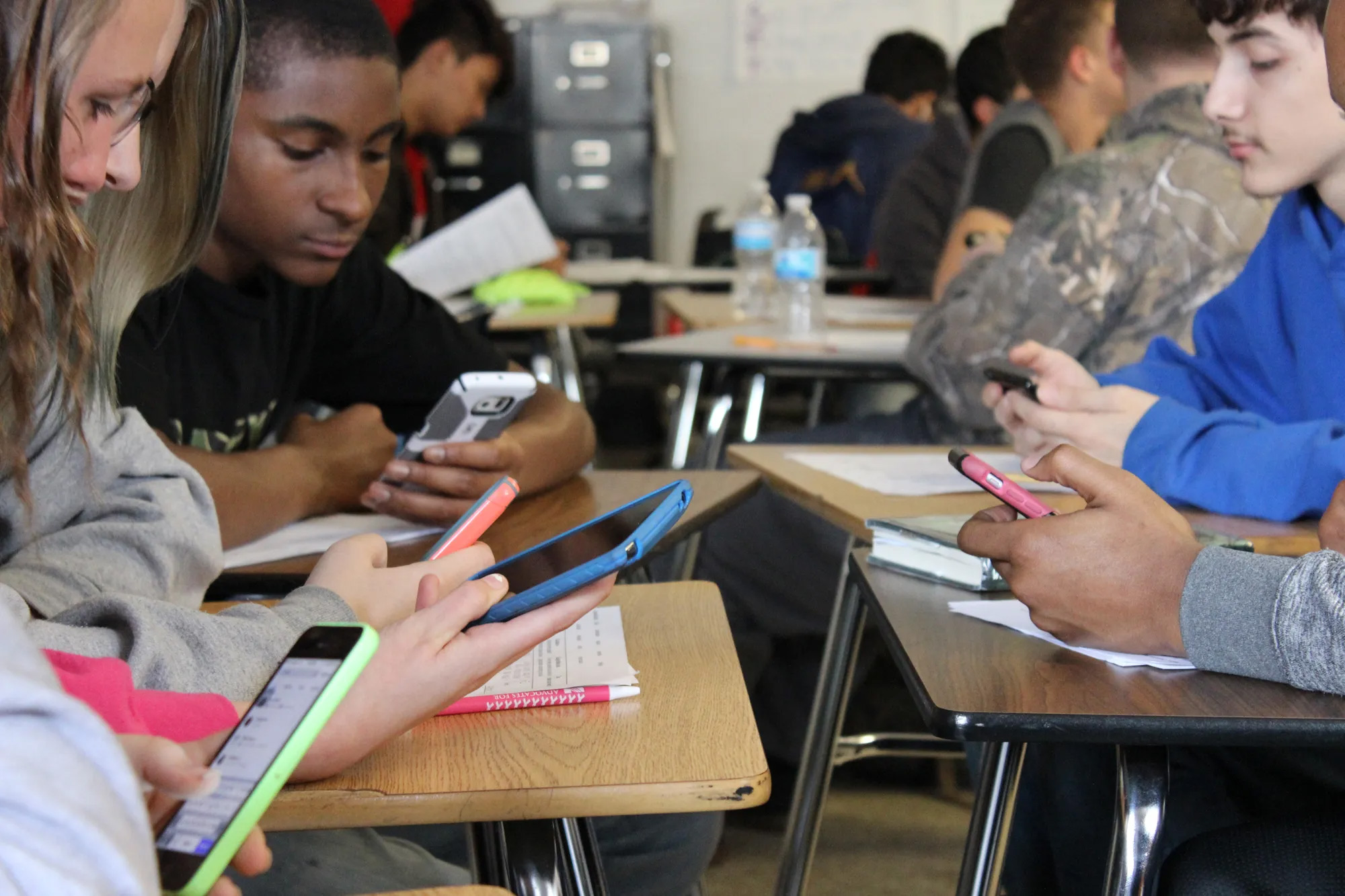
    Thirty states now limit or ban cellphone use in classrooms, and teachers are noticing children paying attention to their lessons again. But it’s not clear whether this policy — unpopular with students and a headache for teachers to enforce — makes an academic difference. 

    If student achievement goes up after a cellphone ban, it’s tough to know if the ban was the reason. Some other change in math or reading instruction might have caused the improvement. Or maybe the state assessment became easier to pass. Imagine if politicians required all students to wear striped shirts and test scores rose. Few would really think that stripes made kids smarter.

    Two researchers from the University of Rochester and RAND, a nonprofit research organization, figured out a clever way to tackle this question by taking advantage of cellphone activity data in one large school district in Florida, which in 2023 became the first state to institute school cellphone restrictions. The researchers compared schools that had high cellphone activity before the ban with those that had low cellphone usage to see if the ban made a bigger difference for schools that had high usage. 

    Indeed, it did. 

    Related: Our free weekly newsletter alerts you to what research says about schools and classrooms.

    Student test scores rose a bit more in high cellphone usage schools two years after the ban compared with schools that had lower cellphone usage to start. Students were also attending school more regularly. 

    The policy also came with a troubling side effect. The cellphone bans led to a significant increase in student suspensions in the first year, especially among Black students. But disciplinary actions declined during the second year. 

    “Cellphone bans are not a silver bullet,” said David Figlio, an economist at the University of Rochester and one of the study’s co-authors. “But they seem to be helping kids. They’re attending school more, and they’re performing a bit better on tests.”

    Figlio said he was “worried” about the short-term 16 percent increase in suspensions for Black students. What’s unclear from this data analysis is whether Black students were more likely to violate the new cellphone rules, or whether teachers were more likely to single out Black students for punishment. It’s also unclear from these administrative behavior records if students were first given warnings or lighter punishments before they were suspended. 

    The data suggest that students adjusted to the new rules. A year later, student suspensions, including those of Black students, fell back to what they had been before the cellphone ban.

    “What we observe is a rocky start,” Figlio added. “There was a lot of discipline.”

    The study, “The Impact of Cellphone Bans in Schools on Student Outcomes: Evidence from Florida,” is a draft working paper and has not been peer-reviewed. It was slated to be circulated by the National Bureau of Economic Research on Oct. 20 and the authors shared a draft with me in advance. Figlio and his co-author Umut Özek at RAND believe it is the first study to show a causal connection between cellphone bans and learning rather than just a correlation.

    The academic gains from the cellphone ban were small, less than a percentile point, on average. That’s the equivalent of moving from the 50th percentile on math and reading tests (in the middle) to the 51st percentile (still close to the middle), and this small gain did not emerge until the second year for most students. The academic benefits were strongest for middle schoolers, white students, Hispanic students and male students. The academic gains for Black students and female students were not statistically significant.  

    Related: Suspended for…what? 

    I was surprised to learn that there is data on student cellphone use in school. The authors of this study used information from Advan Research Corp., which collects and analyzes data from mobile phones around the world for business purposes, such as figuring out how many people visit a particular retail store. The researchers were able to obtain this data for schools in one Florida school district and estimate how many students were on their cellphones before and after the ban went into effect between the hours of 9 a.m. and 1 p.m.

    The data showed that more than 60 percent of middle schoolers, on average, were on their phones at least once during the school day before the 2023 ban in this particular Florida district, which was not named but described as one of the 10 largest districts in the country. (Five of the nation’s 10 largest school districts are in Florida.) After the ban, that fell in half to 30 percent of middle schoolers in the first year and down to 25 percent in the second year.

    Elementary school students were less likely to be on cellphones to start with and their in-school usage fell from about 25 percent of students before the ban to 15 percent after the ban. More than 45 percent of high schoolers were on their phones before the ban and that fell to about 10 percent afterwards.

    Average daily smartphone visits in schools, by year and grade level

    Average daily smartphone visits during regular school days (relative to teacher workdays without students) between 9am and 1pm (per 100 enrolled students) in the two months before and then after the 2023 ban took effect in one large urban Florida school district. Source: Figlio and Özek, October 2025 draft paper, figure 2C, p. 23.

    Florida did not enact a complete cellphone ban in 2023, but imposed severe restrictions. Those restrictions were tightened in 2025 and that additional tightening was not studied in this paper.

    Anti-cellphone policies have become increasingly popular since the pandemic, largely based on our collective adult gut hunches that kids are not learning well when they are consumed by TikTok and SnapChat. 

    This is perhaps a rare case in public policy, Figlio said, where the “data back up the hunches.” 

    Contact staff writer Jill Barshay at 212-678-3595, jillbarshay.35 on Signal, or [email protected].

    This story about cellphone bans was produced by The Hechinger Report, a nonprofit, independent news organization focused on inequality and innovation in education. Sign up for Proof Points and other Hechinger newsletters.

    The Hechinger Report provides in-depth, fact-based, unbiased reporting on education that is free to all readers. But that doesn’t mean it’s free to produce. Our work keeps educators and the public informed about pressing issues at schools and on campuses throughout the country. We tell the whole story, even when the details are inconvenient. Help us keep doing that.

    Join us today.

    Source link

  • Next gen learning spaces: UDL in action

    Next gen learning spaces: UDL in action

    Key points:

    By embracing Universal Design for Learning (UDL) principles in purchasing decisions, school leaders can create learning spaces that not only accommodate students with disabilities but enhance the educational experience for all learners while delivering exceptional returns on investment (ROI).

    Strangely enough, the concept of UDL all started with curb cuts. Disability activists in the 1960s were advocating for adding curb cuts at intersections so that users of wheelchairs could cross streets independently. Once curb cuts became commonplace, there was a surprising secondary effect: Curb cuts did not just benefit the lives of those in wheelchairs, they benefited parents with strollers, kids on bikes, older adults using canes, delivery workers with carts, and travelers using rolling suitcases. What had been designed for one specific group ended up accidentally benefiting many others.

    UDL is founded on this idea of the “curb-cut effect.” UDL focuses on designing classrooms and schools to provide multiple ways for students to learn. While the original focus was making the curriculum accessible to multiple types of learners, UDL also informs the physical design of classrooms and schools. Procurement professionals are focusing on furniture and technology purchases that provide flexible, accessible, and supportive environments so that all learners can benefit. Today entire conferences, such as EDspaces, focus on classroom and school design to improve learning outcomes.

    There is now a solid research base indicating that the design of learning spaces is a critical factor in educational success: Learning space design changes can significantly influence student engagement, well-being, and academic achievement. While we focus on obvious benefits for specific types of learners, we often find unexpected ways that all students benefit. Adjustable desks designed for wheelchair users can improve focus and reduce fatigue in many students, especially those with ADHD. Providing captions on videos, first made available for deaf students, benefit ELL and other students struggling to learn to read.

    Applying UDL to school purchasing decisions

    UDL represents a paradigm shift from retrofitting solutions for individual students to proactively designing inclusive environments from the ground up. Strategic purchasing focuses on choosing furniture and tech tools that provide multiple means of engagement that can motivate and support all types of learners.

    Furniture that works for everyone

    Modern classroom furniture has evolved far beyond the traditional one-size-fits-all model. Flexible seating options such as stability balls, wobble cushions, and standing desks can transform classroom dynamics. While these options support students with ADHD or sensory processing needs, they also provide choice and movement opportunities that enhance engagement for neurotypical students. Research consistently shows that physical comfort directly correlates with cognitive performance and attention span.

    Modular furniture systems offer exceptional value by adapting to changing needs throughout the school year. Tables and desks that can be easily reconfigured support collaborative learning, individual work, and various teaching methodologies. Storage solutions with clear labeling systems and accessible heights benefit students with visual impairments and executive functioning challenges while helping all students maintain organization and independence.

    Technology that opens doors for all learners

    Assistive technology has evolved from specialized, expensive solutions to mainstream tools that benefit diverse learners. Screen readers like NVDA and JAWS remain essential for students with visual impairments, but their availability also supports students with dyslexia who benefit from auditory reinforcement of text. When procuring software licenses, prioritize platforms with built-in accessibility features rather than purchasing separate assistive tools.

    Voice-to-text technology exemplifies the UDL principle perfectly. While crucial for students with fine motor challenges or dysgraphia, these tools also benefit students who process information verbally, ELL learners practicing pronunciation, and any student working through complex ideas more efficiently through speech than typing.

    Adaptive keyboards and alternative input devices address various physical needs while offering all students options for comfortable, efficient interaction with technology. Consider keyboards with larger keys, customizable layouts, or touchscreen interfaces that can serve multiple purposes across your student population.

    Interactive displays and tablets with built-in accessibility features provide multiple means of engagement and expression. Touch interfaces support students with motor difficulties while offering kinesthetic learning opportunities for all students. When evaluating these technologies, prioritize devices with robust accessibility settings including font size adjustment, color contrast options, and alternative navigation methods.

    Maximizing your procurement impact

    Strategic procurement for UDL requires thinking beyond individual products to consider system-wide compatibility and scalability. Prioritize vendors who demonstrate commitment to accessibility standards and provide comprehensive training on using accessibility features. The most advanced assistive technology becomes worthless without proper implementation and support.

    Conduct needs assessments that go beyond compliance requirements to understand your learning community’s diverse needs. Engage with special education teams, occupational therapists, and technology specialists during the procurement process. Their insights can prevent costly mistakes and identify opportunities for solutions that serve multiple populations.

    Consider total cost of ownership when evaluating options. Adjustable-height desks may cost more initially but can eliminate the need for specialized furniture for individual students. Similarly, mainstream technology with robust accessibility features often costs less than specialized assistive devices while serving broader populations.

    Pilot programs prove invaluable for testing solutions before large-scale implementation. Start with small purchases to evaluate effectiveness, durability, and user satisfaction across diverse learners. Document outcomes to build compelling cases for broader adoption.

    The business case for UDL

    Procurement decisions guided by UDL principles deliver measurable returns on investment. Reduced need for individualized accommodations decreases administrative overhead while improving response times for student needs. Universal solutions eliminate the stigma associated with specialized equipment, promoting inclusive classroom cultures that benefit all learners.

    Latest posts by eSchool Media Contributors (see all)

    Source link

  • The case for collaborative purchasing of digital assessment technology

    The case for collaborative purchasing of digital assessment technology

    Higher education in the UK has a solid background in leveraging scale in purchasing digital content and licenses through Jisc. But when it comes to purchasing specific technology platforms higher education institutions have tended to go their own way, using distinct specifications tailored to their specific needs.

    There are some benefits to this individualistic approach, otherwise it would not have become the status quo. But as the Universities UK taskforce on transformation and efficiency proclaims a “new era of collaboration” some of the long standing assumptions about what can work in a sharing economy are being dusted off and held up to the light to see if they still hold. Efficiency – including finding ways to realise new forms of value but with less overall resource input – is no longer a nice to have; it’s essential for the sector to remain sustainable.

    At Jisc, licensing manager Hannah Lawrence is thinking about the ways that the sector’s digital services agency can build on existing approaches to collective procurement towards a more systematic collaboration, specifically, in her case, exploring ideas around a collaborative route to procurement for technology that supports assessment and feedback. Digital assessment is a compelling area for possible collaboration, partly because the operational challenges are fairly consistent between institutions – such as exam security, scalability, and accessibility – but also because of the shared pedagogical challenge of designing robust assessments that take account of the opportunities and risks of generative AI technology.

    The potential value in collaboration isn’t just in cost savings – it’s also about working together to test and pilot approaches, and share insight and good practice. “Collaboration works best when it’s built on trust, not just transaction,” says Hannah. “We’re aiming to be transparent and open, respecting the diversity of the sector, and making collaboration sustainable by demonstrating real outcomes and upholding data handling standards and ethics.” Hannah predicts that it may take several years to develop an initial iteration of joint procurement mechanism, in collaboration with a selection of vendors, recognising that the approach could evolve over years to offer “best on class” products at a competitive price to institutions who participate in collective procurement approaches.

    Reviewing the SIKTuation

    One way of learning how to build this new collaborative approach is to look to international examples. In Norway, SIKT is the higher education sector’s shared services agency. SIKT started with developing a national student information system, and has subsequently rolled out, among other initiatives, national scientific and diploma archives, and a national higher education application system – and a national tender for digital assessment.

    In its first iteration, when the technology for digital assessment was still evolving, three different vendors were appointed, but in the most recent version, SIKT appointed one single vendor – UNIwise – as the preferred supplier for digital assessment for all of Norwegian higher education. Universities in Norway are not required to follow the SIKT framework, of course, but there are significant advantages to doing so.

    “Through collaboration we create a powerful lobby,” says Christian Moen Fjære, service manager at SIKT. “By procuring for 30,000 staff and 300,000 students we can have a stronger voice and influence with vendors on the product development roadmap – much more so than any individual university. We can also be collectively more effective in sharing insight across the network, like sample exam questions, for example.” SIKT does not hold views about how students should be taught, but as pedagogy and technology become increasingly intertwined, SIKT’s discussions with vendors are typically informed by pedagogical developments. Christian explains, “You need to know what you want pedagogically to create the specification for the technical solution – you need to think what is best for teaching and assessment and then we can think how to change software to reflect that.”

    For vendors, it’s obviously great to be able to sell your product at scale in this way but there’s more to it than that – serving a critical mass of buyers gives vendors the confidence to invest in developing their product, knowing it will meet the needs of their customers. Products evolve in response to long-term sector need, rather than short-term sales goals.

    SIKT can also flex its muscles in negotiating favourable terms with vendors, and use its expertise and experience to avoid pitfalls in negotiating contracts. A particularly pertinent example is on data sharing, both securing assurances of ethical and anonymous sharing of assessment data, and clarity about ultimate ownership of the data. Participants in the network can benefit from a shared data pool, but all need to be confident both that the data will be handled appropriately and that ultimately it belongs to them, not the vendor. “We have baked into the latest requirements the ability to claw back data – we didn’t have this before, stupid, right?” says Christian. “But you learn as the needs arise.”

    Difference and competition

    In the UK context, the sector needs reassurance that diversity will be accommodated – there’s a wariness of anything that looks like it might be a one-size-fits-all model. While the political culture in Norway is undoubtedly more collectivist than in the UK, Norwegian higher education institutions have distinct missions, and they still compete for prestige and to recruit the best students and staff.

    SIKT acknowledges these differences through a detailed consultation process in the creation of national tenders – a “pre-project” on the list of requirements for any technology platform, followed by formal consultation on the final list, overseen by a steering group with diverse sector representation. But at the end of the day to realise the value of joining up, there does need to be some preparedness to compromise, or to put it another way, to find and build on areas of similarity rather than over-refining on what can often be minor differences. Having a coordinating body like SIKT convene the project helps to navigate these issues. And, of course, some institutions simply decide to go another way, and pay more for a more tailored product. There is nothing stopping them from doing so.

    As far as SIKT is concerned, competition between institutions is best considered in the academic realm, in subjects and provision, as that is what benefits the student. For operations, collaboration is more likely to deliver the best results for both institutions and students. But SIKT remains agnostic about whether specific institutions have a different view. “We don’t at SIKT decide what counts as competitive or not,” says Christian. “Universities will decide for themselves whether they want to get involved in particular frameworks based on whether they see a competitive advantage or some other advantage from doing so.”

    The medium term horizon for the UK sector, based on current discussions, is a much more networked approach to the purchase and utilisation of technology to support learning and teaching – though it’s worth noting that there is nothing stopping consortia of institutions getting together to negotiate a shared set of requirements with a particular vendor pending the development of national frameworks. There’s no reason to think the learning curve even needs to be especially steep – while some of the technical elements could require a bit of thinking through, the sector has a longstanding commitment to sharing and collaboration on high quality teaching and learning, and to some extent what’s being talked about right now is mostly about joining the dots between one domain and another.

    This article is published in association with UNIwise. For further information about UNIwise and the opportunity to collaborate contact Tim Peers, Head of Partnerships.

    Source link

  • Learning to debate is an important facet of education, but too often public school students are left out 

    Learning to debate is an important facet of education, but too often public school students are left out 

    Ever since I first stepped onto the debate stage, I have been passionate about speech and debate. For the last three of my high school years, I have competed and placed nationally at major tournaments in Dallas, Los Angeles, Chicago, Atlanta and Las Vegas, among many others. Debate demands an incredible amount of research, preparation and practice, but those aren’t the biggest challenges for me.  

    I attend a public high school in California that lacks a formal debate program or coach, which has forced me to choose between quitting an activity I love and competing independently without any school support.  

    I chose the latter. And that means I prepare alone in the dark, navigate complex registration processes and, most importantly, pay hefty fees. 

    As many of us know, debate is an effective way to strengthen students’ comprehension, critical thinking and presentation skills. Debate allows students to explore ideas in a myriad of topics, from biotechnology to nuclear proliferation​​​​, and find their unique passions and interests. 

    Yet for many students, a lack of school support is a major entry barrier. It has turned debate into another private-school-dominated space, where private-school students receive access to higher quality research and on-the-spot coaching on argument structure and prose, like a football coach adjusting strategy on the sidelines. Additionally, most prestigious tournaments in the U.S. prohibit non-school-affiliated debaters like me from competing altogether.  

    Related: A lot goes on in classrooms from kindergarten to high school. Keep up with our free weekly newsletter on K-12 education.  

    These circumstances de facto prevent lower-income debaters from becoming successful in the activity. And that is why I believe that all schools should incorporate speech and debate classes into their core curriculums. Existing history and English teachers could act as debate coaches, as they do in many private schools. School districts could even combine programs across high schools to save resources while expanding access (Mountain View High School and Los Altos High School in California have pursued this strategy).  

    Over the past two decades, the debate community has engaged in efforts to democratize access to speech and debate through the creation of new formats (for example, public forum), local debate associations and urban debate leagues, among others.  

    However, many of these initiatives haven’t been successful. These newer formats, initially intended to lessen the research burden on debaters, have shifted toward emphasizing strict evidence standards and complex debate jargon. This shift has made debate less, not more, accessible, and led to more students from private schools — who were quickly able to ​​​​out-prepare those from public​​ schools — entering and dominating the competition.  

    Local debate associations and​​​​ competitive leagues for neighboring schools have provided more students with opportunities to participate. Still, debate via these organizations is limited, as they don’t provide direct coaching to member schools or rigorous opportunities for students, and prohibit certain students and programs from competing.  

    Similarly, urban debate leagues (for example, the Los Angeles Metropolitan ​​​​Debate League) have been incredibly successful in expanding debate access to lower-income and minority students; however, these programs are concentrated in major metropolitan cities, face opposition from some school districts and rely on donor funding, which can be uncertain.  

    In my debate rounds, I have analyzed pressing social problems such as global warming and economic inequality through a policymaking lens; in some rounds I defended increased wealth taxes, and in others I argued against bans on fossil fuels. Without debate, I wouldn’t be so conscious of the issues in my community. Now, as I enter college, I’m looking forward to continuing debate and leveraging my skills to fight for change.  

    Related: High school students find common ground on the debate stage 

    Speaking of college, in the competition for admission to the most selective colleges, extracurricular involvement can be a deciding factor, and debate is an excellent way to stand out, at least for those students with proper support.  

    However, when students from rural and low-income communities lack access to the same opportunities as students from more metropolitan and higher-income communities, we risk exacerbating the educational achievement gap to our collective detriment.  

    In the meantime, debate tournaments should reduce entry barriers for nontraditional debaters and for students from public schools without coaches and extra support.  

    Without these initiatives, too many rural and low-income students will be excluded from an amazing activity, one that is especially important in today’s polarizing and divisive climate.  

    Aayush Gandhi is a student at Dublin High School. He is an avid writer and nationally ranked Lincoln-Douglas debater.  

    Contact the opinion editor at [email protected].  

    This story about debate programs was produced by The Hechinger Report, a nonprofit, independent news organization focused on inequality and innovation in education. Sign up for Hechinger’s weekly newsletter.  

    The Hechinger Report provides in-depth, fact-based, unbiased reporting on education that is free to all readers. But that doesn’t mean it’s free to produce. Our work keeps educators and the public informed about pressing issues at schools and on campuses throughout the country. We tell the whole story, even when the details are inconvenient. Help us keep doing that.

    Join us today.

    Source link

  • Technology ushers in a new era of student transportation

    Technology ushers in a new era of student transportation

    School bus fleets have a deceptively simple mission: To safely transport students to and from their homes, games, field trips, and other events. Achieving that mission is anything but simple, regardless of the size of the school or its vehicle fleet.

    The sheer number of variables a school transportation director must manage is overwhelming. Buses have to be well-maintained and fueled up before hitting the road; drivers must be thoroughly trained and regularly monitored for performance; systems need to be in place to quickly locate buses and the kids on them; and drivers, students, parents, and school administrators need objective tools to help investigate alleged behavioral or safety incidents that take place on board a vehicle.

    Unfortunately, the tools most schools have in place today make achieving all those objectives more challenging, time-consuming, and expensive. For example, most schools lack real-time visibility about the location of buses, often relying on GPS or cell phone and radio calls to drivers. “Right now, most people don’t have any real-time visibility,” said Amber Stanton, senior account executive and team lead focused on the public sector for Samsara, the connected operations technology trusted by organizations across public and private fleets.

    Transportation directors and their staff must also manage a mixture of standalone systems to track buses and ensure student safety. Besides GPS, it is common for schools to have both routing software and cameras to monitor, document, and investigate possible safety incidents. “There’s a chance that some of those systems interact with each other, but it’s not typically a perfect fit,” Stanton said. “There is usually friction.”

    A lack of visibility and simplicity

    That lack of visibility and the need to juggle multiple systems often translates into confusion, frustration, and wasted time and resources. A big reason why: When parents and others can’t confidently pinpoint the location of a bus using an app, they will call the school. “There’s congestion on the phone line because nobody can see where the bus is and they will call to ask,” Stanton said. “It takes time for the transportation to locate the bus and pass that information along – time they could use to do something more valuable, since they have so many other responsibilities.”

    Thoroughly investigating behavioral or safety incidents that take place on a bus is also time-consuming and cumbersome, even if buses are outfitted with cameras. If a student is accused of vaping or bullying, for example, staff must physically pull a DVR (digital video recorder) from a bus, upload footage, and analyze hours of video.

    It doesn’t have to be this way. By adopting Samsara’s telematics and camera solutions, school districts gain a single, connected view of their buses, drivers, and students. The platform links core safety and efficiency systems that schools already use. The result is faster response when incidents occur, less time spent tracking down buses, and a better experience for students, parents, and transportation staff alike.

    Lessons from the road

    With 182,000 students, Gwinnett County Public Schools (GCPS) in Georgia is one of the 10 largest districts in the country. GCPS utilized siloed GPS and camera systems but found that parent complaints and incident investigations took days, sometimes weeks, to resolve.

    GCPS implemented Samsara GPS and AI dash cams across its 2,000 buses. The impact has been dramatic. Investigation times have been sliced in half, from as many as two weeks to just 24 to 48 hours.

    Implementing Samsara also helps address one of the biggest challenges facing transportation directors. “No one can keep drivers right now,” Stanton said. “It’s the number one problem for almost every transportation director I work with.”

    Canyons School District in Utah demonstrates how Samsara can help. With 190 buses serving 30 schools, Canyons had long relied on legacy GPS and camera systems that were unreliable in Utah’s extreme weather. Bus delays, slow video retrieval, and lagging GPS data created frustration for parents, administrators, and drivers.

    Switching to Samsara gave Canyons real-time visibility across its operations and enabled a new approach to safety culture. Dual-facing AI Dash Cams allowed administrators to proactively coach drivers and reduced driver mobile phone usage. Importantly, Samsara enabled Canyons to motivate drivers through recognition and friendly competition, not just discipline. By gamifying safe driving and celebrating strong performance, Canyons improved engagement and retention during a challenging labor market.

    The shift paid off. They improved safety outcomes and driver satisfaction and retention. Which in turn provides relief to the transportation director who oversees drivers and the entire fleet – and who often must drive a route themselves because of staffing shortages. “That person wears 20 different hats. They’re the main point of contact for parents, for students, for drivers, for leadership,” Stanton said. “In the end, transportation directors are looking for relief and more time.”

    Source link