Tag: Teen

  • Teen Girls, Marriage, and Social Inequality

    Teen Girls, Marriage, and Social Inequality

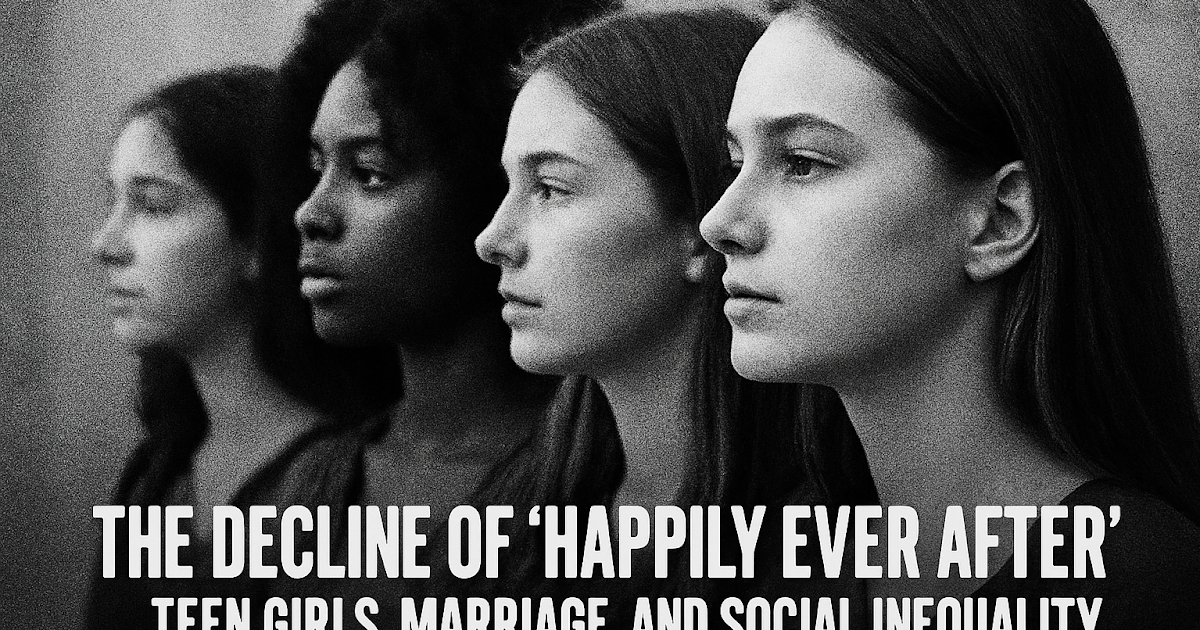
    A profound shift is taking place in the aspirations of American teenagers. In a Pew Research analysis of 2023 University of Michigan survey data, only 61 percent of 12th-grade girls expected to marry someday, down sharply from 83 percent in 1993. Boys, in contrast, reported a stable 74 percent, surpassing girls for the first time. Alongside this, fewer teens anticipated having children or staying married for life. Only 48 percent of 12th-graders said they were “very likely” to want children, and belief in lifelong marriage dropped from 59 percent to 51 percent over three decades.

    These figures are more than statistical curiosities; they reflect structural changes in the lives of young women and reveal how cultural, economic, and social inequality shape personal expectations. Access to education and professional opportunity has expanded dramatically for women, allowing them to envision futures independent of traditional marriage and family structures. Yet these gains exist alongside persistent barriers: economic instability, student debt, and unequal labor markets make long-term commitments like marriage and homeownership fraught and uncertain. For many girls, the choice to delay or reject marriage is not merely personal—it is pragmatic.

    Cultural shifts amplify this trend. For decades, mainstream media promoted the narrative of “happily ever after,” equating personal fulfillment with marriage and motherhood. Today, stories about self-discovery, financial independence, and flexibility dominate the imagination of young women. In this context, marriage is no longer the default marker of adulthood or success; it is one of many possible pathways, often weighed against educational ambitions, career goals, and economic realities.

    This evolution of expectations is deeply intertwined with inequality. Historically, marriage has often reinforced gendered hierarchies, particularly among working-class and minority women, for whom early marriage frequently constrained educational and career opportunities. Delaying marriage, or choosing to forgo it altogether, can represent a form of empowerment—but it also exposes young women to the structural vulnerabilities of a society where social support and economic stability are unevenly distributed. For those without family wealth or safety nets, the decision to prioritize education or autonomy over marriage is often a negotiation with risk rather than pure choice.

    The broader social implications are significant. Declining enthusiasm for marriage may influence fertility patterns, reshape household structures, and challenge institutions built around traditional family models. For policymakers, educators, and social institutions, the question becomes whether systems will adapt to support diverse life paths or continue to privilege outdated models that assume early marriage and childbearing. For young women navigating these choices, the cultural shift represents both liberation and uncertainty, an opportunity to define adulthood on their own terms amid economic and social pressures.

    As these teenagers mature, their choices may redefine what adulthood looks like in the United States. The decline in the “happily ever after” fantasy signals not a rejection of commitment, but a recalibration of priorities under the weight of opportunity, constraint, and inequality. It is a moment that reveals how deeply personal aspirations—love, marriage, family—are shaped by the structures, inequities, and possibilities of the world they inherit.


    Sources:

    Ms. Magazine. “Actually It’s Good That Fewer High Schoolers Want to Get Married.” 2025. https://msmagazine.com/2025/11/20/high-school-girls-marriage

    New York Post. “High school girls are shifting away from marriage and ‘happily ever after,’ expert says.” 2025. https://nypost.com/2025/11/25/media/high-school-girls-are-shifting-away-from-marriage-and-happily-ever-after-expert-says

    The Times. “Jobs, porn and manfluencers: the real reasons girls don’t want to get married.” 2025. https://www.thetimes.com/us/news-today/article/why-dont-girls-plan-to-get-married-f7hr8jgp0


    Source link

  • Inside Schools’ Teen Nicotine Crackdown – The 74

    Inside Schools’ Teen Nicotine Crackdown – The 74

    School (in)Security is our biweekly briefing on the latest school safety news, vetted by Mark KeierleberSubscribe here.

    It was in physical education class when Laila Gutierrez swapped out self-harm for a new vice: Vaping.

    Like students across the country, Gutierrez got dragged into a nicotine-fueled war between vape manufacturers, who used celebrity marketing and fruity flavors to hook kids on e-cigarettes, and educators, who’ve turned to surveillance tools and discipline to crack down on the youngest users. Gutierrez was suspended for a week after she was nabbed vaping in a crowded school bathroom during her lunch hour. 

    In my latest investigative deep dive, co-published this week with WIRED, I reveal how school districts across the country have spent millions to install vape-detecting sensors in school bathrooms — once considered a digital surveillance no-go. The devices prioritize punishment to combat student nicotine addiction.

    Eamonn Fitzmaurice/The 74

    My analysis of public records obtained from Minneapolis Public Schools reveals the sensors inundated administrators with alerts — about one per minute during a typical school day, on average. Their presence brought a spike in school discipline, records show, with suspensions dwarfing treatment services and younger middle school students facing the harshest consequences. 

    The sheer volume of alerts, more than 45,000 over seven months across four schools, raises questions about whether they’re an effective way to get kids to give up their vape pens. And some students voiced privacy concerns about the sensors, the most high tech of which can now reportedly detect keywords, how many young people are in the bathroom at one time and for how long. 

    “Surveillance is only a diagnosis,” Texas student activist Cameron Samuels told me. “It only recognizes symptoms of a failed system.”  


    In the news

    Charlotte, North Carolina, school officials reported more than 30,000 students absent on Monday, two days after federal immigration agents arrested 130 people there in their latest sweep. That more recent data point underscores the 81,000 school days missed by more than 100,000 students in California’s Central Valley after immigration raids earlier this year, according to a newly peer reviewed Stanford University study. | The 74

    • Los Angeles schools have lost thousands of immigrant students — from 157,619 in the 2018-19 school year to just 62,000 this year — because of the city’s rising prices and falling birth rates. Now, that trend has intensified after the “chilling effect” of recent federal immigration raids, district officials said. | The 74
    • Student enrollment is dropping in school districts across the country amid President Donald Trump’s immigration crackdown. In Miami, for example, the number of new immigrant students has decreased by more than 10,000 compared to last year. | The Associated Press

    Ten Commandments: Siding with the families of students who argued they infringed on their religious freedom, a federal judge on Tuesday ordered some Texas public school districts to remove Ten Commandment displays from their classroom walls by next month. | The New York Times

    • 28 Bills, Ten Commandments and 1 Source: A Christian Right ‘Bill Mill’. | The 74

    Online gaming platform Roblox announced it will block children from interacting with teens and adults in the wake of lawsuits alleging the platform has been used by predators to groom young people. | The Guardian

    Furry and freaky: “Kumma,” a Chinese-made teddy bear with artificial intelligence capabilities and marketed toward children, is being pulled from shelves after researchers found it could teach its users how to light matches and about sexual kinks. | Futurism

    A teenage girl from New York reported to a police officer at school that her adoptive father had been raping her at home for years. The officer, who didn’t believe her, bungled the case — and she was abused again. | New York Focus

    ‘Brazen cruelty’: A federal judge has ordered the release of a 16-year-old Bronx high schooler who has spent nearly a month in federal immigration custody despite having a protective status reserved for immigrant youth who were abused, neglected or abandoned by a parent. | amNewYork

    Sign-up for the School (in)Security newsletter.

    Get the most critical news and information about students’ rights, safety and well-being delivered straight to your inbox.

    Civil rights groups have decried proposed federal changes to the Education Department’s data collection on racial disparities in special education that could make it more difficult to identify and address service gaps. | K-12 Dive

    ‘Dead-naming’ enforced: A Texas law now requires school employees to use names and pronouns that conform to students’ sex at birth. Several transgender students whose schools are complying say it has transformed school from a place of support to one that rejects who they are. | The Texas Tribune.


    ICYMI @The74

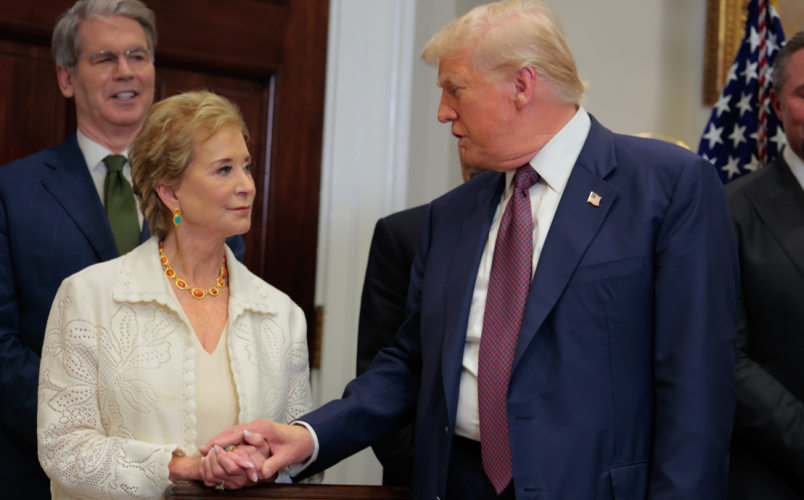
    Education Secretary Linda McMahon has signed agreements with other agencies to take over major K-12 and higher education programs in keeping with President Donald Trump’s effort to shut down the Department of Education. (Anna Moneymaker/Getty Images)

    Emotional Support

    “Let’s circle back in 2026.”

    -Taittinger, already


    Did you use this article in your work?

    We’d love to hear how The 74’s reporting is helping educators, researchers, and policymakers. Tell us how

    Source link