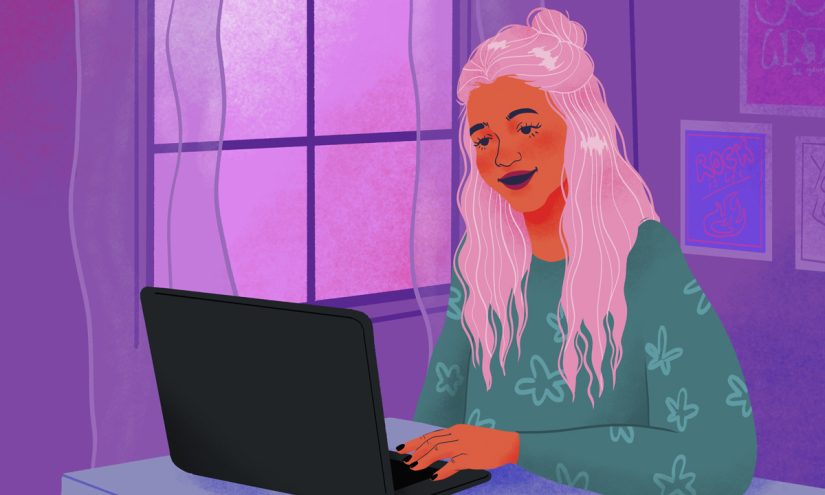
New research has found that rural LGBTQ+ teens experience significant challenges in their communities and turn to the internet for support.
The research from Hopelab and the Born This Way Foundation looked at what more than 1,200 LGBTQ+ teens faced and compared the experiences of those in rural communities with those of teens in suburban and urban communities. The research found that rural teens are more likely to give and receive support through their online communities and friends than via their in-person relationships.
“The rural young people we’re seeing were reporting having a lot less support in their homes, in their communities, and their schools,” Mike Parent, a principal researcher at Hopelab, said in an interview with the Daily Yonder. “They weren’t doing too well in terms of feeling supported in the places they were living, though they were feeling supported online.”
However, the research found that rural LGBTQ+ teens had the same sense of pride in who they were as suburban and urban teens.
“The parallel, interesting finding was that we didn’t see differences in their internal sense of pride, which you might kind of expect if they feel all less supported,” he said. “What was surprising, in a very good way, was that indication of resilience or being able to feel a strong sense of their internal selves despite this kind of harsh environment they might be in.”
Researchers recruited young people between the ages of 15 and 24 who identified as LGBTQ+ through targeted ads on social media. After surveying the respondents during August and September of last year, the researchers also followed up some of the surveys with interviews, Parent said.
According to the study, rural teens were more likely than their urban and suburban counterparts to find support online. Of the rural respondents, 56% of rural young people reported receiving support from others online several times a month compared to 51% of urban and suburban respondents, and 76% reported giving support online, compared to 70% of urban and suburban respondents.
Conversely, only 28% of rural respondents reported feeling supported by their schools, compared to 49% of urban and suburban respondents, the study found, and 13% of rural respondents felt supported by their communities, compared to 35% of urban and suburban respondents.
Rural LGBTQ+ young people are significantly more likely to suffer mental health issues because of the lack of support where they live, researchers said. Rural LGBTQ+ young people were more likely to meet the threshold for depression (57% compared to 45%), and more likely to report less flourishing than their suburban/urban counterparts (43% to 52%).
The study found that those LGBTQ+ young people who received support from those they lived with, regardless of where they live, are more likely to report flourishing (50% compared to 35%) and less likely to meet the threshold for depression (52% compared to 63%).
One respondent said the impact of lack of support impacted every aspect of their lives.
“Not being able to be who you truly are around the people that you love most or the communities that you’re in is going to make somebody depressed or give them mental issues,” they said in survey interviews, according to Hopelab. “Because if you can’t be who you are around the people that you love most and people who surround you, you’re not gonna be able to feel the best about your well-being.”
Respondents said connecting with those online communities saved their lives.
“Throughout my entire life, I have been bullied relentlessly. However, when I’m online, I find that it is easier to make friends… I met my best friend through role play [games],” one teen told researchers. “Without it, I wouldn’t be here today. So, in the long run, it’s the friendships I’ve made online that have kept me alive all these years.”
Having support in rural areas, especially, can provide rural LGBTQ+ teens with a feeling of belonging, researchers said.
“Our findings highlight the urgent need for safe, affirming in-person spaces and the importance of including young people in shaping the solutions,” Claudia-Santi F. Fernandes, vice president of research and evaluation at Born This Way Foundation, said in a statement. “If we want to improve outcomes, especially for LGBTQ+ young people in rural communities, their voices–and scientific evidence–must guide the work.”
Parent said the survey respondents stressed the importance of having safe spaces for LGBTQ+ young people to gather in their own communities.
“I think most of the participants recognize that you can’t do a lot to change your family if they’re not supportive,” he said. “What they were saying was that finding ways for schools to be supportive and for communities to be supportive in terms of physical spaces (that allowed them) to express themselves safely (and) having places where they can gather and feel safe, uh, were really important to them.”
Hopelab seeks to address mental health in young people through evidence-based innovation, according to its organizers. The Born This Way Foundation was co-founded by Lady Gaga and her mother, West Virginia native Cynthia Bisset Germanotta.
The organization is focused on ending bullying and building up communities, while using research, programming, grants, and partnerships to engage young people and connect them to mental health resources, according to the foundation’s website.
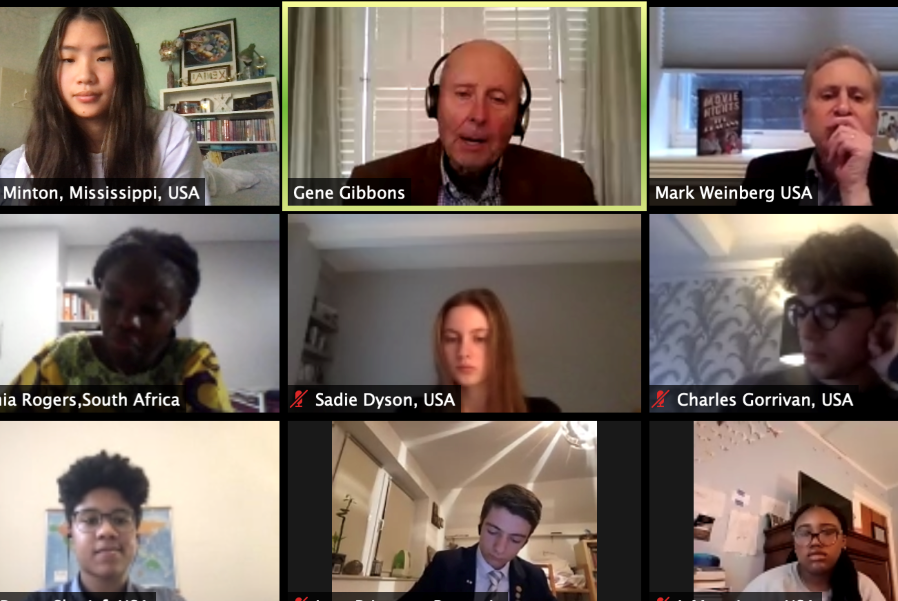
Back in 2019, students at La Jolla Country Day School in California interviewed a citizen of Beirut who had spent years imprisoned in the Guantanamo Bay Detention Center in Cuba, through a live zoom webinar arranged by News Decoder.
In 2022, News Decoder brought war correspondent Bernd Debusmann into a classroom, through a live feed to the Tatnall School in the U.S. state of Delaware where students were able to ask him what it was like getting shot in the back while covering Beirut.
My memory of high school is the challenge I had keeping my eyes open and my head vertical. I can describe falling in love with a metallic blue Mercedes in the parking lot below the window in my trigonometry class but I can’t tell you what a cotangent is.
The students in math and history and language classes today will inherit not just the world we live in but the power to shape it. And the years they spend in school are supposed to prepare them for that awesome responsibility.
But can we keep them awake and aware after they’ve stayed up half the night binging Apple TV or playing PUBG, fueled by orange Fanta and Hot Cheetos?
Feeding curiosity
It is News Decoder’s deep belief that most students are curious and want to learn but that they need to connect to the material they are supposed to study.
For 10 years we’ve helped teachers and schools engage teens through experiential learning and by connecting them with people who have been eyewitnesses to world events. At News Decoder, we bring the world into the classroom and take students out into the world around them.
We do this through storytelling. We don’t tell them stories, we have them tell stories to us and the world and interview people who have stories to tell. We show them the power of telling other people’s stories through journalism and in the process exploring other people’s perspectives and learning about their experiences.
Two ways we do this is through cross border webinars and through our signature Pitch, Report, Draft and Revise process that we call PRDR. In cross border webinars we put students from different countries and across different time zones together in live video sessions to share problems in their communities and compare the conclusions they reached after researching the same important topic.
This past year we did that through our monthly “Decoder Dialogues.” Students from countries including Colombia, India, Belgium, France, Rwanda and the United States shared their research and views about topics as important as the role of the press in journalism, what good and bad leadership looks like, and where responsibility for climate change lies.
Through the PRDR process, we encourage students to identify a problem in their community, research it, and find and interview an expert — someone who had directly experienced the problem, or someone working to solve it and then see whether and how that same problem exists in other countries and how people in those countries tackle it.
Building human connections across borders
Ultimately, we guide them through the process of turning their findings into engaging stories — articles or podcasts or videos and publishing those stories to the world.
In a world where so many of us spend so much time looking at screens, we want students to realize that knowledge can begin online, but the most powerful information comes from finding and interviewing people who are knowledgeable and that conversation with an interesting person is so much more engaging than words on a screen.
Interviews are transformative. In conducting them, students find themselves at the same level as the people they interview no matter how important that person is. An insightful question asked by a 16-year-old to say, famed U.S. constitutional lawyer Floyd Abrahms, which Lucy Jaffee did back in 2020, commands respect.
“I just loved being able to talk to people and hear their stories,” Jaffee said at the time.
It is that love for human connection in an increasingly robotic world that News Decoder is committed to fostering. We’ve done it for 10 years and we plan to do it for another decade.
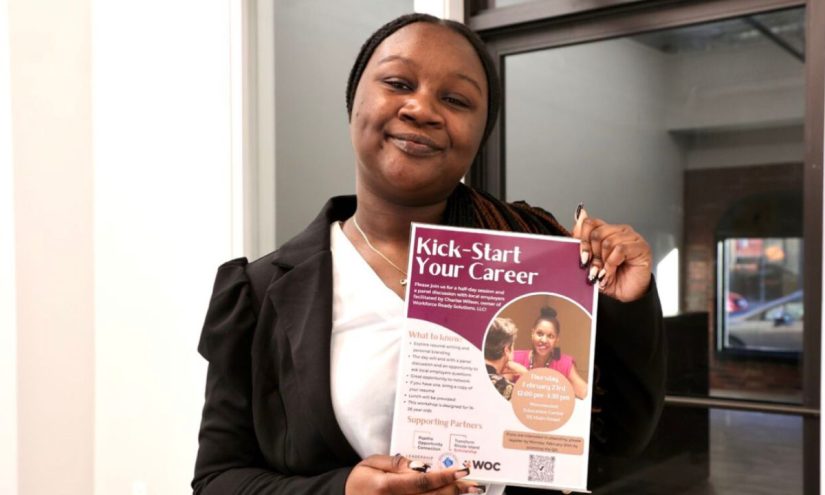
When then-16-year old Mariam Kaba won $1 million through the Transform Rhode Island scholarship three years ago, she saw it as her opportunity to create the change she wanted to see in her nearly 45,000-person community of Woonsocket.
“I don’t see much positive representation from our community all the time,” Kaba said. “I was thinking ‘my scholarship won’t get picked.’ But it did … and I was able to bring something so big to my community, a community that already doesn’t have the most funding in the world.”
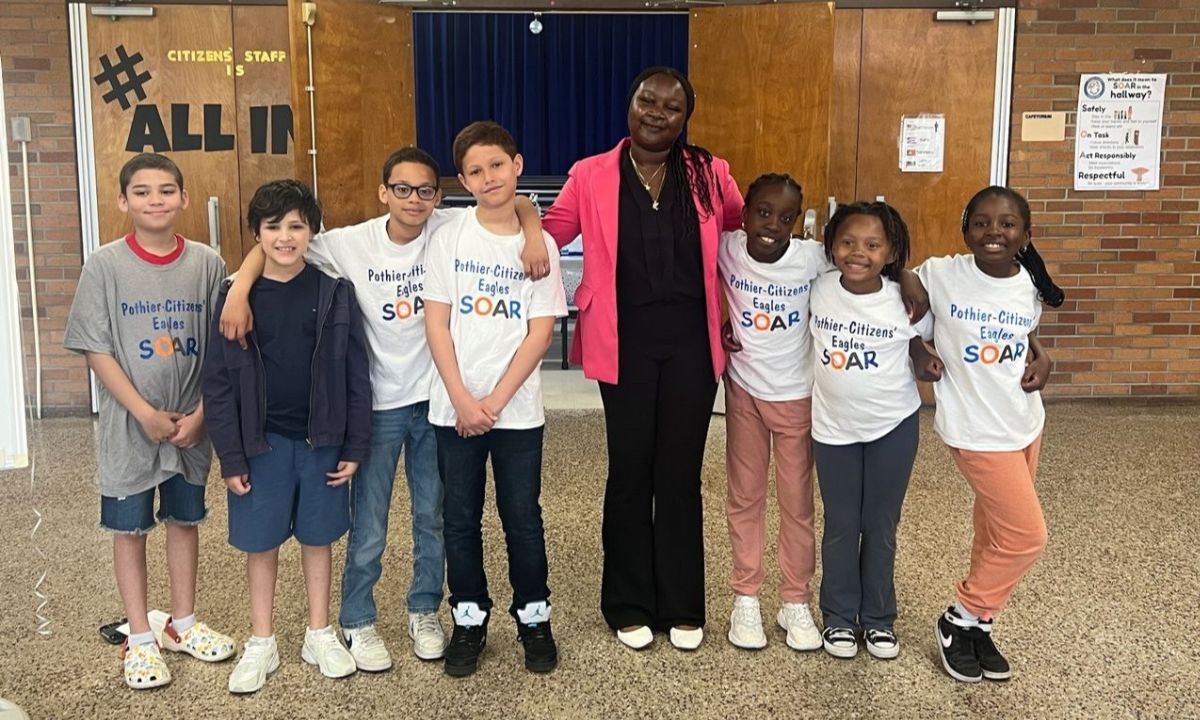
Kaba’s investments resulted in a number of youth-centered spaces and opportunities popping up across the city, including 120 calm corners in elementary classrooms to support students’ sensory functions, new physical education equipment for all Woonsocket elementary schools, job fairs, hundreds of donated books, and field trips to local colleges & universities, among others.
Kaba, who is now a rising sophomore at Northeastern University, describes the experience of winning the scholarship as surreal.
“It didn’t occur to me that I was the last person standing and I won $1 million,” Kaba said. “But when I won, the first thing I thought was, ‘OK, let’s get to work. I’m given this opportunity to help improve my community. What steps can I take? And when does the groundwork start happening?’”
When a teen leads, adults follow
Bringing Kaba’s vision to life meant working alongside adults with experience in project management and community engagement while keeping up with her student life at Woonsocket High School.
“In high school, I managed both classwork and extracurriculars like student council, being a peer mentor and participating in Future Business Leaders of America,” Kaba said. “Balancing those things with my work with the scholarship came easy to me.”
Kaba partnered with community organizations across the state like nonprofit Leadership Rhode Island. This collaboration helped lay out a roadmap for Kaba’s proposal, manage the scholarship funds and coordinate meetings with community leaders.
The winning student also sits on the board of the Papitto Opportunity Connection Foundation for a year. This provides an opportunity for them to build their network and connect with leaders in Rhode Island.
High schoolers can make a difference through spaces and support like this, Kaba said, and also advises teens interested in engaging with their community to “not be afraid to start off small.”
This “small” gesture, Kaba added, can be as simple as gathering a group of friends to organize a community cleanup or starting a school club or Instagram to advocate for something they’re passionate about.
“Starting off small is going to give you those steps to leading these big impactful projects,” Kaba said.
The feedback Kaba received on her community investments, primarily from peers, community members and teachers in Woonsocket, was overwhelmingly positive.
“People told me, ‘I was able to go to this job fair and I got connected to this job,’ or, ‘I’m going to the Harbour Youth Center to get items from the food pantry you created and it’s been helping my family a lot,’” Kaba said. “Community organizations reached out to me to let me know they would love to find a way to work together and do their part to take action too.”
NEW ORLEANS — Kapri Clark used the $50 to help pay for her braces. Lyrik Grant saved half of it, and used the rest for dance classes. Kevin Jackson said he squandered the cash on wings, ride shares for dates and some DJ equipment he later tossed.
For the past five years, Clark, Grant, Jackson and hundreds of high schoolers in New Orleans have shopped — or saved — as part of a project to explore what happens if you give cash directly to young people, no strings attached.
“That was the most helpful thing ever,” said Clark, now a student at the University of Louisiana at Lafayette, who said she could still use that extra cash.
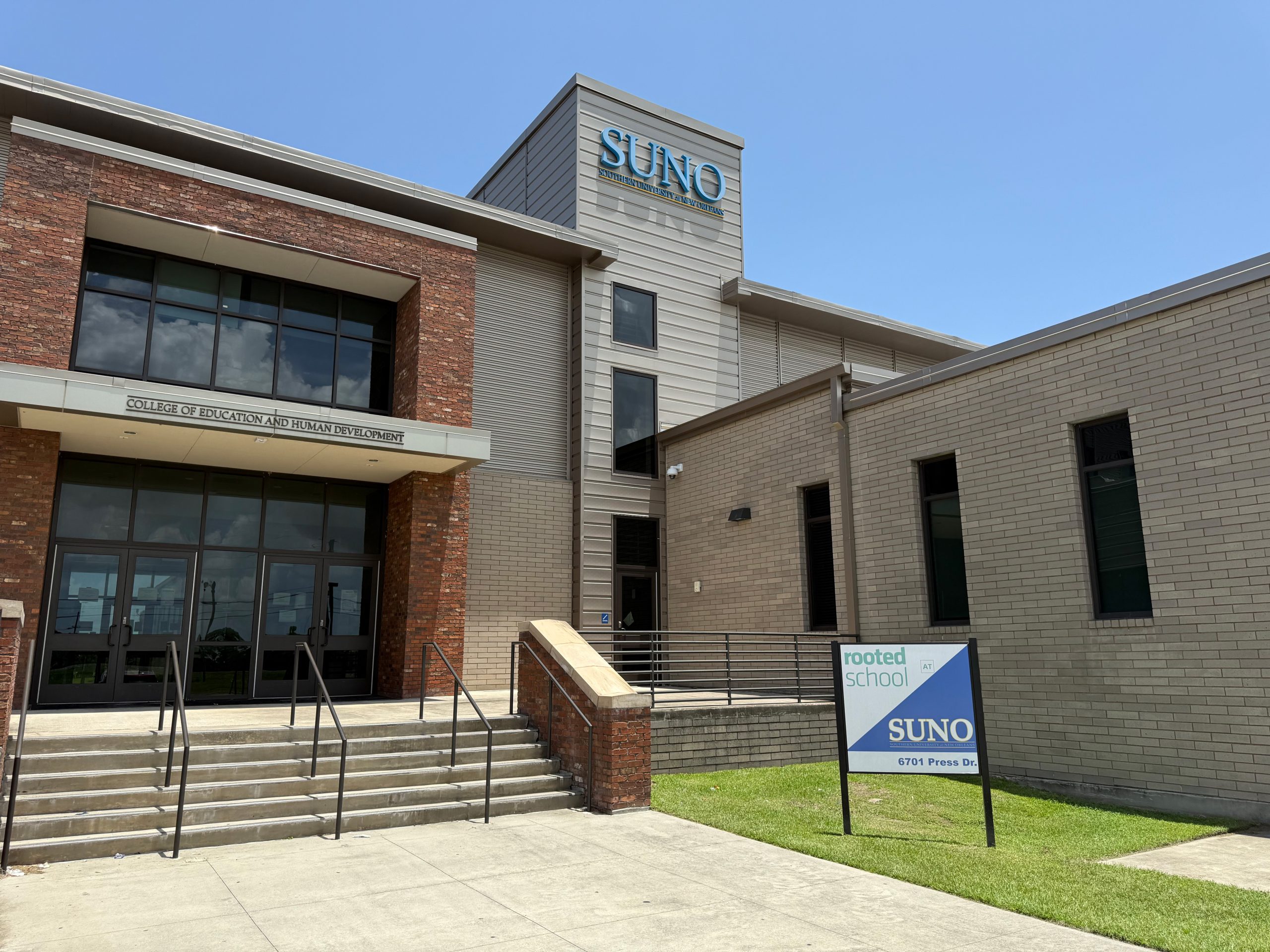
“The $50 study,” as it’s known, began at Rooted School, a local charter school, as an experiment to increase attendance. The study has since grown to eight other high schools in the city, as well as Rooted’s sister campus in Indianapolis, with students randomly selected to receive $50 every week for 40 weeks, or $2,000 total. By comparing their spending and savings habits to a larger control group, researchers wanted to figure out whether the money improved a teen’s financial capability and perception of themselves. They also wanted to know: Could the cash boost their grade-point averages and reading scores?
Now, as the experiment expands to Washington, D.C., and perhaps Texas, a final report of the $50 study suggests a little bit of spending cash can make a difference in young people’s lives.
The report, released Tuesday, shows students who received the cash payments were slightly more likely to attend school than those who didn’t. Academic performance did not differ between the groups. But financially, the extra cash helped students acquire stronger long-term planning skills and familiarity with savings accounts and other financial products. They ended the study, on average, with $300 saved away — a 15 percent savings rate, triple the national average for American adults.
“When young people are given the opportunity to manage money in low-stakes environments, they build the habits that shape long-term financial health,” said Stacia West, an associate professor at the University of Tennessee, Knoxville and co-founder of the Center for Guaranteed Income Research, which partnered with the Rooted School Foundation to run the study. “The short-term habits we’re seeing are laying the foundation for lifelong financial capability.”
Across the United States and the globe, hundreds of communities have tinkered with some form of universal basic income, or UBI, a social welfare program that provides people with regular cash payments to meet their needs. Direct cash transfer programs like the $50 study or the child tax credit for families are similar, but they often provide smaller amounts and target specific populations to boost a person’s income. Many studies have linked UBI to financial stability and better employment and health outcomes.
In the U.S. and Canada, researchers have found links between cash transfer pilots that focus on low-income families and better test scores and graduation rates for their kids. So far, though, few experiments have targeted young people or examined how the programs influence their lives specifically.
Talia Livneh, senior director of programs at the Rooted School in New Orleans, poses for a portrait on the school grounds. Credit: Daniella Zalcman for The Hechinger Report
“There’s a deep, deep distrust that we adults have of young people,” said Jonathan Johnson, CEO of the Rooted School Foundation, which operates the network’s four charter schools. “That distrust is to their detriment.”
In New Orleans, roughly 4 in 5 of Rooted students come from economically disadvantaged families, and during the pandemic, many struggled to prioritize school. Some students skipped class to provide child care for their working parents, or because they needed to work themselves, according to Johnson. With some seed funding from a local education nonprofit, Rooted started a “micropilot” to test whether cash could help students make ends meet and get themselves to school.
The original cohort included 20 students, half of whom received the $50 payment. In that micropilot, those receiving the cash saw their material wellbeing improve, meaning their family could more easily afford rent or utilities, and they gained skills around setting financial goals. Rooted added students from its Indianapolis campus and another high school in New Orleans, G.W. Carver. And for their final report released this week, researchers sifted through the spending and survey data from 170 students who received the cash payments and 210 students who did not.
The two-year report found students in the treatment group attended 1.23 more days of school, and spent close to half their funds on essentials like food and groceries. The report also noted that 70 percent of all students at the participating schools qualify for subsidized meals, suggesting “this spending may reflect efforts to meet immediate nutritional needs.” One 12th grader in a survey mentioned using the money to feed their siblings.
Kapri Clark recalled waiting every Wednesday morning for the $50 deposit to appear in her banking app. And every Wednesday afternoon, during her senior year at Carver High School, she put that money toward her $200 bill for braces she covered out of pocket.
She braided hair to cover the rest, and still books clients when she has time in between her studies to become a nurse at the Lafayette campus. Even in college, Clark can see the need for some supplemental income for herself and her peers.
“I make enough to take care of myself, but I watch every dollar,” said Clark. “There’s a lot of people struggling in life to eat, to live. Think if they got kids.”
Read Irvin, chief of staff for Collegiate Academies in New Orleans, a network of five charter high schools that includes Carver High, said the $2,000 had provided the extra incentive a few students needed to stick it out until graduation. “That’s incredibly impactful for their life trajectories,” she said.
In January 2024, the city of New Orleans invested $1 million to bankroll another extension of the study, as part of an economic mobility initiative that tapped federal Covid relief funding. During the pandemic, a skyrocketing murder rate and spike in overall crime had convinced the city to help more residents, especially young people, find stability.
“Research shows that people who are economically stable are less likely to commit crime,” said Courtney Wong, the city’s deputy director of economic development.
The city funding not only expanded the $50 study to nine high schools, it also set a longer timeline for the research: About 800 seniors who participate will have their data tracked for 18 months after their graduation.
A former high school teacher and administrator, Wong said $50 could have made a difference in the lives of many of her former students.
“This targets young people in that perfect moment,” she said. “They’re in the right spot where even a little amount of help could have big, positive impacts before issues of crime or unemployment or things like that even come up.”
Researchers also found students who received the $50 reported greater agency. They felt more control over their finances and more confidence about making long-term financial decisions. Students, according to the report, aligned their spending to future goals such as college prep classes and getting a driver’s license.
Lyrik Grant, a rising junior at Carver High School, is the second-youngest of six kids with two working parents. She could ask them for help, but the $50 allowed Grant to afford the tights and tops she needed for dance class on her own. The money helped cover a college entrance exam, which she aced, and Grant wants to learn how to drive soon.
“My first thought was: What am I going to do with all this money?” Grant said, adding that the cash helped some of her classmates find financial stability. “Children don’t always want to spend their parent’s money, and some parents don’t always have money to give them.”
Still, for some students, the money wasn’t exactly life-changing. Irvin of Collegiate Academies said many used the cash to “just be teenagers.”
That was true for Kevin Jackson, a rising junior at Rooted School New Orleans.
“It’s cool to get free money,” he said. “I was spending it on the TikTok shop: posters, keyboards, lights — stuff I liked, not stuff I actually needed.”
Despite the studies that show a positive impact from UBI, many Americans appear skeptical of the idea of a federal program that gives unconditional financial support to people. Aditi Vasan, a pediatrician and researcher at PolicyLab at the Children’s Hospital of Philadelphia, said skeptics often worry about recipients using public dollars for drug use or other illicit behavior, even though the data does not support that.
Still, that fear will likely keep any large-scale cash transfer program from being adopted in the United States any time soon, she said.
“That concern exists certainly for cash transfers in general but might be particularly magnified for teens,” Vasan said. “We’ve not seen that play out in the evidence from the quality studies that have been done.”
Next year, in Washington, D.C., the nonprofit Education Forward will fund a pilot of the $50 study with 40 high schoolers. The Rooted school network resumed talks, meanwhile, to take the study to neighboring Texas, after state lawmakers earlier this year failed to pass legislation that threatened to ban local governments from adopting guaranteed income programs.
Talia Livneh, senior director of programs for the Rooted School Foundation, said the politics may need to catch up to the research.
“I don’t think what we’re doing is so radical. I believe this just works,” she said. “Kids don’t lack character. They lack cash,” Livneh added. “They deserve deep, deep trust that students and people know what’s best for them.”
It’s been four years since Vernell Cheneau III received the $50 for 40 weeks while a student at Rooted in New Orleans, and his economic life isn’t easy. He struggled for months to find part-time work in his hometown. But on a recent summer morning, the same day he finally received a job offer, Cheneau recalled what he learned from the study.
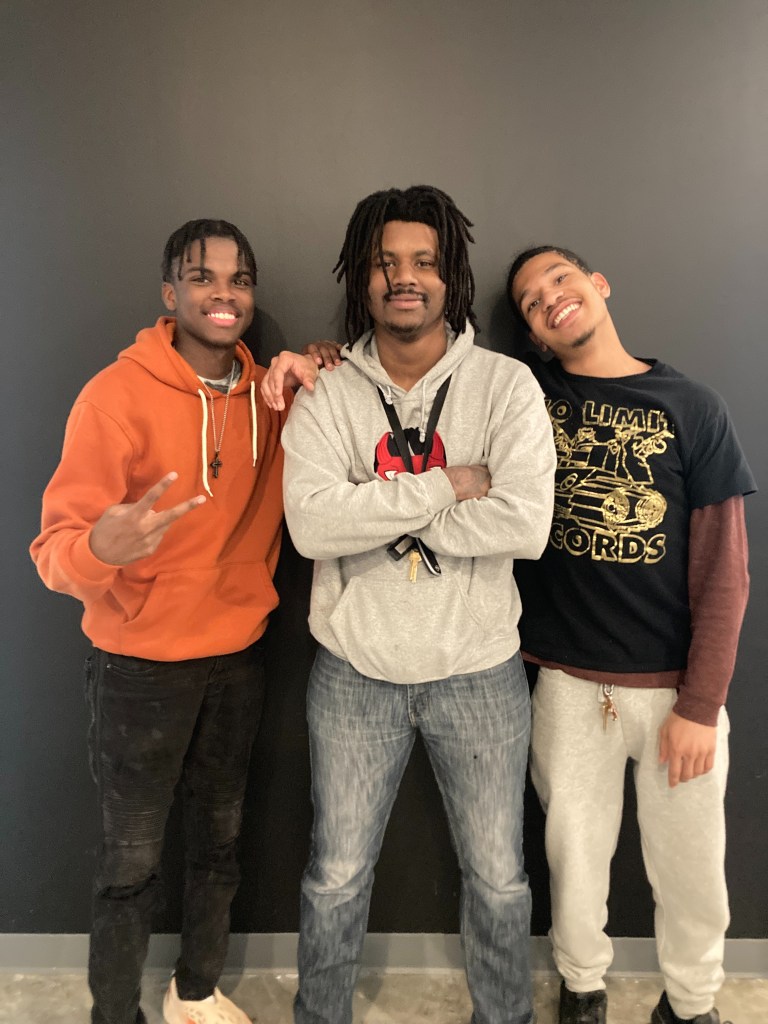
Vernell Cheneau III (left) with two other students who participated in the cash transfer program at Rooted School, in New Orleans. Credit: Courtesy of Rooted School
“You learn that money goes fast, especially if it’s free,” said Cheneau, 22.
As a student, he tried to use the money to build some credit history. Since then, he’s learned the full cost of being an adult in America: health care, fuel and maintenance for his car, getting your hair done before a new job. Cheneau has also spent that time trying to convince friends and family to support UBI.
Most oppose giving “free” money to people, he said. “How much does it cost to feed children? Get to work? We can’t just allow people to drown.”
“Everything costs something,” Cheneau added. “If you’re stuck in a rut, it’s expensive to restart. In this country, it’s expensive to be poor.”
Contact staff writer Neal Morton at 212-678-8247, on Signal at nealmorton.99, or via email at [email protected].
The Hechinger Report provides in-depth, fact-based, unbiased reporting on education that is free to all readers. But that doesn’t mean it’s free to produce. Our work keeps educators and the public informed about pressing issues at schools and on campuses throughout the country. We tell the whole story, even when the details are inconvenient. Help us keep doing that.
This audio is auto-generated. Please let us know if you have feedback.
Dive Brief:
Teens’ postsecondary plans are shifting, with just 45% of students in grades 7-12 seeing a two- or four-year college as their most likely next step in 2024, according to a new survey from national nonprofit American Student Assistance. That’s down from 73% in 2018.
Over the same period, interest in nondegree education pathways like vocational schools, apprenticeships and technical boot camp programs more than tripled, from 12% in 2018 to 38% in 2024, the ASA survey found.
Regardless of their goals after high school, the results show that students mainly view postsecondary education as the path to a good job, the report’s authors wrote.
Dive Insight:
School counselors are aware of the increasing variety of postsecondary options, which comes with an increased responsibility to be knowledgeable about how these pathways work.
At Garner Magnet High School in North Carolina, Stephanie Nelson and her colleagues utilize the “Three E’s” — enrollment, enlistment, employment and entrepreneurship. She said she has senior meetings with students to get an idea of what they’re interested in, which helps guide what their next steps should be.
“We’re helping to offer internships and job shadowing in a variety of fields so that students can kind of weigh their strengths and weaknesses or their likes,” said Nelson, a counselor at the high school.
Steve Schneider of Sheboygan South High School in Wisconsin has been a school counselor for 25 years. He’s noticed that while counselors and students have caught up to the benefits and importance of these alternative pathways, there is still a stigma when students don’t follow the traditional college path after high school.
The ASA survey found that more than 9 in 10 teens have discussed post-high school plans with their parents, but nearly a third of teens said their parents disagreed with their plan to join a nondegree program. According to survey responses, more teens said their parents disagreed with pursuing a non-college path (30%) than skipping a formal postsecondary path altogether (21%).
“I think everyone’s initial response is, ‘Oh, that’s a waste of potential, you should go on to school,’” Schneider said. He added that the conversation with parents about alternative options can be challenging, but it is important to advocate for what the student wants while ensuring both sides understand where the other is coming from.
He said the social stigma can often be systemic, especially if there are only resources being put into college as a postsecondary pathway — such as AP courses and dual credit courses — but not enough career and technical education courses and opportunities to explore whether these other pathways are a good fit.
The survey also found that teens feel more prepared to make plans for the future, with 82% reporting they are confident in future-planning resources, an increase from 59% in 2018.The biggest increase was at the middle school level, which rose 30 percentage points from 2018.
Diana Virgil is a high school counselor at Daleville High School in Alabama, where she works alongside a career coach to prepare students to start thinking about their post-secondary options. She emphasized the importance of starting before students are in 12th grade to make sure that they are working toward these goals throughout their high school career.
“We always start the question off as, ‘What does your lifestyle look like for you? What do you want your lifestyle to look like in the future?’ We try to gauge from there, and then we start going into the career assessments,” she said. “Since we are small, that is the advantage. You get to know more about their background, their upbringing, and why they’re interested. And I think that has really just been a driving force for us.”
ASA’s survey report recommends starting as early as middle school to help teens assess their interests and strengths through hands-on, work-based learning. Schools should also provide data and transparency on workforce outcomes to best equip students to plan for their future, ASA said.
The survey’s sample included 3,057 students in grades 7-12.
Correction: A previous version of this story used the wrong first name for school counselor Steve Schneider. We have updated our story.
When I was 12, my family lived adjacent to a small farm. Though I was not old enough to work, the farm’s owner, Mr. Hall, hired me to man his roadside stand on weekends. Mr. Hall had one rule: no calculators. Technology wasn’t his vibe.
Math was my strong suit in school, but I struggled to tally the sums in my head. I weighed odd amounts of tomatoes, zucchini and peppers on a scale and frantically scribbled calculations on a notepad. When it got busy, customers lined up waiting for me to multiply and add. I’m sure I mischarged them.
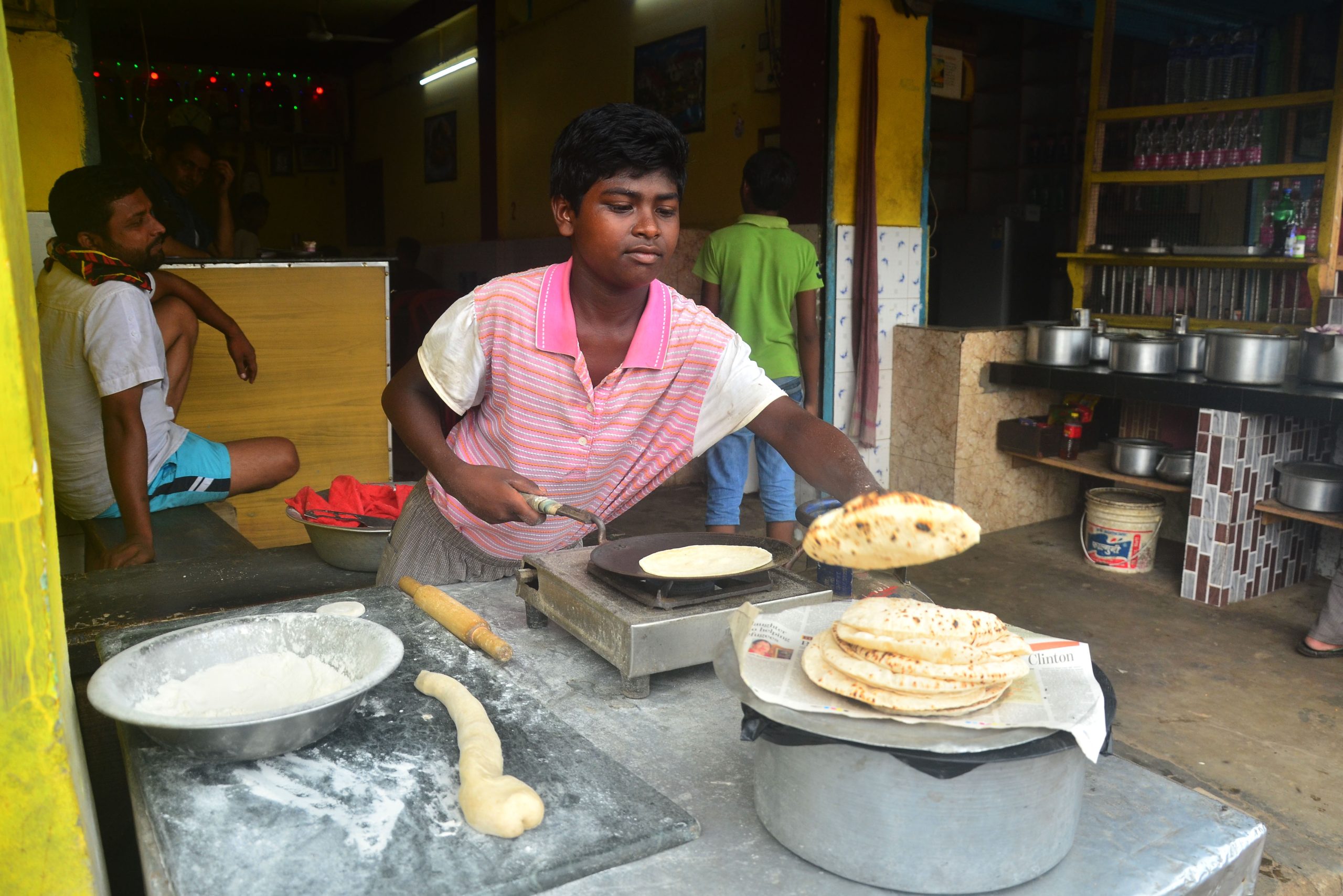
I was thinking about my old job as I read a quirky math study published this month in the journal Nature. Nobel Prize winning economists Abhijit Banerjee and Esther Duflo, a husband and wife research team at MIT, documented how teenage street sellers who were excellent at mental arithmetic weren’t good at rudimentary classroom math. Meanwhile, strong math students their same age couldn’t calculate nearly as well as impoverished street sellers.
“When you spend a lot of time in India, what is striking is that these market kids seem to be able to count very well,” said Duflo, whose primary work in India involves alleviating poverty and raising the educational achievement of poor children. “But they are really not able to go from street math to formal math and vice versa.”
Related: Our free weekly newsletter alerts you to what research says about schools and classrooms.
Ina series of experiments, Duflo’s field staff in India pretended to be ordinary shoppers and purposely bought unusual quantities of items from more than 1,400 child street sellers in Delhi and Kolkata. A purchase might be 800 grams of potatoes at 20 rupees per kilogram and 1.4 kilograms of onions at 15 rupees per kilogram. Most of the child sellers quoted the correct price of 37 rupees and gave the correct change from a 200 rupee note without using a calculator or pencil and paper. The odd quantities were to make sure the children hadn’t simply memorized the price of common purchases. They were actually making calculations.
However, these same children, the majority of whom were 14 or 15 years old, struggled to solve much simpler school math problems, such as basic division. (After making the purchases, the undercover shoppers revealed their identities and asked the sellers to participate in the study and complete a set of abstract math exercises.)
The market sellers had some formal education. Most were attending school part time, or had previously been in school for years.
Duflo doesn’t know how the young street sellers learned to calculate so quickly in their heads. That would take a longer anthropological study to observe them over time. But Duflo was able to glean some of their strategies, such as rounding. For example, instead of multiplying 490 by 20, the street sellers might multiply 500 by 20 and then remove 10 of the 20s, or 200. Schoolchildren, by contrast, are prone to making lengthy pencil and paper calculations using an algorithm for multiplication. They often don’t see a more efficient way to solve a problem.
Lessons from this research on the other side of the world might be relevant here in the United States. Some cognitive psychologists theorize that learning math in a real-world context can help children absorb abstract math and apply it in different situations. However, this Indian study shows that this type of knowledge transfer probably won’t happen automatically or easily for most students. Educators need to figure out how to better leverage the math skills that students already have, Duflo said. Easier said than done, I suspect.
Duflo says her study is not an argument for either applied or abstract math. “It would be a mistake to conclude that we should switch to doing only concrete problems because we also see that kids who are extremely good at concrete problems are unable to solve an abstract problem,” she said. “And in life, at least in school life, you’re going to need both.” Many of the market children ultimately drop out of school altogether.
Back at my neighborhood farmstand, I remember how I magically got the hang of it and rarely needed pencil and paper after a few months. Sadly, the Hall farm is no longer there for the town’s children to practice mental math. It’s now been replaced by a suburban subdivision of fancy houses.
This story about applied math was written by Jill Barshay and produced by The Hechinger Report, a nonprofit, independent news organization focused on inequality and innovation in education. Sign up for Proof Points and other Hechinger newsletters.
The Hechinger Report provides in-depth, fact-based, unbiased reporting on education that is free to all readers. But that doesn’t mean it’s free to produce. Our work keeps educators and the public informed about pressing issues at schools and on campuses throughout the country. We tell the whole story, even when the details are inconvenient. Help us keep doing that.
This year, FIRE launched the Free Speech Dispatch, a regular series covering new and continuing censorship trends and challenges around the world. Our goal is to help readers better understand the global context of free expression. The previousentries covered policing of online speech, assassination attempts on U.S. soil, and more. Want to make sure you don’t miss an update? Sign up for our newsletter.
One step forward, two steps back for Australia
(Mojahid Mottakin / Shutterstock.com)
Communications Minister Michelle Rowland confirmed there was “no pathway to legislate” the government’s controversial plans to require platforms to moderate “misinformation.” In other words, the legislation is effectively dead. The bill, which I covered in a previous Dispatch, defined misinformation as “reasonably verifiable as false, misleading, or deceptive” and “likely to cause or contribute to serious harm.” There are many free speech concerns that arise when the government grants itself the power to require moderation of speech it deems untrue.
But while Australia’s troubling misinformation legislation failed, another worrying bill sailed forward. Late last month, Australia passed the Social Media Minimum Age bill, legislation banning social media for children under the age of 16 that does not even allow for parent permission, despite the myriad threats it poses to free speech and privacy.
Australia isn’t the only country considering measures limiting youth access to social media. Here in the United States, the Kids Online Safety Act — which suffers from numerous First Amendment pitfalls — risks passage in Congress. Advocates and legislators have even pushed for bills similar to Australia’s that would wholesale stop American teens from accessing social media sites.
UK adds blasphemy to its mounting free speech woes
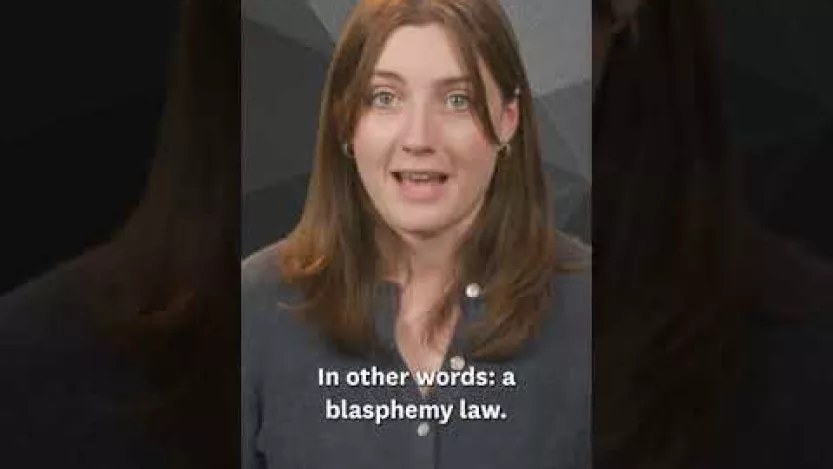
WATCH VIDEO: Free nations don’t have blasphemy laws. The UK needs to tread carefully.
Once again, the UK is making headlines — the bad kind. The reason this time? Late last month, Member of Parliament Tahir Ali called on UK Prime Minister Keir Starmer to lead “measures to prohibit the desecration of all religious texts and the prophets of the Abrahamic religions.”
There’s a term for that: a blasphemy law.
The UK’s relationship with free expression is currently in a free fall and the last thing it needs right now is more forms of expression to police. Blasphemy laws are often packaged and promoted in language about protecting the powerless but, as countlessrecentarrestsandprosecutionsmakeclear, are regularly wielded as a tool to preserve power, whether religious, political, or somewhere in between.
Ali’s advocacy of a blasphemy law is deeply wrong-headed, but he is far from the only one to think it might be a worthy venture. Last year, in response to a spate of Quran burning incidents, the United Nations Human Rights Council passed a resolution encouraging more countries to “address, prevent and prosecute acts and advocacy of religious hatred” — a nebulous concept prone to abuse — and months later, Denmark enacted such a law.
That wasn’t even the only blasphemy-related story to emerge this month out of the UK. In November, the Advertising Standards Authority banned comedian Fern Brady from using an advertisement for her stand-up tour that comically depicted Brady in place of the Virgin Mary in a riff on Alonso Cano’s 17th century painting, “St. Bernard and the Virgin.” In its decision, the ASA alleged that the image could cause “serious offence” to Christians, and directed her to avoid causing insult “on the grounds of religions” again.
An investigation from Legal Initiatives for Vietnam discovered a shockingly high 90% compliance rate from companies including Meta, Google, and TikTok in response to government requests for content moderation, often of material critical of the government. Meta even utilizes a secret list of Vietnamese officials its users aren’t allowed to criticize.
Pakistan appears to be the first country to block the relatively new social media platform Bluesky, but that’s no great surprise given Pakistan’s frequent internet censorship efforts.
A Citizen Lab report found that books “largely related to LGBTIQ, the occult, erotica, Christianity, and health and wellness” were the top items Amazon restricts shipments of to certain countries like Saudi Arabia and the United Arab Emirates. Troublingly, Amazon “uses varying error messages such as by conveying that an item is temporarily out of stock” rather than stating upfront that the books are not available due to local censorship rules.
If you’re in Kyrgyzstan, watch what you say on the internet. In late November, the country’s parliament approved a bill that will issue fines for online “insult and libel.”
Russian communications authority Roskomnadzor is reportedly beefing up its efforts to cut off foreign internet access — including VPNs — in regions including Chechnya as it’s “testing its own sovereign internet it can fully control.”
The Parliament of Malaysia passed a worrying Online Safety Bill handing over to authorities broad new power to combat “harmful” content on the internet, including the ability to search and seize material from service providers without a warrant. “Freedom of speech does exist,” Communications Minister Fahmi Fadzil said, “but we are also given power through Parliament to impose any necessary restrictions for the safety of the public.”
South Korea’s fleeting martial law decree threatened a free speech disaster
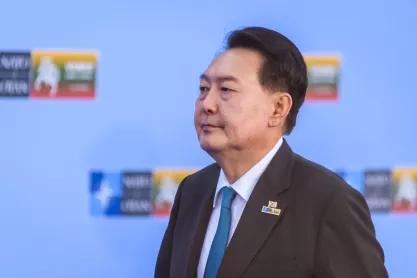
South Korea President Yoon Suk Yeol in 2023 (Gints Ivuskans / Shutterstock.com)
On Dec. 3, President Yoon Suk Yeol shocked the world by declaring martial law in South Korea under the guise of protecting “liberal democracy from the threat of overthrowing the regime . . . by anti-state forces active within the Republic of Korea.”
The decree banned, among other things, “fake news, public opinion manipulation, and false propaganda” as well as rallies and “all political activities.” All media would also be “subject to the control of the Martial Law Command.” Alleged violators of these and other provisions risked being “arrested, detained, and searched without a warrant.”
Hours later, Yoon reversed course in response to massive protests and a parliamentary veto.
Speech-related arrests and sentencing from Hong Kong to Brazil
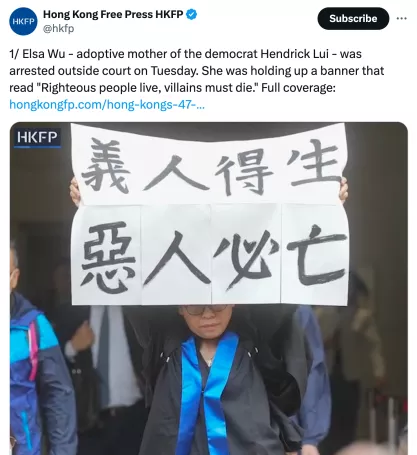
“Righteous people live, villains must die.” Elsa Wu, the mother of a Hong Kong activist recently sentenced to four years in prison, was arrested “on suspicion of disorderly conduct” for holding a banner with this message outside of a courthouse in November.
Indian journalist Mohammed Zubair has been charged with “endangering sovereignty, unity and integrity of India” for criticizing, and posting video of, comments a well-known Hindu priest made about the Prophet Muhammad. “It’s a classic case of shooting the messenger,” one of Zubair’s colleagues said. “It’s a witch hunt.”
Shortly after Zubair’s arrest, and on a similar basis, Indian police raided the offices of the Association for Protection of Civil Rights on charges including “promoting enmity.” The raid was reportedly based on the group’s social media posts highlighting abuses against Muslims in India.
Thai human rights lawyer Arnon Nampa, already imprisoned on similar charges, was sentenced this month to another two years in prison “over a 2020 social media post in which he allegedly criticised the king’s authority.” In total, he will serve over 16 years in prison and is one of many Thai activists punished for insulting or criticizing the country’s monarchy. Additionally, three Thai activists were charged with “contempt of court” for protesting a 2022 ruling from the Constitutional Court about the prime minister’s term limit.
Dozens of protesters have been arrested after demonstrating against Prime Minister Irakli Kobakhidze’s announcement that Georgia will postpone its efforts to join the European Union until 2028.
A Brazilian court has issued its longest-ever sentence for racism — nearly nine years in prison — over a woman’s 2017 social media video about a Malawian child adopted by two white Brazilian celebrities. The woman, Day McCarthy, called the child a “monkey” in a video and complained that “fake people and suck-ups” criticize McCarthy, “who identifies as half Black,” for not having “blue eyes and straight hair and a beautiful nose” but compliment the child’s appearance. McCarthy now lives in France and it’s unclear if she will serve the sentence.
Iran releases two dissidents but expands cruel crackdown on forced veiling critics
Last week, a wide-ranging new law went into effect that will further punish women who transgress Iran’s deeply oppressive mandatory hijab laws. Punishments range from flogging to long prison terms to travel bans and even death for “nudity, indecency, unveiling and bad dressing” and related crimes.
But amidst this awful development, there were some bright spots. Iranian cartoonist Atena Farghadani was released after serving eight months in prison on charges of “propaganda against the state” and dissident rapper Toomaj Salehi was also released after being held for 753 days over his support of women’s rights protests in the country. At one point, Salehi had been sentenced to death before the ruling was overturned by Iran’s Supreme Court.
Tiananmen joke grounds ‘Family Guy’ episode from in-flight entertainment
WATCH VIDEO: In the first episode of the TV sitcom “Family Guy,” Peter Griffin briefly stands in front of the tanks at Tiananmen Square. (YouTube.com)
Hong Kong airline Cathay Pacific is the latest example of a corporation eager to comply with the Chinese government’s political sensibilities after a passenger complained about an in-flight Family Guy episode that jokingly referenced Tank Man and the Tiananmen Square.
“We emphasise that the content of the programme does not represent Cathay Pacific’s standpoint, and have immediately arranged to have the programme removed as soon as possible,” the airline wrote in a statement earlier this month. It remains unclear what, exactly, is the company’s “standpoint” on the Tiananmen Square killings.
Mostly, but not all, bad news in arts and media:
Bangladesh’s Press Information Department recalled the accreditation of 167 journalists in the country, a “broad and sweeping cancellation” that has “left the journalist community alarmed.”
Haiti’s telecommunications authority CONATEL suspended evening show Radio Mega after a wanted gang leader called into the show “claiming that he was offered a large bribe by a member of the ruling Presidential Transition Council to negotiate peace with the gangs.”
After a lengthy 14 years, broadcaster Luisito “Chito” Berjit Jr. was finally acquitted after a Filipino court found there was insufficient evidence to find him guilty of libel over his reporting about alleged government corruption.
A report this month from the Hong Kong Public Opinion Research Institute found that about two-thirds of respondents “perceived news outlets to have practiced self-censorship,” a record high result since the polling began in 1997.
French media regulatory authority Arcom reportedly fined a conservative TV station €100,000 for failure to uphold its “obligation of honesty and rigour in the presentation and processing of information” after it showed an image calling abortion the world’s leading cause of death during a Catholic program.
Kuwait has reportedly banned the release of “Wicked” within the country “amid reports that the film includes a gay character, which led to its prohibition.” The musical joins a long list of films, including “Barbie” and “Thor: Love and Thunder,” to face local bans over inclusions of LGBT themes or characters.
Belarusian authorities arrested seven reporters from an online independent news outlet for “supporting extremist activities.” The president of the Belarusian Association of Journalists said it “looks like the authorities have decided to arrest all journalists they suspect of being disloyal ahead of January’s presidential vote.”
If you expected to make it through this year without a censorship controversy from the divisive Australian Olympian break-dancer Raygun, think again. Her lawyers reportedly threatened legal action against the event space hosting comedian Steph Broadbridge’s show “Raygun: The Musical.” Broadbridge says Raygun’s lawyers “trademarked the poster used to advertise the musical” and “banned her from replicating the iconic kangaroo hop.”