
Tag: Tenn

  • Tenn. Law Aimed at Students Who Make School Shooting Threats Ensnares a Retiree – The 74

    Tenn. Law Aimed at Students Who Make School Shooting Threats Ensnares a Retiree – The 74

    School (in)Security is our biweekly briefing on the latest school safety news, vetted by Mark KeierleberSubscribe here.

    Larry Bushart Jr. was just freed from a Tennessee jail cell after spending more than a month behind bars — for a Facebook post.

    The high-profile arrest of the 61-year-old retiree and former cop — which made waves in free speech circles — has all the hallmarks of a bingeworthy culture war clash in 2025: 

    • A chronically online progressive turns to Facebook to troll his MAGA neighbors about President Donald Trump’s seemingly lopsided response to school shootings compared to the murder of right-wing pundit Charlie Kirk
    • An elected, overzealous county sheriff intent on shutting him up
    • A debate over the limits of the First Amendment — and the president’s broader efforts to silence his critics
    Eamonn Fitzmaurice / T74

    The controversy, I report this morning, also calls attention to a series of recent Tennessee laws that carry harsh punishments for making school shooting threats and place police officers on campus threat assessment teams working to ferret out students with violent plans before anyone gets hurt. 

    In Bushart’s case, the sheriff maintained that his post referring to the president’s reaction to a 2024 school shooting in Perry, Iowa, constituted a threat “of mass violence at a school,” apparently the local Perry County High School. The rules that ensnared Bushart have also led to a wave of student arrests and several free speech lawsuits. His is likely to be next, Bushart’s lawyer told The Washington Post.


    In the news

    Updates in Trump’s immigration crackdown: Federal immigration officers chased a Chicago teacher into the lobby of a private preschool Wednesday and dragged her out as parents watched her cry “tengo papeles!” or “I have papers.” The incident is perhaps the most significant immigration enforcement act in a school to date. | The 74

    • Proposed federal rules would allow Immigration and Customs Enforcement to collect iris scans, fingerprints and other biometric data on all immigrants — including, for the first time, children under 14 years old — and store it for the duration of each individual person’s “lifecycle.” |  Ars Technica
    • On the same day Cornell University notified an international student that his immigration status had been revoked, Google alerted him that federal authorities had subpoenaed his personal emails. Now, the institution won’t say whether federal authorities had tapped into university “emails to track [students] as well.” | The Cornell Daily Sun
    • In California, federal immigration officers shot a U.S. citizen from behind as he warned the agents that students would soon gather in the area to catch a school bus. The government says the shots were “defensive.” | Los Angeles Times
    • ‘Deportation isn’t a costume’: A Maine middle school principal is facing pushback for a federal immigration officer Halloween costume, complete with a bulletproof vest that read “ICE.” | Boston.com
    • In Chicago communities that have seen the most significant increase in immigration enforcement, school enrollment has plunged. | Chalkbeat
    • Also in Chicago, a federal judge ordered the Trump administration to hand over use-of-force records and body camera footage after trick-or-treaters were “tear-gassed on their way to celebrate Halloween.” | USA Today

    A bipartisan bill seeks to bar minors from using AI chatbots as petrified parents testified their children used the tools with dire consequences — including suicide. Some warn the change could stifle the potential of chatbots for career or mental health counseling services. | Education Week

    • A Kentucky mom filed a federal lawsuit against online gaming communities Discord and Roblox alleging the companies jeopardized children’s safety in the name of profit. After her 13-year-old daughter died by suicide last year, the mom said, she found the girl had a second life online that idolized school shooters. | 404 Media
    • Character.AI announced it will bar minors from its chatbots, acknowledging safety concerns about how “teens do, and should, interact with this new technology.” | BBC

    Getty Images

    A jury awarded $10 million to former Virginia teacher Abby Zwerner on Thursday, two years after she was shot by her 6-year-old student. Zwerner accused her former assistant principal of ignoring repeated warnings that the first grader had a gun. The student’s mother was sentenced to nearly four years in prison for felony child neglect and federal weapons charges. | The New York Times

    ‘Creepy, unsettling’: This family spent a week with Grem, a stuffed animal with artificial intelligence designed to “learn” children’ s personalities and hold educational conversations. | The Guardian

    A judge ordered the Trump administration to release federal funds to California school districts after it sought to revoke nearly $165 million in mental health grants as part of a broader crackdown on diversity, equity and inclusion.  The grants funded hundreds of school social workers and counselors. | EdSource

    In 95% of schools, active-shooter drills are now a routine part of campus life. Here’s how states are trying to make them less traumatic. | The Trace

    Sign-up for the School (in)Security newsletter.

    Get the most critical news and information about students’ rights, safety and well-being delivered straight to your inbox.

    A lawsuit against a Pennsylvania school district alleges educators failed to keep students safe after a 12-year-old girl was attacked by a classmate with a metal Stanley drinking cup. | NBC10

    ‘Inviting government overreach and abuse’: The Education Department was slapped with two lawsuits over new Public Service Loan Forgiveness rules that could bar student borrowers from the program who end up working for the president’s political opponents, including organizations that serve immigrant students and LGBTQ+ youth. | The Washington Post


    ICYMI @The74

    1939 redlined maps of Los Angeles showing neighborhoods deemed eligible and ineligible for economic aid

    How LAUSD School Zones Perpetuate Educational Inequality, Ignoring ‘Redlining’ Past

    Students Want Schools to Incorporate AI in Learning But Express Some Fears

    LifeWise’s Big Red Bus Is Driving Thorny Questions about Church and State


    Emotional Support

    Matilda plots her escape.


    Did you use this article in your work?

    We’d love to hear how The 74’s reporting is helping educators, researchers, and policymakers. Tell us how

    Source link

  • Tenn. Lawsuit Puts Hispanic-Servings’ Fate on the Line

    Tenn. Lawsuit Puts Hispanic-Servings’ Fate on the Line

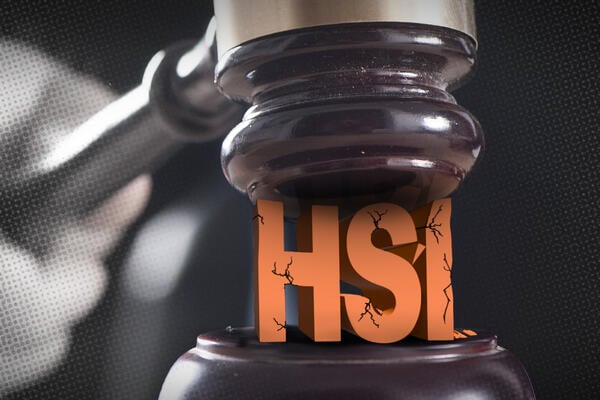
    Two years after its Supreme Court victory against Harvard and UNC Chapel Hill, Students for Fair Admissions has a new target in its sights: Hispanic-serving institutions. On Wednesday, the advocacy group joined the state of Tennessee in suing the U.S. Department of Education, arguing that the criteria to become an HSI are unconstitutional and discriminatory. The move is distressing HSI advocates, who hoped to see the institutions left out of the political fray.

    To qualify as an HSI, a college or university needs to have a student body comprised of at least 25 percent Hispanic students and enroll at least 50 percent low-income students, or more than other comparable institutions, among other criteria. No Tennessee institutions operated by the state meet the threshold and are thus prohibited from applying for HSI-specific grants—even though they serve Hispanic and low-income students, according to the Tennessee attorney general and SFFA. As a result, the federal designation criteria amounts to discrimination, and Tennessee universities and students suffer as a result, the plaintiffs argue.

    They also say Tennessee institutions find themselves in an “unconstitutional dilemma”: Even if they wanted to, they argue, they can’t use affirmative action to up their Hispanic student enrollments since the U.S. Supreme Court ruled against using race as a factor in college admissions. That 2023 decision resulted from lawsuits SFFA brought against Harvard and the University of North Carolina at Chapel Hill.

    “The HSI program is particularly egregious in terms of how it treats students based on immutable characteristics,” Tennessee attorney general Jonathan Skrmetti, who’s representing the state in the suit, told Inside Higher Ed. “It is just manifestly unfair that a needy student in Tennessee does not have access to this pool of funds because they go to a school that doesn’t have the right ethnic makeup.”

    The lawsuit calls for “a declaratory judgement that the HSI program’s ethnicity-based requirements are unconstitutional” and “a permanent injunction prohibiting the [Education] Secretary from enforcing or applying the HSI program’s ethnicity-based requirements when making decisions whether to award or maintain grants to Tennessee’s institutions of higher education.”

    HSI proponents may be jarred by the legal challenge, but they aren’t entirely surprised. Conservative think tanks like the Manhattan Institute and the American Civil Rights Project have previously proposed abolishing enrollment-based minority-serving institutions (MSIs), including HSIs and Asian American and Native American Pacific Islander–serving institutions, which are defined as enrolling 10 percent of students from these groups.

    “It was only a matter of time before the anti-DEI movement hit the enrollment-based MSIs,” said Gina Ann Garcia, a professor who studies MSIs in the school of education at the University of California, Berkeley. “It still was a punch to the gut.”

    2 Sides At Odds

    Congress established the HSI program in the 1990s to improve the quality of education at colleges and universities that disproportionately serve Latino students, who were concentrated at colleges with relatively fewer financial resources. They’ve historically enjoyed bipartisan support. Last year, the federal government appropriated about $229 million for the country’s roughly 600 Hispanic-serving institutions; $28 million of that funding went to 49 of the HSIs that applied for the competitive grants.

    Deborah Santiago, co-founder and CEO of Excelencia in Education, an organization that promotes Latino student success, believes the lawsuit mischaracterizes the program and its role in the national higher education landscape. She said it’s in the country’s “self-interest” to invest in colleges and universities with limited resources that serve a growing student population with stubborn degree-attainment gaps.

    “If a disproportionate number of students of any background are at an institution that has a high enrollment of needy students, low educational core expenditures and serves a high proportion of students that that could benefit from that [funding] to serve the country, I don’t think that’s discriminating,” she said.

    She also stressed that the grant program “doesn’t explicitly require any resources to go to a specific population” but funds capacity-building efforts, like building new laboratories and facilities, that benefit all students at the institution.

    The HSI program is a way “to target limited federal resources and meet the federal mandate of access for low-income students,” she said. “We know that it costs more to educate Hispanic students, because they’re more likely to be low income and first gen, so college knowledge, student support services—all of that takes institutional investment.”

    But opponents of HSIs don’t buy it.

    Wenyuan Wu, executive director of the Californians for Equal Rights Foundation, a think tank and watchdog organization focused on promoting “equal rights and merit,” firmly believes enrollment-based minority-serving institutions are discriminatory and applauded the lawsuit as a step in the right direction.

    She argued that HSI funding has gone to efforts specifically to support Latino students, including some she sees as “ideological.” For example, the University of Connecticut at Stamford proposed using the funding to start a program called Sueño Scholars, to “recruit, support and mentor undergraduate Hispanic, other minority, low-income, and high-need students” to enter teaching graduate programs and included a goal of “developing and sustaining antiracist orientations towards teaching and learning,” according to the department’s list of project abstracts.

    Wu asserted that putting federal money toward efforts like these is a problem. She’d rather see the funds designated for HSIs channeled into Pell Grants or other supports for low-income students.

    “Taxpayer funds should not be used to engage in racial balancing, and that’s exactly the kind of behavior that has been incentivized by MSIs,” said Wu, who is also chair of the Georgia Advisory Committee to the U.S. Commission on Civil Rights.

    Possible Outcomes

    Robert Kelchen, head of the Educational Leadership and Policy Studies Department at the University of Tennessee at Knoxville, believes the lawsuit has “a possibility of success.” It was filed in a conservative-leaning federal district court in Knoxville, and Tennessee seems to have shown it has legal standing, he said.

    Even “if the court here in Knoxville doesn’t agree, another state could choose to file a similar lawsuit in their district court as well,” he said. Ultimately, “the question is, can they find one court that agrees with the plaintiffs’ interpretation.”

    The move by Tennessee comes just a week after the federal government successfully sued Texas to eliminate in-state tuition for undocumented students—a policy Republican state lawmakers had tried but failed to end. The Texas attorney general celebrated the challenge, siding with the U.S. Department of Justice in a matter of hours, and a judge promptly quashed the two-decade-old state law. (Stephen Vladeck, a professor of law at the Georgetown University Law Center, called the episode “transparently collusive.”)

    Kelchen believes the Tennessee lawsuit is following a similar playbook. He expects to see more red states and conservative organizations sue the Education Department on issues where they align “to get rid of things that neither of [them] like,” he said—though in Tennessee’s case, it’s unclear how the department will respond.

    Skrmetti told Inside Higher Ed that “from Tennessee’s perspective, this is not part of a broader strategy to influence education policy. This is about discrimination against Tennessee schools because of the ethnic makeup of their student bodies.”

    If the plaintiffs win, it’s unclear whether that would mean changing the federal definition of an HSI to eliminate a Hispanic enrollment threshold or axing the HSI program altogether. The implications for other types of enrollment-based minority-serving institutions are also hazy.

    Skrmetti is open to multiple options.

    “At the end of the day, there’s [HSI] money out there to help needy students, and we want to make sure that needy students can access it regardless of the ethnic makeup of the schools they’re at,” he said. “There are a couple different avenues I think that could successfully achieve the goal operationally. We need to just get a declaration that the current situation does violate the Constitution.”

    Santiago, of Excelencia in Education, said there’s room for “thoughtful discussion” about reforming or expanding requirements for HSI grant funding, but she believes “it needs to come from the community.”

    She also pointed out that the lawsuit is against the Department of Education, which administers HSI funding but doesn’t control it—Congress does. So the department doesn’t have the power to end the funding.

    Nonetheless, “it would be foolish to not take it seriously,” she said.

    Garcia, the Berkeley education professor, said that while she’s not a lawyer, she believes there are legal questions worth raising about the lawsuit, particularly the way it leans on the Supreme Court’s ruling against affirmative action in admissions.

    She pointed out that HSIs tend to be broad-access or open-access institutions that admit most applicants, rather than selective institutions explicitly recruiting Latino students; only about two dozen of the 600 HSIs are highly selective, she said. So, the assertion that HSIs have any connection to the affirmative action ruling is up for debate, she said.

    Skrmetti believes it’s a cut-and-dried case.

    “You can’t make determinations about the allocation of resources based on ancestry or skin color or anything like that without inherent discrimination,” he said. “We need to help all needy students. And the HSI designation is an obstacle to that.”

    Garcia believes that regardless of whether the lawsuit is successful, it’s already done damage to HSIs by dragging them—and enrollment-based MSIs in general—into the country’s political skirmishes over diversity, equity and inclusion.

    “I’ve been just watching HSIs fly a little bit under the radar,” she said. “They don’t come up a lot” in national conversations about DEI. But the lawsuit “brings HSIs into the light, and it brings them into the attack.”

    She worries that students are the ones who will suffer if HSIs no longer receive dedicated funding.

    HSIs “are often underresourced institutions,” she said. “They’re institutions that are struggling to serve a large population of minoritized students, of students of color, of low-income students, of first-gen students. We’re not talking about the Harvards and the Columbias.”

    Source link

  • VICTORY! Tenn. town buries unconstitutional ordinance used to punish holiday skeleton display

    VICTORY! Tenn. town buries unconstitutional ordinance used to punish holiday skeleton display

    GERMANTOWN, Tenn., April 29, 2025 — After a federal lawsuit, the town of Germantown, Tennessee, has sent to the graveyard an ordinance that was used to fine a resident for using giant skeletons in a Christmas lawn display.

    Alexis Luttrell received a citation and court summons from the Memphis suburb in January for keeping up decorative skeletons after Halloween and repurposing them for Election Day and Christmas. In February, the Foundation for Individual Rights and Expression filed a federal lawsuit seeking to have the citation thrown out and Germantown’s unconstitutional holiday ordinance overturned on First Amendment grounds. FIRE also committed to defending Alexis against the charges in municipal court.

    Germantown voluntarily dismissed the municipal charges against Alexis a month later, but FIRE’s federal lawsuit against the ordinance remained pending before the U.S. District Court for the Western District of Tennessee. But last night, the Board of Mayor and Aldermen voted to repeal the ordinance entirely, and Germantown agreed to a $24,999 settlement in exchange for dismissing the lawsuit.

    “Not only am I no longer at risk of being fined for my skeletons, the unconstitutional ordinance is now dead and buried,” Alexis said. “Today is a victory for anyone who has ever been censored by a government official and chose to fight back.”

    The ghastly affair began in October 2024, when Alexis purchased a large decorative skeleton and skeleton dog for Halloween. She later kept the skeletons up and dressed them with Election Day signs in November and then Santa-themed attire in December.

    COURTESY PHOTOS OF ALEXIS AND HER SKELETON DISPLAYS

    Perplexingly, this was illegal under Germantown Ordinance 11-33, which required that holiday decorations “shall be removed within a reasonable period of time, not to exceed 30 days.” In Germantown officials’ view, Alexis’s skeletons weren’t “really” Christmas decorations, but an unsanctioned Halloween display. In December, the town sent Alexis a warning that she violated the ordinance, and followed up with a citation and summons when the skeletons were still up in January.

    Germantown’s ordinance wasn’t just an exercise in misguided micromanagement, it violated the Constitution. Under the First Amendment, Americans are free to put up holiday decorations on their property whenever they like, not just in a government-approved period of time. And by demanding the Santa-themed skeletons come down — even if one has a dark sense of humor, or happens to like Tim Burton movies — the city engaged in viewpoint discrimination about what constitutes an “acceptable” Christmas display.

    “Germantown’s leaders deserve a lot of credit for quickly repealing its holiday ordinance after FIRE’s lawsuit,” FIRE Attorney Colin McDonell said. “Instead of digging in and wasting time and taxpayer dollars defending an unconstitutional ordinance, they boned up on the First Amendment and did the right thing.”

    Alexis’ skeletons have remained in her yard and she’s continued to dress them up with different outfits and decorations for new holidays. Since February, they’ve been dressed in Valentine’s Day, St. Patrick’s Day, and Easter garb, and Pride Month and Juneteenth are coming up soon.

    “Alexis and all the residents of Germantown can now celebrate the holidays of their choice on their own property without worrying their creativity will get them fined,” said McDonell. “And that’s how it should be in a free country.”


    The Foundation for Individual Rights and Expression (FIRE) is a nonpartisan, nonprofit organization dedicated to defending and sustaining the individual rights of all Americans to free speech and free thought — the most essential qualities of liberty. FIRE educates Americans about the importance of these inalienable rights, promotes a culture of respect for these rights, and provides the means to preserve them.

    CONTACT:

    Alex Griswold, Communications Campaign Manager, FIRE: 215-717-3473; [email protected]

    Source link

  • VICTORY! Charges dropped against Tenn. woman cited for using skeletons in Christmas decorations

    VICTORY! Charges dropped against Tenn. woman cited for using skeletons in Christmas decorations

    GERMANTOWN, Tenn., March 10, 2025 —Less than a month after the Foundation for Individual Rights and Expression filed a First Amendment lawsuit against Germantown, Tennessee, the city has voluntarily dismissed charges against its resident Alexis Luttrell for keeping skeletons in her yard after Halloween.

    “We are thrilled that Alexis will no longer have to stand trial because government officials disapproved of her decorative skeletons,” said FIRE attorney Colin McDonell. “Punishing Alexis for her choice of expressing holiday cheer would have been a bone-chilling restriction on her First Amendment rights.”

    “I’m beyond pleased that I’m no longer on trial for nothing more than decorating my yard in a way that City Hall didn’t like,” said Alexis. “That these charges were ever brought in the first place was utterly surreal, but I’m glad that they’re dead and buried — and my skeletons aren’t.”

    Alexis set up a decorative skeleton and skeleton dog in her front yard to celebrate Halloween last year, and then redressed them for Election Day and Christmas as well. But in December, a Germantown code officer left a notice that said that she had violated Ordinance 11-33, which says that yard decorations “shall not be installed or placed more than 45 days before the date of the holiday” and must be removed within “30 days, following the date of the holiday.”

    On Jan. 6, she received a citation from the Memphis suburb saying she was still in violation and that she would have to appear before a local judge. If found guilty, she would have been subject to fines and a court order prohibiting skeletons in her holiday displays.

    All this violated Alexis’s First Amendment rights. Americans have the right to put up skeletal decorations in September, October, November, December —- whenever they want. And by refusing to acknowledge Alexis’s Christmas-themed skeletons as Christmas decorations, the city engaged in viewpoint discrimination by enforcing an arbitrary and narrow idea of the “right” way to celebrate Christmas.

    COURTESY PHOTOS OF ALEXIS AND HER HOLIDAY DISPLAYS

    FIRE jumped into action, agreeing to represent Alexis in Germantown municipal court and filing a federal lawsuit seeking to overturn the Germantown ordinance on First Amendment grounds.

    “The Holiday Decorations Ordinance violates the First Amendment,” the civil rights complaint read. “It is a content-based and viewpoint-discriminatory restriction on speech. It is not narrowly tailored to a compelling government interest. And it is unconstitutionally vague, allowing government officials to arbitrarily punish holiday expression based on their subjective beliefs.”

    Alexis’s municipal court date was originally scheduled for Feb. 13, but it was postponed for a month after FIRE filed the federal lawsuit. But ahead of the March 13 hearing, the city’s attorneys dropped the charges, meaning Alexis is no longer at immediate risk of being punished for exorcising — er, exercising her rights.

    FIRE’s federal lawsuit challenging Germantown’s ordinance is still pending, but with charges dropped, Alexis’s skeletons will stay up and dressed to the nines as the lawsuit progresses through the courts. Alexis has continued dressing the skeletons to celebrate every new holiday season. Last month, it was Valentine’s Day, now they’re dressed for St. Patrick’s Day, and Easter and Pride Month displays are set to follow.

    “Holidays come and go, but the First Amendment is here year-round,” said McDonell. “We look forward to seeing all the ways Alexis will express herself for the holidays this year, without government interference.” 


    The Foundation for Individual Rights and Expression (FIRE) is a nonpartisan, nonprofit organization dedicated to defending and sustaining the individual rights of all Americans to free speech and free thought — the most essential qualities of liberty. FIRE educates Americans about the importance of these inalienable rights, promotes a culture of respect for these rights, and provides the means to preserve them.

    CONTACT:

    Alex Griswold, Communications Campaign Manager, FIRE: 215-717-3473; [email protected]

    Source link