Tag: Texas

  • Texas Tech Clarified Anti-Trans Policies in FAQ—Then Removed It

    Texas Tech Clarified Anti-Trans Policies in FAQ—Then Removed It

    Photo illustration by Justin Morrison/Inside Higher Ed | menonsstocks/E+/Getty Images | snorkulencija/iStock/Getty Images

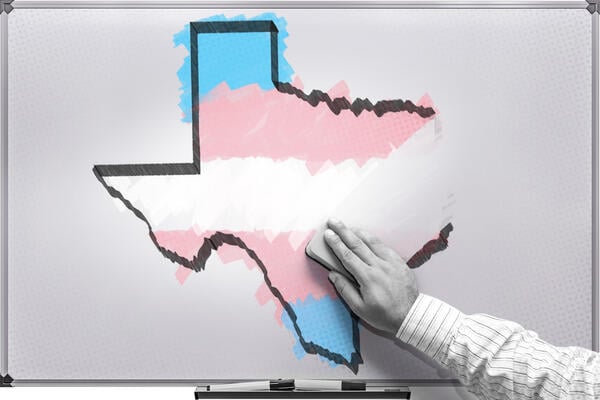
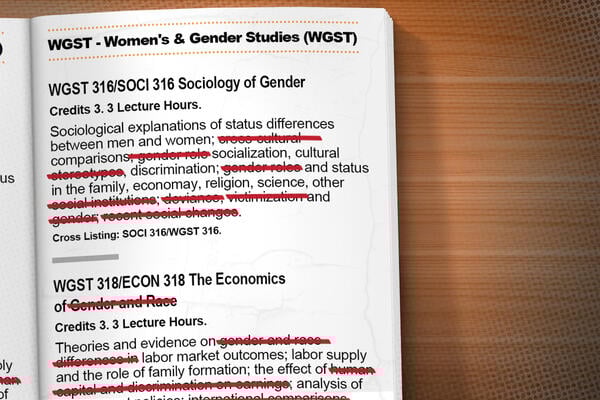
    After a confusing week, Texas Tech University officials offered the first written clarification on new university policies that prohibit faculty members from speaking or teaching about transgender identity. On Sunday, the provost’s office posted a lengthy frequently asked questions page that, among other things, addressed the definition of “noncompliant language,” explained how the new policies impact research and answered whether faculty can write on their syllabi that they are an ally to transgender people.

    But after three days, the FAQ was taken down. Faculty have not been told why the information was removed, and health-care instructors are concerned students will not be trained in care for transgender patients, as required by certification exams.

    A university spokesperson did not respond to Inside Higher Ed’s questions on the matter. Some faculty suspect that Brandon Creighton, who was officially named the Texas Tech system’s next chancellor on Tuesday, may have orchestrated the removal of the FAQ. Creighton was the lead author of the Texas Senate’s sweeping ban on diversity, equity and inclusion in 2023, and of the recent bill giving control of faculty senates to university presidents and boards. He will assume the chancellor role on Nov. 19.

    While it was the first and most comprehensive written guidance Texas Tech has posted on its anti-trans policies, the FAQ left a lot of questions unanswered. The word “transgender” wasn’t included in any of the written answers. In one answer, officials wrote that noncompliant language “refers specifically to outdated or inaccurate syllabus content (i.e., COVID-era statements or statements referring to offices or units that no longer exist at Texas Tech.),” but said nothing about gender identity.

    In response to a question about academic freedom, officials wrote, “Faculty may include course content that is relevant to a student’s program of study and post-graduation opportunities, including workforce and additional education. Faculty are encouraged to be thoughtful about including content that is described in the Chancellor’s memo.”

    The new directives do not impact research, the FAQ clarified. Officials advised against including a “personal statement of student support” or a statement professing LGBTQ allyship, writing that “such a statement could attract unwanted attention.” They also wrote that faculty could include a preferred name policy on their syllabi, but that “until further clarification is available, it is advisable to omit personal pronoun language.” When relevant, instructors are permitted to facilitate classroom discussions in which students examine the state’s position on gender alongside other views, but the instructor may not advocate for any particular view.

    In a later question about government censorship and faculty retention, officials wrote, “We recognize that faculty recruitment and retention may be affected. At present, the issued guidance applies only to instructional activities, not a faculty member’s independent research.”

    The Texas conference of the American Association of University Professors has pushed back on the anti-trans policies at Texas Tech and other public universities in the state.

    “Colleges and universities have an obligation to develop campus policies that protect the constitutional rights of their faculty to teach and research the subjects in their areas of expertise without intimidation or censorship,” said Brian Evans, president of the Texas conference of the AAUP. “By ensuring that teachers can speak freely, campus administrators should enable students to explore and learn the widest set of topics for civil engagement and successful careers. Campus policies related to academic freedom and free speech should be devised with the full participation of faculty in the spirit of a shared commitment to excellence.”

    The FAQ—as short-lived as it was—only applied to Texas Tech’s flagship campus. The four other campuses in the public system, including Angelo State University, where faculty have received a profusion of conflicting verbal information, were not included.

    A faculty member at the Texas Tech University Health Sciences Center who asked to remain anonymous for fear of retribution confirmed to Inside Higher Ed that faculty at their campus have been told not to use certain terms in their course content, including “transgender”; “gender-affirming care”; “diversity, equity and inclusion”; and “affirmative action.” Health Sciences Center faculty have not received any written guidance, and the deans don’t have clarifying information, either, the faculty member said. It is an especially troubling policy to enforce for health-care students, because care for transgender patients is included in some certification exams students must pass to be licensed, they said.

    “There are certainly many things that our government has [outlawed] … but I can’t think of another thing that we’ve been told we can’t talk about,” the faculty member said. “Sex trafficking is illegal, but we can talk about how to care for people who have been victims of sex trafficking. Drunk driving—there’s about a million examples.”

    It is unclear how much information students have about these new policies, according to the faculty member. Some students are bringing up transgender care in classroom discussions, and instructors are unsure how to respond.

    Source link

  • Texas Tech System Ends Class Discussions of Trans Identity

    Texas Tech System Ends Class Discussions of Trans Identity

    The Texas Tech University System has ordered all faculty to refrain from classroom discussions of transgender identity, The Texas Tribune reported.

    In a letter to the leaders of the five universities in the system, Texas Tech Chancellor Tedd Mitchell wrote that the institutions must comply with “current state and federal law,” which “recognize only two human sexes: male and female.“ He cited Texas House Bill 229, which defines sex strictly as determined by reproductive organs, a letter from Texas governor Greg Abbott directing agencies to “reject woke gender ideologies,” and President Trump’s January executive order—which is not a federal law—declaring the existence of just two genders.

    “While recognizing the First Amendment rights of employees in their personal capacity, faculty must comply with these laws in the instruction of students, within the course and scope of their employment,” Mitchell wrote.

    The move follows a confusing week at Angelo State University—part of the Texas Tech System—where a new set of policies first seemed to prohibit faculty from engaging in any sort of pride displays but ultimately limited discussion and content only related to trans identity.

    Mitchell’s letter provided little guidance for faculty about how to implement the new policy, suggesting it presents certain challenges.

    “This is a developing area of law, and we acknowledge that questions remain and adjustments may be necessary as new guidance is issued at both the state and federal levels,” he wrote. “We fully expect discussions will be ongoing.”

    Source link

  • Texas State Prof Sues, Claiming Free Speech, Contract Violations

    Texas State Prof Sues, Claiming Free Speech, Contract Violations

    Mikala Compton/Austin American-Statesman/Getty Images

    A tenured Texas State University professor who was terminated earlier this month after allegedly inciting violence during a speech has sued the university, CBS Austin reported. In the lawsuit filed in district court, Thomas Alter, the former associate professor of history, claims that university leadership violated his free speech and due process rights and breached his employment contract. 

    At a Sept. 7 conference organized by Socialist Horizon, Alter said in part that “without organization, how can anyone expect to overthrow the most bloodthirsty, profit-driven mad organization in the history of the world—that of the U.S. government.” His speech was recorded and circulated by a right-wing YouTuber who had infiltrated the event. Alter was terminated three days later.

    In a statement announcing his termination, Texas State president Kelly Damphousse said Alter’s “actions are incompatible with their responsibilities as a faculty member at Texas State University.” Alter told CBS Austin that he did not associate himself with Texas State during the conference. 

    “The reasons Provost Aswrath provided for Dr. Alter’s termination are false and give every appearance of politically-motivated discrimination,” the lawsuit states. “In truth, Dr. Alter was terminated because he espoused views that are politically unpopular in today’s politically-charged climate, in violation of his First Amendment right to free speech.”

    Alter told CBS Austin that his dismissal “turned my world upside down and my family’s world upside down.”

    “Anyone should be able to express their views no matter how unpopular they are without facing the repercussions that many people are seeing,” he added. (Alter had earned tenure just 10 days before he was removed, The Chronicle of Higher Education reported.)

    Texas State did not respond to Inside Higher Ed’s request for comment, but a spokesperson told CBS Austin the university declined to comment on pending litigation.

    Source link

  • What’s Next for Texas A&M?

    What’s Next for Texas A&M?

    When Texas A&M University president Mark Welsh resigned amid an academic freedom controversy last week, he became the institution’s second leader to step down due to scandal in two years.

    Unlike his predecessor, Kathy Banks, who retired in 2023 after she was caught lying about a hiring scandal, Welsh remained popular on campus; faculty sent the Board of Regents letters of support last week following a controversy that prompted him to fire an instructor, and students rallied on his behalf. But he seemed to lose the support of the deep-red Texas Legislature: Several Republican lawmakers called for his dismissal after a discussion over gender identity between a student and a professor in a children’s literature class was captured on video and quickly went viral.

    In the short video, which has racked up more than five million views, a student questions whether an instructor is legally allowed to teach that there is more than one gender, which she suggests is “against our president’s laws.” Welsh initially defended the professor but quickly folded under considerable pressure from lawmakers, firing her and removing two administrators from their duties because they “approved plans to continue teaching course content that was not consistent” with the course’s description, he said in a Sept. 9 statement.

    Amid the fallout, the American Association of University Professors and free speech groups accused Texas A&M of stifling academic freedom and bending to conservative political pressure. (Welsh countered that the case wasn’t about academic freedom but “academic responsibility.”)

    But the incident also raises questions about what comes next for Texas A&M after legislators accused Welsh—a retired four-star general and former chief of staff of the U.S. Air Force—of spreading “leftist [diversity, equity and inclusion] and transgender indoctrination.”

    A Mixed Reaction

    Welsh largely skirted the controversy in a statement released Friday, his last day on the job.

    “When I was first appointed as President of Texas A&M University, I told then Chancellor John Sharp and our Board of Regents that I would serve as well as I possibly could until it was time for someone else to take over,” he wrote. “Over the past few days, it’s become clear that now is that time.”

    He added that serving as president for two years had been “an incredible privilege” and a “remarkable gift” and praised Texas A&M faculty, staff and students in his parting statement. On campus Friday, hundreds of supporters greeted Welsh outside an administrative building, according to social media and local coverage. The Texas A&M Student Government Association encouraged students and others to gather to “express gratitude” for Welsh’s service.

    While Welsh’s parting remarks were restrained, state legislators and faculty members have been more passionate—and outraged—as both groups look ahead to the coming presidential search.

    Leonard Bright, interim president of the Texas A&M AAUP chapter, told Inside Higher Ed that many faculty members had mixed feelings about Welsh. On the one hand, many professors viewed him as a stable leader who had served the university well since his time as dean of the Bush School of Government and Public Service, which he led from 2016 until he was appointed interim president in July 2023, before being given the permanent job later that year.

    On the other hand, Welsh’s dismissal of English instructor Melissa McCoul, the professor caught up in the gender ideology flap, raised questions about whether he would protect academic freedom. As Bright sees it, when Welsh’s job was threatened, he failed to stand up for academic freedom.

    Bright added that he was somewhat surprised by Welsh’s resignation, arguing that “as horrible” as the president’s recent actions were, he thought they had appeased the conservative critics and that “the board did not want to create further upheaval” given recent turnover at the top.

    But ultimately, only Welsh’s resignation would satisfy his fiercest critics.

    Brian Harrison, a Republican lawmaker and Texas A&M graduate, noted in posts on X following Welsh’s resignation that he had been calling for the board to fire the president for nine months.

    “Proud and honored to be the voice for millions of Texans who are fed up with being taxed out of their homes so their government can weaponize their money against them, their values, and their children by funding DEI and transgender indoctrination,” Harrison wrote on X on Friday.

    An LGBTQ+ Crackdown?

    Like all institutions in the state, Texas A&M has backed away from DEI as instructed by state law. But Welsh’s removal of McCoul for discussing gender identity in class is part of a broader retreat by Texas A&M from LGBTQ+ topics. That effort dates back to at least 2021, according to one anonymous source who previously told Inside Higher Ed they were discouraged from promoting LGBTQ+ materials in the university library’s collection when Banks was president.

    Last year Texas A&M cut its LGBTQ studies minor, alongside other low-enrollment programs, after Harrison led a charge against the program, calling it “liberal indoctrination.”

    Both the flagship and the Texas A&M system have also taken aim at drag shows.

    Texas A&M defunded an annual student drag show without explanation in 2022. West Texas A&M University president Walter Wendler canceled a student drag show in 2023, claiming it was demeaning to women. Earlier this year, the Texas A&M University system Board of Regents passed a resolution banning drag shows across all 11 campuses, only to get hit with a First Amendment lawsuit; a judge ruled against the system in March on free speech grounds.

    (Neither Texas A&M University or system officials responded to a request for comment.)

    Texas Hiring Trends

    With Welsh out of office, Texas A&M will soon begin a search for its next president. Chancellor Glenn Hegar announced Friday that an interim president will be named shortly, and in the meantime, James Hallmark, vice chancellor for academic affairs, will serve as acting president.

    Hegar, who has only been on the job since July, is a former Republican politician, one of several hired to lead a Texas system or university in recent months in what is shaping up to be a trend.

    Elsewhere in the state, the Texas Tech University system named Republican lawmaker Brandon Creighton as the sole finalist for the chancellor position. During his time in the Legislature, Creighton championed bills to crack down on DEI, restrict free speech at public institutions by banning expressive activities at night and undercut the power of faculty senates.

    The University of Texas at Austin also opted for a politico, hiring as president Jim Davis, former Texas deputy attorney general, who had worked in UT Austin’s legal division since 2018. Davis was promoted to the top job after a stint as interim president, a role he had held since February. Similarly, the UT system tapped former GOP lawmaker John Zerwas as its next chancellor.

    Recent hiring trends in Texas are beginning to mirror Florida, which has hired multiple former Republican lawmakers and other political figures with connections to Governor Ron DeSantis.

    As Texas A&M prepares to launch its search, faculty are calling for an open process.

    “The search should be transparent. It shouldn’t be primarily behind closed doors,” Bright said. “The faculty need to be involved. This is academia—this is about teaching, research and service.”

    Source link

  • Texas A&M President Steps Down After Political Campaign Targets Academic Freedom

    Texas A&M President Steps Down After Political Campaign Targets Academic Freedom

    Texas A&M University President Dr. Mark A. Welsh III announced his resignation Thursday following intense political pressure from state Republican leaders over a viral confrontation involving gender content in a children’s literature course—the latest in a series of incidents that underscore the mounting challenges facing academic freedom and diversity efforts at public universities across Texas.

    Welsh’s departure came just over a week after state Rep. Brian Harrison amplified a video on social media showing a student confronting Professor Melissa McCoul about course content. Despite initially defending McCoul’s academic freedom, Welsh terminated the professor the following day under pressure from Harrison and Lt. Gov. Dan Patrick.

    The incident represents part of a broader Republican-led campaign to exert political control over university curricula, faculty hiring, and campus speech—efforts that education advocates warn are undermining the foundational principles of higher education.

    Welsh’s tenure, which began in 2023, was marked by repeated clashes with state political leaders over diversity and inclusion initiatives. In January, Gov. Greg Abbott threatened Welsh’s position after the university’s business school planned to participate in a conference aimed at recruiting Black, Hispanic, and Indigenous graduate students. Under pressure, Welsh withdrew the university from the conference entirely.

    The pattern reflects what faculty and higher education experts describe as an escalating assault on academic autonomy.

    Despite strong support from faculty and students, Welsh’s position became untenable under sustained political attack. On last Wednesday, the university’s Executive Committee of Distinguished Professors—composed of 12 faculty members holding the institution’s highest academic honor—sent a letter urging regents to retain Welsh.

    “All members of this Committee write this letter collectively to strongly urge you to retain President Mark Welsh in the wake of recent events,” the faculty letter stated.

    Student leaders also rallied behind Welsh, with dozens of current and former student government representatives praising his “steadfast love and stewardship for our University” and expressing “faith and confidence in his leadership.”

    However, these expressions of campus support proved insufficient against external political pressure.

    Welch’s predecessor, M. Katherine Banks, had resigned following the botched hiring of journalism professor Kathleen McElroy, whose employment offer was undermined after regents expressed concerns about her work on diversity, equity, and inclusion.


    Source link

  • Texas A&M President Steps Down Under Pressure

    Texas A&M President Steps Down Under Pressure

    Texas A&M University president Mark Welsh stepped down abruptly Thursday under mounting pressure from state lawmakers over how he handled a recent incident in which a student clashed with a professor over a lesson on gender identity, prompting him to dismiss the instructor.

    Earlier this month, Welsh fired Melissa McCoul, who taught English, after a student taking her children’s literature class objected to the professor’s statement that there are more than two genders. Welsh also removed two administrators from their duties because they “approved plans to continue teaching course content that was not consistent” with the course’s description, he said.

    The incident prompted fury from state lawmakers, some of whom called on the Texas A&M Board of Regents to terminate Welsh. But on Thursday, system officials announced he had resigned.

    The case also raised serious questions about academic freedom at Texas A&M and prompted pushback from faculty members who argued that McCoul’s termination was unnecessary and unjust. The American Association of University Professors also released a statement arguing that the “firings set a dangerous new precedent for partisan interference in Texas higher education.”

    Welsh’s resignation is effective Friday at 5 p.m., system officials noted in a statement.

    “President Welsh is a man of honor who has led Texas A&M with selfless dedication. We are grateful for his service and contributions,” Texas A&M system chancellor Glenn Hegar, a former GOP lawmaker, said in a statement Thursday. “At the same time, we agree that now is the right moment to make a change and to position Texas A&M for continued excellence in the years ahead.” 

    Others took a victory lap, including Brian Harrison, a Republican lawmaker and Texas A&M alum who has accused the university of funding “leftist [diversity, equity and inclusion] and transgender indoctrination.”

    Last week Harrison posted a video that the student had taken of her confrontation with McCoul, in which the student claims that teaching material related to gender identity and transgender people is illegal and violates one of President Trump’s executive orders, which are not laws. Harrison called for the board to fire Welsh and other senior officials. 

    “WE DID IT! TEXAS A&M PRESIDENT IS OUT!!” Harrison wrote on social media Thursday, adding that “as the first elected official to call for him to be fired, this news is welcome, although overdue.”

    Several other Republican lawmakers also publicly expressed support for firing Welsh.

    Welsh’s resignation comes despite the backing of notable faculty members, such as Texas A&M’s Executive Committee of the University Distinguished Professors, who wrote a letter of support for the president to the Board of Regents ahead of Thursday’s meeting.

    Welsh, a four-star general who served as chief of staff of the U.S. Air Force, was previously dean of the Bush School of Government and Public Service before he was initially tapped as interim president in July 2023 when his predecessor, Kathy Banks, resigned following a hiring scandal. Welsh was named to the job on a permanent basis in December 2023.

    Welsh’s exit now means the last two Texas A&M presidents have been felled by scandal and neither lasted more than two years in the job.

    Texas A&M did not immediately name an interim upon announcing Welsh’s resignation, but system officials noted in a statement that it will appoint someone to the position “in the coming days” and “initiate a national search for a permanent president” following Welsh’s resignation.

    Source link

  • Texas State Fires Professor Accused of Inciting Violence

    Texas State Fires Professor Accused of Inciting Violence

    Mikala Compton/Austin American-Statesman/Getty Images

    Texas State University fired a professor Wednesday after he was accused of inciting violence during a speech at a socialist conference, The Texas Tribune reported

    In a video posted on X, associate professor of history Thomas Alter can be seen giving a speech over Zoom to attendees of the Revolutionary Socialism Conference. “Without organization, how can anyone expect to overthrow the most bloodthirsty, profit-driven mad organization in the history of the world—that of the U.S. government,” he said in the clip, which was circulated online by a YouTuber who infiltrated and recorded the event.

    Texas State president Kelly Damphousse said in a statement Wednesday that the university reviewed the comments, which he said “amounted to serious professional and personal misconduct.”

    “As a result, I have determined that his actions are incompatible with their responsibilities as a faculty member at Texas State University,” he added. “Effective immediately, his employment with Texas State University has been terminated.”

    The video clip shared on social media was spliced and cut together. In the full version of his speech, which is posted on YouTube, Alter discusses the various tactics of different socialist groups. 

    “Another strain of anarchism gaining ground recently is that of insurrectionary anarchism,” Alter said in his speech. “Primarily coming out of those that were involved in the Cop City protest. These groups, individuals have grown rightfully frustrated with symbolic protests that do not disrupt the normal functioning of government and business. They call for more direct action and shutting down the military-industrial complex and preventing ICE from kidnapping members of their communities. Many insurrectionary anarchists are serving jail time, lost jobs and face expulsion from school. They have truly put their bodies on the line. While their actions are laudable, it should be asked, what purpose do they serve? As anarchists, these insurrectionists explicitly reject the formation of a revolutionary party capable of leading the working class to power. Without organization, how can anyone expect to overthrow the most bloodthirsty, profit-driven mad organization in the history of the world—that of the U.S. government.”

    Alter didn’t respond to a request for comment from Inside Higher Ed.

    He is the second Texas professor to be fired from their post this week. On Tuesday, Texas A&M officials fired Melissa McCoul, a senior lecturer, and removed two faculty members from their administrative roles after a student complained that the material McCoul taught in a summer course violated President Donald Trump’s executive orders.

    Source link

  • ‘Blatantly unconstitutional’: Student groups sue over Texas law limiting campus protests

    ‘Blatantly unconstitutional’: Student groups sue over Texas law limiting campus protests

    This audio is auto-generated. Please let us know if you have feedback.

    Dive Brief: 

    • The Foundation for Individual Rights and Expression sued the University of Texas System on Wednesday on behalf of students over a new state law that directs public colleges to prohibit expressive activities on campus from 10 p.m. to 8 a.m.
    • The lawsuit also takes aim at the statute’s provisions that prohibit inviting speakers to campus, using devices to amplify speech, or playing drums or other percussive instruments during the last two weeks of any term. 
    • FIRE called the provisions “blatantly unconstitutional,” arguing they violate First Amendment and due process rights on public colleges. The group is urging the judge overseeing the case to declare the prohibitions unconstitutional and to permanently block the UT System from enforcing them.  

    Dive Insight: 

    Texas state Sen. Brandon Creighton — who authored the bill and has been named the sole finalist for chancellor of the Texas Tech University Systemhas framed the legislation as a response to pro-Palestinian demonstrations campuses both within Texas and across the nation last year. 

    “While the world watched Columbia, Harvard and other campuses across the country taken hostage by pro-terrorist mobs last year, Texas stood firm. UT allowed protest, not anarchy,” Creighton told Austin American-Statesman earlier this year after lawmakers passed his bill. 

    Police arrested dozens of demonstrators at the University of Texas at Austin in April last year after they erected a protest encampment. They likewise quickly dismantled a protest encampment at the University of Houston the following month. 

    In the new lawsuit, several student groups — including the independent student newspaper at the University of Texas at Dallas, an interdenominational student ministry, and libertarian organization Young Americans for Liberty — say the legislation blocks a broad array of protected speech. 

    That’s because the legislation defines expressive activities as “any speech or expressive conduct protected by the First Amendment to the United States Constitution.” 

    “Early morning prayer meetings on campus, for example, are now prohibited by law,” the lawsuit says. “Students best beware of donning a political t-shirt during the wrong hours. And they must think twice before inviting a pre-graduation speaker, holding a campus open-mic night to unwind before finals, or even discussing the wrong topic — or discussing almost anything — in their dorms after dark.” 

    Other activities covered by the 10-hour daily block on expressive activities include screening a film at midnight, “wearing a Halloween costume after 10 p.m.,” photographing the sunrise, setting up an information booth early on the morning of election day to boost voter awareness, or even saying, ‘Good morning,’ the lawsuit says.

    The Retrograde, a student-run newspaper at UT-Dallas, voiced concerns that the ban covers their reporting and publishing deep into the night. Working in those hours is necessary for the students to fulfill their journalist mission, according to the lawsuit. 

    Similarly, the student ministry group, the Fellowship of Christian University Students’ chapter on UT-Dallas, often meet to discuss issues of faith — even after their official events conclude at 10 p.m. 

    “The First Amendment doesn’t set when the sun goes down,” FIRE senior supervising attorney JT Morris said in a statement Wednesday. “University students have expressive freedom whether it’s midnight or midday, and Texas can’t just legislate those constitutional protections out of existence.”

    Along with the UT System’s board members and chancellor, the lawsuit also names the heads of UT-Austin and UT-Dallas as defendants. 

    The UT System said via email Thursday that it has not reviewed the lawsuit and declined to comment further. UT-Austin and UT-Dallas did not immediately respond to a request for comment. 

    The 10-hour daily block on expressive activities exempts commercial speech. According to the lawsuit, that means students would be banned from protesting world hunger at 7 a.m. but they would not be prevented from hosting a bake sale at that time. 

    That type of content-based restriction makes the law unconstitutional, the lawsuit argues. 

    The lawsuit also argues against the prohibitions on certain types of expressive activities — including inviting speakers or playing percussive instruments — during the last two weeks of any term. Those bans are overly broad, the lawsuit alleges.

    UT-Austin, for instance, has seven academic terms, meaning bans on those expressive activities would cover 98 days of the year. At UT-Dallas, these bans would be in place for over 90 days, according to the lawsuit.

    Source link

  • Senator Who Banned DEI Set to Be Texas Tech Chancellor

    Senator Who Banned DEI Set to Be Texas Tech Chancellor

    In 2023, Texas became one of the first red states to institute a sweeping ban on diversity, equity and inclusion in public colleges and universities.

    Following pro-Palestinian protests and a police crackdown on an encampment at the University of Texas at Austin in 2024, the Texas Legislature this year passed another law restricting free speech on public campuses, including banning all expressive activities from 10 p.m. to 8 a.m.

    The Legislature also this year passed a wide-ranging bill that allows public college and university presidents to take over faculty senates and councils, prohibits faculty elected to those bodies from serving more than two years in a row, and creates an “ombudsman” position that can threaten universities’ funding if they don’t follow that law or the DEI ban.

    The lead author listed on all three laws is Sen. Brandon Creighton, chair of the Texas Senate education committee. Having overhauled higher ed statewide, he’s about to get the chance to further his vision at one large university system: On Thursday, the Texas Tech University System plans to name Creighton the “sole finalist” for the system chancellor and chief executive officer job.

    His hiring by the system’s Board of Regents—whose members are appointed by the governor with confirmation from the Senate—marks another example of a Republican politician in a large red state, namely Texas and Florida, being installed as a higher ed leader. The trend reflects an evolution in how Republicans are influencing public universities, from passing laws to directly leading institutions and systems. For universities, having a former member of the Legislature in the presidency can help with lobbying lawmakers, but it could also threaten academic freedom and risk alienating faculty.

    Creighton wasn’t the only, or even the highest-ranking, politician considered for the position, which historically pays more than $1 million a year. As The Texas Tribune earlier reported, Rep. Jodey Arrington, chair of the U.S. House Budget Committee and shepherd of the One Big Beautiful Bill Act, which affected higher ed nationwide, was also in the running. Unlike Creighton, Arrington has worked in higher ed—specifically as a vice chancellor and chancellor’s chief of staff in the Texas Tech system. Arrington, who didn’t provide Inside Higher Ed an interview, issued a statement Sunday congratulating Creighton.

    Faculty leaders offered a muted response to Creighton’s impending appointment. Neither the president of the Faculty Senate at the main Texas Tech campus, the president of the university’s chapter of the American Association of University Professors nor the state AAUP conference publicly denounced Creighton. In an emailed statement, the state conference said, “We have concerns about the future of academic freedom and shared governance in the Texas Tech University System given the positions Sen. Creighton has taken in the legislature.”

    “We hope that Texas Tech’s strong tradition of shared governance and academic freedom continues so that Texas Tech can thrive,” the statement said.

    Cody Campbell, the system board chair, said Creighton is “a fantastic fit with our culture and is clearly the best person for the job.” He added that he likes the higher ed legislation Creighton has passed. (Creighton was also lead author of a new law that lets universities pay athletes directly.)

    “He shares the values of the Texas Tech University System,” Campbell said. Both the system and the wider community of Lubbock, where the main Texas Tech campus is located, are “conservative,” he said.

    “We do not subscribe to the ideas around DEI and are supportive of a merit-based culture,” Campbell said, adding that Creighton is well positioned to continue the system’s growth in research, enrollment and academic standing.

    For Creighton, the job could come with a big payout. Retiring Texas Tech system chancellor Tedd L. Mitchell made $1.3 million in 2023, ranking him the 12th-highest-paid public university leader in the country, according to The Chronicle of Higher Education’s database. The system didn’t respond to Inside Higher Ed’s open records request for Mitchell’s current contract in time for this article’s publication, and Campbell told Inside Higher Ed Creighton’s pay is “yet to be determined.”

    “The contract or the compensation were never part of the discussion with any of the candidates,” Campbell said.

    Creighton didn’t provide Inside Higher Ed an interview or answer written questions. But he appeared to accept the position in a post on X.

    “Over the past six years, no university system in Texas has taken more bold steps forward,” he wrote. “Serving as Chairman of the Senate Education Committee and the Budget Subcommittee has been the honor of a lifetime—especially to help deliver that success for Texas Tech and its regional universities. I feel very blessed to have been considered for the role of Chancellor. There is no greater purpose I would consider than working to make generational changes that transform the lives of young Texans for decades to come.”

    Cowing Faculty Senates

    Campbell said he doesn’t recall whether Creighton and Arrington initially expressed interest in the position to the board or whether the board reached out to them. Dustin Womble, the board’s vice chair, declined to comment. Campbell said the board “actively recruited” some candidates.

    “There wasn’t really a formal application process, necessarily,” he said. But dozens of candidates across the country expressed interest in the “high-paying position” leading a large system, he said.

    The system says it has more than 60,000 students across five institutions and 20 locations, including one in San José, Costa Rica. The five institutions are Texas Tech (which has multiple campuses), Texas Tech Health Sciences Center (which also has multiple campuses), the separate Texas Tech Health Sciences Center El Paso, Angelo State University and Midwestern State University.

    Asked about Creighton’s lack of higher ed work experience, Campbell said that wasn’t unusual for system chancellors, contrasting the position with those of the presidents who lead individual institutions on a day-to-day basis.

    “Our past chancellor was a medical doctor, the chancellor before him was a state senator, the chancellor before him was a former U.S. congressman and a state politician; we’ve had businessmen in that position, we’ve had all different types of people,” Campbell said.

    Aside from serving in the Senate for a decade and the state House for seven years before that, Creighton is an attorney.

    Andrew Martin, the tenured art professor who leads the Texas Tech University main campus’s AAUP chapter, noted that “our chapter has actively opposed some of the legislation that Sen. Creighton has authored.”

    “Our hope now is that Sen. Creighton, in apparently assuming the role of chancellor, will spend time learning more about the campuses in the TTU System and will meet as many students, faculty [and] administrators on our campuses as possible to see how these institutions actually operate day in and day out,” Martin said. “I’m not sure how clear that’s been from his perspective as a lawyer and legislator.”

    Martin—who stressed that he was speaking for himself and colleagues he’s spoken to, but not on behalf of his university—said the AAUP is concerned with maintaining academic freedom for faculty and students, upholding tenure protections, and preserving the faculty’s role in determining curriculum, conducting research and exercising shared governance.

    When the Legislature passed Senate Bill 37—the Creighton legislation that, among other things, upended faculty senates—Creighton issued a news release saying, “Faculty Senates will no longer control our campuses.” He said his legislation “takes on politically charged academic programs and ensures students graduate with degrees of value, not degrees rooted in activism and political indoctrination.”

    Among other things, SB 37 requires university presidents to choose who leads faculty senates. Ryan Cassidy, a tenured associate librarian, was elected to lead the Texas Tech University main campus’s Faculty Senate before SB 37 took effect, and the institution’s president has allowed him to stay in that role.

    Asked about Creighton being named chancellor, Cassidy said, “I haven’t really had time to reflect on it.”

    Creighton’s bio on the Legislature’s website touts his conservative values outside of higher ed, too. “He has relentlessly hammered excessive taxation, pursued ‘loser pays’ tort reform, passed drug testing for unemployment benefits, stood up for Texas’ 10th Amendment rights and effectively blocked Obamacare’s Medicaid expansion,” the bio says.

    Martin said Texas Tech aspires to become a member of the Association of American Universities, a prestigious group of top research universities, of which UT Austin and Texas A&M University are already members. That would be hard if faculty are “marginalized,” he said.

    “You can’t get there without the huge investment of faculty,” he said.

    Source link

  • LAWSUIT: Texas bans the First Amendment at public universities after dark

    LAWSUIT: Texas bans the First Amendment at public universities after dark

    AUSTIN, Texas, Sept. 3, 2025 — The Foundation for Individual Rights and Expression filed a lawsuit today to stop enforcement of a new, unconstitutional law that turns every public university in Texas into a speech-free zone starting at 10 p.m. every day. FIRE is suing the University of Texas System on behalf of student musicians, journalists, political organizers, and religious students who span the ideological spectrum, all of whom the new Texas law threatens to silence.

    “The First Amendment doesn’t set when the sun goes down,” said FIRE senior supervising attorney JT Morris. “University students have expressive freedom whether it’s midnight or midday, and Texas can’t just legislate those constitutional protections out of existence.”

    In 2019, Texas was a national leader in protecting student speech, passing a robust law enshrining free speech on public university campuses. But after a series of high-profile protests over the Israeli-Palestinian conflict in 2024, the Texas legislature reversed course and passed Senate Bill 2972, transforming the speech-protective 2019 law into one mandating that the state’s public universities and colleges impose a host of sweeping censorship measures.

    FIRE’s lawsuit is challenging two major provisions of the law, which went into effect on Sept. 1. The first requires public universities in Texas to ban all “expressive activities” on campus between the hours of 10 p.m. and 8 a.m., which the law defines as “any speech or expressive conduct protected by the First Amendment.”

    That is a shocking prohibition of protected speech at public universities. Under the new law, universities now have the power to discipline students at nighttime for wearing a hat with a political message, playing music, writing an op-ed, attending candlelight vigils — even just chatting with friends.

    “This law gives campus administrators a blank check to punish speech, and that authority will inevitably be used to target unpopular speech,” said FIRE attorney Adam Steinbaugh. “Administrators have plenty of ways to prevent disruptive conduct that do not involve such a broad censorship mandate.”

    FIRE is also challenging the law’s mandate that universities ban student groups from a host of protected expression during the last two weeks of any semester or term, including inviting guest speakers, using amplified sound, or playing a drum. The Fellowship of Christian University Students at UT-Dallas, for example, would be unable to invite an off-campus minister to lead a prayer during finals.

    “Our organization gives students on campus a place to worship with one another and hear from Christian leaders,” said FOCUS committee chair Juke Matthews. “For many of them, this is their church away from home. This law would yank away part of their support system right at the most stressful time of the term.”

    COURTESY PHOTOS OF STUDENT CLIENTS FOR MEDIA USE

    If state officials and campus administrators want to regulate disruptive speech, the First Amendment demands that they narrowly tailor any such regulation. But Texas’ blanket ban makes no distinctions about the noise level or location of the expression. The Texas law would permit a tuba concert during finals weeks, but not one with drums. And the law exempts “commercial speech” from its sweeping bans on speech. So Texas students are free to advertise t-shirts featuring the First Amendment after hours… but could face discipline for wearing them.

    FIRE is suing on behalf of a diverse group of students and student organizations whose speech the new Texas law will harm. Along with the UT-Dallas chapter of FOCUS, other plaintiffs include:

    • Young Americans for Liberty is an Austin-based national grassroots organization for students who want to advance the cause of liberty. Many of their student members at Texas universities engage in protests, petitions, and “Free Speech Balls” that traditionally take place during evening hours. FIRE is also representing an individual YAL member who attends UT-Austin and would personally face punishment for inviting YAL speakers in the final weeks of term or for sharing his political opinions at the wrong hour.
    • The Society of Unconventional Drummers is a registered student organization at UT-Austin that puts on performances throughout the term, including at the end of each semester. Texas’s arbitrary rule banning percussion the last two weeks of any semester would force the students to cancel one of their most popular shows.
    • Strings Attached is a student music group that holds public performances on UT-Dallas’s campus, including in the final two weeks of term. Some of their concerts take place after hours or during the day with sound amplification, both of which could fall afoul of the Texas law’s sweeping bans.
    • The Retrograde is a new, independent student newspaper that serves the UT-Dallas community. Whether it’s writing a story, emailing sources, editing a column, much of its staff’s newsgathering and reporting necessarily happens after Texas’ 10 p.m. free speech cutoff.

    “Under these new rules, we’re at risk of being shut down simply for posting breaking news as it happens,” said Retrograde Editor-in-Chief Gregorio Olivares. “With that threat hanging over our heads, many student journalists across the UT system face the impossible decision between self-censorship and running a story that criticizes the powers on campus.”

    FIRE’s clients will ask the U.S. District Court for the Western District of Texas to issue a preliminary injunction to prevent UT’s new speech bans from taking effect. The defendants in the lawsuit include the members of the UT System Board of Regents, UT System Chancellor John M. Zerwas, UT-Austin President Jim Davis, and UT-Dallas President Prabhas V. Moghe.


    The Foundation for Individual Rights and Expression (FIRE) is a nonpartisan, nonprofit organization dedicated to defending and sustaining the individual rights of all Americans to free speech and free thought—the most essential qualities of liberty. FIRE recognizes that colleges and universities play a vital role in preserving free thought within a free society. To this end, we place a special emphasis on defending the individual rights of students and faculty members on our nation’s campuses, including freedom of speech, freedom of association, due process, legal equality, religious liberty, and sanctity of conscience.

    CONTACT:

    Alex Griswold, Communications Campaign Manager, FIRE: 215-717-3473; [email protected]


    Source link