
Tag: Textbook

  • Reflections on the Value of an AI-assisted Textbook

    Reflections on the Value of an AI-assisted Textbook

    When a literature professor debuted an AI-assisted textbook last year, she hoped it would free up more time for students in her medieval literature survey course to engage in meaningful discussion about the material.

    “I was convinced that I could do a much better job of [teaching] this required course, where students are not always interested and motivated,” Zrinka Stahuljak, a comparative literature professor at the University of California at Los Angeles, said. “It was a no-brainer that I could use [the AI-assisted textbook] to free up my own time and be a much more effective and approachable and accessible teacher.”

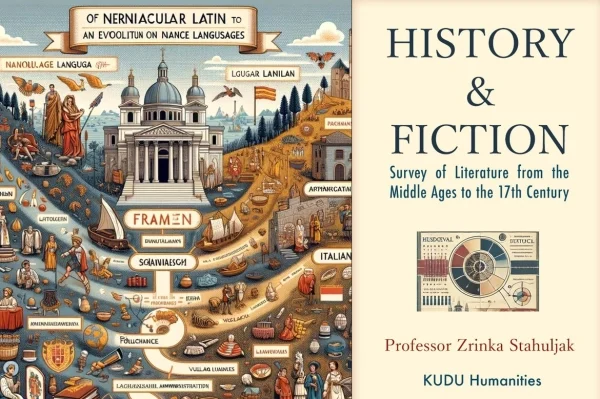
    The textbook, developed in partnership with the learning tool company Kudu, was produced solely from course materials—including some rare primary sources—provided by Stahuljak, who edited the volume and has the ability to update it. Students can interact with the $25 textbook’s built-in chatbot and ask it for clarifications and summaries, though it’s programmed to prevent students from using it to write their papers and other assignments.

    But some of Stahuljak’s colleagues—at UCLA and elsewhere—were skeptical of AI’s ability to enhance the course.

    “This is truly bad and makes me wonder if we aren’t participating in creating our own replacements at the expense of, well, everyone who cares about teaching and learning,” one English professor wrote on social media at the time. Others characterized the move as “flat out stupid,” “absolute nonsense” and an idea that takes “the human out of humanities.”

    Despite the criticism, Stahuljak used the textbook to teach the course last spring.

    In an interview with Inside Higher Ed last month, she reflected on the backlash and benefits of using the textbook—and what may be holding other faculty back from embracing AI’s power to enhance teaching and learning.

    (This interview has been edited for length and clarity.)

    Q: Did you expect the backlash to the textbook and what do you think drove it?

    A: Knowing my colleagues in the humanities and the humanistic social sciences, I’m not surprised that they were [skeptical]—they can be the least experimental bunch. But I was surprised that some of my colleagues at UCLA were so skeptical because they’ve known me for years and don’t think of me as a person who follows fads. I was really shocked that they couldn’t see that this textbook was my creation; it was carefully edited, just as if it had been printed.

    I don’t see how a traditional textbook that costs $250 and is out of date within two years or three years, would be in some way better than a custom $25 AI-facilitated textbook that is based on my material.

    But I think some of that hesitation comes from an enormous fear many faculty have about AI. There’s a divide between people who are looking into the uses of AI and [those who are] philosophizing about the ethics of AI.

    Universities are giving everyone access to commercial [AI tools], but most people don’t really know how to use it, and we’re not getting any guidance. And it’s playing into faculty fears that we’re losing control to these mega companies.

    Q: What’s the benefit of using a custom AI-assisted textbook to aid teaching and learning as opposed to faculty and students using an array of available commercial AI-powered products?

    A: All of these AI tutors are popping up. Students can learn on their own when it’s good for them. They can watch tutorials that all these AI tutors are providing. That’s great, but are the AI tutors based on a textbook and the material the professor has approved? So, do we not want to have a [custom] AI tutor as part of our classes and textbooks? I think we do. It’s better than some commercial version that has nothing to do with what you’re teaching or is pulling the information from the internet.

    We’re losing that control when we are indiscriminately given ChatGPT or other commercial generative AI-powered tools.

    Q: How did the students who took your class last year react to using the textbook?

    A: When they first learned about it, a third were amused, a third were surprised and a third were indifferent.

    [Compared to teaching the class without the AI-assisted textbook], engagement went up. I always have that front row of students that’s engaged, but I had several front rows that were engaged. Students started showing up for office hours, wanting to discuss their paper with me. I was shocked.

    It also increased accessibility because the textbook has audio and video versions of the chapters; a number of students told us they were listening to it on their way to class or at the gym.

    Another student who had never used AI said he learned a lot from the textbook because of the built-in chatbot that was linked to the textbook. The chatbot was designed not to give students the answers. And the questions it asks aren’t about the date something happened, but about understanding arguments, logic, or the causality and effect, and so they had to really think through that.

    Q: Did using the custom AI-assisted textbook free up more time for in-depth discussion like you had hoped?

    A: Yes, because I didn’t have to teach the material that was in the chapters. Instead, I could summarize or bring up just the relevant points. Then, I could discuss the primary sources with the students, which I’ve never had the time for before and would always fall on the teaching assistants.

    The textbook also frees up the time for the TAs. Instead of having to cover all of the primary sources during the two-hour discussion section, they could focus on one primary source for the in-class critical analysis and writing exercise. During the writing session, students get live feedback from the TAs. And we could see what students were doing and thinking and noticed they weren’t using ChatGPT to write their papers, but they were actually thinking and writing and working.

    Q: Despite the success of the textbook for your course, only a couple of other humanities courses at UCLA are utilizing it. How has the higher education sector’s approach to AI integration contributed to this reluctance to use AI?

    A: Universities are going to look for a fast solution [to adopting AI]. Big tech companies can provide one at scale, but it probably won’t work for everyone. And when universities do these huge tech partnerships, they’re deciding for us—we can use AI, but within the parameters of what this tech company has decided.

    The university is making faculty do the work [of coming up with innovative uses for AI], but we’re currently given only one option: ChatGPT. [In 2024, UCLA announced that it was incorporating OpenAI’s ChatGPT Enterprise into its operations, granting access to all students, staff and faculty; and calling for project proposals utilizing the technology.]

    We’re not given small company options. Why don’t we have an array of accessibility? Why are we not encouraged to explore different possibilities? We’re still a democracy, but democracy is not having just chatGPT. Democracy is having more options.
    Source link

  • Florida Introduces “Sanitized” Sociology Textbook

    Florida Introduces “Sanitized” Sociology Textbook

    Sociology faculty at Florida International University are outraged that their department is requiring them to use a state-approved textbook to teach an introductory course as part of the university’s general education curriculum.

    They say the state’s process for developing the textbook and new course framework was opaque, rushed and designed to pressure universities into adopting censored learning materials without a legal directive to do so.

    Furthermore, the textbook—a heavily edited version of an open-source sociology textbook titled Introduction to Sociology 3e—now makes only cursory mentions of important sociological concepts regarding race, gender, sexuality and other topics that have drawn Republican ire. Faculty say it whitewashes the field’s key principles, diminishes the quality of education for students and intensifies the state’s attacks on academic freedom.

    “ [Students] will be getting a sociology text, a sociology course without a soul,” Matthew Marr, an associate professor of sociology at FIU who has refused to teach the course this semester, said at an FIU Faculty Senate meeting last week. “It’s been scraped out. It is a sanitized version of the course.”

    Florida’s War on Sociology

    Inside Higher Ed reviewed a copy of both the original textbook and the new one and found numerous substantive changes.

    Compared to the original 669-page textbook, the new version is just 267 pages. Unlike the original, the state-approved version doesn’t include chapters on media and technology, global inequality, race and ethnicity, social stratification, or gender, sex and sexuality. It also scraps a section on the government-led genocide of Native Americans. And while the original uses the word “transgender” 68 times and “racism” 115 times, the former term appears only once in the new textbook and the latter six times.

    “There are no discussions of systemic or structural racism, a core concept in sociology,” read a Jan.16 letter that 19 faculty members in FIU’s Global and Sociocultural Studies Department sent to their Faculty Senate’s academic freedom committee and the United Faculty of Florida’s FIU chapter. “Not only are these omissions an incorrect representation of the field, but they also fail to prepare students for majors and graduate education that require or recommend introduction to sociology.”

    The state’s creation of the new textbook is the latest battle in Florida’s ongoing campaign to assert control over university curricula. State leaders have taken special pains to discredit the field of sociology, which the American Sociological Association defines as “the study of social life, social change, and the social causes and consequences of human behavior.”

    In 2023, the Florida Legislature passed Senate Bill 266, prohibiting general education courses from including topics that “distort significant historical events,” teach “identity politics” or are “based on theories that systemic racism, sexism, oppression, and privilege are inherent in the institutions of the United States and were created to maintain social, political, and economic inequities.”

    Later that year, Florida’s then–education commissioner, Manny Díaz Jr.—who is now president of the University of West Florida—singled out sociology, posting on X that the field “has been hijacked by left-wing activists and no longer serves its intended purpose as a general knowledge course for students.” Florida governor Ron DeSantis has characterized the discipline as “very mushy,” “highly ideological” and “not the type of academic rigor that we’re looking for and that our Founding Fathers would have thought essential to be educating folks.”

    In January 2024, the Florida Board of Governors, which oversees all 12 public institutions in the State University System of Florida, voted to remove sociology from the state’s approved core course requirements. One year later, the board removed hundreds of additional courses, including many focused on race and gender, from general education offerings at all state universities.

    Even so, individual universities could choose to keep sociology and other courses as part of their campus-level general education offerings, which some universities—including FIU—chose to do. (At FIU, that tier of courses is called the University Core Curriculum, or UCC.)

    Culture War Crossfire

    At last week’s Faculty Senate meeting, Jennifer L. Doherty-Restrepo, FIU’s assistant vice president for academic planning and accountability, said the board approved all of FIU’s UCC courses—including the introductory sociology course, known as SYG2000—last January. But in July, the board sent a memo to all State University System campuses asking to review the textbooks, syllabi and other course materials that would be used to teach Introductory Sociology during the fall 2025 semester. (Materials for some psychology courses were also flagged but have since been remedied and approved, according to Doherty-Restrepo.)

    The review found that none of the course materials aligned with state statutes, but the board provided the university only “vague” feedback on which parts were noncompliant, Doherty-Restrepo said. The university requested additional guidance on how to teach sociology in compliance and suggested the creation of a working group to provide recommendations, she added.

    Soon after, the state launched the sociology working group, composed of four faculty members and four Board of Governors administrators, including Dawn Carr, a sociology professor at Florida State University; Quing Lai, a sociology professor at FIU; Phillip Wiseley, a sociology professor at Florida SouthWestern State College; Jason Jewell, chief academic officer and vice chancellor of strategic initiatives for the Board of Governors; and Emily Sikes, vice chancellor for academic and student affairs for the board.

    (The full composition of the committee is not publicly available information. The Board of Governors did not respond to Inside Higher Ed’s numerous questions about the working group or the new textbook.)

    Within a month of convening, however, the working group was caught in the cross fire of Florida’s culture wars.

    “Today, I took immediate action against [Phillip Wiseley] … by removing him from the statewide sociology course workgroup after reports confirmed that he was using instructional materials promoting gender ideology, a direct violation of state statute,” Anastasios Kamoutsas, Florida’s education commissioner, wrote in an Oct. 30 post on X. “I am also recommending the college president take further disciplinary action to ensure this never happens again.”

    (Inside Higher Ed attempted to contact Wiseley for comment, but a message sent to his college email address bounced back as undeliverable.)

    In their letter to the faculty union and Faculty Senate, FIU sociology faculty pointed to Wiseley’s dismissal as evidence that the working group “was not valid” and that the “four sociologists who were in the workgroup participated under the clear threat of discipline.”

    ‘Merely a Resource’

    The working group nevertheless moved forward. While creating a new textbook wasn’t the group’s original charge, Carr, the Florida State sociologist, told Inside Higher Ed that it emerged as the best immediate solution for keeping the sociology course as part of the institution-level general education curriculum.

    “To ensure that faculty had materials to teach the course, we wanted to provide a basic set of course materials that complied with general education requirements,” she wrote in an email. “The idea was to provide our colleagues with a stop-gap solution to avoiding losing the course from the general education curriculum. Our concern was that it is much more challenging to reinstate a course after being cut as a general education course at the state level than to improve and elevate course materials over time.”

    By Dec. 3, the working group had completed the draft sociology framework ensuring compliance with state law and would soon provide a “resource”—the textbook—to support it, according to an email from state administrator Sikes.

    Every provost has since seen a copy of the new textbook, though not all sociology departments have chosen to adopt it.

    “I don’t know what other campuses have done with this, but the University of Florida accepted it as merely a resource and recommendation,” Evan Lauteria, an assistant instructional professor of sociology at UF, told Inside Higher Ed. “After insight from the college and the department, [we] will not be using them.”

    He decried the state for trying to pressure universities into using those specific materials.

    “It’s unclear if they have the legal foundations to stand on to require adoption of these materials, but they are hoping universities cave quickly,” he said. “That would lay the groundwork for them to do it in other disciplines.”

    Emails obtained by Inside Higher Ed show that both FSU’s and FIU’s sociology departments are using the state-approved course materials this semester.

    FIU Faculty Blindsided

    But FIU faculty didn’t get word of the change until days before the spring semester started.

    Initially administrators thought the sociology course had until fall 2026 to comply with the state law, according to a Jan. 1 email to department faculty from Chair A. Douglas Kincaid. But then the Board of Governors moved up the compliance deadline to spring 2026, he wrote, and vowed to review all syllabi and readings. To that end, he said the provost and dean “requested” that the department use the state-approved course materials this semester. (State authorities have since followed through with their syllabus review.)

    The only way to avoid using the textbook moving forward, he added, would be to remove the course from the university’s general education offerings.

    CHUYN/iStock/Getty Images

    The announcement blindsided the mostly adjunct faculty who had already prepared their courses for the semester, pinning them between “a rock and a hard place,” Zachary Levenson, an associate professor of sociology, told Inside Higher Ed.

    “If we take Intro to Sociology out of the gen ed curriculum and teach it the way we want, then certain students won’t be able to take it for credit and our enrollments are going to fall to point where [the state] can say we’re not doing anything and abolish the department,” he said. “Or we could remove it and risk low enrollment to make a statement.”

    After some debate, “this semester, adjuncts teaching the class are having to comply,” Levenson said. “But going forward, we’re going to figure something out, like potentially shifting tenured faculty to teach the class and other classes that are subject to the Board of Governors’ intervention.”

    Unanswered Questions

    Beyond FIU, faculty all over the state are raising questions about the contents of the new textbook, the committee that created it and what exactly they are—and aren’t—allowed to teach.

    FSU sociology professor and textbook author Carr was scheduled to address some of their concerns Monday at a webinar hosted by the Board of Governors. Among the dozens of questions submitted in advance, faculty asked, Are the reasons why the other books were banned or considered in violation of the law written down somewhere? Can you provide a list? How should instructors respond if topics or perspectives that are not covered in the textbook are raised during class discussions?

    But the Board of Governors canceled the meeting without explanation hours before it was set to begin.

    “This is a completely opaque process,” said Robert Cassanello, president of the United Faculty of Florida. “They know they have their pants down and if they put themselves under any kind of scrutiny the justification and rationale for all of this will collapse. They’re doing their best to keep all of this out of the sunshine.”

    Which is why, he added, it’s “incumbent on [faculty] not to participate in assisting the Board of Governors in attacking our academic freedom and curbing our curricular decisions.”

    And based on what he knows, Florida’s attempts to control university course content probably won’t stop with sociology.

    “I have it on good authority that next year they’re going to look at the psychology and American history textbooks,” Cassanello said. “It’s an assault on critical thinking.”


    Source link