Tag: Therapy

  • Conversion therapy at the Supreme Court

    Conversion therapy at the Supreme Court

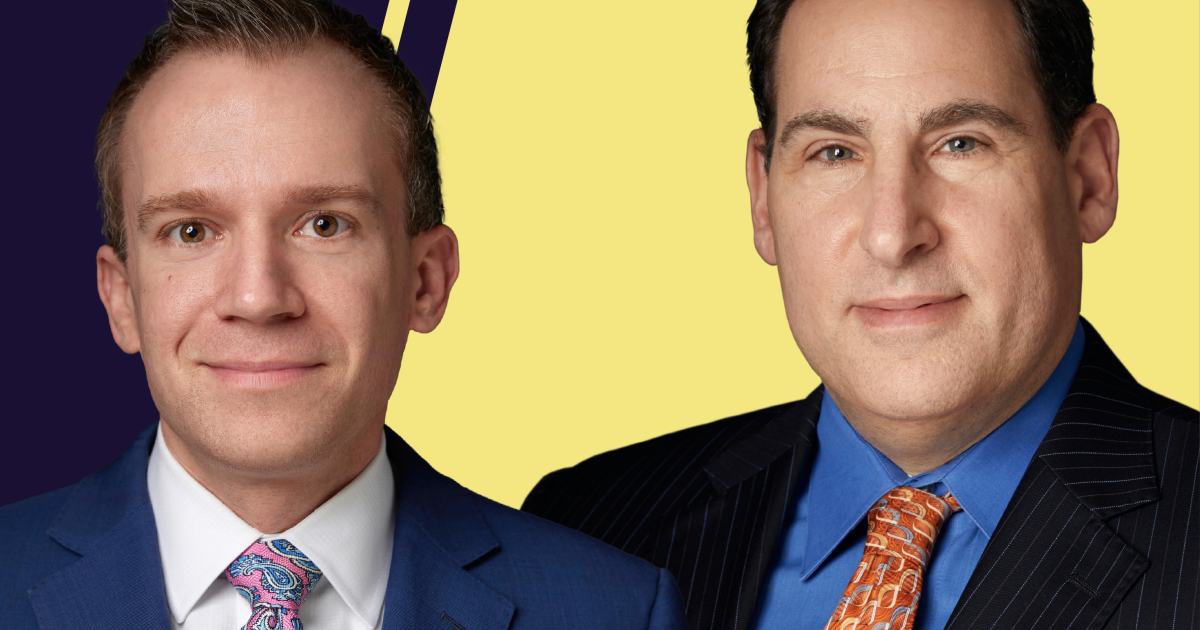
    FIRE’s Ronnie London and Conor Fitzpatrick join the
    show to discuss the Supreme Court’s oral argument in the conversion
    therapy case, the Pentagon’s new press rules, Indiana University’s
    censorship rampage, and where the situation stands with visa and
    green card holders who say things the feds don’t like.

    Timestamps:

    00:00 Intro

    01:19 Chiles v. Salazar, the conversion therapy
    case

    30:03 The Pentagon’s new press rules

    48:48 What the hell is going on at Indiana
    University?

    55:38 Feds boot noncitizens for Charlie Kirk
    speech

    01:05:02 Outro

    Enjoy listening to the podcast? Donate to FIRE today
    (https://www.thefire.org/) and
    get exclusive content like member webinars, special episodes, and
    more. If you became a FIRE Member
    through a donation to FIRE at thefire.org and would like access to
    Substack’s
    paid subscriber podcast feed, please email [email protected].

    Source link

  • The Supreme Court should strike down Colorado’s ban on ‘conversion therapy.’ Here’s why.

    The Supreme Court should strike down Colorado’s ban on ‘conversion therapy.’ Here’s why.

    Last week, the Supreme Court heard oral argument in Chiles v. Salazar, a First Amendment challenge to Colorado’s ban on “conversion therapy” — that is, counseling intended to change their gender identity or attraction to someone of the same sex. The case has attracted widespread attention because conversion therapy is deeply controversial. But the Court’s decision is poised to have significant consequences far beyond the practice — so to protect free expression, the Court should find the law unconstitutional.  

    That’s because Chiles hinges on one of the central questions in First Amendment jurisprudence: When do words become functionally indistinguishable from conduct? 

    The First Amendment broadly protects speech, including expressive actions like holding a sign or marching in a protest. But conduct — assault, for example, or drunk driving — is fair game for the government to regulate and/or criminalize. When speech is inextricably linked to certain conduct, it may lose First Amendment protection. 

    The classic example is incitement — speech intended to and likely to result in imminent lawless action. Because the words are so closely tied to the immediate crime that’s all but certain to result, incitement isn’t protected by the First Amendment. That’s a high bar to meet, because we Americans value freedom of speech and are rightly wary of government control. 

    In defense of fiery words

    In the wake of political violence, calls to criminalize rhetoric are growing louder. But Brandenburg v. Ohio set the bar — and it’s a high one.


    Read More

    But deciding exactly where to draw the line between speech and conduct can be sharply contested — as in Kaley Chiles’ case. 

    Conversion therapy has a longpainful history. For many years, being anything other than “straight” was socially taboo and widely criminalized; until 1974, homosexuality was listed in the Diagnostic and Statistical Manual of Mental Disorders. Attempts to “cure” people of their sexuality or gender identity were widespread and took a variety of forms, including the use of electric shocks or chemicals. Now, groups like the American Psychiatric Association, the American Counseling Association, and the American Medical Association oppose conversion therapy, linking it to negative mental health outcomes and even suicide. And today Colorado is one of 27 states that ban counselors from engaging in conversion therapy with minors. 

    But let’s say some conversion therapy doesn’t include shock treatments, medicine, or any physical conduct. Suppose instead it consists solely of a counselor and a client talking to each other. It would still be prohibited by Colorado’s law, which bans counselors from any practice that “attempts or purports to change an individual’s sexual orientation or gender identity, including efforts to change behaviors or gender expressions or to eliminate or reduce sexual or romantic attraction or feelings toward individuals of the same sex.” And the prohibition includes situations where individuals seek out such advice.

    That’s why Kaley Chiles, a counselor in Colorado, filed a First Amendment challenge to the law in September 2022. Chiles alleged the law prevented her from providing “licensed, ethical, and professional counseling that honors her clients’ autonomy and right to self-determination,” explaining that “speech is the only tool” she uses in her counseling. Consequently, she argued, banning her speech-only counseling violates the First Amendment.

    A federal district court disagreed. Rejecting Chiles’ challenge, the district court held the ban was a “public health law” that “regulates professional conduct rather than speech.” In other words, Chiles’ conversation was more than just talk, but rather treatment, and thus the law’s impact on Chiles’ ability to communicate with clients was “incidental to the professional conduct it regulates.” 

    Talk therapy is speech. And when the government prohibits speech because it doesn’t like the views being expressed, it violates the First Amendment.

    Chiles appealed to the U.S. Court of Appeals for the Tenth Circuit, arguing the district court got it wrong by treating her counseling as “medical treatment” instead of “a client-directed conversation consisting entirely of speech.” But the Tenth Circuit affirmed the district court. It concluded that Colorado’s law “does not regulate expression,” but rather “the provision of a therapeutic modality — carried out through use of verbal language — by a licensed practitioner authorized by Colorado to care for patients.” 

    Can a College that Protects Free Speech be ‘Gay-Friendly’?

    There’s no need to sacrifice free speech for a campus to be accepting of LGBT students.


    Read More

    So Chiles sought review by the Supreme Court of the United States. She asked the Court to resolve the split between the circuit courts of appeal — with the Ninth and now Tenth Circuits treating conversion therapy bans as permissible regulations of professional speech, and the Eleventh Circuit on the other side. (A 2014 Third Circuit case involving New Jersey’s ban on conversion therapy rejected the “counter-intuitive conclusion” that a counselor’s talk therapy with clients constitutes “conduct.”) 

    At base, Chiles asked the Court to separate regulable conduct from protected speech. The Court agreed to hear her case — and at oral argument last week, the justices focused on exactly that question.

    In response to a question from Justice Jackson, for example, exploring what differentiates Chiles from “a medical professional who has exactly the same goals, exactly the same interests, and would just be prescribing medication for that rather than her talking with the client,” James Campbell, Chiles’ counsel, replied: “Because this involves a conversation,” not conduct. If the “treatment” at issue “consists only of speech, then it doesn’t trigger the speech-incidental-to-conduct doctrine.” 

    Campbell emphasized that Chiles’ therapy is different from medical practices involving conduct, characterizing her interactions with clients as “an ongoing, active dialogue where she’s helping them to explore their goals, and that absolutely has to be protected by the First Amendment.” That’s an important point. And it’s worth emphasizing that Chiles’ clients seek out her help; there’s no deception involved. As Chiles put it in her complaint, she “sits down with her clients and talks to them about their goals, objectives, religious or spiritual beliefs, values, desires, and identity to help them (1) explore and understand their feelings and (2) formulate methods of counseling that will most benefit them.”

    When Justice Kagan and Chief Justice Roberts pressed Campbell on the same point, he readily granted that if Chiles’ practice involved more than talk therapy — “administering drugs, performing procedures, conducting examinations” — the analysis would be different. If Chiles’ speech was “describing how to take the medication,” for example, it would properly be considered incidental to the conduct of prescribing medication. 

    But Colorado’s law regulates Chiles’ speech — and as some justices noted, it does so on the basis of viewpoint. Treating speech differently on the basis of viewpoint is anathema to the First Amendment, which bars the government from placing a thumb on the scale in favor of certain beliefs while punishing others. 

    In an exchange with Shannon Stevenson, Colorado’s solicitor general, Justice Alito argued the law applies unequally, sketching out a hypothetical to illustrate his point: 

    So, in the first situation, an adolescent male comes to a licensed therapist and says he’s attracted to other males, but he feels uneasy and guilty with those feelings, he wants to end or lessen them, and he asks for the therapist’s help in doing so. 

    The other situation is a similar adolescent male comes to a licensed therapist, says he’s attracted to other males, feels uneasy and guilty about those feelings, and he wants the therapist’s help so he will feel comfortable as a gay young man. 

    It seems to me . . . your statute dictates opposite results in those two situations based on the view — based on the viewpoint expressed. One viewpoint is the viewpoint that a minor should be able to obtain talk therapy to overcome same-sex attraction if that’s what he — or he or she wants. And the other is the viewpoint that the minor should not be able to obtain talk therapy to overcome same-sex attraction even if that is what he or she wants.

    “Looks like blatant viewpoint discrimination,” concluded the justice. 

    Justice Kagan echoed Justice Alito’s concern. “If a doctor says, I know you identify as gay and I’m going to help you accept that, and another doctor says, I know you identify as gay and I’m going to help you to change that, and one of those is permissible and the other is not,” she suggested, “that seems like viewpoint discrimination in the way we would normally understand viewpoint discrimination.” 

    Relatedly, Justice Barrett and Justice Gorsuch pressed Stevenson on whether other states could pass a “mirror image” law that, as Justice Gorsuch put it, “prohibits any attempt to affirm changes of gender identity or sexual orientation.” In response to questioning from Justice Gorsuch, Stevenson conceded that under Colorado’s position, a state in the 1970s would not have violated the First Amendment by passing a law prohibiting a “regulated licensed professional from affirming homosexuality.” And Justice Barrett asked whether a state could simply “pick a side” after Stevenson argued Colorado’s law should receive less judicial scrutiny than a hypothetical mirror image law would receive. “Counsel, it’s pretty important that I think about how this would apply to cases down the road,” said Justice Barrett. 

    No gay rights without free expression

    FIRE’s latest rankings show alarming support for censorship among LGBT students. But as Kirchick explains, there would be no LGBT rights without free speech.


    Read More

    Justice Barrett’s focus on the possible ramifications of the Court’s ruling is apt, because Chiles’ case raises an even bigger question than whether bans on conversion therapy are constitutional. It asks the Court to draw a clearer line delineating conduct and speech in the professional context. That’s important, because both Colorado’s law and the lower courts’ rulings blur that line in ways that are ripe for abuse. 

    To be sure, attempts to recast protected speech as punishable conduct are evergreen, and this is not unfamiliar territory for the Supreme Court. Back in 2018, the Court warned that “regulating the content of professionals’ speech ‘pose[s] the inherent risk that the Government seeks not to advance a legitimate regulatory goal, but to suppress unpopular ideas or information.’” And some lower courts have rightly rejected exactly government attempts to do just that. 

    In 2002, for example, the Ninth Circuit blocked enforcement of a federal government policy threatening doctors who discussed medical marijuana with their patients with the loss of the ability to prescribe drugs. As the Ninth Circuit noted, doctors “must be able to speak frankly and openly to patients,” and restrictions on their ability to do so “strike at core First Amendment interests of doctors and patients.” 

    And just two years ago, a federal district court ruled a California law that defined “unprofessional conduct” for doctors to include efforts to “disseminate misinformation or disinformation related to COVID-19” to be likely unconstitutional. The court found the law’s terms were impermissibly vague — noting, for example, that the state was unable to demonstrate that “‘scientific consensus’ has any established technical meaning.”  

    But if the Supreme Court upholds Colorado’s law, these rulings could be in doubt. A win for Colorado would embolden government actors to impose broad viewpoint-based restrictions on a wide variety of professional speech disguised as regulations on “conduct.”

    Your right to talk freely with your counselor or your doctor shouldn’t depend on what state you’re in.

    That possibility should worry everyone, no matter your views on conversion therapy. As several justices pointed out during oral argument, this government power could just as easily be wielded in ways that proponents of conversion therapy bans would find objectionable. As Reason senior editor Elizabeth Nolan Brown noted, a ruling upholding Colorado’s law would “pave the way for talk therapy restrictions based on conservative views of sexuality and gender, too.” 

    She’s right. It’s too easy to imagine a red-and-blue patchwork of state bans barring counselors from either conversion therapy, on one side, or gender affirmation, on the other. Same for conversations about abortion — or vaccines, or marijuana, or assisted suicide, or any number of culture war flashpoints. But your right to talk freely with your counselor or your doctor shouldn’t depend on what state you’re in. The government shouldn’t be able to rule some subjects out of bounds, impeding professionals’ ability to meet a client’s individual needs. 

    It’s important to remember that new, viewpoint-based laws aren’t necessary for imposing consequences against professionals who harm their clients. That’s what licensure, standards of care, and malpractice suits are for. If a professional in Colorado or California engages in professional misconduct, they may properly be punished.

    But talk therapy is speech. And when the government prohibits speech because it doesn’t like the views being expressed, it violates the First Amendment. The Court should strike down Colorado’s law.

    Source link

  • Truth as Therapy for Higher Education

    Truth as Therapy for Higher Education

    Anosognosia is the inability to recognize one’s own illness or disability. In higher education, it describes the chronic denial of a system in crisis—one that refuses to admit its own collapse.

    For decades, U.S. higher education has been sold as the great equalizer. The story was simple: borrow, study, graduate, succeed. But the data show the opposite. What we are witnessing is a long college meltdown, masked by denial at the highest levels of government, university administrations, and Wall Street.

    The Debt Trap

    • Outstanding student loan debt now exceeds $1.77 trillion, burdening more than 43 million Americans.

    • Nearly 20 percent of borrowers are in default or serious delinquency.

    • Black borrowers, especially Black women, carry the heaviest burdens and are least likely to see upward mobility from their degrees.

    • Many in income-driven repayment programs will never pay off principal, living in a permanent state of debt peonage.

    Universities and policymakers insist debt is an “investment.” But for millions, it is a generational shackle.

    The Exploited Faculty

    • More than 70 percent of college instructors are contingent.

    • Adjuncts often earn less than $3,500 per course, with no healthcare, no retirement, and no security.

    • Roughly one in four adjuncts relies on public assistance.

    Universities still market themselves as communities of scholars. In reality, they operate on the same exploitative labor practices as Uber or Amazon.

    The Employment Mismatch

    • Four in ten recent grads work in jobs that don’t require a degree.

    • One-third of graduates say their work is unrelated to their major.

    • Median real wages for college graduates have been flat for 25 years.

    Still, higher ed pushes “lifelong learning” credentials, turning underemployment into a new revenue stream.

    Prestige as Denial

    • At Ivy League universities, 40 percent of students come from the top 5 percent of households.

    • Fewer than 5 percent come from the bottom fifth.

    • Endowments soar—Harvard’s sits at $50 billion—but tuition relief and faculty wages barely budge.

    This is not mobility. It is a hereditary elite cloaked in the language of meritocracy.

    Climate Contradictions

    • Universities promote sustainability but invest billions in fossil fuels.

    • Campus expansion and luxury amenities drive up emissions, water use, and labor exploitation.

    Even here, anosognosia reigns: branding over reality.

    The Meltdown Denied

    The college meltdown has been unfolding for more than a decade:

    • Small liberal arts colleges shuttering.

    • Regional publics bleeding enrollments.

    • For-profits morphing into “nonprofits” while still funneling money to investors.

    • State funding eroded, shifting the cost to students and families.

    But instead of confronting the collapse, higher ed leaders rely on rhetoric: “innovation,” “resilience,” “access.” Like anosognosia, denial itself becomes survival.

    The Human Cost

    The denial is not harmless. It is measured in:

    • The indebted graduate delaying family formation and homeownership.

    • The adjunct commuting across counties to string together courses while living below the poverty line.

    • The working-class family betting their savings on a degree that will not deliver mobility.

    The meltdown is here. Higher education’s inability—or refusal—to admit it ensures the damage will deepen.

    Truth and Healing 

    Anosognosia prevents healing because it prevents recognition of the problem. U.S. higher education cannot admit its own disease, so it cannot begin recovery. Until it does, students, families, and workers will bear the costs of a system in denial.


    Sources

    • Federal Reserve Bank of New York, Quarterly Report on Household Debt and Credit (2025)

    • National Center for Education Statistics (NCES), Digest of Education Statistics (2023)

    • American Association of University Professors (AAUP), Annual Report on the Economic Status of the Profession (2024)

    • Pew Research Center, The Rising Cost of Not Going to College (2023 update)

    • The Century Foundation, Adjunct Project (2022)

    • Chetty et al., Mobility Report Cards: The Role of Colleges in Intergenerational Mobility (2017, with updates)

    • IPEDS (Integrated Postsecondary Education Data System), U.S. Department of Education

    • Harvard Management Company, Endowment Report (2024)

    • Higher Education Inquirer, College Meltdown archive (2018–2025)

    Source link

  • Therapy Dogs Boost Graduate Student Well-Being

    Therapy Dogs Boost Graduate Student Well-Being

    Laura Fay/iStock/Getty Images Plus

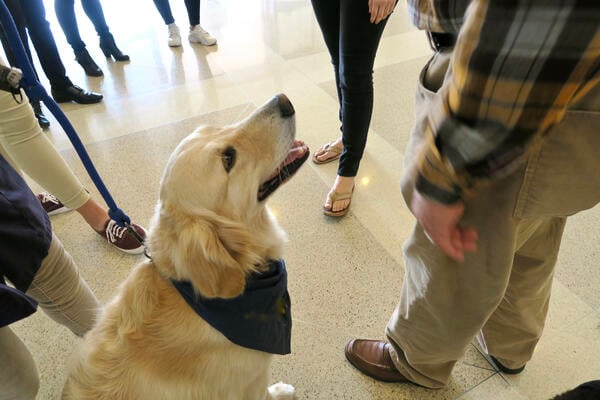
    Therapy dogs are often touted as a way to give students a reprieve from busy academic schedules or remind them of their own pets at home, but a recent study from Chatham University found that engagement with therapy dogs can instill a sense of social connection for students at all levels.

    An occupational therapy student at Chatham who researched how weekly therapy dog interactions could impact graduate students in health science programs found that the encounters produced benefits for students’ social and emotional health.

    The background: Past research shows animal interventions can mitigate homesickness for first-year students who miss their pets and academic stress for nursing students. Students who participate in “dog office hours” also experience increased social connection and comfort. Shelter dogs can also motivate students’ physical well-being, as demonstrated by the University of South Carolina’s canine fitness course.

    Graduate students in health science programs, in particular, report high rates of anxiety, depression and stress, according to the study.

    Regardless of their program of study, graduate students also tend to be removed from general campus services and activities due to physical campus layouts, residing and working off campus, or a misalignment of schedules between resources and their responsibilities. Therefore, identifying services specifically for graduate students can improve their access and uptake.

    How it works: Twenty-five students were recruited to participate in the study, meeting weekly to engage in activities with a group of therapy dogs, including petting, playing with, brushing, holding and walking the animals. Students could interact with the dogs for up to two hours over the course of the seven weeks. Before and after each puppy playdate, participants completed pre- and post-test surveys to gauge their feelings and the effects of the animal intervention.

    Survey results showed students were less likely to report feeling stressed and more likely to say they felt happy after engaging with the dogs.

    “I’ve really enjoyed this experience,” one participant wrote. “I feel like this has positively impacted my mood and well-being overall. I always leave feeling more relaxed and happier.”

    In open-ended questions, students said the dogs made them feel happy, loved, calm, relaxed, motivated and connected. Many said they also appreciated the opportunity to engage with their peers, noting that the regular cadence allowed them to socialize and meet new people, including the therapy dogs’ owners. Students indicated they wanted the visits to continue in some way if possible.

    The average student spent around 30 minutes with the therapy dogs during the trial, and, if they had the opportunity, a majority said they would participate in therapy animal groups on campus three to four times per month.

    Other Comforting Canines

    Chatham University students aren’t the only graduate students learning to destress from dogs. Here are some other examples of animal-assisted interventions across the country:

    • At Virginia Tech, graduate students at the Innovation Campus receive love and cuddles from Allen, a therapy dog who is co-handled by Barbara Hoopes, the graduate school’s associate dean for the region.
    • The City University of New York’s School of Public Health has hosted a therapy dog visit from the Good Dog Foundation to encourage graduate learners to relax and take a break during their week.
    • The University of Cincinnati featured therapy dogs at their Graduate Student Appreciation Week in April, honoring the hard work students do and helping them break their usual routines.

    Source link

  • Speech therapy association proposes eliminating ‘DEI’ in its standards

    Speech therapy association proposes eliminating ‘DEI’ in its standards

    Scores of speech therapists across the country erupted last month when their leading professional association said it was considering dropping language calling for diversity, equity and inclusion and “cultural competence” in their certification standards. Those values could be replaced in some standards with a much more amorphous emphasis on “person-centered care.” 

    “The decision to propose these modifications was not made lightly,” wrote officials of the American Speech-Language-Hearing Association (ASHA) in a June letter to members. They noted that due to recent executive orders related to DEI, even terminology that “is lawfully applied and considered essential for clinical practice … could put ASHA’s certification programs at risk.” 

    Yet in the eyes of experts and some speech pathologists, the change would further imperil getting quality help to a group that’s long been grossly underserved: young children with speech delays who live in households where English is not the primary language spoken. 

    “This is going to have long-term impacts on communities who already struggle to get services for their needs,” said Joshuaa Allison-Burbank, a speech language pathologist and Navajo member who works on the Navajo Nation in New Mexico where the tribal language is dominant in many homes.

    In a written statement after this story published, a spokesperson for the association stressed that the proposed changes have not been finalized, and said that member feedback is currently under review.

    “ASHA remains steadfast in our belief that all health care services should be non-discriminatory and address the needs of every individual,” the spokesperson added. She characterized the proposed changes as “an evolution, not a retreat,” and noted that person-centered care aims to ensure “clinicians are equipped to deliver services tailored to each person’s context, including their lived experience, language background, cultural identity, and home environment.”

    Across the country, speech therapists have been in short supply for many years. Then, after the pandemic lockdown, the number of young children diagnosed annually with a speech delay more than doubled. Amid that broad crisis in capacity, multilingual learners are among those most at risk of falling through the cracks. Less than 10 percent of speech therapists are bilingual.

    A shift away from DEI and cultural competence — which involves understanding and trying to respond to differences in children’s language, culture and home environment — could have a devastating effect at a time when more of both are needed to reach and help multilingual learners, several experts and speech pathologists said. 

    They told me about a few promising strategies for strengthening speech services for multilingual infants, toddlers and preschool-age children with speech delays — each of which involves a heavy reliance on DEI and cultural competence.

    Embrace creative staffing. The Navajo Nation faces severe shortages of trained personnel to evaluate and work with young children with developmental delays, including speech. So in 2022, Allison-Burbank and his research team began providing training in speech evaluation and therapy to Native family coaches who are already working with families through a tribal home visiting program. The family coaches provide speech support until a more permanent solution can be found, said Allison-Burbank.

    Home visiting programs are “an untapped resource for people like me who are trying to have a wider reach to identify these kids and get interim services going,” he said. (The existence of both the home visiting program and speech therapy are under serious threat because of federal cuts, including to Medicaid.) 

    Use language tests that have been designed for multilingual populations. Decades ago, few if any of the exams used to diagnose speech delays had been “normed” — or pretested to establish expectations and benchmarks — on non-English-speaking populations.

    For example, early childhood intervention programs in Texas were required several years ago to use a single tool that relied on English norms to diagnose Spanish-speaking children, said Ellen Kester, the founder and president of Bilinguistics Speech and Language Services in Austin, which provides both direct services to families and training to school districts. “We saw a rise in diagnosis of very young (Spanish-speaking) kids,” she said. That isn’t because all of the kids had speech delays, but due to fundamental differences between the two languages that were not reflected in the test’s design and scoring. (In Spanish, for instance, the ‘z’ sound is pronounced like an English ‘s.’)

    There are now more options than ever before of screeners and tools normed on multilingual, diverse populations; states, agencies and school districts should be selective, and informed, in seeking them out, and pushing for continued refinement.

    Expand training — formal and self-initiated — for speech therapists in the best ways to work with diverse populations. In the long-term, the best way to help more bilingual children is to hire more bilingual speech therapists through robust DEI efforts. But in the short term, speech therapists can’t rely solely on interpreters — if one is even available — to connect with multilingual children.

    That means using resources that break down the major differences in structure, pronunciation and usage between English and the language spoken by the family, said Kester. “As therapists, we need to know the patterns of the languages and what’s to be expected and what’s not to be expected,” Kester said.

    It’s also crucial that therapists understand how cultural norms may vary, especially as they coach parents and caregivers in how best to support their kids, said Katharine Zuckerman, professor and associate division head of general pediatrics at Oregon Health & Science University. 

    “This idea that parents sit on the floor and play with the kid and teach them how to talk is a very American cultural idea,” she said. “In many communities, it doesn’t work quite that way.”

    In other words, to help the child, therapists have to embrace an idea that’s suddenly under siege: cultural competence,

    Quick take: Relevant research

    In recent years, several studies have homed in on how state early intervention systems, which serve children with developmental delays ages birth through 3, shortchange multilingual children with speech challenges. One study based out of Oregon, and co-authored by Zuckerman, found that speech diagnoses for Spanish-speaking children were often less specific than for English speakers. Instead of pinpointing a particular challenge, the Spanish speakers tended to get the general “language delay” designation. That made it harder to connect families to the most tailored and beneficial therapies. 

    A second study found that speech pathologists routinely miss critical steps when evaluating multilingual children for early intervention. That can lead to overdiagnosis, underdiagnosis and inappropriate help. “These findings point to the critical need for increased preparation at preprofessional levels and strong advocacy … to ensure evidence-based EI assessments and family-centered, culturally responsive intervention for children from all backgrounds,” the authors concluded. 

    Carr is a fellow at New America, focused on reporting on early childhood issues. 

    Contact the editor of this story, Christina Samuels, at 212-678-3635, via Signal at cas.37 or [email protected].

    This story about the speech therapists association was produced by The Hechinger Report, a nonprofit, independent news organization focused on inequality and innovation in education. Sign up for the Hechinger newsletter.

    The Hechinger Report provides in-depth, fact-based, unbiased reporting on education that is free to all readers. But that doesn’t mean it’s free to produce. Our work keeps educators and the public informed about pressing issues at schools and on campuses throughout the country. We tell the whole story, even when the details are inconvenient. Help us keep doing that.

    Join us today.

    Source link

  • How to Turn Creativity into a Healing Career in Art Therapy

    How to Turn Creativity into a Healing Career in Art Therapy

    Investing in Arts Education

    Pursuing a career in art therapy can help turn your creative and artistic abilities into a mental health profession, allowing you to support others, especially at a time when Americans are facing unprecedented mental health crises. 

    Every day, art therapists support their clients within a therapeutic relationship to use art and creativity to improve their mental, emotional, and physical well-being. They work with people of all ages and backgrounds — from children experiencing developmental delays or emotional and behavioral challenges to military service members with PTSD to older adults struggling with dementia or Alzheimer’s disease.

    “At the heart of my work as an art therapist is the creativity and self-expression found in art-making. We’ve all experienced it as children, and some of us have the joy to work with art to help people and communities heal. I’m always inspired by clients who may be afraid of using art materials as non-verbal language at first, but try it anyway,” explains art therapist Christianne E. Strang, Ph.D., ATR-BC.

    Particularly when people are struggling, facing a challenge, or even a health crisis, their own words or language may fail them. During these times, an art therapist can help clients express themselves in ways beyond words or language. Art therapists are trained in art and psychological theory and can help clients integrate nonverbal cues and metaphors that are often expressed through the creative process. 

    According to research, art therapy helps people feel more in control of their own lives and helps relieve anxiety and depression, including among cancer patients, tuberculosis patients in isolation, and military veterans with PTSD.

    According to art therapist Kathryn Snyder, Ph.D., ATR-BC, LPC, “Engaging in art therapy offers imagery and creative processes that support communication, expression, and insight into, as well as release of, difficult emotional experiences.”

    Opportunities for art therapists

    Art therapists serve diverse communities in different settings, such as medical institutions like hospitals, cancer treatment centers, and psychiatric facilities; outpatient offices and community centers; and schools. Many art therapists have independent practices. They also help support individuals and communities after a crisis or traumatic event, like a mass shooting or a natural disaster.

    Training in a broad range of psychological theories and ways to use art media and creative processes is necessary to becoming an art therapist who is able to help people process and cope with mental health challenges. Art therapists hold postgraduate degrees and are then credentialed by the Art Therapy Credentials Board as ATR (art therapist registered) or ATR–BC (board-certified art therapist registered).

    Learn more about art therapy and how to become an art therapist through the American Art Therapy Association.

    Source link