Tag: Threats

  • What to Know About Trump’s Funding Threats to Colleges

    What to Know About Trump’s Funding Threats to Colleges

    Over the course of just 13 weeks, President Donald Trump has made it clear that he’ll use billions of dollars in federal grants and contracts, primarily for research, as a lever to force colleges and universities to bow to his agenda and increase the representation of conservative ideology on their campuses.

    The cuts don’t follow any typical investigative process and sometimes lack clear explanations or legal justifications. And such an aggressive ad hoc strategy is one that that many higher education lawyers, policy analysts and administrators say could reshape postsecondary education for years to come.

    “It’s certainly unprecedented and deeply disturbing,” said John King Jr., former secretary of education under President Obama and current chancellor of the State University of New York system. Trump’s actions “really threaten the long-standing partnership between the federal government and higher education in the pursuit of both innovation and economic mobility.”

    Trump and his advisers have signaled their intent to crack down on “woke” higher education but haven’t said how they will do so. Instead, a cadre of conservative policy analysts plotted how to leverage other agencies and sources of funding, beyond access to the $130 billion distributed annually in federal student loans and Pell Grants.

    “At the beginning it felt like I was the only one fighting,” Chris Rufo, an influential anti-DEI advocate and a member of the Board of Trustees at New College of Florida, said on The Daily, a New York Times podcast last week. “Now, fast-forward five years, [and] some of the ideas that I had cobbled together have suddenly become reality, they’ve become policy, they affect billions of dollars in the flow of funds.”

    But efforts to send colleges and universities into “an existential terror,” as Rufo put it, have required the Trump administration to move at a dizzying pace and leverage multiple mechanisms that most higher education lawyers, policy analysts and officials say are incredibly novel.

    To catch up, here are four things you should know about Trump’s funding threats to colleges and universities.

    Broad Scope of Attack

    A large part of what makes the Trump administration’s current push to crack down on colleges and align their actions with his agenda so unprecedented, experts say, is its sheer magnitude, from the amount of money at risk to the number of investigations involving various agencies.

    The Education Department has historically taken the lead on holding colleges accountable, leveraging institutions’ eligibility for student aid programs to force compliance. But this time around, it’s an all-hands-on-deck effort with a magazine of federal programs used as ammunition.

    At least four departments beyond Education—Justice, Defense, Energy and Health and Human Services—have also been involved, cutting off scientific research grants, which are typically considered immune from political attacks.

    James Nussbaum, who leads the higher education practice at the Indiana law firm Church Church Hittle + Antrim, said that as Trump took office he often warned clients to be aware of any contracts they held with the Department of Education. But some of the cuts caught even him by surprise.

    “People had their focus on one ball in the air and hadn’t seen that these others might be affected,” he said.

    To review federal funding for colleges that it believes have violated students’ civil rights, the Trump administration launched a federal antisemitism task force that spanned several agencies and has led some of the most public actions against colleges so far.

    The group launched reviews of Columbia and Harvard Universities, demanded sweeping changes and froze $400 million and $2.2 billion in grants and contracts, respectively. The funds at risk support a wide range of research at the universities, including on cancer, tuberculosis and the effects of environmental pollution on health. Faculty have warned of dire consequences if the freezes continue.

    In addition to Columbia and Harvard, Northwestern, Cornell, Brown and Princeton Universities have had some of their federal funds frozen, though it’s not clear why or who made that decision and under what legal authority. (The Wall Street Journal reported that White House staff were behind the Cornell funding freeze.)

    The Trump administration also froze $175 million at the University of Pennsylvania to penalize administrators for allowing a transgender athlete to swim on the women’s team three years ago.

    What the Trump administration is doing enters a “whole new territory,” Princeton president Christopher Eisgruber said in a recent interview with The New York Times.

    Starting with the freeze at Columbia, “the government was using its tremendous power over research dollars to try to control what a private university was doing in terms of matters that are generally considered part of academic freedom,” Eisgruber added. “There’s a very fundamental threat here right now … to America’s research universities that anybody who cares about the strength of this country, our economy, our prosperity, our security, our health should be worried about.”

    Colleges also face other threats from the federal government. The Department of Education has launched or actively pursued at least 97 investigations concerning alleged antisemitism and DEI programs, which could imperil those institutions’ access to federal financial aid. And the National Institutes of Health and the Department of Energy moved to cap reimbursements for costs indirectly related to research, which, if enacted, could cost colleges billions.

    Bypassing Standard Processes

    Adding to the difficulty for colleges, the Trump administration is largely ignoring regulatory standards and procedures when it cuts funding.

    For instance, cabinet members have broadly used the term “investigation” to describe the ways they are cracking down on colleges. But in most cases, the review process has lasted only a few days and resulted in little to no evidence of the alleged violation. Often, universities have been presented with a list of ultimatums or policy changes they must make in order to avoid a funding freeze or restore their funds.

    The stop-work orders that have been issued so far have been “arbitrary” and “often unsupported,” said King of SUNY. If there is rationale, it often “seems disingenuous.”

    And some universities have yet to receive a formal notification about a funding freeze. For example, Brown officials have not received any official word of a rumored $510 million cut.

    “We have nothing to actually substantiate what’s being reported,” Brian Clark, Brown’s vice president for news, told Inside Higher Ed in an email.

    For civil rights investigations, investigations typically begin when the Education Department notifies an institution of the allegations made in thorough detail, experts explained. Then, the Office for Civil Rights conducts an in-depth investigation that includes talking to students, faculty and staff and gathering documents or data regarding the allegations. That process allows colleges to voluntarily resolve the investigation and negotiate a settlement with the department. The resulting agreement usually outlines various changes that colleges must make to comply with federal law. Some conservative critics have said those settlements or resolution agreements were “toothless.”

    If the parties cannot agree or a college refuses to comply with the federal law, the department could sue a college. But that’s rare, and the Education Department has never pulled a college’s federal funding over civil rights violations—a move that’s considered a nuclear option.

    Brendan Cantwell, a higher education professor at Michigan State University, noted that despite the quick turnaround, the administration’s investigations do, at times, parallel the motivations of traditional reviews. But what makes this approach so unprecedented and unlawful, in his mind, Cantwell said, is its “unmeasured” and “blanketed” nature.

    “So while there are precedents and similar examples in the past, beyond very superficial similarities, the similarities fall apart,” he said.

    Breaking Contract Law

    The means by which Trump is terminating grants and contracts is also novel, a lawyer who specializes in government contracts told Inside Higher Ed.

    Generally, the only people who have authority to take contract-based actions on behalf of the United States are contracting officers or agreements officers, said Jayna Marie Rust, a partner at Thompson Coburn LLP. But under the Trump administration, it’s often unclear if this is the case, especially with the Department of Government Efficiency reviewing contracts and grants and touting decisions to cancel millions in agreements.

    Rust said she has not seen any of the direct communications between government agencies and universities regarding contract/grant termination that are due to the identity of the institution and therefore can’t say if the notifications come from contracting or agreements officers. But notifications coming from others is something she has seen in other terminations that schools are receiving.

    “But to the extent these communications are not coming from the agreements officers or contracting officers, that is unusual,” Rust said.

    And much like the procedure for investigating and addressing policy violations, the government is supposed to ensure due process before excluding schools from receiving federal funds, which is effectively what the terminations have done. The Trump administration has seemingly bypassed those steps. (Several faculty groups and associations have sued to restore the canceled funding.)

    Even when the administration has completed a process to determine whether an entity can be excluded from receiving federal funds, contracting and agreements officers also often conduct a risk analysis to see if the benefit of letting that entity complete a contract or grant outweighs the benefit of cutting ties (which could result in losing the benefit of work that’s already completed), Rust said. It appears that the Trump administration also hasn’t gone through that review.

    More Than Money at Stake

    As a result of the sweeping scope of Trump’s attacks and the lack of precedent, the risks for colleges and universities are more than financial, higher ed experts say.

    Yes, losing billions of dollars in federal funding is a problem, and not one that elite institutions’ endowments can solve. But more than that, what’s at risk is the core mission and ethos of American higher education, King said.

    “From the technology inside of your phone to the treatment you may receive at your doctor—all of that can be traced back to research conducted at America’s higher ed institutions. And it’s under threat,” he said.

    And though the dollar amounts of funding pulled from smaller private liberal arts institutions and state universities may be “more modest,” they’re still significant, he added. “For those researchers, it’s heartbreaking, and it will ultimately harm economic development and national security.”

    The full impact of these funding freezes is not yet clear. But until the courts weigh in, colleges are stuck between a rock and a hard place, said Nussbaum, of Church Church Hittle + Antrim.

    “Schools are trying to make that decision of how can we make decisions consistent with our mission and values in a way that’s not going to get us called out?” Nussbaum said. “I think we’ll have a little bit more certainty on where the means and bounds of the discretion of the executive agency is in the funding. But I think in the meantime, a lot of schools are trying to wait out that clock.”

    Source link

  • New Food Security Threats 5 Years After COVID-Era Effort to Feed All Kids – The 74

    New Food Security Threats 5 Years After COVID-Era Effort to Feed All Kids – The 74

    A multi-pronged attack on food aid by Republican lawmakers could mean more of the nation’s children will go hungry — both at home and at school.

    The U.S. Department of Agriculture recently cut two federal programs that provided roughly $1 billion in funding for the purchase of food by schools and food banks. 

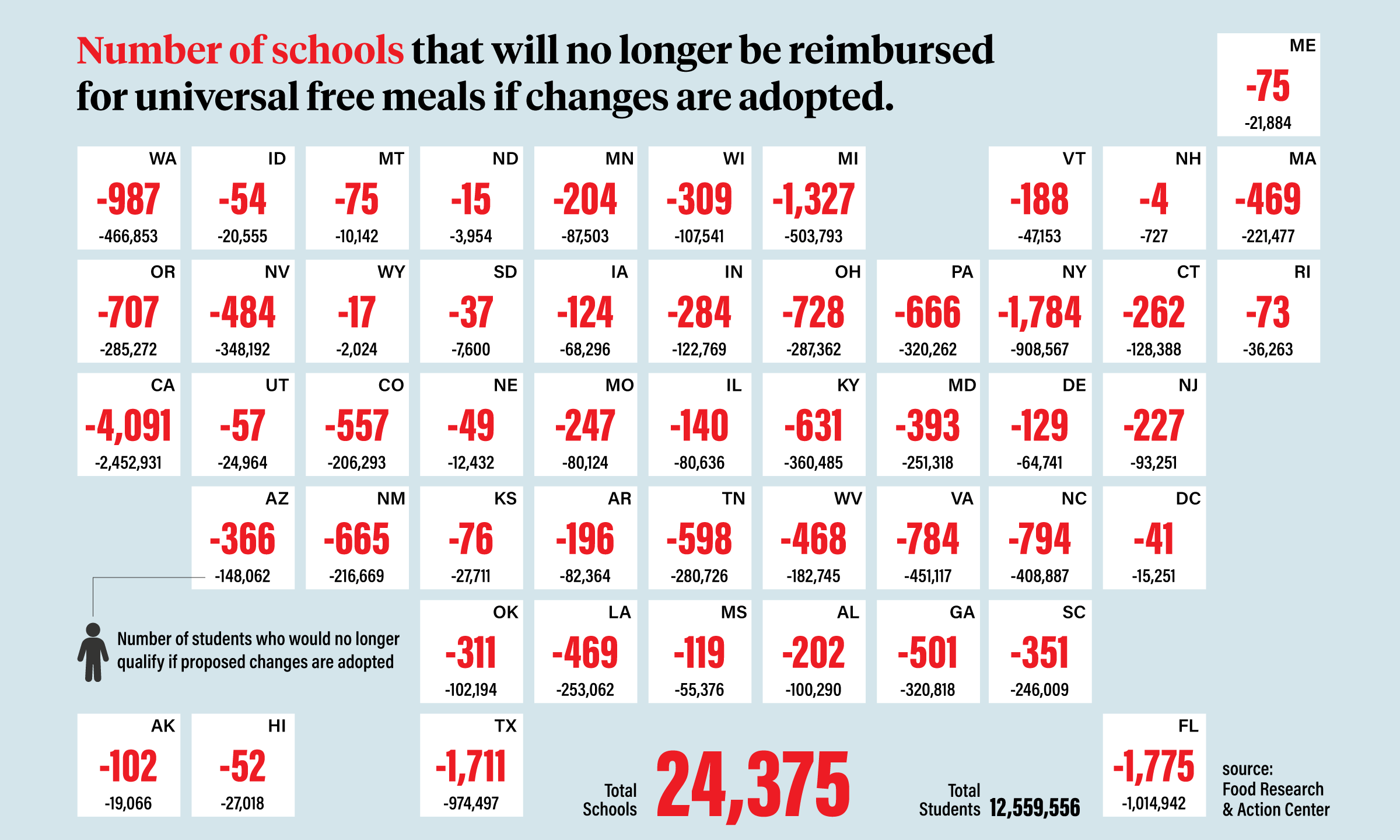
    And the Community Eligibility Provision, which reimburses tens of thousands of schools that provide free breakfast and lunch to all students, may tighten its requirements, potentially pushing some 12 million kids out of the program.

    These moves come at the same time the House Republican budget plan calls for deep cuts to the Supplemental Nutrition Assistance Program, or SNAP. The program fed more than 42 million low-income people per month nationwide in 2023. In 2022, 40% were younger than 18.  

    This recent shift reflects a stark reversal of earlier, nationwide efforts to keep families fed during the pandemic. Many districts, such as Baltimore, organized grab-and-go meals sites days after schools were shuttered in March 2020 with no identification or personal information required. Those initiatives led to the nation’s food insecurity rate dropping to a 20-year low when it reached 10.2% in 2021, down from a 14.9% high a decade earlier, according to the USDA.

    It has since crept back up to 13.5% and now, five years after schools utilized USDA waivers to deliver meals in innovative ways, they are bracing for what could be massive cuts from the federal government.

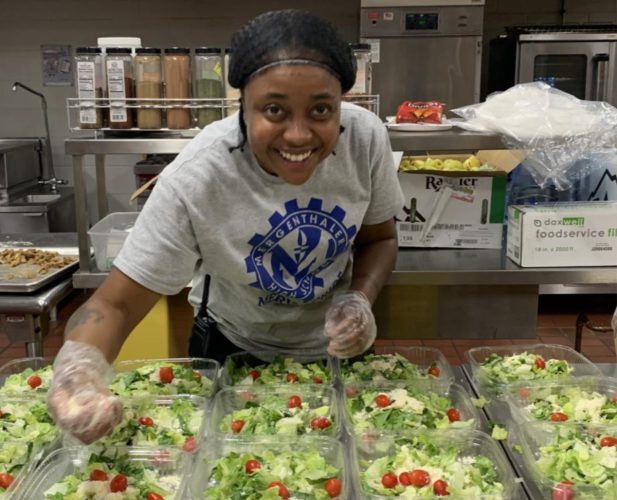
    Latoya Roberson, manager at Mergenthaler Vocational-Technical High School in Baltimore (Baltimore City Public Schools) 

    Elizabeth A. Marchetta, executive director of food and nutrition services for Baltimore City Public Schools, said 31 campuses — serving 19,000 children — would lose out on free breakfast and lunch if the Community Eligibility Provision changes go through. They are among 393 schools and 251,318 children statewide who would be shut out. 

    “It would be devastating,” Marchetta said. “These are critical funds. If we are not being reimbursed for all of the meals we’re serving … the money has to come from somewhere else in the school district, so that is really not great.”

    Nearly 48,000 schools in more than 7,700 districts benefited from the Community Eligibility Provision in the 2023-24 school year. The program reimburses schools that provide universal free meals based on the percentage of their students who automatically qualify for free and reduced-price lunch because their families receive other types of assistance, like SNAP. 

    In 2023, after the COVID-era policy ended where any student could receive a free school meal regardless of income, President Biden lowered the percentage of high-need students required for a school to qualify from 40% to 25%, greatly expanding participation. 

    House GOP Budget Committee Chairman Jodey Arrington now seeks to raise the rate to 60%. The budget proposal would also require all students applying for free and reduced-price meals to submit documentation verifying their family income.

    School meal debt, a barometer of food insecurity among students, is already on the rise. It will almost certainly increase if universal school meals disappear for students whose families make too much to qualify for free and reduced-price lunch but too little to afford to buy meals at school. At the same time, kids who are eligible for free and reduced-price meals could lose that benefit if the required paperwork becomes harder. 

    In the fall of 2023, across 808 school districts, the median amount of school meal debt was $5,495. By the fall of 2024, that amount reached $6,900 across 766 districts, a 25% increase, according to the School Nutrition Association.

    It was just $2,000 a decade earlier. A trio of Democratic senators is pushing to erase the $262 million annual debt total, with Pennsylvania Sen. John Fetterman saying in 2023, “‘School lunch debt’ is a term so absurd that it shouldn’t even exist. That’s why I’m proud to introduce this bill to cancel the nation’s student meal debt and stop humiliating kids and penalizing hunger.”

    Research shows students benefit mightily from free meals: those who attend schools that adopted the Community Eligibility Provision saw lower rates of obesity compared to those who did not. Free in-school meals are also credited for boosting attendance among low-income children, improving classroom behavior and lowering suspensions.

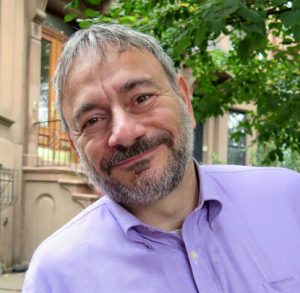
    Joel Berg, CEO of Hunger Free America. 

    Joel Berg, the CEO of Hunger Free America, said further cuts will greatly harm the poorest students. 

    “Over the last few years, things have gone from bad to worse,” he said. “We were all raised seeing Frank Capra movies, where, in the end everything works out. But that’s not how the real world works. In the real world, when the economy gets a cold, poor people get cancer.”

    Hunger Free America found the number of Americans who didn’t have enough to eat over two one-week periods increased by 55.2% between August-September 2021 and August-September 2024. The states with the highest rates of food insecure children were Texas at 23.8%, Oklahoma at 23.2% and Nebraska at 22.6%. Georgia and Arkansas both came in at 22.4%. 

    The USDA slashed the $660 million Local Food for Schools Cooperative Agreement Program for 2025 — it allowed states to purchase local foods, including fresh fruits and vegetables, for distribution to schools and child care institutions — and $500 million from the Local Food Purchase Assistance Cooperative Agreement Program, which supported food banks nationwide. 

    Diane Pratt-Heavner, director of media relations for the School Nutrition Association, said that as families struggle with the high cost of groceries, the government should be doing more — not less — to bolster school meals and other food aid programs. 

    “We’re urging Congress not only to protect the federal Community Eligibility Provision, but to expand it,” Pratt-Heavner said. “Ideally, all students should have access to free school breakfast and lunch as part of their education.” 

    SNAP benefits stood at $4.80 per person per day through 2020 before jumping to more than $6 per person per day after they were adjusted for rising food and other costs. Even then, the higher amount was not enough to cover the cost of a moderately priced meal in most locations. 

    Republicans in Congress seek to cut the program by $230 billion over the next nine years, possibly by returning to the pre-pandemic allotment of $4.80 and/or expanding work-related requirements, said Salaam Bhatti, SNAP director at the Food Research & Action Center

    Another possibility, he said, is that SNAP costs could be pushed onto states — including those that can’t afford them. 

    “This would be an unfunded mandate,” Bhatti said. “States would have to take away from their discretionary spending to offset the cost and if it is not a mandate, then states in rural America and in the South that don’t have the budgets just won’t do it.” 

    Food-related funding decreases come as the child tax credit, created to help parents offset the cost of raising children, is also facing uncertainty, said Megan Curran, the director of policy at the Center on Poverty and Social Policy at Columbia University.

    The American Rescue Plan increased the amount of the child tax credit from $2,000 to $3,600 for qualifying children under age 6, and $3,000 for those under age 18. Many taxpayers received monthly advance payments in the second half of 2021, instead of waiting until tax filing season to receive the full benefits. The move cut child poverty nearly in half. The expanded child tax credit was allowed to lapse post-pandemic and now even the $2,000 credit could revert back to just $1,000

    All food-related and tax benefit cuts — plus the unknowns of Trump-era tariffs — will leave some Americans particularly vulnerable, Curran said. 

    “It’s shaping up to be a very precarious time for families,” she said, “especially families with children.”


    Get stories like these delivered straight to your inbox. Sign up for The 74 Newsletter


    Source link

  • International Students Navigate Escalating Threats

    International Students Navigate Escalating Threats

    International students across the country are on edge after a week of arrests, deportations and escalating threats from the Trump administration.

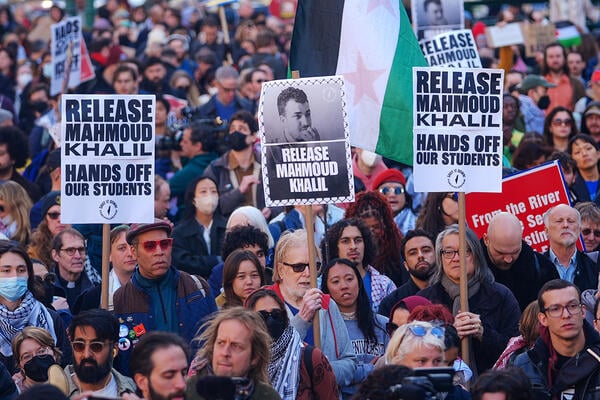
    So far the administration’s sights have been set primarily on Columbia University in New York. On March 8, immigration officials arrested recent graduate Mahmoud Khalil, intending to strip him of his green card and deport him for his role in pro-Palestinian campus protests last year. Over the next week, Department of Homeland Security agents raided students’ dorm rooms, arresting one international student and prompting another to flee to Canada.

    Elora Mukherjee, a law professor at Columbia and director of its Immigrants’ Rights Clinic, said international students have been flocking to the clinic for guidance: on whether their visas could suddenly be revoked, or if they should avoid traveling, delete their social media accounts or move off campus to make it harder for immigration officials to find them.

    She said she’s never seen anything like it.

    “Our clinic has been inundated with requests for legal consultation,” she said. “There is a palpable sense of fear among international students on campus.”

    Mukherjee said she’s been trying to quell international students’ anxieties. But in the wake of what she called an “unprecedented assault on due process, First Amendment rights and basic human decency,” she isn’t sure how.

    “They are worried about what may happen to their student visas. They are concerned that they may not be able to complete their degree programs if they are targeted. They’re wondering how they can make changes to their daily life to reduce the risk,” she said. “I don’t know what I can reassure them of right now.”

    Chief among the threats facing international students is the equation of protest activity and other protected speech with “terrorist activity.” In an interview with The Free Press last Monday, an unnamed White House official said that protesting made Khalil a national security threat, justifying his deportation. That strategy, the official added, is the administration’s “blueprint” for deporting other international students.

    In a post on Truth Social last Tuesday, Trump said that Khalil’s arrest was “the first of many,” calling international student protesters “not students, [but] paid agitators.”

    “We will find, apprehend, and deport these terrorist sympathizers from our country—never to return again,” Trump wrote. “We expect every one of America’s Colleges and Universities to comply.”

    Stephen Yale-Loehr, a retired Cornell University law professor who specializes in immigration law and international students in particular, said ICE officials’ activity at Columbia is the administration’s opening salvo in a battle against two of its most frequently invoked bogeymen: higher education and immigrants.

    “This administration has declared war on immigrants broadly and international students specifically,” he said.

    That war is currently centered on Columbia but is likely to spread across higher ed. On Sunday, Secretary of State Marco Rubio told Face the Nation that the administration plans to continue arresting and deporting international student activists. He added that the government is reviewing and revoking more student visas “every day.”

    It’s not clear if the Trump administration’s argument will hold up in court. If it does, experts say it would give the executive nearly unchecked power to deport noncitizens for disfavored speech, and there’s likely to be a fierce legal battle over that question. But international students have very few legal protections, Yale-Loehr said, and the administration has ample leeway to justify deporting them.

    “International students have the same constitutional rights as citizens, but immigration statutes are very broad and there are many grounds for deportability that could trip you up, even as a green card holder,” Yale-Loehr said. One of those potential grounds, he said, is donating to an overseas charity that the State Department deems suspicious or linked to terrorist activity—as it’s done with many charities for Palestinian children and families affected by the destruction of Gaza.

    “It’s easy for someone to unintentionally or unknowingly violate our immigration laws that way and get put into the deportation process,” Yale-Loehr said.

    When asked whether Columbia would protect current students approached by ICE or detained on campus, a university spokesperson pointed to a statement from earlier this month and said students were encouraged to familiarize themselves with university protocol in such cases.

    “Columbia is committed to complying with all legal obligations and supporting our student body and campus community,” the statement reads. “We are also committed to the legal rights of our students and urge all members of the community to be respectful of those rights.”

    The Trump administration is also considering instituting a travel ban similar to the one implemented during his first administration—except greatly expanded, from seven countries to 43, according to an internal memo circulating among media outlets.

    Some college officials are urging students not to travel until the details of such a plan become clear. On Sunday, Brown University advised its international student community, and any noncitizen staff and faculty, to avoid leaving the country or even flying domestically over the upcoming spring break.

    “Potential changes in travel restrictions and travel bans, visa procedures and processing, re-entry requirements and other travel-related delays may affect travelers’ ability to return to the U.S. as planned,” executive vice president for planning and policy Russell Carey wrote in a campuswide email.

    Jill Allen Murray, deputy executive director for public policy at NAFSA, an association of educators advocating for international students in the U.S., decried the student arrests as authoritarian and said they would have consequences for global views on U.S. colleges.

    “We as a nation hold dear freedom of speech and the right to protest. These are the very values that draw students from around the world to our shores,” Murray wrote in an email to Inside Higher Ed. “Americans and international students alike will certainly view this as an alarming attempt to crack down on freedom of expression.”

    Mounting a Legal Challenge

    Mukherjee said that even for students with longtime visa status or green cards, there are no guarantees. Trump’s invocation of an obscure wartime powers act to justify deporting student protesters, she said, is a “dramatic escalation” in anti-immigrant policy. She’s been cautioning students against appearing at protests or participating in research and academic opportunities abroad.

    The Columbia students aren’t the first to face potential deportation over pro-Palestine protests. Momodou Taal, a British graduate student at Cornell, was suspended for his activism last fall, and a university official told him he may need to “depart the U.S.” if his F-1 visa was subsequently nullified.

    On Sunday Taal filed a lawsuit against the Trump administration challenging two executive orders that empower immigration officials to deport noncitizens whom they determine to be national security threats. He said that threat amounts to unconstitutional repression of free speech.

    “The First Amendment is explicit and clear and extremely lucid in that it’s not protection for citizens alone; it is protection for persons within this country,” Taal told Inside Higher Ed.

    Taal successfully avoided deportation last year, but since his name has been well publicized, he’s been anticipating a knock on his door from ICE for weeks. He said that’s partly why he chose to pursue a legal challenge: to use his own vulnerability to try to protect other international students.

    “I know a lot of people are afraid … and I have had that fear, certainly, that something will happen to me. But I fundamentally reject the idea of sitting and laying in that fear and doing nothing,” Taal said. “This level of oppression is meant to stop people from talking about Palestine. When free speech is attacked, that is not the time to retreat, but rather double down.”

    Taal’s lawsuit joins another challenge to the administration’s deportation strategy. Last week legal advocacy groups filed a petition against Khalil’s arrest, and a federal judge ordered that Khalil be kept in the country while he reviews the case.

    ‘Much Higher Anxiety’

    Even before immigration officials raided dorm rooms, international students, recruiters and the institutions that serve them were anxious about President Trump’s second term.

    Last fall, colleges urged international students who had left for winter break to return to the U.S. before Trump’s inauguration on Jan. 20, fearing a possible travel ban or student visa suspension. Professionals in international student recruiting tell Inside Higher Ed that the crackdown on foreign students has been gradual but is ramping up fast.

    William Brustein, former vice president for global strategy and international affairs at West Virginia University, spent decades in international student recruiting and support. He said that international students in the U.S. have grown increasingly worried in recent years about their freedom to express public opinions, what kind of research they can work on, even their physical safety. Khalil’s arrest, he said, validated and escalated those concerns.

    “It just reinforces the sense of caution they have about what they can say in class, what they can post online, even what they can say in the cafeteria or around campus if someone is listening,” Brustein said.

    Brustein added that colleges have slashed spending on their international support offices, hampering their ability to respond to students’ needs at moments of crisis.

    “Colleges have limited resources, and there’s only so much they can do to help,” he said.

    Free speech restrictions and ICE raids aren’t the only challenges facing international students in the U.S. The Trump administration has promised to clamp down on approvals for new student visas, and Congress recently passed the Laken Riley Act, significantly lowering the threshold for visa revocation.

    Yale-Loehr said that such policies are beginning to manifest at the border. He’s heard stories of students with clearly marked visas in their passports being pulled aside and held for further inspection in airports across the country, some of them turned away by ICE and forced to challenge the decision from abroad.

    “In the past, these students would never have been put into secondary inspection,” Yale-Loehr said.

    Mukherjee said that while international students faced some of the same issues with visa crackdowns and travel restrictions under the first Trump administration, there is no comparison to the repressive tactics currently on display.

    “I’ve never seen a moment where international students are so worried about what may happen to them if they speak out about injustices in our country and across the world,” she said. “It’s an unprecedented time.”

    Source link