
Tag: threeyear

  • Ensign College Expands Its Three-Year Degree Offerings

    Ensign College Expands Its Three-Year Degree Offerings

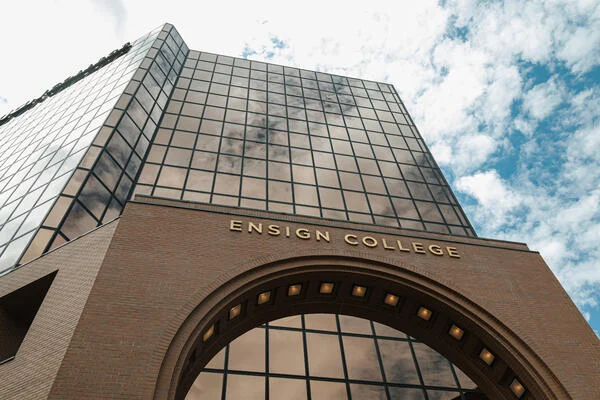
    Just months after the launch of the first handful of in-person, three-year undergraduate programs last fall, one university has announced it will offer all of its undergraduate programs as reduced credit “bachelor’s of applied science” degrees.

    Starting in spring 2026, Ensign College, a private institution in Utah that is part of The Church of Jesus Christ of Latter-day Saints will allow students to take any of its 10 majors in a three-year format—although the four-year option will still be available.

    The new 90-credit option seeks to “help students graduate faster and start earning sooner, without requiring an overloaded, accelerated course schedule,” according to the college’s announcement.

    It’s the first college in the U.S. to offer an accelerated timeline for all its majors. Among the other institutions that have launched or announced plans to introduce three-year degrees, most are relegated to a handful of programs.

    Ensign’s announcement comes about two years after it launched two online, reduced-credit programs in spring 2024. At the time, its accreditor, the Northwest Commission on Colleges and Universities, said it would wait to see the outcomes of the program at Ensign—as well as at Brigham Young University–Idaho, which launched its own reduced-credit offerings at the same time—before approving other reduced credit programs. In summer 2025, the accreditor removed the “pilot” label from BYU-Idaho and Ensign’s online three-year programs and announced it would allow other institutions to submit proposals for reduced credit degrees.

    “We’re getting to the point when we’ll begin to have graduates soon, but we haven’t had graduates yet,” said Bruce Kusch, president of Ensign College. “We’ve had a lot of student interest and enrollment is good.”

    Although still rare, three-year degrees have grown significantly more common over the past year as states and accreditors have begun to approve their creation, in some cases on a pilot basis. Proponents of the programs, which in most cases eliminate electives to reduce credits to around 90, argue that they help students save time and money and enter the workforce earlier.

    Skeptics, on the other hand, argue that it’s still unknown whether the learning and post-college outcomes of students with three-year degrees will match those of bachelor’s degree holders, considering no students have yet graduated with a 90-credit degree. Critics have also raised concerns about whether graduate schools and employers are likely to give a truncated bachelor’s the same weight as a four-year degree—although some graduate school leaders have indicated they are open to the possibility.

    Kusch said that before launching the new initiative, the institution consulted with committees of employers, known as Program Advisory Boards, that provide guidance on how the college’s degrees align with the state’s workforce needs.

    “We met with them: We basically said, ‘This is what we’re thinking, this is what we’re planning—tell us what the skills are that you believe are in demand, tell us what things we need to include in our curriculum. Are there things in our curriculum we don’t need?’” he said. “The time has come for a degree like this that is very much focused on getting our graduates ready for the workforce in very powerful ways.”

    Each major’s curriculum was reworked from the ground up to fit the three-year format, Kusch noted; in most cases, the main change was that electives were removed.

    Although officials hope the three-year degrees will appeal to their current students, Kusch said he is also optimistic that it will attract new populations, including students with some college credits under their belt who are hoping to secure a credential as quickly as possible.

    But one population is locked out of Ensign’s three-year degree programs: international students, whom Kusch said are restricted by regulations about what programs they are eligible to attend. Ensign opted to keep a four-year option available for those students. International students, who make up about 36 percent of the institution’s student body, will have to continue taking the full 120-credit majors unless those regulations change, he said.

    Madeleine Green, the executive director of the College-in-3 Exchange, an organization that advocates for three-year undergraduate programs, lauded the expansion of Ensign’s reduced-credit offerings.

    “Ensign has been a pioneer in three-year degrees … they have the longest experience of any institution in the country, with BYU-Idaho, in running three-year programs,” she said. “It’s a great thing to see that they’ve decided this was successful and wanted to go all in, so we’ll be watching once again to see how things unfold.”

    Source link

  • North Dakota Approves Some Three-Year Degrees

    North Dakota Approves Some Three-Year Degrees

    The North Dakota State Board of Higher Education will allow colleges to develop reduced-credit degree programs—although only for certain majors, the North Dakota Monitor reported.

    Only bachelor of applied science degrees, which are generally career and technical programs, such as exercise science or finance, are permitted to be less than 120 credits under the board’s new policy. Each public university will be allowed to pilot up to two reduced-credit majors, and the pilots will run from fall 2026 to 2030.

    The new policy comes as three-year degrees are becoming increasingly common, with a slew of in-person reduced-credit programs launching in fall 2025. Other states, such as Utah, have also taken steps to allow their public colleges to experiment with reduced-credit programs in an effort to allow students to spend less time and money on their college education.

    Source link

  • Outbound Indian university enrolments fall after three-year rise

    Outbound Indian university enrolments fall after three-year rise

    Of the 1.882 million Indian students studying abroad, over 1.254 million are pursuing higher education at international universities and tertiary institutions, while 628,305 are enrolled at the school level.

    While overall 2025 numbers hit an all-time high due to the inclusion of school-level students, higher education enrolments fell by 76,000 this year, ending a three-year surge. Over 750,000 Indian students studied at international universities in 2022, rising to 930,000 in 2023 and peaking at 1.33 million in 2024.

    Despite Canada’s clampdown on international students, with 74% of Indian study permit applications rejected in August 2025, up from 32% in the same month in 2023, the North American country still hosts the largest number of Indian students in universities and tertiary institutions globally, at 427,085 students.

    In the US, despite a 44% drop in study visas for Indian students in August 2025 compared to last year, India remains the largest source country, accounting for over 31% of all international students, with over 255,000 Indian students, according to MEA data.

    MEA data also showed that the number of Indian higher education students in key countries, as of 2025: the UK (173,190), Australia (138,579), Germany (59,000), Russia (27,000), Kyrgyzstan (16,500), and Georgia (16,000).

    Policy changes in major study destinations are impacting Indian students’ decisions. While Canada plans to cut international study permits by over 50% in 2026, the US continues a hostile stance against international students with nine in 10 students fearing for their visas, and postgraduate enrolments are falling across UK universities, with English institutions facing a potential losses under the new £925-per-international student levy.

    Other destinations show mixed trends: Australia has seen a rise in Indian students but remains cautious about fraud and agent misuse, with the recent education reforms bill aiming to address these concerns, while New Zealand has recorded increasing number of study visa applications from India as of October 2025.

    “The growth in mobility patterns in the years following the pandemic were driven by the pent-up demand and welcoming post-graduation work and immigration pathways and policies in destinations such as Canada,” Rahul Choudaha, professor and COO at the University of Aberdeen, Mumbai campus told The PIE News.

    “However, in 2025, the immigration policies became restrictive in all key destinations starting with the US.”

    The decline in Indian students pursuing higher education abroad also follows a sharp fall in study abroad remittances from India between April and August 2025, lowest in eight years, the peak period for such transfers.

    Moreover, according to a recent analysis highlighted by Choudaha, the annual cost of studying in the US has risen by Rs 10 lakh (GDP £8,200-£8,300) for Indian students over the past five years, with currency devaluation and tuition hikes pushing the overall cost of studying abroad up 10–12% in 2025.

    Higher investment outlay along with dimmer chances of recovering that investment has made Indian students nervous and cautious about studying abroad in 2025
    Rahul Choudaha, University of Aberdeen Mumbai campus

    “Higher investment outlay along with dimmer chances of recovering that investment has made Indian students nervous and cautious about studying abroad in 2025,” stated Choudaha.

    “Universities also need to do more in terms of providing career success and scholarships to students to make ease the barrier of upfront costs and its recovery through employability.”

    The rise of destinations such as Germany, Russia, Kyrgyzstan and Georgia signals a shift towards lower-cost, quality STEM and medical education beyond the “big four”, including Indian private and public universities which are serving over 46.5 million higher education students as of 2025.

    “Indian universities are more active than ever before in stepping up their recruitment efforts from the home market,” stated Jasminder Khanna, co-founder, Gresham Global.

    “Be it recruitments fairs, conferences or even retreats for local feeders, prominent Indian universities are quite at par with the foreign universities in upping their visibility.”

    With branch campuses of over 15 international universities, mainly from the US and UK, expected to open in India by the end of 2026, and the system projected to serve over 560,000 Indian students by 2040, Choudaha sees the next three years as crucial for these campuses in absorbing inbound demand amid increasingly restrictive policies.

    “The aspirations to gain global learning remain strong while affordability has become a big challenge,” stated Choudaha.

    “With over fifteen campuses offering degrees in fall 2026 intake means that a segment of Indian students will consider these options and over time not only the number of campuses will increase but also the program portfolios offered by these campuses.”

    Moreover, with 97% of Indian students seeking education that leads directly to jobs, according to research commissioned by City St George’s, University of London and conducted by Arlington Research, crackdowns on post-study work options across major destinations are raising concerns, as lobbying to end Optional Practical Training (OPT) in the US heats up and the UK is already set to cut its Graduate Route visa from two years to 18 months from January 2027.

    With “shrinking entry-level jobs and unstable economies marginally slowing the outflow” of students, stakeholders need to think of solutions that address both the study-abroad process and outcomes, Khanna said, to ensure Indian and international students continue to pursue education abroad in huge numbers.

    “Reassuring feeders and stakeholders on economic stabilities, local safety, access to meaningful jobs and multi-cultural environments on campuses will bring back some of the lost confidence since the pandemic,” stated Khanna.

    “Students and parents also need to understand that recent student visa policy changes worldwide are intended to make traditional study destinations more meaningful, with a stronger focus on quality — and these changes should be welcomed.”

    Source link