Tag: time

  • It is high time higher education adopted a harm reduction approach to drug use among students

    It is high time higher education adopted a harm reduction approach to drug use among students

    While Gen Z is showing less interest in the normalised alcohol and drug excess that dogged their preceding generations, England and Wales’ most recent stats confirmed that 16.5 per cent of people aged between 16 to 24-years-old took an illegal drug in the last year.

    Additionally, a 2024 report by Universities UK found that 18 per cent of students have used a drug in the past with 12 per cent imbibing across the previous 12 months. With a UK student population of 2.9m, this suggests the drug-savvy portion is around 348,000 to 522,000 people.

    It’s prudent, therefore, for anyone involved within student safety provision to know that the UK is currently mired in a drug death crisis – a record 5,448 fatalities were recorded in England and Wales in the most recent statistics, while Scotland had 1,172, the highest rate of drug deaths in Europe.

    In an attempt to ameliorate some of this risk, seven UK universities recently took delivery of nitazene strips to distribute among students, facilitated by the charity Students Organising for Sustainability (SOS-UK). These instant testing kits – not dissimilar to a Covid-19 lateral flow test in appearance – examine pills or powders for nitazenes: a class of often deadly synthetic opioids linked with 458 UK deaths between July 2023 and December 2024.

    While these fatalities will have most likely been amongst older, habitual users of heroin or fake prescription medicines, these strips form part of a suite of innovative solutions aimed at helping students stay safe(r) if they do choose to use drugs.

    The 2024 Universities UK report suggested drug checking and education as an option in reducing drug-related harm, and recommended a harm reduction approach, adding: “A harm reduction approach does not involve condoning or seeking to normalise the use of drugs. Instead, it aims to minimise the harms which may occur if students take drugs.”

    With that in mind, let’s consider a world where harm reduction – instead of zero tolerance – is the de facto policy and how drug checking or drug testing plays a part in that.

    Drug checking and drug testing

    Drug checking and drug testing are terms that often get used interchangeably but have different meanings. Someone using a drug checking service can get expert lab-level substance analysis, for contents and potency, then a confidential consultation on these results during which they receive harm reduction advice. In the UK, this service is offered by The Loop, a non-profit NGO that piloted drug checking at festivals in 2016 and now have a monthly city centre service in Bristol.

    Drug testing can take different forms. First, there is the analysis of a biological sample to detect whether a person has taken drugs, typically done in a workplace or medical setting. There are also UK-based laboratories offering substance analysis, that then gets relaid to the public in different ways.

    WEDINOS is an anonymous service, run by Public Health Wales since 2013, where users send a small sample of their substance alongside a downloadable form. After testing, WEDINOS posts the results on their website (in regards to content but not potency) normally within a few weeks.

    MANDRAKE is a laboratory operating out of Manchester Metropolitan University. It works in conjunction with key local stakeholders to test found or seized substances in the area. It is often first with news regarding adulterated batches of drugs or dangerously high-strength substances on the market.

    Domestic testing is also possible with reagents tests. These are legally acquired chemical compounds that change colour when exposed to specific drugs and can be used at home. They can provide valuable information as to the composition of a pill or powder but do not provide information on potency. The seven UK universities that took delivery of nitazene strips were already offering reagents kits to students as part of their harm reduction rationale.

    Although the Misuse of Drugs Act 1971 specifies that certain activities must not be allowed to take place within a university setting, the Universities UK report argued that universities have some discretion on how to manage this requirement. Specifically, it stated: “The law does not require universities to adopt a zero tolerance approach to student drug use.”

    How to dispense testing apparatus

    The mechanisms differ slightly between SUs but have broad similarities. We spoke with Newcastle and Leeds (NUSU and LUU) who both offer Reagent Tests UK reagent testing kits, fentanyl strips and now nitazene strips. Reagent’s UK kits do not test for either of these two synthetic opioids. They vary in strength compared to heroin – and there are multiple analogues of nitazene that vary in potency – but an established ballpark figure is at least 50 times as strong.

    All kits and tests are free. Newcastle’s are available from the Welfare and Support centre, in an area where students would have to take part in an informal chat with a member of staff to procure a kit. “We won’t ask for personal details. However, we do monitor this and will check in with a welfare chat if we think this would be helpful,” says Kay Hattam, Wellbeing and Safeguarding Specialist at NUSU. At Leeds, they’re available from the Advice Office and no meeting is required to collect a kit.

    Harm reduction material is offered alongside the kits. “We have developed messaging to accompany kits which is clear on the limitations of drug testing, and that testing does not make drugs safe to use,” says Leeds University Union.

    Before the donation, kits were both paid for by the respective unions and neither formally collected data on the results. Both SUs both make clear that offering these kits is not an encouragement of drug use. Kay Hattam draws an analogy: “If someone was eating fast food every day and I mentioned ways to reduce the risks associated with this, would they feel encouraged to eat more? I would think not. But it might make them think more about the risks.”

    You’ll only encourage them

    In 2022, in a report for HEPI, Arda Ozcubukcu and Graham Towl argued, “Drug use matters may be much more helpfully integrated into mental health and wellbeing strategies, rather than being viewed as a predominantly criminal justice issue.”

    The evidence backs up the view that a harm reduction approach does not encourage drug use. A 2021 report authored by The Loop’s co-founder Fiona Measham, Professor in Criminology at the University of Liverpool, found that over half of The Loop’s users disposed of a substance that tested differently to their intended purchase, reducing the risk of poisoning. Additionally, three months after checking their drugs at a festival, around 30 per cent of users reported being more careful about polydrug use (mixing substances). One in five users were taking smaller doses of drugs overall. Not only does this demonstrate that better knowledge reduces risk of poisoning in the short-term, but it also has enduring positive impacts on drug-using behaviours.

    SOS-UK has developed the Drug and Alcohol Impact scheme with 16 universities and students’ unions participating. This programme supports institutions in implementing the Universities UK guidance by using a variety of approaches to educate and support students in a non-stigmatising manner.

    Alongside them is SafeCourse, a charity founded by Hilton Mervis after his son Daniel, an Oxford University student, died from an overdose in 2019. The charity – which counts the High Court judge Sir Robin Knowles and John de Pury, who led the development of the 2024 sector harm reduction framework, among its trustees – is working to encourage universities to move away from zero tolerance.This is through various means, including commissioning legal advice to provide greater clarity on universities’ liability if they are not adopting best practice, and checking in one year on from the Universities UK report, to ascertain how they’re adapting to the new era of harm reduction.

    SafeCourse takes the view that universities must not allow themselves to be caught up prosecuting a failed war on drugs when their focus should be student safety, wellbeing and success. A harm reduction approach is the best way of achieving those ends.


    Source link

  • Reading time: discovery, meaning-making and resistance in the accelerated academy

    Reading time: discovery, meaning-making and resistance in the accelerated academy

    by Fadia Dakka

    The increasing exposure of higher education sectors worldwide to market mechanisms (eg privatisation in and of higher education, platformisation and assetization) generates market-making pressures, technologies and relations that are changing university missions and academic practices in both research and teaching, altering not only forms of knowledge production but also academic identities (Lewis et al, 2022).  These corporate, competitive systems operate in and through regimes of time acceleration and compression (Rosa & Trejo-Mathys, 2013; Wajcman & Dodd (eds), 2017) that enable capitalist accumulation via a proliferation of calculative practices and surveillance techniques driven by instrumental logics. In essence, the timescapes of the ‘accelerated academy’ (Vostal, 2016) have come to be not just dominated but defined by the linear rhythms of knowledge production, accumulation, consumption, and distribution.

    In this context, ever-present tensions continue to pit institutional time scarcity/pressure against the often non-linear times, rhythms and practices that characterise the craft of intellectual work. These are acutely visible in doctoral education, which is considered both a liminal space-time of profound transformation for students and a rite of passage through which doctoral candidates enter the academic community.

    Doctoral students in the accelerated academy experience tremendous institutional pressures to complete their research projects within tight timeframes punctuated by developmental milestones. At the same time, they are pressed to publish and participate in externally funded projects before completing their course of studies, to secure a positional advantage in a hyper-competitive, precarious job market.

    In such a climate, pressures to develop core academic skills such as academic writing abound, as a quick glance at the vast literature available to both novice and accomplished researchers to help them improve the quality and quantity of writing reveals (eg Sword, 2017, 2023; Murray, 2025; Wyse, 2017; Moran, 2019; Young & Ferguson, 2021; Thomson, 2023; Sternad & Power, 2023). 

    Much less attention is devoted to reading as an autonomous practice in relation to educational research. Reading is generally approached instrumentally for research and mostly equated with a strategic, extractive process whereby academics retrieve, survey or review the information needed for writing to maximise efficiency and speed (Fulford & Hodgson (eds) 2016; Boulous Walker, 2017).

    Doctoral students are taught to tackle the volume of readings by deploying selective, skim and speed-reading techniques that ‘teach’ them a practical method to ‘fillet’ publications (Silverman, 2010 p323) or ‘gut(ting) an article or book for the material you need’ (Thomas, 2013 p67). Without dismissing the validity of these outcome-oriented techniques, I argue that reading should be approached and investigated as research, which is to say as a philosophical orientation whose intimate relation with thinking (meditation and contemplation) and writing (as a method of inquiry) constitutes a conjuncture with transformative potential for both the reader and the text (Hoveid & Hoveid, 2013; Dakka & Wade, 2018). [RC1] [FD2] 

    In 2024, I was awarded a BA/Leverhulme grant that allowed me to examine, in collaboration with Norwegian colleagues, the under-researched area of reading habits, rhythms and practices among doctoral students in two countries, the UK and Norway, characterised by a markedly different cultural political economy of higher education. The project set out to explore how a diverse group of doctoral students related to, made sense of, and engaged with reading as a practice, intellectually and emotionally. Through such exploration, the team intended to examine pedagogical and philosophical implications for doctoral education, supervision, and, more generally, higher education through a distinct spatiotemporal lens.

    The project experimented with slow reading (Boulous Walker, 2017) as an ethico-political countermovement that invites us to dwell with the text and reflect on the transformations it can produce within the self and the educational experience tout-court. Examining the practice of reading is, therefore, vital to foster the development of the criticality and creativity that inform the students’ thinking and, ultimately, their writing, helping to create better conditions for meaningful educational engagement.

    As briefly mentioned earlier, there is a dearth of literature in educational research focused explicitly and directly on reading as a research practice. Conversely, Reading Theory and Reader-Response criticism (Bennett, 1995) are well-established strands in literary studies.

    Two contributions inspired the project in the cognate fields of philosophy, pedagogy, and education ethics, underpinning the theoretical and methodological framework adopted: Aldridge (2019), exploring the association between reading, higher education and educational engagement through the phenomenological literary theorisations of Rita Felski (2015) and Marielle Macé (2013). Reading here is considered as a phenomenological ‘orientation’ with ontological character: the entanglement of body, thought, and sense makes reading an ‘embodied mode of attentiveness’  with ‘rhythms of rapprochement and distancing, relaxation and suspense, movement and hesitation’ (Felski 2015, p176). Lastly, Boulous Walker (2017) introduces the concept of ‘slow reading’, or reading philosophically against the institution. This practice stands in opposition to the institutional time, efficiency, and productivity pressures that prevent the intense, contemplative attitude toward research that is typical of active educational engagement. The author calls, therefore, for slow reading, careful reading, and re-reading as antidotes against institutional contexts dominated by speed and the cult of efficiency.

    Bridging cultural sociology and philosophy of education, the project combined Hermeneutic Phenomenology (Schutz, 1972; Ricoeur, 1984) and Rhythmanalysis (Lefebvre, 2004) to gain insight into the lived experiences, embodied and cognitive processes of meaning-making, and spatiotemporal (rhythmic) dimensions of reading among doctoral students.

    The complementarity of these frameworks enabled a richer and deeper understanding of the phenomenon from a socio-cultural and philosophical perspective. The rhythmanalytical dimension drew on the oeuvre of the French philosopher and sociologist Henri Lefebvre. Conceived as both a sensory method and a philosophical disposition, Rhythmanalysis (2004) foregrounds the question of the everyday and its rhythms, offering insightful takes on repetition, difference, appropriation and dwelling. Lefebvre’s analysis of the conflicting rhythms of the social and the critical moments that revive/subvert the humdrum of the quotidian pivot on the experience and resonance of bodies in space-time, their imbrication with the fabric of the social and the multiplicity of their perceptual interrelations with human and more-than-human environments. Methodologically, Rhythmanalysis enabled a closer look at the students’ reading habits, rhythms and practices in relation to their doctoral studies. The emphasis on spatio-temporality and (auto-)ethnographic observations made it possible to register and grasp the tensions that derive from clashes between meso institutional constraints and demands (eg set timeframes for completion; developmental milestones), micro individual responses and circumstances (eg different modes of study, private and/or professional commitments) and macro societal context (eg cognitive, extractive capitalism).

    The phenomenological facet of the project drew on the hermeneutic, existential, and ontological dimensions found in Ricoeur’s and Schutz’s philosophy, which are concerned with grasping experiential meanings and understanding the complexity of human lifeworld.  Acknowledging the entanglement of being and Dasein as an ontological standpoint, human lived experiences are situated within a contingent spatiotemporality and understood through an interpretivist epistemology founded on intersubjectivity, intentionality and hermeneutics.

    This phenomenological-rhythmanalytical inquiry was therefore designed to explore students’ cognitive and affective experiences and practices of reading as they unfolded in the spaces and times of their doctoral education. The project involved two groups of doctoral candidates based in the Education department of, respectively, a teaching-intensive university in the West Midlands of England (Birmingham, UK), and a large, research-intensive university in Norway (Trondheim).

    The first phase of data collection involved Focus Groups and Reflective Diaries. It foregrounded the times, places, and rhythms of reading, considering reading modalities and patterns of doctoral students in the context of institutional demands vis-à-vis personal and professional constraints. Rhythmanalysis was employed both as a method (reflective diaries) and as an interpretive, diagnostic tool to uncover and critically reflect on arrhythmias (ruptures) and/or eurythmic pockets in the reading patterns of doctoral students.

    The second data collection phase relied on hermeneutic phenomenological techniques, such as Episodic Narrative Interviews (Mueller, 2019), to delve deeper into the affective, material, and cognitive experience that connects and transforms students and their readings.

    The final stage of data collection involved an experiment in collective slow reading and re-reading against the institution, inspired by Boulous Walker’s philosophical reading and Felman’s description of the interpretative process as a never-ending ‘turn of the screw’ (Felman, 1977) that generates a hermeneutical spiral of subsequent, ever richer, and different textual interpretations.

    Initial findings point to a complex and layered reading time experience, captured in its nuanced articulation by a rhythmic analysis of the students’ everyday practices, habits and affective responses.

    Commonsensical as it may sound, reading takes time. Engaging with a text to interpret and understand it is time-consuming, and most of our respondents in this project discussed this. Reading seems to project an experience of oneself as a slow reader, followed by a feeling of guilt for ‘just’ reading.

    Interestingly, clock time and phenomenological time appear to be juxtaposed in the reading process, creating conflicts and productive tensions for most of the PhD students in the project. For example, the students often welcome writing deadlines, as they create a linear rhythm that provides structure to their reading time. At the same time, the idea that reading should be done quickly and targeted to extract material for their thesis hovers over many participants, generating performance-related pressure and anxiety. Procedural aspects of reading, particularly managing volume and note-taking, are treated as a sign of success or failure, reinstating Rosa’s neoliberal equation of fast-winner, slow-loser in the accelerated, competitive academy (Rosa, Chapter 2 in Wajcman & Dodd (eds), 2017).

    However, a deeper engagement with reading both opposes and coexists with this tendency, evoking the notion of Barthes’ idiorrhythmy (Dakka, 2024) to describe the process of discovering and imposing one’s own rhythm. This rhythm typically resists linearity and dominant structure, requiring slowness as a disposition or a mode of intense attention to oneself and the world through the encounter with text. Even more intriguingly, slowness as heightened focus and immersion often occurs within short and fragmented bursts of reading, strategically or opportunistically carved into the students’ everyday lives, resulting from an incessant act of negotiation over and encroachments with personal, professional, and institutional times.

    The project explored, examined, and interpreted the rhythms and practices of reading in contemporary doctoral education along three axes: times (institutional, personal, inner, tempo, duration); spaces (physical, digital, mental); and affects as ways of relating (joy, guilt, anxiety, surprise, fantasy, etc). Together, these elements combine in unique and shifting configurations of dominant rhythms and idiosyncratic responses (rhuthmόs or idiorrhythmy), exposing the irreducibility of students’ experiences to harmful binaries (eg fast versus slow academia) while revealing the pedagogic affordances of a rhythmic and phenomenological analysis for contemporary universities. Spotlighting different approaches to reading, thinking, and writing enhances awareness of and attunement to developing one’s voice, listening and resisting capacity.

    Fadia Dakka is an Associate Professor in Philosophy and Theory of Higher Education at Birmingham City University. Her interests lie at the intersection of philosophy, sociology and theory of higher education. She is currently working toward theorising Rhythm as a form of ethics underpinning critical pedagogy in higher education. She recently received a BA/Leverhulme small grant (2024-25) to examine doctoral reading habits and practices in the UK and Norway.

    Author: SRHE News Blog

    An international learned society, concerned with supporting research and researchers into Higher Education

    Source link

  • Many students decide they’re not a ‘math person’ by the end of elementary school, new study shows

    Many students decide they’re not a ‘math person’ by the end of elementary school, new study shows

    This story was originally published by Chalkbeat. Sign up for their newsletters at ckbe.at/newsletters.

    Roughly half of middle and high schoolers report losing interest in math class at least half the time, and 1 in 10 lack interest nearly all the time during class, a new study shows.

    In addition, the students who felt the most disengaged in math class said they wanted fewer online activities and more real-world applications in their math classes.

    Those and other findings published Tuesday from the research corporation RAND highlight several ongoing challenges for instruction in math, where nationwide student achievement has yet to return to pre-pandemic levels and the gap between the highest and lowest-performing students in math has continued to grow.

    Feeling bored in math class from time to time is not an unusual experience, and feeling “math anxiety” is common. However, the RAND study notes that routine boredom is associated with lower school performance, reduced motivation, reduced effort, and increased rates of dropping out of school.

    Perhaps unsurprisingly, the study found that the students who are the most likely to maintain their interest in math comprehend math, feel supported in math, are confident in their ability to do well in math, enjoy math, believe in the need to learn math, and see themselves as a “math person.”

    Dr. Heather Schwartz, a RAND researcher and the primary investigator of the study, noted that the middle and high school years are when students end up on advanced or regular math tracks. Schwartz said that for young students determining their own sense of math ability, “Tracking programs can be a form of external messaging.”

    Nearly all the students who said they identified as a “math person” came to that conclusion before they reached high school, the RAND survey results show. A majority of those students identified that way as early as elementary school. In contrast, nearly a third of students surveyed said they never identified that way.

    “Math ability is malleable way past middle school,” Schwartz said. Yet, she noted that the survey indicates students’ perception of their own capabilities often remains static.

    The RAND study drew on data from their newly established American Youth Panel, a nationally representative survey of students ages 12-21. It used survey responses of 434 students in grades 5-12. Because this was the first survey sent to members of the panel, there is no comparable data on student math interest prior to the pandemic, so it doesn’t measure any change in student interest.

    The RAND study found that 26% percent of students in middle and high school reported losing interest during a majority of their math lessons. On the other end of the spectrum, a quarter of students said they never or almost never lost interest in math class.

    There weren’t major differences in the findings across key demographic groups: Students in middle and high school, boys and girls, and students of different races and ethnicities reported feeling bored during a majority of math class at similar rates.

    Dr. Janine Remillard, a professor at the University of Pennsylvania Graduate School of Education and expert in mathematics curriculum, said that in many math classes, “It’s usually four or five students answering all the questions, and then the kids who either don’t understand or are less interested or just take a little bit more time — they just zone out.”

    Over 50% of students who lost interest in almost all of their math classes asked for fewer online activities and more real-world problems, the RAND study shows. Schwartz hypothesizes that some online math programs represent a “modern worksheet” and emphasize solo work and repetition. Students who are bored in class instead crave face-to-face activities that focus on application, she said.

    During Remillard’s math teacher training classes, she puts students in her math teacher training class into groups to solve math problems. But she doesn’t tell them what strategy to use.

    The students are forced to work together in order to understand the process of finding an answer rather than simply repeating a given formula. All of her students typically say that if they had learned math this way, they would think of themselves as a math person, according to Remillard, who was not involved in the RAND study.

    Chalkbeat is a nonprofit news site covering educational change in public schools.

    For more news on STEM learning, visit eSN’s STEM & STEAM hub.

    Latest posts by eSchool Media Contributors (see all)

    Source link

  • For women athletes, world recognition is a long time coming

    For women athletes, world recognition is a long time coming

    Last year was arguably the best year for women’s sports yet.

    According to data analysis company S&P Global, in-person attendance and viewership were higher, with women’s professional sports sponsorships increasing by 22% since 2023. According to UN Women Australia, globally, there has been a lack of interest in women’s sports. But it seems that they might finally be getting the attention they deserve.

    To find out what is driving this change in attitude towards women’s sports, I interviewed 10 women athletes across high school, university, and coaching. 

    Historically, women’s sports have not gotten the recognition that they deserve. However, during 2024, women’s collegiate basketball had a significant increase in viewership compared to the previous year. The Final Four game in 2024 was a showdown between two players from two U.S. universities: Caitlin Clark of the University of Iowa and Paige Bueckers of the University of Connecticut. The game drew in a peak audience of 16.1 million, according to an article in Sports Illustrated

    Women’s media coverage has tripled since 2019. At this rate, if coverage trends continue, women’s share of coverage could reach 20% by the end of this year, according to Women.org, an organization within the United Nations devoted to gender equality and the empowerment of women. 

    Gender parity in sports

    The Paris Olympic and Paralympic Games were officially the first to see 50:50 coverage in gender equality.

    Avery Elliot, a track and field athlete from the University of Pennsylvania, attended the Paris Olympics as a spectator and said she noticed the change – more social media presence and sponsorships, particularly highlighting women of color, especially in women’s gymnastics, spurred by the popularity and success of U.S. athletes Simone Biles and Jordan Chiles and Brazilian Rebeca Andrade. 

    The lack of media coverage of women has always played a role in the lack of recognition that they receive. Lanae Carrington, a track star at Lehigh University in the U.S. state of Pennsylvania, said that in the past, women athletes would get dismissed for getting a low number of views or for the belief that women’s games were not as entertaining as those of men. “Overall, women are making a stronger impact in the entertainment industry, whether that’s more highlight reels on TikTok or screen time on TV,” Carrington said. “It’s finally becoming normalized.” 

    One of the hardest things to deal with as an athlete is a lack of support, whether from the media, in person or on the sidelines. 

    Brianna Gautier, a volleyball and basketball sensation at Neumann University in Pennsylvania, said it is hard to play a game where you’re not going to have a full house. “But it’s kind of helped me learn to just play for myself instead of waiting for people to show up and relying on that to bring some type of energy because I feel like it starts within you and your teammates,” she said.

    Play for yourself first

    As a track and field athlete, I have seen this firsthand. It is unfortunate to see people walk away after the men are finished competing. But I found that when you start showing up for yourself with energy, success comes rolling in. Gautier has embraced the idea of playing for herself and nobody else.

    It used to be that at Neumann, people would attend the men’s basketball games but never stay afterward to support the women. She also expressed the importance of the support of NBA players such as Steph Curry, who came out to watch several women’s Stanford basketball games in 2023. Gautier said that people think to themselves that if their favorite male basketball players are tuning in to watch women’s sports, it must be worthwhile. 

    Carrington said parents also need to support their daughters in athletics. “This is important because many girls don’t have parents who encourage them to play more traditionally masculine sports, such as basketball and soccer,” she said. 

    Most of the women I interviewed commented on the change in the WNBA as the catalyst for the change in women’s sports.. 

    Liz Spagnolo is a soccer player at Tower Hill High School in the U.S. state of Delaware who appreciates the opportunities she now has. “Women in sports is big for us because based on women 100 years ago, we wouldn’t be expected to play sports, or be expected to do something like cheer,” Spagnolo said. 

    The Caitlin Clark effect

    Arianna Montgomery, an athlete at The Tatnall School, the private school in Delaware that I also attend, said she appreciates the change in women’s basketball.

    “It’s gotten a lot more fame, definitely more college sports have gotten a lot more fame,” Montgomery said. “I think women’s games are starting to become more popular. People are starting to look more towards women’s sports as well as men’s sports, and even since before, instead of men’s sports now, a decade ago, that wasn’t the case.”

    Many of the women I spoke to said that a big contributor to the success of women’s sports is due to the Catlin Clark effect. The Caitlin Clark effect is a term that was created after her record-breaking seasons playing women’s basketball at the University of Iowa during the years of 2023-2024.

    As a result, she has become the all-time leading scorer in college basketball before entering the WNBA,  and has reportedly signed sponsorship deals worth more than $11 million. 

    Ruth Hiller, a lacrosse coach at my school said that are a number of successful women athletes that young women can now look up to, including tennis superstars Venus and Serena Williams and Alex Morgan, the former captain of the U.S. women’s soccer team, women’s tennis pioneer Billie Jean King and Charlotte North, a professional lacrosse player who broke the all-time goals record in college lacrosse. 

    Women now rack up medals and points

    Daija Lampkin, my track and field coach, pointed to Alison Felix, who won more medals than any other U.S. track and field athlete, and tennis superstar Serena Williams.

    It is important, Lampkin said, that women support women. “Our body is critical, and some women are self-conscious that they are going to be muscular,” Lampkin said. “It can tear down your confidence. It’s not talked about in sports how women look at their bodies. People tear down Serena Williams and her body all the time, but look at where she is and how much she has accomplished”. 

    I have been participating in sports since I was 3 years old, when my parents signed me up for gymnastics. I run track and field and am a runner, jumper and hurdler. I began training for track and field competitions at the age of 8, and my dad has been my coach since the very beginning. 

    In my experience, my father was instrumental in encouraging me to participate in dance and gymnastics growing up, while also encouraging me to run track and play basketball and soccer for fun.

    With opportunity comes pressure, and Gautier said it is important for girls not to put too much pressure on themselves. “When you are an athlete, you tend to feel that you have to perform a certain way to be successful or please everyone else, but I feel you kind of get blinded by the fact that you are doing it for yourself,” she said. 


    Questions to consider:

    1. Why have women not gotten the same recognition and pay as male athletes in sports? 

    2. What does “parity” mean when it comes to gender in sports?

    3. Should there be any differentiation when it comes to gender in sports and why?


    Source link

  • Aerial Aviators: Helping STEM minds soar one afternoon at a time

    Aerial Aviators: Helping STEM minds soar one afternoon at a time

    After a long day of school, most kids are ready to head home—but in San Antonio, teachers across Northside Independent School District’s (NISD) several middle schools are giving them a reason to stay.

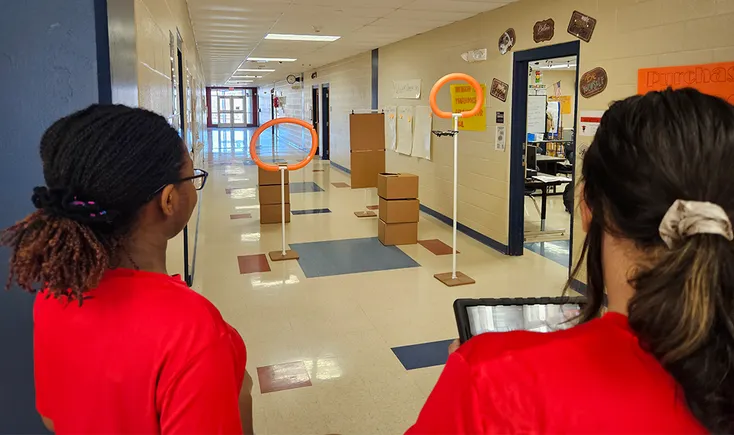
    Amanda Quick, NISD’s K–8 STEM Coordinator, organizes Aerial Aviators for the district—an out-of-school time (OST) program that skips the busy work. Instead, students are learning to fly drones, solve problems, and build real skills they can apply in school, at work, and in life. 

    The Newest OST Program Takes Off

    Middle school is when students start figuring out who they are—caught between wanting more independence and being open to new challenges. It’s also when out-of-school-time programs have the most potential to make an impact.

    “We were looking at additional afterschool STEM opportunities for our middle school students that would build upon the coding skills they learn in elementary STEM classes,” Amanda explains. “We already offered a robotics program and a solar-car design program that have been highly engaging. With all the local development that uses drones in industry, having an afterschool drone program was a natural addition.”

    In San Antonio—home to the nation’s second-largest cybersecurity hub—the answer was practically built into the landscape: drones.

    With Echo Drones in hand and a city full of real-world inspiration, NISD launched Aerial Aviators, a program that goes far beyond the basics. Students take part in flight challenges, work together on real missions, and build the kind of confidence that sticks. It’s not just about learning to fly—it’s about seeing where they’re capable of going.

    Never Leaving Relevance Up in the Air

    Even with exposure to aviation, cybersecurity, construction, and engineering, not every student saw themselves heading into those fields. Instead, many came to the afterschool program thinking drones would be fun—but not exactly tied to their future plans.

    While visiting one school’s Aerial Aviators program, Amanda noticed a girl who had more of an entrepreneurial spirit than an engineering one. “Drones don’t feel like something I can use in my future. I want to own a restaurant,” she explained.

    Despite the depth of her imagination, the girl struggled to see how drones could be connected to her ambitions. But with some critical thinking and a fresh perspective, Amanda helped her see things differently.

    “Remember the Covid pandemic? What if you didn’t have the option of using people to deliver food? How could you solve this problem to keep your business running?” 

    Suddenly, “women in STEM” took on new meaning for the girl as she realized how much her dream job depended on technology. “I could use drones!”

    Like the girl, some students had their futures already mapped out, while others hadn’t even started to imagine careers beyond what they saw through the classroom window. No matter whether the students had their sights set on adulthood, or just their afternoon, Amanda and campus program sponsors knew the right opportunity would be memorable for everyone.

    “We want kids to see drone knowledge as a skill, not just a trend. We can’t predict exactly how drones will be used in the future, but we want them to ask, ‘How does this connect to something I’m already passionate about?’”

    The goal wasn’t to change their dreams, but to mold them—and for some, to show how a STEM mindset could make those dreams more attainable.

    Skilled Students are Soaring Students

    Students don’t have to look far to see how STEM technology fuels innovation. Right in their own community, drones are elevating industries—helping strip and repaint airplanes to protect workers from harmful chemicals, and delivering medical supplies in emergencies. As students get hands-on with drones, they begin to see how industries are connected and how transferable skills—beyond coding, engineering, and tech literacy—are key to making it all happen.

    “We’re seeing a lot of students troubleshooting when they connect devices to the wrong drone,” Amanda shares. “They’re collaborating, thinking critically, communicating with peers and tech support, and developing grit—lots of it.”

    When students get the chance to lead flight challenges, they don’t just show off their skills—they gain the confidence to share what they’ve learned with others. The campus program sponsors have seen this firsthand, noting how eager the kids are to include everyone in the fun:

    “At a family event held at one of our high schools where Aerial Aviators students displayed their knowledge and skills, one mom was nervous about her child struggling or breaking something. But before she could worry too much, one student stepped up and reassured her: ‘Don’t worry! If he breaks it, we know how to fix it!’ That moment left everyone smiling.”

    Although each student has different interests, the drone program’s design and flight challenges make sure every kid feels their talents are recognized. And the results speak for themselves: 100% of students in the post-program survey said they had a great time.

    Just the Beginning

    Aerial Aviators has already made an impact on students. Even when things don’t go according to plan—like a broken propeller or a misconfigured drone—these middle schoolers stay motivated, always eager to learn from setbacks.

    Looking ahead, students are eager to deepen their STEM experience—especially through coding. Many have even expressed interest in competitions where they can showcase their skills. It’s a level of enthusiasm that educators are proud of—and one they’re ready to champion. Amanda and the campus sponsors are now exploring ways to weave these opportunities into the program, ensuring student voice continues to shape its future.

    The success of Aerial Aviators has sparked growing interest, with the program expanding from three schools last year to seven this year. With more funding, the goal is to continue this growth and reach even more students in the year ahead.

    No matter how the program evolves, it’s leaving a lasting legacy with the students—whether they’re back in class, opening their own restaurant, applying to college, or building with friends. Equipped with critical 21st century skills, these kids will step into high school, careers, and society as inspired leaders, ready to lend a hand so everyone’s dreams can take flight.

    More Out of School Time Resources

    Source link

  • The paradox of parents’ involvement in their children’s time at university

    The paradox of parents’ involvement in their children’s time at university

    Over the past few decades, there has been – as many an academic will attest – a significant shift in the extent to which parents are involved in their children’s higher education.

    Parents now often attend university open days with their children, with some institutions laying on separate talks and events for them. Moreover, despite the introduction of tuition fees and maintenance loans, many parents end up making some financial contribution to their child’s higher education.

    To date, however, we know relatively little about parents’ perspectives on their involvement, nor about the extent to which they support their children in non-financial ways once they have embarked on their higher education journey. Research that I have recently completed (with Julia Cook and Dan Woodman) on parents of Australian higher education students may be transferable to the UK, given the similarities between the two higher education systems and social structures more generally.

    Drawing on data from the longitudinal Life Patterns project, which has been following the lives of young Australians since the 1990s, we asked parents with children in higher education – or shortly to enrol – a series of questions about the support, if any, they were offering their children, as well as whether they felt parents should be supporting their children in any particular ways. Their responses were fascinating.

    Independence and intervention

    Nearly all of those we spoke to believed that higher education was a space in which young people learned how to be independent – and it was this that helped to distinguish it from school. University was typically positioned as a space where their children would “fend for themselves”, engage in “adult learning”, and be accountable for their own actions.

    However, while there was a strong rhetorical commitment to higher education as a time of achieving independence, when describing the detail of their parenting practices our participants outlined a wide range of ways in which they had been closely involved in the lives of their student children (or thought a parent should be), providing high levels of practical and emotional support.

    All of those we interviewed were either already providing financial support to their offspring at university, or they had clear plans to do so when their children enrolled. In addition, they either had already spent, or thought it was desirable to spend, considerable time with their children supporting them through any problems they encountered during their studies. This differed between participants but often included “coaching” approaches, to help the child identify the root cause of problems; strong encouragement to take advantage of the various services available on campus – sometimes with detailed advice about how best to access these; and, in a significant number of cases, direct involvement in academic matters, including paying for private tutors.

    The following excerpts from our interviews are illustrative:

    Yeah, we would help [daughter] through that and … make a timetable for her for the week on how she could help with the study. …. So she’s not thinking it’s all got to be done in a short amount of time.

    The other thing we could do is investigate some tutoring if that’s required.

    None of our interviewees remarked on the apparent paradox between the rhetorical foregrounding of “independence”, on the one hand, and the numerous examples of parental intervention, on the other. This is perhaps unsurprising. It does, however, raise the interesting question of why these parents continued to see university as a space of independence given the various forms of support they were giving their child (or thought should be given).

    Defining distances

    In answering this question, we can first point to the dominance of discourses about independence. Despite the well-documented changes to young people’s lives over recent decades and the associated later age at which the traditional markers of adulthood are on average now reached, independence as an achievement of early adulthood retains considerable discursive power. Admitting that one’s child is “semi-dependent”, or similar, while at university may thus be viewed as admitting or that an adult child is struggling and even that one has “failed” as a parent.

    Relatedly, it appears that there continues to be some social opprobrium associated with acknowledging that one intervenes in the life of one’s son or daughter once they reach the age for higher education. This is alluded to in the following comment from one of our interviewees:

    Kids get older, they’re more mature than you think. You don’t want to be seen as mothering your children, I don’t want to be that umbrella parent that’s hanging over them all the time saying ‘do go do this’ or ‘you should do that’.

    Both structural factors (such as having to pay tuition fees, and the high cost of university housing) and cultural influences (such as the expectation that parents take responsibility for monitoring their child’s educational progress) likely encourage parents to continue to intervene quite significantly in the lives of their student-children. Yet it appears that these participants were nevertheless keen to discursively distance themselves from such behaviours.

    These findings provide new insights into how parenting practices are shifting over time. They may also have broader political and policy implications. Our sample was broadly middle class and we would speculate that the interventions outlined above may not be available to all students – particularly those from families with no prior experience of higher education. Universities thus need to be aware that some students may be being supported in their academic endeavours by parents, and this may serve to exacerbate social inequalities. Can more support be offered within universities to those without such familial resources?

    With respect to more general policy debates, for those who believe that the student loan should be increased (or grants restored) to cover costs currently often picked up by parents, arguments may be harder to make if the actual degree of parental contribution is masked by the discourse of “independence”. There may therefore be some advantage to being more open about the degree of parental support, with respect to finances at least.

    Source link

  • Advising in a time of uncertainty

    Advising in a time of uncertainty

    • By Sarra Jenkins, Director of Future Pathways at Loughborough Grammar School.

    The headlines made by the financial uncertainties within the Higher Education sector have been widespread in recent months. QMUCU has a running list of the currently 90 organisations with redundancy and restructuring programmes, and the Office for Students predicts more than one-third of universities will face ‘serious cash flow problems’. For the sector and those in it, this creates uncertainty. It also creates uncertainty for students making decisions on their university choices, in both an emotional and logistical way. So, what challenges do university advisers face when advising students in the current climate?

    Before application

    When students are considering their higher education options, research is crucial. I have previously written about the importance of ‘best fit’ for trying to ensure a student will thrive at university. However, when students are researching institutions about which headlines have been written in terms of their financial security, it creates uncertainty and raises questions for students. These questions are often ones that do not have obvious or immediate answers, but they can make it difficult for students to feel that they can make effective decisions.

    This also makes it difficult to advise students on the post-18 plans. When the sector within which the students are researching is facing the financial concerns that it currently is, it makes it challenging to advise them accurately. One training session I attended drew attention to this, but effectively argued that students should not be too concerned with what is going on. This is well-meaning advice, but it does little to reassure them in the face of the headlines they see when they conduct their research.

    Course withdrawals during application

    Another way students may experience the impact of the financial issues in higher education is through course withdrawals. There have been news reports of universities deciding to cut courses due to the financial challenges they face. But this also affects prospective students. If a course is withdrawn before an application is made, at least the research that a prospective student carries out can take this into account in their decision-making. However, what about after an application is made?

    I had a student this year who was delighted to get an offer from the university they wanted to be their first-choice institution. They had put considerable effort and focus into their post-18 research and were able to get their application sent very early in the application cycle. This allowed them to focus on their A Levels and on getting the grades they would need to get in if they received an offer. In October, they received the offer they wanted, only to have it withdrawn in January after it was decided the course would not run in this academic year. As all of this occurred before the Equal Consideration Deadline, the student could remove this withdrawn option and put another university and course onto their UCAS form. But this logistical solution hides the emotional toll this took on the student.

    Initially, all of their well-formed and carefully researched plans were now in disarray. They could look at other options, and we did identify similar courses at different institutions. But understandably, these other options were not what the student wanted or had planned for. Having received an offer, they had set both their heart and their head on accepting it. Having it withdrawn was not simply a case of ‘finding something else’; rather, it undid months of research in the manner that every university adviser hopes their students will approach this decision.

    Students may also see other changes occurring during their application. At one university, headlines were created when departments were merged. In this case, I had a student who held an offer at one of these departments, and who then raised questions about what this meant for them. The answer might be that such changes may have relatively little impact on the student experience, however it does create uncertainty and unsettles the student.

    As a university adviser in this situation, we can try and help the student make the best decisions in the circumstances. But it does undermine the plans they had started to put together, either internally or in reality, about their next steps. This could also potentially undermine the success and speed of their transition to HE.

    Course withdrawals during a course

    Some withdrawals happen once a course has begun. Whilst universities might be supportive of students who find themselves in this unfortunate situation, it still undermines the research a student has done and the subsequent choices that they have made in accepting and taking up an offer.

    I had a student get in touch this year having had their course withdrawn just before Easter of their first year. Being so relatively new to university, the student came back and sought advice and support for an entirely new application. They had been offered a place on a different course by their university, but it did not have the focus and modules that they wanted. Instead of seeking a transfer, they sought to re-apply to university and begin again elsewhere in the first year.

    Again, whilst universities or school university advisers can try and help students make the best decisions in these circumstances, a decision has ultimately been placed on the student beyond their control. This does happen within the world of work too, however when students are paying to take up their higher education choices, it is important that they have agency in the choice and that their decision is right for them, not simply a fallback over which they had little control.

    Moving forward

    None of these situations reflects a preferred situation for a university, let alone a student. Clearly, none of these decisions are taken lightly by universities. Equally, this is, of course, not a UK-specific problem. Having visited the Netherlands recently, we saw protest signs about higher education cuts in Utrecht, and as I write this piece, reports are coming from the US of the Pentagon ending all funding for social science research. Those facing redundancies and restructuring are undoubtedly feeling the brunt of these financial concerns.

    Additionally, though, perhaps it is worth recognising the impact of this uncertainty on prospective students. The resilience they need to deal with such changes may yet not be fully formed, and this is one of the first major decisions in their lives over which they are likely to have considerable agency. Knowing these possibilities can help university advisers better prepare students. As universities look to their new intake in September, and open day season in the coming months, perhaps they could consider the reassurances that are possible to prospective students too.

    Source link

  • SMART Technologies Launches AI Assist in Lumio to Save Teachers Time

    SMART Technologies Launches AI Assist in Lumio to Save Teachers Time

    Lumio by SMART Technologies, a cloud-based learning platform that enhances engagement on student devices, recently announced a new feature for its Spark plan. This new offering integrates AI Assist, an advanced tool designed to save teachers time and elevate student engagement through AI-generated quiz-based activities and assessments.

    Designing effective quizzes takes time—especially when crafting well-balanced multiple-choice questions with plausible wrong answers to encourage critical thinking. AI Assist streamlines this process, generating high-quality quiz questions at defined levels in seconds so teachers can focus on engaging their students rather than spending time on quiz creation.

    More News from eSchool News

    HVAC projects to improve indoor air quality. Tutoring programs for struggling students. Tuition support for young people who want to become teachers in their home communities.

    Almost 3 in 5 K-12 educators (55 percent) have positive perceptions about GenAI, despite concerns and perceived risks in its adoption, according to updated data from Cengage Group’s “AI in Education” research series.

    Our school has built up its course offerings without having to add headcount. Along the way, we’ve also gained a reputation for having a wide selection of general and advanced courses for our growing student body.

    When it comes to visual creativity, AI tools let students design posters, presentations, and digital artwork effortlessly. Students can turn their ideas into professional-quality visuals, sparking creativity and innovation.

    Ensuring that girls feel supported and empowered in STEM from an early age can lead to more balanced workplaces, economic growth, and groundbreaking discoveries.

    In my work with middle school students, I’ve seen how critical that period of development is to students’ future success. One area of focus in a middle schooler’s development is vocabulary acquisition.

    For students, the mid-year stretch is a chance to assess their learning, refine their decision-making skills, and build momentum for the opportunities ahead.

    Middle school marks the transition from late childhood to early adolescence. Developmental psychologist Erik Erikson describes the transition as a shift from the Industry vs. Inferiority stage into the Identity vs. Role Confusion stage.

    Art has a unique power in the ESL classroom–a magic that bridges cultures, ignites imagination, and breathes life into language. For English Language Learners (ELLs), it’s more than an expressive outlet.

    In the year 2025, no one should have to be convinced that protecting data privacy matters. For education institutions, it’s really that simple of a priority–and that complicated.

    Want to share a great resource? Let us know at [email protected].

    Source link

  • Adolescence and Boys will be Boys – time for concrete action

    Adolescence and Boys will be Boys – time for concrete action

    Having been involved in the world of men and boys’ issues (chairing charities, running campaigns, trying to get policy change) for a long time, the last few weeks have been potentially game-changing. We saw the Centre for Social Justice report Lost Boys, Netflix’s Adolescence and the Boys will be boys policy report from Nick Hillman and me for this Institute.

    I felt that the Netflix programme raised serious issues facing some, not all, of our teenage boys, albeit it felt a little tick boxy in places (Tate – tick, Incels – tick, dad not around all the time – tick). I felt a little uneasy about how the dad was portrayed (leaving home at 6am and coming home at 8pm as if it was his fault and it was all his choice). Being the eldest son of a van driver, I am somewhat sensitive to negative portrayals of working-class dads doing the best they can to keep the lights on for their families.

    The report Nick and I wrote highlighted the continuing gender gap between male and female teenagers going into higher education. We estimate it is half a million over a decade with no sign of any change on the horizon, given the main predictor is an attainment gap in school. Boys remain behind girls at every level. Therefore, they are not getting the grades and as a consequence, are not taking enough of the exams to qualify.

    The main commonalities between both are that these issues have been hidden in plain sight. The issues raised by Adolescence about disengaged boys, negative influencers and their impact have been known for a long time. The same is true of the gender attainment gap. It shouldn’t, like last years’ Post Office Scandal drama, take TV to bring these to the fore.

    The main difference between our report and the ensuing debate about Adolescence is what comes next.

    We offered a range of policy solutions from schools taking up boy-positive principles to more male teachers and role models. Plus, there should be an increased focus on gender disparities in Access and Participation Plans, a Minister for Men and Boys and re-opening the Select Committee inquiry on boys’ attainment. Many more as well.

    What has been missing with regard to Adolescence at a national political and education level is the lack of commitment for concrete action. More male teachers and role models, came the welcome call from Sir Gareth Southgate. But there was no commitment from anyone to act. The Prime Minister said he was concerned and would look at it, but he made no pledge on action or what that would look like. There was also no huge push on tackling the problems boys have, only talking about the problems boys cause. But of course, tackling the problems boys have reduces the problems some boys cause – to themselves and others, including women and girls.

    My fear is that the media and political agenda will move on as it always does and nothing will change. The higher education attendance gap will remain, 150 plus teenage boys will die by suicide every year, well over 6,000 boys will continue to be excluded from school and 250,000 young men will still be unemployed.

    The higher education sector needs more boys to do well, so more go to higher education, and they do better when they are there. Our economy and society depend on it, too. The lesson from both Adolescence and Boys will be boys is that a continual lack of concrete action will no longer do.

    Source link

  • A dangerous time for the press

    A dangerous time for the press

    The media landscape in the Balkans, however, paints a different picture. According to the World Media Freedom Index for 2023 that is compiled by Reporters Without Borders, among the Western Balkan countries only Serbia — with more than 2,500 media outlets registered in the country — saw its standing on the Index drop. It now stands at number 91 out of 180 countries.

    Other Balkan countries were labeled under the category of “satisfactory” press freedom in 2023, but that left me both intrigued and somewhat skeptical.

    Having walked the corridors of Balkan newsrooms, I find it hard to align with such a rosy classification.

    You can talk truth to power but does it answer back?

    Allow me to rewind to a particular moment that epitomizes the uphill battle faced by journalists in the Balkans. It was during a presidential election in the Balkans, where I, as a reporter, faced a common challenge.

    I wanted to know what a candidate planned to do for education reform if he won. To my surprise, he brushed off the question, saying he didn’t have time for “those things.”

    This incident reflects a broader issue journalists in the Balkans deal with. It’s not just about getting information; it’s about holding politicians accountable to their promises. This encounter showed how some crucial topics get ignored in the fast-paced world of politics.

    In the bigger picture, it represents the challenges journalists face in the Balkans. Beyond the struggle for information, there’s a sense that politicians are sometimes disconnected from the issues that really matter to the people they represent.

    As we talk about press freedom in the Balkans, this story highlights the need for a media environment where politicians are not only accessible but also willing to discuss important matters. The challenges in the newsroom go beyond just finding information; journalists dig into the heart of the region’s political scene, where uncovering the truth often faces significant obstacles.

    The tension between media and politics

    In Bosnia and Herzegovina, I share common ground with others who have navigated the multifaceted challenges, including economic pressures, political interference and a lack of public understanding of the vital role of journalism.

    The erosion of institutions, with government services often ignoring or withholding information from journalists, further compounds the difficulties. There’s an urgent need for public support and understanding, essential components often lacking in a society where journalists struggle to assert a role in shaping a transparent and accountable governance structure.

    Progress has been made, but an undercurrent of danger and hostility still defines the media landscape in many parts of the Western Balkans.

    One cannot dissect the state of press freedom in the Balkans without acknowledging the omnipresent forces of political and economic pressure. It’s a delicate dance where journalists strive to maintain their professional integrity amidst the looming shadows of political influence. While Western counterparts may experience a healthy tension between media and politics, in the Balkans, the scales often tip in favor of political dominance.

    Press freedom is more than a legal framework; it’s a delicate ecosystem that requires protection from both overt and subtle threats. Even with seemingly robust legal safeguards, journalists in the Balkans find themselves grappling with political pressures, compromising the very essence of an independent press. The contrast between what is envisioned in theory and what actually happens in practice is evident, posing a challenge for journalists as they navigate intricate situations.

    An informed citizenry relies on information.

    Economic challenges further compound the struggle for press freedom. The media landscape is fragmented, with limited resources allocated to quality journalism. The survival of news outlets often hinges on their ability to generate revenue. That results in pushing stories towards sensationalism and entertainment to capture audience attention. It’s a dilemma where the pursuit of truth clashes with the demands of a market-driven media economy.

    It is noteworthy though that the people of the Balkans believe in the role of the press. In 2023, the Friedrich-Ebert-Stiftung in Bosnia and Herzegovina conducted a survey on the level of media freedom and trust in the media among the citizens of Bosnia and Herzegovina.

    They found that citizens trust the media more than they do religious groups, government institutions and the international community and that most people believe that politicians violate journalistic rights.

    As the political landscape in the Balkans continues to shape the narrative, journalists walk a tightrope between reporting the facts and navigating the intricate web of political sensitivities.

    The advent of digital platforms offers a glimmer of hope, yet challenges persist. Around 200 podcasts have emerged in the Balkans, attempting to carve a space in a landscape still dominated by traditional media. The struggle to monetize content and the scarcity of advanced recording technology remain barriers, hindering the potential growth of this burgeoning form of media.

    These days, I’m directing News Decoder’s part in a project called WePod that brings together nine organizations from seven European countries to study and hopefully nurture the podcasting industry in Europe, create collaborative audio content and train and connect podcasting professionals.

    In some ways it brings me back to where I began. From exploring the buzzing airwaves of radio I am now doing so with its digital counterpart. But what hasn’t changed is the need for people to support journalism by purchasing content that offers quality, verified information and sharing content from trusted sources. They are the are essential steps that every informed citizen can take to bolster independent media. Because without this type of media, we won’t have informed citizens.


    Questions to consider:

    1. What was different about how the press operated in Paris that surprised the author?
    2. What is one thing that makes reporting in the Balkans challenging for journalists?
    3. In your country do you think people trust the press more than they do the government? Why is that?


    Source link