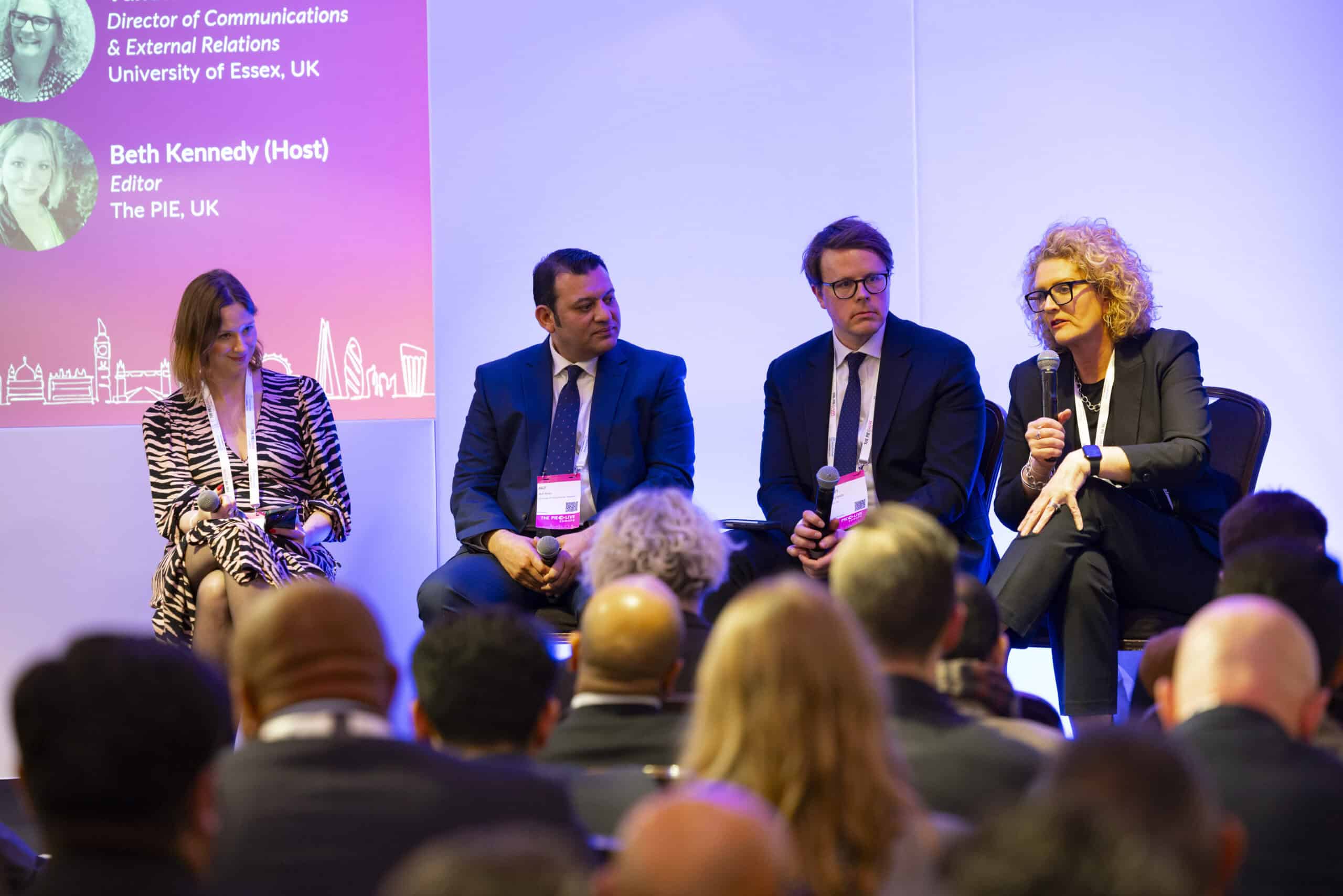
Speaking at The PIE Live Europe 2025, Stuart Smith, CEO of pathway provider NCUK, said Pakistan’s position as a growing yet price-sensitive market opens exciting opportunities for students to earn their qualifications before transitioning to a high-quality university in the UK or elsewhere.
“Financially, one of the biggest barriers for Pakistani students has been the cost of studying abroad. The pathway model helps address this by offering significant cost savings, allowing students to progress to high-quality universities,” Smith told delegates at the London conference.
“One of the big advantages of our model is that students can come in on an NCUK qualification, spend one or two years at home making really important cost savings, and academically prepare for studying abroad, all in a comfortable environment.”
According to Smith, the rise in interest in international qualifications among Pakistani students also means easier visa approvals for them.
Visa refusals and delays have forced many Pakistani students to miss their January intake at UK universities, with some even withdrawing their applications, as reported by The PIE News last year.
“For students studying in-country pathway programs, we’ve seen fewer visa refusals because they are better prepared for the visa process and qualify better for visa interviews,” Smith added.
Last year, Pakistan’s Higher Education Commission revised its TNE policy to provide greater clarity on requirements, operational models, and introduce guidelines for establishing offshore campuses of Pakistani higher education institutions.
The update also emphasised quality assurance and regulatory assessments.
“Instead of targeting a small number of students at a high price point, a more sustainable approach is to offer programs at a lower price to a larger student base,” stated Smith.
“That being said, there is a market for institutions at all price points. The key is to find the right strategy that balances accessibility with quality.”
The HEC has previously cautioned students and parents in Pakistan about some of the violations made by Pakistani institutions in their TNE programmes.
Moreover, the HEC warned recognised domestic HEIs offering foreign qualifications in Pakistan to comply with the government’s TNE policy, stating that any violations would result in non-recognition of the student’s degree.
According to Vanessa Potter, director of communications and external relations at the University of Essex, while enrolling large numbers of Pakistani students in TNE programmes remains challenging, the university has shifted its focus. It now puts more into collaborating with its Pakistani alumni, supporting research at local universities, and assisting academic staff in the country.
“One area we’ve significantly expanded is PhD support for academic staff. We offer our partners substantial discounts on PhD programs, as we believe in supporting both the academy and our institutional collaborators,” stated Potter.
“Many universities we work with have one or two staff members engaged in these programs, either full-time or part-time under co-supervision arrangements with Pakistani universities.”
Just last year, the University of Essex partnered with Beaconhouse International College to offer a variety of business, law, and technology courses to students in major Pakistani cities, including Islamabad, Faisalabad, and Lahore.
Over the years, Pakistan’s investment in research and development has remained notably low, with expenditure dropping from 0.17% of GDP in 2019 to 0.16% in 2021.
This limited funding presents challenges for Pakistani universities in securing high global research rankings, keeping the country’s R & D investment well below international standards.
Such challenges provide an opportunity for research collaboration for institutions like the University of Essex.
“There are pockets of excellent research in Pakistan, though they don’t always reflect in global rankings,” stated Potter.
“There is funding available – academic exchanges have already been supported, and the British Council in Pakistan has provided funding for specific initiatives. We are also working with them on scholarships in collaboration, while also receiving support from the British High Commission in Pakistan.”
According to Potter, the university is also working with the HEC to support laboratory staff in universities.
“It’s a specialised project, and while we are still looking to pay for it, we are committed to enhancing the development of lab staff in science departments in Pakistani universities.”
In recent years, Pakistan has emerged as a major TNE market, especially for the UK.
According to the revised TNE policy, HEIs with a strong reputation and ranked within the top 700 in the QS or THE world university rankings, or those classified as Fachhochschule, will be eligible to offer their degree programs in Pakistan.
Some institutions make the mistake of treating local Pakistani-origin agents differently from international aggregators. This is a clear discrimination
Atif Khan, University of Hertfordshire
With the launch of its new initiative, ‘Udaan Pakistan,’ aimed at revitalising the country’s economy, Atif Khan, country director at the University of Hertfordshire, believes that Pakistan has a strategic vision for economic growth over the next five to 10 years.
This, in turn, could drive a rising demand for international qualifications among students, he said.
“Any universities keen to come to Pakistan – this is the time. Demand will not finish, it will grow,” stated Khan.
“Currently, Pakistan has 55 recognised TNE programs, with over 15,000 students engaged. Of these, around 12,000 are involved in UK-affiliated programs, meaning nearly 80% of TNE students in Pakistan are already planning to transition to the UK for their postgraduate studies.”
On the recruitment front, Khan anticipates a rise in study visas from Pakistan to major international study destinations, noting that the UK issued 35,000 student visas by 2024, an increase of 13% from the previous year.
But he highlighted how some of the practices adopted by UK universities in the country are discriminatory in nature and need to be fixed.
“When it comes to selecting recruitment agents, universities need a sustained strategy. They must work with the right agents, ensuring strong compliance and regular training sessions. The market is evolving rapidly,” stated Khan.
“Some institutions make the mistake of treating local Pakistani-origin agents differently from international aggregators. This is a clear discrimination. If universities continue down this path, they risk attracting lower-quality students.”
Furthermore, Potter emphasised that while Pakistan’s economic challenges may prevent an exponential rise in student numbers, universities that offer strong career support and employability prospects could continue to attract Pakistani students.
“I think being able to articulate clearly how you can support students with jobs, and how having a degree from a particular type of university subject might help that career long term, does help students understand the welcoming environment,” she said.