Tag: Transfer

  • Strategic Approach to Mobility, Transfer, Academic Partnership

    Strategic Approach to Mobility, Transfer, Academic Partnership

    Serving approximately 100,000 students each year, Maricopa County Community College District is one of the nation’s largest community college districts. Many bachelor’s-granting institutions seek to recruit Maricopa students, but these institutions often fall short in serving them effectively by not applying previously earned coursework, overlooking their specific needs or failing to accept credit for prior learning in transfer. After years of requesting changes from transfer partners without seeing adequate response, Maricopa Community Colleges determined it was time to take action by establishing clear criteria and an evaluation process.

    A Legacy of Transfer

    Since its establishment, university transfer has remained a central pillar of the mission of the MCCCD. Transfer preparation is a chief reason students enroll across the district’s 10 colleges. In fact, 38 percent of students districtwide indicate upon admission that their goal is to transfer to a university.

    A significant portion of these students transition to Arizona’s three public universities under the framework of the Arizona Transfer System. Beyond that, Maricopa maintains formal articulation agreements with over 35 colleges and universities, both in state and across the nation, including private and public institutions.

    Developing Strategic Transfer Partnerships

    Each university partnership is formalized through a memorandum of understanding that outlines the roles, expectations and mutual responsibilities of Maricopa and the partner institution. Recognizing the need for a more strategic and data-informed approach, MCCCD developed a model years ago to ensure that both potential and existing transfer partnerships align with the district’s evolving strategic priorities. The model provides a structured framework for assessing new and continuing partnerships based on institutional relevance, resource capacity and student need.

    A Point of Evolution

    In 2022, the district overhauled its partnership model to better meet the needs of today’s learners, who increasingly seek flexible pathways to a degree. Many students now arrive with a mix of traditional coursework, transfer credit and prior learning assessment, including military service, industry certifications and on-the-job training, creating greater demand for clear, consistent and student-centered transfer pathways. The updated model ensures partner institutions complement, rather than counter, MCCCD’s efforts, particularly in recognizing learning that occurs outside the traditional classroom.

    The new model sets out the following criteria as minimum requirements:

    • Accepts and applies credits earned through prior learning assessment: The integration of PLA and alternative credit was a central focus of the redesign, recognizing the unique advantages these offer transfer students. Many students move between institutions, accumulate credits in segments and work toward credential completion. While some follow the traditional route from a two-year college to a four-year university, others take different paths, transferring from one two-year institution to another, or returning from a four-year institution to a two-year college through reverse-transfer agreements. These varied journeys highlight the need to embed PLA fully into the transfer agenda so that all learning, regardless of where or how it was acquired, is recognized and applied toward students’ goals. By making PLA a built-in component of the revamped model, MCCCD and its university partners can better meet learners where they are in their educational journey.
    • Provides annual enrollment and achievement data: To support this renewed focus, MCCCD asked all university partners to update their MOUs through a new university partnership application. This process gathered key institutional data and ensured alignment with updated partnership criteria and made it mandatory.
    • Accredited with no adverse actions or existing sanctions against the institution: Partner institutions must hold accreditation in good standing, accept both nationally and regionally accredited coursework, and recognize Maricopa-awarded PLA credit.
    • Aims to accept and apply a minimum of 60 credits: They are expected to apply at least 60 applicable Maricopa credits, academic and occupational, and accept Maricopa’s general education core.
    • Has a minimum of 50 students who have transferred at least 12 Maricopa earned credits in the last three years: This requirement is intended to demonstrate need and gauge student interest.
    • Surveys Maricopa transfer students annually: Partners must commit to administering annual transfer surveys and tracking student outcomes using jointly defined metrics.

    Institutions that do not meet this standard are not advanced in the partnership process but are welcome to reapply once they meet the baseline criteria. As a result, more partners are actively engaging and strengthening their policies and processes to gain or maintain eligibility.

    Key Findings

    Several themes emerged from the first year of implementation:

    Since the revamp, MCCCD is seeing promising results. Current and prospective partners have demonstrated strong commitment to the revised partnership model by elevating transfer and PLA practices, expanding pathways that accept 75 to 90 credits and participating in on-campus student support initiatives through goal-oriented action plans. They are using the model to facilitate conversations within their institutions to further advance internal policies and practices.

    Post-COVID, demand for online learning and support services remains strong, particularly among working students and those needing flexible schedules, as reflected in survey results. While participation in past transfer experience surveys was low, the district has made this requirement mandatory and introduced multiple survey options to better capture the student voice and experience. These insights enable MCCCD to collaborate with partners on targeted improvement plans.

    New criteria MCCCD is considering, several of which some partners have already implemented, include reserving course seats for Maricopa transfer students, creating Maricopa-specific scholarships, offering internships and other work opportunities and waiving application fees.

    MCCCD is currently assessing the impact of its revamped partnership model to measure the success of these efforts. Preliminary findings from the three-year review indicate that most, if not all, partner institutions are meeting or exceeding established metrics. These early results reflect a strong commitment to the agreements and reaffirm the value of the updated criteria in fostering more meaningful and impactful partnerships.

    A Model for Intentional Partnerships

    The Maricopa Community College District’s revamped university transfer partnership model is a strategic effort to keep partnerships active, student-centered and aligned with key institutional priorities. Through intentional collaboration, transparent policies and practices and shared responsibility, Maricopa and its university partners are building more effective, forward-thinking transfer pathways.

    Source link

  • Transfer Data Shows Little Progress for First-Time Students

    Transfer Data Shows Little Progress for First-Time Students

    The new “Tracking Transfer” report from the National Student Clearinghouse Research Center shows little improvement in transfer rates for first-time college students. But it also sheds light on factors that could contribute to better outcomes.

    The latest report, part of a series, examined transfer data for students who entered community college in 2017 and for former community college students enrolled at four-year institutions that academic year.

    It found that only 31.6 percent of first-time students who started community college in 2017 transferred within six years. And slightly fewer than half of those who transferred, 49.7 percent, earned a bachelor’s degree, consistent with outcomes for the previous cohort.

    But some types of students had better outcomes than others. For example, students who came to community college with some dual-enrollment credits had higher transfer and bachelor’s degree completion rates, 46.9 percent and 60.1 percent, respectively.

    Bachelor’s degree completion rates were also highest for transfer students at public four-year institutions compared to other types of institutions. Nearly three-quarters of students who transferred from community colleges to public four-year institutions in the 2017–18 academic year earned a bachelor’s degree within six years. The report also found that most transfer students from community colleges, 75.2 percent, attend public four-year colleges and universities.

    Retention rates among these students were also fairly high. Among students who transferred, 82 percent returned to their four-year institutions the following year. The retention rate was even higher for students who earned a certificate or an associate degree before they transferred, 86.8 percent, which was nearly 10 percentage points higher those who didn’t earn a credential before transferring.

    Source link

  • The Transfer Credit Myth: How Everything We Know About Excess Credits May Be Wrong

    The Transfer Credit Myth: How Everything We Know About Excess Credits May Be Wrong

    The Transfer Credit Myth: How Everything We Know About Excess Credits May Be Wrong

    quintina.barne…

    Thu, 09/04/2025 – 03:00 AM

    Part One: Through the lens of records and registration.

    Byline(s)

    Source link

  • Indianapolis Public Schools to Transfer Two Closed School Buildings to Settle Legal Battle – The 74

    Indianapolis Public Schools to Transfer Two Closed School Buildings to Settle Legal Battle – The 74


    Get stories like this delivered straight to your inbox. Sign up for The 74 Newsletter

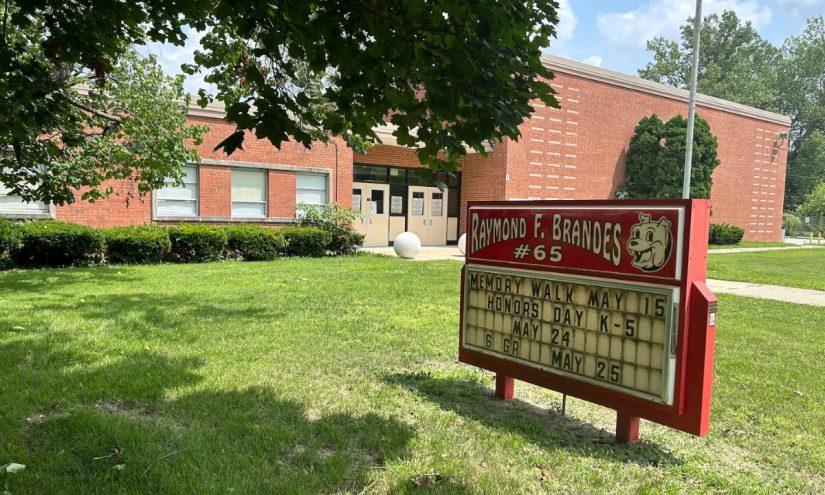
    Indianapolis Public Schools will put one closed school building up for lease or sale to charter schools for $1 and will sell another to a local nonprofit, the district announced Friday.

    The transfer of the buildings that used to house Raymond Brandes School 65 and Francis Bellamy School 102 stems from an Indiana Court of Appeals ruling in a lengthy battle over the state’s so-called $1 law, which requires districts to transfer unused school buildings to charter schools for the sale or lease price of $1. The court ruled in May that IPS must sell School 65.

    The announcement also comes as the Indianapolis Local Education Alliance ponders how to solve facility challenges for both IPS, which continues to lose students in its traditional schools every year, and charters, which frequently struggle to acquire school buildings.

    The district said in a statement that Damar Charter Academy, a school for students with developmental and behavioral challenges in Decatur Township, had reached out to IPS to express interest in School 65 — which is located on the southeast side of IPS. The district does not have the power to pick which charter school it will sell a building to — if more than one charter school is interested, state law requires a committee to decide.

    On Monday, Damar confirmed to Chalkbeat that it is interested in School 65.

    In the statement, the district said it would prefer to “move forward with disposition” of School 65 through a collaborative community process.

    “But, we respect the court’s decision and will proceed in full compliance with that order,” IPS Superintendent Aleesia Johnson said. “If the building is claimed by a charter school, we think Damar has a strong record of serving some of the most vulnerable and underserved students in our city and I have confidence that acquiring Raymond Brandes will allow them to expand their operations to serve even more students.”

    Meanwhile, the district will sell School 102 to Voices, a nonprofit that works with youth, for $550,000. The district had already leased the school on the Far Eastside to Voices, which also shares the space with two other youth programs.

    “Indianapolis Public Schools is committed to continuing to engage with our community on thoughtful re-use of our facilities and to being good stewards of our public assets,” Johnson said in a statement. “We are excited to move forward with our planned sale of the Francis Bellamy 102 building to VOICES and to see their impact in serving our community continue for many years into the future.”

    This story was originally published on Chalkbeat. Chalkbeat is a nonprofit news site covering educational change in public schools.


    Get stories like these delivered straight to your inbox. Sign up for The 74 Newsletter

    Source link

  • Reducing Transfer Admissions Time to Decision

    Reducing Transfer Admissions Time to Decision

    In an era when learners move fluidly across institutions, credentials, work-based learning and military education, the path to a degree is rarely linear. One area of the transfer process where improvement is both possible and measurable is the time it takes to render an admissions decision.

    Timely decisions support learners’ ability to register, engage in advising and complete financial aid processes. Faster admissions decisions can help institutions better align with the needs and expectations of today’s mobile learners.

    This is the opportunity the American Association of Collegiate Registrars and Admissions Officers, in collaboration with the National Association of Higher Education Systems, is advancing with its new National Learning Mobility Challenge: Improving Transfer Time to Decision.

    A Call to Action

    While institutions have made significant progress in modernizing admissions operations and technology over the past decade, continued refinement is needed to align those improvements with learner-centered goals.

    AACRAO’s recent report, “A Blueprint Toward a Learner-Centered Credit Mobility Ecosystem,” notes that “the core challenges for credit mobility are not primarily a lack of technology but rather structural and operational issues.” Manual processes persist even when electronic systems are available. Institutional fragmentation, policy complexity and data gaps create barriers that disproportionately affect mobile learners.

    One improvement institutions can pursue today is tracking and improving the time it takes to render an admissions decision for transfer applicants. The assumption that they’ll wait belies the urgent, real-world demands faced by transfer students, many of whom are older, working, supporting families or juggling multiple institutions and life transitions. Delays in admission cut off timely access to advising, registration and financial aid packaging.

    These are not administrative delays; they are missed opportunities for learner-centered service delivery.

    The Challenge is not a competition. Instead, it is a national call for action, experimentation and transparency. Participants commit to measuring their own time to decision, identifying internal or systemic friction points and piloting solutions to reduce them. AACRAO will provide visibility, collaborate with NASH for technical support and showcase progress at the Assembly, its newly reimagined national convening on learning mobility.

    Why Admissions Decision Speed Matters

    In many cases, transfer students apply with urgency. They may be returning after a stop-out, seeking a more affordable or supportive environment, or adapting to major life changes. These students are often older, working, supporting families or managing housing and food insecurity. For them, extended decision timelines may limit access to advising, course registration and timely financial planning. Without an offer of admission, students cannot register, access advising, complete financial aid steps or make informed decisions about their futures.

    Measuring and improving time-to-decision is one way institutions can demonstrate responsiveness. Institutions that prioritize transparency and timeliness in their transfer admissions process send a clear signal to the transfer community: you are welcome and we are ready.

    Building on the Work of Learning Mobility

    This Challenge builds on years of work by AACRAO to advance learning mobility—a learner-centered framework that recognizes the full range of educational experiences.

    In a previous “Beyond Transfer” article, we emphasized that many failures of reform are failures of implementation. Too often, institutions adopt promising ideas—articulation agreements, credit frameworks, technology platforms—without addressing the operational bottlenecks that slow them down or dilute their impact. The admissions decision for transfer learners is one area where aligning process improvement with institutional values can yield measurable progress.

    As the stewards of institutional systems, AACRAO members sit at the intersection of policy, technology, compliance and student support. They know how long decisions take. They know where the bottlenecks are. And they are well positioned to lead the change.

    A Challenge Worth Taking Up

    Addressing transfer admissions timelines is not a silver bullet. But it is a concrete, measurable starting point—one that institutions can act on today. And it may be one of the fastest ways to demonstrate that higher education is not only listening to learners but responding with urgency and care.

    Learn more and express interest in joining the Challenge here.

    Source link

  • Let’s remove the roadblocks to four-year STEM degrees for community college transfer students

    Let’s remove the roadblocks to four-year STEM degrees for community college transfer students

    In the nearly two years since the U.S. Supreme Court struck down race-conscious admissions, there have been repeated calls for universities to address the resulting decline in diversity by recruiting from community colleges.  

    On the surface, encouraging students to transfer from two-year colleges sounds like a terrific idea. Community colleges enroll large numbers of students who are low-income or whose parents did not attend college. Black and Latino students disproportionately start college at these institutions, whose mission for more than 50 years has been to expand access to higher education. 

    But while community colleges should be an avenue into high-value STEM degrees for students from low-income backgrounds and minoritized students, the reality is sobering: Just 2 percent of students who begin at a community college earn a STEM bachelor’s degree within six years, our recent study of transfer experiences in California found.  

    There are too many roadblocks in their way, leaving the path to STEM degrees for community college students incredibly narrow. A key barrier is the complexity of the process of transferring from a community college to a four-year institution. 

    Related: Interested in innovations in higher education? Subscribe to our free biweekly higher education newsletter. 

    Many community college students who want to transfer and major in a STEM field must contend with three major obstacles in the transfer process: 

    1. A maze of inconsistent and often opaque math requirements. We found that a student considering three or four prospective university campuses might have to take three or four different math classes just to meet a single math requirement in a given major. One campus might expect a transfer student majoring in business to take calculus, while another might ask for business calculus. Still another might strongly recommend a “calculus for life sciences” course. And sometimes an institution’s website might list different requirements than a statewide transfer site. Such inconsistencies can lengthen students’ times to degrees — especially in STEM majors, which may require five- or six-course math sequences before transfer.  

    2. Underlying math anxiety. Many students interviewed for the study told us that they had internalized negative comments from teachers, advisers and peers about their academic ability, particularly in math. This uncertainty contributed to feelings of anxiety about completing their math courses. Their predicament is especially troubling given concerns that required courses may not contribute to success in specific fields. 

    3. Course scheduling conflicts that slow students’ progress. Two required courses may meet on the same day and time, for example, or a required course could be scheduled at a time that conflicts with a student’s work schedule. In interviews, we also heard that course enrollment caps and sequential pathways in which certain courses are offered only once a year too often lengthen the time to degree for students. 

    Related: ‘Waste of time’: Community college transfers derail students 

    To help, rather than hinder, STEM students’ progress toward their college and professional goals, the transfer process needs to change significantly. First and foremost, universities need to send clear and consistent signals about what hoops community college students should be jumping through in order to transfer.  

    A student applying to three prospective campuses, for example, should not have to meet separate sets of requirements for each. 

    Community colleges and universities should also prioritize active learning strategies and proven supports to combat math anxiety. These may include providing professional learning for instructors to help them make math courses more engaging and to foster a sense of belonging. Training for counselors to advise students on requirements for STEM pathways is also important.  

    Community colleges must make their course schedules more student-centered, by offering evening and weekend courses and ensuring that courses required for specific degrees are not scheduled at overlapping times. They should also help students with unavoidable scheduling conflicts take comparable required courses at other colleges. 

    At the state level, it’s critical to adopt goals for transfer participation and completion (including STEM-specific goals) as well as comprehensive and transparent statewide agreements for math requirements by major. 

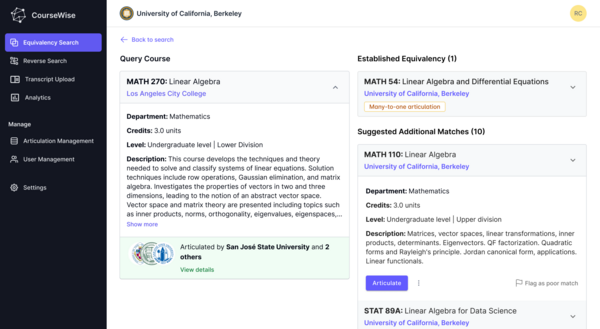
    States should also provide transfer planning tools that provide accurate and up-to-date information. For example, the AI Transfer and Articulation Infrastructure Network, led by University of California, Berkeley researchers, is using artificial intelligence technology to help institutions more efficiently identify which community college courses meet university requirements. More effective tools will increase transparency without requiring students and counselors to navigate complex and varied transfer requirements on their own. As it stands, complex, confusing and opaque math requirements limit transfer opportunities for community college students seeking STEM degrees, instead of expanding them. 

    We must untangle the transfer process, smooth pathways to high-value degrees and ensure that every student has a clear, unobstructed opportunity to pursue an education that will set them up for success. 

    Pamela Burdman is executive director of Just Equations, a California-based policy institute focused on reconceptualizing the role of math in education equity. Alexis Robin Hale is a research fellow at Just Equations and a graduate student at UCLA in Social Sciences and Comparative Education.  

    Contact the opinion editor at [email protected]. 

    This story about community college transfers was produced by The Hechinger Report, a nonprofit, independent news organization focused on inequality and innovation in education. Sign up for Hechinger’s weekly newsletter. 

    The Hechinger Report provides in-depth, fact-based, unbiased reporting on education that is free to all readers. But that doesn’t mean it’s free to produce. Our work keeps educators and the public informed about pressing issues at schools and on campuses throughout the country. We tell the whole story, even when the details are inconvenient. Help us keep doing that.

    Join us today.

    Source link

  • Removing Credit Transfer Barriers Key to Improving Higher Ed Completion Rates

    Removing Credit Transfer Barriers Key to Improving Higher Ed Completion Rates

    Dr. Andrew J. SeligsohnHigher education in the United States has come under increasing scrutiny — but not always for the right reasons. Critics claim that colleges and universities award degrees with little economic value, limit ideological expression on campus, and operate primarily for their own financial interests, rather than as institutions of shared public value. While much in this narrative is false, it nonetheless affects the public’s attitude toward higher education and individuals’ decisions about pursuing a postsecondary degree, which may be detrimental to their economic interest.

    When these critiques are made in bad faith, we should counter them with facts about the value of college attainment. It remains true for example, that a college degree is likely to yield a significant boost in earnings. Nonetheless, anyone who cares about higher education must also ask why these arguments resonate so deeply with the public. Where real frustrations are fueling legitimate skepticism, addressing those concerns can both improve higher education’s reputation and enhance its value for students, families, and society. Since the experiences that give rise to frustration and receptivity to attacks on higher education are personal experiences, it pays to drill down into the particulars to figure out what’s going on.

    In that spirit, Public Agenda, in partnership with Sova and the Beyond Transfer Policy Advisory Board, set out to deepen our collective understanding of learner experiences with the credit transfer process. We knew from research on enrolled students that transfer was a source of pain for many learners. But we didn’t know how many people were affected, how much it mattered to them, and how it shaped their views of higher education more broadly. With support from ECMC Foundation, we fielded a national survey of adult Americans that interrogates transfer experience and outcomes. 

    Dr. Lara CouturierDr. Lara CouturierThe findings were striking, and they should serve as a call to action for institutions of higher education. Nearly 4 in 10 respondents reported that they had tried to transfer credit toward a college degree or credential. This included credits earned at a previous college or university, as well as credits earned from nontraditional sources. In fact, more than a third attempted to transfer credits earned from workplace training, military experience, industry certification, vocational or trade school, or other prior learning. With more households feeling the cost of inflation and needing to upskill to survive in this economy, and more higher education institutions facing enrollment declines, we should be finding ways to develop more on-ramps and clear the path to a college degree.

    Unfortunately, the survey revealed that Americans who attempt to transfer encounter convoluted paths, often losing credit hours, money, and motivation along the way. One in five respondents reported having to repeat a class they had already taken because their credits didn’t transfer. Thirteen percent reported running out of financial aid as a result of having to repeat courses. And, most concerning, 16% reported that they gave up on pursuing a college degree or credential because the process of transferring was so difficult. It’s clear difficulties with transfer are not only inconveniences — they’re significant financial burdens and barriers to completion.

    We also sought to understand how these direct experiences shape individuals’ broader attitudes toward higher education. We found it profoundly troubling that 74% of respondents who had tried to transfer credit agreed with the statement that two- and four-year higher education institutions care more about making money than about educating students. In fact, respondents who had tried to transfer credit were more likely to hold this jaded view than those who had attended college but had not transferred or those who had no prior experience with higher education. So while some of the current attacks on higher education may be in bad faith, it should not be surprising that they find a receptive audience among so many Americans who recall feeling personally misled. 

    We know, then, that credit transfer needs reform — but what exactly does that look like? Public Agenda also surveyed Americans about potential interventions, and the results are promising. First, when asked what should happen to a college with a track record of not accepting many credits for transfer, Americans felt public accountability would be more helpful than heavy-handed punitive approaches. Fifty-four percent of Democrats and 47% of Republicans agreed that institutions should have to make a plan to improve credit transfer rates. Conversely, just one-third of Republicans and Democrats thought colleges should lose their funding. But what might go into a plan for improvement? Our survey found broad support among Republicans, Democrats, and independents for a variety of policies intended to make it easier for students to transfer credits. Support is notably strong for requiring that students have free and easy access to their transcripts, credentials, and degrees; requiring institutions to create public databases with transfer information; and requiring that prospective transfer students are quickly told how many credits will be accepted. 

    The benefits of a better transfer process are clear and compelling. Students would face fewer obstacles to completing their degrees, leading to higher graduation rates, better individual economic outcomes, and broader prosperity. Just as importantly, higher education would rebuild trust with the public by showing that institutions are committed to serving students—not just collecting tuition dollars. And the benefits of this renewed trust extend beyond the higher education system. The perception that public institutions don’t care about ordinary Americans is a key element of the challenge our broader democracy is facing. Since the education system is a direct way many people interact with our government, restoring confidence that higher education works for all Americans can further inspire faith in public institutions.

    If we ignore issues like the broken credit transfer system, skepticism about higher education will continue to fester. Worse, more students may give up on college altogether, missing out on opportunities for personal and professional growth—all of which ultimately erodes our democracy. Pushing back against misinformation isn’t the only way to defend higher education; we must acknowledge and address the real barriers students face. Credit transfer is an experience shared by many with cross-partisan support for reform—now is the time to act. Reforming the transfer process won’t solve every challenge facing higher education, but it’s a clear and necessary step toward improving the system for the good of both students and institutions themselves.

    Dr. Andrew J. Seligsohn is president of Public Agenda, a national research-to-action organization. Dr. Lara Couturier is a partner at Sova, a higher ed advocacy organization.

    Source link

  • Rurality Matters in Evaluating Transfer Outcomes (opinion)

    Rurality Matters in Evaluating Transfer Outcomes (opinion)

    Transfer enrollment rose by 4.4 percent this year, according to recent data from the National Student Clearinghouse Research Center. In total, transfers have grown by 8 percent since 2020, signaling a steady rebound from the sharp declines seen during the pandemic. That’s encouraging news for students seeking affordable, flexible pathways to a degree, as well as for institutions focused on expanding access and supporting completion.

    Less noticed, however, is just how much progress rural students are making. In fall 2023, rural community colleges experienced a 12.1 percent increase in students transferring to four-year institutions. This progress is even more impressive given the historic underinvestment in rural institutions and the well-documented barriers their students face on their path to a four-year degree.

    Many of the country’s small, rural institutions remain on the margins of transfer conversations, partnerships and policy priorities. Here in California, for instance 60 percent of the community colleges with the lowest transfer rates are rural. From low-income students in Appalachia to Latino learners in Texas’s Rio Grande Valley, rural colleges are lifelines for students facing barriers such as poverty, food and housing insecurity, and limited access to transportation and technology. Yet these institutions tend to lack the support, visibility and resources of larger community college systems. They often remain excluded from the design and implementation of transfer initiatives.

    Rural students bring tremendous talent, drive and potential to higher education. Many are the first in their families to attend college. They are often deeply rooted in their communities and, in many cases, seek to use their education to give back and contribute to their local economies.

    Transferring to a four-year institution can dramatically increase the lifetime earnings of these learners, expand their career paths and help meet the growing demand for a highly skilled workforce. Individuals with a bachelor’s degree earn, on average, nearly 35 percent more per year than those with only an associate degree. Four-year degrees open doors to career advancement, civic engagement and personal growth.

    Yet the systemic challenges rural community college students face—from more limited course offerings and degree options to long travel times to campuses to unreliable internet connections—require tailored support and intentional partnership. A one-size-fits-all approach to transfer doesn’t work when rural students are starting from a fundamentally different place than many of their peers.

    For example, rural colleges may not have the staff capacity to manage complex articulation agreements or advocate for their students in statewide transfer initiatives. Their advisers may juggle many roles, serving as counselors, career coaches and transfer liaisons all at once. Meanwhile, students themselves may be unaware of transfer opportunities or discouraged by long distances to four-year campuses, especially when those pathways demand sacrifices they can’t afford to make.

    The health of both our higher education ecosystem and our economy depends on ensuring that all students, regardless of ZIP code, can move easily between two-year and four-year institutions. If efforts to improve transfer overlook rural colleges, they risk deepening existing educational inequities and missing out on a significant segment of our nation’s talent pool.

    Organizations such as the Rural Community College Alliance shine a needed spotlight on how to best collaborate with rural institutions across the country to improve transfer outcomes and better support rural students’ success. Progress starts with listening and taking the time to understand the unique strengths and challenges of rural communities rather than imposing outside solutions.

    The policy landscape will need to evolve to support these efforts. This means increasing investment in rural higher education infrastructure, expanding funding for rural-serving institutions, and creating more flexible transfer frameworks that reflect the realities of rural learners, many of whom are working adults, members of the military, parents, or all of the above. Federal, state and higher education leaders should recognize rurality as a key lens through which to view improving student outcomes, on par with class or race.

    Transfer rates are rising, and more students are finding affordable on-ramps to bachelor’s degrees. But this progress is incomplete unless it reaches every corner of the country, including the small towns and rural communities that are home to millions of students. In a moment when more students are finally moving forward, we can’t afford to leave these learners behind. When rural students succeed, our entire nation benefits.

    Gerardo de los Santos is vice president for community college relations at National University.

    Source link

  • Targeted Orientation Supports Transfer Student Transition

    Targeted Orientation Supports Transfer Student Transition

    Transfer students often face challenges integrating into their new college or university. Despite having previous experience in higher education, transfer students—particularly those from nontraditional backgrounds—can find it difficult to navigate student supports, build community and get engaged. These challenges can result in lower rates of completion among upward transfers.

    A fall 2020 survey by Inside Higher Ed and Hanover Research found that fewer than 20 percent of four-year institutions reported providing sufficient social integration services for transfer students. About half indicated they supply enough academic support to transfer students who enroll.

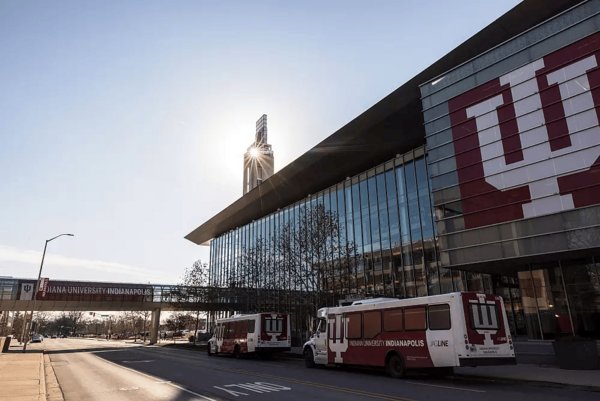
    Last fall, Indiana University Indianapolis launched an orientation program exclusively for incoming transfer and adult learners, designed to help familiarize them with the institution, build connections to peers and boost their confidence in attending the university.

    What’s the need: About 30 percent of undergraduates at IU Indianapolis are transfer students, said Janice Bankert-Countryman, assistant director of student services at the Center for Transfer and Adult Students. A significant number of transfers come in as juniors, having already obtained an associate degree.

    First-Year Bridge, IU Indianapolis’s orientation for new students, has historically supported all incoming students in the fall term. Staff created Bridge to Your Future: Transfer Bridge exclusively to serve the diverse needs of undergraduate transfer students, including military-affiliated students, working students and parenting students.

    “The core of Transfer Bridge is creating and maintaining relationships,” Bankert-Countryman said. “We all need relationships to survive as humans, and we certainly need relationships to thrive as students. So how do we connect students to the right people at the right time to receive the right resources that will empower them to thrive at our campuses?”

    How it works: Transfer Bridge is a coordinated effort among the Center for Transfer Students, First-Year Programs, Orientation Services, Student Transitions and Mentor Initiatives, Housing and Residence Life, and the Division of Enrollment Management.

    First-Year Bridge is required of all first-year students, but transfers can opt in to Transfer Bridge. Students learn about the opportunity through emails and meetings with their admissions counselors and academic advisers, as well as through other orientation presentations, Bankert-Countryman said.

    The pilot took place from 9 a.m. to 3 p.m. over three days during orientation week—designed to accommodate the needs of working and caregiving students, Bankert-Countryman said.

    First-year orientation is a full five days, and transfer students participate in some of the larger programming, like workshops on how to join student organizations, engage in career development or understand finances. Many also join the field trip to the Indianapolis Zoo.

    In addition to receiving support from Bankert-Countryman and other staff members, transfer students engage with two peer mentors, who provide insight and advice as students navigate their transition into the university.

    Beyond orientation week, transfer students receive support through regular peer mentoring sessions, transfer student events and a Transfer Bridge fall celebration. Bankert-Countryman and the peer mentors use Canvas, email and social messaging to keep in touch with students, she said.

    The impact: Of the 25 transfer and adult students who attended the inaugural orientation, 10 were 23 years old or older, two were military-connected and 12 had transferred from the local community college, Ivy Tech.

    Sixty percent of the students who participated in Transfer Bridge have a 3.0 or higher, and many have joined student organizations or hold on-campus jobs.

    Feedback from 14 participants showed that they found the program useful as they integrated into campus, saying it helped them to feel at home.

    “This was a worth-it experience especially as someone who tends to get anxiety to new environments and overwhelmed easily,” one participant wrote in a postorientation survey. “In a nutshell, this was a good slow introduction before the first day of school.”

    What’s next: This fall, staff will scale the program to offer three sections. The university will pay for three instructors and three peer mentors to lead the additional sections.

    One section will be offered to students in the pre–Health and Life Sciences program to highlight academic planning and career development. Another section, Cyber Sandbox, will focus on tech tools on campus, introducing learners to available systems and technologies from 3-D printing to virtual reality and artificial intelligence. The third section, Connections, will center on a book, The Crossroads of Should and Must by Elle Luna, to help students connect their current learning to future goals.

    We bet your colleague would like this article, too. Send them this link to subscribe to our newsletter on Student Success.

    Source link

  • How Colleges Can Increase Transfer Student Success

    How Colleges Can Increase Transfer Student Success

    Upward transfer from a community college to a four-year bachelor’s degree–granting institution is a complicated process that leaves many students behind—particularly those from historically underrepresented backgrounds.

    Last month, the Community College Research Center at Columbia University’s Teachers College and the Aspen Institute College Excellence Program published the second edition of the Transfer Playbook, a guidebook for colleges and universities seeking to eliminate barriers to transfer and increase the number of students who start at a community college and complete a bachelor’s degree.

    The report details how colleges and universities can implement three evidence-based strategies that improve transfer and includes examples of institutions that are successful in this work.

    By the numbers: Previous surveys have shown that a majority (80 percent) of community college students aspire to a bachelor’s degree, but only 16 percent earn a bachelor’s degree within six years of starting college.

    Transfer rates are even lower for some student groups, including those from low-income backgrounds, adult learners and Black and Hispanic students, according to the report.

    With the cost of higher education climbing, many students consider community college an affordable route to a postsecondary credential. However, little progress has been made over the past decade in increasing transfer rates from two-year to four-year institutions, according to the report’s authors.

    “Transfer and bachelor’s attainment rates for students who start in community colleges have remained virtually unchanged since we started tracking transfer in 2015,” they write.

    The playbook identifies colleges and universities that have achieved better outcomes for various groups using some of the recommended practices. None of the institutions or partnerships exhibited all the practices. “However, we hypothesize that by combining the exemplars’ efforts into a comprehensive, idealized framework, higher education leaders and practitioners can adapt it to meet their students’ needs and achieve strong outcomes for all—and at scale,” the report says.

    Put into practice: Researchers identified a few consistent themes that set innovative institutions apart, which include:

    • Leveraging proximity. Research shows students are more likely to enroll in college based on proximity, so creating local pathways between community colleges and four-year universities can support students who want to stay in the region.
    • Providing empathy in high-stakes decisions. Missteps in course, major or transfer destination selection can have financial and opportunity costs for a student, which can impede their attainment or push them to stop out entirely. Effective colleges offer personalized support through staff or create tools that provide guidance in a timely manner.
    • Establishing universal systems and initiatives. Some programs provide strong outcomes for historically underrepresented groups but are not large enough to reach students at scale. Exemplars instead use these programs as pilots to test effective measures and then scale them.
    • Achieving support from leaders. Grassroots efforts can help move the needle, but recognition, elevation and investment by senior leadership allow work to scale in sustained ways, regardless of staffing turnover.

    According to the report, the most effective strategies for creating sustainable transfer student success at scale are:

    • Prioritizing transfer at the executive level. A key driver in systemwide change was community college and four-year presidents who understand the central role of transfer student success in their respective institutional missions and business goals. This top-down approach allows for allocation of resources, division mobilization and partnerships across colleges, which often benefit the local community and workforce. This also allows for end-to-end redesign of the transfer student experience, and establishment of systems and processes.
    • Aligning programs and pathways. Colleges that create and regularly update term-by-term, four-year maps for each degree program can promote learning and ensure students are making significant progress toward a bachelor’s degree, such as completing college-level math and English and major-related courses. These maps should also prioritize accessibility and flexibility, understanding that student needs and priorities may shift and the way they complete courses may change. Some students may need exploratory curricula to help them identify their educational and career goals, so embedding this instruction early is also paramount.
    • Tailoring advising and nonacademic supports. “Research indicates that about half of the community college students nationally who intend to transfer do not access transfer services,” the report says. Instead, institutions should put in place inevitable advising, engaging transfer students before, during and after their transition to a university. Advisers should receive professional development and training that centers the student experience and equips them to engage with individual students and their respective circumstances. Once students land at their four-year institution, creating systems and supports that uplift the transfer experience and inspire feelings of belonging is also critical.

    Researchers call out a variety of campuses for their work, including George Mason University and Northern Virginia Community College’s ADVANCE program, Tallahassee State College’s transfer pathway work, and Arizona Western College and North Arizona University’s strategy to increase bachelor’s attainment in their two-county region.

    Seeking stories from campus leaders, faculty members and staff for our Student Success focus. Share here.

    Source link