Higher ed doesn’t need just another conference. It needs transformation.
Legacy strategies are cracking under demographic pressure. AI is rewriting how students search and the Modern Learner is calling the shots. Institutions that cling to “what’s always worked” are watching the ground shift under their feet.
InsightsEDU 2026 is built for leaders who are done settling. Presidents, marketers and enrollment teams who know reputation and revenue can’t live in separate silos anymore—and who are ready to align both around the needs of today’s learners.
From February 17–19, 2026 in Fort Lauderdale, you’ll hear from university leaders, higher ed innovators and Modern Learner experts who are actively rebuilding how institutions compete, communicate and grow. More than 40 sessions will dig into real playbooks, not theory—unifying brand and enrollment, elevating student experience and turning AI disruption into advantage.
Here’s a preview of a few of the voices taking the stage and how they’re already reshaping what’s possible.
The Leaders Rewriting Higher Ed’s Playbook
Gregory Clayton
President of Enrollment Management Services at EducationDynamics With over 30 years of experience in the higher education space, Greg brings valuable expertise in enrollment management and performance marketing. As President of Enrollment Management Services at EducationDynamics, he leads a comprehensive team offering agency marketing, enrollment services, strategic consulting, and research, all tailored to the higher ed sector. His leadership and career position him as a visionary strategist, equipped to offer insightful commentary on the higher education landscape and enrollment solutions. Join his session to learn more about how to better serve the Modern Learner and implement strategies that drive institutional success.
Session: Opening Session: From Framework to Action
Amanda Serafin
Associate Vice President of Enrollmentat Indiana Wesleyan University With more than twenty years in higher education enrollment, Amanda serves as the Associate Vice President of Enrollment at Indiana Wesleyan University, where she leads strategic initiatives and a high-performing team supporting IWU’s National & Global programs.
At InsightsEDU, Amanda joins EducationDynamics’ Vice President of Enrollment Management Consulting to unpack three years of competitive research—revealing what secret shopping uncovered about competitor strategies, the depth and quality of student nurturing across the market and how IWU leveraged those insights to strengthen enrollment outcomes.
Session: Mystery Shopping 2.0
Alex Minot
Client Partner Lead at Snapchat As Client Partner Lead at Snapchat, Alex helps higher ed institutions and nonprofits modernize their marketing through full-funnel strategies built for Gen Z and Millennial audiences. With experience spanning Snapchat, Reddit, Facebook and Google, he brings a deep understanding of how today’s learners discover, evaluate, and choose their next step.
At InsightsEDU 2026, Alex will break down why traditional enrollment marketing no longer works—and what it takes to earn trust in a world where Gen Z is curating their own narratives. Joined by EducationDynamics’ Senior Social Media Strategist, Jennifer Ravey, he’ll explore how to design a content ecosystem that creates belonging, builds confidence and inspires advocacy from first touch to final decision..
Session: From Awareness to Advocacy: Designing a Full-Funnel Strategy for Gen Z Engagement
Chris Marpo
Head of Education Partnerships at Reddit As Head of Education Partnerships at Reddit, Chris leads the charge in building high-impact collaborations with higher ed institutions and agencies. At InsightsEDU 2026, he’ll share how Reddit’s unique communities—and the behaviors driving them—are reshaping the way universities reach and influence the Modern Learner.
Drawing on his experience helping scale advertising businesses at LinkedIn, Pinterest and Quora, Chris brings a sharp understanding of the digital landscape and what truly resonates with today’s audiences. Attendees can expect actionable insights on how institutions can meet prospective students where they are and stay relevant in an era of rapid change.
Session: From Keywords to Conversations: Winning Student Mindshare in the Age of AI Search
Kevin Halle
VP of Enrollment at Wayne State College With more than a decade of experience leading undergraduate, transfer, graduate, and financial aid teams, Kevin brings a deep understanding of how to build enrollment pipelines that serve diverse learner groups.
At InsightsEDU, he’ll unpack what it takes to break down the silos separating traditional, graduate and adult learner strategies and how institutions can create one unified approach that works for all students.
Session: Unifying Your Enrollment: Building a Cohesive Strategy for the Modern Learner
Katie Tomlinson
Senior Director of Analytics and Business Intelligence at EducationDynamics Prepare to unlock insights with Katie Tomlinson. As the Senior Director of Analytics and Business Intelligence, Katie expertly manages data and reporting, uncovering key trends to support EducationDynamics in delivering data-driven solutions for the higher ed community. Learn from her as she discusses findings from EducationDynamics’ latest report, where attendees will gain a deeper understanding of the evolving learning environment and the significant factors that influence Modern Learners’ educational choices.
Session: Opening Session: From Framework to Action
Matt Loonam
Lead Enterprise Account Executive, Educationat LinkedIn With 20 years in digital media across programmatic, video, mobile and social, Matt has spent the last six years helping colleges and universities strengthen their brands and drive enrollment with more precise, student-centric outreach. At InsightsEDU, he will share how LinkedIn’s rich audience signals can help institutions reach career-focused prospects who are closer to a decision, while building the kind of trust that moves students to choose their school.
Session: How to Win High Intent Students on LinkedIn
Leila Ertel
Vice President of Marketing at Rocky Mountain College of Art + Design As Vice President of Marketing at Rocky Mountain College of Art + Design, Leila brings a bold, data-informed approach that helps more students uncover their creative potential and pursue rewarding careers. Attend her InsightsEDU session to see how your institution’s website can move from overlooked asset to true engine of enrollment growth.
Session: The Evolution of Website Marketing
The voices shaping InsightsEDU continue to grow. Check out the full speaker lineup and new additions on our speakers page.
Be In the Room Where Higher Ed Resets
InsightsEDU is where presidents, marketers and enrollment leaders pressure test old assumptions and build new playbooks around the Modern Learner. Over three days you’ll connect with peers who are aligning brand and enrollment, experimenting with AI and digital and proving that you don’t have to choose between revenue and reputation to achieve institutional success.
ACE and the Association of College and University Educators (ACUE) have reaffirmed our long-standing collaboration to continue driving transformative change in faculty development and elevate teaching excellence across higher education. For more information about the updates to this nearly decade-long alliance, click here.
To learn more and register for an Oct. 29 webinar that will feature ACE President Ted Mitchell and ACUE Chairman and CEO Andrew Hermalyn, click here.
If you have any questions or comments about this blog post, please contact us.
A new collection of essays, AI and the Future of Universitiespublished by HEPI and the University of Southampton, edited by Dr Giles Carden and Josh Freeman, brings together leading voices from universities, industry and policy. The collection comes at a point when Artificial Intelligence (AI) is projected to have a profound and transformative impact on virtually every sector of society and the economy, driving changes that are both beneficial and challenging. The various pieces look at how AI is reshaping higher education – from strategy, teaching and assessment to research and professional services.
You can read the press release and access the full report here.
The second line band’s brass instruments gleamed in the morning sun as they led nearly a thousand first-year students out of the Vadalabene Center arena. The festive New Orleans style procession wound its way across Southern Illinois University Edwardsville’s campus, past the towering Cougar statue where students would soon gather for their traditional class photo. Parents lined the walkway, some having extended their stay just to witness this moment—their children’s ceremonial entry into college life.
Among the crowd, one mother approached Dr. James T. Minor with tears in her eyes.
“That’s my son,” she said, pointing to a young man adjusting his position for the photo. “This is so great. I can’t believe what you’re doing. I’m so proud of him.”
Dr. James Minor talking to a SIUE student. For Minor, SIUE’s first African American chancellor, this moment embodied everything he hopes to achieve at the institution he has led since March 2022. A Detroit native with a Ph.D. from the University of Wisconsin-Madison and a distinguished career spanning federal government, the California State University system, and scholarship in educational policy, Minor brings both academic rigor and practical experience to his transformational vision.
“This is as close as I get to what’s truly special about university communities,” he reflects on the school’s most recent convocation. “You’ve got thousands of young people who have made a decision about their life—that they’re going to pursue a college degree—and the university has a responsibility to facilitate that.”
But behind this celebratory scene lies a story of dramatic transformation, one that has seen SIUE emerge from serious fiscal challenges to become a model for how regional public universities can thrive in challenging times.
A $18 Million Wake-Up Call When Minor arrived on campus in March 2022, he brought credentials that positioned him uniquely for the challenges ahead. As the 10th chancellor in SIUE’s history, his appointment followed distinguished service as deputy assistant secretary at the Department of Education, where he administered more than $7 billion in federal higher education programming. His most recent role as assistant vice chancellor and senior strategist at California State University—where he helped achieve the system’s highest graduation rates in history and secured hundreds of millions of dollars for graduation initiatives—prepared him for the complex work of institutional transformation.
But even this impressive background couldn’t ready him for what he discovered within his first 45 days: an $18 million structural deficit that had been masked by years of poor budget practices.
“I was giving a university budget presentation that was not particularly pleasant,” Minor recalls of those early days in his tenure. “That was not on my list of things to do in the first 100 days—to organize and understand this structural deficit, communicate it to the university community, and then lay out a plan for managing it.”
Dr. James T. Minor at commencement.The distinction between a structural deficit and a spending deficit became crucial to Minor’s communication strategy. Unlike a simple overspend that could be corrected immediately, SIUE faced a fundamental mismatch between fixed expenses and revenue. The number of people, buildings, and courses— the structural components of the budget—exceeded revenue by roughly $18 million.
“We had available cash sources and other things that we could manipulate to cover it,” Minor explains. “We operated that way for a number of years before I arrived, but we all know that’s not sustainable.”
The solution required what Minor calls “environmental responsiveness”— the ability of institutions to expand and contract according to changing conditions. This meant making hard choices about class sizes, graduate assistantships, and operational efficiencies that some within the university community initially resisted.
Fast forward to September 2025, and Minor will soon announce to the campus community that SIUE has effectively resolved its structural deficit, maintains one of the best cash positions among Illinois universities, and accomplished this transformation without spending a single dollar from its cash reserves.
Building a Culture of Student-Centered Data Perhaps even more significant than the financial turnaround has been Minor’s campaign to make SIUE fluent in its own student success metrics. When he arrived, he was stunned by what he discovered during informal surveys of faculty and staff.
“I would walk into a room and ask, ‘Who here can tell me our four-year and six-year graduation rates?’” Minor recalls. “These are people who presumably should have an idea— people who work here, not people shopping at Target or in the grocery store. I would ask about our first-to-second-year retention rate, and it wasn’t meant to embarrass people. It was to underscore the lack of awareness we had as a university community about the most important thing we do.”
Today, when Minor walks into any room on campus, hands shoot up when he asks those same questions. “People expect the question,” he says with satisfaction. “I have promised them, I don’t care if we’re talking about the paint in the stairwell, I will start every conversation here at the university about our student outcome data.”
Dr. James Minor meeting students on campus.This data-driven approach has yielded measurable results for the institution that boasts more than 12,000 students. First-to-second-year retention rates have increased, graduation rates have ticked up, and the university is expecting growth—a major accomplishment in today’s challenging enrollment environment.
Dr. Robin Hughes, dean of the School of Education, Health and Human Behavior, sees Minor’s unique combination of scholarship and leadership as precisely what SIUE needed.
“Chancellor Minor is by far what most institutions look for and want in an organizational leader,” Hughes observes. “He is a distinguished scholar whose work focuses on the study of higher education organizations. He is also an experienced organizational leader who brings both academic insight and institutional expertise to his work. A strong advocate for students, he makes organizational decisions that positively impact their success both during their studies and beyond.”
Dr. Jessica Harris, acting chief of staff and vice chancellor for Anti-racism, Diversity, Equity and Inclusion, chaired the search committee that brought Minor to SIUE.
“I remember reading his cover letter and saying to my mom, ‘I think this is our next chancellor,’” Harris recalls. “Every accomplishment he talked about in his career was about how it positively impacted or transformed the experience for students. That was a consistent thread throughout his cover letter.”
Nearly four years into his tenure, Harris sees that student-centered focus as the driving force behind institutional change.
“One of the major shifts I’ve seen is a very clearly articulated and collective focus on student success,” she explains. “Not that it wasn’t a commitment before, but there’s a level of intentionality I didn’t see across all areas before he started. Every presentation starts with mission—this is why we’re here, these are our enrollment numbers, retention and graduation numbers. He keeps it front of mind for us.”
Dr. Earleen Patterson, associate vice chancellor for Student Opportunities, Equity, Diversity and Inclusion, has witnessed this transformation firsthand.
“There’s a reason I’m still here,” she says of her longevity at the university that began in 1990. “Over the course of time, I’ve seen a lot of evolution of this journey of progress toward being inclusive, toward offering opportunities to every sector of our population.”
The results are visible in SIUE’s incoming class, which Patterson describes as having “the highest African American enrollment in the history of the university.” This fall’s freshman class includes nearly 600 Black students in the Boundless Scholars Experience alone—a comprehensive academic program designed to promote belonging, academic achievement and degree completion. At a time when voices opposing diversity, equity and inclusion efforts grow louder across the higher education landscape, SIUE has chosen to double down on its mission, letting results speak louder than rhetoric.
The focus on student success extends far beyond enrollment numbers. Patterson describes a comprehensive approach to retention that begins before students even attend their first class. The Boundless Scholars Experience moved students in early, gathering them with their families in the campus ballroom for what Patterson calls “real talk” about college expectations.
“What they saw was a room that reflected who they are,” Patterson explains. “But we let them know, come Monday, as you walk out into the university community, you may be the only one in your biology course, in your chemistry course, in your economics course. But you have a community, you have a village.”
This village includes strategic course placement with faculty who are particularly effective with first-year students, early warning systems that track attendance and performance, and support staff who can call students by name when they miss class.
“It marvels them when they come into my office, and I already know you missed chemistry on Tuesday,” Patterson says with a chuckle. “They’re like, ‘How do you know?’ I care enough to know about that—about all of these students.”
For Dominic Dorsey, president of the Black Faculty and Staff Association and director of the Access (Disability Services) Department, representation at the leadership level makes a tangible difference for students.
“We’ve been blessed not just to have Dr. Minor as our first Black chancellor, but to have a chancellor that’s an actual thought leader and transformational in the truest sense of the word,” he says.
Dorsey’s own department has seen dramatic growth, with registered students with disabilities increasing from about 650 when he arrived in 2018 to nearly 1,400 today. This growth reflects SIUE’s broader commitment to inclusive excellence that extends beyond traditional diversity metrics.
Town-Gown Collaboration The transformation at SIUE also stretches beyond campus borders through an unprecedented partnership with the city of Edwardsville. Mayor Art Risavy, a small business owner who has served as mayor for five years after a decade as an alderman, describes an intentional effort to strengthen university- city relations.
“Early on, when I became mayor, one of the first things we decided collectively was we wanted to work on our relations with the university,” Risavy explains. “We reached out to the chancellor, and it didn’t take long—Chancellor Minor wants to do stuff pretty quickly—before we had a meeting set up.”
These conversations led to concrete initiatives: improved website integration between city and university, the Hashbrown Huddle breakfast meetings that bring students directly into downtown Edwardsville, and shared committee appointments that give the university voice in city governance.
“We want to see students in our businesses, involved in our organizations,” Risavy says. “We want them to feel comfortable downtown, going through our shops and participating in our events. This is their home for four years or five or six years.”
The collaboration extends to shared programming, with Minor and Risavy regularly attending each other’s events, from the city’s state of the city address to SIUE’s ice cream social that draws over a thousand participants.
Navigating Challenges with Bold Leadership The success story at SIUE is unfolding against a backdrop of national political tensions around higher education, particularly concerning diversity, equity, and inclusion efforts. For leaders like Dorsey and Patterson, this context requires strategic adaptation without abandoning core values.
“The way that we approach the work has not changed,” Dorsey explains. “We just don’t publicize the way the work is done. Our ancestors created an underground railroad for a reason—it’s a reason why it wasn’t an above ground railroad.”
This approach allows SIUE to continue providing scholarships, celebration opportunities, and support systems for underrepresented students while focusing public attention on broader institutional success metrics that benefit all students.
Patterson emphasizes the importance of drowning out external noise.
“If we were to play into that distraction, we wouldn’t be able to focus on the charge that is in front of us. And these students are in front of us,” she said.
Doug James, immediate past president of the Staff Senate, describes an administration focused on “majoring on the major things” while maintaining awareness of smaller concerns.
“I think there was an appetite for honest conversation,” he says. “Let’s get in a room and talk about what are our challenges, where are we winning, what are the things we get to celebrate, and what needs our attention.”
Yet Harris points to concrete evidence of this collective effort.
“You don’t see 10 percentage point increases in Black student retention without people doing work inside and outside of the classroom. We’ve hit historic fundraising goals since Chancellor Minor’s been here. He’s helping to shift our culture. He often talks about us being first and best in class.”
Looking ahead, Harris envisions SIUE becoming “a model regional public institution with a national reputation” within the next three to five years. The university is already approaching 80% retention for domestic students and has set an ambitious goal of 90% first-to-second-year retention—a benchmark that would distinguish SIUE among institutions of its type.
“In the midst of all the challenges facing higher education, all the anti-DEI efforts, all the darts being thrown at us,” Harris reflects, “we are keeping on. We’re not deterred. In fact, we are making really great progress.”
The Price of Progress Minor’s transformation of SIUE hasn’t come without resistance. As the first African American chancellor in the institution’s history, he acknowledges the complexity of his position with remarkable candor.
“Some people think about it individually. I haven’t,” he tells me. “I’ve thought about what it means for other people and what it means for this university community with respect to our ability to move forward.”
Quite frankly, the university community has had to adjust to new leadership and some members have experienced dissonance with the very idea that a Black man is in charge.
“Sometimes it’s passive resistance, sometimes it’s active resistance, sometimes it’s a level of questioning and verifying before we can participate or agree to move in the right direction, and quite honestly, sometimes it’s blatant sabotage,” the chancellor admits.
Yet Minor approaches these challenges with the same organizational theory perspective he brings to budget management and student success metrics. For him, institutional transformation requires acknowledging and managing all forms of resistance while maintaining a clear focus on the core mission.
Still, the significance of this representation isn’t lost on the broader SIUE community, particularly among Black alumni who lived through earlier eras of the institution. Minor recalls one particularly poignant encounter with an alumna from the mid-1960s: “She came up to me, grabbed my hand and started patting my hand as any good grandmother would do, and said, ‘Baby, I’m so proud of you. It’s so wonderful to see you in this role.’ And as she was patting my hand, she leaned in and said, ‘Now, don’t you mess this up.’”
The exchange captures the weight of expectation that comes with being a first—representing not just personal achievement, but the hopes and dreams of those who paved the way.
“For individuals from that era, that generation, I represent their hopes and dreams for equity and equality and opportunity,” Minor reflects.
A Model for Regional Public Universities
The SIUE story offers lessons for similar institutions nationwide. Minor’s approach demonstrates that even universities without massive endowments can achieve significant transformation through strategic focus, data-driven decision- making, and commitment to operational efficiency.
“Regional public institutions don’t have the margin to be inefficient,” Minor argues. “We’ve got 1960s infrastructures and boilers and aging infrastructure that we have to manage. You can’t manage that and be grossly inefficient at the same time.”
As SIUE prepares for its next chapter, the metrics tell a story of remarkable progress. The university maintains a strong financial position, has achieved record fundraising including the largest single gift in institutional history, and expects continued enrollment growth in a challenging market.
But for Minor, the real measure of success remains that moment during convocation when a parent’s pride reflects the transformative power of higher education.
“The idea that I get to help facilitate the environment in which young people have an opportunity to transform their life—it’s a dream job,” he says. “It’s not the title, it’s not the status, it’s not the position. It is having the opportunity to facilitate the environment in which young people have an opportunity to transform their life.
“I love university communities. I love the power of institutions,” he adds. “I love the idea that they could be beacons of social and economic opportunity. I love the idea that the teaching and learning environment can transform the mind, prepare people professionally in a way that changes the trajectory of their life and their children’s lives. That, to me, is powerful in its own right.”
That transformation happens every day, every semester, every academic year at SIUE. And as the second line band plays on, leading another class of students toward their futures, the sound carries a promise—that this institution, this community, this partnership between town and gown will continue rising above the noise to focus on what matters most: changing lives through education.
Classroom discussions are among the most enriching aspects of higher education, offering students opportunities to engage with peers, deepen their understanding of course material, and draw meaningful connections between concepts. For instructors, these discussions serve as a powerful tool to foster collaboration, assess comprehension, and create a more dynamic and inclusive learning environment. Yet, leading effective discussions can be challenging, especially when students are hesitant to participate or when conversations lack depth and substance.
The field of health coaching—where communication is central to guiding clients toward greater self-awareness and behavior change—offers a valuable framework for enhancing classroom dialogue. Health coaching is a collaborative process that relies on intentional and empathetic communication to help clients explore their motivations, clarify their goals, and take ownership of their progress. By applying key communication strategies from this field, educators can elevate the quality of classroom discussions and create more meaningful interactions with students. This article explores how three core techniques from health coaching — the OARS framework (open-ended questions, affirmations, reflective listening, and summarization), rephrasing, and active listening — can be adapted to the classroom to facilitate deeper, more personally relevant conversations.
The OARS Framework
First and foremost, good discussions begin with good questions. Consider the principles contained in the acronym “OARS” to shape the way you formulate questions and listen to responses, facilitating more interactive and less directive discussions.
O: Open-ended questions: Ask questions that require more than discrete responses. Avoid questions that can be answered with “yes,” “no,” or a number. Instead of asking “Are people motivated solely by monetary incentives?”, consider asking: “Tell us about your sources of motivation,” “Why might people not be motivated when provided an incentive?” and “What, in your experience, have you seen motivate your peers to…?” When used effectively, open-ended questions encourage students to think more deeply and progress in their understanding. They can even prompt students to introduce classroom topics without the instructor ever having to explicitly steer the discussion in a particular direction.
A: Affirmations: Don’t hesitate to provide positive statements that acknowledge a student’s contribution. Affirmations foster respect and support an inclusive teaching climate; however, the affirmations must be genuine and authentic. Students notice when the instructor simply says “Great comment” or “Good question” to a majority of students’ responses. Remember, this isn’t an interrogation but a dialogue. Consider the potential impact of statements like: “Sara, thanks for volunteering to share your thoughts about applications of aerobic energy production in exercise programming,” or “Javier, I really appreciate how your comments reflect Van Gogh’s perspective on his use of sunflowers in his paintings.”
RS: Reflective Listening and Summarization: Reflective listening occurs when the instructor reflects back to the student the core elements of their contribution to the discussion. Reflective listening provides an excellent opportunity for the instructor to confirm their understanding of the student’s comments, as well as directing the conversation forward. In this step in the OARS framework, it may be appropriate to ask either a yes/no or an open-ended question. For example, “John, you’re saying personal accomplishment can be a powerful motivator among mountain athletes, is that right?” or “It seems like something is missing in our understanding of what happens when we introduce financial incentive to these groups. What do you think would happen if…?” When applied to the discussion as a whole, a summary of the main points made from the instructor’s perspective can be a great way to remind students of key points, reinforce the instructor’s informal assessment of student learning, as well as introduce the next topic or item in the lesson plan of the day.
Application Moment: Consider how you might have applied these principles of the OARS framework to a recent group discussion you led in class.
While the OARS framework provides an excellent guideline for how an instructor can improve the overall quality discussions, the following two techniques will provide concrete recommendations on what to say and how to act during the discussion.
Rephrasing
Remember the importance of good questions for good discussions? To take things one step further, consider the technique of rephrasing. To encourage deeper topic exploration, consider restructuring questions by replacing the intended question word (e.g., “who,” “what,” “when,” “where,” “why,” or “how”) with a different one. For example, an instructor may want to ask, “How can we increase motivation?” and might rephrase that question as, “What factors increase motivation?” or “Where do you feel the most/least motivated?” or “Who demonstrates the most/least motivation?” or “Why does motivation ebb and flow?” or “When are you most/least motivated?” By changing the question word, the instructor can steer the discussion to change how students think about the question, perhaps eliciting a list of possible outcomes (e.g. “What are the factors?”) or explore possible mechanisms/antecedents (e.g., “Why might motivation decline in competitive settings?”) or to help the students develop their ability to embody or conceptualize new perspectives (e.g. “How do financial incentives impact different groups or individuals? John, you represent a group of…”). This can provide depth to the conversation, encourage creativity and application of concepts in discussion, and allows for the exploration of a variety of interesting tangents.
Application Moment: Write down a discussion question from your last class instruction. Rephrase the question using each of the common question words (“who”, “what”, “when”, “where”, “why”, “how”). Consider the types of responses each question word will elicit.
Active Listening
Last, but not least, active listening: Often, instructors forget that when a question is asked, a response is on the way. It can be surprisingly difficult to fully engage with student responses, as it requires the instructor to focus on what the student is saying rather than on what they will say next. The instructor’s first job is to focus on what students are saying rather than their (the instructor’s) response. The following strategies promote active listening in the classroom during discussions:
Provide adequate time for student responses.
Don’t be afraid of silence. Silence provides you and your students time to think.
Call on students by their first name when you engage with them.
Get out from behind your lectern and casually move toward the student who is speaking.
Nod and use affirmations (e.g., nodding or stating “nice insight, Paul”).
Paraphrase when appropriate (“What I hear you saying, Paul, is that….”) – see “rephrasing/summarization” under the OARS framework.
Fostering meaningful classroom discussions is both an art and a skill—one that can be significantly enhanced by drawing on the principles of communication in health coaching. By integrating techniques such as the OARS framework, rephrasing, and active listening, instructors can create more engaging, inclusive, and thought-provoking learning environments. These strategies not only encourage deeper student participation but also help build a classroom culture rooted in empathy, curiosity, and mutual respect. As higher education continues to evolve, integrating communication practices from other disciplines can be a powerful means of enriching the educational experience and enhancing student learning.
Maria Newton, PhD, F-AASP, is an Associate Professor in the Department of Health and Kinesiology at the University of Utah. She holds a BA from the University of California, Davis, an MS from California State University, Chico, and a PhD from Purdue University, with specialized training in sport and exercise motivation. Dr. Newton’s research focuses on achievement motivation, specifically how perceptions of the climate influence motivational striving. Her most recent contributions to the literature have focused on how creating a caring and task-involving climate fosters motivation. With over 30 years of experience in higher education, Dr. Newton brings extensive expertise in teaching a variety of courses in diverse formats. Recognized with numerous teaching awards, she is deeply committed to cultivating an inclusive and intellectually stimulating climate that inspires learning and personal growth.
Jefferson Brewer, MS, CSCS, ACSM EP, is an Associate Instructor in the Department of Health and Kinesiology at the University of Utah. He holds a BS in Kinesiology with an emphasis in Exercise Science and an MS in Kinesiology focused on Health and Wellness Coaching, both from the University of Utah. He is currently completing his dissertation for a PhD in Integrated Health Science at Rocky Mountain University of Health Professions. Jefferson’s research centers on metabolism in rock climbers—examining both systemic and localized muscular responses. Before transitioning into academia, he worked in patient care, applying his coaching background and exercise science expertise to improve health outcomes. His experience has shaped a teaching style grounded in interpersonal communication, creating engaging and dynamic learning environments that foster growth, curiosity, and academic success.
Classroom discussions are among the most enriching aspects of higher education, offering students opportunities to engage with peers, deepen their understanding of course material, and draw meaningful connections between concepts. For instructors, these discussions serve as a powerful tool to foster collaboration, assess comprehension, and create a more dynamic and inclusive learning environment. Yet, leading effective discussions can be challenging, especially when students are hesitant to participate or when conversations lack depth and substance.
The field of health coaching—where communication is central to guiding clients toward greater self-awareness and behavior change—offers a valuable framework for enhancing classroom dialogue. Health coaching is a collaborative process that relies on intentional and empathetic communication to help clients explore their motivations, clarify their goals, and take ownership of their progress. By applying key communication strategies from this field, educators can elevate the quality of classroom discussions and create more meaningful interactions with students. This article explores how three core techniques from health coaching — the OARS framework (open-ended questions, affirmations, reflective listening, and summarization), rephrasing, and active listening — can be adapted to the classroom to facilitate deeper, more personally relevant conversations.
The OARS Framework
First and foremost, good discussions begin with good questions. Consider the principles contained in the acronym “OARS” to shape the way you formulate questions and listen to responses, facilitating more interactive and less directive discussions.
O: Open-ended questions: Ask questions that require more than discrete responses. Avoid questions that can be answered with “yes,” “no,” or a number. Instead of asking “Are people motivated solely by monetary incentives?”, consider asking: “Tell us about your sources of motivation,” “Why might people not be motivated when provided an incentive?” and “What, in your experience, have you seen motivate your peers to…?” When used effectively, open-ended questions encourage students to think more deeply and progress in their understanding. They can even prompt students to introduce classroom topics without the instructor ever having to explicitly steer the discussion in a particular direction.
A: Affirmations: Don’t hesitate to provide positive statements that acknowledge a student’s contribution. Affirmations foster respect and support an inclusive teaching climate; however, the affirmations must be genuine and authentic. Students notice when the instructor simply says “Great comment” or “Good question” to a majority of students’ responses. Remember, this isn’t an interrogation but a dialogue. Consider the potential impact of statements like: “Sara, thanks for volunteering to share your thoughts about applications of aerobic energy production in exercise programming,” or “Javier, I really appreciate how your comments reflect Van Gogh’s perspective on his use of sunflowers in his paintings.”
RS: Reflective Listening and Summarization: Reflective listening occurs when the instructor reflects back to the student the core elements of their contribution to the discussion. Reflective listening provides an excellent opportunity for the instructor to confirm their understanding of the student’s comments, as well as directing the conversation forward. In this step in the OARS framework, it may be appropriate to ask either a yes/no or an open-ended question. For example, “John, you’re saying personal accomplishment can be a powerful motivator among mountain athletes, is that right?” or “It seems like something is missing in our understanding of what happens when we introduce financial incentive to these groups. What do you think would happen if…?” When applied to the discussion as a whole, a summary of the main points made from the instructor’s perspective can be a great way to remind students of key points, reinforce the instructor’s informal assessment of student learning, as well as introduce the next topic or item in the lesson plan of the day.
Application Moment: Consider how you might have applied these principles of the OARS framework to a recent group discussion you led in class.
While the OARS framework provides an excellent guideline for how an instructor can improve the overall quality discussions, the following two techniques will provide concrete recommendations on what to say and how to act during the discussion.
Rephrasing
Remember the importance of good questions for good discussions? To take things one step further, consider the technique of rephrasing. To encourage deeper topic exploration, consider restructuring questions by replacing the intended question word (e.g., “who,” “what,” “when,” “where,” “why,” or “how”) with a different one. For example, an instructor may want to ask, “How can we increase motivation?” and might rephrase that question as, “What factors increase motivation?” or “Where do you feel the most/least motivated?” or “Who demonstrates the most/least motivation?” or “Why does motivation ebb and flow?” or “When are you most/least motivated?” By changing the question word, the instructor can steer the discussion to change how students think about the question, perhaps eliciting a list of possible outcomes (e.g. “What are the factors?”) or explore possible mechanisms/antecedents (e.g., “Why might motivation decline in competitive settings?”) or to help the students develop their ability to embody or conceptualize new perspectives (e.g. “How do financial incentives impact different groups or individuals? John, you represent a group of…”). This can provide depth to the conversation, encourage creativity and application of concepts in discussion, and allows for the exploration of a variety of interesting tangents.
Application Moment: Write down a discussion question from your last class instruction. Rephrase the question using each of the common question words (“who”, “what”, “when”, “where”, “why”, “how”). Consider the types of responses each question word will elicit.
Active Listening
Last, but not least, active listening: Often, instructors forget that when a question is asked, a response is on the way. It can be surprisingly difficult to fully engage with student responses, as it requires the instructor to focus on what the student is saying rather than on what they will say next. The instructor’s first job is to focus on what students are saying rather than their (the instructor’s) response. The following strategies promote active listening in the classroom during discussions:
Provide adequate time for student responses.
Don’t be afraid of silence. Silence provides you and your students time to think.
Call on students by their first name when you engage with them.
Get out from behind your lectern and casually move toward the student who is speaking.
Nod and use affirmations (e.g., nodding or stating “nice insight, Paul”).
Paraphrase when appropriate (“What I hear you saying, Paul, is that….”) – see “rephrasing/summarization” under the OARS framework.
Fostering meaningful classroom discussions is both an art and a skill—one that can be significantly enhanced by drawing on the principles of communication in health coaching. By integrating techniques such as the OARS framework, rephrasing, and active listening, instructors can create more engaging, inclusive, and thought-provoking learning environments. These strategies not only encourage deeper student participation but also help build a classroom culture rooted in empathy, curiosity, and mutual respect. As higher education continues to evolve, integrating communication practices from other disciplines can be a powerful means of enriching the educational experience and enhancing student learning.
Maria Newton, PhD, F-AASP, is an Associate Professor in the Department of Health and Kinesiology at the University of Utah. She holds a BA from the University of California, Davis, an MS from California State University, Chico, and a PhD from Purdue University, with specialized training in sport and exercise motivation. Dr. Newton’s research focuses on achievement motivation, specifically how perceptions of the climate influence motivational striving. Her most recent contributions to the literature have focused on how creating a caring and task-involving climate fosters motivation. With over 30 years of experience in higher education, Dr. Newton brings extensive expertise in teaching a variety of courses in diverse formats. Recognized with numerous teaching awards, she is deeply committed to cultivating an inclusive and intellectually stimulating climate that inspires learning and personal growth.
Jefferson Brewer, MS, CSCS, ACSM EP, is an Associate Instructor in the Department of Health and Kinesiology at the University of Utah. He holds a BS in Kinesiology with an emphasis in Exercise Science and an MS in Kinesiology focused on Health and Wellness Coaching, both from the University of Utah. He is currently completing his dissertation for a PhD in Integrated Health Science at Rocky Mountain University of Health Professions. Jefferson’s research centers on metabolism in rock climbers—examining both systemic and localized muscular responses. Before transitioning into academia, he worked in patient care, applying his coaching background and exercise science expertise to improve health outcomes. His experience has shaped a teaching style grounded in interpersonal communication, creating engaging and dynamic learning environments that foster growth, curiosity, and academic success.
When you open the doors to a brand-new school, you’re not just filling classrooms, you’re building a community from the ground up. In August 2023, I opened our Pre-K through 4th grade school in Charlotte, North Carolina, to alleviate overcrowding at several East Charlotte campuses. As the founding principal, I knew that fostering trust and engagement with families was as essential as hiring great teachers or setting academic goals.
Many of our students were transitioning from nearby schools, and their families were navigating uncertainty and change. My top priority was to create a strong home-school connection from the very beginning–one rooted in transparency, inclusivity, and consistent communication, where every parent feels like a valued partner in our new school’s success. Since then, we’ve added 5th grade and continue to grow our enrollment as we shape the identity of our school community.
Up until two years ago, our district was primarily using a legacy platform for our school-to-home communication. It was incredibly limiting, and I didn’t like using it. The district then switched to a new solution, which helped us easily reach out to families (whose children were enrolling at the new elementary school) with real-time alerts and two-way messaging.
The difference between the two systems was immediately obvious and proved to be a natural transition for me. This allowed us to take a direct, systematic, and friendlier approach to our school-home communications as we implemented the new system.
Building strong home-school bonds
Here are the steps we took to ensure a smooth adoption process, and some of the primary ways we use the platform:
Get everyone on board from the start. We used comprehensive outreach with families through flyers, posters, and dedicated communication at open-house events. At the same time, our teachers were easily rostered–a process simplified by a seamless integration with our student information system–and received the necessary training on the platform.
Introduce the new technology as a “familiar tool.” We framed our ParentSquare tool as a “closed social media network” for school-home communication. This eased user adoption and demystified the technology by connecting it to existing social habits. Our staff emphasized that if users could communicate socially online, they could also easily use the platform for school-related interactions.
Promote equity with automatic translation. With a student population that’s about 50 percent Hispanic and with roughly 22 different languages represented across the board, we were very interested in our new platform’s automatic translation capabilities (which currently span more than 190 languages). Having this process automated has vastly reduced the amount of time and number of headaches involved with creating and sharing newsletters and other materials with parents.
Streamline tasks and reduce waste. I encourage staff to create their newsletters in the communications platform versus reverting to PDFs, paper, or other formats for information-sharing. That way, the platform can manage the automatic translation and promote effective engagement with families. This is an equity issue that we have to continue working on both in our school and our district as a whole. It’s about making sure that all parents have access to the same information regardless of their native language.
Centralize proof of delivery. We really like having the communication delivery statistics, which staff can use to confirm message receipt–a crucial feature when parents claim they didn’t receive information. The platform shows when a message was received, providing clear confirmation that traditional paper handouts can’t match. Having one place where all of those communications can be sent, seen, and delivered is extremely helpful.
Manage events and boost engagement. The platform keeps us organized, and we especially like the calendar and post functions (and use both a lot). Being able to sort specific groups is great. We use that feature to plan events like staggered kindergarten entry and separate open houses; it helps us target communications precisely. For a recent fifth-grade promotion ceremony, for example, we managed RSVPs and volunteer sign-ups directly through the communications platform, rather than using an external tool like Sign-Up Genius.
Modernizing school-family outreach
We always want to make it easy for families to receive, consume, and respond to our messages, and our new communications platform helps us achieve that goal. Parents appreciate receiving notifications via email, app, voice, or text–a method we use a lot for sending out reminders.
This direct communication is particularly impactful given our diverse student population, with families speaking many different languages. Teachers no longer need third-party translation sites or manual cut-and-paste methods because the platform handles automatic translation seamlessly. It’s helped us foster deeper family engagement and bridge communication gaps we otherwise couldn’t–it’s really amazing to see.
Megan Cahill-Clark, Grove Park Elementary
Megan Cahill-Clark is principal at Grove Park Elementary in Charlotte, N.C.
Latest posts by eSchool Media Contributors (see all)
By Derfel Owen, London School of Hygiene & Tropical Medicine and Janice Kay, Higher Futures.
Generative AI and other new technologies create unprecedented challenges to some of the deepest and longest-held assumptions about how we educate and support students. We start from a position that rejects a defensive stance, attempting to protect current practice from the perceived threat of AI. Bans, restrictions and policies to limit AI use have emerged in an effort to uphold existing norms. Such approaches risk isolating and alienating students who are using AI anyway and will fail to address its broader implications. The point is that AI forces us to reconsider and recapitulate current ways of how we teach, how we help students to learn, how we assess and how we engage and support. Four areas of how we educate require a greater focus:
Critical Thinking and Problem-Solving: Teaching students to evaluate, analyse, and synthesise information while questioning AI-generated outputs.
Creativity and Innovation: Focusing on nurturing original ideas, divergent thinking, and the ability to combine concepts in novel ways.
Emotional Intelligence: Prioritising skills like empathy, communication, and collaboration, essential for leadership, teamwork, and human connection.
Ethical Reasoning: Training students to navigate ethical dilemmas and critically evaluate the ethical implications of AI use in society.
Here we set out some practical steps that can be taken to shift us in that direction.
1. Emphasise Lifelong Learning and Entrepreneurialism
Education should equip students with the ability to adapt throughout their lives to rapidly evolving technologies, professions and industries. Fostering the ability to learn, unlearn, and relearn quickly in response to changing demands is essential. A well-rounded education will combine new and established knowledge across subjects and disciplines, building in an assumption that progress is made through interdisciplinary connections and creating space to explore the unknown, what we might not know yet and how we go about finding it.
The transformation of traditional work through AI and automation necessitates that students are fully equipped to thrive in flexible and diverse job markets. Entrepreneurial thinking should be nurtured by teaching students to identify problems, design innovative solutions, and create value in ways that AI can support but not replicate. Leadership development should focus on fostering decision-making, adaptability, and team-building skills, emphasising the inherently human aspects of leadership.
We should be aware that jobs and job skills in an AI world are evolving faster than our curricula. As McKinsey estimates, AI will transform or replace up to 800 million jobs globally, and the stakes are too high for incremental change.
2. Promote Originality and Rigour though Collaboration
AI’s strength lies in the processing speed and the sheer breadth of existing data and knowledge that it can access. It can tell you at exceptional pace what might have taken hours, days or weeks to discover. This should be viewed as a way to augment human capabilities and not as a crutch. Incorporating project-based, collaborative learning with AI will empower students to collaborate to create, solve problems, and innovate while reinforcing their roles as innovators and decision-makers. Working together should be a means of fostering communication skills, but can also be strengthened to encourage, promote and reward creativity and divergent thinking that goes further than conventional knowledge. Students should be encouraged to pursue discovery through critical thinking and verification, exploring unique, self-designed research questions or projects that demand deep thought and personal engagement. These steps will build digital confidence, ensuring students can use AI with confidence and assuredness, are able to test and understand its limitations and can leverage it as a tool to accelerate and underpin their innovation. Examples include generating content for campaigns or portfolio outputs, using AI to synthesise original data, demonstrating Socratic dialogue with AI and its outputs, challenging and critiquing prompts.
3. Redesign Assessments
Traditional assessments, such as essays and multiple-choice tests, are increasingly vulnerable to AI interference, and the value they add is increasingly questionable. To counter this, education should focus on performance-based assessments, such as presentations, debates, and real-time problem-solving, which showcase students’ ability to think critically and adapt quickly. Educators have moved away from such assessment methods in recent years because evidence suggests that biases creep into oral examinations. This needs reevaluating to judge the balance of risk in light of AI advancements. Stereotyping and halo biases can be mitigated and can increase student engagement with the assessment and subject matter. What is the greater risk? Biases in oral assessment? Or generating cohorts of graduates with skills to complete unseen, closed-book exams that are likely to be of limited value in a world in which deep and complex information and instruction can be accessed in a fraction of the time through AI? We must revisit these norms and assumptions.
Collaborative assessments should also be prioritised, using group projects that emphasise teamwork, negotiation, and interpersonal skills. Furthermore, process-oriented evaluation methods should be implemented to assess the learning process itself, including drafts, reflections, and iterative improvements, rather than solely the final outputs. Authenticity in learning outputs can be assured through reflective practices such as journals, portfolios, and presentations that require self-expression and cannot be easily replicated by AI, especially when accompanied by opportunities for students to explain their journey and how their knowledge and approach to a topic have evolved as they learn.
Achieving such radical change will require a dramatic scaling back of the arms race in assessment, dramatic reductions in multiple, modularised snapshot assessments. Shifting the assessment workload for staff and students is required, toward formative and more authentic assessments with in-built points of reflection. Mitigating more labour-intensive assessments, programme-wide assessment should be considered.
4. Encourage understanding of the impact of AI on society, resilience and adaptability
AI will accentuate the societal impact of and concerns about issues such as bias, privacy, and accountability. Utilising AI in teaching and assessment must build an expectation that students and graduates have an enquiring and sceptical mindsets, ready to seek further validation and assurance about facts as they are presented and how they were reached, what data was accessed and how; students need to be prepared and ready to unlearn and rebuild. This will require resilience and the ability to cope with failure, uncertainty, and ambiguity. A growth mindset, valuing continuous learning over static achievement, will help by enhancing their ability to adapt to evolving circumstances. Simulated scenario planning for real-world application of learning will help equip students with the skills to navigate AI-disrupted workplaces and industries successfully.
The new kid on the block, DeepSeek, has the important feature that it is an open-source reasoning model, low cost (appearing to beat OpenAI o1 that is neither open-source nor free) with the benefit that it sets out its ‘thinking’ step-by-step, helpful for learning and demonstrating learning. It is not, however, able to access external reports critical of the Chinese state, de facto showing that Gen AI models are wholly dependent on the large language data on which they are trained. Students need fully to understand this and its implications.
Navigating these wide-ranging challenges demands robust support for those shaping the student experience—educators, mentors, and assessors. They remain the heart of higher learning, guiding students through an era of unprecedented change. Yet, bridging the gap between established and emerging practices requires more than just adaptation; it calls for a transformation in how we approach learning itself. To thrive in an AI-integrated future, educators must not only enhance their own AI literacy but also foster open, critical dialogues about its ethical and practical dimensions. In this evolving landscape, everyone—students and educators alike—must embrace a shared journey of learning. The traditional role of the academic as the sole expert must give way to a more collaborative, inquiry-driven model. Only by reimagining the way we teach and learn can we ensure that AI serves as a tool for empowerment rather than a force for division.
Higher education enrollment no longer begins with a handshake on campus; it starts the moment a student finds your website. That first digital interaction sets the tone for everything that follows. If the process feels outdated, impersonal, or clunky, students move on.
Modern applicants are tech-native. They expect fast responses, personalized support, and mobile-first tools that feel like the apps they use every day. Schools that deliver that level of experience build trust and convert more students. Those that don’t? They lose out, often silently.
A well-built student portal is your opportunity to meet those expectations head-on. It centralizes the entire admissions process, from initial inquiry to application to enrollment, into one streamlined, student-friendly platform. It also reduces stress, automates admin work, and gives admissions teams the tools they need to focus on students instead of paperwork.
This blog post breaks down how a modern portal transforms the student experience and what your institution needs to build one that works.
Looking for an all-in-one student information and CRM solution tailored to the education sector?
Try the HEM Student Portal!
What Is a Student Portal?
A student portal is more than an application tool. It’s a fully integrated digital experience that connects prospective students with your institution at every stage of their journey. The best portals:
Guide students through applying, uploading documents, paying fees, and accepting offers
Offer real-time updates and personalized communication
Integrate with back-end systems to eliminate double entry and bottlenecks
In short, it simplifies life for students while maximizing your admissions team’s productivity.
What is the purpose of a student portal application tool? A student portal provides a centralized, secure platform for applicants and students to access essential services, like submitting documents, tracking applications, receiving updates, and completing enrollment tasks, streamlining communication between the institution and the student.
Why Student Portals Matter More Than Ever
The rise of Gen Z and Gen Alpha has transformed expectations. These are digital natives. They don’t tolerate friction, and they certainly don’t want to print forms or play email tag with admissions.
To put this into context, nearly 70% of students believe their university’s digital experience should match the quality of commercial platforms like Amazon or Facebook.
And it’s not just about convenience. A poor online experience can actively damage your brand and lead to lost enrollments. Whether you’re a large research university or a small career college, students expect you to meet them where they already are: online, on-demand, and on mobile.
A New Standard: Digital-First From First Click
The student journey doesn’t begin with an application form. It starts at the moment of first contact; usually a website visit, ad click, or social media link. A well-designed student portal captures this moment and turns it into momentum.
Replicating the admissions process online is all about providing prospective students with a valuable experience from the moment they land on your website until the day they start their courses.
That starts with smart lead capture tools:
“Download a brochure.”
“Schedule a virtual tour.”
“Chat with our admissions team.”
“Apply now.”
Each of these CTAs feeds into a connected CRM. That’s where the magic happens: the CRM begins tracking the prospect’s interests and behaviors and triggers follow-ups that feel personal, not automated.
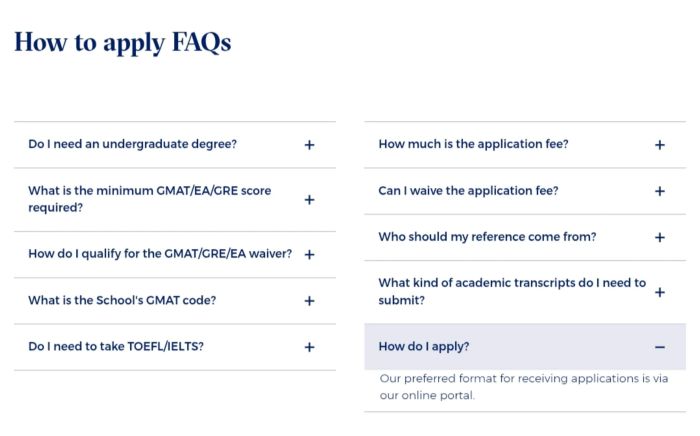
Example: London Business School attracts applicants worldwide to its MBA program, so it streamlines the process by funneling everything through its online system. In fact, the school states that its “preferred format for receiving applications is via our online portal.” London Business School sends accepted candidates a series of email workflows that highlight unique aspects of the LBS experience, including video messages from faculty. These aren’t generic updates; they’re trust-building touchpoints.
From Interest to Application: Streamlining the Process
How does a student portal improve the admissions process? A student portal automates manual tasks, improves application visibility, accelerates document collection, and enhances communication. This reduces staff workload and provides a seamless experience for students, resulting in higher conversion rates and faster admissions cycles.
Once a student decides to apply, the expectations only grow. They want simplicity. They want speed. And they want control.
A modern student portal delivers all three by centralizing the application process into a single, intuitive interface. Students can:
Create an account
Save progress and return later
Upload documents (transcripts, ID, essays)
Track their application status in real-time
Pay application fees securely
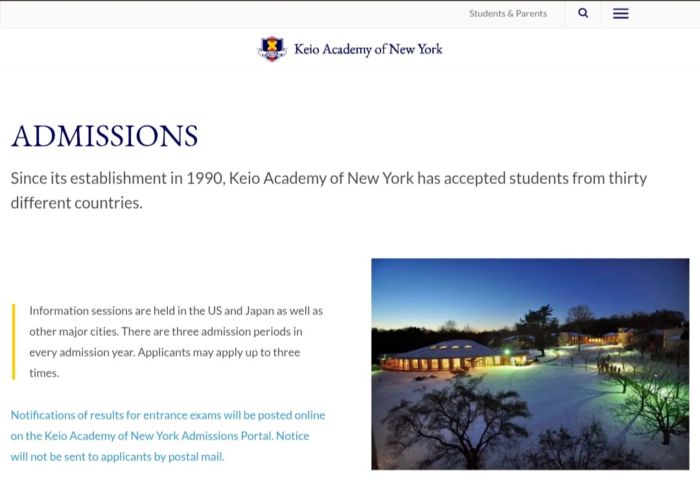
Example: Keio Academy of New York (a boarding school with students from over 30 countries) manages its intake via a dedicated Admissions Portal. Applicants create an account and complete all steps through the portal, downloading required forms and submitting their documents online. Importantly, exam results and admission decisions are posted on Keio’s portal as well; they do not send results by postal mail.
What students expect in a digital application portal:
A secure login system
A mobile-friendly design
Dynamic forms with autosave
Document upload support
Progress tracking
In-portal or multi-channel messaging
Transparent decision notifications
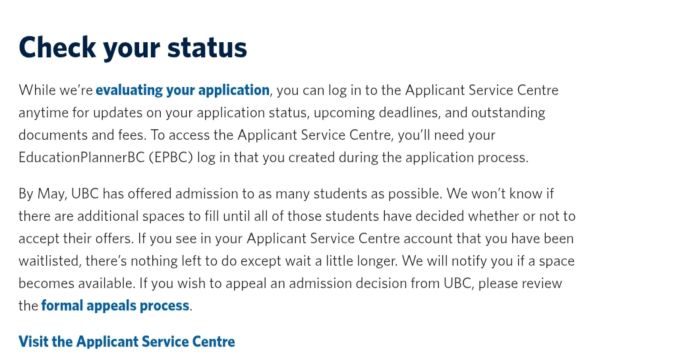
Example: University of British Columbia’s Applicant Service Centre provides a 24/7 window into one’s application. Applicants can log in to see real-time status updates, upcoming deadlines, and any outstanding items or fees needed to complete their file. Once admitted, UBC uses the same portal to guide students through the next steps: from accepting the offer online to planning finances and registering for courses, each step is laid out in order.
Portals also cut down administrative chaos on the backend. Admissions teams benefit from CRM and SIS integration, automated workflows, and centralized communication tools. Instead of wasting time on data entry or chasing down missing documents, staff can focus on what matters: building relationships.
With centralized, automated workflows, institutions can save time and resources and improve tracking and reporting for better decision-making.
Beyond the Application: Supporting Students After Acceptance
Here’s a critical truth: admissions doesn’t end with an acceptance letter.
There’s a critical period between “You’re in!” and “I’m enrolled.” This is where many institutions experience summer melt: when admitted students silently drift away before showing up on campus.
A modern portal helps close that gap. Once accepted, students often get access to a new-student dashboard with a personalized checklist:
Confirm acceptance
Pay deposit
Submit housing preferences
Sign up for orientation
Upload immunization records
Apply for financial aid
The portal handles checklists, deadlines, and reminders, so students stay on track and don’t ghost between acceptance and enrollment.
Schools that automate this process don’t just reduce summer melt. They create a sense of structure, confidence, and connection before students even arrive.
Each task is tracked. Each deadline is visible. And the portal nudges students forward with timely reminders via email, text, or even WhatsApp.
And it’s not just about logistics. Portals can foster community through:
Access to student forums
Links to private social groups
Welcome videos from faculty or alumni
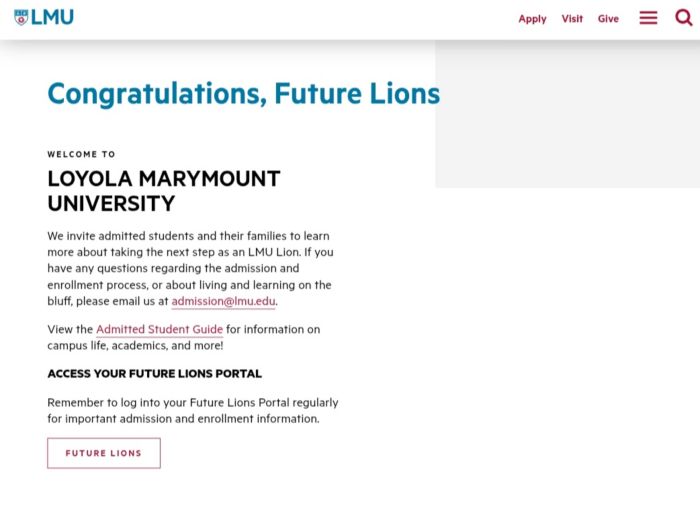
Example: Loyola Marymount University takes engagement a step further with its “Future Lions” portal for admitted students. LMU’s portal serves as a one-stop welcome platform: new Lions are reminded to log in regularly for important enrollment information, access orientation resources, and even find roommates through a dedicated matching system. By consolidating these tools, LMU’s portal is actively building a community, connecting future classmates and helping them feel at home before they even set foot on campus.
What features should I look for in a student portal? Look for CRM and SIS integration, mobile optimization, multilingual support, payment processing, real-time messaging, automated reminders, customizable dashboards, and secure document uploads.
These are the features you can’t compromise on:
1. Mobile-Optimized Application Forms
Students are on their phones, and your application process better be, too. Forms should adapt to any screen size, load quickly, and allow uploads and progress saving without hassle.
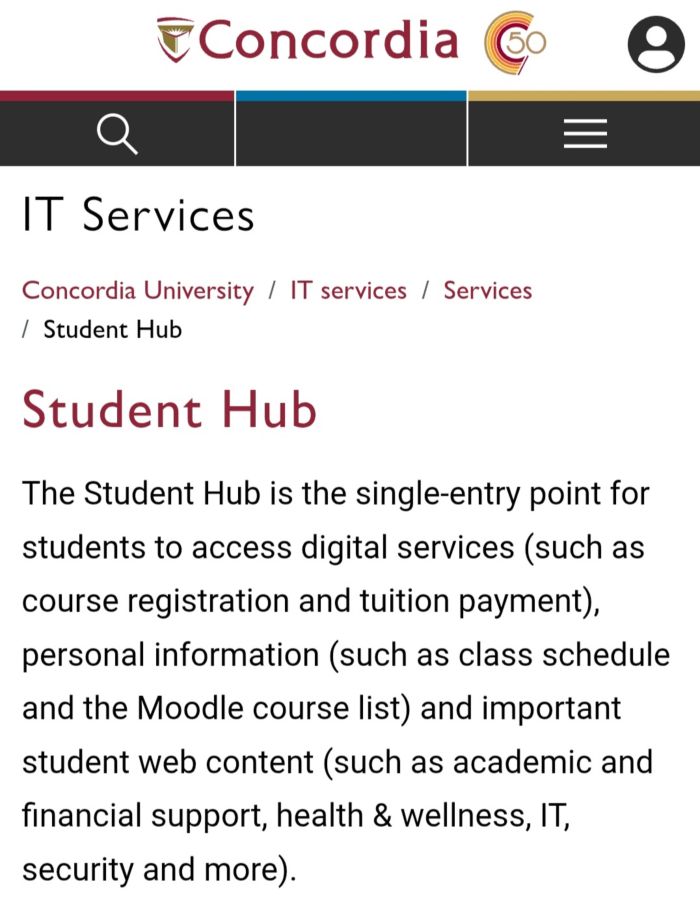
Example: Concordia University (Canada) recently replaced its old applicant site with a unified Student Hub that offers single sign-on access to all student services – from applications to course registration – in one convenient interface. This new portal features a more modern user interface and is fully mobile-responsive.
Your portal should talk to your CRM in real time. Every form submission, download, or contact should create or update a record automatically, so no prospect slips through the cracks.
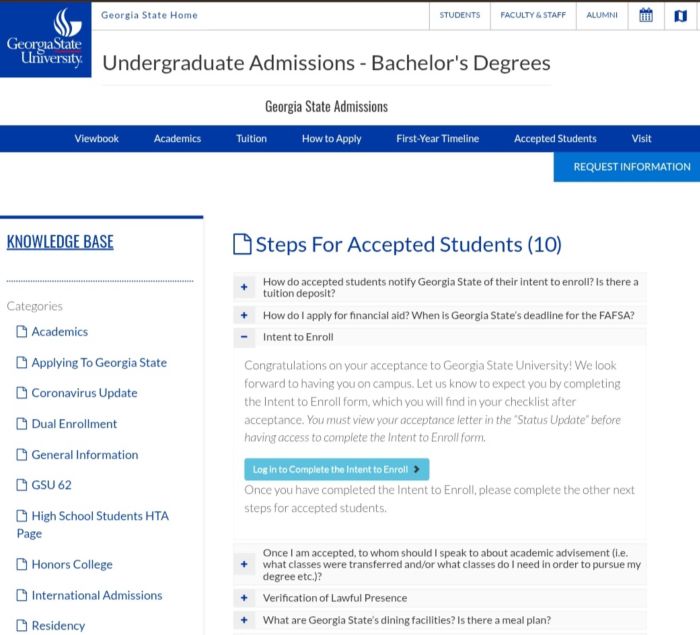
Example: Georgia State University’s admissions portal doesn’t stop at the acceptance letter; it presents each admitted student with a personalized “Next Steps” checklist to smoothly transition them toward enrollment. Upon acceptance, students unlock an Intent to Enroll form in their status checklist, allowing them to confirm their enrollment online without delay. All subsequent requirements – from submitting final transcripts to signing up for orientation – are tracked through the same portal, so nothing falls through the cracks.
From applicant to enrolled student, data should flow seamlessly. Integration with your SIS means no double entry and a smoother transition into class registration, billing, and campus life.
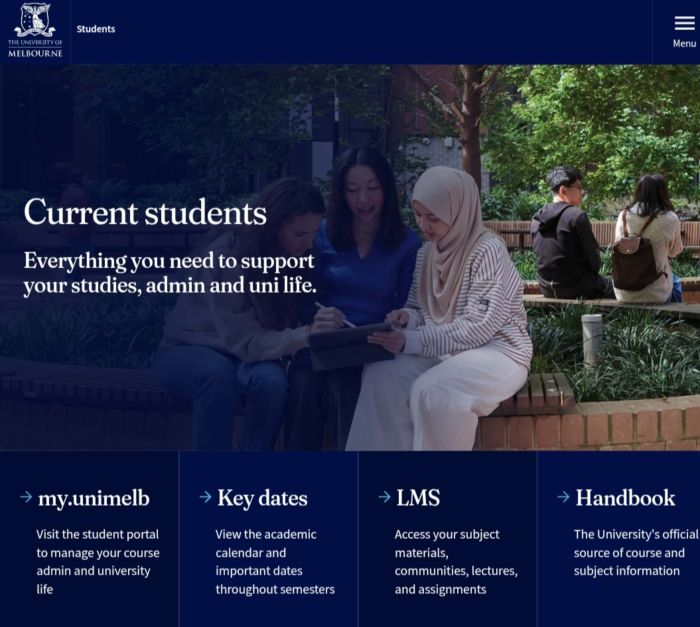
Example: The University of Melbourne provides a one-stop solution through its portal. This student portal provides a single place for students to manage course administration and university life. In practice, that means a student logs into one dashboard for everything: enrolling in classes, viewing schedules, checking financials, and accessing support resources.
Set up triggers for missing documents, incomplete applications, or upcoming deadlines. Automated nudges keep students moving forward and reduce the load on your staff.
5. Multichannel Communication Tools
Meet students where they are: email, SMS, chat, ideally all three. Your portal should support direct messaging, automatic confirmations, and personalized updates through multiple channels.
6. Live Application Tracking
Students hate waiting in the dark. Let them see whether their application is submitted, under review, or accepted, along with their checklist status and next steps.
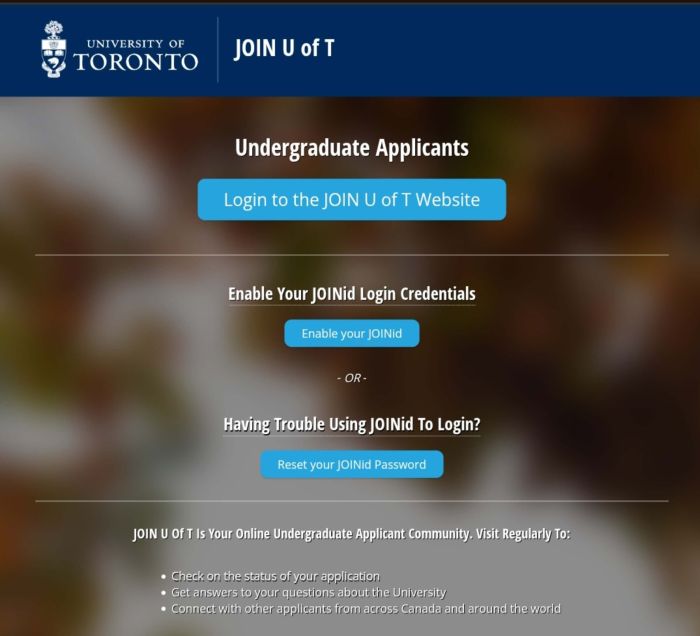
Example: The University of Toronto directs every applicant to its “Join U of T” portal, where they can track application status, upload documents, and receive admission decisions all in one place. About a week after applying, students get instructions to access the portal and are told to check it regularly for status updates, required documents, and eventual offers. In fact, U of T applicants even accept their offers of admission through the portal instead of mailing forms.
From transcripts to ID cards and essays: make it simple and safe for students to submit everything online. Support all common file formats and include e-signing where needed.
8. Role-Based Access for Staff
Admissions, faculty reviewers, and financial aid each group needs the right level of access. Role-based permissions let your team collaborate efficiently without compromising security.
9. Internationalization Support
If you’re enrolling global students, your portal should handle different time zones, document types, phone number formats, and (ideally) multiple languages.
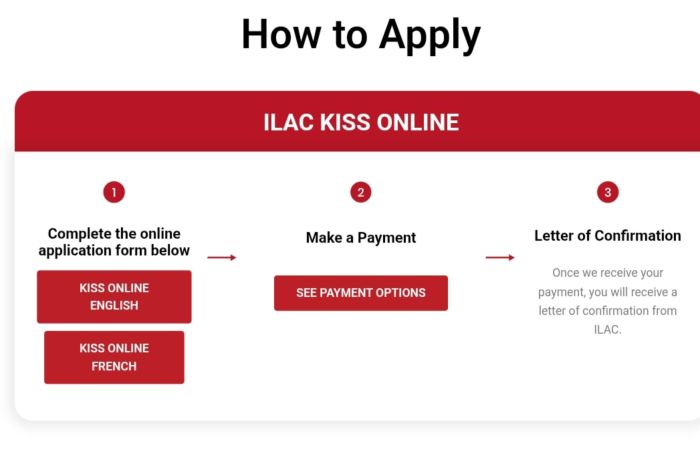
Example: The International Language Academy of Canada (ILAC), which enrolls students from dozens of countries in its English programs, emphasizes a fully digital application. Prospects are invited to “start your journey” by completing ILAC’s online form and making a payment, after which they receive an electronic letter of acceptance needed for visa processing; no paper forms or international mail delays.
The portal shouldn’t stop working after admission. Use it for onboarding: orientation sign-ups, housing applications, deposit payments, and beyond. A one-stop platform improves both experience and yield.
A quick rule of thumb is, the more customizable and connected your system, the more you can reduce friction and boost results.
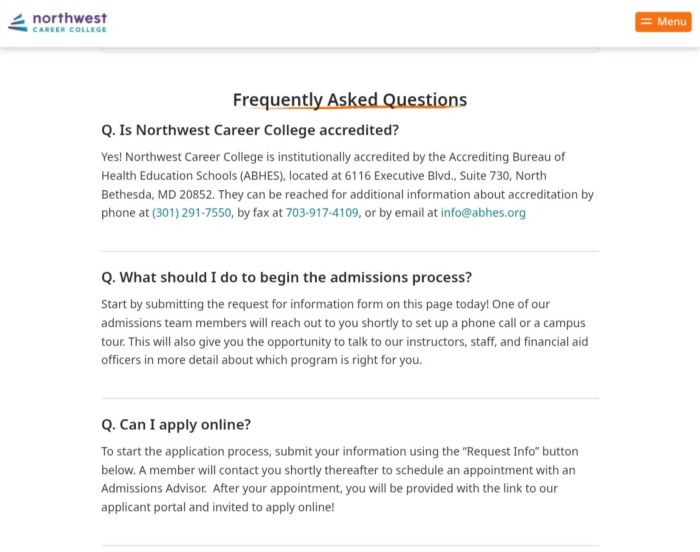
Example: Northwest Career College in Las Vegas is a more intimate vocational school that prides itself on personal guidance. Their admissions process blends human interaction with digital convenience: a prospective student first speaks with an admissions advisor (often by phone or in person) and only then receives an invite to the online student portal to formally apply. In doing so, Northwest ensures that every applicant gets one-on-one support in navigating requirements, while the portal handles the data capture, document uploads, and progress tracking in the background.
At Higher Education Marketing, we’ve built HEM-SP. A purpose-built student portal that integrates CRM for higher education, student enrollment systems, and behavioral analytics. It enables institutions to centralize data, improve the student experience, and meet digital expectations.
Implementing a student portal isn’t just a digital transformation; it’s a mindset shift.
You’re not just moving forms online. You’re creating a student-centric experience that matches the speed and personalization of the rest of their digital life. That makes your school more attractive, more trustworthy, and ultimately more successful.
In the era of digital admissions, a student portal is no longer a luxury; it’s rapidly becoming a standard. Institutions that modernize are already seeing:
Higher completion rates
Lower melt
Better data
More efficient staff workflows
Stronger enrollment outcomes
Those that don’t? Risk losing applicants to schools that are simply easier to work with.
Partner With Hem for Success
From the first click to the first day, every moment matters. A student portal connects those moments into one seamless experience.
It’s the digital front door. The application guide. The welcome mat. The checklist. The counselor. The map.
When built right, it becomes more than software; it becomes part of your institutional promise: we’re here to make your education journey clear, personal, and achievable. Do you want help evaluating or implementing a student enrollment system that works for your institution? Get a free demo and see what HEM’s Student Portal can do for you today!
Looking for an all-in-one student information and CRM solution tailored to the education sector?
Try the HEM Student Portal!
Frequently Asked Questions
Question: What is the purpose of a student portal? Answer: A student portal provides a centralized, secure platform for applicants and students to access essential services, like submitting documents, tracking applications, receiving updates, and completing enrollment tasks, streamlining communication between the institution and the student.
Question: How does a student portal improve the admissions process? Answer: A student portal automates manual tasks, improves application visibility, accelerates document collection, and enhances communication. This reduces staff workload and provides a seamless experience for students, resulting in higher conversion rates and faster admissions cycles.
Question: What features should I look for in a student portal? Answer: Look for CRM and SIS integration, mobile optimization, multilingual support, payment processing, real-time messaging, automated reminders, customizable dashboards, and secure document uploads.
Institutions spend a lot of time surveying students for their feedback on their learning experience, but once you have crunched the numbers the hard bit is working out the “why.”
The qualitative information institutions collect is a goldmine of insight about the sentiments and specific experiences that are driving the headline feedback numbers. When students are especially positive, it helps to know why, to spread that good practice and apply it in different learning contexts. When students score some aspect of their experience negatively, it’s critical to know the exact nature of the perceived gap, omission or injustice so that it can be fixed.
Any conscientious module leader will run their eye down the student comments in a module feedback survey – but once you start looking across modules to programme or cohort level, or to large-scale surveys like NSS, PRES or PTES, the scale of the qualitative data becomes overwhelming for the naked eye. Even the most conscientious reader will find that bias sets in, as comments that are interesting or unexpected tend to be foregrounded as having greater explanatory power over those that seem run of the mill.
Traditional coding methods for qualitative data require someone – or ideally more than one person – to manually break down comments into clauses or statements that can be coded for theme and sentiment. It’s robust, but incredibly laborious. For student survey work, where the goal might be to respond to feedback and make improvements at pace, institutions are open that this kind of robust analysis is rarely, if ever, the standard practice. Especially as resources become more constrained, devoting hours to this kind of detailed methodological work is rarely a priority.
Let me blow your mind
That is where machine learning technology can genuinely change the game. Student Voice AI was founded by Stuart Grey, an academic at the University of Strathclyde (now working at the University of Glasgow), initially to help analyse student comments for large engineering courses. Working with Advance HE he was able to train the machine learning model on national PTES and PRES datasets. Now, further training the algorithm on NSS data, Student Voice AI offers literally same-day analysis of student comments for NSS results for subscribing institutions.
Put the words “AI” and “student feedback” in the same sentence and some people’s hackles will immediately rise. So Stuart spends quite a lot of time explaining how the analysis works. The word he uses to describe the version of machine learning Student Voice AI deploys is “supervised learning” – humans manually label categories in datasets and “teach” the machine about sentiment and topic. The larger the available dataset the more examples the machine is exposed to and the more sophisticated it becomes. Through this process Student Voice AI has landed on a discreet number of comment themes and categories for taught students and the same for postgraduate research students that the majority of student comments consistently fall into – trained on and distinctive to UK higher education student data. Stuart adds that the categories can and do evolve:
“The categories are based on what students are saying, not what we think they might be talking about – or what we’d like them to be talking about. There could be more categories if we wanted them, but it’s about what’s digestible for a normal person.”
In practice that means that institutions can see a quantitative representation of their student comments, sorted by category and sentiment. You can look at student views of feedback, for example, and see the balance of positive, neutral and negative sentiment, overall, segment it into departments or subject areas, or years of study, then click through to see the relevant comments to see what’s driving that feedback. That’s significantly different from, say, dumping your student comments into a third party generative AI platform (sharing confidential data with a third party while you’re at it) and asking it to summarise. There’s value in the time and effort saved, but also in the removal of individual personal bias, and the potential for aggregation and segmentation for different stakeholders in the system. And it also becomes possible to compare student qualitative feedback across institutions.
Now, Student Voice AI is partnering with student insight platform evasys to bring machine learning technology to qualitative data collected via the evasys platform. And evasys and Student Voice AI have been commissioned by Advance HE to code and analyse open comments from the 2025 PRES and PTES surveys – creating opportunities to drill down into a national dataset that can be segmented by subject discipline and theme as well as by institution.
Bruce Johnson, managing director at evasys is enthused about the potential for the technology to drive culture change both in how student feedback is used to inform insight and action across institutions:
“When you’re thinking about how to create actionable insight from survey data the key question is, to whom? Is it to a module leader? Is it to a programme director of a collection of modules? Is it to a head of department or a pro vice chancellor or the planning or quality teams? All of these are completely different stakeholders who need different ways of looking at the data. And it’s also about how the data is presented – most of my customers want, not only quality of insight, but the ability to harvest that in a visually engaging way.”
“Coming from higher education it seems obvious to me that different stakeholders have very different uses for student feedback data,” says Stuart Grey. “Those teaching at the coalface are interested in student engagement; at the strategic level the interest is in strategic level interest in trends and sentiment analysis and there are also various stakeholder groups in professional services who never get to see this stuff normally, but we can generate the reports that show them what students are saying about their area. Frequently the data tells them something they knew anyway but it gives them the ammunition to be able to make change.”
The results are in
Duncan Berryman, student surveys officer at Queens University Belfast, sums up the value of AI analysis for his small team: “It makes our life a lot easier, and the schools get the data and trends quicker.” Previously schools had been supplied with Excel spreadsheets – and his team were spending a lot of time explaining and working through with colleagues how to make sense of the data on those spreadsheets. Being able to see a straightforward visualisation of student sentiment on the various themes means that, as Duncan observes rather wryly, “if change isn’t happening it’s not just because people don’t know what student surveys are saying.”
Parama Chaudhury, professor of economics and pro vice provost education (student academic experience) at University College London explains where qualitative data analysis sits in the wider ecosystem for quality enhancement of teaching and learning. In her view, for enhancement purposes, comparing your quantitative student feedback scores to those of another department is not particularly useful – essentially it’s comparing apples with oranges. Yet the apparent ease of comparability of quantitative data, compared with the sense of overwhelm at the volume and complexity of student comments, can mean that people spend time trying to explain the numerical differences, rather than mining the qualitative data for more robust and actionable explanations that can give context to your own scores.
It’s not that people weren’t working hard on enhancement, in other words, but they didn’t always have the best possible information to guide that work. “When I came into this role quite a lot of people were saying ‘we don’t understand why the qualitative data is telling us this, we’ve done all these things,’” says Parama. “I’ve been in the sector a long time and have received my share of summaries of module evaluations and have always questioned those summaries because it’s just someone’s ‘read.’ Having that really objective view, from a well-trained algorithm makes a difference.”
UCL has tested two-page summaries of student comments to specific departments this academic year, and plans to roll out a version for every department this summer. The data is not assessed in a vacuum; it forms part of the wider institutional quality assurance and enhancement processes which includes data on a range of different perspectives on areas for development. Encouragingly, so far the data from students is consistent with what has emerged from internal reviews, giving the departments that have had the opportunity to engage with it greater confidence in their processes and action plans.
None of this stops anyone from going and looking at specific student comments, sense-checking the algorithm’s analysis and/or triangulating against other data. At the University of Edinburgh, head of academic planning Marianne Brown says that the value of the AI analysis is in the speed of turnaround – the institutionl carries out a manual reviewing process to be sure that any unexpected comments are picked up. But being able to share the headline insight at pace (in this case via a PowerBI interface) means that leaders receive the feedback while the information is still fresh, and the lead time to effect change is longer than if time had been lost to manual coding.
The University of Edinburgh is known for its cutting edge AI research, and boasts the Edinburgh (access to) Language Models (ELM) a platform that gives staff and students access to generative AI tools without sharing data with third parties, keeping all user data onsite and secured. Marianne is clear that even a closed system like ELM is not appropriate for unfettered student comment analysis. Generative AI platforms offer the illusion of a thematic analysis but it is far from robust because generative AI operates through sophisticated guesswork rather than analysis of the implications of actual data. “Being able to put responses from NSS or our internal student survey into ELM to give summaries was great, until you started to interrogate those summaries. Robust validation of any output is still required,” says Marianne. Similarly Duncan Berryman observes: “If you asked a gen-AI tool to show you the comments related to the themes it had picked out, it would not refer back to actual comments. Or it would have pulled this supposed common theme from just one comment.”
The holy grail of student survey practice is creating a virtuous circle: student engagement in feedback creates actionable data, which leads to education enhancement, and students gain confidence that the process is authentic and are further motivated to share their feedback. In that quest, AI, deployed appropriately, can be an institutional ally and resource-multiplier, giving fast and robust access to aggregated student views and opinions. “The end result should be to make teaching and learning better,” says Stuart Grey. “And hopefully what we’re doing is saving time on the manual boring part, and freeing up time to make real change.”