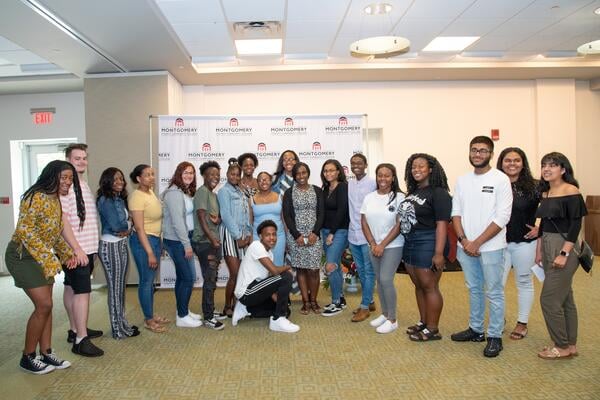
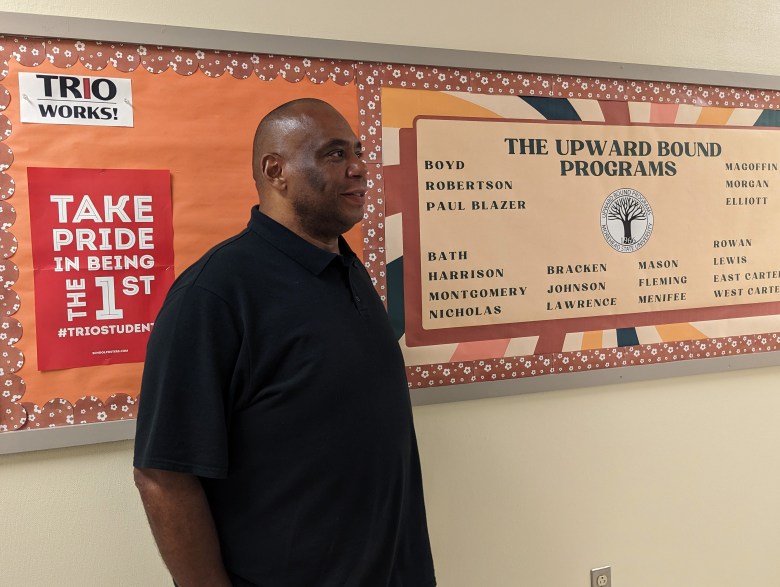
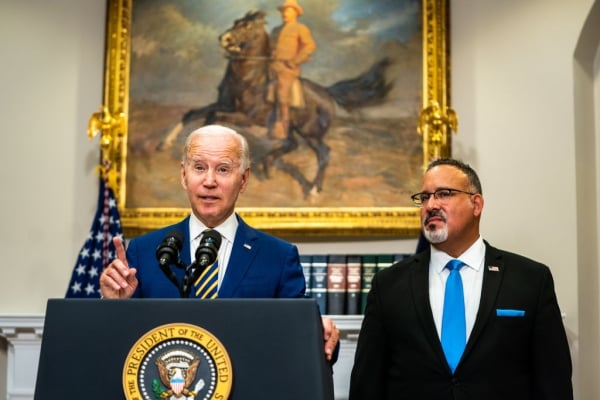
Twenty-one state attorneys general and the AG of Washington, D.C., filed briefs in support of lawsuits challenging the cancellation of TRIO grants for programs such as Upward Bound at Montgomery County Community College.
Linda Johnson/Montgomery County Community College
Democratic attorneys general from 21 states and Washington, D.C., filed briefs this week asking a court to reverse the Trump administration’s rejection of grants supporting TRIO programs, which help disadvantaged students attend and graduate from colleges and universities.
The Council for Opportunity in Education, which advocates for TRIO programs such as Upward Bound, said about 100 grants were rejected or canceled last month after the Education Department delayed funding for thousands of grants that were slated to begin Sept. 1. Another 23 programs lost funding earlier in the year.
Those terminations deprived more than 43,600 students of services such as tutoring and financial aid help. (Trump’s fiscal year 2026 budget request would end TRIO altogether, and all but a handful of staff in the TRIO grants office were fired early in the ongoing government shutdown.)
On Sept. 30, the Council filed two lawsuits against the department and Education Secretary Linda McMahon in the U.S. District Court for D.C., alleging that the department canceled grants for complying with the General Education Provisions Act Equity Directive—a requirement at the time of the applications. One suit argues the department faulted a University of New Hampshire application for allegedly saying its program would be “identifying and recruiting students of color and non-Caucasians.”
The Council is requesting preliminary injunctions vacating the department’s denials and ordering reconsideration of the grants. The attorneys general filed amicus briefs supporting this call.
“TRIO programs serving thousands of high-school and college students have closed, many of which have operated successfully for years with track records of success,” the briefs say. “Students who relied on these programs’ guidance and academic assistance are now being turned away. The result will be fewer students going to college and fewer students graduating college, to the detriment of impacted Amici States, their residents, and their economies.”
The AGs of Nevada and Massachusetts were the briefs’ lead authors; they were joined by their counterparts in Arizona, California, Colorado, Connecticut, Delaware, D.C., Hawai‘i, Illinois, Maine, Maryland, Michigan, Minnesota, New Jersey, New Mexico, New York, Oregon, Rhode Island, Vermont, Washington and Wisconsin.
Normally, back-to-school season means that the staff who lead federally funded programs for low-income and first-generation college students are kicking into high gear. But this month, the Trump administration has frozen hundreds of millions of dollars in TRIO grants, creating uncertainty for thousands of programs. Some have been forced to grind to a halt, advocates say.
Colleges and nonprofits that had already been approved for the award expected to hear by the end of August that their federal funding was on its way. But rather than an award notice, program leaders received what’s known as a “no cost extension,” explaining that while programs could continue to operate until the end of the month, they would not be receiving the award money.
Over all, the Council for Opportunity in Education, a nonprofit advocacy group that focuses on supporting TRIO programs, estimates that the Trump administration has withheld about $660 million worth of aid for more than 2,000 TRIO programs. (Congress allocated $1.19 billion to TRIO for the current fiscal year.)
As a result of the freeze, COE explained, many colleges and nonprofit organizations had to temporarily pivot to online services or shutter their programs and furlough staff. Roughly 650,000 college students and high school seniors will lack vital access to academic advising, financial guidance and assistance with college applications if the freeze persists, they say.
“For many students, these first few weeks of the year are going to set the trajectory for their whole semester, especially if you’re an incoming freshman,” said COE president Kimberly Jones. “This is when you’re making critical choices about your coursework, trying to navigate the campus and just trying to acclimate to this new world. If you’re first-gen, you need the guidance of a program to help you navigate that.”
Jones said that Education Department officials said this week that the pause is temporary. However, the Department of Education did not immediately respond to Inside Higher Ed’s request for comment Friday.
TRIO Under Threat
Originally established in the 1960s, TRIO now consists of seven different programs, each designed to support various individuals from disadvantaged backgrounds and help them overcome barriers of access to higher education.
Not all the TRIO programs have had funding withheld. Roughly 1,300awards for certain programs—such as Upward Bound Math-Science, Student Support Services and any general Upward Bound projects with a June 1 start date—were disbursed on time, Jones said. But that’s only 40 percent of the more than 3,000 TRIO programs.
Other programs, including Upward Bound projects with a Sept. 1 start date, Veterans Upward Bound, Educational Opportunity Centers and Talent Search, are still waiting for checks to land in their accounts.
Policy experts added that funding for the McNair Postbaccalaureate Achievement program, a TRIO service focused on graduate students, also has yet to be distributed. But unlike most of the programs, funding for McNair is not due until Sept. 30. Still, Jones and others said they are highly concerned those funds will also be frozen.
Given the unpredictability of everything this year around education, we can’t make any assumptions. Until we get those grants in the hands of our constituents, we have to assume the worst.”
—COE president Kimberly Jones
President Donald Trump proposed cutting all funding for TRIO in May, saying that the executive branch lacks the ability to audit the program and make sure it isn’t wasting taxpayer dollars. But so far, House and Senate appropriators have pushed back, keeping the funding intact.
When confronted by Sen. Susan Collins, a Maine Republican and longtime TRIO advocate, at a budget hearing in June,McMahon acknowledged that “Congress does control the purse strings,” but went on to say that she would “sincerely hope” to work with lawmakers and “renegotiate” the program’s terms.
And while advocates hope that funds will eventually be reinstated, most experts interviewed remain skeptical. With 18 days left until the end of the fiscal year, any unallocated TRIO funds will likely be sent back to the Department of Treasury, never to reach the organizations they were intended for.
The Trump administration has tried to freeze or end othereducation-relatedgrant programs—including a few TRIO programs that were cut off in June—which officials said “conflict with the Department’s policy of prioritizing merit, fairness, and excellence in education; undermine the well-being of the students these programs are intended to help; or constitute an inappropriate use of federal funds.”
And while some of the funding freezes have been successfully challenged in court, the judicial process needed to win back federal aid is slow. Most colleges don’t have that kind of time, the advocates say.
“Given the unpredictability of everything this year around education, we can’t make any assumptions,” Jones said. “Until we get those grants in the hands of our constituents, we have to assume the worst.”
‘Crippling’ Effects
For Summer Bryant, director of the Talent Search program at Morehead State University in Kentucky, the funding freeze has been “crippling.”
Talent Search is a TRIO program focused on supporting middle and high school students with college preparation. And while the loss of about $1 million hasn’t forced Bryant to shut down her program quite yet, it has significantly limited her capacity to serve students.
After paying the program’s 10 staff members for the month of September, Bryant has just over $1,000 left—and that’s between both of the grants she received last year.
“It may sound like a lot, but when you take into account that we’re providing services to eight counties and 27 target schools, coupled with the fact that driving costs about 50 cents a mile and some of our schools one-way are almost 120 miles away, that’s not a lot of money,” she said. “So instead, I had to make a Facebook post notifying our students and their guardians that we would be pausing all in-person services until we receive our grant awards.”
Even then, Morehead TRIO programs are based in a rural part of Appalachia, so broadband access and choppy connections are also a concern.
“Doing things over the phone or over a Zoom is just not as effective as doing it face-to-face—information is lost,” Bryant said. And because this freeze is happening during the most intensive season for college applications, “even a one month delay could lead to a make-or-break moment for a lot of our seniors,” she added.
It’s not just Bryant facing these challenges. Of Morehead’s nine preapproved TRIO grants, only four have been awarded. The same scenario is playing out at campuses across the country.
Democratic senators Jeff Merkley of Oregon and Raphael Warnock of Georgia, along with 32 other lawmakers from both sides of the aisle, demanded in a letter sent Wednesday that the administration release the funds. Collectively, they warned that failure to do so “will result in irreversible damage to our students, families, and communities, as many rely on the vital programs and services provided by TRIO programs.”
They wrote that TRIO has produced over six million college graduates since its inception in 1964, promoting a greater level of civic engagement and spurring local economies.
“The data proves that TRIO works,“ the senators stressed. “Students’ futures will be less successful if they do not receive their appropriated funds immediately.”
Rep. Gwen Moore, a Wisconsin Democrat and TRIO alumna, and 53 fellow House members sent a similar letter the same day.
The freeze is hitting community colleges particularly hard; they receive half of all TRIO grants, said David Baime, senior vice president for government relations at the American Association of Community Colleges.
Baime said he has “no idea” why the department is withholding funds and added that while he is hopeful the federal dollars will be restored, there is an “unusual degree of uncertainty.”
Between a handful of TRIO grants that were terminated with little to no explanation earlier in the year and the recent decision to cancel all grant funding for minority-serving institutions, worries among TRIO programs are high, Jones from COE and others said.
Still, Baime is holding out hope.
“The department has gone on record saying that fiscal year 2025 TRIO funds would be allocated,” he said. “So despite the very concerning delays, we remain optimistic.”
MOREHEAD, Ky. — The summer after ninth grade, Zoey Griffith found herself in an unfamiliar setting: a dorm on the Morehead State University campus.
There, she’d spend the months before her sophomore year taking classes in core subjects including math and biology and electives like oil painting.
For Griffith, it was an opportunity, but a scary one. “It was a big deal for me to live on campus at the age of 14,” she said. Morehead State is about an hour from her hometown of Maysville. “I was nervous, and I remember that I cried the first time that my dad left me on move-in day.”
Her mother became a parent as a teenager and urged her daughter to avoid the same experience. Griffith’s father works as a mechanic, and he frowns upon the idea of higher education, she said.
And so college back then seemed a distant and unlikely idea.
But Griffith’s stepsister had introduced her to a federal program called Upward Bound. It places high school students in college dorms during the summer, where they can take classes and participate in workshops on preparing for the SAT and financial literacy. During the school year, students get tutoring and work on what are called individual success plans.
Upward Bound students test the robots they built in their robotics class – evaluating for programming and mechanical issues. Credit: Photo courtesy of the Upward Bound Programs
It’s part of a group of federal programs, known as TRIO, aimed at helping low-income and first-generation students earn a college degree, often becoming the first in their families to do so.
So, thanks to that advice from her stepsister, Kirsty Beckett, who’s now 27 and pursuing a doctorate in psychology, Griffith signed up and found herself in that summer program at Morehead State. Now, Griffith is enrolled at Maysville Community and Technical College, with plans to become an ultrasound technician.
Related: Interested in more news about colleges and universities? Subscribe to our free biweekly higher education newsletter.
TRIO, once a group of three programs — giving it a name that stuck — is now the umbrella over eight some dating back to 1965. Together, they serve roughly 870,000 students nationwide a year.
It has worked with millions of students and has bipartisan support in Congress. Some in this part of the Appalachian region of Kentucky, and across the country, worry about students who won’t get the same assistance if President Donald Trump ends federal spending on the program.
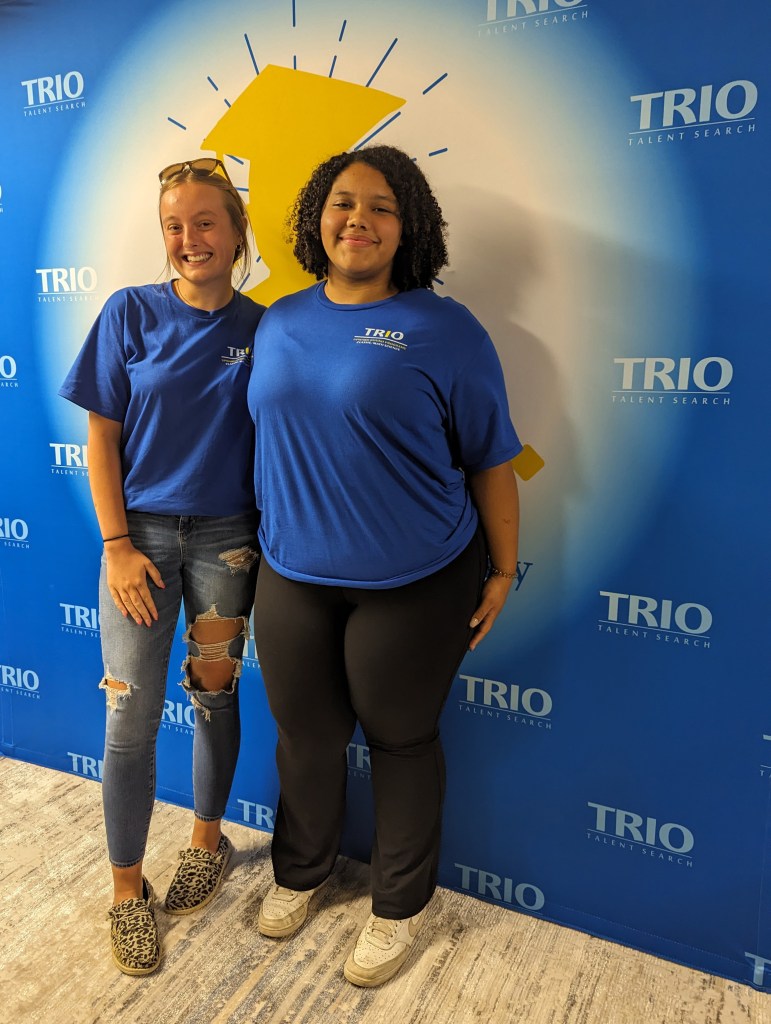
Students Zoey Griffith, left, and Aniyah Caldwell, right, say the Upward Bound program has been life-changing for them. Upward Bound is one of eight federal programs under the TRIO umbrella. Credit: Michael Vasquez for The Hechinger Report
A White House budget proposal would eliminate spending on TRIO. The document says “access to college is not the obstacle it was for students of limited means” and puts the onus on colleges to recruit and support students.
Advocates note that the programs, which cost roughly $1.2 billion each year, have a proven track record. Students in Upward Bound, for example, are more than twice as likely to earn a bachelor’s degree by age 24 than other students from some of the nation’s poorest households, according to the Council for Opportunity in Education. COE is a nonprofit that represents TRIO programs nationwide and advocates for expanded opportunities for first-generation, low-income students.
For the high school class of 2022, 74 percent of Upward Bound students enrolled immediately in college — compared with only 56 percent of high school graduates in the bottom income quartile.
Upward Bound is for high school students, like Griffith. Another TRIO program, Talent Search, helps middle and high school students, without the residential component. One called Student Support Services (SSS) provides tutoring, advising and other assistance to at-risk college students. Another program prepares students for graduate school and doctoral degrees, and yet another trains TRIO staff.
A 2019 study found that after four years of college, students in SSS were 48 percent more likely to complete an associate’s degree or certificate, or transfer to a four-year institution, than a comparable group of students with similar backgrounds and similar levels of high school achievement who were not in the program.
“TRIO has been around for 60 years,” said Kimberly Jones, the president of COE. “We’ve produced millions of college graduates. We know it works.”
Yet Education Secretary Linda McMahon and the White House refer to the programs as a “relic of the past.”
Jones countered that census data shows that “students from the poorest families still earn college degrees at rates far below that of students from the highest-income families,” demonstrating continued need for TRIO.
McMahon is challenging that and pushing for further study of those TRIO success rates. In 2020, the U.S. Government Accountability Office found that even though the Education Department collects data on TRIO participants, “the agency has gaps in its evidence on program effectiveness.” The GAO criticized the Education Department for having “outdated” studies on some TRIO programs, and no studies at all for others. Since then, the department has expanded its evaluations of TRIO.
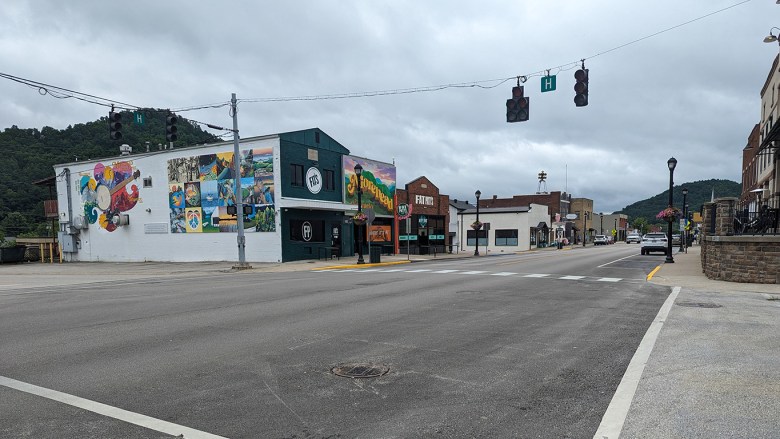
East Main Street in Morehead, Kentucky, just outside of Morehead State’s campus. Credit: Michael Vasquez for The Hechinger Report
During a Senate subcommittee hearing in June, McMahon acknowledged “there is some effectiveness of the programs, in many circumstances.”
Still, she said there is not enough research to justify TRIO’s total cost. “That’s a real drawback in these programs,” McMahon said.
Now, she is asking lawmakers to eliminate TRIO spending after this year and has already canceled some previously approved TRIO grants.
“What are we supposed to do, especially here in eastern Kentucky?” asked David Green, a former Upward Bound participant who is now marketing director for a pair of Kentucky hospitals.
Green lives in a region that has some of the nation’s highest rates of unemployment, cancer and opioid addiction. “I mean, these people have big hearts, they want to grow,” he added. Cutting these programs amounts to “stifling us even more than we’re already stifled.”
Green described his experience with TRIO at Morehead State in the mid-1980s as “one of the best things that ever happened to me.”
He grew up in a home without running water in Maysville, a city of about 8,000 people. It was on a TRIO trip to Washington, D.C., he recalled, that he stayed in a hotel for the first time. Green remembers bringing two suitcases so he could pack a pillow, sheets and comforter — unaware the hotel room would have its own.
He met students from other towns and with different backgrounds. Some became lifelong friends. Green learned table manners, the kind of thing often required in business settings. After college, he was so grateful for TRIO that he became one of its tutors, working with the next generation of students.
TRIO’s all-encompassing nature makes it unique among college access programs, said Tom Stritikus, the president of Occidental College, a private liberal arts college in Los Angeles. He was previously president of Fort Lewis College, a public liberal arts school in Colorado with a large Native American student population. At both institutions, Stritikus said, he witnessed the effectiveness of TRIO’s methods, which he described as a “soup to nuts” menu of services for at-risk students trying to be the first in their families to earn degrees.
After participating in the Upward Bound program, David Green has had a successful career, becoming a community leader in his hometown of Maysville, Kentucky. Credit: Michael Vasquez for The Hechinger Report
Jones, of the Council for Opportunity in Education, said she is cautiously optimistic that Congress will continue funding TRIO, despite the Trump administration’s request. The programs serve students in all 50 states. According to the COE, about 34 percent are white, 32 percent are Black, 23 percent are Hispanic, 5 percent are Asian, and 3 percent are Native American. TRIO’s guidelines require that a majority of participants come from families making less than 150 percent of the federal poverty level. For a family of four living in the contiguous United States, that’s a max of $48,225 a year.
In May, Rep. Mike Simpson, an Idaho Republican, called TRIO “one of the most effective programs in the federal government,” which, he said, is supported by “many, many members of Congress.”
In June, Sen. Shelley Moore Capito, a Republican from West Virginia and a former TRIO employee, spoke about its importance to her state. TRIO helps “a student that really needs the extra push, the camaraderie, the community,” she said. “I’ve gone to their graduations, and been their speaker, and it’s really quite delightful to see how far they’ve come, in a short period of time.”
TRIO survived, with its funding intact, when the Senate appropriations committee approved its budget last month. The House is expected to take up its version of the annual appropriations bill for education in early September. Both chambers ultimately have to agree on federal spending, a process that could drag on until December, leaving TRIO’s fate in Congress uncertain.
While lawmakers debate its future, the Trump administration could also delay or halt TRIO funding on its own. Earlier this year, the administration took the unprecedented step of unilaterally canceling about 20 previously approved new and continuing TRIO grants.
At Morehead State, leaders say the university — and the region it serves — need the boost it receives from TRIO: While roughly 38 percent of American adults have earned at least a bachelor’s degree, in Kentucky, that figure is only 16 percent. And, locally, it’s 7 percent, according to Summer Fawn Bryant, the director of TRIO’s Talent Search programs at the university.
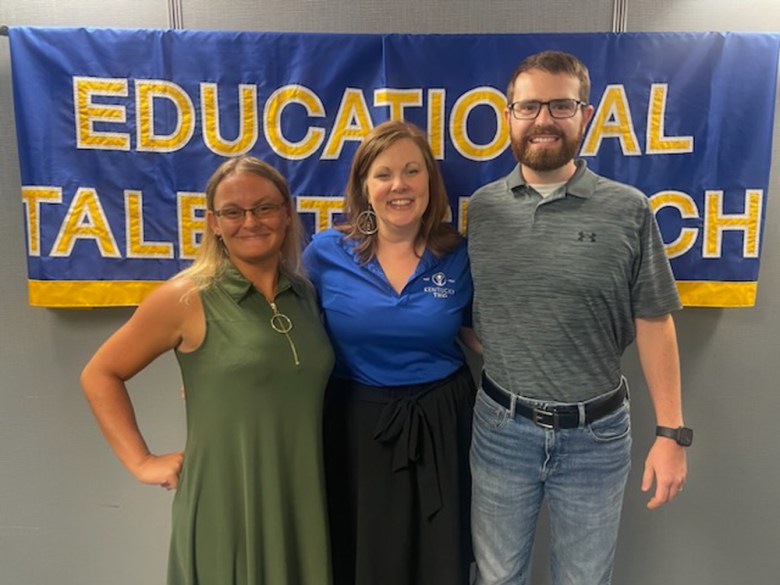
Summer Fawn Bryant, center, is director of TRIO’s Talent Search programs at Morehead State University in Kentucky. She stands with former TRIO students Alexandria Daniel, left, and Blake Thayer, right. Credit: Photo courtesy of Summer Fawn Bryant
TRIO works to counter the stigma of attending college that still exists in parts of eastern Kentucky, Bryant said. A student from a humble background who is considering college, she said, might be scolded with the phrase: Don’t get above your raisin’.
“A parent may say it,” Bryant said. “A teacher may say it.”
She added that she’s seen time and again how these programs can turn around the lives of young students facing adversity.
Students like Beth Cockrell, an Upward Bound alum from Pineville, Ky., who said her mom struggled with parenting. “Upward Bound stepped in as that kind of co-parent and helped me decide what my major was going to be.”
Cockrell went on to earn three degrees at Morehead State and has worked as a teacher for the past 19 years. She now works with students at her alma mater and teaches third grade at Conkwright Elementary School, about an hour away.
In a few years, 17-year-old Upward Bound student Isaac Bocook plans to join the teaching ranks too — as a middle school social studies teacher. Bocook said he was indecisive about what to study after high school, but he finally figured it out after attending a career fair at Morehead State’s historic Button Auditorium.
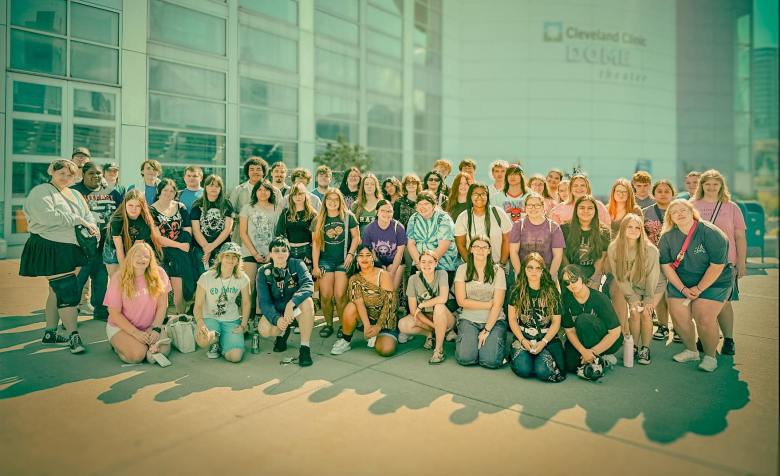
Upward Bound students visit the Great Lake Science Center in Cleveland for the end-of-summer educational trip. Credit: Photo courtesy of the Upward Bound Programs
Bocook lives in Lewis County, with just under 13,000 residents and a single public high school. At Morehead State’s TRIO program, Bocook met teenagers from across the entire region, which he said improved his social skills. TRIO also helped him with all kinds of paperwork on the pathway to adulthood. Filling out financial aid forms. Writing scholarship applications. Crafting a resume.
“I’m just truly grateful to have TRIO, as sort of like a hand to hold,” Bocook said.
His need for guidance is similar to what students at Morgan County High School in West Liberty, Kentucky, experience, said Lori Keeton, the school guidance counselor. The challenge facing these first-generation students, she said, is that “you just simply don’t know what you don’t know.”
As the sole counselor for 550 students, Keeton doesn’t have time to help each student navigate the complex college-application process and said she worries that some of her students will apply to fewer colleges, or no colleges at all, if TRIO disappears.
TRIO’s Talent Search program serves about 100 students at her high school, and roughly another dozen are part of Upward Bound. Each program has a dedicated counselor who visits regularly to guide and assist students.
Sherry Adkins, an eastern Kentucky native who attended TRIO more than 50 years ago and went on to become a registered nurse, said efforts to cut TRIO spending ignore the long-term benefits. “Do you want all of these people that are disadvantaged to continue like that? Where they’re taking money from society? Or do you want to help prepare us to become successful people who pay lots of taxes?”
As Washington considers TRIO’s future, program directors like Bryant, at Morehead State, press forward. She has preserved a text message a former student sent her two years ago to remind her of what’s at stake.
After finishing college, the student was attending a conference on child abuse when a presenter showed a slide that included the quote: “Every child who winds up doing well has had at least one stable and committed relationship with a supportive adult.”
“Forever thankful,” the student texted Bryant, “that you were that supportive adult for me.”
Contact editor Nirvi Shah at 212-678-3445, securely on Signal at NirviShah.14 or via email at [email protected].
The Hechinger Report provides in-depth, fact-based, unbiased reporting on education that is free to all readers. But that doesn’t mean it’s free to produce. Our work keeps educators and the public informed about pressing issues at schools and on campuses throughout the country. We tell the whole story, even when the details are inconvenient. Help us keep doing that.
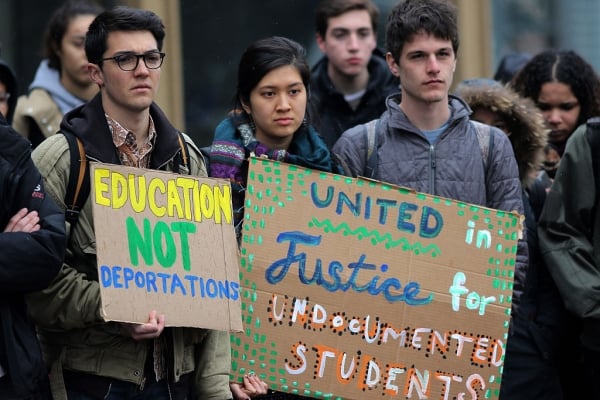
Advocates for undocumented students have their hands full as they prepare for President-elect Donald Trump to take office later this month.
They’re fielding questions from nervous students fearful of Trump’s promises of mass deportations and advising college staff members seeking to support these students within legal bounds. But then, the Biden administration dropped a fresh disappointment on top of their heaping pile of concerns when it pulled back on a proposal to make undocumented students eligible for some TRIO programs.
The decision—tucked into a set of finalized rules released at the end of the year—was met with mixed emotions from advocates who have long pushed to give undocumented students access to the federal college prep programs designed to help disadvantaged students enroll and persist in college. Some mourned the chance to secure a win for undocumented students before Trump took office. Others saw the decision as a painful but pragmatic response to the incoming administration, which may have barred undocumented students from these programs anyway or penalized TRIO programs for serving them. Proponents of the dead proposal expect it’ll be years before the opportunity to open up these programs presents itself again.
Magin Sanchez, higher education policy analyst at UnidosUS, a Latino civil rights organization, said undocumented students would have a lot to gain from TRIO programs, given that they already face major hurdles to enrolling in college, like a lack of access to federal financial aid. He believes the extra academic support and college counseling these programs offer could put these students on a more level playing field with their peers.
“Higher education is one of the surest pathways to economic mobility and prosperity,” Sanchez said. “There are significant barriers for this population, students that just want to have access to a better life, like any college student.”
A former board member at the Council for Opportunity in Education told Inside Higher Ed that they didn’t know how to feel about the Biden administration’s decision. The organization, which supports low-income and first-generation students and students with disabilities, was among those that pushed for the change.
“With the new administration coming in, we want to do everything to protect our students, so in that sense, I kind of understood why,” said the former board member, who asked to remain anonymous in order to avoid speaking for their current employer. “My other reaction was, man, we’re doing this again? We’re bringing up students’ hopes again? We bring up their hopes only to shoot them down again and again.”
What Happened
The Education Department initially proposed that noncitizen students be eligible for three TRIO programs—Upward Bound, Talent Search and Educational Opportunity Centers—if students enrolled in or planned to enroll in high schools in the United States, its territories or Freely Associated States and met other eligibility criteria. Those programs were selected because they serve students in public K-12 schools, which are open to all students, regardless of immigration status.
But in finalized rules released Dec. 30, the department decided against it.
Department officials wrote that, after reviewing public comment, they believed the proposal was “too narrow,” because it didn’t include the Student Support Services program, which offers academic support to college students, or the McNair Scholars program, which prepares students for graduate education. Officials also concluded that opening only some programs to undocumented students would “cause confusion” and “increase administrative burden.”
Department officials also argued that the Higher Education Act, the federal law that governs how federal higher ed programs are administered, doesn’t explicitly bar noncitizens from participating in TRIO programs.
So, the department scrapped the proposal altogether “to reconsider how best to ensure that the TRIO programs are able to reach all populations of disadvantaged students, irrespective of immigration status,” officials wrote.
Pushback, Parsing and Planning
Some advocates don’t buy the department’s explanations.
The former COE board member said TRIO directors already have to parse regulatory differences between different programs, so the idea that opening up only some programs to undocumented students would prove too confusing “didn’t fly too well with me.”
“I get it, it’s a political explanation, but at the same time, it doesn’t help the community with that messaging,” they said.
Jon Fansmith, senior vice president for government relations and national engagement at the American Council on Education, said as far as he’s concerned, “This really seems like a classic case of elections have consequences. Had we been talking about an incoming Harris administration, I don’t know that the department would have pulled back the regulation.”
At the same time, the Biden administration seems to have left the door open a crack. The language of the finalized rules implies TRIO directors could interpret the Higher Education Act as not explicitly forbidding undocumented students from participating in TRIO programs.
“I think you can certainly read that as offering up an interpretation of existing statute that might provide some flexibility—certainly the idea that if it’s not delineated, that doesn’t necessarily preclude it,” Fansmith said. So, the Biden administration may be “indicating where schools could go, but frankly, stopping short of something they know would be quickly reversed by the incoming administration.” Still, that’s “certainly not as clear as formally regulating on it.”
Now in a gray area, it remains to be seen whether TRIO directors will use that latitude to serve students regardless of citizenship or if they’ll continue to bar undocumented students, given the Trump administration is unlikely to interpret the law in this way. Their choices could prove risky. A year ago, some school and college administrators were already worried that, if undocumented students were granted access to these programs, TRIO programs could face Republican backlash and funding cuts. This summer, six Republicans in Congress, including former chair of the House education committee Virginia Foxx, opposed the proposal in a letter to Education Secretary Miguel Cardona.
Education department officials wrote in the finalized rules that the department “may reconsider TRIO student eligibility through future rulemaking efforts.” But the proposal’s proponents believe there’s a slim to none chance of that during Trump’s term, given his rhetoric against undocumented immigrants.
“We’re going to have to wait at least four years again,” Fansmith said.
Nonetheless, some remain hopeful that undocumented students will benefit from TRIO programs in the future. Sanchez said he still thinks it’s going to happen, even if this “window of opportunity” has passed.
“We’ll keep fighting,” Sanchez said. “We’ll keep advocating, because we may not have gotten it right now, but we’ll get it eventually.”
The Biden administration’s regulations changing how colleges are held accountable and adding new requirements for institutions to access federal financial aid are now in place, though legal challenges loom.
Demetrius Freeman/The Washington Post/Getty Images
Colleges will have to submit to the federal government new data on their distance education programs under a batch of new rules the Biden administration finalized Monday.
The rules, which will take effect July 1, 2026, will likely be the president’s last package of new regulations for colleges and universities before Trump takes office Jan. 20.
The new regulations carry out Biden’s plan to increase federal oversight of online programs, but the final version doesn’t go as far as the president initially intended After receiving significant pushback from online education lobbyists, the Education Department conceded, backing off a plan to disallow asynchronous options for clock-hour courses or require colleges to take attendance in online classes.
The package does, however, still include rules that require colleges to report more data on enrollment in distance education classes, which include those offered online or via correspondence. Higher ed institutions won’t have to begin submitting the data until July 1, 2027.
“Online learning can reach more students and sometimes at a lower cost to students, but what we know about the outcomes of online education compared to traditional in-person instruction is woefully inadequate,” Under Secretary James Kvaal said in the release. “The new reporting in this final rule will help the department and the public better assess student outcomes at online programs and help students make informed choices.”
The final rule also included technical changes to federal college prep programs known as TRIO. But the department decided not to move forward with a plan to open eligibility to some TRIO programs to undocumented students—a long-sought goal of some TRIO directors and advocates, as well as higher education associations.
Distance Education
But one of the most controversial parts of the rule for colleges and universities was whether Biden would decide to end any asynchronous options for students in online clock-hour programs, which are typically short-term workforce training programs that lead to a certificate.
A Trump-era rule allowed asynchronous learning activities—such as watching a prerecorded video—to count toward the required number of credits in short-term clock-hour programs. But the department said in its proposal that because of the hand-on nature of many clock-hour programs, the change often results in a “substandard education” that “puts students and taxpayers at risk.”
Hundreds of professors and higher education groups disagreed. Some, particularly those representing for-profit programs, argued in public comments that the proposal exceeded the department’s authority and would burden institutions. Others said the new rules reflected an antiquated mindset about college modality, arguing that disallowing asynchronous options could limit access for students who benefit from the flexibility that online education provides.
While the department decided not to end asynchronous distance ed programs, the agency intends to keep a close eye on the courses.
“The department refined these final rules based upon extensive public comment on a notice of proposed rulemaking published over the summer,” department officials said in a news release. “However, we remind institutions that asynchronous clock hours cannot be used for homework and that there must be robust verification of regular and substantive interaction with an instructor.”
No Expanded TRIO
Although the decision not to expand eligibility for TRIO has fewer implications for colleges, the move is a blow for the TRIO directors and immigration equity advocates who have been working for years to open up the program.
Miriam Feldblum, executive director of the Presidents’ Alliance on Higher Education and Immigration, told Inside Higher Ed that nearly 100,000 undocumented students graduate from high school each year, many of whom could benefit from TRIO services.
But Republicans opposed the idea. Six GOP members of Congress, including Virginia Foxx, a North Carolinian and former chair of the House education committee, blasted the concept in a letter to Secretary Miguel Cardona in August.
“The proposed expansion is a blatant attempt to provide additional taxpayer-funded services to those not seeking citizenship in the name of reducing ‘burden.’ The department’s proposed expansion will stretch funding thin and risk those currently eligible for TRIO,” they wrote.
Some college administrators and TRIO directors in red states are worried about the potential political backlash Biden’s new regulation could cause for their programs.
“The fighter in me thinks that this is a tough time to go to battle and have an unforced error or a target on our backs and [on] TRIO, given the contentious nature of immigration policy right now,” Geoffrey Garner, a TRIO program director from Oregon, said in at January 2024 advisory committee meeting. “We just think right now is not the best time for this proposal, as much as it breaks my heart to say that out loud.”
That advisory committee ended up backing the changes to expand some TRIO programs to undocumented students.
Education Department officials said its decision wasn’t due to political tensions. Rather, they said the proposal “was too narrow … in scope of additional populations to be served.”
Under the department’s proposed rule, high school students who aren’t citizens or permanent residents could qualify for Upward Bound, Talent Search and Educational Opportunity Centers but not Student Support Services or the McNair Scholars Program.
“An expansion of student eligibility under only certain TRIO programs would create confusion, as many grantees administer grants under more than one TRIO program,” officials wrote in the final rule. “Eligibility for only certain TRIO programs would increase administrative burden by requiring grantees to deny similarly situated noncitizens from participating under certain TRIO programs, but not others.”