Tag: troubling

  • ‘Inadequate and deeply troubling’: George Mason AAUP votes no confidence in board

    ‘Inadequate and deeply troubling’: George Mason AAUP votes no confidence in board

    This audio is auto-generated. Please let us know if you have feedback.

    Dive Brief:

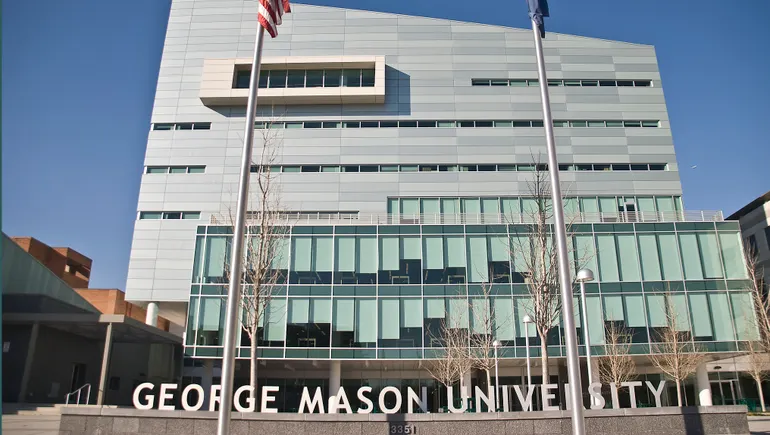
    • A faculty group at Virginia’s George Mason University this week adopted a no-confidence resolution aimed at the institution’s board for its handling of recent attacks on the university by the Trump administration. 
    • George Mason’s chapter of the American Association of University Professors described the board’s response to four government investigations, launched in less than a month, as “inadequate and deeply troubling” in a letter Tuesday to members of George Mason’s board of visitors and state officials. 
    • The group called on the board to publicly defend George Mason President Gregory Washington and to “reaffirm the university’s unwavering commitment to academic freedom, diversity, equity, and inclusive excellence.”

    Dive Insight:

    Over the course of roughly three weeks, the Trump administration has opened multiple civil rights probes into George Mason through the U.S. Department of Education and U.S. Department of Justice. 

    The most recent investigation, launched by the Justice Department’s civil rights unit, is looking at whether George Mason’s admissions and scholarship practices violate Title VI, which forbids discrimination based on race, color or national origin at federally funded institutions. It is also probing the university’s response to antisemitism. 

    A letter this week to the head of George Mason’s board from Harmeet Dhillon, the assistant attorney general for the Justice Department’s civil rights division, didn’t contain any specific allegations against the university, but stated that “a school administration’s deliberate indifference to a racially hostile educational environment is illegal.” 

    It followed the Justice Department’s earlier announcement of a probe into racial discrimination in George Mason’s employment practices. In informing officials of that investigation, Dhillon cited past comments by Washington about George Mason’s efforts to diversify its ranks and support women and faculty members of color.   

    The probes come just weeks after former University of Virginia President Jim Ryan abruptly announced his resignation in June amid pressure from Trump’s Justice Department and a similar investigation into the public institution’s diversity efforts.

    In public statements, George Mason’s board — headed by Charles Stimson, who holds leadership positions at The Heritage Foundation, a conservative think tank — has said little beyond that it will provide government agencies with requested information and comply with law.

    In a statement Tuesday in response to the latest probe, the board said it will “ensure GMU complies with all federal anti-discrimination laws.” In an earlier statement, it said it had a fiduciary obligation to “ensure that the University continues to thrive as the largest public university in Virginia.”

    George Mason’s board did not immediately respond to a request for comment.

    Washington himself has defended the university’s diversity efforts, writing last week, “It is inaccurate to conclude that we created new university policies or procedures that discriminated against or excluded anyone.”

    In the resolution, the George Mason AAUP chapter defended Washington’s record at the university where the board has been publicly silent. 

    “President Washington has demonstrated exceptional leadership by advancing the university’s longstanding commitment to inclusion and diversity, overseeing significant improvements in the university’s national rankings, while still maintaining Mason’s ethos of access and affordability, particularly for first-generation students,” it stated.

    The resolution also blasts the board as having “utterly failed to support President Washington and George Mason University during this period of unprecedented and increasing federal scrutiny and political targeting,” adding that “the silence from the Board has become deafening.”

    The faculty group additionally called out the board’s choice of attorneys to represent it in talks with the Trump administration, noting that the firm Torridon Law was co-founded by former Attorney General Bill Barr, who served under Trump, and has several prominent Republican lawyers on staff. 

    Among them is Mike Fragoso, who is handling communications about the investigations for George Mason and was previously chief counsel to former Senate Republican Leader Mitch McConnell.

    “The hiring of Torridon Law PLLC to defend GMU against the Trump administration’s ideological attacks is like hiring a wolf to protect the sheep,” the faculty group wrote. 

    Torridon’s Fragoso did not immediately respond to a request for comment.

    The George Mason AAUP “overwhelmingly” voted in favor of the no-confidence resolution, according to the letter to the university’s board.
    Source link

  • States balance supports and discipline to address troubling student behaviors

    States balance supports and discipline to address troubling student behaviors

    This audio is auto-generated. Please let us know if you have feedback.

    In Arkansas, a $7 million program approved last year aims to support students’ mental health by restricting their cellphone use and using telehealth to connect more students to mental health providers.

    In Texas, a multiyear effort to study student mental and behavioral health yielded a host of recommendations, including putting Medicaid funds toward school-based mental health supports and better tracking of interventions.

    And in West Virginia, state education leaders and partnership organizations have amassed a trove of resource documents and built out training to help schools address student mental health challenges.

    All three states are working to proactively to respond to the student mental health crisis that worsened due to the COVID-19 pandemic. 

    All three states are also considering or expected to pass laws allowing schools to implement tougher discipline policies.

    Likewise, many states are tweaking their discipline policies at the same time they are putting more resources toward supporting students’ mental well-being.  

    Although school discipline and mental health supports are mostly addressed at the local level, state leadership is critical for setting expectations for accountability and requiring transparency in disciplinary actions, said Richard Welsh, founding director of the School Discipline Lab, a research center that shares information about school discipline.

    And states are using a variety of measures from proactively providing mental health supports to loosening restrictions for exclusionary discipline, said Welsh, who is also an associate professor of education and public policy at Vanderbilt University. 

    Post pandemic, “we did have an uptick in student misbehavior,” Welsh said. “But I think what also gets missing in that was we also had an uptick in student and teacher needs.” 

    The COVID factor

    Post-COVID, schools have reported a rise in unruly behaviors, including among young students. Some of the behaviors have been violent and have even injured teachers, leading them to turn away from the profession.

    Research published by the American Psychological Association last year found an increase in violence against K-12 educators over the past decade. After COVID restrictions ended in 2022, a survey of 11,814 school staff, including teachers and administrators, found that 2% to 56% of respondents reported physical violence at least once during the year, with rates varying by school staff role and aggressor. 

    Data also shows that student verbal abuse occurring at least once a week on average, doubled from 4.8% in the 2009-10 school year to 9.8% in 2019-20, according to APA.

    Students’ mental health needs increased during and after the pandemic, according to studies. Additional research showed that teachers, administrators and other school staff lacked resources to properly address students’ needs

    Some educators, parents and advocates worry that harsher student discipline policies will undermine evidenced-based practices for decreasing challenging behaviors and keeping students in school. They are also concerned that after several years of expanding positive behavior supports and restorative practices, a focus on stricter discipline policies will disproportionately affect students of color and those with disabilities. 

    The legislative activity at the state level is occurring at the same time President Donald Trump is calling for “reinstating common sense” to school discipline policies. An April executive order calls for the U.S. Department of Education to issue guidance to districts and states regarding their obligations under Title VI to protect students against racial discrimination in relation to the discipline of students. Title VI of the Civil Rights Act prohibits discrimination based on race, color or national origin in federally funded programs. 

    The Trump administration has called for the federal government to enact policies that are “colorblind,” not favoring one race over others.

    The order also directs the Education Department to submit a report by late August on the “status of discriminatory-equity-ideology-based school discipline and behavior modification techniques in American public education.” 

    Welsh predicts that the executive order will lead to more state activity addressing student behavior and a specific focus on the guidelines for administering punitive discipline. 

    Source link

  • Trump’s federal funding crackdown includes troubling attacks on free speech

    Trump’s federal funding crackdown includes troubling attacks on free speech

    With his second term underway, President Trump has moved aggressively to reshape federal spending. Organizations that promote “diversity, equity, and inclusion” (DEI) or “gender ideology,” for example, are at risk of losing government grants and contracts. Although the government has discretion in spending taxpayer dollars, some of the administration’s attempts to yank funding from groups based on their speech run headlong into the First Amendment.

    New funding restrictions target everything from DEI to ‘Gulf of Mexico’

    On Jan. 21, Trump issued an executive order that purports to require funding recipients to abandon “illegal DEI” programs but does not define “DEI” or explain which programs the administration deems unlawful. The Department of Government Efficiency (DOGE) reportedly cited the order in moving to cancel contracts with eight U.S. Department of Housing and Urban Development (HUD) contractors over DEI language on the contractors’ own websites and LinkedIn profiles, even though it was unrelated to their contractual obligations. Late last month, a federal court blocked key parts of the executive order on First Amendment grounds.

    One thing is clear: The government cannot constitutionally use funding as a cudgel to control speech outside the funded activity. 

    DEI isn’t the administration’s only target. Another executive order bans the use of federal funds to “promote gender ideology.” Meanwhile, the National Oceanic and Atmospheric Administration (NOAA) reportedly told The Nature Conservancy it would lose funding unless it adopted the term “Gulf of America” (echoing the White House’s ultimatum to the Associated Press to use the term or lose access to certain press events). And last week, Trump threatened to pull federal funding from any college that “allows illegal protests.”

    Although these examples are different in important ways, they all raise First Amendment questions.

    What does the Supreme Court have to say?

    Several of Trump’s moves clash with decades of Supreme Court precedent. One thing is clear: The government cannot constitutionally use funding as a cudgel to control speech outside the funded activity. The funding is supposed to support a specific program or purchase, not give the state control over everything an institution does. The government can, however, decide whether to pay a group or person to speak on its behalf.

    For instance, the Supreme Court held the government violated the First Amendment by forcing groups to denounce prostitution or lose funding for fighting HIV/AIDS. It also invalidated a ban on federal funding for public broadcasters who engaged in any editorializing, even with their own money.

    Conversely, in Rust v. Sullivan, the Court upheld federal restrictions on abortion counseling in government-funded family planning programs — because Congress was subsidizing and controlling its own message about family planning.

    One caveat: The government’s power to regulate speech within a funded activity is not absolute. The Court struck down a restriction on legal aid attorneys using federal grants to challenge welfare laws. Why? Unlike in Rust, the government wasn’t transmitting its own message — it was subsidizing legal aid attorneys’ advocacy on behalf of their indigent clients. Similarly, the University of Virginia — a public institution — violated the First Amendment when it denied a student magazine access to funding because of its religious viewpoint. The fund was for helping students express their own messages, not the university’s. 

    These same principles apply in other contexts where the government offers a financial benefit. Most Americans would rightly balk at the idea of a public school refusing to hire any Republicans, or a state government offering a tax exemption for Democrats only. Those policies would be plainly unconstitutional.

    Trump’s funding restrictions: legal or overreach?

    So how do Trump’s actual and proposed funding restrictions fit into this legal framework?

    In partially blocking enforcement of Trump’s DEI executive order, a federal court emphasized that it unlawfully limited speech “outside the scope of the federal funding.” That means DOGE’s alleged targeting of HUD contractors for their DEI activities likely violates the First Amendment if those activities have nothing to do with their government work. 

    As for the “Gulf of America” mandate, the administration may be able to require The Nature Conservancy to use the term in official reports produced for NOAA. But if the mandate goes beyond that, it could also run into First Amendment problems.

    And what about the executive order prohibiting use of federal funds to “promote gender ideology”? The only way this passes muster is if it controls the government’s own messaging or concerns non-speech activities, and not, for instance, if the government pulls a university’s funding because it believes a professor is somehow promoting such views. Congress funds universities to support the creation and spread of knowledge, not for faculty to act as government mouthpieces. 

    Pulling federal funding from colleges based solely on the views of student protests would also violate the First Amendment — and the administration cannot do so unilaterally. It’s one thing for the government to regulate its own speech, but quite another to punish colleges for how students express themselves on their own time. Trump’s statement referred to “illegal” protests, but his past remarks suggest his idea of “illegal” encompasses not just protest activity involving unlawful conduct but protected speech as well, such as whatever he deems “antisemitic propaganda.” This dovetails with how, during his first term, Trump directed civil rights agencies to use a definition of anti-Semitism that includes protected expression. 

    Efforts to deny federal funding to groups and institutions whose views the current administration dislikes seriously threaten Americans’ First Amendment rights. The government must tread carefully to avoid crossing the line into unconstitutional speech policing, otherwise the courts — and history — are unlikely to be on their side.

    Source link

  • A troubling moment for public higher ed (opinion)

    A troubling moment for public higher ed (opinion)

    David Kozlowski/Moment Mobile/Getty Images

    Earlier this month, my institution, Southern Methodist University, made headlines by hiring President Jay Hartzell away from the University of Texas at Austin, one of the country’s largest and most prestigious public universities. The move surprised many on both campuses and sent shock waves through higher education.

    While I can’t presume to know all the motivations behind President Hartzell’s decision and I don’t speak for SMU, as a faculty member who studies higher education, I believe this moment demands our attention. Many public universities are under serious threat, and private universities need to realize that their future is closely tied to the success of their public counterparts.

    For more than a decade, SMU has been my academic home. The campus boasts smart and curious students, dedicated faculty who care about teaching and research, and strong leadership from the administration and Board of Trustees. We’re in the middle of a successful capital campaign and enjoying both athletic success after our move to the Atlantic Coast Conference and a growing research profile.

    Yet, even as I anticipate the leadership that President Hartzell will bring to SMU, I can’t ignore the broader context that has made such a move more common and deeply troubling.

    Hartzell isn’t the only example of a major public university president leaving for the relative safety of private higher education. His predecessor at UT Austin Greg Fenves left for Emory University. Carol Folt resigned from the University of North Carolina at Chapel Hill before getting the University of Southern California presidency. Back in 2011, Biddy Martin famously left the University of Wisconsin at Madison for Amherst College in one of the early examples of this trend. So, what is going on and why are major public university presidencies less attractive than they once were?

    The Struggles of Public Universities

    Being a public university president in a red state is the toughest job in higher education today.

    Public universities in these politically charged environments are under siege. They face relentless ideological attacks from state legislators and are constantly forced to navigate resource challenges from years of underfunding.

    Politicians attacking public higher education are not simply questioning the budgets or management—they are attempting to dismantle these institutions. Efforts to reduce tenure protections, anti-DEI legislation and restrictions on what can be taught are all part of a broader effort to strip public universities of their autonomy.

    The goal of these attacks is clear: to reduce the influence and authority of public universities and their leaders and undermine the critical role they play in shaping a well-informed and educated workforce and citizenry.

    At the same time, some institutions are adopting policies of institutional neutrality, reducing the ability of presidents to speak out on these issues.

    The cumulative effect of these efforts is to make public universities and their leaders less effective in advocating for their missions, students and faculty.

    The Short-Term Advantages for Private Higher Ed

    In the short term, these challenges facing public universities have opened opportunities for private institutions. With public universities bogged down in political and financial crises, private universities can poach top faculty and administrators, offering them better resources and less political interference.

    I don’t fault private universities for capitalizing on these opportunities—they are acting in their own self-interest and in the interests of their own missions, students and faculty.

    But I fear that this approach is shortsighted and ultimately damaging to the broader higher education community. At a time when trust in higher education is declining, when the value of a college degree is being questioned and when the public is increasingly disillusioned with the academy, it is vital that we don’t allow attacks on public institutions to further erode public faith in all of higher education.

    Why Private Universities Must Stand Up for Public Higher Ed

    Private universities are uniquely positioned to advocate for the broader value of higher education and the critical role public institutions play.

    First, private universities can use their platforms to champion the ideals of higher education. With public universities under attack from state legislatures and special interest groups, private institutions can and should speak out against the politicization of higher education. Whether through research, advocacy or public statements, private universities can be powerful allies in the fight to protect the autonomy of public institutions.

    Second, private universities can advocate for increased public investments in higher education. They can use their influence to urge policymakers to restore funding for public universities and reject anti–higher education policies. At a time of declining public support, private universities can push for policies that ensure all students, regardless of background, have access to high-quality postsecondary education to develop the skills to succeed in today’s economy.

    Third, private universities can help bridge the divide between public and private higher education by forming partnerships with public two- and four-year institutions. These partnerships could include joint research initiatives, transfer and reciprocal enrollment programs, or shared resources to expand access and opportunity.

    The Time for Action Is Now

    In this critical moment for higher education, private universities need to demonstrate leadership—not just for their own interest, but for the interests of the entire industry. If we want to safeguard the unique contributions of both public and private higher education, we need to work together to ensure both sectors thrive.

    Now is the time for all those who believe in the transformational power of higher education to stand up and take action. The future of higher education depends on it.

    Michael S. Harris is a professor of higher education in the Simmons School of Education and Human Development at Southern Methodist University.

    Source link