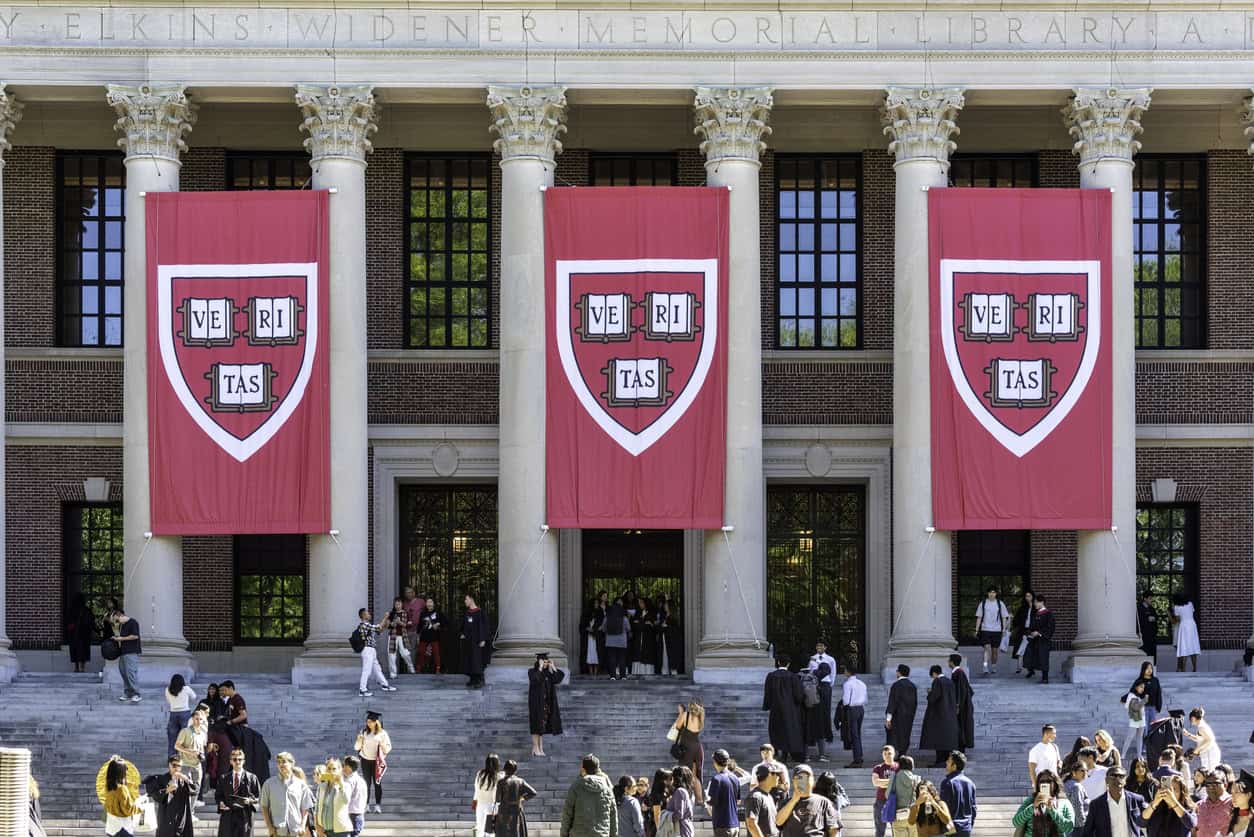
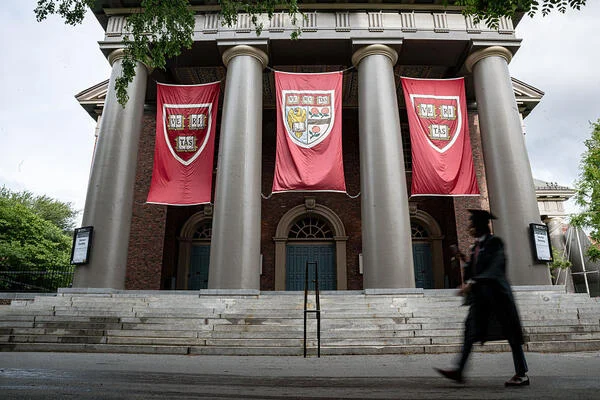
This week, the American Council on Education (ACE) was joined by 22 higher education associations filing an amicus brief in support of Harvard against the administration’s efforts to uphold Trump’s June 2025 proclamation barring international students from the institution.
“If the federal government may punish a university for its perceived ideology or that of its students, then the marketplace of ideas collapses into a monopoly of dogma,” the brief warns.
It urges the court to affirm the preliminary injunction issued by Judge Allison Burroughs last June, which blocked Trump’s attempt to prohibit foreign nationals seeking to study at Harvard from entering the US.
The signatories have said the proclamation represents an unprecedented executive overreach threatening institutional autonomy and academic freedom, as well as violating the First Amendment.
“Over the last year, the current administration has engaged in an unprecedented effort to coerce institutions of higher education to behave in a manner that reflects the administration’s preferred ideology, including by reshaping their faculty, curriculum and student body,” the document reads.
“When Harvard resisted the administration’s unlawful demands, the administration retaliated with extreme sanctions, including the proclamation issued in this appeal.”
The case arises from multiple attempts by the Trump administration bar international students from attending the Ivy League institution last spring.
Initial efforts were led by the Department of Homeland Security (DHS) attempting to strip Harvard of its SEVP Certification, which enables US institutions to enrol international students – a move halted by federal district judge Allison Burroughs.
Weeks later, Trump escalated efforts and issued his own presidential proclamation aimed at achieving the same result, which was met with a preliminary injunction from judge Burroughs, who said Trump’s directive implicated core constitutional protections.
Appealing judge Burroughs’ decision, the administration argued the proclamation was legal under the president’s immigration authorities – citing the familiar argument relating to national security concerns. This took the case to First Circuit appeals court, where it is now being heard.
The White House did not immediately respond to a request for comment.
Trump’s proclamation cites Harvard’s alleged “violent crime rates” and deficient reporting on foreign students as rationales for the directive, alongside its “entanglements” with the Chinese Communist Party and “discriminatory” admissions practices reducing opportunities for American students.
If the federal government may punish a university for its perceived ideology or that of its students, then the marketplace of ideas collapses into a monopoly of dogma
American Council on Education et al.
The brief argues that the proclamation is “fundamentally inconsistent with institutional autonomy – at Harvard and other educational institutions across the country” and that the administration’s actions are unconstitutional and set a dangerous precedent for all US colleges.
“The administration’s actions at issue in this case are directed at Harvard, but they reverberate throughout every state in the nation,” the brief states, arguing that punishing a university for its perceived ideology is “the antithesis of American values”.
It highlights the targeted nature of Trump’s directive, which would allow international students into the US seeking to study at any institution but Harvard – signalling the intervention is punitive, not regulatory, the amici said.
They emphasise the value of international students, “who … enrich and strengthen our community in innumerable ways”.
“But these benefits are unattainable when schools are prohibited from enrolling international students because they do not pass the government’s ideological litmus test.”
The brief contextualises the case within the administration’s long-running assault on Harvard, involving the freezing of federal grant funding, threats to Harvard’s tax-exempt status and requests for information regarding Harvard’s international students.
The administration’s appeal is expected to be considered in the coming months.
In the federal funding fight, judge Burroughs found in September 2025 that the administration acted unlawfully when it cut Harvard’s research grants – a case also heading to the court of appeal after the administration disputed the ruling.
Despite the ongoing attacks on America’s oldest institution, Harvard’s overseas enrolments rose to their highest level since 2002 this academic year, making up 28% of the total university population.
Harvard officials wrote in financial statements that fiscal year 2025 “tested Harvard in ways few could have anticipated.”
Zhu Ziyu/VCG/Getty Images
Uncertainty has been the single most damaging aspect of the second Trump administration, professors have said, with university finances taking a hit despite the impact of many of the president’s cuts not yet coming to fruition.
Although many of the harshest cuts have been quietly rescinded or blocked by the courts, universities have suffered considerable damage and are likely to face more systematic reforms to research in future, said Marshall Steinbaum, assistant professor of economics at the University of Utah.
“Beyond the high-profile, ideologically ostentatious cuts to some aspects of federally funded research, the whole enterprise is set to be less lucrative for universities going forward,” he told Times Higher Education.
Even though many of the cuts might not come to fruition, the uncertainty caused by having to plan for potential cuts had been the most damaging aspect, said Phillip Levine, professor of economics at Wellesley College.
“There’s still tremendous damage that’s been done, [but] the damage isn’t as extensive as it could have been.”
Levine said he was most worried about undergraduate international student enrollment, which often takes longer to feel the impacts of policy decisions.
Visa concerns were blamed for overseas student numbers falling by a fifth last year, but Harvard University recently announced a record intake, despite Trump’s attempts to ban its international recruitment.
But the institution did report its first operating deficit since 2020 in its financial statements—stating that the 2025 fiscal year “tested Harvard in ways few could have anticipated.”
Many institutions will suffer in the long term from a series of changes to student loan repayment. Trump has rolled back parts of the student loan origination system and introduced less generous income-based repayment plans and limits on federal loans, which will pose financial challenges to universities.
Recent research found that more than 160,000 students may be unable to find alternative sources of financing when the cap for loans kicks in later this year.
“The three-legged stool of higher education finance in the United States is tuition, federal research funding and state appropriations,” said Steinbaum. “All three legs have been cut down in the last year.”
Todd Ely, professor in the School of Public Affairs at the University of Colorado–Denver, said the traditionally diversified revenue portfolio of higher education had been weakened—which he said was particularly worrying because it coincided with the arrival of the “demographic cliff” and a hostile narrative around the value of a college degree.
Although highly selective and well-endowed private and public institutions will adjust more easily to the new environment, Ely said, “‘Uncertainty’ remains the watchword for U.S. higher education.”
“Research-intensive institutions, historically envied for their diverse revenue streams and lack of dependence on tuition revenue, have had their model of higher education funding thrown into disarray,” Ely added. “The battle for tuition-paying students will only increase, straining the enrollments of less selective and smaller private colleges and regional public universities.”
Robert Kelchen, professor and head of the Department of Educational Leadership and Policy Studies at the University of Tennessee, said cuts within universities are mitigating some of the effects of these pressures.
“The general financial challenges facing higher education prior to the Trump administration have not abated, and the cuts to federal funding have been notable,” said Kelchen.
“Universities need to try to get funding from other sources, such as students and donors,” Kelchen added, “but that is often easier said than done in a highly competitive landscape.”
This audio is auto-generated. Please let us know if you have feedback.
Dive Brief:
Congressional lawmakers this week released a fiscal 2026 education budget proposal that rejects the Trump administration’s call to dramatically decrease funding for the U.S. Department of Education and to cut major financial aid programs.
The Senate and House Appropriations committees jointly proposedallocating $79 billion in discretionary funding to the Education Department,up slightly from the$78.7 billion it received for the 2025 fiscal year.The Trump administration had proposed cutting the agency’s funding by 15.3%, to $66.7 billion.
The bipartisan proposal would also keep funding level for a suite of student support and educational access programs that would have seen their funding slashed or been defunded altogether under President Donald Trump’s plan.
Dive Insight:
Trump has made shuttering the Education Department a policy goal, directing Education Secretary Linda McMahon in a March executive order to “take all necessary steps” to facilitate its closure. Only Congress can fully eliminate the department, but his administration has begun hollowing it out through mass layoffs, grant cancellations, and plans to transfer program management to other agencies.
The Trump administration sought to decrease the maximum Pell Grant award by about 23% to $5,710, an amount it said would “continue to cover the average published in-state tuition and fees for community college students.” Instead, lawmakers are looking to maintain the maximum Pell Grant award at $7,395 through the 2026-27 year.
Trump’s spending proposal for fiscal 2026 also sought to defund three key educational access programs: TRIO, the Federal Supplemental Educational Opportunity Grants, and Gear Up.
TRIO, which supports students from disadvantaged backgrounds from middle school to college, would receive $1.2 billion dollars under the lawmakers’ proposal. The FSEOG program, which assists undergraduates who demonstrate significant financial need, would receive $910 million. And Gear Up, which helps low-income students prepare for postsecondary education, would get $388 million.
Each program’s allocation would be on par with what it received in fiscal 2025.
The congressional plan would also maintain funding for Federal Work-Study, which provides part-time jobs to students who need help paying for college, at $1.2 billion. Trump’s plan would have slashed the program’s budget by roughly 80% to $250 million.
The Education Department’s Office for Civil Rights funding would continue at $140 million under the lawmakers’ proposal, according to a bill summary released by Democrats on the Senate Appropriations Committee. Trump had sought to cut the office’s budget by a third.
As part of Trump’s effort to dismantle the Education Department, administration officials have announced plans to outsource the programs to four other federal agencies.
However, lawmakers wrote in an explanatory statement accompanying their proposal that “no authorities exist for the Department of Education to transfer its fundamental responsibilities”and that it cannot transfer its congressionally allocated funds to another agency.
Democrats on the Senate committee argued in their bill summary that the Trump administration’s interagency agreements are illegal, create “new inefficiencies, costs, and risks to funding for states and schools” and threaten “educational outcomes.”
Under the budget proposal, the Education Department and the four agencies it struck agreements with would be required to make biweekly reports to legislators, according to the explanatory statement. Briefings would include information related to the interagency agreements, such as costs, staff transfers, “metrics on the delivery of services,” and “plans for maintaining high standards of quality and objectivity in grant competitions through multireviewer peer panels.”
Lawmakers have until Jan. 30 to pass the remaining appropriations bills for the fiscal year that began Oct. 1, or they will face a partial federal government shutdown. Congress approved a stopgap funding measure in November to end the last government shutdown, the longest in U.S. history.
To say the first year of the second Trump administration brought a sea change for federal education policy would be an understatement. From efforts to shutter the U.S. Department of Education to legal battles on issues including staffing cuts, immigration enforcement, and transgender students’ athletic participation, few areas of the K-12 sector have been untouched.
To take a look back at key K-12 developments of President Donald Trump’s first year back in the White House, follow along with us below.
U.S. President-elect Donald Trump takes the oath of office from Chief Justice John Roberts as Trump’s family members look on during inauguration ceremonies at the U.S. Capitol on Jan. 20, 2025, in Washington, D.C.
Chip Somodevilla via Getty Images
January
On the first day of Trump’s second term in office — Jan. 20, 2025 — his administration rescinded Biden-era guidance discouraging immigration enforcement near schools and other “sensitive areas” like hospitals and churches. The move sparked fear among school communities that enforcement activities would happen on their campuses. That led to districts and community partners informing immigrant families of their constitutional rights and issuing guidance to school staff about protocols to take during any such enforcement actions.
On Jan. 23, Trump’s U.S. Department of Education eliminated diversity, equity and inclusion efforts within the agency. The agency said at the time that it “removed or archived” hundreds of outward-facing documents — including guidance, reports and training materials — that mention DEI. That included links to resources encouraging educators to incorporate DEI in their classrooms.
Quick to make an imprint on K-12 policy, the Trump administration on Jan. 24 rescinded Biden-era guidance that said implementing book bans could put school districts in violation of civil rights law.
Trump on Jan. 29 signed an executive order encouraging the expansion of school choice in states. The order directed the department to develop plans for using its discretionary grant programs “to expand education freedom for America’s families and teachers.”
Another executive order signed the same day prohibited the use of federal funding for “illegal and discriminatory treatment and indoctrination in K-12 schools, including based on gender ideology and discriminatory equity ideology.”
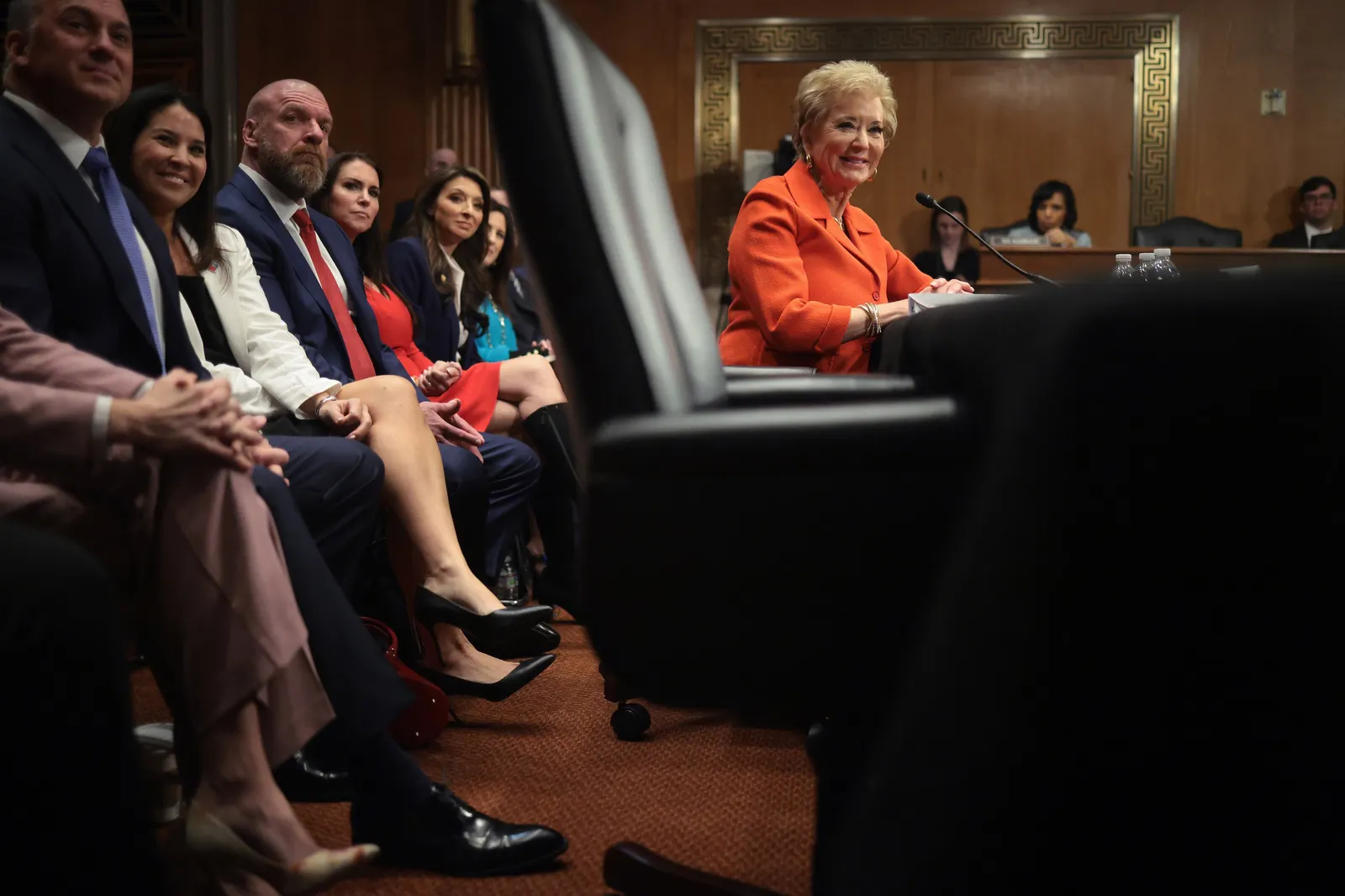
Linda McMahon, President Donald Trump’s nominee to be Secretary of Education, testifies during her Senate Health, Education, Labor and Pensions Committee confirmation hearing in the Dirksen Senate Office Building on Feb. 13, 2025, in Washington, D.C.
Win McNamee via Getty Images
February
Trump signed an executive order on Feb. 4 saying the federal government would rescind all funds from educational programs that allowed transgender girls and women to participate on sports teams that align with their gender identity. LGBTQ+ advocates condemned the action as discriminatory.
The anti-DEI stance led the newly formed Department of Government Efficiency to cancel about $881 million in multiyear research contracts at the Education Department on Feb. 10. This brought concerns from education researchers about future impact, including data that would be missing to measure chronic absenteeism, student achievement, teacher shortages and other metrics.
Anti-DEI efforts continued as the Education Department on Feb. 27 announced the launch of an “end DEI” portal for people to report “illegal discriminatory practices.” While the website is no longer live, a lawsuit brought by the American Federation of Teachers and other plaintiffs challenged the agency’s prohibition on considering race in education programs. That case is still pending.
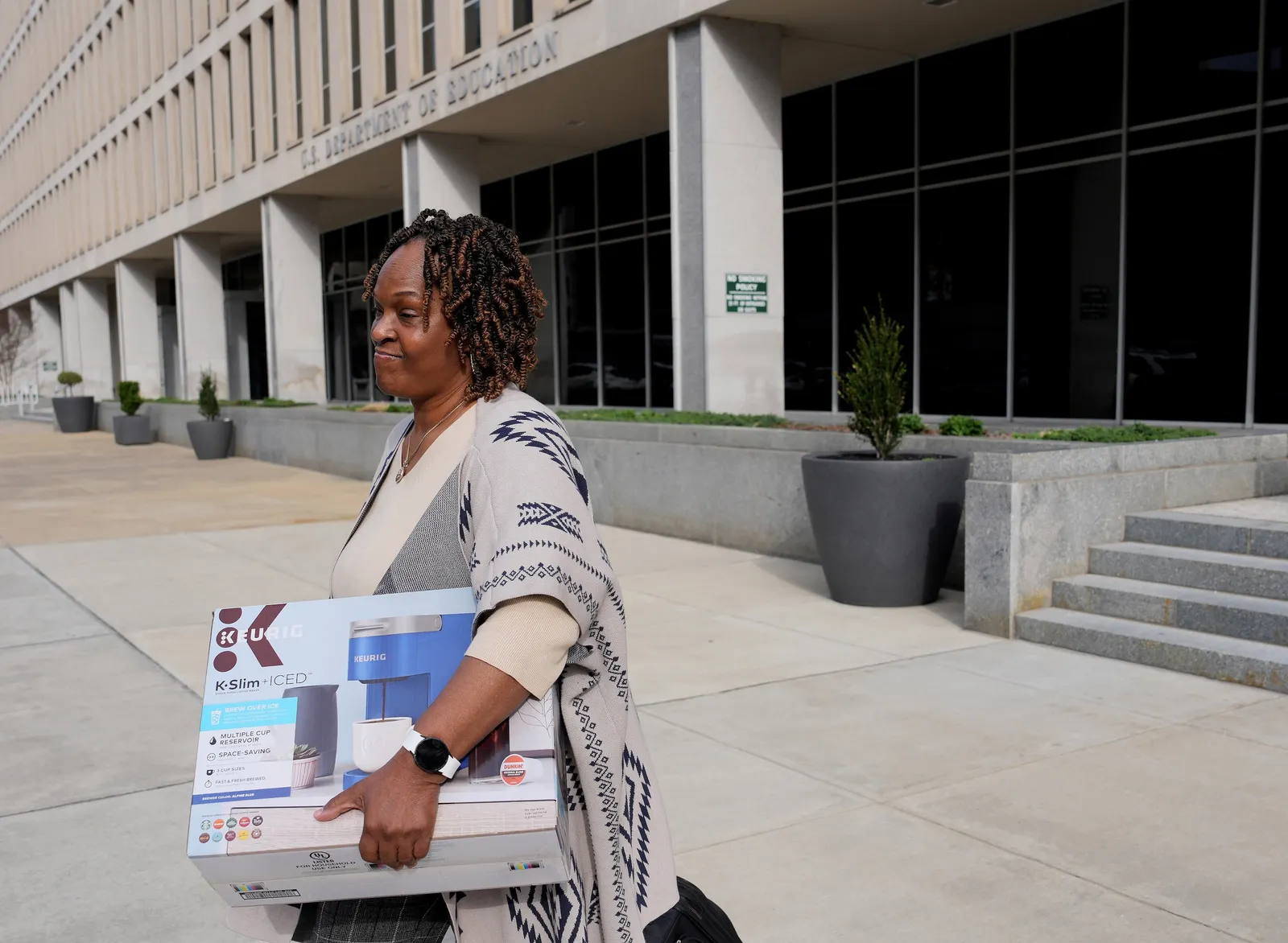
A U.S. Department of Education employee leaves the agency’s headquarters with their belongings on March 20, 2025, in Washington, D.C. On March 11, the agency announced a massive reduction-in-force that shrunk the department workforce.
Win McNamee via Getty Images
March
Linda McMahon, a former administrator of the Small Business Administration and former president and CEO of World Wrestling Entertainment, was confirmed by the Senate in a 51-45 vote along party lines as secretary of the Education Department on March 3.
One of the biggest developments this month in the Trump administration’s efforts to shrink the federal education footprint came on March 11 with a massive reduction-in-force order at the Education Department The Education Department’s workforce dropped from 4,133 when Trump was inaugurated to around 2,183 due to those layoffs and previously accepted buyouts.
McMahon and others joined Trump at the White House on March 20 for an executive order signing ceremony, directing McMahon to “take all necessary steps to facilitate the closure of the Department of Education.”
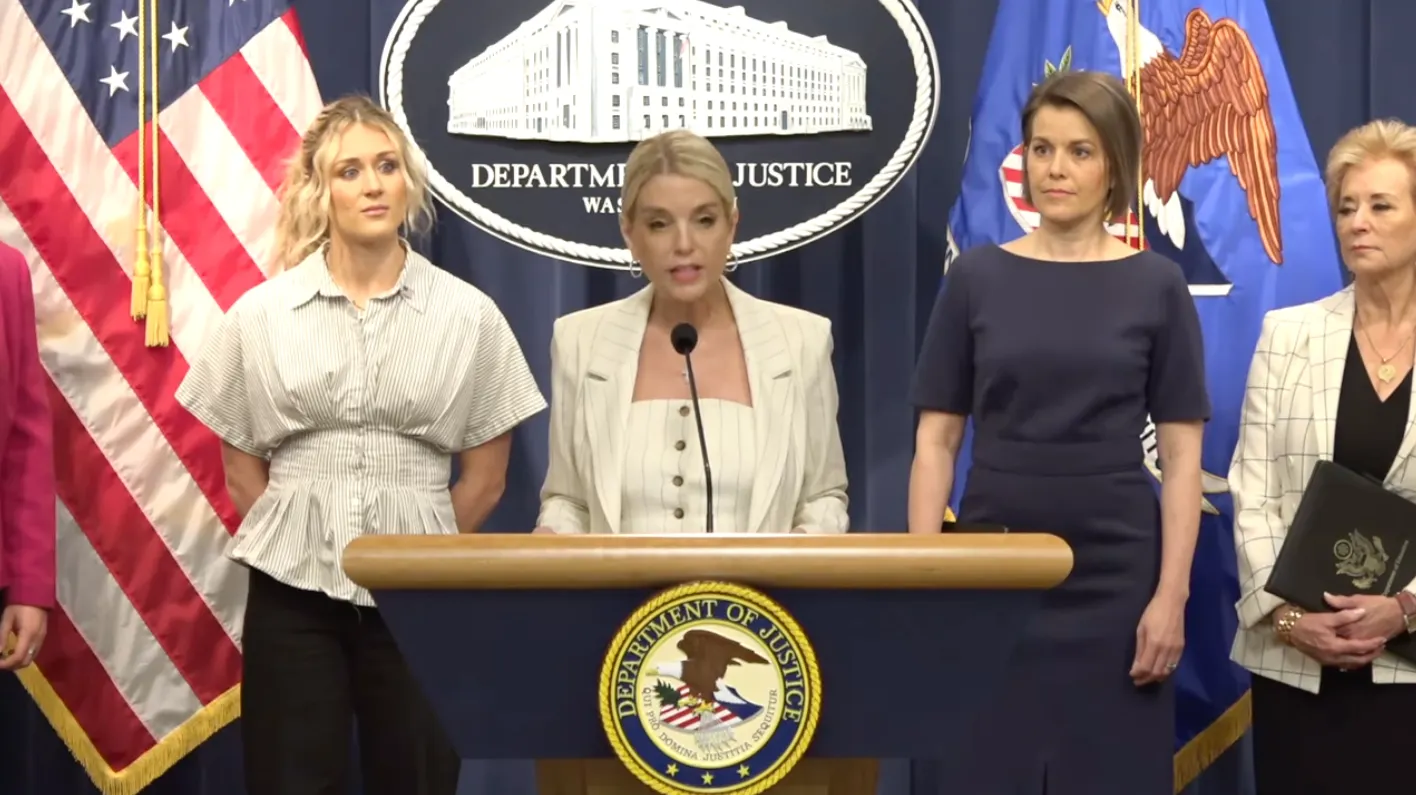
U.S. Attorney General Pamela Bondi announced a civil lawsuit against Maine Department of Education on April 16, 2025, and said that schools that comply with the administration’s civil rights statute interpretations will be spared.
The Trump administration on April 4 announced a major change in Title IX enforcement at schools and colleges: It would tap the U.S. Department of Justice for a Title IX Special Investigations Team. The move marked a shift of some education civil rights investigation and enforcement responsibilities to the Justice Department, which would henceforth help investigate policies allowing transgender students to participate on girls’ and women’s athletic teams and to use facilities aligned with their gender identity.
On April 4, mass layoffs at the U.S. Department of Health and Human Services led to the shuttering of five Office of Head Start regional offices in Boston, New York, Chicago, San Francisco and Seattle. The retrenchment raised alarms among early childhood education advocates, who cautioned that the cuts could lead to service delays and weaken the program. Adding to those concerns, Head Start was zeroed out in a leaked draft fiscal 2026 budget plan for HHS.
Anxieties continued to increase over the administration’s uptick in Immigration and Customs Enforcement activity. Two Los Angeles Unified School District elementary schools reported that federal agents had attempted to gain entry on April 7 by claiming they had families’ permission to speak to students.
The administration moved to cut off Maine’s federal K-12 funds, backed by a DOJ civil lawsuit announced April 16 over the state’s transgender student athlete policy. The move came amid other changes to how the Education Department conducts Office for Civil Rights investigations, which included rapid and targeted investigations.
The Education Department on April 30 cancelled$1 billion in grants initially awarded to districts across the U.S. to support student mental health. The funds — which aimed to help bring more mental health professionals into schools — were discontinued due to “conflict” with Trump administration priorities, according to the agency.
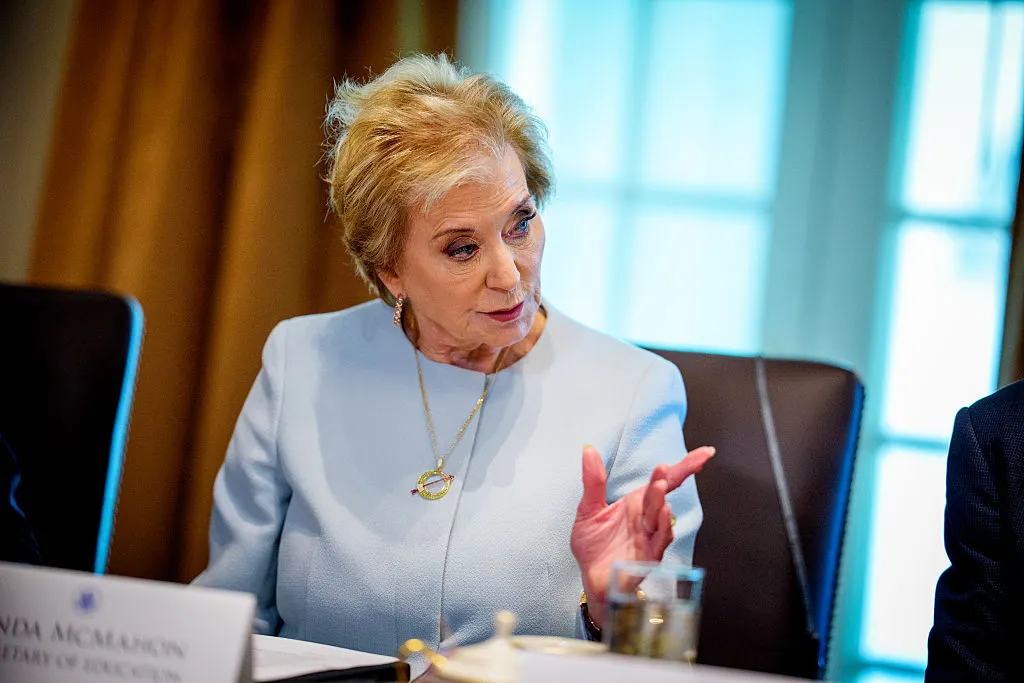
U.S. Education Secretary Linda McMahon speaks during a Cabinet meeting at the White House on April 30, 2025, in Washington, D.C.
Andrew Harnik via Getty Images
May
The Trump administration kicked off May by unveiling its federal skinny budget proposal for FY 2026 on May 2. Reflecting the administration’s anti-DEI priorities, proposed cuts included all $70 million for Teacher Quality Partnerships grant that were often used for workforce diversity efforts, all $7 million for Equity Assistance Centers that were established as part of desegregation efforts, all $890 million for English Language Acquisition, and a $49 million cut for OCR. Head Start, however, was spared from the chopping block, as was funding for Title I and the Individuals with Disabilities Education Act. The budget plan also included a $60 million increase for charter schools.
On May 22, U.S. District Judge Myong Joun issued a preliminary injunction in State of New York v. McMahon that ordered the department be “restored to the status quo” prior to the day President Donald Trump retook office. The agency’s actions since its mass layoffs, Joun said, showed no evidence that the workforce reductions had improved efficiency or that the agency was making progress in working with Congress to close the department. “A department without enough employees to perform statutorily mandated functions is not a department at all,” Joun wrote. “This court cannot be asked to cover its eyes while the Department’s employees are continuously fired and units are transferred out until the Department becomes a shell of itself.”
On May 30, the Trump administration released further details on its proposed FY 2026 budget for the Education Department. The more comprehensive budget requested $66.7 billion for the agency, amounting to a $12 billion, or 15.3%, cut from FY 2024 funding levels. The administration’s K-12 Simplified Funding Plan called for merging 18 current competitive formula funding grant programs into one $2 billion formula grant program. The administration said the move would lead to innovation and return power to the states.
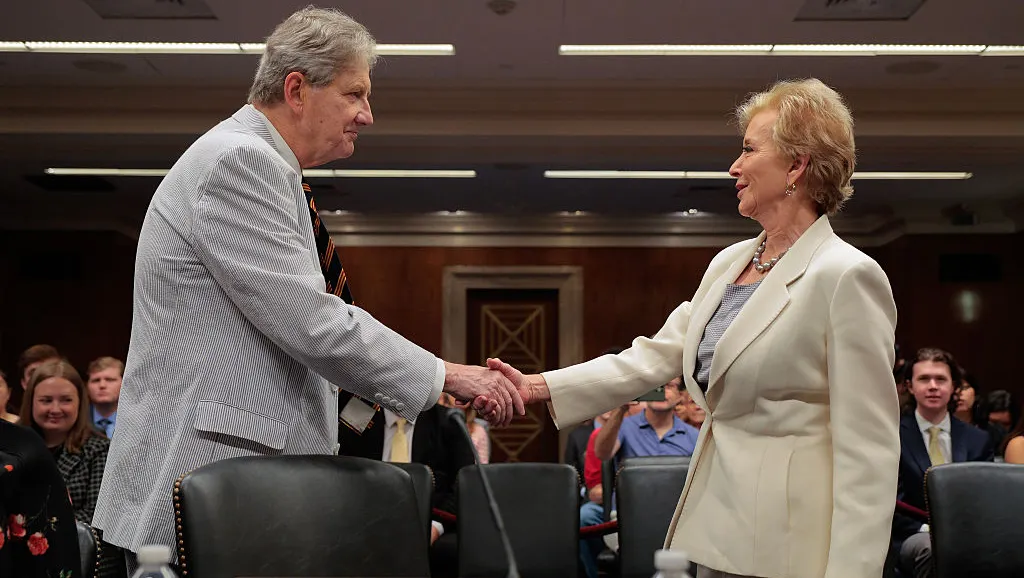
U.S. Education Secretary Linda McMahon greets Sen. John Kennedy, R-La., before a hearing of a Senate Appropriations subcommittee about the Education Department’s fiscal year 2026 budget proposal on June 3, 2025, in Washington, D.C.
Chip Somodevilla via Getty Images
June
The administration’s Title IX crackdown over transgender student athlete policies continued as the Justice Department on June 2 warned California districts of “legal liability” for complying with state policies on the issue. The letter to public school districts in the state came after a transgender athlete won gold in a state high school track and field competition. California responded by suing the Justice Department. The Education Department later announced an OCR investigation had found the state in violation of Title IX and threatened further DOJ action.
McMahon defended the administration’s education budget proposal at a Senate appropriations subcommittee hearing on June 3, during which she said the administration had set a “responsible” goal for the Education Department’s closure and that improving literacy was her No. 1 priority.
The Education Department’s court battles over the March reduction-in-force continued as states suing the agency over the layoffs claimed the move had impacted legally required functions such as research and grant distribution. In documents submitted to the U.S. Supreme Court, however, the Education Department said states had “no statutory right to any particular level of government data or guidance.”
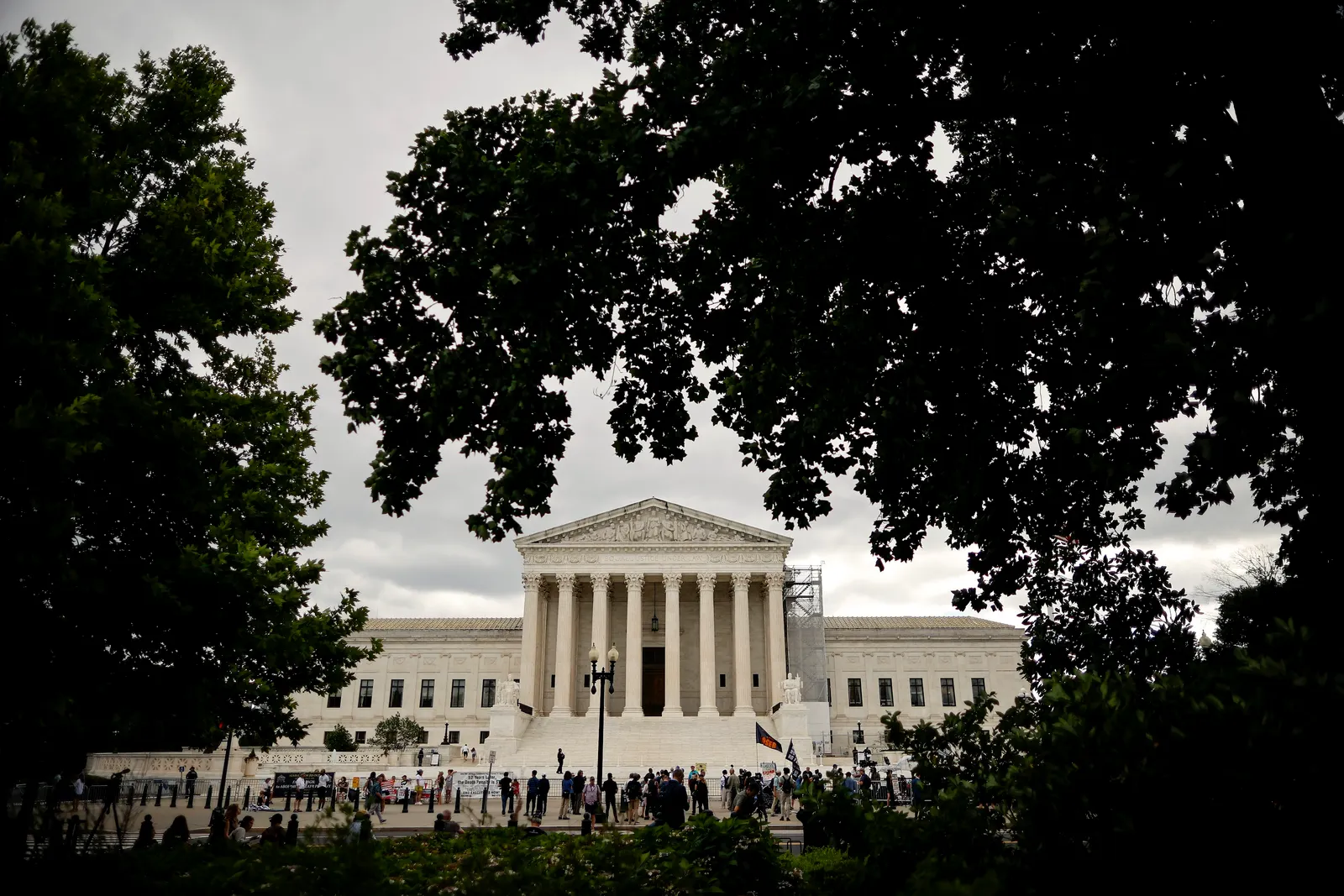
The U.S. Supreme Court is pictured on July 1, 2024, in Washington, D.C. On July 14, 2025, the high court allowed the Education Department to temporarily proceed with layoffs that began in March while lower courts determined their legality.
Chip Somodevilla via Getty Images
July
Nearly half of states sued the Trump administration over $6.2 billion in frozen federal K-12 grant funds in mid-July, which were supposed to be distributed to states and localities by the beginning of the month. Due to the funding freeze, school districts faced “budgetary chaos“ related to after-school programming, services for English learners, and professional development. The frozen funds put education programs at risk, including those related to migrant education, English learner services, professional development, academic enrichment, and before and after-school services. As a result of the states’ lawsuit, the administration began to release the money less than a month after the government’s missed distribution deadline.
The Trump administration on July 10 restricted education-related programs for some immigrants based on their immigration status, saying “no taxpayer-funded benefits go to unqualified aliens.” The restrictions affectedHead Start, tuition for dual enrollment, adult education, and career and technical education training programs. States sued the administration over the restrictions on July 21 and succeeded in winning temporary relief as the administration entered a court agreement four days later to pause them while the lawsuit is pending.
The Supreme Court on July 14 gave the Education Department the green light to push forward with layoffs that began in March, allowing them temporarily while the question of their legality is argued in the lower courts.
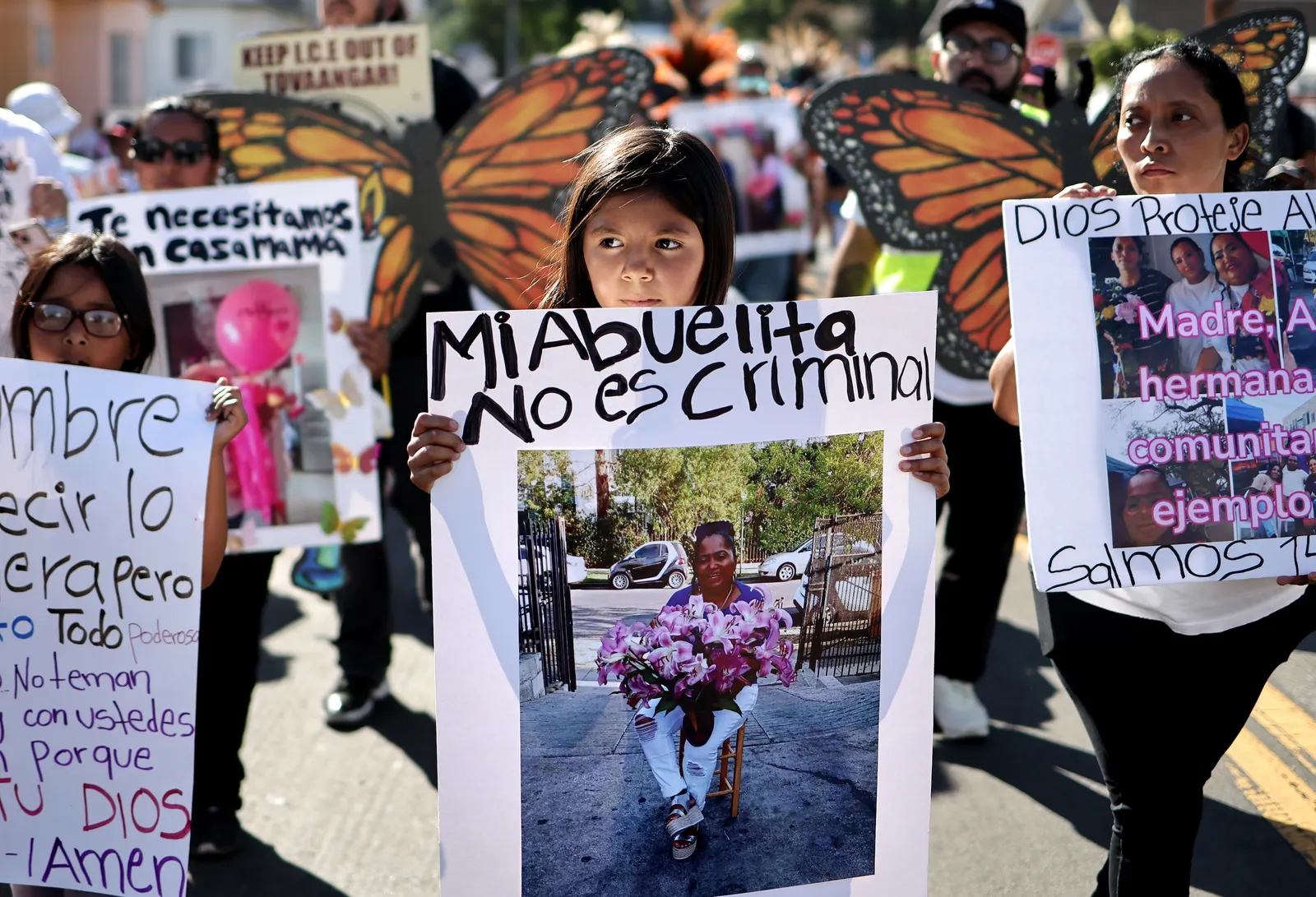
The granddaughter (center) of Emma De Paz, a street vendor detained during ICE activites, carries a sign during a protest on July 1, 2025, in Los Angeles, Calif. Heavy ICE presence in Los Angeles — including on school grounds — sparked outcry over the course of the summer.
Mario Tama via Getty Images
August
August began with outcry from education policy and legal experts over sweeping anti-DEI guidance released by the Department of Justice on July 30, which affected school district hiring and training practices, as well as programming available to students. Under the guidance, districts could be exposed to legal liability by asking job applicants how their “cultural background informs their teaching,” using recruitment strategies targeting candidates from specific geographic areas or racial backgrounds, training employees on “toxic masculinity,” and asking job candidates to describe how they overcame obstacles — which the department said could amount to “illegal discrimination.”
The Education Department quietly rescinded Obama-era guidance that called on states and districts to ensure English learners “can participate meaningfully and equally” in school and “have equal access to a high-quality education and the opportunity to achieve their full academic potential.”
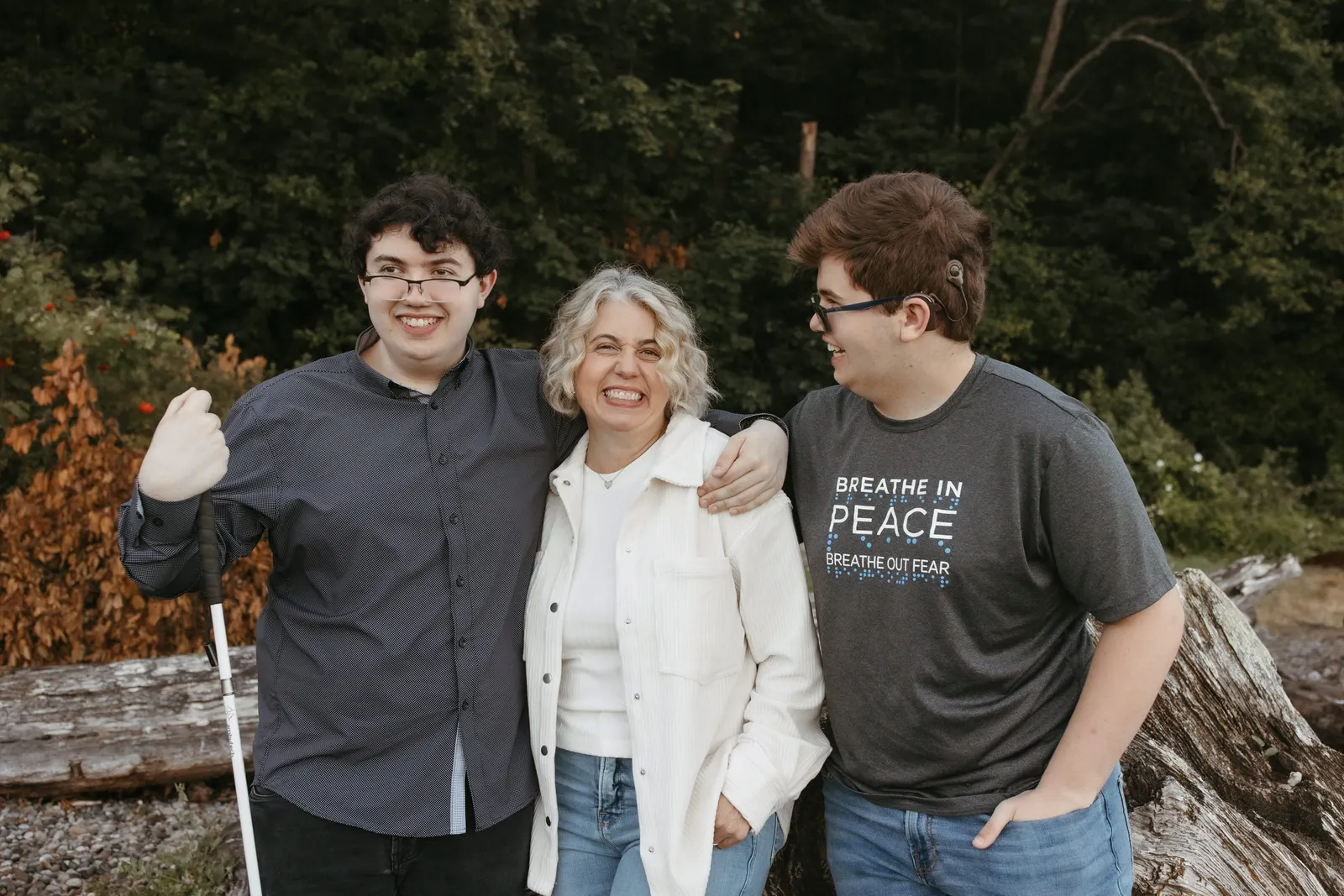
Lanya Elsa (middle) says support through IDEA Part D grants were pivotal for her sons, Conner McKittrick (left) and Dalton McKittrick, who are deafblind. Deafblind programs funded by the grant were left scrambling after abrupt cancellations by the Trump administration which said they were “not in the best interest of the Federal Government.”
Permission granted by Erika Dubois Photography
September
Families, educators and advocates of children and youth who are both blind and deaf scrambled to reclaim abruptly canceled federal funding after the Education Department sent a notice of noncontinuation for four deafblind projects in Washington, Oregon, Wisconsin and a consortium of New England states. Combined, the four projects’ grants were estimated at $1 million affecting about 1,365 children.
U.S. Attorney General Pamela Bondi warned in a Sept. 8 memo to the U.S. Department of Justice’s Civil Rights Division that schools must provide parents with the ability to opt their children out of instruction related to gender and sexuality, or risk being targeted by the department. It directed the division to be vigilant of parental rights’ violations at schools and for U.S. district attorneys nationwide to weed out and respond to “credible threats against parents.”
The Trump administration’s Make America Healthy Again Commission on Sept. 9 released the “Make Our Children Healthy Again” strategy report, which focused partly on school nutrition policies and pointed toward a need to serve healthier meals to schoolchildren. The report called for barring or limiting artificial dyes in food products and improving access to whole, healthy foods in school meals.
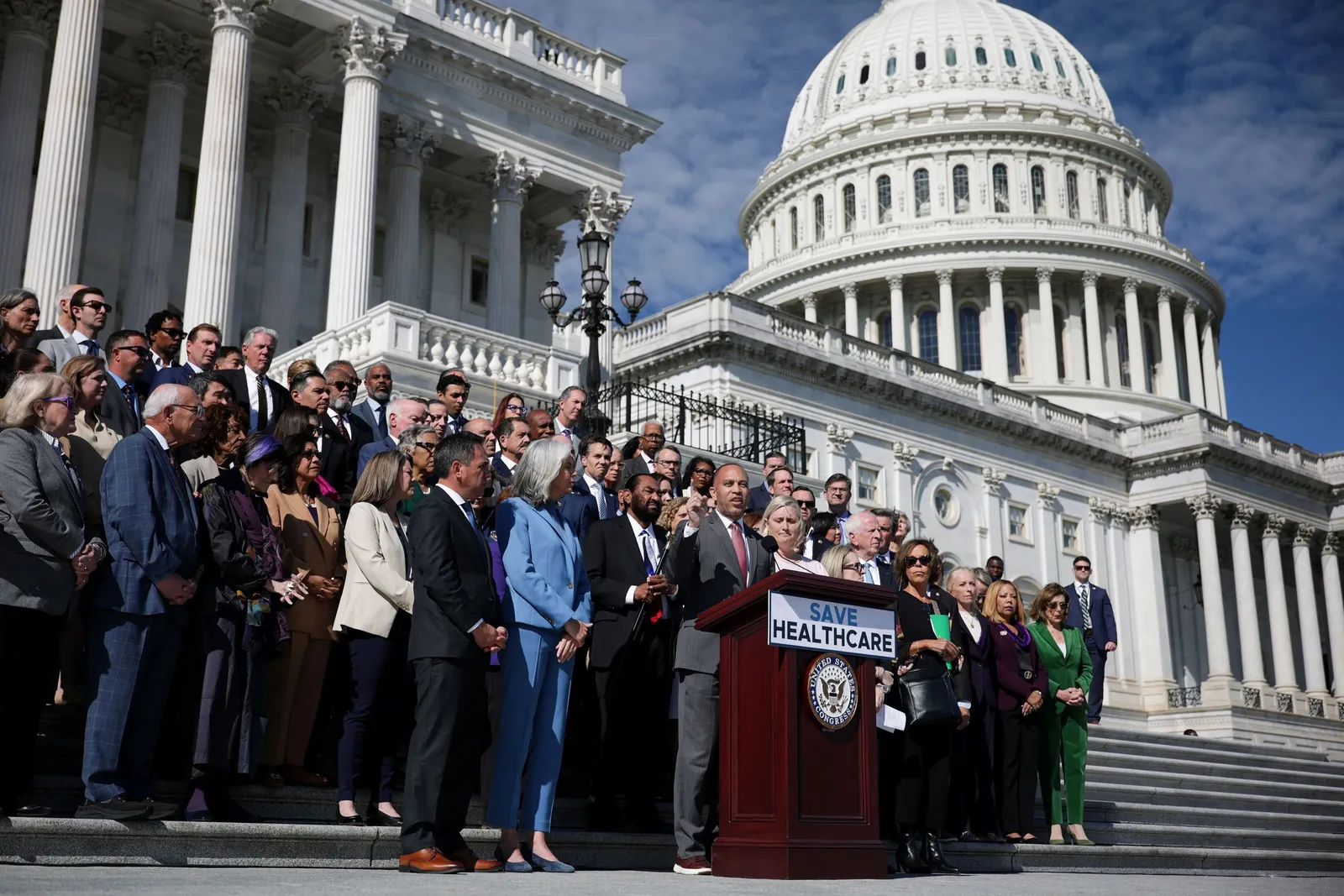
House Minority Leader Hakeem Jeffries, D-NY, speaks at a news conference on Oct. 15, 2025, about the federal government shutdown, flanked by members of the House Democratic Caucus, outside the U.S. Capitol in Washington, D.C.
Alex Wong via Getty Images
October
Oct. 1 marked the first day of a prolonged federal government shutdown after Congress could not come to agreement on sticking points on the 2026 fiscal year budget. The Office of Management and Budget issued a memo a week before the shutdown threatening mass firings of federal employees should the shutdown come to fruition.
The 4th U.S. Circuit Court of Appeals dealt a blow to Virginia’s Fairfax County Public Schools in its Title IX legal battle with the Trump administration on Oct. 1, when the court denied the district’s request to temporarily block funding restrictions issued by the Education Department. The Trump administration put Fairfax schools’ federal funding on “reimbursement only” status after the agency said the district violated Title IX by allowing transgender students to use bathrooms aligning with their gender identity.
On Oct. 10, some 466 Education Department employees — including most staff at the Office of Special Education Programs — received RIF notices as part of the wider shutdown-related effort to lay off federal employees. The layoffs particularly caused concern among special education advocates over the potential effects on funding and implementation of programs under the Individuals with Disabilities Education Act.
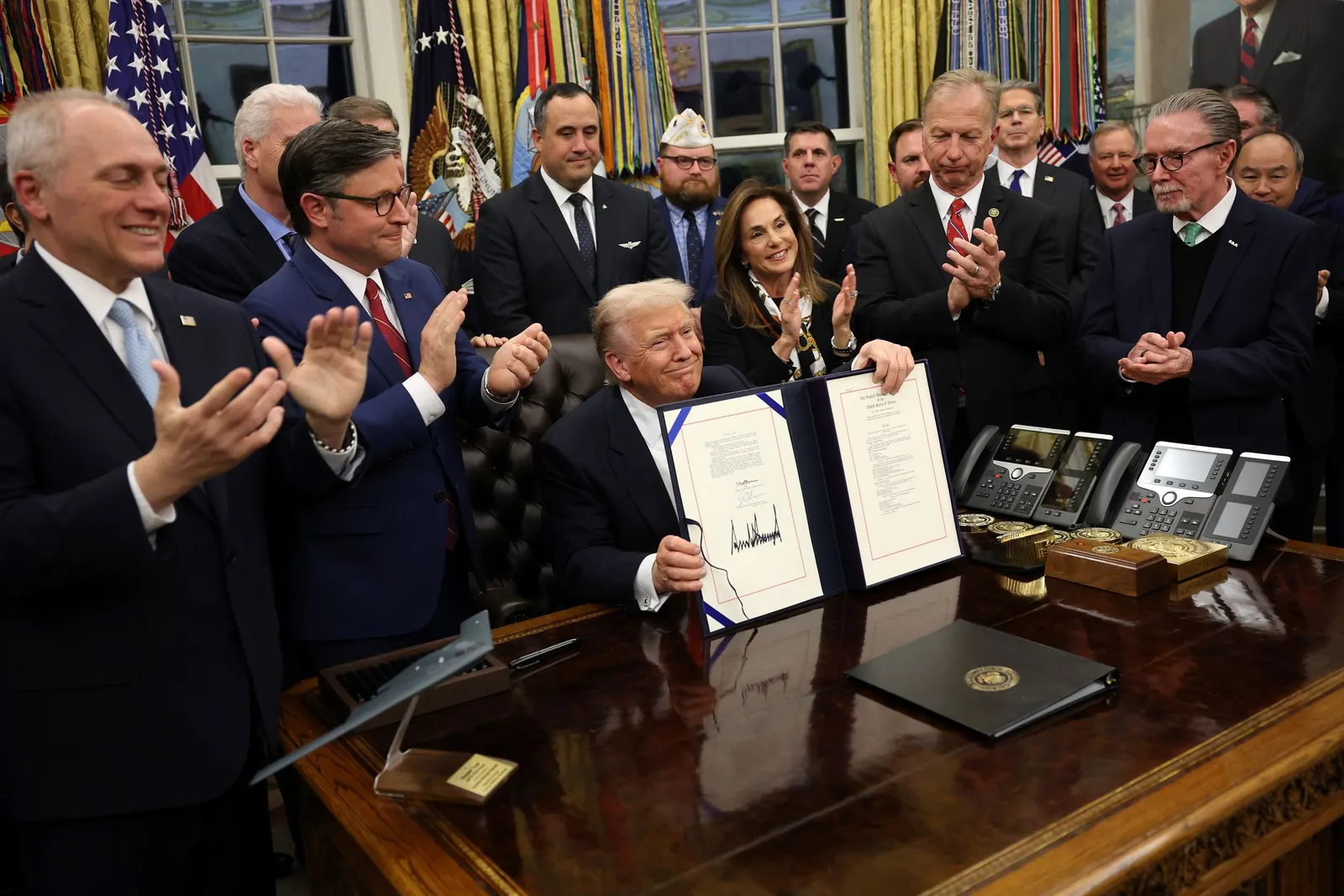
President Donald Trump holds up federal legislation he signed on Nov. 12, 2025, to reopen the federal government during a ceremony with Republican lawmakers and business leaders in the Oval Office in Washington, D.C.
Win McNamee via Getty Images
November
The federal government shutdown ended on Nov. 12 when Trump signed a continuing resolution to reopen the federal government and fund the Education Department through Jan. 30. The continuing resolution required back pay for employees furloughed during the shutdown and rescission of the RIFs issued on Oct. 10. The agency was also prohibited from issuing further RIFs through Jan. 30.
Moving one step closer toward dismantling the Education Department, the Trump administration announced on Nov. 18 that it would transfer the agency’s management of six programs to other federal agencies. Special education, civil rights enforcement and financial aid were not impacted by the announcement. Affected programs, however, included the Office of Elementary and Secondary Education, Indian education programs, international education and foreign language studies, and the Office of Postsecondary Education’s institution-based grants.
A coalition of school districts, employee unions and a disability rights organization amended a lawsuit on Nov. 25 seeking to halt the outsourcing of Education Department programs through the interagency agreements announced on Nov. 18. The lawsuit said that moving the department’s core programming to other agencies is illegal and would be harmful to K-12 and higher education students, families and educators.
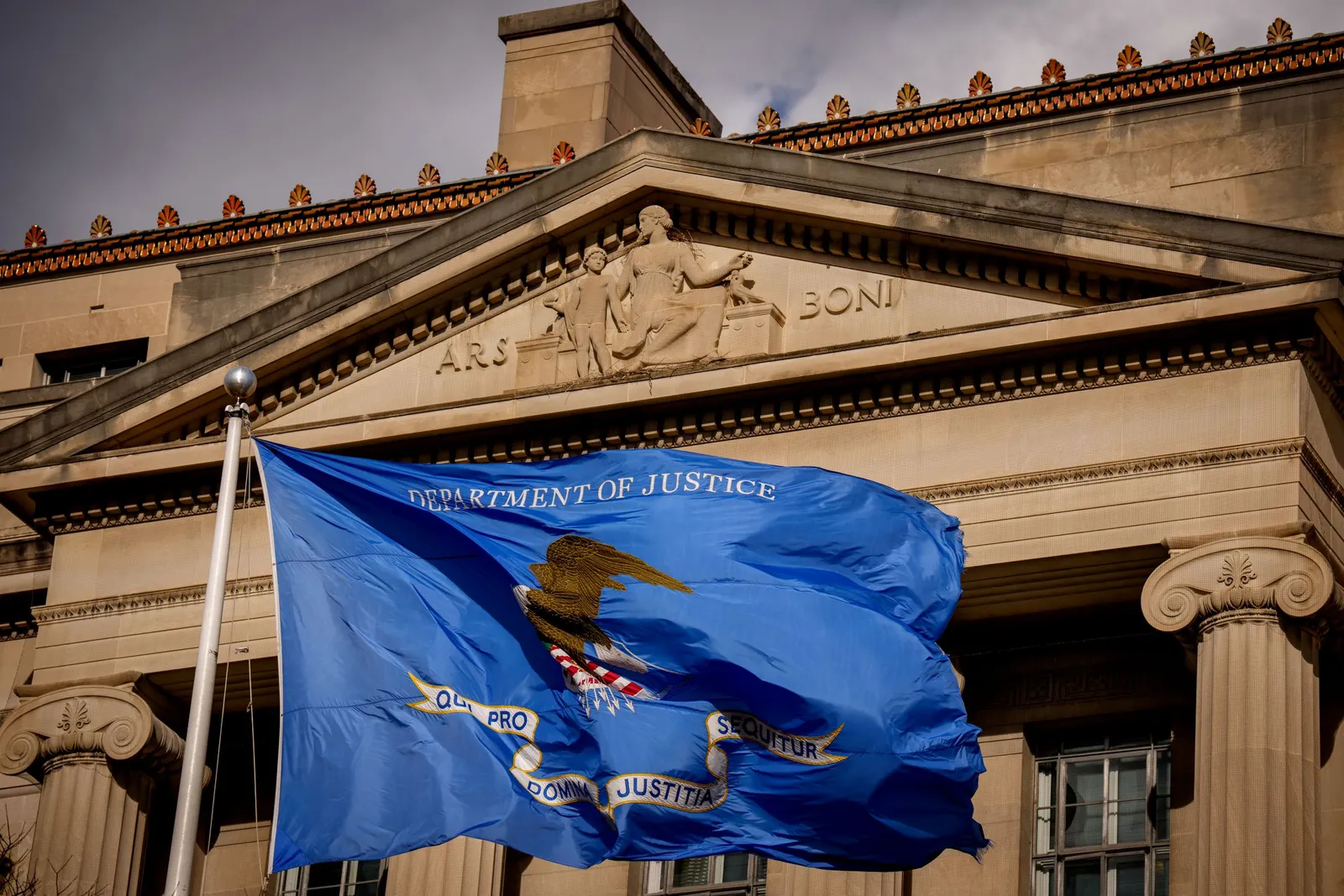
The exterior of the Robert F. Kennedy Department of Justice building on Dec. 19, 2025, in Washington, D.C. The Justice Department continued to take a greater role in Education Department matters in December by, for example, suing Minneapolis Public Schools.
Andrew Harnik via Getty Images
December
The Department of Justice continued to take a greater role in enforcing the Trump administration’s K-12 priorities as the agency announced on Dec. 8 it would join a lawsuit against Virginia’s Loudoun County School Board involving two Christian high school boys who were suspended after complaining about a transgender student in their locker room.
That same week, the Justice Department sued Minneapolis Public Schools on Dec. 9 over a teacher union agreement that the agency alleged was racially discriminatory because it included diversity-oriented goals for recruiting and retaining Black men.
A federal judge on Dec. 19 ordered the Education Department to permanently reinstate cancelledmental health grants in 16 states. The order said the April cancellation of the school-based and professional development funding was unlawful and had caused “significant disruption” to the 16 plaintiff states. Court documents said the canceled grants totaled $1 billion nationwide. The Trump administration had issued $208 million in new mental health grants under revised priorities the week before the Dec. 19 order.
This audio is auto-generated. Please let us know if you have feedback.
Monday marked the end of the first year of President Donald Trump’s second term, and higher education is still reeling from months of nonstop federal whiplash and policy changes.
The Trump administration has used wide-ranging and unprecedented tactics to gain influence over the academic sector and advance its policy goals. In turn, some college leaders have been forced to decide between defending their institution’s independence and policies or yielding to the federal government’s demands due to financial pressure.
Below, we’re breaking down some of the biggest impacts of the second Trump administration’s first year, number by number.
150+
The number of investigations the Trump administration either opened into colleges or cited while warning of a potential loss of federal funding.
In March, the U.S. Department of Education put 60 colleges on notice over ongoing Title VI probes into allegations that they weren’t doing enough to protect Jewish students from discrimination or harassment. Title VI bans federally funded institutions from discriminating based on race, color or national origin.
U.S. Secretary of Education Linda McMahon warned the colleges, many of whose investigations predated Trump’s second term, that federal funding “is a privilege” that is “contingent on scrupulous adherence to federal antidiscrimination laws.”
Less than a week later, the Education Department opened 51 additional investigations into colleges over allegations they had programs or scholarships with race-based restrictions for participation or eligibility. The agency again cited potential Title VI violations, along with a February guidanceletter aimed at snuffing out diversity, equity and inclusion efforts.That guidance was ultimately struck down in August by federal courts.
Several well-known colleges were named in both sets of investigations, including Yale, Cornell, Tulane and Arizona State universities.
Since last March, the Trump administration has opened additional college investigations over institutional policies that run antithetical to the president’s higher education agenda, such as allowing transgender students to play on sports teams aligning with their gender identity.
6
The number of colleges that have publicly brokered deals with the Trump administration to settle allegations of civil rights violations.
Most of the institutions — Brown University, Columbia University, Cornell University,Northwestern University, and the University of Pennsylvania — each faced hundreds of millions of dollars in frozen or canceled federal funding.By settling with the Trump administration, university leaders sought to restore their funding and remove political targets from their institutions.
The remaining institution, the University of Virginia, still had its funding intact but faced five federal investigations that could have threatened access to such funds. The U.S. Department of Justice paused those probes with the promise of closing them if the university “completes its planned reforms prohibiting DEI” through 2028.
But many higher education experts have decried such agreements as violating academic freedom and emboldening the Trump administration’s assault on the sector.
In one deal, Columbia University agreedto pay the federal government $221 million — the most of any college so far — and implement sweeping policy changes. Those included reporting extensive admissions data to the Trump administration, socializing “all students to campus norms and values” via training, and allowing an independent monitor to oversee the university’s compliance with the agreement.
The settlement will also put up walls between Columbia and international students by requiring the university to reduce its financial dependence on their tuition dollars and making applicants declare why they wish to study in the U.S.
In contrast, Harvard University sued the Trump administration over its attempts to exert influence over the institution. Thus far, the courts have largely sided with Harvard. A federal judge blocked the government’s attempts to revoke the university’s ability to enroll international students and ruled against its decision to withhold $2.2 billion of Harvard’s funding.
15%
The amount the Trump administration sought to unilaterally cap colleges’ reimbursement rates for indirect research costs.
Four federal agencies — the National Institutes of Health, the National Science Foundation, and the U.S. departments of Energy and Defense — introduced nearly identical 15% cap policies in quick succession during the first half of 2025.
Research universities, higher education groupsand states sued over the changes, and federal courts have so far blocked all four policies.Earlier this month, a federal appeals court upheld a lower court decision permanently blocking NIH’s policy, the first the Trump administration pursued. NIH declined to comment earlier this month on whether it planned to appeal.
21%
The decrease in federal funding for scientific research the Trump administration sought for the fiscal year 2026 budget. Some agencies would have seen particularly large decreases. Under Trump, NSF requested a budget of $3.9 billion — less than half of what it received in fiscal 2025. Similarly, NIH’s head requested $27.9 billion, nearly 40% less funding than the prior year.
Congressional lawmakers have instead passed their own bipartisan funding proposals that reject these broad-based cuts. Congress has until Jan. 30 to pass a full budget for the fiscal 2026 year before a stopgap funding measure expires.
7
The number of agreements the Education Department publicly struck with other federal agencies to offload some of the responsibilities under its purview.
The move came after Trump signed an executive order in March directing McMahonto “take all necessary steps to facilitate the closure” of the department.
The full closure of the Education Department would need congressional approval. But the Trump administration has sought to hollow out the department to the “maximum extent appropriate and permitted by law,” according to the executive order.
In November, the Education Department announced interagency agreements with the U.S. departments of State, Interior, and Health and Human Services to do this work. The U.S. Department of Labor is also set to receive additional education programming oversight after it took on key federal workforce developments from the Education Department earlier in the year.
Under the November agreements, the State Department plans to take over administration of the Fulbright-Hays grant, a program that funds educators’ overseas research and training in non-Western foreign languages and area studies. The Education Department canceled the program for the 2025 fiscal year.
Additionally, the Labor Department plans to oversee a majority of federal postsecondary education grant programs. The Trump administration said in December that the agency had finished taking over the federal workforce development programs established under the Workforce Innovation and Opportunity Act.
And beginning Tuesday, employees in the Higher Education Programs division in the Education Department’s postsecondary education office will be assigned to the Labor Department.
1,300+
The number of Education Department employees the Trump administration fired amid a massive reduction in force in March.Between the layoffs and employee buyouts, the department slashed its employee count from just over 4,100 to about 2,800.
In October, the Trump administration then moved to fire another 466 Education Department employees amid the longest government shutdown in U.S. history.
Both rounds of layoffs spurred court battles, which are still ongoing. However, the U.S. Supreme Court gave the Education Department the green light in July to carry on with the first round of layoffs as the lower courts consider their legality.
At the start of December, the department called some Office for Civil Rights employees back to work after nearly nine months.The staff had been on paid leave during that time, while the Trump administration legally defended the March layoffs.
And earlier this month, the administration stopped defending its October round of layoffs in court, appearing to scrap its efforts to push the terminations through.
8,000+
The rough number of student visas revoked by the State Department under the Trump administration, according to a January social media post from the State Department.At least 200 to 300 of those visas stemmed from terrorism-related claims, an agency representative said in August.
In the first half of 2025, the administration canceled the legal status of hundreds of international students in a federal database, often without formally notifying them or explaining why. Lawsuits over the decisions began to pile up, and the federal government announced in April it would temporarily reverse the cancellations pending the adoption of a formal policy.
It never publicly shared how many students were affected. But shortly afterward, court documents revealed a Trump administration policy proposal that would significantly expand the U.S. Immigration and Customs Enforcement’s power to terminate students’ legal status.
The Trump administration also made headlines over the high-profile detentions and attempted deportation of international and noncitizen students who had criticized Israel’s war in Gaza and related U.S. foreign policy.
Rumeysa Öztürk, an international student at Tufts University, became one of the faces of this trend when plainclothes immigration authorities detained her in March. The Trump administration had revoked her visa earlier that month, a decision Öztürk has argued was not communicated to her and stemmed from a pro-Palestinian op-ed she co-authored in 2024.
Öztürk spent six weeks detained before a federal judge ordered her release on bail in May. Her case is ongoing.
The Trump administration also detained Mahmoud Khalil,a former graduate student at Columbia,under similar circumstances. However, Khalil is a permanent legal U.S. resident.
In 2024, he served as the lead negotiator for Columbia University Apartheid Divest, a coalition of student organizations that helped organize the pro-Palestinian encampment on the university’s campus.
Like Öztürk, Khalil was detained in March 2025 by plainclothes ICE agents and moved hundreds of miles to a detention facility in Louisiana.
Khalil was detained for three-and-a-half months,missing the birth of his child and his Columbia graduation, before a federal judge ordered him to be released in June. He has sued the government, alleging he was falsely imprisoned and unlawfully targeted over his free speech.
However, a panel of federal appeals judges struck a blow to Khalil’s case Thursday, ruling that the lower court that ordered his release didn’t have the jurisdiction to do so.
Stanford University’s independent student newspaper, with assistance from the Foundation for Individual Rights and Expression, is also suing top Trump administration officials over allegations that their attempts to deport student visa holders based on speech violated their rights to free expression and due process.
A federal judge overseeing a similar case said Thursday that he would restrict the government’s ability to deport members of the American Association of University Professors and the Middle East Studies Association. The professional nonprofits filed a lawsuit last year alleging the Trump administration has been attempting to deport faculty and students over protected speech.
7
The number of states the DOJ has sued over laws or policies allowing certain undocumented students to pay in-state tuition at public colleges.
The eligibility requirements vary from state to state, but in each instance, DOJ leaders have argued that the laws illegally offer undocumented students benefits not provided to all U.S. citizens.
The agency filed the first such lawsuit in June against Texas.Texas Attorney General Ken Paxton,instead of defending the law, signed a joint motion with the DOJ to have it struck down. Texas was the first state to extend eligibility to undocumented students 25 years ago.
Since then, the DOJ has sued California, Illinois, Kentucky, Minnesota, Oklahoma and Virginia over their laws or policies granting certain undocumented students eligibility for in-state tuition.
In Democratically controlled states, like Illinois and California, local officials have sworn to fight the federal lawsuits.
But in Virginia, outgoing Republican Attorney General Jason Miyares filed a motion siding with the DOJ and seeking to strike down his state’s law. A federal judge has yet to rule on that motion.
As of Jan. 16, 22 states and Washington, D.C., had policies allowing undocumented students to pay in-state rates at some or all public colleges, according to the Higher Ed Immigration Portal. That’s down from 24 states before Trump won a second term.
The state’s Democrat governor, Tim Walz — who ran for vice president against Donald Trump’s ticket in 2024 — announced Monday he was dropping out of running for reelection. He pointed to fraud against the state, saying it’s a real issue while alleging Trump and his allies were “seeking to take advantage of the crisis.”
On Monday, the New York Post reported that the administration was expanding the funding freeze to include California and three other Democrat-led states, in addition to Minnesota. Unnamed federal officials cited “concerns that the benefits were fraudulently funneled to non-citizens,” The Post reported.
Early Tuesday, President Trump alleged that corruption in California is worse than Minnesota and announced an investigation.
“California, under Governor Gavin Newscum, is more corrupt than Minnesota, if that’s possible??? The Fraud Investigation of California has begun. Thank you for your attention to this matter! PRESIDENT DONALD J. TRUMP,” the president wrote on his social media platform Truth Social.
He did not specify what alleged fraud was being examined in the Golden State.
LAist has reached out to the White House to ask what the president’s fraud concerns are in California and to request an interview with the president.
“For too long, Democrat-led states and governors have been complicit in allowing massive amounts of fraud to occur under their watch,” said an emailed statement from Andrew Nixon, a spokesperson for U.S. Department of Health and Human Services, which administers the federal childcare funds.
“Under the Trump administration, we are ensuring that federal taxpayer dollars are being used for legitimate purposes. We will ensure these states are following the law and protecting hard-earned taxpayer money.”
Gov. Gavin Newsom’s press office disputed Trump’s claim on social media, arguing that since taking office, the governor has blocked $125 billion in fraud and arrested “criminal parasites leaching off of taxpayers.”
Criminal fraud cases in CA appear to be rare for this program
When it comes to the federal childcare funds that are being frozen, the dollar amount of fraud alleged in criminal cases appears to be a tiny fraction of the overall program’s spending in California.
A search of thousands of news releases by all four federal prosecutor offices in California, going back more than a decade, found a total of one criminal case where the press releases referenced childcare benefits.
That case, brought in 2023, alleged four men stole $3.7 million in federal childcare benefits through fraudulent requests to a San Diego organization that distributed the funds. All four pleaded guilty, with one defendant sentenced to 27 months in prison and others sentenced to other terms, according to authorities.
It appears to be equivalent to one one-hundredth of 1% of all the childcare funding California has received over the past decade-plus covered by the prosecution press release search.
Potential impact on California families
The plans call for California, Minnesota, New York, Illinois and Colorado to lose about $7 billion in cash assistance for households with children, almost $2.4 billion to care for children of working parents, and about $870 million for social services grants that mostly benefit children at risk, according to unnamed federal officials speaking to the New York Times and New York Post.
In the largest category of funding, California receives $3.7 billion per year. The program is known as Temporary Assistance for Needy Families, or TANF.
”It’s very clear that a freeze of those funds would be very damaging to the children, families, and providers of California,” said Stacy Lee, who oversees early childhood initiatives “at Children Now, an advocacy group for children in California.
”It is a significant portion of our funds and will impact families and children and providers across the whole state,” she added. “It would be devastating, in no uncertain terms.”
About 270,000 people are served by the TANF program in L.A. County — about 200,000 of whom are children, according to the county Department of Public Social Services.
“Any pause in funding for their cash benefits – which average $1000/month – would be devastating to these families,” said DPSS chief of staff Nick Ippolito.
Ippolito said the department has a robust fraud prevention and 170-person investigations team, and takes allegations “very seriously.”
It remains to be seen whether the funding freeze will end up in court. The state, as well as major cities and counties in California, has sued to ask judges to halt funding freezes or new requirements placed by the Trump administration. L.A. city officials say they’ve had success with that, including shielding more than $600 million in federal grant funding to the city last year.
A union representing California childcare workers said the funding freeze would harm low-income families.
“These threats need to be called out for what they are: direct threats on working families of all backgrounds who rely on access to quality, affordable child care in their communities to go to work every day supporting, and growing our economy,” said Max Arias, chairperson for the Child Care Providers United, which says it represents more than 70,000 child care workers across the state who care for kids in their homes.
“Funding freezes, even when intended to be temporary, will be devastating — resulting in families losing access to care and working parents facing the devastating choice of keeping their children safe or paying their bills.”
Federal officials planned to send letters to the affected states Monday about the planned funding pauses, the New York Post reported. As of 3 p.m. Tuesday, state officials said they haven’t gotten any official notification of the funding freeze plans.
“The California Department of Social Services administers child care programs that help working families afford safe, reliable care for their children — so parents can go to work, support their families, and contribute to their communities,” said a statement from California Department of Social Services spokesperson Jason Montiel.
“These funds are critical for working families across California. We take fraud seriously, and CDSS has received no information from the federal government indicating any freeze, pause, or suspension of federal child care funding.”
Colorado officials say money that helps 18,000 low-income families pay for child care could run out by Jan. 31 if federal officials don’t lift the freeze they’ve imposed on funding for several safety net programs in five Democrat-led states.
If that happens, some children could go without care and some parents would have to stay home from work. State lawmakers could cover such a funding gap temporarily, though Colorado is facing a significant budget crunch.
The Trump administration announced the freeze on $10 billion in child care and social services funding for Colorado, California, Illinois, Minnesota, and New York in a press release Monday.
In letters sent to the two Colorado agencies that run the affected programs, federal officials said they have “reason to believe that the State of Colorado is illicitly providing” benefits funded with federal dollars to “illegal aliens.”
The letters didn’t cite evidence for that claim and a spokesperson for the U.S. Department of Health and Human Services didn’t respond to questions from Chalkbeat about why federal officials are concerned about fraud in Colorado.
Spokespeople from both state departments said by email on Tuesday they’re not aware of any federal fraud investigations focused on the programs affected by the funding freeze.
The five-state funding freeze follows a federal crackdown in Minnesota after a right-wing YouTuber posted a video in late December alleging that Minneapolis child care centers run by Somali residents get federal funds but serve no children. It’s not clear why the other four states have gotten the same treatment as Minnesota, but all have Democratic governors who have clashed with President Donald Trump.
In a New Year’s Eve social media post, Trump called Colorado Gov. Jared Polis “the Scumbag Governor” and said Polis and another Colorado official should “rot in hell” for mistreating Tina Peters, a Trump supporter and former Mesa County clerk who’s serving a nine-year prison sentence for orchestrating a plot to breach election systems.
The federal freeze will affect three main funding streams in Colorado that together bring in about $317 million a year. They include $138 million for the Colorado Department of Early Childhood for child care subsidies for low-income families and a few other programs.
The subsidy program, known as the Colorado Child Care Assistance program, helps cover the cost of care for more than 27,000 children so parents can work or take classes. It’s mostly funded by the federal government with smaller contributions from states and counties.
The other two frozen funding streams go to the Colorado Department of Human Services and pay for Temporary Assistance for Needy Families, or TANF, and other programs.
In the letter to the Colorado Department of Early Childhood, federal officials outlined new fiscal requirements the state will have to follow before the funding freeze is lifted. They include attendance documentation — without names or other personal identifiers — for children in the child care subsidy program.
A state fact sheet issued in response to the funding freeze said funding for the child care subsidy program would be depleted by Jan. 31. It also outlined several measures already in place to prevent fraud or waste, including state audits, monthly case reviews by county officials, and efforts to recover funds if improper payments are made.
The state said it is exploring “all options, including legal avenues” to keep the frozen funding flowing.
Six Democratic state lawmakers, most in leadership positions, released a statement Tuesday afternoon calling the funding freeze a callous move that will make life more expensive for working families.
“We stand ready to work with Governor Polis and partners in our federal delegation to resist this lawless effort to freeze funding, and we sincerely hope that our Republican colleagues will put politics aside, get serious about making life in Colorado more affordable, and put families first,” the statement said in part.
The statement was from Speaker of the House Julie McCluskie; Senate President James Coleman; House Majority Leader Monica Duran; Senate Majority Leader Robert Rodriguez; Rep. Emily Sirota; and Sen. Judy Amabile.
Chalkbeat is a nonprofit news site covering educational change in public schools.
Did you use this article in your work?
We’d love to hear how The 74’s reporting is helping educators, researchers, and policymakers. Tell us how
This audio is auto-generated. Please let us know if you have feedback.
Dive Brief:
Iowa became the first state approved for a waiver for certain federal education regulations that will allow the state to have greater decision-making in academic programming and fiscal management, according to a Wednesday announcement by Iowa leaders and U.S. Education Secretary Linda McMahon.
The state’s waiver allows the Iowa Department of Education to combine four federal funding streams into one and will reduce compliance costs by $8 million, according to a U.S. Department of Education statement announcing the waiver.
The application for waivers under the Elementary and Secondary Education Act was announced last year and aligns with the Trump administration’s goal of reducing the federal education footprint. However, some policymakers and disability rights groups are concerned that the waivers would reduce state and district accountability for federal requirements and add to educational inequities.
Dive Insight:
At a press conference at Broadway Elementary School in Denison, Iowa, on Wednesday, McMahon praised the state’s ESEA waiver as the “groundbreaking first step that gives state leaders more control over federal education dollars.”
Iowa’s waiver applies to the state activities funds set-aside under:
Title II, Part A — Supporting effective instruction.
Title III, Part A — English language acquisition.
Title IV, Part A — Student support and academic enrichment.
Title IV, Part B — 21st Century Community Learning Centers.
ESEA, also known as the Every Student Succeeds Act — a decades-old law last updated by Congress in 2015 — details statewide K-12 accountability and assessment requirements, among other provisions. Other presidential administrations have offered and granted ESEA flexibilities.
The Education Department has also approved Iowa’s application for Ed-Flex authority, which allows the state to grant waivers to districts from certain federal requirements without first having to submit individual waiver requests to the federal Education Department.
“This approval cuts through federal red tape, eases compliance burdens for districts and empowers them to implement strategies that best meet the needs of their students,” McMahon said.
Iowa Gov. Kim Reynolds, speaking at the press conference, said the state is “confident that we can do even more by reallocating compliance resources. Iowa will begin shifting nearly $8 million and thousands of hours of staff time from bureaucracy to actually putting that expertise and those resources in the classroom.”
Specifically, the state wants to invest in increasing student achievement, building professional development resources, strengthening teacher recruitment and retention, supporting local ESEA flexibilities and modernizing fiscal reporting, according to Reynolds and McKenzie Snow, director of the Iowa Department of Education.
“States are best positioned to serve families, and we’re committed to reduce the barriers that stand in the way,” Reynolds said.
Even as the Education Department is working with six other states on waiver requests, there is opposition to these flexibilities from those concerned they potentially violate the intention of ESEA’s accountability framework, sidestep rules on funding formulas, and lead to a reduction of high standards for student performance.
In September, a coalition of 24 disability rights organizations urged the Education Department to deny any state or district requests to waive accountability and assessment requirements, because the standards help set high expectations for all students, including those receiving special education services.
“Any action to subvert federal law through waivers that illegally promote or support the block granting of ESSA funds would have lasting negative impacts on students, families, educators, and the future of millions of children with disabilities,” the coalition said in a letter to McMahon.
College leaders return to campus this term appearing steady and resolved. After a year of tumult, they remain vigilant about more attacks from Washington but are ready to refocus on the other crises knocking at their doors—million-dollar deficits, declining enrollments and AI’s disruption. And now that higher ed has gone through nearly 12 months of Trump 2.0, it’s learned a few things.
First, we now know that nothing is sacred. Funding for cancer research? Canceled. Support for colleges serving low-income students? Chopped. Due process? Passed over. The sector was caught off guard by the administration’s creativity in its attacks last year, and colleges should continue to expect the unexpected. But in an interview before Christmas, Education Secretary Linda McMahon toldBreitbart that her department would “shift a little bit away from higher education” in 2026 and focus more on K–12 reform.
The year didn’t just teach colleges what to expect—it also showed them how to respond. And we’ve seen that fighting back works. Harvard is holding firm against the administration’s pressure to strike a deal and has not publicly conceded anything (though rumors abound an agreement is nigh). George Mason University president Gregory Washington came out swinging when the Department of Education accused him of implementing “unlawful DEI policies” on his campus. That’s a sharp contrast to University of Virginia president Jim Ryan, who resigned in June after the Department of Justice’s successful bid to topple him. So far, Washington remains in his post, with unanimous support from his board, campus community and state lawmakers. And in a collective act of defiance, the nine institutions initially invited to sign the White House’s “Compact for Academic Excellence in Higher Education” declined without repercussion.
Leaders have also woken up to the fact that visibility matters. At the Council for Independent Colleges’ Presidents Institute in Orlando, Fla., this week, presidents seemed ready to play offense. They spoke with a newfound political savviness about recruiting board members and alumni to do advocacy work, hiring in-house government relations professionals and spending more time on the Hill. “We all let our guard down on government relations in the lead-up to 2025,” one president said. “Being able to brand yourself in D.C. is now a necessity, not a luxury.”
At times the administration has appeared sloppy, sending “unauthorized” letters, issuing threats and never following up, or publishing typo-riddenmandates. But beyond the culture-war accusations that colleges are factories of woke indoctrination, it’s clear the government is serious about wanting to effect change in higher ed. Cost transparency, graduate outcomes and greater emphasis on workforce training are all sound policy issues lawmakers are pursuing through legislation.
Whether or not McMahon follows through on her intention to shift focus away from higher ed, the fallout from 2025 persists. We’ll be looking to see how college budgets weather new loan caps for graduate courses and the loss of international students impacted by stricter visa requirements—or turned off by the country’s hostile environment.
In December, Education under secretary Nicholas Kent vowed to “fix” accreditation. The administration’s unofficial playbook, Project 2025, suggests that could mean more accreditors, including states authorizing their own accrediting agencies, or ending mandatory accreditation to access federal financial aid. Congress will continue to apply pressure on the sector to lower the cost of college and improve transparency regarding fees and tuition. Meanwhile, negotiated rule making has begun on the accountability measures mandated by the One Big Beautiful Bill Act. And will colleges take responsibility for their role in the loss of public trust in their institutions?
We shouldn’t normalize the lasting harm the Trump administration has done to institutional independence, minoritized students and scientific research in just 12 months. And there is a risk that more is coming. But after surviving a dizzying year of attacks, the sector will face its challenges a little wiser and more informed.
Sara Custer is editor in chief at Inside Higher Ed.
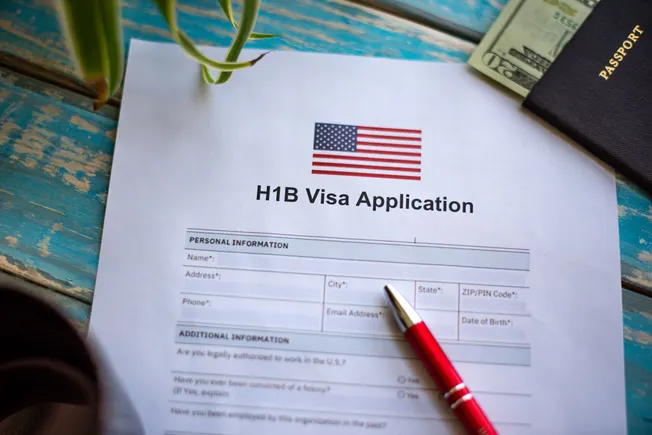
President Donald Trump did not exceed his authority when he issued a Sept. 19 proclamation requiring employers to pay an additional $100,000 before new H-1B visas can be processed, a federal district court judge held Dec. 23 in Chamber of Commerce of the United States of America v. U.S. Department of Homeland Security.
President Trump legitimately exercised his broad discretion authorized by the Immigration and Nationality Act to restrict the entry of noncitizens into the U.S., the judge found. Trump found the proclamation was necessary to counter abuse of the H-1B program, which the proclamation asserts is harming American workers and creating a national security threat, he said.
The ruling does not discount the contributions H-1B workers are making to the American economy, the judge stressed. But the parties’ debate over how the proclamation will affect employers and the economy is not within the court’s province to decide, so long as it is within the confines of the law, she said.
Dive Insight:
The Association of American Universities and the Chamber, a business federation with approximately 300,000 members, sued the Trump Administration in October. It was the first of at least three lawsuits by different groups challenging the proclamation, including California v. Noem, filed mid-December by 20 state attorney generals from mainly Democratic states.
The litigation focuses on two issues — that President Trump exceeded his delegated authority, or acted “ultra vires,” under the INA and that DHS and the State Department “arbitrarily” implemented the proclamation without following proper notice-and-comment rulemaking under the Administrative Procedure Act.
The judge ruled against AAU and the Chamber on both claims. The INA’s “exceedingly broad language” gives President Trump the authority to issue the proclamation, which he backed with evidence showing how the H-1B program is being abused, and the proclamation does not contravene the INA’s H-1B scheme, the judge held.
As for the second issue, DHS and the State Department “plainly do not act ‘arbitrarily and capriciously’ or ‘contrary to law’ in implementing a legally permissible presidential directive,” the judge wrote. “Indeed, defendants here had no other course of action” because agencies “‘may not simply disregard’ a binding presidential directive,” she said.
Following the ruling, the Chamber posted a statement by Executive Vice President and Chief Counsel Daryl Joseffer that said, “The $100,000 fee makes H-1B visas cost prohibitive for businesses, especially small- and medium-sized businesses that can least afford it. We are disappointed in the court’s decision and are considering further legal options to ensure that the H-1B visa program can operate as Congress intended: to enable American businesses of all sizes to access the global talent they need to grow their operations.”