Tag: Trump administration

  • Child Care Aid Could Run Out by Jan. 31 Due to Trump Funding Freeze, Colorado Officials Say – The 74

    Child Care Aid Could Run Out by Jan. 31 Due to Trump Funding Freeze, Colorado Officials Say – The 74


    Get stories like this delivered straight to your inbox. Sign up for The 74 Newsletter

    Colorado officials say money that helps 18,000 low-income families pay for child care could run out by Jan. 31 if federal officials don’t lift the freeze they’ve imposed on funding for several safety net programs in five Democrat-led states.

    If that happens, some children could go without care and some parents would have to stay home from work. State lawmakers could cover such a funding gap temporarily, though Colorado is facing a significant budget crunch.

    The Trump administration announced the freeze on $10 billion in child care and social services funding for Colorado, California, Illinois, Minnesota, and New York in a press release Monday.

    In letters sent to the two Colorado agencies that run the affected programs, federal officials said they have “reason to believe that the State of Colorado is illicitly providing” benefits funded with federal dollars to “illegal aliens.”

    The letters didn’t cite evidence for that claim and a spokesperson for the U.S. Department of Health and Human Services didn’t respond to questions from Chalkbeat about why federal officials are concerned about fraud in Colorado.

    Spokespeople from both state departments said by email on Tuesday they’re not aware of any federal fraud investigations focused on the programs affected by the funding freeze.

    The five-state funding freeze follows a federal crackdown in Minnesota after a right-wing YouTuber posted a video in late December alleging that Minneapolis child care centers run by Somali residents get federal funds but serve no children. It’s not clear why the other four states have gotten the same treatment as Minnesota, but all have Democratic governors who have clashed with President Donald Trump.

    In a New Year’s Eve social media post, Trump called Colorado Gov. Jared Polis “the Scumbag Governor” and said Polis and another Colorado official should “rot in hell” for mistreating Tina Peters, a Trump supporter and former Mesa County clerk who’s serving a nine-year prison sentence for orchestrating a plot to breach election systems.

    The federal freeze will affect three main funding streams in Colorado that together bring in about $317 million a year. They include $138 million for the Colorado Department of Early Childhood for child care subsidies for low-income families and a few other programs.

    The subsidy program, known as the Colorado Child Care Assistance program, helps cover the cost of care for more than 27,000 children so parents can work or take classes. It’s mostly funded by the federal government with smaller contributions from states and counties.

    The other two frozen funding streams go to the Colorado Department of Human Services and pay for Temporary Assistance for Needy Families, or TANF, and other programs.

    In the letter to the Colorado Department of Early Childhood, federal officials outlined new fiscal requirements the state will have to follow before the funding freeze is lifted. They include attendance documentation — without names or other personal identifiers — for children in the child care subsidy program.

    A state fact sheet issued in response to the funding freeze said funding for the child care subsidy program would be depleted by Jan. 31. It also outlined several measures already in place to prevent fraud or waste, including state audits, monthly case reviews by county officials, and efforts to recover funds if improper payments are made.

    The state said it is exploring “all options, including legal avenues” to keep the frozen funding flowing.

    Six Democratic state lawmakers, most in leadership positions, released a statement Tuesday afternoon calling the funding freeze a callous move that will make life more expensive for working families.

    “We stand ready to work with Governor Polis and partners in our federal delegation to resist this lawless effort to freeze funding, and we sincerely hope that our Republican colleagues will put politics aside, get serious about making life in Colorado more affordable, and put families first,” the statement said in part.

    The statement was from Speaker of the House Julie McCluskie; Senate President James Coleman; House Majority Leader Monica Duran; Senate Majority Leader Robert Rodriguez; Rep. Emily Sirota; and Sen. Judy Amabile.

    Chalkbeat is a nonprofit news site covering educational change in public schools.


    Did you use this article in your work?

    We’d love to hear how The 74’s reporting is helping educators, researchers, and policymakers. Tell us how

    Source link

  • Judge rules in Trump’s favour over $100K H-1B visa fee hike

    Judge rules in Trump’s favour over $100K H-1B visa fee hike

    The judge ruled on December 23 that it was within the President’s powers to regulate immigration, rejecting arguments brought by the Chamber of Commerce that the proclamation exceeded Trump’s statutory authority.  

    “The parties’ vigorous debate over the ultimate wisdom of this political judgment is not within the province of the courts,” wrote the Obama-appointed judge Beryl Howell.  

    “So long as the actions dictated by the policy decision and articulated in the Proclamation fit within the confines of the law, the Proclamation must be upheld.” 

    The lawsuit is among two other cases challenging Trump’s controversial $100K fee for H-1B petitions, which the plaintiffs argued would lead companies, hospitals and other employers to cut jobs and weaken the services they provide to the public.  

    It was brought by the US Chamber of Commerce – the world’s largest business federation with roughly 300,000 members – and the Association of American Universities (AAU), which represents 69 US-based research universities. 

    Following the proclamation, the administration clarified international students changing status in the US would be exempt from the fee, though stakeholders have said it will undermine America’s leadership in education, research and innovation.  

    Zuzana Cepla Wootson, deputy director of federal policy at the Presidents’ Alliance, called the judge’s decision “deeply disappointing”. 

    “The United States must stop deterring the very talent that strengthens our classrooms, fuels our economy, and drives American innovation,” she said, urging Congress to “pursue bipartisan solutions that support US prosperity and competitiveness”.  

    The White House welcomed the ruling as a victory for American workers, vowing that Trump would continue to protect them from being replaced by “cheap, foreign labour”.

    “The $100,000 payment accompanying any new H1-B petition is a necessary and long-overdue first step to reform the H-1B visa program that has been abused at the expense of hardworking Americans,” White House spokesperson Taylor Rogers told The PIE.

    The fee, which is still being challenged by two other lawsuits, hikes the cost of an H-1B visa petition by more than 20 times the previous charge, which ranged between $2,000 and $5,000.  

    The H-1B visa program enables US employers to temporarily hire international workers in “specialty occupations” from healthcare to computer science and financial analysis. California’s tech industry is particularly reliant on the visa stream.   

    The United States must stop deterring the very talent that strengthens our classrooms, fuels our economy, and drives American innovation

    Zuzana Cepla Wootson, Presidents’ Alliance

    “The $100,000 fee makes H-1B visas cost prohibitive for businesses, especially small- and medium-sized businesses that can least afford it,” Chamber of Commerce executive vice president Daryl Joseffer said after the ruling.  

    He said the chamber was considering further legal action and underscored the positive economic benefits of the H-1B stream, which has been found to reduce unemployment rates and lead to faster wage growths for US employers, according to the National Foundation for American Policy (NFAP).  

    Howell’s ruling came the same day as the government finalised a rule to replace the random H-1B selection process with a weighted system favouring higher earners – something critics say will harm the US tech industry and dampen the country’s appeal among international students. The new process will come into effect on February 27.  

    Source link

  • DHS final rule to overhaul H-1B visa in favour of higher earners

    DHS final rule to overhaul H-1B visa in favour of higher earners

    The final rule, released by the Department of Homeland Security (DHS) on Tuesday is due to take effect on February 27, in time for the annual H-1B spring lottery. 

    It is currently under review by the Office of Management and Budget (OMB) and is set to be officially published on December 29.

    Alongside favouring “higher-skilled” and “higher-paid” workers, DHS said the change would “disincentivise abuse of the H-1B program to fill relatively lower-paid, lower-skilled positions, which is a significant problem under the present H-1B program”. 

    It is part of wider government efforts to ensure H-1B visas are issued to high earners, which saw the administration hiking the H-1B visa fee to $100,000 – a move it later clarified would not apply to F-1 students changing status within the US. 

    The drastic hike, which is up to 20 times more than what employers previously paid, has drawn three legal challenges, including one from the US Chamber of Commerce. 

    Today’s rule will come as little surprise to the sector after it was proposed in the Federal Register on September 24, with critics arguing that the change would constrain the US tech sector which they say would be moved to ramp up offshoring facilities and jobs.  

    53% of current international students say they would not have enrolled in the US if H-1B access was determined by wage levels

    NAFSA

    “There simply are not enough American computer science graduates to support the decades-long record of US innovation and economic growth. That is the wonder of the US tech sector,” Intead CEO Ben Waxman previously told The PIE. 

    “Why would the US government want to constrain that engine?” he asked.  

    What’s more, the change is likely to contribute to the declining appeal of the US among prospective international students who increasingly cite work experience and job opportunities as primary factors shaping study decisions.  

    In a recent NAFSA survey of current US international students, over half of respondents (53%) said they would not have enrolled in the first place if access to H-1B was determined by wage levels.  

    A similar proportion (54%) indicated they would never have enrolled in the US if it wasn’t for Optional Practical Training (OPT), which experts anticipate is also under threat

    The H-1B visa, popular with the likes of Amazon, Microsoft and Apple, enables US employers to temporarily employ international workers in “specialty occupations” across a wide range of industries such as healthcare, computer science and financial analysis.  

    Currently, there is an annual cap of 85,000 new H-1B visas, and when this cap is exceeded, applicants are placed into a random lottery which determines who is awarded a visa.  

    Under the new weighted system, higher earners will be entered into the selection pool more times than lower earners, ranging from one to four times.  

    Source link

  • 5 years after transcript withholding bans began, college students face fewer obstacles but advocates worry about enforcement

    5 years after transcript withholding bans began, college students face fewer obstacles but advocates worry about enforcement

    by Felicia Mello, The Hechinger Report
    December 23, 2025

    OAKLAND — In 2020, California led the nation in outlawing transcript-withholding, a debt collection practice that sometimes kept low-income college students from getting jobs or advanced degrees. Five years later, 24 of the state’s 115 community colleges still said on their websites that students with unpaid balances could lose access to their transcripts, according to a recent UC Merced survey. 

    The communications failure has been misleading, student advocates said, although overall, the state’s students have benefited from the law.  

    It “raises questions about what actual institutional practices are at colleges and the extent to which colleges know the law and are fully compliant with the law,” said Charlie Eaton, a UC Merced sociology professor who led the research team that conducted the survey in October. 

    California community colleges say they are following the law, which prohibits them from refusing to release the grades of a student who owes money to the school — anywhere from a $25 library fine to unpaid tuition. The misinformation on some college websites is a clerical problem that campuses have been asked to update,  the California Community Colleges chancellor’s office said in an emailed statement.   

    Without an official transcript, students can’t prove they’ve earned college credits to admissions offices elsewhere or to potential employers. Millions of students nationwide have lost access to their transcripts because of unpaid fees, according to estimates from the higher education consulting firm Ithaka S+R.  

    Student advocates argued that the practice made little money for colleges, while costing graduates opportunities that could help them pay back their debts. 

    California lawmakers agreed; in 2019, they passed legislation that took effect on Jan. 1 2020, barring colleges from using transcript holds to collect debts. 

    At least 12 other states have followed California’s lead, passing laws limiting or banning colleges from withholding transcripts. 

    A similar but less stringent federal rule approved during the Biden administration took effect last year. 

    The new rules have raised awareness about colleges’ debt collection practices and inspired some to find ways to help their students avoid falling behind on their payments in the first place or to pay off what they owe — including by forgiving their debts.

    Related: Interested in innovations in higher education? Subscribe to our free biweekly higher education newsletter.

    Transcript withholding was never an especially effective collection tool, researchers have found. One 2018 study estimated that Ohio’s public colleges only netted only $127 for each transcript they withheld.

    Colleges and universities, however, argued that withholding transcripts was one of the few ways they had to prevent students from bouncing among institutions and leaving unpaid bills in their wake. Some use another tactic, blocking them from registering for new courses until bills are paid. 

    When colleges choose to withhold transcripts, the burden falls more heavily on low-income students and students of color, according to the American Association of Collegiate Registrars and Admissions Officers. Often those students accrue debts when they withdraw partway through a course, leading the college to return part of their financial aid to the federal government and charge the bill to the student. 

    In states with laws limiting transcript withholding, many colleges have begun communicating earlier and more often with students about their debts and offering flexible payment plans, said Elizabeth Looker, a senior program manager at Ithaka S+R. Some have added financial literacy training or required students with unpaid bills to meet with counselors. 

    Eight public colleges and universities in Ohio went further, offering a deal to former students with unpaid balances: Reenroll at any of the eight, and get up to $5,000 of the outstanding debt forgiven. Called the Ohio College Comeback Compact, the program, which began in 2002 and concludes this fall, was open to former students who had at least a 2.0 GPA and had been out of school a year or more.

    The program was designed to give a second chance to students whose educations stalled because of events outside their control, such as losing a job in the middle of the semester, said Steve McKellips, vice president for enrollment management at the University of Akron.

    Since the Ohio College Compact’s inception, 79 students have returned to the university under the program, at a cost to the state of $54,174 in debt forgiven. The university netted five times that, or $271,924, in additional tuition, McKellips said. More than 700 students have used the compact to reenroll, according to Ithaka S+R, which helped coordinate the program and is studying the results.

    “I think sometimes people have this image of somebody walking away from a tuition bill because they just don’t care,” McKellips said. “But sometimes there’s just a boulder in the way and somebody needs to move it. Once the boulder was moved and they could move forward, we’re finding them continuing happily along the way they always intended to.”

    Related: City University of New York reverses its policy on withholding transcripts over unpaid bills 

    Another California bill, introduced this year, would have given students a one-time pass to register for courses, even if they owed a debt. It failed after the University of California, Cal State and many private colleges and universities opposed it. 

    The University of California cited expected cuts to federal and state funding as one reason it opposed the bill. “UC believes that maintaining the ability to hold registration is essential for its ability to reasonably secure unpaid student debt,” UC legislative director Jessica Duong wrote to lawmakers.

    Cal State spokesperson Amy Bentley-Smith said that Cal State wanted a flexible approach to debt collection and that campuses had started eliminating registration holds for minor debts such as parking tickets and lost library books. 

    “Students are able to move forward with their enrollment even with institutional debts in the low hundreds to the low thousands of dollars, depending upon the university,” she said.

    Supporters of the failed bill — which also would have barred colleges from reporting a student’s institutional debt to credit agencies — said curbing aggressive debt collection doesn’t just help low-income students; it speeds up the training of workers in industries crucial to the state’s economy.

    “Schools think about these institutional debts in a way that is very penny-wise and pound-foolish, and it’s preventing people from participating in the economy,” said Mike Pierce, executive director of Protect Borrowers.

    Related: Colleges fight attempts to stop them from withholding transcripts over unpaid bills

    Annette Ayala of Simi Valley, hoping to become a registered nurse,  took her for-profit college to court to force it to comply with California’s debt collection law.  

    She had earned her vocational nursing license from the school, the Professional Medical Careers Institute, and wanted to continue her studies to become a registered nurse. But the college refused to release her transcript —  citing a $7,500 debt that Ayala argued in court records she did not owe — and without the transcript she could not apply to other colleges. 

    In her case, California’s Bureau for Private Postsecondary Education, which regulates for-profit colleges under the state’s Department of Consumer Affairs, cited her former school for violating the state’s transcript-withholding law.

    The college was fined $1,000 and ordered to update its enrollment agreement. The school forgave the debt it said Ayala owed. It’s the only case in which a school has been cited for withholding a transcript since the bureau started monitoring compliance with the law more closely two years ago, said Monica Vargas, a spokesperson for consumer affairs. 

    School officials had been unaware of the California law at the time Ayala sued, the school’s controller, Joshua Taylor, said, and have since updated their catalog to comply with it.

    With her vocational nursing license, Ayala has been working in home health care. Now that she has her transcript, she’s applying for RN programs, and said her salary would roughly double once she has the new degree, allowing her to save for the future and help her son pay for college.

    “You’ve got to give people the chance to get through their program and pay their debts as they’re working,” she said. “You can’t hold them back from being able to make top dollar with their abilities to pay back these loans.”

    Contact editor Lawrie Mifflin at 212-678-4078 or [email protected]

    This story about student debt and transcript withholding was produced by The Hechinger Report, a nonprofit, independent news organization focused on inequality and innovation in education. Sign up for our higher education newsletter. Listen to ourhigher education podcast.

    This <a target=”_blank” href=”https://hechingerreport.org/5-years-after-california-banned-holding-college-students-transcripts-hostage-for-unpaid-debt-some-colleges-neglect-the-law/”>article</a> first appeared on <a target=”_blank” href=”https://hechingerreport.org”>The Hechinger Report</a> and is republished here under a <a target=”_blank” href=”https://creativecommons.org/licenses/by-nc-nd/4.0/”>Creative Commons Attribution-NonCommercial-NoDerivatives 4.0 International License</a>.<img src=”https://i0.wp.com/hechingerreport.org/wp-content/uploads/2018/06/cropped-favicon.jpg?fit=150%2C150&amp;ssl=1″ style=”width:1em;height:1em;margin-left:10px;”>

    <img id=”republication-tracker-tool-source” src=”https://hechingerreport.org/?republication-pixel=true&post=114067&amp;ga4=G-03KPHXDF3H” style=”width:1px;height:1px;”><script> PARSELY = { autotrack: false, onload: function() { PARSELY.beacon.trackPageView({ url: “https://hechingerreport.org/5-years-after-california-banned-holding-college-students-transcripts-hostage-for-unpaid-debt-some-colleges-neglect-the-law/”, urlref: window.location.href }); } } </script> <script id=”parsely-cfg” src=”//cdn.parsely.com/keys/hechingerreport.org/p.js”></script>


    Source link

  • $100,000 H-1B visa fee draws third court challenge

    $100,000 H-1B visa fee draws third court challenge

    The coalition of states, led by California’s attorney general Rob Bonta, has argued Trump’s September proclamation bypasses required rulemaking procedures and exceeds the authority of the President’s executive branch.  

    They said the fee violates federal law which allows immigration authorities to collect only necessary fees to cover the cost of administering visa processes.  

    “The Trump administration thinks it can raise costs on a whim, but the law says otherwise,” declared Bonta on December 12. 

    “We are going to court to defend California’s residents and their access to the world-class universities, schools, and hospitals that make Californians proud to call this state home,” he said.  

    The plaintiffs argued the $100,000 fee required for certain H-1B petitions would put “unnecessary” and “illegal” financial burdens on public employers and providers of vital services, exacerbating labour shortages in key sectors.  

    The lawsuit filed last week in a federal court in Boston is the third to challenge Trump’s September 19 proclamation raising the cost of an H-1B visa petition to $100,000 – over 20 times the current cost which ranges between $2,000 and $5,000.  

    The H-1B visa enables US employers to temporarily hire international workers in “specialty occupations” from healthcare to computer science and financial analysis. California’s tech industry is particularly reliant on the visa stream.  

    A month after the initial proclamation, the administration clarified the controversial fee would not apply to international students and other visa holders changing status in the country – an update that commentators say will cause US companies to lean heavily into hiring US trained international students.  

    The White House previously said the fee would combat the “large-scale abuse” of the program which was replacing American workers and undermining the country’s economic and national security.

    The Trump Administration thinks it can raise costs on a whim, but the law says otherwise

    Rob Bonta, California Attorney General

    The states bringing the lawsuit are Arizona, California, Colorado, Connecticut, Delaware, Hawaii, Illinois, Maryland, Massachusetts, Michigan, Minnesota, Nevada, New Jersey, New York, North Carolina, Oregon, Rhode Island, Vermont, Washington, and Wisconsin.

    Their legal action follows the US Chamber of Commerce bringing a case against the Department of Homeland Security (DHS), and an earlier case, Global Nurse Force v. Trump, challenging the policy on similar grounds to the most recent suit.  

    Plaintiffs in the Chamber of Commerce lawsuit are seeking a preliminary injunction that would temporarily ban the fee being imposed while the legality of the proclamation is litigated. A district court hearing is due to be held today (December 19) on the injunction.  

    In addition to the fee hike, businesses and prospective employers are keeping a close eye on government plans to overhaul the H-1B system in favour of higher wage earners. 

    A change of this sort is likely to have wide-reaching implications for global talent flows to the US, with over half of postgraduate students indicating in a recent survey that they wouldn’t have enrolled at US institutions if access to H-1B was determined by wage levels.  

    Source link

  • Probes into racism in schools stall under Trump

    Probes into racism in schools stall under Trump

    by Meredith Kolodner, The Hechinger Report
    December 19, 2025

    LUBBOCK, Texas — The meeting of the local NAACP chapter began with a prayer — and then the litany of injustices came pouring out. 

    A Black high school football player was called a “b—h-ass” n-word during a game by white players in September with no consequence, his mom said. A Black 12-year-old boy, falsely accused last December of touching a white girl’s breast, was threatened and interrogated by a police officer at school without his parents and sentenced to a disciplinary alternative school for a month, his grandfather recounted. A Black honors student was wrongly accused by a white teacher of having a vape (it was a pencil sharpener) and sentenced to the alternative school for a month this fall, her mom said.  

    “They’re breaking people,” said Phyllis Gant, a longtime leader of the NAACP chapter in this northwest Texas city, referring to local schools’ treatment of Black children. “It’s just open season on our students.”

    Just last year, there was hope that the racial climate at Lubbock-area schools might improve. The federal government had launched civil rights investigations after several alleged incidents of racial bullying shocked the community and made national headlines. In fall 2024, a resolution seemed to be in sight: An investigator from the Department of Education’s Office for Civil Rights was planning to visit the area, community members said, for what they hoped would be a final round of interviews before the agency put in place a set of protections negotiated with the Lubbock-Cooper school district. 

    Then the 2024 presidential election happened — and the visit didn’t. In March, the Trump administration closed seven of the Education Department’s 12 regional civil rights enforcement offices, including the one in Dallas, which had been investigating complaints about Lubbock. Emails from the lawyer representing the families to the federal investigator bounced back — like hundreds of other OCR employees, she had been terminated.

    Since then, race relations in school districts in and around Lubbock have taken a turn for the worse, many parents and educators say. Black residents — who make up about 8 percent of Lubbock County — didn’t expect the federal government to bring a halt to racist incidents, but the possibility of an agreement between the government and school districts provided a sense of accountability. Now, parents and students say racial epithets are more common in public, and Black teachers fear drawing attention to themselves. Gant says the NAACP chapter fields frequent calls from parents seeking help in addressing racial incidents they no longer bother to report to the Education Department. 

    Since President Donald Trump took office, the agency has not publicly announced a single investigation into racial discrimination against Black students, instead prioritizing investigations into alleged anti-white discrimination, antisemitism complaints and policies regarding  transgender students. 

    All told this year, the Education Department under Trump has dismissed thousands of civil rights investigations. During the first six months of this year, OCR required schools to make changes and agree to federal monitoring in just 59 cases, compared with 336 during the same period last year, a Washington Post analysis found.

    “In many of our communities where people feel isolated and like they didn’t have anyone to turn to, OCR mattered and gave people a sense of hope,” said Paige Duggins-Clay, a lawyer at the Intercultural Development Research Association, an education policy and legal advocacy group that helped file some of the OCR complaints against Lubbock schools. “And it matters that they’ve essentially destroyed it.”

    In an email, Julie Hartman, press secretary for legal affairs for the Department of Education, wrote, “These complaints of racial bullying were filed in 2022 and 2023, meaning that the Biden Administration had more time to investigate this than the Trump Administration has even been in office. The Trump Administration’s OCR will continue vigorously enforcing the law to uphold all Americans’ civil rights.” She did not respond to a question about whether the agency had opened any investigations into discrimination against Black students. 

    Related: Become a lifelong learner. Subscribe to our free weekly newsletter featuring the most important stories in education. 

    Some white residents have noticed the change too. Lubbock County, located at the bottom of the Panhandle, is home to more than a quarter million people. It is the urban seat for a sprawling county that encompasses several suburban and rural school districts and hosts Texas Tech University at its center.

    Tracey Benefield — who has two children in Hutchinson Middle School in the Lubbock Independent School District, which borders the Lubbock-Cooper district — is from a family that has lived in the area for generations. She says her son has witnessed multiple incidents of racial bullying over the past year.

    “My son was walking down the hall with his friend who’s Black, and some kid shoulder-checked him and called him the n-word. That’s been one of many,” she said. “Things have absolutely gotten worse. The attitudes have always been there, but people acting on their attitudes is completely different.” Lubbock district officials did not directly respond to questions about Benefield’s assertions.

    She thinks OCR’s retreat, among other changes within the federal government, has had an impact. “People are more emboldened,” she said. “People have always had racist ideas, but now there’s no consequences for being racist.” 

    Prior to Trump’s election, the concerns of parents and civil rights groups were quite different: Many were frustrated that Office for Civil Rights cases could linger for years as overworked investigators tracked down details and testimonies. Some were starting to advocate for more OCR staff and speedier resolutions. The outcry from residents, along with the media attention, prompted the Lubbock-Cooper and nearby Slaton school districts — where Black students make up about 3 percent and 5 percent of the student bodies, respectively — to adopt policies of mandatory in-school suspension for students caught making racial slurs and spurred training for staff. 

    But for many, the changes weren’t coming quickly enough.

    Related: Under Trump, protecting students’ civil rights looks very different

    In 2022, Tracy Kemp’s eldest son, Brady, then an eighth grader, was one of nine Black students whose pictures were put on an Instagram page called “LBMS Monkeys,” which stood for “Laura Bush Middle School Monkeys.” (Brady is being referred to by his nickname and his last name is being withheld to protect his privacy.) Kemp was part of a group of parents in the Lubbock-Cooper school district who filed OCR complaints that August over what they said was a toxic racial atmosphere that subjected their children to repeated racial bullying. White students would sometimes play whipping noises on their phones when Black students walked through the halls, according to the complaints. Despite a school district investigation that included reaching out to the FBI, those responsible were never caught. 

    Lubbock-Cooper officials said via email that they “responded swiftly and appropriately” to the 2022 incident at Laura Bush Middle School. “Efforts of the district to ensure all students feel valued, supported, and a sense of belonging have contributed to the positive, nurturing environment our campuses strive to maintain,” wrote Sadie Alderson, the district’s executive director of public information.

    Kemp stayed in the Lubbock-Cooper district for another year, but even though the page was taken down, the taunting and bullying didn’t let up, she says. Her middle son was in sixth grade at LBMS that year and was called racial epithets on the school bus and in the hallways. (His name is being withheld to protect his privacy.) When Brady, who had graduated from the middle school and started at Lubbock-Cooper High School, tried to start a Black Student Union there, she says, a white student ripped the page with signatures from his notebook. Kemp says the principal told her there was nothing he could do. The final straw came one day when the ninth grader didn’t stand for the Pledge of Allegiance. The teacher told him he was a criminal who was breaking the law, Kemp says, and the harassment started up again, this time on Snapchat, with the same language as the “monkeys” Instagram page. 

    In July 2023, Kemp moved with her family to New Mexico and commuted 75 miles each way until she found a job closer to her new home. Leaving Lubbock-Cooper, she said, was life-changing for her kids’ mental health.

    “In eighth grade, you’re going through puberty, you’re learning about yourself, you’re growing and you have all these different feelings. And now you add into the mix, ‘These people don’t like me because of my color’ — that’s a whole different type of aspect to have to deal with,” said Kemp. “And on the flip side of that, I also have to encourage my child that not every white person feels this way, because I don’t want to teach my child hate either.”

    Brady, now a 12th grader, also says he’s happy the family moved. “Honestly, it’s a lot easier,” he said. “There’s no arguments, there’s nothing to worry about, really. I just focus on school more than anything.”

    Related: What’s happened since Texas killed in-state tuition for undocumented students

    Others who have stayed say they’ve paid a price. Last December, Ja’Maury, a then-12-year-old whose last name is being withheld to protect his privacy, learned of rumors that he’d touched a white girl’s breast during school. He went straight to administrators at the school, Commander William C. McCool Academy, to tell them the truth. But the assistant principal believed the girl’s story and radioed a police officer, who interrogated him and threatened him with jail unless he confessed, according to Ja’Maury and his grandfather, Mike Anzley. Alone in a room of adults, Ja’Maury broke down and admitted to something he says never happened. 

    “He was yelling and threatening to send me to juvie if I didn’t say I did it. I was scared,” Ja’Maury recalled in an interview. “It was a white person’s word against a Black person’s word.”

    Ja’Maury was assigned 30 days at Priority Intervention Academy, Lubbock Independent School District’s detention school, where children are sent for offenses determined to be too severe for in-school suspension. Constantly anxious, he reverted to sleeping in his grandfather’s bed like he did as a toddler. At the detention school, he said, he was so afraid of defying adults that he twice wet his pants rather than challenge a teacher who said he couldn’t leave class to use the bathroom.  

    “He had never been in trouble before,” said Anzley. He’d always taught Ja’Maury to trust adults, and said he was devastated by the adults at McCool betraying that trust. “I had to make him distinguish right from wrong in a whole new way.” 

    Anzley filed a formal grievance with the district and, according to a copy of the findings shared with The Hechinger Report, administrators agreed to wipe the incident from his discipline file, issue a formal apology and provide training in discipline and due process to both McCool administrators and the officer who interrogated him. 

    McCool administrators did not respond to requests for comment. Amanda Castro-Crist, executive director of communications and community relations for Lubbock ISD, wrote in an email that the district could not discuss individual students because of federal laws protecting student privacy, but that it “is proud to serve a diverse student body.”

    Related: More first-generation students in Texas are applying to college 

    Gant, the 62-year-old NAACP leader, says that growing up in Lubbock she never experienced the kind of racism she sees now. An accountant who runs her own business, she got involved in community activism about 20 years ago after enduring identity theft and a costly, time-consuming effort to clear her name. “I’m a strong, faith-based woman,” said Gant. “Who else will someone call? Who will go to their meetings for free, come with the facts and the research and not make them feel like they owe anything?” 

    Gant noted changes the districts have made in the wake of the OCR investigation and parent activism, including the new suspension policies. Administrators in Lubbock-Cooper sometimes even proactively contact her about a parent concern, she said. In Lubbock ISD, Gant credits the director of student and parent resolution, Brian Ellyson, with listening to parents and helping them resolve conflicts in a principled manner. 

    Ellyson was one of two Lubbock school officials at the September NAACP meeting, held in an independent living center on the south side of town equidistant between Laura Bush Middle School and McCool Academy. Parent after parent described their children’s mistreatment. 

    Leshai Whitfield said her son was sent to a detention school after a teacher complained that he’d pushed her; she said her son was only trying to leave the classroom because of a fight between two other students. Naquelia Edwards said her son has been repeatedly called the n-word and disciplined for fights while white students went unpunished. Jessika Ogden, mother of the 11th grade honors student who was wrongly accused of having a vape, said she believes her daughter was racially profiled. She filed a grievance against Lubbock Independent School District’s Coronado High School to keep her daughter from being sent to the district’s detention school, which she says she eventually won. But her daughter missed school while the case was being resolved, Ogden said, as she refused to send her to the detention school. “Had I not fought for my daughter, she would have suffered that punishment, missing more class, more credits,” Ogden said.

    In interviews, more than a dozen Black high school students in Lubbock said they regularly heard other students use the n-word. “Slurs happen all the time – it don’t matter what time of day it is,” said a 10th grader from Coronado High School, whose name is being withheld to protect her privacy.

    Gant says the absence of an actual agreement between the federal government and any of the districts means the environment in schools hasn’t fundamentally changed. Those agreements come with teacher training, data collection and penalties for failing to comply. In-school suspension for racist behavior may keep some of it in check, but the changes are cosmetic, she and parents say.

    Emails obtained by The Hechinger Report through public records requests show that Kulsoom Naqvi, the OCR investigator based in the Dallas office, conducted staff surveys, data requests and several rounds of interviews throughout much of 2024, but the work came to a halt that fall. Naqvi, who is not technically separated from the Education Department because of ongoing litigation over the mass firings at the Education Department, said she could not comment on the case.

    “Given the pace that things were moving, I felt confident that we were going to get a resolution before the end of the year,” said Duggins-Clay, the lawyer who helped file some of the complaints. “Had the election not happened, we would have gotten to a negotiated resolution.” 

    Alderson, the spokesperson for Lubbock-Cooper, said that the investigation is still open, but the current superintendent, hired in June, was not aware of any communication from an OCR investigator. She said the district had sought mediation with OCR in spring 2024, but Naqvi had denied that request and had not given Lubbock-Cooper a timeline for resolving the complaints.  

    Related: ‘It was the most unfair thing’: Disobedience, discipline and racial disparity 

    Just over 20 miles away from downtown Lubbock, in the neighboring town of Slaton, which had its own series of racist incidents and ensuing complaints to OCR, residents say the racial atmosphere has deteriorated even further this year and the school administration has been completely unresponsive. School officials promised to work with local authorities to paint over part of a mural in the center of town that depicts Black men picking cotton under the watch of a white farmer, teachers say. But that never happened. Parents say the n-word is used regularly by white students without consequence in the district, where just 5 percent of students are Black. 

    “I’ve witnessed kids on my campus calling Black kids ‘monkeys,’” said a Slaton teacher who grew up in the town and spoke on condition of anonymity out of fear for her job. “I’m sorry to say that it’s gotten worse. I feel like more of the extremists have come out.”

    Parents say their children continued to be bullied because of their race even after Slaton administrators pledged in 2022 to discipline students for slurs. One mom said her second grader was called an “African monkey” the next year by other kids in his class at Cathelene Thomas Elementary. She says she told the principal, who said, “‘Would you be offended if they called him a cat or something different?’” the mother recalled. “I got up and left. I didn’t even know what to say.”

    After that she started homeschooling her kids. She asked to remain anonymous because her children still participate in community events and she is worried they will face retribution.

    Cathelene Thomas Principal Margaret Francis did not respond to requests for comment. Superintendent Shelli Conkin said in an email that federal law prevented the district from discussing student-related matters and did not respond to additional questions. “Since I became superintendent in 2023, Slaton ISD has experienced many positive developments that highlight our commitment to students and staff,” she wrote, including facility upgrades, a district fundraising effort and a four-day school week.

    Related: Which schools and colleges are being investigated by the Trump administration?

    Anzley, meanwhile, is still fighting for justice for his grandson. After the district declined to discipline the girl for making the accusation, he said, and with OCR no longer seeming like an option for redress, he’s hoping to find a lawyer to file a civil rights lawsuit on behalf of his grandson.

    The district’s apology and commitment to better train administrators did not undo the damage to Ja’Maury, he and his grandfather said. People kept on messing with me about it, saying I was a pedophile, saying I was a pervert,” said the middle schooler. “After that I almost hated life, I didn’t even want to live no more after that. That was horrible.”

    Last spring, four months after Ja’Maury had been back at McCool, he got into a fight with a boy who called him the n-word on the school bus, he said. This fall, Anzley decided to transfer Ja’Maury from the top-rated school he once loved — which is 9 percent Black — to Dunbar College Preparatory Academy, which is 45 percent Black and received an F rating this year from the Texas Education Agency. Ja’Maury says he feels safer there; Anzley says the move was necessary for his grandson’s mental health but that he preferred the learning opportunities at McCool.

    “None of this is new, because the very name Lubbock is the name of a Confederate soldier,” said Gant. “It’s heartbreaking, but it doesn’t surprise me. The aggression of it has been heightened under the Trump administration.” 

    She added, “The districts know that OCR has been dismantled so there’s no urgency to fix these issues. It’s on the community, and it’s on the parents to be factual, vocal and not quit.”

    Contact senior investigative reporter Meredith Kolodnerat 212-870-1063 or [email protected] or on Signal at merkolodner.04.

    This story about federal investigations in schools was produced by The Hechinger Report, a nonprofit, independent news organization focused on inequality and innovation in education. Sign up for the Hechinger newsletter.

    This <a target=”_blank” href=”https://hechingerreport.org/probes-into-racism-in-schools-stall-under-trump/”>article</a> first appeared on <a target=”_blank” href=”https://hechingerreport.org”>The Hechinger Report</a> and is republished here under a <a target=”_blank” href=”https://creativecommons.org/licenses/by-nc-nd/4.0/”>Creative Commons Attribution-NonCommercial-NoDerivatives 4.0 International License</a>.<img src=”https://i0.wp.com/hechingerreport.org/wp-content/uploads/2018/06/cropped-favicon.jpg?fit=150%2C150&amp;ssl=1″ style=”width:1em;height:1em;margin-left:10px;”>

    <img id=”republication-tracker-tool-source” src=”https://hechingerreport.org/?republication-pixel=true&post=114040&amp;ga4=G-03KPHXDF3H” style=”width:1px;height:1px;”><script> PARSELY = { autotrack: false, onload: function() { PARSELY.beacon.trackPageView({ url: “https://hechingerreport.org/probes-into-racism-in-schools-stall-under-trump/”, urlref: window.location.href }); } } </script> <script id=”parsely-cfg” src=”//cdn.parsely.com/keys/hechingerreport.org/p.js”></script>
    Source link

  • The Trump administration’s biggest impact on education in 2025 

    The Trump administration’s biggest impact on education in 2025 

    by Nirvi Shah, The Hechinger Report
    December 18, 2025

    Even with a conservative think tank’s blueprint detailing how the second Trump administration should reimagine the federal government’s role in education, few might have predicted what actually materialized this year for America’s schools and colleges. 

    Or what might be yet to come. 

    “2025 will go down as a banner year for education: the year we restored merit in higher education, rooted out waste, fraud and abuse, and began in earnest returning education to the states,” Education Secretary Linda McMahon told The Hechinger Report. She listed canceling K-12 grants she called wasteful, investing more in charter schools, ending college admissions that consider race or anything beyond academic achievement and making college more affordable as some of the year’s accomplishments. 

    “Best of all,” she said, “we’ve begun breaking up the federal education bureaucracy and returning education control to parents and local communities. These are reforms conservatives have championed for decades — and in just 12 months, we’ve made them a reality.” 

    Related: Become a lifelong learner. Subscribe to our free weekly newsletter featuring the most important stories in education. 

    McMahon’s characterization of the year is hardly universal. Earlier this month, Senate Democrats, led by independent Sen. Bernie Sanders, called out some of the administration’s actions this year. They labeled federal changes, especially plans to divide the Education Department’s duties across the federal government, dangerous and likely to cause chaos for schools and colleges. 

    “Already, this administration has cancelled billions of dollars in education programs, illegally withheld nearly $7 billion in formula funds, and proposed to fully eliminate many of the programs included in the latest transfer,” the senators wrote in a letter to Republican Sen. Bill Cassidy, chair of the committee that oversees education. “In our minds, that is unacceptable.” 

    So, what really happened to education this year? It was almost impossible for the average observer to keep track of the array of changes across colleges and universities, K-12 schools, early education and education research — and what it has all meant. This is a look back at how the education world was transformed. 

    Related: Tracking Trump: How he’s dismantling the Education Department and more 

    Higher education

    The administration was especially forceful in the higher education arena. It used measures including antidiscrimination law to quickly freeze billions of dollars in higher education research funding, interrupting years-long medical studies and coercing Columbia, Brown, Northwestern and other institutions into handing over multimillion-dollar payments and agreeing to policy changes demanded by the administration.

    A more widespread “compact” promising preference for federal funding to universities that agreed to largely ideological principles had almost no takers. But in the face of government threats, universities and colleges scrapped diversity, equity and inclusion, or DEI, programs that provided support based on race and other characteristics, and banned transgender athletes from competing on teams corresponding to genders other than the ones they were assigned at birth.

    As the administration unleashed its set of edicts, Republicans in Congress also expanded taxes on college and university endowments. And the One Big Beautiful Bill Act made other big changes to higher education, such as limiting graduate student borrowing and eliminating certain loan forgiveness programs. That includes public service loan forgiveness for graduates who take jobs with organizations the administration designated as having a “substantial illegal purpose” because they help refugees or transgender youth. In response, states, cities, labor unions and nonprofits immediately filed suit, arguing that the rule violated the First Amendment. 

    The administration has criticized universities, colleges and liberal students for curbing the speech of conservatives by shouting them down or blocking their appearances on campuses. However, it proceeded to revoke the visas of and begin deportation proceedings against international students who joined protests or wrote opinions criticizing Israeli actions in Gaza and U.S. government policy there.  

    Meanwhile, emboldened legislatures and governors in red states pushed back on what faculty could say in classrooms. College presidents including James Ryan at the University of Virginia and Mark Welsh III at Texas A&M were forced out in the aftermath of controversies over these issues. — Jon Marcus

    Related: How Trump 2.0 upended education research and statistics in one year  

    K-12 education

    Since Donald Trump returned to office earlier this year, K-12 schools have lost millions of dollars in sweeping cuts to federal grants, including money that helped schools serve students who are deaf or blind, grants that bolstered the dwindling rural teacher workforce and funding for Wi-Fi hotspots

    Last summer, the Trump administration briefly froze billions of dollars in federal funding for schools on June 30, one day before districts would typically apply to receive it. Although the money was restored in late July, some school leaders said they no longer felt confident they’ll receive all expected federal funds next year. And they are braced for more cuts to federal budgets as the U.S. Department of Education is dismembered.

    That process, as well as the end goal of returning the department’s responsibilities to the states, has raised uncertainty about whether federal money will continue to be earmarked for the same purposes. If the state of Illinois is in charge of federal funding for every school in the state, said Todd Dugan, superintendent of a rural Illinois district, will rural schools still get money to boost student achievement or will the state decide there are more pressing needs?  

    As part of layoffs at the Education Department during the government shutdown in the fall, the Trump administration cut loose almost everyone who works in the Office of Special Education Programs, alarming many parents and advocates. About 7.5 million children ages 3 to 21 are served under federal law protecting students with disabilities, and the office had already lost staffers after the Trump administration dismissed nearly half the Education Department’s staff in March. Some worry this additional round of layoffs is a big step toward moving oversight of how states treat students with disabilities to the Department of Health and Human Services.

    Even as the Trump administration attempts to push more control over education to the states, it has aggressively expanded federal power over school choice and transgender student rights in public schools. The One Big Beautiful Bill Act will create a federal school voucher program, allowing taxpayers to donate up to $1,700 for scholarships that families can use to pay for private school. The program won’t start until 2027, and states can choose whether to participate — setting up potentially divisive fights over new money for education in Democratic-controlled states. 

    Already, some Democratic-led states have come to the defense of schools in funding and legal fights with the federal government over transgender athletes participating in sports. The U.S. departments of Education and Justice launched a special investigations team to look into complaints of Title IX violations, targeting school districts and states that don’t restrict accommodations or civil rights protections for transgender students. Legal experts expect the U.S. Supreme Court to ultimately decide how Title IX — a federal law that prohibits sex discrimination in education — applies to public schools.

    The federal government directly runs just two systems of schools — one for military families and the other for children of tribal nations. In an executive order signed in January, the president directed both systems to offer parents a portion of federal funding allocated to their children to attend private, religious or charter schools. 

    And as part of the dismantling of the federal Education Department, the Interior Department — which oversees 183 tribal schools across nearly two dozen states — will assume greater control of Indian education programs. In addition to rolling out school choice at its campuses, the department will take over Indian education grants to public schools across the country, Native language programs, Alaska Native and Native Hawaiian programs, tribally controlled colleges and universities, and many other institutions. — Ariel Gilreath and Neal Morton

    Related: Trump administration makes good on many Project 2025 education goals

    Early education

    Early education was not at the top of Trump’s agenda when he returned to office. On the campaign trail, when asked if he would support legislation to make child care affordable, he gave an unfocused answer, suggesting tariff revenue could be tapped to bring down costs. Asked a similar question, Vice President JD Vance suggested that care by family members was one potential solution to child care shortages. 

    However, many of the administration’s actions, including cuts to the government workforce and grants, have affected children who depend on federal support. In April, the administration abruptly closed five of 10 regional offices supporting Head Start, the free, federally funded early childhood program for children from low-income families. Head Start program managers worried they would be caught up in a freeze on grant funding that affected all agencies. Even though administration officials said funds would keep flowing to Head Start, some centers reported having problems drawing down their money. The prolonged government shutdown, which ended Nov. 12 after 43 days, also forced some Head Start programs to temporarily close

    Though the shutdown is over, Head Start advocates are still worried. Many of the administration’s actions have been guided by the Project 2025 policy document created by the conservative Heritage Foundation. Project 2025 calls for eliminating Head Start, which serves about 715,000 children from birth to age 5, for a savings of about $12 billion a year. 

    The One Big Beautiful Bill Act contained some perks for parents, including an increase in the child tax credit from $2,000 to $2,200. The bill also created a new program called Trump accounts: Families can contribute up to $5,000 each year until a child turns 18, at which point the Trump account will turn into an individual retirement account. For children born between Jan. 1, 2025, and Dec. 31, 2028, the government will provide a $1,000 bonus. Billionaires Michael and Susan Dell have also promised to contribute $250 to the account of each child ages 10 and under who lives in a ZIP code with a median household income of $150,000 or less. 

    That program will launch in summer 2026. — Christina A. Samuels

    Contact staff writer Nirvi Shah at 212-678-3445, on Signal at NirviShah.14 or [email protected].   

    This story about the Trump administration’s impact on education was produced by The Hechinger Report, a nonprofit, independent news organization focused on inequality and innovation in education. Sign up for the Hechinger newsletter.

    This <a target=”_blank” href=”https://hechingerreport.org/how-education-changed-in-one-year-under-trump/”>article</a> first appeared on <a target=”_blank” href=”https://hechingerreport.org”>The Hechinger Report</a> and is republished here under a <a target=”_blank” href=”https://creativecommons.org/licenses/by-nc-nd/4.0/”>Creative Commons Attribution-NonCommercial-NoDerivatives 4.0 International License</a>.<img src=”https://i0.wp.com/hechingerreport.org/wp-content/uploads/2018/06/cropped-favicon.jpg?fit=150%2C150&amp;ssl=1″ style=”width:1em;height:1em;margin-left:10px;”>

    <img id=”republication-tracker-tool-source” src=”https://hechingerreport.org/?republication-pixel=true&post=113955&amp;ga4=G-03KPHXDF3H” style=”width:1px;height:1px;”><script> PARSELY = { autotrack: false, onload: function() { PARSELY.beacon.trackPageView({ url: “https://hechingerreport.org/how-education-changed-in-one-year-under-trump/”, urlref: window.location.href }); } } </script> <script id=”parsely-cfg” src=”//cdn.parsely.com/keys/hechingerreport.org/p.js”></script>

    Source link

  • What parents, teachers say about Trump’s policies on education

    What parents, teachers say about Trump’s policies on education

    by Caroline Preston, The Hechinger Report
    December 18, 2025

    Child care workers, students and teachers shared dismay over Immigration and Customs Enforcement raids that are disrupting learning. School superintendents and college presidents described how uncertainty around federal funding is making their jobs far trickier. 

    Others — including a charter school leader and a for-profit college president — told The Hechinger Report they were grateful for recent changes to education policy, including a new emphasis on school choice and on the importance of workforce education. 

    Those were just a few of the many reactions we heard from 17 parents, students, educators and others around the country when we asked about the impact of President Donald Trump’s actions this year on their schools and communities. Several people told us that with the federal government stepping back from many of its long-standing responsibilities in education, they and their communities were taking on new roles. 

    Below are excerpts from the interviews, which have been lightly edited for clarity and length.      

    Sylvelia Pittman, math interventionist, Henry H. Nash Elementary School, Chicago Public Schools 

    Under this administration we have witnessed ICE being in our neighborhoods. ICE detained two parents of our students. The husband of one of my colleagues was detained and deported to Mexico. The husband of another colleague was questioned at work because he’s half Latino, half white. So it’s hit hard. And then with the cuts that have been made to the Education Department, those have hit my school. We have a large population of special education students. We are about 35 percent Latino and the rest of our students are Black. Many of our families receive SNAP benefits and they were affected. Trump withheld $8 million from our schools because of the mayor’s Black Student Success Plan, for students to continue to learn their history and bring more Black teachers into schools. It’s almost like we’ve taken hit after hit. It’s just as stressful as when we had Covid. We have had to come to grips with the idea that we must take care of our own. It’s going to be up to us, to city officials. Homelessness, health care, mental health — all of these things have to be addressed at the state and local level, because we can’t wait for the federal government to get it right. 

    Caroline Preston

    TJ Katz, sophomore at Columbia University in New York, which reached a deal with the Trump administration restoring $400 million in federal funding frozen due to allegations of discriminatory conduct, including a failure to protect Jewish students during protests over the Israel-Hamas war

    Campus feels completely different than two years ago. All of the protests have stopped. The Trump administration effectively eliminated them. Whether you want to say Columbia cares about antisemitism, they definitely fear what it would mean to have $400 million stripped away from their budget. As a Jewish student on campus, I would absolutely say I’m glad that the change happened. As someone who’s a massive proponent of democracy and free speech, I have qualms about it. What if there was an administration that didn’t align with what I think is just? We now have a precedent set where the administration could snap their fingers and say this is what has to happen on campuses now. It is slightly scary the precedent that’s been set and the power a president now has over higher education in America. 

    — Meredith Kolodner 

    Ian Rowe, founder of Vertex Partnership Academies, a charter school in New York City, which Linda McMahon toured earlier this year in her first public school visit as education secretary 

    In the Trump administration, there’s a greater affinity for the concept of school choice. That alone is a huge breath of fresh air. There are other things, too — for example, the federal tax credit scholarship. On the surface, it may not seem like that would benefit charter schools, but it does. The money could pay for tuition for a student to attend a private religious school or it could cover SAT prep, tutoring — and that goes to any kind of parent. You could have parents in a public charter school who now have the additional resources to be able to pay for the kinds of things that a lot of middle- and upper-class families are doing to supplement education for their kids. 

    With the Department of Education already heavily gutted, it’s had zero impact on us — literally zero impact. But even if there’s not a formal federal Department of Education, there are a couple of different functions that are important. One is as the scorekeeper: There absolutely needs to be an assessment, annual or biannual, where you can consistently compare 2026 to 2024 to 2022 to 2020. That’s crucial because we do need, every couple years, a sense of what percent of our kids are reading against a common standard. I also think there is value in having kind of a best practices reservoir so that the federal government can be the place to show, ‘Here’s some innovative work going on in Indiana vs. New York.’ But in general, there’s a very limited number of things that I think could really add value in education at the federal level. 

    — Nirvi Shah

    Meka Mo, millennial comedian and nonprofit worker in New York City who took out student loans for undergraduate and graduate school  

    I’m one of the people who should be receiving public service loan forgiveness, but that’s in limbo and tied up in court right now. We don’t know what’s going to happen. So honestly, it’s kind of a mess, and no one’s paying attention to it, because everyone has, like, one thousand other things going on. Basically all our financial futures are being fought out in the courts right now. It’s like they’re not trying to have social upward mobility in the country. 

    Marina Villeneuve 

    Leticia Wiggins, librarian at the Center for Ethnic Studies at Ohio State University, which closed its Office of Diversity and Inclusion and Center for Belonging and Social Change in response to the Trump administration’s threats to withhold funding from schools that use race-conscious practices in programs, scholarships and other areas of campus life 

    Those were places where people could go and feel a sense of community and that they belonged somewhere, and now those spaces no longer exist. Some of the student communities have been sort of dissolved — students feel at a loss for where to go. We’re still trying to conduct business as usual and make up for what’s lacking, but everything is just getting more threatened in terms of what we’re even able to talk about. 

    — Meredith Kolodner 

    Todd Dugan, superintendent of Bunker Hill Community Unit School District 8 in Illinois, which saw roughly $22,000 in Title II federal funds frozen for services to recruit, retain and train teachers

    I’ve been a superintendent for 14 years. It’s definitely getting harder. It’s taking a job that’s already hard and getting harder, and making it harder still. And it appears that it’s being done needlessly. The freezing and clawing back of Title II was announced on June 30, when usually we apply for it on July 1. And then they finally released it the second week of August. It was a lot of extra work making things difficult for a job that is already difficult. I don’t know what the game was, because Title II funding didn’t get clawed back. It just made everybody anxious. 

    — Ariel Gilreath

    Michael A. Elliott, president of Amherst College, in Massachusetts 

    I see an impact in the growing anxiety of our international students, faculty and staff members. Many are questioning whether there is a safe and stable place for them on our campus or in this country. These uncertainties touch every part of their lives — academic, personal and professional. They influence decisions about research, travel and connections with family, and they undermine the sense of belonging and security that is essential to a place like Amherst. When members of our community carry this kind of persistent fear, the effects are felt by all of us who care about them and want to support them as extraordinary classmates and colleagues. 

    — Lawrie Mifflin 

    Kyshanna Patman, a North Carolina mother of four children who works from home

    It’s been a crazy year, especially since he’s been in office, with the food stamp benefits being delayed, Medicaid — it’s crazy. And then the things they’re saying about autism. My 4-year-old is autistic and it’s really, really crazy how they’re making the assumption about women taking Tylenol and causing autism. It has not been a good experience since he’s been in office.

    When SNAP benefits were delayed, I was struggling trying to come up with the money to keep food in the house. I have four kids in the house and they need to eat. I mainly made sure they had enough before I tried to eat anything myself.

    And with the Medicaid work requirements, I just don’t understand. It shouldn’t have to be a requirement for people to have Medicaid. People have preexisting conditions. You’re talking about a work requirement just for people to be seen. It doesn’t make any sense. 

    There’s too many changes he’s trying to do. They’re not trying to listen to what people have to say. People put you in [office]. He’s supposed to be listening to us and working for us instead of being stricter. You’re supposed to be helping and he’s not doing that. He’s doing the complete opposite. 

    — Jackie Mader 

    Leslie Cornick, provost and vice president of academic affairs at California State University, Chico, which lost funding for teacher training after the Trump administration canceled two grant programs of roughly $600 million, citing diversity, equity and inclusion initiatives

    One of the challenges we are still continuing to follow up on is the loss of the Teacher Quality Partnership and SEED grants that support stipends for students who are going into teacher education programs and becoming teachers in rural counties and communities. Many of those students are Latinx and are coming to Chico State to become teachers so they can go back into their rural communities that desperately need teachers.

    We lost $700,000 or so. We couldn’t run the entire fall cohort of that program this year because access to those grants is still being litigated. We’re making the case for why these grants are so important and why they should not be discontinued. But in the meantime, we don’t have the money and so we can’t support the students. That means we are losing students that we will never get back. And there’s an impact not only on that individual student, but on that student’s family, generationally, and on our economy in the state of California because we’re not getting those teachers out into those rural communities that need them.

    From my perspective, it’s critically important that we continue to engage the administration in dialogue and help them understand especially the value of the regional public institutions. 

    — Olivia Sanchez

    Nicole Greene, a special education teacher at Scarsdale Middle School, in New York

    The landscape of special education has changed dramatically in the 13 years that I’ve been teaching, and that’s thanks to the ample research and the amount of effort that can go into advancing the field, advancing the profession. Without that, how do teachers get better? How do we learn more about how students learn best? Maybe we can agree that grants are good for furthering the field.

    A child should be able to go to any state in the country and their needs should be supported based on federal law in equal measure. At the end of the day, the argument that we are going to leave it up to the states just means that they can interpret IDEA however they see fit, without anyone ensuring that that’s in compliance with what was written. That’s a dangerous place to leave kids. 

    Christina A. Samuels

    Daniel Cordova, junior at Edmonds-Woodway High School in the Edmonds School District in Washington state, which enrolls many children of migrant parents who work on nearby farms

    It’s scary times right now. You leave school, and you don’t know if you’re going to see your friends the next day because they might have some orders from the government to go back to their country. One of my friends is an immigrant. He’s worried like crazy about being deported. My friend’s mother has a deportation order. They’re struggling a lot right now. We feel it across the whole school. 

    It kind of changes the atmosphere. There’s less trust. It doesn’t feel safe, I would say. 

    — Neal Morton

    Brad Kuykendall, CEO of the for-profit Western Technical College, in El Paso, Texas 

    I point back to the executive order issued in April that dealt with preparing Americans for high-paying skilled trade jobs for the future. For far too long, there’s been a lack of acknowledgement of the importance of career, technical and trade schools. We were looked at as a lesser option for students, and to a degree, that’s still the case. But I think we’re starting to see that change a bit. The refocus and reemphasis — not as the only option, but as one of the many options — is very healthy for our economy as a whole and for our nation to continue to grow.

    Under the Biden administration, we did feel like there was definitely not as friendly of an environment [for for-profit colleges] to operate in. I did feel that we were underrepresented in many of the negotiated rulemaking sessions in the previous administration on regulations that impacted us far more than any other institution. We were one or two out of 15 seats at the table, so trying to come to consensus about a regulation in that environment was just very difficult. Going into negotiated rulemaking [to develop regulations under the ’big, beautiful bill’], I think there’s more fair representation at the table, and it’s a more balanced approach. 

    Meredith Kolodner 

    Mike Shaver, president and CEO at Brightpoint, an Illinois nonprofit that operates child-focused programs, including free, federally funded Head Start centers and home-based Early Head Start services 

    It’s impossible to escape that this administration has not exactly done a great job at supporting poor families when you look at what happened with the struggle over SNAP benefits. And in our state, the increased ICE enforcement activities have had a profound impact. We have seen attendance levels drop.

    In November, an early learning employee — not someone in our program — got out of her vehicle, was walking into the facility where she was an instructor, and ICE agents followed her in, removed her from the building and detained her. It’s really hard to overstate what that kind of image does, not only for the staff who show up every day to meet the needs of these families, but also the families themselves. This is just a lot of added stressors for families, in addition to the challenges that already brought them to our Head Start programs. 

    — Jackie Mader

    Tiffany Tangel, a disability advocate and parent of three — including two children with dyslexia and other learning differences — in western New York 

    I’m closely watching what’s happening with IDEA. Trump said he was going to move it to Health and Human Services. A lot of people are worried about that. There’s a lot of disabilities that have nothing to do with health in that way. My kids have dyslexia. When it was newly diagnosed for my oldest, I went to our pediatrician and asked for resources on dyslexia, for places I could go for help, and they said we don’t know and the school should be helping you.

    I’m also working to restart our school’s special education PTA. Our school had one, but it closed in 2020. With so much unknown in terms of what’s next for our kids, a group of us just felt like now it was needed more than ever. Our hope is to be a place for the parents, because when you have kids in special education, it can be very lonely, and you feel very isolated. And then we really do want to focus on the teachers, because we know as soon as resources are cut, the teachers are feeling it.

    You’ve got to keep advocating at a federal level, at a state level, but it’s going to come down to your individual level, too. 

    — Christina A. Samuels

    Aiden Sirk, high school senior, Lawrenceburg, Indiana

    Conservatives, they’re not about, ‘We don’t want kids to have an education,’ — it’s that we want to make sure that we’re doing it in the most efficient way possible. And with the Department of Education cut, what they’re making sure they’re doing is that we are still going to have Pell Grants, we’re still going to have FAFSA, I can see that’s OK. There is a lot of bureaucracy at the Department of Education.

    A lot of these workers, they’re getting paid and they’re not even coming into the office like they were pre-pandemic. So we didn’t really need all that workforce. But then again, there is a proper way to do things. You can’t just dictate: ‘We’re shutting it down.’ You have to go through Congress. You have to go through the courts. And you have to do it the right way. So yes, I see it’s reasonable, but the way they’re doing it is not reasonable. 

    — Christina A. Samuels

    Heather Shotton, new president of Fort Lewis College, in rural Durango, Colorado, where nearly 40 percent of students are Native American. The college is a Native American-Serving, Nontribal Institution. Shotton is an enrolled citizen of the Wichita and Affiliated Tribes 

    Fort Lewis lost $2.27 million in Title III money for Native American-serving institutions. The money paid for academic success initiatives: summer bridge programs, peer educators, various academic supports. That impacts our entire campus. Yes, it helped Indigenous students, but it also helped all of our students. It’s part of the federal government trust responsibility to support Native students. The majority of our Native students are not at tribal colleges and universities. And the majority of tribal colleges are two-year colleges. The shifting of money from Native-serving institutions to tribal colleges — itʼs one-time money, spread across 36 institutions. 

    — Nirvi Shah

    Sevan Minassian-Godner, third-year student at the University of California, Irvine and president of Jewish fraternity Alpha Epsilon Pi and Jewish campus organization Hillel 

    Oct. 7 was a really big event on our campuses, and there was a lot of antisemitism floating around. But that kind of petered off after the first year, and we’re now at a point where it’s much less than it was my first year. But I wouldn’t necessarily attribute that to the Trump administration. I just think we’re further from the incident and from the encampments. I will say that we have experienced an uptick in right-leaning antisemitism recently; there are more groups on campus now that are participating in right-leaning antisemitism. I think that’s become more OK with the Trump administration in office. And I actually do attribute it a lot to Charlie Kirk’s death, too. I think that that ignited a lot of people early on in the year. People are more openly antisemitic, and especially on the right, and this kind of far-right white supremacist ideology, I think, has found its way into a lot more people’s hearts recently. 

    — Meredith Kolodner 

    Contact editor Caroline Preston at 212-870-8965, via Signal at CarolineP.83 or on email at [email protected].

    This story about education policies and the Trump administration was produced by The Hechinger Report, a nonprofit, independent news organization focused on inequality and innovation in education. Sign up for the Hechinger newsletter.

    This <a target=”_blank” href=”https://hechingerreport.org/fear-fatigue-gratitude-students-parents-and-educators-on-the-new-trump-administrations-first-year/”>article</a> first appeared on <a target=”_blank” href=”https://hechingerreport.org”>The Hechinger Report</a> and is republished here under a <a target=”_blank” href=”https://creativecommons.org/licenses/by-nc-nd/4.0/”>Creative Commons Attribution-NonCommercial-NoDerivatives 4.0 International License</a>.<img src=”https://i0.wp.com/hechingerreport.org/wp-content/uploads/2018/06/cropped-favicon.jpg?fit=150%2C150&amp;ssl=1″ style=”width:1em;height:1em;margin-left:10px;”>

    <img id=”republication-tracker-tool-source” src=”https://hechingerreport.org/?republication-pixel=true&post=113967&amp;ga4=G-03KPHXDF3H” style=”width:1px;height:1px;”><script> PARSELY = { autotrack: false, onload: function() { PARSELY.beacon.trackPageView({ url: “https://hechingerreport.org/fear-fatigue-gratitude-students-parents-and-educators-on-the-new-trump-administrations-first-year/”, urlref: window.location.href }); } } </script> <script id=”parsely-cfg” src=”//cdn.parsely.com/keys/hechingerreport.org/p.js”></script>

    Source link

  • Trump administration checks off many Project 2025 education goals

    Trump administration checks off many Project 2025 education goals

    by Christina A. Samuels, The Hechinger Report
    December 18, 2025

    Last year, Project 2025 was a conservative wish list: a grab bag of proposals large and small that would transform the federal government, including in education.

    Months later, many of those wishes have become reality. That includes, at least in part, Project 2025’s ultimate goal of doing away with the Education Department.

    The department still exists — getting rid of it completely would require congressional action— but it is greatly diminished: Much of the department’s work is being farmed out to other federal agencies. Half of its workforce of about 4,100 people have left or been fired. And Education Secretary Linda McMahon wrote after her confirmation that she was leading the department’s “final mission.”

    Eliminating the Education Department was just one of many goals, however. While the administration did not meet all the other tasks in this “to-do” list below, compiled by The Hechinger Report and taken directly from Project 2025, there’s still three more years to go.

    Early childhood

    Eliminate Head Start: NO. Head Start, which provides free preschool for low-income children, still exists, though some individual centers had problems accessing their money because of temporary freezes from the Department of Government Efficiency and the prolonged government shutdown. The federal government also closed five of 10 Head Start regional offices, which collectively served 22 states.

    Pay for in-home child care instead of universal (center-based) daycare: NO. Project 2025 states that “funding should go to parents either to offset the cost of staying home with a child or to pay for familial, in-home childcare.” There have been no moves to fulfill this goal, but the budget reconciliation bill the president signed in July increased the child tax credit and introduced “Trump Accounts” for children under age 18.

    Expand child care for military families: YES. The National Defense Authorization Act, passed on Dec. 17 and sent to the president for his signature, authorizes over $491 million to design and build new child care centers for these families, among other provisions. The Department of Defense provides child care to military families on a sliding scale based on income. However, about 20 percent of military families who need child care can’t get it because there is not enough space.  

    Give businesses an incentive to provide “on-site” child care: NO. Project 2025 states that “across the spectrum of professionalized child care options, on-site care puts the least stress on the parent-child bond.” 

    K-12 education

    Move the National Center for Education Statistics to the Census Bureau; transfer higher education statistics to the Labor Department: NO. Education data collection remains at the Education Department. However, the agency’s capacity has been sharply reduced following mass firings and the termination of key contracts — a development not envisioned in Project 2025. At the same time, Donald Trump directed the center to launch a major new data collection on college admissions to verify that colleges are no longer giving preferences based on race, ethnicity or gender.

    Expand choice for families by making federal funding portable to many school options: PARTIAL. In January, the president signed an executive order encouraging “educational freedom.” One of the order’s provisions requires the departments of Defense and Interior — which run K-12 schools for military families and tribal communities, respectively — to allow parents to use some federal funding meant for their children’s education at private, religious and charter schools. However, that initiative for Indian schools ended up being scaled back after tribes protested. The “big, beautiful” spending bill signed in July created a national voucher program, but states have to opt in to participate.  

    Send money now controlled by the federal government, such as Title I and special education funding, to the states as block grants: NO. In the current fiscal year, about $18.5 billion in Title I money flowed to districts to support low-income students. States received about $14 billion to support educating children with disabilities. Project 2025 envisions giving states that money with no strings attached, which it says would allow more flexibility. While the administration has not lifted requirements for all states, it is considering requests from Indiana, Iowa and Oklahoma that would allow those states to spend their federal money with less government oversight. Also, in his fiscal 2026 budget proposal, Trump floated the idea of consolidating several smaller education programs, such as those supporting rural students, homeless students and after-school activities, into one $2 billion block grant. That would be far less than the combined $6.5 billion set aside for these programs in the current budget. 

    Reject “radical gender ideology” and “critical race theory,” and eliminate requirements to accept such ideology as a condition of receiving federal funds: YES. Immediately after Trump was sworn into office, he reversed a Biden administration rule that included protection of LGBTQ+ students under Title IX, which bans sex-based discrimination in education programs and activities that receive federal money. Trump also signed an executive order threatening to withhold federal dollars from schools over what the order called “gender ideology extremism” and “critical race theory.” In the months since, the administration launched Title IX investigations in school districts where transgender students are allowed to participate on sports teams and use bathrooms that align with their gender identity. It sent letters to schools across the country threatening to pull funding unless they agree to its interpretation of civil rights laws, to include banning diversity, equity and inclusion (DEI) policies and initiatives. The Education Department also pulled federal research grants and investigated schools and colleges over DEI policies it calls discriminatory. 

    Pass a federal “parents’ bill of rights,” modeled after similar bills passed at the state level: NO. House Republicans passed a Parents’ Bill of Rights Act two years ago, which would have required districts to post all curricula and reading materials, require schools receiving Title I money to notify parents of any speakers visiting a school, and mandate at least two teacher-parent conferences each year, among other provisions. The Senate did not take it up, and lawmakers have not reintroduced the bill in this session of Congress. About half of the states have their own version of a parentsʼ bill of rights.

    Shrink the pool of students eligible for free school meals by ending the “community eligibility provision” and reject universal school meal efforts: NO. Under current rules, schools are allowed to provide free lunch to all students, regardless of their family’s income, if the school or district is in a low-income area. That provision remains in place. The Trump administration has not changed income eligibility requirements for free and reduced-price lunch at schools: Families that earn within 185 percent of the federal poverty line still qualify for reduced lunch and those within 130 percent of the poverty line qualify for free lunch.

    Higher education

    Roll back student loan forgiveness and income-driven repayment plans: PARTIAL. Three income-driven repayment plans will be phased out next year and a new one — the Repayment Assistance Plan — will be added. RAP requires borrowers to make payments for 30 years before they qualify for loan forgiveness. The administration also reached a proposed agreement to end even earlier the most controversial repayment plan known as SAVE (Saving on a Valuable Education). Trump officials have referred to the SAVE plan as illegal loan forgiveness. Under the plan, some borrowers were eligible to have their loans cleared after only 10 years, while making minimal payments.

    End Parent PLUS loans: PARTIAL. These loans, which parents take out to help their children, had no limit. They still exist, but as of July 2026, there will be an annual cap of $20,000 and a lifetime limit of $65,000 per child. Grad PLUS loans, which allow graduate students to borrow directly on behalf of themselves, are being phased out. Under the Repayment Assistance Plan, graduates in certain fields, such as medicine, can borrow no more than $50,000 a year, or $200,000 over four years.

    Privatize the federal student loan portfolio: NO. The Trump administration reportedly has been shopping a portion of the federal student loan portfolio to private buyers, but no bids have been made public. Project 2025 also called for eliminating the Federal Student Aid office, which is now housed in the Education Department and oversees student loan programs. Education Secretary Linda McMahon said the Treasury Department would be a better home for the office, but no plans for a move have been announced. 

    End public service loan forgiveness: NO. PSLF allows borrowers to have part of their debt erased if they work for the government or in nonprofit public service jobs and make at least 120 monthly payments. The structure remains, but a new rule could narrow the definition of the kinds of jobs that qualify for loan forgiveness. The proposed rule raises concerns that borrowers working for groups that assist immigrants, transgender youth or provide humanitarian aid to Palestinians, for example, could be disqualified from loan forgiveness. The new rule would go into effect in July.

    Rescind Biden-era rules around sexual assault and discrimination: YES. The Department of Education almost immediately jettisoned changes that the Biden administration had made in 2024 to Title IX, which governs how universities and colleges handle cases of sexual assault and discrimination. Under the Biden rules, blocked by a federal judge days before Trump’s inauguration, accused students were no longer guaranteed the right to in-person hearings or to cross-examine their accusers. The Trump Education Department then returned to a policy from the president’s first term, under which students accused of sexual assault will be entitled to confront their accusers, through a designee, which the administration says restores due process but advocates say will discourage alleged victims from coming forward.

    Reform higher education accreditation: YES. In an executive order, Trump made it easier for accreditors to be stripped of their authority and new ones to be approved, saying the existing bodies — which, under federal law, oversee the quality of colleges and universities — have ignored poor student outcomes while pushing diversity, equity and inclusion. Florida and Texas have started setting up their own accreditors and said the administration has agreed to expedite the typically yearslong approval process. The Department of Education has earmarked $7 million to support this work and help colleges and universities switch accreditors. 

    Dismantle DEI programs and efforts: PARTIAL. Though the administration called for eliminating college DEI programs and efforts, most of the colleges that have shut down their DEI offices have done so in response to state-level legislation. Around 400 books removed from the Naval Academy library because of concerns that they contained messages of diversity or inclusion, but most of the books were ultimately returned. The National Science Foundation canceled more than 400 grants related to several topics, including DEI. 

    Jill Barshay, Ariel Gilreath, Meredith Kolodner, Jon Marcus, Neal Morton and Olivia Sanchez contributed to this report. 

    This story about Project 2025 and education was produced by The Hechinger Report, a nonprofit, independent news organization focused on inequality and innovation in education. Sign up for the Hechinger newsletter.

    This <a target=”_blank” href=”https://hechingerreport.org/trump-administration-makes-good-on-many-project-2025-education-goals/”>article</a> first appeared on <a target=”_blank” href=”https://hechingerreport.org”>The Hechinger Report</a> and is republished here under a <a target=”_blank” href=”https://creativecommons.org/licenses/by-nc-nd/4.0/”>Creative Commons Attribution-NonCommercial-NoDerivatives 4.0 International License</a>.<img src=”https://i0.wp.com/hechingerreport.org/wp-content/uploads/2018/06/cropped-favicon.jpg?fit=150%2C150&amp;ssl=1″ style=”width:1em;height:1em;margin-left:10px;”>

    <img id=”republication-tracker-tool-source” src=”https://hechingerreport.org/?republication-pixel=true&post=113960&amp;ga4=G-03KPHXDF3H” style=”width:1px;height:1px;”><script> PARSELY = { autotrack: false, onload: function() { PARSELY.beacon.trackPageView({ url: “https://hechingerreport.org/trump-administration-makes-good-on-many-project-2025-education-goals/”, urlref: window.location.href }); } } </script> <script id=”parsely-cfg” src=”//cdn.parsely.com/keys/hechingerreport.org/p.js”></script>
    Source link

  • 11 numbers that capture the Trump effect on education

    11 numbers that capture the Trump effect on education

    by Sarah Butrymowicz, The Hechinger Report
    December 18, 2025

    About 1.5 million people teach on college campuses in the United States, and nearly 4 million teachers work in its public elementary and secondary schools. More than 15 million undergraduates attend U.S. colleges and universities. There are more than 50 million school-age children across the country.   

    They all have one thing in common: Federal education policy affects their lives. 

    President Donald Trump and Education Secretary Linda McMahon say they want to close the Department of Education and return control of education to the states. At the same time, however, they have aggressively, and rapidly, wielded federal power over schools. 

    Related: Become a lifelong learner. Subscribe to our free weekly newsletter featuring the most important stories in education. 

    Here’s a look at some key data points from the first year of Trump’s second term that represent the outsized effect this presidency has had on the nation’s educational institutions and the people within them.

    15 

    Number of executive orders Trump signed that exclusively address colleges or schools 

    In 2017, the first year of his first term, Trump signed two executive orders related to education. This year, he signed three times that number on just a single day in April.

    Among his most notable executive orders was one early in his term requiring the Department of Education to begin dismantling itself. He also established an Artificial Intelligence Education Task Force and asked cabinet members to provide him with a plan to end “radical indoctrination” in schools. Other executive orders have addressed school discipline, transgender athletes, registered apprenticeships and foreign influence on college campuses

    Another set of executive orders indirectly affected schools. For instance, the Department of Education interpreted an order about undocumented immigrants to require limiting access to some adult and career and technical education programs. And separately, in a presidential memorandum, Trump ordered universities to begin reporting the race of their applicants and admitted students, not just those who enroll in the fall. 

    26 

    Number of investigations into K-12 transgender policies announced by the Education Department

    At the K-12 level, the administration has given no issue more attention than policies that govern which bathrooms, locker rooms and sports teams transgender students can access. In all, the department has announced at least 26 such investigations, including into six state education agencies and three statewide athletic associations. 

    By comparison, the Trump administration announced eight investigations into antisemitism at elementary and secondary schools and four cases of alleged racial discrimination that hurts white teachers or students. 

    In higher education, it’s the inverse: Just five investigations into transgender issues have been announced, while dozens of cases of antisemitism and racial discrimination are being investigated. 

    50+ 

    Number of education-specific lawsuits filed against the Trump administration

    It’s not unusual for presidential administrations to be sued: Texas Attorney General Ken Paxton brags about suing the Biden administration 100 times. But the first year of Trump’s second term has been marked by unprecedented legal activity related to his administration’s education actions, according to a review of court documents and other lawsuit trackers. Trump, McMahon and the Department of Education have been sued over efforts to fire employees and dismantle the department, freeze funding and cancel grants, and end diversity, equity and inclusion efforts.

    The administration’s track record defending itself in court has been mixed, but it scored a major victory when the Supreme Court allowed its March layoffs of hundreds of Education Department staffers. However, courts have blocked some efforts to ban diversity, equity and inclusion initiatives, forced the federal government to pay out some once-frozen grants and allowed Harvard to continue enrolling foreign students. 

    1,950 

    Number of employees who left the Department of Education in the spring

    When Trump took office, the Education Department had more than 4,100 employees. Soon after, those numbers started dropping. In the first seven weeks of the new administration, 572 staffers voluntarily resigned. In March, 1,378 more employees were let go. Many offices were decimated without a clear plan for how or if their work would continue. 

    The National Center for Education Statistics, for example, went from about 100 staffers to three. That office is responsible for collecting data on the nation’s schools and colleges and administering the National Assessment of Educational Progress. Or take the Office for Civil Rights, which is in charge of investigating complaints about civil rights violations, including sexual harassment, racial discrimination and failure to provide an adequate education to students with disabilities. Seven of its 11 regional offices were shuttered and, in all, it lost nearly half its staff. (In December, some of those staffers were temporarily called back to help reduce a backlog of cases.) 

    The administration notified another 466 employees they were being let go during the government shutdown in October. Those positions were reinstated, however, as part of a congressional deal to reopen the government. The department also launched a plan to move large swathes of its work to other agencies, including the departments of Labor, State and Health and Human Services. 

    The Education Department did not respond to several requests for information about how many people are working at the agency now.


    Number of regional Head Start offices closed

    As part of the administration’s sweeping reductions in force, five out of 10 regional Head Start offices were abruptly closed and all employees fired in April. The offices, all in blue states, help oversee the free child care services provided by local early education programs for low-income children. In all, the five offices had been responsible for oversight of 318,000 — or 44 percent — of Head Start slots

    That wasn’t the only upheaval Head Start programs faced this year. At the end of January, the Trump administration directed agencies to temporarily freeze federal funding for thousands of financial assistance programs, including Head Start. Soon after, the White House said the program was exempt, and later it withdrew the order altogether. (A federal judge eventually ruled the entire directive was illegal.) But dozens of centers serving more than 20,000 children reported weeks-long delays in accessing federal money, with some forced to close temporarily. Then, during the government shutdown in the fall, centers serving 9,000 kids had to close their doors, some for several weeks, according to tracking by the First Five Years Fund.

    17% 

    Decline in new international student enrollment in fall 2025

    The Trump administration’s attacks on foreign students with political views it disliked made international headlines this spring, as it targeted students protesting the Israel-Hamas war for deportation and announced plans to scour the social media accounts of new visa applicants. It also imposed travel restrictions and delayed some processing of student visas. The result is a slower pipeline of new foreign students coming to the United States, according to data from the Institute of International Education.

    The decrease in new international students was driven by graduate students, whose enrollment declined most sharply. But because most returning students stuck with their U.S. education plans, the overall number of foreign students (including those engaged in jobs related to future or past higher education enrollment) ticked down just 1 percent. Still, that’s a big deal for colleges and universities: Graduate students make up the lionʼs share of international enrollment and are a major source of revenue for many colleges. International students typically do not get financial aid, paying full price to attend. 

    $1,700 

    Maximum tax break an individual can get for donating to school choice scholarships

    Trump’s signature legislation, the One Big Beautiful Bill Act, was a major win for school choice advocates: It created a new federal school voucher program. The law sets up tax credit scholarships — vouchers — families can use to pay for private school tuition, tutoring or other educational expenses. Parents will also be able to use the money to cover homeschooling costs. Starting in 2027, individuals can get a tax credit of up to $1,700 for donations to nonprofits that provide the scholarships. Those nonprofits, in turn, will be in charge of handing out the money. 

    States must opt in if they want schools within their respective borders to be able to participate. At least three states so far have said they will decline, but more than 20 others have already established their own tax credit scholarship programs and are expected to sign up when the federal option becomes available. 

    6,353 

    Number of complaints the Education Department’s Office for Civil Rights dismissed between mid-March and mid-September

    In one six-month stretch, the Department of Education’s Office for Civil Rights dismissed more than 6,000 complaints without an investigation, according to a September court filing. By contrast, the Biden administration did the same with 2,527 cases in its final three months. 

    The Trump administration has said in court filings it is following longstanding policies for dismissing cases. Former employees and advocates counter that the jump in dismissals suggests student and parent complaints are not being adequately probed, and that layoffs are affecting an agency that has long struggled to keep up with its caseload. 

    The rate at which the Trump administration reaches a final resolution in the cases it does investigate has significantly slowed. Between mid-March and mid-September, OCR resolved 581 complaints through mediated settlements, voluntary agreements or technical assistance. Another 138 were resolved after an investigation did not find evidence of violations. Those numbers are roughly the same as the last three months of the Biden administration (595 and 119 respectively).

    $153 million 

    Amount of grant money the administration is spending to promote civics education 

    The Education Department said in September it gave more than $153 million to 85 grantees to work on civics education. That’s a major increase: Since this grant program launched in 2017, just 38 grants worth about $75 million had been awarded in all. 

    Promoting patriotic education is one of McMahon’s goals. “Patriotic education presents American history in a way that is accurate, honest, and inspiring,” her agency said in a September announcement prioritizing discretionary spending on this issue. “It emphasizes a unifying and uplifting portrayal of the nation’s founding ideals.” 

    McMahon also started the America 250 Civics Education Coalition, in preparation for next year’s anniversary of the signing of the Declaration of Independence. The coalition is made up largely of conservative organizations including Turning Point USA, Moms for Liberty, Hillsdale College and Priests for Life. 

    $5.8 billion 

    Minimum amount of federal research funding cut or frozen

    Federal research dollars, many of which flow to colleges and universities, were cut way back this year. It’s difficult to calculate exactly how much was lost; this money comes from many agencies and some remains mired in legal battles. The website Grant Witness, run by a group of researchers, tracks canceled or frozen grants. Its data shows that more than $5.1 billion in National Institutes of Health money that had yet to be spent was earmarked for colleges or universities, as was nearly $700 million from the National Science Foundation. (Some of that funding may have been restored.)

    Those agencies were two of the largest sources of federal grants to higher education, but not the only ones. More than $425 million in National Endowment for the Humanities grants, many of which are awarded to colleges, were canceled. (Those cuts were later found to be unlawful.) The Department of Agriculture canceled tens of millions of dollars in higher education research funding, and the Environmental Protection Agency also terminated such grants. 

    The picture doesn’t look better for year two of Trump’s term: The White House has proposed cutting all federal research funding by a third — a decrease of more than $33 billion from 2025. 

    Number of colleges that have signed the Trump ‘Compact for Academic Excellence in Higher Education’

    The Trump administration has been aggressive in trying to bend higher education to its will. In October, officials reached out to nine universities, including some of the country’s most selective institutions, with a deal. The schools could be first in line for federal money if they agreed to a litany of demands including: 

    • Publishing standardized test scores for admitted students by race, sex and ethnicity
    • Capping foreign student enrollment at 15 percent
    • Prohibiting transgender females from using women’s locker rooms and bathrooms 
    • Freezing tuition for five years

    So far, none have accepted the offer, with seven universities rejecting it outright. The University of Texas at Austin and Vanderbilt University did not publicly rebuke the compact, but did not sign it. New College of Florida, which was not one of the nine, said it would sign if given the chance. Other universities signed separate agreements with the administration to unfreeze federal money. Columbia University, for example, paid $221 million and accepted a host of conditions to regain access to billions of federal dollars. 

    Contact investigations editor Sarah Butrymowicz at [email protected] or on Signal: @sbutry.04.

    This story about Trump’s effect on education was produced by The Hechinger Report, a nonprofit, independent news organization focused on inequality and innovation in education. Sign up for the Hechinger newsletter.  

    This <a target=”_blank” href=”https://hechingerreport.org/11-numbers-that-capture-the-trump-effect-on-education/”>article</a> first appeared on <a target=”_blank” href=”https://hechingerreport.org”>The Hechinger Report</a> and is republished here under a <a target=”_blank” href=”https://creativecommons.org/licenses/by-nc-nd/4.0/”>Creative Commons Attribution-NonCommercial-NoDerivatives 4.0 International License</a>.<img src=”https://i0.wp.com/hechingerreport.org/wp-content/uploads/2018/06/cropped-favicon.jpg?fit=150%2C150&amp;ssl=1″ style=”width:1em;height:1em;margin-left:10px;”>

    <img id=”republication-tracker-tool-source” src=”https://hechingerreport.org/?republication-pixel=true&post=113911&amp;ga4=G-03KPHXDF3H” style=”width:1px;height:1px;”><script> PARSELY = { autotrack: false, onload: function() { PARSELY.beacon.trackPageView({ url: “https://hechingerreport.org/11-numbers-that-capture-the-trump-effect-on-education/”, urlref: window.location.href }); } } </script> <script id=”parsely-cfg” src=”//cdn.parsely.com/keys/hechingerreport.org/p.js”></script>
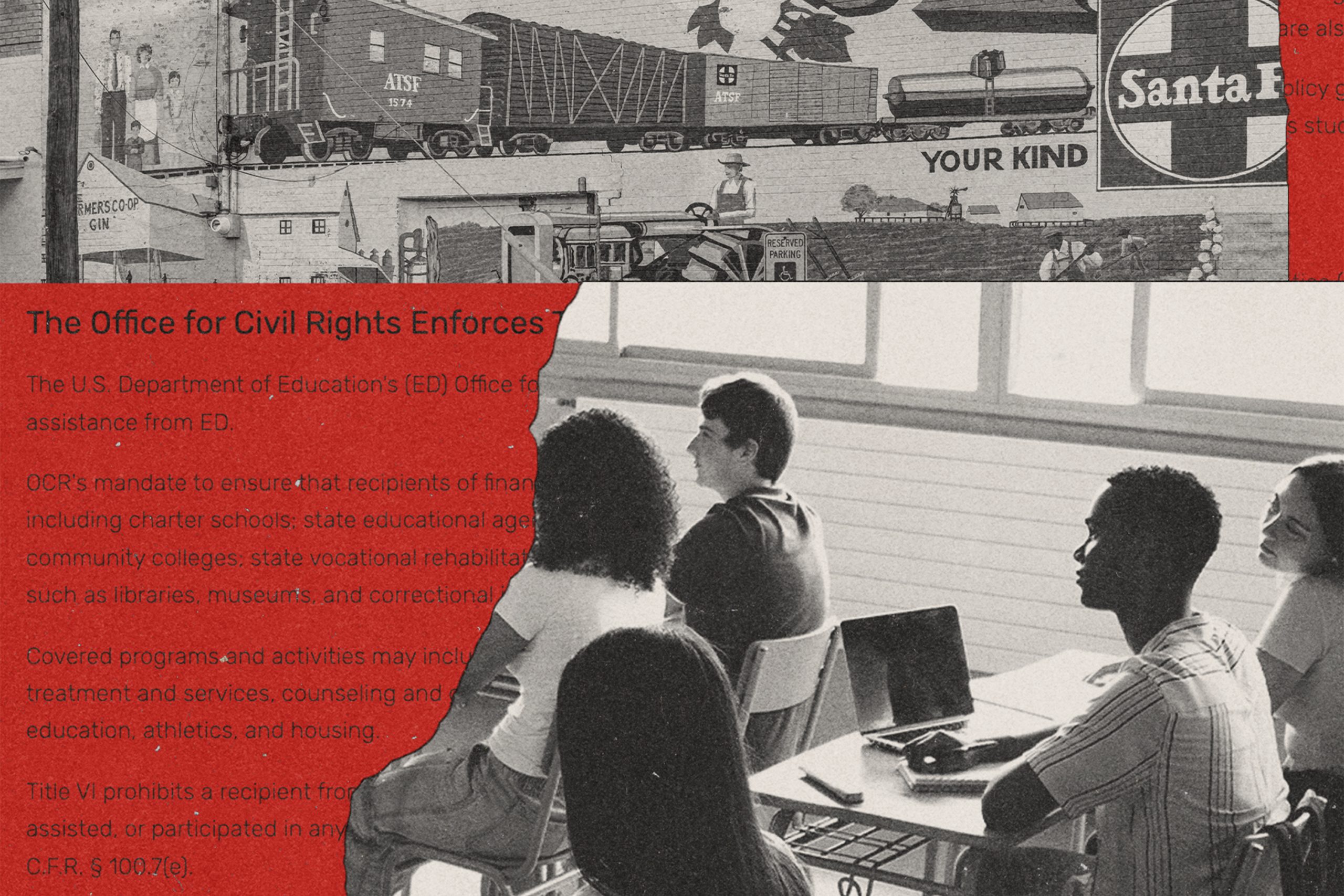
    Source link