Tag: Trump administration

  • What I learned about Head Start in rural America

    What I learned about Head Start in rural America

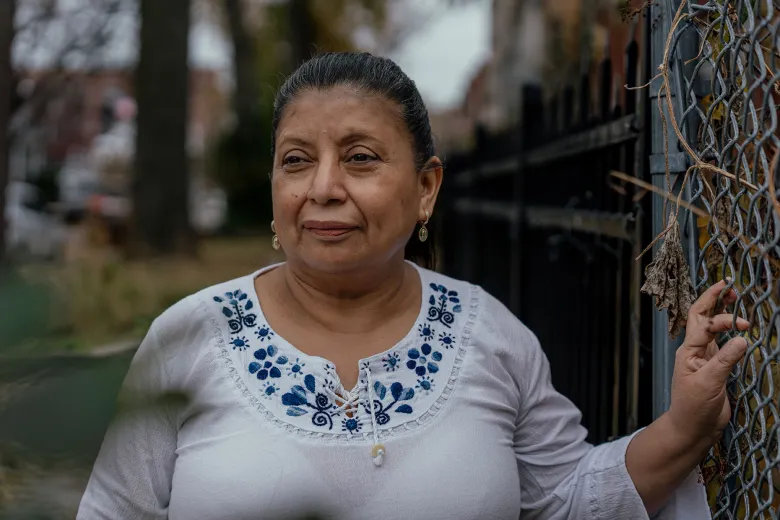
    When Starr Dixon heard the Trump administration was floating a proposal last spring to eliminate Head Start, the 27-year-old parent in rural Michigan cried for a week.

    The free, federally funded early learning program has been life-changing for her and her young daughter, she said. It provided stability after Dixon, who lives about 100 miles north of Lansing, left a yearslong abusive relationship. 

    While her 3-year-old daughter has blossomed socially, emotionally and verbally in the program during the last year and a half, Dixon has taken on numerous volunteer positions with Head Start, gaining experience that she can put on her resume after a 7-year gap in employment. She hopes to ultimately apply for a job at Head Start. 

    “It has just completely transformed my life,” she said.

    This year, I talked to people in communities across rural America and learned how Head Start is essential in places where there are few other child care options. Head Start also provides an economic boost for these areas and serves as direct support for parents, many of whom go on to volunteer for or get jobs at their local programs. 

    Related: Young children have unique needs and providing the right care can be a challenge. Our free early childhood education newsletter tracks the issues. 

    Though my reporting focused on western Ohio, parents in other parts of the country, like Dixon, shared similar stories with me about how critical Head Start is to their lives. But since January, the Trump administration has taken what some call a “death by a thousand cuts” approach to the program, firing federal staff, closing regional offices and offering no increase in spending on Head Start in budget proposals. 

    All those moves have caused chaos and upheaval. In Alabama, Jennifer Carroll, who oversees 39 Head Start sites run by the Community Action Partnership of North Alabama, told me she is reassuring the families she works with that her program’s funding is stable for at least the rest of the year. Carroll fears that if parents think Head Start funding is in jeopardy, they’ll pull their children out of the program, disrupting their learning.

    Another example: Keri Newman Allred is the executive director of Rural Utah Child Development Head Start, which operates Head Start programs spread across 17,000 square miles in central and east Utah. Newman Allred estimates her programs, which employ 91 residents and serve 317 children, can survive for one more year. After that, without more money, they will have to make cuts to the program if they want to give teachers a raise to meet inflation. 

    Related: Rural Americans rely on Head Start. Federal turmoil has them worried 

    While other Head Start programs can supplement operations with private donations, Newman Allred’s programs serve some of the most sparsely populated parts of America, known as “frontier counties,” where there are no deep-pocketed philanthropies. Her programs rely solely on federal funding. 

    In April, the Department of Government Efficiency, or DOGE, abruptly shuttered five of Head Start’s 10 regional offices. Programs in Maine that were without directors or that needed assistance with regulations, finances or federal requirements have been left to go it alone without consistent, daily support.

    “The closure of regional offices has all but crippled programs,” said Sue Powers, senior director of strategic initiatives at the Aroostook County Action Program in the rural, northernmost tip of Maine. “No one’s checking in. When you’re operating in a program that is literally in crisis, and you need [regional staff] and do not have them, it’s more than alarming.”

    Contact staff writer Jackie Mader at 212-678-3562 or [email protected].

    This story about Head Start was produced by The Hechinger Report, a nonprofit, independent news organization focused on inequality and innovation in education. Sign up for the Hechinger newsletter.

    The Hechinger Report provides in-depth, fact-based, unbiased reporting on education that is free to all readers. But that doesn’t mean it’s free to produce. Our work keeps educators and the public informed about pressing issues at schools and on campuses throughout the country. We tell the whole story, even when the details are inconvenient. Help us keep doing that.

    Join us today.

    Source link

  • They can’t count on federal money

    They can’t count on federal money

    ASHE COUNTY, N.C. — In the time it took to read an email, the federal money vanished before Superintendent Eisa Cox’s eyes: dollars that supported the Ashe County school district’s after-school program, training for its teachers, salaries for some jobs. 

    The email from the Department of Education arrived June 30, one day before the money — $1.1 million in total — was set to materialize for the rural western North Carolina district. Instead, the dollars had been frozen pending a review to make sure the money was spent “in accordance with the President’s priorities,” the email said. 

    In a community still recovering from Hurricane Helene, where more than half of students are considered economically disadvantaged, Cox said there was no way they could replace that federal funding. “It is scary to think about it, you’re getting ready to open school and not have a significant pot of funds,” she said.

    School leaders across the country were reeling from the same news. The $1.1 million was one small piece of a nearly $7 billion pot of federal funding for thousands of school districts that the Trump administration froze — money approved by Congress and that schools were scheduled to receive on July 1. For weeks, leaders in Ashe County and around the country scrambled to figure out how they could avoid layoffs and fill financial holes — until the money was freed July 25, after an outcry from legislators and a lawsuit joined by two dozen states.

    “I had teachers crying, staff members crying. They thought they were going to lose their jobs a week before school,” said Curtis Finch, superintendent of Deer Valley Unified School District in Phoenix. 

    About $1.1 million was at stake for the Ashe County school district in western North Carolina this summer when a portion of K-12 schools’ federal funding was frozen. Credit: Ariel Gilreath/The Hechinger Report

    Now, as educators welcome students back to classrooms, they can no longer count on federal dollars as they once did. They must learn to plan without a playbook under a president intent on cutting education spending. For many districts, federal money is a small but crucial sliver of their budgets, potentially touching every part of a school’s operations, from teacher salaries to textbooks. Nationally, it accounts for about 14 percent of public school funding; in Ashe County, it’s 17 percent. School administrators are examining their resources now and budgeting for losses to funding that was frozen this summer, for English learners, after-school and other programs.

    So far, the Trump administration has not proposed cutting the largest pots of federal money for schools, which go to services for students with disabilities and to schools with large numbers of low-income students. But the current budget proposal from the U.S. House of Representatives would do just that. 

    At the same time, forthcoming cuts to other federal support for low-income families under the Republican “one big, beautiful bill” — including Medicaid and SNAP — will also hammer schools that have many students living in poverty. And some school districts are also grappling with the elimination of Department of Education grants announced earlier this year, such as those designed to address teacher shortages and disability services. In politically conservative communities like this one, there’s an added tension for schools that rely on federal money to operate: how to sound the alarm while staying out of partisan politics.

    For Ashe County, the federal spending freeze collided with the district’s attempt at a fresh start after the devastation of Helene, which demolished roads and homes, damaged school buildings and knocked power and cell service out for weeks. Between the storm and snow days, students here missed 47 days of instruction.

    Cox worries this school year might bring more missed days: That first week of school, she found herself counting the number of foggy mornings. An old Appalachian wives’ tale says to put a bean in a jar for every morning of fog in August. The number of beans at the end of the month is how many snow days will come in winter. 

    “We’ve had 21 so far,” Cox said with a nervous laugh on Aug. 21.

    Related: A lot goes on in classrooms from kindergarten to high school. Keep up with our free weekly newsletter on K-12 education

    Fragrant evergreen trees blanket Ashe County’s hills, a region that bills itself as America’s Christmas Tree Capital because of the millions of Fraser firs grown for sale at the holidays. Yet this picturesque area still shows scars of Hurricane Helene’s destruction: fallen trees, damaged homes and rocky new paths cut through the mountainsides by mudslides. Nearly a year after the storm, the lone grocery store in one of its small towns is still being rebuilt. A sinkhole that formed during the flooding remains, splitting open the ground behind an elementary school.

    Ashe County Schools Superintendent Eisa Cox visits classrooms at Blue Ridge Elementary School during the first week of the school year in Warrensville, N.C. Credit: Ariel Gilreath/The Hechinger Report

    As students walked into classrooms for the first time since spring, Julie Taylor — the district’s director of federal programs — was reworking district budget spreadsheets. When federal funds were frozen, and then unfrozen, her plans and calculations from months prior became meaningless.

    Federal and state funding stretches far in this district of 2,700 students and six schools, where administrators do a lot with a little. Even before this summer, they worked hard to supplement that funding in any way possible — applying to state and federal grants, like one last year that provided money for a few mobile hot spots for families who don’t have internet access. Such opportunities are also narrowing: The Federal Communications Commission, for example, recently proposed ending its mobile hot spot grant program for school buses and libraries. 

    “We’re very fiscally responsible because we have to be — we’re small and rural, we don’t have a large tax base,” Taylor said.

    Related: English learners stopped coming to class during the pandemic. One group is tackling the problem by helping their parents

    When the money was frozen this summer, administrators’ minds went to the educators and kids who would be most affected. Some of it paid for a program through Appalachian State University that connects the district’s three dozen early-career teachers with a mentor, helps them learn how to schedule their school days and manage classroom behavior. 

    The program is part of the reason the district’s retention rate for early career teachers is 92 percent, Taylor said, noting the teachers have said how much the mentoring meant to them. 

    Also frozen: free after-school care the district provides for about 250 children throughout the school year — the only after-school option in the community. Without the money, Cox said, schools would have to cancel their after-school care or start charging families, a significant burden in a county with a median household income of about $50,000.

    Sixth grade students make self-portraits out of construction paper during the first week of the school year at Blue Ridge Elementary School in Warrensville, N.C., in August. Credit: Ariel Gilreath/The Hechinger Report

    The salary for Michelle Pelayo, the district’s migrant education program coordinator for nearly two decades, was also tied up in that pot of funding. Because agriculture is the county’s biggest industry, Pelayo’s work in Ashe County extends far beyond the students at the school. Each year, she works with the families of dozens of migrant students who move to the area for seasonal work on farms, which generally involves tagging and bundling Christmas trees and harvesting pumpkins. Pelayo helps the families enroll their students, connects them with supplies for school and home, and serves as a Spanish translator for parent-teacher meetings — “whatever they need,” she said.

    Kitty Honeycutt, executive director of the Ashe County Chamber of Commerce, doesn’t know how the county’s agriculture industry would survive without the migrant students Pelayo works with. “The need for guest workers is crucial for the agriculture industry — we have to have them,” she said. 

    A couple of years ago, Pelayo had the idea to drive to Boone, North Carolina, where Appalachian State University’s campus sits, to gather unwanted appliances and supplies from students moving out of their dorm rooms at the end of the year to donate to migrant families. She’s a “find a way or make a way” type of person, Honeycutt said. 

    Cox is searching for how to keep Pelayo on if Ashe County loses these federal funds next year. She’s talked with county officials to see if they could pay Pelayo’s salary, and begun calculating how much the district would need to charge families to keep the after-school program running. Ideally, she’d know ahead of time and not the night before the district is set to receive the money. 

    Related: Trump’s cuts to teacher training leave rural districts, aspiring educators in the lurch

    Districts across the country are grappling with similar questions. In Detroit, school leaders are preparing, at a minimum, to lose Title III money to teach English learners. More than 7,200 Detroit students received services funded by Title III in 2023. 

    In Wyoming, the small, rural Sheridan County School District 3 is trying to budget without Title II, IV and V money — funding for improving teacher quality, updating technology and resources for rural and low-income schools, among other uses, Superintendent Chase Christensen said.

    Schools are trying to budget for cuts to other federal programs, too — such as Medicaid and food stamps. In Harrison School District 2, an urban district in Colorado Springs, Colorado, schools rely on Medicaid to provide students with counseling, nursing and other services.

    The district projects that it could lose half the $15 million it receives in Medicaid next school year. 

    “It’s very, very stressful,” said Wendy Birhanzel, superintendent of Harrison School District 2. “For a while, it was every day, you were hearing something different. And you couldn’t even keep up with, ‘What’s the latest information today?’ That’s another thing we told our staff: If you can, just don’t watch the news about education right now.”

    Related: Tracking Trump: His actions on education 

    There’s another calculation for school leaders to make in conservative counties like Ashe, where 72 percent of the vote last year went for President Donald Trump: objecting to the cuts without angering voters. When North Carolina’s attorney general, a Democrat, joined the lawsuit against the administration over the frozen funds this summer, some school administrators told state officials they couldn’t publicly sign on, fearing local backlash, said Jack Hoke, executive director of the North Carolina School Superintendents’ Association.

    Cox sees the effort to slash federal funds as a chance to show her community how Ashe County Schools uses this money. She believes people are misguided in thinking their schools don’t need it, not malicious. 

    “I know who our congresspeople are — I know they care about this area,” Cox said, even if they do not fully grasp how the money is used. “It’s an opportunity for me to educate them.”

    If the Education Department is shuttered — which Trump said he plans to do in order to give more authority over education to states — she wants to be included in state-level discussions for how federal money flows to schools through North Carolina. And, importantly, she wants to know ahead of time what her schools might lose.

    As Cox made her rounds to each of the schools that first week back, she glanced down at her phone and looked up with a smile. “We have hot water,” she said while walking in the hall of Blue Ridge Elementary School. It had lost hot water a few weeks earlier, but to Cox, this crisis was minor — one of many first-of-the-year hiccups she has come to expect. 

    Still, it’s one worry she can put out of her mind as she looks ahead to a year of uncertainties.

    Meanwhile, the anxiety about this school year hasn’t reached the students, who were talking among themselves in the high school’s media center, creating collages in the elementary school’s art class and trekking up to Mount Jefferson — a state park that sits directly behind the district’s two high schools — for an annual trip. 

    They were just excited to be back.  

    Marina Villeneuve contributed data analysis to this story. 

    Contact staff writer Ariel Gilreath on Signal at arielgilreath.46 or at [email protected].

    This story about public school funding was produced by The Hechinger Report, a nonprofit, independent news organization focused on inequality and innovation in education. Sign up for the Hechinger newsletter.

    The Hechinger Report provides in-depth, fact-based, unbiased reporting on education that is free to all readers. But that doesn’t mean it’s free to produce. Our work keeps educators and the public informed about pressing issues at schools and on campuses throughout the country. We tell the whole story, even when the details are inconvenient. Help us keep doing that.

    Join us today.

    Source link

  • The push to expand school choice should not diminish civic education

    The push to expand school choice should not diminish civic education

    From Texas to Florida to Arizona, school voucher policies are reshaping the landscape of American education. The Trump administration champions federal support for voucher expansion, and many state-level leaders are advancing school choice programs. Billions of public dollars are now flowing to private schools, church networks and microeducation platforms.  

    The push to expand school choice is not just reallocating public funds to private institutions. It is reorganizing the very purpose of schooling. And in that shift, something essential is being lost — the public mission of education as a foundation of democracy. 

    Civic education is becoming fragmented, underfunded and institutionally weak.  

    In this moment of sweeping change, as public dollars shift from common institutions to private and alternative schools, the shared civic entities that once supported democratic learning are being diminished or lost entirely — traditional structures like public schools, libraries and community colleges are no longer guaranteed common spaces. 

    The result is a disjointed system in which students may gain academic content or career preparation but receive little support in learning how to lead with integrity, think across differences or sustain democratic institutions. The very idea of public life is at risk, especially in places where shared experience has been replaced by polarization. We need civic education more than ever. 

    Related: A lot goes on in classrooms from kindergarten to high school. Keep up with our free weekly newsletter on K-12 education.  

    If we want students who can lead a multiracial democracy, we need schools of every type to take civic formation seriously. That includes religious schools, charter schools and homeschooling networks. The responsibility cannot fall on public schools alone. Civic formation is not an ideological project. It is a democratic one, involving the long-term work of building the skills, habits and values that prepare people to work across differences and take responsibility for shared democratic life. 

    What we need now is a civic education strategy that matches the scale of the changes reshaping American schooling. This will mean fostering coordinated investment, institutional partnerships and recognition that the stakes are not just academic, they are also democratic. 

    Americans overwhelmingly support civic instruction. According to a 2020 survey in Texas by the Center of Women in Politics and Public Policy and iCivics, just 49 percent of teachers statewide believed that enough time was being devoted to teaching civics knowledge, and just 23 percent said the same about participatory-democracy skills. This gap is not unique to Texas, but there is little agreement on how civics should be taught, and even less structural support for the schools trying to do it. 

    Without serious investment, civic formation will remain an afterthought — a patchwork effort disconnected from the design of most educational systems. 

    This is not an argument against vouchers in principle. Families should have options. But in the move to decentralize education, we risk hollowing out its civic core. A democratic society cannot survive on academic content alone. It requires citizens — not just in the legal sense, but in the civic one. 

    A democratic society needs people who can deliberate, organize, collaborate and build a shared future with others who do not think or live like they do. 

    And that’s why we are building a framework in Texas that others can adopt and adapt to their own civic mission. 

    The pioneering Democracy Schools model, to which I contribute, supports civic formation across a range of public and private schools, colleges, community organizations and professional networks.  

    Civic infrastructure is the term we use to describe our approach: the design of relationships, institutions and systems that hold democracy together. Just as engineers build physical infrastructure, educators and civic leaders must build civic infrastructure by working with communities, not for or on them. 

    We start from a democratic tradition rooted in the Black freedom struggle. Freedom, in this view, is not just protection from domination. It is the capacity to act, build and see oneself reflected in the world. This view of citizenship demands more than voice. It calls for the ability to shape institutions, policies and public narratives from the ground up. 

    Related: STUDENT VOICE: My generation knows less about civics than my parents’ generation did, yet we need it more than ever 

    The model speaks to a national crisis: the erosion of shared civic space in education. It must be practiced and must be supported by institutions that understand their role in building public life. Historically Black colleges and universities like Huston-Tillotson University offer a powerful example. They are not elite pipelines disconnected from everyday life. They are rooted in community, oriented toward public leadership and shaped by a history of democratic struggle. They show what it looks like to educate for civic capacity — not just for upward mobility. They remind us that education is not only about what students know, but about who they become and what kind of world they are prepared to help shape. 

    Our national future depends on how well we prepare young people to take responsibility for shared institutions and pluralistic public life. This cannot be accomplished through content standards alone. It requires civic ecosystems designed to cultivate public authorship. 

    We have an enormous stake in preparing the next generation for the demands of democratic life. What kind of society are we preparing young people to lead? The answer will not come from any single institution. It will come from partnerships across sectors, aligned in purpose even if diverse in approach. 

    We are eager to collaborate with any organization — public, private or faith-based — committed to building the civic infrastructure that sustains our democracy. Wherever education takes place, civic formation must remain a central concern. 

    Robert Ceresa is the founding director of the Politics Lab of the James L. Farmer House, Huston-Tillotson University. 

    Contact the opinion editor at [email protected].  

    This story about civic education was produced by The Hechinger Report, a nonprofit, independent news organization focused on inequality and innovation in education. Sign up for Hechinger’s weekly newsletter.

    The Hechinger Report provides in-depth, fact-based, unbiased reporting on education that is free to all readers. But that doesn’t mean it’s free to produce. Our work keeps educators and the public informed about pressing issues at schools and on campuses throughout the country. We tell the whole story, even when the details are inconvenient. Help us keep doing that.

    Join us today.

    Source link

  • Students, schools race to save clean energy projects in face of Trump deadline

    Students, schools race to save clean energy projects in face of Trump deadline

    Tanish Doshi was in high school when he pushed the Tucson Unified School District to take on an ambitious plan to reduce its climate footprint. In Oct. 2024, the availability of federal tax credits encouraged the district to adopt the $900 million plan, which involves goals of achieving net-zero emissions and zero waste by 2040, along with adding a climate curriculum to schools.

    Now, access to those funds is disappearing, leaving Tucson and other school systems across the country scrambling to find ways to cover the costs of clean energy projects.

    The Arizona school district, which did not want to impose an economic burden on its low-income population by increasing bonds or taxes, had expected to rely in part on federal dollars provided by the Biden-era Inflation Reduction Act, Doshi said. 

    But under HR1, or the “one big, beautiful bill,” passed on July 4, Tucson schools will not be able to receive all of the expected federal funding in time for their upcoming clean energy projects. The law discontinues many clean energy tax credits, including those used by schools for solar power and electric vehicles, created under the IRA. When schools and other tax-exempt organizations receive these credits, they come in the form of a direct cash reimbursement.

    At the same time, Tucson and thousands of districts across the country that were planning to develop solar and wind power projects are now forced to decide between accelerating them to try to meet HR1’s fast-approaching “commence construction” deadline of June 2026, finding other sources of funding or hitting pause on their plans. Tina Cook, energy project manager for Tucson schools, said the district might have to scale back some of its projects unless it could find local sources of funding. 

    “Phasing out the tax credits for wind and solar energy is going to make a huge, huge difference,” said Doshi, 18, now a first-year college student. “It ends a lot of investments in poor and minority communities. You really get rid of any notion of environmental justice that the IRA had advanced.”

    Emma Weber leads a chant at a Colorado state capitol rally in support of “The Green New Deal for Colorado Schools.” Credit: Courtesy of Emma Weber

    The tax credits in the IRA, the largest legislative investment in climate projects in U.S. history, had marked a major opportunity for schools and colleges to reduce their impact on the environment. Educational institutions are significant contributors to climate change: K-12 school infrastructure, for example, releases at least 41 million metric tons of emissions per year, according to a paper from the Annenberg Institute at Brown University. The K-12 school system’s buses — some 480,000 — and meals also produce significant emissions and waste. Clean energy projects supported by the IRA were helping schools not only to limit their climate toll but also to save money on energy costs over the long term and improve student health, advocates said.

    As a result, many students, consultants and sustainability leaders said, they have no plans to abandon clean energy projects. They said they want to keep working to cut emissions, even though that may be more difficult now.

    Related: Become a lifelong learner. Subscribe to our free weekly newsletter featuring the most important stories in education. 

    Sara Ross, cofounder of UndauntedK12, which helps school districts green their operations, divided HR1’s fallout on schools into three categories: the good, the bad and the ugly. 

    On the bright side, she said, schools can still get up to 50 percent off for installing ground source heat pumps — those credits will continue — to more efficiently heat and cool schools. The network of pipes in a ground source pump cycles heat from the shallow earth into buildings.

    In the “bad” category, any electric vehicle acquired after Sept. 30 of this year will not be eligible for tax credits — drastically accelerating the IRA’s phase-out timeline by seven years. That applies to electric school buses as well as other district-owned vehicles. Electric vehicle charging stations must be installed by June 30, 2026 at an eligible location to claim a tax credit.*

    EPA’s Clean School Bus Program still exists for two more years and covers two-thirds of the funding for all electric school buses districts acquire in that time. The remaining one-third, however, was to be covered by federal and state tax credits. 

    The expiration of the federal tax credits could cost a district up to $40,000 more per vehicle, estimated Sue Gander, director of the Electric School Bus Initiative run by the nonprofit World Resources Institute. 

    Related: So much for saving the planet. Climate jobs, and many others, evaporate for 2025 grads

    Solar projects will see the most “ugly” effects of HR1, Ross said. 

    Los Angeles Unified School District is planning to build 21 solar projects on roofs, carports and other structures, plus 13 electric vehicle charging sites, as part of an effort to reduce energy costs and achieve 100 percent renewable energy by 2040. The district anticipated receiving around $25 million in federal tax credits to help pay for the $90 million contract, said Christos Chrysiliou, chief eco-sustainability officer for the district. With the tight deadlines imposed by HR1, the district can no longer count on receiving that money. 

    “It’s disappointing,” Chrysiliou said. “It’s nice to be able to have that funding in place to meet the goals and objectives that we have.”

    Emma Weber, at left, trains student leaders at Sunrise Movement’s “summer intensive” in Illinois this year. Credit: Courtesy of Emma Weber

    LAUSD is looking at a small portion of a $9 billion bond measure passed last year, as well as utility rebates, third-party financing and grants from the California Energy Commission, to help make up for some of the gaps in funding.

    Many California State University campuses are in a similar position as they work to install solar to meet the system’s goal of carbon neutrality by 2045, said Lindsey Rowell, CSU’s chief energy, sustainability and transportation officer. 

    Tariffs on solar panel materials from overseas and the early sunsetting of tax credits mean that “the cost of these projects are becoming prohibitive for campuses,” Rowell said. 

    Sweeps of undocumented immigrants in California may also lead to labor shortages that could slow the pace of construction, Rowell added. “Limiting the labor force in any way is only going to result in an increased cost, so those changes are frightening as well,” she said. 

    New Treasury Department guidance, issued Aug. 15, made it much harder for projects to meet  the threshold needed to qualify for the tax credits. Renewable energy projects previously qualified for credits once a developer spent 5 percent of a project’s cost. But the guidelines have been tightened — now, larger projects must pass a “physical work test,” meaning “significant physical labor has begun on a site,” before they can qualify for credits. With the construction commencement deadline looming next June, these will likely leave many projects ineligible for credits.

    “The rules are new, complex [and] not widely understood,” Ross said. “We’re really concerned about schools’ ability to continue to do solar projects and be able to effectively navigate these new rules.” 

    Schools without “fancy legal teams” may struggle to understand how the new tax credit changes in HR1 will affect their finances and future projects, she added.

    Some universities were just starting to understand how the IRA tax credits could help them fund projects. Lily Strehlow, campus sustainability coordinator at the University of Wisconsin, Eau-Claire, said the planning cycle for clean energy projects at the school can take ten years. The university is in the process of adding solar to the roof of a large science building, and depending on the date of completion, the project “might or might not” qualify for the credits, she said. 

    “At this point, everybody’s holding their breath,” said Rick Brown, founder of California-based TerraVerde Energy, a clean energy consultant to schools and agencies. 

    Brown said that none of his company’s projects are in a position where they’re not going to get done, but the company may end up seeing fewer new projects due to a higher cost of equipment. 

    Tim Carter, president of Second Nature, which supports climate work in education, added that colleges and universities are in a broader period of uncertainty, due to larger attacks from the Trump administration, and are not likely to make additional investments at this time: “We’re definitely in a wait and see.”

    Related: A government website teachers rely on is in peril 

    For youth activists, the fallout from HR1 is “disheartening,” Doshi said. 

    Emma and Molly Weber, climate activists since eighth grade, said they are frustrated. The Colorado-based twins, who will start college this fall, helped secure the first “Green New Deal for Schools” resolution in the nation in the Boulder Valley School District. Its goals include working toward a goal of Zero Net Energy by 2050, making school buildings greener, creating pathways to green jobs and expanding climate change education. 

    Emma, far left, and Molly Weber, far right, work with climate leaders from the Boulder Valley School District’s Sunrise Movement to prepare for Colorado’s legislative session. Credit: Courtesy of Emma Weber

    “It feels very demoralizing to see something you’ve been working so hard at get slashed back, especially since I’ve spoken to so many students from all over the country about these clean energy tax credits, being like, ‘These are the things that are available to you, and this is how you can help convince your school board to work on this,’” Emma Weber said.

    The Webers started thinking about other creative ways to pay for the clean energy transition and have settled on advocating for state-level legislation in the form of a climate superfund, where major polluters in a community would be responsible for contributing dollars to sustainability initiatives. 

    Consultants and sustainability coordinators said that they don’t see the demand for renewable energy going away. “Solar is the cheapest form of energy. It makes sense to put it on every rooftop that we can. And that’s true with or without tax credits,” Strehlow said. 

    *Correction: This version of the story includes updated information on the timeline for the expiration of tax credits for electric vehicle charging stations.

    Contact editor Caroline Preston at 212-870-8965, via Signal at CarolineP.83 or on email at [email protected]

    This story about tax credits was produced by The Hechinger Report, a nonprofit, independent news organization focused on inequality and innovation in education. Sign up for the Hechinger newsletter.

    The Hechinger Report provides in-depth, fact-based, unbiased reporting on education that is free to all readers. But that doesn’t mean it’s free to produce. Our work keeps educators and the public informed about pressing issues at schools and on campuses throughout the country. We tell the whole story, even when the details are inconvenient. Help us keep doing that.

    Join us today.

    Source link

  • Ten Education Issues to Watch at the Start of the School Year – The 74

    Ten Education Issues to Watch at the Start of the School Year – The 74


    Get stories like this delivered straight to your inbox. Sign up for The 74 Newsletter

    One big budget bill and 181 executive orders into the Trump administration, one thing is clear for those of us checking our crystal balls ahead of the school year.

    There is a big difference between policy change aligned to winning an election and disruption for the sake of chaos.

    The three-sentence email sent on June 30 that froze billions of dollars of funding across the education continuum in Republican and Democratic counties around the country the night before the funding was anticipated begs the overarching question facing those working in education:

    To state the obvious, the review of the federal funding could have been announced and conducted ahead of the date funds are normally made available, and the disruption could have been minimized.

    Instead, leaders on the right and the left had to write letters, file lawsuits, and respond to panicking constituents to move money Congress had already approved to be spent.

    “The education formula funding included in the FY2025 Continuing Resolution Act supports critical programs that so many rely on. The programs are ones that enjoy longstanding, bipartisan support,” said Republican U.S. Sen. Shelley Moore Capito from West Virginia.

    Many leaders on both sides of the aisle, including Superintendent Mo Green, a Democrat, are hoping for “a return to the predictable, reliable federal partnership that our schools need to serve students effectively.”

    That remains aspirational as the federal Department of Education begins to be dismantled, more responsibility is handed off to states, and local and state education agencies have to find ways to work with multiple federal agencies moving forward.

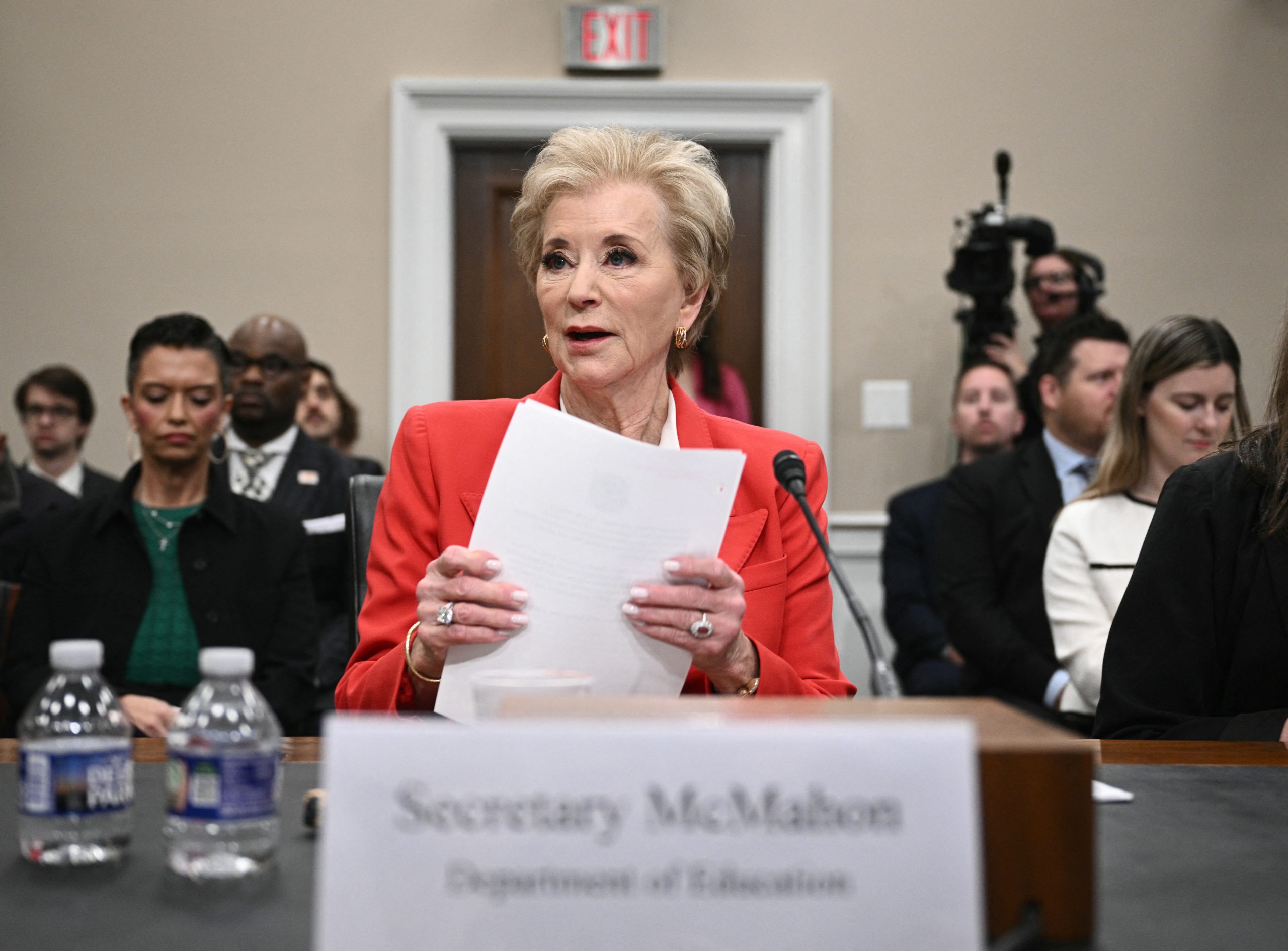
    Recently at the summer convening of the National Governors Association, when Colorado Gov. Jared Polis asked U.S. Secretary of Education Linda McMahon for clearer communication, she said, “No guarantees from me that we’ll eliminate all the communication gaps that do happen.”

    Our top 10 issues are not the ones featuring most prominently in the news cycle right now.

    DEI continues to be in the news, and in case you missed it, over the summer EdNC published perspectives on DEI by a policymaker, a former superintendent, and an educator.

    Cellphones and AI in classrooms also continue to be highlighted in the media.

    And we know there are many, many other issues you care about, including WNC recovery, literacy, youth wellbeing, learning differences, community schools, school safety, vaccines and school health, school performance and the portfolio model, LGBTQ+ youth, the health of teacher and principal pipelines, STEM, arts and education, and more.

    As we head back to school, the EdNC team will continue to cover all of those issues, but here are the top 10 issues we think will frame this school year.

    Access to education, opportunity, and the American dream

    1. Access to education for immigrants without legal status

    For more than 40 years, students without legal status to be in the country have been allowed to attend public schools free of charge in districts across the United States, and over time that has included access to early education and postsecondary opportunities.

    Federal case law cites reasons for this decision, including:

    • Not wanting to penalize children for their presence in the country;
    • Recognizing that many students will remain in the country, some becoming lawful residents or citizens;
    • Not perpetuating “a subclass of illiterates within our boundaries, surely adding to the problems and costs of unemployment, welfare, and crime;” and
    • Concluding that “whatever savings might be achieved by denying these children an education, they are wholly insubstantial in light of the costs involved to these children, the State, and the Nation.”

    The 74 recently reported, “From cradle to career, President Donald Trump has launched a comprehensive campaign to close off education to undocumented immigrants, undercutting, advocates say, the very reason many came to the United States: for a chance at a better life.”

    Immigrants without legal status have had access to Head Start since a 1998 interpretation of the Personal Responsibility and Work Opportunity Reconciliation Act of 1996 (PRWORA).

    “Head Start is the federally funded, comprehensive preschool program designed to meet the emotional, social, health, nutritional, and psychological needs of children aged 3 to 5 and their families,” according to the N.C. Department of Health and Human Services (DHHS).

    “The Early Head Start program — established in 1994 — is the companion program created to address the same needs of children birth to age 3, expectant mothers, and their families,” says the DHHS website.

    On July 10, the U.S. Department of Health and Human Services (HHS) said via press release, “Head Start is reserved for American citizens from now on.”

    “For too long, the government has diverted hardworking Americans’ tax dollars to incentivize illegal immigration,” said HHS Secretary Robert F. Kennedy, Jr.

    The policy shift, says the release, aligns with “recent Executive Orders by President Trump, including Executive Order 14218 of February 19, 2025, ‘Ending Taxpayer Subsidization of Open Borders,’ prioritizing legal compliance and the protection of public benefits for eligible Americans.”

    An HHS impact analysis finds, “These figures point to approximately 500,000 children under the age of 5 in poverty who have an unauthorized parent or are unauthorized themselves. Combining this estimate with an estimate that Head Start programs serve approximately 26% of the potentially eligible population, we anticipate that approximately 115,000 Head Start children and families could be impacted, or about 16% of total cumulative enrollment in Head Start programs in FY 2024.”

    Also on July 10, “The U.S. Department of Education today announced it will end taxpayer subsidization of illegal aliens in career, technical, and adult education programs.”

    The department says that postsecondary education programs — “including adult education programs authorized under Title II of the Workforce Innovation and Opportunity Act of 2014, postsecondary career and technical education programs under the Carl D. Perkins Career and Technical Education Act of 2006, and other programs when used to fund postsecondary learning opportunities” — also constitute “federal public benefits” subject to citizenship verification requirements.

    “This policy shift threatens to undermine community development, workforce readiness, and economic mobility across the nation,” says a statement issued by The Presidents’ Alliance on Higher Education and Immigration, an alliance of American college and university leaders. “Many of the named programs are a central component of the nation’s community colleges and provide access for continuing and returning adult learners.”

    In 1988 — after the U.S. Supreme Court decision that safeguarded access to K-12 but before the 1996 law that expanded access beyond elementary and secondary education — Dallas Herring, beloved and known as the father of North Carolina’s community college system, wrote, “The twentieth century, by every standard of assessment, in the long view of history, must be considered one of the most remarkable in the experience of mankind. It is especially significant in education, for the opportunity to study and to learn has been extended during these times to almost all of the people everywhere in America. Total education is becoming a possibility as the people respond to the challenge of universal opportunity in education. The door, at last, is open.”

    Herring also wrote — as the dawn of not just a new century approached but of a new millennium — that “it was clear that the open door is not enough.”

    As the open door begins to close, Herring reminds us what is at stake. “Education of the masses of humanity, not only as economic beings, but especially as human beings, will be essential to the achievement of peace and prosperity,” he wrote.

    Data from the Census Bureau population estimates indicate that the nation’s population growth rate in 2023-24 was driven mostly by immigration.

    Twenty states and the District of Columbia have filed suit. North Carolina is not one of the 20.

    2. Pathways to work are more important than ever

    It is almost impossible these days to have a conversation about community colleges, postsecondary access, or attainment without the word pathways coming up.

    Sometimes leaders are talking about “guided pathways,” which is a college-wide approach to student success. Nationally, that work had been shifting from an outcomes approach to an access approach.

    A much anticipated book to be published by Harvard Education Press in August, “More Essential Than Ever: Community College Pathways to Educational and Career Success,” promises guidance for college leaders and state policymakers.

    The cliff notes, according to the authors: “Community colleges today will need to make concerted efforts to strengthen pathways to post-completion success in employment and further education and thus ensure that students’ investment of effort, time, and money pays off.”

    Seamless pathways” often refer to agreements between community college and four-year colleges and universities that improve transfer and graduation rates by improving the student experience.

    In 24 states, more than 200 community colleges now offer four-year degrees. North Carolina is not one of them, and a recent essay says, “The debate over who and where bachelor’s degrees should be offered is too often driven by institutional priorities and policies set in the past…. Community colleges can play a central role in helping graduates achieve a bachelor’s degree. States and all colleges should support these low-cost, high-value degree pathways.”

    But, both across the nation and our state, it is the pathways for students to enlist, enroll, or employ so they have access to a family-sustaining living wage that is the focus for many leaders, organizations, and initiatives.

    And, in North Carolina, it is these pathways that are critically important to the state’s attainment goal.

    Citing the 4.6 million youth between the ages of 16 and 24 who are neither enrolled in school nor working a job, the National Governors Association (NGA) is focusing this year on getting students ready for jobs.

    In partnership with NGA, America Achieves recently launched its Good Jobs Economy initiative, designed to “build a prosperous, competitive nation where everyone has clear pathways to good jobs, employers access the talent they need, and Americans at large scale can reach and stay in the middle class.”

    Lumina Foundation recently announced a new initiative called “FutureReady States” with the goal of increasing access to education and credential training that “pays off in the labor market.”

    StriveTogether — a national network with the goal of having 4 million more youth in the United States on a path to economic opportunity by 2030 — has an impact fund that identifies opportunities to improve the experiences of students in high school to set them on a path to college and careers.

    Much of this leadership at both the national and state level focuses on different experiences that expedite that pathway for students who want to go from high school or community college graduation straight into the workforce.

    It is in this work where terms like work-based learning, apprenticeships, internships, co-ops, and credentials of value; approaches like graduation from high school in three years; and innovative initiatives like SparkNC and the NC Works website come in.

    In keeping with this trend, the Federal Reserve Bank of Richmond is implementing a new approach to measuring success through its Survey of Community College Outcomes, “which broadens the definition of community college student success to include not only degree attainment, but also attainment of shorter-term credentials, such as certificates or industry licensures, successful transfer to a four-year institution, or persistence in enrollment beyond four years.”

    According to a press release from the N.C. Community College System, beginning in July 2026, the new Workforce Pell Grant program will allow eligible students to use federal financial aid for short-term, high-quality training programs — some as short as eight weeks depending on instructional hours and program design. These programs lead directly to jobs in high-demand fields like health care, engineering and advanced manufacturing, trades and transportation, and information technology, says the release.

    “This is a major step forward in making higher education more accessible and responsive to today’s workforce needs,” said Jeff Cox, president of the system.

    With a community college system that is 58 strong; a nationally watched model for funding community colleges called Propel; Boost, North Carolina’s accelerated college to career program; and a system whose leadership is in transition again, all eyes are on North Carolina.

    3. Exposing middle school students to college

    A May 2025 headline in the Associated Press asks, “Can middle schoolers handle college?”

    When students at Valle Crucis School (VCS) were displaced after Hurricane Helene, Caldwell Community College & Technical Institute stepped up to host Principal Bonnie Smith, her team, and 120 sixth through eighth grade students on the community college’s campus in Watauga County.

    President Mark Poarch said the middle school students were exposed through the experience to many positives and had the opportunity to learn more about college programs and how they connect to industries.

    “I think there are a lot of silver linings in having them on a college campus,” said Poarch. So many that the community college’s foundation guaranteed a scholarship for all current VCS middle school students.

    “It has brought new energy and new life to this campus unlike anything we’ve ever seen before,” said Poarch.

    In Haywood County, another model for exposing middle school students to college will launch in 2026-27.

    The innovative new middle school, developed in partnership with Haywood Community College, will be academically rigorous and led by Lori Fox, the principal of Haywood Early College. Under her leadership, the early college is among the best in the nation and an Apple Distinguished School.

    California has been leading the way with exposing middle school students to college, and the state is now pushing to create access for more students — not just high achievers. In that state, middle school students may enroll in one community college course each semester free of charge.

    Recent legislation back here in North Carolina requires all middle and high school students in public schools to have career development plans.

    And a recent report using North Carolina data explores a new measure of school quality called “high school readiness.”

    “As the name suggests, the basic idea is to capture how well a middle school prepares its students for the next stage of their education by quantifying its effects on high school grades — or to be more precise, ninth-grade grade-point averages,” says this article about the report.

    4. Local, state, and philanthropic funding for the safety net for students and families

    The different types of investments in pathways all share in common academic and/or social support for students.

    The expensive and expansive budget bill recently passed by Congress cuts through the federal safety net that many in North Carolina and across the nation rely on, placing more of the responsibility on local and state governments.

    An estimated 520,000 North Carolinians could lose their health insurance, according to this press release.

    “When we think about Medicaid, we typically think about health insurance,” says an article published in Forbes about the impact of the policy change on schools. “But Medicaid is also among the largest funding sources for K–12 public schools, providing an estimated $7.5 billion annually to pay for essential services for student learning and development.”

    Note that the above data is district data prior to Medicaid expansion in North Carolina.

    Cuts to the Supplemental Nutrition Assistance Program (SNAP) are “equally serious,” says Gov. Josh Stein. As many as 1.4 million North Carolinians — including 600,000 children — could lose food assistance. EdNC previously reported the impact of cuts to SNAP by county in North Carolina.

    According to reporting by the News & Observer, Stein also said, “the state has to be exceptionally conservative fiscally, meaning that we have to preserve the revenue sources we have to so that we can deal with issues like feeding hungry children, or ensuring that our health care system works for everybody.”

    Some counties are waiting to see how the state responds before they consider how to address the gap in federal support. Others counties, like Jackson County, are moving ahead with funding free schools meals for all for the school year.

    The advocacy of coalitions like School Meals for All NC has never been more important at every level of government.

    School choice and the funding of public education

    5. Wordsmithing school choice: Choice vs. fit, uniform vs. plural, quality vs. accountability, and the impact of churn

    Choice in the context of “school choice” is a political term. It’s not how parents talk or think. All over the world, parents use the word “fit” to describe how they select a school for their child.

    And fit is different for different parents. For some, it is about the teacher or the principal. For others, it is about attending school with kids from the neighborhood. For many, it is has to do with the type of educational experience the school provides.

    Public schools continue to provide more opportunities for fit than any other educational sector.

    In North Carolina, there are 115 school districts and 2,700 schools, including 208 charters, seven lab schools, three residential schools, and one regional school. Public schools offer an abundance of fit through the following types of school options: year-round, magnet, language immersion, single-sex, early college, career academies, virtual academies, community schools, alternative schools, and more.

    Check out how Buncombe County Schools is explaining why parents should choose public schools.

    EdNC continues to cover the inter-relationship of those two terms, and the choices parents are actually making to find the right fit for their students.

    We monitor enrollment across public schools, private schools, and homeschools. So far, even with school choice expansion fully funded, public school market share is holding steady at 84% — that’s 1,538,563 students.

    We track the data on private school vouchers, called Opportunity Scholarships in North Carolina. So far, since school choice expansion, it is estimated that more than 90% of the new applicants for vouchers were already attending private school.

    The data will be important moving forward in understanding parent choice and student fit, but there are broader trends to be aware of.

    In North Carolina, our state constitution mandates a “general and uniform system of free public schools.” In democracies around the world, according to the leading research on educational pluralism conducted by Ashley Rogers Berner at the John Hopkins School of Education, uniform isn’t the north star and states don’t exclusively deliver education. But where other countries build choice into their systems, they also build in quality control.

    Quality, not accountability, is the word of choice.

    The legislature has charged the recently established Office of Learning Research — led by Jeni Corn and part of the Collaboratory at UNC — to recommend a nationally standardized test for use in third and eighth grade by private and public schools for 2026-27. For more information, see section 3J.23 of this bill.

    A necessary first step, that in and of itself does not guarantee quality or accountability. EdNC joined a delegation from California that was in Boston looking at how the public schools there have more comprehensively partnered with religious schools, including in the areas of testing, professional development, and curriculum.

    Berner talks about why school choice isn’t enough, and why academic content needs to change and expectations need to increase regardless of setting.

    “To be blunt, a libertarian, let-a-thousand-flowers-bloom approach,” she says, is unlikely to move important data points at scale. She has interesting things to say about curriculum — think of the big bet Jackson County made on the Wit & Wisdom curriculum under the leadership of Superintendent Dana Ayers.

    Because fit matters to parents, with school choice comes more “churn,” sometimes also called “swirl.”

    “There are real, tangible impacts on a students’ learning and wellbeing at every churn — especially mid-year,” says a recent article titled, “School choice is great, but the churn it allows comes at a cost.” Researchers are calling for educational navigators, formal transfer windows, and better, more accessible information about schools for parents making the decisions.

    Ray Gronberg with the NC Tribune first reported on how the race between Phil Berger and Sam Page will feature key differences in school choice between Republican candidates.

    Berger favors what he calls “universal school choice.”

    Page’s website says he believes school “vouchers should be targeted to families who need them most.” That means, writes Gronberg, “income caps on school voucher eligibility to help working families, not the wealthy” and “policies to prevent private schools from inflating tuition due to vouchers.”

    6. The relationship between education spending and teacher pay

    Page also favors “raising teacher starting pay to $50,000 to keep North Carolina competitive,” which brings us to the relationship between education spending and teacher pay.

    As the wait for the Leandro decision on school funding continues, given the changes at the federal level and the impact of Hurricane Helene, there is going to be even more pressure on state appropriations for education unless and until Republicans come to a different meeting of the minds on tax policy.

    The N.C. Department of Public Instruction’s “Highlights” is our go-to source for information on education funding and budgets. North Carolina spent about $12.6 billion on public education in 2024-25, and almost 60% of that goes to instructional personnel and related services.

    Nationally, studies find that school spending is up, but teacher salaries are not.

    In 2024, the libertarian Reason Foundation published this report that found inflation-adjusted, per-pupil spending had risen across the country — in every state except North Carolina. “North Carolina’s inflation-adjusted education revenue grew from $10,806 per student in 2002 to $10,790 per student in 2020, a −0.1% growth rate that ranked 50th in the U.S.,” says the report.

    Meanwhile, writes Chad Aldeman, an education analyst, “pay for other college-educated workers has risen steadily, leaving teachers behind.”

    One consequence is that teachers are increasingly being priced out of housing in their district, finds Aldeman, citing research by the National Council on Teacher Quality.

    BEST NC has advocated for teacher pay as well as advanced teaching roles that are already leading to higher pay for educators. Leah Sutton, who used to work for BEST NC, now leads the advanced teaching roles program for DPI.

    The Public School Forum of North Carolina has been convening a working group to study a weighted-student funding formula. While that organization’s leadership is in transition, the work is ongoing, led by Lauren Fox and Elizabeth Paul. A recent grant from the Kellogg Foundation — in addition to other funding — will support the study moving forward with the working group next scheduled to meet in September.

    The support of legislators continues to be important.

    In 2023, Senators Michael Lee, Amy Galey, and Lisa Barnes sponsored a bill that would convert North Carolina’s funding formula to a weighted student funding (WSF) model. In early 2025, Lee led a discussion about school funding at the Hunt Institute’s Holshouser Retreat.

    “This is an incredibly important issue for education in North Carolina,” Lee said to his fellow legislators. “We have to move forward to get something done, and that will require us to work in a bipartisan way with Superintendent Green and the governor.”

    Nationally, 41 states use student-based funding in their formula, and in some Republican states, more than $1 billion has been invested in the shift.

    This issue is not new: One of WestEd’s supporting reports in the Leandro case addressed cost adequacy, distribution, and alignment of funding. It’s more than five years old now, but you can find it here.

    7. The health of district fund balances

    The Local Government Commission — a commission within the state treasurer’s office — annually collects fund balance data for North Carolina’s 115 school districts. In an email to EdNC from the LGC back in 2020, fund balances were described as “a savings account that schools can use” if they have unanticipated expenses or opportunities.

    In Durham County Public Schools and Winston-Salem/Forsyth Public Schools, fund balances have been in the news as districts cope with accounting errors, highlighting the important of the CFO role.

    In western North Carolina, fund balances have been in the news as school districts rely on them to make ends meet given the decline in local revenue from the loss of tourism.

    An interesting realization emerging from Hurricane Helene is that community colleges don’t have fund balances — which is a different problem.

    Last year, EdNC published a 10-year look at fund balances for school districts.

    Here is updated data through June 30, 2024, which is before both the Sept. 30, 2024 end of federal funding for COVID and Hurricane Helene. We are anxiously waiting to see the hit on fund balances that we anticipate in the June 30, 2025 data, which will likely be ready in early 2026.

    The state of messaging and advocacy

    In these polarized, politicized times, both messaging and advocacy are changing across party lines.

    When school choice expansion was announced in spring 2023, then-Gov. Roy Cooper reacted by declaring a state of emergency for public education. By January, he had iterated his language, declaring 2024 the year of public schools. He visited more than 60 child care centers, schools, community colleges, and businesses to highlight public education statewide.

    The N.C. School Boards Association launched this “public education matters” website.

    Higher Ed Works changed its name to Public Ed Works and launched a billboard campaign for teacher pay.

    Parents for Educational Freedom in NC (PEFNC) recently celebrated its 20th anniversary, including a fireside chat with Secretary McMahon. Their website links to this school choice website to help parents navigate, and PEFNC now has a team of 13 parent liaisons, including some who speak Spanish.

    Charter schools are having to navigate being both public schools and part of the school choice movement.

    A poll by The Carolina Journal in January 2025 found that 55.2% of those surveyed were dissatisfied with the quality of K-12 education students receive in local public schools, and it also found that 56.8% of those surveyed were comfortable sending their students to local public schools.

    Now draft pillars of Superintendent Mo Green’s strategic plan will include “Celebrate Why Public Education is the Best Choice” and “Galvanize Champions to Fully Invest In and Support Public Education.”

    What’s the right mix of messaging, advocacy, and lobbying across all lines of difference to ensure adequate funding and continuous improvement at all schools for all students?

    Sen. Kevin Corbin, R-Macon, tells constituents, “I can promise you what you won’t get. You won’t get things you don’t ask for.”

    Cross-partisan strategies addressing the following key elements continue to hold promise at the local, state, and federal level, according to the Aspen Institute:

    • Challenges and solutions must be easy to communicate and appeal to a broad base,
    • Solutions are responsive to local context and garner local support,
    • Parents, teachers, the business community, or politicians in higher office are willing to provide political cover for policymakers,
    • Both sides can walk away claiming a win — even if each side’s “win” is different, and
    • Using the media as an accelerant.

    This year, we are paying close attention to how three important constituencies talk to the public and talk to policymakers: educators, business leaders, and parents.

    8. From grass roots to grass tops, educators are finding different ways to lean in

    Here are some examples of how educators at the local and state level are finding different ways to lean in to advocate with both the public and policymakers.

    On Aug. 20, 2025, North Carolina’s educator-in-chief, Superintendent Green, will launch his strategic plan for public education, including community members, leaders, parents, and educators.

    The North Carolina Principal of the Year Network is dedicated to showcasing the exemplary work occurring within North Carolina’s public schools, fostering a culture of excellence, and advocating for the advancement of school leaders and public education across the state. Their strategy is working: They have a new website, host regional trainings, and POY Elena Ashburn is now senior advisor for education policy to Gov. Stein.

    In early 2024, the North Carolina Association of Educators (NCAE) released a strategic plan whose first priority is “Grow Our Union.” The organization’s goal is to have 30,000 members by 2030.

    A principal in Madison County is circulating a proposal for teacher-storytellers to help us “better understand the state of every school system in WNC and eventually the state.”

    9. Will business leaders come together and align on issues that matter?

    When I was growing up, it seemed to me like business leaders — think Hugh McColl, Eddie Crutchfield, Rolfe Neill — had a bat line to both the governor and legislative leadership.

    At the young age of 90, McColl recently said if he worries about something, it is about education.

    The NC Chamber plays a critical role in education and workforce advocacy.

    BEST NC is a nonprofit, nonpartisan coalition of business leaders committed to improving the education system through policy and advocacy.

    The North Carolina Business Committee for Education (NCBCE) — a nonprofit that operates out of the office of the governor — works to make the critical connection between North Carolina employers and school districts through work-based learning.

    The Public School Forum of North Carolina hosted a summit and continues to convene and inform business executives about the future of public education.

    Nationally, the Business Roundtable is an association of more than 200 CEOs. Jim Goodnight, their website says, “spearheaded the creation of a national Business Roundtable report calling on business leaders to support and advocate for efforts to improve early learning and third-grade reading proficiency. In North Carolina, he rallied a group of CEOs to the cause.”

    What if these leaders and organizations worked together, stood together more?

    An example exists in philanthropy. Invest Early NC is an early childhood funders collaborative focused on outcomes for children and families prenatal to age 8 so children are healthy, safe, nurtured, learning, and ready to succeed by the end of third grade. The collaborative has adopted a bipartisan approach with public-private partnerships, lifting community voice to inform decision-making. The collaborative has staff, conducted a statewide landscape analysis, collectively weighs in on issues, and is now beginning to develop a 10-year plan.

    This state loves being #1 for business. Longer term, we need to strive to be #1 for students and workers for that trend to hold.

    10. This era for parent rights is complicated for students

    No doubt we are living in a political era that values parents’ rights.

    “Parents are the most natural protectors of their children. Yet many states and school districts have enacted policies that imply students need protection from their parents,” said Secretary McMahon. “These states and school districts have turned the concept of privacy on its head –prioritizing the privileges of government officials over the rights of parents and wellbeing of families. Going forward, the correct application of FERPA will be to empower all parents to protect their children from the radical ideologies that have taken over many schools.”

    For students, it’s more complicated than the politics.

    Schooling is compulsory in North Carolina, and teachers stand in loco parentis, or in the place of parents, for the 1,025 hours that children are in our public classrooms each year.

    But our students spend the other 7,735 hours of their year outside the classroom and the school.

    In data from 2015-23, you can see that one in 100 children in North Carolina now experience substantiated abuse or neglect by their parents, guardians, or caretakers.

    And, in 2024, North Carolina’s chronic absenteeism rate was 25%, up from 15% in 2018.

    The Hechinger Report finds, “Absenteeism cuts across economic lines. Students from both low- and high-income families are often absent as are high-achieving students.”

    North Carolina law urges and requires consideration of what is in the best interests of the child, prioritizing child wellbeing, safety, and development.

    Ensuring their best interests has historically required a comprehensive approach across all settings where they spend time — home, school, faith, and community — with teachers, parents, ministers, and community leaders all serving as checks on each other.


    This article first appeared on EdNC and is republished here under a Creative Commons Attribution-NoDerivatives 4.0 International License.


    Get stories like these delivered straight to your inbox. Sign up for The 74 Newsletter

    Source link

  • AI can be a great equalizer, but it remains out of reach for millions of Americans; the Universal Service Fund can expand access

    AI can be a great equalizer, but it remains out of reach for millions of Americans; the Universal Service Fund can expand access

    In an age defined by digital transformation, access to reliable, high-speed internet is not a luxury; it is the bedrock of opportunity. It impacts the school classroom, the doctor’s office, the town square and the job market.

    As we stand on the cusp of a workforce revolution driven by the “arrival technology” of artificial intelligence, high-speed internet access has become the critical determinant of our nation’s economic future. Yet, for millions of Americans, this essential connection remains out of reach.

    This digital divide is a persistent crisis that deepens societal inequities, and we must rally around one of the most effective tools we have to combat it: the Universal Service Fund. The USF is a long-standing national commitment built on a foundation of bipartisan support and born from the principle that every American, regardless of their location or income, deserves access to communications services.

    Without this essential program, over 54 million students, 16,000 healthcare providers and 7.5 million high-need subscribers would lose internet service that connects classrooms, rural communities (including their hospitals) and libraries to the internet.

    Related: A lot goes on in classrooms from kindergarten to high school. Keep up with our free weekly newsletter on K-12 education.

    The discussion about the future of USF has reached a critical juncture: Which communities will have access to USF, how it will be funded and whether equitable access to connectivity will continue to be a priority will soon be decided.

    Earlier this year, the Supreme Court found the USF’s infrastructure to be constitutional — and a backbone for access and opportunity in this country. Congress recently took a significant next step by relaunching a bicameral, bipartisan working group devoted to overhauling the fund. Now they are actively seeking input from stakeholders on how to best modernize this vital program for the future, and they need our input.

    I’m urging everyone who cares about digital equity to make their voices heard. The window for our input in support of this vital connectivity infrastructure is open through September 15.

    While Universal Service may appear as only a small fee on our monthly phone bills, its impact is monumental. The fund powers critical programs that form a lifeline for our nation’s most vital institutions and vulnerable populations. The USF helps thousands of schools and libraries obtain affordable internet — including the school I founded in downtown Brooklyn. For students in rural towns, the E-Rate program, funded by the USF, allows access to the same online educational resources as those available to students in major cities. In schools all over the country, the USF helps foster digital literacy, supports coding clubs and enables students to complete homework online.

    By wiring our classrooms and libraries, we are investing in the next generation of innovators.

    The coming waves of technological change — including the widespread adoption of AI — threaten to make the digital divide an unbridgeable economic chasm. Those on the wrong side of this divide experienced profound disadvantages during the pandemic. To get connected, students at my school ended up doing homework in fast-food parking lots. Entire communities lost vital connections to knowledge and opportunity when libraries closed.

    But that was just a preview of the digital struggle. This time, we have to fight to protect the future of this investment in our nation’s vital infrastructure to ensure that the rising wave of AI jobs, opportunities and tools is accessible to all.

    AI is rapidly becoming a fundamental tool for the American workforce and in the classroom. AI tools require robust bandwidth to process data, connect to cloud platforms and function effectively.

    The student of tomorrow will rely on AI as a personalized tutor that enhances teacher-led classroom instruction, explains complex concepts and supports their homework. AI will also power the future of work for farmers, mechanics and engineers.

    Related: Getting kids online by making internet affordable

    Without access to AI, entire communities and segments of the workforce will be locked out. We will create a new class of “AI have-nots,” unable to leverage the technology designed to propel our economy forward.

    The ability to participate in this new economy, to upskill and reskill for the jobs of tomorrow, is entirely dependent on the one thing the USF is designed to provide: reliable connectivity.

    The USF is also critical for rural health care by supporting providers’ internet access and making telehealth available in many communities. It makes internet service affordable for low-income households through its Lifeline program and the Connect America Fund, which promotes the construction of broadband infrastructure in rural areas.

    The USF is more than a funding mechanism; it is a statement of our values and a strategic economic necessity. It reflects our collective agreement that a child’s future shouldn’t be limited by their school’s internet connection, that a patient’s health outcome shouldn’t depend on their zip code and that every American worker deserves the ability to harness new technology for their career.

    With Congress actively debating the future of the fund, now is the time to rally. We must engage in this process, call on our policymakers to champion a modernized and sustainably funded USF and recognize it not as a cost, but as an essential investment in a prosperous, competitive and flourishing America.

    Erin Mote is the CEO and founder of InnovateEDU, a nonprofit that aims to catalyze education transformation by bridging gaps in data, policy, practice and research.

    Contact the opinion editor at [email protected].

    This story about the Universal Service Fund was produced by The Hechinger Report, a nonprofit, independent news organization focused on inequality and innovation in education. Sign up for Hechinger’s weekly newsletter.

    The Hechinger Report provides in-depth, fact-based, unbiased reporting on education that is free to all readers. But that doesn’t mean it’s free to produce. Our work keeps educators and the public informed about pressing issues at schools and on campuses throughout the country. We tell the whole story, even when the details are inconvenient. Help us keep doing that.

    Join us today.

    Source link

  • Nation’s Report Card at risk, researchers say

    Nation’s Report Card at risk, researchers say

    This story was reported by and originally published by APM Reports in connection with its podcast Sold a Story: How Teach Kids to Read Went So Wrong.

    When voters elected Donald Trump in November, most people who worked at the U.S. Department of Education weren’t scared for their jobs. They had been through a Trump presidency before, and they hadn’t seen big changes in their department then. They saw their work as essential, mandated by law, nonpartisan and, as a result, insulated from politics.

    Then, in early February, the Department of Government Efficiency showed up. Led at the time by billionaire CEO Elon Musk, and known by the cheeky acronym DOGE, it gutted the Department of Education’s Institute of Education Sciences, posting on X that the effort would ferret out “waste, fraud and abuse.”

    A post from the Department of Government Efficiency.

    When it was done, DOGE had cut approximately $900 million in research contracts and more than 90 percent of the institute’s workforce had been laid off. (The current value of the contracts was closer to $820 million, data compiled by APM Reports shows, and the actual savings to the government was substantially less, because in some cases large amounts of money had been spent already.)

    Among staff cast aside were those who worked on the National Assessment of Educational Progress — also known as the Nation’s Report Card — which is one of the few federal education initiatives the Trump administration says it sees as valuable and wants to preserve.

    The assessment is a series of tests administered nearly every year to a national sample of more than 10,000 students in grades 4, 8 and 12. The tests regularly measure what students across the country know in reading, math and other subjects. They allow the government to track how well America’s students are learning overall. Researchers can also combine the national data with the results of tests administered by states to draw comparisons between schools and districts in different states.

    The assessment is “something we absolutely need to keep,” Education Secretary Linda McMahon said at an education and technology summit in San Diego earlier this year. “If we don’t, states can be a little manipulative with their own results and their own testing. I think it’s a way that we keep everybody honest.”

    But researchers and former Department of Education employees say they worry that the test will become less and less reliable over time, because the deep cuts will cause its quality to slip — and some already see signs of trouble.

    “The main indication is that there just aren’t the staff,” said Sean Reardon, a Stanford University professor who uses the testing data to research gaps in learning between students of different income levels.

    All but one of the experts who make sure the questions in the assessment are fair and accurate — called psychometricians — have been laid off from the National Center for Education Statistics. These specialists play a key role in updating the test and making sure it accurately measures what students know.

    “These are extremely sophisticated test assessments that required a team of researchers to make them as good as they are,” said Mark Seidenberg, a researcher known for his significant contributions to the science of reading. Seidenberg added that “a half-baked” assessment would undermine public confidence in the results, which he described as “essentially another way of killing” the assessment.

    The Department of Education defended its management of the assessment in an email: “Every member of the team is working toward the same goal of maintaining NAEP’s gold-standard status,” it read in part.

    The National Assessment Governing Board, which sets policies for the national test, said in a statement that it had temporarily assigned “five staff members who have appropriate technical expertise (in psychometrics, assessment operations, and statistics) and federal contract management experience” to work at the National Center for Education Statistics. No one from DOGE responded to a request for comment.

    Harvard education professor Andrew Ho, a former member of the governing board, said the remaining staff are capable, but he’s concerned that there aren’t enough of them to prevent errors.

    “In order to put a good product up, you need a certain number of person-hours, and a certain amount of continuity and experience doing exactly this kind of job, and that’s what we lost,” Ho said.

    The Trump administration has already delayed the release of some testing data following the cutbacks. The Department of Education had previously planned to announce the results of the tests for 8th grade science, 12th grade math and 12th grade reading this summer; now that won’t happen until September. The board voted earlier this year to eliminate more than a dozen tests over the next seven years, including fourth grade science in 2028 and U.S. history for 12th graders in 2030. The governing board has also asked Congress to postpone the 2028 tests to 2029, citing a desire to avoid releasing test results in an election year. 

    “Today’s actions reflect what assessments the Governing Board believes are most valuable to stakeholders and can be best assessed by NAEP at this time, given the imperative for cost efficiencies,” board chair and former North Carolina Gov. Bev Perdue said earlier this year in a press release.

    The National Assessment Governing Board canceled more than a dozen tests when it revised the schedule for the National Assessment of Educational Progress in April. This annotated version of the previous schedule, adopted in 2023, shows which tests were canceled. Topics shown in all caps were scheduled for a potential overhaul; those annotated with a red star are no longer scheduled for such a revision.

    Recent estimates peg the annual cost to keep the national assessment running at about $190 million per year, a fraction of the department’s 2025 budget of approximately $195 billion.

    Adam Gamoran, president of the William T. Grant Foundation, said multiple contracts with private firms — overseen by Department of Education staff with “substantial expertise” — are the backbone of the national test.

    “You need a staff,” said Gamoran, who was nominated last year to lead the Institute of Education Sciences. He was never confirmed by the Senate. “The fact that NCES now only has three employees indicates that they can’t possibly implement NAEP at a high level of quality, because they lack the in-house expertise to oversee that work. So that is deeply troubling.”

    The cutbacks were widespread — and far outside of what most former employees had expected under the new administration.

    “I don’t think any of us imagined this in our worst nightmares,” said a former Education Department employee, who spoke on condition of anonymity for fear of retaliation by the Trump administration. “We weren’t concerned about the utter destruction of this national resource of data.”

    “At what point does it break?” the former employee asked.

    Related: Suddenly sacked

    Every state has its own test for reading, math and other subjects. But state tests vary in difficulty and content, which makes it tricky to compare results in Minnesota to Mississippi or Montana.

    “They’re totally different tests with different scales,” Reardon said. “So NAEP is the Rosetta stone that lets them all be connected.”

    Reardon and his team at Stanford used statistical techniques to combine the federal assessment results with state test scores and other data sets to create the Educational Opportunity Project. The project, first released in 2016 and updated periodically in the years that followed, shows which schools and districts are getting the best results — especially for kids from poor families. Since the project’s release, Reardon said, the data has been downloaded 50,000 times and is used by researchers, teachers, parents, school boards and state education leaders to inform their decisions.

    For instance, the U.S. military used the data to measure school quality when weighing base closures, and superintendents used it to find demographically similar but higher-performing districts to learn from, Reardon said.

    If the quality of the data slips, those comparisons will be more difficult to make.

    “My worry is we just have less-good information on which to base educational decisions at the district, state and school level,” Reardon said. “We would be in the position of trying to improve the education system with no information. Sort of like, ‘Well, let’s hope this works. We won’t know, but it sounds like a good idea.’”

    Seidenberg, the reading researcher, said the national assessment “provided extraordinarily important, reliable information about how we’re doing in terms of teaching kids to read and how literacy is faring in the culture at large.”

    Producing a test without keeping the quality up, Seidenberg said, “would be almost as bad as not collecting the data at all.”

    The Hechinger Report provides in-depth, fact-based, unbiased reporting on education that is free to all readers. But that doesn’t mean it’s free to produce. Our work keeps educators and the public informed about pressing issues at schools and on campuses throughout the country. We tell the whole story, even when the details are inconvenient. Help us keep doing that.

    Join us today.


    Source link

  • College president fears that federal education cuts will derail the promise of student parents, student military veterans and first-gen students

    College president fears that federal education cuts will derail the promise of student parents, student military veterans and first-gen students

    As a college president, I see the promise of higher education fulfilled every day. Many students at my institution, Whittier College, are the first in their families to attend a university. Some are parents or military veterans who have already served in the workforce and are returning to school to gain new skills, widen their perspectives and improve their job prospects.  

    These students are the future of our communities. We will rely on them to fill critical roles in health care, education, science, entrepreneurship and public service. They are also the students who stand to lose the most under the proposed fiscal year 2026 federal budget, and those who were already bracing for impact from the “One Big Beautiful Bill” cuts, including to the health care coverage many of them count on. 

    The drive with which these extraordinary students — both traditionally college-aged and older — pursue their degrees, often while juggling caregiving commitments or other responsibilities, never fails to inspire me.  

    Related: Interested in innovations in higher education? Subscribe to our free biweekly higher education newsletter. 

    We do not yet know the precise contours of the spending provisions Congress will consider once funding from a continuing resolution expires at the end of September. Yet we expect they will take their cues from the president’s proposed budget, which slashes support for students and parents and especially hammers those already struggling to improve their lives by earning a college degree, with cuts to education, health and housing that could take effect as early as October 1.  

    That budget would mean lowering the maximum Pell Grant award from $7,395 to $5,710, reversing a decade of progress. For the nearly half of Whittier students who received Pell Grants last year, this rollback would profoundly jeopardize their chances of finishing school. 

    So would the proposal to severely restrict Federal Work-Study, which supports a third of Whittier students according to our most recent internal analysis, and to eliminate the Supplemental Educational Opportunity Grant, which more than 16 percent of our student body relies upon. In addition, this budget would impose a cap on Direct PLUS Loans for Parents, which would impact roughly 60 percent of our parent borrowers. It would also do away with the Direct PLUS Loans for Graduates program.  

    These programs are lifelines, not just for our students but for students all across the country. They fuel social mobility and prosperity by making education a force for advancement through personal work ethic rather than a way to rack up debt. 

    If enacted, these proposed cuts would gut the support system that has enabled millions of low-income students to earn a college degree.  

    Higher education is a bridge. To cross it and achieve their full potential, students from all walks of life must have access to the support and resources colleges provide, whether through partnerships with local high schools or with professional gateway programs in engineering, accounting, business, nursing, physical therapy and more. Yet, to access these invaluable programs, they must be enrolled. How will they reach such heights if they suddenly can’t afford to advance their studies? 

    The harm I’ve described doesn’t stop with cuts to financial aid, loans and services. Proposed reductions also target research funding for NASA, NIH and the National Science Foundation. One frozen NASA grant has already led to the loss of paid student research fellowships at Whittier, a setback not just in dollars but in momentum for students building real-world skills, networks and résumés.  

    These research opportunities often enable talented first-generation students to connect their classroom learning to career pathways, opening the door to graduate school, lab technician roles and futures in STEM fields. We’ve seen how federal funding has supported student projects in everything from climate data analysis to environmental health.  

    Stripping away support for hands-on research undermines the federal government’s own calls for colleges like ours to better prepare students for the workforce by dismantling the very mechanisms that make such preparation possible. 

    Related: These federal programs help low-income students get to and through college. Trump wants to pull the funding 

    It’s particularly disheartening that these changes will disproportionately hurt those students who are working the hardest to achieve their objectives, who have done everything right and have the most to lose from this lack of investment in the future.  

    The preservation and strengthening of Pell, Work-Study, Supplemental Educational Opportunity grants and federal loan programs is not a partisan issue. It is a moral and economic imperative for a nation that has long been proud to be a land of opportunity.  

    Let’s build a system for strivers that opens doors instead of slamming them shut.  

    Let’s recommit to higher education as a public good. Today’s students are willing to work hard to deserve our continuing belief in them.  

    Kristine E. Dillon is the president of Whittier College in California. 

    Contact the opinion editor at [email protected]. 

    This story about education cuts was produced by The Hechinger Report, a nonprofit, independent news organization focused on inequality and innovation in education. Sign up for Hechinger’s weekly newsletter. 

    The Hechinger Report provides in-depth, fact-based, unbiased reporting on education that is free to all readers. But that doesn’t mean it’s free to produce. Our work keeps educators and the public informed about pressing issues at schools and on campuses throughout the country. We tell the whole story, even when the details are inconvenient. Help us keep doing that.

    Join us today.

    Source link

  • A largely invisible role of international students: Fueling the innovation economy

    A largely invisible role of international students: Fueling the innovation economy

    PITTSBURGH — Saisri Akondi had already started a company in her native India when she came to Carnegie Mellon University to get a master’s degree in biomedical engineering, business and design.

    Before she graduated, she had co-founded another: D.Sole, for which Akondi, who is 28, used the skills she’d learned to create a high-tech insole that can help detect foot complications from diabetes, which results in 6.8 million amputations a year.

    D.Sole is among technology companies in Pittsburgh that collectively employ a quarter of the local workforce at wages much higher than those in the city’s traditional steel and other metals industries. That’s according to the business development nonprofit the Pittsburgh Technology Council, which says these companies pay out an annual $27.5 billion in salaries alone.

    A “significant portion” of Pittsburgh’s transformation into a tech hub has been driven by international students like Akondi, said Sean Luther, head of InnovatePGH, a coalition of civic groups and government agencies promoting innovation businesses.

    The Pittsburgh Innovation District along Forbes Avenue in Pittsburgh’s Oakland section, near the campuses of the University of Pittsburgh and Carnegie Mellon University. Credit: Nancy Andrews for The Hechinger Report

    “Next Happens Here,” reads the sign above the entrance to the co-working space where Luther works and technology companies are incubated, in an area near Carnegie Mellon and the University of Pittsburgh dubbed the Pittsburgh Innovation District. The neighborhood is filled with people of various ethnicities speaking a variety of languages over lunch and coffee.

    What might happen next to the international students and graduates who have helped fuel this tech economy has become an anxiety-inducing subject of those conversations, as the second presidential administration of Donald Trump brings visa crackdowns, funding cuts and other attacks on higher education — including here, in a state that voted for Trump.

    Related: Interested in innovations in higher education? Subscribe to our free biweekly higher education newsletter.

    Inside the bubble of the universities and the tech sector, “there’s so much support you get,” Akondi observed, in a gleaming conference room at Carnegie Mellon. “But there still is a part of the population that asks, ‘What are you doing here?’ ”

    Much of the ongoing conversation about international students has focused on undergraduates and their importance to university revenues and enrollment. Many of these students — especially in graduate schools — fill a less visible role in the economy, however. They conduct research that can lead to commercial applications, have skills employers need and start a surprising number of their own companies in the United States.

    Sean Luther, head of InnovatePGH, at one of the organization’s co-working spaces. One reason tech companies have come to Pittsburgh “is because of those non-native-born workers,” Luther says. Credit: Nancy Andrews for The Hechinger Report

    “The high-tech engineering and computer science activities that are central to regional economic development today are hugely dependent on these students,” said Mark Muro, a senior fellow at the Brookings Institution who studies technology and innovation. “If you go into a lab, it will be full of non-American people doing the crucial research work that leads to intellectual property, technology partnerships and startups.”

    Some 143 U.S. companies valued at $1 billion or more were started by people who came to the country as international students, according to the National Foundation for American Policy, a nonprofit that conducts research on immigration and trade. These companies have an average of 860 employees each and include SpaceX, founded by Elon Musk, who was born in South Africa and graduated from the University of Pennsylvania.

    Whether or not they invent new products or found businesses of their own, international graduates are “a vital source” of workers for U.S.-based tech companies, the National Science Foundation reported last year in an annual survey on the state of American science and engineering. 

    Dave Mawhinney, founding executive director of the Swartz Center for Entrepreneurship at Carnegie Mellon University, with Saisri Akondi, an international graduate and co-founder of the startup D.Sole. “There still is a part of the population that asks, ‘What are you doing here?’ ” says Akondi. Credit: Nancy Andrews for The Hechinger Report

    It’s supply and demand, said Dave Mawhinney, a professor of entrepreneurship at Carnegie Mellon and founding executive director of its Swartz Center for Entrepreneurship, which helps many of that school’s students do research that can lead to products and startups. “And the demand for people with those skills exceeds the supply.”

    States with the most international students

    California: 140,858

    New York: 135,813

    Texas: 89,546

    Massachusetts: 82,306

    Illinois: 62,299

    Pennsylvania: 50,514

    Florida: 44,767

    Source: NAFSA: Association of International Educators. Figures are from the 2023-24 academic year, the most recent available.

    Related: So much for saving the planet. Climate careers, and many others, evaporate for class of 2025

    That’s in part because comparatively few Americans are going into fields including science, technology, engineering and math. Even before the pandemic disrupted their educations, only 20 percent of college-bound American high school students were prepared for college-level courses in these subjects. U.S. students scored lower in math than their counterparts in 21 of the 37 participating nations of the Organization for Economic Cooperation and Development on an international assessment test in 2022, the most recent year for which the outcomes are available.

    One result is that international students make up more than a third of master’s and doctoral degree recipients in science and engineering at American universities. Two-thirds of U.S. university graduate students and more than half of workers in AI and AI-related fields are foreign born, according to Georgetown University’s Center for Security and Emerging Technology. 

    “A real point of strength, and a reason our robotics companies especially have been able to grow their head counts, is because of those non-native-born workers,” said Luther, in Pittsburgh. “Those companies are here specifically because of that talent.”

    International students are more than just contributors to this city’s success in tech. “They have been drivers” of it, Mawhinney said, in his workspace overlooking the studio where the iconic children’s television program “Mister Rogers’ Neighborhood” was taped. 

    Jake Mohin, director of solution engineering at a company that uses AI to predict how chemicals will synthesize, uses a co-working space at InnovatePGH in Pittsburgh’s Innovation District. Credit: Nancy Andrews for The Hechinger Report

    “Every year, 3,000 of the smartest people in the world come here, and a large proportion of those are international,” he said of Carnegie Mellon’s graduate students. “Some of them go into the research laboratories and work on new ideas, and some come having ideas already. You have fantastic students who are here to help you build your company or to be entrepreneurs themselves.”

    Boosters of the city’s tech-driven turnaround say what’s been happening in Pittsburgh is largely unappreciated elsewhere. It followed the effective collapse of the steel industry in the 1980s, when unemployment hit 18 percent.

    In 2006, Google opened a small office at Carnegie Mellon to take advantage of the faculty and student expertise in computer science and other fields there and at neighboring higher education institutions; the company later moved to a nearby former Nabisco factory and expanded its Pittsburgh workforce to 800 employees. Apple, software and AI giant SAP and other tech firms followed.

    “It was the talent that brought them here, and so much of that talent is international,” said Audrey Russo, CEO of the Pittsburgh Technology Council. 

    Sixty-one percent of the master’s and doctoral students at Carnegie Mellon come from abroad, according to the university. So do 23 percent of those at Pitt, an analysis of federal data shows.

    Related: International students are rethinking coming to the US. Thats a problem for colleges

    The city has become a world center for self-driving car technology. Uber opened an advanced research center here. The autonomous vehicle company Motional — a joint venture between Hyundai and the auto parts supplier Aptiv — moved in. So did the Ford- and Volkswagen-backed Argo AI, which eventually dissolved, but whose founders went on to create the Pittsburgh-based self-driving truck developer Stack AV. The Ford subsidiary Latitude AI and the autonomous flight company Near Earth Autonomy also are headquartered in Pittsburgh.

    Among other tech firms with homes here: Duolingo, which has 830 employees and is worth an estimated $22 billion. It was co-founded by a professor at Carnegie Mellon and a graduate of the university who both came to the United States as international students, from Guatemala and Switzerland, respectively.

    InnovatePGH tracks 654 startups that are smaller than those big conglomerates but together employ an estimated 25,000 workers. Unemployment in Pittsburgh (3.5 percent in April) is below the national average (3.9 percent). Now Pitt and others are developing Hazelwood Green, which includes a former steel mill that closed in 1999, into a new district housing life sciences, robotics and other technology companies. 

    In a series of webinars about starting businesses, offered jointly to students at Pitt and Carnegie Mellon, the most popular installment is about how to found a startup on a student visa, said Rhonda Schuldt, director of Pitt’s Big Idea Center, in a storefront on Forbes Avenue in the Innovation District.

    One of the co-working spaces operated by InnovatePHG in the Pittsburgh Innovation District. Credit: Nancy Andrews for The Hechinger Report

    Some international undergraduates continue into graduate school or take jobs with companies that sponsor them so they can keep working on their ideas, Schuldt said.

    “They want to stay in Pittsburgh and build businesses here,” she said.

    There are clear worries that this momentum could come to a halt if the supply of international students continues a slowdown that began even before the new Trump term, thanks to visa processing delays and competition from other countries

    The number of international graduate students dropped in the fall by 2 percent, before the presidential election, according to the Institute of International Education. Further declines are expected following the government’s pause on student visa interviews, publicity surrounding visa revocations and arrests and cuts to federal research funding.

    Rhonda Schuldt, director of the Big Idea Center at the University of Pittsburgh. International students “want to stay in Pittsburgh and build businesses here,” Schuldt says. Credit: Nancy Andrews for The Hechinger Report

    It’s too early to know what will happen this fall. But D. Sole co-founder Saisri Akondi has heard from friends who planned to come to the United States that they can’t get visas. “Most of these students wanted to start companies,” she said. 

    “I would be lying if I said nothing has changed,” said Akondi, who has been accepted into a master’s degree program in business administration at the Stanford University Graduate School of Business under her existing student visa, though she said her company will stay in Pittsburgh. “The fear has increased.”

    Related: Colleges partnered with an EV battery factory to train students and ignite the economy. Trump’s clean energy war complicates their plans

    This could affect whether tech companies continue to come to Pittsburgh, said Russo, at least unless and until more Americans are better prepared for and recruited into tech-related graduate programs. That’s something universities have not yet begun to do, since the unanticipated threat to their international students erupted only in March, and that would likely take years.

    Audrey Russo, CEO of the Pittsburgh Technology Council. If the number of international students declines, “Who’s going to do the research? Who’s going to be in these teams?” she asks. Credit: Nancy Andrews for The Hechinger Report

    “Who’s going to do the research? Who’s going to be in these teams?” asked Russo. “We’re hurting ourselves deeply.”

    The impact could transcend the research and development ecosystem. “I think we’ll see almost immediate ramifications in Pittsburgh in terms of higher-skilled, higher-wage companies hiring here,” said Sean Luther, at InnovatePGH. “And that affects the grocery shops, the barbershops, the real estate.”

    There are other, more nuanced impacts. 

    Mike Madden, left, vice president of InnovatePGH and director of the Pittsburgh Innovation District, talks with University of Pittsburgh graduate student Jayden Serenari in one of InnovatePGH’s co-working spaces. Credit: Nancy Andrews for The Hechinger Report

    “Whether we like it or not, it’s a global world. It’s a global economy. The problems that these students want to solve are global problems,” Schuldt said. “And one of the things that is really important in solving the world’s problems is to have a robust mix of countries, of cultures — that opportunity to learn how others see the world. That is one of the most valuable things students tell us they get here.”

    Pittsburgh is a prime example of a place whose economy is vulnerable to a decline in the number of international students, said Brookings’ Muro. But it’s not unique.

    “These scholars become entrepreneurs. They’re adding to the U.S. economy new ideas and new companies,” he said. Without them, “the economy would be smaller. Research wouldn’t get done. Journal articles wouldn’t be written. Patents wouldn’t be filed. Fewer startups would occur.”

    The United States, said Muro, “has cleaned up by being the absolute central place for this. The system has been incredibly beneficial to the United States. The hottest technologies are inordinately reliant on these excellent minds from around the world. And their being here is critical to American leadership.”

    Contact writer Jon Marcus at 212-678-7556, [email protected] or jpm.82 on Signal.

    This story about international students was produced by The Hechinger Report, a nonprofit, independent news organization focused on inequality and innovation in education. Sign up for our higher education newsletter. Listen to our higher education podcast.

    The Hechinger Report provides in-depth, fact-based, unbiased reporting on education that is free to all readers. But that doesn’t mean it’s free to produce. Our work keeps educators and the public informed about pressing issues at schools and on campuses throughout the country. We tell the whole story, even when the details are inconvenient. Help us keep doing that.

    Join us today.

    Source link

  • US proposes visa time limit rule to end “abuse” of system

    US proposes visa time limit rule to end “abuse” of system

    The proposed rule, announced by the Department of Homeland Security (DHS) on August 27, would upend the longstanding “duration of status” policy and enforce additional restrictions on students changing programs and institutions.  

    If finalised, the new rule would limit the length of time international students, professors and other visa holders can stay in the US, which DHS claims would curb “visa abuse” and increase the department’s “ability to vet and oversee these individuals”.  

    Trump initially put forward the proposal during his first administration, only for it to be withdrawn under Biden. In recent weeks, a rehashed version of the plans has been moving closer towards final approval.  

    Yesterday’s publication of the finalised proposal in the Federal Register was met with immediate denunciation by stakeholders who say it would place an undue administrative burden on students as well as representing a “dangerous government overreach”. Now the proposal is under a 30-day public comment period.  

    “These changes will only serve to force aspiring students and scholars into a sea of administrative delays at best, and at worst, into unlawful presence status – leaving them vulnerable to punitive actions through no fault of their own,” said NAFSA CEO Fanta Aw.  

    Under the rule, students could only remain in the US on a student visa for a maximum of four years and would have to apply for a DHS extension to stay longer.  

    The policy document reasons that 79% of students in the US are studying undergraduate or master’s degrees which are generally two or four-year programs, thus: “a four-year period of admission would not pose an undue burden to most nonimmigrant students”.  

    And yet, stakeholders have previously pointed out that the average time taken to complete an undergraduate degree – for both domestic and international students – exceeds four years, meaning that the majority of students would have to file for an extension to complete their studies.  

    Meanwhile, this reasoning does not consider postgraduate students on longer programs or the many students that go onto Optional Practical Training (OPT), who would have to apply for a visa extension as well as the work permit itself. 

    If finalised, master’s students would no longer be able to change their program of study, and first year students would be unable to transfer from the institution that issued their visa documents.   

    Alarmingly, the rule would hand power to the government to determine academic progress, with “a student’s repeated inability or unwillingness” to complete their degree, deemed an “unacceptable” reason for program extensions.  

    It would also limit English-language students to a visa period of less than 24 months, and the grace period for F-1 students, post-completion, would be reduced from 60 to 30 days.  

    Such far reaching provisions amount to “a dangerous overreach by government into academia,” said Aw, pointing out that international students and exchange visitors are already “the most closely monitored non-immigrants in the country.”  

    Government interference into the academic realm in this way introduces a wholly unnecessary and new level of uncertainty to international student experience

    Fanta Aw, NAFSA

    “For too long, past administrations have allowed foreign students and other visa holders to remain in the US virtually indefinitely, posing safety risks, costing untold amount of taxpayer dollars, and disadvantaging US citizens,” DHS said in a statement.  

    Framing the issue as one of national security, the department said it had identified 2,100 F-1 visa holders who arrived between 2000 and 2010 and have remained in status, becoming what DHS called “forever” students “taking advantage of US generosity”.  

    Putting this in perspective, commentators have highlighted that in 2023 alone there were 1.6 million F-1 visa holders in the US.  

    As well as imposing significant burdens on students and intruding on academic decision-making, the proposal would also place strain on federal agencies and increase the existing immigration backlog, warned Miriam Feldblum, CEO of the Presidents’ Alliance on Higher Education and Immigration.

    “International students deserve assurance that their admission period to the US will conform to the requirements of their academic programs,” said Feldblum, issuing a grave warning that the rule would further deter international students and “diminish” US competitiveness.  

    “At a time when the US is already facing declines in international student enrolment, we must do everything we can to keep the door open to these individuals, who are essential to our future prosperity,” she continued, alluding to recent falls in US visa issuance.  

    Since coming to office, a barrage of hostile policies from the Trump administration have erected unprecedented barriers for students hoping to study in the US, with a near-month long visa interview suspension earlier this summer still wreaking havoc on visa appointment availability around the world. 

    The latest government data revealed a 30% drop in student arrivals this July, with colleges bracing for a drastic drop in international student numbers for the upcoming year. If the decline continues, experts have warned of USD $7bn in damages to the US economy.  

    According to Aw, the proposed rule would “certainly” deter international students further, “without any evidence that the changes would solve any of the real problems that exist in our outdated immigration system”. 

    Appealing to Trump’s recent remarks pushing for a more-than doubling of the Chinese student population in the US, Aw urged the government to engage with the sector to ensure the US remained the “premier destination” for global talent while keeping the country “safe and prosperous”. 

    Source link