Tag: Trump administration

  • Trump administration cuts canceled this college student’s career start in politics

    Trump administration cuts canceled this college student’s career start in politics

    This story was produced in partnership with Teen Vogue and reprinted with permission. 

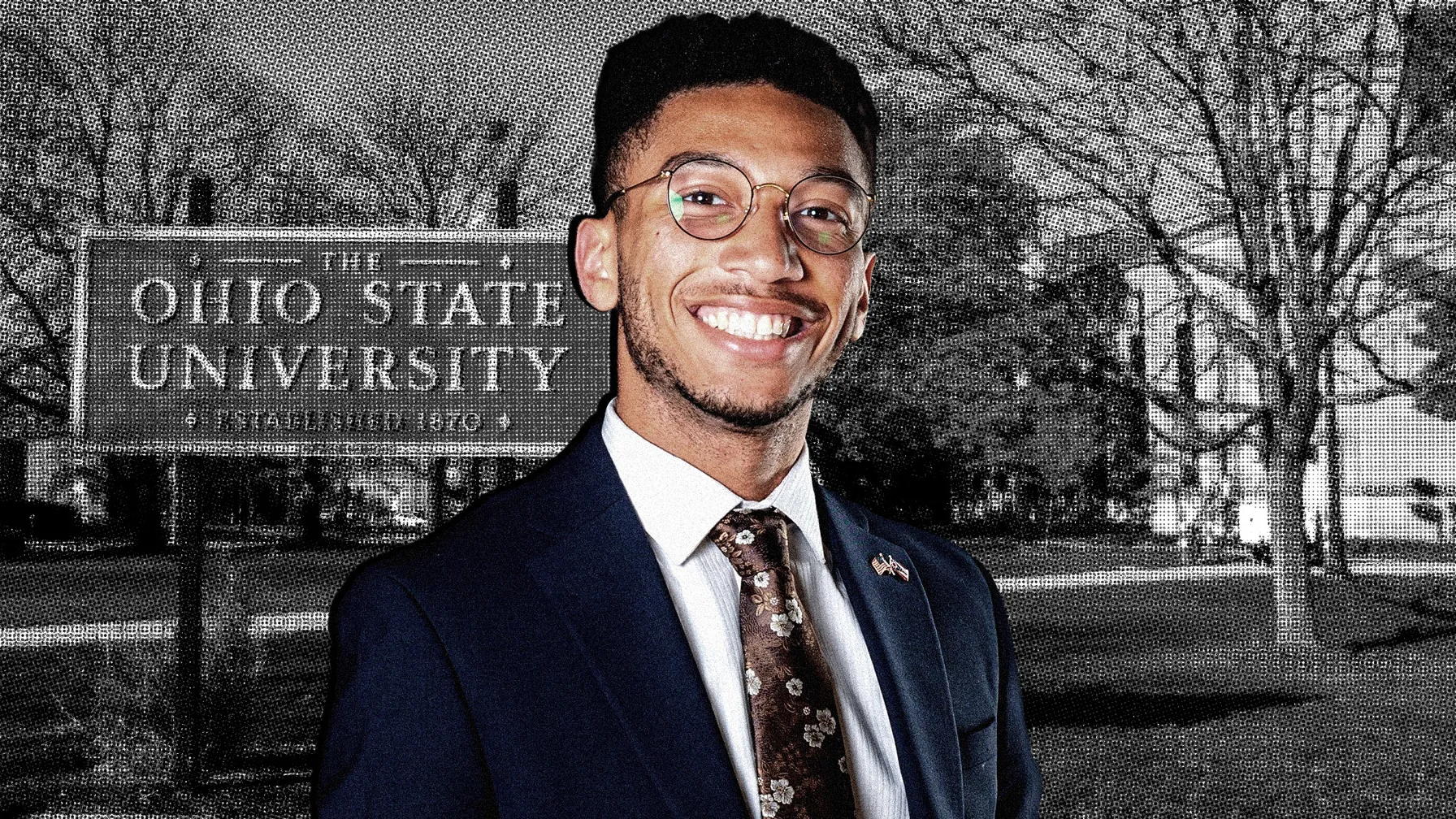
    Christopher Cade wants to be president someday. His inspiration largely comes from family members, who have been involved in local politics and activism since long before he was born. But policies from the Trump administration and the Ohio Legislature are complicating his college experience — and his plans to become a politician.

    Cade is a student at Ohio State University double-majoring in public policy analysis and political science with a focus on American political theory. He recalls his maternal grandmother, Maude Hill — who had a large hand in raising him — talking to him about her involvement in the Civil Rights Movement. She also worked at Columbus, Ohio-based affordable housing development nonprofit, Homeport, and has gone to Capitol Hill to speak with the state delegation multiple times. His dad is the senior vice president of the housing choice voucher program at the Columbus Metropolitan Housing Authority, and his older brother has a degree in political science and is interested in social justice advocacy work, Cade said. Last fall, his first on campus, Cade began applying to opportunities to bolster his resume for a future career in politics.

    The now 19-year-old secured an internship with the U.S. Department of Transportation and a work-study job on campus in the university’s Office of Diversity and Inclusion. But the federal opportunity was scrapped when the Trump administration imposed a hiring freeze and budget cuts. His campus job ended when the university announced it would “sunset” the diversity office in response to federal and state anti-diversity, equity and inclusion orders and actions, according to Cade.

    Related: Become a lifelong learner. Subscribe to our free weekly newsletter featuring the most important stories in education. 

    The work-study position was with the university’s Bell National Resource Center on the African American Male, which was founded to support Black men to stay in college. It’s a cause he was excited about. 

    “I would help order food or speak with students or do interviews,” said Cade. “I developed a good 20 different programs for the next year.” 

    In February, when the university announced it was closing the office, “I was like, ‘Well, so six months of work just for no reason,’” he said.

    OSU President Ted Carter released a statement on Feb. 27 saying the closure of the Office of Diversity and Inclusion was a response to both state and federal actions regarding DEI in public education. The move eliminated 17 staff positions, not including student roles, the university said. Programming and services provided by the Office of Student Life’s Center for Belonging and Social Change were also scrapped. 

    The change came before the Trump administration’s initial deadline for complying with a memo that threatened to cut funding for public colleges and universities, as well as K-12 schools, that offer DEI programs and initiatives. In March, the administration announced that OSU was one of roughly 50 universities under federal investigation for allegedly discriminating against white and Asian students in graduate admissions. Additionally, Ohio Gov. Mike DeWine signed legislation in March banning DEI programs in the state’s public colleges and universities. The legislation went into effect in June.

    Before the DEI office closed, Cade said, “I felt so heard and seen.” He’d attended a private, predominantly white, Catholic high school, he said. “It was not a place that supported me culturally and helped me understand more about who I am and my Blackness,” he recalled. At the university, though, “the programming we had throughout the year [was] about how to change the narrative on who a Black man is and what it means when you go out here and interact with people.

    “And then for them to close down all these programs, that essentially told me that I wasn’t cared about.”

    After the February announcement, students pushed back, organizing protests and a sit-in at the student union. But eventually, those efforts quieted.

    Cade says students felt like there was a “cloud of darkness” hanging over them. But he also thought of his Office of Diversity and Inclusion coworkers, some of whom had spent decades working there, helping students. In particular he thought of his former colleague Chila Thomas, who celebrated her fifth anniversary last year as the executive director of the Young Scholars Program. That program, which helps low-income aspiring first-generation college students get to and through college, was one of several of the office’s programs that will continue. The day after Carter’s announcement, she and others in the office spent time giving students space to talk through their feelings, despite the uncertainties surrounding their own employment, Cade said. 

    Related: A case study of what’s ahead with Trump DEI crackdowns: Utah has already cut public college DEI initiatives 

    Since the university crackdown on DEI, Cade said he’s experienced more discomfort on campus, even outright racism. He says he was approached by a white person who said, “I’m so glad they’re getting rid of DEI” and spit on his shoe and used a racial slur.  

    “I don’t know how that could ever be acceptable to anyone, but that was [when] a flip switched in my head,” Cade said. “I couldn’t sit down and be sad and silent. I had to stand up and make change.”

    In March, he traveled with other students to Washington, D.C., as part of the Undergraduate Student Government’s Governmental Relations Committee. They met with Ohio Rep. Troy Balderson and an aide, along with staffers from the offices of fellow Ohio lawmakers Sen. Bernie Moreno and Rep. Joyce Beatty, to discuss college affordability, DEI policies and the federal hiring freeze. Cade says he described how he was affected by the U.S. Department of Transportation canceling his internship.

    In Carter’s announcement, he stated that all student employees would be “offered alternative jobs at the university,” but Cade said during a meeting with Office of Diversity and Inclusion student employees, an OSU dean clarified that they would have to apply for new opportunities. With the policy changes meaning there were fewer work-study roles and more students in need of jobs, Cade saw the market as increasingly competitive, and he began to job hunt elsewhere. This summer he secured work with the Ohio Department of Transportation as a communications and policy intern. In October he began an intake assistant role in the Office of Civil Rights Compliance at the university. (Ohio State Director of Media and PR Chris Booker told Teen Vogue that the school could not comment on the experiences of individual students but that “all student employees and graduate associates impacted by these program changes were offered the opportunity to pursue transitioning into alternative positions at the university, as well as support in navigating that change.”)

    Although he was drawn to OSU for the John Glenn College of Public Affairs’ master’s program, Cade says he might have reconsidered schools had he known that the university would bend to lawmakers’ anti-DEI efforts. While he’s concerned about how education-related legislation and policies may continue to affect his college experience, he worries most about some of his peers. College is already so hard to navigate for so many young people, said Cade. “And this is just another thing that says, ‘Oh yeah, this isn’t for me.’”

    This story was published in partnership with Teen Vogue.
    The Hechinger Report provides in-depth, fact-based, unbiased reporting on education that is free to all readers. But that doesn’t mean it’s free to produce. Our work keeps educators and the public informed about pressing issues at schools and on campuses throughout the country. We tell the whole story, even when the details are inconvenient. Help us keep doing that.

    Join us today.

    Source link

  • More international students find home on US community college campuses

    More international students find home on US community college campuses

    As Thu Thu Htet, “T”, was nearing graduation at her high school in Burma, she knew she wanted to go abroad to study engineering. She wanted to study at the Rochester Institute of Technology in New York State, but didn’t want to spend tens of thousands of dollars a year in tuition, since international students don’t qualify for federal aid. 

    Instead, she decided to start her higher education journey at Monroe Community College, also in Rochester, where tuition is cheaper. T, now in her second semester, has made friends with dozens of other international students at MCC, who have helped her feel less lonely being so far away from family. 

    “There are times where I don’t feel like I fit in. Or I feel alone sometimes. The most important thing is the friends that you have,” she said.

    International student enrolments have surged at US community colleges ever since the pandemic, including this fall. As community colleges host more international students, administrators are looking for ways to make them feel welcome on campuses where most students are local commuters.

    One way international students at MCC can find support is through campus life. T serves as the president of the Global Union – a student-run club for international students, immigrant students, and anyone interested in learning about other cultures. Through her role, she greets new students, helps them to overcome challenges, and organises events to help them showcase their cultures. 

    “Sometimes, you need to be around people that have the same feeling as yours. When we are in the same club with immigrants, refugees, or other international students, we feel like we fit in with each other,” T said.

    An unexpected increase

    Because of President Trump’s policies, analysts predicted a 15% drop in total international students at American colleges and universities this fall. Experts warned that the Trump administration’s near month-long pause on visa interviews, travel bans, and war against many of the nation’s most prestigious universities would harm enrolment. 

    Instead, this fall’s international student enrolment across all degree programs, including OPT, grew by 0.8%, according to the Student and Exchange Visitor Information System (SEVIS) data that the Department of Homeland Security publishes.

    Community colleges have helped to move the needle. For associate degree programs, international student enrolment increased by 9.1%, with community colleges welcoming nearly 5,500 more students than last year. Meanwhile, enrolment shrunk slightly for master’s programs and hardly changed for bachelor’s programs.

    Rather than choosing not to study in the US this fall, it seems like students are choosing different kinds of degrees or schools. That’s according to Chris Glass, director of Boston College’s higher education program, who recently analysed the latest SEVIS data.

    “If we’re to take this data at face value, the system is far more resilient than the tumultuous headlines would suggest,” Glass previously told The PIE News .

    Based on his analysis, the over 9% growth of international students at community colleges may not be a fluke. Glass argues that international students gravitate toward schools with less political spotlight, more affordable tuition, and access to opportunities after graduation. Community colleges check all of those boxes.

    MCC is hosting more international students now than before the pandemic. This fall, the campus’ international student body grew by 35%, hosting 120 students from over 30 countries.

    MCC’s international recruiting efforts for soccer, baseball, and other sports has helped to draw students from across continents, said Carly O’Keefe, MCC’s assistant director of global education and international services. The current men’s and women’s soccer team roster has a combined 34 international students.

    In addition, unlike many other community colleges, MCC has dorms. For T, attending a college with on-campus dorms was critical, since she had no family or friends in Rochester to live with.

    O’Keefe said international students at MCC bring ideas and culture from across the globe, enriching a campus where most students are local. Some local students – limited by jobs, financial constraints, or family obligations – have never traveled overseas.

    “They’re able to make friendships with people from other countries that they maybe would have never connected with otherwise,” she said.

    Finding a community through campus life 

    The wall of the Global Union office is decorated with dozens of paintings of hot air balloons containing flags, created by students to represent their countries. Colourful cloth flags and souvenirs from across the world fill the room.

    “At the time when I saw the Korean flag, I was so proud,” said Onyu Cha, a first-semester international student from South Korea studying nursing.

    Hot air balloon paintings at Global Union office. Photo: MCC Global Union

    Onyu made friends with other Koreans through campus life and through her sister, who also lives in Rochester. Recently, she and other Korean students went to her sister’s house to cook food for the holiday of Chuseok, a mid-autumn harvest festival often referred to as Korean Thanksgiving. 

    Through her role as the vice-president of the Global Union, Onyu has got to learn about the cultures of other students. Currently, the club is planning for an event to celebrate holidays from across the world, all on one day. That’s similar to last year’s Global Fusion Festival – an event in the campus atrium to celebrate the cultures of all MCC students. It featured African drummers, Ukrainian dancers, and food from across the globe.

    Judichael Razafintsalama – a student from Madagascar who graduated from MCC last May – said serving as the Global Union president allowed him to support his fellow international students.

    Having international students on campus at a community college can be really enriching to a local community

    Dr. Melissa Whatley, William & Mary

    The summer before starting his first year at MCC, Razafintsalama landed in Rochester around 2am. When he got to his dorm, he realised he had no food. The vending machines were empty, the campus’ food services were closed, and he hadn’t set up rideshare on his phone. To get groceries, he walked two hours to a Walmart and back, carrying four bags while jet lagged. 

    Now, international students come together to help the Office of Global Education provide packages of canned food, granola bars and utensils for incoming international students. 

    “We even helped two of our students move into their apartment and make sure that everything is settled after going through what I went through,” Razafintsalama said.

    Razafintsalama said he’s had the chance to teach others at MCC about his country and his culture. Most students he encountered had never met anyone from Madagascar, the island nation off the southeastern coast of Africa.

    “They usually attach it to the cartoon movie,” he said. “It’s great because I can see that people are interested in my country and to see what it actually is like.”

    Supporting international students’ social and housing needs is critical to making them feel welcome, said Dr. Melissa Whatley, an assistant professor of higher education at William & Mary University. Her research group recently released a report on international education at community colleges, finding that 82% hosted international students. 

    Whatley hopes that these colleges are providing international students with campus life opportunities and, if they don’t have dorms, are helping students to find housing.

    “Having international students on campus at a community college can be really enriching to a local community, to the extent that the community is equipped to welcome them,” she said. 

    Concerns over travel ban

    Currently, the US hosts over 1.2 million international students or recent graduates, according to SEVIS data. The dataset doesn’t distinguish between students and graduates working temporarily through Optional Practical Training (OPT). More in-depth statistics will become available once the Institute of International Education publishes its annual report later in November

    However, because of President Trump’s travel ban, some prospective international students have been restricted from studying in the US. That includes Burmese students who didn’t secure a visa before June 9

    MCC has seen an uptick in Burmese students ever since a civil war broke out in the country, interrupting higher education for many students. The war began in 2021 when military forces toppled the country’s democratically elected government. Last spring, MCC still hosted more students from Burma than from any other country, O’Keefe said.

    Now, Burma is among the 12 countries included in Trump’s travel ban, impacting all immigrant and non-immigrant visas. Seven more countries are under a partial travel ban that impacts international student visas.

    As for international enrolments at MCC? “We’ll see how the trends change over the next few semesters. I would be surprised to see such a significant level of continued growth but we can hope things at least stay stable,” O’Keefe said in an email.

    The takeaway from this fall’s enrolment data is that students’ perceptions take a long time to change, said Gerardo Blanco, academic director of the Centre for International Higher Education at Boston College. He previously told The PIE that the 0.8% international student increase revealed in SEVIS records came as a surprise, but that doesn’t mean there won’t be a decline in coming years.

    “I hope the takeaway message is not that the US is invincible, in that even hostile policies towards international students cannot change perceptions,” he said.

    Source link

  • Rural teacher shortages could get worse thanks to Trump’s visa fee

    Rural teacher shortages could get worse thanks to Trump’s visa fee

    by Ariel Gilreath, The Hechinger Report
    November 7, 2025

    HALIFAX COUNTY, N.C.When Ivy McFarland first traveled from her native Honduras to teach elementary Spanish in North Carolina, she spent a week in Chapel Hill for orientation. By the end of that week, McFarland realized the college town on the outskirts of Raleigh was nowhere near where she’d actually be teaching.

    On the car ride to her school district, the city faded into the suburbs. Those suburbs turned into farmland. The farmland stretched into more farmland, until, two hours later, she made it to her new home in rural Halifax County.

    “I was like, ‘Oh my God, this is far,’” McFarland said. “It was shocking when I got here, and then I felt like I wanted to go back home.”

    Nine years later, she’s come to think of Halifax County as home.

    In this stretch of rural North Carolina, teachers hail from around the globe: Jamaica, the Philippines, Honduras, Guyana. Of the 17 teachers who work at Everetts Elementary School in the Halifax County school district, two are from the United States. 

    In this rural school district surrounded by rural school districts, recruiting teachers has become a nearly impossible task. With few educators applying for jobs, schools like Everetts Elementary have relied on international teachers to fill the void. Districtwide, 101 of 156 educators are international. 

    “We’ve tried recruiting locally, and it just has not worked for us,” said Carolyn Mitchell, executive director of human resources in the eastern North Carolina district of about 2,100 students. “Halifax is a rural area, and a lot of people just don’t want to work in rural areas. If they’re not people who are from here and want to return, it’s challenging.” 

    Around the country, many rural schools are contending with a shortage of teacher applicants that has ballooned into a crisis in recent years. Fewer students are enrolling in teacher training programs, leading to a shrinking pipeline that’s made filling vacancies one of the most challenging problems for school leaders to solve in districts with smaller tax bases and fewer resources than their suburban and urban peers. In certain grade levels and subject areas — like math and special education positions — the challenge is particularly acute. Now, some of the levers rural schools have used to boost their teacher recruitment efforts are also disappearing.

    This spring, the federal Department of Education eliminated teacher residency and training grants for rural schools. In September, President Donald Trump announced a $100,000 fee on new H-1B visa applications — visas hundreds of schools like Everetts Elementary use to hire international teachers for hard-to-staff positions — saying industries were using the visas to replace American workers with “lower-paid, lower-skilled labor.” A lawsuit filed by a coalition of education, union, nonprofit and other groups is challenging the fee, citing teacher shortages. Rural schools are also bracing for more cuts to federal funding next year.

    “We’re not only talking about a recruitment and retention problem. We’re talking about the collapse of the rural teacher workforce,” said Melissa Sadorf, executive director of the National Rural Education Association.

    Related: Become a lifelong learner. Subscribe to our free weekly newsletter featuring the most important stories in education. 

    Most of Halifax’s international teachers arrive on H-1B visas, which allow them to work in the U.S. for about five years with the possibility of a green card at the end of that period. About one-third of the district’s international teachers have J-1 visas, which let them work in the country for three years with the possibility of renewing it for two more. At the end of those five years, educators on J-1 visas are required to return to their home countries.

    A few years ago, Halifax County Schools decided to shift from hiring teachers on J-1 visas in favor of H-1B, hoping it would reduce teacher turnover and keep educators in their classrooms for longer. The results have been mixed, Mitchell said, because within a few years, some of their teachers ended up transferring to bigger, higher-paying districts anyway. 

    There are trade-offs for the teachers, too. Mishcah Knight came to the U.S. from Jamaica both to expand her skills and increase her pay as an educator. In the rural North Carolina county, finding transportation has been the biggest challenge for Knight, who teaches second grade. 

    She lacks a credit history needed to buy a car, leaving her reliant on carpooling to work. A single taxi driver serves the area, which doesn’t have public transit, Uber or Lyft. “Sometimes, he’s in Virginia,” Knight said. “It’s lucky when we actually get him to take us somewhere.”

    Being away from family also takes its toll on teachers. Nar Bell Dizon, who has taught music at Everetts Elementary since 2023, had to leave his wife and son back home in the Philippines. He visits in the summer, but during the school year, he sees them only through video calls. 

    “This is what life is — not everything is smooth,” Dizon said. “There will always be struggles and sacrifices.”

    Dizon’s first year in Everetts Elementary School was hard — it took time adapting to a different teaching style and classroom management. Now that he’s in his third year, he feels like he’s gotten his feet beneath him. 

    “When you can build a rapport with your students, things become easier,” Dizon said.

    When her international teachers are able to stay for longer, the students perform better, said Chastity Kinsey, principal of Everetts Elementary. “I know the benefit the teachers bring to the classroom,” Kinsey said. “After the first year or two, they normally take off like rock stars.” 

    Related: Trump’s cuts to teacher training leave rural school districts, aspiring educators in the lurch 

    Trump’s new fee does not address any of the challenges the Halifax district had with the H-1B visa, and it effectively slams the door on future hires. Now, the district will have to rely on J-1 visas to recruit new international teachers, meaning the educators will have to leave just as they’ve acclimated to their classrooms.

    “We just can’t afford to,” Mitchell said of paying the $100,000 fee. Other districts, she said, might turn to waivers allowing them to increase class sizes and hire fewer teachers, among other strategies.

    Since the applicant pool began drying up about a decade ago, the make-up of the district’s teaching staff has slowly shifted to international teachers. 

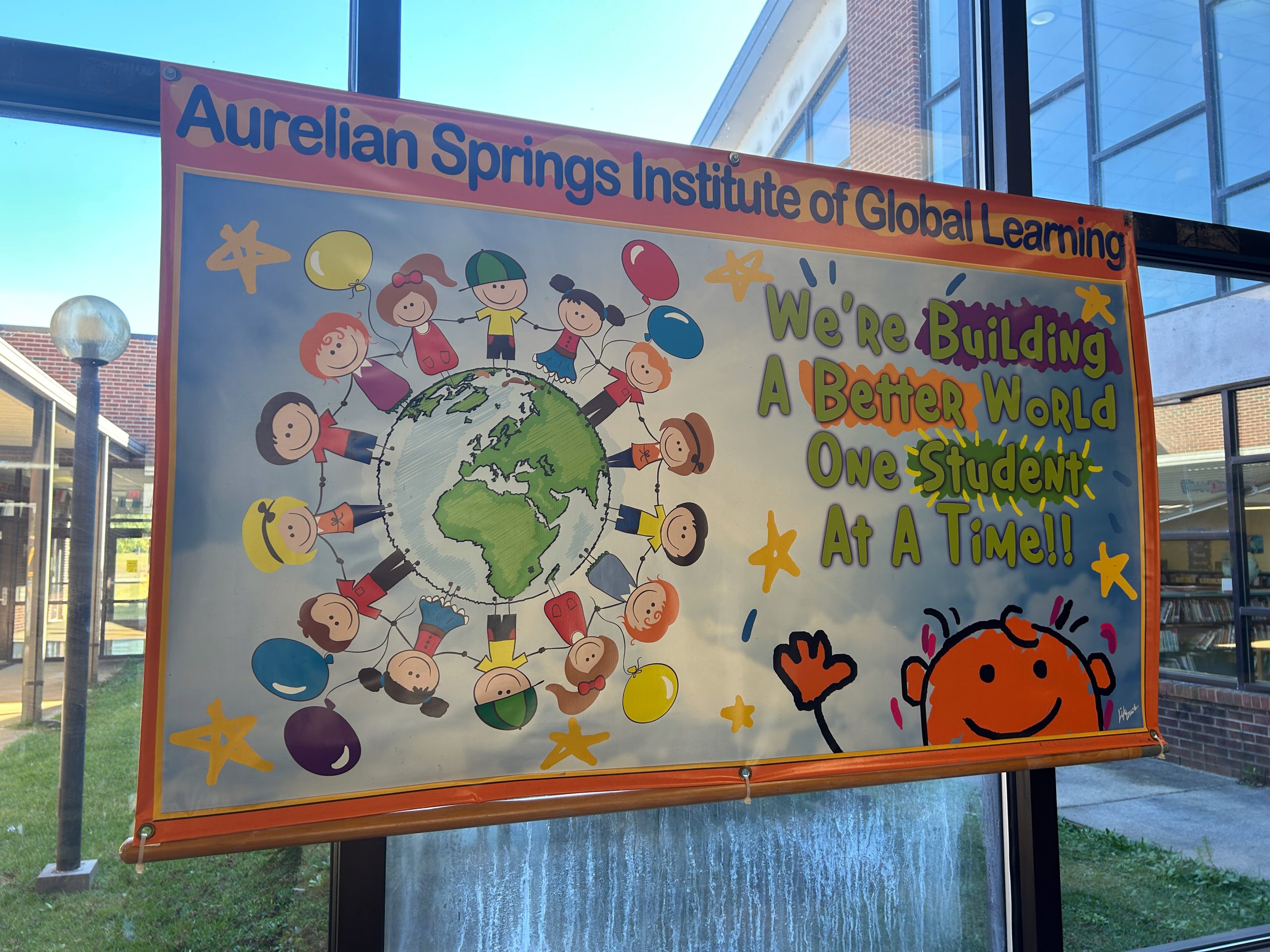
    At the heart of the problem is that when a position opens up, few, if any, citizens apply, said Katina Lynch, principal of Aurelian Springs Institute of Global Learning, an elementary school in Halifax County. 

    When Lynch had to hire a new fourth grade teacher this summer, she received three applications: Only one was a licensed teacher from the U.S.

    Nationally, about 1 in 8 teaching positions are either vacant or filled by teachers who are not certified for the position, according to data from the nonprofit Learning Policy Institute, published in July. In addition to fewer college students graduating with degrees in education, diminished public perception of the teaching profession and political polarization of schools are to blame, school leaders said. In some states, the growth of charter and private school options has made competing for teachers even harder. On top of a widening pay gap between rural and urban districts, it’s a perfect storm for schools in more remote parts of the country, said Sadorf.

    In rural Bunker Hill, Illinois, where more than 500 students attend two schools, some positions have gone unfilled for years. “We’ve posted for a school psychologist for years, never had anybody apply. We posted for a special ed teacher — have not had anybody apply. We’ve posted for a high school math teacher two years in a row,” said Superintendent Todd Dugan. “No applicants.”

    As a result, students often end up with a long-term substitute or an unlicensed student teacher. 

    When teachers do arrive in the district, Dugan works hard to try to get them to stick around. He pairs new teachers with experienced mentors, and uses federal funding to help those who want master’s degrees to afford them. 

    He also formed a calendar committee to give teachers input on which days they get off during the year. “More than pay, having at least a little bit of involvement, control and say in your work environment will cause people to stay,” said Dugan. It seems to be working: Bunker Hill’s teacher retention rate is more than 92 percent. 

    Related: Schools confront a new reality: They can’t count on federal money 

    Schools across the country face the same challenges to varying degrees. Several years ago, the Everett Area School District in southern Pennsylvania would receive 30 to 50 applications for a given position at its elementary schools, Superintendent Dave Burkett said. Now, they’re lucky if they get three or four.

    Last year, the district learned that a middle school science teacher would retire that summer. Just three people applied for the opening, and only one was certified for the role.

    “We offered the job before that person even left the building,” Burkett said. The candidate accepted it, but when it was time to fill out paperwork that summer, the teacher had taken a different job in a bigger district.

    One way Burkett has tried to address the shortage is to hire a permanent, full-time substitute teacher in each of its buildings. If a vacancy opens up that they haven’t been able to fill, the full-time substitute can step in until a permanent replacement is found. The permanent substitute makes more than a traditional sub and also receives health insurance. 

    Sadorf, with the National Rural Education Association, says other ways to help include introducing students to teacher training pathways starting in high school, building “grow-your-own” programs to train local people for teaching jobs, and offering loan forgiveness and housing support.

    Sadorf’s organization is in favor of creating an educator-specific visa track that would allow international teachers to be in communities for longer. The group is also in favor of exempting schools from the $100,000 H-1B fee. “Stabilizing federal support is something that really needs to be focused on at the federal level,” Sadorf said.

    At Everetts Elementary in Halifax County, McFarland, the educator from Honduras, is among the most senior teachers in the school. She has adapted to the rural community, where she met and fell in love with her now-husband. She gets asked sometimes why she hasn’t moved to a bigger city.

    “Education has taken me places I’ve never expected,” McFarland said. “For me, being here, there’s a reason for it. I see the difference I can make.”

    Contact staff writer Ariel Gilreath on Signal at arielgilreath.46 or at [email protected].

    This story about the visa fee was produced by The Hechinger Report, a nonprofit, independent news organization focused on inequality and innovation in education. Sign up for the Hechinger newsletter.

    This <a target=”_blank” href=”https://hechingerreport.org/federal-policies-risk-worsening-an-already-dire-rural-teacher-shortage/”>article</a> first appeared on <a target=”_blank” href=”https://hechingerreport.org”>The Hechinger Report</a> and is republished here under a <a target=”_blank” href=”https://creativecommons.org/licenses/by-nc-nd/4.0/”>Creative Commons Attribution-NonCommercial-NoDerivatives 4.0 International License</a>.<img src=”https://i0.wp.com/hechingerreport.org/wp-content/uploads/2018/06/cropped-favicon.jpg?fit=150%2C150&amp;ssl=1″ style=”width:1em;height:1em;margin-left:10px;”>

    <img id=”republication-tracker-tool-source” src=”https://hechingerreport.org/?republication-pixel=true&post=113282&amp;ga4=G-03KPHXDF3H” style=”width:1px;height:1px;”><script> PARSELY = { autotrack: false, onload: function() { PARSELY.beacon.trackPageView({ url: “https://hechingerreport.org/federal-policies-risk-worsening-an-already-dire-rural-teacher-shortage/”, urlref: window.location.href }); } } </script> <script id=”parsely-cfg” src=”//cdn.parsely.com/keys/hechingerreport.org/p.js”></script>

    Source link

  • Universal vouchers have public schools worried about market share

    Universal vouchers have public schools worried about market share

    by Laura Pappano, The Hechinger Report
    November 6, 2025

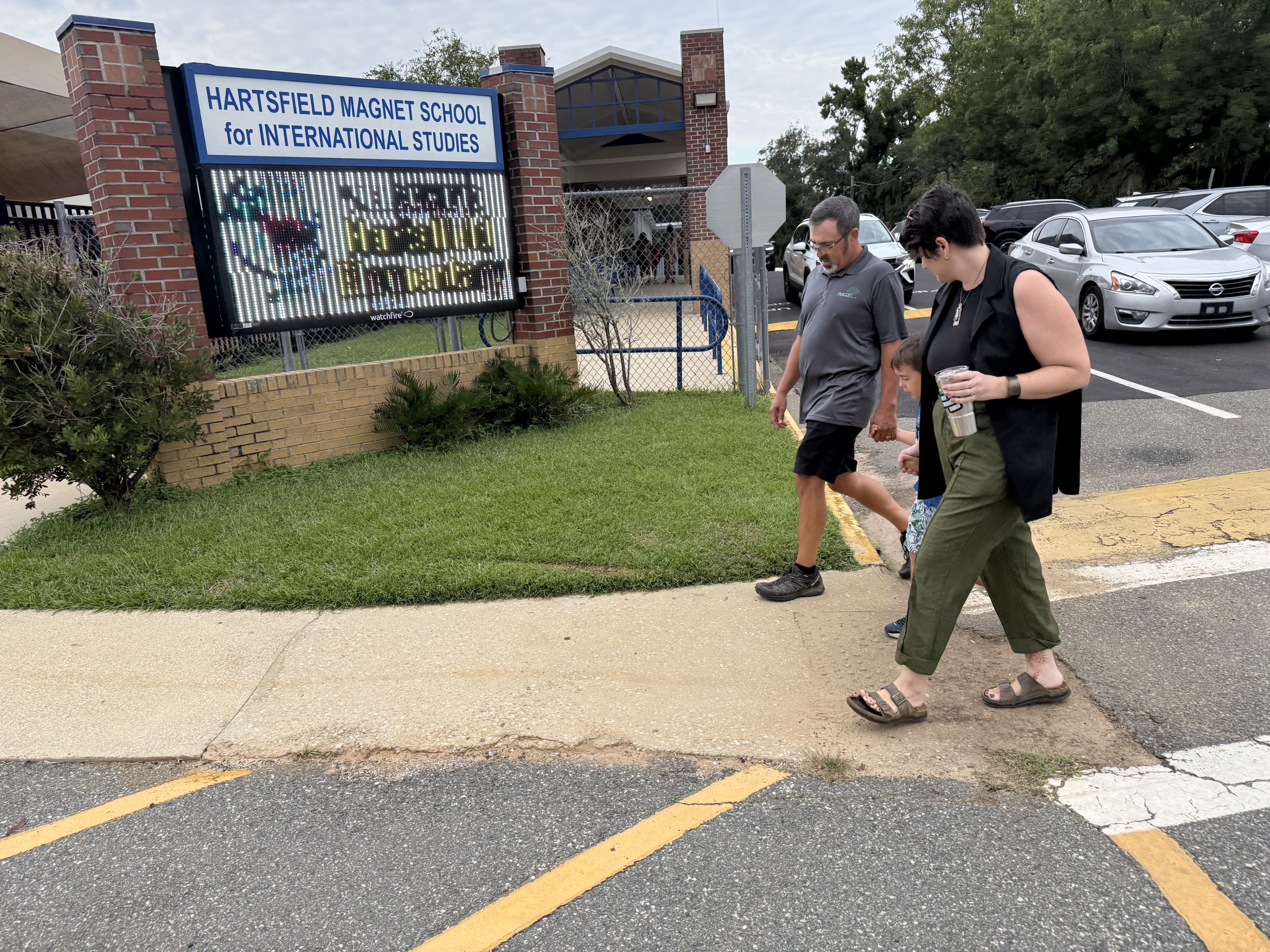
    TALLAHASSEE, Fla. — As principal of Hartsfield Elementary School in the Leon County School District, John Olson is not just the lead educator, but in this era of fast-expanding school choice, also its chief salesperson.

    He works to drum up enrollment by speaking to parent and church groups, offering private tours and giving Hartsfield parents his cell phone number. He fields calls on nights, weekends and holidays. With the building at just 61 percent capacity, Olson is frank about the hustle required: “Customer service is key.”

    It’s no secret that many public schools are in a battle for students. As school started in Florida this August, large districts, including Hillsborough, Miami-Dade and Orange, reported thousands fewer students, representing drops of more than 3 percent year over year. In Leon County, enrollment was down 8 percent from the end of last year.

    Part of the issue is the decline in the number of school-age children, both here and across the country. But there’s also the growing popularity of school choice in Florida and elsewhere — and what that means for school budgets. Leon County’s leaders anticipate cutting about $6 million next year unless the state increases its budget, which could mean reduced services for students and even school closures

    Other Florida school districts are also trimming budgets, and some have closed schools. As districts scramble for students, some are hiring consulting firms to help recruit, and also trying to sell seats in existing classes to homeschoolers. There is also the instability of students frequently switching schools — and of new charter or voucher schools that open and then shut down, or never open at all as promised. 

    Two years after the Florida Legislature expanded eligibility for school vouchers to all students, regardless of family income, nearly 500,000 kids in the state now receive vouchers worth about $8,000 each to spend on private or home education, according to Step Up For Students, the nonprofit that administers the bulk of the scholarships. And Florida’s Tax Credit Scholarship, created in 2001 to allow corporations to make contributions to private school tuition, is the model for the new federal school voucher program, passed this summer as part of Republicans’ “one big, beautiful bill.” The program, which will go into effect in 2027, lets individuals in participating states contribute up to $1,700 per year to help qualifying families pay for private school in exchange for a 1:1 tax credit.

    “We are in that next phase of public education,” said Keith Jacobs of Step Up For Students, who recruits public school districts to offer up their services and classes on its educational marketplace. “Gone are the days when a government institution or your zoned neighborhood school had the authority to assign a child to that school.”

    Related: Become a lifelong learner. Subscribe to our free weekly newsletter featuring the most important stories in education. 

    That’s a problem for Leon County Schools, which boasts a solid “B” rating from the state and five high schools in the top 20 percent of U.S. News’ national rankings. The district, located in the Florida panhandle, serves a population of around 30,000 students, 44 percent of whom are Black, 43 percent white and 6 percent Hispanic.

    “There’s just not enough money to fund two parallel programs, one for public schools and one for private schools,” said Rocky Hanna, the Leon County Schools superintendent. 

    Over the past few years, the Legislature has increased state and local funding for charter schools and created new rules to encourage more to open. (Charter schools are public schools that are independently operated; the Trump administration recently announced a $60 million increase in charter school funding this year, along with additional competitive grants.)

    But vouchers are the big disrupter. The nonprofit Florida Policy Institute projects annual voucher spending in Florida will hit $5 billion this year. In Leon County, money redirected from district school budgets to vouchers has ballooned from $3.2 million in 2020-21 to nearly $38 million this academic year, according to state and district figures. Enrollment in local charter schools has also ticked up, as has state per-pupil money directed to them, from $12 million to $15 million over that time.

    As a mark of how the landscape is shifting, Step Up For Students is now helping districts market in-person classes to homeschoolers on the group’s Amazon-like marketplace to fill seats and capture some money. Jacobs said Osceola County put its entire K-12 course catalog on the site. A year of math at a Miami elementary school? It’s $1,028.16. And just $514.08 for science, writing or P.E.

    “A student can come take a class for nine weeks, for a semester, for a year,” said Jacobs, adding that 30 districts have signed on. They are thinking, he said, “if we can’t have them full-time, we have them part-time.”

    Leon County is considering signing on, said Hanna, “to basically offer our courses à la carte.” It could be a recruitment tool, said Marcus Nicolas, vice chair of the county’s school board. “If we give them an opportunity to sniff the culture of the school and they like it, it could potentially bring that kid back full-time.”

    Related: Federal school vouchers: 10 things to know 

    Because of his shrinking budget, Hanna is looking at cuts to IT, athletics, arts, counselors, social workers and special tutors for struggling students, along with exploring school closings or consolidations

    Another challenge: With more school options, a growing number of students are leaving charters or private schools and enrolling in the district mid-year. Yet state allocations are based on October and February enrollment counts.

    Last year, 2,513 students — about 8 percent of Leon County’s district enrollment — entered after February. “Those are 2,500 students we don’t receive any money for,” Hanna said at an August school board meeting.

    Public schools do a lot well, but have been slow to share that, said Nicolas. “We got lazy, and we got complacent, and we took for granted that people would choose us because we’re the neighborhood school,” he said.

    Even as more parents choose private voucher schools, it’s not necessarily easy for them to determine if those schools are performing well. Although Florida State University evaluates the state’s Tax Credit Scholarship program, its report lags by about two years. It includes an appendix with voucher schools’ test scores, but there is no consequence for low performance. And scores cannot be compared, because even though schools must test students in grades 3 to 10, the schools pick which test to give.

    The result, said Carolyn Herrington, director of the Education Policy Center at Florida State University, who has written some of the evaluation reports, is that “the only real metric here is parent satisfaction,” which she said “is not sufficient.” 

    Yet many parents like the idea of school choice. According to a poll released last month by EdChoice, a school choice advocacy group, just over half of all Americans and 62 percent of parents broadly favor school vouchers.

    Related: Florida just expanded school vouchers — again. What does that really mean? 

    Mother Carrie Gaudio, who attended the local charter school her parents helped to found, was surprised when her son Ross visited Hartsfield Elementary, a Title I school that serves a high percentage of low-income households — and loved it.

    Before enrolling him, however, she and her husband, Ben Boyter, studied the enrollment situation. The school was under capacity, but they noticed more students coming each year.

    “We felt like if they ended up having to close a school it wouldn’t be one that’s had continual increases in enrollment,” she said, and added, “it’s a real bummer that you have to consider that, that you can’t just consider, ‘Are these people kind? Is my kid comfortable here? Do we feel safe here?’”

    Indeed, a school that a parent chooses one year may close the next.

    That’s what happened last year to Kenia Martinez. Since fall 2022, her two sons had attended a charter school run by Charter Schools USA, among the largest for-profit charter operators in the state. Last spring, she learned from a teacher that the school, Renaissance Academy, was shutting down. 

    Previously named Governor’s Charter Academy, Renaissance recently received a “D” grade, and saw enrollment fall from 420 students in 2020-21 to 220 last year. It also ran deficits, with a negative net position of $1.9 million at the end of the 2023-24 school year, according to the most recent state audit report. It closed last May.

    The school building was to re-open as Tallahassee Preparatory Academy — a private school — which was advertised on its website as a STEM school for “advanced learners” that would charge a fee, ranging from $1,500 to $3,200, in addition to the money paid through a voucher. 

    The school was to be run not by Charter Schools USA but by Discovery Science Schools, which operates several STEM charter schools in the state. The deal revealed a possible exit strategy for faltering charters: conversion to a private voucher school that gets state money, but without the requirement of state tests, grades or certified teachers — in other words, without accountability. 

    Yet as this school year began, the building remained dark. The parking lot was vacant. There was no response to the doorbell, or to emails or phone calls made to the contact information on the new school’s website. Discovery Science Schools’ phone number and email were not in service, and emails to founder Yalcin Akin and board president David Fortna went unanswered. A Charter Schools USA spokesperson, Colleen Reynolds, wrote in an email that “CUSA is not involved with the building located where the former Renaissance Academy Building stands” and did not provide additional clarification on why state audit reports indicate otherwise. 

    The Leon County School Board fiercely debated whether to sue Charter Schools USA for access to the building and its contents, which had been funded with taxpayer dollars. But school board members dropped the idea after learning that the building had a large lien, the result of how financing was crafted through Red Apple Development, the real estate arm of Charter Schools USA. Hanna was frustrated that for-profit companies benefited from taxpayer dollars — but still owned the assets.

    Related: Inside Florida’s ‘underground lab’ for far-right education policies

    When Renaissance announced it was closing, a friend of Martinez’s suggested her family apply for vouchers, which covered the full cost of attendance for her two sons at the Avant Schools of Excellence, a private Christian school with campuses in Tallahassee and Florida City. 

    The school takes vouchers (along with a school scholarship) as full payment, although its website lists tuition and fees at $22,775 per year. Martinez liked that the school is Christian, and small. None of their friends from Renaissance Academy are there. Martinez drives them 30 minutes each way, every day.

    The Tallahassee building that houses Avant was previously home to at least two charter schools. (One lasted a month.) Since the campus opened three years ago, said Donald Ravenell, who co-founded Avant with his wife, enrollment has jumped from 55 to 175.

    Ravenell, who on a recent weekday wore a red and blue tie (school colors are red, white and blue), attributed the school’s success to a focus on faith (“We talk about God all the time”) and the aim of preparing each student to be “a successful citizen and person.” 

    Like Olson at Hartsfield, he well understands this is a competitive marketplace. He wants his school to be known for offering a quality product, which he underscored by drawing a comparison to fried chicken.

    “I have nothing against Chester’s Chicken,” said Ravenell, referring to the quick-service chain sold in gas stations and rest stops. But he expects Avant to reach for more: “We want to be Chick-fil-A.”

    Contact editor Caroline Preston at 212-870-8965, via Signal at CarolineP.83 or on email at [email protected]

    This story about school vouchers was produced by The Hechinger Report, a nonprofit, independent news organization focused on inequality and innovation in education. Sign up for the Hechinger newsletter.

    This <a target=”_blank” href=”https://hechingerreport.org/universal-vouchers-have-public-schools-worried-about-something-new-market-share/”>article</a> first appeared on <a target=”_blank” href=”https://hechingerreport.org”>The Hechinger Report</a> and is republished here under a <a target=”_blank” href=”https://creativecommons.org/licenses/by-nc-nd/4.0/”>Creative Commons Attribution-NonCommercial-NoDerivatives 4.0 International License</a>.<img src=”https://i0.wp.com/hechingerreport.org/wp-content/uploads/2018/06/cropped-favicon.jpg?fit=150%2C150&amp;ssl=1″ style=”width:1em;height:1em;margin-left:10px;”>

    <img id=”republication-tracker-tool-source” src=”https://hechingerreport.org/?republication-pixel=true&post=113229&amp;ga4=G-03KPHXDF3H” style=”width:1px;height:1px;”><script> PARSELY = { autotrack: false, onload: function() { PARSELY.beacon.trackPageView({ url: “https://hechingerreport.org/universal-vouchers-have-public-schools-worried-about-something-new-market-share/”, urlref: window.location.href }); } } </script> <script id=”parsely-cfg” src=”//cdn.parsely.com/keys/hechingerreport.org/p.js”></script>

    Source link

  • Colleges build environmental lessons into degrees

    Colleges build environmental lessons into degrees

    by Olivia Sanchez, The Hechinger Report
    November 5, 2025

    LA JOLLA, Calif. — On a Thursday this fall, hundreds of students at the University of California, San Diego, were heading to classes that, at least on paper, seemed to have very little to do with their majors. 

    Hannah Jenny, an economics and math major, was on their way to a class on sustainable development. Angelica Pulido, a history major who aspires to work in the museum world, was getting ready for a course on gender and climate justice. Later that evening, others would show up for a lecture on economics of the environment, where they would learn how to calculate the answer to questions such as: “How many cents extra per gallon of gas are people willing to pay to protect seals from oil spills?”

    Although most of these students don’t aspire to careers in climate science or advocacy, the university is betting that it’s just as important for them to understand the science and societal implications of climate change as it is for them to understand literature and history, even if they’re not planning to become writers or historians. UCSD is perhaps the first major public university in the country to require all undergraduate students to take a class on climate change to earn their degree. 

    The requirement, which rolled out with first-year students last fall, came about because UCSD leaders believe students won’t be prepared for the workforce if they don’t understand climate change. Around the globe, global warming is already causing severe droughts, water scarcity, fires, rising sea levels, flooding, storms and declining biodiversity; leaders at UCSD argue every job will be affected. 

    And even as President Donald Trump dismisses climate change as a hoax and cancels funding for research on it, other colleges are also exploring how to ensure students are knowledgeable about the subject. Arizona State University began requiring that students take a class in sustainability last year, while San Francisco State University added a climate justice class requirement to begin this fall. 

    “You can’t avoid climate change,” said Amy Lerner, a professor in the urban planning department at UCSD. “You can’t escape it in the private sector. You can’t escape it in the public sector. It’s just everywhere.” Students, she said, must be made ready to engage with all of its likely consequences.

    Related: Want to read more about how climate change is shaping education? Subscribe to our free newsletter.

    UCSD, a public university that serves roughly 35,000 undergraduate students, is not demanding that everyone sign up for Climate Change 101. Instead, students can fulfill the requirement by taking any of more than 50 classes in at least 23 disciplines across the university, including sustainable development, the course Jenny is taking. 

    There’s also psychology of the climate crisis, religion and ecology, energy economics, and several classes in the environmental science and oceanography departments, among others. And leaders at the university are working to develop more classes that satisfy the requirement, including one on the life cycle of a computer.

    Bryan Alexander, an adjunct professor at Georgetown University and author of a book on higher education and the climate crisis, said that while colleges have long taught about climate change in classes related to ecology, climatology and environmental science, it’s only been in the last decade or so that he’s seen other disciplines tackle the topic. 

    Climate change, Alexander said, “is the new liberal arts” — and colleges should take it seriously. 

    K. Wayne Yang, a UCSD provost who served on the original group that advocated for the requirement, said every industry and career field will experience the effects of climate change in some way. Health care providers need to know how to treat people who have been exposed to extreme heat or wildfire smoke; psychologists need to understand climate anxiety; and café owners need to know how the price of coffee changes in response to droughts or other natural disasters in coffee-growing regions.  

    Jenny, the senior taking a class on sustainable development, is eager to get answers to a question that has, in their three years as an economics and mathematics major, become difficult not to ponder: How can economic growth be the silver bullet of societal change if it has so many negative consequences for the planet?

    “It’s definitely my hope that this is a class that will teach me something new about how to consider humanity’s path forward without destroying this earth, without destroying each other, without sacrificing quality of life for any person on this planet,” Jenny said. 

    Jenny isn’t subject to the requirement because they entered college before it rolled out. But they said they like the idea of encouraging students to step outside their comfort zones and fields of study and, in many cases, consider their future career paths in the context of the changing climate.

    Other students, like junior Pulido, don’t see a specific link between climate change and their future careers. Pulido, who has spent the last few years working in the visitors center at San Diego’s Balboa Park and aspires to work in museums, said she signed up for the gender and climate justice class simply because it sounded interesting to her. She believes climate change is important, and she’s hoping that taking this class will help give her a better idea of how its role in history and might play into her career.

    Related: How colleges can become ‘living labs’ for combating climate change  

    Colleges are taking different approaches to teaching their students about climate change, with some requiring a course in sustainability, a broad discipline that goes beyond the specific scientific phenomenon of climate change.

    At Arizona State, sustainability classes can cover anything about how human, social, economic, political and cultural choices affect human and environmental well-being generally, said Anne Jones, the university’s vice provost for undergraduate education.

    Dickinson and Goucher colleges have had such requirements since 2015 and 2007, respectively. 

    At San Francisco State University, leaders said they instead chose to require climate justice for all students, beginning with the class of 2029, because of the urgency of understanding how climate change affects communities differently. 

    Students need to understand broader systems of oppression and privilege so that they can address the unequal effects of climate change for “communities of color, low-income communities, global south communities and other marginalized communities,” said Autumn Thoyre, co-director of Climate HQ, the university’s center for climate education, research and action.

    Yang and other UCSD leaders believe that, despite the increased politicization of climate change under Trump, they’ve received little pushback on the new requirement because of the university’s reputation as a climate-concerned institution. (It descended from the Scripps Institution of Oceanography, initially founded in 1903.) But this model may not work as well on other campuses. 

    In communities where people’s livelihoods depend on activities that contribute to climate change, like coal mining or oil production, educators may have to modify their approach so as to not come off as offensive or threatening, said Jo Tavares, director of the California Center for Climate Change Education at West Los Angeles College. 

    “Messaging is so important, and education cannot be done in a way that just forces facts upon people,” Tavares said. 

    Related: One state mandates teaching about climate change in almost all subjects — even PE

    At UCSD, to meet the graduation requirement, a course must be at least 30 percent about climate change: For example, a class that meets twice a week for a 10-week term must have at least six of its 20 sessions be about climate change. And the course syllabus must address at least two of the following four categories: the scientific aspects; human and social dimensions; project-based learning; or solutions.

    The first time Lerner, the urban studies professor, applied for her sustainable development course to count toward the requirement, in July 2024, the committee told her she needed to better explain how the class addressed climate change. It wasn’t enough to simply have “sustainable” in the course name, committee members told her; she had to better articulate the role of climate change in sustainable development, a course she’s been teaching some version of for nearly 20 years. 

    Her students helped her go through the syllabus and identify all the points where she was teaching about how development contributes to climate change, even if she wasn’t explicitly putting those words to paper. After Lerner revised the descriptions of the class topics and made a few additions, the class was approved, she said. 

    On that fall Thursday, Lerner walked around her large glass-walled classroom while discussing development and globalization with the 65 undergraduate students in her sustainable development class. They covered how to balance equity, economy and environment in development, as well as various ways to measure the well-being of societies, including gross national income, food security, birthrate and infant mortality, happiness, fertility, education and lifespan. Lerner peppered her lecture with jokes and relatable examples, asking, for example, how many siblings students had before explaining the role of fertility and birth rate in a healthy society. (One student had 12, but the average was closer to two.)

    Lerner, who now chairs the committee that decides which classes meet the requirement, said most of her students come in with the understanding that climate change is caused by rising levels of carbon dioxide entering the atmosphere, and some have even used an online tool to calculate their own carbon footprints. Often, their education has been focused on the hard science aspect of climate change, but they haven’t learned about what society has experienced as a result of climate change, she said. 

    When she asks them what can be done about climate change, she said, “they’re deer in the headlights.”

    Related: Changing education could change the climate

    Across campus, economics professor Mark Jacobsen teaches a lecture class every Thursday night on the economics of the environment. It meets the climate change requirement, but it also covers a core economics idea, he said: achieving efficiency. 

    Jacobsen is teaching students the formulas and methods they’ll need to answer questions like whether it’s worth it to spend $1 billion now to build renewable energy sources to avoid $10 billion in natural disaster cleanup in 30 years.

    Though Jenny hasn’t taken Jacobsen’s class, this is exactly the type of dilemma they’re worried about. 

    Jenny, a public transit enthusiast so dedicated that they got a commercial driver’s license just to drive for Triton Transit, the campus bus system, said the requirement encourages students to face the climate crisis rather than shy away from it. 

    “It can be easy to kind of put your head down and be like, ‘That is too big for me to think about, and too scary,’” Jenny said. But it’s imperative, they added, that students be “forced to reckon with it and think about it and talk about it, to have that knowledge kind of swirling around in your head.” 

    Contact staff writer Olivia Sanchez at 212-678-8402 or [email protected]

    This story about climate literacy was produced by The Hechinger Report, a nonprofit, independent news organization focused on inequality and innovation in education. Sign up for our climate and education newsletter and for our higher education newsletter. Listen to our higher education podcast.

    This <a target=”_blank” href=”https://hechingerreport.org/climate-change-is-the-new-liberal-arts-colleges-build-environmental-lessons-into-degrees/”>article</a> first appeared on <a target=”_blank” href=”https://hechingerreport.org”>The Hechinger Report</a> and is republished here under a <a target=”_blank” href=”https://creativecommons.org/licenses/by-nc-nd/4.0/”>Creative Commons Attribution-NonCommercial-NoDerivatives 4.0 International License</a>.<img src=”https://i0.wp.com/hechingerreport.org/wp-content/uploads/2018/06/cropped-favicon.jpg?fit=150%2C150&amp;ssl=1″ style=”width:1em;height:1em;margin-left:10px;”>

    <img id=”republication-tracker-tool-source” src=”https://hechingerreport.org/?republication-pixel=true&post=113195&amp;ga4=G-03KPHXDF3H” style=”width:1px;height:1px;”><script> PARSELY = { autotrack: false, onload: function() { PARSELY.beacon.trackPageView({ url: “https://hechingerreport.org/climate-change-is-the-new-liberal-arts-colleges-build-environmental-lessons-into-degrees/”, urlref: window.location.href }); } } </script> <script id=”parsely-cfg” src=”//cdn.parsely.com/keys/hechingerreport.org/p.js”></script>

    Source link

  • A shuttered government was not the lesson I hoped my Texas students would learn on a trip to Washington D.C

    A shuttered government was not the lesson I hoped my Texas students would learn on a trip to Washington D.C

    After decades serving in the Marine Corps and in education, I know firsthand that servant leadership and diplomacy can and should be taught. That’s why I hoped to bring 32 high school seniors from Texas to Washington, D.C., this fall for a week of engagement and learning with top U.S. government and international leaders.  

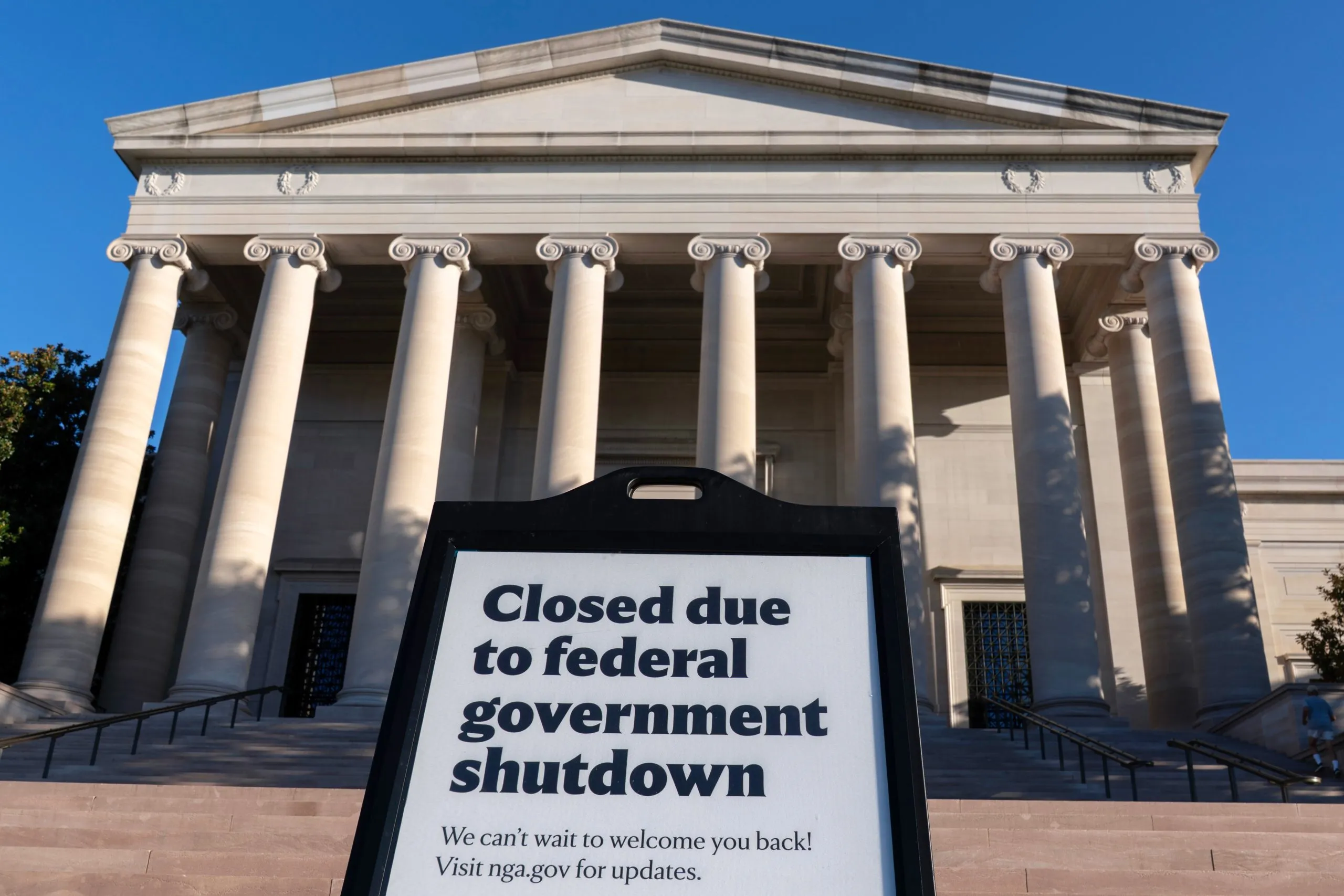
    Instead of open doors, we faced a government shutdown and had to cancel our trip. 

    The shutdown impacts government employees, members of the military and their families who are serving overseas and all Americans who depend on government being open to serve us — in businesses, schools and national parks, and through air travel and the postal service.  

    Our trip was not going to be a typical rushed tour of monuments, but a highly selective, long-anticipated capstone experience. Our plans included intensive interaction with government leaders at the Naval Academy and the Pentagon, discussions at the State Department and a leadership panel with senators and congressmembers. Our students hoped to explore potential careers and even practice their Spanish and Mandarin skills at the Mexican and Chinese embassies.  

    The students not only missed out on the opportunity to connect with these leaders and make important connections for college and career, they learned what happens when leadership and diplomacy fail — a harsh reminder that we need to teach these skills, and the principles that support them, in our schools. 

    Related: A lot goes on in classrooms from kindergarten to high school. Keep up with our free weekly newsletter on K-12 education.  

    Senior members of the military know that the DIME framework — diplomatic, informational, military and economic — should guide and support strategic objectives, particularly on the international stage. My own time in the Corps taught me the essential role of honesty and trust in conversations, negotiations and diplomacy. In civic life, this approach preserves democracy, yet the government shutdown demonstrates what happens when the mission shifts from solving problems to scoring points.  

    Our elected leaders were tasked with a mission, and the continued shutdown shows a breakdown in key aspects of governance and public service. That’s the real teachable moment of this shutdown. Democracy works when leaders can disagree without disengaging; when they can argue, compromise and keep doors open. If our future leaders can’t practice those skills, shutdowns will become less an exception and more a way of governing. 

    Students from ILTexas, a charter network serving over 26,000 students across the state, got a lesson in failed diplomacy after the government shutdown forced cancellation of their long-planned trip to the nation’s capital. Credit: Courtesy International Leadership of Texas Charter Schools

    With opposing points of view, communication is essential. Bridging language is invaluable. As the adage goes, talk to a man in a language he understands, that goes to his head. Speak in his own language, that goes to his heart. That is why, starting in kindergarten, we teach every student in our charter school network English, Spanish and Mandarin Chinese.  

    Some of our graduates will become teachers, lawyers, doctors and entrepreneurs. Others will pursue careers in public service or navigate our democracy on the international stage. All will enter a world more fractured than the one I stepped into as a Marine. 

    While our leaders struggle to find common ground, studies show that nationally, only 22 percent of eighth graders are proficient in civics, and fewer than 20 percent of American students study a foreign language. My students are exceptions, preparing to lead in three languages and through servant leadership, a philosophy that turns a position of power into a daily practice of responsibility and care for others.  

    Related: COLUMN: Students want more civics education, but far too few schools teach it 

    While my students represent our ILTexas schools, they also know they are carrying something larger: the hopes of their families, communities and even their teenage peers across the country. Some hope to utilize their multilingual skills, motivated by a desire to help the international community. Others want to be a part of the next generation of diplomats and policy thinkers who are ready to face modern challenges head-on.  

    To help them, we build good habits into the school day. Silent hallways instill respect for others. Language instruction builds empathy and an international perspective. Community service requirements (60 hours per high school student) and projects, as well as dedicated leadership courses and optional participation in our Marine Corps JROTC program give students regular chances to practice purpose over privilege. 

    Educators should prepare young people for the challenges they will inherit, whether in Washington, in our communities or on the world stage. But schools can’t carry this responsibility alone. Students are watching all of us. It’s our duty to show them a better way. 

    We owe our young people more than simply a good education. We owe them a society in which they can see these civic lessons modeled by their elected leaders, and a path to put them into practice.  

    Eddie Conger is the founder and superintendent of International Leadership of Texas, a public charter school network serving more than 26,000 students across the state, and a retired U.S. Marine Corps major. 

    Contact the opinion editor at [email protected].  

    This story about the government shutdown and students was produced by The Hechinger Report, a nonprofit, independent news organization focused on inequality and innovation in education. Sign up for Hechinger’s weekly newsletter.  

    The Hechinger Report provides in-depth, fact-based, unbiased reporting on education that is free to all readers. But that doesn’t mean it’s free to produce. Our work keeps educators and the public informed about pressing issues at schools and on campuses throughout the country. We tell the whole story, even when the details are inconvenient. Help us keep doing that.

    Join us today.

    Source link

  • At Moms for Liberty summit, parents urged to turn their grievances into lawsuits

    At Moms for Liberty summit, parents urged to turn their grievances into lawsuits

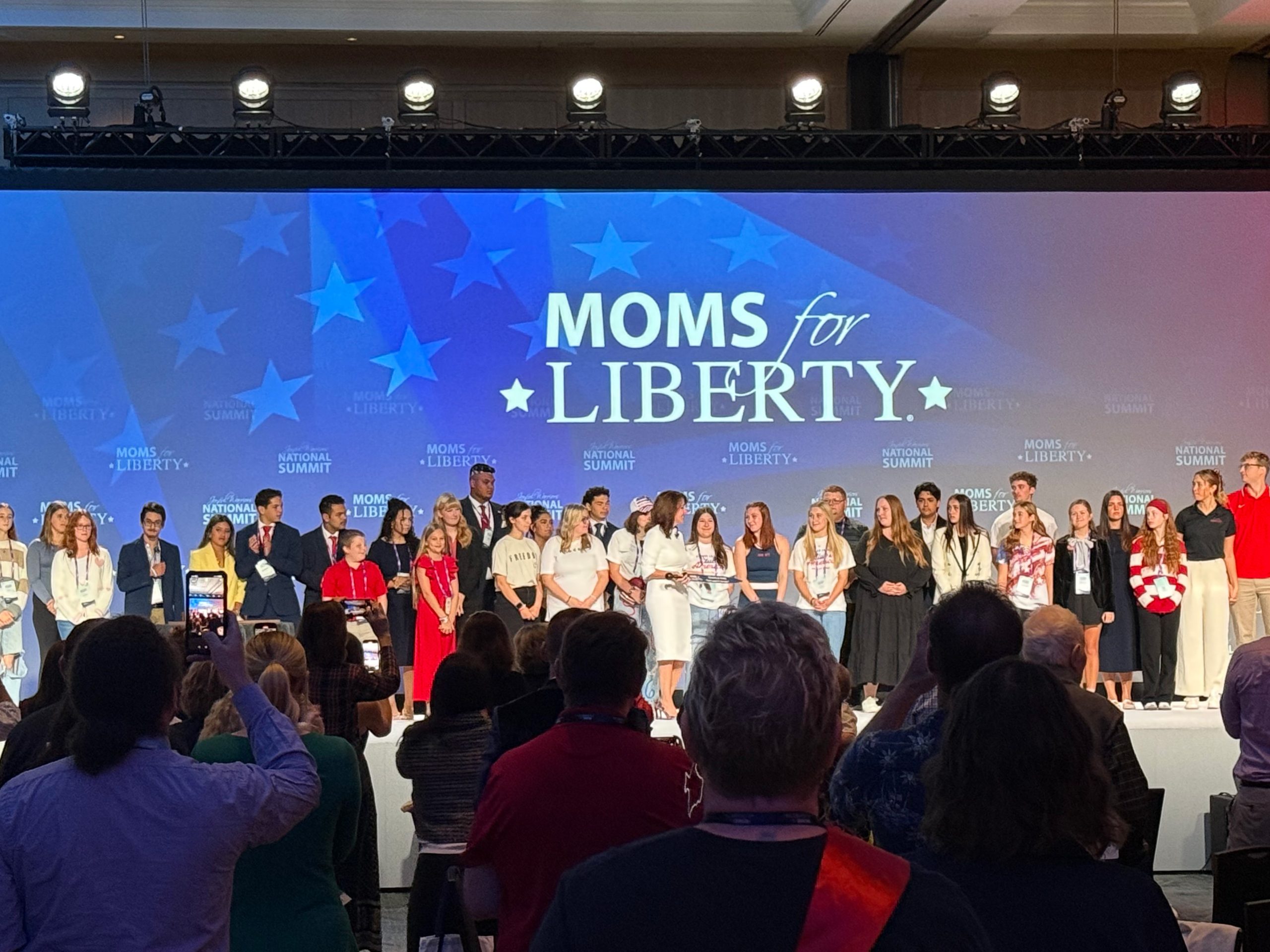
    KISSIMMEE, Fla. — It’s not a rebrand. But the Moms for Liberty group that introduced itself three years ago as a band of female “joyful warriors” shedding domestic modesty to make raucous public challenges to masks, books and curriculum, is trying to glow up.

    The group’s national summit this past weekend at a convention center outside Orlando leaned into family (read: parental rights), faith — and youth. The latter appeared to be a bid to join the cool kids who are the new face of conservatism in America (hint: young, Christian, very male), as well as a recognition of the group’s “diversity,” which includes grandparents, men and kids. 

    But even as the youth — including 20- and 30-something podcasters and social media influencers, as well as student members of the late Charlie Kirk’s Turning Point USA — brought a high-energy vibe, stalwart members got a new assignment. Where past Moms for Liberty attendees were urged to run for school board, this year they were encouraged to turn their grievances into legal challenges. 

    Moms for Liberty CEO and co-founder Tina Descovich acknowledged that while many of them had experienced backlashes as a result of running for school board or publicly challenging books, curricula and policies, they needed to continue the fight. (The more pugnacious co-founder, Tiffany Justice, is now at Heritage Action, an arm of right-wing think tank The Heritage Foundation.) 

    “You have lost family, you have lost friends, you have lost neighbors, you’ve lost jobs, you’ve lost whole careers,” she said. Yet she insisted that it was vital that they “shake off the shackles of fear and stand for truth or we are going to lose Western civilization as a whole.”

    Related: Become a lifelong learner. Subscribe to our free weekly newsletter featuring the most important stories in education. 

    The gathering held up “the free state of Florida” as an example of Republican policies to be emulated, including around school choice and parental rights. The state’s attorney general, James Uthmeier, boasted of having created a state Office of Parental Rights last spring, describing it as “a law firm for parents.” 

    He trumpeted the state’s lawsuit against Target over the “market risks” of LGBTQ+ pride-themed merchandise and encouraged parents to reach out with potential legal actions. “If you’re identifying one of these wrongs that’s violating your rights and then subjecting our kids to danger and evil, then we want to know about it,” he said. “And we’re going to bring the heat in court to shut it down.”

    Tina Descovich, CEO and co-founder of Moms for Liberty, was interviewed on Real America’s Voice, a conservative news and entertainment network that set up a remote studio outside of the Sun Ballroom at the Moms for Liberty national summit. Credit: Laura Pappano for The Hechinger Report

    The shifting legal landscape, not just in Florida but nationally, had speakers gushing about the opportunity to file new challenges, particularly in the wake of the Supreme Court decision in Mahmoud v. Taylor in June. It gives parents broad power to object to school materials, including with LGBTQ+ themes, and the right to remove their children from public school on days when such materials are discussed. 

    “This is where we need to take that big Supreme Court victory and start fleshing it out,” said Matt Sharp, senior counsel at Alliance Defending Freedom, a Christian law firm. He added that they were “needing warriors, joyful warriors, to file cases to start putting meat on the bones of what that does.” 

    The directive to file suit was not just around opt-out policies, which were the basis for the Mahmoud case. (Moms for Liberty has opt-out forms and instructions on its website.) Rather, attendees were also urged to file lawsuits in support of school prayer; against school policies that let students use different names and pronouns without parental consent (what Moms for Liberty terms “secret transitions”); and to give parents access to surveys students take at school, including around mental health.

    “We need people willing to stand up legally and be, you know, named plaintiffs,” Kimberly S. Hermann, president of the Southeastern Legal Foundation, a conservative policy group, said on a panel featuring two moms who sued their school districts. Winning a lawsuit or even just bringing one in one state, said Hermann, can get other school districts and states to adopt policies, presumably to avoid lawsuits themselves. 

    “One offensive litigation can have this amazing ripple effect,” she said. She and others made clear that there is staff to provide support. The legal groups will “stand with you,” said Sharp, “whether you’re passing the law or passing the local policy all the way to litigating these cases.”

    Even as speakers criticized public schools particularly around LGBTQ+ issues, not as a form of inclusion but as foisting views into classrooms, they relished the chance to infuse their values into schools. 

    Filing these lawsuits is more than “just fighting for your role as parents,” Sharp told parents in a breakout session. “You’re ultimately fighting for your kids’ ability to be in their schools and make a difference, to be the salt and light in those classrooms with their friends and to take our message of freedom, of faith, of justice and to really spread it all across the schools.”

    Related: America’s schools and colleges are operating under two totally different sets of rules for sex discrimination 

    Overall, this year’s Moms for Liberty event lacked the obvious drama of recent years. The flood of protesters in 2023 in Philadelphia required a large police presence and barricades around the hotel, along with warnings not to wear Moms for Liberty lanyards on the streets. 

    This year, there were no protests. That was partly because the event was held in a secluded resort convention center that could accommodate 800 (larger than the 500-ish of past hotels). But the group failed to fill the venue or attract much media attention. There was on-location broadcast by Real America’s Voice, a conservative news and entertainment network, from a set outside the Sun Ballroom. (Steve Bannon interviewed Descovich on his show, “The War Room.”)

    It also didn’t draw opposition because protesters had a bigger target. Saturday saw “No Kings” rallies across the country, with thousands decrying what they see as President Donald Trump’s authoritarianism. “I forgot it was happening since they’re mostly ignored these days,” state Sen. Carlos Guillermo Smith, (D-Orlando) and a senior advisor to LGBTQ+ rights group Equality Florida, said in a text message about the Moms for Liberty event. Liz Mikitarian, founder of the national group, Stop Moms for Liberty, which is based in Florida, said the moms “are still a threat” but not worth organizing a protest against. 

    It was also a quieter affair than last year’s in Washington, D.C. There, Trump’s appearance fed a party atmosphere with Southern rock, sequined MAGA outfits and a cash bar. (This year, Trump appeared, but only in a prerecorded video message.)

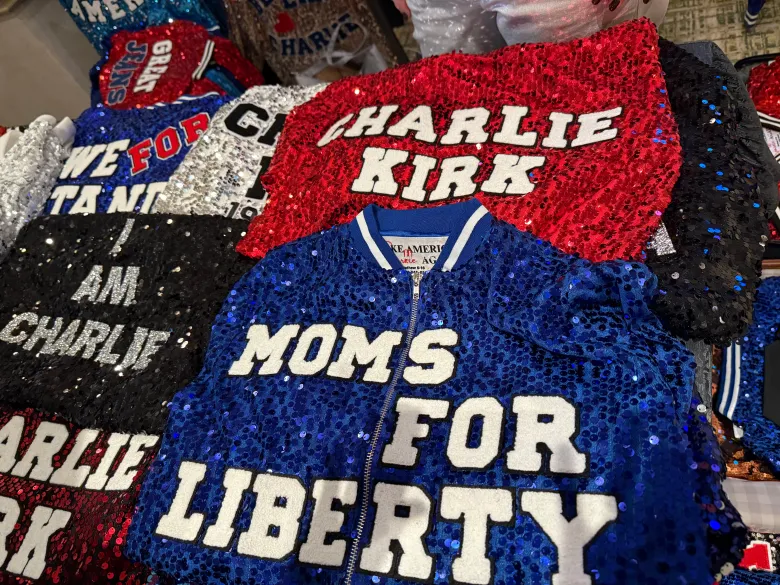
    Sequined merchandise for sale at the Moms for Liberty gathering by the company Make America Sparkle Again included tops and jackets that paid tribute to Charlie Kirk, the slain founder of Turning Point USA. Credit: Laura Pappano for The Hechinger Report

    The three-day event, of course, aired familiar grievances in familiarly florid language — conservative school choice activist Corey DeAngelis railed against teacher unions over the “far-left radical agenda that they’re trying to push down children’s throats in the classroom.” Other sessions covered the expected — the alleged dangers of LGBTQ+ policies, in sports, restrooms, school curricula and books — but there was also discussion of concerns (shared on left and right) over youth screen use, online predators and artificial intelligence.

    The event made room for MAHA, the Make America Healthy Again movement led by Robert F. Kennedy Jr., the secretary of Health and Human Services. Descovich interviewed Dr. Joseph Ladapo, the Florida surgeon general who is working to eliminate all vaccine mandates for the state’s schoolchildren.

    But the move by Moms for Liberty to attract young conservatives elevated the energy in the room. It was apparent not only in a tribute to Kirk, the slain founder of Turning Point USA, which trains young conservatives on high school and college campuses. About 40 Florida TPUSA members took the ballroom stage to accept the “Liberty Sword,” the group’s highest honor, posthumously awarded to Kirk. 

    Related: Red school boards in a blue state asked Trump for help — and got it

    It also showed up in a breakout session of mostly conservative social media influencers and podcasters who offered tips on using humor and handling online trolls: Lydia Shaffer (aka the Conservative Barbie 2.0), Alex Stein, Gates Garcia, Kaitlin Bennett, Angela Belcamino (known as “The Bold Lib,” who said she was surprised to have been invited), and Jayme Franklin, who in addition to her podcast is the Gen Z founder of The Conservateur, a conservative lifestyle brand that The New Yorker called “Vogue, But for Trumpers.”

    They have built huge followings based on their compulsion to provoke. “We need to go back to biblical values of what it means to be a real man and what it means to be a real woman,” urged Franklin. “People want that guidance, and that needs to begin at church. We need to push people back into the pews.”

    Their inclusion, like that of conservative commentator Benny Johnson, who moderated a panel, “Fathers: The Defenders of the Family,” appeared to recognize a need to expand the base — and be edgier. Johnson charged out on stage and trumpeted that “God’s first commandment to us was, ‘Go, be fruitful, multiply.’ Go make babies!!!!” He quipped that “right-wing moms, they’re happier, right?” and asked the crowd, “Any trad wife moms out there?”

    The phrase is shorthand for a woman who embraces a traditional domestic role, often with an emphasis on fashion and style. Johnson — who credited Kirk for prodding him to find Jesus, get married and become a father (he has four children) — argued that Republicans, especially those in Gen Z, should embrace the traditional nuclear family identity as a winning political move.

    “We are the party of parents. We are the party of children,” he said, adding that traditional values were already dominating culture and politics. “We live in a center-right country. And I’m tired of pretending that we don’t,” he said, and showed a map of red and blue votes in the 2024 presidential election. “This is the shift. You live in a red kingdom.”

    Contact editor Caroline Preston at 212-870-8965, via Signal at CarolineP.83 or on email at [email protected].  

    This story about Moms for Liberty was produced by The Hechinger Report, a nonprofit, independent news organization focused on inequality and innovation in education. Sign up for the Hechinger newsletter.

    The Hechinger Report provides in-depth, fact-based, unbiased reporting on education that is free to all readers. But that doesn’t mean it’s free to produce. Our work keeps educators and the public informed about pressing issues at schools and on campuses throughout the country. We tell the whole story, even when the details are inconvenient. Help us keep doing that.

    Join us today.

    Source link

  • Parents, advocates alarmed as Trump leverages shutdown to gut special education department

    Parents, advocates alarmed as Trump leverages shutdown to gut special education department

    Two months after Education Secretary Linda McMahon was confirmed, she and a small team from the department met with leadership from the National Center for Learning Disabilities, an advocacy group that works on behalf of millions of students with dyslexia and other disorders. 

    Jacqueline Rodriguez, NCLD’s chief executive officer, recalled pressing McMahon on a question raised during her confirmation hearing: Was the Trump administration planning to move control and oversight of special education law from the Education Department to Health and Human Services?

    Rodriguez was alarmed at the prospect of uprooting the 50-year-old Individuals with Disabilities in Education Act (IDEA), which spells out the responsibility of schools to provide a “free, appropriate public education” to students with disabilities. Eliminating the Education Department entirely is a primary objective of Project 2025, the conservative blueprint that has guided much of the administration’s education policy. After the department is gone, Project 2025 said oversight of special education should move to HHS, which manages some programs that help adults with disabilities. 

    But the sprawling department that oversees public health has no expertise in the complex education law, Rodriguez told McMahon.

    “Someone might be able to push the button to disseminate funding, but they wouldn’t be able to answer a question from a parent or a school district,” she said in an interview later. 

    For her part, McMahon had wavered during her confirmation hearing on the subject. “I’m not sure that it’s not better served in HHS, but I don’t know,” she told Sen. Tim Kaine, D-Va., who shared concerns from parents worried about who would enforce the law’s provisions.

    But nine days into a government shutdown that has furloughed most federal government workers, the Trump administration announced that it was planning a drastic “reduction in force” that would lay off more than 450 people, including almost everyone who works in the Office of Special Education Programs. Rodriguez believes the layoffs are a way that the administration plans to force the special education law to be managed by some other federal office.

    Related: Become a lifelong learner. Subscribe to our free weekly newsletter featuring the most important stories in education. 

    The Education Department press office did not respond to a question about the administration’s plans for special education oversight. Instead, the press office pointed to a social media post from McMahon on Oct. 15. The fact that schools are “operating as normal” during the government shutdown, McMahon wrote on X, “confirms what the President has said: the federal Department of Education is unnecessary.”’

    Yet in that May meeting, Rodriguez said she was told that HHS might not be the right place for IDEA, she recalled. While the new department leadership made no promises, they assured her that any move of the law’s oversight would have to be done with congressional approval, Rodriguez said she was told. 

    The move to gut the office overseeing special education law was shocking to families and those who work with students with disabilities. About 7.5 million children ages 3 to 21 are served under IDEA, and the office had already lost staffers after the Trump administration dismissed nearly half the Education Department’s staff in March, bringing the agency’s total workforce to around 2,200 people. 

    For Rodriguez, whose organization supports students with learning disabilities such as dyslexia, McMahon’s private assurances was the administration “just outright lying to the public about their intentions.”

    “The audacity of this administration to communicate in her confirmation, in her recent testimony to Congress and to a disability rights leader to her face, ‘Don’t worry, we will support kids with disabilities,’” Rodriguez said. “And then to not just turn a 180-degree on that, but to decimate the ability to enforce the law that supports our kids.”

    She added: “It could not just be contradictory. It feels like a bait and switch.”

    Five days after the firings were announced, a U.S. district judge temporarily blocked the administration’s actions, setting up a legal showdown that is likely to end up before the Supreme Court. The high court has sided with the president on most of his efforts to drastically reshape the federal workforce. And President Donald Trump said at a Tuesday press briefing that more cuts to “Democrat programs” are coming.

    “They’re never going to come back in many cases,” he added.

    Related: Hundreds of thousands of students are entitled to training and help finding jobs. They don’t get it

    In her post on X, McMahon also said that “no education funding is impacted by the RIF, including funding for special education,” referring to the layoffs. 

    But special education is more than just money, said Danielle Kovach, a special education teacher in Hopatcong, N.J. Kovach is also a former president of the Council for Exceptional Children, a national organization for special educators.

    “I equate it to, what would happen if we dismantled a control tower at a busy airport?” Kovach said. “It doesn’t fly the plane. It doesn’t tell people where to go. But it ensures that everyone flies smoothly.”

    Katy Neas, a deputy assistant secretary in the Office of Special Education and Rehabilitative Services during the Biden administration, said that most people involved in the education system want to do right by children.

    “You can’t do right if you don’t know what the answer is,” said Neas, who is now the chief executive officer of The Arc of the United States, which advocates for people with intellectual and developmental disabilities. “You can’t get there if you don’t know how to get your questions answered.”

    Families also rely on IDEA’s mandate that each child with a disability receives a free, appropriate public education — and the protections that they can receive if a school or district does not live up to that requirement.

    Maribel Gardea, a parent in San Antonio, said she fought with her son’s school district for years over accommodations for his disability. Her son Voozeki, 14, has cerebral palsy and is nonverbal. He uses an eye-gaze device that allows him to communicate when he looks at different symbols on a portable screen. The district resisted getting the device for him to use at school until, Gardea said, she reminded them of IDEA’s requirements.

    “That really stood them up,” she said.

    Related: Trump wants to shake up education. What that could mean for a charter school started by a GOP senator’s wife

    Gardea, the co-founder of MindShiftED, an organization that helps parents become better advocates for their children with disabilities, said the upheaval at the Education Department has her wondering what kind of advice she can give families now.

    For example, an upcoming group session will teach parents how to file official grievances to the federal government if they have disputes with their child’s school or district about services. Now, she has to add in an explanation of what the deep federal cuts will mean for parents.

    Voozeki Gardea, who attends school in the San Antonio area, uses an eye-gaze communication device with the assistance of school paraprofessional Vanessa Martinez. The device verbalizes words and phrases when Voozeki looks at different symbols. Credit: Courtesy Maribel Gardea

    “I have to tell you how to do a grievance,” she said she plans to tell parents. “But I have to tell you no one will answer.”

    Maybe grassroots organizations may find themselves trying to track parent complaints on their own, she said, but the prospect is exhausting. “It’s a really gross feeling to know that no one has my back.”

    In addition to the office that oversees special education law, the Rehabilitation Services Administration, which is also housed at the Department of Education and supports employment and training of people with disabilities, was told most of its staff would be fired.

    “Regardless of which office you’re worried about, this is all very intentional,” said Julie Christensen, the executive director of the Association of People Supporting Employment First, which advocates for the full inclusion of people with disabilities in the workforce. “There’s no one who can officially answer questions. It feels like that was kind of the intent, to just create a lot of confusion and chaos.”

    Those staffers “are the voice within the federal government to make sure policies and funding are aligned to help people with disabilities get into work,” Christensen said. Firing them, she added, is counterintuitive to everything the administration says it cares about. 

    For now, advocates say they are bracing for a battle similar to those fought decades ago that led to the enactment of civil rights law protecting children and adults with disabilities. Before the law was passed, there was no federal guarantee that a student with a disability would be allowed to attend public school.  

    “We need to put together our collective voices. It was our collective voices that got us here,” Kovach said.

    And, Rodriguez said, parents of children in special education need to be prepared to be their own watchdogs. “You have to become the compliance monitor.” 

    It’s unfair, she said, but necessary. 

    Contact staff writer Christina Samuels at 212-678-3635 or [email protected].

    This story about special education was produced by The Hechinger Report, a nonprofit, independent news organization focused on inequality and innovation in education. Sign up for the Hechinger newsletter.

    The Hechinger Report provides in-depth, fact-based, unbiased reporting on education that is free to all readers. But that doesn’t mean it’s free to produce. Our work keeps educators and the public informed about pressing issues at schools and on campuses throughout the country. We tell the whole story, even when the details are inconvenient. Help us keep doing that.

    Join us today.

    Source link

  • MIT rejects Trump’s preferential funding offer

    MIT rejects Trump’s preferential funding offer

    MIT president Saly Kornbluth said the agreement went against freedom of expression and the university’s independence, and that it was “fundamentally” inconsistent with MIT’s “core belief that scientific funding should be based on scientific merit alone”. 

    Last week, the Trump administration sent a compact to nine US colleges laying out sweeping demands including capping international enrolments, banning the use of race or sex in hiring and freezing tuition for five years. In return, schools that signed on would receive competitive advantages from the government.  

    In a letter to US education secretary Linda McMahon, Kornbluth said: “We must hear facts and opinions we don’t like – and engage respectfully with those whom we disagree.” 

    Under the terms of the compact, signatories must abolish university units that “punish” or “belittle” conservative ideas, and all college employees “must abstain in their official capacity from actions or speech related to politics”.  

    If adopted by the institutions, it would set a 15% cap on international undergraduate students including a 5% limit for any given country. It also stipulates that universities must hand over international student information, including discipline records, upon the request of the government.  

    MIT is the first of the nine institutions to officially respond to the administration before the October 20 deadline. Stakeholders said the White House is likely aiming to expand the compact if institutions engage.  

    The day after it was sent, the University of Texas swiftly announced it was “honoured” to be a part of Trump’s proposal, though the remaining institutions were notably quiet on the agreement, which has received strong pushback from faculty leadership and administrators. 

    Faculty senates at the University of Virginia and the University of Arizona voted to oppose the compact with overwhelming majorities, while Dartmouth College president said in a statement she was “deeply committed” to the university’s values and would always defend its “fierce independence”.  

    In Tennessee, academic and workers unions have called on Vanderbilt University to reject what they called “Trump’s Fascist Compact”, with a petition from Graduate Workers United garnering almost 1,000 signatures as of October 8.  

    Elsewhere, California governor Gavin Newsom quickly responded saying: “California universities that bend to the will of Donald Trump and sign this insane ‘compact’ will lose billions in state funding – IMMEDIATELY.”

    “California will not bankroll schools that sign away academic freedom,” he wrote on October 2, sending a clear sign to the University of Southern California (USC), the only Californian college to receive the proposal so far.  

    Alongside MIT, the compact demands were thrust upon: Vanderbilt University, Dartmouth College, the University of Pennsylvania, the University of Southern California, the University of Texas, the University of Arizona, Brown University and the University of Virginia. 

    California universities that bend to the will of Donald Trump and sign this insane ‘compact’ will lose billions in state funding – IMMEDIATELY

    Gavin Newsom, Governor of California

    While it remains unclear how the recipients were chosen, stakeholders have noted that the list includes high prestige universities as well as public flagships, likely to generate maximum sectoral and media impact.  

    “The compact forces all nine institutions to reveal their positions; it sets the narrative for media reporting and public discussion of the points in the compact; and starts a public sorting of university responses to these policy priorities,” Boston College professor Chris Glass told The PIE News. 

    Whether MIT’s response emboldens the universities to reject the proposal remains to be seen, but even without the signatures, “the compact creates lasting ripples, as universities, accreditors, and state officials recalibrate for future policy fights,” said Glass.  

    The compact’s international student cap is yet another clear sign of Trump’s anti-immigration stance, though experts have noted that none of the nine universities have undergraduate international student populations that exceed the 15% limit.  

    While U Penn and USC are both close to the threshold with international undergraduate populations around the 14% mark, the universities of Virginia, Arizona and Texas at Austin all enrol less than 6% international undergraduates, according to analysis by Soka University of America professor Ryan Allen. 

    As such, Glass speculated the cap was intended to signal to universities beyond the nine, especially those above the 15% threshold, that they may face future scrutiny. 

    “Just by introducing the cap, the administration sets the terms of debate and sends a strong message – to its base, to all universities in the US, and to prospective international students,” he said.

    As per Allen’s analysis, just 14 of the top 114 US universities have undergraduate international populations that exceed the proposed limit.

    If it is implemented, the impact of the cap by itself might not be significant, “but this is part of an overall message that the US does not want international students … It’s tough to grapple with in the classroom because our students are feeling that message,” said Allen. 

    Typically, international students make up a larger proportion of postgraduate than undergraduate enrolments, though universities rarely disaggregate the two in overall student counts.  

    And yet: “Undergrad admissions are much more contentious and political than grad school. So, the idea that international students are somehow taking seats from Americans is much more salient in that space,” said Allen.  

    Source link

  • Higher Education must help shape how students learn, lead and build the skills employers want most

    Higher Education must help shape how students learn, lead and build the skills employers want most

    For the first time in more than a decade, confidence in the nation’s colleges and universities is rising. Forty-two percent of Americans now say they have “a great deal” or “quite a lot” of confidence in higher education, up from 36 percent last year.  

    It’s a welcome shift, but it’s certainly not time for institutions to take a victory lap. 

    For years, persistent concerns about rising tuition, student debt and an uncertain job market have led many to question whether college was still worth the cost. Headlines have routinely spotlighted graduates who are underemployed, overwhelmed or unsure how to translate their degrees into careers.  

    With the rapid rise of AI reshaping entry-level hiring, those doubts are only going to intensify. Politicians, pundits and anxious parents are already asking: Why aren’t students better prepared for the real world?  

    But the conversation is broken, and the framing is far too simplistic. The real question isn’t whether college prepares students for careers. It’s how. And the “how” is more complex, personal and misunderstood than most people realize.  

    Related: Interested in innovations in higher education? Subscribe to our free biweekly higher education newsletter. 

    What’s missing from this conversation is a clearer understanding of where career preparation actually happens. It’s not confined to the classroom or the career center. It unfolds in the everyday often overlooked experiences that shape how students learn, lead and build confidence.  

    While earning a degree is important, it’s not enough. Students need a better map for navigating college. They need to know from day one that half the value of their experience will come from what they do outside the classroom.  

    To rebuild America’s trust, colleges must point beyond course catalogs and job placement rates. They need to understand how students actually spend their time in college. And they need to understand what those experiences teach them. 

    Ask someone thriving in their career which part of college most shaped their success, and their answer might surprise you. (I had this experience recently at a dinner with a dozen impressive philanthropic, tech and advocacy leaders.) You might expect them to name a major, a key class or an internship. But they’re more likely to mention running the student newspaper, leading a sorority, conducting undergraduate research, serving in student government or joining the debate team.  

    Such activities aren’t extracurriculars. They are career-curriculars. They’re the proving grounds where students build real-world skills, grow professional networks and gain confidence to navigate complexity. But most people don’t discuss these experiences until they’re asked about them.  

    Over time, institutions have created a false divide. The classroom is seen as the domain of learning, and career services is seen as the domain of workforce preparation. But this overlooks an important part of the undergraduate experience: everything in between.  

    The vast middle of campus life — clubs, competitions, mentorship, leadership roles, part-time jobs and collaborative projects — is where learning becomes doing. It’s where students take risks, test ideas and develop the communication, teamwork and problem-solving skills that employers need.  

    This oversight has made career services a stand-in for something much bigger. Career services should serve as an essential safety net for students who didn’t or couldn’t fully engage in campus life, but not as the launchpad we often imagine it to be. 

    Related: OPINION: College is worth it for most students, but its benefits are not equitable 

    We also need to confront a harder truth: Many students enter college assuming success after college is a given. Students are often told that going to college leads to success. They are rarely told, however, what that journey actually requires. They believe knowledge will be poured into them and that jobs will magically appear once the diploma is in hand. And for good reason, we’ve told them as much. 

    But college isn’t a vending machine. You can’t insert tuition and expect a job to roll out. Instead, it’s a platform, a laboratory and a proving ground. It requires students to extract value through effort, initiative and exploration, especially outside the classroom.  

    The credential matters, but it’s not the whole story. A degree can open doors, but it won’t define a career. It’s the skills students build, the relationships they form and the challenges they take on along the way to graduation that shape their future. 

    As more college leaders rightfully focus on the college-to-career transition, colleges must broadcast that while career services plays a helpful role, students themselves are the primary drivers of their future. But to be clear, colleges bear a grave responsibility here. It’s on us to reinforce the idea that learning occurs everywhere on campus, that the most powerful career preparation comes from doing, not just studying. It’s also on us to address college affordability, so that students have the time to participate in campus life, and to ensure that on-campus jobs are meaningful learning experiences.  

    Higher education can’t afford public confidence to dip again. The value of college isn’t missing. We’re just not looking in the right place. 

    Bridget Burns is the founding CEO of the University Innovation Alliance (UIA), a nationally recognized consortium of 19 public research universities driving student success innovation for nearly 600,000 students. 

    Contact the opinion editor at [email protected]. 

    This story about college experiences was produced by The Hechinger Report, a nonprofit, independent news organization focused on inequality and innovation in education. Sign up for Hechinger’s weekly newsletter. 

    The Hechinger Report provides in-depth, fact-based, unbiased reporting on education that is free to all readers. But that doesn’t mean it’s free to produce. Our work keeps educators and the public informed about pressing issues at schools and on campuses throughout the country. We tell the whole story, even when the details are inconvenient. Help us keep doing that.

    Join us today.

    Source link