The Trump administration threw its hat in the ring Thursday amid growing debates over how best to manage compensation for college athletes, issuing an executive order titled Saving College Sports.
It comes just over 24 hours after House Republicans in two separate committees advanced legislation concerning the same topic.
“The future of college sports is under unprecedented threat,” the order stated. “A national solution is urgently needed to prevent this situation from deteriorating beyond repair and to protect non-revenue sports, including many women’s sports, that comprise the backbone of intercollegiate athletics, drive American superiority at the Olympics … and catalyze hundreds of thousands of student-athletes to fuel American success in myriad ways.”
Ever since legal challenges and new state laws drove the National Collegiate Athletic Association to allow student-athletes to profit off their own name, image and likeness in 2021, America has entered a new era that many refer to as the wild west of college sports.
Lawmakers have long scrutinized this unregulated market, arguing that it allows the wealthiest colleges to buy the best players. But a recent settlement, finalized in June, granted colleges the power to directly pay their athletes, elevating the dispute to a new level. Many fear that disproportionate revenue-sharing among the most watched sports, namely men’s football and basketball, will hurt women’s athletics and Olympic sports including soccer and track and field.
By directing colleges to preserve and expand scholarships for those sports and provide the maximum number of roster spots permitted under NCAA rules, the Trump administration hopes to prevent such a monopolization.
The order also disallows third-party, pay-for-play compensation that has become common among the wealthiest institutions and booster clubs, and mandates that any revenue-sharing permitted between universities and collegiate athletes should be implemented in a manner that protects women’s and nonrevenue sports.
Many sports law experts are skeptical about the order, suggesting it’s unlikely to move the needle and might create new legal challenges instead.
However, Representative Tim Walberg, a Michigan Republican and chair of the Education and Workforce Committee, thanked the president for his commitment to supporting student-athletes and strengthening college athletics.
“The SCORE Act, led by our three committees, will complement the President’s executive order,” Walberg said. “We look forward to working with all of our colleagues in Congress to build a stronger and more durable college sports environment.”
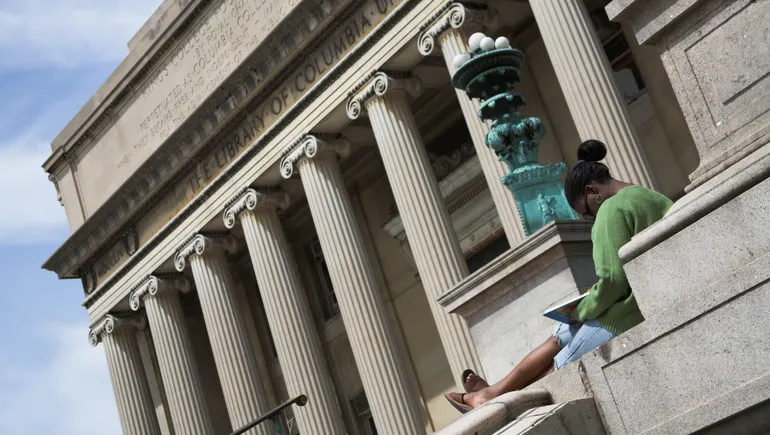
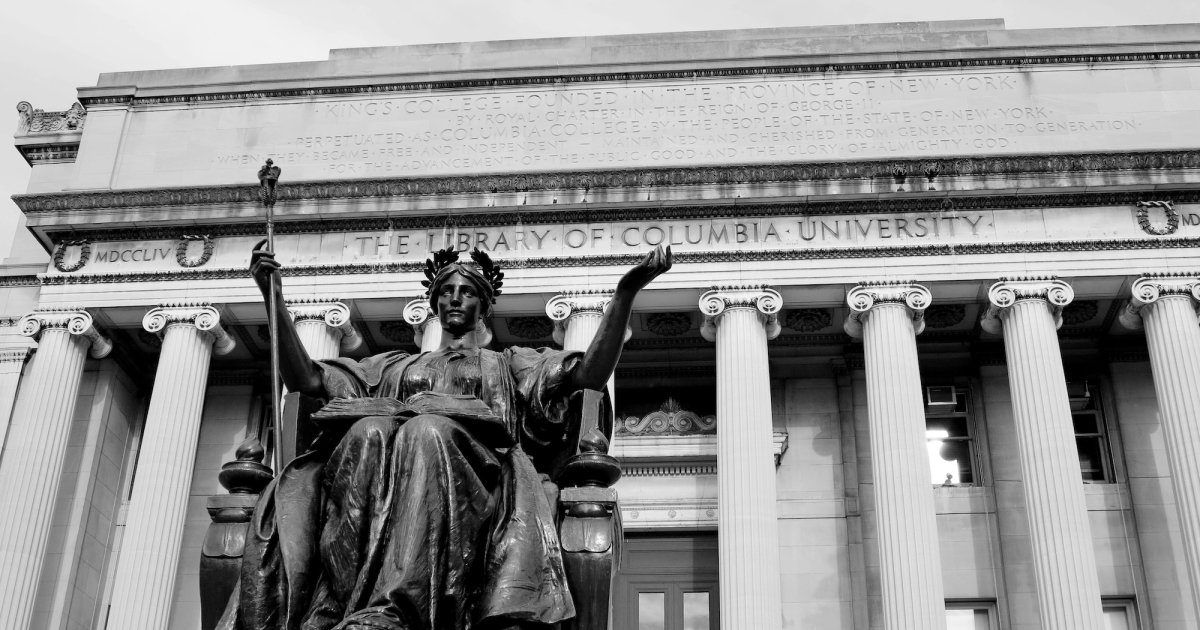
With a 22-page document and $221 million fine, Columbia University ended its months-long battle with the Trump administration that included accusations of civil rights violations, an accreditation review and a funding freeze that disrupted research and forced layoffs.
The settlement agreement, announced Wednesday night, will force changes to admissions, disciplinary processes and academic programs. In exchange, Columbia should get about $400 million in federal research funding back. The seemingly unprecedented deal will also see the federal government close investigations into alleged failures to police antisemitism on campus. (Despite the settlement, Columbia has not admitted to any allegations of wrongdoing but has acknowledged reforms were needed.)
Critics have decried the agreement as a concession to authoritarian demands imposed for political control, while supporters have argued reforms are necessary at Columbia after a pro-Palestinian encampment in spring 2024 and subsequent protests disrupted campus life.
Although Trump officials purportedly began their crusade against Columbia in an effort to address campus antisemitism, officials’ comments indicate that conservative politics also factored into the settlement.
“This is a monumental victory for conservatives who wanted to do things on these elite campuses for a long time because we had such far left-leaning professors,” Education Secretary Linda McMahon said in a FOX Business interview following the settlement announcement.
The Trump administration has made clear that this agreement will serve as a roadmap for its dealings with other universities, including Harvard. Much of the agreement reflects what the administration had demanded of Columbia in March, but other provisions—such as a requirement to turn over admissions data and scrutinize international student enrollment—are new and reflect demands sent to other universities.
Here’s what is in the agreement and what it means for Columbia.
Funding Streams Restored
Columbia will see at least a partial restoration of federal research funds.
The federal government will restore grants terminated by the Department of Health and Human Services and National Institutes of Health. However, grants terminated by the Department of Education “and other terminated contracts are excluded from this provision,” according to the agreement.
Columbia will be eligible for future grants, contracts, and awards “without disfavored treatment.”
Columbia acting president Claire Shipman emphasized that the agreement was about much more than $400 million, telling CNN on Thursday that federal scrutiny imperiled $1.3 billion a year.
“There are many headlines about $400 million dollars. This is really access to billions of dollars in future funding. And it’s not just money for Columbia. I mean, this is about science. It’s about curing cancer. Cutting edge, boundary breaking science that actually benefits the country and humanity,” she said, emphasizing the deal “reset” Columbia’s relationship with the government.
Closure of Investigations
The agreement will close pending investigations or compliance reviews related to potential violations of Title VI of the Civil Rights Act of 1964, which prohibits discrimination based on race or national origin. That includes a probe by the U.S. Equal Employment Opportunity Commission into the treatment of Jewish employees at Columbia. Of the $221 million settlement, $21 million will go toward the EEOC complaint.
However, the Trump administration noted in the agreement that the deal does not affect “in any way EEOC’s right to bring, process, investigate, litigate, or otherwise seek relief in any charge filed by individual charging parties or third parties that may later be filed against Columbia.”
Protest Restrictions
Columbia will maintain policies announced in March that deem protests inside of academic buildings and related spaces to be a “direct impediment” to the university’s academic mission.
“Such protests in academic buildings, and other places necessary for the conduct of University activities, are not acceptable under the Rules of University Conduct because of the likelihood of disrupting academic activities,” part of Columbia’s settlement with the federal government reads. All protest activity will be subject to university anti-discrimination and anti-harassment policies.
Prohibitions on masks announced in March will also remain in place.
Education Secretary Linda McMahon has said Columbia’s “unlawful encampments and demonstrations” deprived Jewish students of learning opportunities.
Mary Altaffer-Pool/Getty Images
Student Life Changes
The agreement codifies changes to disciplinary processes announced in March, such as placing the University Judicial Board under the Office of the Provost who reports to the president. Students previously served on the board, but now, it will be restricted to faculty and staff members.
The university president will make the final determinations on appeals cases.
Columbia will also add a student liaison “to further support Jewish life and the wellbeing of Jewish students on campus” who will advise administrations on issues such as antisemitism.
DEI Ban
Diversity, equity and inclusion initiatives, a frequent target of the Trump administration, are also included in the agreement. The deal bars Columbia from maintaining “programs that promote unlawful efforts to achieve race-based outcomes, quotas, diversity targets, or similar efforts.”
Per the agreement, Columbia will be required to provide reports “summarizing its compliance with this obligation” and to ensure that university programs do not “promote unlawful DEI goals.”
Changes to Admissions
The agreement emphasizes merit-based admissions and bars Columbia from giving preference to applicants due to “race, color, or national origin.” It also prevents Columbia from using personal statements, diversity narratives or references to race “to introduce or justify discrimination.”
Columbia will also be required to submit admissions data to the federal government on both rejected and admitted students, including demographic details and standardized test scores.
International applicants at Columbia will also be subject to additional scrutiny with the agreement dictating that the university “undertake a comprehensive review of its international admissions processes and policies.” That review is designed to ensure those applicants are “asked questions designed to elicit their reasons for wishing to study in the United States.”
Columbia is also required to provide details of “all disciplinary actions involving student visa-holders resulting in expulsions or suspensions, and arrest records that Columbia is aware of” to the extent that is permissible under the Family Educational Rights and Privacy Act.
Columbia also agreed to examine its business practices and decrease its financial dependence on international students.
CHUYN/iStock Unreleased/Getty
Program Reviews
Maintaining a senior vice provost to provide greater administrative oversight of Middle East studies (and other regional programs), as initially announced in March, is also part of the agreement.
That official will conduct reviews of programs such as the Institute for Israel and Jewish Studies; Middle Eastern, South Asian, and African Studies; the Middle East Institute; and various other programs, according to the agreement. Those reviews are intended to ensure programs are “comprehensive and balanced” and include “all aspects of leadership and curriculum.”
But some faculty members have expressed skepticism about additional administrative scrutiny.
Michael Thaddeus, president of the Columbia chapter of the American Association of University Professors, wrote in an emailed statement that the agreement poses threats to academic freedom at U.S. universities.
“Columbia’s insistence that it will not allow the government to interfere in appointments, admissions, or curriculum is welcome. Yet the creation of a monitor, charged with scrutinizing our admissions data and our Middle Eastern studies department, opens the door to just such interference,” Thaddeus said.
Resolution Monitor
As part of the deal, a third-party resolution monitor will police the agreement.
Bart Schwartz, co-founder of Guidepost Solutions and former Chief of the Criminal Division of the United States Attorney’s Office for the Southern District of New York, will serve in that role.
The agreement will allow the resolution monitor to access campus for assessment purposes.
Asked if Columbia believed the Trump administration would live up to its side of the agreement and if it had obtained any assurances, a university spokesperson did not provide a statement but instead pointed Inside Higher Ed to language in the agreement on dispute resolution.
That section noted opportunities for arbitration “if either party reasonably believes that the other is in violation of the terms of this agreement,” including reporting obligations outlined in the deal.
Hiring Requirements
The deal also places restrictions on university hiring processes.
Columbia’s agreement will bar the use of “personal statements, diversity narratives, or any applicant reference to racial identity as a means to introduce or justify discriminatory practices in hiring or promotion.” Other unspecified “indirect methods or criteria that serve as a substitute for race conscious hiring or promotion practices” are also prohibited per the deal.
Columbia is required to submit data on hiring and promotion practices to the resolution monitor.
Codifying and Introducing Changes
While some elements of the agreement are new, other parts simply codify prior changes. For example, changes to disciplinary processes, and greater administrative oversight of Middle East studies (and other regional programs) already announced in March are now codified in the deal.
David Pozen, a Columbia law professor who has argued that “the agreement gives legal form to an extortion scheme,” noted while some of the deal was foreshadowed, other parts go beyond what was previously announced.
Some provisions “are novel and don’t track what was already said in March,” Pozen said. “There’s language, for example, about all-female locker rooms and sports teams in paragraph 20. I don’t believe that has any antecedent and just seems like a new anti-trans provision. So, it’s a mix of memorialization, extension and innovation in what Columbia has conceded.”
This audio is auto-generated. Please let us know if you have feedback.
Federal officials hope their agreement with Columbia Universitywill be a “template for other universities around the country,”U.S. Education Secretary Linda McMahon said Thursday.
Her remarks, made in a NewsNation interview, come as some critics publicly worry that the deal will spur the Trump administration to put financial pressure on other universities. Columbia law professor David Pozen, for instance, wrote in a blog post Wednesday that “the agreement gives legal form to an extortion scheme.”
Despite praise for the deal from some corners of the university, critics have also accused Columbia of capitulating to the Trump administration’s attacks on higher education.
The Trump administration has withheld federal funding from a long list of colleges, often claiming they are not doing enough to address antisemitism or otherwise violating civil rights laws.Columbia became the face of those battles in March, when the Trump administration canceled $400 million of the New York institution’s federal grants and contracts.
Under the deal reached Wednesday,Columbia agreed to a litany of policy changes and concessions, including paying the federal government $221 million, to settle civil rights investigations and to have the “vast majority” of $400 million in federal grant funding reinstated, according to the university’s announcement.
Along with having most of the money reinstated, “Columbia’s access to billions of dollars in current and future grants will be restored,” the university said in Wednesday’s announcement.
The deal ends the Trump administration’s probes into whether Columbia had failed to protect Jewish students from harassment and the Equal Employment Opportunity Commission’s similar investigation into its treatment of employees.
The 22-page agreement is wide-ranging. Columbia agreed to provide the federal government with admissions data on both its accepted and rejected applicants,craft training “to socialize all students to campus norms and values,” and have an independent monitor oversee its compliance with the deal. It also said it would establish processes to ensure students are committed to “civil discourse, free inquiry, open debate, and the fundamental values of equality and respect.”
Additionally, the university said it would decrease its financial dependence on international students— who make up roughly 40% of enrollment —and ask foreign applicantsfor their reasons “for wishing to study in the United States.”
And Columbia will codify measures it announced in March, which include banning masks meant to conceal one’s identity and having a senior vice provost review programming focusing on the Middle East, including the university’s Center for Palestine Studies; Institute for Israel and Jewish Studies; and Middle Eastern, South Asian, and African Studies.
That leader, Miguel Urquiola,will review those and other programs — including their leadership and curriculum — to ensure they are “comprehensive and balanced,” according to the agreement.
Columbia also agreed to appoint an administrator to serve as a student liaison to address concerns about antisemitism. That administrator will make recommendations to top officials about how the university can support Jewish students.
‘A dangerous precedent’
Claire Shipman, Columbia’s acting president,suggested the deal doesn’t undermine the university’s autonomy. “It safeguards our independence, a critical condition for academic excellence and scholarly exploration, work that is vital to the public interest,” she said in a Wednesday statement.
Indeed, the agreement says it does not give the federal government control over the university’s employee hiring, admission decisions or academic speech.
However, critics have swiftly and vociferously denounced the deal, arguing that the university has yielded to an authoritarian administration and harmed the higher education sector at large.
“Never in the history of our nation has an educational institution so thoroughly bent to the will of an autocrat,” Todd Wolfson, the president of the American Association of University Professors, said in a Thursday statement. “This settlement subverts our democracy and capitulates to the Trump plan to target the pillars of our democracy: the judiciary, the free press, and our education systems.”
Others suggested it could create a playbook for the Trump administration to use with other colleges.
Joseph Slaughter, an English and comparative literature professor at Columbia, said in an email Thursday that the deal “appears to preserve a measure of institutional independence and academic freedom.”
But, Slaughter continued, “It nonetheless legitimizes the federal administration’s extortionist tactics, erodes the academic autonomy that has made American universities the envy of the world, and sets a dangerous precedent for the normalization of political interference in teaching, research, and the pursuit of truth.”
Through the deal, Columbia avoided a consent decree, in which a judge would have been appointed to oversee the university’s compliance with the agreement.The Trump administration had reportedly been pursuing that option earlier this year.
However, Slaughter argued that the deal resembles a consent decree but lacks “the ordinary legal safeguards and judicial oversight that might protect Columbia from further federal extortion and political interference in its academic mission.”
Pozen raised similar arguments about the deal, writing that Columbia was brought to the negotiating table after the federal government cut off funds without “following the congressionally mandated procedures.”
“The Trump administration has made clear that while Columbia is first in line, it intends to reach comparable agreements with other schools — to scale the Columbia shakedown into a broader model of managing universities deemed too woke,” Pozen wrote. “As has already occurred with law firms, tariffs, and trade policy, regulation by deal is coming to higher education.”
Will Creeley,the legal director at the Foundation for Individual Rights and Expression,said in a statement Thursday that some of the changes require students to commit to “laudable values,” including free inquiry and open debate.
But other goals, including “equality and respect,” are vague and leave “far too much room for abuse.”
Creeley also said the agreement “can’t be separated from the unlawful pressure campaign that produced it.”
‘A major step forward’
Brian Cohen, the head of the Columbia/Barnard Hillel, a center for Jewish students at the university, said in a Wednesday statement that the announcement of the deal acknowledged that “antisemitism at Columbia is real.”
“In the months ahead, Columbia/Barnard Hillel will continue our work with the administration, faculty, students, and alumni to strengthen Jewish life at Columbia including making sure that the roadmap laid out in this agreement is followed,” Cohen said. “This is not the end of the process, however it is a major step forward.”
The Stand Columbia Society likewise praised the deal. The group is composed of students, employees and alumni that have been pushing for some of the same changes that the Trump administration has demanded, including for the university to implement a mask banand to dole out discipline for students involved in the protest encampment erected last spring.
“The Stand Columbia Society believes this agreement represents an excellent outcome that restores research funding, facilitates real structural reforms, and preserves core principles of academic freedom and institutional autonomy,” it said Wednesday.
Despite the deal, Tim Walberg, the Michigan Republican who chairs the U.S. House education committee, criticized Columbia’s leaders in a statement Wednesday evening.
“The need for a federal settlement underscores Columbia’s lack of institutional willingness to effectively respond to antisemitism,” Walberg said. “This school and its so-called leaders have failed time and time again to keep Jewish students, faculty, and staff safe.”
Walberg added that lawmakers would monitor the university’s “purported commitments” to the deal and work on “legislative solutions to address antisemitism.”
On July 24, 2025, Columbia University announced that it reached an agreement with the Trump administration to restore federal funding that was revoked over allegations of its handling of anti-Semitism on campus. As part of the deal, Columbia will pay a fine and change numerous campus policies related to campus protests, including restrictions on demonstrations and new disciplinary procedures.
The following statement can be attributed to FIRE Legal Director Will Creeley.
FIRE sounded the alarm months ago about the administration’s blatant disregard for federal law in its response to allegations of discrimination at Columbia. Yesterday’s agreement can’t be separated from the unlawful pressure campaign that produced it.
The reforms themselves require Columbia students to commit to laudable values like free inquiry and open debate. But demanding students commit to vague goals like “equality and respect” leaves far too much room for abuse, just like the civility oaths, DEI statements, and other types of compelled speech FIRE has long opposed.
A new report from Sen. Elizabeth Warren’s (D-MA) office outlines the far-reaching consequences of the Trump administration’s efforts to defund and dismantle the U.S. Department of Education.
Education at Risk: Frontline Impacts of Trump’s War on Students draws on responses from 12 national education organizations—including the American Council on Education—to paint an unsettling picture of disrupted services, rising costs for students, and weakened civil rights enforcement.
Among the report’s key findings:
Federal student aid operations are faltering. Layoffs at the Education Department’s (ED) office of Federal Student Aid have caused website outages, delayed financial aid, and left thousands of borrower complaints unanswered. ACE warned that such disruptions can prevent students from enrolling or staying in college, increasing the likelihood they’ll take on more debt to finish their degrees.
Graduate and low-income students are being squeezed. The administration’s “Big Beautiful Bill” eliminates Grad PLUS loans, caps borrowing for parents, and replaces income-driven repayment plans with costlier alternatives, which is expected to reduce access and increase hardship for first-generation and financially vulnerable students.
Civil rights enforcement is eroding. ED’s Office for Civil Rights has lost nearly half its staff and closed seven regional offices. With over 22,000 complaints filed in 2024 alone, remaining staff are overwhelmed, and students facing discrimination are left without a path to resolution. ACE and others note the long-term danger of weakened oversight, especially for students with disabilities.
Essential education data are disappearing. The National Center for Education Statistics now has just three employees. Longstanding surveys like the Integrated Postsecondary Education Data System (IPEDS) and College Scorecard are at risk, threatening everything from institutional benchmarking to accreditation.
Programs for students with disabilities are being dismantled. Key oversight and transition programs have been cut or reassigned to agencies like the departments of Health and Human Services and Labor, which lack educational expertise. Advocates warn this could roll back decades of progress toward inclusive education.
Education functions are being scattered across agencies. Proposals to move federal student loans to the Small Business Administration or Department of the Treasury and civil rights enforcement to the Department of Justice raise serious concerns about cost, efficiency, and legal access. As ACE noted, scattering the department’s core responsibilities could reintroduce the very fragmentation ED was created to fix.
The report concludes that the cumulative effect of these actions threatens to leave millions of students without access to basic services, data, and legal protections at a time when they need them most.
Columbia University has agreed to a $200 million settlement with the federal government after months of scrutiny over how it handled pro-Palestinian student protests and campus antisemitism.
The long-rumored deal was announced by acting president Claire Shipman Wednesday night.
“This agreement marks an important step forward after a period of sustained federal scrutiny and institutional uncertainty,” Shipman said. “The settlement was carefully crafted to protect the values that define us and allow our essential research partnership with the federal government to get back on track. Importantly, it safeguards our independence, a critical condition for academic excellence and scholarly exploration, work that is vital to the public interest.”
Columbia will also pay another $21 million to settle investigations by the U.S. Equal Employment Opportunity Commission. The university also agreed to codify reforms it announced in March that include overhauling disciplinary processes and appointing a new senior vice provost to oversee academic programs focused on the Middle East, among other changes.
The university will pay out the settlement over three years.
The settlement is intended to bring an end to months of scrutiny by the Trump administration and restore hundreds of millions of dollars in frozen federal research funding. Access to “billions of dollars in current and future grants” will also be restored, according to the university statement.
Board members emphasized the university’s commitment to academic freedom in a statement.
“Today’s agreement with the federal government affirms Columbia’s unyielding commitment to academic freedom, freedom of expression, and open inquiry. It confirms the changes already underway at Columbia to meaningfully address antisemitism on our campus and allows the University to continue to undertake its transformative research and scholarship,” Columbia Board of Trustees co-chairs David Greenwald and Jeh Johnson said Wednesday night.
News of the deal came one day after Columbia announced that it had disciplined numerous pro-Palestinian protesters for disruptive activities in spring 2024 and in May of this year. Though the university did not specify how many students were disciplined, the student activist group CU Apartheid Divest alleged that as many as 80 were suspended or expelled.
Columbia’s settlement prompted strong reactions from academics on social media.
“It is heartbreaking to see Columbia capitulating to the Trump Administration’s attacks on higher education and democracy,” Columbia professor Alex Hertel-Fernandez wrote in a post on Bluesky. “Not only does this legitimize the offensive against civil society and pressure other universities to fold, but it feels like madness to trust the Administration to keep a deal.”
Columbia lecturer Scott Horton called the move “a total betrayal” by administrators in a social media post calling for the removal of Shipman and Greenwald over the settlement.
The AAUP took aim at the Trump administration.
“You can never bend the knee enough to appease an authoritarian bully,” the organization posted on Bluesky. “This is a devastating blow to academic freedom & freedom of speech at Columbia. Never in the history of this nation has there been an administration so intent on the utter destruction of higher education as we know it.”
Trump administration officials, however, celebrated the news.
“Columbia’s reforms are a roadmap for elite universities that wish to regain the confidence of the American public by renewing their commitment to truth-seeking, merit, and civil debate. I believe they will ripple across the higher education sector and change the course of campus culture for years to come,” Education Secretary Linda McMahon said in a statement about the settlement.
This audio is auto-generated. Please let us know if you have feedback.
Dive Brief:
The U.S. Department of Justice has opened a probe into George Mason University over its admissions and scholarship practices as well as its response to antisemitism, the agency announced Monday.It follows a probe into the university’s employment practices announced last week.
In a letter to the head of George Mason’s board, Harmeet Dhillon, assistant attorney general for the Justice Department’s civil rights division, said the agency would consider whether George Mason’s student practices violate Title VI,which prohibits discrimination based on race, color or national origin at federally funded institutions.
Dhillon’s letter made no specific allegations against the university, and an agency spokesperson declined to comment Tuesday on what prompted the probe. In a statement Monday, the university’s board of visitors said it would “respond fully and promptly to the requests from the U.S. Government.”
Dive Insight:
The Trump administration has set its sights on George Mason as it widens its attacks on universities based on their diversity programs, approach to pro-Palestinian protests and other practices that run counter to the president’s political agenda.
The latest investigation is at least the fourth probe the Trump administration has launched into the university. Dhillon gave George Masonuntil Aug. 1 to provide “a series of certifications, responses, and productions of information, data, and materials” to the agency.
In its statement, the university’s board of visitors said that it has a fiduciaryobligation “to ensure that the University continues to thrive as the largest public university in Virginia,” adding, “This includes making sure that GMU fully complies with federal anti-discrimination laws as it excels in its mission.”
Rep. Bobby Scott, a Virginia Democrat and the ranking member on the House’s education committee, blasted the Trump administration’s investigations into George Mason in a statement Tuesday.
“Under this Administration, the government’s Offices of Civil Rights have adopted a radical reinterpretation of our civil rights laws to attack diversity, equity, inclusion and accessibility,” Scott said. “The Trump Administration’s selective actions undermine the pursuit of justice, and the independence and academic freedom of America’s institutions of higher education.”
Late last week, Dhillon informed the university of a similar probe under Title VII, which bars employment discrimination based on race, color, religion, sex or national origin.
In a July 17 letter, she alleged that George Mason “may be engaged in employment practices that discriminate against employees, job applicants, and training program participants based on race and sex.”
Dhillon cited internal emails and comments from George Mason PresidentGregory Washington seeking to promote diversity and equity in the hiring and tenure processes,as well as antiracism throughout the university’s operations.
Prior to that, the Trump administration opened two separate investigations over claims that the university hasn’t done enough to respond to antisemitism and illegally uses race in employment decisions.
In a July 18 post, Washington rejected the government’s allegations of discrimination and explained that the comments citedby Dhillon came in the wake of the murder of George Floyd, who was Black,by a White police officer in 2020.
“As part of addressing this national reckoning, we were examining ourselves, looking for ways to become better,” Washington said, adding that diversity efforts were part of a state-mandated initiative, and the public expected George Mason to “play a meaningful part in creating structures and programming to address old biases and persistent inequalities in business operations.”
He also said, “It is inaccurate to conclude that we created new university policies or procedures that discriminated against or excluded anyone,” and added that “our systems were enhanced to improve on our ability to consistently include everyone for consideration of every employment opportunity.”
The Trump administration’s targeting of George Mason comes shortly after theJustice Department pushed former University of Virginia President Jim Ryan to announce his abrupt resignation in June. The university was, like George Mason, under investigation by the administration over its diversity initiatives.
This audio is auto-generated. Please let us know if you have feedback.
Dive Brief:
The Trump administration will now release the federal funding for after-school and summer programs that districts and states expected to begin accessing July 1 but had been frozen by the Office of Management and Budget, OMB confirmed on Friday.
The $1.3 billion for 21st Century Community Learning Centers was under review by OMB to ensure the funding aligned with Trump administration priorities. The weekslong delay had already caused cancellations and other disruptions to summer and school-year student services, according to educators, families, education organizations and lawmakers.
Still under OMB review is about $5.6 billion in other K-12 funds, including programs for English learners, professional development, student academic supports, migrant services and adult education. OMB did not provide a time frame for the review or release of those funds.
Dive Insight:
In an emailed statement Friday to K-12 Dive, an OMB senior administration official verified the release of the after-school and summer program money and said, “Guardrails have been put in place to ensure these funds are not used in violation of Executive Orders.” The official did not say when the funds would be released to states.
Earlier this week, OMB said its preliminary findings found the grant programs “have been grossly abused to promote a radical leftwing DEI agenda” — referring to diversity, equity and inclusion initiatives — and directly violate Trump’s executive orders.
The 21st Century grant money for after-school and summer programming, and the other withheld funds, come from the federal fiscal year 2025 budget, which was approved by Congress and then signed into law by President Donald Trump in March. States and districts typically expect to access the funding in question on July 1 for the upcoming school year.
Federal Title I funds for low-income schools and districts and money for the Individuals with Disabilities Education Act was released on July 1 as expected.
The funding hold caused widespread concern among governors, Republican and Democratic senators, parents, education organizations and others calling for the federal government to release the money. Some 24 states filed a lawsuit against Trump, the U.S. Education Department and OMB, calling the funding freeze “contrary to law, arbitrary and capricious, and unconstitutional.”
Jodi Grant, executive director of the Afterschool Alliance, said in a Friday statement that “working parents in particular are breathing an enormous sigh of relief” with the news of the release of the summer and after-school funds.
But, she added, the funding delay “caused massive chaos and harm with summer learning programs abruptly shutting down and a large number of afterschool programs canceling plans to open in the fall.”
The uncertainty caused those programs to fall behind in hiring, outreach, contracting and other work, Grant said.
Relief at the funding release also came from David Schuler, executive director of AASA, the School Superintendents Association.
However, Schuler added, “Districts should not be in this impossible position where the Administration is denying funds that had already been appropriated to our public schools, by Congress. The remaining funds must be released immediately — America’s children are counting on it.”
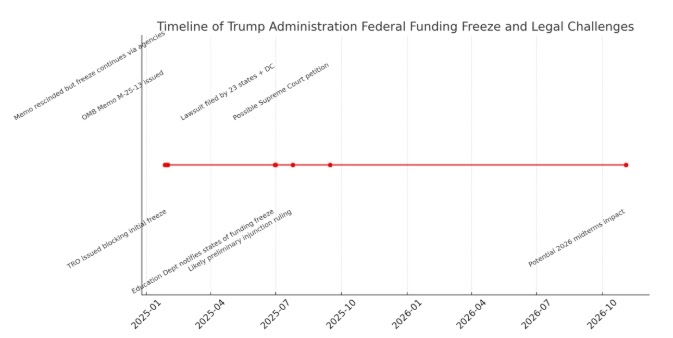
In a move that has sparked legal action from nearly half the country, the Trump administration has frozen more than $6 billion in education funds to 23 states and the District of Columbia. The decision, issued by the U.S. Department of Education in late June 2025, follows a broader pattern of halted federal support for state and local programs, many of which were previously protected by court rulings.
The funding pause is linked to the Trump administration’s January 2025 memorandum from the Office of Management and Budget (OMB Memo M-25-13), which directed federal agencies to withhold disbursements from thousands of grant and aid programs. The stated purpose was to align spending with the administration’s priorities, though the policy has been challenged as lacking legal authority. The memo was later rescinded, but its effects have continued through new administrative directives.
In this latest instance, the Department of Education cited a need to review Title II and Title IV programs under the Elementary and Secondary Education Act (ESEA), including programs for teacher development, after-school enrichment, and English language learners.
The decision disproportionately affected Democratic-led states, with California alone facing the loss of $939 million.
States impacted include Arizona, California, Colorado, Connecticut, Delaware, Hawaii, Illinois, Maine, Maryland, Massachusetts, Michigan, Minnesota, Nevada, New Jersey, New Mexico, New York, North Carolina, Oregon, Rhode Island, Vermont, Washington, Wisconsin, and the District of Columbia.
On June 30, attorneys general from those jurisdictions filed suit in Rhode Island, arguing that the Education Department lacks the authority to unilaterally withhold funds that Congress has already appropriated. They assert that the freeze violates both statutory obligations and constitutional principles, including the separation of powers. The lawsuit follows earlier court rulings from January and February in which judges issued temporary restraining orders and preliminary injunctions to stop the administration from freezing other categories of grants. Those cases were largely brought by Democracy Forward, a legal advocacy organization that has played a leading role in contesting the OMB memo.
Although the administration has defended the funding freeze as a necessary review of federal spending, courts have questioned the legality of such actions. In March, a federal court criticized the lack of statutory basis for the freezes, and Democracy Forward issued a detailed brief outlining the harm to nonprofit programs, environmental projects, and public services. That brief emphasized the breadth of affected programs and the legal overreach involved.
The broader legal battle continues. While some funding has been restored through court action, the Education Department’s freeze represents a new front in ongoing disputes between the Trump administration and state governments. Plaintiffs argue that withholding these funds sets a precedent that undermines established appropriations and legislative intent. More lawsuits are expected.
The Trump administration’s freeze on education funding to 23 states opens several legal and political paths, each with different implications depending on how courts and federal agencies proceed. Below are the most likely possibilities based on current legal precedent, federal authority, and political conditions:
Courts Overturn the Freeze, Funding Restored
The most immediate and probable outcome is that courts will order the Education Department to restore the frozen funds, as they did earlier this year with other parts of the federal grant freeze. Courts have already found that the administration lacked statutory authority to suspend programs that Congress explicitly funded. If this logic holds, the education freeze will likely be ruled unlawful and states will receive the funds—possibly with retroactive reimbursement for missed payments.
Partial Restoration, Continued Legal Conflict
The administration may attempt to restore only some of the funding—especially those programs that have garnered the most public or bipartisan support—while continuing to block others. In this scenario, the courts could issue narrow rulings or temporary injunctions that apply to specific funding streams. This would prolong litigation and administrative uncertainty, potentially pushing the issue into 2026 or the next presidential term.
Supreme Court Intervention
If the lower courts issue conflicting rulings or the Trump administration loses significant cases, the Justice Department may seek Supreme Court review. The Court could use this as an opportunity to clarify executive authority over grant disbursement. Depending on the composition of the Court and its interpretation of separation of powers, this could either curtail future executive control over federal spending—or affirm broader authority to “review” or condition funding.
Legislative Response
Congress, particularly if Democrats control at least one chamber in 2025-2026, could pass legislation to prohibit similar funding freezes in the future or require automatic disbursement of appropriated funds. However, any such legislation would likely face veto threats or require a veto-proof majority, making this a longer-term fix rather than a short-term remedy.
Further Administrative Retaliation or Expansion
If courts delay action or issue narrow rulings, the Trump administration could expand the use of funding freezes to other agencies or sectors, testing the limits of executive control. The precedent set by OMB Memo M-25-13 could be repurposed in other contexts—such as public health, housing, or infrastructure—creating broader instability in federal-state relations.
Political Mobilization and Fallout
States may respond by increasing pressure on Congress and federal courts while using the issue as a rallying point in the 2026 midterm elections. Public schools, educators, and parents may amplify the issue if it leads to job losses, school closures, or reduced services. The freeze could become a political liability for the Trump administration, especially in battleground states that rely heavily on federal education support.
In sum, the most likely near-term result is court-mandated restoration of the withheld funds. But depending on how aggressively the administration continues to test the boundaries of federal authority, the dispute could escalate into a broader constitutional and political conflict over the power to allocate and control federal funds.
Sources
Democracy Forward, “Initial Policy Memo on Federal Grant Freezes,” March 12, 2025.
CBS News, “Democratic states sue Trump administration over halted education funds,” July 1, 2025.
Reuters, “Trump asks US court to end judicial overreach, allow funding freezes,” February 11, 2025.
Wikipedia, “2025 United States federal government grant pause.”
The Daily Beast, “GOP Lawmakers Blast Trump Chief Russell Vought for Freezing Education Money,” July 2025.
The Guardian, “Nothing like this in American history: the crisis of Trump’s assault on the rule of law,” March 9, 2025.
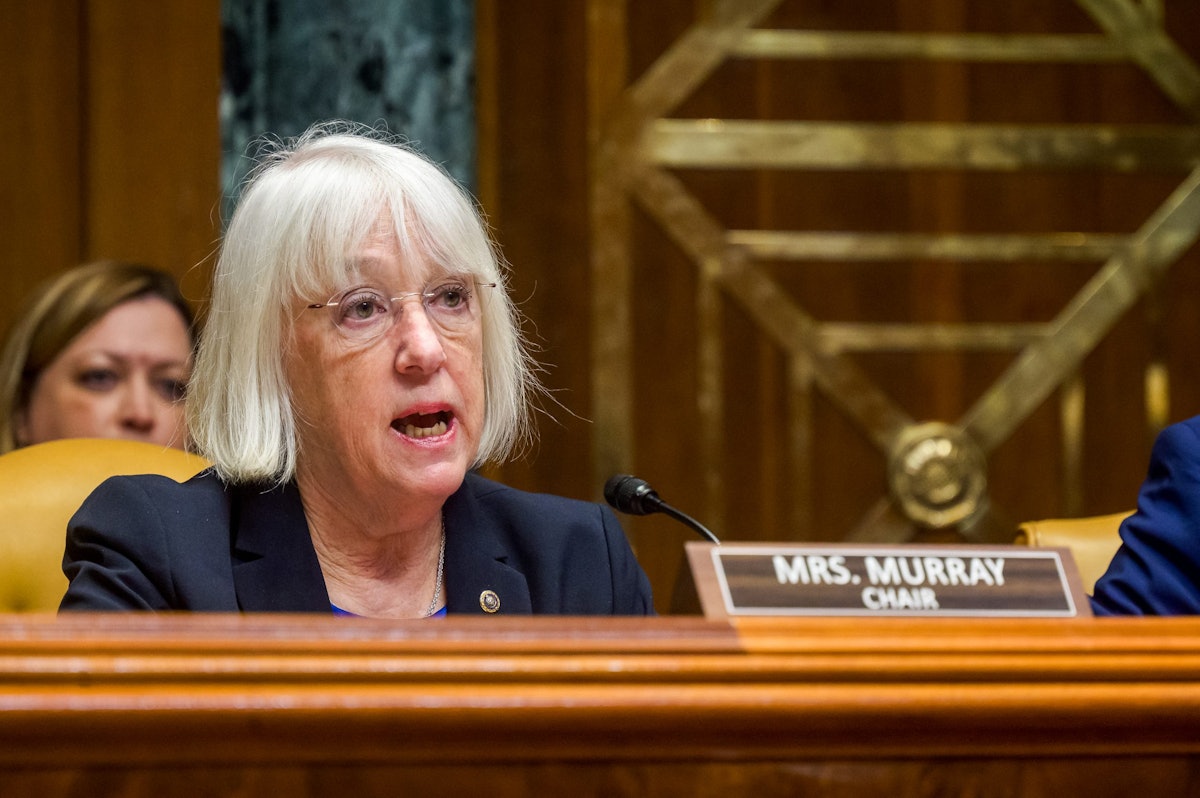
U.S. Senator Patty Murray U.S. Senator Patty Murray (D-WA) has blocked the fast-track consideration of Mary Christina Riley, President Trump’s nominee to serve as Assistant Secretary for Legislation and Congressional Affairs at the Department of Education, as the administration continues to withhold nearly $7 billion in funding for K-12 schools and adult education programs nationwide.
The move by Murray, Vice Chair of the Senate Appropriations Committee, forces Riley’s nomination to undergo full committee review rather than skipping directly to Senate floor consideration. The action comes just weeks before the new school year begins, with school districts across the country scrambling to address massive budget shortfalls created by the Trump administration’s funding freeze.
“As schools nationwide scramble to figure out how many teachers they need to lay off and afterschool programs warn parents to make back up plans—all because President Trump is blocking over $6 billion in education funding he himself signed into law—there is no reason for any Department of Education nominee to skip committee consideration and get fast-tracked for confirmation,” Murray said in a statement.
The senator’s parliamentary maneuver reflects growing Democratic frustration with the Trump administration’s decision to withhold funding that was previously approved by Congress. The administration notified states on July 1—the traditional deadline for fund distribution—that it was placing the money under review “given the change in Administrations.”
The funding freeze affects six critical federal education programs that support teacher professional development, English language learning, after-school programs, and services for migrant children. The largest portion consists of $2.2 billion for Supporting Effective Instruction State Grants, which fund professional development and activities to improve teacher effectiveness.
Twenty-four states and the District of Columbia have already filed a lawsuit against the Trump administration over the frozen funds, with California Attorney General Rob Bonta calling the move one with “no rhyme or reason” that came “abruptly” just weeks before the school year begins.
The consequences are being felt immediately across the education landscape. The Afterschool Alliance warned that without the funds, “we will quickly see more children and youth unsupervised and at risk, more academic failures, more hungry kids, more chronic absenteeism, higher dropout rates, more parents forced out of their jobs, and a less STEM-ready and successful workforce.”
The Trump administration’s Office of Management and Budget, led by Russell Vought, has suggested the funding freeze is part of an investigation into whether money has been used for what it calls a “radical leftwing agenda,” including scholarships for undocumented students or teachings on LGBTQ topics.
Murray rejected these justifications, arguing that the administration has provided no clear explanation for the delay and no timeline for when funding might be released. Even some Republican senators have criticized the move, with Senator Susan Collins (R-Maine) telling Education Week she “strongly oppose[s] the administration’s decision to pause the delivery of education formula grant funding.”
The funding freeze represents part of a broader Trump administration effort to reshape federal education policy. The administration’s proposed fiscal year 2026 budget would eliminate all six of the grant programs currently under review, as part of a 23 percent cut to domestic spending.
Murray, a former teacher and longtime education advocate, has been a vocal critic of the administration’s education policies. She has previously blasted Trump’s plans to dismantle the Department of Education, calling the idea “terrible” and arguing that “Trump and Musk don’t know what it’s like to count on their local public school having the resources to get their kids the education they deserve.”
The affected programs serve some of the nation’s most vulnerable student populations, including:
Supporting Effective Instruction State Grants (Title II-A) for teacher professional development
21st Century Community Learning Centers (Title IV-B) for after-school programs
Student Support and Academic Enrichment Grants (Title IV-A) for STEM education and school mental health
English Language Acquisition (Title III-A) for English language learners
Migrant Education (Title I-C) for children of migrant workers
Adult Basic and Literacy Education State Grants for adult education programs.