From the day he retook office, President Donald Trump’s campaign to disrupt higher education has been unrelenting. He’s targeted diversity, equity and inclusion. His administration slashed more than a billion dollars in federal grants and contracts for universities, and it plans to cut more. It’s also attempted to deport pro-Palestinian international scholars, accusing them of sympathizing with terrorism.
Prominent—or infamous—among the administration’s escalating actions was its decision last month to cut $400 million from Columbia University for allegedly failing to address on-campus antisemitism. Trump officials followed this by demanding that the university, among other things, place its Middle Eastern, South Asian and African Studies Department in academic receivership.
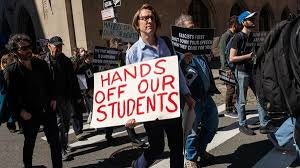
As the disruption has mounted, many college and university presidents have kept silent. But unions representing higher ed employees have stepped up to the plate. They’ve protested in Washington, D.C., and on their campuses, organized open letters and filed a flurry of lawsuits against the Trump administration. Union leaders say they are filling a void in an existential fight for higher ed’s future. They wish others would join their resistance, but their unified strength in numbers may protect their members from federal retaliation in ways that higher ed officials aren’t.
Concerns about higher ed’s future under Trump and calls for a forceful response to his actions pervaded a recent gathering on collective bargaining in higher ed. The conference—held in Manhattan just two days after Columbia announced it would capitulate to multiple demands the administration made—offered a snapshot into a large pocket of resistance.
We couldn’t actually be better positioned to fight back against the kind of authoritarian attacks that we’re seeing.”
—Ian Gavigan, national director of Higher Ed Labor United
William A. Herbert, executive director of the National Center for the Study of Collective Bargaining in Higher Education and the Professions, kicked off the event addressing what he has called the Trump administration’s “assault on higher education.”
“We gather today during a very perilous time. To paraphrase Tom Paine, these are the times that try our souls,” Herbert said, adding that “in this crisis, we must care for ourselves and others—particularly our students, our immigrants and others most vulnerable in this time of danger.”
He spoke to roughly 150 people gathered in the historic home of Franklin Delano Roosevelt. Invoking the wartime president’s Four Freedoms speech, Herbert said FDR’s listed freedoms—of speech and worship, and from want and fear—“are threatened more today than ever before. So it is our obligation to those who came before us to fight for freedom and to fight against tyranny.”
Rejecting nonintervention, Herbert said, “Neutrality in defense of higher education’s mission and the principles of collective bargaining is not an option. We must reject appeasement. We must reject capitulation to the enemies of higher education and collective negotiations.”
As the conference progressed last week, unions showed they weren’t capitulating. The American Association of University Professors, an organization of scholars that also represents many of them as a union, alongside the American Federation of Teachers, with which the AAUP is affiliated, filed together or individually three lawsuits against the Trump administration’s moves. These suits seek to stop the dismantling of the Education Department, end deportations of noncitizen students and faculty who demonstrated for Palestinians, and restore Columbia’s lost $400 million.
Even before last week, the AFT had sued the Education Department to stop it from enforcing a sweeping Dear Colleague letter targeting DEI, and together with the AAUP sued the department and Trump to overturn his anti-DEI executive orders. The AAUP and its partners did secure a temporary injunction blocking parts of the anti-DEI orders—an early victory—but an appeals court overturned that court order. (Other higher ed groups and unions have sued, but the AAUP and AFT are involved in multiple lawsuits that Inside Higher Ed is tracking.)
Atop the litigation, presidents and members of those unions and others—such as the United Autoworkers, a major organizer of graduate student workers—have rallied in Washington, D.C., against cuts to universities and federal research agencies. This week, the UAW joined other, nonunion organizations in suing to overturn the administration’s cancellations of National Institutes of Health grants.
Attempts at more national shows of force are coming. Across dozens of campuses, multiple unions are sponsoring a “Kill the Cuts” day of action on April 8, focused on reversing the NIH cuts and other federal funding reductions, followed by a more general protest April 17. It all adds up to campus unions taking a public stand where administrators largely haven’t.
“I think that labor needs to fill the vacuum of leadership we’re seeing in the sector,” said Todd Wolfson, national president of the AAUP. “I don’t see another way forward.”
A Large Presence
Expecting powerful resistance from labor organizations might seem irrational in the U.S., where union membership among workers over all dropped to 10 percent in 2024—a record low since data collection began in 1983. But the picture is starkly different when you look at faculty and grad student workers alone.
Bucking the national trend, grad workers’ unionized ranks increased 133 percent from 2012 to the start of 2024. Roughly 38 percent of them are now unionized. That’s according to a report released last year by Herbert’s collective bargaining study center at Hunter College; Herbert said the share of unionized grad workers is even greater today, but he didn’t have an updated figure.
The number of unionized faculty also increased over that 12-year period, from roughly 374,000 in 2012 to 402,000 in January 2024. Roughly 27 percent of faculty are now unionized. And the Biden years saw a growing phenomenon of postdoctoral and undergraduate student workers unionizing. Trump has shaken up the National Labor Relations Board and experts predict a rollback in rights for union workers, but higher ed strikes are continuing into his administration in Massachusetts and California.
“We have more power now on our campuses than we’ve had in recent memory,” said Ian Gavigan, national director of Higher Ed Labor United, or HELU, and formerly a unionized grad worker himself. “And we couldn’t actually be better positioned to fight back against the kind of authoritarian attacks that we’re seeing.”
“I’m scared,” Gavigan said, but “that power gives me hope.”
The White House didn’t return Inside Higher Ed’s requests for comment.
HELU seeks to unify all types of higher ed workers—including nonacademic workers, and regardless of whether they’re unionized or not—into a single, national coalition. Gavigan spoke during a late-addition panel to the conference. (The whole conference was renamed, after Trump’s election, “Unity in Defense of Higher Education and Collective Bargaining.”)
Panelists and the audience discussed the Trump administration’s ongoing targeting of higher ed and how to respond.
“We are under absolutely relentless assault,” said Rebecca Givan, general vice president of the Rutgers University AAUP-AFT and a HELU steering committee member. “It’s constant, it’s everywhere, it’s in every direction, but it would be so much worse if we didn’t have our unions. And so we have these structures and we need to use them to fight back.”
Givan said that “none of us have been sleeping,” but “if we can’t organize within our unions to fight back, we have nothing.” She said unions have to work within state and federal politics and agencies, fighting for changes such as higher taxes on the rich to fund higher ed.
“We also have to give our university administrators a strong invitation to do the right thing,” Givan said. “And if they do not, we have to fill that leadership vacuum. We cannot let them back down. We cannot let them do a Columbia and capitulate.”
Some other higher ed groups beyond unions are resisting as well. The American Council on Education, which represents colleges and universities, has sued to stop the NIH from capping reimbursements for costs indirectly related to research. As for why many presidents aren’t publicly speaking up, Jon Fansmith, ACE’s senior vice president for government relations, told Inside Higher Ed that they have an “incredible tightrope to walk.”
“They are responsible for the jobs and livelihood of thousands—tens of thousands—of people in some cases,” Fansmith said.
They’re also responsible for the continuation of university work that includes treating patients and other important concerns. Speaking up could come at a price. Fansmith noted that the Trump administration froze about half of Princeton University’s federal grants after President Christopher Eisgruber wrote in The Atlantic that the “Trump administration’s recent attack on Columbia” represented “the greatest threat to American universities since the Red Scare of the 1950s.”
Wolfson, the AAUP president, told Inside Higher Ed that individual university presidents might not speak out because that puts targets on their backs. But there’s “no reason why we haven’t seen a letter signed by 1,000 presidents” speaking out against what the administration did to Columbia, Wolfson said.
“It’s a real disappointment,” he said, adding that “labor has to step in and be the main focal point of a strong, powerful and vigorous response to the federal government.”
The American Association of University Professors is warning college and university lawyers not to provide the U.S. Education Department’s Office for Civil Rights the names and nationalities of students or faculty involved in alleged Title VI violations.
The AAUP’s letter comes after The Washington Postreported last week that Education Department higher-ups directed OCR attorneys investigating universities’ responses to reports of antisemitism to “collect the names and nationalities of students who might have harassed Jewish students or faculty.” The department didn’t respond to Inside Higher Ed’s requests for comment Thursday.
In a 13-page Wednesday letter to college and university general counsels’ offices, four law professors serving as AAUP counsel wrote that higher education institutions “are under no legal compulsion to comply.” The AAUP counsel further urged them “not to comply, given the serious risks and harms of doing so”—noting that the Trump administration is revoking visas and detaining noncitizens over “students’ and faculty members’ speech and expressive activities.” The administration has targeted international students and other scholars suspected of participating in pro-Palestinian advocacy.
Title VI of the federal Civil Rights Act of 1964 prohibits discrimination based on, among other things, shared ancestry, which includes antisemitism. But the AAUP counsel wrote that “Title VI does not require higher education institutions to provide the personally identifiable information of individual students or faculty members so that the administration can carry out further deportations.”
And Title VI investigations, they wrote, “are not intended to determine whether the students and faculty who attend these schools have violated any civil rights laws, let alone discipline or punish students or faculty.” They wrote that investigations are instead “intended to determine whether the institution itself has discriminated.”
Providing this information to the federal government may violate the First Amendment rights of those targeted, plus the Family Educational Rights and Privacy Act and state laws, they wrote, adding that this information shouldn’t be turned over without “clear justification for the release of specific information related to a legitimate purpose in the context of a particular active investigation.”
The Trump administration plans to block $510 million in federal contracts and grants for Brown University in retaliation for the university’s alleged failure to address antisemitism on campus, The New York Times reported.
The Daily Callerfirst reported the news, writing that “an administration official” said Brown’s grants “would be paused” while the government conducts a review of the university’s response to claims of antisemitism.
Brown provost Frank Doyle sent an email to campus leaders Thursday, acknowledging “troubling rumors emerging about federal action on Brown research grants,” but noting that they had received “no information to substantiate any of these rumors,” the Times reported.
Brown was among the 60 higher ed institutions to receive a letter last month from the Office for Civil Rights warning of “potential enforcement actions” if they failed to comply with federal antidiscrimination law.
After Columbia became the first institution to have its grants frozen, Brown president Christina Paxson issued a statement reiterating the university’s commitment to upholding both federal law and academic freedom. She noted that if Brown were prevented from performing “essential academic and operational functions, we would be compelled to vigorously exercise our legal rights to defend these freedoms, and true to our values, we would do so with integrity and respect.”
On Thursday night, leaders of the Brown Corporation and of Brown’s Jewish community, released a statement praising Brown’s commitment to Jewish students.
“Brown University is home to a vibrant Jewish community that continues to flourish with the steadfast support of the administration,” it read. “Amidst broader concerns about antisemitism on college campuses, Brown stands out as an inclusive environment where Jewish life is deeply integrated into campus culture.”
A part-time lecturer allegedly offered students extra credit for attending a Tesla protest.
Jim West/UCG/Universal Images Group/Getty Images
While many professors across the U.S. have protested federal funding cuts and other attacks on higher education by President Donald Trump and his campaign donor and aide Elon Musk without incident, two faculty members are now facing sharp scrutiny for their actions on and off campus.
At the University of Wisconsin–Eau Claire, José Felipe Alvergue, who chairs the English Department, is on leave after he allegedly flipped a table Tuesday set up by the College Republicans to encourage support for Brad Schimel in the Wisconsin Supreme Court race. A video posted by UW–Eau Claire’s College Republicans chapter showed the aftermath of the incident and accused Alvergue (who had not yet been identified when it was uploaded) of being a “violent” supporter of Susan Crawford, the Democratic-backed candidate who later won the race Tuesday.
“I am deeply concerned that our students’ peaceful effort to share information on campus on election day was disrupted,” UW–Eau Claire interim provost Michael Carney wrote in a statement to Inside Higher Ed. “UW–Eau Claire strongly supports every person’s right to free speech and free expression, and the university remains committed to ensuring that campus is a place where a wide variety of opinions and beliefs can be shared and celebrated. Civil dialogue is a critical part of the university experience, and peaceful engagement is fundamental to learning itself.”
Carney added that campus officials are working with the Universities of Wisconsin system and its Office of General Counsel, “which is conducting a comprehensive investigation of this matter.”
The incident prompted broad criticism, particularly from conservatives, many of whom called for the professor to be immediately fired.
“Outrageous. Yet sadly what many conservatives [sic] students deal with every day on so many campuses,” Scott Walker, a former Republican governor of Wisconsin, wrote on social media.
Alvergue did not respond to a request for comment.
On the other side of the country, a part-time lecturer at California State University, Fresno, has prompted outrage in conservative quarters over her social media posts, FOX26NEWS reported. Katherine Shurik, who teaches anthropology, allegedly posted an image of Trump in a casket with the caption “I have a dream for this to happen much sooner rather than later” and another of a gravestone with his name on it and a caption reading, “and take Musk and the rest of the Nazi (Republican) party members with you too!” Additionally, in a video of Shurik circulated by conservative influencers, she said students will “get extra credit for coming to the protest.” Some local news sites reported the extra credit was for protesting Tesla, owned by Musk.
The university was quick to distance itself from Shurik’s posts this week.
“While Fresno State firmly believes in the principles of free speech, we strongly condemn the abhorrent social media posts and comments made by one of our part-time instructors,” Fresno State officials wrote in a Tuesday statement. “As these views were published by the employee as a private citizen, they do not represent our university in any way. Fresno State firmly denounces wishes of death against any elected official, particularly the President of the United States—these go against our core educational values and are not consistent with our Principles of Community. As Americans and educators, we pride ourselves on democratic dialogue, not words of derision and contempt about the most important political figure of our country.”
Shurik did not respond to a request for comment from Inside Higher Ed.
Multiple social media users called for Fresno State to fire Shurik ,and local officials have also weighed in, including Gary Bredefeld, a member of the Fresno County Board of Supervisors.
“This is a professor at Fresno State posting about her longing for the deaths of President Trump, Elon Musk and Republicans. These are the unhinged radicals teaching our young kids at schools and universities across the country,” he wrote in a Sunday post on Facebook. “People like this are hate-filled, radical lunatics and have no business teaching anywhere. I would expect the President of Fresno State to address this immediately and denounce these postings.”
Even Musk himself noticed the uproar.
“Calling for the death of the President is a serious crime,” he wrote in a reply to a post about Shurik.
Last week, an international student adviser at a small regional college logged on to a private forum for international enrollment and admissions professionals, seeking advice on “something strange” she’d noticed.
She had run a report on her Student Exchange and Visitor Information System database, where international student records are stored, after seeing troubling reports of foreign student deportations. When she got the results back, she found that a number of her students had had their legal residency status terminated without her knowledge.
This is the third installment in an Inside Higher Ed series on international students under Trump. Read the first and second here.
In the days since, nearly 100 other international student service professionals have piled onto the discussion thread to share similar stories: They trawled through SEVIS only to find unexpected visa revocations and had to quickly decide how to notify affected students.
Inside Higher Ed obtained access to the forum but is keeping it and the identity of the officials posting there anonymous to ensure the privacy of the participants.
Most of the officials on the forum reported an even more troubling detail: Students weren’t just having their visas revoked; they were losing their student status altogether.
When international students have their entry visas revoked, they almost always retain their legal residency status in SEVIS, according to immigration lawyers. They can stay in the country as long as they remain enrolled in courses and must reapply for a new visa if they leave. Now, as the Trump administration revokes hundreds of student visas each week, federal immigration officials also seem to be terminating students’ SEVIS status—paving the way for arrest and deportation.
One forum member asked how it was possible that Immigration and Customs Enforcement could alter SEVIS status on their own; they’d never seen it done before and thought it might be a mistake.
“I’m just wondering if we have any recourse to request corrections,” they wrote. “Trying to think creatively (and maybe desperately) at this point.”
University officials and immigration experts who spoke with Inside Higher Ed both on the record and on background echoed the concerns of the forum participants. They said the Trump administration is playing fast and loose with the visa system and that its tactics are severely limiting universities’ options to help students who may be targeted by ICE.
The officials on the forum said affected students were almost all Middle Eastern—Turkish, Kuwaiti, Saudi, Iranian—or from majority-Muslim countries like Malaysia, Indonesia and Bangladesh. Some said they’d received letters with unusually forceful wording, demanding they turn over student records under threat of federal investigation. Many fretted over how to advise affected students without running afoul of immigration authorities themselves.
They all worried about how best to protect students while adjusting to a visa system that appeared to be changing overnight into something unrecognizable.
“Most of us are not practicing immigration attorneys (and haven’t needed to be),” one university official wrote. “We’re in a strange new world where little from past practice seems to apply.”
‘Strange New World’
Some students have had their visas revoked due to criminal records, but many university officials report only minor infractions like traffic violations, some of them adjudicated years ago. Those without a criminal record are having their visas revoked largely under a specific clause in the Immigration and Nationality Act that gives the secretary of state personal power to determine if a student’s continued presence “would have potentially serious adverse foreign policy consequences.”
That 35-year-old clause has almost never been invoked until now. In an amicus brief supporting a lawsuit filed by detained Columbia graduate Mahmoud Khalil, a group of immigration lawyers says they scoured court records and legal documents for precedents of the foreign policy risk clause being used to revoke student visas. Out of 11.7 million cases, they found it had been used only 15 times before this year and had only resulted in deportation four times.
In an email to Inside Higher Ed, a State Department spokesperson confirmed that the “revocation of [a] student visa lead[s] to termination of their students status,” and that it’s up to ICE agents whether to notify universities of the change. They added that they don’t provide statistics on visa revocations, but that the “process is ongoing and the number of revocations is dynamic.”
“The State Department revokes visas every day in order to secure America’s borders and keep our communities safe—and will continue to do so,” the spokesperson wrote.
Clay Harmon, director of AIRC: The Association of International Enrollment Management, said he’s heard reports of abrupt visa revocations from members across the country, and that it’s disrupting international student service offices tasked with helping manage student visas.
“Folks in the visa system are already strapped to meet current mandates,” he said. “Adding this arbitrary element into what has always been a very well-regulated system causes an undue and unfair burden on institutions.”
Visa Vigilance
Many international student support officials said they’ve recently made a habit of checking SEVIS daily for new terminations, especially after last week’s ramping up in international student deportations blindsided some college officials.
When Tufts University doctoral student Rumeysa Ozturk was detained by ICE agents last week, not only were university officials unaware that her visa had been revoked, but her file in SEVIS still said she was “in good immigration standing,” according to a court motion filed by the university Wednesday night. Ozturk’s SEVIS file was only updated to reflect a termination of her status at 7:32 p.m., hours after she was abducted from the street outside her residence; university officials did not receive an email from ICE about the change in her status until 10:30 the next evening.
A spokesperson for Minnesota State University at Mankato, where a student was detained by ICE agents last Friday, told Inside Higher Ed Wednesday that they hadn’t received any communication from immigration officials about the student whatsoever. And at the University of Minnesota’s flagship campus, a computer system did not show that Turkish graduate student Dogukan Gunaydin’s visa was revoked until several hours after he was taken into custody, according to a lawsuit Gunaydin filed Sunday.
One university international affairs official, who asked to remain anonymous in order to speak freely about his experience, said he decided to check SEVIS last week after reading Secretary of State Marco Rubio’s announcement that the department had revoked 300 student visas last month. He was shocked to find that one of his students had not just their visa but also their legal status to remain in the country revoked, on the grounds they might be a foreign policy risk.
The official, who has been working in the field for more than 40 years, said he’d never seen immigration services revoke a student’s SEVIS status before.
“We usually check SEVIS once a semester … we don’t usually have to check statuses because we’re the ones who would change them,” the official said. “Now we are making a point to check thoroughly, every day. It’s the only way to protect our students.”
The student had not been notified of their status termination before the university reached out and “had absolutely no idea” what could have precipitated the decision. They hadn’t participated in any campus protests or written op-eds and were hardly politically active. The only criminal infraction they remembered was running a stoplight.
Stephen Yale-Loehr, a retired Cornell law professor who specializes in immigration law and student visas, said leaving university officials in the dark about changes to visa status “makes it difficult for colleges to advise their international students.”
“The system works on communication going both ways between immigration officials and institutions,” he said. “The government doing things in secret makes it hard for both students and universities to know whether they are complying.”
There’s a lot at stake in compliance for universities: The Trump administration has threatened to use the Student Exchange and Visitor Program, which normally investigates universities for visa fraud, to decertify colleges it believes have been harboring students they determine are threats to national security, according to an Axios report. Decertification would bar colleges from enrolling any international students at all.
Harmon of AIRC said the political weaponization of SEVP would be unprecedented.
“Their primary concern has been to verify that institutions are offering bona fide educational services and aren’t just diploma mills,” he said. “I’ve never heard of a fully accredited, reputable institution being subjected to some kind of investigation outside of the standard recertification process.”
One student adviser wrote on the forum that they received a letter from the Department of Homeland Security demanding a number of international students’ records and threatening to revoke the college’s visa certification “without any chance of appeal” if they did not provide the records within five business days. Another said they’d gotten the same letter, but their deadline was just three business days.
Some college officials say fear and caution make it hard to do all they can to help students.
“Having to be so careful around actually protecting the student’s physical safety just feels … not good enough, frankly,” one adviser wrote. “It’s just very painful to have to tread so lightly when there is so much more at stake for them.”
Scott Pollock, a veteran immigration lawyer who specializes in international educators and student visas, said that’s part of the Trump administration’s strategy.
“The administration has been sowing terror in the hearts of international students. Now that’s spreading to school officials as well,” he said. “It’s all part of this revenge-driven policy.”
Many more likely did the same without fanfare—including the anonymous university official’s student, who hopes to apply for re-entry as soon as they can.
“It was not an easy decision for the student, and it was not an easy decision for us to help them make,” the official said. “But they thought it would be the least risky thing to do and give them the greatest opportunity to finish their degree, which was their priority.”
“I really hope to see them back on campus in the fall.”
Maraida Caraballo Martínez es educadora en Puerto Rico desde hace 28 años y directora de la Escuela de la Comunidad Jaime C. Rodríguez desde hace siete. Nunca sabe cuánto dinero recibirá del gobierno cada año porque no se basa en el número de niños matriculados. Un año recibió 36.000 dólares; otro año, 12.000 dólares.
Pero por primera vez como educador, Caraballo notó una gran diferencia durante la administración Biden. Gracias a una inyección de fondos federales en el sistema educativo de la isla, Caraballo recibió una subvención de 250.000 dólares, una cantidad de dinero sin precedentes. La utilizó para comprar libros y ordenadores para la biblioteca, pizarras e impresoras para las aulas, reforzar el programa de robótica y construir una pista polideportiva para sus alumnos. “Esto significó una gran diferencia para la escuela”, dijo Caraballo.
Yabucoa, un pequeño pueblo del sureste de Puerto Rico, fue una de las regiones más afectadas por el huracán María en 2017. Y esta comunidad escolar, como cientos de otras en la isla, ha experimentado trastornos casi constantes desde entonces. Una serie de desastres naturales, como huracanes, terremotos, inundaciones y deslizamientos de tierra, seguidos de la pandemia de coronavirus en 2020, han golpeado la isla e interrumpido el aprendizaje. También ha habido una rotación constante de secretarios de educación locales: siete en los últimos ocho años. El sistema educativo puertorriqueño -el séptimo distrito escolar más grande de Estados Unidos- se ha vuelto más vulnerable debido a la abrumadora deuda de la isla, la emigración masiva y una red eléctrica paralizada.
Relacionado: En las aulas de preescolar a secundaria pasan muchas cosas. Mantente al día con nuestro boletínsemanal gratuito sobre educación.
Bajo la presidencia de Joe Biden, se produjeron tímidos avances, respaldados por miles de millones de dólares y una atención personal sostenida por parte de altos funcionarios federales de educación, dijeron muchos expertos y educadores de la isla. Ahora les preocupa que todo se desmantele con el cambio en la Casa Blanca. El presidente Donald Trump no ha ocultado su desdén por el territorio estadounidense, habiendo dicho supuestamente que estaba “sucio y que la gente era pobre.” Durante su primer mandato, retuvo miles de millones de dólares en ayuda federal tras el huracán María y ha sugerido vender la isla o cambiarla por Groenlandia.
Una reciente orden ejecutiva para hacer del inglés el idioma oficial ha preocupado a los habitantes de la isla, donde solo 1 de cada 5 personas habla inglés con fluidez, y el español es el idioma de instrucción en las escuelas. Trump está tratando de eliminar el Departamento de Educación de EE.UU. y ya ha hecho recortes radicales a la agencia, lo que tendrá implicaciones en toda la isla. Incluso si los fondos federales -que el año pasado representaron más de dos tercios del financiamiento del Departamento de Educación de Puerto Rico, o DEPR- se transfirieran directamente al gobierno local, probablemente traerían peores resultados para los niños más vulnerables, dicen los educadores y expertos en políticas públicas. Históricamente, el DEPR ha estado plagado de interferencias políticas, burocracia generalizada y falta de transparencia.
Maraida Caraballo Martínez ha sido educadora en Puerto Rico durante 28 años y ahora es directora de una escuela primaria. Su escuela ha estado a punto de cerrar tres veces debido a la emigración masiva de la isla. Credit: Kavitha Cardoza for The Hechinger Report
Y el departamento de educación local no está tan avanzado tecnológicamente como otros departamentos de educación estatales, ni es tan capaz de difundir las mejores prácticas. Por ejemplo, Puerto Rico no dispone de una “fórmula por alumno”, un cálculo utilizado habitualmente en el continente para determinar la cantidad de dinero que recibe cada estudiante para su educación. Roberto Mujica es el director ejecutivo de la Junta de Supervisión y Gestión Financiera de Puerto Rico, convocada por primera vez bajo la presidencia de Barack Obama en 2016 para hacer frente al marasmo financiero de la isla. Mujica dijo que la actual asignación de fondos educativos de Puerto Rico es opaca. “Cómo se distribuyen los fondos se percibe como un proceso político”, dijo. “No hay transparencia ni claridad”.
En 2021, Miguel Cardona, Secretario de Educación de Biden, prometió “un nuevo día” para Puerto Rico. “Durante demasiado tiempo, los estudiantes y educadores de Puerto Rico fueron abandonados”, dijo. Durante su mandato, Cardona aignó casi 6.000 millones de dólares federales para el sistema educativo de la isla, lo que se tradujo en un aumento salarial histórico para los profesores, financiamiento para programas de tutoría extraescolar, la contratación de cientos de profesionales de salud mental escolar y la creación de un programa piloto para descentralizar el DEPR.
Cardona designó a un asesor principal, Chris Soto, para que fuera su persona de contacto con el sistema educativo de la isla, subrayando el compromiso del gobierno federal con la isla. Durante casi cuatro años en el cargo, Soto realizó más de 50 viajes a la isla. Carlos Rodríguez Silvestre, director ejecutivo de la Fundación Flamboyán, una organización sin fines de lucro de Puerto Rico que ha dirigido los esfuerzos de alfabetización infantil en la isla, dijo que el nivel de respeto e interés sostenido hicieron sentir que se trataba de una asociación, no un mandato de arriba hacia abajo. “Nunca había visto ese tipo de atención a la educación en Puerto Rico”, afirmó. “Soto prácticamente vivía en la isla”.
Soto también trabajó estrechamente con Víctor Manuel Bonilla Sánchez, presidente del sindicato de maestros, la Asociación de Maestros de Puerto Rico, o AMPR, lo que dio lugar a un acuerdo por el que los educadores recibieron 1.000 dólares más al mes en su salario base, un aumento de casi el 30% para el maestro promedio. “Fue el mayor aumento salarial en la historia de los maestros de Puerto Rico”, dijo Bonilla, aunque incluso con el aumento, los maestros de aquí siguen ganando mucho menos dinero que sus colegas en el continente.
Una de las mayores quejas que Soto dijo haber escuchado fue lo rígido y burocrático que era el Departamento de Educación de Puerto Rico, a pesar de una ley de reforma educativa de 2018 que permite un mayor control local. La agencia de educación -la unidad de gobierno más grande de la isla, con la mayor cantidad de empleados y el mayor presupuesto- estaba configurada de manera que la oficina central tenía que aprobar todo. Así que Soto creó y supervisó un programa piloto en Ponce, una región en la costa sur de la isla, enfocado en la descentralización.
Por primera vez, la comunidad local eligió un consejo asesor de educación, y los candidatos a superintendente tuvieron que postularse en lugar de ser nombrados, dijo Soto. El superintendente recibió autoridad para aprobar directamente las solicitudes presupuestarias en lugar de enviarlas a través de funcionarios de San Juan, así como flexibilidad para gastar el dinero en su región en función de las necesidades de cada escuela.
En el pasado, eso no se tenía en cuenta: Por ejemplo, Yadira Sánchez, psicóloga que lleva más de 20 años trabajando en la educación puertorriqueña, recuerda cuando una escuela recibió docenas de aires acondicionados nuevos aunque no los necesitaba. “Ya tenían aires acondicionados que funcionaban”, dice, “así que ese dinero se perdió”.
El proyecto piloto también se centró en aumentar la eficiencia. Por ejemplo, ahora se evalúa a los niños discapacitados en sus colegios, en lugar de tener que acudir a un centro especial. Y Soto dice que también intentó eliminar el uso de influencias y aumentar la transparencia en torno al gasto en el PRDE. “Puedes mejorar las facturas, pero si tus amigos políticos son los que se quedancon los trabajos, entonces no tienes un buen sistema escolar”, dijo.
Bajo el mandato de Biden, Puerto Rico también recibió una subvención competitiva o grant del Departamento de Educación de EE.UU. por valor de 10,5 millones de dólares para escuelas comunitarias, otro hito. Y el departamento federal empezó a incluir datos sobre el territorio en algunas estadísticas educativas recopiladas. “Puerto Rico ni siquiera figuraba en estos indicadores, así que empezamos a preguntarnos cómo mejorar los sistemas de datos. Desentrañar el problema de los datos significó que Puerto Rico puede ser debidamente reconocido”, dijo Soto.
Pero ya hay planes para deshacer el esfuerzo de Cardona en Ponce. La recién elegida gobernadora de la isla, Jenniffer González Colón, es republicana y partidaria de Trump. El popular secretario de Educación, Eliezer Ramos Parés, regresó a principios de este año al frente del departamento tras dirigirlo desde abril de 2021 hasta julio de 2023, cuando la gobernadora le pidió inesperadamente que dimitiera, algo nada inusual en el gobierno de la isla, donde los nombramientos políticos pueden terminar de repente y con poco debate público. Ramos dijo a The Hechinger Report que el programa no continuará en su forma actual, calificándolo de “ineficiente”.
“El programa piloto no es realmente eficaz”, dijo, señalando que la política puede influir en las decisiones de gasto no sólo a nivel central, sino también a nivel regional. “Queremos tener algunos controles”. También dijo que ampliar la iniciativa a toda la isla costaría decenas de millones de dólares. En su lugar, Ramos dijo que estaba estudiando enfoques más limitados de la descentralización, en torno a algunas funciones de recursos humanos y adquisiciones. Dijo que también estaba explorando una fórmula de financiación por alumno para Puerto Rico y estudiando las lecciones de otros grandes distritos escolares como la ciudad de Nueva York y Hawai.
Un autobús escolar bajo un árbol que cayó durante el huracán María, que azotó la isla de Puerto Rico en septiembre de 2017. Más de un año después, no había sido retirado. Credit: Al Bello/Getty Images for Lumix
El Departamento de Educación de EE.UU., que complementa la financiación local y estatal para los estudiantes en situación de pobreza y con discapacidades, tiene un papel desproporcionado en las escuelas de Puerto Rico. En la isla, el 55% de los niños viven por debajo del umbral de la pobreza, frente al 17% en los 50 estados; en el caso de los estudiantes de educación especial, las cifras son del 35% y el 15%, respectivamente. En total, durante el año fiscal 2024, más del 68 por ciento del presupuesto de educación en la isla procede de fondos federales, frente al 11 por ciento en los estados de EE UU. El departamento también administra las becas Pell para estudiantes de bajos ingresos -alrededor del 72 por ciento de los estudiantes puertorriqueños las solicitan- y apoya los esfuerzos de desarrollo profesional y las iniciativas para los niños puertorriqueños que van y vienen entre el continente y el territorio.
Linda McMahon, la nueva secretaria de Educación de Trump, ha dicho supuestamente que el Gobierno seguirá cumpliendo sus “obligaciones legales” con los estudiantes aunque el departamento cierre o transfiera algunas operaciones y despida personal. El Departamento de Educación de Estados Unidos no respondió a las solicitudes de comentarios para esta historia.
Algunos dicen que el hecho de que la administración Biden haya vertido miles de millones de dólares en un sistema educativo en problemas con escasa rendición de cuentas ha creado expectativas poco realistas y no hay un plan para lo que ocurre después de que se gasta el dinero. Mujica, director ejecutivo de la junta de supervisión, dijo que la infusión de fondos pospuso la toma de decisiones difíciles por parte del gobierno puertorriqueño. “Cuando se tiene tanto dinero, se tapan muchos problemas. No tienes que enfrentarte a algunos de los retos que son fundamentales para el sistema”. Y afirmó que apenas se habla de lo que ocurrirá cuando se acabe ese dinero. “¿Cómo se va a llenar ese vacío? O desaparecen esos programas o tendremos que encontrar la financiación para ellos”, dijo Mujica.
Dijo que esfuerzos como el de Ponce para acercar la toma de decisiones a donde están las necesidades de los estudiantes es “de vital importancia”. Aún así, dijo que no está seguro de que el dinero haya mejorado los resultados de los estudiantes. “Esta era una gran oportunidad para hacer cambios fundamentales e inversiones que produzcan resultados a largo plazo. No estoy seguro de que hayamos visto las métricas que lo respalden”.
Puerto Rico es una de las regiones más empobrecidas desde el punto de vista educativo, con unos resultados académicos muy inferiores a los del continente. En la parte de matemáticas de la Evaluación Nacional de Progreso Educativo, o NAEP, una prueba que realizan los estudiantes de todo EE.UU., sólo el 2% de los alumnos de cuarto curso de Puerto Rico calificaron como competentes, la puntuación más alta jamás registrada en la isla, y el 0% de los alumnos de octavo curso lo fueron. Los estudiantes puertorriqueños no hacen la prueba NAEP de lectura porque aprenden en español, no en inglés, aunque los resultados compartidos por Ramos en una conferencia de prensa en 2022 mostraron que sólo el 1% de los estudiantes de tercer grado leían a nivel de grado.
Hay algunos esfuerzos alentadores. La Fundación Flamboyán ha liderado una coalición de 70 socios en toda la isla para mejorar la alfabetización de los niños de preescolar a tercer grado, entre otras cosas mediante el desarrollo profesional. La formación del profesorado a través del departamento de educación del territorio ha sido a menudo irregular u opcional.
La organización trabaja ahora en estrecha colaboración con la Universidad de Puerto Rico y, como parte de ese esfuerzo, supervisa el gasto de 3 millones de dólares en formación para la alfabetización. Aproximadamente 1.500 profesores de Puerto Rico (un tercio de los maestros de Kinder a 5º grado) han recibido esta rigurosa formación. Los educadores recibieron 500 dólares como incentivo por participar, además de libros para sus aulas y tres horas de formación continua. “Fueron muchas horas de calidad. No ha sido el método de ‘rociar (con un poco de agua) y rezar’”, dijo Silvestre. Ese esfuerzo continuará, según Ramos, que lo calificó de “muy eficaz”.
Una nueva prueba de lectura para alumnos de primero a tercer grado que la organización sin fines de lucro ayudó a diseñar mostró que entre los años escolares 2023 y 2024, la mayoría de los niños estaban por debajo del nivel del grado, pero hubo avances en los resultados en todos los grados. “Pero aún nos queda un largo camino por recorrer para que estos datos lleguen a los profesores a tiempo y de forma que puedan actuar en consecuencia”, dijo Silvestre.
Kristin Ehrgood, Directora General de la Fundación Flamboyán, afirma que es demasiado pronto para ver resultados espectaculares. “Es realmente difícil ver una tonelada de resultados positivos en un período tan corto de tiempo con la desconfianza significativa que se ha construido durante años”, dijo. Dijo que no estaban seguros de cómo la administración Trump podría trabajar o financiar el sistema educativo de Puerto Rico, pero que la administración Biden había construido una gran cantidad de buena voluntad. “Hay muchas oportunidades que podrían aprovecharse, si una nueva administración decide hacerlo”.
Otra señal esperanzadora es que la junta de supervisión, que fue muy protestada cuando se formó, ha reducido la deuda de la isla de 73.000 a 31.000 millones de dólares. Y el año pasado los miembros de la junta aumentaron el gasto en educación en un 3%. Mujica dijo que la junta se centra en asegurarse de que cualquier inversión se traduzca en mejores resultados para los estudiantes: “Nuestra opinión es que los recursos tienen que ir a las aulas”.
Betty A. Rosa, comisionada de educación y presidente de la Universidad del Estado de Nueva York y miembro de la Junta de Supervisión, afirmó que la inestabilidad educativa en Puerto Rico se debe a los cambios en el liderazgo. Cada nuevo líder se dedica a “reconstruir, reestructurar, reimaginar, elija la palabra que elija”, dijo. “No hay coherencia”. A diferencia de su cargo en el estado de Nueva York, el Secretario de Educación de Puerto Rico y otros cargos son nombramientos políticos. “Si tienes un gobierno permanente, aunque cambie el liderazgo, el trabajo continúa”.
Ramos, que vivió esta inestabilidad cuando el anterior gobernador pidió inesperadamente su dimisión en 2023, dijo que se reunió con McMahon, la nueva secretaria de Educación de EE.UU., en Washington, D.C., y que mantuvieron una “agradable conversación”. “Ella sabe de Puerto Rico, se preocupa por Puerto Rico y demostró total apoyo en la misión de Puerto Rico”, dijo. Dijo que McMahon quería que el DEPR ofreciera más clases bilingües, para exponer a más estudiantes al inglés. Queda por ver si habrá cambios en la otorgación de fondos o cualquier otra cosa. “Tenemos que ver lo que ocurre en las próximas semanas y meses y cómo esa visión y esa política podrían afectar a Puerto Rico”, dijo Ramos.
La Escuela de la Comunidad Jaime C. Rodríguez es una escuela Montessori de Yabucoa, Puerto Rico, que carecía de instalaciones deportivas para sus alumnos. Recientemente comenzó las obras de un centro deportivo polivalente gracias a los fondos federales otorgados por la administración del presidente Biden. Credit: Kavitha Cardoza for The Hechinger Report
Ramos fue muy apreciado por los educadores durante su primera etapa como Secretario de Educación. También tendrá que tomar muchas decisiones, como ampliar las escuelas charter y cerrar las escuelas públicas tradicionales, ya que la matriculación en las escuelas públicas de la isla sigue disminuyendo vertiginosamente. En el pasado, ambas cuestiones provocaron protestas feroces y generalizadas.
Soto es realista y cree que la nueva administración tendrá “puntos de vista diferentes, tanto ideológica como políticamente”, pero confía en que el pueblo de Puerto Rico no quiera volver a la antigua forma de hacer las cosas. “Alguien dijo: ‘Ustedes sacaron al genio de la botella y va a ser difícil volver a ponerlo’ en lo que se refiere a un sistema escolar centrado en el estudiante”, dijo Soto.
Cardona, cuyos abuelos son oriundos de la isla, dijo que Puerto Rico había experimentado un “estancamiento académico” durante años. “No podemos aceptar que los estudiantes rindan menos de lo que sabemos que son capaces”, dijo a The Hechinger Report, justo antes de despedirse como máximo responsable de educación del país. “Empezamos el cambio; tiene que continuar.
La pequeña escuela de la directora Carabello, con 150 alumnos y 14 profesores, ha estado a punto de cerrarse ya tres veces, aunque en todas ellas se ha salvado en parte gracias al apoyo de la comunidad. Carabello confía en que Ramos, con quien ya ha trabajado anteriormente, cambie las cosas. “Conoce el sistema educativo”, afirma. “Es una persona brillante, abierta a escuchar”.
Pero las largas jornadas de los últimos años le han pasado factura. Suele estar en la escuela de 6:30 a.m. a 6:30 p.m. “Entras cuando anochece y te vas cuando anochece”, dice. Ha habido muchas plataformas nuevas que aprender y nuevos proyectos que poner en marcha. Quiere jubilarse, pero no puede permitírselo. Tras décadas en las que el gobierno local no financió suficientemente el sistema de pensiones, se recortaron los subsidios que compensaban el alto precio de los bienes y servicios en la isla y se congelaron los planes de pensiones.
Ahora, en lugar de jubilarse con el 75% de su salario, Carabello recibirá sólo el 50%, 2.195 dólares al mes. Tiene derecho a prestaciones de la Seguridad Social, pero no son suficientes para compensar la pensión perdida. “¿Quién puede vivir con 2.000 dólares en un mes? Nadie. Es demasiado duro. Y mi casa aún necesita 12 años más para pagarse”.
A Carabello, siempre tan fuerte y optimista con sus alumnos, se le saltaron las lágrimas. Pero es raro que se permita tiempo para pensar en sí misma. “Tengo una gran comunidad. Tengo grandes profesores y me siento feliz con lo que hago”, afirma.
Está muy, muy cansada.
Comunícate con editora Caroline Preston al 212-870-8965 o [email protected].
The Hechinger Report provides in-depth, fact-based, unbiased reporting on education that is free to all readers. But that doesn’t mean it’s free to produce. Our work keeps educators and the public informed about pressing issues at schools and on campuses throughout the country. We tell the whole story, even when the details are inconvenient. Help us keep doing that.
Federal agencies have suspended “several dozen” federal research grants to Princeton University, the Ivy League institution announced Tuesday. The move comes as the Trump administration attacks high-profile colleges over campus antisemitism allegations.
Multiple agencies, including the U.S. Department of Energy, the U.S. Department of Defense and NASA, notified the university of the freezes on Monday and Tuesday, Princeton President Chris Eisgruber said in a community message.
He noted that “the full rationale” for the agencies’ cancellation wasn’t clear yet but stated the university will comply with the law and is “committed to fighting antisemitism and all forms of discrimination, and we will cooperate with the government in combating antisemitism.”
He added that Princeton would at the same time “vigorously defend academic freedom and the due process rights.”
A reporter for The Daily Caller, a conservative outlet, reported late Monday that the Trump administration was pausing $210 million in funding to Princeton amid an ongoing campus antisemitism investigation.
The Education Department on Tuesday did not immediately respond to a request for confirmation of the pause.
Like many college campuses, Princeton saw significant protest activity last spring, including a hunger strike, an encampment lasting three weeks and over a dozen arrests. During that time, the Biden administration opened an investigation into the university after a complaint was filed by a conservative activist, who filed more than 30 similar complaints at U.S. educational institutions.
In March, the U.S. Department of Education under President Donald Trump named Princeton as one of 60 institutions that could face enforcement action over unaddressed antisemitism, though the agency didn’t specify any specific civil rights law violations.
The suspension of Princeton’s research grants is just the most recent of the Trump administration’s escalating financial attacks on colleges and the higher education sector.
On Monday, the administration announced it was reviewing billions of dollars in federal grants and contracts at Harvard University, another well-known institution mentioned on the Education Department’s March list.
Those moves come less than a month after the Trump administration canceled $400 million in research funding to Columbia University.
The Ivy League institution ceded to many of the government’s demands — including by adding three dozen security officers and appointing a senior vice provost to review its regional studies program. Late last month, the Trump administration called it “a positive first step in the university maintaining a financial relationship with the United States government.”
Following the weeks of turmoil at the university, Columbia Interim President Katrina Armstrong stepped down late last week after less than eight months.
Keith E. Sonderling has been appointed as the acting director during this transition. Staff were notified via email about their 90-day paid leave, which included instructions to return government property and had their email accounts disabled.
IMLS is a small federal agency, with about 70 employees,
that awards grant funding to museums and libraries across the United
States. Last year it granted $266 million to support essential cultural institutions.
Harvard is the second Ivy League institution to be targeted by the Trump administration for how it handled alleged instances of antisemitism on campus.
Craig F. Walker/The Boston Globe via Getty Images
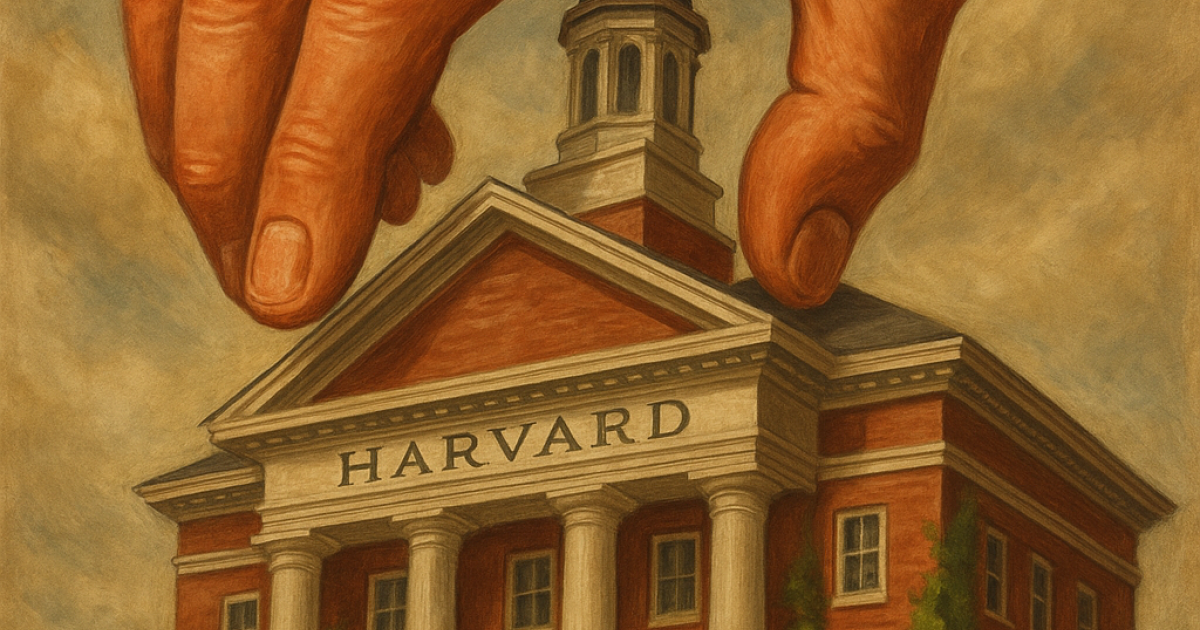
Harvard University is the latest higher education institution to be investigated by the Trump administration in response to its alleged mishandling of antisemitic harassment on campus. The institution will undergo a “comprehensive” analysis of nearly $9 billion in federal grants and contracts, according to a multi-agency news release.
The review, announced Monday afternoon, is part of ongoing efforts by the Justice Department’s Joint Task Force to Combat Anti-Semitism to tackle alleged antisemitic harassment on college campuses. The Departments of Education and Health and Human Services and the General Services Administration will carry out the investigation to “ensure the university is in compliance with federal regulations, including its civil rights responsibilities,” the news release said.
The task force said its review process for Harvard will be similar to the one it is currently carrying out at Columbia University.
“This initiative strengthens enforcement of President Trump’s Executive Order titled ‘Additional Measures to Combat Anti-Semitism,’” which “ensures that federally funded institutions uphold their legal and ethical responsibilities to prevent anti-Semitic harassment,” the news release said.
In a matter of weeks, the task force’s investigation into Columbia has upended the institution. It received a notification in early March that the government had launched a review into $54.1 million in federal contracts. Then, on March 7, the department retracted $400 million in grants and contracts, andon March 13 it sent the university a sweeping list of demands, calling for immediate compliance in order to regain the funding. Columbia agreed to nearly all of the demands a week later, but the administration has not reinstated the funds.
Shortly after announcing the decision to comply, the university’s interim president, Katrina Armstrong, resigned.
The administration has said it will now review more than $255.6 million in federal contracts and $8.7 billion in multiyear grant commitments at Harvard.
As with Columbia, the agencies will consider stop-work orders for any contracts the review identifies. But Harvard has also been ordered to submit a list of all federal contracts—both direct and through affiliates—that were not identified in the task force’s initial investigation.
Addressing the review in a letter to the Harvard community, President Alan M. Garber acknowledged that nearly $9 billion in research funding is at risk: “If this funding is stopped, it will halt life-saving research and imperil important scientific research and innovation.”
He said the institution had “devoted considerable effort” to addressing antisemitism on campus for the past 15 months, but added, “We still have work to do” and committed to working with the task force.
“We resolve to take the measures that will move Harvard and its vital mission forward while protecting our community and its academic freedom,” he said.
Critics have broadly opposed the Trump administration’s tactics, saying they are prime examples of using claims of antisemitism to justify “aggressive” executive overreach.
“What we’re seeing is an attempt to weaponize federal funding to punish schools that don’t align with their political views,” said Wesley Whistle, a project director at New America, a left-leaning think tank. “That kind of pressure stifles the free exchange of ideas—and that’s the whole point of higher education.”
Meanwhile, Education Secretary Linda McMahon said the university’s “failure to protect students on campus from antisemitic discrimination—all while promoting divisive ideologies over free inquiry—has put its reputation in serious jeopardy.
“Harvard can right these wrongs and restore itself to a campus dedicated to academic excellence and truth-seeking, where all students feel safe on its campus,” she said.