Tag: Trump

  • After Trump DEI order, MSU cancels Lunar New Year event

    After Trump DEI order, MSU cancels Lunar New Year event

    A college within Michigan State University canceled a lunch celebrating the Lunar New Year in part because of President Trump’s recent executive orders cracking down on diversity, equity and inclusion in the federal government and elsewhere, the news site Bridge Michigan reported Thursday.

    The order, signed last week, doesn’t define DEI but calls on federal agencies to “combat illegal private-sector DEI preferences, mandates, policies, programs, and activities.” Colleges with endowments valued at $1 billion or more could be investigated for potentially violating the order, under the White House directive. Michigan State has a $4.4 billion endowment.

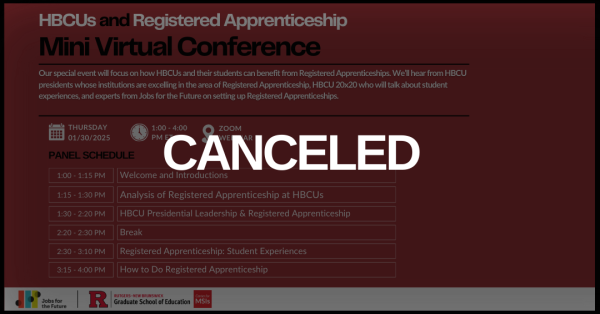
    A handful of colleges have taken down or reworked websites related to DEI since the order, while others have called off events. For instance, a conference at Rutgers University about registered apprenticeships and historically Black colleges and universities was canceled last week following the order. (Rutgers officials say calling off the conference wasn’t a university decision. Rather, it was canceled because the organizers, a group outside the university, received a stop work order from the Department of Labor.)

    Michigan State administrators told Bridge Michigan they canceled the lunch, which was scheduled for Jan. 29 and has been held four times before, after Chinese students “expressed concern about an event tied to one racial group.”

    The College of Communications Arts and Science was set to host the event. Lauren Gaines, the college’s Office of Diversity, Equity and Inclusion director, wrote in an email obtained by Bridge Michigan and the State News student paper that the cancellation was in response to concerns related to Trump’s immigration and DEI executive orders.

    “These actions have prompted feelings of uncertainty and hesitation about gathering for events that highlight cultural traditions and communities,” Gaines wrote. “We feel it is important to honor those concerns with sensitivity and care.”

    Heidi Hennink-Kaminski, the college’s dean, wrote in a follow-up email obtained by the news outlets that the decision was not “a statement of policy, but rather as an appropriate on-the-ground response given a very short decision window.”

    Michigan State officials did not respond to a request for comment by press time but confirmed after publication that staff at the college canceled the event, adding that other Lunar New Year events continue.

    Source link

  • Trump tackles higher ed during his first 10 days in office

    Trump tackles higher ed during his first 10 days in office

    During his first 10 days in office, President Trump signed a plethora of executive orders to combat so-called woke ideology, reversed a long-standing immigration policy that barred ICE officers from raiding college campuses and sought to freeze federal grants that don’t align with his agenda—a move blocked by a federal court.

    So far, his actions have had few immediate consequences for higher ed, and policy experts say more guidance is necessary to understand their implications. But the president has certainly created chaos and confusion, raising concern among university administrators across the country and inciting pre-emptive responses from some.

    Throughout the past two weeks, higher ed experts have told Inside Higher Ed they are trying to walk the thin line between necessary caution and undue alarm.     

    Many of Trump’s initial actions will take time to enforce and may face intervention from the courts. And while the president has nominated former wrestling mogul Linda McMahon as secretary of education and former University of Florida vice president Penny Schwinn as deputy, neither has a confirmation hearing scheduled. Trump has yet to nominate an under secretary—the highest-ranking official overseeing colleges and universities. So it will likely be at least a few weeks, if not more, until the department reaches full capacity.

    Until then, it will be run by acting secretary Denise Carter, who was already working in the department as head of the Office of Federal Student Aid, and a collection of 10 appointees who do not require confirmation. Of the 10, four have previously worked with the America First Policy Institute, a pro-Trump think tank that McMahon formed in 2021.

    Though the department is not yet fully staffed, the small landing team has leaped into action. In a Jan. 23 new release, department officials said they had removed or archived hundreds of documents, dissolved councils and canceled service contracts that go against the president’s “ongoing commitment to end illegal discrimination and wasteful spending.”

    Executive Orders

    The president signed a record number of executive orders on his first day in office and has added to the tally nearly every day since. But the three that hold the most weight for colleges and universities concern DEI, “gender ideology” and antisemitism. Higher ed, free speech and civil rights advocates predict all three will create a significant chilling effects on campuses.

    “Gender Ideology”

    Signed on Inauguration Day, the first order declares that there are only two sexes, which the White House defines as “male” and “female.” The order also mandates that federal agencies use those definitions when “interpreting or applying statutes, regulations, or guidance and in all other official agency business, documents, and communications” and bans the federal funding of any program that goes against those definitions or defends transgender and nonbinary students.

    Diversity, Equity and Inclusion

    The executive order Trump signed the following day, Jan. 21, tackled all things DEI, though unlike the first order, it never defined the term. Instead, it broadly ordered agencies—including the Education Department—to “enforce our longstanding civil-rights laws and to combat illegal private-sector DEI preferences, mandates, policies, programs, and activities.”

    The document instructs the department to provide guidance for colleges and universities on how to comply with the 2023 Supreme Court ruling against affirmative action. It also designates all institutions that receive federal financial aid as subcontractors and says that as such, they “shall not consider race, color, sex, sexual preference, religion, or national origin” in their programs or hiring decisions. Finally, it commissions the department to conduct an investigation of up to nine colleges with endowments worth more than $1 billion to scrutinize compliance.

    Antisemitism

    The most recent order, signed Wednesday, piggybacks on the tensions over recent campus protests and vows “forceful” measures to combat antisemitism. Its four main components define antisemitism, direct the Office for Civil Rights to reconsider closed investigations on ethnic and religious discrimination, encourage the Department of Justice to take action, and allow immigration officers to deport international student “sympathizers” who support antisemitic groups.

    DEI, LGBTQ+ and pro-Palestinian advocates, along with free speech and academic freedom groups, are pushing back against the order, and some are even encouraging colleges and universities not to comply unless pressured to do so.

    But several colleges have already taken pre-emptive actions in an attempt to avoid financial penalties. For example a conference at Rutgers University about registered apprenticeships and historically Black colleges and universities was canceled last week, and Michigan State University canceled a Lunar New Year event this week. Rutgers officials, however, say calling off the conference wasn’t a university decision. Rather, it was canceled because the organizers, a group outside the university, received a stop work order from the Department of Labor.

    Immigration Actions

    Although less directly targeted at institutions of higher ed, the president has also taken executive actions related to immigration. He attempted (and failed) to strip the children of undocumented immigrants of birthright citizenship; rescinded guidance that prevented immigration arrests at schools, churches and colleges; and signed the Laken Riley Act into law, potentially putting the approval of some U.S. visas into the hands of state attorneys general.

    The first executive action might have impacted some students’ access to in-state tuition or financial aid but would have had no direct implication on the colleges themselves. But the latter two could force university administrators to decide whether they will assist in deportation efforts and may impact the enrollment and hiring of international students and scholars.

    Funding Freeze

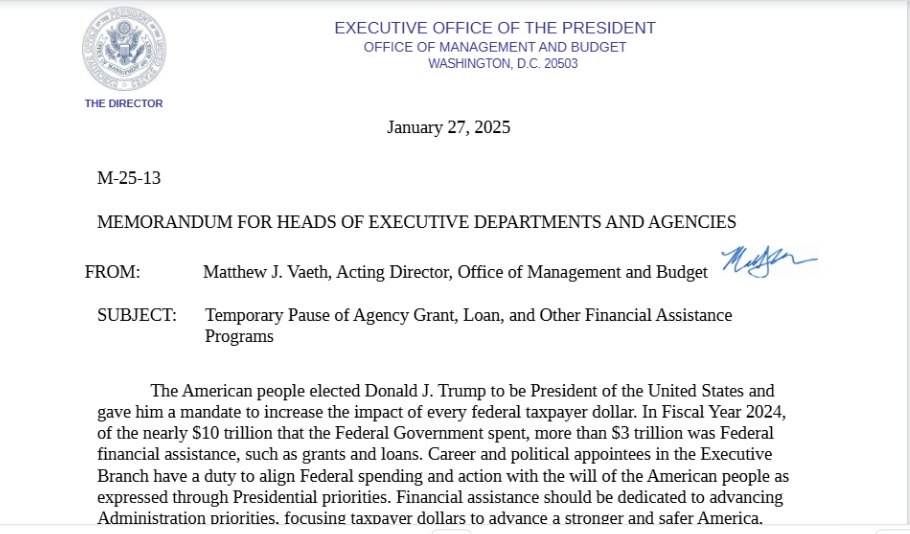
    Perhaps the most direct cause of chaos and concern among colleges, however, was the product of an internal Office of Management and Budget memo leaked Monday, which directed all federal agencies to pause thousands of grants and loans in order to conduct a “comprehensive analysis” and ensure they align with the president’s priorities.

    The unprecedented guidance specifically exempted Social Security, Medicare and other programs that provide direct financial assistance to individuals. But initially many institutions feared the mandate would strip students of access to the Pell Grant and federal loans. The White House clarified that was not the case in a press conference and in follow-up memos, but colleges, universities and higher education nonprofit groups were still concerned.

    Policy experts warned that even if temporary, lack of access to grants could impact minority-serving institutions, college preparation programs, childcare for student parents, food banks, student retention and graduation initiatives, campus hospital systems, and more. Multiple legal challenges quickly followed, and on Tuesday afternoon a federal judge in Washington blocked the freeze, just hours before it was scheduled to take effect.

    Since then, the Trump administration has rescinded the original memo, although it has criticized news organizations for saying the freeze was reversed entirely. Instead, officials argued in a news release—titled “Another Day, More Lies”—that the analysis of all programs is ongoing and Trump’s order remains “in full force and effect, and will be rigorously implemented as the administration works to root out waste, fraud, and abuse.”

    Pauses on research grant applications through the National Institutes of Health and the National Science Foundation that started prior to the OMB memo remain in place. The agencies are responsible for billions of dollars in research funding at universities across the country, and faculty members are still largely concerned that the stoppage will interfere with critical STEM research projects, including those that have advanced treatments for common diseases such as cancer and Alzheimer’s.


    Source link

  • Judge reinstates professor LSU suspended after Trump remarks

    Judge reinstates professor LSU suspended after Trump remarks

    A judge has ordered Louisiana State University to return to the classroom a tenured law professor who says the institution suspended him from teaching after he made comments about Donald Trump and Louisiana governor Jeff Landry in a lecture.

    Donald R. Johnson, a state district court judge, signed a one-page order Thursday putting Ken Levy back in the classroom. The return might be short-lived; Johnson set a hearing for Feb. 10, during or after which he could decide that Levy should again be barred from teaching. The Louisiana Illuminator reported the ruling earlier.

    On Jan. 14, Levy was explaining his course rules to students—including a ban on recording the class. A recording was made nevertheless.

    Levy referenced Landry’s public calls in November for LSU to punish Nicholas Bryner, one of Levy’s fellow law professors, for Bryner’s alleged in-class comments about students who support Trump. Levy said he himself “would love to become a national celebrity [student laughter drowns out a moment of the recording] based on what I said in this class, like, ‘Fuck the governor!’”

    Levy also referenced Trump. “You probably heard I’m a big lefty, I’m a big Democrat, I was devastated by— I couldn’t believe that fucker won, and those of you who like him, I don’t give a shit, you’re already getting ready to say in your evaluations, ‘I don’t need his political commentary,’” Levy said. “No, you need my political commentary, you above all others.”

    Levy’s attorney, Jill Craft, said the university suspended Levy from teaching pending an investigation, though it hasn’t specified which comments allegedly generated student complaints.

    “When people try and censor academic freedom and free speech because they may not like the opinion or the thought, then we no longer have those freedoms,” Craft said.

    LSU spokespeople didn’t return requests for comment Thursday.

    Source link

  • Colombia, first nationals deported under the Donald Trump administration arrived (TeleSur English)

    Colombia, first nationals deported under the Donald Trump administration arrived (TeleSur English)

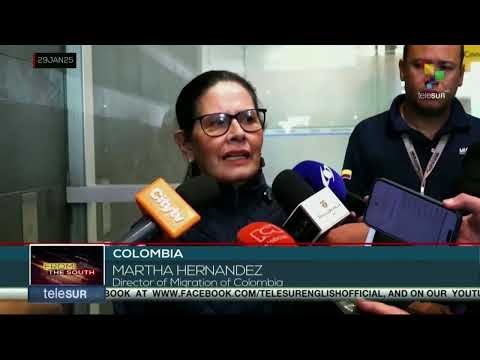
    The first flights carrying migrants deported from the United States to Colombia. The Colombian government confirmed on Tuesday that two planes
    carrying migrants had landed. Some were reportedly shackled. A total of 201 migrants: 110 sent from
    California and 90 from Texas were on board. Among the deportees were two pregnant women and more than 20 children. The cost to US taxpayers is estimated to be $100,000 to $700,000 per flight. The long-term costs and consequences of this program with Latin America, like many others over the last century, have not been estimated. 

    Source link

  • Trump Signs Executive Order on Enforcement of Immigration Laws, Potentially Leading to Increased Worksite Enforcement Action

    Trump Signs Executive Order on Enforcement of Immigration Laws, Potentially Leading to Increased Worksite Enforcement Action

    by CUPA-HR | January 29, 2025

    Along with several immigration-related executive orders and actions issued on Inauguration Day, President Trump signed an executive order titled “Protecting the American People Against Invasion.” The EO sets several directives for U.S. Immigration and Customs Enforcement (ICE) and U.S. Citizenship and Immigration Services (USCIS) to enforce immigration law against immigrants without permanent legal status in the U.S. and could implicate employers the government deems as “facilitating” the presence of such individuals.

    Sections 4 and 5 of the EO establish civil and criminal enforcement priorities for relevant federal agencies. Specifically, the EO directs the secretary of Homeland Security to enable ICE and USCIS to set priorities for their agencies that would ensure successful enforcement of final orders of removal. Additionally, Section 8 of the EO directs increased enforcement action in the form of civil fines and penalties. The EO directs the secretary of Homeland Security to ensure assessment and collection of all fines and penalties from individuals unlawfully present in the U.S. and, notably, those who facilitate such individuals’ presence in the U.S.

    Depending on how the agencies respond to this order, these three sections of the EO could lead to an uptick in worksite enforcement action. As a result of this EO, agencies could take increased enforcement action for employment-related immigration law, which could lead to agency actions such as Form I-9 audits and potential investigations and worksite visits related to immigration compliance. Employers who are not in compliance with federal immigration laws could be considered as entities that potentially “facilitate” the presence of immigrants without permanent legal status, which could lead to significant fines and other penalties for the employers.

    Next Steps for HR Leaders

    CUPA-HR has always worked to help you ensure that your institution’s Form I-9 processes are in compliance with federal requirements, and we’ve partnered with USCIS for many years to provide periodic guidance, support and resources. We also understand that it is sometimes a challenge to ensure total compliance for large, sprawling campuses and that some of you have employees at worksites across your state, the country and the globe. Through speeches and actions like this executive order, the Trump administration has made it clear that they intend to focus enforcement efforts on immigrants without permanent legal status and businesses employing them. As noted above, it is possible that there could be I-9 audits and site visits to ensure compliance. Penalties for noncompliance could include very large fines and loss of federal funding.

    In light of this EO, it is vital for institutions to review their compliance with immigration laws regarding employment eligibility and work authorization. There are several questions HR leaders should ask themselves when reviewing compliance:

    • If you were notified tomorrow that your institution’s Form I-9 records were going to be audited in the coming weeks, where would your institution be most vulnerable?
    • What actions do you need to take today to address any potential vulnerabilities?
    • Do your presidents, provosts and other campus leaders understand and appreciate the magnitude of this potential challenge?
    • What changes do you need to make to your institution’s hiring and onboarding practices now to ensure compliance moving forward?

    CUPA-HR will continue to monitor for any additional updates related to the Form I-9 and other hiring processes related to work authorization. If you need additional guidance or resources, please review the CUPA-HR I-9/E-Verify Toolkit.


    Source link

  • U.S. Department of Education’s Trump Appointees and America First Agenda

    U.S. Department of Education’s Trump Appointees and America First Agenda

    Rachel
    Oglesby most recently served as America First Policy Institute’s Chief
    State Action Officer & Director, Center for the American Worker. In
    this role, she worked to advance policies that promote worker freedom,
    create opportunities outside of a four-year college degree, and provide
    workers with the necessary skills to succeed in the modern economy, as
    well as leading all of AFPI’s state policy development and advocacy
    work. She previously worked as Chief of Policy and Deputy Chief of Staff
    for Governor Kristi Noem in South Dakota, overseeing the implementation
    of the Governor’s pro-freedom agenda across all policy areas and state
    government agencies. Oglesby holds a master’s degree in public policy
    from George Mason University and earned her bachelor’s degree in
    philosophy from Wake Forest University. 

    Jonathan Pidluzny – Deputy Chief of Staff for Policy and Programs 

    Jonathan
    Pidluzny most recently served as Director of the Higher Education
    Reform Initiative at the America First Policy Institute. Prior to that,
    he was Vice President of Academic Affairs at the American Council of
    Trustees and Alumni, where his work focused on academic freedom and
    general education. Jonathan began his career in higher education
    teaching political science at Morehead State University, where he was an
    associate professor, program coordinator, and faculty regent from
    2017-2019. He received his Ph.D from Boston College and holds a
    bachelor’s degree and master’s degree from the University of Alberta. 

    Chase Forrester – Deputy Chief of Staff for Operations 

    Virginia
    “Chase” Forrester most recently served as the Chief Events Officer at
    America First Policy Institute, where she oversaw the planning and
    execution of 80+ high-profile events annually for AFPI’s 22 policy
    centers, featuring former Cabinet Officials and other distinguished
    speakers. Chase previously served as Operations Manager on the
    Trump-Pence 2020 presidential campaign
    , where she spearheaded all event
    operations for the Vice President of the United States and the Second
    Family. Chase worked for the National Republican Senatorial Committee
    during the Senate run-off races in Georgia and as a fundraiser for
    Members of Congress. Chase graduated from Clemson University with a
    bachelor’s degree in political science and a double-minor in Spanish and
    legal studies.

    Steve Warzoha – White House Liaison

    Steve
    Warzoha joins the U.S. Department of Education after most recently
    serving on the Trump-Vance Transition Team. A native of Greenwich, CT,
    he is a former local legislator who served on the Education Committee
    and as Vice Chairman of both the Budget Overview and Transportation
    Committees. He is also an elected leader of the Greenwich Republican
    Town Committee. Steve has run and served in senior positions on numerous
    local, state, and federal campaigns. Steve comes from a family of
    educators and public servants and is a proud product of Greenwich Public
    Schools and an Eagle Scout. 

    Tom Wheeler – Principal Deputy General Counsel 

    Tom
    Wheeler’s prior federal service includes as the Acting Assistant
    Attorney General for Civil Rights at the U.S. Department of Justice, a
    Senior Advisor to the White House Federal Commission on School Safety,
    and as a Senior Advisor/Counsel to the Secretary of Education
    . He has
    also been asked to serve on many Boards and Commissions, including as
    Chair of the Hate Crimes Sub-Committee for the Federal Violent Crime
    Reduction Task Force, a member of the Department of Justice’s Regulatory
    Reform Task Force
    , and as an advisor to the White House Coronavirus
    Task Force
    , where he worked with the CDC and HHS to develop guidelines
    for the safe reopening of schools and guidelines for law enforcement and
    jails/prisons. Prior to rejoining the U.S. Department of Education, Tom
    was a partner at an AM-100 law firm, where he represented federal,
    state, and local public entities including educational institutions and
    law enforcement agencies in regulatory, administrative, trial, and
    appellate matters in local, state and federal venues. He is a frequent
    author and speaker in the areas of civil rights, free speech, and
    Constitutional issues, improving law enforcement, and school safety. 

    Craig Trainor – Deputy Assistant Secretary for Policy, Office for Civil Rights 

    Craig
    Trainor most recently served as Senior Special Counsel with the U.S.
    House of Representatives Committee on the Judiciary under Chairman Jim
    Jordan (R-OH)
    , where Mr. Trainor investigated and conducted oversight of
    the U.S. Department of Justice, including its Civil Rights Division,
    the FBI, the Biden-Harris White House, and the Intelligence Community
    for civil rights and liberties abuses. He also worked as primary counsel
    on the House Judiciary’s Subcommittee on the Constitution and Limited
    Government’s investigation into the suppression of free speech and
    antisemitic harassment on college and university campuses
    , resulting in
    the House passing the Antisemitism Awareness Act of 2023. Previously, he
    served as Senior Litigation Counsel with the America First Policy
    Institute
    under former Florida Attorney General Pam Bondi, Of Counsel
    with the Fairness Center, and had his own civil rights and criminal
    defense law practice in New York City for over a decade. Upon graduating
    from the Catholic University of America, Columbus School of Law, he
    clerked for Chief Judge Frederick J. Scullin, Jr., U.S. District Court
    for the Northern District of New York. Mr. Trainor is admitted to
    practice law in the state of New York, the U.S. District Court for the
    Southern and Eastern Districts of New York, and the U.S. Supreme Court. 

    Madi Biedermann – Deputy Assistant Secretary, Office of Communications and Outreach 

    Madi
    Biedermann is an experienced education policy and communications
    professional with experience spanning both federal and state government
    and policy advocacy organizations. She most recently worked as the Chief
    Operating Officer at P2 Public Affairs. Prior to that, she served as an
    Assistant Secretary of Education for Governor Glenn Youngkin and worked
    as a Special Assistant and Presidential Management Fellow at the Office
    of Management and Budget in the first Trump Administration.
    Madi
    received her bachelor’s degree and master of public administration from
    the University of Southern California. 

    Candice Jackson – Deputy General Counsel 

    Candice
    Jackson returns to the U.S. Department of Education to serve as Deputy
    General Counsel. Candice served in the first Trump Administration as
    Acting Assistant Secretary for Civil Rights, and Deputy General Counsel,
    from 2017-2021. For the last few years, Candice has practiced law in
    Washington State and California and consulted with groups and
    individuals challenging the harmful effects of the concept of “gender
    identity” in laws and policies in schools, employment, and public
    accommodations.
    Candice is mom to girl-boy twins Madelyn and Zachary,
    age 11. 

    Joshua Kleinfeld – Deputy General Counsel 

    Joshua
    Kleinfeld is the Allison & Dorothy Rouse Professor of Law and
    Director of the Boyden Gray Center for the Study of the Administrative
    State at George Mason University’s Scalia School of Law. He writes and
    teaches about constitutional law, criminal law, and statutory
    interpretation, focusing in all fields on whether democratic ideals are
    realized in governmental practice. As a scholar and public intellectual,
    he has published work in the Harvard, Stanford, and University of
    Chicago Law Reviews, among other venues. As a practicing lawyer, he has
    clerked on the D.C. Circuit, Fourth Circuit, and Supreme Court of
    Israel, represented major corporations accused of billion-dollar
    wrongdoing, and, on a pro bono basis, represented children accused of
    homicide. As an academic, he was a tenured full professor at
    Northwestern Law School before lateraling to Scalia Law School. He holds
    a J.D. in law from Yale Law School, a Ph.D. in philosophy from the
    Goethe University of Frankfurt, and a B.A. in philosophy from Yale
    College. 

    Hannah Ruth Earl – Director, Center for Faith-Based and Neighborhood Partnerships

    Hannah
    Ruth Earl is the former executive director of America’s Future, where
    she cultivated communities of freedom-minded young professionals and
    local leaders. She previously co-produced award-winning feature films as
    director of talent and creative development at the Moving Picture
    Institute. A native of Tennessee, she holds a master of arts in religion
    from Yale Divinity School.

    AFPI Reform Priorities

    AFPI’s higher education priorities are to:

     Related links:

    America First Policy Institute Team

    America First Policy Initiatives

    Source link

  • This week in 5 numbers: Trump directive targets college DEI

    This week in 5 numbers: Trump directive targets college DEI

    The maximum number of organizations, including colleges with endowments over $1 billion, that President Donald Trump asked each federal agency to identify as potential targets for “civil compliance investigations.” The directive — which targets diversity, equity and inclusion programs — came in an executive order on Tuesday, the first full day of the new Trump administration.

    Source link

  • Rutgers cancels HBCU event to align with Trump DEI orders

    Rutgers cancels HBCU event to align with Trump DEI orders

    The virtual mini-conference sponsored by Jobs for the Future was scheduled for Jan. 30.

    The Rutgers University Center for Minority Serving Institutions announced Thursday that it has canceled an upcoming virtual conference about registered apprenticeship programs as a result of President Trump’s executive orders targeting diversity, equity and inclusion initiatives.

    “We were very excited to bring the HBCUs and Registered Apprenticeship Mini-Conference to you next week,” said the email sent to registered attendees. “Unfortunately, due to President Trump’s Executive Orders … we have been asked to cease all work under the auspices of the Diversity, Equity, Inclusion, and Accessibility HUB at Jobs for the Future, which the U.S. Department of Labor funds.”

    Jobs for the Future, an organization focused on helping college and workforce leaders create equitable economic outcomes for students, runs a national innovation hub focused on improving access to registered apprenticeships for women, people of color and other underrepresented groups.

    Located in New Jersey, a blue state for more the 30 years, Rutgers has not faced pressure from state legislators to dismantle DEI. But the cancellation demonstrates the leverage and power the federal government can hold over colleges and universities by threatening to pull funding from programs that don’t comply with the president’s demands.

    It’s just the kind of reaction higher ed policy experts and DEI advocates predicted as a result of the Republican agenda.

    “That wariness and sort of pre-emptive compliance, even absent direct threats from the federal or state government, might be somewhat universal,” Brendan Cantwell, a professor of education at Michigan State University, told Inside Higher Ed.

    “These leaders will be worried about losing their federal funding, which is exactly what DEI opponents want,” added Shaun Harper, a professor of education, business and public policy; the founder of the University of Southern California’s Race and Equity Center; and an Inside Higher Ed opinion contributor.

    More cancellations are anticipated in the weeks and months to come as the Trump administration continues to issue executive orders. For instance, Trump’s growing team at the Department of Education announced a series of actions Thursday related to eliminating DEI.

    “The Department removed or archived hundreds of guidance documents, reports, and training materials that include mentions of DEI from its outward facing communication channels [and] put employees charged with leading DEI initiatives on paid administrative leave,” agency officials said in a news release. “These actions are in line with President Trump’s ongoing commitment to end illegal discrimination and wasteful spending across the federal government. They are the first step in reorienting the agency toward prioritizing meaningful learning ahead of divisive ideology in our schools.”

    Other actions the department has taken include:

    • Dissolving the department’s Diversity and Inclusion Council.
    • Terminating the Employee Engagement Diversity Equity Inclusion Accessibility Council within the Office for Civil Rights.
    • Canceling ongoing DEI training and service contracts that total over $2.6 million.
    • Withdrawing the department’s Equity Action Plan, which was released in 2023 to align with former president Joe Biden’s executive order to advance racial equity and support for underserved communities.

    Source link