

The MAGA movement is recruiting a new generation… and they’re doing it through the manosphere. From Nick Fuentes to Andrew Tate, a growing army of Trump-aligned influencers is targeting Gen Z boys who feel left behind… promising power, purpose, and belonging while feeding resentment and hate. This isn’t random… it’s a strategy. The “alpha” pipeline is reshaping the Republican Party from the inside out, one lonely teenager at a time. Watch how these extremist influencers are using religion to turn alienation into political weaponry… and building Trump’s future GOP.
Tag: Trump
-
Are Elite Neoliberals and Trump Singing from the Same Sheet of Music?
The silence of America’s elite is deafening. Jeffrey Sonnenfeld, Yale professor and corporate leadership expert, does not hesitate to call it out. In a recent email, he warned that the nation’s corporate, academic, and religious leaders—once the backbone of moral and civic accountability—are now “smugly, safely, silently on the sidelines,” while authoritarian forces surge.
“Nope,” Sonnenfeld wrote, “but it’s high time for the neo whiners to get off their lazy, cowardly butts and follow the courageous path of activists across sectors and fields from the 1960s and 1970s. It took nine years to get the No Kings rallies going. Shameful.”
He recalls an era when activism cut across sectors: interfaith clergy, college presidents—from elite universities to small faith-based institutions and HBCUs—trade union leaders, professional associations, environmentalists, and human rights advocates all marched together. Blue state treasurers and attorneys general held corporations accountable; red state officials sometimes applied pressure from the opposite side. CEOs, Sonnenfeld reminds us, are mostly “hired hands, stewards of other people’s money” who respond to engaged stakeholders. Without pressure, they retreat into inaction.
Today, the chorus of accountability is eerily silent. Clergy barely speak out. University presidents remain cautious. Activists blog while the nation teeters. Sonnenfeld’s indictment is clear: where once there was collective courage, there is now passivity—an effective alignment with the very forces undermining democracy.
In practical terms, elite inaction has consequences. Trump and his allies wield influence not only through electoral politics but by exploiting institutional inertia. By failing to mobilize, elites—through default inaction—allow a political agenda that often mirrors their own neoliberal priorities to advance unchecked: deregulation, tax favoritism, corporate consolidation, and a shrinking social safety net.
Sonnenfeld’s challenge is urgent: Will today’s corporate boards, clergy, and academic leaders rise to the occasion, reclaim the moral authority they once wielded, and demand accountability from those they employ and fund? Or will the next generation of Americans grow up seeing democracy as a performance, not a lived responsibility?
The 1960s and 1970s were not perfect, but they demonstrated what cross-sectoral solidarity could achieve. Today, silence is complicity. In a nation at moral and political crossroads, elites cannot afford to play it safe. History is watching—and so is the rest of the world.
-
Students face dropout risk in Trump cuts – Campus Review
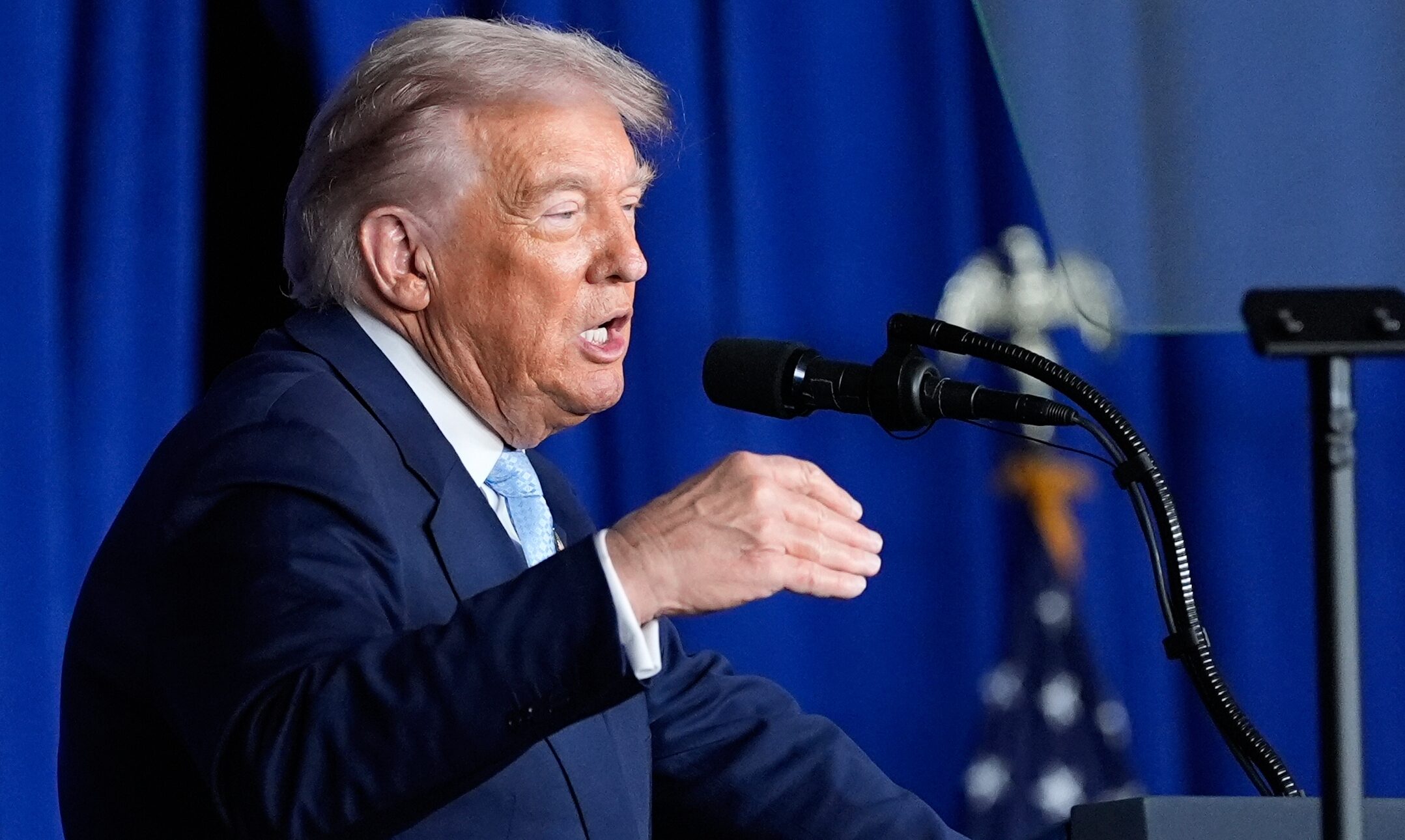
President Donald Trump has proposed $980 million in cuts to work-study programs. Picture: Alex Brandon.
-
Trump Can’t “Blanket” Deny UC Grants or Demand Payout
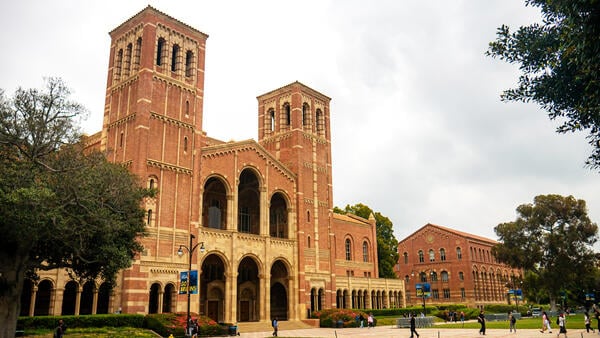
A judge ordered federal agencies Friday to end their “blanket policy of denying any future grants” to the University of California, Los Angeles, and further ruled that the Trump administration can’t seek payouts from any UC campus “in connection with any civil rights investigation” under Titles VI or IX of federal law.
The ruling also prohibits the Department of Justice and federal funding agencies from withholding funds, “or threatening to do so, to coerce the UC in violation of the First Amendment or Tenth Amendment.” In all, the order, if not overturned on appeal, stops the administration’s attempt to pressure UCLA to pay $1.2 billion and make multiple other concessions, including to stop enrolling “foreign students likely to engage in anti-Western, anti-American, or antisemitic disruptions or harassment” and stop “performing hormonal interventions and ‘transgender’ surgeries” on anyone under 18 at its medical school and affiliated hospitals.
The administration’s targeting of the UC system came to the fore on July 29. That’s when the DOJ said its months-long investigations across the system had so far concluded that UCLA violated the equal protection clause of the 14th Amendment and Title VI of the Civil Rights Act of 1964 in its response to alleged antisemitism at a spring 2024 pro-Palestinian protest encampment.
Federal agencies—including the National Institutes of Health, National Science Foundation and Department of Energy—quickly began freezing funding; UC estimated it lost $584 million. But UC researchers sued and, even before Friday’s ruling, U.S. District Court judge Rita F. Lin of the Northern District of California ordered the restoration of almost all of the frozen funding.
Friday’s ruling came in a case filed this fall by the American Association of University Professors, the affiliated American Federation of Teachers and other unions. Lin again was the judge.
“Defendants did not engage in the required notice and hearing processes under Title VI for cutting off funds for alleged discrimination,” she wrote.
“With every day that passes, UCLA continues to be denied the chance to win new grants, ratchetting [sic] up Defendants’ pressure campaign,” she wrote. “And numerous UC faculty and staff have submitted declarations describing how Defendants’ actions have already chilled speech throughout the UC system. They describe how they have stopped teaching or researching topics they are afraid are too ‘left’ or ‘woke,’ in order to avoid triggering further funding cancellations by Defendants. They also give examples of projects the UC has stopped due to fear of the same reprisals. These are classic, predictable First Amendment harms, and exactly what Defendants publicly said that they intended.”
-

Courses Studying Trump Proliferate, Risking President’s Ire
Donald Trump’s second term in office continues to confound onlookers. Yet a growing number of universities around the world are offering courses for students to try to make sense of the mercurial president.
The University of Pennsylvania has launched Climate and Environment Journalism: Truth-Telling in the Trump Era through its English department and American Conservatism From Taft to Trump for political science students. The New School’s Donald Trump as History module will aim to explore the “Trump phenomenon” and how it alters views of U.S. history, while the University of Washington offers a special Trump in the World module.
Universities outside the U.S. are also involved. First run in 2017, Trumpism: An American Biography is an optional module for second-year history students at the University of Sheffield, which explores how U.S. history can shed light on the present.
Andrew Heath, lecturer in U.S. history at Sheffield, told Times Higher Education that part of the module’s purpose was to get students thinking about the history of terms such as populism that are “often thrown around in the media to make sense of Trump and Trumpism,” and to encourage them to think critically about the way that comparisons are invoked.
But teaching about such a fast-moving political situation is not easy. “It’s a module that always poses challenges—readings can quickly feel dated; teaching it in an election year last time around was harder. Every iteration of the unit needs significant updating,” added Heath.
Christopher Breem, managing director of the McCourtney Institute for Democracy at Pennsylvania State University, said it is always hard to teach about something going on in the present. But this is often what students are most interested in because they recognize that it is important to them and their future to understand it, he said.
“I think if you are up front with students that there are unavoidable risks associated with teaching any subject in real time, they accept that.”
Breem, who taught a course on Trump’s unorthodox campaign in 2016, said there are positive sides to it as well, allowing lecturers the opportunity to talk about populism in U.S. history, and about similar populist movements throughout the world.
“If you use Trump as an opportunity to talk about where we are and how we got here, you can end up with a really good class.”
The University of East Anglia is offering an optional module on MAGA: Donald Trump and Twenty-First Century America, University College Dublin has a Trump’s America option, and the University of Southern Denmark has one on U.S. society under Trump.
During the first Trump presidency, some academics came under an intense national spotlight for their courses that explicitly referenced him. One professor who previously taught a course mentioning Trump said the whole experience was “unpleasant,” with staff and the university receiving numerous phone calls and emails.
“The university took my information off the website, and we had a police officer outside of the classroom,” the professor said. “I turned on my house alarm during the day. Frightened, I turned down opportunities for press interviews.”
The academic, who wished to remain anonymous, said it was hard to keep up with the constant change and disruption of the Trump administration but that students were very engaged.
And they said academics have a professional and ethical responsibility to talk about Trump’s policies in classes, if it is related to course content, but should “tread carefully on how public you make it.”
However, Richard Lazarus, professor of law at Harvard University and course director for a module on environmental law under Trump, said he had “zero” worries about drawing the ire of the administration.
“We are not advocates who use our classes to tell students what action they should take. We are teachers and scholars who inform our students, give them the skills to think in a rigorous, disciplined way, and with integrity. They then decide how to use their skills.”
Other new courses for this year include the People’s Guide to Trumpism at the University of San Francisco and Trump vs. Science at Hampshire College.

-
Will Trump policies exacerbate the special education teacher shortage?
This audio is auto-generated. Please let us know if you have feedback.Teacher preparation experts fear ongoing special education teacher shortages will worsen as the Trump administration continues to downsize the U.S. Department of Education.
Along with mass layoffs at the federal agency, proposals to consolidate federal grants for training special educators are fueling concerns that these moves will exacerbate critical staffing issues.
During the 2024-25 school year alone, 45 states reported shortages in special education — the most frequently reported shortage area nationwide, according to Learning Policy Institute. The other most common shortages reported by states include science (41), math (40), language arts (38), world languages (35) and career and technical education (33), LPI found.
A wave of layoffs in October at the Education Department that decimated most of the Office of Special Education Programs — a decision that is currently tied up in the courts — sent shockwaves throughout the special education community. OSEP helps administer and oversee the distribution of federal funds through the Individuals with Disabilities Education Act.
One of the grants impacted by these changes in particular is IDEA Part D for personnel development to improve services for children with disabilities.
The IDEA Part D personnel development grants received $115 million in federal appropriations during fiscal year 2024. Under the Trump administration’s FY 26 proposal, that same program would be zeroed out, and the newly allocated funds would go to IDEA Part B programs into a single state block grant program.
The budget proposal stated that even with this consolidation of funds, “states would continue to meet key IDEA accountability and reporting requirements aimed at ensuring a free appropriate public education is available to all students with disabilities and protecting the rights of those students and their families.”
Regardless, there’s minimal support in Congress for this kind of state block grant program, as both the House and Senate appropriations committees have rejected the measures in their budget planning for FY 26.
These IDEA Part D funds are typically awarded for five years to state education agencies, school districts, higher education institutions and nonprofits.
On top of challenges for OSEP to oversee the IDEA Part D personnel preparation funds while it is shortstaffed, experts and advocates say the Trump administration’s budget proposal to consolidate IDEA Part D into state block grants will harm teacher prep programs’ ability to train high-quality special educators.
The changes this year are of particular concern for Laurie VanderPloeg, associate executive director for professional affairs at the Council for Exceptional Children, who said the absence of IDEA Part D preparation program funds could reduce the number of special education teacher candidates in educator preparation programs.
Even at current enrollment levels in special education teaching programs, VanderPloeg said, there’s still not enough people in the pipeline to meet the demands in the field.
“So with the reduction in enrollment in the educator prep programs, it’s going to reduce our national flexibility with being able to fill all of the open positions with good, qualified personnel,” said VanderPloeg, who also served as director of OSEP during the first Trump administration.
The uncertainty around IDEA Part D grant funds is also hanging over the heads of educator preparation programs, leaving many wondering how long these federal dollars dedicated to training special educators will last, VanderPloeg said. If these grants are disrupted, she said, there could be other implications for teaching candidates currently enrolled in programs that benefit from the funds.
“Would they be able to complete the program in the absence of having funding availability?” VanderPloeg asked. “Would it put them into a position where they would have to financially support themselves through the completion of the program?”
Still, the Trump administration has suggested its efforts to eliminate the Education Department and give more control to the states will not impact instructional services for students with disabilities. President Donald Trump and U.S. Education Secretary Linda McMahon have named the U.S. Department of Health and Human Services as a potential agency to take on special education oversight from the Education Department. But there is no official plan in place to make such a move yet.
Marquita Grenot-Scheyer, former chairperson of the American Association of Colleges for Teacher Education board of directors, also said that the Education Department shakeups impacting special education will only make the declining enrollment in special education teacher training programs worse.
Educator preparation programs are worried about how these cuts will further strain working conditions for special educators, she said — and that’s especially the case if there’s less federal funding for technical assistance and possible increased class sizes in special education programs. At the same time, an analysis of federal data by The Advocacy Institute found that the number of students with disabilities, ages 3-21, could jump by about 1 million students between 2021 and 2025.
VanderPloeg agrees that those workforce strains exist, noting that the optics of these drastic changes to federal special education programs could cause those training in the field to question if there will be adequate resources and professional development opportunities to support them as they enter the profession. The cuts in funds and staffing for oversight to bolster the special education teacher pipeline sends a message to prospective teachers that may deter them from pursuing a career in the field, she said.
“So many of our university programs are uncertain with how best to address this or plan for the future — not only from a recruitment perspective into their educator prep programs, but certainly from a staff perspective as well,” VanderPloeg said.
-
Trump Defends Enrolling International Students
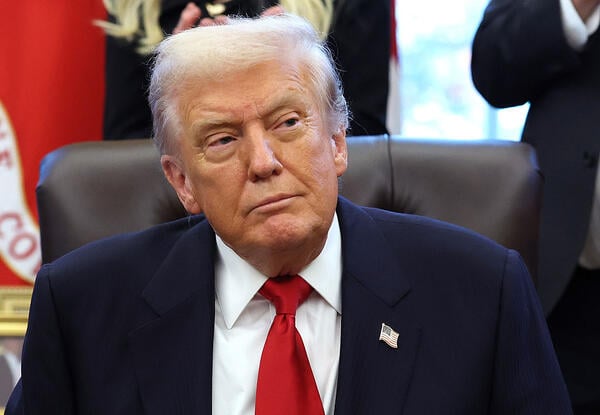
President Donald Trump stressed the value of international students in the U.S. during an interview aired on Fox News Monday.
Fox News host Laura Ingraham pressed Trump on why he wouldn’t curb international student enrollments, particularly from China. Trump told her doing so would “perhaps make people happy” but colleges and universities would “go out of business.”
“You don’t want to cut half of the people, half of the students from all over the world that are coming into our country—destroy our entire university and college system—I don’t want to do that,” Trump said. He also claimed historically Black colleges and universities would “all be out of business.”
“Look, I want to be able to get along with the world,” Trump added.
Ingraham pushed back, raising concerns about Chinese spying and intellectual property theft. But Trump framed welcoming international students as an economic decision.
“We take in trillions of dollars from students,” he said. “You know, the students pay more than double when they come in from most foreign countries. I want to see our school system thrive. And it’s not that I want them, but I view it as a business.”
The annual Open Doors report from the Institute of International Education estimates the economic value of foreign students in the U.S. to be about $50 billion per year.
In May, Secretary of State Marco Rubio threatened to “aggressively revoke” Chinese students’ visas and intensify vetting for Chinese visa applications. But Trump reversed course this summer and proposed the U.S. allow 600,000 Chinese students into the country, prompting backlash from some members of his base, the Associated Press reported.
The move, and Trump’s reiterated support for it on Fox this week, seem to contradict other actions his administration has taken, such as revoking international students’ visas, arresting international students for First Amendment–protected protests and ramping up scrutiny of international student visa applicants. Some campuses have experienced steep declines in international student enrollments this semester.
-
Trump Gutted ED’s Civil Rights Office. Could States Step Up?
The Education Department’s Office for Civil Rights, which is supposed to protect students from discrimination based on race, ethnicity, sex, age and disability status, isn’t what it once was.
The Trump administration laid off nearly half the staff in March, shuttered seven of its 12 regional offices, shifted the hollowed-out agency’s focus to new priorities (including keeping transgender women out of women’s sports) and then reportedly terminated more employees amid the ongoing shutdown.
Philadelphia was among the cities that lost its OCR regional office in the first round of layoffs. Lindsey Williams, a Pennsylvania state senator who serves as minority chair of the Senate Education Committee, said the region’s cases now go to Atlanta, “where they may or may not be heard.”
To fill this void, Williams, a Democrat, announced she will file legislation to establish an Office of Civil Rights within the Pennsylvania Department of Education. The bill has yet to be written, but Williams said she wants to “create new authorities for the Pennsylvania Department of Education to investigate and enforce federal civil rights violations.” She noted, “There may be opportunity as well to strengthen our state laws in this regard.”
“We’re looking at all of it to see what we can do,” she said, “because we haven’t been here before.”
Students facing discrimination across the country now have far fewer staff in the federal Education Department OCR who can respond to their complaints. The agency had a large backlog of cases even before President Trump retook office, and then it dismissed thousands of complaints in the spring. Some advocates have expressed particular concern about OCR’s current capacity to process complaints of disability discrimination.
And those left at OCR appear to be applying a conservative interpretation of civil rights law that doesn’t recognize transgender students’ gender identity. The Trump-era OCR has actively targeted institutions for allowing trans women in women’s sports. It’s also focused on ending programs and practices that specifically benefit minorities, to the exclusion of whites.
Civil rights advocates are calling for states to step up.
“We cannot stop what is happening at the federal level,” Williams said. “There’s plenty of lawsuits that are trying … but, in the meantime, what do we as a state do?”
One of those ongoing suits, filed by the Victim Rights Law Center and two parents in April, alleges that shrinking OCR harms students from protected classes. It argues that the federal OCR cuts left “a hollowed-out organization incapable of performing its statutorily mandated functions,” adding that “without judicial intervention, the system will exist in name only.” But that intervention may not work in students’ favor—judges have issued preliminary injunctions, but the Supreme Court has, so far, allowed the Education Department layoffs to continue.
Shelby Chestnut, executive director of the Transgender Law Center and a Pennsylvania resident, said, “States need to be picking up some of the slack.”
“If more states with Democratic leaders started to propose such offices or legislation or money, it would likely create a bigger conversation,” Chestnut said.
He noted that during the Obama administration, the federal government sued North Carolina over its controversial law banning trans people from using bathrooms matching their gender identity. But that’s not something the Trump administration would do. Chestnut said some states are now saying—and more should be saying—“OK, you won’t do your job, so we’ll do your job for you.”
Beth Gellman-Beer, who was director of the Philadelphia regional office of the federal OCR before the Trump administration laid her off, said she doesn’t know of other states creating a new state-level agency like the one that’s been proposed in Pennsylvania. Even there, Republicans control the state Senate, and the legislation isn’t certain to pass. She said other state legislatures “should be really thinking about this and taking immediate steps to build out some kind of civil rights unit to help students in their state.”
Some states already have their own agencies that protect civil rights in higher ed, Gellman-Beer said, including the existing Pennsylvania Human Relations Commission. But she said these entities “are traditionally severely understaffed and don’t have the resources and relied heavily on OCR.”
Chad Dion Lassiter, executive director of the Pennsylvania Human Relations Commission, agreed with Gellman-Beer’s assessment of commissions like his. Lassiter said he feels “sheer exuberance” over the proposed legislation—which he said would be even greater if the new Office of Civil Rights were created in his agency.
“Give us 20 additional staff and we’ll do the work,” Lassiter said. Ideally, 15 would be investigators in his agency’s education division and five would be attorneys, he said.
“Each state that has a human relations commission should have an educational component,” he said. “Fund these commissions.”
Gellman-Beer said the only true fix is to restore a federal OCR—because even if some states do step up, students’ rights will be contingent on where they live.
“It used to be, under the model prior to this administration, that the promise for equal educational opportunity was across the board,” she said.
Unequal Rights Across States
For a student going before a state-level OCR in a state that doesn’t recognize their identity, the process could be as fruitless as seeking help from the Trump-era federal OCR. The Movement Advancement Project, which advocates for LGBTQ+ rights, says 27 states have laws banning trans students from participating in sports matching their gender identity. Such laws don’t all affect postsecondary students, but they often do, the organization said.
Nicholas Hite, a senior attorney at Lambda Legal, which advocates for LGBTQ+ people in court, said the federal OCR was supposed to provide a single, consistent application of federal legal protections. Now, he said, “that just isn’t happening—they’re just refusing to do it.”
“If we’re relying on states to be the enforcement mechanism, we’ve created this patchwork where each state is going to take their own approach,” Hite said.
Universities in states with laws recognizing trans students’ rights have to decide whether to comply with those laws or with the Trump administration’s approach. The administration, using massive cuts to federal research funding, forced concessions from the University of Pennsylvania for allowing a trans woman to compete in women’s sports. But Scott Lewis—a co-founder of the Association of Title IX Administrators and managing partner of TNG Consulting, which advises higher ed institutions on civil rights issues—said so far he’s seen blue-state universities handling discrimination complaints like they did before Trump retook office.
Lassiter, of the Pennsylvania Human Relations Commission, said, “It’s important for people to know you still have protections under the state.” But protections for trans students can be unclear.
His agency enforces state laws protecting students against discrimination based on gender identity, but wouldn’t directly answer whether that means it would order a university to allow a trans woman to play on a woman’s sports team. Lassiter said his agency avoids “cultural wars.”
Students facing discrimination of all sorts can still sue under federal civil rights law in lieu of seeking help from the federal OCR or any state version of that agency. But personal lawsuits can be expensive.
Williams, the Pennsylvania state senator, noted that lawsuits may also not wrap up by the time a student graduates. Gellman-Beer, the former federal OCR employee, said they also often lead to individual remedies for a victim, rather than “systemic interventions to make sure that the problem doesn’t occur again for other students.” That was the kind of broad solution the federal OCR could achieve, she said.
Hite welcomed people whose rights are being infringed, or who are concerned about others’ rights, to reach out to Lambda Legal. He noted the federal OCR did much of its work through negotiating with universities to fix issues, rather than pursuing litigation. If the federal OCR is no longer doing these negotiations, the burden is placed on students and parents to sue to uphold their own rights—while an added cost of litigation is also placed on universities, he said.
Lewis said that if the Trump administration continues its trajectory, people who don’t feel they’re being served at the federal level will go to the state level.
“If the federal government won’t do it,” he said, “the states are going to be left to do it.”
-
Trump administration cuts canceled this college student’s career start in politics
This story was produced in partnership with Teen Vogue and reprinted with permission.
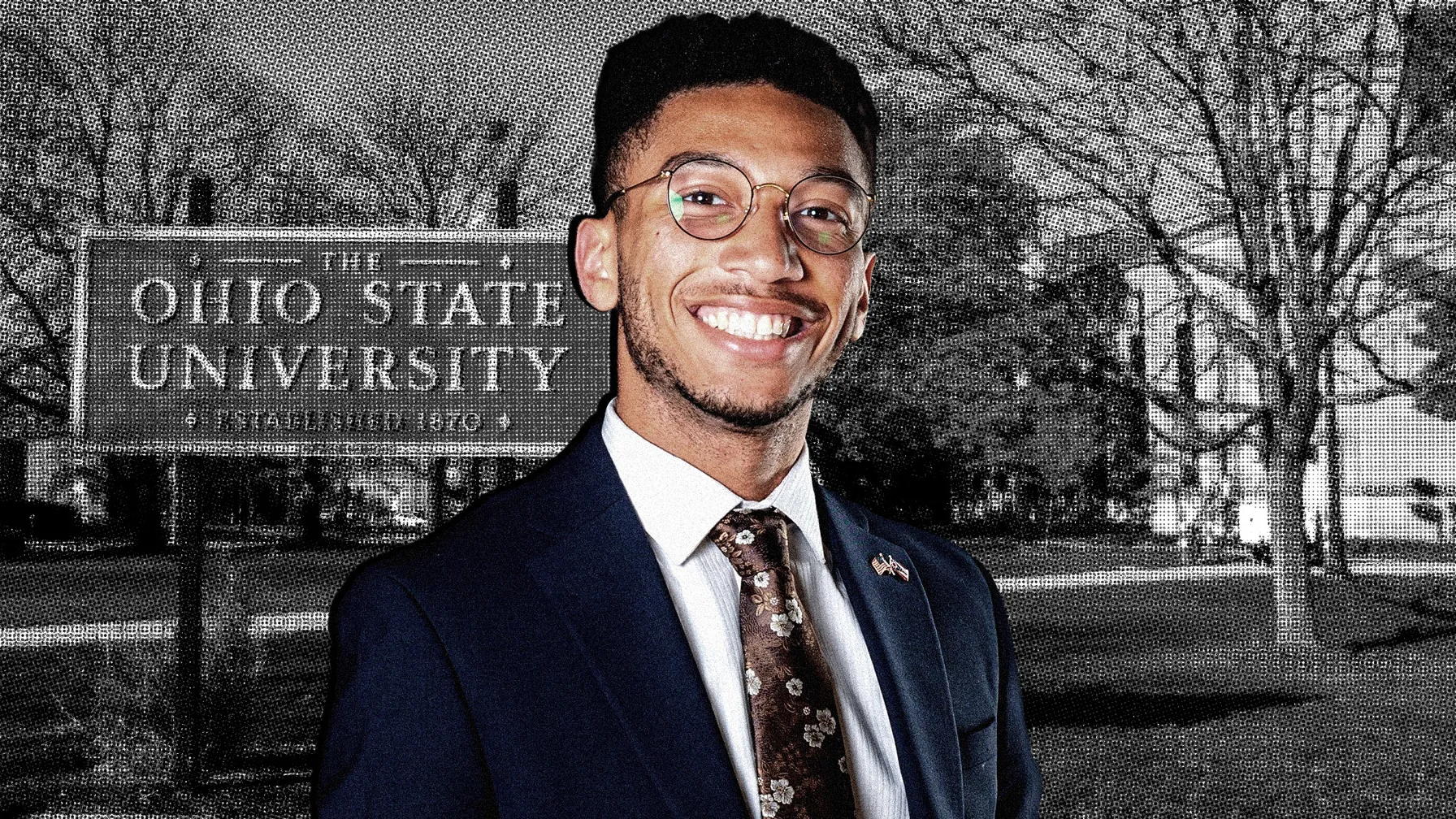
Christopher Cade wants to be president someday. His inspiration largely comes from family members, who have been involved in local politics and activism since long before he was born. But policies from the Trump administration and the Ohio Legislature are complicating his college experience — and his plans to become a politician.
Cade is a student at Ohio State University double-majoring in public policy analysis and political science with a focus on American political theory. He recalls his maternal grandmother, Maude Hill — who had a large hand in raising him — talking to him about her involvement in the Civil Rights Movement. She also worked at Columbus, Ohio-based affordable housing development nonprofit, Homeport, and has gone to Capitol Hill to speak with the state delegation multiple times. His dad is the senior vice president of the housing choice voucher program at the Columbus Metropolitan Housing Authority, and his older brother has a degree in political science and is interested in social justice advocacy work, Cade said. Last fall, his first on campus, Cade began applying to opportunities to bolster his resume for a future career in politics.
The now 19-year-old secured an internship with the U.S. Department of Transportation and a work-study job on campus in the university’s Office of Diversity and Inclusion. But the federal opportunity was scrapped when the Trump administration imposed a hiring freeze and budget cuts. His campus job ended when the university announced it would “sunset” the diversity office in response to federal and state anti-diversity, equity and inclusion orders and actions, according to Cade.
Related: Become a lifelong learner. Subscribe to our free weekly newsletter featuring the most important stories in education.
The work-study position was with the university’s Bell National Resource Center on the African American Male, which was founded to support Black men to stay in college. It’s a cause he was excited about.
“I would help order food or speak with students or do interviews,” said Cade. “I developed a good 20 different programs for the next year.”
In February, when the university announced it was closing the office, “I was like, ‘Well, so six months of work just for no reason,’” he said.
OSU President Ted Carter released a statement on Feb. 27 saying the closure of the Office of Diversity and Inclusion was a response to both state and federal actions regarding DEI in public education. The move eliminated 17 staff positions, not including student roles, the university said. Programming and services provided by the Office of Student Life’s Center for Belonging and Social Change were also scrapped.
The change came before the Trump administration’s initial deadline for complying with a memo that threatened to cut funding for public colleges and universities, as well as K-12 schools, that offer DEI programs and initiatives. In March, the administration announced that OSU was one of roughly 50 universities under federal investigation for allegedly discriminating against white and Asian students in graduate admissions. Additionally, Ohio Gov. Mike DeWine signed legislation in March banning DEI programs in the state’s public colleges and universities. The legislation went into effect in June.
Before the DEI office closed, Cade said, “I felt so heard and seen.” He’d attended a private, predominantly white, Catholic high school, he said. “It was not a place that supported me culturally and helped me understand more about who I am and my Blackness,” he recalled. At the university, though, “the programming we had throughout the year [was] about how to change the narrative on who a Black man is and what it means when you go out here and interact with people.
“And then for them to close down all these programs, that essentially told me that I wasn’t cared about.”
After the February announcement, students pushed back, organizing protests and a sit-in at the student union. But eventually, those efforts quieted.
Cade says students felt like there was a “cloud of darkness” hanging over them. But he also thought of his Office of Diversity and Inclusion coworkers, some of whom had spent decades working there, helping students. In particular he thought of his former colleague Chila Thomas, who celebrated her fifth anniversary last year as the executive director of the Young Scholars Program. That program, which helps low-income aspiring first-generation college students get to and through college, was one of several of the office’s programs that will continue. The day after Carter’s announcement, she and others in the office spent time giving students space to talk through their feelings, despite the uncertainties surrounding their own employment, Cade said.
Since the university crackdown on DEI, Cade said he’s experienced more discomfort on campus, even outright racism. He says he was approached by a white person who said, “I’m so glad they’re getting rid of DEI” and spit on his shoe and used a racial slur.
“I don’t know how that could ever be acceptable to anyone, but that was [when] a flip switched in my head,” Cade said. “I couldn’t sit down and be sad and silent. I had to stand up and make change.”
In March, he traveled with other students to Washington, D.C., as part of the Undergraduate Student Government’s Governmental Relations Committee. They met with Ohio Rep. Troy Balderson and an aide, along with staffers from the offices of fellow Ohio lawmakers Sen. Bernie Moreno and Rep. Joyce Beatty, to discuss college affordability, DEI policies and the federal hiring freeze. Cade says he described how he was affected by the U.S. Department of Transportation canceling his internship.
In Carter’s announcement, he stated that all student employees would be “offered alternative jobs at the university,” but Cade said during a meeting with Office of Diversity and Inclusion student employees, an OSU dean clarified that they would have to apply for new opportunities. With the policy changes meaning there were fewer work-study roles and more students in need of jobs, Cade saw the market as increasingly competitive, and he began to job hunt elsewhere. This summer he secured work with the Ohio Department of Transportation as a communications and policy intern. In October he began an intake assistant role in the Office of Civil Rights Compliance at the university. (Ohio State Director of Media and PR Chris Booker told Teen Vogue that the school could not comment on the experiences of individual students but that “all student employees and graduate associates impacted by these program changes were offered the opportunity to pursue transitioning into alternative positions at the university, as well as support in navigating that change.”)
Although he was drawn to OSU for the John Glenn College of Public Affairs’ master’s program, Cade says he might have reconsidered schools had he known that the university would bend to lawmakers’ anti-DEI efforts. While he’s concerned about how education-related legislation and policies may continue to affect his college experience, he worries most about some of his peers. College is already so hard to navigate for so many young people, said Cade. “And this is just another thing that says, ‘Oh yeah, this isn’t for me.’”
This story was published in partnership with Teen Vogue.
-
Cornell inks $60M deal with Trump administration to restore funding
This audio is auto-generated. Please let us know if you have feedback.Dive Brief:
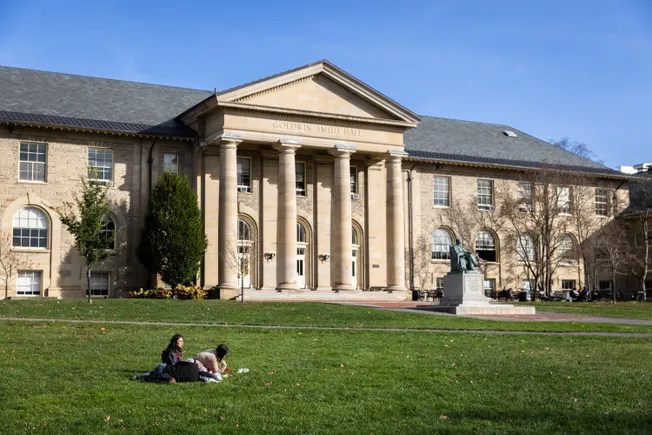
- Cornell University on Friday struck a deal with the Trump administration, agreeing to pay $60 million and adhere to strict reporting conditions in exchange for having more than $250 million in federal funding reinstated.
- In addition to the financial payments, the Ivy League institution will submit expanded undergraduate admissions data to the federal government, and include the U.S. Department of Justice’s July guidance against diversity, equity and inclusion efforts as “a training resource” for employees. Cornell’s president will provide regular compliance reports to the administration.
- In turn, three federal agencies — the DOJ and U.S. departments of Education and Health and Human Services — agreed to close their civil rights investigations into the New York university. Cornell is the fifth university to publicly strike a deal with the Trump administration to restore federal funding.
Dive Insight:
Cornell President Michael Kotlikoff on Friday said the deal reverses costly federal funding cuts that caused significant disruption to the university.
“The months of stop-work orders, grant terminations, and funding freezes have stalled cutting-edge research, upended lives and careers, and threatened the future of academic programs at Cornell,” he said in a statement.
Under the deal, Cornell will pay the federal government $30 million over three years.
It will pay an additional $30 million over the same period toward agriculture research programs that “directly benefit U.S. farmers through lower costs of production and enhanced efficiency.” Both the agreement and Kotlikoff’s statement emphasized Cornell’s history as a land-grant university.
Kotlikoff noted that the bargain does not require Cornell to admit wrongdoing, and he said it does not turn over the university’s academic freedoms to the federal government.
As part of the deal, the university will report additional admissions data to the Education Department. Once a quarter through 2028, the university will submit undergraduate admissions disaggregated by students’ race, GPA, performance on standardized tests, and major. Much of the criteria align with a Trump administration proposal to dramatically expand the type of admissions data colleges must report.
The university will also use the DOJ’s wide-ranging anti-DEI guidance as a training resource for faculty and staff. The document labels race-based scholarships and student resources dedicated to specific racial or ethnic groups as illegal and warns colleges they could lose federal grant funding over such practices.
Colleges could similarly lose funding if the DOJ decides they are using “facially neutral” criteria as proxies for federally protected characteristics, such as asking job applicants to demonstrate “cultural competence” as a means of assessing someone’s racial or ethnic background.
The U.S. Department of Education released a similar document in February threatening federal funding over DEI practices. At the time, Kotlikoff called diversity a driver of Cornell’s excellence. The Education Department’s guidance has since been struck down as unconstitutional in federal court.
On Friday, Cornell said it will continue to conduct an annual campus climate survey, including on the experience of students with shared Jewish ancestry. Questions will include whether students feel welcome on campus and safe to report antisemitism.
Kotlikoff agreed to provide the Trump administration with quarterly reports demonstrating Cornell’s compliance.
Cornell’s agreement shares some elements with that signed by the University of Virginia last month. The public flagship similarly agreed to comply with the DOJ’s anti-DEI guidance and provide quarterly compliance reports to the Trump administration.
And like Brown University, Cornell agreed to pay money into a cause seemingly unrelated to the charges the Trump administration levied against it — in Brown’s case, $50 million to workforce development organizations in Rhode Island.
“Today’s deal is a positive outcome that illustrates the value of universities working with this administration,” Attorney General Pamela Bondi said in a Friday statement.
U.S. Secretary of Education Linda McMahon said the Cornell deal is an example of the Trump administration forcing colleges to refocus “their attention on merit, rigor, and truth seeking — not ideology.”
Kotlikoff instead called the deal a reaffirmation of “principles to which we have already independently and publicly committed” and noted that the university already conducts annual campus climate surveys.
Cornell, he said, “looks forward to resuming the long and fruitful partnership with the federal government.”
