
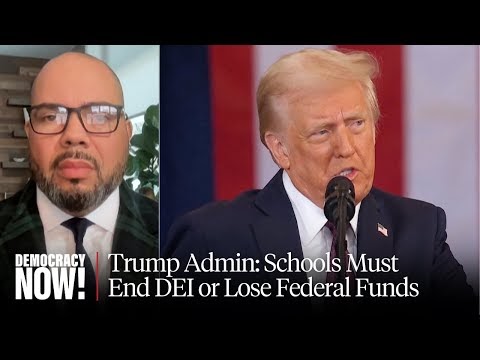

At more than a dozen events across the country Wednesday, workers and faculty at colleges and universities gathered to speak out against what they see as an attack on federal research funding, lifesaving medical research and education.
In Washington, D.C., hundreds rallied in the front of the Department of Health and Human Services, while in Philadelphia, hundreds gathered at the office of Senator Dave McCormick, a Pennsylvania Republican. Other protests were planned at colleges in Seattle and St. Louis, among others.
The rallies were part of a national day of action organized by a coalition of unions representing higher ed workers, students and their allies. The coalition includes the American Association of University Professors, the American Federation of Teachers, Higher Ed Labor United and United Auto Workers, among others.
Hundreds in Philly braved the freezing temps to rally for our healthcare, research, and jobs! ❄️💪Workers & students from CCP, Drexel, UPenn, Rutgers, Temple, Jefferson, Arcadia, Rowan, Moore—alongside elected leaders & union presidents—made it clear: We won’t back down. #LaborForHigherEd
— Higher Education Labor United (HELU) (@higheredlabor.bsky.social) February 19, 2025 at 2:33 PM
In recent weeks, the Trump administration has proposed capping reimbursements for indirect research costs, laid off hundreds of federal employees and cracked down on diversity, equity and inclusion. Most recently, the Education Department gave colleges and K-12 schools until Feb. 28 to end all race-conscious student programming, resources and financial aid. Higher education advocates have called that directive “dystopian” and “very much outside of the law.”
Colleges and universities sued to block the rate cut for indirect costs, warning it would mean billions in financial losses and an end to some research. Some colleges have already frozen hiring in response, even though the cut is temporarily on hold.
“If politics decides what I can and cannot study, I’m afraid I will fail the very people who need this research and inspire me to do it,” said Lindsay Guare, a doctoral student at the University of Pennsylvania, in a news release about the Philadelphia event. “In an ideal world, I would be fighting to expand support for my science instead of fighting to keep it afloat … The work done in Philadelphia’s institutions doesn’t just lead the world in innovation—it saves lives.”
Did
you know that Truthout is a nonprofit and independently funded by
readers like you? If you value what we do, please support our work with a donation.
Trump appears bent on ridding schools of dangerous practices like critical thinking and an unsanitized study of history.
In the initial days of his second term, President Donald Trump issued several executive orders “seeking
to control how schools teach about race and gender, direct more tax
dollars to private schools, and deport pro-Palestinian protesters.” On January 29, 2025, he signed the “Ending Radical Indoctrination in K-12 Schooling”
executive order, which mandates the elimination of curricula that the
administration deems as promoting “radical, anti-American ideologies.”
This executive order is not just an attack on critical race theory or
teachings about systemic racism — it is a cornerstone of an
authoritarian ideology designed to eliminate critical thought, suppress
historical truth and strip educators of their autonomy. Under the guise
of combating “divisiveness,” it advances a broader war on education as a
democratizing force, turning schools into dead zones of the
imagination. By threatening to strip federal funding from institutions
that refuse to conform, this policy functions as an instrument of
ideological indoctrination, enforcing a sanitized, nationalistic
narrative that erases histories of oppression and resistance while
deepening a culture of ignorance and compliance.
Concurrently, President Trump issued the “Expanding Educational Freedom and Opportunity for Families”
executive order, aiming to enhance school choice by redirecting federal
funds to support charter schools and voucher programs. This policy
enables parents to use public funds for private and religious school
tuition. While proponents claim that this legislation empowers parents
and fosters competition, in reality, it is a calculated effort to defund
and privatize public education, undermining it as a democratizing
public good. As part of a broader far right assault on education, this
policy redirects essential resources away from public schools, deepening
educational inequality and advancing an agenda that seeks to erode
public investment in a just and equitable society.
In the name of eliminating radical indoctrination in schools, a third executive order,
which purportedly aims at ending antisemitism, threatens to deport
pro-Palestinian student protesters by revoking their visas, warning that even those legally in the country could be targeted
for their political views. In a stark display of authoritarianism,
Trump’s executive order unapologetically stated that free speech would
not be tolerated. Reuters
made this clear in reporting that one fact sheet ominously declared: “I
will … quickly cancel the student visas of all Hamas sympathizers on
college campuses, which have been infested with radicalism like never
before. To all the resident aliens who joined in the pro-jihadist
protests, we put you on notice: come 2025, we will find you, and we will
deport you.”
By gutting federal oversight, he is handing the fate of education to
reactionary state legislatures and corporate interests, ensuring that
knowledge is shaped by a state held captive by billionaires and far
right extremists. This is the logic of authoritarianism: to hollow out
democratic institutions and replace education with white Christian
propaganda and a pedagogy of repression. At issue here is an attempt to
render an entire generation defenseless against the very forces seeking
to dominate them.
What we are witnessing is not just an educational crisis but a
full-scale war on institutions that not only defend democracy but enable
it. What is under siege in this attack is not only the critical
function of education but the very notion that it should be defined
through its vision of creating a central feature of democracy, educating
informed and critically engaged citizens.
These executive actions represent an upgraded and broader version of
McCarthyite and apartheid-era education that seeks to dictate how
schools teach about race and gender, funnel more taxpayer dollars into
private institutions, and deport Palestinian protesters. The irony is
striking: The White House defends these regressive measures of
sanitizing history, stripping away the rights of transgender students
and erasing critical race theory as efforts to “end indoctrination in
American education.” In truth, this is not about the pursuit of freedom
or open inquiry, nor is it about fostering an education that cultivates
informed, critically engaged citizens. At its core, this agenda is a
deliberate attack on education as a public good — one that threatens to
dismantle not only public institutions, but the very essence of public
and higher education and its culture of criticism and democracy. The
urgency of this moment cannot be overstated: The future of education
itself is at stake.
In the raging currents of contemporary political and cultural life,
where fascist ideologies are rising, one of the most insidious and
all-encompassing forces at play is the violence of forgetting — a plague
of historical amnesia. This phenomenon, which I have referred to as “organized forgetting,”
describes the systemic erasure of history and its violent consequences,
particularly in the public sphere. This is especially evident in the
current historical moment, when books are banned in
libraries, public schools and higher education across countries, such
as the United States, Hungary, India, China and Russia. Ignoring past
atrocities, historical injustices and uncomfortable truths about a
society’s foundation is not merely an oversight — it constitutes an
active form of violence that shapes both our collective consciousness
and political realities. What we are witnessing here is an assault by
the far right on memory that is inseparable from what Maximillian
Alvarez describes as a battle over power — over who is remembered, who
is erased, who is cast aside and who is forcibly reduced to something
less than human. This struggle is not just about history; it is about
whose stories are allowed to shape the present and the future. Alvarez captures this reality with striking clarity and is worth quoting at length:
Among the prizes at stake in the endless war of politics is history
itself. The battle for power is always a battle to determine who gets
remembered, how they will be recalled, where and in what forms their
memories will be preserved. In this battle, there is no room for neutral
parties: every history and counter-history must fight and scrap and
claw and spread and lodge itself in the world, lest it be forgotten or
forcibly erased. All history, in this sense, is the history of empire — a
bid for control of that greatest expanse of territory, the past.
Organized forgetting also helped fuel the resurgence of Donald Trump,
as truth and reason are being systematically replaced by lies,
corruption, denial and the weaponization of memory itself. A culture of
questioning, critique and vision is not simply disappearing in the
United States — it is actively maligned, disparaged and replaced by a
darkness that, as Ezra Klein
observes, is “stupefyingly vast, stretching from self-destructive
incompetence to muddling incoherence to authoritarian consolidation.”
This erosion affects institutions of law, civil society and education
— pillars that rely on memory, informed judgment and evidence to foster
historical understanding and civic responsibility. The attack on the
common good goes beyond the distractions of an “attention economy” designed
to distort reality; it reflects a deliberate effort to sever the ties
between history and meaning. Time is reduced to fragmented episodes,
stripped of the shared narratives that connect the past, present and
future.
This crisis embodies a profound collapse of memory, history,
education and democracy itself. A culture of manufactured ignorance —
rooted in the rejection of history, facts and critical thought — erases
accountability for electing a leader who incited insurrection and
branded his opponents as “enemies from within.” Such authoritarian
politics thrive on historical amnesia, lulling society into passivity,
eroding collective memory and subverting civic agency. This is
epitomized by Trump’s declaration
on “Fox & Friends” that he would punish schools that teach students
accurate U.S. history, including about slavery and racism in the
country. The call to silence dangerous memories is inseparable from the
violence of state terrorism — a force that censors and dehumanizes
dissent, escalating to the punishment, torture and imprisonment of
truth-tellers and critics who dare to hold oppressive power accountable.
At its core, the violence of forgetting operates through the denial
and distortion of historical events, particularly those that challenge
the dominant narratives of power. From the colonial atrocities and the
struggles for civil rights to the history of Palestine-Israel relations,
many of the most significant chapters of history are either glossed
over or erased altogether. This strategic omission serves the interests
of those in power, enabling them to maintain control by silencing
inconvenient truths. As the historian Timothy Snyder
reminds us, by refusing to acknowledge the violence of the past,
society makes it far easier to perpetuate injustices in the present. The
politics of organized forgetting, the censoring of history and the
attack on historical consciousness are fundamental to the rise of far
right voices in the U.S. and across the world.
With the rise of regressive memory laws, designed to repress what
authoritarian governments consider dangerous and radical interpretations
of a country’s past, historical consciousness is transformed into a
form of historical amnesia. One vivid example of a regressive memory law
was enacted by Trump during his first term. The 1776 Report,
which right-wingers defended as a “restoration of American education,”
was in fact an attempt to eliminate from the teaching of history any
reference to a legacy of colonialism, slavery and movements which
highlighted elements of American history that were unconscionable,
anti-democratic and morally repugnant. Snyder highlights the emergence
of memory laws in a number of states. He writes in a 2021 New York Times article:
As of this writing, five states (Idaho, Iowa, Tennessee, Texas and
Oklahoma) have passed laws that direct and restrict discussions of
history in classrooms. The Department of Education of a sixth (Florida)
has passed guidelines with the same effect. Another 12 state
legislatures are still considering memory laws. The particulars of these
laws vary. The Idaho law is the most Kafkaesque in its censorship: It
affirms freedom of speech and then bans divisive speech. The Iowa law
executes the same totalitarian pirouette. The Tennessee and Texas laws
go furthest in specifying what teachers may and may not say. In
Tennessee teachers must not teach that the rule of law is “a series of
power relationships and struggles among racial or other groups.”… The
Idaho law mentions Critical Race Theory; the directive from the Florida
school board bans it in classrooms. The Texas law forbids teachers from
requiring students to understand the 1619 Project. It is a perverse
goal: Teachers succeed if students do not understand something.
A major aspect of this forgetting and erasure of historical memory is the role of ignorance,
which has become not just widespread but weaponized in modern times.
Ignorance, particularly in U.S. society, has shifted from being a
passive lack of knowledge to an active refusal to engage with critical
issues. This is amplified by the spectacle-driven nature of contemporary
media and the increasing normalization of a culture of lies and the
embrace of a language of violence, which not only thrives on distraction
rather than reflection, but has become a powerful force for spreading
bigotry, racial hatred and right-wing lies. In addition, the mainstream
media’s obsession with spectacle — be it political drama, celebrity
culture or sensationalist stories — often overshadows the more
important, yet less glamorous, discussions about historical violence and
systemic injustice.
This intellectual neglect allows for a dangerous cycle to persist,
where the erasure of history enables the continuation of violence and
oppression. Systems of power benefit from this amnesia, as it allows
them to maintain the status quo without having to answer for past
wrongs. When society refuses to remember or address past injustices —
whether it’s slavery, imperialism or economic exploitation — those in
power can continue to exploit the present without fear of historical
accountability.
To strip education of its critical power is to rob democracy of its transformative potential.
The cultural impact of this organized forgetting is profound. Not
only does it create a void in public memory, but it also stunts
collective growth. Without the lessons of the past, it becomes nearly
impossible to learn from mistakes and address the root causes of social
inequalities. The failure to remember makes it harder to demand
meaningful change, while reproducing and legitimating ongoing far right
assaults on democracy.
The violence of organized forgetting is not a mere act of neglect; it
is a deliberate cultural and intellectual assault that undercuts the
foundations of any meaningful democracy. By erasing the past, society
implicitly condones the ongoing oppression of marginalized groups and
perpetuates harmful ideologies that thrive in ignorance. This erasure
silences the voices of those who have suffered — denying them the space
to speak their truth and demand justice. It is not limited to historical
injustices alone; it extends to the present, silencing those who
courageously criticize contemporary violence, such as Israel’s
U.S.-backed genocidal war on Gaza, and those brave enough to hold power
accountable.
The act of forgetting is not passive; it actively supports systems of
oppression and censorship, muffling dissent and debate, both of which
are essential for a healthy democracy.
Equally dangerous is the form of historical amnesia that has come to
dominate our contemporary political and cultural landscape. This
organized forgetting feeds into a pedagogy of manufactured ignorance
that prioritizes emotion over reason and spectacle over truth. In this
process, history is fragmented and distorted, making it nearly
impossible to construct a coherent understanding of the past. As a
result, public institutions — particularly education — are undermined,
as critical thinking and social responsibility give way to shallow,
sensationalized narratives. Higher education, once a bastion for the
development of civic literacy and the moral imperative of understanding
our role as both individuals and social agents, is now attacked by
forces seeking to cleanse public memory of past social and political
progress. Figures like Trump embody this threat, working to erase the
memory of strides made in the name of equality, justice and human
decency. This organized assault on historical memory and intellectual
rigor strikes at the heart of democracy itself. When we allow the
erasure of history and the undermining of critical thought, we risk
suffocating the ideals that democracy promises: justice, equality and
accountability.
A democracy cannot thrive in the absence of informed and engaged
agents that are capable of questioning, challenging and reimagining a
future different from the present. Without such citizens, the very
notion of democracy becomes a hollow, disembodied ideal — an illusion of
freedom without the substance of truth or responsibility. Education, in
this context, is not merely a tool for transmitting knowledge; it is
the foundation and bedrock of political consciousness. To be educated,
to be a citizen, is not a neutral or passive state — it is a vital,
active political and moral engagement with the world, grounded in
critical thinking and democratic possibility. It is a recognition that
the act of learning and the act of being a citizen are inextricable from
each other. To strip education of its critical power is to rob
democracy of its transformative potential.
Confronting the violence of forgetting requires a shift in how we
engage with history. Intellectuals, educators and activists must take up
the responsibility of reintroducing the painful truths of the past into
public discourse. This is not about dwelling in the past for its own
sake, but about understanding its relevance to the present and future.
To break the cycles of violence, society must commit to remembering, not
just for the sake of memory, but as a critical tool for progress.
Moreover, engaging with history honestly requires recognizing that
the violence of forgetting is not a one-time event but a continual
process. Systems of power don’t simply forget; they actively work to
erase, rewrite and sanitize historical narratives. This means that the
fight to remember is ongoing and requires constant vigilance. It’s not
enough to simply uncover historical truths; society must work to ensure
that these truths are not forgotten again, buried under the weight of
media spectacles, ideological repression and political theater.
Ultimately, the violence of forgetting is an obstacle to genuine
social change. Without confronting the past — acknowledging the violence
and injustices that have shaped our world — we cannot hope to build a
more just and informed future. To move forward, any viable democratic
social order must reckon with its past, break free from the bonds of
ignorance, and commit to creating a future based on knowledge, justice
and accountability.
The task of confronting and dismantling the violent structures shaped
by the power of forgetting is immense, yet the urgency has never been
more pronounced. In an era where the scope and power of new pedagogical
apparatuses such as social media and AI dominate our cultural and
intellectual landscapes, the challenge becomes even more complex. While
they hold potential for education and connection, these technologies are
controlled by a reactionary ruling class of financial elite and
billionaires, and they are increasingly wielded to perpetuate
disinformation, fragment history and manipulate public discourse. The
authoritarian algorithms that drive these platforms increasingly
prioritize sensationalism over substance, lies over truth, the
appropriation of power over social responsibility, and in doing so,
reinforce modes of civic illiteracy, while attacking those fundamental
institutions which enable critical perspectives and a culture of
questioning.
The vital need for collective action and intellectual engagement to
reclaim and restore historical truth, critical thinking and social
responsibility is urgent. The present historical moment, both
unprecedented and alarming, resonates with Antonio Gramsci’s reflection
on an earlier era marked by the rise of fascism: “The old world is
dying, and the new world struggles to be born; now is the time of
monsters.”
In the face of a deepening crisis of history, memory and agency, any
meaningful resistance must be collective, disruptive and
unapologetically unsettling — challenging entrenched orthodoxies and
dismantling the forces that perpetuate ignorance and injustice. This
struggle needs to be both radical in its essence and uncompromising in
its demands for social change, recognizing education as inseparable from
politics and the tangible challenges people face in their everyday
lives. In this collective effort lies the power to dismantle the
barriers to truth, rebuild the foundations of critical thought, and
shape a future rooted in knowledge, justice and a profound commitment to
make power accountable. Central to this vision is the capacity to learn
from history, to nurture a historical consciousness that informs our
present and to reimagine agency as an essential force in the enduring
struggle for democracy. This call for a radical imagination cannot be
confined to classrooms but must emerge as a transformative force
embedded in a united, multiracial, working-class movement. Only then can
we confront the urgent crises of our time.
As
the Trump administration moves a mile-a-minute to implement right-wing
policies and sow confusion, reliable news is an absolute must.
Truthout
is working diligently to combat the fear and chaos that pervades the
political moment. We’re requesting your support at this moment because
we need it – your monthly gift allows us to publish uncensored,
nonprofit news that speaks with clarity and truth in a moment when
confusion and misinformation are rampant. As well, we’re looking with
hope at the material action community activists are taking. We’re
uplifting mutual aid projects, the life-sustaining work of immigrant and
labor organizers, and other shows of solidarity that resist the
authoritarian pressure of the Trump administration.
As we work to dispel the atmosphere of political despair, we ask that you contribute to our journalism. Over 80 percent of Truthout’s
funding comes from small individual donations from our community of
readers, and over a third of our total budget is supported by recurring
monthly donors.
8
days remain in our fundraiser, and you can help by giving today.
Whether you can make a small monthly donation or a larger gift, Truthout only works with your support.
This article is licensed under Creative Commons (CC BY-NC-ND 4.0), and you are free to share and republish under the terms of the license.

Henry Klementowicz, deputy legal director at ACLU of NH, said in a Wednesday statement that every child in the state deserves “a right to equal opportunities at school.”
“We’re expanding our lawsuit to challenge President Trump’s executive orders because, like the state law, it excludes, singles out, and discriminates against transgender students and insinuates that they are not deserving of the same educational opportunities as all other students,” Klementowicz said.
The U.S. District Court for the District of New Hampshire previously ordered in September that the two students could play sports on teams corresponding with their gender identities while Tirrell and Turmelle v. Edelblut advanced.
Trump’s “No Men in Women’s Sports” executive order, which is now being targeted by the lawsuit, calls for a recission of all federal funds from educational programs that allow transgender girls and women to participate in girls’ sports. The order also directs the U.S. secretary of education to zero in on Title IX enforcement against K-12 schools and colleges where girls and women are required “to compete with or against or to appear unclothed before males.”
The day after Trump issued that executive order, the U.S. Department of Education opened Title IX investigations into a middle and high school athletics association in Massachusetts, as well as two universities, on the basis that they allowed transgender girls and women to play on teams aligned with their gender identity.
Trump’s order further directs the U.S. Department of Justice to abide by the nationwide vacatur from a recent court order by a federal judge who struck down the Biden administration’s Title IX rule in January. The Biden-era Title IX rule was the first time protections were codified for LGBTQI+ students and employees at federally funded schools under the anti-sex discrimination law.
After that January court decision, the Education Department said it would enforce the Title IX regulations finalized in 2020 during the first Trump administration.
As President Donald Trump churned out more than 80 executive orders over the past three weeks, sending the higher education community into a panic, some students were surprised to see a lack of campus protests—even at institutions traditionally rife with activism.
“I haven’t seen a whole lot, which is kind of uncharacteristic of our campus,” said Alana Parker, a student at American University in Washington, D.C. Though she’s heard of certain student political groups protesting on Capitol Hill, things have been quiet on campus.
“I don’t really know why that is, because, in my opinion, there should be more of an outcry. But from my perspective, I think people feel really disenfranchised and like there’s nothing we can do,” she said.
It’s a stark contrast from two semesters ago, when AU was one of dozens of campuses that made national news after pro-Palestinian students set up encampments in opposition to their universities’ investments in companies with ties to Israel.
Students and faculty at AU—and on campuses across the nation—also protested in 2017 after Trump prohibited individuals from seven majority-Muslim nations from entering the United States, according to a news report from the time.
Angus Johnston, a historian of student protest movements and a professor at Hostos Community College, said that he’s not entirely surprised that campuses seem relatively calm. Over the past 20 years, institutions have grown less and less permissive of student protests, culminating in a harsh crackdown on pro-Palestinian protests in spring 2024—in some cases involving police arrests. Since then, many campuses have introduced new—or enforced existing—rules restricting when, where and how students can demonstrate.
Aron Ali-McClory, a national co-chair of the Young Democratic Socialists of America, said that universities’ restrictions on free speech are “100 percent a factor” in why there aren’t many protests happening on campuses right now.
But they noted that the YDSA is mobilizing, just in different ways. Many campus chapters are currently focused on campaigning for their institutions to become “sanctuary campuses,” in the vein of sanctuary cities, municipalities that do not comply with federal immigration laws. Ali-McClory said the chapters involved in that movement are currently distributing petitions, informing their peers about the movement and handing out “know your rights” materials that aim to inform immigrants of how to handle conversations and interactions with immigration officers.
“Looking at what our YDSA chapters are doing across the country, we’re seeing people pivoting to meet the moment on their campus. A lot of that looks less like, ‘Let’s go out and do a protest’ and more, ‘How do we make material gains when the cards are stacked against us?’” they said.
Parker, the AU student, has also chosen to make her voice heard in a different way. An editor of the student newspaper, The Eagle, she and her colleagues penned a staff editorial calling on the university to speak out against Trump’s executive orders, particularly those targeting immigrants and diversity, equity and inclusion efforts. She said the article seemed to be effective: A few days after its publication, the institution sent an email to the campus community, signed by President Jonathan Alger, outlining resources available for immigrant students and employees.
Alger also addressed DEI, writing, “As we continue fostering an inclusive and welcoming community, we are working with teams across campus to determine the impacts on our inclusive excellence strategy and programs.”
A handful of campuses have seen protests, primarily in response to their institutions taking steps to comply with Trump’s executive orders by shuttering DEI offices or removing DEI-related language and resources from webpages, for example.
At Missouri State University, students staged a protest after administrators announced they would close the Office of Inclusive Engagement and end other DEI programs “in response to changes nationwide and anticipated actions regarding DEI at the state level.”
According to the student newspaper, The Standard, 50 students gathered outside the main administrative building on Jan. 31 to call for the removal of the university’s president and to advocate for the passage of two bills that would require Missouri schools to teach about Black history and “the dehumanization of marginalized groups.”
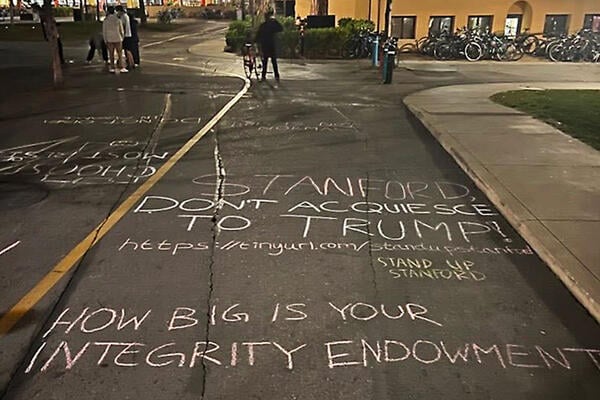
At Stanford University, a group of about 15 students participated in a chalking event, writing messages of dissent, like “DEI makes Stanford Stanford,” on bike paths around White Plaza, a central outdoor area on campus.
“Here at Stanford, the important thing to me was that my leaders at my school knew that there would be people who would resist anything that they did to cave to Trump,” said freshman Turner Van Slyke, who organized the demonstration. “I think those leaders just knowing that there’s going to be resistance can be a powerful force for maintaining decency against Trump.”
Various other student news sources have reported that students at their institutions have joined outside groups in protesting at their state capitols, hoping to register their objections to Trump’s orders with governors and state representatives.
Johnston noted that more protests may erupt elsewhere as students begin to see the ways that the executive orders are impacting their campuses more directly.
“There’s a lot of stuff that is happening now that is essentially a hand grenade or a time bomb that’s going to explode in days or weeks or months,” he said. “To a large extent, I think this stuff is not having direct impact on a lot of [students] as of yet. Some stuff may be beginning to percolate down to the campus level. But a lot of this is real stuff that is happening, but the effects of it are not being felt directly by students just yet.”
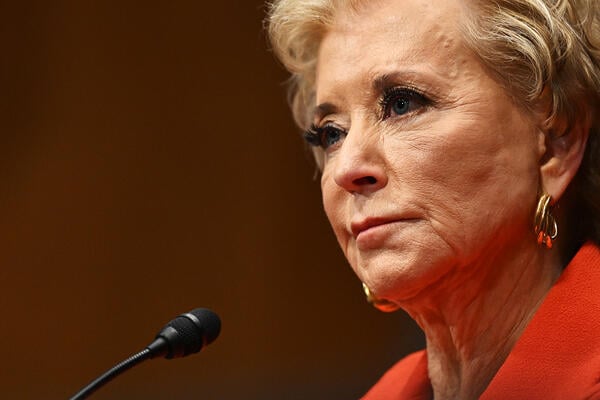
Linda McMahon told senators Thursday that she won’t shut down the Education Department without their approval, quelling any doubt that the majority Republicans may have had about whether she deserved to be appointed to President Donald Trump’s cabinet.
But that doesn’t mean that McMahon and the Trump administration aren’t still looking to make considerable changes to the agency’s programs and potentially dismantle it from the inside out. She said at her confirmation hearing that the department has to go, or at the very least is in need of a major makeover, because it’s rife with bureaucracy that fails to serve students well.
The goal, the former wrestling CEO told the Committee on Health, Education, Labor and Pensions, is to “reorient” the federal agency and ensure it “operate[s] more efficiently”—not defund education, as some critics have suggested.
“We’d like to do this right,” she said. “We’d like to make sure that we are presenting a plan that I think our senators could get on board with, and our Congress to get on board with.”
Questions about the department’s future and whether McMahon would stand up to President Trump if he tries to break the law dominated the nearly three-hour hearing. McMahon, a Trump loyalist and veteran of the first administration, weathered the hearing just fine and will likely be confirmed by the Senate. The committee will vote Feb. 20 on her nomination.
McMahon largely stuck by Trump and defended his actions so far. She also pledged to comply with and uphold the law, respecting Congress’s power over the purse strings by disbursing funds as lawmakers order. “The president will not ask me to do anything that’s against the law,” she later added.
McMahon’s comments break slightly from the president’s record so far. In the first three weeks alone, Trump and Elon Musk have entirely shut down the U.S. Agency for International Development, cut countless contracts and attempted to freeze all federal grants. The president has said he wants to get rid of the Education Department entirely, suggesting he didn’t need congressional action to do so.
During and after the hearing, the majority of Republicans praised McMahon as the right person for the job.
“It is clear that our current education system isn’t working. We have the status quo and that’s actually failing our kids,” Senator Katie Britt of Alabama said in her opening remarks. “Linda McMahon is someone who knows how to reform our education system.”
But for Democrats and Senator Susan Collins, a more centrist Republican from Maine, McMahon’s comments left quite a few questions still lingering and seemed to be, at times, self-contradictory.
“The whole hearing right now feels kind of surreal to me,” said Senator Maggie Hassan, a Democrat from New Hampshire. “It’s almost like we’re being subjected to a very eloquent gaslighting here.”
While many of the senators’ questions focused on special education, K-12, the separation of powers and getting rid of the Education Department, colleges and universities did come up a few times, offering some insight into McMahon’s plans as secretary.
Here are five key higher ed takeaways from the hearing:
Prior to the hearing, Trump’s comments suggested his Education Department would prioritize cutting red tape, returning education to the states, cracking down on campus antisemitism and banning what he calls “gender ideology,” among other things. But speculation swirled about what McMahon would put at the top of her agenda.
On Thursday she made it clear that she’s in lockstep with the president, saying in her opening remarks that “Trump has shared his vision and I’m ready to enact it.” She failed to provide much detail beyond that.
The business mogul, who has limited experience in education, indicated she’ll have some studying to do if she gets confirmed. When asked about topics like diversity, equity and inclusion programs or accreditation, she said, “I’ll have to learn more” or “I’d like to look into it further and get back to you on that.”
For example, when it came to addressing civil rights complaints filed by Jewish students, McMahon was quick to assure Republican lawmakers that colleges will “face defunding” if they don’t comply with the law. She also said that international students who participate in protests Trump deems antisemitic should have their visas revoked. But she didn’t provide further detail on how exactly either repercussion would be enforced.
Additionally, when asked about how she would address a backlog of cases at the Office for Civil Rights, which investigates complaints of discrimination, she said, “I would like to be confirmed and get into the department and understand that backlog.”
McMahon declined to say what specific programs or classes might violate Trump’s recent executive order banning diversity, equity and inclusion during a tense exchange with Senator Chris Murphy, a Democrat from Connecticut.
Policy experts said Trump’s executive order should have had little immediate impact on higher ed, as most of its provisions require agency action, but several colleges and universities moved quickly to comply after the order was signed Jan. 21, canceling events and scrubbing websites of DEI mentions.
Murphy highlighted one of those examples, telling McMahon that the United States Military Academy in West Point, N.Y., had shut down a number of its student affinity groups and clubs like the Society of Black Engineers.
He then went on to ask her, “Would public schools be in violation of this order, would they risk funding if they had clubs that students could belong to based on their racial or ethnic identity?” To which McMahon responded, “Well, I certainly today don’t want to address hypothetical situations.”
Murphy said that should be “a pretty easy question,” adding that her lack of response was “pretty chilling.”
“I think you’re going to have a lot of teachers and administrators scrambling right now,” he said.
McMahon did note, however, that all schools can and should celebrate Black History Month and Martin Luther King Jr. Day. She suggested that in saying individuals should be judged by “content of their character,” King was supporting a colorblind approach to policy and looking at all populations as the same, rather than addressing systemic inequities.
Several lawmakers had questions for McMahon about Trump’s efforts to cut spending via the Elon Musk–led Department of Government Efficiency, but she didn’t have many answers.
Democrats, in particular, took issue with recent reports that DOGE staffers have access to sensitive student data and recently canceled $881 million in contracts at the Institute of Education Sciences. The Education Department is just one of several agencies under DOGE’s microscope. The Trump administration is also laying off employees at the agency or putting them on administrative leave as part of a broader plan to shrink the federal workforce.
McMahon said she didn’t know “about all the administrative people who have been put on leave,” adding she would look into that. She also didn’t have more information about the IES cuts. But she defended DOGE’s work as an audit.
“I do think it’s worthwhile to take a look at the programs before money goes out the door,” she said.
But Democrats countered that Congress, not the executive branch, has the authority to direct where federal funds should go.
“When Congress appropriates money, it is the administration’s responsibility to put that out as directed by Congress, who has the power of the purse,” said Senator Patty Murray, a Washington Democrat. “If you have input, if you have programs you have looked at that you believe are not effective, then it is your job to come to us, explain why and get the support for that.”
Despite Trump’s promise to fire accreditors, the accreditation system and the federal policies that govern it received little attention during the hearing—aside from one round of questions.
Senator Ashley Moody, a Florida Republican, said she thinks the current system is unconstitutional, echoing claims that she made as Florida attorney general. The state argued in a 2023 lawsuit that Congress ceded power to private accrediting agencies, violating the U.S. Constitution. A federal judge rejected those claims and threw out the lawsuit in October.
Currently, federal law requires that colleges and universities be accredited by an Education Department–recognized accreditor in order to receive federal student aid such as Pell Grants. But in recent years, Republican-led states—most notably Florida—have bristled at what they see as undue interference from the accreditors and their power to potentially take away federal aid. State lawmakers in Florida now require public colleges to change accreditors regularly. But that process has been sluggish, and officials blame the Education Department.
Moody asked McMahon to commit to review regulations and guidance related to colleges changing accreditors.
“I look forward to working with you on that,” McMahon said. “And there’s been a lot of issues raised about these five to seven accreditors … I think that needs to have a broad overview and review.” (McMahon didn’t specify, but she seemed to refer to the seven institutional accreditors.)
Throughout the hearing, McMahon also reiterated her support for expanding the Pell Grant to short-term workforce training programs that run between eight and 15 weeks, and bolstering other nontraditional means of higher education like apprenticeships.
The nominee noted multiple times that though “college isn’t for everyone,” there should be opportunities for socioeconomic mobility and career development for all. She believes promoting programs like short-term Pell “could stimulate our economy” by providing new routes to pursue skills-based learning and promote trade careers. This mindset could likely lead to less restriction on for-profit technical institutions like cosmetology schools.
One thing neither McMahon nor the Senate panel spent much time on, however, was the Office of Federal Student Aid, its botched rollout of a new application portal or how she would manage the government’s $1.7 trillion student loan portfolio. One of the few mentions of the student debt crisis came up in committee chair Dr. Bill Cassidy of Louisiana’s opening remarks.
“Too many students leave college woefully unprepared for the workforce while being saddled with overwhelming debt that they cannot pay off,” he said. “Your previous experience overseeing [Small Business Administration] loans will be a great asset as the department looks to reform its student loan program.”
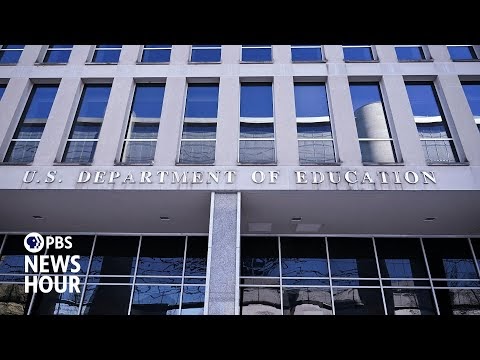
The Department of Education is on the Trump chopping block. Details have not been fully released yet, but the president has signaled plans to dismantle it and move some of its key functions elsewhere. The department oversees student loans, federal funds for lower-income students, special education programs and more. Geoff Bennett discussed more with Laura Meckler of The Washington Post.
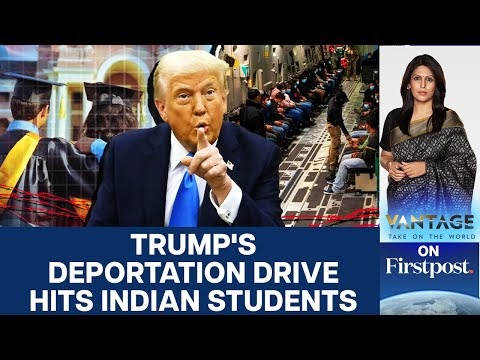
Reports say that Indian Students in the US are becoming collateral damage amidst President Donald Trump’s Mass Deportation Drive. The Indian students entered the US legally, on valid visas. But they say they are now being subjected to more frequent questioning from US immigration officials. They say uniformed officers have been questioning them more frequently, and demanding to see their student IDs and documents. Is Trump’s deportation drive becoming an all out purge of migrants, irrespective of whether they’re in the US legally or not?
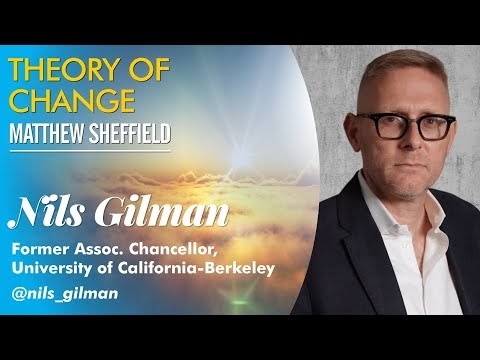
The second term of Donald Trump has officially begun, but despite all the things he’s unveiled in the past several weeks, we don’t know fully what his policies are going to be over the next four years.
That is in part because Trump himself is a very erratic figure who says things that are nonsensical, even by his own standards. And also because while there are documents such as Project 2025 which were created by Trump’s ideological allies in the reactionary movement, that document itself is not particularly detailed in a number of ways.
But one thing we can be sure is going to happen in the second Trump administration is that he will conduct a full-scale assault on America’s colleges and universities. As a candidate, he did promise to create taxes on private university endowments. And he also talked about removing the funding for universities that don’t bow to his various censorship demands.
Unlike a number of other Trumpian boasts and threats, he is very likely to follow through on these ones because Republicans in a number of states and localities have enacted many of the policies that Trump has talked about doing on the campaign trail.
Joining me today to talk about all this is Nils Gilman, a friend of the show who is the chief operating officer at the Berggruen Institute, a think tank in Southern California that publishes Noema Magazine. He is also the former associate chancellor at the University of California, Berkeley, where he saw first-hand just what the [00:02:00] Republican vision for education in the United States is. He’s also the co-author of a new book called Children of a Modest Star, which we discuss at the end of the episode.
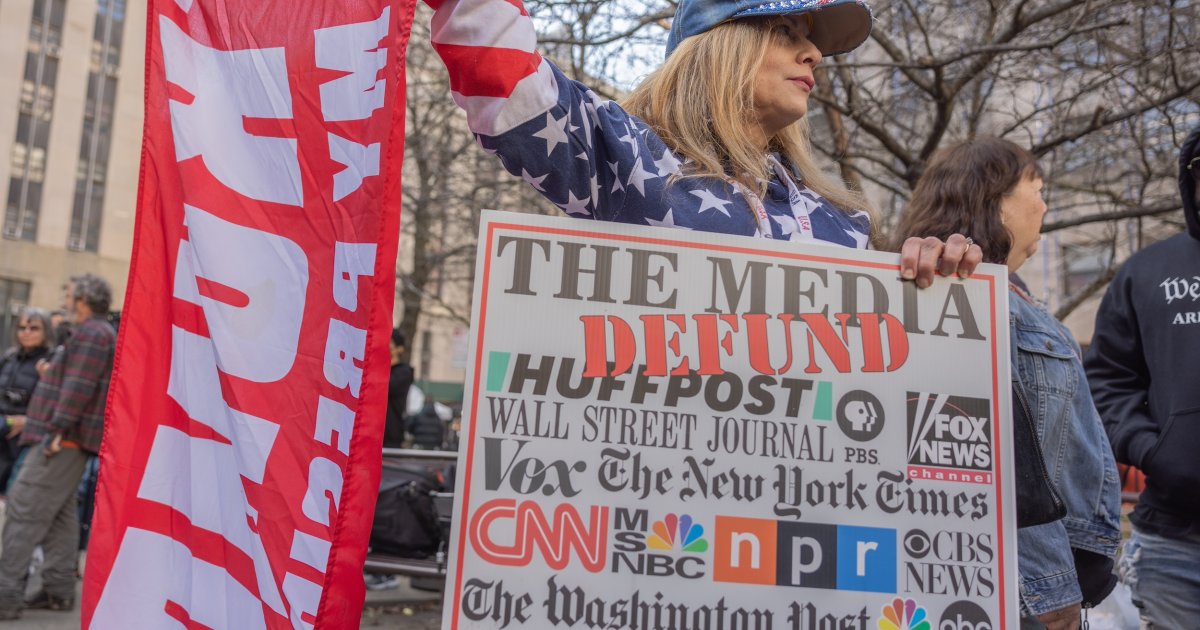
What happens to freedom of the press when the president can bully media outlets he doesn’t like into paying big money to end his meritless lawsuits against them?
Buckle up. We’re about to find out.
Per reports, Paramount Global — the parent company of CBS News — is in talks to settle a $10 billion dollar lawsuit President Donald Trump filed against the network last November shortly after the election. The president’s lawsuit claims “60 Minutes,” the network’s flagship news program, violated the Texas Deceptive Trade Practices Act by editing an interview with Vice President Kamala Harris to make her more appealing to viewers.
The suit is flatly without merit. For starters, editing interviews is standard journalistic practice. Just ask FOX News, which has edited its own interviews and coverage of the president to tighten up rambling answers. Those cuts are protected by the First Amendment, which guarantees the press broad freedom to make editorial decisions about the content they print or air. And laws like Texas’ are designed to prevent used car salesmen from passing off lemons to unsuspecting buyers, not to police journalism.
That’s why CBS’ initial public statements about Trump’s suit rightly struck a defiant and principled tone. The network promised it would “vigorously defend” itself, correctly arguing Trump’s attempt to “punish” CBS for its editorial choices is “barred by the First Amendment.”
So what happened? Why is CBS now reported to be capitulating? There are two reasons, neither of them good for our free and independent press: Money and power.
Trump’s lawsuit isn’t concerned with winning so much as imposing a financial and political cost on people that say things he doesn’t like.
First, the money. Paramount Global hopes to merge with Skydance Media, a deal worth some $8 billion to heiress Shari Redstone, Paramount’s owner — but only if it’s approved by the Federal Communications Commission.
That’s where the raw governmental power comes in. Brendan Carr, Trump’s pick to run the FCC, has made clear in public comments that the agency’s review of the merger will take into consideration Trump’s “news distortion complaint.” And in private, Carr reportedly warned Paramount that addressing Trump’s dissatisfaction was a precursor to approval. In other words: Nice little network you got there — be a shame if anything happened to it.
This kind of pressure from government regulators — “jawboning” — is all the more objectionable when it’s aimed toward the personal benefit of the president. Rather than stand up for the journalists at CBS, Redstone appears to be playing ball, even handing over an unedited transcript to the FCC after refusing to do so for months.
Indirect government censorship is still government censorship — and it must be stopped.
That’s bad enough. But wait — there’s more.
Our litigious president is fresh off settling his 2021 lawsuit against Meta, which alleged the company’s decision to ban Trump from Facebook after Jan. 6, 2021, violated his First Amendment rights. Like his suit against CBS, Trump’s class action suit was without merit; private social media companies have their own First Amendment right to run their platforms as they see fit. They are not government actors, as the district court dismissing the cases against social media companies easily concluded. Nevertheless, the company agreed this week to pay $25 million to end the appeal. Meta CEO Mark Zuckerberg, who attended the president’s inauguration, appears to have concluded that settling the suit was a small price to pay for political favor and access.
Late last year, Trump also settled with ABC News for $15 million dollars, ending a defamation suit. That suit centered on a George Stephanopoulos interview with Rep. Nancy Mace during which Stephanopoulos mischaracterized the outcome of writer E. Jean Carroll’s successful sexual abuse and defamation claims against the former president. Stephanopoulos stated that Trump was “found liable for rape” and “defaming the victim of that rape,” when a jury had concluded Trump sexually abused Carroll — not that he raped her, as the term is narrowly defined in New York’s criminal code.
Trump’s dictatorial appetite to use lawfare to silence or punish outlets that publish content he doesn’t like is most plainly on display in his ongoing suit against pollster J. Ann Selzer and The Des Moines Register.
ABC’s case presented real challenges, but the network may have been able to mount a sturdy defense. The First Amendment provides news outlets significant breathing room when commenting on public figures like President Trump, as established in the Supreme Court’s landmark 1964 ruling New York Times v. Sullivan. While the jury specifically rejected finding Trump guilty of rape, the district court judge noted the “definition of rape in the New York Penal Law is far narrower than the meaning of ‘rape’ in common modern parlance, its definition in some dictionaries, in some federal and state criminal statutes, and elsewhere.”
Per reports, however, the network ultimately chose to settle what might have proven to be a challenging case rather than risk Trump’s ire — or provide the current Supreme Court a potential opportunity to weaken Sullivan’s broad protections. After all, the plaintiff has been loud and clear about his desire to “open up” American libel law.
Trump’s dictatorial appetite to use lawfare to silence or punish outlets that publish content he doesn’t like is most plainly on display in his ongoing suit against pollster J. Ann Selzer and The Des Moines Register.
A polling miss isn’t ‘consumer fraud’ or ‘election interference’ — it’s just a prediction and is protected by the First Amendment.
Selzer, hailed for decades by political observers as the dean of Iowa polling, conducted an early November poll published by The Register giving Harris a three-point lead in the Hawkeye State. Despite correctly forecasting Trump’s Iowa victories in 2016 and 2020, Selzer’s polling missed the mark this cycle. But Trump wasn’t content to take the win, choosing instead to file a claim against her under Iowa’s Consumer Fraud Act.
FIRE represents Selzer against the president’s bogus claim. Americans have a First Amendment right to make political predictions, and newspapers have a First Amendment right to publish them. But Trump’s lawsuit isn’t concerned with winning so much as imposing a financial and political cost on people that say things he doesn’t like. That’s un-American.
Elections have consequences, it’s true. But silence cannot be one of them. We must protect our free press against meritless lawsuits and the coercive power of the federal government — lest we miss it when it’s gone.