Truth in fiction
That’s where fiction can come in. But most climate fiction presents gloomy scenarios: think the waterless world of Arrakis in Frank Herbert’s “Dune” series or our earth after a virus wiped out most of human life in Margaret Atwood’s “Oryx and Crake” trilogy.
In contrast, Baden’s story showed more positive solutions. Her own research found that 98% of her readers changed their attitudes. A month after reading the story 60% of readers actually adopted a green alternative.
She’s set to release “Murder in the Climate Assembly“, a fictional story about the ramifications of a murder that takes place in a citizens’ assembly on climate.
Some media organizations are now including climate change awareness initiatives that use fictional examples into their marketing campaigns.
Baden worked with BAFTA, the British Academy of Film and Television Arts, to create social media content that provided solutions with a tinge of humour. For example, they contrasted the carbon footprint of two popular characters from books and movies: James Bond who drives a gas guzzling sports car and has a walk-in wardrobe versus Jack Reacher who traveled by bus and shopped second-hand.
Making environmentalism fun
Pilot testing showed interesting results: “If we just presented the negative one like James Bond, some people laughed and thought it was funny, but a few people thought they were being a bit preached at and switched off,” Baden said. “Whereas when you kind of had both together with a bit of humor, that seemed to hit the right spot.”
Pike agreed: “Comedy too allows us to let our guard down. When we open our mouth to laugh, our mind is open to learn.”
When Pike was in Chile working on the PhD that led to her book she found that she loved the animated series “The Simpsons“. In 2008, one of the three TV channels played Simpsons episodes endlessly, she said. Simpsons creator Matt Groening intended his show to make people aware of environmental challenges and complications in ways that start conversations, she said.
Context makes a difference too. “I read ecoactivist discourse in South America and it seemed so darn white and privileged,” Pike said. “If you read “Burning Rage of a Dying Planet” in a comfortable U.S. suburb, it’s one thing. If you read the same book in Chile, it feels different, almost too precious, definitely not the tone I would take in talking about ecology in South American countries.”
The Center for Health Communication at Harvard University says that showing, not telling induces stronger emotional responses as visual imagery and helps our brains understand abstract and complex associations like those between climate and health.
Connecting emotion to change
Telling stories through books, plays or social media also help to create emotion, and change beliefs and behaviours. They may also reduce feelings of anxiety and depression that surface when bombarded with alarmist news about the climate crisis. Focusing on solutions is more effective.
Pike said the way to get through the barrage of media messages and talk about the climate crisis is with honesty, independence and humour. “Acknowledge the hypocrisy and move on toward solutions,” Pike said. “A solution offers me a choice, agency, a chance to put up a sail and navigate to a goal.”
Pike taught a class called “Environmental Reporting for a Hopeful Planet” in the spring 2024 semester. One assignment was “Forest Friday”: students were asked to read, watch or listen to examples of environmental storytelling.
One week, the students were assigned a video of Rebecca Solnit. She’s a writer, historian and activist who has been examining hope and the unpredictability of change for more than two decades. In 2023 she co-edited an anthology called “It’s Not Too Late”, a guide for finding hope even while climate change-induced disasters continue. This is what one student said after they watched that video:
“I felt reassured by her calmness and her endless lists of knowledge of times and places in which meaningful change has occurred. I think she makes many great points about the way that just because ideas don’t always get the opportunity to fully take shape they are still impactful on society as a whole.”
So, what’s the best way to write about the climate crisis?
“Read environmental writing and write,” Pike said. “Be so deeply curious about how ecology works, how nature and culture interact, how businesses and institutions works and their role in the climate crisis.”
Ways to write effectively
Having a community of people who also write about and care about the environment can also help. But most importantly, Pike said: “Work to tell a story well.”
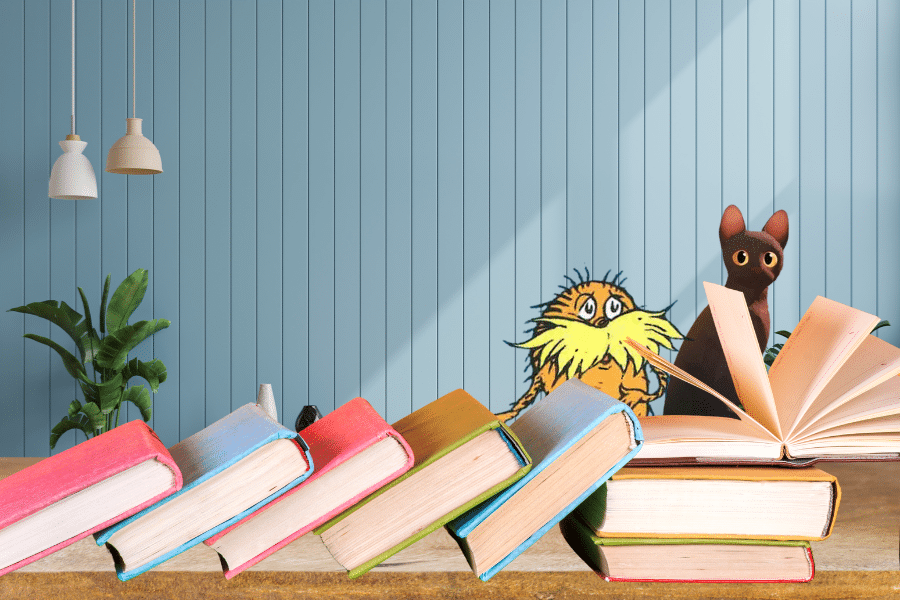
This means reading the publications which interest you and seeing if your story would be a good fit. Try different mediums. Take Dr. Seuss’ “The Lorax”. It’s a children’s book written in 1971 about a character who speaks for the trees as a business tycoon destroys the environment. The story encourages activism and involvement in making the situation better. In it the Lorax tells us: “Unless someone like you cares a whole awful lot, nothing is going to get better. It’s not.”
More recently, there are films like “Flow“, which won an Academy Award for Best Animated Feature and was nominated for Best International Feature Film, and “The Wild Robot“, which was nominated for three Academy Awards including Best Animated Feature.
In both, climate change is a world-building element; one showed a submerged Golden Gate Bridge, the other showed a flood of biblical proportions. But they’re both animated films, with cute animals coming together to save the world, reaching a younger audience who will grow up with climate change and its impacts.
Creating a story that can make people think about our planet and how we can tackle climate change isn’t easy. Pike said it is worth persevering.
“If you get tired, don’t give up,” Pike said. “Rest and get back to it when you can. We all plant seeds and it’s hard to say which ones will take.”
Three questions to consider:
- What makes you switch off the news when a story about climate change comes on?
- What happens to our brain when we show, rather than tell, in our writing on climate change?
- What might you learn in a course like “Environmental Reporting for a Hopeful Planet?”