Tag: tutoring

  • Why institutions must protect personal academic tutoring at all costs

    Why institutions must protect personal academic tutoring at all costs

    Join HEPI for a webinar on Thursday 11 December 2025 from 10am to 11am to discuss how universities can strengthen the student voice in governance to mark the launch of our upcoming report, Rethinking the Student Voice. Sign up now to hear our speakers explore the key questions.

    This blog was kindly authored by Dr Gary Jones, Dean of Student Success and Experience, Scholars School System, Dr Steve Briggs, Director of Learning, Teaching and Libraries, University of Bedfordshire, Professor Graeme Pedlingham, Deputy Pro-Vice Chancellor for Student Experience, University of Sussex, Dr David Grey, UKAT Chief Executive Officer and Professor Abigail Moriarty, Pro Vice-Chancellor Education & Students, University of Lincoln.

    A recent analytic induction study (Grey & Bailey, 2020) defined personal academic tutoring in UK higher education as a “proactive, professional relationship between student and tutor sustained throughout the entire student journey.” This partnership involves “dialogue, metacognition, and a structured programme of activities” aimed at fostering student agency, self-efficacy, independent learning, and career and future goals.

    Personal academic tutors play a crucial role by supporting students to “assimilate to the university environment”, facilitating learning and decision-making, reviewing progress, and providing essential information. They enhance both academic ability and emotional well-being through holistic support during one-to-one or group meetings at key academic moments. Personal academic tutors are described as “knowledgeable, approachable, helpful, patient, caring, reliable and non-judgmental” staff members who possess the skills to actively listen, instruct, and advise. They play a crucial role in supporting student success and outcomes.

    HE size and shape is changing

    The increasingly perilous position of economic sustainability in the UK higher education sector has meant that a growing number of institutions are instigating reviews of their ‘size and shape’. In turn, many providers face some tough decisions around what should be prioritised. We anticipate that multiple university senior leadership teams may review academic workload plan allocations during the 2025/26 academic year to ensure that academic staff time can be optimised. As such, consideration may be given to changing time allocations to prioritise teaching preparation and delivery, assessment, and research over personal academic tutoring. We argue that teaching and research should not be treated as more important than personal academic tutoring when allocating time. Nor should teaching and research time be reduced in favour of personal academic tutoring. Rather, we argue for equivalency and that time allocation for personal academic tutoring is an activity institutions should seek to protect, not cut. 

    The value of university education has become a sharper and often more critical question in media narratives, as well as for people considering studying in higher education. With the increasing cost of living and studying at university, the question of how universities can make the benefits to students as visible as possible is understandably at the forefront of many of our minds. We argue that personal academic tutoring is a critical part of achieving this through a strategic, purposeful, proactive, and student-centred approach that is informed by data rather than risking falling into a reactive approach.

    The impact and benefit of personal academic tutoring

    Personal academic tutoring plays a fundamental role in enhancing attainment and impacts the Office for Students’ metrics, which determine institutional success (such as the Teaching Excellence Framework, National Student Survey and Postgraduate Taught Experience Survey). Effective tutoring can be measured in many ways, but not least of these is the positive benefits for helping students to stay on course and be successful, directly supporting those key B3 continuation and completion rates. Effective personal academic tutoring is therefore a virtuous circle for improving student outcomes and experience, and can help give direct evidence of value to both current students and potential applicants.

    Meaningful individualised relationships that encompass the entirety of a student’s learning journey are fostered through effective personal academic tutoring.  Successful tutors nurture a sense of belonging and mattering, aid in navigating the complexities of the higher education study experience, cultivate vital analytical and transferable skills, and impact student career aspirations and employability. At its best, personal academic tutoring transcends traditional teaching methods by facilitating purposeful, structured interactions outside of learning, empowering student agency and promoting the holistic development of all students. As highlighted by NACADA, teaching beyond the curriculum and discipline can help to bring together and contextualise students’ educational experiences in terms of extending aspirations, abilities and lives beyond campus boundaries and timeframes.  

    Academic workload planning and personal academic tutoring

    A recent UKAT senior leaders’ network group meeting provided a forum for discussions regarding allocating dedicated resources for personal academic tutoring in universities. Here, we explored the variation and inconsistencies across the sector regarding how universities operate their personal academic tutoring in terms of academic workload planning. Members reported that across institutions, resource allocation was often determined locally but was driven by central university policy. As the group engaged in thought-provoking dialogue, a critical question emerged: If we genuinely value the importance of learning beyond the traditional subject curriculum, why is personal academic tutoring often not prioritised to the same extent as other activities in the initial stages of academic workload allocation?

    The case for a personal academic tutoring first mindset

    Recognising there are institutional differences, possible common ways of addressing this challenge were discussed, considering the aforementioned financial constraints facing the HE sector. Abi presented to attendees a cup metaphor for academic workload planning based on her previous work. This suggests that, given the significance of personal academic tutoring on student outcomes, personal academic tutoring time should be the first thing built into an academic’s workload plan. She noted, however, that this is often not the case and time allocation for personal academic tutoring may be the last thing added into the workload ‘cup’ (behind teaching, assessment and research), in turn causing the cup to overflow and damaging the significance associated with personal academic tutoring. There was an overwhelming consensus that we should all adopt a personal academic tutoring first ethos in terms of academic workload planning. Accordingly, we encourage readers who will be undertaking academic workload plan reviews over the coming months to reflect on how they allocate personal academic tutoring time, particularly if personal academic tutoring has not historically been the first pour into the workload cup.


    Source link

  • Parents Sued LAUSD Over Remote Learning. How the Settlement Will Benefit Students – The 74

    Parents Sued LAUSD Over Remote Learning. How the Settlement Will Benefit Students – The 74


    Get stories like this delivered straight to your inbox. Sign up for The 74 Newsletter

    This story was originally published by CalMatters. Sign up for their newsletters.

    More than 250,000 students in Los Angeles Unified will be eligible for extra tutoring, summer school and other academic help after the district settled a class-action lawsuit alleging that its remote learning practices during the pandemic were discriminatory.

    The settlement, filed in Los Angeles County Superior Court, was announced Wednesday by the law firm representing families who said their children fell disastrously behind during the Covid-related school shutdown in 2020-21.

    “After five years of tireless advocacy on behalf of LAUSD students and families, we are proud to have secured a historic settlement that ensures students receive the resources they need to thrive,” said Edward Hillenbrand, a partner at the law firm Kirkland & Ellis. “This critical support will help pave the way for lasting educational equity.”

    Los Angeles Unified had no comment on the case because the settlement has yet to be approved by the court. A hearing is set for December, although the settlement goes into effect immediately.

    During the COVID-19 pandemic, Los Angeles and nearly every other school district in California closed for in-person learning from March 2020 through fall 2021. Students attended classes virtually, and most fell behind academically. Test scores statewide plummeted after schools reopened. Chronic absenteeism soared.

    In fall 2020, a group of families whose children were languishing during remote learning sued Los Angeles Unified, saying the district wasn’t doing enough to ensure students were receiving an adequate education.

    One parent, Akela Wroten Jr., said that his second-grade daughter was behind before the pandemic and became even more lost during remote learning. She struggled with reading and never got the extra attention she needed because teachers weren’t assessing her progress.

    Another parent, Vicenta Martinez, said her daughter didn’t get any instruction in spring 2020, in part because she never received logon information for remote instruction and the school never followed up. When she finally did access remote classes, the lessons were short and teachers offered little feedback.

    “LAUSD’s remote learning plan fails to provide students with even a basic education and is not preparing them to succeed,” the lawsuit alleged.

    The suit singled out an agreement between the district and its teachers union that said teachers would only be required to work four hours a day, wouldn’t have to give tests and weren’t required to deliver live lessons — their lessons could be asynchronous, or recorded beforehand. In addition, the agreement said the district wouldn’t evaluate or monitor teachers during that time.

    United Teachers Los Angeles supports the settlement, saying it provides more assistance for students while leaving teachers’ “hard-won contractual rights” intact and avoiding “unwarranted judicial interference” in the district.

    The union also noted that student test scores have recovered significantly since the pandemic..

    The plaintiffs argued that the district’s policies discriminated against low-income, Black, Latino, disabled and English learner students, because those were the students least likely to have adequate support to succeed in remote learning. Those student groups also comprise the vast majority of students in the district, the nation’s second-largest.

    The settlement requires the district to offer a host of academic support, including summer school and after-school tutoring, to the 250,000 students who were enrolled in L.A. Unified during the pandemic and are still with the district. Among those students, 100,000 who are performing below grade level will be eligible for 45 hours of one-on-one tutoring every year through 2028.

    This article was originally published on CalMatters and was republished under the Creative Commons Attribution-NonCommercial-NoDerivatives license.


    Get stories like these delivered straight to your inbox. Sign up for The 74 Newsletter

    Source link

  • Catapult Learning is Awarded Tutoring Program Design Badge from Stanford University’s National Student Support Accelerator

    Catapult Learning is Awarded Tutoring Program Design Badge from Stanford University’s National Student Support Accelerator

    Organization recognized for excellence in high-impact tutoring design and student achievement gains

    PHILADELPHIA, Aug. 25, 2025 – Catapult Learning, a division of FullBloom that provides academic intervention programs for students and professional development solutions for teachers in K-12 schools, today announced it earned the Tutoring Program Design Badge from the National Student Support Accelerator (NSSA) at Stanford University. The designation, valid for three years, recognizes tutoring providers that demonstrate high-quality, research-aligned program design.

    The recognition comes at a time when the need for high-impact tutoring (HIT) has never been greater. As schools nationwide work to close learning gaps that widened during the COVID-19 pandemic and accelerate recovery, Catapult Learning stands out for its nearly 50-year legacy of delivering effective academic support to students who need it most.

    “Catapult Learning is honored to receive this prestigious national recognition from the NSSA at Stanford University,” said Rob Klapper, president at Catapult Learning. “We are excited to be recognized for our high-impact tutoring program design and will continue to uphold the highest standards of excellence as we support learners across the country.” 

    Each year, Catapult Learning’s programs support more than 150,000+ students with nearly four million in-person tutoring sessions, in partnership with 2,100 schools and districts nationwide. Its tutors, many of whom hold four-year degrees, are highly trained professionals who are supported with ongoing coaching and professional development.

    Recent data from Catapult Learning’s HIT programs show strong academic gains across both math and reading subject areas:

    • 8 out of every 10 math students increased their pre/post score
    • 9 out of every 10 reading students increased their pre/post score

    These results come from programs that have also earned a Tier 2 evidence designation under the Every Student Succeeds Act, affirming their alignment with rigorous research standards. 

    The Badge was awarded following a rigorous, evidence-based review conducted by an independent panel of education experts. The NSSA evaluated multiple components of Catapult Learning’s program – including instructional design, tutor training and support, and the use of data to inform instruction – against its Tutoring Quality Standards.

    “This designation underscores the strength and intentionality behind our high-impact tutoring model,” said Devon Wible, vice president of teaching and learning at Catapult Learning. “This achievement reflects our deep commitment to providing high-quality, research-based tutoring that drives meaningful outcomes for learners.”

    Tutoring is available in person, virtually, or in hybrid formats, and can be scheduled before, during, or after school, including weekends. Sessions are held a minimum of three times per week, with flexible options tailored to the needs of each school or district. Catapult Learning provides all necessary materials for both students and tutors.

    To learn more about Catapult Learning’s high-impact tutoring offerings, visit: https://catapultlearning.com/high-impact-tutoring/.

    About Catapult Learning

    Catapult Learning, a division of FullBloom, provides academic intervention programs for students and professional development solutions for teachers in K-12 schools, executed by a team of experienced coaches. Our professional development services strengthen the capacity of teachers and leaders to raise and sustain student achievement. Our academic intervention programs support struggling learners with instruction tailored to the unique needs of each student. Across the country, Catapult Learning partners with 500+ school districts to produce positive outcomes that promote academic and professional growth. Catapult Learning is accredited by Cognia and has earned its 2022 System of Distinction honor.  

    Latest posts by eSchool News Contributor (see all)

    Source link

  • Tutoring was supposed to save American kids after the pandemic. The results? ‘Sobering’

    Tutoring was supposed to save American kids after the pandemic. The results? ‘Sobering’

    Rigorous research rarely shows that any teaching approach produces large and consistent benefits for students. But tutoring seemed to be a rare exception. Before the pandemic, almost 100 studies pointed to impressive math or reading gains for students who were paired with a tutor at least three times a week and used a proven curriculum or set of lesson plans. 

    Some students gained an extra year’s worth of learning — far greater than the benefit of smaller classes, summer school or a fantastic teacher. These were rigorous randomized controlled trials, akin to the way that drugs or vaccines are tested, comparing test scores of tutored students against those who weren’t. The expense, sometimes surpassing $4,000 a year per student, seemed worth it for what researchers called high-dosage tutoring.

    On the strength of that evidence, the Biden administration urged schools to invest their pandemic recovery funds in intensive tutoring to help students catch up academically. Forty-six percent of public schools heeded that call, according to a 2024 federal survey, though it’s unclear exactly how much of the $190 billion in pandemic recovery funds have been spent on high-dosage tutoring and how many students received it. 

    Related: Our free weekly newsletter alerts you to what research says about schools and classrooms.

    Even with ample money, schools immediately reported problems in ramping up high-quality tutoring for so many students. In 2024, researchers documented either tiny or no academic benefits from large-scale tutoring efforts in Nashville, Tennessee, and Washington, D.C.

    New evidence from the 2023-24 school year reinforces those results. Researchers are rigorously studying large-scale tutoring efforts around the nation and testing whether effective tutoring can be done more cheaply. A dozen researchers studied more than 20,000 students in Miami; Chicago; Atlanta; Winston-Salem and Greensboro, North Carolina; Greenville, South Carolina; schools throughout New Mexico, and a California charter school network. This was also a randomized controlled study in which 9,000 students were randomly assigned to get tutoring and compared with 11,000 students who didn’t get that extra help.

    Their preliminary results were “sobering,” according to a June report by the University of Chicago Education Lab and MDRC, a research organization.

    The researchers found that tutoring during the 2023-24 school year produced only one or two months’ worth of extra learning in reading or math — a tiny fraction of what the pre-pandemic research had produced. Each minute of tutoring that students received appeared to be as effective as in the pre-pandemic research, but students weren’t getting enough minutes of tutoring altogether. “Overall we still see that the dosage students are getting falls far short of what would be needed to fully realize the promise of high-dosage tutoring,” the report said.

    Monica Bhatt, a researcher at the University of Chicago Education Lab and one of the report’s authors, said schools struggled to set up large tutoring programs. “The problem is the logistics of getting it delivered,” said Bhatt. Effective high-dosage tutoring involves big changes to bell schedules and classroom space, along with the challenge of hiring and training tutors. Educators need to make it a priority for it to happen, Bhatt said.

    Related: Students aren’t benefiting much from tutoring, one new study shows

    Some of the earlier, pre-pandemic tutoring studies involved large numbers of students, too, but those tutoring programs were carefully designed and implemented, often with researchers involved. In most cases, they were ideal setups. There was much greater variability in the quality of post-pandemic programs.

    “For those of us that run experiments, one of the deep sources of frustration is that what you end up with is not what you tested and wanted to see,” said Philip Oreopoulos, an economist at the University of Toronto, whose 2020 review of tutoring evidence influenced policymakers. Oreopoulos was also an author of the June report.

    “After you spend lots of people’s money and lots of time and effort, things don’t always go the way you hope. There’s a lot of fires to put out at the beginning or throughout because teachers or tutors aren’t doing what you want, or the hiring isn’t going well,” Oreopoulos said.

    Another reason for the lackluster results could be that schools offered a lot of extra help to everyone after the pandemic, even to students who didn’t receive tutoring. In the pre-pandemic research, students in the “business as usual” control group often received no extra help at all, making the difference between tutoring and no tutoring far more stark. After the pandemic, students — tutored and non-tutored alike — had extra math and reading periods, sometimes called “labs” for review and practice work. More than three-quarters of the 20,000 students in this June analysis had access to computer-assisted instruction in math or reading, possibly muting the effects of tutoring.

    Related: Tutoring may not significantly improve attendance

    The report did find that cheaper tutoring programs appeared to be just as effective (or ineffective) as the more expensive ones, an indication that the cheaper models are worth further testing. The cheaper models averaged $1,200 per student and had tutors working with eight students at a time, similar to small group instruction, often combining online practice work with human attention. The more expensive models averaged $2,000 per student and had tutors working with three to four students at once. By contrast, many of the pre-pandemic tutoring programs involved smaller 1-to-1 or 2-to-1 student-to-tutor ratios.

    Despite the disappointing results, researchers said that educators shouldn’t give up. “High-dosage tutoring is still a district or state’s best bet to improve student learning, given that the learning impact per minute of tutoring is largely robust,” the report concludes. The task now is to figure out how to improve implementation and increase the hours that students are receiving. “Our recommendation for the field is to focus on increasing dosage — and, thereby learning gains,” Bhatt said.

    That doesn’t mean that schools need to invest more in tutoring and saturate schools with effective tutors. That’s not realistic with the end of federal pandemic recovery funds.  

    Instead of tutoring for the masses, Bhatt said researchers are turning their attention to targeting a limited amount of tutoring to the right students. “We are focused on understanding which tutoring models work for which kinds of students.” 

    Contact staff writer Jill Barshay at 212-678-3595, jillbarshay.35 on Signal, or [email protected].

    This story about tutoring effectiveness was written by Jill Barshay and produced by The Hechinger Report, a nonprofit, independent news organization focused on inequality and innovation in education. Sign up for Proof Points and other Hechinger newsletters.

    The Hechinger Report provides in-depth, fact-based, unbiased reporting on education that is free to all readers. But that doesn’t mean it’s free to produce. Our work keeps educators and the public informed about pressing issues at schools and on campuses throughout the country. We tell the whole story, even when the details are inconvenient. Help us keep doing that.

    Join us today.

    Source link

  • Tutoring provides a much-needed on-ramp into the teaching profession. School districts should pay attention.

    Tutoring provides a much-needed on-ramp into the teaching profession. School districts should pay attention.

    After graduating from Knox College in Illinois with a bachelor’s degree, Stephanie Martinez-Calderon’s plans were upended by the pandemic. She hadn’t planned on becoming a teacher but found an opportunity to tutor remotely for the year after college. 

    Tutoring helped her build confidence and develop instructional skills, and today she’s a middle school teacher in the Washoe County School District in Nevada. 

    Tutoring can be a powerful training ground for future educators, providing hands-on experience, confidence and a bridge into the classroom. And what might begin as a temporary opportunity can become a career path at a time when teachers are needed more than ever: A recent report noted that nearly one in five K-12 teachers plan to leave teaching or are unsure if they’ll stay. 

    Turnover remains a crisis in many districts, one that can be solved by a ready-made pipeline of young future educators with instructional experience and relationship-building skills they’ve gained from tutoring.  

    Related: A lot goes on in classrooms from kindergarten to high school. Keep up with our free weekly newsletter on K-12 education. 

    How school districts think about tutoring should evolve. Rather than seeing it as a short-term response to pandemic-interrupted learning, they should view it as part of the fabric of school design and future educator development. This requires including tutoring in strategic plans, forming community partnerships and creating a structure to sustain programs that cultivate tutors for careers in education. To fund these programs and pay tutors, districts can redirect Title I funds, use federal work-study and create apprenticeship programs.  

    Starting as a tutor allows aspiring educators to build core teaching skills in a supportive, lower-stakes environment. Tutors learn to navigate student relationships and adapt lessons to individual needs. Without having to manage an entire classroom, they can practice asking questions that get students thinking and selecting problems to help students learn. This early practice eases the transition into teaching. 

    Tutors from Generation Z, born between 1996 and 2012, often bring fresh energy to the profession. As digital natives, they are reimagining how to engage and inspire students, leverage technology and foster creativity and new approaches to learning. 

    They are also the most ethnically and racially diverse generation yet: Many come from backgrounds historically underrepresented in the teaching force; over half of undergraduates identify as first-generation college students. Their engagement broadens the prospects for a more diverse teacher pipeline. 

    Tutor recruiters have noticed that Gen Z workers don’t just want a job — they want roles committed to social impact, professional growth and sustainable work-life balance

    Gen Z’s emphasis on flexibility and remote opportunities is one of the most significant workforce changes since the pandemic. They value mental health, stability and mission-driven work. Part-time, hybrid and wellness benefits help recruit young talent. 

    At our nonprofit, recruiters hear from education candidates that Gen Z appreciates the chance to try out industries, and that tutoring provides them with a window into the world of teaching. 

    Public schools could better meet the evolving needs of young professionals entering education by reimagining tutor roles to include hybrid options, mental health supports and collaborative teaching pathways for professional growth. For instance, a tutor might start off working in a part-time online tutoring role, but after interacting with students virtually and gaining more experience, they may be more excited to take on a full-time teaching role on-site.  

    For school districts, tutoring programs can serve as effective recruitment pipelines. By offering recent graduates a low-barrier entry point into education — one that doesn’t require immediate certification — districts can spark interest in teaching among candidates who may not have previously considered it. 

    Amid ongoing hiring challenges, particularly mid-year vacancies, tutors can offer timely solutions.  

    When tutors step into teaching roles, they bring valuable continuity — familiarity with the students and insight into progress and school culture. This seamless transition supports both student learning and district staffing needs. 

    Related: PROOF POINTS: Taking stock of tutoring 

    The idea that tutoring should be built into future educator pipelines is spreading. For example, since the launch of its Ignite Fellowship in 2020, Teach for America says that 550 of its former tutors have become full-time teachers. The program has proven to be especially effective at drawing in nontraditional candidates — those who may not have initially envisioned themselves in the classroom. In Washington, D.C., the school district launched a tutor-to-teacher apprenticeship program after success with high-impact tutoring. In Texas, teacher residents are required to work as tutors and in other support roles while co-teaching with a mentor. 

    By offering flexible, purpose-driven opportunities, districts can attract Gen Z professionals and give them a meaningful entry point into teaching. And tutoring programs can become more than academic support — they can serve as strategic talent pipelines that strengthen the future of the teaching workforce. 

    Alan Safran is co-founder, CEO and chair of the board of Saga Education; Halley Bowman is senior director of academics. 

    Contact the opinion editor at [email protected]. 

    This story about tutoring was produced by The Hechinger Report, a nonprofit, independent news organization focused on inequality and innovation in education. Sign up for Hechinger’s weekly newsletter.  

    The Hechinger Report provides in-depth, fact-based, unbiased reporting on education that is free to all readers. But that doesn’t mean it’s free to produce. Our work keeps educators and the public informed about pressing issues at schools and on campuses throughout the country. We tell the whole story, even when the details are inconvenient. Help us keep doing that.

    Join us today.

    Source link

  • How Portland Public Schools can afford to offer high-impact tutoring

    How Portland Public Schools can afford to offer high-impact tutoring

    This audio is auto-generated. Please let us know if you have feedback.

    SEATTLE — In 2024, nearly half — 48% — of Oregon’s 4th graders scored below basic in reading on the National Assessment of Educational Progress

    Not only is that 7 percentage points worse than the national average, but 48% represented a significant jump from pre-pandemic levels in 2019, when 36% of Oregon’s 4th graders tested below basic for reading. 

    The state’s latest reading scores are “disgraceful” and “unacceptable,” said Darcy Soto, director of learning acceleration at Portland Public Schools.

    But unlike for the state at large, the Portland district has seen an increase — albeit a slight one of 1% — in reading scores since the pandemic, said Karla Hudson, program administrator for the district’s learning acceleration team. Still, Portland’s progress has been slow and incremental, she said, and less than 60% of the district’s students are proficient in reading.

    “We have a lot of work to do,” Hudson said, which is why the 43,500-student district has zeroed in on providing high-impact tutoring.

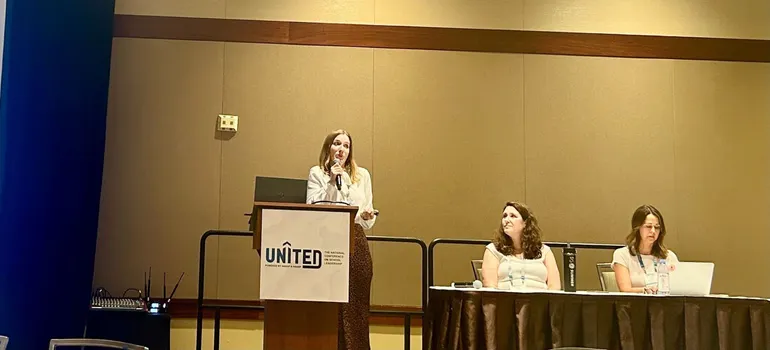
    Joined by Stanford University’s Nancy Waymack, Soto and Hudson shared what Portland has learned from its efforts during a July 12 session at UNITED, the National Conference on School Leadership.

    High-impact tutoring is a data-driven service that is embedded into the school day and uses consistent, well-supported tutors, said Waymack, director of research, partnerships and policy for Stanford University’s National Student Support Accelerator. The tutors use high-quality instructional materials and hold sessions at least three times a week in small groups of no more than four students, she said. 

    While teachers can be successful tutors, Waymack said, so too can community members like college students and retirees. Regardless, it’s important that students be able to build a relationship with their tutors, she said. 

    Data also plays a valuable role in tracking student progress throughout the tutoring, Waymack said. When tutoring occurs during school hours or shortly before or after class time, she said, research shows students are far more likely to attend sessions. 

    Years in the making

    Portland began its early literacy tutoring program through a small after-school pilot initiative in 2021-22 at a few elementary schools for students in grades 3-5, said Soto. The pilot started to show “some really great outcomes,” she said, allowing the district to expand the program from 6 to 20 schools by the 2022-23 school year.

    During those first two years, teachers were trained on the curriculum and paid for extended hours to tutor after school and. While that approach did improve students’ reading skills, Soto said, “it was very expensive” given teacher pay and the small student group size. This made the pilot difficult to scale to other schools.

    As the tutoring program continued into the 2023-24 school year, the district began shifting to a more cost-effective model — especially as federal pandemic relief funds were sunsetting, Soto said. 

    By the 2024-25 school year, Soto said, the district used some of its last remaining Elementary and Secondary School Emergency Relief funds to partner with the Oregon Department of Education and Oregon State University to develop a free K-3 tutoring curriculum aligned with structured literacy instruction. 

    After successfully piloting the new curriculum in summer 2024, the district launched a $1.2 million program across 50 of its 58 elementary schools to serve over 1,200 students in 2024-25, Soto said. The program hired 152 tutors — mostly paraprofessionals — and was embedded during school hours during 30-minute blocks that didn’t interfere with core instruction. 

    Source link

  • Ignite Reading Again Approved as 1:1 High-Dosage Early Literacy Tutoring Provider in Massachusetts

    Ignite Reading Again Approved as 1:1 High-Dosage Early Literacy Tutoring Provider in Massachusetts

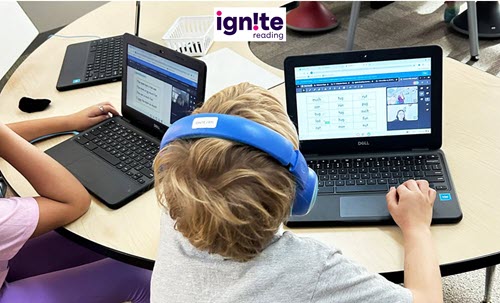
    BOSTON — Ignite Reading — a Science of Reading-based virtual tutoring program serving students in 18 states nationwide — today announced its approval by the Massachusetts Department of Elementary and Secondary Education (DESE) to continue providing 1:1 high-dosage evidence-based literacy tutoring to K-3 students across the commonwealth.

    Massachusetts Governor Maura Healey’s administration called on her state to invest heavily in high-dosage tutoring (HDT) earlier this year, earmarking $25 million in her state budget proposal to help accelerate literacy growth, “complementing the more systemic, long-term improvement work” being supported under the administration’s five-year literacy improvement campaign, Literacy Launch.

    In its approval process, DESE evaluated Ignite Reading’s services to Massachusetts districts over the past three school years and approved the literacy company to again provide school districts and charter schools with tutoring that is focused on building foundational skills — including phonological awareness, phonics knowledge and decoding skills — to help students become independent fluent readers in the early grades.

    Since Ignite Reading first gained DESE approval during the 2022-23 school year:

    • 30 Massachusetts schools and districts have partnered with Ignite Reading to provide students with 15 minutes of daily, 1:1 virtual tutoring.
    • Ignite Reading’s tutor educators have delivered differentiated, evidence-based early literacy instruction to more than 7,800 Massachusetts students.
    • Researchers at Johns Hopkins University’s Center for Research and Reform in Education have followed approximately 2,000 Massachusetts 1st graders enrolled in the program. The quasi-experimental study found the number of students reading on benchmark increased 213% after a year of Ignite Reading tutoring. At the same time, the percentage of students who required intensive reading intervention decreased 55%. All student groups — including Black and Hispanic students, those with IEPs and Multilingual Learners — had equitable skills growth, and those meeting end-of-year reading benchmarks grew more than 125%.

    The Healey-Driscoll Administration recently announced that schools and districts in Massachusetts are invited to apply for high-dosage early literacy tutoring for K-3 students with 1st grade as the state’s top priority.

    “When we get kids reading proficiently by the end of 1st grade, we set them up for a lifetime of academic success,” said Ignite Reading CEO Jessica Sliwerski. “Our continued approval by DESE means we can keep delivering the intensive, personalized support that Massachusetts 1st graders need to learn to read on grade level and on time. We are honored to be able to continue to partner with Massachusetts districts to ensure all students can access the tools they need to succeed as readers.”

    For more information about Ignite Reading’s Massachusetts partnerships, visit https://info.ignite-reading.com/massachusetts.

    About Ignite Reading

    Ignite Reading is on a mission to ensure every student can access the tools they need to be a confident, fluent reader by the end of 1st grade. School districts nationwide depend on Ignite Reading’s virtual tutoring program to deliver literacy support at scale for students who need help learning to read. Our highly trained tutors provide students with 1:1 tutoring in foundational literacy skills each school day, helping them go from learning to read to reading to learn.

    A recent study by the Center for Research and Reform in Education at Johns Hopkins University found that Ignite Reading students across demographics — including students who are English Learners, Black, Hispanic, and those with Individualized Education Programs (IEPs) — achieve the same outstanding gains of more than 5 months of additional learning during a single school year.  For more information about Ignite Reading, visit www.ignite-reading.com.

    eSchool News Staff
    Latest posts by eSchool News Staff (see all)

    Source link

  • Programs like tutoring in jeopardy after Linda McMahon terminates COVID aid spending extensions

    Programs like tutoring in jeopardy after Linda McMahon terminates COVID aid spending extensions

    This story was originally published by Chalkbeat. Sign up for their newsletters at ckbe.at/newsletters.

    HVAC projects to improve indoor air quality. Tutoring programs for struggling students. Tuition support for young people who want to become teachers in their home communities.

    More News from eSchool News

    Almost 3 in 5 K-12 educators (55 percent) have positive perceptions about GenAI, despite concerns and perceived risks in its adoption, according to updated data from Cengage Group’s “AI in Education” research series.

    Our school has built up its course offerings without having to add headcount. Along the way, we’ve also gained a reputation for having a wide selection of general and advanced courses for our growing student body.

    When it comes to visual creativity, AI tools let students design posters, presentations, and digital artwork effortlessly. Students can turn their ideas into professional-quality visuals, sparking creativity and innovation.

    Ensuring that girls feel supported and empowered in STEM from an early age can lead to more balanced workplaces, economic growth, and groundbreaking discoveries.

    In my work with middle school students, I’ve seen how critical that period of development is to students’ future success. One area of focus in a middle schooler’s development is vocabulary acquisition.

    For students, the mid-year stretch is a chance to assess their learning, refine their decision-making skills, and build momentum for the opportunities ahead.

    Middle school marks the transition from late childhood to early adolescence. Developmental psychologist Erik Erikson describes the transition as a shift from the Industry vs. Inferiority stage into the Identity vs. Role Confusion stage.

    Art has a unique power in the ESL classroom–a magic that bridges cultures, ignites imagination, and breathes life into language. For English Language Learners (ELLs), it’s more than an expressive outlet.

    In the year 2025, no one should have to be convinced that protecting data privacy matters. For education institutions, it’s really that simple of a priority–and that complicated.

    Teachers are superheroes. Every day, they rise to the challenge, pouring their hearts into shaping the future. They stay late to grade papers and show up early to tutor struggling students.

    Want to share a great resource? Let us know at [email protected].

    Source link

  • Students can make a real difference to educational opportunity in their regions through tutoring

    Students can make a real difference to educational opportunity in their regions through tutoring

    Right now, improving access to educational opportunities for young people from disadvantaged backgrounds is high on the agenda of both universities and the UK government.

    While Labour draws up plans to break the link between background and success, universities continue to invest significant time and resources into creating and implementing widening participation initiatives. If these efforts are to be successful, it’s vital that more young people are given access to tailored tutoring support during their time in compulsory education.

    The advantage gap in achieving GCSE English and maths at age 16 is at its widest since 2011, with over half of pupils from disadvantaged backgrounds leaving school without these crucial qualifications. Missing these qualifications limits young people’s opportunities to progress in education. A 2021 study for the Nuffield Foundation primarily of the 2015 GCSE cohort found that young people who left school without GCSE English and maths are much less likely to study for a qualification higher than GCSE the following year, and even fewer pursue A levels.

    The 16-19 attainment gap persists in post-16 education. On average, young people facing economic disadvantage are over three grades behind their peers across their best three subjects by the time they leave compulsory education. The gap is even wider for those in long term poverty, at almost four grades behind.

    Tutoring has long been recognised as one of the most effective ways to boost attainment. Research by the Education Endowment Foundation suggests targeted tutoring leads to an average of five months additional progress when delivered one-to-one and four months additional progress when delivered in a small group.

    Unequal access

    Parents are aware of this benefit, with private tutoring becoming increasingly popular, according to the Sutton Trust. But low-income families are often priced out of accessing this kind of support should their child fall behind.

    This unequal access is something that was addressed by The National Tutoring Programme and the 16-19 Tuition Fund – both government-funded tutoring schemes that ran in state schools and colleges between 2020–24. These programmes were created in response to the pandemic, to help young people catch up on lost learning. During the lifetimes of these programmes, the Sutton Trust examination of the tutoring landscape found that the gap in access to tuition between poorer and wealthier families in England all but disappeared.

    A new report published this week from Public First – Past lessons, future vision: evolving state funded tutoring for the future – finds that schools and colleges have struggled to maintain tutoring beyond the end of the dedicated funding provided by these schemes. despite the strong evidence base for tutoring, its popularity among parents and government plans for tutoring to become a “permanent feature of the system” provided by these schemes.

    The report compiles lessons learned from the National Tutoring Programme and the 16-19 Tuition Fund and uses these to create a blueprint for what the future of state-funded tutoring should look like. Based on interviews and focus groups with teachers, it reveals that many school leaders see relying on Pupil Premium funding to sustain tutoring as unrealistic. Schools face competing pressures on this funding, including the need to cover gaps in their core budgets.

    Funding for tutoring programmes in colleges is even more limited. Unlike younger pupils, disadvantaged students in further education receive no equivalent to the Pupil Premium, despite still being in compulsory education. As a result, there is no dedicated funding for initiatives that could help bridge the attainment gap.

    This is particularly troubling when you consider that young people in this phase have the shortest time left in compulsory education, and that the majority of students who resit their GCSEs in English and maths – subjects that are crucial for accessing higher level study – do so in FE colleges.

    Reaping the benefits

    Tutoring programmes don’t just benefit the young people receiving much needed academic support, they also bring wider advantages to the higher education sector. By partnering with local schools and colleges to deliver tuition programmes, higher education institutions can take a leading role in advancing social mobility, delivering on their access and participation priorities, and strengthening ties with their local communities.

    These programmes also create valuable job opportunities for undergraduate and postgraduate students. At Get Further – a charity that supports students from disadvantaged backgrounds to succeed in their GCSE resits through small-group tuition – 61 per cent of our tutors in 2023–24 were students: 23 per cent postgraduate and 38 per cent undergraduate.

    When recruiting new tutors, we prioritise offering opportunities to students at our partner universities, providing them with comprehensive training and ongoing personal development. This enables them to build transferable skills in a paid role while making a meaningful contribution to widening participation, enriching both their own educational experience and that of the learners they support.

    Similarly, the University of Exeter tutoring model has had success with its literacy programme for 12-13 year olds – a scheme delivered entirely by undergraduate tutors, who are either paid for their time or earn credits towards their degree. Programmes like these provide students with the opportunity to develop skills in communication, mentoring, adaptability, and critical thinking. This is all while taking on a flexible role that fits around their studies, supports their finances and makes a positive impact on their local communities.

    Creating tutoring jobs for university students could also create a pipeline into teaching – a critically understaffed profession. In 2024, a survey of Get Further tutors revealed that 68 per cent of our tutor pool either were interested or might be interested in pursuing a career in teaching, and 67 per cent said that they were more likely to consider pursuing a career in teaching having tutored on our programme.

    Investing in tutoring isn’t just about closing the attainment gap – it’s about expanding opportunity at every stage of education. By making high-quality tuition accessible to all young people, regardless of background, we can remove barriers to higher education while also creating valuable work experience for university students.

    The Past lessons, future vision report sets out a clear blueprint for a sustainable, national tutoring programme. The evidence is compelling, the need is urgent, and the potential impact is transformative. The government must act to reinstate state funding so that this vital support remains available to those who need it most.

    In the meantime, universities have a crucial role to play. By embedding tutoring within their widening participation efforts, they can not only support young people facing disadvantage but also strengthen ties with local colleges and schools, enhance student employability, and help shape a fairer, more ambitious education system.

    Source link